issues

TUI issues airport security warning for Brits travelling over May half term

There have been some major changes in how Brits travel abroad, and TUI has issued a warning that could impact holidaymakers when going through airport security

British holidaymakers jetting off abroad have been warned of airport changes ahead of the May half-term.

During the May half-term, thousands of Brits are expected to jet abroad for a sun-soaked getaway, with airports expected to be busier than usual. Airlines advise travellers to arrive at the airport in plenty of time to check in any bags, go through security, and find their gate.

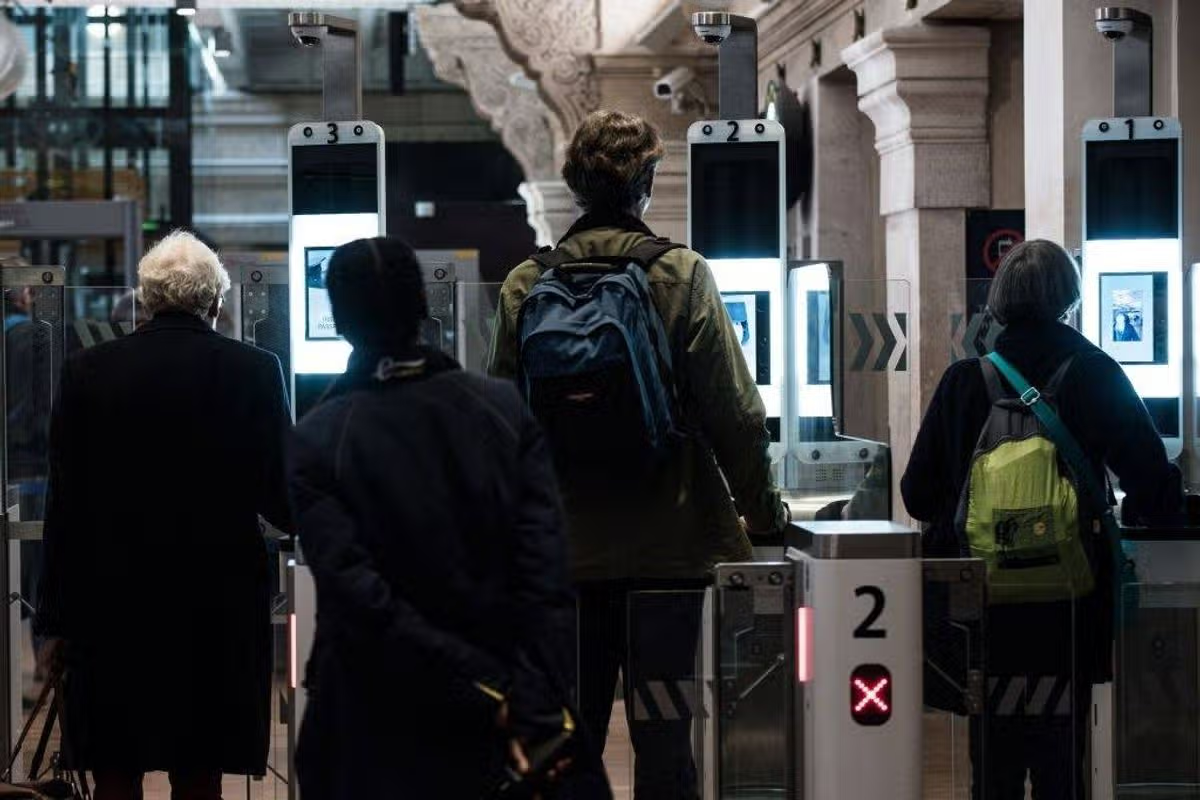
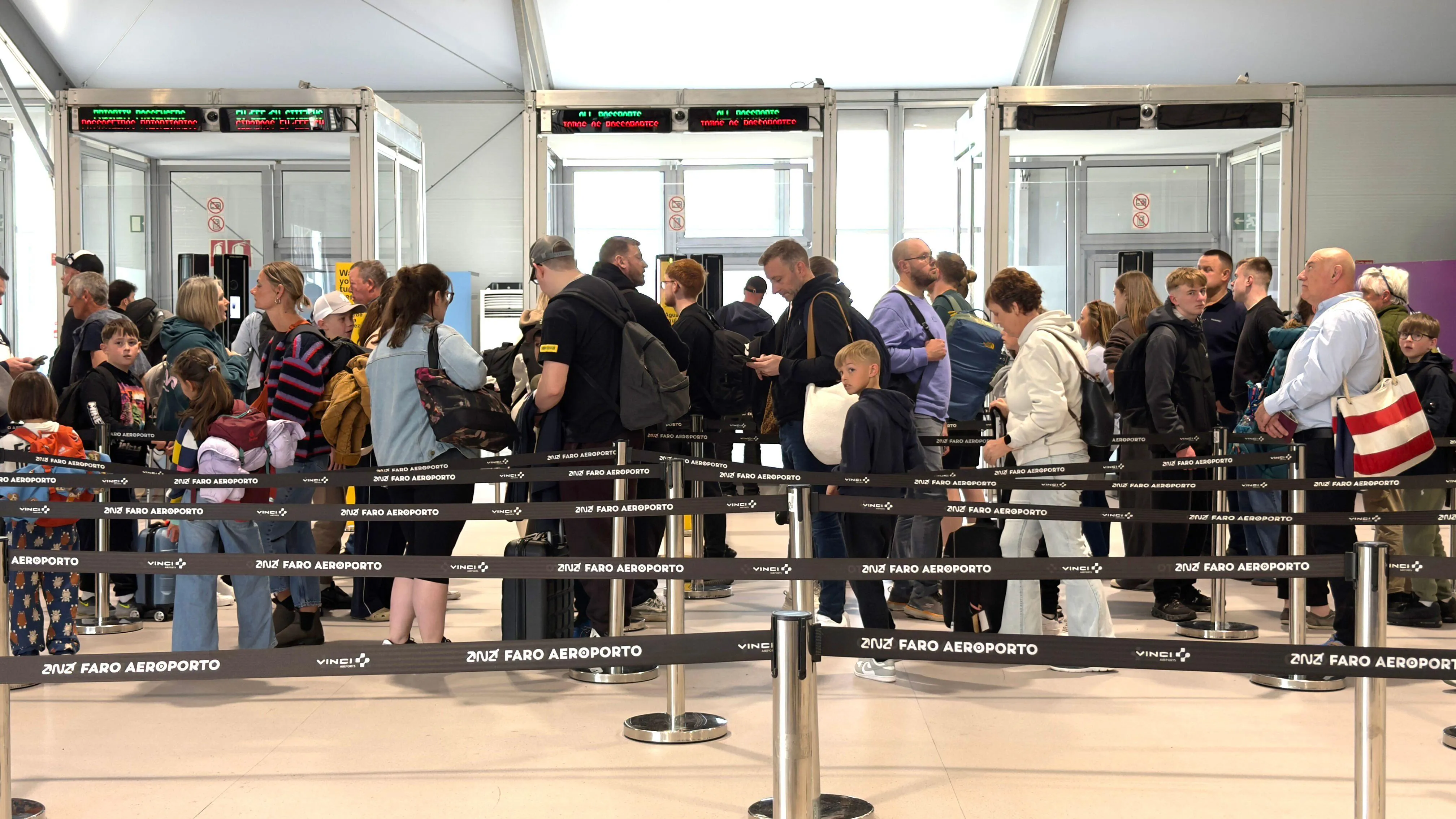
This is particularly important following the full rollout of the European Union’s (EU) new Entry/Exit System (EES), which has caused lengthy border control queues, delays and even missed flights at European and UK airports. On top of this, TUI has warned holidaymakers about changes to airport security at some UK airports, which have new restrictions in place.
READ MORE: EasyJet warning for passengers flying from London and Manchester that could impact travel plansREAD MORE: Pet owners warned new EU travel rule could see your dog banned from going abroad

In a travel alert to passengers earlier this month, TUI said: “While UK airports are installing new scanners to prepare for changes in security restrictions, at this time you should still follow current guidelines as not all airports have changed and destination airports still have these restrictions in place for your flight home.”

The airline went on to provide information on some of the major UK airports that have implemented changes, including Aberdeen, Birmingham, Newcastle, Leeds Bradford, London Southend, and London City.

TUI also advised customers to visit its airport security page on its website or the information page for the UK airport they’re departing from to find relevant details. As airports can have different security measures in place, including the 100ml liquid allowance, it’s vital to check any restrictions before heading to the airport.

Earlier this year, a number of airports ditched the 100ml liquid rule, including Belfast International, Belfast City, Birmingham, Bristol, Edinburgh, London Gatwick, and London Heathrow. The major change allows holidaymakers to carry more through security.

Another change for Brits heading abroad followed the introduction of the EU’s new Entry/Exit System (EES) earlier this month. And in a bid to help customers prepare for their next travel trip and avoid any disruptions, TUI issued a travel alert.

The airline advised passengers: “At some airports, you might still find longer queues, particularly at busy travel periods. We know this isn’t the travel experience you want before, or after your holiday – and it’s certainly not the one we want for you – so please know we’re doing all we can to support.

“To help your journey run as smoothly as possible, please allow a little extra time when passing through border control. Keep any essential medication in your hand luggage in case of delays, and when departing the EU, head straight to passport control after dropping your bags to avoid hold‑ups. Bringing some extra water for comfort is also a good idea.”

Do you have a travel story to share? Email webtravel@reachplc.com

Source link

Good Morning Britain host issues breaking news about Prince Harry live on air

Good Morning Britain shared a breaking news update about Prince Harry on the latest edition of the ITV show

Good Morning Britain has shared a breaking news update on Prince Harry live on air.

During Thursday’s (April 23) episode of the ITV show, hosts Richard Madeley and Kate Garraway returned to our TV screens as they updated viewers on the biggest news headlines from across the UK and around the world.

Not long into the show, Ranvir Singh, who was reading the headlines, announced breaking news after Prince Harry made a surprise trip to Ukraine, urging the world not to lose sight of what the country is up against.

Speaking to viewers watching at home, Ranvir went on to say: “That breaking news from Kyiv. Hello there, very good morning to you. Well, Prince Harry has arrived in the Ukrainian capital Kyiv for a two day visit.”

She continued:”He will see some of the work of the Halo Trust an organisation that specialises in clearing landmines and explosives from war torn countries, which, of course, you’ll remember his mother, Princess Diana, was a keen supporter of.

“She worked with them in Angola in 1997. Well, the Duke of Sussex has told ITV news that he wants to remind the world what Ukraine is up against in its war with Russia, our royal editor Chris Ship is in Kyiv and is the only correspondent with access to Harry on this trip.”

The show then cut to a news report from Chris, who explained: “Prince Harry arrived here at Ukraine’s main railway station. He came in on an overnight train from Poland, and yes, an unannounced visit, they always are, of course, for obvious reasons when you come to Ukraine.”

He added: “And perhaps a reminder that at a time when the world’s attention has been on Iran and the conflict there, the fight here is still going on.”

Prince Harry made the unannounced visit to Kyiv at a time when the focus of international concern has been on the war in Iran.

“It’s good to be back in Ukraine”, Prince Harry said as he arrived. He told ITV News that he wanted “to remind people back home and around the world what Ukraine is up against and to support the people and partners doing extraordinary work every hour of every day in incredibly tough conditions”.

He called Ukraine “a country bravely and successfully defending Europe’s eastern flank” and said “it matters that we don’t lose sight of the significance of that”.

His message to Ukrainians is that “the world sees you and respects you”.

Senior Western defence and government officials are gathering in the Ukrainian capital for the Kyiv Security Conference. Harry will make a speech at the conference and tell them that the battle here is more than a simple fight about territory.

He will also see the dangerous work being carried out by The Halo Trust. The Halo Trust employs 1,300 people in de-mining work in Ukraine – its largest operation anywhere in the world.

Good Morning Britain airs weekdays from 7am on ITV1 and ITVX

Source link

Five major issues affecting the FIFA World Cup with 50 days to go | World Cup 2026 News

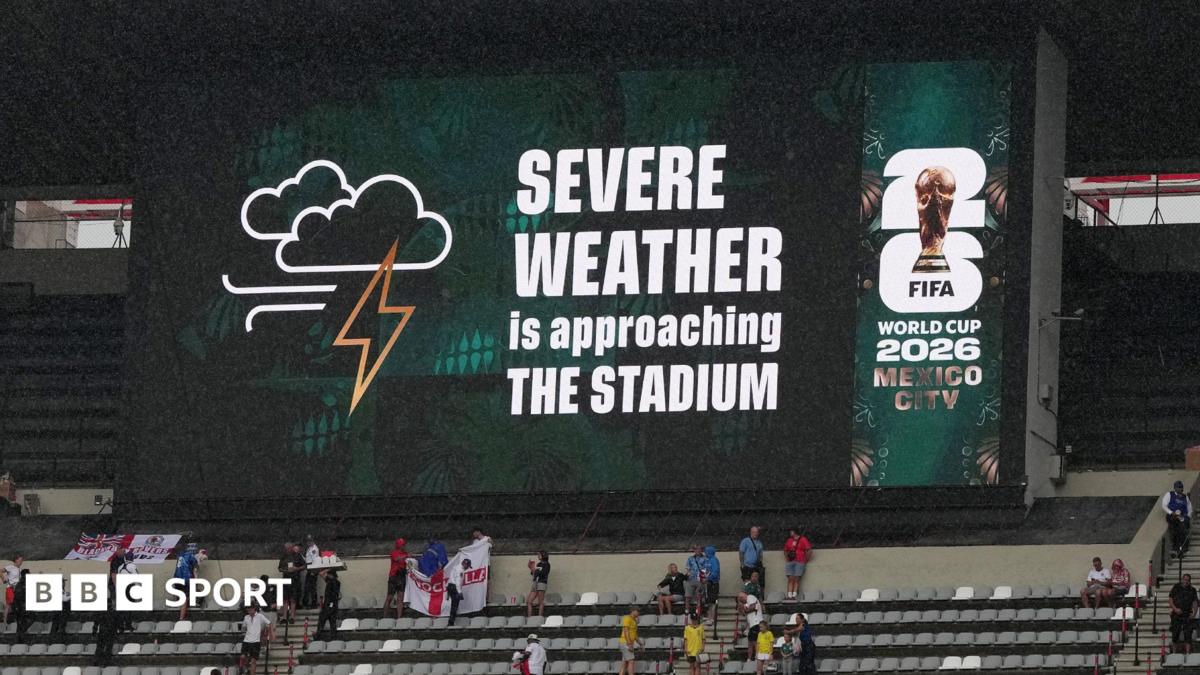
With 50 days to go until the World Cup kicks off, FIFA and the tournament’s host nations face criticism over wide-ranging social, political and logistical issues surrounding the global event.

Canada and Mexico will cohost the tournament with the United States, which, alongside Israel, launched a war on World Cup participant nation Iran on February 28. While the war is currently under a fragile temporary ceasefire, Iran’s participation in the tournament remains uncertain.

Recommended Stories

list of 3 itemsend of list

Fans across the three host countries are in uproar over exorbitant ticket prices, which have affected sales and interest in the world’s most popular quadrennial sporting event.

Local politicians and the public have also raised concerns over the hike in transport fares on routes connecting match venues in the US.

Al Jazeera Sport takes a look at the growing concerns in the run-up to the tournament, which begins on June 11 with the opening fixture between Mexico and South Africa:

What’s the latest on Iran’s participation in the World Cup?

Iran’s football team is preparing for the championship. However, officials say a final decision on the team’s participation will be taken by the government and the National Security Council after they review the players’ safety in the US.

Iran had said last month that it would not participate in the tournament amid the war, especially if the host nation could not guarantee players’ security. It followed a social media post from President Donald Trump, where he suggested that the Iranian team’s safety and security could not be guaranteed in the US, where Iranians are scheduled to play all their games.

The Iranian football federation then asked FIFA to relocate its games from the US to Mexico. FIFA rejected the request.

FIFA chief Gianni Infantino said last week that Iran “has to come” to the tournament.

Iran will play all their group stage matches on the US West Coast. Should they advance to the knockouts, the remaining games would also be held in the US.

Outrageous commuter fare prices in US host cities

Fans can expect to pay nearly 12 times the regular $12.90 fare for a round-trip train ride from Manhattan’s Penn Station to the MetLife Stadium in East Rutherford, New Jersey, venue of the World Cup final and seven other major fixtures.

New Jersey Governor Mikie Sherrill and FIFA have chided each other on the $150 price tag for a roughly 15-minute, 14km (9-mile) ride; Sherrill said FIFA should bear the costs, while the global body hit back, saying it is not obligated to do so.

Train commutes to Gillette Stadium in Boston’s suburbs cost roughly four times the regular price ($20), while round-trip bus fares to Foxborough cost $95.

Host cities Los Angeles and Philadelphia have pledged to keep their transit fares unchanged, while Kansas City is offering a $15 round-trip fare to Arrowhead Stadium. Houston said it has added buses and train cars to serve fans but intends to keep fares at current levels: $1.25 for buses and light rail trains, and park-and-ride options ranging from $2 to $4.50.

High prices, low demand for match tickets

Sky-high ticket prices have left fans outraged at what they say is pricing that excludes supporters from the tournament. A lag in ticket sales for blockbuster matches, including hosts USA vs Paraguay, seems to be a testament to the high price tag.

FIFA put tickets on sale in December at prices ranging from $140 for Category 3 in the first round to $8,680 for the final. Later, it raised prices to as high as $10,990 when sales reopened on April 1.

The North American bid had initially promised tickets would be available for as little as $21; however, the cheapest ticket has been priced at $60. Most tickets cost at least $200 for matches involving higher-ranked teams.

FIFA announced another round of ticket sales on Wednesday to coincide with the 50-day countdown. Tickets will be available across categories 1 to 3 for all 104 matches on a first-come, first-served basis.

Pushback against immigration raids during World Cup matches

The Trump administration’s push for mass deportation and its efforts to tighten legal immigration pathways have spurred concerns about whether the World Cup’s international audience might be targeted by US immigration authorities.

Infantino was approached last week to pressure Trump to avoid immigration raids at this year’s tournament. Reporters suggested that agents from Immigration and Customs Enforcement (ICE) and Customs and Border Protection (CBP) were present at last year’s FIFA Club World Cup matches, though the Trump administration denied conducting enforcement efforts.

A report by The Athletic explained that FIFA executives have framed the possibility of an immigration moratorium as a potential public relations boon for the Trump administration. It also indicated that the executives hoped Infantino would leverage his friendly relationship with Trump to assuage any immigration-related fears.

Violence in Mexico raises fears over tournament security

World Cup cohost Mexico is also under the spotlight due to concerns for fan safety after a lone attacker opened fire on tourists near the country’s capital on Monday.

The accused opened fire on top of one of the Teotihuacan pyramids — a UNESCO World Heritage Site and one of Mexico’s most frequented tourist attractions — and killed one Canadian tourist and injured 13 others.

It raised questions about security protocols taken by Mexican President Claudia Sheinbaum’s government in the run-up to the global football tournament.

Sheinbaum said Mexico will beef up security ahead of the World Cup.

“Our obligation as a government is to take the appropriate measures to ensure that a situation like this does not happen again. But clearly, we all know — Mexicans know — that this is something that had not previously taken place,” she said on Tuesday.

Source link

EasyJet issues latest fuel shortage update ahead of summer holidays

THE closure of the Strait of Hormuz has resulted in the soaring price of jet fuel, which had led to fears of shortages across Europe.

Now, easyJet has issued an update for its passengers with growing fears that holidays could be affected from mid-May.

easyJet has issued a warning for its passengers due to fuel shortages Credit: Getty
TUI has also issued an update saying it will monitor flights from May 1 Credit: Alamy

Javier Gándara, easyJet CEO for Spain and Portugal, has said that while the airline is continuing to operate as planned now, beyond three or four weeks and it’s “difficult to see” what will happen.

The three-week warning means easyJet passengers could face disruption from as soon as May 12.

However, Mr Gándara then added: “In Spain, we are in a comparatively better situation than neighbouring countries for two reasons.

“Firstly, because of all the crude oil that is imported and then refined here, only 11 per cent comes from the Middle East, which is the percentage affected by the closure of the Strait of Hormuz; the remaining 89 per cent comes from elsewhere.”

BARGAIN HOL

Travel companies reveal their CHEAPEST spots this summer, with hols from £189pp


SHORE WIN

All the trendy UK seaside towns with huge makeovers and enough to do for a WEEK

But he did warn that “if there are problems in other countries, that ends up affecting flights to Spain.”

And said “no one will be immune to potential supply problems.”

This comes after a warning was issued by TUI yesterday.

The travel giant said it is “monitoring” jet fuel shortages as a result of the Iran war, for all passengers flying from May 1.

On social media, one worried traveller asked the airline: “With the reported jet fuel shortages are you expecting holidays from May 1 to be affected?”

TUI responded: “We’re closely monitoring the developing situation in the Middle East and its potential impact on global aviation fuel supplies.

“At present, we’re not anticipating any immediate disruption to our flight schedules or holiday programmes from fuel shortages.

The holiday chaos is caused from the ongoing Iran-US conflict with warnings that Europe could face jet fuel shortages due to the Strait of Hormuz remaining closed.

It was revealed earlier this month that airports could run out of jet fuel within weeks.

The ACI Europe, which represents European airports, said the key trade route must open within three weeks or fuel reserves will run drastically low.

As a result, a number of major airlines have been cancelling flights in preparation for shortages.

United Airlines said that five per cent of flights would be cancelled in the second and third quarters of 2026.

SAS was the first major airline in Europe to axe flights because of of the cost of fuel going up.

Dutch airline KLM has cancelled 160 flights for the coming month, but has said it will affect less than 1 per cent of its schedule.

Meanwhile, Cathay Pacific has confirmed that two per cent of passenger flights will be cancelled from May 16 to June 30.

Air New Zealand announced in March that it will be cutting back on flights over the next two months.

And Norse announced it would remove all flights from London Gatwick to LA.

Others, like Virgin Atlantic as well as Air France and KLM have added surcharge to tickets to offset the rising price in jet fuel.

What does this mean for your upcoming holiday?

1. How will this affect my holiday?

Getaways should not be seriously impacted immediately as airlines bought fuel far in advance at a fixed rate.

But if the crisis continues into June, operators may start adding a surcharge to holiday prices.

A limited number of flights may be cancelled, but mostly on well-served routes with alternatives.

If supplies start to dry up, cancellations would increase.

2. Am I entitled to a refund?

IF some or all of your holiday is cancelled by the provider, your refund depends on whether you booked your trip as a package holiday, or individually.

Your money tends to be much better protected with a package deal.

3. Is now a bad time to book?

There are some great deals, but book with caution.

You must take out travel insurance as, if your flight is cancelled, you may have protection against the cost of other elements of your holiday, such as accommodation.

Despite the chaos, Egypt resorts have dropped prices by 70 per cent with mega cheap all-inclusive deals – as Brit avoid it.

And if you’re anxious that your flight will be cancelled, here’s what to expect this summer.

easyJet has issued a warning to its passengers saying there could be potential disruption Credit: Markus Mainka

Source link

Foreign Office issues Greece travel update as holiday hotspot suspends EU rule

Following a major change made by Greece, the Foreign, Commonwealth & Development Office (FCDO) has updated the country’s travel advice for British holidaymakers

The Foreign Office has issued an update on travel to Greece for Brits, and it’s good news.

Since the European Union’s (EU) Entry/Exit System (EES) was fully rolled out earlier this month, there have been major travel disruptions. Holidaymakers have reported substantial queues and delays at airports across Europe, with some lasting up to four hours, while hundreds have missed flights as they try to pass through the new digital border system.

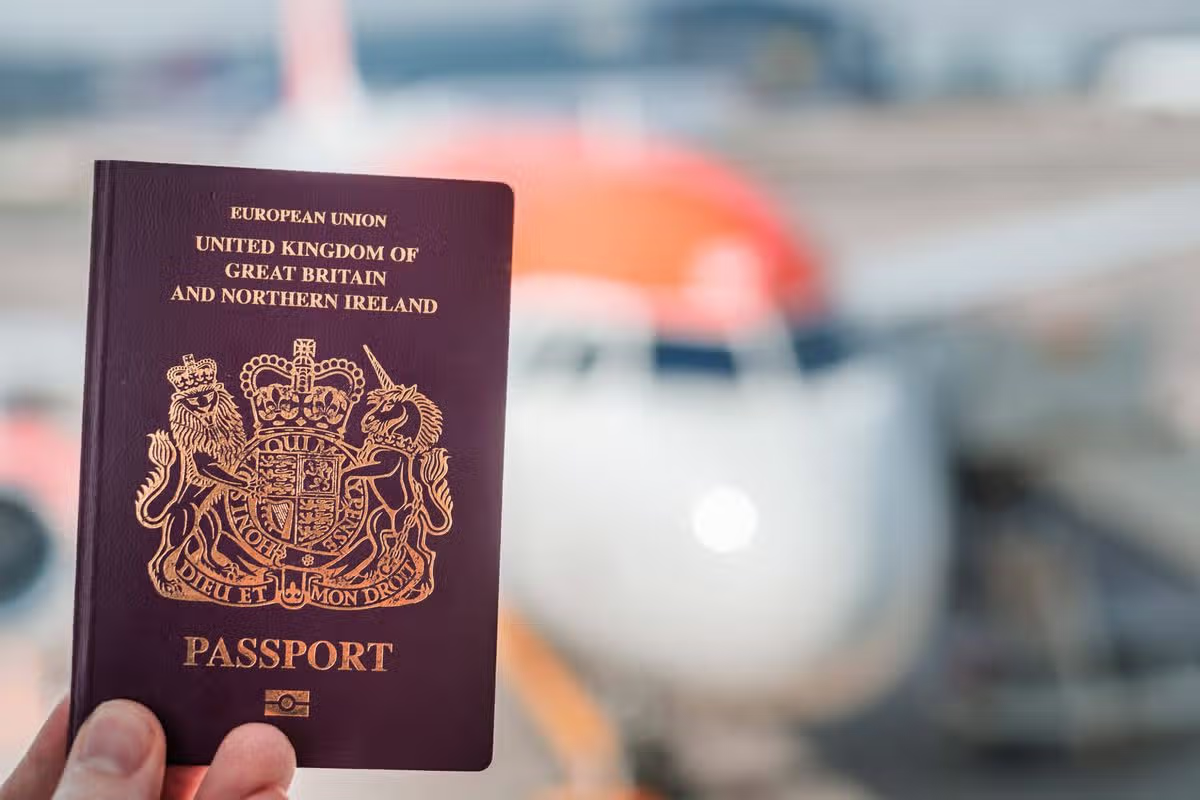
In a bid to ease travel chaos, Greece has chosen to waive the EU requirement for Brits to submit fingerprints and facial scans at airport border controls. In a statement from the Greek Embassy, they announced: “Update for British passport holders travelling to Greece.

READ MORE: Ryanair issues warning to customers – and it’s not down to fuel crisisREAD MORE: Major EU travel rule change from Wednesday could see UK travellers denied entry

“In the framework of the implementation of the Entry/Exit System, as of 10 April 2026, British passport holders are exempt from biometric registration at Greek border crossing points.” There was no suggestion of how long the exemption would remain in place, but soon after, the Foreign, Commonwealth & Development Office (FCDO) revised its travel guidance for Greece.

In an update on Monday, 20 April, the FCDO stated: “Greek authorities have indicated that they will not collect biometric data (fingerprints and photos) for UK travellers as part of EES. Follow the advice of authorities on the ground. If you are a resident in Greece, make sure to show your residence documentation at passport control to ensure you are not registered in EES.”

Greece opted to ditch the new biometric security measures amid concerns about the significant travel chaos they were causing at airports, severely impacting holidaymakers. The relaxed EU rules from Greece are now hoped to improve travel for Brits into the country, allowing for a smoother journey without gruelling wait times and unnecessary delays.

Noting the impact of the EES, Luke Petherbridge, director of public affairs at ABTA, said: “While for many the travel experience remains smooth, we’re disappointed and frustrated to see some passengers being caught up in delays due to EES.

“Abta has been warning destinations and the (European) Commission for some time about the need for proactive steps to be taken to avoid delays, including the full use of contingency measures to stand down biometric checks at busier times, and adequate staffing, especially at peak times.”

The EES was fully implemented across European airports on April 10, 2026, and requires all Brits travelling to the Schengen area to “create a digital record” and register their biometric details, such as fingerprints and a photograph. It’s needed for their first arrival at the airport border in the Schengen area, and after the initial registration, the EES remains valid for three years.

Countries in the Schengen area include: Austria, Belgium, Bulgaria, Croatia, Czechia, Denmark, Estonia, Finland, France, Germany, Greece, Hungary, Iceland, Italy, Latvia, Liechtenstein, Lithuania, Luxembourg, Malta, Netherlands, Norway, Poland, Portugal, Romania, Slovakia, Slovenia, Spain, Sweden, and Switzerland.

However, as it stands, Greece is the only country to relax the EU requirements for Brits. The EES system is not required for travel into the Republic of Ireland and Cyprus, as they are not within the Schengen area.

For more information on the new EES system, visit the government website.

Do you have a travel story to share? Email webtravel@reachplc.com

Source link

Ryanair issues warning to customers – and it’s not down to fuel crisis

The warning comes at a time of global turmoil

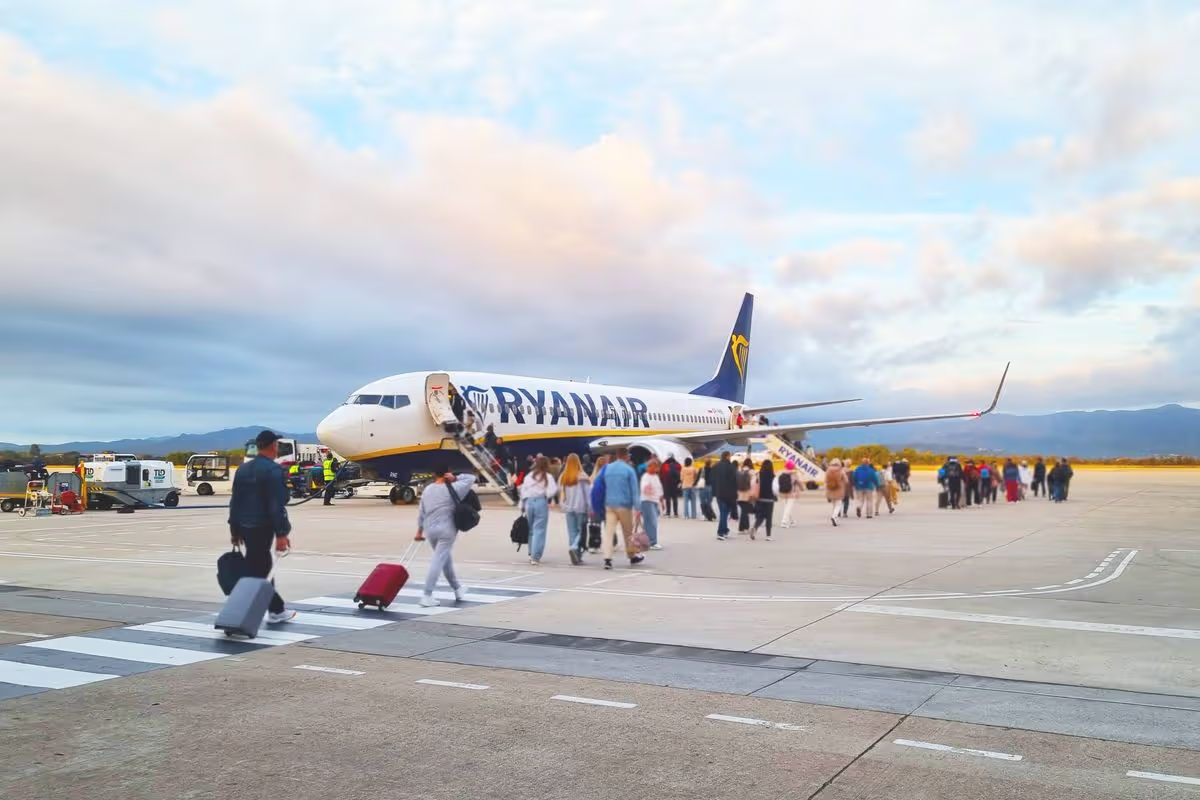
Ryanair has issued a warning to passengers hoping to fly in the days ahead. The budget airline has sent emails to travellers flying from the UK to large parts of Europe.

It cautions of ‘longer queues, particularly at busy airports’. The reason is the new Entry and Exit System (EES), which has been rolled out by the European Union (EU). It requires all travellers from the UK and other non-EU nations to be photographed and fingerprinted at EU airports and border crossings.

The objective is for the new system to replace manual passport stamping and more efficiently track the 90-day visa-free limit, but there have been accounts of it causing delays stretching to several hours at busy airports. It has even been temporarily suspended at times to clear the backlog.

In a message to customers titled ‘Important: Changes to Passport Control’, Ryanair says: “From 10 April 2026, the EU’s Entry/Exit System (EES) is in place at all Schengen Area external borders. As a result, passport control may take longer for some passengers.

“You are affected if you hold a non‐EU / non‐EEA / non‐Swiss passport (e.g. UK, USA, Canada, Australia), and are flying into or out of the Schengen Area.

“Commonly affected routes include flights between the Schengen Area and countries such as: UK, Ireland, Cyprus, Albania, Montenegro, Serbia, Türkiye, Egypt, Israel and others.

“At passport control you may need to:

  • Scan your passport
  • Provide fingerprints
  • Have a facial image taken

These checks may cause longer queues, particularly at busy airports. Queues may form before security.

If affected, please:

  • Arrive at the airport early to allow for queues
  • Have your travel documents ready
  • Follow signs marked EES / Passport Control

Those who are not affected:

  • EU, EEA and Swiss passport holders
  • Flights within the Schengen Area (e.g. Spain–Italy, France–Germany)

“If you are denied entry, this will be due to EU policy, not Ryanair’s rules.”

Greece has reportedly opted to pause the EES rollout following considerable delays. A statement on the Greek Embassy website and posts across official social media channels said: “In the framework of the implementation of the Entry/Exit System, as of 10 April 2026, British passport holders are exempt from biometric registration at Greek border crossing points.”

Airport representatives and the European Commission convened a meeting on Tuesday to address issues surrounding the system. Approximately 122 passengers were left stranded and unable to board their flight from Milan Linate to Manchester on Sunday, following severe hold-ups at passport control linked to the introduction of the EES.

The Foreign, Commonwealth and Development Office has confirmed that your details will need to be re-registered every three years. A statement also warned that travellers may face longer waiting times when entering or departing a country. It states: “The European Union’s (EU) Entry/Exit System (EES) started on 12 October 2025 This is a new digital border system that has changed requirements for British citizens travelling to the Schengen area.

The countries in the Schengen area are: Austria, Belgium, Bulgaria, Croatia, Czechia, Denmark, Estonia, Finland, France, Germany, Greece, Hungary, Iceland, Italy, Latvia, Liechtenstein, Lithuania, Luxembourg, Malta, Netherlands, Norway, Poland, Portugal, Romania, Slovakia, Slovenia, Spain, Sweden, and Switzerland.

READ MORE: ‘Our home burned down after moving in – we didn’t even have time to unpack’READ MORE: Brits flying to EU issued Defra warning after foot and mouth disease outbreak

The Republic of Ireland and Cyprus are not within the Schengen area, and therefore EES is not applicable when travelling to either of these countries. If you are travelling to a country in the Schengen area for a short stay using a UK passport, you may be required to register your biometric details, such as fingerprints and a photo, when you arrive. You do not need to take any action before you arrive at the border, and there is no cost for EES registration.

EES registration is replacing the current system of manually stamping passports when visitors arrive in the EU. EES may take each passenger extra time to complete so be prepared to wait longer than usual at the border.

“On your first visit to the Schengen area, you may be asked to create a digital record at the port or airport on arrival. You may be asked to submit your fingerprints and have your photo taken at dedicated booths. You don’t need to provide any information before travelling to a Schengen area country. The checks may take slightly longer than previously, so be prepared to wait during busy times.”

“If you enter the Schengen area through the Port of Dover, Eurotunnel Le Shuttle at Folkestone or Eurostar, St Pancras International, any EES checks will be completed at the border, before you leave the UK. You may also be asked to provide either your fingerprint or photo when you exit the Schengen area.”

“If you frequently travel to the Schengen area for work and/or leisure purposes, you must ensure that your total stay in the Schengen area is no more than 90 days in every 180 days. You must be aware of the penalty and enforcement approach for exceeding the immigration limit in any individual Member State you plan to travel to, or through.”

Source link

Britain’s Got Talent viewers ‘can’t watch’ as ITV issues urgent warning

Britain’s Got Talent viewers complained about one act tonight, calling it inappropriate for family viewing

Britain’s Got Talent viewers have voiced the same grievance, urging ITV bosses to “do better” following an “utterly inappropriate” act.

The beloved ITV talent programme has returned to screens once again with a brand new series, featuring BGT judges Simon Cowell, Amanda Holden, Alesha Dixon and KSI, alongside legendary hosts Ant and Dec.

Tonight (April 18) marked the final round of auditions, but one particular act left viewers at home feeling “sick” and outraged. Fakir Testa, 45, was welcomed onto the stage, leaving both the audience and judges curious about what his performance might involve – and no-one could have guessed.

Viewers at home were quickly horrified to witness him standing on blades while having them pressed against his neck, prompting ITV to issue a ‘do not try at home’ warning.

Admitting she was “stressed”, judge Alesha pressed her red button, joined by Simon, who appeared distinctly unimpressed by the performance, reports Wales Online.

Members of the audience were also spotted turning away and peeking through their fingers, while judge Amanda buried her face in her hands.

Nevertheless, Fakir proceeded to invite Simon onto the stage, requesting he take a seat in a waiting car, before hauling it with a blade pressed against his neck.

The audience seemed to watch on in sheer horror, yet the act proved popular with the Blackpool crowd, as KSI was overheard exclaiming: “You madman, you crazy madman.”

However, viewers at home remained thoroughly unimpressed, as they directed their frustration squarely at ITV bosses. Taking to X, one person wrote: “WHAT THE ACTUAL HECK IS THIS? #BGT.” Another said: “This is NOT a family show #bgt.”

A third fumed: “F***s sake. This is on pre watershed. Do better #itv.” A fourth commented: “This is NOT talent! This is f***** lunacy.”

A fifth echoed: “I can’t watch! Why are they showing this for family entertainment #BGT ?!!?”

One viewer admitted they felt “sick” while another confessed they “can’t watch”. One person labelled it as “utterly inappropriate” as another added: “There are far too many of these Don’t try this at home stunts on #bgt . How about don’t show them on the Tele?”

However, one impressed viewer enthused: “Faki Testa – oh my days that was strange so hard to watch but b****y brilliant entertainment.”

Another offered an explanation: “The blade has to move sideways to cut or use a large amount of energy to chop My Kung Fu teacher had us do this, including spears in our throats, back in the day #BGT.”

Judge Alesha also appeared to reverse her earlier red buzzer decision as Fakir successfully made it through his audition.

Britain’s Got Talent can be streamed on ITVX

Source link

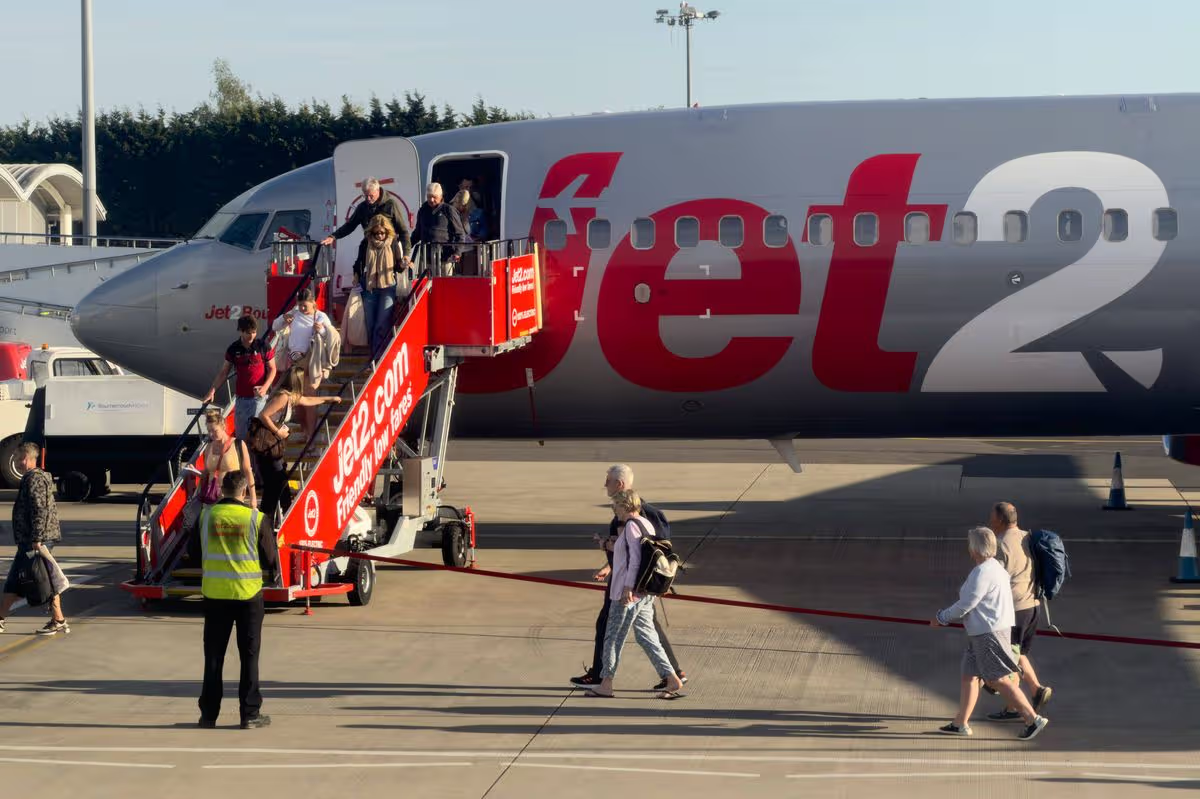
Jet2 issues two-day warning to passengers

Jet2 issued a new alert on Friday morning

Jet2 has issued a warning to many passengers who are soon due to fly abroad.

One of the UK’s largest airlines, Jet2 now flies from some 14 airports across the country, including London Gatwick, Manchester, and Birmingham. Jet2 also flies from East Midlands Airport, and passengers due to travel from here over the weekend have been urged to plan wisely ahead of their trips. On Friday morning (April 16) Jet2 issued a new alert ahead of an expected “increase in traffic”.

Jet2 said at 10am on Friday: “We wanted to let you know there may be an increase in traffic over this weekend due to the British Touring Car Championship event at Donington Park on Saturday 18th April 2026 and Sunday 19th April 2026. If you’re affected, please allow extra time for your journey to the airport as we’re operating all our flights as scheduled.

“Please arrive at the airport at least two hours before your departure time. Check-in closes 40 minutes before a flight’s departure time.”

The announcement comes after Jet2 also updated passengers travelling to parts of Spain on Friday. The airline warned there may be some delays on flights to Lanzarote, Fuerteventura, Jerez, and La Palma, due to strike action by Spanish Air Traffic Control company Saerco.

All passengers travelling with Jet2 are advised to check the travel information section of its website at least 12 hours before their flight is due to depart.

Source link

Venezuela: Trump Administration Issues Banking Licenses as Rodríguez Eyes ‘Long-Term’ US Energy Ties

Rodríguez hosted US Energy Assistant Secretary Kyle Haustveit at Miraflores Palace. (Presidential Press)

Caracas, April 15, 2026 (venezuelanalysis.com) – The US Treasury Department’s Office of Foreign Assets Control (OFAC) issued two new general licenses on Tuesday facilitating transactions with Venezuelan state institutions.

 for Venezuela on Tuesday: a commercial license (No. 56) and a financial license (No. 57), signaling a partial easing of restrictions while maintaining key controls.

General License 56 (GL56) authorizes US entities to negotiate and sign “contingent contracts” for future commercial operations in Venezuela. This allows firms to move forward with agreements, investments, or projects, though their final execution remains subject to separate OFAC approval.

The waiver maintains important restrictions, including a ban on payments in gold or cryptocurrencies, as well as prohibitions on transactions involving China, Russia, Iran, North Korea, and Cuba. It likewise forbids transactions involving Venezuelan debt and does not unblock currently frozen Venezuelan assets.

For its part, General License 57 (GL57) permits a broad range of financial operations with the Venezuelan Central Bank (BCV), as well as Venezuela’s public banks: Banco de Venezuela, Banco Digital de los Trabajadores, Banco del Tesoro, and entities in which these institutions hold a 50 percent or greater stake.

The allowed transactions include opening and managing accounts, conducting US dollar transfers, issuing loans, and providing banking services. The BCV was sanctioned in April 2019, effectively isolating Venezuela from international financial circuits and increasing costs for basic transactions.

The latest sanctions waivers are expected to facilitate financial flows to the Venezuelan economy, including the transfer of Venezuelan oil revenues that are currently controlled by the Trump administration. US authorities have returned a confirmed US $500 million out of an initial deal estimated at $2 billion, while US and Venezuelan officials have confirmed the purchase of US-manufactured medicines and hospital equipment using Venezuelan funds.

Analyst Hermes Pérez warned that reincorporation into the SWIFT system and establishment of US-based accounts could take several months due to security and technological requirements. Other economists argued that GL57 could allow the Central Bank to stabilize the Venezuelan foreign exchange system.

For several years, a parallel exchange rate between the US dollar and the Venezuelan bolívar has coexisted with the official one set by the Central Bank, often with a gap above 50 percent that fueled distortions in retail activities and currency speculation.

Since the January 3 military strikes and kidnapping of Venezuelan President Nicolás Maduro, the Trump administration has issued several licenses to expand US influence in the Caribbean nation, particularly in key economic sectors such as hydrocarbons and mining.

In parallel, Venezuelan authorities have promoted several pro-business reforms, while multiple Trump officials and corporate executives have come the South American country and held meetings with the acting government led by Delcy Rodríguez.

The latest waivers coincided with the visit to Caracas of a US Department of Energy delegation led by Assistant Secretary Kyle Haustveit. Rodríguez hosted the official on Wednesday in a work meeting at the presidential palace.

During a short, televised intervention, Rodríguez argued that OFAC licenses do not provide sufficient “legal certainty” and reiterated calls for Trump to lift unilateral coercive measures against the country.

“An investor requires greater legal certainty. A license does not provide long-term legal guarantees because it is subject to temporality,” she argued. Rodríguez claimed Washington and Caracas have “enough maturity” to establish “long-term” energy cooperation ties.

“We are working very hard on changes that can attract investment, and which can build an energy cooperation agenda with the United States,” she said.

Rodríguez additionally disclosed recent meetings with representatives from ExxonMobil and ConocoPhillips, stating that authorities have “taken into account recommendations” from oil majors in recent legislative overhauls. Both ExxonMobil and ConocoPhillips refused to accept hydrocarbon reforms under former President Hugo Chávez in the 2000s, later securing multi-billion-dollar arbitration awards against the Caracas as compensation for the nationalization of their assets.

Haustveit and the Energy Department delegation were also present on Monday during the signing of agreements with Chevron that granted the Texas-based conglomerate an increased stake in the Petroindependencia joint venture and awarded an additional extra-heavy crude bloc for exploration to the Petropiar mixed company. Chevron owns minority stakes in both joint enterprises with Venezuelan state oil company PDVSA.

Shell, Eni and Repsol are among the other energy giants to have recently advanced in deals with the Venezuelan government under the improved conditions of the new Hydrocarbon Law.

US Chargé d’Affaires in Venezuela Laura Dogu was also present at the Chevron deal-signing ceremony and the meeting with Haustveit’s delegation. However, the White House announced Wednesday that her post will be taken over by veteran diplomat John Barrett.

Barrett, who previously served as chargé d’affaires at the US Embassy in Guatemala since January 21, 2026, was recently accused by Guatemalan President Bernardo Arévalo of interference during judicial elections for the Constitutional Court held in March.

Edited by Ricardo Vaz in Caracas.

Source link

easyJet Portugal update as airline issues warning over new ‘allowance’ rule

EasyJet’s general manager in Portugal has issued a warning over new government proposals the carrier says will artificially inflate prices

easyJet is weighing up plans to cut back operations in Portugal, according to reports emerging from the country. The airline’s general manager there has issued the warning amid a dispute over government proposals which easyJet claims will drive up costs for passengers.

José Lopes, easyJet’s general manager in Portugal, announced on Monday that the carrier may cut back its domestic services following the scrapping of caps on something called the social mobility allowance for air travel. This caps maximum fares for some local passengers – but the changes are set to affect the airline more widely.

“Removing the upper limit will artificially inflate prices,” José Lopes said. He argued that the measure will deliver “zero benefits” for island residents while helping to deter tourists, who makeup the bulk of passengers on domestic routes.

The airline says it will not return to operate Azores routes due to the changes. It had already confirmed its departure from the region from March 29, 2026, blaming a 35 per cent increase in airport fees and what it describes as government inaction.

The easyJet representative was addressing journalists at a press conference in Funchal, held in partnership with the Regional Secretariat for Tourism, to outline the company’s operations and long-term pledges in the Madeira archipelago, SIC Noticias reports. Portuguese media outlets report that at Porto Santo airport, the two existing routes to Lisbon and Porto will be retained, albeit with a reduction to Lisbon owing to constraints at that airport, he indicated.

He warned that if the measure to alter the social mobility subsidy regime – which would remove the maximum limits for air travel for residents of Madeira and the Azores – is implemented, there will be implications for Easyjet’s operations. “I hope that an analysis will be carried out and a way will be found to be more rational and less emotional in dealing with the matter,” he said.

When asked about the possibility of abandoning the route to Madeira, the official ruled out this scenario. Yet reports say he highlighted the possibility of “a reduction in market capacity.”

The changes were given the green light on Friday in the Assembly of the Republic, but have yet to come into force. The amendments stem from two initiatives to revise the legislation put forward by the Socialist Party and Chega.

What is the social mobility subsidy?

The social mobility subsidy set a maximum fare of €79 for residents and €59 for students travelling between Madeira and the mainland (round trip), with an overall cap of €400. In the Azores, residents travelling to the mainland pay no more than €119, while students are capped at €89, with a recently introduced maximum ceiling of €600.

The Portugal Post reports that Portugal Parliament’s recent decision to abolish price caps has placed island connectivity under serious threat, with easyJet warning of capacity reductions to Madeira and confirming it will not operate Azores routes under the new framework.

Ryanair has also revealed plans to cease all operations in the Azores on March 29, 2026, citing cost pressures.

Source link