Without these you may be refused entry to Spain, the Foreign Office has warned
06:01, 09 May 2026Updated 13:33, 09 May 2026
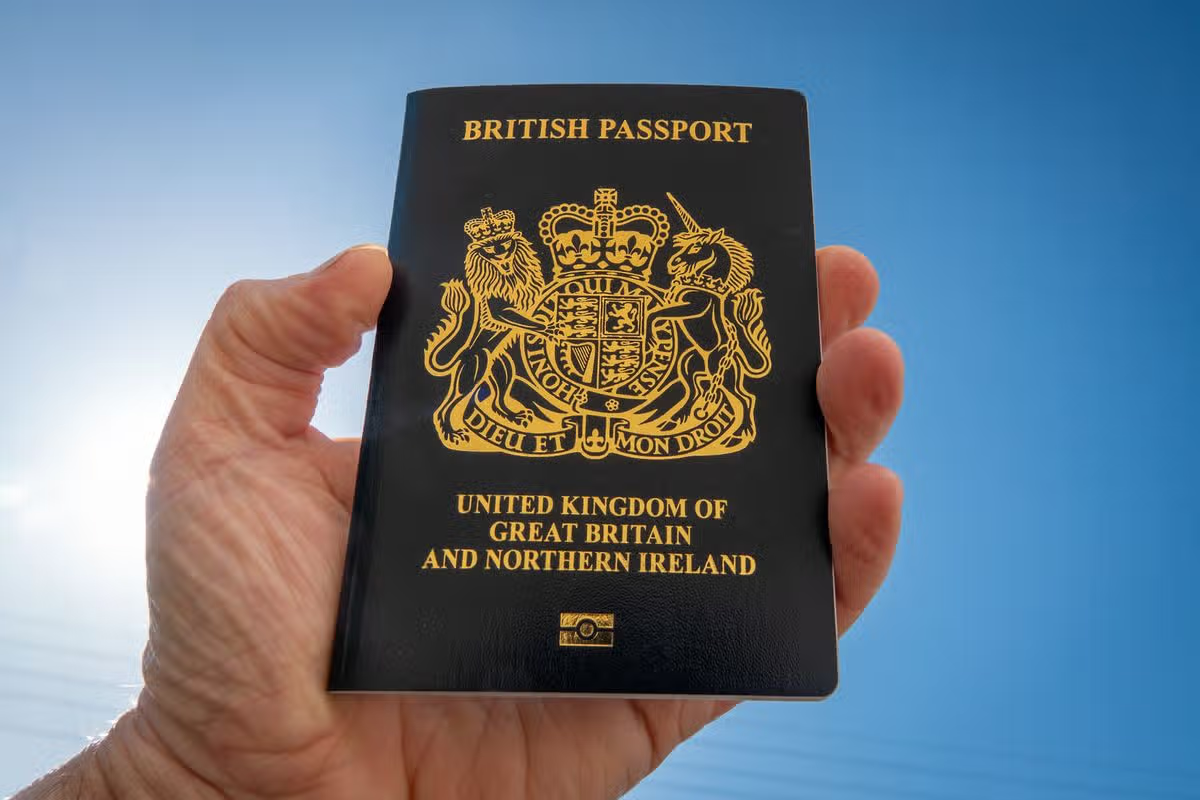
You could be refused entry to Spain (Image: Mats Anda via Getty Images)
Millions of Brits flock to Spain each year, with the European country remaining a firm favourite among UK holidaymakers.
Spain’s appeal is undeniable – from its warmer weather, breathtaking coastlines and mouth-watering cuisine to its charming cities and verdant landscapes. With another hectic summer of international travel expected for 2026, we’ve looked at the entry requirements for Spain for anyone holding a UK passport. And travellers may not know they could be asked to present certain extra documents upon arrival – or face being refused entry.
According to the Foreign, Commonwealth and Development Office (FCDO), alongside a valid passport, UK visitors may also be required to produce a return or onward ticket and/or proof of valid travel insurance. You may additionally need to demonstrate that you have sufficient funds for your stay, with the required amount varying depending on your accommodation arrangements.
Border officials may also request proof of accommodation, which could take the form of a hotel reservation or proof of address if you’re staying at a property you own. Alternatively, this might be an invitation or proof of address if staying with friends, family or a third party, such as a ‘carta de invitation’ completed by your hosts, the FCDO adds.
As well as this, new rules introduced post-Brexit mean that Brits travelling to the Schengen Area – which includes Spain – on a UK passport may need to check their travel documents now. This is because your passport must display a ‘date of issue’ that falls within 10 years of your arrival date, and if you renewed your passport prior to October 1, 2018, it could carry a date of issue exceeding 10 years, rendering it invalid for entering the Schengen zone.
Additionally, your passport must show an ‘expiry date’ of at least 3 months beyond the day you intend to depart the Schengen Area (the expiry date need not fall within 10 years of the issue date).
The money-saving guru has urged those who have paid for trips with major holiday firms and airlines to avoid the DIY approach
15:04, 08 May 2026Updated 15:15, 08 May 2026
Martin Lewis gave advice for anyone booking holidays amid the Iran conflict(Image: ITV)
Martin Lewis has delivered a stark warning to anyone who has already booked a holiday for this summer – and explained why people could be making a big mistake getting flights and hotels separately. In a recent update, the money-saving guru has urged those who have paid for trips with major holiday firms and airlines, including TUI, Jet2, Ryanair, Wizz, easyJet and British Airways, to pay close attention.
It was suggested this week that the UK could be worst hit by jet fuel shortages because it has ‘critically low levels’ of supplies and poor refining tools, by Goldman Sachs. The giant investment bank Goldman Sachs said in a research note to clients: “The UK is the largest net importer of jet fuel in Europe, and it holds no strategic reserves, leaving commercial inventories as the primary buffer.”
During his Money Show Live on ITV, the financial expert responded to an audience member who asked: ‘If my flight’s cancelled due to no jet fuel will you definitely receive at the moment package holidays give you a certain as well.’ Mr Lewis explained that holidaymakers would lose their hotel booking costs if they had arranged accommodation independently from flights reserved with airlines such as Jet2, TUI, Wizz, Ryanair or easyJet – as they would not be protected under consumer regulations.
He said: “No. And I think this is what people need to be very aware of. If you booked a package holiday where you booked everything in one, then under the package holiday regulations and rules and protections generally if your flight went you would get everything back.”
He added: “And so actually at the moment package holidays give you a certain level of extra security that you wouldn’t get if you did a DIY booking where you bought your hotel and flight separately.” The reason for this, he explained, stems from the fact that the hotel reservation itself remains entirely valid: “Because the point is if you lose your flight and you’ve DIY booked, there’s nothing wrong with your hotel.
“The issue is you can’t get there. Your hotel is still there. It’s not faulty. It’s not cancelling. So, you don’t have those consumer rights.” If the accommodation provider hasn’t violated any terms, then guests might examine how they’ve paid for their booking – but that route offers no solution either. He said: “So, you would then say, ‘What about using a credit card or debit card protection?’ It won’t work because there’s nothing faulty. And that’s just giving you the same replica rights that you would have with the retailer.”
For those still seeking a solution, travel insurance may seem like the next logical port of call. Mr Lewis revealed: “So, you’ then say, ‘What about travel insurance?’ This is the bad bit. We were checking 40 travel insurance policies. Of those, only a few would have covered you for the knock-on eventuality of your flight being cancelled due to jet fuel and then your hotel costs.
“Only about three or four and most of those were package bank accounts where it’s linked to your bank account. Only one standalone provider. So we need to be blunt at the moment. There is a big risk in those circumstances. If you’re booking, you want something with free or limited cancellation quite short before. So you could just cancel it. You should always talk to the provider.
“Government are saying there isn’t one at the moment and they’re working on consolidating flights and doing things so there won’t be one, but people’s hotel costs if they book separately and other knock-on costs are potentially at risk.”
Speaking on his ITV programme, he also cautioned that neglecting to take one vital step after booking could leave holidaymakers with absolutely nothing if their plans fall through. With the ongoing turmoil in the Middle East sparking serious worries over jet fuel supplies, Mr Lewis warned that those who book a holiday and put off arranging insurance could risk losing everything should something go wrong in the interim.
Mr Lewis emphasised that travel insurance ought to be bought the instant a holiday is booked: “The reason you do that is because half of the cover you’re paying for is in case something happens that stops you going before the trip. And if you don’t have the travel insurance place, you’ve got no cover. So, you may as well have it in place. But at this time of year when many people have already booked, I have a slight adaptation, which is this. If you’ve booked and you don’t have it yet, just get it now.
“Get it done as soon as possible.” A Money Show Live viewer named David said: “I booked flights to Australia for a family group of seven to travel in March next year. I took out insurance immediately. One of our group is now pregnant and can’t travel on the dates planned. It costs £5,000 to reschedule, which I’m happy to report the insurance covered.”
Mr Lewis also commented on the complexities facing larger groups: “Very quick aside on that, think of who you’re booking for. So, if it’s a family group and one can’t go, they’ll often cover you. But if there’s a large group of friends going, you often all get independent travel insurance. Well, then if one can’t go or and you can’t all go on the trip, it’s only the person who’s who’s got that cover. So, you’d need a group insurance policy so that if one can’t go, you all can’t go.”
Jet2 today said now people choosing a package holiday as their preferred method of booking is up 5% to 51% since February. In the same period, the number of people preferring to book through different providers has dropped by six percentage points to 20%. Those choosing ‘accommodation only’ has dropped to 2%.
The primary reasons for choosing a package holiday have remained steady, with value (36%) and ease (36%) the main drivers, however the benefit of ‘added security with one provider, ATOL/ABTA protection’ has increased by four percentage points since February to 26% the poll said.
This protection means that customers are covered should any changes happen to their bookings, including the option of receiving refunds if their travel plans are cancelled, and that those holidays are held to the highest standards when it comes to customer service, changes to bookings, and health & safety.
Jet2 has confirmed it will not introduce surcharges on any booked flights or holidays to cover cost increases, for example jet fuel, assuring customers that the price they book with Jet2 is the price they will pay.
Steve Heapy, CEO of Jet2 said: “Consumers want assurance during times of uncertainty and package holidays provide that assurance. On top of all the protection that our package holidays guarantee, Jet2 is well known as being a consumer champion that goes above and beyond to look after customers. Ahead of a busy summer season, this means new and existing customers know that their well-deserved holidays are in the very best hands with us, and we are very excited about welcoming everyone onboard and taking them on their breaks.”
People from the UK heading abroad for the Spring Bank Holiday are being given the latest advice on holidays amid growing fears over jet fuel shortages and flight disruption. Travel experts say flights are continuing to operate “as planned” despite airlines across Europe drawing up contingency measures following soaring fuel prices linked to conflict in the Middle East.
Concerns have grown after reports that some airlines are preparing for possible refuelling stops on long-haul routes if shortages worsen. German airline Lufthansa has reportedly already begun contingency planning after one of its flights was forced to divert for fuel during a recent journey to South Africa.
The airline has also cut thousands of flights from its wider summer schedule as fuel costs continue to rise. However, travel industry figures insist UK holidaymakers should not panic.
Mark Tanzer, Chief Executive of ABTA – The Travel Association, said: “We really don’t want people worrying about their holidays; planes are taking off daily and people are continuing to get away on their holidays. The Government and airlines are clear that there isn’t a problem with fuel supply.
“If you have a holiday booked in for the coming months – including the May half term – we expect it to go ahead as planned.”
He added: “Whilst there have been reports about cancellations globally, these amount to less than one per cent of overall flights.”
According to aviation analytics firm Cirium, around 13,000 flights worldwide have reportedly been cut during May. Munich and Istanbul are believed to be among the worst-affected destinations.
The Department for Transport has also said there is currently “no need” for travellers to change their plans. Officials say UK airlines buy fuel in advance and airports continue to maintain reserves to help prevent disruption.
Passengers are still being advised to check flight updates with airlines before travelling and ensure they have suitable travel insurance in place. Some 120 flights from the UK this month have been cancelled, new figures show, as jet fuel prices surge and fears of shortages grow.
Cirium said airlines have axed 120 of the 22,613 departures initially scheduled from UK airports in May, equivalent to 0.53%. The number of outbound flights planned for June is 36 lower than a week ago. This represents a 0.2% reduction and means capacity for the month has fallen by 7,972 seats.
The final week of May is a peak period for holidays as it is half-time at many schools. For all flights globally, some 13,005 planned for May were cancelled between April 10 and April 21, equivalent to 1.5%. That reduced capacity by almost two million seats.
Julia Lo Bue-Said, chief executive of Advantage Travel Partnership, a network of independent travel agents, said airlines are “assessing poor performance flights and consolidating or cancelling as required”.
She added that UK departures to popular summer hotspots “remain unaffected” and insisted “customers can continue to book with confidence”. Paul Charles, founder of travel consultancy The PC Agency, said: “Airlines are now being forced to cut flights and make difficult decisions ahead of the peak season.
“It is better for them to cancel flights well in advance so that passengers are less inconvenienced than a last-minute change of plan. As the Iran conflict continues, there will need to be many more cancellations as the jet fuel supply is squeezed.”
Lufthansa’s airline group announced in April it would cancel 20,000 flights over the following six months to save fuel. Iran continues to have a stranglehold on tankers passing through the Strait of Hormuz, leading to a surge in oil prices and concerns of jet fuel shortages.
But on Sunday, Transport Secretary Heidi Alexander said summer holiday plans will not face major disruption because of the latter. She revealed that more fuel has been imported from America, while refineries have upped their production.
The Government has also introduced a temporary rule change allowing airlines to group passengers from different flights together on to fewer planes to save fuel.
This European carrier serves regionally inspired dishes at 35,000ft
Andrea Blazquez Editor of Spare Time
14:56, 03 May 2026Updated 14:56, 03 May 2026
Airline with the best food named – not British Airways, Virgin or Emirates
A Greek airline boasting a fleet of 83 aircraft has been named the top carrier for in-flight dining, beating major rivals including Emirates, Virgin Atlantic, Qatar Airways, and British Airways. A study by Canstar Travel Insurance analysed passenger reviews and meals from the world’s top 100 airlines, concluding that Greek carrier AEGEAN serves up the finest food, earning an impressive score of 7.82 out of 10.
AEGEAN treats passengers to authentic Greek cuisine and regionally inspired dishes, while in business class, meals are lovingly prepared by acclaimed Greek chefs and sommeliers. The airline’s culinary philosophy is rooted in the concept of filema, which champions “love and kindness through food”. Other carriers delivering exceptional onboard dining include Qatar, Asiana Airlines and EVA Air.
On Tripadvisor, one traveller who recently flew with Aegean wrote: “Aegean Airlines is simply amazing! The level of service is very high, and it is incredibly easy to reach their call centre whenever you need help or extra information. On board, they offer food and drinks, and everything was delicious.”
A second passenger added: “I have used British, Virgin, easyJet, Ryanair… but no one is better, always on time and sometimes even earlier at the destination than Aegean Airlines.
“Although I’m Italian, I use it instead of Alitalia when I’m travelling to my country. Warm and delicious food and choices of wines and a particular menu for any kind of dietary or religious needs.”
Turkey is one of the most popular destination for British holidaymakers
Holidaymakers heading to Turkey are being warned(Image: Nick Brundle Photography via Getty Images)
The Foreign, Commonwealth and Development Office (FCDO) is continuing to warn travellers heading to Turkey following the deaths of several British holidaymakers. The FCDO is responsible for issuing regular travel advice covering approximately 226 overseas countries and territories.
FCDO updates include guidance on safety and security, regional risks, health, and much more. Part of its advice for Turkey highlights popular holiday activities that have left people dead or seriously hurt, with the Foreign Office stating: “British nationals have been injured and killed doing extreme sports.
“Only use reputable operators. Make sure you are given full instructions and training before your activity. Make sure your travel insurance covers you for all activities you do. Always read the details of your insurance cover, especially the small print and exclusions on your policy.
“Paragliding is an extreme sport and carries the risk of serious injury or death. British nationals have died or been seriously injured whilst paragliding in Turkey. Make sure you are given full instructions and training before your activity.
“If you are near where paragliding activities take place, be aware that the landing area may be in a public area. Keep a reasonable distance from potential landing zones for your personal safety.”
The guidance further warns that quad biking carries comparable dangers, while jeep safaris have been involved in “a number of reported accidents in recent years”. Turkey remains a firm favourite amongst British holidaymakers, and current guidance advises that you should only purchase alcoholic drinks from licensed shops, bars and hotels, steer clear of homemade spirits, ensure bottle seals are unbroken, and scrutinise labels for poor print quality or spelling mistakes.
Should you or anyone in your travel party fall ill after consuming alcohol, seek emergency medical assistance immediately. FCDO advice reads: “There has been an increase in cases of serious illness caused by alcoholic drinks containing methanol in popular travel destinations around the world. In Turkey, including Ankara and Istanbul, people have died or suffered serious illness after drinking illegally produced local spirits and counterfeit bottles of branded alcohol.
“Even small amounts of methanol can kill. It is not possible to identify methanol in alcoholic drinks by taste or smell. Seek urgent medical attention if you or someone you are travelling with show the signs of methanol poisoning after drinking.”
Visitors to Turkey are also cautioned about the dangers of swimming. The FCDO states: “Every year, people drown in the sea and in swimming pools in Turkey. Always supervise children, even if they can swim or there is a lifeguard present.
“Take care when swimming in the sea. Some beaches may have strong undercurrents. Hidden rocks or shallow depths can cause serious injury or death. Do not dive into unknown water.”
DIY expert Nick Knowles said he’s no longer going to Turkey as BBC Morning Live viewers told ‘it could see holidays in jeopardy’
BBC Morning Live consumer champion Rebecca Wilcox told people when they are eligible for holiday refunds(Image: BBC)
A BBC travel expert has given an update to anyone with holidays booked or considering going on a foreign break this summer. On BBC Morning Live consumer champion Rebecca Wilcox told hosts Rav Wilding and Holly Hamilton how concern is growing from people with breaks lined up – as to if it could be cancelled, will they be charged more supplementary fees and will they be covered.
And during the section show DIY expert and guest Nick Knowles revealed his family has decided to cancel their holiday to Turkey amidst all the uncertainty. Host Helen said: “With this morning’s headlines showing oil prices at their highest level since 2022 there’s growing concern that airlines could respond by raising fares or even cancelling some flights.”
Ms Wilcox agreed and said: “It’s very worrying and and the number of headlines make us spike in our concern and I can see that the fuel price is going up making concerns go up and what we’re going to talk about today is how specifically that is going to affect the holiday pricing with airline fares because, of course, jet fuel, is integral for flying through the air.
“Jet2 has told us they are seeing an increase in holidaymakers leaving it to the very last minute to book their holidays, and that’s so they know the full cost of their trip at the time of purchase and that is due to the conflict in the Middle East.
“It tells us that there’s a real worry going on out there. People are quite hesitant to book, they don’t know whether they should go ahead with it. On Monday we heard the Prime Minister saying that airlines actually do have enough jet fuel at the moment but it could see holidays in jeopardy in the future and that depends upon how long this conflict goes on for which, of course, nobody knows.”
She said more people are considering whether to go ahead or just book a staycation in the UK instead. Presenter Holly Hamilton said: “Most people when you chat to them, it’s at the forefront of their mind about booking holidays and in some cases they are cancelling them. Nick you and I were chatting about it and you’ve cancelled your holiday.”
Nick Knowles said: “Yes a holiday in Turkey and we’ve decided to stay home. A holiday in the UK is more expensive than going abroad – so we’re going to go in the back garden and drink cocktails and sunbathe in the back garden. The trick is don’t tell anyone you’re not going away because then they’ll ring you and interrupt.”
Holly said, “Bad news, you’ve just told everybody.” Nick added, “I’m going to be in such trouble with my wife now.”
Rav asked: “Can holiday companies just raise prices then?” Rebecca said: “I’m devastated that Nick is not going to Turkey – how is he going to get those new teeth he was talking about earlier? I’m joking, obviously his teeth are beautiful.” Nick interjected: “I’m going back to the same people who did my hair it’s fine.”
When can holiday companies raise prices
Rebecca said: “They can only raise their prices in specific circumstances because there is a law protecting consumers from these huge hikes in prices that they could add on for any random charges. This law is known as the Package Travel Regulation and it means we are protected.
“The surcharges they are allowed to add on are related to things like fuel cost increases, which we’re talking about today, transport taxes and fees and any fluctuations in the exchange rate movement. They have to say this in your T&Cs at time of booking so just c heck your terms and conditions.”
Holly said: “The people who have booked their holiday will be thinking ‘how much could they possibly add on?’ “ Ms Wilcox said: “Well, it is a limited amount they can add on before they give you the option of cancelling or a refund and that amount they can add on is 8 per cent. This 8 per cent is broken down into 2 sections because the holiday company has to swallow that first 2 per cent and then you as consumer will only pay 6 per cent and that’s of the total cost of your holiday package.
“What does that look like for a holiday? So for instance if you’ve spent £1,000 on your holiday that’ll be an extra £60. A £3,500 holiday, another £210, and a £5,000 cruise that’s £300. They can only ask for this for up to 20 days before you travel and that’s why people are booking these last minute holidays because the time limit for that 6 per cent has already gone.”
Package holidays
Rav gave an example from a viewer, Jeff, who was due to pay the balance on his holiday – he’d booked the flights and the accommodation through the same agent and asked if his family would be able to get a full refund if they have to cancel our holiday because of the shortage. Ms Wilcox said: “This sounds like he’s booked a package holiday when he’s booked the flight and the accommodation together and that means you do have more protection and you should be offered a full refund and a suitable alternative if they make major changes.
“If it’s a flight only deal they must offer you a replacement flight or a refund. If they offer you a holiday voucher or credit with them instead of cash be really wary and think twice about doing it. They may lure you in by offering you something that’s supposedly more than what you spent so it looks like it’s of greater value, but I would say you’re more protected if you get the cash back.” She said there may be restrictions, there may be an end date on the credit and also the company could go bust.
She said getting travel insurance when you make the booking was vital as you’re protected from then until time of travel.
The Money Saving Expert founder reminded people of this ‘most important’ thing to do when booking a holiday
Martin Lewis reminded people of this ‘rule’(Image: ITV)
As the peak travel season draws near, Martin Lewis has reminded holidaymakers of his ‘golden’ travel rule, which he urges everybody to follow. He set out exactly why it matters during a recent special edition of the Money Show Live on Tuesday, April 28.
Martin said that his “most important” tip is to take out travel insurance “as soon as you book” – a principle he shortens to four letters: ‘ASAB’. Outlining his rule, Martin said: “If you’re booking a single-trip policy, then you get the insurance as soon as you book to cover a specific future date.
“You pay for that and, once you’ve paid for it, you have the travel insurance. If anything happens from that point onwards, you’re covered, no problem.”
Rather than waiting for something to go wrong, travellers should look at securing insurance the moment they book their holiday, safeguarding themselves should any problems arise in the lead-up to their travels. The level of cover on offer will vary depending on the type of policy chosen.
Martin’s reason for getting protected straight away – even if your trip is several weeks or more than a year down the line – is that cover kicks in immediately, reports the Express. He said: “The reason you do that is that half of the coverage you’re paying for is in case something happens that stops you from going before the trip.
Content cannot be displayed without consent
“If you don’t have travel insurance, you’ve got no cover. So you might as well have it in place. At this time of year, when many people have already booked, I have a slight adaptation. If you’ve booked and you don’t have it yet, just get it now.”
Fellow ITV presenter Jeanette Kwakye shared that a viewer got in touch to say how they managed to avoid a £5,000 rescheduling fee thanks to having travel insurance in place. The viewer told Martin: “I booked flights to Australia for a family group of seven to travel in March next year.
“I took out insurance immediately. One of our group members is now pregnant and can’t travel on the dates planned. It cost £5,000 to reschedule, which I’m happy to report the insurance has covered.”
The money expert was asked by an audience member: “If my flight’s cancelled due to no jet fuel will you definitely receive all your money back, even for your hotel booking as well.”
Martin confirmed that travellers would lose their hotel booking money if it had been booked separately from their flights, as they would not be protected under consumer rules. He said: “No. And I think this is what people need to be very aware of.
“If you booked a package holiday where you booked everything in one, then under the package holiday regulations and rules and protections generally, if your flight went, you would get everything back. At the moment, package holidays give you a certain level of extra security that you wouldn’t get if you did a DIY booking where you bought your hotel and flight separately.”
In other travel news, airline passengers have been told there are two days that are often “cheapest to book a flight”. This will naturally depend on factors such as your destination, your chosen airline, and where you book – full details here.
Money expert on his ITV show said ‘there is a big risk in those circumstances’
11:08, 30 Apr 2026Updated 12:40, 30 Apr 2026
Martin Lewis has explained what people need to do if they’re booking for this summer(Image: ITV)
Martin Lewis has warned anyone booking their summer holiday that they won’t get their money back if their flight is cancelled and they’re unable to reach their hotel – provided they’ve booked in a particular way. During his Money Show Live on ITV last night, the financial expert was questioned by an audience member: ‘If my flight’s cancelled due to no jet fuel will you definitely receive all your money back even for your hotel booking as well.’
Mr Lewis clarified that travellers would forfeit their hotel booking fees if they’ve arranged it separately from their flights booked with operators like Jet2, TUI, Wizz, Ryanair, easyJet – as they won’t be protected by consumer regulations. He said: “No. And I think this is what people need to be very aware of. If you booked a package holiday where you booked everything in one, then under the package holiday regulations and rules and protections generally if your flight went you would get everything back.
“And so actually at the moment package holidays give you a certain level of extra security that you wouldn’t get if you did a DIY booking where you bought your hotel and flight separately.”
This is because there’s nothing amiss with the hotel reservation itself, he explained: “Because the point is if you lose your flight and you’ve DIY booked, there’s nothing wrong with your hotel. The issue is you can’t get there. Your hotel is still there. It’s not faulty. It’s not cancelling. So, you don’t have those consumer rights.”
Content cannot be displayed without consent
If the hotel hasn’t done anything wrong, then travellers might look at how they’ve arranged their booking – but there’s little relief to be found there. He said: “So, you would then say, ‘What about using a credit card or debit card protection?’ It won’t work because there’s nothing faulty. And that’s just giving you the same replica rights that you would have with the retailer.”
Finally, people may turn to their travel insurance. Mr Lewis explained: “So, you then say, ‘What about travel insurance?’ This is the bad bit. We were checking 40 travel insurance policies. Of those, only a few would have covered you for the knock-on eventuality of your flight being cancelled due to jet fuel and then your hotel costs.”
“Only about three or four and most of those were package bank accounts where it’s linked to your bank account. Only one standalone provider. So we need to be blunt at the moment. There is a big risk in those circumstances. If you’re booking, you want something with free or limited cancellation quite short before. So you could just cancel it. You should always talk to the provider.
“The reason this is important to know is if you are in that position once you understand you have no rights and they say, ‘Well, we’ll give you a voucher and you can come back in 6 months.’ You suddenly realise you’re doing well, not badly, right? If you didn’t have free cancellation and that this is going to be a problem if we get to that jet fuel shortage.
“Government are saying there isn’t one at the moment and they’re working on consolidating flights and doing things so there won’t be one, but people’s hotel costs if they book separately and other knock-on costs are potentially at risk.”
People planning holidays should check that their destionation has no new alerts or warnings
Some areas have a blanket warning, and others may have specific areas that should stay off-limits(Image: Craig Hastings via Getty)
The Foreign, Commonwealth and Development Office (FCDO) has significantly expanded its ‘red list’ in recent months due to regional escalations, particularly in the Middle East and Eastern Europe. It is important to be aware of which parts of the world pose a greater risk to tourists than others.
While it is not advisable to ignore the Foreign Office’s advice, doing so is likely to invalidate any insurance that travellers have obtained. In most cases, insurers will not cover people who knowingly go against FCDO advice and take risks. If you absolutely must travel to a high-risk area, you may need to look for specialised travel insurance companies that provide specific cover for such scenarios, according to ABTA.
As of April 28, 2026, the following list summarises the countries for which the Foreign Office has specific safety advice for travelling. In some cases, it issues a blanket alert urging people to reconsider visiting countries that are unsafe across all areas. Some areas have partial warnings in place. If people are visiting the area, check the Foreign Office website for the latest updates and warnings.
Countries where the Foreign Office currently advises against all travel:
Afghanistan
Belarus
Burkina Faso
Central African Republic (CAR)
Eritrea
Haiti
Iran
Iraq
Israel
Lebanon
Mali
Niger
Palestine (Occupied Palestinian Territories)
Russia
South Sudan
Sudan (most of the country)
Syria
Ukraine (most of the country)
Yemen
Countries where the Foreign Office advises against all but essential travel:
Bahrain
Cuba (entire island)
Ecuador (coastal provinces)
Egypt (significant parts: Western Desert, North South Sinai)
India (significant parts: Manipur, Pakistan border)
A booking trick can help ensure you are covered as many UK airlines face chance of disruption or cancellation this summer due to Middle East conflict impacting air travel
Jet2, Ryanair and easyJet £100 flight booking warning(Image: Getty Images)
Due to ongoing conflict in the Middle East, Europe is facing a fuel crisis, causing concern about the likelihood of summer holidays going ahead.
The International Energy Agency has warned that supply issues could kick in in the next five to six weeks with the owner of British Airways commenting that flight tickets may increase in line with skyrocketing fuel costs.
The fuel crisis comes as the Strait of Hormuz has been blocked throughout the conflict, meaning energy is not able to be distributed at a normal rate.
The strait is the shipping passage for 20 per cent of the world’s fuel and has seen the costs of petrol rapidly increase since the outbreak of war.
For travel, this has caused disruption to many flights, with prices changing and traveller’s fearing cancellations.
According to EU energy commissioner Dan Jorgensen it’s “very likely that many people’s holidays will be affected, either by flight cancellations or very, very expensive tickets”.
If your flight is cancelled it is covered by UK law if it was set to depart or arrive at a UK airport on a UK or EU airline, or arrive at an EU airport on a UK or EU airline.
Popular UK airlines Jet2, Ryanair and easyJet are all covered by this rule.
If you are covered and your flight is cancelled, the airline you are travelling with must provide you with a refund or book you on an alternative flight.
The Civil Aviation Authority (CAA) says that you can get all of your money back for your tickets or for the parts you haven’t used.
With return flights, if outward travel is cancelled, you are entitled to a full refund.
The CAA added: “If you are a transfer passenger and you have already completed part of your journey, you are also entitled to a flight back to your original departure point when your connecting flight is cancelled and you decide not to continue your journey.”
Experts gave a £100 flight booking warning, advising to pay via credit card as this gives you Section 75 protection under the Consumer Credit Act, legally protecting you for purchases costing between £100 and £30,000.
The situation is currently so unpredictable that travellers should be aware of all the cover they are entitled to, as flights may be cut at any point.
Global aviation expert Geoffrey Thomas told the Daily Mail that flights could be cut at the last minute.
Thomas highlighted that Europe is particularly impacted, especially when it comes to long haul travel.
“Europe is more exposed at the moment than Asia is, which means trips from Australia are obviously a challenge.
“For airlines like Qantas, who operate the Perth to London service, at the moment, they have to fly additional distance to refuel in Singapore.
“Any airline that operates through the Middle East is also exposed if the conflict widens or the Iranians decide to resume random drone attacks.”
Amid the conflict, travel experts reiterated the importance of travel insurance.
“To not travel with insurance these days is pretty crazy,” Dr David Beirman told the Daily Mail.
“Most policies will cover cancellation or major changes to an itinerary from a number of causes.
“If your airline is being difficult about a changed flight, and they’re only prepared to give you a credit or something like that, the travel insurance company will usually come to the party and help financially.”
Passengers have been advised to check with their airlines before they travel
The Department for Transport has said ‘we recognise that families may be concerned’ amid jet fuel worries(Image: Getty)
The Government has said it is “closely monitoring” UK jet fuel stocks as airlines prepare for a potential shortage. UK airlines have insisted they are “not currently seeing a shortage of jet fuel” as they buy it in advance and airports maintain stocks, the Department for Transport (DfT) said in an update published on Friday evening.
But airports will also make it easier for airlines to cancel flights without running the risk of losing their allocated “slots” – scheduled times for take-off or landing which some UK airports assign to airlines – if fuel shortages prevent them from flying.
Passengers have been advised to check with their airlines before they travel – and ensure they have appropriate travel insurance, according to the DfT.
This comes as oil prices continue to soar on the back of the US-Israel war on Iran and the closure of the Strait of Hormuz.
“There is no current need to change upcoming travel plans,” the DfT statement said.
“Since the closure of the Strait of Hormuz, we have been closely monitoring UK jet fuel stocks and working with airlines, airports and fuel suppliers to ensure passengers keep moving and businesses are supported.
“Government regularly meets with industry to monitor risks, understand pressures and ensure clear communication with passengers, should circumstances change.”
It added: “We recognise that families may be concerned, and that aviation and tourism businesses are operating in challenging global conditions.
“We are working hand in hand with industry to help flights keep operating.”
The DfT said airlines will also no longer be required to follow the “use it or lose it” rule at UK airports, whereby airlines must use at least 80% of their allocated slots during a season to keep them for the following year.
“Airport Coordination Limited, the independent body that manages slot allocation at UK airports, has updated its guidance so that airlines will not lose their slots if fuel shortages prevent them from flying,” the DfT update said.
“Airlines can now apply for an exemption from the ‘use it or lose it’ rule in these circumstances.” A spokesperson for Jet2 said its flight schedule remains unaffected for the foreseeable future.
“We remain in continual dialogue with our fuel suppliers, as is standard practice,” the spokesperson said. “Based on the conversations we have been having, we see no reason not to look forward to operating our scheduled programme of flights and holidays as normal.”
The airline also confirmed there will be no surcharge on any booked flights or holidays to cover cost increases, including those linked to jet fuel.
“Amidst speculation that some airlines and travel companies may introduce such surcharges, which would mean their customers facing additional costs after making a booking, Jet2 has removed the surcharge provision across all flights and holidays, even though the company has never previously applied them,” the airline announced on Friday.
Steve Heapy, CEO of Jet2, said: “Holidaymakers should have every right to book their hard-earned break in the sun, without worrying about being hit with additional costs, and they can have that complete assurance when they book a flight or holiday with Jet2.
“As a result of today’s announcement, customers booking with Jet2 know that they are locking in their price without additional cost surprises later and we strongly believe that is the right thing to do by them.”
It is understood that Virgin Atlantic and easyJet are also expecting to operate as normal.
Government spoke out to passengers booked with carriers like Ryanair, easyJet, Jet2 and Wizz Airs amid fears of fuel supply disruption and potential flight cancellations
Amidst fears of holiday meltdown the UK Government this afternoon issued statement and check sheet(Image: Getty Images)
The Government this afternoon issued a statement to passengers across the UK amid growing concerns over jet fuel shortages and the prospect of flight cancellations. The Department for Transport stepped in to respond following warnings from the European Union.
EU energy commissioner Dan Jorgensen said this week: “Unfortunately, it’s very likely that many people’s holidays will be affected, either by flight cancellations or very, very expensive tickets.”
He added: “Even if we do everything we can do, if the jet fuel is not there, then it’s not there. [Currently] it is primarily a crisis of prices and not yet a crisis of supply, but unfortunately we cannot be sure to prevent a crisis of supply, especially on jet fuel in the future, if the crisis continues.”
Earlier today, President Trump suggested the Iran situation could drag on for weeks, stating he ‘wouldn’t rush’ a deal. The DfT then issued direct guidance to passengers booked with carriers including Jet2, Ryanair, Wizz, easyJet and British Airways.
It said: “There is no current need for passengers to change their travel plans. UK airlines buy jet fuel in advance, and airports maintain stocks to support their resilience. The government is working closely with the aviation industry to monitor risks and minimise disruption to passengers.”
“If your flight is cancelled, you have clear legal rights, including the right to a full refund or re-routing. Read this factsheet for the full picture on the current situation and what it means for you.”
Is there a shortage of jet fuel in the UK?
DtT said: “UK airlines are clear that they are not currently seeing a shortage of jet fuel. It is typically bought in advance, with airports and their suppliers keeping stocks of bunkered fuel to support their resilience.”
Do you need to change your travel plans?
Officials explained: “There is no current need to change upcoming travel plans. Government regularly meets with industry to monitor risks, understand pressures and ensure clear communication with passengers, should circumstances change.
“We recognise that families may be concerned, and that aviation and tourism businesses are operating in challenging global conditions. We are working hand‑in‑hand with industry to help flights keep operating.
“We advise passengers to continue checking with their airlines before they travel, and to check the FCDO travel advice for the latest updates. You should also ensure you have appropriate travel insurance.”
How is the government protecting passengers?
Under UK law, if your flight is cancelled, you are entitled to either a full refund or to be booked onto an alternative flight if you:
depart from an airport in the UK on any airline
arrive at an airport in the UK on an EU or UK airline
arrive at an airport in the EU on a UK airline
For more information about your rights, you can:
What is government doing?
The UK Government said: “Since the closure of the Strait of Hormuz, we have been closely monitoring UK jet fuel stocks and working with airlines, airports and fuel suppliers to ensure passengers keep moving and businesses are supported.
“We continue to plan for a range of contingencies, while focusing on securing a long lasting and workable solution to get shipping flowing freely again through the Strait of Hormuz.”
How are airlines being supported?
In terms of carriers the DfT said: “At some UK airports, airlines are given scheduled times known as ‘slots’ in which to take off or land.
“Under normal rules, airlines must use at least 80% of their allocated slots during a season to keep them for the following year. If they fall below this threshold, those slots can be reassigned to another airline. This is known as the ‘use it or lose it’ rule.
“Airport Coordination Limited, the independent body that manages slot allocation at UK airports, has updated its guidance so that airlines will not lose their slots if fuel shortages prevent them from flying. Airlines can now apply for an exemption from the ‘use it or lose it’ rule in these circumstances.
“This means airlines can focus on minimising disruption for passengers, rather than feeling pressure to operate flights purely to protect their slots.”
Several UK airlines may have to cancel flights or hike prices ahead of summer with travel experts warning passengers to ensure insurance is in check with ‘refund’ update
05:20, 23 Apr 2026Updated 05:20, 23 Apr 2026
EasyJet, Jet2 and Ryanair flight warning(Image: Pavel1964 via Getty Images)
As summer holidays are approaching and UK airlines are facing some disruptions due to the Middle East conflict, passengers have been urged to be aware of their refund rights.
Travel experts are warning holidaymakers to be aware of how to protect your plans before summer commences.
Fuel prices have nearly doubled since the war began, with the International Energy Agency describing the situation as potentially the largest energy crisis the world has faced.
A document has been submitted to ministers and the Civil Aviation Authority warning that if disruption “worsens” airlines in the UK will be forced to increase fares and cut flights.
Airlines UK, which represents a number of carriers, including EasyJet, Jet2, British Airways and Ryanair, say in the document that “the doubling of jet fuel costs (with fuel accounting for around one-third of airline costs) represents a major additional price shock”.
The letter is an attempt to get the government to step in to secure fuel supplies and give airlines more flexibility to cope with soaring costs.
One of the asks is to allow the temporary import and use of Jet A – a grade of jet fuel produced in the US, according to ITV.
The emergency document illustrates the financial fears of airlines, adding to the concern that flights may be cut or prices escalated.
A travel expert has warned that British travellers should ensure “travel insurance is in order” and “check booking terms” ahead of summer.
Airlines will still be required to offer full refunds, should flights be cancelled, or provide an alternative route.
The spokesperson for Ski Vertigo said: “This is a situation every traveller with a summer booking should be watching closely. Prices are already moving and the risk of cancellations is real, particularly on shorter intra-European routes where the economics are tightest.
“Our advice is to make sure your travel insurance is in order, check your booking terms, and keep a close eye on any communications from your airline.” They added: “If your flight is cancelled, airlines are still required to offer you a full refund or an alternative route, and their duty of care — covering meals, accommodation where needed, and rebooking — remains in place regardless of the reason for the disruption.
“However, because this crisis stems from a geopolitical conflict outside the airline’s control, it is likely to be treated as an extraordinary circumstance, which means financial compensation beyond a refund is unlikely in most cases.”
Travel insurance specialist has issued advice, as cancellations and delays may happen
Holiday-goers urged to take out travel insurance before going away(Image: Getty)
As airlines continue to navigate fuel supply challenges caused by the Middle East conflict, some flights may be disrupted, or fares may increase. Some energy bosses have claimed Europe only has six weeks’ worth of jet fuel left. Tom Vaughan, a travel insurance specialist at Confused.com, has offered advice for passengers with summer holidays coming up.
He also warned that cancellations and delays may happen, and stressed the importance of preparing in advance and knowing what to do if a trip is axed. “For Brits planning to travel this summer, it’s worth being aware that flight cancellations and delays could happen as airlines respond to operational pressures,” he said.
“Disruptions like this can leave travellers unsure about their rights and what steps to take next if they are affected. The good news is that UK passengers have rights if their flight is cancelled.
“Airlines should offer a refund or an alternative flight, even if your ticket was non-refundable.” If passengers do experience disruption, Tom has shared some steps to follow.
Firstly, he says travellers should contact their airline as soon as possible to confirm their options, including rebooking or a refund. He also recommends: “Keep receipts for any essential costs like food, accommodation or transport, as these may be reimbursed”.
Tom said passengers may still be entitled to assistance (such as meals or a hotel stay) while waiting for a new flight. “If you booked a package holiday, check if it’s ATOL protected and contact your travel provider for support”, he added.
The travel insurance specialist went on to say that people who pay by credit card “may have additional protection if things don’t go to plan”. Lastly, he urged people to review their travel insurance policy and speak to their insurer to understand what extra costs they could claim back.
He also says it is “always sensible” to take out travel insurance before going away. “Even if you are able to claim directly via the airline, an insurer can guide you on how to make a claim,” he explained.
Tom continued: “With the right policy in place, you may also be able to claim back for other parts of your holiday that were affected as a result. If you’ve recently experienced flight cancellations, our flight compensation guide will help to break down your options.”
Inflation climbed higher last month as the knock-on effects from the Iran war started to hit the cost of living for UK households. The Office for National Statistics reported an annual rate of Consumer Prices Index (CPI) inflation of 3.3% for March, increasing from 3% last month.
It meant inflation picked up to its highest level since December, with higher fuel prices a significant driver. The ONS indicated that fuel prices were the main area where the impact of the Iran conflict had already been reflected in their data.
While jet fuel costs have risen, the ONS said that air fares are based on previously booked flights, meaning that the March data was not yet impacted by inflation linked to the conflict. This means airfare inflation is likely to continue rising this year as higher jet fuel costs are passed on to passengers.
KLM has made several adjustments to its flight schedule for the coming month. The airline says: “This concerns a limited number of flights within Europe that, due to rising kerosene costs, are currently no longer financially viable to operate. There is no kerosene shortage. KLM will operate 80 fewer return flights to and from Schiphol, which is less than 1% of its European flights during that period.
“Passengers affected by these changes will be rebooked onto the next available flight. As these are destinations KLM serves multiple times a day — such as London and Düsseldorf — travellers can usually be accommodated quickly. KLM expects a busy May holiday period and is making sure passengers can travel to their holiday destinations as planned.”
In a new statement, Lufthansa has said: “The Lufthansa Group has secured (“hedged”) approximately 80 per cent of its kerosene requirements for 2026 and approximately 40 per cent for 2027 based, among other things, on the price of crude oil – both at pre-crisis price levels. With this level of hedging, we are in a better position than most competitors.”
Meanwhile, easyJet has said it is not currently seeing any disruption to flights and doesn’t plan to make any changes to its flight schedule.
There’s a simple passport and booking mistake that could see holidaymakers pay up to an extra £160 per passenger, just to correct it, or be denied boarding at the airport
10:39, 17 Apr 2026Updated 11:42, 17 Apr 2026
A simple passport mistake could land you with an extra charge, but it’s easily avoided(Image: Getty Images)
An easy passport mistake could see holidaymakers denied boarding at the airport or charged a fee.
Jetting off abroad is always exciting, but there are a few key pre-planning checks everyone should make to ensure a smooth, safe journey. From ensuring the passport is in date, securing valid travel insurance, checking any travel advice on the Foreign Office website, to understanding the country’s entry requirements and the European Union’s (EU) new Entry/Exit System (EES).
Then comes the fun part: booking a luxurious hotel or resort, planning a desirable itinerary, finding the best flights, and heading to the airport. Yet, amid the anticipation, there’s a simple mistake with passports and flight bookings that could cause major disruption to anyone’s travel plans, and it’s easily avoidable.
Gavin Lapidus, Company Director at eShores, a UK-based travel agent, warned that a traveller’s name on a passport must match the name on their booking. This can be an issue for shortened or nicknames, name changes, including for those who are married, and any spelling mistakes.
If the name on their booking does not match the passport, holidaymakers could “be denied boarding, experience delays at security or check‑in, or be charged a fee to correct the name”, Gavin exclusively told the Mirror. “Airline policies vary, so it’s important to triple‑check name details before booking.”
The travel expert further advised: “Travellers should never use shortened names, nicknames, or aliases when booking flights. For example, booking under ‘Bob’ instead of ‘Robert’ can result in being denied boarding if it doesn’t match the passport exactly. Always use your full legal name as it appears on your passport to avoid delays or additional fees.”
Gavin also warned about the cost of correcting a spelling mistake. “Minor spelling errors can sometimes be corrected, often for a fee. However, full name changes are usually not allowed,” he explained.
“If you spot an error, contact your airline as soon as possible, as acting quickly improves your chances of having it fixed. Be prepared to show valid identification and expect potential charges.”
For easyJet passengers, they can amend their title or correct spelling mistakes via the airline’s website or mobile app free of charge. However, if anyone needs to change the name on the flight booking, easyJet will charge £60 per passenger per flight when amended online, or £65 with the customer service team.
Meanwhile, Ryanair will charge £115 per passenger for a name change when made online, or £160 through an agent. For Jet2, if a name change is made 15 days before the departure date, it will cost £50, but 14 days or less will set a passenger back £150.
For Brits who are married but have not yet changed their maiden name on their passport, Gavin further advised: “If a traveller has recently married, the name on the booking must still match the name shown on the passport. There is no legal obligation to change your surname immediately after marriage.
“If your passport is still in your maiden name, you can continue to travel using it until it expires, as long as your flight booking is made in the same name. You can update your passport at any time using your marriage certificate.”
Do you have a travel story to share? Email webtravel@reachplc.com