Gulf

US-Iran ceasefire under strain as Gulf states report drone attacks | US-Israel war on Iran News

A fragile ceasefire in the US-Israel war on Iran is coming under growing strain as several Gulf countries have reported drone attacks.

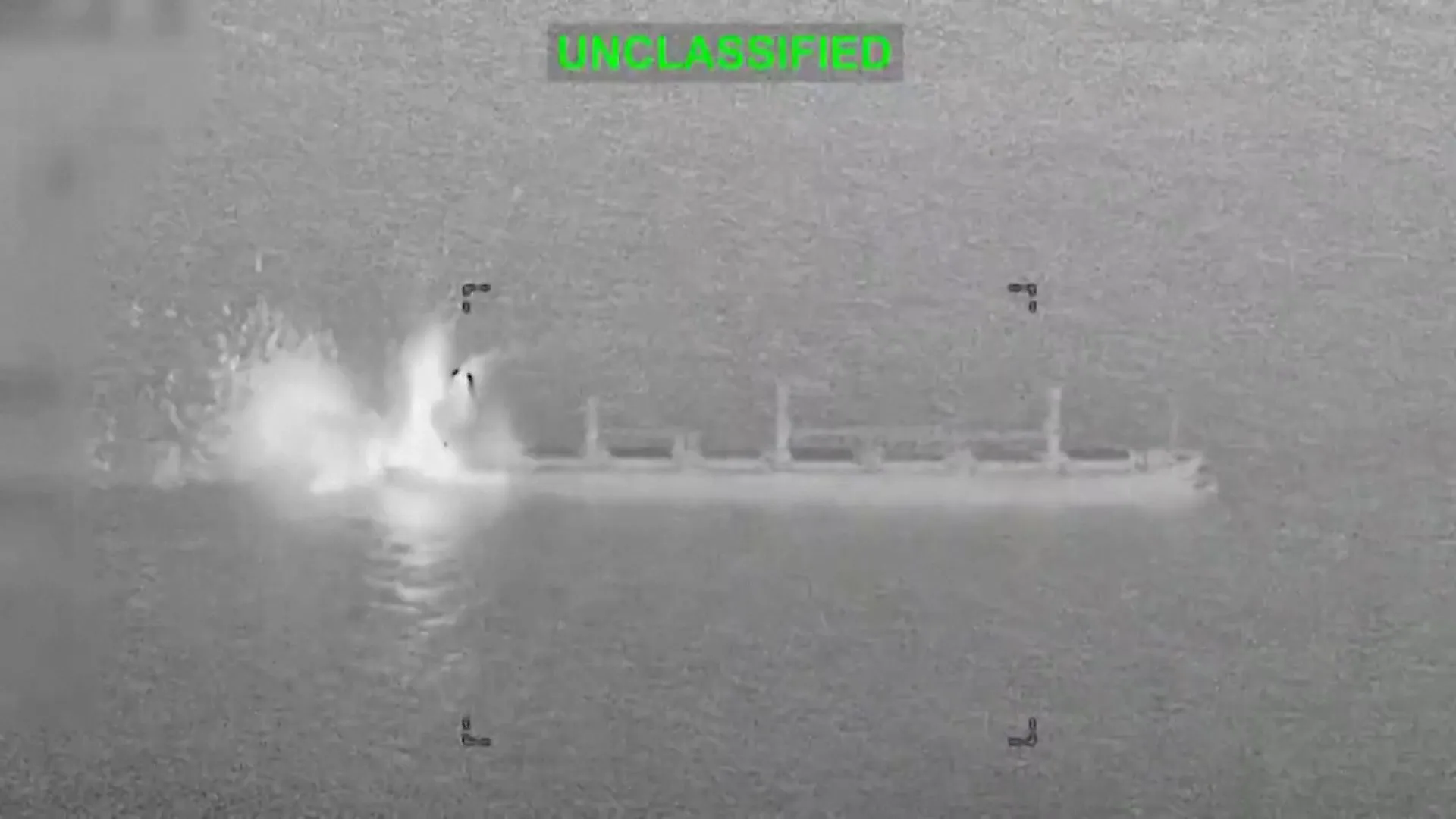
Qatar said on Sunday that a drone struck a cargo ship in Qatari waters, sparking a fire, while Kuwait and the United Arab Emirates said they repelled drone attacks.

Recommended Stories

list of 3 itemsend of list

Though no Gulf country reported casualties in the latest attacks, they have put pressure on the fragile ceasefire, which took effect on April 8.

Qatar’s Ministry of Defence said the freighter had been arriving in the country’s waters from the UAE capital, Abu Dhabi, and was hit by a drone northeast of the port of Mesaieed.

“The vessel continued its journey toward Mesaieed Port after the fire was brought under control,” the ministry said.

The United Kingdom Maritime Trade Operations (UKMTO) said a bulk carrier reported being struck by an “unknown projectile”, and a small fire had been extinguished, but there were no casualties from the incident. “There is no reported environmental impact,” it said.

Kuwait’s Defence Ministry said a “number of hostile drones” were detected in the country’s airspace at dawn. In a post on X, a spokesperson said the drones were dealt with “in accordance with established procedures”, but did not specify where the drones were launched from.

The UAE Defence Ministry said two Iranian drones were intercepted.

“UAE air defence systems successfully engaged two UAVs launched from Iran,” the ministry said in a statement on X.

Ceasefire tested

The Trump administration has said the truce is still in effect, but a naval battle has been taking place in the Gulf region, with Iran restricting traffic through the Strait of Hormuz, a strategic waterway through which a fifth of traded oil transited before the war, and the United States imposing a blockade of Iranian ports.

Several attacks have been reported on ships in the Gulf and the countries in the region over the past week.

On Friday, the US struck two Iranian oil tankers, saying they were trying to breach its blockade of Iran’s ports.

On Tuesday, the UAE said it came under attack from Iranian missiles and drones for the second day in a row. Iran’s Islamic Revolutionary Guard Corps (IRGC), however, denied the claim.

The IRGC Navy on Sunday reiterated its warning that any attack on Iranian oil tankers or commercial vessels would be met with a “heavy assault” on one of the bases in the region used by US forces and enemy ships.

The spokesperson for the Iranian parliament’s foreign policy and security committee, Ebrahim Rezaei, said Tehran’s “restraint is over”.

“Any aggression against our vessels will be met with a heavy and decisive Iranian response against American vessels and bases,” Rezaei wrote on X.

“The clock is ticking against the Americans’ interests; it is to their benefit not to act foolishly and sink themselves deeper into the quagmire they have fallen into. The best course is to surrender and concede concessions. You must get used to the new regional order,” he added.

Talks to end the war

While the truce remains in effect, President Donald Trump has repeatedly threatened to resume the US bombardment if Iran does not accept a deal which includes reopening the Strait of Hormuz and rolling back its nuclear programme.

Iran is still mulling its response to a 14-point proposal by Washington, with Iranian frozen assets and war reparations among other main sticking points.

In a meeting with US Secretary of State Marc Rubio on Saturday, Qatar’s Prime Minister Sheikh Mohammed bin Abdulrahman bin Jassim Al Thani pushed for all parties to respond to the ongoing mediation efforts and to reach an agreement for lasting peace.

Qatar’s prime minister also held a phone call with Iran’s Foreign Minister Abbas Araghchi, the Qatari foreign ministry reported on Sunday.

Sheikh Mohammed told Araghchi that Iran’s use of the Strait of Hormuz as a “pressure card” would only deepen the crisis in the Gulf, and said all parties in the conflict should respond to mediation efforts to end the war.

Reporting from Tehran, Al Jazeera’s Tohid Assadi said when it comes to diplomatic engagement, it seems that the US and Iran want the content of any negotiations to remain private.

Meanwhile, there is a mixture of different sentiments among Iranian citizens, he noted.

“Since the early days of the war, people have gathered to show their sense of nationalism and support for the political establishment,” he said.

“But we also know that there is a sense of frustration, especially when it comes to soaring prices and economic difficulties,” he added.

At a meeting on the reconstruction after damage caused by the war, President Masoud Pezeshkian said negotiations with the US on ending the war do not mean Iran is surrendering.

“The goal is to realise the rights of the Iranian people and defend national interests with authority,” he said.

Source link

U.S. Moves Warships Into Gulf, Sends Two Destroyers Through Strategic Strait

The U. S. military announced that two Navy guided-missile destroyers entered the Gulf to counter an Iranian blockade, while two U. S. ships passed through the Strait of Hormuz. This follows Iran’s claim of preventing a U. S. warship from entering the Gulf. U. S. Central Command (CENTCOM) stated that forces are supporting President Trump’s “Project Freedom,” aimed at helping commercial ships stranded due to the U. S.-Israeli conflict with Iran, and are enforcing a blockade on Iranian ports.

The U. S. intervention increases the possibility of direct confrontation with Iran in a crucial waterway that carries a significant portion of the world’s oil and gas, which has been blocked for two months because of the war. CENTCOM reported that two U. S.-flagged vessels successfully transited the strait while destroyers worked in the Gulf. Iran claimed it made a U. S. warship turn back, but CENTCOM denied reports of any missile strikes on the ship. An Iranian official mentioned a warning shot was fired, with uncertainty about any resulting damage to the warship.

Trump detailed a plan to assist ships running low on supplies in the Gulf, stating, “We will guide their Ships safely out of these restricted Waterways. ” In response, Iran warned oil tankers and commercial ships to coordinate movements with its military, asserting that it controls security in the Strait of Hormuz and would attack any foreign armed forces, particularly the U. S. military, attempting to enter. Since the war began, Iran has largely blocked shipping movements, causing oil prices to surge significantly.

CENTCOM plans to support “Project Freedom” with 15,000 troops, over 100 aircraft, warships, and drones, asserting that this mission is vital for regional security and the global economy.

With information from Reuters

Source link

Fresh attacks in the Gulf spark fears of renewed war with Iran

Confusion reigned on Monday over the fate of a fragile ceasefire between the United States and Iran after a wave of fresh strikes on the United Arab Emirates and Oman, along with reports of attacks on ships in the Strait of Hormuz, undermined confidence in the truce.

The drone and missile strikes, the first since a ceasefire halted fighting in early April, come after the Trump administration launched a wide-scale naval operation on Monday to “guide” stranded maritime vessels out of the vital waterway.

But fears over a return to war have driven another surge in oil prices, pushing them above $114 per barrel — levels not seen since the ceasefire nearly a month ago. Hundreds of cargo ships from dozens of countries remain stuck in the Gulf. And strikes in Dubai have raised concerns about further disruptions to international air travel at one of the world’s busiest airports.

Iran’s state-run news agency, IRNA, said the new U.S. operation was part of President Trump’s “delirium,” after the Islamic Revolutionary Guard Corps warned that passage through the strait required prior approval from Tehran.

“We warn that any foreign armed force, especially the invading American army, will be attacked if they attempt to approach and enter the Strait of Hormuz,” said Maj. Gen. Ali Abdollahi, according to a statement reported by the Iranian state-run Mehr News Agency on Monday.

The operation, which Trump over the weekend dubbed “Project Freedom,” is supported by 15,000 U.S. servicemen and 100 aircraft, according to U.S. Central Command. Their aim is to deny Tehran control over the strait, a narrow, 21-mile-wide passageway through which a fifth of global energy supplies flows.

On Monday, Trump vowed Iran’s forces will be “blown off the face of the Earth” if they attempt to disrupt Project Freedom.

“We have more weapons and ammunition at a much higher grade than we had before,” Trump was quoted as saying in an interview with Fox News.

“We have the best equipment. We have stuff all over the world. We have these bases all over the world. They’re all stocked up with equipment. We can use all of that stuff, and we will, if we need it.”

Iran blocked traffic through the strait soon after the United States and Israel launched their campaign on the country. Last month, days after a ceasefire between Washington and Tehran came into effect, the United States enforced its own naval blockade on Iranian ports in a bid to pressure Iran to make concessions in stalled negotiations.

On Monday, Central Command said in a statement that two American-flagged merchant ships were able to successfully transit the strait, while Central Command head Adm. Brad Cooper said the U.S. military sank six Iranian boats and intercepted missiles and drones targeting civilian vessels.

“We have defeated each and every one of those threats through the clinical application of defensive munitions,” he said.

“Project Freedom is a defensive operation, and we have deployed anti-ballistic missile destroyers,” he added. “Ships in the Gulf waters belong to 87 countries, and we urge ships to cross the strait.”

IRIB, Iran’s state-run broadcaster, quoted a senior Iranian military official who denied Cooper’s claim of sunk Iranian boats. The IRGC said in a statement on the messaging app Telegram that claims of commercial vessels or tankers traversing the strait were “baseless and completely false.”

Though Cooper did not clarify if the ceasefire between Washington and Tehran was now over, a raft of attacks throughout Monday spiked fears that the war would restart, spurring sharp price increases in already-jittery energy markets.

The UAE said a fire broke out and three Indian nationals were injured in the Fujairah Oil Industry Zone, a key export hub for the country, after what it described as an Iranian drone attack.

It also accused Iran of targeting a tanker linked to the country’s state oil company Abu Dhabi National Oil Company in the Strait of Hormuz, while the country’s defense ministry also reported four cruise missiles launched from Iran, saying that it intercepted three of them while the fourth fell in the sea.

“These attacks constitute a dangerous escalation and an unacceptable transgression,” said a statement from the UAE’s foreign ministry, adding that it “reserves its full and legitimate right to respond to these attacks.”

Elsewhere, two foreign workers were injured in an attack on a residential building in the Omani coastal province of Bukha, according to a statement from an unnamed security source quoted by the state-run Oman News Agency. Authorities were investigating the incident but did not elaborate on the perpetrator.

The U.K.’s Maritime Trade Operations Center reported on Monday that a commercial vessel was on fire off the coast of the UAE, while a South Korean bulk carrier ship said it suffered an explosion and a fire in its engine room and the cause was being investigated.

Bulos reported from Beirut, Wilner from Washington.

Source link

UAE To Exit OPEC, Fracturing Powerful Gulf Oil Alliance

UAE exits OPEC, exposing Gulf rift over oil strategy, Iran policy, and market stability.

The United Arab Emirates’ announcement to leave OPEC on May 1 marks more than a policy shift: It signals the unraveling of a long-eroding Gulf consensus on oil, economic strategy, and Iran. The announcement comes on the heels of the Gulf Creators event in Dubai on April 27.

“Every Gulf state had its own policy of containment toward Iran, and all of those containment policies have failed,” senior Emirati official Anwar Gargash said at the event. “All our policies have failed miserably,” he added—a rare public admission of strategic exhaustion that underscores why Abu Dhabi is recalibrating its regional and energy posture.

That recalibration now includes leaving the Organization of the Petroleum Exporting Countries. The UAE joined the bloc in 1967, when Abu Dhabi—now the federation’s capital—emerged as an oil producer. In announcing its exit from both OPEC and OPEC+ (a larger coalition that includes Russia), the UAE said the move aligns with its long-term strategy and will allow it to increase output in line with market demand gradually.

Widening Divide

At the heart of the split is a widening divide between Riyadh and Abu Dhabi. Oil policy has long been a source of tension between the two Gulf powerhouses. The UAE’s exit now leaves Saudi Arabia to shoulder a heavier burden in stabilizing global oil markets.

The UAE isn’t the only country to abandon OPEC cohesion. Qatar exited OPEC in 2019, breaking with the Saudi-led bloc amid an ongoing boycott.

Angola and Ecuador also left in recent years. The UAE’s similar move underscores that politics continues to shape the cartel, even as it focuses on stabilizing oil prices through production decisions. And because of its status as a major producer, the UAE’s exit is structurally more consequential for global supply management.

Experts say the UAE produced about 3.4 million barrels per day—about 13% of OPEC’s total output—and had the capacity to reach 5 million barrels per day before the US-Iran war began on February 28.

In effect, OPEC is not just losing a member—it is losing a key balancing force at a moment when geopolitical instability and oil market fragmentation are accelerating.

Source link

Middle East solutions must be led by region, says EU representative for Gulf – Middle East Monitor

The EU’s special representative for the Gulf said Saturday that any lasting solution for the Middle East must be led by countries in the region rather than imposed from outside, Anadolu reports.

Speaking at a panel during the Antalya Diplomacy Forum in southern Turkiye, Luigi Di Maio said the current crisis in the Gulf is another sign of the “further erosion of international law.”

“If we want to try to find a solution for avoiding again another crisis, like the ongoing crisis or a wider crisis, a farther spillover, we need to work all together,” he said.

Di Maio said the EU remains committed to multilateralism and international law, while stressing that Europe does not want to be “part of this war.”

At the same time, he said European countries are supporting Gulf partners in self-defense, including intercepting drones and missiles from Iran under bilateral agreements.

READ: US, Iran likely on Monday to hold 2nd round for technical talks in Islamabad: Sources

He also warned that instability in the Gulf affects the wider world, not only because of oil and gas, but also due to trade in fertilizer, helium for semiconductors and other goods moving through the Strait of Hormuz.

Di Maio said the collapse of the 2015 Iran nuclear deal showed the importance of involving regional countries in negotiations.

“Every solution for the Middle East has to be a region-led process,” he said.

He said stronger connectivity and defense cooperation can make the region more resilient to future crises, adding that “autonomy does not mean isolation.”

He praised mediation efforts by Turkiye, Egypt, Saudi Arabia and Pakistan, saying they had helped secure a ceasefire and could contribute to a broader agreement.

READ: French soldier killed in attack on UN peacekeepers in southern Lebanon: Macron

Source link