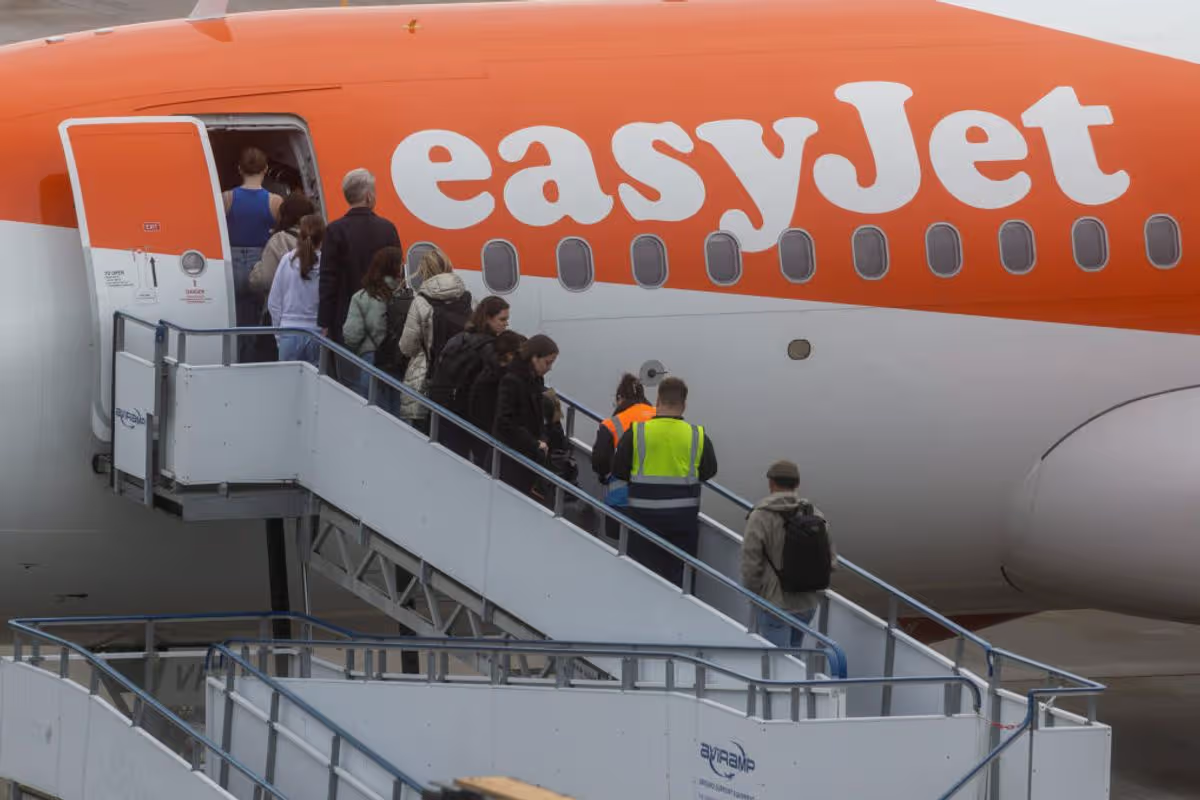
The airline advises passengers to avoid putting it in their hold luggage if possible

Important advice from the airline is likely to affect millions of passengers(Image: Getty)
EasyJet says passengers should keep one type of item with them, ideally in their hand luggage rather than their check-in bags. All passengers can bring one small under-seat cabin bag per person on board for free. It can be a maximum size of 45 x 36 x 20 cm (including any handles and wheels) and must be kept under the seat in front of you.
Regarding what travellers should keep in their hand luggage or handbags, the airline stresses the importance of carrying any medication so it’s always within reach. A statement on EasyJet‘s website reads: “We do advise you to pack your medication in your hand luggage where possible, especially if it is medication that you may need to take during the flight.”
In an additional note, the airline says: “If you pack medicines in your hold luggage, we do not require a letter from your healthcare practitioner.” It adds: “We’re unable to refrigerate medication on board.”
There are certain types of medication and equipment passengers can bring on board. EasyJet says: “If you need to bring medication with you, please pack it in your cabin bag wherever possible.” A letter from your healthcare practitioner is only required if you are bringing any of the following items on board:
- Liquids that exceed 100ml.
- Sharp objects such as needles.
- Oxygen cylinders and concentrators.
- Any medical equipment that may be considered as dangerous goods in the aircraft cabin, a list of which can be found here.
EasyJet explains: “The letter should confirm that this medication is prescribed to you and it’s necessary for you to bring the items on board. We do not require a letter from your healthcare practitioner for all other medications and equipment.”
These include gel packs and cooler bags to maintain the temperature of your medication. As well as food and specialist devices such as dialysis machines (subject to size regulations), CPAP machines and nebulisers.
If travelling with medication containing a controlled drug, EasyJet advises passengers to check with their doctor or pharmacist if their prescription contains a controlled drug, as some countries have strict laws regarding these medications. Controlled drugs are medications that are subject to high levels of regulation as a result of government decisions, such as Diazepam, Lorazepam, Codeine or Tramadol.
EasyJet said: “If you need to travel with medicine that contains a controlled drug, please check the embassy rules for the country you’re travelling to, as well as the entry requirements before you fly. You will need to prove your medication is yours, either with a prescription or a letter from your doctor.”
Crutches and walking frames can be brought on board. EasyJet’s cabin crew can store them and return them after landing. Walking frames can be stored on board if space is available, or they will be put into the aircraft hold and returned after landing.
Portable medical equipment can be brought on board in addition to your cabin bag allowance. Portable medical devices must be no larger than 56 x 45 x 25 cm, otherwise they will have to travel in the hold. If you need to carry a small portable medical device, such as:
- CPAP machines
- TENS machines
- Nebulisers
- Portable dialysis machines
EasyJet said: “Then this may be carried in addition to your cabin bag allowance, provided that it’s no larger than 56 x 45 x 25 cm and that you have informed our Special Assistance Team, at least 48 hours before your flight that you require an additional medical bag for your journey. Non-essential medical equipment which exceeds your cabin-bag allowance will be charged in line with our baggage policy and may need to be placed in the hold.
“If you need to bring several medical devices or a large piece of medical equipment, please contact our Special Assistance team at least 48 hours before your flight so that they can advise you.”