passengers

Government confirms passengers’ rights when flights are cancelled over ‘act of war’

Some airlines have confirmed they will be operating fewer flights

Six major airlines have confirmed they will be cancelling and cutting back on flights to and from the UK due to the rise in jet fuel costs triggered by the war in Iran. As a result, many travellers may have to prepare for their plans to be disrupted as they anxiously await updates from their airlines.

However, the Government has confirmed the full list of rights passengers have when their flight is cancelled due to an act of war. This includes what compensation or rebooking options people should be given.

Parliamentary Under-Secretary for the Department for Transport, Keir Mather, clarified: “Where UK law applies, if a flight is cancelled by the airline, then passengers would be entitled to a choice between a full refund or to be re-routed. These rights would apply if disruption were linked to war.

“Information on air passenger rights is already available in the Department’s Air Passenger Travel Guide, and the Civil Aviation Authority (CAA) recently provided specific advice to passengers in response to the Middle East disruption.”

The MP had been responding to Liberal Democrat Sarah Dyke who requested the DfT layout guidance on the “Act of War” clause which is meant to protect customers who should receive appropriate refunds for holidays they cannot take due to conflict.

According to the Civil Aviation Authority, if your flight is cancelled your airline must let you choose one of two options under UK law:

  • Receive a refund for the parts of the journey you haven’t used
  • Choose an alternative flight

If your flight is cancelled with less than 14 days’ notice, you may be entitled to some compensation if it is deemed to be the airlines’ fault. Issues like extreme weather, employee strikes or ‘extraordinary circumstances’ won’t count.

UK law around cancelled flights usually applies to airlines departing from or arriving in the UK as well as flights arriving in the EU on a UK airline. Under this law, your airline must also provide you with ‘care and assistance’ if your flight is cancelled.

This ‘care and assistance’ is separate from compensation and can include:

  • Reasonable amount of food and drink, usually vouchers
  • Means to communicate, such as refunding the cost of phone calls
  • Accommodation if your replacement flight is the next day
  • Transport to and from the accommodation or your home if you’re able to return

The UK Civil Aviation Authority notes: “The airline must provide you with these items until it is able to fly you to your destination, no matter how long the delay lasts or what has caused it.”

According to the BBC, six airlines have said they will operate fewer flights including KLM, Air Canada, Asiana Airlines, Delta Airlines, Lufthansa and SAS. Other airlines, such British Airways owner IAG, EasyJet and Jet2Holidays, have assured that they don’t plan to make any changes at the moment as of April 25.

Some airlines have said they will increase charges as a result of the jet fuel supply disruption. These include:

  • Air France-KLM
  • Indigo
  • Pakistan International Airlines
  • Thai Airways
  • Turkish Airlines-Sun Express
  • Virgin Atlantic

Source link

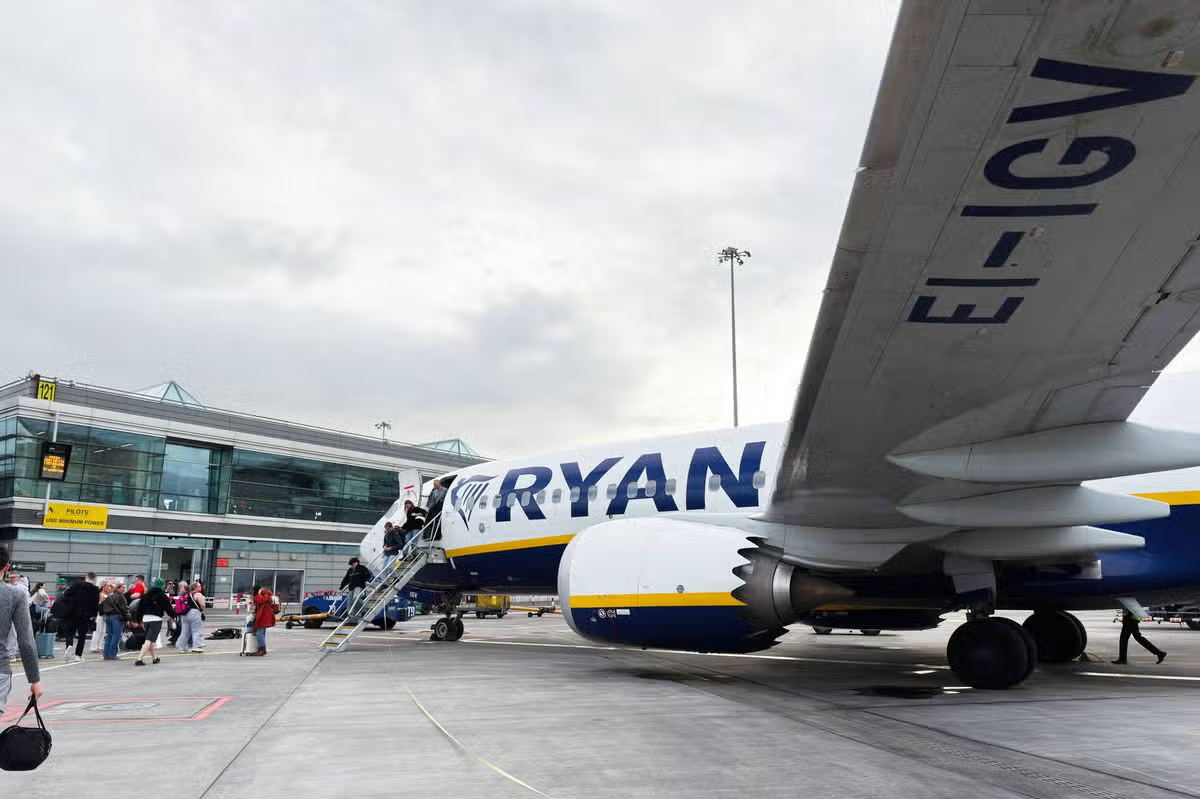
Ryanair proposes new fee targeting 1 type of passengers on flights

Budget airline Ryanair has suggested a controversial new fee targeting one type of passengers on early morning flights – and the idea has divided opinion among travellers

Budget airlines such as Ryanair are often an excellent choice if you need to travel across the UK and Europe without emptying your bank account for the ticket fee. However, they frequently impose a range of ‘hidden’ charges should you wish to add special extras to your standard ticket.

From airport check-in charges for travellers who don’t check in online, to amending the name on your booking, or missing your flight, it all carries an additional cost that can add up quickly. And Ryanair is no stranger to threatening to bring in further fees, as they regularly turn to social media to float ‘ideas’ for new passenger charges – though these seldom become reality.

Potential new charges that have been shared on their social media channels include a denim fee for travellers who choose to wear jeans while on the aircraft, to a ‘toilet use’ charge. The possibilities, it appears, are genuinely limitless – and frequently prompt mixed reactions from passengers who are swift to devise ‘hacks’ to dodge the various fees.

Now, the carrier has unveiled what could be one of its most controversial proposals yet – charging talkative passengers on early morning flights. The company turned to Facebook to float the concept in a tongue-in-cheek message.

“We’ll be charging yappers on our 6am flights very soon,” they posted. Despite how absurd it may appear, some travellers seemed entirely supportive, as they were keen for a peaceful and quiet flight when having to board early. One user wrote: “A charge we can all stand by.”

Another chimed in: “Here’s a deal, if we get on board and say we don’t want a scratch card, then we are left in peace for the rest of the flight by your in-air street traders who do most of the yapping.”

Ryanair is well known for selling scratch cards on its flights, with a portion of the proceeds going to charity.

However, others were quick to turn on the airline, questioning whether this fee would also apply to the cabin crew themselves. One user hit back, asking: “Does that include the ones yapping on the PA system about scratch cards and duty free?”

“That would be your crew selling us perfumes first thing in the morning,” another user added.

Ryanair fees to be aware of

While Ryanair frequently pokes fun at its own extra charges, there are some very real fees that passengers ought to familiarise themselves with – as being caught off guard could land you with a steep bill at the departure gate.

Failing to check in online means you can expect to be charged £55/€55 to ‘cover the extra cost’ of checking in at the Ryanair desk. If your flight is departing from Spain, however, this drops to £30/€30. Instead, travellers are urged to check in for their flights via the Ryanair app or website prior to arriving at the airport. Those who have pre-booked a seat can check in up to 60 days before a scheduled departure, while others may check in 24 hours before a flight. Generally, check-in closes two hours before departure.

You’ll also need to ensure your luggage meets the size requirements for cabin bags, as this is where numerous passengers come unstuck, finding themselves hit with a £60 fee per bag. Previously, bags had to be 40x25x20cm, but as of last year, passengers can bring a bag of up to 40x30x20cm. This small item can be a laptop bag, handbag, rucksack, or any item that fits within the dimensions to fit under the seat in front of you.

For an additional charge, which differs depending on route and availability, passengers can bring a second cabin bag of up to 10kg in weight. This bag can be up to 55x40x20cm in size and passengers will need to be able to load this into the overhead locker themselves without any assistance from the cabin crew.

For more information about Ryanair’s extra fees, you can read more on their website.

Source link

UK duty-free limit ‘rule’ passengers may not be aware of

When travelling, it’s important to know what won’t get you in trouble at customs

Travellers could face fines or worse if they overlook an airport ‘rule’ that puts a limit on certain items. It could catch Brits off guard if they end their latest getaway with a last-minute spending spree on various common products or high-end items.

When going to or from the European Union (EU), it is important to understand the regulations regarding the duty-free allowance passengers are permitted. Failing to comply with these restrictions could result in goods being seized, along with potential fines or legal proceedings.

The duty-free allowance applies to both EU and non-EU nationals, including holidaymakers and business travellers. Following Brexit, the UK has been adhering to the regulations for non-EU nationals.

Why is there a duty-free allowance?

Duty-free allowance is the authorised quantity of goods, such as alcohol, tobacco, and gifts, that travellers can bring into a country without incurring customs duty, value-added tax (VAT), or other levies. As a result, people face a strict limit on how much they can observe, or risk being perceived as exploiting the system, reports the Express.

What are the duty-free limits?

Duty-free allowances are split into two categories – restricted and unrestricted goods. Unrestricted goods are those without any special regulations or caps, such as clothing, electronics, or personal belongings, while restricted items are subject to specific limitations, including alcohol, tobacco, and perfume.

The restrictions in place also vary depending on how you’re returning to the UK. Shoppers are often caught out by the deals on offer in airports – but identical rules apply to those travelling by sea.

You’re also unable to pool your allowance with fellow passengers, which means people need to be mindful of their own spending habits. According to ETIAS Visa Europe, Brits returning to the UK via air or sea travel have the following allowances on ‘restricted’ items:

  • 200 cigarettes (or 100 cigarillos or 50 cigars or 250g of tobacco)
  • Four litres of still wine and 16 litres of beer and one litre of spirits or two litres of fortified or sparkling wine
  • Other goods up to a value of €430 per person

The thresholds are reduced for non-EU citizens travelling by rail or road. The website explains that travellers should bring no more than:

  • 40 cigarettes (or 20 cigarillos or 10 cigars or 50g of tobacco)
  • One litre of spirits or two litres of fortified or sparkling wine and four litres of still wine and 16 litres of beer
  • Other goods up to a value of €300 per person

ETIAS warned that, when goods go beyond the duty-free allowance, customs duty, value-added tax (VAT), and other taxes may be applied on the excess amount. The total of duties and taxes owed depends on various factors, such as the type of goods, their value, and the country of origin.

A spokesperson said: “To avoid overpaying taxes and duties, travellers should be aware of the duty-free allowances for the type of goods they are bringing into the EU. They should accurately declare all goods they are bringing in and their value.

“If unsure about the value of an item, travellers can check online or with customs officials. Additionally, travellers should keep all receipts and documentation to show the value of their goods.”

In other news, holidaymakers could face fines of up to £5,000 for bringing certain goods into England, even if those items were purchased at a duty-free price. The Department for Environment, Food and Rural Affairs (DEFRA) released an update at the end of March, calling on travellers to take this “simple step” to protect against diseases.

Source link

EasyJet, Jet2 and Ryanair flight warning as passengers issued ‘refund’ update

Several UK airlines may have to cancel flights or hike prices ahead of summer with travel experts warning passengers to ensure insurance is in check with ‘refund’ update

As summer holidays are approaching and UK airlines are facing some disruptions due to the Middle East conflict, passengers have been urged to be aware of their refund rights.

The Strait of Hormuz remains closed despite ceasefire negotiations, and as the passage for over 20 per cent of the world’s fuel, this is impacting travel across the globe, including British travellers.

Travel experts are warning holidaymakers to be aware of how to protect your plans before summer commences.

Fuel prices have nearly doubled since the war began, with the International Energy Agency describing the situation as potentially the largest energy crisis the world has faced.

A document has been submitted to ministers and the Civil Aviation Authority warning that if disruption “worsens” airlines in the UK will be forced to increase fares and cut flights.

Airlines UK, which represents a number of carriers, including EasyJet, Jet2, British Airways and Ryanair, say in the document that “the doubling of jet fuel costs (with fuel accounting for around one-third of airline costs) represents a major additional price shock”.

The letter is an attempt to get the government to step in to secure fuel supplies and give airlines more flexibility to cope with soaring costs.

One of the asks is to allow the temporary import and use of Jet A – a grade of jet fuel produced in the US, according to ITV.

The emergency document illustrates the financial fears of airlines, adding to the concern that flights may be cut or prices escalated.

A travel expert has warned that British travellers should ensure “travel insurance is in order” and “check booking terms” ahead of summer.

Airlines will still be required to offer full refunds, should flights be cancelled, or provide an alternative route.

The spokesperson for Ski Vertigo said: “This is a situation every traveller with a summer booking should be watching closely. Prices are already moving and the risk of cancellations is real, particularly on shorter intra-European routes where the economics are tightest.

“Our advice is to make sure your travel insurance is in order, check your booking terms, and keep a close eye on any communications from your airline.” They added: “If your flight is cancelled, airlines are still required to offer you a full refund or an alternative route, and their duty of care — covering meals, accommodation where needed, and rebooking — remains in place regardless of the reason for the disruption.

“However, because this crisis stems from a geopolitical conflict outside the airline’s control, it is likely to be treated as an extraordinary circumstance, which means financial compensation beyond a refund is unlikely in most cases.”

Source link

TUI, BA, and Virgin Atlantic freebies passengers can get when travelling with kids

Stressing about your next flight with a child in-tow? These airlines offer extras to make the onboard experience a lot more fun and engaging for them, but many parents aren’t aware of these perks

Let’s face it, flying with kids is never easy, whether it’s an unsettled baby, an active toddler, or a bored teenager. But some airlines do offer a more pleasant onboard experience to start your family holiday.

Lots of airlines offer extra perks and freebies for those travelling with kids, even in economy class, although some parents may not be aware of them. Long-haul flights especially will often cater for the younger crowd with their own onboard entertainment, meals, or even amenity kits.

Here are some freebies you could pick up if you travel with your child this summer.

TUI

On TUI’s short-haul services there are a few perks for parents travelling with kids. Parents can check their car seat and pushchair into the hold for no extra charge, or bring it onboard if it’s under a certain size. Families flying with young kids also get priority boarding on their planes.

On longer haul services, passengers get complimentary food and drinks, and guests between the ages of two and 12 will be served a kids’ meal. Children also get free headsets so they can enjoy the kid-friendly entertainment available on their seatback, and each child gets an age-appropriate activity pack as they board, which includes lots of holiday-themed fun to help pass the time.

READ MORE: From pretty towns to ancient forests, 10 fairytale UK locations for a day outREAD MORE: Ryanair warns passengers it’s changing its luggage rules in 2026

British Airways (BA)

Kids flying on BA with their parents on flights over three hours can enjoy complimentary Skyflyers activity packs including their own eye mask and socks, crayons, and a postcard for them to send home. These packs are available at the Family and Club World check-in zones at Heathrow Terminal 5, Gatwick and London City if you ask a member of staff.

Onboard, children’s meals are available and can be ordered in advance with a choice of menu options. Kids’ snack boxes are also available to buy on shorter flights. Carrycots are provided free of charge for little ones who need a nap, and car seats and pushchairs can be checked in free for those bringing infants along.

For longer flights, kids can peruse the seatback entertainment on offer, which includes lots of kid-friendly shows and movies to help pass the time.

Virgin Atlantic

Virgin Atlantic offers complimentary meals, snacks, and drinks on all classes across its services. If you’re travelling with a child, you can log into your booking up to 24-hours before departure and opt for a kids’ meal. These meals are perfectly portioned for younger passengers and come with a side of fruit and a sweet treat.

At the gate, kids get an amenity pack, regardless of which class they are in. These are in a distinctive red drawstring bag and usually feature a popping toy, colouring book, sunglasses, and some other little surprises.

READ MORE: Strict new hand luggage rule comes into force today affecting at least 580,000 BritsREAD MORE: Another major airline warns flights could soon be grounded because of fuel crisis

Emirates

Kids flying on Emirates enjoy a free amenity kit, and there are separate kits for 0-2 years, 3-6 years, and 7-12 years to ensure they are well-entertained on the plane. The kits come in bags emblazoned with colourful pictures from different Emirates destinations, and inside they contain cuddly toys, activities, and collectibles.

Even the youngest passengers get their own bag. Emirates baby and infant kits include handy items like baby wipes, cream, and a reusable changing mat, as well as a soft plush toy that can be attached to the seatback and a cosy blanket for nap time.

Have a story you want to share? Email us at webtravel@reachplc.com

Source link

Ryanair warns passengers it’s changing its luggage rules in 2026

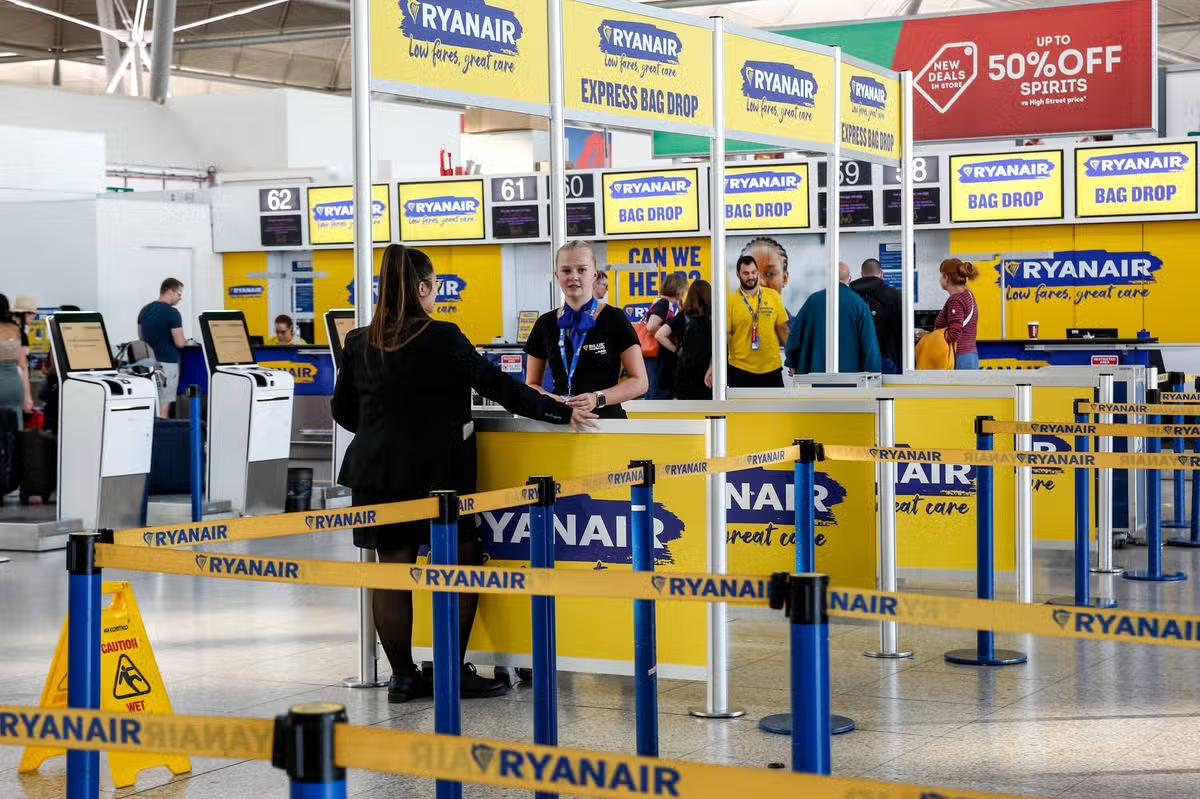
As well as announcing a new rule, Ryanair is in the process of installing more self-service bag-drop kiosks, with 95% of the airports it operates from to have them by October

Ryanair is changing its luggage rules, it announced today.

From November 10, all check-in and bag drop services at all airports it operates from will close 60 minutes prior to scheduled departure, up from 40 minutes currently.

The budget airline claims this is to provide “more time for passengers to get through airport security and passport queues” which will “reduce the very small number of passengers who currently miss their flight departure as they are getting stuck in these airport queues.”

The change means the 20% of Ryanair passengers who check their bag will have slightly more time to get through airport security and passport queues and arrive at their departure gate before boarding starts.

READ MORE: Ten airlines add extra charges amid jet fuel crisis and flight cancellations – full listREAD MORE: Key date for pet owners as dogs set to be banned from over 600 UK beaches

Ryanair is in the process of installing more self-service bag-drop kiosks, with 95% of the airports it operates from to have them by October.

Ryanair CMO, Dara Brady, said: “From Tuesday 10 November next, Ryanair customers will see airport check-in and bag drops close 60 minutes before scheduled departure, instead of today’s 40 minutes. This will allow these 20% of our customers (who check in a bag) more time to clear through airport security and passport queues, and get to their departure gate on time, especially during busy travel periods when some of these airport queues can be longer.

“We are also installing self-service kiosks at over 95% of Ryanair airports before October. This means a quicker bag-drop service, less queuing at airport desks, and an even more punctual service for the 20% of our customers who still wish to check in a bag, while the 80% (who don’t check in a bag) will be unaffected by this small 20-minute change, as they will continue to check in online before they arrive at the departure airport and they go straight through airport security to their departure gate.”

Over the past week, Ryanair passengers have been affected by the new entry/exit system (EES), which has led to long queues at some European airports. Passengers scheduled to fly from Milan Bergamo to Manchester were left behind due to difficulties at passport control.

The system was rolled out across all Schengen Area border checkpoints on April 10. Over the last few weeks it has meant that passengers have taken longer to get through airport security and some have even missed flights as a result.

EES requires non-EU nationals, including British citizens, to register biometric data. This includes facial scans and fingerprints, which are subsequently verified each time they cross a European Schengen Area border. EES is operated by the respective border control authority in each nation rather than by airports or airlines.

Ryanair has since addressed the incident at Milan Bergamo airport. Its spokesperson said: “Should these passengers have presented at the boarding gate desk before it closed, they would have boarded this flight.”

Source link

Flight attendant names the 1 seat passengers should avoid on summer flights

Getting some rest on a long-haul flight can be tough, but a flight attendant with 27 years’ experience shares her top sleep hacks – including how seat choice makes all the difference

The summer holidays are just around the corner, and if you’re among the millions of Britons preparing to jet off abroad, there’s one crucial detail you need to be aware of. For those fortunate enough to be taking long-haul flights, catching any shut-eye during the journey is often considered an impossible feat — but that’s not strictly accurate.

Sherry Peters, an international flight attendant with 27 years’ experience and founder of Atlas + Wild, has revealed her top tips for managing to sleep on flights — and much of it hinges on where you’re seated.

She said: “Seats near the galley or toilets are the absolute worst if you’re trying to sleep. There’s constant foot traffic, people queuing, lavatory doors slamming, and constant crew activity, it’s almost impossible to get uninterrupted rest.”

She advises securing a seat as far from this area as you can — and if possible, try to bag a window seat for a better shot at some proper rest, reports the Express.

She said: “Being next to the window gives you much more control over your environment, which is key to falling asleep.

“You can close the shade, lean against the wall for support, and avoid being elbowed by people passing in the aisle. It’s one of the closest things to a controlled sleep environment on a plane, even if you only have one or two hours, it makes a huge difference.”

Peters explained that many travellers mistakenly assume sleep will simply happen naturally — but when you’re squeezed into an economy seat, you need to actively work at getting yourself to drift off.

There are, however, a few techniques you can use to fool your brain into getting some rest.

She said: “Most people blame jet lag or the flight itself, but often it comes down to how to control your environment and if you are staying hydrated.

“I may not be able to control the time of day, but I can control noise and light by closing the window shades and using noise-cancelling headsets. I may not be able to control that I’m surrounded by 300 people who are wide awake, but I can control how much I get jostled. That’s how I trick my body into thinking it’s time to sleep, even mid-flight.”

Shutting the window blind the moment the plane takes off, paired with an eye mask and a neck pillow, can significantly reduce light and boost comfort.

Opting for a window seat allows you to lean against the side of the cabin for a more restful position, giving you the best chance of grabbing a few hours of much-needed kip.

Peters said: “Even if I only have one, two, or three hours, every minute matters. I use various strategies to maximise rest wherever I am, planes, trains and hotels.”

Source link

Longest non-stop flight in the world will have passengers strapped in for 22 hours

For some frequent flyers, this might seem like a dream about to come true

If you’ve ever taken a long haul flight from London to Australia, you’ll be familiar with a standard refuel stop on route. Well, soon, an ultra-long-haul flight will be set to test out a non-stop route as Australian airline, Qantas, prepares a plane that will be a record breaker for the world’s longest flight.

Next year (2027), the first test flight of the new Qantas A350-1000ULR aeroplane will be trying out a non-stop route with the aim of reaching its destination as quickly as possible.

For some frequent flyers, this may seem like a dream about to come true, while other air passengers may prefer to stick with the standard stop-off option, which gives a chance to get off the aircraft and walk around a little before setting off again.

The airline’s pending launch of the world’s longest commercial flight next year is highly anticipated by many – and will see passengers strapped in for 22 hours in total.

Two new direct routes will connect Sydney to London and New York, beating the current longest commercial flight of 18 hours and 30 minutes, which connects Newark Liberty International Airport in the US state of New Jersey to Singapore’s Changi Airport.

A specially configured aircraft will soon be able to fly for longer, all due to an additional rear centre fuel tank with a 20,000 litre capacity.

The first of these aeroplanes is currently awaiting its destiny in Toulouse, France, with its engines fitted, and final ground checks will take place soon before it’s ready for its first test flight.

Inside the plane, first class can enjoy reclining armchairs along with a separate bed – and Qantas describe the cabins as having a “science-backed design to minimise jetlag and maximise wellbeing”.

The aeroplane will boast a total of 238 seats, less than the standard 300 or more seats that other flight providers offer.

Extra space provides a unique “wellbeing zone” which both premium economy and economy cabin passengers can enjoy while flying long haul.

In total, there are six first class suites on board, 52 business class suites, 40 premium economy seats and 140 economy seats for passengers to book up (when the flight launches next year).

The new extra-long haul flight has been nicknamed “Project Sunrise” since it was first considered nearly 10 years ago.

Euro News explained the nickname as “a nod to the ‘double sunrise’ endurance flights operated by Qantas between Crawley in Western Australia and RAF Base Koggala in what is now Sri Lanka”.

During the Second World War, “both Airbus and Boeing were tasked with extending the flying range of their next generation of long-haul aircraft to accommodate such routes”, Euronews reported.

Source link

EasyJet announces major update for passengers starting this year

The budget airline made the announcement saying the move was a ‘milestone’

Passengers travelling on easyJet have been told a major change will improve their choice.

The budget airline has announced it will start offering six new routes to travellers. This includes two connections between the UK and Morocco. This month, easyJet officially opened its new three-aircraft base in Marrakech, Morocco, a development expected to generate approximately 100 new jobs. This coincided with the unveiling of six new routes to Morocco for next winter.

These include Newcastle to Marrakech, launching in November, and Birmingham to Agadir. The additions bring the total number of routes to Morocco to 58, including 30 to Marrakech.

Kenton Jarvis, CEO of easyJet, said: “We couldn’t be happier to launch our base in Morocco for our 20th year of operations in the country and to mark the milestone of 20 million passengers flown over that time.

“This is a milestone for our development in the region, providing more travel opportunities than ever before for our airline and holidays [for] customers, while contributing to the local economy through tourism and the jobs we are creating.”

New winter routes now on sale

  • Prague – Marrakech, will be operated from 25 October, two times a week (Wednesday and Sunday)
  • Newcastle – Marrakech, will be operated from 3 November 2026, two times a week (Tuesday and Saturday)
  • Zurich –Marrakech, will be operated from 28 October 2026, two times a week (Wednesday and Saturday)

READ MORE: easyJet gives key update with ‘uncertainty’ over fuelREAD MORE: Airline files for bankruptcy as flights cancelled – but vital firm may be saved

New winter routes coming on sale later this spring

  • Nantes –Essaouira
  • Bordeaux – Agadir
  • Birmingham – Agadir

READ MORE: I live in a major UK city and most tourists never visit its breathtaking beachREAD MORE: Foreign Office warns tourist spot on islands loved by Brits can be ‘fatal’

New routes launching this summer

  • Hamburg–Marrakech launches 1 May 2026, twice a week (Tuesday and Friday), extended year-round with two flights per week during winter
  • Lille–Marrakech will be operated from 3 May 2026, twice a week (Wednesday and Sunday)
  • Strasbourg–Marrakech will be operated from 3 May 2026, twice a week (Thursday and Sunday)
  • Geneva–Tangier will be operated from 30 March 2026, twice a week (Monday and Thursday)

For more information, visit the easyJet website here.

Source link

Jet2 issues two-day warning to passengers

Jet2 issued a new alert on Friday morning

Jet2 has issued a warning to many passengers who are soon due to fly abroad.

One of the UK’s largest airlines, Jet2 now flies from some 14 airports across the country, including London Gatwick, Manchester, and Birmingham. Jet2 also flies from East Midlands Airport, and passengers due to travel from here over the weekend have been urged to plan wisely ahead of their trips. On Friday morning (April 16) Jet2 issued a new alert ahead of an expected “increase in traffic”.

Jet2 said at 10am on Friday: “We wanted to let you know there may be an increase in traffic over this weekend due to the British Touring Car Championship event at Donington Park on Saturday 18th April 2026 and Sunday 19th April 2026. If you’re affected, please allow extra time for your journey to the airport as we’re operating all our flights as scheduled.

“Please arrive at the airport at least two hours before your departure time. Check-in closes 40 minutes before a flight’s departure time.”

The announcement comes after Jet2 also updated passengers travelling to parts of Spain on Friday. The airline warned there may be some delays on flights to Lanzarote, Fuerteventura, Jerez, and La Palma, due to strike action by Spanish Air Traffic Control company Saerco.

All passengers travelling with Jet2 are advised to check the travel information section of its website at least 12 hours before their flight is due to depart.

Source link

Brand new £5m train station in the UK has NO passengers

A STANDOFF between unions and operators means a town’s brand new train station is still closed – two years after being built.

A transformative railway line aiming to link Oxford and Cambridge is continuing to see setbacks, leading to delayed openings of stations.

The station has been closed since 2024 and currently only has empty trains running through it Credit: Emma Trimble / SWNS

The £7 billion project by East-West Rail (EWR) aims to improve transport links for millions of residents in the region and boost economic growth.

Finished in 2024, the line between Bicester Village and Bletchley, a 36-mile journey, was due to open last year.

Currently, passengers trains are running on the tracks – except they have no passengers on board.

A series of disputes between trade unions and the operator, Chiltern Railways, have meant that the stations remain closed and only empty trains are travelling along the tracks.

FULL STEAM AHEAD

First look at new English train station that will link two famous cities


STEAM AHEAD

Three new railway stations open in UK city – with the first trains in 80 years

The ghost-trains currently running through the station are a combination of freight trains and those used for driver training.

Currently, the only EWR trains on the new line in use are those between Oxford and Bicester Village.

The £5 million station has been closed since 2024 Credit: Emma Trimble / SWNS

Winslow is one of the towns located on the Bicester Village to Bletchley line that has been affected by the closures.

The £5 million station was completed back in 2024, but has remained closed amid the rows.

It’s opening has also been delayed by concerns raised over the platform length at the station which are going to have to be extended to accommodate the number of travelers.

Both setbacks have frustrated local residents.

A local told the The Telegraph, that the exasperating delays have caused “difficult and annoying delays” for her daughter who has to travel to Oxford to work.

They said that the delays indicate that Britain “doesn’t work like it used to”, and believe a situation like this would “never” have occurred when they were a youngster.

The cause of the row boils down to who operates the doors.

Chiltern Railways, the operator, beleive that the train line should run as a driver-only operation (DOO) meaning that only the train driver is in charge of opening and closing the doors and no guards are required.

They are in a standoff with the Rail, Maritime and Transport (RMT) union, who represent train guards.

The back-and-forth between the two parties means that plans to continue with the lines opening have be brought to a standstill.

An action group has been set up on Facebook by upset locals to discuss ongoing updates.

It has also become a place for residents to vent their frustration with the continued delays, with one local calling the lack of passenger trains running “an absolute farce”.

A local action group has been set up to track the ongoing delays Credit: Emma Trimble / SWNS

Source link

Economy passengers can now book a bed for naps on long-haul flights

Long-haul flights are always an endurance test, but one airline aims to make it easier with comfy sleep pods that you can book for a few hours to sleep or just stretch out your legs

Long-haul holidays allow you to go on exotic adventures, but the trade off is that you spend hours cramped into a plane seat, desperately trying to adjust to the time zone at your destination.

If you’re feeling flush, you might consider an upgrade to business or first-class for access to lie flat beds, although that usually costs several times the price of an economy ticket, so for most of us it’s an option that’s out of reach.

But one airline has launched an option that costs far less than a cabin upgrade and can be enjoyed by economy and premium economy passengers as an add-on.

Air New Zealand passengers flying on ultra long-haul flights between New York and Auckland will be able to book a slot in Economy Skynest™ from May 18, and the service will be available on flights from November this year. Billed as “the world’s first sleep pods in the sky”, Skynest will feature six individual lie-flat nests which can be booked for four-hour slots during the journey.

Given that the flight time on this route is up to 18 hours, making it one of the world’s longest flights, spending some time in the pods could give passengers some much needed respite from their economy class seat. The pods will be in a separate area of the cabin with a privacy curtain, and each pod is around six foot six inches in height, so even tall passengers can stretch out.

Each passenger who books the a pod gets a free amenity kit including an eye mask and ear plugs, and the bed linens are refreshed between passengers to ensure a clean space. Each pod has a seatbelt, so you won’t be woken up if the seatbelt sign comes on, and there’s a USB charging outlet and small light if you want to read or scroll through your phone.

A session in Skynest will cost from $495 New Zealand Dollars, around £215, making it a pricey upgrade but still cheaper than flying in a premium cabin.

READ MORE: Two more major airlines forced to increase flight prices by £86 due to fuel crisisREAD MORE: 5 travel changes Brits should be aware of before summer

Skynest isn’t the first upgrade Air New Zealand has offered to its economy passengers. In 2011, it launched Skycouch, an option for economy class passengers to reserve an entire row that converts into a lie-flat bed, allowing for extra comfort on long trips. These seats have a pull out footrest so the bed is wider than a standard airplane seat.

The Skycouch option is available to passengers on selected routes who fly onboard its Boeing 777-300ER or 787-9 aircraft. The cost depends on the route and availability, although reportedly the upgrade ranges from NZ$525 to $1,500 per row (about £228 to £652). United Airlines is set to launch a similar product in 2027 with Relax Rows, while Lufthansa already offers the option of a Sleeper Row on flights over 11 hours.

Have a story you want to share? Email us at webtravel@reachplc.com

Source link

TUI update for passengers worried about risk of ‘fuel shortages’

The airline responded to a passenger who asked for an update on upcoming flights

TUI has shared a message to passengers worried about possible ‘fuel shortages’. The travel company issued advice on social media, responding to a customer with concerns.

The update comes as experts have warned Europe could face jet fuel shortages if the Strait of Hormuz is not fully reopened in the coming weeks. Airports Council International (ACI) Europe, the trade body for European airports, previously said: “At this stage, we understand that if the passage through the Strait of Hormuz does not resume in any significant and stable way within the next three weeks, systemic jet fuel shortage is set to become a reality for the EU.

“The fact that we are entering the peak summer season… is only adding to those concerns.” On Thursday, the head of the International Energy Agency (IEA) warned Europe has “maybe six weeks of jet fuel left”.

Ryanair boss Michael O’Leary has also said disruption could begin in May. He previously told Sky News: “Fuel suppliers are constantly looking at the market.

“We don’t expect any disruption until early May, but if the war continues, we do run the risk of supply disruptions in Europe in May and June, and we hope the war will finish sooner than that and the risk to supply will be eliminated.”

Content cannot be displayed without consent

In response to the developments, a TUI passenger contacted the airline on X to ask if it could share an update for any flights booked after May 1. The social media user wrote: “TUIUK, with the reported jet fuel shortages, are you expecting holidays from May 1st to be affected?”

Replying to the message on April 16, a customer service team member answered on behalf of the airline. She wrote: “Hey, we’re closely monitoring the developing situation in the Middle East and its potential impact on global aviation fuel supplies.

“At present, we’re not anticipating any immediate disruption to our flight schedules or holiday programmes from fuel shortages.”

Other airlines have faced similar questions from passengers. In an X post shared with easyJet Holidays last week, a customer asked: “How concerned should we be that, given the potential aviation fuel shortages from end May, that our July flights Gatwick Bordeaux will be cancelled? Do you have surety of supply from Canada for example?”

In a response on April 10, an employee told the passenger they would be notified if any changes were made to the booking. easyJet Holidays said: “Hi there, thanks for reaching out. We do appreciate your concerns.

“Please be assured, we are monitoring the situation closely and if there were to be any changes to your booking at all, our dedicated pre-travel team would be in touch to advise on your options.”

Source link

I went on TUI cruise ship and got sneak peek at the areas passengers don’t see

I went behind the scenes on a Marella cruise and ended up getting a sneak peek at some of the rooms that the passengers usually don’t get to see

Cruises are made to feel effortless – from island-hopping, flowing cocktails to all-inclusive dining. But behind the scenes, an army of staff are working around the clock to keep things powered to the highest of stands.

For my first Caribbean cruise on board the Marella Discovery, I was given access to areas passengers don’t normally see. After getting to grips with the 11-deck vessel – home to nine restaurants, six bars and everything from mini golf, an escape room and a climbing wall to keep you entertained, it was time to see the ship from a new angle.

Here’s everything I learned…

Where the magic happens

Only a handful usually get to see the command centre of any ship; the bridge. Here, the Captain and his crew navigate these huge vessels from ‘parking’ in tight corners at the docks, to steering the course when out in the middle of the ocean. The view from the bridge was unlike anything I’d seen before, and quite impressive. We watched how the crew navigated as our ship docked among huge superyachts owned by millionaire (just to add that extra bit of pressure).

Your air con affects the speed of the ship

Next, I head into the engine room where a team operates the smooth running of five engines, two massive propulsion motors and multiple air-conditioning systems – working 24 hours a day. Modern cruise ships like the Marella Discovery distribute power to meet the demand. That means lighting, kitchens and even your cabin’s air con will play a role. “If we were in Alaska in the middle of the night, with no air con running, we could reach 24 knots,” one crew member explained. “But during the day, when everything’s in use, it drops to around 22.” At full speed, the ship burns around 8,000 litres of fuel an hour. Efficiency is key.

It all comes out in the wash

In the laundry room, staff wash around 1000 towels a day with industrial machines and steam presses. It’s not just the passengers who are catered for. In these rooms tucked out of sight, the crew’s immaculately white uniforms are maintained. Since that’s a lot of similar looking clothing, every item is labelled with a unique number to make sure they go back to the right person.

The show must go on

As a theatre fan, I couldn’t wait to get up on the stage of the Broadway Show Lounge – from a view not many get to see. Behind the curtain, the performers do more than just sing and dance. I learned that they handle their own props, do their own hair and make-up, and of course all of the warm-ups they undergo. In the dressing room, wigs, hairspray and hairpins fill every space, but among the seeming chaos there’s a strong camaraderie. After working with each other for three months at sea at a time, it’s clear the performers are like family.

The motion in the ocean might be in your head

Unlike the seasoned sailor, I admit that being a cruise-newbie means I feel the ship moving especially at night. However, according to the crew, the tilting is far less dramatic than I was expecting. Thanks to stabilisers, the ship can only ever move to a maximum of one degree either side. “We keep your soup in your bowl and your drinks in your glasses,” one jokes.

The most eaten food on board? It’s not what you’d expect

I got a chance to see the ship’s galley – the central multi-floor hub of the ship where thousands of meals are prepared every single day. A team of 101 chefs work around the clock to fuel up 1800 passengers and 700 crew members every single day. The head chef shows me what is known as ”the manual’, a list of detailed recipes for every single food item on the menu – ensuring the exact same meal can be recreated anywhere in the TUI fleet. Around 3,600 meals are served at lunch and dinner, but breakfast is the real peak with passengers get through a staggering 7000 dishes a day. The most popular food on board? Eggs. Around 2,300 are served up at breakfast alone – that’s a lot of omelettes.

The customer service is down to a tea

It’s not just the big systems that are carefully thought out on Marella. As an avid Yorkshire tea drinker, I was thrilled to see the boat was well stocked even in the Caribbean. One crew member told me it’s something that was introduced after passenger feedback and quickly became a staple.

Book the holiday

Marella Cruises offers a seven-night Tropical Isles round trip from La Romana, Dominican Republic on Marella Discovery from £1573 per person. Price based on two adults sharing a Deck 2/3 inside cabin on an all-inclusive basis. Includes flights from London Gatwick, 20kg of luggage per person, transfers, tips, and service charges. Find out more at tui.co.uk/cruise.

Source link

All plane passengers must act now and make 1 change to hold luggage

Anyone planning on boarding a plane with hold luggage has been urged to make one change to their suitcases before they fly – as it will help keep belongings safe

Plane passengers need to make one crucial change to their hold luggage. If you’re jetting off and you’ve got bags destined for the plane’s cargo hold, you’ll know just how nerve-wracking it can be to be parted from your belongings. There’s always that nagging worry that your luggage could be lost or stolen before you reach the baggage carousel at your destination, leaving you stranded without clothes, toiletries and other essentials during your holiday.

To tackle this, most travellers will attach luggage tags to their bags. These hold small pieces of paper where you can jot down vital information, such as your email address and phone number, so that should your bag go missing or end up on the wrong flight, airport staff can reach out to you if and when it’s located.

However, one woman on social media has flagged that these tags might not be the most secure option when you’re separated from your bags, particularly as some people inscribe their full name and home address on them.

In a TikTok video, Sammy urged fellow passengers to do something different with their tags, claiming it would help safeguard their personal details from anyone who might attempt to sneak a peek at their information.

She said: “This is something I’ve never seen anyone talk about, and I had to figure it out on my own. This is not safe for you for a plethora of reasons. You have your full name on there, you have your phone number, you have all of your contact information.

Content cannot be displayed without consent

“These will flip over. You’re going to have your luggage, and it’s going to flip over, and anyone who sees it can not only take a photo of it, but also anyone who sees your content online that shows your luggage can get all of your information.”

Sammy described the risk of having your details stolen from your luggage tag as “so dangerous” and “so not worth it”. In its place, she advised opting for a luggage tag featuring a full cover. These typically open like a book and fasten with a popper or Velcro, ensuring nobody can access your personal details without deliberately taking your luggage.

You can also accomplish the same outcome by removing the piece of paper from your tag and flipping it around so your details aren’t visible from the outside. You could then write something along the lines of “information overleaf” or “please turn over” on the blank side facing outwards, so airport staff know exactly where to look should they need to get in touch with you.

Those commenting on the post put forward further alternative solutions, such as listing a dummy email address that you can monitor should you ever lose your luggage, but don’t use for anything else.

One person said: “I have a fake name with my spam email that I’ll check if I ever lose my bag.”

Another added: “I write my name and flight number on the front, then put ‘see reverse for personal details’ with my address.”

A third wrote: “Thank you!! I’ve been saying the same thing for years, and people think I’m nuts. Same with names on kids or pets clothing!”

Should you opt to include only your email address without your name, ensure the email itself doesn’t contain your name within the address.

Using a false name, as one commenter proposed, is not recommended, as should your bag go missing, you won’t be able to verify it’s yours if your ID fails to match the name on the luggage tag. That said, you can choose to display only your surname or initials on the card to safeguard as much of your personal details as possible.

Source link

First look at airline’s new onboard bunk beds which even economy passengers can book

NEW images have revealed what to expect from the first ever bunk beds launching on a plane – that even economy passengers can book.

First announced back in 2020, Air New Zealand will be rolling out the new sleeping options later this year.

New bunk beds are being rolled our for economy passengersCredit: Skynest
Each bed can be booked for four hour slotsCredit: Skynest

Called the Skynest, there will be six bunks, each with lie flat beds, measuring around 6ft6 in length and 64cm wide.

All passengers who book them will be given fresh sheets, blankets and pillows, as well as amenity kits containing eye masks, ear plugs, socks, toothbrush and toothpaste, and hand cream.

The seats have privacy curtains, as well a small bag storage area, USB charging and flight attendant call buttons.

Each one can be booked for four hour slots, which is an additional cost on a standard economy seat or premium economy seat.

FUELLING CHAOS

Major UK airline to hike flight costs by up to £360 due to fuel crisis


CHECK IN

New European travel rules starting TOMORROW as experts and airlines warn of chaos 

Once the four hour session is over, lights will slowly turn on and crew will wake passengers up to go back to their seats.

Each flight will have two sessions, meaning 12 passengers per flight can book it.

No kids are allowed however – passengers must be over 15 to sleep in them.

Air New Zealand boss Nikhil Ravishankar told USA Today: “We really do hope that this starts a bit of a revolution in economy class travel, where sleep becomes available to more customers.

“One sleep in New York, you wake up, and you’re in one of the most beautiful countries in the world.”

Booking for the beds will open on May 18, with them being rolled out by November.

Prices start from $495 (£365).

They will initially only be on flights between New York and Auckland but they will be rolled out on other services eventually.

They could also be expanded to include more than six beds, depending on demand.

Air New Zealand previously rolled out the Skycouch seats in economy, the first in the world to do so.

Having launched back in 2010, Skycouch allows passengers to book a row of seats and turn them into a bed.

Other airlines such as United Airlines recently revealed plans for similar ‘economy bed’ options, called the ‘relaxed row’.

Thai Airways is also launching lie flat beds in premium economy.

Skynest can be booked from May 18Credit: Skynest
Each one will cost £365 which is in addition to the standard plane fareCredit: Unknown

Source link

Ryanair and easyJet set for major bag change – passengers warned

An EU rule change is expected to affect most short haul flights from the UK

Passengers flying with Ryanair and easyJet could soon enjoy more generous cabin baggage allowances – but travellers have been issued with a warning.

At present, those on basic fares with these carriers are limited to one small personal item, with any additional luggage incurring extra charges. Following amendments to EU regulations, Ryanair has had to increase the allowed dimensions of its personal bags. The new rules allow passengers to bring a small carry-on item measuring up to 40 x 30 x 20cm.

This is a 20% increase from the previous 40 x 20 x 25cm restriction. easyJet’s personal bag dimensions already met these requirements.

And now further EU regulatory changes could allow travellers to bring both a cabin bag measuring up to 100cm and a personal bag without facing extra costs. In February, the European Parliament voted decisively to grant all passengers the right to carry a small case alongside the free under-seat bags currently permitted.

The Parliament’s proposal would entitle passengers to bring on board, at no additional cost, one personal item (such as a handbag, rucksack or laptop) and one small piece of hand luggage with maximum combined dimensions of 100cm (length, width and height) and weighing up to seven kilos.

The proposed changes, which require sign-off from the European Council to become legislation, would affect all passengers flying to or from an EU airport on an EU-based carrier. This directly impacts the vast majority of short-haul flights departing from the UK.

While this might appear to be welcome news, experts have cautioned that requiring free hand luggage on flights will reduce pricing flexibility, push up base fares, and ultimately leave many travellers forking out more for services they may not even need. Zoltán Kész, Government Affairs Manager at the Consumer Choice Center, said: “Consumers benefit when airlines can compete on price, service, and flexibility.

“Mandating bundled carry-on luggage is not a pro-consumer reform; it is a market distortion that increases fares for everyone, including travellers who purposefully choose more affordable tickets. Political micromanagement of airline pricing does not improve transparency.

“If policymakers want consumers to make informed choices, the better approach is to require clearer disclosure of baggage fees and fare conditions, not to force a uniform product offering for every passenger.”

easyJet has branded the proposals to enforce free additional baggage a “lunatic idea” and similarly warned that fares are likely to rise. Earlier this year Kenton Jarvis, easyJet’s chief executive, said giving all passengers the right to extra free carry-on baggage would be “crazy European legislation” and “terrible for the consumer”.

He added: “We would go back to the days of having to offload cabin bags and put them in the hold – it was one of the number one causes of delayed boarding in the old days.”

Ryanair chief executive Michael O’Leary has also taken aim at the policy. He said last year: “The idea that everyone is entitled to two free bags on board is unimplementable [as] they don’t fit in the aircraft. There’s not room on largely full aircraft for one small carry-on bag and one large trolley bag.

“About 50% of the passengers can bring a trolley bag and we do that using the priority boarding service. Any rules that would alter that would be infringing EU rules guaranteeing the freedom of airlines to set pricing and policies, and we don’t believe that will happen.

“I think it’s unlikely to play out but there’s clearly going to be some kind of negotiation between the parliament and the commission on passenger rights.”

Source link

Virgin Atlantic makes major change for all passengers travelling from May 2026

Flying is about to feel very different for travellers with Virgin Atlantic thanks to a major change set to transform how passengers spend hours in the air

Passengers flying with Virgin Atlantic will start to notice a major change the moment they board. The airline has confirmed it will begin rolling out a new onboard service that promises to change the in-flight experience entirely.

Installation of Starlink will begin on its Airbus A350 aircraft from May 2026, Virgin Atlantic has announced. It says the new amenity will deliver high-speed, low-latency internet from take-off to the moment you land – but there’s a catch.

It will be available to passengers completely free of charge as part of their journey. This means they can scroll social media, stream TV shows or films, and even make calls or send messages while cruising at 30,000ft.

The first flight to feature the service is expected to depart in early May on route VS153 from London Heathrow to New York JFK. Virgin Atlantic says this marks the beginning of a wider rollout across its long-haul fleet.

All Airbus A350 aircraft are expected to be equipped by early summer, according to the airline. Installation will then expand to Boeing 787 planes later in 2026, reaching around two-thirds of the fleet by the end of the year.

The remaining Airbus A330neo aircraft are set to follow, with full fleet coverage expected by 2027. According to Starlink, its low-Earth-orbit satellite network is designed to deliver faster and more reliable internet, even over remote areas like oceans.

Unlike traditional in-flight Wi-Fi, which relies on older satellite systems, Starlink offers significantly lower latency and higher speeds. According to Ookla, low-Earth-orbit satellite technology can deliver speeds comparable to fixed broadband in some cases.

Virgin Atlantic first announced the partnership in July 2025, becoming the first UK airline to commit to free, fleet-wide Starlink connectivity. The airline says Flying Club members will be able to access the service at no extra cost.

Passengers will be able to stream TV shows, make video calls and browse the internet on multiple devices simultaneously. According to International Air Transport Association, demand for onboard connectivity has surged in recent years, with more travellers expecting seamless internet access in the air.

Juha Järvinen, Chief Customer Officer at Virgin Atlantic, said: “We were the first UK airline to announce free, fleet-wide Starlink Wi-Fi, and from May, we’re starting to deliver it for our customers.” He added that the airline aims to achieve full connectivity across its fleet by 2027.

He said the move is part of a wider push to create a “brilliantly connected experience” for passengers. The airline believes the upgrade will allow customers to use their flight time more flexibly, whether for work or leisure.

Industry experts say reliable Wi-Fi is becoming a standard expectation rather than a luxury. According to research from Inmarsat, a majority of airline passengers consider onboard internet a key factor when choosing flights.

Virgin Atlantic’s move is seen as a major step forward in meeting that demand. With rollout beginning in just weeks, passengers could soon experience a new era of fully connected air travel.

Source link

easyJet message for passengers worried over risk of ‘fuel shortages’

The airline has shared advice for customers with concerns about upcoming bookings

easyJet Holidays has shared a message to passengers with concerns over upcoming bookings. Ahead of the summer holidays, experts have warned Europe could face jet fuel shortages if the Strait of Hormuz is not fully reopened within three weeks.

Airports Council International (ACI) Europe, the trade body for European airports, said: “At this stage, we understand that if the passage through the Strait of Hormuz does not resume in any significant and stable way within the next three weeks, systemic jet fuel shortage is set to become a reality for the EU. The fact that we are entering the peak summer season… is only adding to those concerns.”

Ryanair boss Michael O’Leary has also warned disruption could begin in May. He previously told Sky News: “Fuel suppliers are constantly looking at the market.

“We don’t expect any disruption until early May, but if the war continues, we do run the risk of supply disruptions in Europe in May and June, and we hope the war will finish sooner than that and the risk to supply will be eliminated.

“We think there is a reasonable risk, some low level, maybe 10% to 25% of our supplies might be at risk through May and June, so like everyone else in this industry, we hope the war ends sooner rather than later. If the war finishes by April and the Strait of Hormuz reopens, then there is almost no risk to supply.”

In response to recent developments, an easyJet Holidays customer asked the package holiday provider if their upcoming flight could be affected. Reaching out to EasyJetholidays on X, the customer said: “How concerned should we be that, given the potential aviation fuel shortages from end May, that our July flights Gatwick Bordeaux will be cancelled? Do you have surety of supply from Canada for example?”

Content cannot be displayed without consent

In a message on April 10, an employee told the passenger they would be notified if any changes were made to the booking. In the X post, easyJetholidays said: “Hi there, thanks for reaching out. We do appreciate your concerns.

“Please be assured, we are monitoring the situation closely and if there were to be any changes to your booking at all, our dedicated pre-travel team would be in touch to advise on your options.”

In other easyJet news, passengers have been advised that they will miss their flights if they are late arriving at their departure gate. The airline clarified its policy when a social media user contacted EasyJet after spending an hour in a passport control queue, which threatened to make them late for their departure gate.

On X, a user wrote: “EasyJet, we have 20 mins left until our flight from Palermo to London takes off, been in finger print queue for an hour now and moved three steps. They let LOADS of BA people through before us who are leaving 10 mins before our flight, and now we’re even more delayed. What will happen?”

In response, a member of the customer service team named Thando, on April 8, explained: “Hi Kez, thank you for reaching out. Please note that the boarding gate closes a minute before departure. After it closes, you will not be able to board and will miss your flight.”

Source link

Border chaos explained – why Easyjet passengers missed flight as new travel rules start

With EasyJet passengers missing flights, and tourists with other airlines left affected too, the Mirror can explain more about the rules that have come into affected at European Union nations

Brits have been plunged into travel chaos after long delays due to new EU border rules which have led to some passengers missing their flights home and ending up stranded abroad.

Around 100 EasyJet passengers were left behind when a flight from Milan’s Linate airport to Manchester left travellers behind who were stuck in massive lines, on Sunday. The new European Entry/Exit System (EES) was fully rolled out across the EU on Friday and it requires people from third-party countries, including the UK, to go through biometric and facial recognition checks.

Huge lines hit major airports in several cities, including Paris, Lisbon and Milan, as desperate travellers were forced to wait to clear immigration.

Some stranded passengers claimed people were vomiting and passing out in the huge queues at Milan’s Linate airport, on Sunday, as they also dealt with a heatwave.

READ MORE: Spanish airport launches ‘Brits only’ lanes to cope under new border rulesREAD MORE: Historic 180 year-old ferry to UK seaside towns ending as ‘no takers’ to run it

What is the EES?

The EU’s Entry/Exit System started on October 12, 2025, but it was rolled out fully on Friday, April 10. It is a new digital border system for people from third-party countries, including the UK, entering the Schengen area, which is essentially anywhere in the EU and a few additional countries.

This new system has replaced the old method of officials manually stamping passports when people arrive into the Schengen area.

What does the new process look like for Brits?

British travellers are asked to create a digital record at the port or airport on arrival, on their first visit to a Schengen area country after this new system. People do not have to fill anything out before they travel and the EES registration is free of charge.

Travellers could be asked to have a photo taken at a dedicated booth and submit their fingerprints. People could also be asked to provide fingerprints or a photo when they leave the Schengen area.

The government noted that the EES may take “each passenger a few extra minutes to complete”, but once done, the EES record is valid for three years.

Later this year, Brits will also need to participate in the new visa-waiver scheme, the ETIAS (European Travel Information and Authorisation System), which is set to be implemented in late-2026.

Not to be confused with EES, ETIAS will require Brits visiting the EU to apply for a visa-exemption, with the application costing €20 (about £17.42), although it will be valid for three years.

What countries are in the Schengen area?

Austria, Belgium, Bulgaria, Croatia, Czechia, Denmark, Estonia, Finland, France, Germany, Greece, Hungary, Iceland, Italy, Latvia, Liechtenstein, Lithuania, Luxembourg, Malta, Netherlands, Norway, Poland, Portugal, Romania, Slovakia, Slovenia, Spain, Sweden, and Switzerland.

The Republic of Ireland and Cyprus are not within the Schengen area, and therefore EES is not applicable when travelling to either of these countries.

What issues have travellers faced so far?

One Brit revealed she was among the 100 people desperate to get home after the EasyJet flight took off from Milan and abandoned them. Carol Boon, 59, speaking to the BBC, said she had been away for a hen do but was left stuck in a “very stressful” situation at the airport with “people arguing, someone fainted, someone was sick”.

Another traveller, Max Hume, from Leeds, told the BBC that he spent a staggering £1,800 to get back home as soon as possible and travelled through Luxembourg.

EasyJet told The Mirror that the ordeal was “outside of our control” and said it held the flight for nearly an hour, adding: “These delays are unacceptable and so we continue to urge border authorities to ensure they make full and effective use of the permitted flexibilities for as long as needed so our customers’ travel plans are not impacted.

“Should a customer miss their flight due to EES delays they are offered free flight transfers on a later easyJet flight. For customers who book on other airlines they will need to contact their travel insurance to make a claim.”

Another passenger slammed EasyJet for the ordeal and claimed she was only offered £12.25 in compensation from the airline. Speaking to the BBC, the 17-year-old student, from Oldham, Greater Manchester, said she was forced to wait 20 hours in the airport with her boyfriend until they could get a flight the next day.

Kiera said these new flights would set her mum back £520 and they were going to Gatwick instead of Manchester. The student added that the couple got to the airport hours ahead of their flight but still didn’t make it on. She said: “We got here at seven-thirty for our flight at eleven so were super early. We got to Border Control and it was a massive queue of people.”

Jet2 has issued a fresh alert to passengers at Faro Airport, in Portugal, after reports of “congestion” through the site. In response to a passenger’s post online, a spokesperson for the airport said “the queues are completely out of our control”, adding: “We kindly recommend customers arrive to the airport as early as possible, to allow plenty of time to make it through.”

A spokesperson for ABTA, the association of travel agents and tour operators, says: “We’re advising passengers to go straight to passport control as soon as you have gone through check-in and security; that way you get the EES checks out of the way as early as possible.

“We’re also advising passengers to follow their transport provider’s advice on when to arrive at airports/ports etc. If flying, the usual rule is to arrive at the airport for a flight from Europe at least two hours before, so we’d encourage people to apply that as a minimum, but to also check with their airline and airport.”

Source link

Airport chaos sweeps Europe as new travel rules see three hour queues and passengers missing their flights

THE new EES travel system came into full effect just days ago – and it is causing travel chaos at airports in Europe.

Over the weekend, huge queues at border control meant some passengers were forced to miss their flights while others waited hours to leave the airport.

The new EES rules mean there are lengthy queues at passport controlCredit: Alamy
Lisbon Airport even stopped EES requirement over the weekend to ease queuesCredit: AFP

EES, which is the EU’s Entry/Exit System, became fully operational on April 10, 2026.

The new rules require all non-EU nationals to register their details like fingerprints and facial images before going abroad.

It will replace the need for stamps and is designed to make border crossings quicker.

But so far, lots of passengers have faced huge queues at border controls, some over four hours long.

GREAT ESCAPES

Ten European city or beach holidays for under £100pp INCLUDING flight & hotel


SHORE WINS

How to bag yourself a stunning British seaside holiday break for just £49

This weekend, the use of EES biometrics at three Portuguese airports; Lisbon, Porto and Faro, were actually stopped because of excessive passenger wait times.

To ease the queues, EES registration was halted on the morning of April 11 – it later restarted in the afternoon.

Public Security Police spokesperson Sérgio Soares, told press “the collection of biometrics at departures from Humberto Delgado (Lisbon), Francisco Sá Carneiro (Porto) and Gago Coutinho (Faro) Airports was interrupted from the beginning of the operation this morning.

“The interruption continues and is currently being reevaluated. This is to ensure that the waiting time is not longer than what we intend, namely so that people do not miss flights.”

However this was the case at Milan Airport in Italy.

Some passengers were left behind over the weekend as a result of the huge EES registration queues.

The BBC reported that over 100 people were left stranded when an easyJet flight to Manchester left without them.

The delays due to the new EES checks means travellers were waiting in lines over three hours long.

Some passengers left in the heat of the airport were throwing up and passing out.

One passenger told the BBC that her having to rebook her flights cost her an extra £520 as a result.

Another stranded passenger who spoke to The Independent said they had booked another flight at the cost of £1,600 – and with a connection through Luxembourg.

An easyJet flight from Milan to Manchester left without over 100 of its passengersCredit: Alamy

easyJet told The Sun: “Due to delays in EES processing by border authorities, some passengers departing from Milan Linate yesterday experienced very long waiting times at passport control.

“We held flight EJU5420 from Milan to Manchester for nearly an hour to give passengers extra time but it had to then depart due to crew reaching their safety regulated operating hours. Customers who missed the flight have been offered a free flight transfer. 

“We continue to urge border authorities to ensure they make full and effective use of the permitted flexibilities for as long as needed while EES is implemented, to avoid these unacceptable border delays for our customers.   

“While this is outside of our control, we are sorry for any inconvenience caused.”

Meanwhile, at Brussels Airport on the very first day of the EES rollout, the Airports Council International reported that in one instance there weren’t any passengers on a plane when the gate closed.

It said one flight from Brussels to the UK was missing 51 passengers at departure.

And then, “another flight had zero passengers on board at gate closing time, and 90 minutes later, 12 passengers were yet to reach the gate”.

There were concerns raised about the new travel rules prior to the full rollout, with officials asking for EES to be delayed until later in the year.

If you’re heading abroad soon, here are our seven tips for the new EES rules.

And this travel app could help you avoid massive airport queues caused by EES.

The full rollout means all passengers are required to enter their biometric dataCredit: Alamy

Source link

EasyJet ‘flights being missed’ alert as passengers share ‘not enough time’ fears

The airline has issued guidance online after a passenger shared their concerns

EasyJet Holidays has responded after passengers shared concerns online that they may miss their flights due to long queues at popular European airports. As the European Union’s (EU) new Entry/Exit System (EES) continues to roll out across the continent, passengers face long waits because it requires non-EU travellers to register biometric data, such as fingerprints and photos, on arrival, replacing passport stamps.

The new automated digital border system launched on October 12, 2025, and is expected to be fully operational in the Schengen Area by April 10, 2026. A statement on Gov.uk reads: “EES may take each passenger extra time to complete, so be prepared to wait longer than usual at the border.”

The countries in the Schengen area include: Austria, Belgium, Bulgaria, Croatia, Czechia, Denmark, Estonia, Finland, France, Germany, Greece, Hungary, Iceland, Italy, Latvia, Liechtenstein, Lithuania, Luxembourg, Malta, Netherlands, Norway, Poland, Portugal, Romania, Slovakia, Slovenia, Spain, Sweden, and Switzerland. Many airports are reportedly facing long border check queues due to the new system.

The Republic of Ireland and Cyprus are not part of the Schengen area, so EES is not required when travelling to either country. Gov.uk adds: “You may also be asked to provide either your fingerprint or photo when you exit the Schengen area. The checks may take slightly longer than previously, so be prepared to wait during busy times.”

People have taken to social media to share their concerns about missing their flights due to long passport control queues, including EasyJet passengers. One woman, called Jenny, who goes by the username @MunchkinMumsie on X, posted about her worries of not getting through border control on time for her upcoming flight home.

Content cannot be displayed without consent

She said: “Hi @EasyJetholidays, I’m returning home from Palma tomorrow, our coach transfer is picking us up at 12.30, our flight is at 15.40 and we are 90 minutes away from the airport. I’m worried this will not give us enough time to get through the airport with my child, will this be ok?”

A spokesperson replied: “Hello Jenny, thanks for reaching out. Our transport providers are the local experts and will use their knowledge of the destination and airport experience to calculate your transfer pick up time to ensure your journey to the airport is stress free and that you arrive with enough time to drop off your bags and clear security. Do let us know if you’d prefer to make your own way, and we’ll be happy to update our suppliers! – Alex.”

Jenny then asked: “If we catch your transfer and don’t get through in time, do you cover all our expenses and book our alternate flight home?” The spokesperson told her: “Yes – our dedicated On Holiday Support teams will be more than happy to assist with rescue flights if required – Alex.”

Jenny responded with: “Thank you, there are lots of posts on Mallorca travel forums of the children’s queue for border control at Palma being 2-3 hours long. It seems crazy you are not arranging transfers for families to get to the airport earlier.”

Updating Jenny with guidance, the spokesperson issued an alert about ‘missed flights’ and what happens. They told her: “If we are alerted to any flights being missed, we will work alongside our in destination teams to address the issue at hand. As it stands, our customers have not advised us of any major issues with flights being missed – Alex.”

In another post in the thread, the spokesperson added: “Please do let us know if you are looking to make your own way to the airport on this occasion, and we’ll be more than happy to update our suppliers. We are unable to assist with adjusting your pick-up time – Alex.”

A statement on Palma Airport’s website reads: “The EES is mainly designed to save time and improve border security. It automates passport checks, identifies travellers who overstay, and helps detect fraudulent documents. It also supports authorities in preventing and investigating terrorism and other serious crimes.”

When passengers find out they might be late to their boarding gate, they should tell their airline using their app, email, or phone. They can also ask airport staff for assistance, since some airports have electric cars or allow passengers with short connections or flights leaving soon to skip to the front of the line.

It is advised that passengers arrive at the airport early to handle any unexpected delays at security or passport control. A spokesperson for ABTA, the association of travel agents and tour operators, says: “We’re advising passengers to go straight to passport control as soon as you have gone through check-in and security; that way you get the EES checks out of the way as early as possible.

“We’re also advising passengers to follow their transport provider’s advice on when to arrive at airports/ports etc. If flying, the usual rule is to arrive at the airport for a flight from Europe at least two hours before, so we’d encourage people to apply that as a minimum, but to also check with their airline and airport.”

Source link