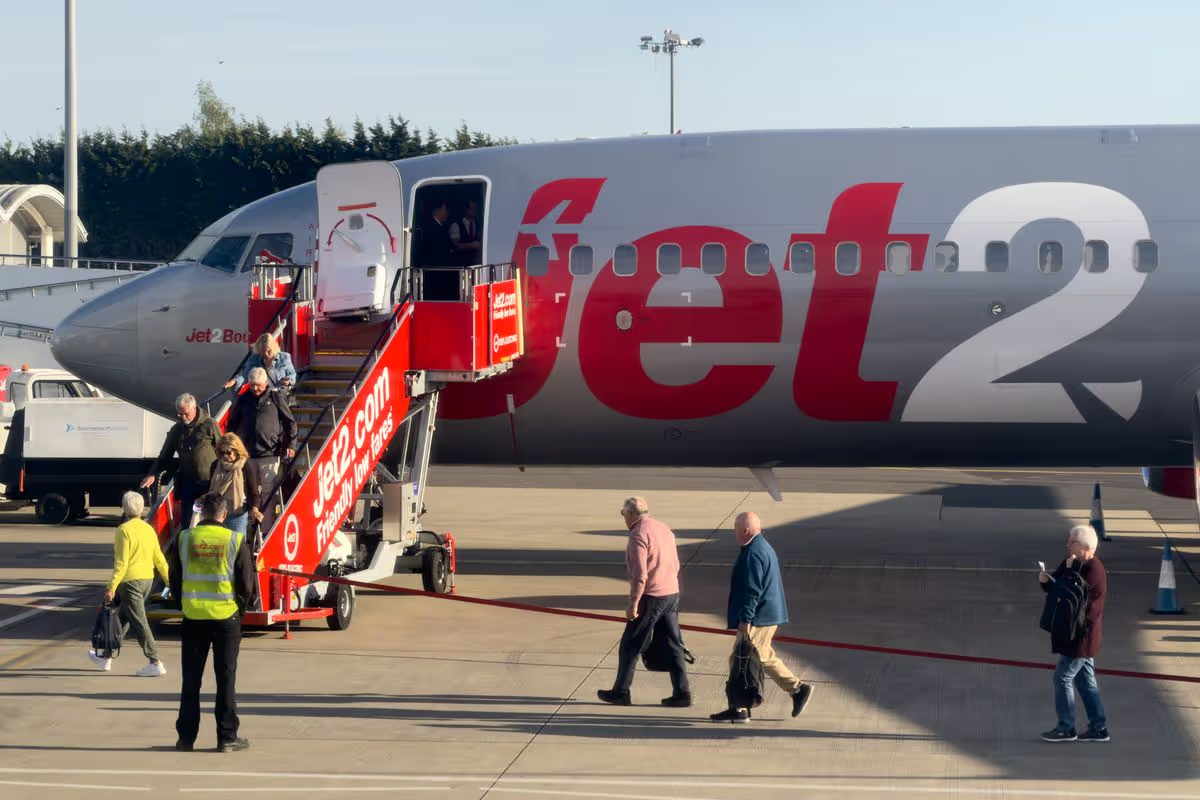
Travellers have been told ‘not to panic’ if they have flights planned for the summer
Flight rule change to stop last minute cancellations
Many travellers are worried that their summer flights may be at risk as the jet fuel supply disruptions have left some airlines cancelling and rescheduling flights. Now, hantavirus has also trigger some anxiety as passengers fear they may be facing the same disruptions they experienced during the Covid pandemic.
While health experts have been assured the public that hantavirus is “not like Covid”, according to BBC’s Dr Xand, a travel expert explained exactly what rights you have if your flight is cancelled for these reasons.
Hannah Mayfield explained: “If your flight is cancelled because of a global health emergency or another major disruption outside the airline’s control, passengers are still entitled under UK261 to either a full refund or alternative flight.
“That obligation remains firmly with the airline, even in extraordinary circumstances. What may not apply, however, is additional compensation.
“We saw significant confusion around this during the coronavirus pandemic.”
The travel money expert with specialist travel insurance comparison website PayingTooMuch, urged people to learn the “crucial” distinction between these two as some travellers mistakenly believe that if they aren’t entitled to compensation then they aren’t entitled to anything.
Ultimately, the expert assured everyone with upcoming flights: “The key message for travellers this summer is not to panic, but to understand where responsibility sits before problems arise. Knowing your rights in advance makes it much easier to act quickly and avoid unnecessary stress or expense if your faced with disruptions.”
She continued: “Airlines are responsible for passenger rights linked to the flight itself, including refunds, rebooking, and assistance during disruption.
“Travel insurance, by contrast, is there to protect against wider personal financial risks such as cancellation due to illness, emergency medical treatment abroad and repatriation as well as things like baggage lost items and in some cases irrecoverable costs that cannot be recovered from airlines or travel providers depending on the cover.”
Checking your travel insurance and how you paid for the flight before you leave can also add some extra protection. The expert urged: “It’s equally important to read the travel insurance policy carefully before travelling.
“Many people only discover exclusions relating to pandemics, wider disruption, or government travel advisories when they come to make a claim.”
Hannah explained that if you used a credit card to pay for your flight, Section 75 of the Consumer Credit Act can “provide valuable additional protection in some instances”. While those who paid with debit cards may have “less robust” protections.
The budget airline is set to increase the staff bonuses for catching those out who travel with oversized baggage as travellers will be issued a £65 fine for the large luggage
Ryanair increasing staff bonuses to issue £65 baggage fine
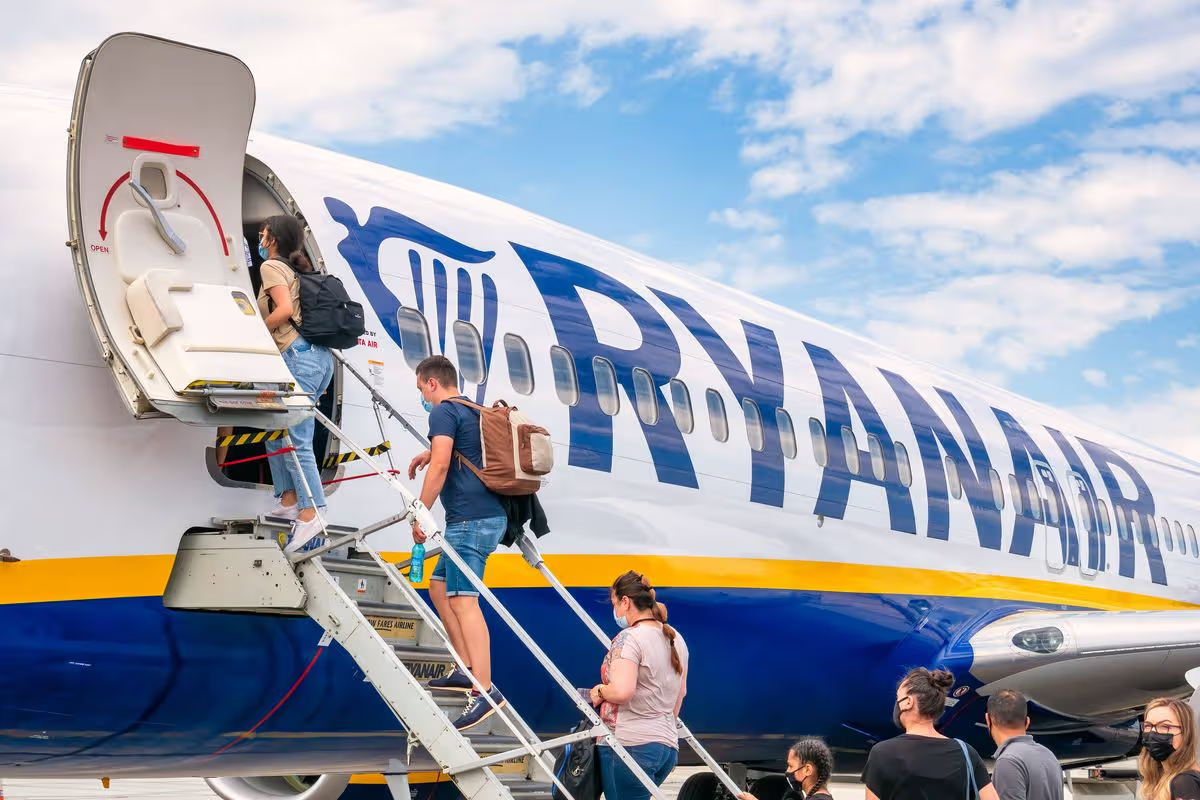
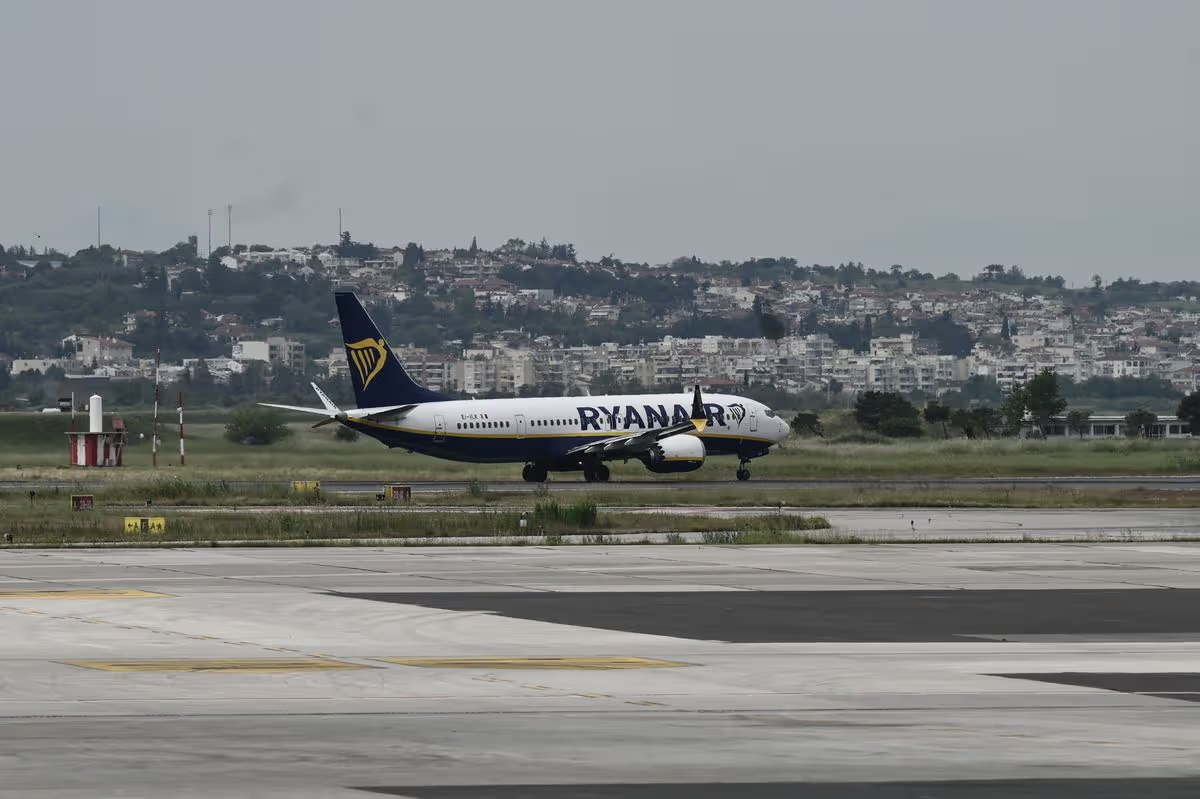
Ryanair is planning to increase staff bonuses for hitting passengers with oversized baggage fines.
Michael O’Leary is set to increase the bonuses given to staff members who dish out additional charges to those with oversized luggage.
The chief executive said that after it emerged that his staff were incentivised to catch passengers out the number of travellers stopped with oversized baggage had dropped.
The budget airline staff are currently paid €2.50, roughly £2.17, for every oversized bag they identify.
Passengers are made to pay an additional €75 (£65).
The change could see workers receive a €3.50 bonus for everyone they catch out, according to The Times. This bonus for Ryanair workers was already increased in November 2025 from €1.50.
“The number of outsized bags is falling from, I don’t know, 0.0001 [per cent] to 0.00001,” O’Leary said.
“As the numbers fall, I think we will up the rate of commission, from €2.50 to €3.50 or so.
“Everybody must know, do not show up with a bag that doesn’t fit in the sizer because you will be charged.”
All fares include one small personal bag (40 x 30 x 20 cm) that must fit under the seat.
Cabin bags can be purchased and weigh up to 10kg, the (55x40x20cm) item must fit in the overhead locker.
At the time of the incentive increase last year, O’Leary said about 200,000 passengers per year have to pay extra to put carry-on luggage in the hold, and he has no sympathy for “chancers” trying to bring “rucksacks” aboard.
The CEO added: “We’re the airline with the lowest air fares in Europe,”
“Those are our rules. Please comply with the rules, as 99.9% of our 200 million passengers do, and you won’t have any problem.”
He claimed if people “comply with the bag rules then everyone will board faster” and there will be “fewer flight delays”.
The announcement comes after the Ryanair boss said that airport bars should stop serving alcohol early in the morning.
The CEO claimed his airline is being forced to divert flights almost daily because of drunken, aggressive passengers.
Pubs in airports do not follow the same licensing rules as bars outside these environments do.
Mr O’Leary said that changing this will support his airline and others because it would help cut out aggressive behaviour in the skies.
FLIGHT cancellations have dominated the news recently with Ryanair in particular axing millions of seats.
As a result of rising air tax, budget-friendly Ryanair has cut a huge amount of routes over the last year – here’s every destination that’s been impacted as a result.
Sign up for the Travel newsletter
Thank you!
Ryanair has axed lots of routes across the last yearCredit: GettyRyanair has scrapped off-season flights to certain parts of CreteCredit: Getty
Follow The Sun’s award-winning travel team on Instagram and Tiktok for top holiday tips and inspiration @thesuntravel.
At the same time, the airline announced it would be scrapping off-season flights to Chania and Heraklion in Crete and will reduce its Athens services too.
All of this will result in 700,000 fewer seats on sale this winter which works out as a 45 per cent reduction, and resulting in 12 routes being scrapped in total.
The destinations where the airline has closed operations and ceased flights to were Asturias, Vigo, Valladolid, Jerez and Tenerife (North).
At other holiday spots in Spain, Ryanair significantly reduced its flights – this includes Santiago de Compostela, Girona, Vitoria, Zaragoza and Santander.
This is in response to Aena – the state-controlled airport operator in the country – increasing its fees for airlines.
The operator has proposed an increase in passenger fees, meaning airlines would be paying 21 per cent more from 2027 to 2031.
Portugal
Ryanair no longer flies to the Azores off the coast of PortugalCredit: Getty
From Mary 29, Ryanair stopped all services to and from the Azores meaning that six different routes have been scrapped.
This has impacted around 400,000 passengers who visit the islands every year.
Ryanair’s CCO Jason McGuinness said: “As a direct result of rising costs, we have been left with no alternative other than to cancel all Azores flights from 29 March 2026 onwards.”
Germany
Berlin routes have been cut by halfCredit: Getty
While no routes have been completely axed, Ryanair has dropped 24 services to and from Germany from its schedule.
These destinations include Hamburg, Memmingen, Baden-Württemberg, Cologne, Frankfurt-Hahn, Dortmund, Dresden and Leipzig.
Ryanair also revealed plans to close its Berlin hub and slash its 2026 winter timetable to the capital by half.
The airline confirmed it would move seven aircraft to alternative locations.
Passenger figures will as a result drop from 4.5million to 2.2million annually.
Ryanair DAC CEO Eddie Wilson said: “We regret to announce this planned closure of our 7 aircraft Berlin base from October 24, 2026, but we have no alternative following the Airport’s latest 10 per cent fee increase to its already high airport fees.
“This comes on top of the 50 per cent increase in Berlin’s airport fees since 2019.”
France
Ryanair axed its routes completely to Strasbourg in FranceCredit: Alamy
Ryanair cut many services to France in 2025 – with the loss of 25 routes and some 750,000 seats last winter.
The airline decided to drop services completely to both Strasbourg and Brive.
When it comes to the major UK airlines, the rules aren’t so strict. However, there are limits on how many batteries and gadgets of a certain kind you’re allowed to take on board
Lithium batteries are causing issues on planes(Image: Getty Images)
Jet2, BA and easyJet all have strict limits on how many gadgets passengers can bring with them on a flight.
The rise of tech powered by lithium-powered batteries, such as mobile phones, electric toothbrushes and vapes, as well as transport devices including ebikes, has caused some big issues.
Fire brigades across the UK are tackling lithium-ion battery fires at a rate of one every five hours, new figures show this week.
Concerns about fires have caused some airlines to ban certain devices. In recent years, numerous airlines have barred passengers from carrying power banks on flights amid fears they could ignite. Vietnam Airlines, Vietjet Air, and most recently Emirates have all prohibited power banks on flights, whilst Cathay Pacific introduced a similar ban last April. Other airlines have introduced prohibitions on AirPods.
When it comes to the major UK airlines, the rules aren’t so strict. However, there are limits on how many batteries and gadgets of a certain kind you’re allowed to take on board.
Each customer is allowed to carry a maximum of 15 lithium battery-powered PEDs, such as mobile phones, laptops, tablets, watches and toothbrushes, providing the capacity of each battery doesn’t exceed:
for lithium-ion batteries: 160Wh, or
for lithium-metal batteries: 2g lithium content.
These devices should be carried in your hand luggage and in all cases, must be packaged in a way that protects against damage.
Customers are permitted to carry no more than 20 spare/loose lithium batteries, providing they are each individually protected against short circuit, the capacity of each battery doesn’t exceed 100Wh for lithium-ion batteries and for lithium-metal batteries, 2g lithium content.
Additionally, customers are also permitted to carry no more than two spare/loose lithium batteries with a watt-hour rating exceeding 100Wh, but not exceeding 160Wh, providing they are each individually protected against short circuit.
Customers may carry no more than two power banks per person, not exceeding 160Wh, providing they are individually protected against short circuit. In all cases these must not be charged whilst onboard the aircraft, and should not be used in-flight.
British Airways
British Airways limits lithium-ion batteries to 100Wh or less for general travel, with up to four spare batteries allowed per person in cabin baggage, provided they are protected from damage. Power banks are restricted to carry-on only, with a maximum of two, and batteries between 100-160Wh require airline approval.
Capacity Limits: Under 100Wh: Allowed in carry-on (up to 4 spares) or installed in devices (checked or carry-on). 100Wh – 160Wh: Requires special approval. Usually limited to two spares. Over 160Wh: Forbidden on board.
Carry-on Requirements: Spare batteries and power banks must be in hand luggage only. They must be in original packaging, or have terminals insulated with tape to prevent short circuits.
EasyJet
EasyJet requires all lithium-ion batteries, spare batteries, and power banks to be carried in cabin hand luggage only, with a general limit of 100Wh per battery (roughly 27,000mAh). Batteries above 160Wh are prohibited, while those between 100-160Wh require airline approval. Items must be protected from short circuits.
Capacity Limit: Maximum 100Wh (or 160Wh with approval).
Power Banks: Maximum 100Wh (~27,000mAh at 3.7V).
Quantity: Generally up to 15-20 spare batteries/devices per person.
Carry-on only: Absolutely no spare lithium batteries/power banks in checked luggage.
Ryanair
Ryanair strictly permits lithium batteries and power banks up to 100Wh (or ~27,000mAh) in carry-on luggage only; they are strictly prohibited in checked baggage. Passengers may carry up to 20 spare batteries/power banks (under 100Wh) that must be individually protected against short circuits.
Capacity Limit: Batteries > 100Wh are generally not permitted.
Carry-On Only: Spare batteries and power banks must be in your carry-on bag or on your person.
Wizz Air
Wizz Air restricts spare lithium batteries and power banks to carry-on baggage only, with a maximum capacity of 100 Wh (typically ~27,000 mAh) per unit without special approval. Batteries between 100 Wh and 160 Wh require prior approval, while those over 160 Wh are prohibited. A maximum of 2 spare batteries per person is allowed.
Location: All spare batteries, power banks, and e-cigarettes must be in cabin baggage only. They are forbidden in checked bags.
Standard Limit: Lithium-ion batteries up to 100 Wh are permitted for personal use without prior approval.
Large Batteries (100–160 Wh): Batteries or power banks between 100 Wh and 160 Wh require prior approval from Wizz Air.
Excessive Batteries (>160 Wh): Prohibited in both carry-on and checked luggage.
Quantity Limit: Maximum of 2 spare batteries per person.
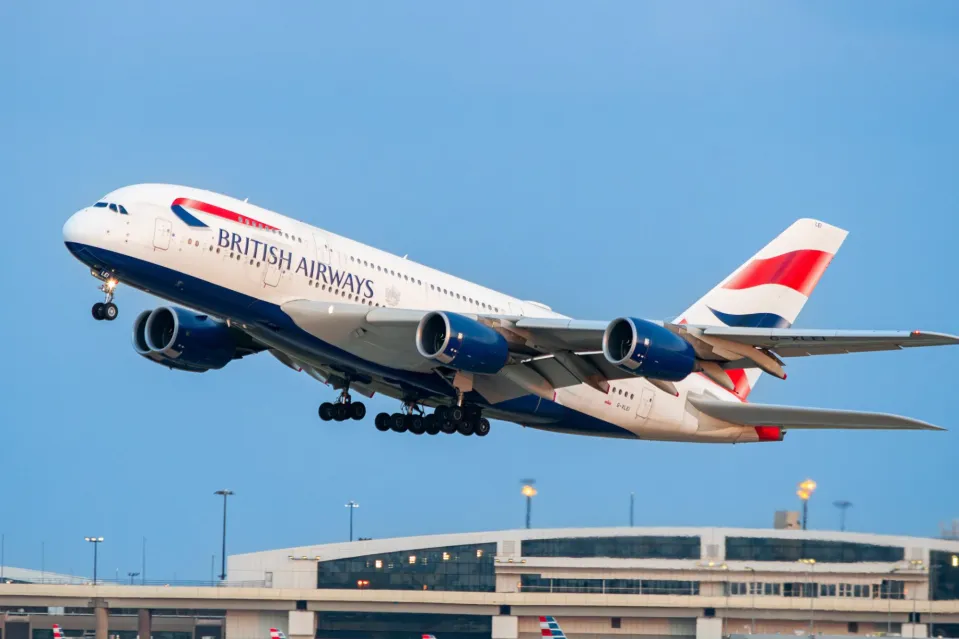
BRITISH Airways’ multi-million pound superjumbo refit faces certification delays over fears crew cannot safely restrain drunk passengers in its new business class seats.
The airline is in the process of upgrading its Airbus A380 fleet with its latest Club Suite, which comes with a sliding privacy door.
Sign up for the Travel newsletter
Thank you!
But the makeover could hit delays because of concerns over how staff would deal with an air rage passenger on the upper deck.
BA plans to move a small section economy seats off the top floor and replace them with a larger Club World cabin.
Its passenger restraint kit is understood to be approved for economy and premium economy seats – not the new suite-style business seats.
That could leave crew with a major problem if a passenger became violent or disruptive upstairs.
Sources said hauling a violent passenger down the A380’s narrow staircases could put crew and other passengers at risk.
The first aircraft are currently being worked on in Manila, Philippines, as part of the refurbishment programme.
Industry sources have also suggested there may be certification concerns over the weight of the new business seats, which include motors and sliding doors.
Extra weight on the upper deck could affect the plane’s payload limits.
However, any delay may also be linked to wider supply chain issues affecting premium aircraft seats across the industry.
British Airways said the A380 refit programme remains on schedule for 2026.
I’M dancing in the midday sun, frozen margarita in hand, while the DJ plays top tunes to complement the incredibly beautiful Bahamian backdrop.
I’m at the new Royal Beach Club, on Paradise Island, a private party pad in the Bahamas owned by cruise company Royal Caribbean.
Sign up for the Travel newsletter
Thank you!
Royal Caribbean’s Royal Beach Club Paradise IslandCredit: SuppliedThe beach club is exclusively for passengers travelling on board Royal Caribbean shipsCredit: Royal Caribbean
This 17-acre stretch includes three differently-themed areas and the world’s largest swim-up bar.
And the beach club is exclusively for passengers travelling on board Royal Caribbean ships.
It’s booked similarly to a cruise excursion, and the £126 fee buys you food, and drink all day, as well as access to three temperature- controlled pools and two huge white-sand beaches.
For those who don’t want alcoholic drinks, it’s £96.
Transfer to the club from ships docked at Bahamian capital Nassau are by bright-pink water taxi — ours was dubbed Flirty Flamingo.
After a few daiquiris by lunchtime, we were loving the upbeat atmosphere, with a real Las Vegas pool-party vibe.
As well as the Party Cove — by far the liveliest zone on the island — there is the Family Beach, designed with kids in mind.
The pool is perfect for younger children who want to play in shallow water and there is live music, and games, so parents can have fun, too.
For those who would rather kick back with a book and a beer, the Chill Beach is more relaxed.
But most come here to party and, with ten bars dotted around the island, it’s very easy to do that.
The food didn’t disappoint either.
Each area has an island grill, serving Bahamian favourites like coconut shrimp and jerk chicken.
Make a splash in the luxury poolCredit: SuppliedRide the waves on the surf simulatorCredit: sbw-photo
After a day dancing in the sun, we were grateful to be able to amble on to one of the multi- coloured ferries back to the ship.
We were sailing on the 18-deck Wonder of the Seas, one of the world’s largest cruise vessels — and there was plenty on board to keep us busy, including 20 restaurants, five live shows, a surf simulator, zipline and ten-storey slide.
The ship is capable of hosting almost 7,000 passengers, in its 2,600 cabins.
Our balcony stateroom was bright and breezy, with the benefit of some outside space.
While there are plenty of venues for you to enjoy the tasty included dining, we splashed out on one of my favourite venues that come at an extra cost.
Seafood restaurant Hooked is around £36 extra per person if booked in advance, but is definitely worth it.
Delicious menu options included Alaskan salmon, Maine lobster and freshly shucked oysters, as well as a fantastic surf-and-turf.
After dinner, we managed to get a seat at the popular inTENse show, whose all-female performers include synchronised swimmers, acrobats and martial-arts specialists.
The Sun’s Helen Wright, right, enjoys a sip at cocktail hourCredit: SuppliedHelen and her pal get the party startedCredit: Supplied
With a larger ship, the challenge can sometimes be getting your bearings, but on Wonder of the Seas the eight “neighbourhoods” mean you quickly get into the swing of things.
My favourites included Central Park, a serene open-air courtyard, adorned with trees and plants; The Boardwalk, a fun, fairground-themed zone; and the Royal Promenade, a social space with shops, bars and restaurants.
It’s easy to see why a Royal Caribbean cruise appeals to a wide range of holidaymakers.
Whether you are cruising as a family, a couple or with friends, there is a lot of fun to be had.
The karaoke lounge is a must — even if you don’t want to roll out your inner Jane McDonald.
The entertainment value for the audience here is high — with some very interesting performances from guests that have been sipping rum punch all afternoon.
The perks included with your cruise continue on the island, too.
If you want a break from sunning yourself by the turquoise sea, you can also embrace your inner kid at the Thrill Waterpark, which does come at an extra cost.
Here, you can take on the third-highest waterslide on the planet.
This tube-slide is shockingly fast, with riders hurtling down at more than 30mph — taking just seconds to splash-land.
Which is a lot faster than it takes to climb the 255 steps to get to the top.
Back on the Wonder of the Seas, guests can take advantage of their last night at sea with the bars, pools and decks full of life.
With lots of fun things to see and do on board — and now with the Royal Beach Club giving you even more fun on land — a Royal cruise definitely offers the best of all worlds.
GO: CARIBBEAN CRUISE
GETTING THERE: Virgin Atlantic fly daily to Miami from Heathrow with return fares from £548.
ALL ABOARD: A three-night full-board sailing on Royal Caribbean’s Wonder of the Seas is from £343pp, based on departure from Miami on September 25, 2026.
Includes calls at Nassau and Perfect Day at CocoCay.
easyJet passengers are being warned they could face serious consequences if they don’t completely switch off certain electronic devices
EasyJet customers must make sure of one thing while on board(Image: BrasilNut1 via Getty Images)
Holidaymakers travelling with easyJet this summer are being warned that they could unknowingly fall foul of strict cabin rules unless they fully switch off a commonly used electronic device before stepping on board. The trouble is that many passengers only discover the rule once they’ve already reached the airport or are on the verge of boarding, where last-minute slip-ups could spell serious problems.
According to EasyJet, the warning relates to e-cigarettes and vaping devices, which must be carried in hand luggage only and are strictly forbidden from being stowed in hold baggage under any circumstances. The airline’s official policy states: “All electronic cigarettes and vaping devices must be carried in the cabin, re-charging is strictly prohibited and the device must be completely switched off.”
It also advises passengers to keep their devices on their person where they can be kept an eye on throughout the flight, reducing the risk of accidental activation. These rules are in place due to concerns over lithium-ion batteries, which are used to power vaping devices and are well known for posing a fire risk if they become damaged or overheat.
The UK Civil Aviation Authority categorises lithium batteries as a significant safety risk in aviation due to their potential for ‘thermal runaway’, producing intense heat and flames that are notoriously difficult to extinguish in confined spaces. The International Air Transport Association has highlighted a worldwide rise in lithium battery-related incidents, which has gone hand in hand with the increasing prevalence of portable electronic devices, prompting airlines across the globe to tighten their rules considerably.
EasyJet also warns that passengers must take precautions to prevent their vaping devices from being switched on accidentally during flights, including ensuring they are fully powered down before boarding. The airline stipulates that travellers may carry no more than two spare batteries in their hand luggage, and that these must be properly protected to prevent them from coming into contact with metal objects.
Under UK aviation rules, vaping devices must be kept in hand luggage at all times. Official government guidance states that e-cigarettes are strictly prohibited from hold baggage.
Industry experts point out that confusion often arises because rules can vary between airlines and destinations, which can leave passengers unknowingly packing the wrong items before they even reach airport security. Aviation safety specialists also warn that using or charging vaping devices while on board flights is strictly prohibited by all major airlines, with penalties ranging from confiscation to fines or even travel bans in severe cases.
As summer travel demand picks up, holidaymakers are being urged to check airline regulations before they set off to avoid delays, confiscations, or being refused entry at the boarding gate.
One French passenger and one from the US test positive after being evacuated from the vessel in the Canary Islands.
Published On 11 May 202611 May 2026
A French woman and an American man have tested positive for hantavirus infections as countries around the world repatriate passengers from a cruise ship hit by a deadly outbreak.
French Health Minister Stephanie Rist said on Monday that a French passenger who was on the MV Hondius cruise ship tested positive for the virus and her condition was deteriorating, the Reuters news agency reported.
Recommended Stories
list of 3 itemsend of list
“What is key is to act at the start and break the virus transmission chains,” Rist told France Inter radio, pointing to the “decree that came out today that will allow us to strengthen isolation measures for contact cases and to protect the population”.
Another four French passengers have so far tested negative, and authorities have identified 22 contact cases.
The US Department of Health and Human Services said on Sunday that an American on a repatriation flight had tested “mildly positive” for the virus and another had mild symptoms. Both were travelling “in the plane’s biocontainment units out of an abundance of caution” and all 17 MV Hondius passengers on board would undergo clinical assessment upon arrival in the US.
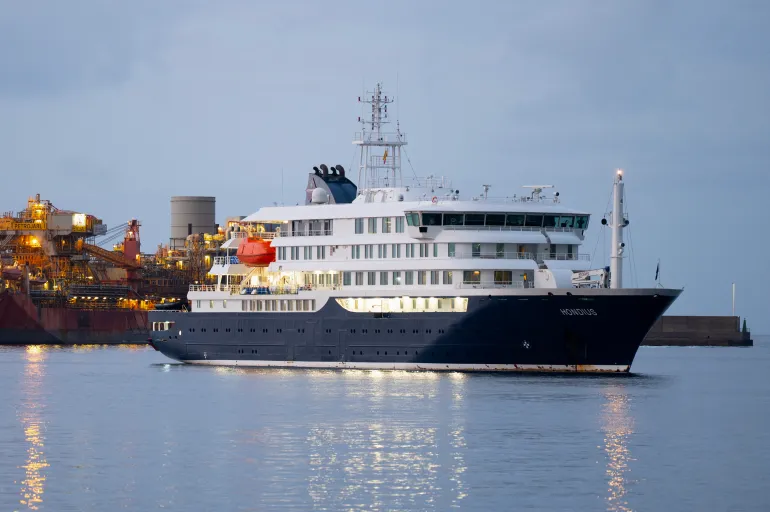
The Dutch-flagged, hantavirus-stricken cruise ship MV Hondius arrives at the port of Granadilla de Abona on the island of Tenerife in Spain’s Canary Islands [File: Jorge Guerrero/AFP]
The two new cases bring the total number of confirmed cases to 10. The World Health Organization (WHO) has so far confirmed two deaths and one probable death, and as of Friday, four people were hospitalised with one in intensive care in South Africa.
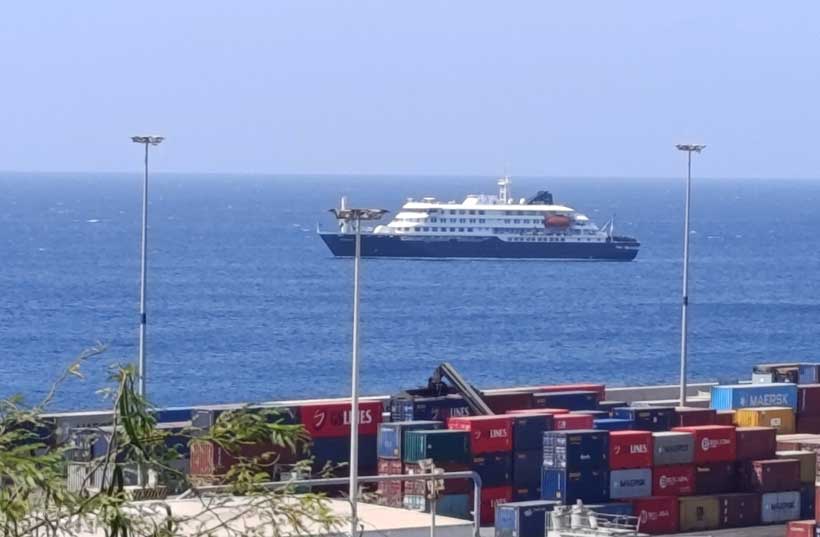
The MV Hondius was anchored near the Canary Island of Tenerife after being stranded for weeks following an outbreak of the hantavirus on the luxury cruise ship. Health authorities have been locating and monitoring passengers who disembarked from the ship before the outbreak was identified.
Investigations into the source of the outbreak are ongoing.
The evacuation of passengers from the cruise ship will be completed on Monday with flights to Australia and the Netherlands, Spain’s health minister said.
One flight to Australia will evacuate six passengers from Tenerife and another to the Netherlands will take 18 passengers. Both flights are to also carry passengers from other countries that did not send their own repatriation flights, officials said.
Hantaviruses can cause severe respiratory illness and are usually spread by rodents but can also, in more rare cases, be transmitted between people. Symptoms can begin between one and eight weeks after exposure and include headaches, fever, chills, gastrointestinal issues and respiratory distress.
The fatality rate of the Andes strain of the hantavirus, identified in the ship’s outbreak, can reach 40 to 50 percent, particularly among elderly people.
The WHO has recommended a quarantine of 42 days for the cruise passengers. Experts are stressing the need for calm, noting that the virus is far less contagious than COVID-19.
Robin May, chief scientific officer at the United Kingdom Health Security Agency, said the risk to the public was “extremely low”, the Press Association news agency reported.
Dutch cruise ship MV Hondius is anchored off the coast of the city of Praia on the island of Santiago, Cape Verde, on May 4. The ship docked in Tenerife, Spain on Sunday to begin evacuating nearly 150 passengers and crew members. Photo by Elton Monteiro/EPA
May 10 (UPI) — A cruise ship stricken with a hantavirus outbreak is evacuating its nearly 150 passengers in the Spanish island Tenerife on Sunday.
The MV Hondius docked in Tenerife Sunday morning to begin evacuating passengers who will be sent to their home countries. A small boat is being used to transport passengers to shore where they are received by a medical tent.
The first group of passengers left Tenerife on Sunday morning by plane. Fourteen Spanish passengers were boarded on a plane bound for Madrid.
Passengers were seen in face masks and full-body personal protective equipment. They have been isolated from the general public during transport off the vessel.
Before being released from the ship, passengers were screened for symptoms and all were asymptomatic.
The next group of passengers to leave the island will be passengers from the Netherlands, Spain’s health minister Monica Garcia said. Some crew members will also be part of that flight.
Passengers from the United States are set to be received at the University of Nebraska Medical Center where they will be monitored. It is a one-of-a-kind medical facility in the United States with specially designed rooms for the purpose of monitoring.
Three cruise ship passengers have died from hantavirus infection, World Health Organization Director-General Tedros Adhanom Ghebreyesus said.
Chile has reported a fatality rate of 33% in hantavirus cases this year. Last year it confirmed 44 cases and eight deaths.
A UNUSUAL temporary ban is being rolled out in days at a popular vacation hotspot.
The law will impact all residents, tourists, and even cruise lines.
Sign up for the Travel newsletter
Thank you!
The mass 10-hour ban will impact all residents, tourists, and even cruise lines (stock)Credit: AlamySome Royal Caribbean cruise ship passengers are outraged by the booze ban (stock)Credit: Alamy
Alcohol sales will be completely banned across all islands in the Bahamas due to the general election, officials have confirmed.
Polls open on May 12 and between the hours of 8am and 6pm, no alcohol will be available for purchase, per a government notice.
This includes even on private islands that are owned by cruise lines.
Royal Caribbean said it will be abiding by the local laws at Coco Cay, it’s private island in the Bahamas.
“Royal Caribbean is respecting and complying with all local laws and regulations, as we do with every destination we visit,” a Royal Caribbean spokesperson told PEOPLE.
Both the Wonder of the Seas and the Oasis of the Seas ships will be visiting the island on that day.
It’s beach bars Perfect Day and Royal Beach Club Paradise Island will still be open, the cruise line confirmed, and noted that passengers will still be able to get alcohol on board the ships.
Despite this, passengers are fuming about the sudden announcement.
“We scheduled a trip with stops in the Bahamas for our 40th anniversary,” one customer wrote on X.
“We are going with 26 of our friends. Planned activities at CocoCay and Nassau.
“The general election has banned all alcohol for the two days we are there. And we find out only two days before we leave? Not a way to treat customers who cruise four times a year.”
A Jet2 survey has shown a shift in how people are booking their holidays amid concerns over jet fuel supplies
13:30, 09 May 2026Updated 13:30, 09 May 2026
Jet2 said passengers concerned about cancellations are booking their trips differently(Image: Getty)
Jet2 has revealed that passengers are making a major change to how they book holidays amid concern over major jet fuel problems this year due to teh Middle East Crisis. As the Middle East crisis deepens, mounting concerns suggest Britain could face a jet fuel shortage that may disrupt holiday flights.
Goldman Sachs has cautioned that Britain is the country “most exposed” to jet fuel shortages triggered by the Iran conflict, stoking fears of further flight cancellations and ruined summer getaways. Analysts at one of the world’s largest investment banks warned that the UK is heavily dependent on imports routed through the closed Strait of Hormuz, with “critically low levels” of supplies and inadequate refining capabilities.
And personal finance expert Martin Lewis has spoken out about the issue – highlighting people who book their flights and hotels separately might not get compensation if flights are cancelled. Jet2 said package holidays are now the top choice for travellers, with 51% opting for this booking method – a 5% rise since February. During the same timeframe, those preferring to book through separate providers has fallen by six percentage points to 20%, while ‘accommodation only’ bookings have plummeted to just 2%.
Jet2 said the results showed main attractions of package holidays have remained consistent, with value (36%) and convenience (36%) leading the way. However, the appeal of ‘added security with one provider, ATOL/ABTA protection’ has climbed by four percentage points since February to reach 26%, according to the survey.
This protection ensures customers are safeguarded against any alterations to their bookings, including the possibility of refunds should travel plans be scrapped, while guaranteeing holidays meet the highest standards for customer service, booking amendments, and health and safety.
Jet2 has pledged not to impose surcharges on any confirmed flights or holidays to offset rising costs, such as jet fuel, giving customers peace of mind that the price they book is the final price they’ll pay.
Steve Heapy, CEO of Jet2, commented: “Consumers want assurance during times of uncertainty and package holidays provide that assurance. On top of all the protection that our package holidays guarantee, Jet2 is well known as being a consumer champion that goes above and beyond to look after customers. Ahead of a busy summer season, this means new and existing customers know that their well-deserved holidays are in the very best hands with us, and we are very excited about welcoming everyone onboard and taking them on their breaks.”
As millions of Jet2 customers gear up for a bustling summer season, the firm has confirmed it intends to run its scheduled services as planned.
Martin Lewis gave a warning for anyone who has already booked their holiday for this summer. In an update the personal finance guru gave an alert to people who have already paid for breaks from the main holiday firms and airlines like TUI, Jet2, Ryanair, Wizz, easyJet and British Airways.
During his Money Show Live on ITV, the financial expert responded to an audience member who asked: ‘If my flight’s cancelled due to no jet fuel will you definitely receive all your money back even for your hotel booking as well.’
Mr Lewis made clear that travellers would lose their hotel booking costs if they had arranged accommodation independently from flights booked with airlines such as Jet2, TUI, Wizz, Ryanair or easyJet – as they would not be protected under consumer regulations.
He stated: “No. And I think this is what people need to be very aware of. If you booked a package holiday where you booked everything in one, then under the package holiday regulations and rules and protections generally if your flight went you would get everything back.”
He went on to say: “And so actually at the moment package holidays give you a certain level of extra security that you wouldn’t get if you did a DIY booking where you bought your hotel and flight separately.” The reason behind this, he explained, is that the hotel booking itself remains valid: “Because the point is if you lose your flight and you’ve DIY booked, there’s nothing wrong with your hotel.
“The issue is you can’t get there. Your hotel is still there. It’s not faulty. It’s not cancelling. So, you don’t have those consumer rights.” If the hotel hasn’t done anything wrong, then guests might look at how they’ve made their booking – but that route offers no solution either.
He said: “So, you would then say, ‘What about using a credit card or debit card protection?’ It won’t work because there’s nothing faulty. And that’s just giving you the same replica rights that you would have with the retailer.”
Meanwhile, holiday giant TUI has issued a direct message to those with May bookings. TUI Managing Director Neil Swanson in a message on Facebook, pledged that May half-term flights would proceed as scheduled: “We know you may be feeling a little uneasy after recent headlines, and we want to reassure anyone travelling over May half term that they can look forward to their holiday with confidence with TUI. We have good visibility on fuel supplies and are operating our holiday programme as planned, with no flights being cancelled due to fuel shortages.
“Our careful planning across fuel, flying and hotel capacity means we’re able to continue offering great value and stable prices – with no fuel surcharges added by TUI. The price you see is the price you pay, and all TUI package holidays are ABTA & ATOL protected, giving peace of mind from booking right through to returning home.”
On TUI’s Facebook page, holidaymakers reported seeing significant price hikes. Marie said: “We booked our August holiday nearly 18 months ago and paid 5.2K. Just checked it to book now and it’s 6.7K. Glad we booked so far in advance. Already booked August 2027 holiday for same price as we paid this year.”
Lynn replied: “Marie Tomes we’re the exact same. Been going to the same hotel for 7yrs. They renegotiated the contract last year. For us to book for next year its going to be nearly 1k each more for our 2weeks. We’re going to make the most of this year as our last visit.”
One concerned traveller, Rno, raised worries about upcoming summer trips: “What about those who have already booked a hotel and flight for the entire month of August? I have a booking for my family and I’m worried Note that the plane is a TUI and the flight is to Egypt.”
TUI responded: “Hi there. We’re monitoring the situation closely. Right now, we don’t expect any disruption to flights or holidays, but we’ll keep this under review and contact customers directly if anything changes that affects their booking. “
Meanwhile, Jet2 revealed it too is witnessing a notable shift in booking behaviour amongst travellers. Experts such as Martin Lewis have urged travellers to book holidays as a package deal, warning that purchasing flights and accommodation separately could leave them without full compensation should anything go awry.
Spain will receive the luxury cruise ship MV Hondius, which has 149 people aboard from 23 countries and suffered a hantavirus outbreak that killed three people. Four others are confirmed infected, and three more are suspected cases. The ship is expected to arrive in Tenerife, part of the Canary Islands, on Sunday around noon but will not dock. Instead, it will anchor nearby, and those onboard will be taken to land using smaller boats. Spanish authorities stated that this measure was requested by local officials and there is no public health risk from docking.
The MV Hondius began its journey on April 1 from Argentina and carries 88 passengers and 61 crew members, including one deceased German guest. Oceanwide Expeditions confirmed no remaining passengers show symptoms of infection. After arriving, evacuees will be taken to the main airport in Granadilla, ten minutes away, using sealed buses with drivers in protective gear. These buses will go directly to the airport runway for boarding onto evacuation flights. It is not clear if all crew members will leave the ship.
The Spanish government is coordinating these evacuations, with the U. S. and Britain already sending charter planes. Countries with the highest numbers aboard include the Philippines (38), Britain (23), the U. S. (17), Spain (14), and the Netherlands (13). Although authorities aim to evacuate everyone quickly, a special isolated unit at a local hospital is prepared as a backup.
One of the deceased passengers remains on board while the Netherlands will handle their evacuation. The MV Hondius must continue to the Netherlands after its obligations, although it is currently undetermined when that will happen. Spanish officials stress that the ship will not linger in the area longer than necessary, and disinfection will be carried out with care for health safety.
The airline has previously called for Portugal to suspend the EU Entry-Exit System (EES)
The new system continues to cause disruption on the continent
Ryanair has provided an update regarding its stance on the contentious EU entry-exit system (EES). The budget carrier has been an outspoken opponent of the new digital system, which is progressively replacing traditional passport stamps for British travellers heading to the Schengen zone.
The airline particularly highlighted the EES implementation in Portugal, which has come under fire in recent weeks. The system has been repeatedly suspended during peak periods to allow passengers to catch their flights following reports of significant delays.
“Portuguese Government needs to suspend new Entry/Exit System (EES) until after the peak summer season,” a Ryanair statement posted on Instagram declared.
“Otherwise, passengers are forced to endure excessive border control queue times at Portuguese airports.”
Uncertainty arose following suggestions that Portugal and Italy were poised to mirror Greece’s approach, which announced it had effectively halted the EES process for British nationals until summer’s end. However, neither Portugal nor Italy verified these claims.
Content cannot be displayed without consent
EES explained
EES received a soft launch last October, but was scheduled to become fully operational on April 10, 2026. It requires most visitors – including Britons – from beyond the EU to register biometric information each time they enter or exit the Schengen free travel area. The countries in the Schengen area are: Austria, Belgium, Bulgaria, Croatia, Czechia, Denmark, Estonia, Finland, France, Germany, Greece, Hungary, Iceland, Italy, Latvia, Liechtenstein, Lithuania, Luxembourg, Malta, Netherlands, Norway, Poland, Portugal, Romania, Slovakia, Slovenia, Spain, Sweden, and Switzerland.
The Republic of Ireland and Cyprus fall outside the Schengen zone, meaning EES does not apply when travelling to either of these destinations. No action is required prior to reaching the border, and EES registration is completely free of charge.
Reports have emerged from Italy of passengers missing their flights, prompting the UK Government to warn: “EES may take each passenger extra time to complete so be prepared to wait longer than usual at the border.”
Ryanair has previously hit out at the EES system. Branding it ‘half-baked’ earlier this month, the airline stated: “Despite knowing for over three years that EES would become fully operational from 10 April 2026, France, Portugal, Poland, Italy, Spain, and Germany have failed to ensure that adequate staffing, system readiness, or kiosks are in place.
“As a result, passengers are suffering long passport control queues and, in some cases, missing their flights.
“Ryanair calls on these EU Governments to suspend the rollout of the EU’s passport control Entry/Exit System (EES) until September to ensure that passengers are not needlessly forced to suffer long passport control queue delays at European airports during the peak summer season.”