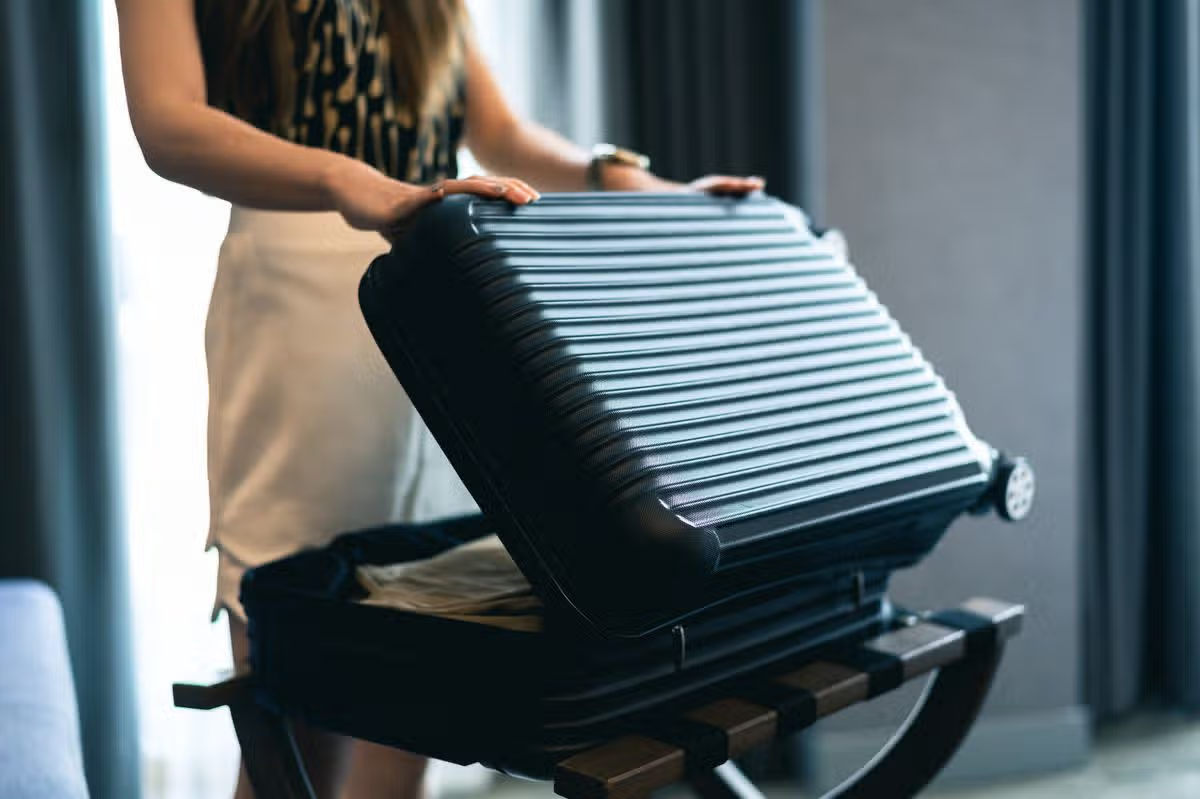
Travellers must take extra when packing their suitcases as certain items are not allowed in hold luggage, especially this device would could cause more disruption than usual

Many people might find packing their suitcase quite stressful(Image: Getty Images)
Packing for a holiday can be both exciting and nerve-wracking in equal measure. Most airlines enforce strict restrictions on weight and size, which can prove incredibly stressful for travellers.
Certain items have long been forbidden during air travel, but what about storing them in your suitcase? According to recent findings, vapes and powerbanks rank among the greatest fire hazards on aircraft. As a result, many holidaymakers remain unsure about the correct procedures when flying with these devices.
To shed some light on the matter, Markus Lindblad, Head of Legal & External Affairs for Northerner, has set out the key guidelines for storing your vape.
He warned that despite safety notices, many travellers are still mistakenly packing vape devices in their hold luggage, when airlines actually require these to be switched off and kept solely in cabin baggage.
Why lithium batteries and vapes are banned in checked luggage
This comes down to the considerable fire risk posed by lithium batteries. In the past, airlines have been forced to divert flights after a lithium battery caught fire, making it absolutely vital to thoroughly check your bags.
If you’re caught vaping on board, this can set off smoke alarms and alert cabin crew. Depending on the airline and the circumstances involved, failing to cooperate with staff or disregarding safety instructions could land you with a hefty fine.
This could also result in police getting involved once the aircraft touches down, or even a lifetime ban from travelling with that carrier. But if you spot another traveller vaping mid-flight, it’s recommended to quietly alert a member of the cabin crew.
Getting through an entire journey without nicotine can prove challenging for some, but Markus recommends smokers bring patches on board to tide them over until they reach their destination.
They can be stored in both hand luggage and hold baggage, are subtle to apply and don’t produce vapour, making them appropriate for use while airborne.
As with any product, travellers should always verify the regulations of their airline and destination country before departure, as requirements can differ.
France, for instance, has outlawed nicotine pouches. Taking a brief moment to familiarise yourself with the airline’s regulations and pack appropriately can help prevent hold-ups, seized items or fines, ensuring your trip begins smoothly.
Airline vape policies and the UK disposable vape ban
According to the UK Civil Aviation Authority, all vapes and e-cigarettes must be carried in cabin luggage and never in hold baggage.
This is compulsory to avoid lithium battery fires. Furthermore, all e-liquids must adhere to the standard 100ml liquid restriction in a transparent resealable bag.
You should also drain your refillable tanks prior to flying, as changes in cabin pressure often cause e-liquid to seep out through the airflow openings. For more comprehensive policies on precise battery quantities, it’s worth checking your specific airline’s guidelines via British Airways, easyJet, or Ryanair.
It is also worth noting that selling single-use disposable vapes is completely prohibited in the UK. While you are still permitted to travel with ones you already own, purchasing them at UK airports is not allowed.