It’s an annual fall tradition that Disneyland increase its prices — and stealthily in the night. Starting Tuesday, guests will pay more to experience the Happiest Place on Earth.
But the increases are relatively light. For the eighth year in a row, Disneyland did not raise the cost of the lowest-priced ticket, which is $104. And its highest-priced ticket, which is $224, also did not change. The increases were felt primarily on mid-level tiers for single-day, single-park tickets, and were limited to $5 apiece.
Other prices also remain unchanged. The cost of Disneyland’s popular annual pass program, the Magic Key, did not increase. The top-tiered Magic Keys have been subject to hefty yearly spikes over the last decade. Parking remains fixed at $40, and multiday tickets have not been affected.
Collectively, this is one of the smallest overall increases made by the Disneyland Resort in recent history, as last year, its highest-priced single-day ticket jumped in cost $18. At a time when leisure costs are rising and forcing Americans to stay home, it comes as somewhat of a relief that Disneyland is not asking its fans to pony up substantially more cash to get through the gates.
While the Walt Disney Co. provided no official statement on the increases, Disneyland Resort officials noted in an email that it is aware guests are more closely watching their wallets in 2026. Thomas Mazloum, chairman of Disney Experiences, in a comment given to CNN, said, “Our goal is to put guests at the center of our decision making, and that starts by listening to them. That matters more now when families are watching every dollar, and we see it in the choices they make every day — in how they plan, in how far ahead.”
It’s also an indication that, at least for the time being, the Disneyland Resort has pushed its prices as far as they can go. Disneyland is blessed with an in-demand product, but every commodity has its limits.
In May, the Walt Disney Co. reported a 1% decline in attendance at its U.S.-based parks compared with the prior year, which the company attributed to “continued softness” in international visitors. In August, however, Disney bounced back, and noted, especially at Florida’s Walt Disney World, that attendance had perked up. Overall, visitation at its U.S.-based theme parks was 3% higher than in the previous year’s third quarter, the company said. This boost was largely attributed to a variety of summer deals.
As someone who is at Disneyland nearly every week, I can report that summer crowds were relatively manageable. There have been some asterisks, such as the World Cup and high heat, both likely keeping guests away, but anecdotally, Disneyland crowding hasn’t been nearly as extreme this year. I simply believe that people do not currently have the excess funds that they once had.
And Disney seems to be responding to the economic climate, especially in making it easier for its biggest fans to visit the resort. In conjunction with the price increases, Disneyland President Jill Estorino announced Tuesday that the company would be removing its no-show penalty on annual passholders. Additionally, passholders can now cancel their reservations up to 11:59 p.m. on the day of their reservations.
These are welcome changes, as previously guests were allowed three no-show penalties before their ability to make reservations was restricted, and had to cancel the night before. But plans change, and the reservation system restrictions, initially put in place to manage crowding during the COVID-19 pandemic, had increasingly felt like an impediment. While reservations are still required, which Disneyland has stated helps the resort plan its crowd-forecasting and staffing, the system is more lax and user-friendly than it has been.
Digging deeper into Disneyland’s pricing, there have been some small changes elsewhere. The cost of the line-skipping feature Lightning Lane, which can fluctuate based on crowding levels, now has a top price of $38, an increase of $1. And the park-hopper add-on for single-day tickets, which can also fluctuate, increased $5-$10, depending on the day. And earlier this year Disneyland did increase its prices on a number of food items.
The Disneyland Resort, to be sure, is not cheap. In the world of entertainment, it remains a luxury good on par with postseason Dodgers tickets (albeit with cheaper parking than Dodger Stadium). But I credit the Disneyland Resort for reading the cultural room. Pulling the plug on its recent steady and hefty price increases, especially on annual passes, shows the company can occasionally listen to its audience as much as it does Wall Street. Sure, a price decrease would be nice, but we don’t live in a fantasyland.
This week in SoCal theme parks

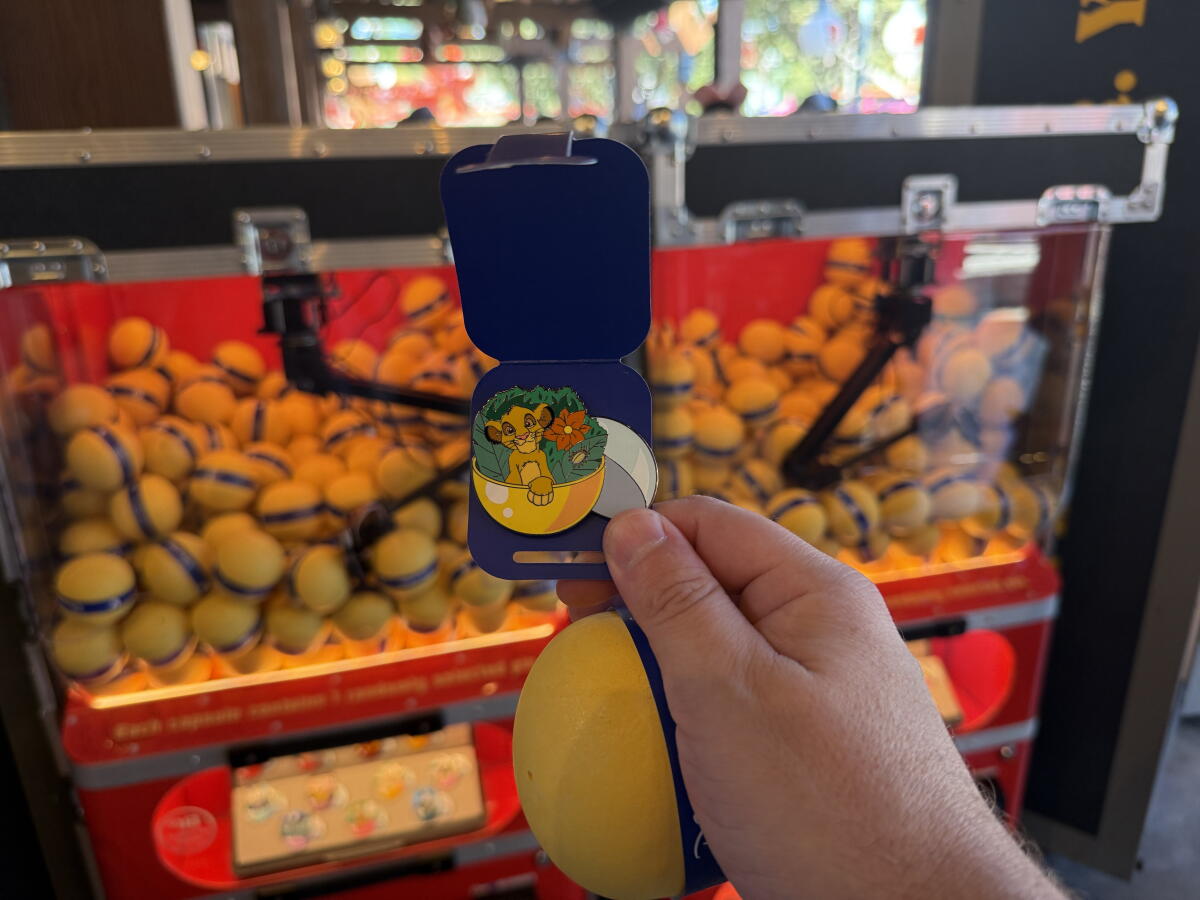
The Disneyland Resort has added new collectible pin trading vending machines.
(Todd Martens / Los Angeles Times)
- Attention Disneyland pin traders! The Disneyland Resort has added a new pin line available in select vending machines throughout the property— look for them in San Fransokyo Square and Pixar Pier in Disney California Adventure and at the Star Wars Trading Post in Downtown Disney. Each pin is $18, and one buy gets you one egg-like orb with a mystery pin. There are 15 in the set — I got Simba, as seen above — and offerings include park staples such as the Hatbox Ghost as well as classic characters such as Princess Aurora and Dumbo. Some are marked limited edition — “chasers,” in Disney pin trading speak — so be on the lookout. Thanks to Mr. Daps for the heads-up.
- A Disneyland ticket deal. With life constantly getting more expensive (see above), it’s a good time to hunt for a deal. If you’re a Costco member, reports are that there’s a pretty good one happening right now. Valid through Dec. 18, Costco is said to be selling a two-day Disneyland park hopper ticket with the line-skipping feature Lightning Lane already added in for $329.99. The offer includes a $60 dining card, and works out to a savings of a couple hundred. Disney Tourist Blog has more details on the limited deal.
- An applaudable energy project. Six Flags Magic Mountain has announced the completion of its solar carport project, the largest solar carport in California. Covering 4,315 parking spaces, the project was designed to offset 100% of the energy consumption of Magic Mountain and Hurricane Harbor (while also providing some shade and sun protection for its parked cars). The project is interconnected with the Southern California Edison grid, meaning excess energy may be exported as well as allowing the parks to draw energy from the project when needed. The carport also offers 109 electric vehicle charging stations.
- A pause at Castle Park. Riverside’s long-standing Castle Park is beginning the creation of what it says is a“reimagined experience.” As such, on Nov. 1 its Ride Park will halt operations for the foreseeable future. “We’re taking the time to plan the right rebuild and will share updates as plans take shape,” the company says in an FAQ on its site. Its mini golf and arcade areas will continue to welcome guests.
More on the noise issues around the ‘Fast & Furious’ coaster

Riders on Universal’s new Fast & Furious: Hollywood Drift.
(Ronaldo Bolanos / Los Angeles Times)
There will be no shortage of updates and news on Universal’s new Fast & Furious: Hollywood Drift coaster in the coming weeks, months and maybe even years, especially as the attraction continues todraw the ire of the park’s neighbors in Toluca Lake. Universal Studios Hollywood held a meeting with nearby residents on its studio lot last Wednesday. The session was closed to the media but was said to attract more than 350 neighbors. I spoke with a number of residents, as well as Universal, after the session, and indications are that the two sides still haven’t settled on a compromise. The issue, of course, stems from the sound of rider screams from the coaster drifting into the residential area.
Universal has promised, through the end of the year, to not begin operating the coaster before 9 a.m., and has also, in response to community feedback, installed a new sound barrier featuring an additional 1,900 square feet of sound absorbing material. The new barrier includes a sail that’s about 63 feet tall and 31 feet wide. But residents I spoke to feel it’s not yet enough. I’ve heard many stories from neighbors in recent weeks regarding the disruption caused to their lives. They range in extremes. A neighbor without air conditioning says they can no longer open their windows. A resident who offers meditation services from their home says their business is now potentially forever impacted. A teen was unable to complete a SAT prep test due to the incessant screaming. Many report insomnia from the rise in anxiety levels. There’s plenty more.
The meeting was said to grow contentious near its end. Residents provided data on how the effects of noise, specifically screams, can cause stress-related responses. Universal is said to have discussed the challenges in further mitigating the sound. County supervisor Kathryn Barger was in attendance and is calling for additional communication between the two sides. “The meeting’s dialogue made clear that the lives of surrounding residents are being impacted and disrupted,” Barger said via a statement. “I respect Universal’s decision to host this forum and listen to the concerns being raised. I encourage all stakeholders to maintain an ongoing honest dialogue.”
Tell us your stories. Ask us your questions.
Have a theme park tale to share? Whether it was a good day or less-than-perfect day, I would love to hear about it. Have a question? A tip? A fun photo from the parks to share? Email me at todd.martens@latimes.com. I may feature your note in an upcoming newsletter.
Ride on,
Todd Martens
—
This newsletter is free thanks to the support of L.A. Times subscribers. If you’re not yet a subscriber, explore subscription packages to unlock unlimited digital access and support award-winning local reporting.
Was this newsletter forwarded to you? Sign up here to get it in your inbox.