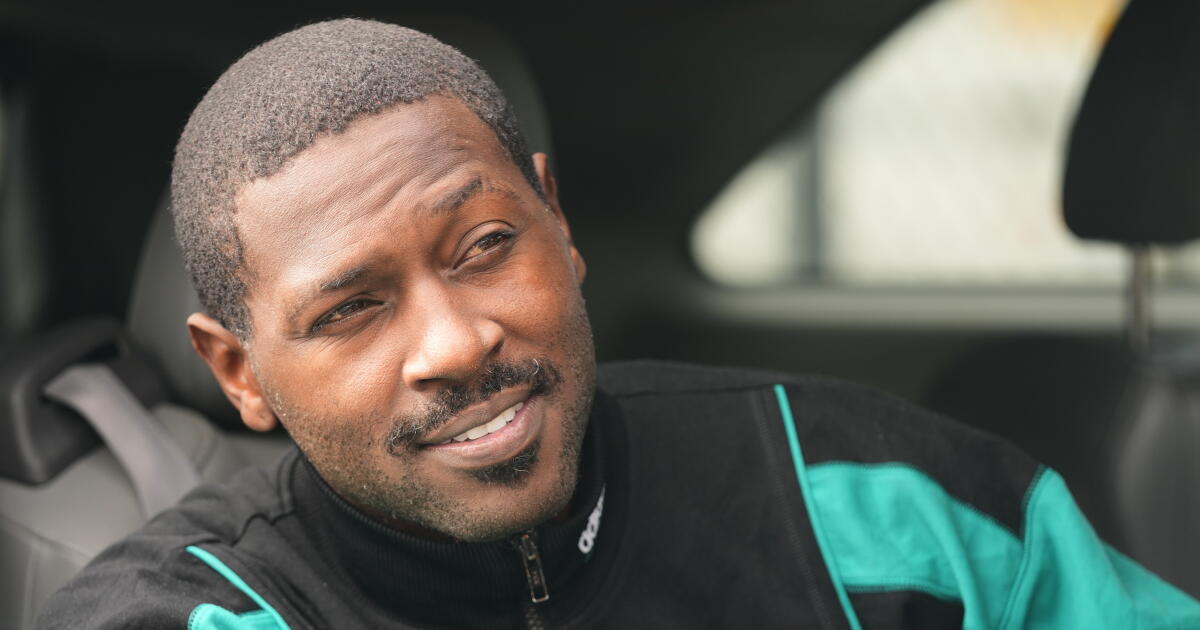


Detroit Lions cornerback Terrion Arnold has been arrested in connection to an alleged armed attack on a group of men in Tampa, Fla., in February. He faces eight felony charges of kidnapping and robbery that could keep him in prison for life if convicted.
Investigators believe Arnold was the “primary conspirator” in an alleged plot that left three young men with “visible injuries from being battered, held at gunpoint, and pistol-whipped before their personal property was stolen and they were ordered to leave,” the Tampa Police Department said Wednesday in a news release.
Six other suspects previously were arrested. Two women already pleaded guilty and agreed to help authorities prosecute Arnold, police said.
The second-year player turned himself in Wednesday night and was held in a Hillsborough County jail without bond before his arraignment hearing Thursday afternoon.
Arnold appeared remotely during the brief hearing, where he was charged with three counts of robbery with a firearm or deadly weapon for less than $750 and three counts of kidnapping to harm or terrorize, all of which are first-degree felonies. He was also charged with two second-degree felonies for conspiring to commit those crimes.
“He’s absolutely denying these allegations,” defense attorney R. Timothy Jansen said during Hillsborough County court proceedings.
Arnold will be held without bond until a pretrial detention hearing Monday, where the Hillsborough County state attorney’s office will argue for him to remain behind bars until trial.
According to Tampa police, several items belonging to Arnold and others were stolen Feb. 1 from an Airbnb rental property in Largo. They reported to Largo police that the items were worth more than $250,000.
The alleged incident that led to Arnold’s arrest occurred early Feb. 4. It was plotted, Tampa police said, because Arnold suspected that two of the three men were responsible for stealing the items. Investigators later determined those men were not involved, police said.
Police said the victims were lured to an apartment, where they were held at gunpoint and hit by suspects who were streaming the alleged attack to Arnold, who is accused of helping coordinate the plot and giving orders to the alleged attackers on a group chat during the incident. He later arrived at the apartment and drove some of the suspects away, police said.
“Fame doesn’t get you out of criminal charges or our pursuit of justice and holding criminals accountable,” Tampa police chief Lee Bercaw said in a statement posted to X. “Our victims now have some closure thanks to the great work of our detectives and our strong partnership with State Attorney Suzy Lopez.”
The head of the management agency that represents Arnold said in a statement that the former first-round draft pick “categorically denies any involvement in the matters unlying the allegations made against him and maintains his innocence.”
“There is no credible evidence linking Mr. Arnold to these allegations,” EAG Sports Management CEO Denise White said. “Instead, the government appears to be relying on testimony from multiple convicted felons who have admitted their own involvement and may have substantial incentives to shift blame in an effort to lessen their sentences.”
Arnold has played in 24 games for the Lions. He had 31 tackles and an interception last season before going on injured reserve with a shoulder injury on Dec. 1.
The Lions said they are aware of Arnold’s situation but have no further comment.
He’s no longer a quintessential underdog routinely pardoned for his bad defense, his questionable durability and his tendency to tighten up in the playoffs.
He’s a big dog who needs to own it.
Austin Reaves, the most beloved Laker, became the most scrutinized Laker on Wednesday with the news that he agreed to a maximum four-year, $185-million contract to remain with the team.
Kudos to him for becoming the highest-paid undrafted player in league history.
Props to him for declining a rich extension offer last summer to play out the season and bet on himself.
Congrats to the Lakers for turning a homegrown talent into a budding superstar.
Seriously, it makes you just want to hug that unkempt, headband-wearing dude and let him know how his everyman story resonates with the masses.
Except that story is finished. That book has been closed. A new volume has begun.
It’s called, “Is Austin Reaves Worth It?”
Thus far, the answer has been no.
Flash back to May, the opener of the Western Conference semifinals against the Oklahoma City Thunder, a week after he had returned to the court following a monthlong absence with an oblique injury.
Lakers guard Austin Reaves chases after a loose ball ahead of Rockets guard Amen Thompson during Game 5 of their playoff series in May.
(Robert Gauthier / Los Angeles Times)
The Lakers needed Reaves to set the tone. He instead laid an egg, shooting three for 16 from the field and zero for five from beyond the arc, his body knocked clear to Tulsa by a physical Thunder defense.
Two games later, same thing, he shoots five for 13 and one for five from deep, allowing the Thunder to pound him to a pulp.
With Luka Doncic out and LeBron James exhausted, the Lakers desperately needed Reaves to pick up the slack. He dropped it, again and again, and the Lakers were swept.
It was the same thing in the spring of 2025, when Reaves crumbled in the first-round series-clinching loss to the Minnesota Timberwolves, shooting five for 14 and two for 10 in a performance that was, as usual, generally overlooked because he tried so hard and accepted his shortcomings so honestly.
That’s not going to work anymore. That’s not going to be enough anymore.
With this new deal, Reaves becomes the Lakers’ second cornerstone along with Doncic. They are now officially a one-two punch. They are now a twin-engine scoring machine that can rival any similar duo in the NBA.
Guards Austin Reaves and Luka Doncic are the new one-two punch of the near future for the Lakers.
(Gina Ferazzi / Los Angeles Times)
Doncic has lived up to his end of the bargain. Will Reaves?
And what about defense? For $185 million, you’d think you could get some defense. Doncic needs his running mate to compensate for his questionable defensive skills, and Reaves has yet to do that.
Simply by earning his way onto the Lakers roster five years ago, Reaves has been a great role model for everyone who has ever been ignored or shunned or marginalized. But did the Lakers fall in love with his legend and ignore his frailties?
Yes, he averaged 23 points per game last season. But he only played in a career-low 51 games because of calf and oblique injuries, and will he add the muscle required to fend off such problems in the future?
Yes, he has been a great interview while admirably and publicly holding himself and his teammates accountable. But he’s always been able to lead from the shadows. How will he react when 185 million microphones are pointed at him?
In a postgame interview after the Lakers’ final loss against Oklahoma City this spring, Reaves was at his aw-shucks best.
“I take life day by day and I’m just blessed to have an opportunity to play for this organization, play a kid’s game,” he said, “I make good money. But like I said, I don’t think about what I’m really going to do in the future, just day by day.”
Lakers guard Austin Reaves consults with coach JJ Redick during a break in the action during Game 3 of the series against the Oklahoma City Thunder in May.
(Robert Gauthier / Los Angeles Times)
That tone has to change. He now has to think about the future because he is the future, of this team, of this organization, of the hopes of this city.
With all of Reaves’ shortcomings, one can almost see the unsentimental Dodgers officials looking at Wednesday’s news and saying, “Wait, they did what?”
But in the end, the Lakers didn’t really have a choice. There wasn’t a free agent available who could match Reaves’ prolific shooting, and nobody who could match the Laker-centric story of his personal journey.
Renowned softie Rob Pelinka, who should count Reaves as one of his greatest successes, was so moved by the opportunity to bring him back that he mentioned the Lakers colors when answering a question about him.
“He started his journey here as a Laker and has made it very clear to us that he wants his journey to continue as a Laker,” Pelinka said during exit interviews this spring. “We want his odyssey to continue to unfold in the purple and gold.”
And so it will, for at least several more years, Reaves now occupying a Lakers leading sidekick role made famous during their championship years by the likes of Anthony Davis and Pau Gasol.
NEW YORK — A chief of staff to former New York City Mayor Eric Adams has been charged with accepting more than $100,000 in bribes to steer a lucrative migrant shelter contract to a Queens hotel, according to a federal indictment unsealed Wednesday.
Frank Carone’s arrest Wednesday was the latest in a string of corruption allegations that have rocked the one-term mayor and his inner circle. And it came the same day federal authorities executed search warrants related to a separate bribery investigation involving high-ranking police officials under Adams, the latest sign that prosecutors are continuing to hone in on the previous administration.
In the indictment, returned June 12, prosecutors accused Carone of leveraging his position as Adams’ chief of staff to commit multiple acts of bribery, wire fraud and money laundering. His brother, Anthony Carone, as well as the Queens hotel owner, Yan Po Zhu, and Crystal Chen, an employee of the hotel, were also charged.
They were expected to appear in federal court in Brooklyn on Wednesday afternoon.
Prosecutors said Carone accepted a series of bribes from Zhu and Chen in order to steer a multimillion dollar shelter contract to their hotel, which city officials had said was smaller than two other proposed hotels and could house fewer migrants. The contract was awarded amid an influx of migrants to New York that overwhelmed the city’s homeless shelters.
Frank Carone’s lawyer, Arthur Aidala, called the new indictment “not worth the paper upon which it is printed.”
“Today’s indictment is a sad day for our criminal justice system,” Aidala said in a statement. “It epitomizes the government first finding a target and then spending three years and enormous taxpayer resources to find a crime.”
Frank Carone known for link to Sabrina Carpenter church controversy
Carone, a longtime Brooklyn power broker, is widely credited as one of the architects of Adams’ political rise. Among the wider public, he is perhaps most notorious for his role in an episode that led to a Brooklyn pastor being stripped of his duties partly for allowing pop star Sabrina Carpenter to film scenes for a provocative music video at his Roman Catholic church.
The church was later subpoenaed by federal investigators seeking information about business dealings between Monsignor Jamie Gigantiello, who approved the video, and Carone.
Adams himself was indicted on bribery charges in 2024 for allegedly accepting illegal campaign contributions from Turkish officials and others in exchange for political favors. The case was tossed by the Justice Department, which said it was distracting Adams from assisting in President Trump’s immigration crackdown. Adams has denied wrongdoing but abandoned his campaign for a second term last year.
The former mayor was not accused of wrongdoing in Carone’s indictment.
A lawyer for Zhu, Stephen Scaring, said the hotel owner “will be entering a plea of not guilty and is anxious to establish his innocence.”
Chen’s lawyer declined to comment. Messages were left for Anthony Carone’s lawyer.
Hotel at center of alleged bribery had been rejected by city
In total, Frank Carone was paid around $120,000 by Zhu and Che for the emergency shelter contract, prosecutors said. The money was passed through a law firm owned by his brother, Anthony Carone, according to the indictment.
The city’s Social Services Department had initially rejected the hotel’s application to house migrants due to growing resistance to the high number of shelters already operating in the neighborhood, the indictment said.
Carone then interceded on the hotel’s behalf, prosecutors allege. In one text exchange in September 2022, Zhu wrote: “Thank you my big guy,” according to the indictment.
The Carones and Zhu socialized frequently and attended gatherings at Zhu’s Long Island home, the indictment said.
In a separate statement, Todd Shapiro, a spokesperson for Adams, said Frank Carone “dedicated decades of his life to public service, the legal profession, and helping countless individuals, businesses, and charitable organizations throughout New York.”
Carone played a key role in Adams’ campaign for mayor in 2021 and served as Adams’ chief of staff in 2022. In 2023, he formed a political consulting firm. He also was a one-time lawyer for the Brooklyn Democratic Party.
Separately Wednesday, federal agents searched the homes of current and former New York Police Department leaders as part of a bribery investigation that grew out of an inquiry into Jeffrey Maddrey, the chief of department under Adams, according to a law enforcement official briefed on the searches.
As part of that inquiry, the FBI and the NYPD executed warrants on the home of NYPD Chief of Manhattan South James McCarthy and former Deputy Commissioner Tarik Sheppard, according to the person, who requested anonymity because they were not authorized to discuss the investigation.
Maddrey’s home was also searched by federal agents, the person said.
The searches were not related to the arrest of Frank Carone, according to another person familiar with the matter who also spoke on condition of anonymity because they were not authorized to publicly discuss details of the case. There is no public indication of any arrests as part of those searches.
Once the highest-ranking uniformed officer in the department, Maddrey resigned in late 2024 over allegations that he demanded sex from a subordinate in exchange for opportunities to earn extra pay.
An inquiry to his attorney was not immediately returned. Attorney information for Sheppard and McCarthy was not immediately available.
Collins, Offenhartz, Sisak and Richer write for the Associated Press. Collins reported from Hartford, Conn., and Richer reported from Washington.
When the creators behind Universal Studios Hollywood’s soon-to-open “Fast & Furious” coaster discusses the attraction, they speak of it not only as the most grown-up, intense ride at the park, but also as one of the most extreme coasters in Universal‘s global portfolio. That means, in theory, a ride as vaunted as its Florida coasters Jurassic World VelociCoaster and Stardust Racers.
For riders, some of the perception of danger will come from the coaster’s location. Fast & Furious: Hollywood Drift is set on a hill between the park’s upper and lower lots. It will careen over, under and around guest escalators, and take attendees on a journey that includes multiple inversions and speeds of 72 mph, making it the fastest coaster at any Universal park. A particularly unique facet is the ability for its cars, each meticulously designed after a real vehicle, to rotate 360 degrees.
You’re reading Mr. Todd’s Wild Ride newsletter
Todd Martens’ newsletter delivers news and commentary on the past, present and future of theme parks, right from the theme park capital of the world — Southern California.
By continuing, you agree to our Terms of Service, which include arbitration and a class action waiver. You agree that we and our third-party vendors may collect and use your information, including through cookies, pixels and similar technologies, for the purposes set forth in our Privacy Policy such as personalizing your experience and ads.
Plenty of coasters have the capacity to spin, but Universal has been hyping the high-speed “drift” sensation of its cars. Each ride vehicle will have distinct programming along the coaster’s 4,100 feet of track, and the hope is to create the feel of a stunt car just barely maintaining its control.
I like a coaster, but I’m also, I’ll admit, a tad squeamish. Hollywood Drift is expected to open by mid-summer, and at the time of writing, only Universal stakeholders had been on the attraction. Jon Corfino, the park’s lead creative executive, was one of those riders, so as he gave me a tour of the coaster, I pressed him to describe what the experience is like. Here’s what I learned.
So Fast & Furious: Hollywood Drift is intense. But just how intense is it?
A loop on Fast & Furious: Hollywood Drift.
(Todd Martens / Los Angeles Times)
The late, great theme dark designer Eddie Sotto once devised a simple formula for what makes a good coaster: Fear minus death equals fun. I wanted to ask Corfino just how scared I would be. Answer: Pretty frightened. Probably.
“It’s a high level of intensity, absolutely, for sure,” Corfino says.
And yet Corfino tried to calm my nerves. Hollywood Drift, he explained, is designed to feel relatively slick — polished, if you will.
“I’ve ridden coasters that I would say are high intensity, but they’re very aggressive,” he says. “They’re very rough. But if you look at what we tried to achieve here, it’s that you’re in a [car] vehicle. It’s very smooth. It’s not something that would be not natural for a car, if that makes sense.”
Well, except for the whole going upside down part. Based on Corfino’s assessment, we can expect some white knuckles, as Hollywood Drift will lift riders off their seats at multiple points.
“You definitely feel you’re coming out a couple times, and not the least of it is when you’re upside down,” Corfino says. The coaster will utilize a lap restraint that extends from the top.
“You’ll be holding on,” he says. “When you’re upside down, you’re holding on.”
What about the drops?
Unversal Studios’ Hollywood’s Fast & Furious: Hollywood Drift is set to open this summer.
(Todd Martens / Los Angeles Times)
Corfino didn’t pinpoint the exact steepness of the drops on Hollywood Drift, but riders will encounter one immediately after launch. When exiting the show building, designed to look like a warehouse garage, Hollywood Drift will take a sudden dip off a cliff. The sharp drop is one of many.
Riders will encounter, for instance, a so-called “bunny hop,” which is typically a series of small hills that provide airtime. But Hollywood Drift will play with riders’ expectations through its terrain. Those mid-ride hills are “actually pretty darn steep,” Corfino says. And then before the ride ends, riders will go up, over and under Universal Studios’ most recognizable feature (except perhaps Stuart the Minion): its escalators.
“When you go up over the loop, that’s very steep. You’re coming straight down over the stairway and then underneath the stairway,” Corfino says.
How real are the cars?
The minicars of Fast & Furious: Hollywood Drift.
(Todd Martens / Los Angeles Times)
The coaster will feature four heavily detailed miniature cars as ride vehicles. These four-seaters — mimicking a Dodge Charger, Mazda RX-7, Nissan Skyline GT-R and Toyota Supra — all come complete with working taillights. And each has its own distinct sound effects, engine and brake noises that match their real cars. Guests will hear brakes each time the vehicle drifts or turns.
The minicars aren’t complete tiny re-creations. The odometers in the coaster cars, for instance, are for show only.
“The truth is I was really laboring,” Corfino says of the accuracy of the coaster cars. “They all have realistic sound effects, and when you hit the bottom, the big launch, I wanted to hear the NOS kick in. But you’re going so fast, at 72 mph, and with the wind, you’re not hearing anything. Quite frankly, your vision is even kind of shaky because you’re going so fast.”
That sort of attention to detail is what separates a Universal or Disney coaster from so much of the industry — even if riders will be clutching their restraints too hard to notice the discrepancies in each car’s engine roar.
I’m eager to get on the ride. I will, however, pretend I didn’t hear Corfino say that thing about “shaky” eyesight.
This week in SoCal theme parks
Dataland is now open in downtown Los Angeles. Theme park fans should give it a look.
(Carlin Stiehl / For The Times)
“Stranger Things” lives at Halloween Horror Nights. Universal Studios Hollywood’s trickle of announcing haunted houses for its Halloween event continues. After unveiling a “Sinners” house earlier this year, Universal has added “Stranger Things” to the roster. “Stranger Things” is no outsider to the festivities, but this house will be themed specifically to the show’s fifth and final season. Expect, of course, some Demogorgons and other nasty creatures. Halloween Horror Nights is set to launch on Sept. 3.
Theme park fans, pay attention to this new museum. Now open in downtown Los Angeles is Dataland, which was described by this outlet as a “25,000-square-foot immersive, environmental, generative, multisensory AI arts museum.” While there’s much to discuss and debate regarding the center’s use of AI, Dataland’s inaugural exhibition, “Machine Dreams: Rainforest,” is the kind of all-encompassing, wrap-around display theme parks are known for (I’d argue Dataland is, in fact, more indebted to theme parks than the world of fine arts, but that’s another column). No doubt those in the immersive space are paying close attention as to how Dataland is received.
“Toy Story 5” has arrived, in theaters and at the Disneyland Resort. Fans of the “Toy Story” franchise will want to make their way to Disneyland’s Pixar Place Hotel, where a second-floor exhibit features drawings and sculptures from the new film. And for hotel guests, coming July 2 is the “Disney Poolside Splash Bash,” a pool party with music, trivia and appearances from Jessie, Bo Peep and Woody. If you’ve seen the movie, I encourage you to check out Amy Nicholson’s review of the work. She found, perhaps, that the toys have overstayed their welcome.
Bag checks and metal detectors arrive at CityWalk. Universal Studio’s theme park adjacent shopping and dining area is home to a couple should-be cultural institutions: the Los Angeles outpost of Jimmy Buffett’s Margaritaville and one of the finer Imax theaters in the nation. Now getting to either comes with an extra hurdle, as Universal has placed CityWalk within the theme park’s security zone. Prepare for bag checks, metal detectors and extra time if you’re heading to a sold-out screening of Christopher Nolan’s “The Odyssey.” The local film community, as reported by The Wrap, is having a fit.
What I’m thinking about
A media image distributed by Adobe and Walt Disney Imagineering is designed to show how AI software can be used in the design process.
(Adobe / Walt Disney Imagineering)
Generating attention this week was an announcement from Adobe and Walt Disney Imagineering, the creative arm of the company responsible for theme park designs, regarding a new AI partnership. AI is a term I generally believe is rightfully viewed with skepticism, especially when it comes to creative work. As a writer, I view utilizing AI to help craft a story as strictly forbidden; journalism, after all, is a storytelling art. But I’m not above tools that can help accelerate tedious aspects of the process, such as using AI to help transcribe an interview.
So places in which Adobe’s Firefly Foundry could, say, transform drawn 2D renderings into potential 3D models seem not entirely troublesome, especially for an industry in which one of the most time-consuming aspects is the build. And yet there were components of the announcement, as well as the press materials distributed with it, that made me cringe. The generation of on-demand, on-brand assets, for instance — one of the promised abilities of the software — is a job for an artist, not a computer.
And Adobe and WDI proved my point. Accompanying the press release was an image of Disneyland’s Haunted Mansion ride vehicles, the Doombuggies, as re-imagined by the program. A perfect, coffin-like design from Bob Gurr was now bedazzled with garish, grotesque imagery that had little similarity with anything in the Haunted Mansion. That the two companies viewed something this amateurish as a prime example of what the software could achieve should raise an eyebrow.
Tell us your stories. Ask us your questions.
Have a theme park tale to share? Whether it was a good day or less-than-perfect day, I would love to hear about it. Have a question? A tip? A fun photo from the parks to share? Email me at todd.martens@latimes.com. I may feature your note in an upcoming newsletter.
Ride on,
Todd Martens
P.S.
Changes are coming to Disneyland’s classic Autopia ride.
(Allen J. Schaben / Los Angeles Times)
Disneyland’s classic Autopia attraction is facing a deadline. The Disneyland Resort has already stated that the gas-powered minicars of Autopia would be on the way out in early 2027. Disneyland officials confirmed just a few weeks ago that the park has an agreement with the California Air Resources Board to retire the current engines next year. No closing or reopening date has been announced, and no details on the new cars have yet been released.
But, thanks to new reporting from environmental reporter (and former Times staffer) Sammy Roth, it’s been revealed that the theme park faces a strict deadline to begin making the switch. In a recent edition of Roth’s Climate Covered Goggles, the writer noted that due to an agreement with the board, Autopia in its current form must shut down by Feb. 1, 2027.
While that doesn’t shed any clarity on when the ride may reopen with refreshed vehicles, it at least provides a timeline as to how long it will likely exist in its current form.
Lil Nas X says he feels “less fear in my heart” as he opens up about receiving treatment for bipolar disorder and moving forward from the mental health episode that landed him in hot water with law officials last year.
The Grammy winner (real name Montero Lamar Hill) addressed last year’s events in a video Wednesday morning on Instagram. Lil Nas X, 27, informed fans that he has been in a rehab program “for a few months,” spending time with family in Atlanta and with friends in Los Angeles. Since last year’s incident, the singer said he has been focused on “trying to ground myself down to Earth and get out of my head.”
Lil Nas X was hospitalized and arrested in August after he was seen strolling in only his underwear and white boots through Studio City, eventually shedding those items as the night progressed. The singer received treatment at a nearby hospital for a possible overdose but was accused of assaulting police officers.
He was charged with four felony counts: three counts of battery with injury on a police officer and one count of resisting an executive officer. Police accused the singer of assaulting the officers who were trying to take him into custody. Lil Nas X pleaded not guilty to all those counts.
In Wednesday’s video, Lil Nas X explained that he has also started seeing a therapist and psychiatrist to help address his mental condition — one he initially refused to accept. The singer, smiling and standing against a blue sky in his video, told fans that he was hesitant to take medication that would help address his bipolar disorder and joked that living with mental illness would add more to his plate: “I mean I’m already Black and gay…I’m like already living life on extreme hard mode.”
According to the Depression and Bipolar Support Alliance, bipolar disorder is a treatable mental health condition marked by extreme changes in mood, thought, energy and behavior. Manic episodes, marked by elevated changes in mood or behavior, are a symptom of the condition. People with a bipolar disorder diagnosis more commonly experience depressive episodes.
Lil Nas X spoke candidly about his diagnosis months after a Los Angeles judge in April granted the “Industry Baby” and “Old Town Road” singer’s motion for diversion, ordering the musician to enter a two-year mental health program. TMZ reported at the time that the musician would be cleared of his four felony counts if he complies with treatment and commits no other crimes.
The singer assured fans on Wednesday: “I’m doing better, I’m feeling better, I’m creating freely and there’s less fear in my heart and I’m just like smelling the roses.”
He also reflected on his career thus far — he quickly ascended to fame in 2019 with his viral hit “Old Town Road” — and teased that new music is on the way. Lil Nas X concluded his video by thanking fans for their support and for “holding it down.”
“I love you, and all I wanna do is continue to try to make you proud and make myself proud,” he said. “Let’s go dreamboy, let’s go.”
An effort to exempt new apartment buildings in Los Angeles from the so-called mansion tax moved forward Wednesday, amid concerns that the tax is suppressing housing construction and making the affordability crisis worse.
In a 9 to 5 vote, the City Council directed the City Attorney to draft a ballot measure that would ask voters to change Measure ULA, which funds subsidized housing construction and homeless prevention efforts by taxing nearly all property sales over $5.3 million.
Once the proposal is drafted, it must come back to council for a final approval to make it onto the November ballot.
Wednesday was the deadline for the council to take the vote and stay on track to make the ballot this fall, said Councilmember Katy Yaroslavsky, who introduced the proposal along with Councilmember Tim McOsker.
“We should protect what is working and fix what’s not,” Yaroslavsky told colleagues before the vote. “If we fail to act today, that door closes.”
The ULA tax, approved by voters in 2022, is known as the mansion tax but applies a 4% tax to nearly all properties — whether they are mansions or not — if they sell for more than $5.3 million, increasing to 5.5% for sales at or above $10.6 million.
Under the proposed ballot measure, the ULA tax wouldn’t apply to multifamily buildings sold within 10 years of construction. There would also be some more technical changes put before voters, including to allow ULA money to be spent on temporary housing for homeless people.
Since ULA passed, apartment construction in Los Angeles has plummeted. Some studies have found that the additional tax on property sales has played a big role in the drop-off by adding extra costs for developers.
That’s led to fears that the tax, in some ways, is making the affordability crisis worse by suppressing new supply.
A coalition of business groups and pro-development activists have been pushing the council to amend ULA, in part hoping that the effort will blunt another possible measure on November’s ballot that would cancel ULA and other similar taxes altogether.
ULA supporters, however, have fought the exemption for new construction and say that other factors — like high interest rates — are the reasons for the multi-year construction drop-off. They also point to a surge in new building during the first three months of this year to argue that it’s too early to know ULA’s long-term impact.
Also on Wednesday, the council, in a unanimous vote, directed the City Attorney to draft a separate ballot measure that would exempt homeowners impacted by the Palisades fire from paying the ULA tax for five years, retroactive to Jan. 7, 2025.
“ULA has been an impediment to the Palisades recovery, leaving properties sitting empty and people mired in tax and regulatory hell,” City Councilmember Traci Park, who represents Pacific Palisades, told colleagues before the vote. “We need to move forward with this exemption.”
Similar to the broader ULA changes, the Palisades changes must receive a second council approval to make the ballot.
The Williams sisters — Venus, 45, and Serena, 44 — will bring back their doubles partnership at Wimbledon in under two weeks. The All England Club announced the doubles wild card invitation on Tuesday.
Should they win for a record seventh time, the Williams sisters would make history as the oldest Grand Slam-winning doubles combo by nearly 16 years.
The record of 74 years and 303 days is held by Hsieh Su-wei and Barbora Strýcová, who won at Wimbledon in 2023. Venus will turn 46 on Wednesday and Serena will be 45 on Sept. 26, putting their combined age by the tournament’s end at 90 years and roughly 290 days.
The Williams sisters have won six doubles titles together at Wimbledon, most recently in 2016 with the first coming in 2000. They have won 14 Grand Slam doubles titles together, the second most by any women’s team in the Open Era behind the 20 won by Martina Navratilova and Pam Shriver.
Serena recently returned to competition after almost four years away from professional tennis. She will compete in the Berlin Open doubles alongside world No. 10 singles player Karolína Muchová on Tuesday against Erin Routliffe and Giuliana Olmos.
The initial tournament in Serena’s comeback was abbreviated. Her playing partner, Canadian teenager Victoria Mboko, suffered a knee injury that ended their effort at the Queen’s Club Championship after one match, a 7-6(2), 6-2 victory over No. 3 seeds Erin Routliffe and Nicole Melichar-Martinez.
Venus, who will turn 46 on Wednesday, is in the midst of her record 33rd consecutive WTA season. She has been eliminated in the first round of singles at several tournaments while faring better in doubles.
The pairing at Wimbledon will be the first since 2022 for the Williams sisters. Serena took a long hiatus beginning that year and gave birth in 2023 to her second child, Adira River Ohanian.
Many of the sisters’ career highlights have come at Wimbledon. Serena has 14 titles on the hallowed grass court — six in doubles, one mixed doubles and seven in singles. Venus Williams has won 11 Wimbledon titles — five in singles and six in doubles.
Neither Williams sister is slated to play singles in this year’s tournament, although one women’s singles wild card has not been allocated.
WASHINGTON — Ever since Kevin Warsh was nominated by President Trump in late January to lead the Federal Reserve, a question has lingered: Will he seek to raise interest rates to tame inflation or cut them as Trump has long demanded?
On Wednesday, Warsh may provide the first hints of an answer when he oversees his first Fed policy meeting as chair and holds a news conference afterward. Bond markets, which can swing sharply on a chair’s pronouncements, will be watching particularly closely for any signs of which way he leans.
“We expect the press conference to be pivotal,” Jonathan Pingle, an economist at investment bank UBS, wrote in a note. “This will be Kevin Warsh’s first public appearance as Chair. … We do not really know what his policy views are.”
Economists say Warsh will likely aim for a neutral approach, largely because he is taking over the Fed at a challenging time. Rising inflation has made it all but impossible for the Fed to cut interest rates anytime soon, which could stimulate growth and further raise prices. Hiring has improved noticeably since the beginning of the year, removing another key rationale for rate cuts. And the other 11 policymakers on the Fed’s rate-setting committee — including Warsh’s predecessor, former chair Jerome Powell — are split on whether an increase in the Fed’s key rate will be needed or if it can stay unchanged.
High inflation puts Fed in tough spot
Oil prices have fallen sharply on news that the U.S. and Iran have reached an initial deal to end their war, which could eventually cool inflation. Yet it’s unclear whether a permanent agreement can be reached.
“The right thing to do now is wait and see,” said William English, an economist at the Yale School of Management and a former top Fed economist.
Inflation has jumped to a three-year high of 4.2%, the government said last week, mostly because of higher gas prices. Even Trump has backed off a bit from his relentless demands for lower rates, and instead has argued that rate hikes — which the Fed undertakes to cool the economy and slow inflation — aren’t necessary.
In an interview earlier this month on NBC’s “Meet the Press,” Trump said, “Kevin is fantastic and I want him to do whatever he wants,” but added, “there’s no reason to raise rates.”
On Wednesday, the Fed is widely expected to keep its key rate at about 3.6%, where it has remained since last December. When the Fed reduces its rate, over time it can lower other borrowing costs for things like mortgages, auto loans, and business loans.
Changes likely to dash hopes for those seeking lower rates
Still, some changes are expected, which will disappoint those hoping for lower borrowing costs: The Fed is likely to drop language that suggests its next move will be a rate cut, and instead adopt wording that is more neutral. Several Fed policymakers in recent weeks have said that the Fed’s most likely next move is a hike, rather than a cut.
The central bank is also scheduled to release its quarterly economic projections, which include forecasts for how the Fed’s key rate will change over the next three years, on Wednesday. In March, those projections suggested the Fed would cut its rate once this year. Yet on Wednesday they will likely show no change in 2026, with maybe one or two cuts next year, economists say.
Warsh has criticized the projections for providing too much “forward guidance” to financial markets and leading Fed officials to stand by their forecasts for too long, even as the economy changes. Fed watchers will look closely to see if Warsh participates in the quarterly projections. If he doesn’t submit his own forecasts, it could be a sign he will seek to get rid of them entirely in the coming months.
Warsh to bring a new approach to Fed leadership
Outside of policy, Warsh is expected to bring a different style to the Fed than Powell, according to people who’ve worked with him. He wants Fed policymakers to give fewer speeches, have more debates behind closed doors and will likely avoid commenting on the daily ups and downs of the economy. Powell was relatively plainspoken and straightforward, while Warsh has suggested he sees the famously oracular Alan Greenspan, the Fed’s chair from 1987 to 2005, as a model.
“He’s just going to say less, because he doesn’t find that stuff very helpful,” said Robert Tetlow, a former senior policy adviser at the Fed.
Randall Kroszner, an economist at the University of Chicago who served on the Fed’s governing board from 2006 to 2009, when Warsh was also a governor, said the new chair would likely focus on bigger-picture questions, such as how AI will impact the economy. He will avoid thornier issues, such as whether tariffs raise inflation, which Powell was willing to address.
By avoiding such hot-button issues, the Fed could attract less negative attention from the White House, Kroszner said.
“He’s going to stay away from those,” Kroszner added. “If the Fed is to maintain its independence, it needs to maintain its focus.”
While seeking Trump’s nomination, Warsh called for “regime change” at the Fed and criticized the central bank for not preventing the 2021-22 inflation surge, when prices jumped 9.1% in a year, the biggest spike in four decades.
Yet Kroszner said Warsh will likely to seek to build consensus around changing things like the Fed’s communications policies, rather than imposing them. So far, former Fed officials say he hasn’t sought to fire top staff.
“He’s not there to break things,” Kroszner said.
During his Senate confirmation hearing in April, Warsh said he would focus on quelling inflation.
“Inflation is a choice, and the Fed must take responsibility for it,” he said then.
If he acts on that sentiment by keeping rates unchanged — or even raising them — Trump could end up disappointed in another Fed chair. He often threatened to fire Powell, whom he also appointed, for not cutting rates deeply enough.
“There’s at least a risk here that six months down the road, Trump is fulminating about how he didn’t get what he wanted from Warsh, and he’d like to fire Warsh,” English said.
When Jon Corfino was among the first to test ride Universal Studios Hollywood’s new high-speed “Fast & Furious”-inspired coaster, it was the culmination of a convoluted decade-plus journey filled with uncertainty. For before any track was laid, before the ride was even associated with “Fast & Furious” or any film franchise, Corfino, the park’s lead creative executive, didn’t know whether a coaster could even exist.
Universal Studios Hollywood is landlocked, constructed around a working film studio, meaning space is at a premium. And then there’s the problem of noise. Coasters, historically, are loud, and film productions necessitate a quiet environment. The theme park is also nestled against a neighborhood full of homes and apartments.
You’re reading Mr. Todd’s Wild Ride newsletter
Todd Martens’ newsletter delivers news and commentary on the past, present and future of theme parks, right from the theme park capital of the world — Southern California.
By continuing, you agree to our Terms of Service, which include arbitration and a class action waiver. You agree that we and our third-party vendors may collect and use your information, including through cookies, pixels and similar technologies, for the purposes set forth in our Privacy Policy such as personalizing your experience and ads.
To make it work at all, the coaster would need to stand on a relatively steep hill, winding over, under and around escalators between the park’s upper and lower lot. It extends significantly beyond guest-accessible areas, visible even from nearby Ventura Boulevard. “It wouldn’t be your first choice,” Corfino says of the topography. “But in a way, it makes it more dynamic that we were able to do it.”
He continues, “Everything we do is a bit of invention.”
When discussion on the project first began a decade or so ago, Universal Studios Hollywood was far from a thrills park. While the Wizarding World of Harry Potter was nearing completion and would open in 2016 — a full-scale re-creation of a fictional world that would alter the tenor of the park — the vast majority of Universal rides were designed to place guests inside the world of stories they had already seen on the screen. Or to let them “ride the movies,” as Steven Spielberg once coined. The park’s portfolio was also dotted with stunt and animal shows.
Fast & Furious: Hollywood Drift will reach speeds of 72 mph and take riders through multiple inversions.
(Todd Martens / Los Angeles Times)
Universal was once heavily dedicated to pulling the curtain back on how movies were made. A coaster simply didn’t fit the vibe.
“It was never a thought,” Corfino says of his earliest days at Universal back in the 1990s. “It was a different ethos. We were going to take you behind the scenes and show you stuff. But during the epic transformation of bringing in ‘Potter,’ and immersing you in different environments, it became more of a reality.”
And so began the process of looking for a franchise to associate with the coaster, one that would still make sense with Universal’s inside-the-movies mindset. At the time, there already was a “Fast & Furious” segment on Universal’s behind-the-scenes tram tour (now shuttered, a replacement is expected to be unveiled in 2027).
“You go through a lot of ‘what ifs,’” Corfino says. “I can say, one of the earlier ‘what ifs’ was ‘what if this,’ in terms of brand. We already had one [‘Fast & Furious’ attraction] on the backlot, but we didn’t know what else we were going to be doing, so you go through a lot of different ideas. But it was early on that we said, ‘This brand speaks to it.’”
The view of Fast & Furious: Hollywood Drift from Universal Studios Hollywood’s Wizarding World of Harry Potter.
(Todd Martens / Los Angeles Times)
Fast & Furious, the street racing mega-franchise that’s celebrating its 25th anniversary this year, works in part because Universal could theme the coaster around cinematic stunts. Before guests board the ride, they will walk through a twisting queue area that will focus on prop cars with installations designed to show how movie magic is brought to life. Guests will be prodded to scan QR codes to further go behind-the-scenes, that is if they’re not distracted watching the coaster, which will launch directly above them and then go on a journey through multiple inversions on the side of a hill.
And then there was another problem: Would it be too loud? Before land was moved, Universal placed speakers on the old special effects and stunt buildings to see how noise traveled down the hill. “We did recordings all over the place and really established a baseline on which to design,” Corfino says.
Ultimately, the tracks would be complemented with multiple sound walls and shields, the latter clear structures designed to block coaster rumbles and audience screams. And because the cars can rotate 360 degrees, Universal can in theory direct rider yells away from the studio below and the neighborhood nearby. What’s more, the actual track has been filled with pea gravel, designed to minimize nose from any reverberations.
“It’s incredibly quiet,” Corfino says. “We were able to do that by putting materials inside portions of the track to deaden the sound. I’m not sure we would have needed it, but it was important to do the right thing. It’s pea gravel and rocks. It’s quieter than I ever thought it was going to be.”
VP of Universal Creative Jon Corfino, who led the creative development of the Fast & Furious coaster, photographed in 2019.
(Brian van der Brug / Los Angeles Times)
A 72-mph coaster with 360-degree rotation and multiple loops and inversions that’s relatively muffled? Perhaps. I can only say that as I watched test cars speed by me last week from an upper lot lookout, the soundtrack from the Jurassic World water ride below was certainly louder.
An opening date for the coaster has not yet been set, but it’s soon. The other week the Universal website briefly posted June 26 as a launch date, and while that was once a targeted day, it will not be the coaster’s grand opening, which is now expected after the Fourth of July holiday (the coaster will be open intermittently for tech rehearsals for some time before its official date).
But Corfino is willing to make one promise. “Given the physical realities of putting this on the side of a hill,” he says, “this is the best view in Hollywood.”
That is, if you’ll be brave enough to keep your eyes open to take it all in.
Universal Studios Hollywood first began exploring a high-speed coaster more than a decade ago.
(Todd Martens / Los Angeles Times)
This week in SoCal theme parks
Los Angeles loves a parade. Head to the Los Angeles County Museum of Art on Saturday evening for the Art Parade, which is designed to showcase L.A.’s thriving creative community with a colorful procession down Museum Row. Of particular note: Experiential art firm Meow Wolf, which is in development on its first-ever Los Angeles installation, will be participating. Meow Wolf’s L.A. exhibit, influenced equally be sci-fi and cinema, is on target for a winter opening.
Disneyland history is Los Angeles history. The Autry Museum of the American West has a new exhibit, “Life, Liberty and Los Angeles.” As part of the show, which highlights how SoCal reflected and contradicted our nation’s founding ideals, guests will come across a 1967 Autopia vehicle from Disneyland. Now perhaps a bit quaint, the ride once exemplified our region’s dreams of an open freeway. Autopia is due next year to be remade with electrical vehicles.
Plan a tour of Walt Disney’s former Los Feliz home. Disney and his family in the 1930s lived in a storybook mansion. Keepers of the house have announced that it will be open on a few select Saturdays this summer for tours. Though a private residence, tours are led by Disney expert Dusty Sage, who oversees the Micechat website and fan community. I’ve been inside, and can report the house is full of unique design quirks as well as a number of only-in-SoCal historic tales.
A lively night at Downtown Disney. Head to Downtown Disney on Friday at 5 p.m. for Yardfest 2026, an evening to honor the music and traditions of historically Black colleges and universities. Expect performances from the Texas Southern University Ocean of Soul Marching Band near the area’s live stage, which itself has a unique design paying homage to famed Black architects, as well as specialty food offerings and Mickey Mouse in his drum major outfit.
Ride report
Knott’s Berry Farm has a new show inside the Calico Saloon dubbed “Spirits and Shenanigans.” The production is part of the park’s summer offerings.
(Todd Martens / Los Angeles Times)
Today’s report is on a show. It’s summer season at Knott’s Berry Farm, which means a new storyline for its popular Ghost Town Alive!, a heavily improvised, actor-led experience that unfolds like a live-action role playing game. New this year is a hootin’ and hollerin’ good time of a show in “Spirits and Shenanigans,” which takes place in the Calico Saloon inside the park’s historic Ghost Town.
At 25-minutes, the production centers on the fictional husband-and-wife bar proprietors, who sing of leaving Illinois to open the spot, as well as its boot-tapping, can-can dancing staffers. Just ever-so-slightly risque with a bit of a patriotic feel, it’s a fast-moving ode to drinking holes and the sense of local community they provide. Expect tap dancing as well as numbers that will turn the entire stage into a drum kit. So if you’re heading to Knott’s this summer, “belly up to the bar,” as they sing, and grab a Boysenberry IPA and one of the few inside seats for this lively, can’t-miss production.
Tell us your stories. Ask us your questions.
Have a theme park tale to share? Whether it was a good day or less-than-perfect day, I would love to hear about it. Have a question? A tip? A fun photo from the parks to share? Email me at todd.martens@latimes.com. I may feature your note in an upcoming newsletter.
California Democrats made it out of last week’s primary election having kept the promise of Proposition 50 alive — advancing candidates to November runoffs in all five Republican-held Congressional districts that last year’s redistricting measure targeted.
They now head into November bullish about turning those districts blue, wresting control of the U.S. House from Republicans and delivering their party important leverage to challenge President Trump through the remainder of his second term.
“As Democrats, we are united in our fight to flip this seat and to take back the House for Democrats here in ‘26,” progressive college professor Randy Villegas told The Times on Wednesday after besting his Democratic challenger to advance and take on Rep. David Valadao (R-Hanford) in the redrawn 22nd Congressional District. “We know the path to taking back the House runs through the Central Valley.”
Robert Jones, a Valadao campaign strategist, said Valadao “is always humbled to receive the support of Democrats, independents and Republicans across the Central Valley,” and that his “brand of independent, bipartisan leadership is all too rare in Congress and California.”
“We look forward to a campaign that puts the Central Valley ahead of any political party and wins again in November,” Jones said.
In a social media post Wednesday, former state Sen. Richard Pan, who advanced in the redrawn 6th Congressional District in the Sacramento suburbs to take on Rep. Kevin Kiley (I-Rocklin), cheered his race being added to the Democratic Congressional Campaign Committee’s “Red to Blue” program highlighting winnable seats. He said his race is “one of the top chances to flip a House seat and take back the majority.”
Kiley did not respond to a request for comment, but wrote on X that the November race between him and Pan “will be a choice between the extreme partisan policies that have made California the most unaffordable state in the country, and the independent leadership that allows our local communities to thrive in spite of the state’s failures.”
The two races are considered among the most competitive in California in November, but primary results to date show substantial momentum in the Democrats’ favor, experts said.
In the 22nd Congressional District race, Valadao had received substantially less than half of the vote as of Wednesday, while Villegas and his Democratic rival, moderate Assemblymember Jasmeet Kaur Bains (D-Delano), had together received well over half the vote.
In the 6th Congressional District race, Kiley and the leading Republican candidate had together received well under half the vote as of Wednesday, while Pan and four other Democratic candidates had collectively won well over half the vote.
Those results are not final, nor do they necessarily reflect how voters will break in November’s head-to-head competitions. Just because a voter cast a ballot for a Democrat or Republican in the primary doesn’t mean they will back another candidate of the same party or partisan alignment in the general, experts said.
Still, the Democratic candidates clearly have an advantage in a year when the electorate — facing high gas prices and other economic headwinds — appear to be shifting against the president’s party, said Mike Madrid, a Republican political consultant in the state.
“We’re in an anti-Republican moment,” Madrid said. “Is there time to turn it around? I guess. But there’s also time for it to get worse — and that’s the way it seems to be heading.”
Bob Shrum, a longtime Democratic strategist and director of the Dornsife Center for the Political Future at USC, said Democrats stand to perform even better in November based on historical trends that show much larger Democratic turnout in general elections.
“I would not be surprised if Democrats won all five targeted seats, and the primary certainly increases the possibility that happens when you look at the results,” he said. “Maybe one of these places will surprise us, but right now, just looking at the numbers, I don’t think Republicans are in good shape.”
In the redrawn 1st Congressional District in Northern California, where incumbent Rep. Doug LaMalfa (R-Richvale) died in January, Republican Assemblymember James Gallagher handily won a special election — using the old district lines — for the remainder of LaMalfa’s term.
However, in the primary race for the next full term using the newly drawn district, state Sen. Mike McGuire and other Democrats collectively outperformed Gallagher by a substantial margin as of Wednesday — giving McGuire the momentum heading into the November runoff with Gallagher.
In the redrawn 41st Congressional District in Los Angeles and Riverside counties, Rep. Linda Sánchez (D-Whittier) and Republican Mitch Clemmons advanced. As of Wednesday, Sánchez and her fellow Democratic candidates had collectively outperformed Clemmons by a wide margin.
In the redrawn 48th Congressional District in San Diego and Riverside counties, where Rep. Darrell Issa (R-Bonsall) retired rather than run for reelection, moderate Republican San Diego County Supervisor Jim Desmond advanced alongside Democratic San Diego Councilwoman Marni von Wilpert. Results as of Wednesday showed Von Wilpert and other Democrats in the race collectively outpacing Desmond and the other Republican in the race.
Republicans have long held on to hope that Valadao might be able to hold on to his San Joaquin Valley district, spoiling Democratic hopes for a flip there. They also seemed buoyed by early results in the Kiley race. But neither race went as Republicans hoped — and both Kiley and Valadao face a tough road ahead, experts said.
Having abandoned the Republican Party to run as an independent in a district that was designed to favor a Democrat, Kiley “now has to work all three lanes,” Madrid said. “He has to get a consolidation of the Republican vote, he has to communicate directly to independents, and he’s going to have to get crossover Democrats.”
That’ll be extremely difficult, especially given that any move he makes back toward Trump, to woo Republican voters, risks alienating moderate voters he also needs to win, Madrid said.
Shrum blamed Trump for the difficult spot in which the GOP now finds itself, referring to the president calling on Texas Republicans to redistrict in favor of Republicans.
“These California Republicans are paying the price for Trump starting this mess in Texas,” Shrum said.
“Kiley in his old district probably would have been easily reelected. This new district is a whole different story.”
Shrum also said it “doesn’t look good” for Valadao, despite the political argument picked up by GOP leaders that Villegas is too progressive for the Central Valley.
“Randy Villegas endorses every far-left policy that would destroy any hope for Central Valley residents looking for relief from Gavin Newsom’s high-tax, high-fraud system,” Republican National Committee Chairman Joe Gruters said in a recent statement.
Shrum said he doubts that message will resonate with enough voters to sway the race to Valadao “in an environment where the things people are worried about are the cost of living, the war.”
Madrid had even less confidence in a Valadao victory, saying that “in an environment like this, a tree stump could beat Valadao” given how frustrated voters are with the economy and the president’s party.
Villegas, who racked up endorsements Wednesday from a raft of Democratic leaders in the state, said the district’s primary results were “rooted in the reality that Central Valley residents are fed up with David Valadao” — not just Trump — and want a change.
After decades spent shaping modern movies without ever taking home a competitive Oscar, actor Glenn Close and director Ridley Scott will finally receive statuettes from the Academy of Motion Picture Arts and Sciences this fall.
The academy announced Wednesday that Close and Scott will receive honorary Oscars at this year’s Governors Awards alongside pioneering animator Floyd Norman, while producers Christine Vachon and Pamela Koffler, co-founders of Killer Films, will receive the Irving G. Thalberg Memorial Award.
The annual Governors Awards, launched in 2009, recognize lifetime achievement and significant contributions to filmmaking and the motion picture industry. The Thalberg Award honors producers whose bodies of work reflect consistently high-quality motion picture production.
Unlike the competitive Oscars handed out during the telecast, the honorary prizes are presented at a separate ceremony attended by film industry figures, academy members and awards season contenders.
Close, 79, one of the most acclaimed actors of her generation, has received eight Oscar nominations over her career, including for “Fatal Attraction,” “Dangerous Liaisons,” “Albert Nobbs” and “The Wife.”
Scott, 88, the architect of “Alien” and “Blade Runner,” whose striking visual style helped define modern blockbuster filmmaking, has scored nominations for directing “Thelma & Louise,” “Gladiator” and “Black Hawk Down,” while also earning a best picture nomination for “The Martian.”
The 90-year-old Norman, who began working at Disney in the 1950s, became the studio’s first Black animator, contributing to films including “Sleeping Beauty,” “The Jungle Book” and “Robin Hood.” His career has spanned more than six decades.
Vachon and Koffler have been central figures in American independent cinema for decades, backing such films as “Boys Don’t Cry,” “Far From Heaven,” “Carol,” “First Reformed” and “Past Lives,” the last of which earned them their first best picture nomination in 2024.
The honors will be presented Nov. 15 at the Ray Dolby Ballroom at Ovation Hollywood during the academy’s 17th Governors Awards ceremony.
“Doctor Who” is going through another major regeneration.
The BBC announced Wednesday that it is not moving forward with a previously announced “Doctor Who” Christmas special. Last year, the broadcaster teased a “spectacular” special episode written by showrunner Russell T Davies for the 2026 holiday.
“After careful consideration, the BBC, Russell T Davies and Bad Wolf have collectively decided not to go ahead with the previously announced Doctor Who Christmas episode,” the BBC wrote in its latest update. “This decision was not taken lightly, and we know it will be disappointing for fans, but in order to set the show up for future series, it was decided that rather than bridge the gap with a one off special, we are choosing to push forward to invest in the long-term future of the show which ensures that when the TARDIS lands once more, it does so in all its glory.”
Whovians know that the Christmas Day specials are a longstanding tradition for the sci-fi series. Previous holiday episodes have marked the first full appearance of David Tennant’s Tenth Doctor in 2005 as well as Ncuti Gatwa’s Fifteenth Doctor in 2023.
BBC’s plan now is to “put Doctor Who out to competitive tender” in order to “[secure] the next phase of the show for future generations” — meaning they are inviting potential producers to pitch their ideas for the next era of the long-running series. This also means Davies and producer Bad Wolf are parting ways with the franchise.
“And so GOODBYE from me to Doctor Who but HELLO to a big new future for the show,” Davies wrote in a Wednesday Instagram post, confirming his exit. “You’ll have to wait a bit longer for new Doctor Who… but you’ll be waiting for MORE Doctor Who than a one-off. So it’s worth it!”
Davies, who led the “Doctor Who” revival from its 2005 launch to 2010 before returning for his second stint in 2023, also said that he had not written a script for the previously planned Christmas special and “no actor was ever approached to play the next Doctor.”
“I’m as excited as anyone to see what comes next!” Davies added. “Will they keep the theme tune? Will they lose the blue box? Will they bring back the Drahvin?! It’s all up for grabs, which is so Doctor Who, exciting and unpredictable and new!”
Bad Wolf, which worked on the two seasons starring Gatwa as the Time Lord, also on Wednesday confirmed its exit on Instagram in a post thanking fans and those that joined them on this “incredible journey through Space and Time.”
“It has been a joy and a privilege to have been at the helm of the TARDIS alongside the brilliant Russell T Davies,” read the production company’s statement. “Doctor Who is – and always will be – a show that shines light into the darkness and it has been an absolute honour to have been its torch bearer for 26 episodes with the BBC and Disney+.”
The BBC in its announcement reiterated its commitment to “Doctor Who” and its future. It also shared that a previously announced animated “Doctor Who” series for CBeebies is currently in production.
This latest “Doctor Who” update comes during a tenuous time for the franchise. The series has faced low viewership, Disney+ exiting as the show’s co-producers and Gatwa ending his run as the Doctor. The most recent season concluded with a cliffhanger, with the Fifteenth Doctor regenerating into a form resembling Rose Tyler, the companion portrayed by Billie Piper.
WASHINGTON — U.S. retaliatory strikes against Iran will continue after its forces shot down an American helicopter, President Trump said Wednesday, accusing the Islamic Republic of stringing him along over months of negotiations to end the war.
The prospect of a renewed U.S. air campaign cast fresh doubt on the viability of a ceasefire between the United States and Iran that has largely held since April, when the two sides reached a tenuous truce, pausing weeks of fighting. Trump’s decision to resume attacks comes after an exchange of fire between Israel and Iran threatened to spiral into open war over the weekend.
The administration has presented Trump with options to expand U.S. targets beyond the immediate area around the Strait of Hormuz to Iranian power plants across the country, an escalation that will open the president up to accusations he is targeting civilian infrastructure, according to a defense official familiar with the matter.
Speaking with reporters in the Oval Office, Trump encouraged the Iranians to accept a framework agreement negotiated between the two sides, and suggested that additional military action might compel Tehran to accept a final truce.
“We hit them hard yesterday, and we’re gonna hit ‘em again hard today,” Trump said. “And we’ll see what happens with the deal. We were really close to a deal, but they keep tapping us along — they keep playing us for suckers.”
The president’s remarks came a few hours after Trump posted on his social media website that Iran “will have to pay the price” for taking too long in negotiating a peace deal.
When pressed by reporters to elaborate, Trump said he meant that bombing would resume but declined to say whether that would include strikes on Iranian power plants and bridges, a threat he has repeatedly issued during the war.
The ongoing conflict, which is in its fourth month, has left a mark on the global and domestic economy. The U.S. Bureau of Labor Statistics reported Wednesday that inflation accelerated in May, driven by a surge in energy prices linked to the war with Iran.
The consumer price index rose 0.5% on a seasonally adjusted basis — the largest monthly increase in three years — pushing the annual inflation rate to 4.2%.
Asked whether he was concerned about the inflation numbers, Trump told reporters that the “numbers were great.”
“You know what I really love? I love the inflation. You know why? Because as soon as this war is over…,” Trump said, without finishing the thought.
The remark prompted near instantaneous news releases from Democratic operatives, as well as the party war room, which sent out a statement accusing Trump of mishandling a reckless war that has devastated the economy in the process.
“Donald Trump’s disastrous economic agenda and deadly and costly war with Iran have made life unbearable for millions of Americans,” Kendall Witmer, the Democratic National Committee’s rapid response director, said in a statement.
“Working families are shouldering skyrocketing costs for basic goods, with their wages being eaten up by Trump’s soaring inflation,” she added. “On the campaign trail, Trump promised to ‘defeat inflation,’ and to lower costs on ‘Day One,’ but two years later, Trump can’t get a handle on his war of choice with Iran as he tanks the economy back home.”
Trump then told reporters about a secret military mission to ensure safe passage for oil tankers through the Strait of Hormuz, one of the world’s most important commercial waterways. He said the operation had secured the passage of more than 100 million barrels of oil through the strait since it began.
“We took out, the other night, 22 ships late at night with no lights because they don’t have any radar because we blasted the crap out of it,” Trump said.
A couple of hours later, Trump wrote in another post that the military operation had been “wildly successful,” and that it proved the United States — not Iran — was in control of the Strait of Hormuz.
“Their military is defeated, and their economy is lost,” he wrote. “It’s over for Iran!”
Over months of diplomacy with Iran, Trump has sought to avoid a return to conflict, often seeking de-escalation when fighting has flared — and repeatedly pressuring Israel to minimize its attacks in Lebanon, where it continues to battle the militant group Hezbollah, a proxy of Iran.
Israeli strikes continued Wednesday, according to local news reports, while Hezbollah said it carried out attacks on Israeli troops stationed in southern Lebanon.
Speaking to journalists in the Oval Office, the president implied he was losing patience with Iranian tactics at the negotiating table.
“I gave them a break, at the request of Pakistan,” he said. “They still are working on trying them to do what’s right. But we want a deal that’s meaningful. We want a deal that works.”
“It was just tap, tap, tap,” the president added. “I don’t know what they’re doing.”
PITTSBURGH — Dodgers catcher Will Smith was out of the lineup for a third straight game on Tuesday against the Pirates, the stiffness in his neck still lingering. He’ll probably also be sidelined Wednesday, Dodgers manager Dave Roberts said.
“Now the [injured list] is more of a possibility,” Roberts said, noting that the minimum for positions players is 10 days. “We’re starting to talk about that.”
Teams can backdate IL moves by up to three days. Smith’s neck issue cropped up Saturday, when he was scratched from the Dodgers’ lineup against the Angels. Though Roberts speculated then that Smith could have slept on it awkwardly, he said the cause of the injury is unclear.
Smith played catch Tuesday, Roberts said, which “went OK,” but Smith’s neck bothers him the most while swinging.
“It’s still a day-to-day situation,” Robers said. “But for me, just talking to him, talking to the trainers, I would like him to go through a full day (of work) before he plays. So that would probably take [Wednesday] off the table. And then we’ll kind of go from there.”
In Smith’s absence, 25-year-old Dalton Rushing has started three straight games behind the plate, including his four-hit performance in the series finale against the Angels, and six of the last nine games.
“This year my whole goal was to make sure, if there’s an opportunity [when] Will needs rest … make sure that I can provide just as much as he does with the bat as well as behind the plate,” Rushing said Saturday. “That’s something I’m obviously continuing to work toward. Whatever he needs, I’ll be here. He knows I’ll catch seven days a week. He knows I’ll catch every game if he can’t go back there.”
If the Dodgers were to put Smith on the IL, it’s unclear who would back up Rushing. After releasing Seby Zavala last week, the Dodgers’ triple-A catchers are Eliezer Alfonzo and Chuckie Robinson, both journeymen with only Robinson having some major-league experience.
Now open is a revamped, kids-focused area in Looney Tunes Land, a remake of the former Bugs Bunny World and Whistlestop Park. All told, it’s a 5-acre space with nine rides, including two kiddie coasters, as well as still-to-come play areas, a live show and an in-development augmented reality experience.
You’re reading Mr. Todd’s Wild Ride newsletter
Todd Martens’ newsletter delivers news and commentary on the past, present and future of theme parks, right from the theme park capital of the world — Southern California.
By continuing, you agree to our Terms of Service, which include arbitration and a class action waiver. You agree that we and our third-party vendors may collect and use your information, including through cookies, pixels and similar technologies, for the purposes set forth in our Privacy Policy such as personalizing your experience and ads.
I last walked through the area about two summers ago, and it was in a derelict state. I’m happy to report it’s more welcoming, prettier and dotted with plant life and landscaping.
Gone is the vintage Magic Flyer, once Magic Mountain’s oldest coaster (the park’s eldest thrill seeker is now Gold Rusher). Also among the casualties: Tweety’s Escape, a steel swing that placed children in birdcages that had begun to look like mini jails. It was a grim-appearing ride.
The remaining attractions have all received some much-needed TLC. Some even have added mini storylines. What was Whistlestop Train, for instance, is now Taz’s Tasmanian Train Tours. It follows a narrative in which the ride’s titular character has escaped the zoo and is eluding capture, generally causing havoc on the countryside. It’s a calm, slow-moving ride through a small green space, and we see failed attempts to trap Taz, such as an overgrown mice contraption. The ride concludes with a mechanical not-so-hidden Taz, but not before glimpsing a statue of Tasmanian She-Devil in full kiss mode.
A look into the Bugs Bunny-focused area of Magic Mountain’s new Looney Tunes Land.
(Myung J. Chun / Los Angeles Times)
The reimagining comes two years after Six Flags Entertainment Corp. and the Cedar Fair Entertainment Co. completed a merger, which in SoCal brought Magic Mountain and Knott’s Berry Farm under the same ownership. Six Flags’ corporate creative producer Clayton Lawrence says post-merger, the company pinpointed upping the family appeal at Magic Mountain as among its first orders of business.
That meant last summer devoting resources to improving the Hurricane Harbor water park, which Lawrence says specifically attracts families and grandparents. This year, attention was turned to the primary park in Looney Tunes Land.
“We really thought about what this park needs,” Lawrence says. “What will the parents need? How do we slow the guests down a little bit? This park has so many thrills in it — so many coasters — that we wanted to create a place that was nice to take a break from all the action and also develop areas where grandparents and parents could watch little ones burn off energy.”
It’s safe to say that Magic Mountain’s core audience is likely always going to be thrill seekers. And that fan base will be served next year with the planned opening of a new coaster that will overlook the Looney Tunes area.
The kiddie coaster the Road Runner Express at Six Flags Magic Mountain.
(Myung J. Chun / Los Angeles Times)
Magic Mountain attracted 3.3 million visitors in 2024, according to data released by the Themed Entertainment Assn. While Lawrence was not able to break down which percentage of that number included those traveling with children 12 and under, it’s safe to say that a greater family appeal is viewed as one of the ways to boost a SoCal audience.
“There’s a lot of people who grew up coming up here, or their first ride was inside Bugs Bunny World,” Lawrence says. “A lot of families have a daredevil teen who can go on the rides, but they also have a little one. This is about the multi-demo family.”
Looney Tunes Land is broken into four mini areas — Taz-Mania, Road Runner Ridge, Bugs Bunny Play Park and Camp Duck Amok. While there are no major distinctions between the spaces, there are slight differences. Taz’s footprints, for instance, are found in the gravel-colored pavement of Taz-Mania, and in the Daffy Duck locale the flooring looks a bit like rockwork. A small outback-like trail in Taz-Mania will soon be home to an augmented reality game, and a much-needed green space in the Bugs Bunny spot will later this summer be populated with tunnels and little climbing structures.
Asqwer Turki, 13, poses for a picture with Wile E. Coyote at the new Looney Tunes Land at Magic Mountain.
(Myung J. Chun / Los Angeles Times)
There are fun additions to spot on the refreshed rides. The Canyon Cruiser beginner’s coaster, for example, nods to classic Looney Tunes cartoons, specifically prank-filled episodes featuring Daffy Duck, Bugs Bunny and Elmer Fudd. The children’s theater has been remade into Bunny Bowl, and given giant carrots that call the attention of guests.
Such light thematic touches, said Magic Mountain President Brian Oerding, have been missing from parts of the park. They’re vital, he says, in lengthening a guest’s day.
“We’ve learned that softening the hardscape creates a better environment, a better experience, and that means you’re going to want to hang out more,” Oerding says. “Some folks will walk by black asphalt and not think anything about it, but when you look into Looney Tunes Land, and you look at the softness of the pavement and the additional landscaping, we’ve created a happier space. Mom and Dad are happier, and that means they’ll hang out longer.”
Mountain Park President Brian Oerding officially opens the new Looney Tunes Land at Magic Mountain.
(Myung J. Chun / Los Angeles Times)
Looney Tunes Land has also given Magic Mountain some much-needed in-park entertainment, as the area has been lacking a live show for a number of years. “Vacation Mayhem” comes in at just under 15 minutes and features Bugs, Daffy, Porky Pig and Sylvester imagining their perfect getaway spots in song.
Things go wrong, of course, and Bugs even explores some vices by gambling in Las Vegas, which was an odd choice I thought for a kids show, but Looney Tunes did always have a bit of an edge. Nevertheless, the musical numbers, ranging from reworkings of “The Gold Diggers’ Song (We’re in the Money)” to “Hello Muddah, Hello Fadduh (A Letter From Camp)” keep it zipping along.
“If we don’t believe that entertainment and character shows are important, we’re missing it,” Oerding says. “Yes, the rides are cool, but we haven’t done an actual entertainment show in here in a long time.”
And Lawrence says Looney Tunes is essentially a model for the entire park. No, that doesn’t necessarily mean more kiddie rides in the coming years, only that Six Flags is looking at other places where the park can use some beautification.
“This is what we want to do for the rest of the park,” Lawrence says. “Disciplined design. Nice hardscape.”
And here’s hoping for some more plants and an additional fountain or two.
This week in SoCal theme parks
Alexis Rosales of Bell gets drenched by Luke Brodowski, performing as Fluke Mayfield at Knott’s Berry Farm’s Ghost Town Alive! in 2024.
(Allen J. Schaben / Los Angeles Times)
It’s the most wonderful time of the year. Knott’s Berry Farm begins its summer season on Friday, and that means the return of Ghost Town Alive! This interactive live show, now a decade old, is unlike anything at any other SoCal park, and in my mind it’s the best summer entertainment available. This hybrid live-action role-playing game and work of interactive theater enables guests to live out mini-Wild West adventures while interacting with more than two dozen actors. Players follow a loose story centered on the drama in the fictional town of Calico, in the park’s Ghost Town area. It’s silly, it’s wacky and there’s even a daily newspaper. Ghost Town Alive! runs on select days, and I’ll see you there Friday.
World Cup, Lego Style! Carlsbad’s Legoland is celebrating the arrival of the World Cup with a host of limited-time activities and Lego creations. The park, for instance, has built a 30-foot-long re-creation of SoFi Stadium, and elsewhere has created brick versions of a host of soccer stars. There are interactive events as well, such as accuracy challenges and games that have attendees trying to score goals off of Lego minifigures. Legoland’s FIFIA World Cup Experience 2026 launches Thursday and runs through July 19.
Oogie Boogie Bash tickets drop — and a Haunted Mansionstreet parade? The Disneyland Resort’s popular after-hours event Oogie Boogie Bash returns Aug. 18, and tickets for Magic Key passholders go on sale June 16 (the general public sale is June 18). New this year to the Disney California Adventure experience is what the resort is calling “Madame Leota’s Swinging Wake.” Though not a full-scale parade, expect Haunted Mansion characters — the concept art shows floats of the attraction’s “stretching room” portraits — as well as ghostly dancers. But with something new, something must depart. “Madame Leota’s Swinging Wake” is replacing the “Frightfully Fun Parade.” Ticket prices vary by day, starting at $139. October dates, for instance, top off at $199.
“Harry Potter” will hover above Dodger Stadium. A theme park-like drone show is arriving Saturday at Dodger Stadium. More than 1,200 drones will soar over the park as part of a “Harry Potter”-inspired production, which will also feature music, trivia and an appearance from the film’s Bonnie Wright (Ginny Weasley). Expect re-creations of “Potter” iconography such as Hogwarts Castle, magical creatures, the Sorting Hat and more. The hourlong show begins at 9 p.m. and Butterbeer will be on hand. Tickets start at $52.90 for adults.
Tell us your stories. Ask us your questions.
Have a theme park tale to share? Whether it was a good day or less-than-perfect day, I would love to hear about it. Have a question? A tip? A fun photo from the parks to share? Email me at todd.martens@latimes.com. I may feature your note in an upcoming newsletter.
Ride on,
Todd Martens
P.S.
Last week I put out a call for Disneyland fans to share their Carousel of Progress memories. The theater attraction, centered around a rotating auditorium, debuted at the 1964 World’s Fair before making its way to Disneyland in 1967. It was moved to Florida’s Walt Disney World in 1975. The Walt Disney Co. announced recently that the Florida version would be undergoing a top-to-bottom overhaul, but its dedication to technological optimism throughout the decades would remain.
I’m thoroughly enjoying the remembrances. Many cited it as a favorite. “My father was a musician, and it became a family tradition that we’d sit in the back row and sing ‘[There’s] a Great Big Beautiful Tomorrow’ loudly at the top of our lungs from the very beginning of the ride, which I’m sure newcomers thought was weird and probably annoying,” wrote one reader. Another noted, “The mid-60s were exciting years to be a kid, as the future seemed so promising and exciting; the [Carousel of Progress] plugged right into that enthusiasm.”
Many shared similar sentiments. “The animated activities of the characters and their dialogue embraced the ‘Happiest Place on Earth” theme that was prevalent throughout Disneyland in those earlier days,” said one fan. A few, however, called out that the attraction was sponsored by General Electric, making it feel a bit like an advertisement. As one reader summarized: “It was incredibly clunky product placement, even to a kid’s ears.”
WASHINGTON — Initial efforts in the Senate failed Thursday to block the $1.8-billion fund that the Trump administration has sought to establish to pay people who claim the government wronged them, though further attempts were likely to come Thursday afternoon.
Republicans narrowly voted down a Democratic amendment to ban the payout fund and then Democrats killed a Republican amendment, which would have prohibited the use of federal money for the fund but would have sent $1.7 billion to the Justice Department’s fraud division.
It was the second effort in Congress to rebuke President Trump in two days, following the House vote Wednesday to rein in Trump’s war powers in Iran.
The dueling amendments were proposed by Senate Minority Leader Chuck Schumer (D-N.Y.) and Sen. Thom Tillis (R-N.C.). They were attached to the reconciliation bill that would fund Immigration and Customs Enforcement and the Border Patrol, a high priority for Republicans.
The votes came as the Senate began a “vote-a-rama,” during which lawmakers were expected to propose a stream of amendments to the immigration bill on various topics.
The Trump administration’s plan for the payment fund — widely seen as a way for Trump to compensate his political allies, including those who participated in the Jan. 6, 2021, attack on the Capitol — set off particular ire from some GOP lawmakers.
The plan has fueled growing unrest within parts of Trump’s party over his governance, compounded by the president’s endorsement of primary challengers to Sens. John Cornyn (R-Texas) and Bill Cassidy (R-La.), as well as Rep. Thomas Massie (R-Ky.), which angered some Republican senators.
Cassidy, who lost his primary and has since voiced strong opposition to Trump’s $1.8-billion fund, became a key player in the Thursday votes, voting down Schumer’s amendment but supporting Tillis’.
On Wednesday, Cassidy joined with Sen. Cory Booker (D-N.J.) to argue in a court filing that the $1.8-billion fund circumvents Congress’ authority and violates the Constitution’s spending and appropriations clauses.
“It is an unconstitutional attempt to spend the People’s money without Congressional approval,” Cassidy and Booker wrote in an amicus brief filed in the federal court case challenging the fund.
The fund was created by the Justice Department to settle a lawsuit brought by Trump against the Internal Revenue Service over the leak of his tax returns. Trump and his sons agreed to drop their personal lawsuit against the government in exchange for the creation of the $1.776-billion fund. Critics immediately questioned the plan, and it drew a rare backlash from Republicans.
In late May, GOP senators derailed plans to vote on the immigration bill over their displeasure with the payout fund and with Trump’s desire to use taxpayer funds for his planned White House ballroom. Senate Republicans removed the ballroom funding from the immigration package Wednesday, another setback for Trump.
The Trump administration sought to back away from its plans for the fund this week, following bipartisan outcry and a federal court ruling that temporarily blocked any payouts from the fund. Acting Atty. Gen. Todd Blanche said Tuesday the administration would end its plans to move ahead with the concept.
But Trump on Wednesday told reporters he didn’t know whether the fund was dead, calling it “a beautiful thing.”
After Schumer proposed the first amendment to ban the fund Thursday morning, the Senate came to a standstill as three key Republican senators deliberated. Schumer framed his effort to ban the fund Thursday as a way to force a referendum on Trump’s plan.
The amendment “offers Republicans a choice: Do you support Donald Trump’s $2 billion taxpayer-funded slush fund, or do you want to protect the American people and their paychecks?” Schumer said on the Senate floor before the vote.
Sen. Bernie Moreno (R-Ohio) urged Republicans to reject the amendment, saying Democrats were planning to “play so many games” on Thursday during the marathon session.
“We are going to fund immigration enforcement and border patrol, and I urge my Republican colleagues to stay united on that singular mission,” Moreno said.
The amendment failed after Cassidy voted against it. Republican Sens. Susan Collins of Maine, Jon Husted of Ohio and Dan Sullivan of Alaska voted in favor.
Schumer’s amendment was uniformly supported by Democrats, including California Sens. Adam Schiff and Alex Padilla.
Tillis, who also voted against Schumer’s amendment, immediately proposed his amendment. Sen. Jeff Merkley (D-Oregon) urged Democrats to oppose it, saying that the proposal would create “a new slush fund” by giving the money to the Justice Department.
“We heard over the last 48 hours that the acting attorney general said that this fund’s not moving forward. All this amendment does is codify what I believe the policy of the DOJ is,” Tillis said on the floor before voting began on his amendment. “This [fund] is unpopular, this administration has said they’re not moving forward with it; this is an opportunity for us to put it to bed.”
Responded Merkley: “Taking one slush fund and eliminating it and then creating a new slush fund still under control of the attorney general is not the way to go. The way to go is to get rid of these slush funds altogether.”
Trump has faced a recent string of failures, including the House vote Wednesday, a court ruling to remove his name from the Kennedy Center and a record-low approval rating among Americans as concern rises about economic issues, gas prices and Trump’s war with Iran.
On Wednesday, Trump lashed out against the four Republicans who backed the House war powers resolution, calling it “an unpatriotic thing” to do and calling the vote “meaningless.”
“They’re GRANDSTANDERS! They should be ashamed of themselves. MAGA!!! President DJT,” Trump wrote.
Times staff writer Ana Ceballos, in Washington, contributed to this report.
HAVANA — Spanish hotel chain Meliá has joined a growing list of companies with a long-standing presence in Cuba that are withdrawing or limiting their operations on the island after the U.S. announced new sanctions while upholding an oil embargo.
Meliá will cease operations at 15 of the 34 hotels it manages on the island, according to state website Cubadebate, dealing a blow to Cuba’s vital tourism sector, which has plummeted since its 2018 peak.
The report on Wednesday stated that Meliá’s decision was based on “a sense of corporate responsibility and external factors that have significantly affected the operation, legality and security of these establishments.”
The decision was announced May 26, just weeks after President Trump signed an executive order expanding sanctions against the island. Most of the sanctions targeted Grupo de Administración Empresarial S.A., a business conglomerate operated by the Cuban Revolutionary Armed Forces, with the U.S. asserting it was a threat to its national security.
The executive order freezes the assets of foreign companies, seizes their accounts in the United States and prohibits travel by their shareholders, investors and employees— virtually eliminating their activity in the U.S. financial system.
GAESA, a Cuban conglomerate created in the 1990s, owns a wide range of businesses, from car rentals and retail stores to transportation companies. It is Meliá’s partner in hotel management through one of its subsidiaries, Gaviota.
Meliá deals new blow to Cuba’s crumbling tourism sector
Meliá is one of Cuba’s most important partners in its vital tourism sector. Until its partial withdrawal, it operated some 14,000 rooms.
Spanish and Canadian firms are the biggest investors in Cuba’s hotel sector, noted Lee Schlenker, a research associate at the Quincy Institute’s Global South program, a Washington think tank.
“With the lack of international tourism, the fuel shortages, and just the broader decline since COVID…I’m sure that these companies will be rethinking their operations in Cuba with major implications for the people of Cuba, not just GAESA,” he said. “There are thousands of Cubans who work in these hotels.”
Several of the hotels that Meliá abandoned in idyllic destinations like the resorts of Varadero, Cayo Santa María and Jardines del Rey “were already closed and inactive due to energy problems and the drop in demand in Cuba,” according to Cubadebate.
Cuba’s government has blamed the U.S. energy blockade for prolonged blackouts, water shortages, supply problems, deficiencies in the healthcare system and disruptions in all aspects of daily life.
Those who work in Cuba’s crumbling tourism sector lamented Meliá’s announcement.
“It’s going to affect us, our families, and everyone involved in tourism. Our pay and income depend on this,” said Erich López, a driver of a green 1950s Dodge who has been driving for two decades to support his family.
For Carlos Luis Carbonel, a 62-year-old parking attendant who works in front of the giant Meliá Cohiba hotel in Havana, the situation “is going to be a blow.”
“This is terrible for everyone: for tour guides, for parking attendants, for hotel workers, for everyone,” he said.
Other major hotel chains including Canadian-owned Royalton and Spain’s Iberostar have limited or suspended operations in Cuba in the past week.
Tourism in Cuba, which reached a peak of 4.3 million visitors in 2019, saw a significant drop in the number of tourists arriving in the first quarter of this year, 48% lower than in the same period in 2025.
Only 298,000 tourists arrived in Cuba in January, February and March, compared to 573,300 international visitors during the same period last year, according to government data.
Cuba struggles to breathe
On Wednesday, the enormous and iconic sign of the Royalton Paseo del Prado hotel at the entrance of Old Havana was removed, as confirmed by The Associated Press during a visit. Meanwhile, the 500-room Iberostar Selection — also known as Tower K — the most modern and luxurious of the hotels slated to open in 2025, standing over 490 feet tall, has remained closed for days.
Airlines including World2Fly, Air France and Iberia have canceled flights to and from Cuba.
Also on Wednesday, Cuba’s Central Bank announced that Visa and MasterCard operations on the island would be suspended following the termination of relationships between foreign entities and FINCIMEX S.A., a Cuba-based agency affiliated with GAESA.
Last month, Canadian miner Sherritt International Corp. signed a non-binding agreement with Gillon Capital LLC, a family office linked to a former Trump adviser, to sell its stake in a mining business in Cuba.
In late January, Trump threatened tariffs on any country that sells or supplies oil to Cuba, as his administration pressures for a change in its political system and government. The move has deepened a crisis caused by seven decades of U.S. sanctions.
While U.S. and Cuban officials held talks earlier this year, tensions have risen. In late May, former President Raúl Castro was charged in a U.S. indictment for his alleged role in the downing of two civilian aircraft operated by Miami-based exiles in 1996 in Cuban waters.
WASHINGTON — The Senate is beginning a long series of votes Thursday on legislation to fund President Trump’s immigration enforcement agencies, moving toward passage of a three-year fix as Democrats have blocked the money for months in protest.
The roughly $70 billion bill to fund U.S. Immigration and Customs Enforcement and the Border Patrol would end the blockade by Democrats who demanded policy changes after the fatal shootings of two protesters by federal agents in January. The bill would fund the agencies for three years, through the end of Trump’s term.
First, though, Republicans must beat back a potential gauntlet of amendments that Democrats plan to offer, including to try and permanently ban Trump’s $1.776 billion settlement fund for allies who he believes have been politically persecuted. Democrats have said their first amendment Thursday morning will be to eliminate the fund and send the immigration spending bill back to committee.
Senate Republicans are using a complicated procedural maneuver to get around the filibuster and pass the budget legislation with no Democratic votes. But it has taken weeks to get the bill to the Senate floor as Republicans navigated various obstacles to passage created by Trump and the White House — including a $1 billion proposal for White House security that they eventually scrapped and fierce bipartisan backlash to the settlement fund.
“The thing we’re trying to do here is to keep the focus on funding for ICE and CBP,” Senate Majority Leader John Thune said Wednesday evening, after the Senate voted to start debating the legislation. “This was narrow and targeted from the very beginning and clean, and we’re trying to maintain it that way.”
But it’s unclear if Republicans will have enough votes to fend off the Democratic amendments. Acting Attorney General Todd Blanche said this week that the fund would not move forward, and many GOP senators said Wednesday that they were satisfied with his remarks.
Yet Trump, who has been at odds with Senate Republicans in recent weeks, raised new doubts about the settlement’s future on Wednesday afternoon when he told reporters that the settlement is “very important” and said “I don’t know” whether it is dead or on hold.
“I’d have to ask the lawyers,” he said.
Democrats, Republicans plan to force votes on settlement
To pass legislation through the budget process called reconciliation, the Senate must first hold a long series of votes. Democrats are using that process to try and ban the settlement by law — and also kill the immigration spending bill.
After Trump’s comments about the fund, Schumer posted on X that “this is EXACTLY why” Democrats would be forcing votes to ban it.
Some Republicans also planned to try and put Blanche’s promise in writing. Sen. Thom Tillis, R-N.C., has said he will offer an amendment to block any attempt at resurrecting the fund.
“We’ve got a sufficient number of Republicans who have been very clear they’ve got concerns there,” said Tillis.
ICE and Border Patrol money has been long fight
Democrats say any funding bill for the Homeland Security Department should place restraints on federal immigration authorities, including better identification for federal officers and more use of judicial warrants, among other asks.
After federal agents shot Renee Good and Alex Pretti in Minneapolis, Trump agreed to a Democratic request that the Homeland Security bill be separated from a larger spending measure that became law. But bipartisan negotiations went nowhere, and the DHS funding lapsed in mid-February with no agreement on changes to the Trump administration’s immigration enforcement tactics.
Congress eventually funded the rest of the Homeland Security Department at the end of April with Democratic support. But ICE and Border Patrol remained without regular funding, and Republicans launched a new effort to pass three years of funding for those agencies with no Democratic votes.
Security money for Trump’s ballroom dropped
Work on the legislation was also delayed by Republican opposition to $1 billion in security funding for the White House, including for Trump’s new ballroom, that was added to the original bill.
Democrats and some Republicans questioned using taxpayer money for the massive project, and Republicans did not include it in the final bill when it was released on Wednesday.
Thune said he was working with his GOP conference to try and fight off any amendments and ensure he has enough votes for a simple majority to pass the bill in the 53-47 Senate.
“Keep in mind, we’ve got to keep them all together, make sure we’ve got 50 votes for it,” he said.
Republican House leaders said Wednesday they would like to clear the legislation before the end of the week, if the Senate can finish it. House Majority Leader Steve Scalise, R-La., said that House leaders were having internal conversations about the schedule.
“We just need to make sure everybody’s there,” Scalise said.
Jalonick and Cappelletti write for the Associated Press.
Acclaimed German director Wim Wenders announced he was withdrawing his 1975 film, “Wrong Move,” from distribution due to a scene featuring then-13-year-old actor Nastassja Kinski topless.
Kinski played Mignon, a mute acrobat and street performer, in the film. In the controversial scene, she is featured lying on the bed topless as she tries to seduce her 30-something co-star Rüdiger Vogler, who plays Wilhelm.
Wilhelm enters the room, removes most of his clothing and gets into bed with her, slaps her, pushes her away and then caresses her face and cradles her.
In a 1997 USA TV interview, she was candid about wishing some of her work could be scrubbed from the screen permanently, saying, “I’ve done quite a lot of movies, a lot of movies that I want to just go and burn someplace. You always calculate ‘how much would that cost? How would I do that?’ and just know it’ll exist forever. It won’t be showing all that much, but just the fact that it’s there and it’ll exist.”
She told W Magazine the same year, “If I had had somebody to protect me or if I had felt more secure about myself, I would not have accepted certain things. Nudity things,” Kinski said. “And inside it was just tearing me apart.”
Per the Hollywood Reporter, Wenders received a lifetime achievement award at the German Film Awards last week and addressed the “Wrong Move” issue in his speech, saying that he would not shoot the scene today. He also said that he knew that keeping it in the film had continued to cause Kinski pain.
“I can’t blame the 29-year-old young man I was then, 50 years ago, who made a film of his time; wanting, in a way, to capture the zeitgeist,” he added before calling on the members of the German Film Academy to debate the issue and aid him in finding a resolution.
On Wednesday, the “Perfect Days” director issued a statement that was posted on social media saying that he would withdraw the film from all current forms of distribution.
“As the only person responsible at the time for Wrong Move who is still here, I recognize that Nastassja Kinski should have been better protected back then. For that, I apologize to you, Nastassja, unreservedly, no ifs and buts.”
Wender said that “the many reactions, comments, and conversations of recent days” had a played role in shifting his perception of the issue but that society must find appropriate ways of dealing with controversial film works from the 20th century.
“Only after that process has taken place — even if it takes considerable time — and once we have been able to present a mutually agreed solution, which will include Nastassja Kinski, will we make the film available again.”
Kinski commented on Wenders’ statement on Wednesday. The following has been translated from German:
“Wim, after all that, all those years, only because the public has now commented in so many newspapers, as well as colleagues, and now because thousands — even though I asked for so long — only now because of the public, do I read THESE words from you, W. Wenders: ‘Nastassja, back then 13 in the first film, Wrong Move.’ ”
Los Angeles County prosecutors are reviewing two sex assault cases against Sean “Diddy” Combs that stem from allegations made by a Florida music producer last year, law enforcement officials and the alleged victim said Wednesday.
Investigators from the Los Angeles Police Department and the Los Angeles County Sheriff’s Department presented the cases to prosecutors in January 2026, according to a statement from the district attorney’s office.
A spokesman for the district attorney’s office declined to say when the alleged incidents occurred or explain why it has taken nearly nine months to make a charging decision.
Combs — who rose to fame as a hip-hop mogul in the 1990s as the face of Bad Boy Records — has gone through a years-long public downfall following myriad allegations of domestic violence and sex abuse. In July, a New York jury convicted him of transporting prostitutes across state lines for drug-fueled bacchanals referred to as “freak offs.”
He was sentenced to four years in federal prison and remains incarcerated at a minimum-security prison in New Jersey.
Combs’ reputation and business began to publicly unravel in 2023 after federal authorities raided his homes, and a leaked video showed him beating his ex-girlfriend, Casandra “Cassie” Ventura, at a Los Angeles hotel.
TMZ first reported on the D.A.’s office’s decision to review the L.A. allegations. A spokesman for Combs declined to comment.
In November, The Times reported that the Sheriff’s Department was investigating Combs on suspicion of a sex assault that happened in East L.A.
Jonathan Hay — a Florida-based music producer who was working with Combs on a project to remix songs written by deceased rap legend Notorious B.I.G., also known as Christopher Wallace — said Wednesday that he is the alleged victim in the cases under review by the district attorney.
Hay told several media outlets in 2025 that he was the “John Doe” from a civil lawsuit filed last July that accused Combs of sex assault in 2020 and 2021. Hay first reported the assaults to police in Largo, Fla., he has said.
According to the suit, Hay, Combs and others were at a Los Angeles warehouse that stored some of Wallace’s possessions in 2020 when Combs “provided drugs to everyone present” and subsequently began masturbating in front of Hay.
Combs “started watching porn on his cell phone, grabbed one of Biggie’s shirts off a rack, and began to masturbate with it in front of the plaintiff,” the suit alleges. In a separate incident in March 2021, Hay alleged Combs forced him to perform oral sex, according to the suit.
“I have an overwhelming feeling of hope as we are knocking on the door of criminal justice,” Hay wrote in an email to The Times on Wednesday. “I am beyond grateful that both the LASD and LAPD investigated this case thoroughly for many months and submitted it to the District Attorney.”
Combs’ civil attorney Jonathan Davis has previously denied Hay’s allegations.
“Let me make it absolutely clear, Mr. Combs categorically denies as false and defamatory all claims that he sexually abused anyone,” Davis said in a statement last year. “He looks forward to vindicating himself in court, where such matters are decided — and not in the media — based on admissible, material evidence, not rank speculation and unsubstantiated allegations.”
Times staff writer Richard Winton contributed to this report.
Hundreds of flights have been cancelled, official data from June 3 indicates
Robert Rowlands Deputy editor, money and lifestyle, content hub and Maria Ortega
17:33, 03 Jun 2026
Airline passengers look at departures information during flight disruptions caused by a nationwide unions strike at Humberto Delgado Airport in Lisbon, Portugal, on Wednesday, June 3, 2026(Image: Getty)
A UK tourist hotspot has been rocked by disruption today. Officials in Portugal say 44.7% of flights scheduled to Portuguese airports on the day of a general strike today, Wednesday, June 3, were cancelled.
Portuguese media reports say that out of 1,472 flights scheduled across the country, at least 658 were cancelled, officials say. Of the 658 flights scheduled for Lisbon Airport, 408 have been cancelled, equivalent to 62%.
EasyJet had said in advance that its passengers would be affected. It said on the eve of the strike: “Due to a national strike in Portugal on 3 June, like all airlines operating to and from the country we can expect some disruption to our flying programme. We will be doing all we can to minimise the impact of the strike action and will contact customers directly with their options if their flights are affected.
“While this is outside of our control we are sorry for any inconvenience this strike action may cause.” Ryanair said it would not be affected.
Sapo reports that the second-highest percentage of cancelled flights is in Ponta Delgada, where 41% of the 118 scheduled flights will not take place, according to ANA information. In Porto and Faro, nearly a third of flights will be cancelled.
In Madeira, 23% of the 102 scheduled flights were cancelled. Almost all flights were reportedly cancelled in advance. This enabled notifying passengers and rescheduling flights, local media reports said.
The National Union of Civil Aviation Flight Personnel (SNPAC) said that of the 508 scheduled flights, “329 flights have already been cancelled, that is, 65% of the operations planned for June 3”.
The strikes, which also affected public transport and other services in the country, were the second in six month called over proposed government labour reforms.