Oil prices climb after attack in Strait of Hormuz halts evacuation plan | US-Israel war on Iran
Brent crude rises after cargo ship comes under attack in key waterway.
Published On 26 Jun 2026
Oil prices have jumped after the United Nations maritime agency called off its planned evacuation of ships stranded around the Strait of Hormuz following an attack on a cargo vessel in the waterway.
Brent crude, the international benchmark, rose as much as 4 percent on Thursday after the International Maritime Organization paused its evacuation plan amid renewed violence in the strait.
Recommended Stories
list of 4 itemsend of list
Brent futures for August delivery stood at $74.89 per barrel as of 02:00 GMT, after earlier dropping below $72.48, their closing price the day before the United States and Israel launched their war on Iran.
After dropping sharply following the US and Iran’s signing of a memorandum of understanding on ending the war last week, the price of Brent currently stands at about 3 percent above its pre-war level.
Asian markets opened lower on Friday, with key indices in Japan, South Korea, Hong Kong and Taiwan seeing steep losses.
Tokyo’s Nikkei 225 and Seoul’s Kospi both fell more than 3 percent in morning trading, while the Taiex dropped about 1 percent.
In Hong Kong, the Hang Seng Index was down about 1 percent.
The latest attack in the strait, through which about one-fifth of global oil and liquified natural gas supplies transit in peacetime, dealt a blow to hopes for a return to normal shipping in the region after a recent resurgence in traffic.
On Wednesday, 70 vessels transited the waterway, a more than twofold increase from the previous day and the highest daily figure since March 1, according to ship tracking platforms MarineTraffic and Kpler.
The United Kingdom Maritime Trade Operations (UKMTO) centre said on Thursday that a cargo vessel reported being struck by an “unknown projectile” on its starboard side while attempting to cross the strait near the Omani coast.
Multiple media outlets, including The New York Times, CBS News and the Reuters news agency, cited unnamed US officials as saying the attack had been carried out by Iran.
Iran’s Persian Gulf Strait Authority, which claims the right to regulate shipping in the strait, said after the attack that any vessel attempting to use routes outside its designated “framework” would not be guaranteed safe passage.
“The consequences arising from passage through unauthorized routes shall be the responsibility of the owner, operator, and vessel commander,” the authority said on X.
June Goh, a senior oil market analyst at Sparta in Singapore, said the attack was a reminder to markets of the fragility of peace in the strait amid the tenuous US-Iran ceasefire.
“There is a pressing need for tankers to enter and offload the high crude stocks from onshore tanks in order for normal production to resume again,” Goh told Al Jazeera.
“Thus, security of the passageway is paramount to recover the lost supply.”
Oil prices back to pre-war levels on rising Middle East supply | Business and Economy News
The price of Brent crude has reached its lowest since February 27, before the war started.
Published On 25 Jun 2026
Oil prices have extended their decline to levels last seen before the start of the Iran war, as expectations of rising supply from the Middle East outweighed demand concerns.
Prompt-month Brent crude futures for August delivery fell $1.06 (1.44 percent) to $72.68 a barrel by 06:39 GMT, while US West Texas Intermediate (WTI) lost 76 cents (1.08 percent) to $69.58 a barrel.
Recommended Stories
list of 4 itemsend of list
Both contracts hit their lowest since February 27.
August Brent was trading lower than September, which was priced at $73.59, signalling ample short-term supply.
Brent had fallen by more than $3 on Wednesday as supply concerns eased, while WTI settled down nearly $3.
US Energy Secretary Chris Wright told a forum that flows through the Strait of Hormuz were close to those before the start of the Iran war, with at least 20 million barrels having exited the strait in the past 24 hours.
A return to complete normality would take a few weeks, however, because the strait needs to be cleared of mines, he added.
Rising Middle East supply, together with Iran set to boost sales after a temporary reprieve from US sanctions, drove down prices of physical crude oil cargoes around the world.
New routes
An initial accord last week to end the US-Israeli war with Iran, which began on February 28, has allowed the resumption of traffic through the strait.
The accord set up a 60-day period of negotiations to tackle tougher issues, such as Iran’s nuclear programme.
Wright said oil would continue to flow through the strait even if the deal did not hold, and that Iran would not be able to close it again.
Tehran has said it plans to impose what it calls maritime service fees, as opposed to tolls, while the United States argues it is an international waterway and therefore should not be charged.
Oman opened temporary routes on Wednesday to ease tanker departures from the strait, with the International Maritime Organization and Omani authorities coordinating movements.
On Thursday, Iran’s Revolutionary Guards warned against any crossings of the Strait of Hormuz without authorisation, saying vessels not complying “will be dealt with” and condemning the new routes.
$75 caviar-topped tots. Beer that costs a day’s pay. Here’s the World Cup menu — and prices
MIAMI GARDENS, Fla. — World Cup tickets are expensive. Flights to North America are expensive. Hotel rooms in many places are expensive.
Then there’s the price of beer.
There are some fun — and yes, sometimes pricey — food and drink offerings at the venues playing host to the World Cup. A $75 caviar-topped tray of tater tots and a $40 empanada weighing in at 5 pounds for the daring or for sharing in Miami. Ribeye tacos for $8 in Guadalajara, Mexico. Something called a Twinkie cheeseburger that has nothing to do with dessert for $22 in Los Angeles.
Prices, in many cases, aren’t all that different from what U.S. fans would experience on NFL Sundays or college football Saturdays. But some international fans aren’t used to such pricing and are calling foul, especially over beer prices that can top $20.
“It’s unfair. It’s not right. It’s wrong,” said Thomas Schüller, an engineer from Germany in Toronto to watch his national team play over the weekend, as he held a beer that cost him 24.25 Canadian dollars (about $17). “It’s three times the cost of what I pay in my country.”
But is that stopping him?
“Well, no,” Schüller acknowledged.
Beer prices become a mild pint of discord
There is clearly some sticker shock among international visitors to this World Cup, especially when it comes to the concession prices. In Europe, it’s not uncommon for beers to be perhaps around 4 or 5 euros (about $5-6).
There’s also no shortage of intrigue on the menu at the concession stands at stadiums across the U.S., Canada and Mexico.
“Never seen anything like it,” said Janine Arbetter, a fan from Austria, as she waited for a hot dog, chips and soda combo in Miami last week. The pre-tip price: $19.35, which included a discount for using Visa. “It’s a lot of food for a little snack.”
Some Argentina fans happily showed off their $34 lobster rolls from a match in Kansas City on social media, but in Toronto, the brisket sandwich with chips and a bottle of soda for nearly 40 Canadian dollars ($28) had some online commenters lamenting it as “robbery.”
“It’s OK, more or less, for the World Cup,” German fan Daniel Feldmann said of the food prices while watching a match in Vancouver last week.
Concession offerings vary from stadium to stadium
FIFA, the sport’s governing body and the tournament organizer, has very specific rules on just about everything related to the World Cup — and there are guidelines that concessionaires have to follow as well. But prices can vary by market, as do the food and drink offerings. And that means the experience in one city might look, or taste, nothing like what’s offered in another.
The “Fancy AF Tots” for $75 at Miami Stadium aren’t really tots at all — it’s three deep-fried hash brown patties, with caviar, creme fraiche and chives. (For those who just want the caviar, it’ll be $70.) Southern California’s Twinkie cheeseburger is in fact a burger topped with a Texas Twinkie — a bacon-wrapped jalapeño stuffed with brisket and cream cheese.
But there’s also a slew of choices specific to a local market; for example, Vancouver offers short rib poutine along with a maple bacon smokie (smoked sausage topped with bacon onion jam that features Canadian maple syrup).
And in Miami, the signature offerings include pan con lechon (a Cuban-style sandwich with pork, infused with citrus mojo sauce and served on a toasted full Cuban loaf) and Empanada Mundial (the five-pound, handmade, chicken-and-cheese-stuffed dish named after the World Cup).
Both Vancouver and Miami have Sodexo Live as a food and beverage provider, and the typical game-day menus in both stadiums were revised a bit to accommodate a soccer crowd.
“We want it to feel like Miami when you’re here,” said Zach Williams, Sodexo Live’s vice president of operations at Miami Stadium. “Everything we do around the Miami Stadium, we want to make sure everybody understands that when they come here, they’re getting a Miami experience.”
Atlanta Stadium keeps prices low
In Mexico City, a beer could cost a day’s pay — literally. The daily minimum wage in Mexico City is just 315.04 pesos (roughly $18). Some beers at Mexico City Stadium were selling for between 299 and 310 pesos — about twice as much as fans would ordinarily pay in the same stadium when the World Cup isn’t in town.
But in Atlanta, where Falcons owner and stadium operator Arthur Blank promised the low concession prices he’s championed for many years would hold for the World Cup, pizza slices were $3, 32-ounce sodas were $4, a cheeseburger was $5, chicken tenders with fries were $6 and beers could be had for as little as $8.
Jonathan Arango, a 33-year-old from Greenville, S.C., was at a match in Atlanta with his wife, daughter and father.
“In total for what we got — three orders of tacos, a slice of pizza, two waters and a Coke — we spent like $50,” Arango said. “Compared to what we’ve paid at other events … it’s nice after you paid a lot for a ticket.”
And Schüller pointed out that even though the tournament does come around every four years, it still feels like a once-in-a-lifetime experience.
“The entire football world is having fun,” Schüller said, “so cheers to that.”
Reynolds writes for the Associated Press.
Ticket reseller StubHub to refund customers for not showing buyers full prices
“Hitting customers with hidden fees is illegal. It’s not fair to draw people in with what looks like a good deal, only for them to find the real price is higher when they get to the checkout due to extra charges that can’t be avoided,” said Emma Cochrane, executive director of consumer protection at the CMA.
Oil prices slip as progress in US-Iran talks eases supply concerns
Published on
At the time of writing, Brent crude was down 0.91% at $79.12 a barrel, while US West Texas Intermediate (WTI) crude had fallen 0.70% to $75.32 a barrel.
ADVERTISEMENT
ADVERTISEMENT
Lower crude prices reflected broader investor sentiment in early trading after Qatari and Pakistani mediators said the first round of negotiations between the US and Iran aimed at securing a final agreement to end the conflict had concluded with “encouraging progress”.
A memorandum of understanding signed last week includes a commitment to reach a final agreement within 60 days, an end to fighting on “all fronts” – including in Lebanon – and the reopening of the Strait of Hormuz.
Markets mixed as analysts monitor US-Iran negotiations
Meanwhile, Asian stocks were mixed on Monday, with markets in Japan and South Korea trading higher, while US futures traded lower.
Tokyo’s Nikkei 225 jumped 1.6% to 72,364.82 after reaching a new all-time high of 72,831.73 during intraday trading, helped by technology stocks fuelled by enthusiasm over the global artificial intelligence boom.
Japan’s SoftBank Group, the multinational investment holding company with a strong AI focus, rose 2.4%, while chip equipment maker Tokyo Electron gained 2.3%.
South Korea’s Kospi added 0.4% to 9,084.37 and was trading near record highs, led by AI-related shares. Memory chip maker SK Hynix surged 4.7%.
“We’re seeing another strong market today,” Neil Newman, managing director and head of strategy at Astris Advisory Japan, said. He cautioned that the Japanese market was “probably getting a little stretched” from an investor’s point of view, “especially with what’s going on in the Middle East”.
Hong Kong’s Hang Seng fell 1% to 23,690.86, while the Shanghai Composite Index edged 0.2% higher to 4,098.01.
Additional sources • AP
Oil prices fluctuate after U.S., Iran call off talks in Switzerland
June 19 (UPI) — Global oil prices have fluctuated slightly on Friday, briefly reaching back above the $80 per barrel mark for Brent crude, as the United States and Iran called off further talks in Switzerland.
A stall in talks between the United States and Iran have cast doubt over the preliminary peace agreement reached earlier this week. The oil market has begun reflecting that uncertainty early Friday.
Vice President JD Vance was set to travel to Switzerland to continue into the next phase of negotiations with Iran. Vance’s trip has been postponed while Israel has opened up more strikes on Lebanon.
Part of the agreement between the United States and Iran included an end to military operations in Lebanon.
The Swiss foreign ministry said talks between the United States and Iran will no longer take place on Friday as previously planned. The White House confirmed that Vance will not be traveling to Switzerland, citing logistical issues involving negotiations.
Vance said during a press conference Thursday that Iran will not receive “a single penny from the United States.” He added that Iran will not receive any of the benefits from the preliminary agreement unless “they comply fully and change their behavior.”
Overall oil prices are heading toward a second consecutive week of falling prices. August Brent crude oil, the international benchmark, traded at about $80.23 per barrel on Friday morning. July West Texas Intermediate futures, the U.S. benchmark, traded for about $75.96 per barrel.
Altogether, benchmark crude oil is on pace to be down in price by about 8% for the week.
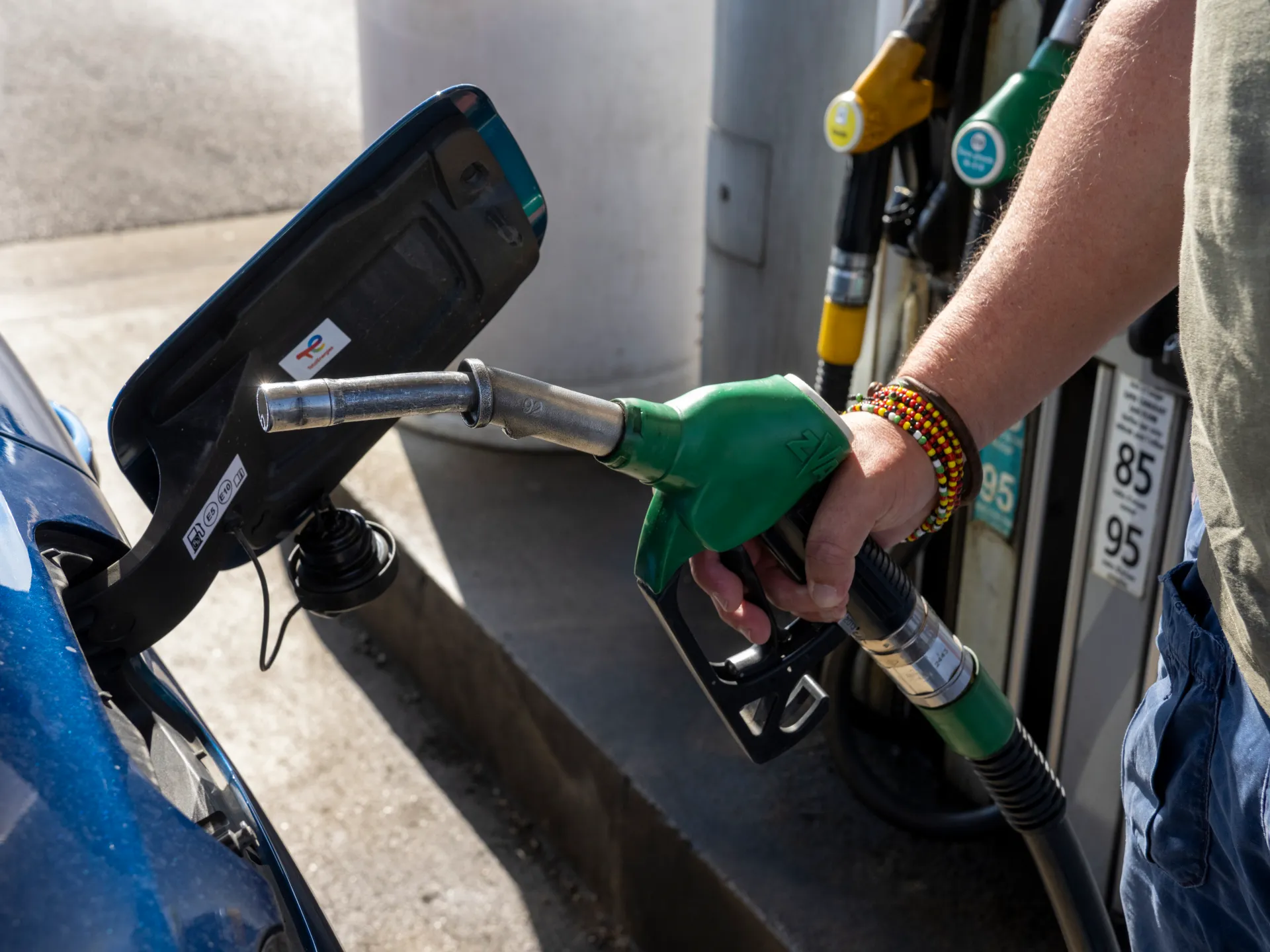
After falling below $4 per gallon on Thursday, the U.S. national average for premium gas edged down to $3.97 per gallon on Friday. The price of gas remains higher than prior to the start of the Iran war. A year ago, the average price of gas was $3.20 per gallon on average, AAA reports.
Are prices really dropping in the US, as Trump claims? | Donald Trump News
United States President Donald Trump has taken to social media to boast about the state of the economy amid a looming peace deal between the US and Iran, which yesterday signed a memorandum of understanding (MoU) to end the US-Israel war on Iran.
In a post on his social media platform Truth Social, the president claimed that “OIL IS FLOWING” and added that “THE STOCK MARKETS ARE ROARING, JOBS ARE AT RECORDS, AND PRICES ARE DROPPING (AFFORDABILITY!)”
Recommended Stories
list of 4 itemsend of list
While some of his claims are accurate, others are misleading. Al Jazeera takes a look:
‘Stock Market Just Hit A RECORD High’
That is true specifically for the Dow Jones Industrial Average. That index hit a record high of 51,999.67 for its close on Tuesday amid the potential of a ceasefire and a rally for the newly listed SpaceX.
The Dow slipped from that high on Wednesday amid the US Federal Reserve’s announcement that it would maintain the benchmark interest rate in the target range of 3.5-3.75 percent, and closed down on Wednesday at 51,494.99. The Dow has since jumped 0.35 percent in midday trading on Thursday at 51,671.
The Nasdaq Composite Index and S&P 500 both slipped.
However, this may not directly impact the 38 percent of Americans who do not invest in the stock market.
“The idea that the stock market is doing well does not reflect people’s experiences. There’s a saying that the stock market is not the economy, and that’s an important thing to keep in mind,” Michael Klein, professor of international economic affairs at The Fletcher School at Tufts University, told Al Jazeera.
And that lived experience is at the petrol station and at the grocery store.
‘Prices are dropping’
Petrol prices have started to tumble in the last few days. The average price of a gallon of petrol (3.78 litres) on Thursday is at $3.99, according to the American Automobile Association (AAA), which tracks daily gas prices. That’s down from a high of $4.48 in May, but still well above $2.98, where prices were on February 28 when the US and Israel first struck Iran.
Despite the deal, experts believe that a petrol price decline will plateau for general consumers as the US strategic petroleum reserve, which earlier this week reached its lowest level since 1983, is refilled, all while oil extraction and shipping bottlenecks weigh on supply chains.
“The persistence of the price spikes is the key issue. Transportation, rerouting, insurance premiums, and manufacturing costs don’t normalise overnight, so even when oil stabilises, the cost base across the supply chain will stay elevated,” Tammy Kulesa, director of product marketing for supply chain execution at Blue Yonder, a supply chain management firm, said in remarks provided to Al Jazeera.
Mark Jones, professor of political science at Rice University in Houston, Texas, says prices will not return to prewar levels until the last quarter or close of 2027.
“Even once everybody believes the truce is going to hold [and] there’s no danger going through the Strait of Hormuz, those tankers take months to reach their final destination and come back,” Jones told Al Jazeera. “So the ability to replenish the stocks is going to take until, I think, the early fall [third quarter].”
Consumer inflation, which has jumped at the fastest pace in three years and is at 4.2 percent, has driven prices up on several key goods and has weighed on consumers. While energy prices have risen by nearly eight percent in the last two months alone, prices at the supermarket have jumped by 0.1 percent in May from the month prior after a 0.7 percent increase in April, with the highest increases in goods like bakery products, cereals, nonalcoholic beverages, as well as fruit and vegetables.
“There are real problems facing a lot of people. Prices are high, and wages have not kept up with prices. So people’s real purchasing power has fallen,” Klein said.
Supermarket chains have taken notice. Kroger, the largest supermarket chain in the US, said on Thursday that it will cut prices on thousands of products within its roughly 3,000 stores nationwide. This comes amid increased pressure from Costco and Walmart for value shoppers.
“Customers are being more deliberate with their spending and at times, shopping us selectively. We’re getting too many promotional trips and not enough of the full basket,” Kroger CEO Greg Foran said in a statement.
‘Jobs are at records’
Jobs are not at record levels, despite Trump’s assertions.
The US economy added 172,000 jobs in May. The highest during the second Trump term was 214,000, in March. By comparison, on average, 300,000 jobs were added monthly under his predecessor, former US President Joe Biden, a Democrat, with some months much higher – including July 2021, when the economy added 943,000 jobs, albeit that was on the back of the COVID-19 pandemic as businesses rushed to hire after massive layoffs.
Under Trump, there have been several months of limited job growth that have been hyper-focused on specific sectors like healthcare. On average, employers added only 15,000 jobs a month in 2025. Meanwhile, the US economy lost 92,000 jobs this year in February.
Layoffs are also on the upswing. Job cuts jumped 16 percent between April and May, marking the most layoffs since May 2020 during the height of the pandemic, according to Challenger, Gray and Christmas, with artificial intelligence (AI) as a driving force behind the cuts. Slightly more than 97,000 people lost their jobs in May.
‘Oil is flowing’
Overnight, 12.5 million barrels of crude oil travelled through the Strait of Hormuz, through which roughly a fifth of the world’s oil is normally shipped, according to US Vice President JD Vance. However, data from Kpler shows that travel through the strait is still low, with six verified crossings on June 17.
With the strait starting to open, oil prices tumbled to their lowest levels since the early days of the war as the temporary deal to end fighting and pull back sanctions elevated pressure on global supply.
Brent crude futures LCOc1 dropped $0.78 or one percent to $76.51 in midday trading.
Shipments of liquefied natural gas (LNG) have also ramped up, and a QatarEnergy LNG vessel has returned to Ras Laffan, where it has loaded more than 209,000 cubic metres, according to Kplr.
Katie Price’s hubby Lee Andrews attempts to ‘reinvent’ himself after leaving jail with ‘fuller head of hair’
LEE Andrews says he has undergone a “reinvention” by getting a fresh haircut.
Katie Price’s husband was released from Dubai’s notorious Al Awir prison on Friday with what appeared to be a fuller head of hair.


After allegations he had used a filter on his video, Lee shared new footage of himself in the barber’s chair.
The former glamour model’s controversial husband said: So this is when you try to reinvent yourself..
A wet through messy look. We’re getting there, guys. Slowly, slowly getting there.
“Not too bad is it? Massive reinvention. Love it.”
He then thanked his hairdresser for the cut.
Lee added: “It seems to be a bit on the pineapple side, but I don’t mind. It seems to do the job. I’ll play around with it a bit, making take it back or forward.
“Good job, isn’t it? Looking like an Abercrombie model.”
Lee’s hair stole attention when he returned to social media for the first time since leaving prison.
Many were convinced it was AI or a filter had been used to create a fuller head of hair.
Since then, a Dubai-based trichologist from Hair Repair Club claimed to The Sun that Lee had visited his salon on Monday to enquire about a permanent wig.
He declined their services when he was told he would require a patch test and “colour matching” before being able to purchase.
The top 90s holiday destination that STILL beats all others… and you can get trips for 90s prices too
A TRAVEL agent with decades of experience has revealed the ultimate throwback destination and says you can still get holidays for the retro pricing too.
Spain is a classic summer destination for Brits and one spot remains popular for good reason.

But Claire Watters, a First Choice travel agent, revealed that Majorca is the island that she sold more than anywhere else in the 90s.
She said: “In the ‘90s, if a family walked in wanting guaranteed sunshine, a short flight and a holiday that wouldn’t break the bank, Majorca was usually my first recommendation.
“Thirty years later, despite how much travel has changed, my advice remains exactly the same.”
Back in the 90s, a holiday to Majorca for a family of four cost around £349, which would be about £719 now.
Read more on travel inspo
And holidays today could cost you the same… or even less.
A seven-night break for a family of four to Playa Moreia in Majorca, flying from London Southend on October 10 via First Choice costs £179 per person – £716 total.
When it comes to recommendations for travellers heading to the Spanish spot, Claire has loads.
She said: “Alcudia is the best area for families for me.
“It has a long, sandy beach with shallow water and a calm sea, which is ideal for younger children to paddle safely.
“You’ll find waterparks and plenty of watersports, boat trips, cycling routes, and nature parks, and there are also playgrounds, kids’ clubs, and family entertainment in many hotels.
“The all-inclusive options make things simple and budget-friendly, and you can walk around in a calmer resort that is more geared up for families.”
And for when it comes to discovering a beach spot, Claire recommends heading to the Blue Flag Playa de Muro.
She said: “The sea is very shallow for 50–100 metres, staying knee-deep for a long distance.
“The beach stretches nearly four miles, making it one of the longest beaches in Majorca.
“The water is calm, warm, and clear, with hardly any currents.
“Regular water testing, lifeguards, and rescue services keep standards very high. This makes it perfect for families, non-swimmers, and relaxing swims.”
For a day where you want to head off for a day trip somewhere, Claire says to head to Sóller and the historic railway, Caves of Drach tour & sunset boat trip.
She said: “Sóller and the historic railway is one of the best day trips for me.
“You can step back in time because the train dates from 1912, with original wooden carriages still in use.
“The scenery is incredible, as the route crosses the Serra de Tramuntana, which is a UNESCO World Heritage mountain area, with tunnels, viaducts, and views of orange groves.
“It is a unique experience because it’s not just transport, it’s a slow, scenic journey through the countryside that you wouldn’t normally see.”
Another spot is the Caves of Drach tour which “allows you to explore a huge underground cave system”.
Claire added: “It features Lake Martel, one of the largest underground lakes in the world.
“The visit ends with a live classical music concert on the water, which is so lovely.”
For something a little more romantic, Claire suggests hopping on a sunset boat trip.
She said: “Sunsets over the water give clearer, more intense colours and are great for those Insta-worthy photos and stories, with golden-hour views across the ocean and coastline.
“It often includes swimming, drinks, music, or food onboard, and it is great for families and couples wanting different scenery away from the hotel.”
Another must-visit spot for Claire is Cap de Formentor – a scenic drive with lots of different viewpoints.
“Each stop reveals a completely different view, so it’s like multiple viewpoints in one trip,” she revealed.
“It is an incredible sunrise and sunset spot, and it’s one of the most photographed spots in Majorca – I get that rare feeling of standing at the edge of the island.”
In the ’90s, two properties dominated Claire’s booking screen, and both remain icons of Majorcan tourism today: Club Mac and TUI BLUE Alcudia Pins.
“I must have sent thousands of families to Club Mac and Alcudia Pins,” Claire says.
“Back then, they were the gold standard for a hassle-free family holiday, and they’re still available to book on First Choice today, although I’m glad to say they’ve been updated.”
And when it comes to places to stay Claire still recommends Alcudia Pins, costing from £421 per person in October.
“Alcudia Pins is the location is hard to beat – it sits right on Playa de Muro, which is one of the best beaches in Majorca making this an ideal and great spot for families; the beachfront access alone makes a big difference,” Claire shared.
“It’s genuinely family-focused with lots of Kids’ clubs and activities, pools and entertainment and it’s close to the resort town for trips outside of the hotel.
“Also a good overall value hotel where customers can choose a self- catering or an all inclusive option giving them the choice to decide their board basis.”
Claire added: “In the ’90s, people thought Majorca was just cheap and cheerful.
“But even back then, those of us in-the-know knew it had some of the most stunning scenery in Europe.
“Today, the island has managed to preserve its traditional charm while upgrading its offering.”
Rial rebounds and stocks soar, but Iranians still grapple with high prices | US-Israel war on Iran News
The value of Iran’s currency has risen by more than 15 percent against the US dollar, and its stock market has shattered records in the wake of the memorandum of understanding agreed between the United States and Iran on Sunday.
However, Iranians suffering for years from extremely high inflation and a plunging rial have found little economic relief as the prices of basic goods, such as food, remain high despite the diplomatic breakthrough.
Recommended Stories
list of 4 itemsend of list
The Iranian economy has suffered due to decades of US sanctions. The economic crisis was exacerbated after the US and Israel launched a war against Iran on February 28. As subsequent US naval blockade on Iranian ports further added to the misery of Iranians.
In Ferdowsi Street, the beating heart of Tehran’s foreign exchange market, the scene on Thursday was a stark departure from the panic of recent months. Exchange office boards flashed rapidly changing numbers as foreign currencies, led by the dollar, took a sharp dive.
“We closed our doors just hours before the official announcement of the US-Iran understanding at a rate of 1.8 million rials to the dollar,” Amir, a 35-year-old exchange office worker who asked to remain anonymous, told Al Jazeera. “Now it has fallen to 1.54 million rials, and we expect further declines.”
Amir noted a significant increase in sales volumes although buyers remained scarce as many anticipated the rial would strengthen further, potentially dropping to 1.4 million to the dollar or lower.
The recent gains mark a sharp turnaround. After the outbreak of the war, the exchange rate jumped to a historic peak of 1.9 million rials (190,000 tomans) to the dollar in March before settling at about 1.685 million just before recent attacks carried out despite a ceasefire.
A disconnect in the grocery aisles
Despite the rial’s recovery, a walk through Tehran’s grocery stores reveals a starkly different reality. For Iranians grappling with the economic fallout of crippling sanctions and the US naval blockade, the diplomatic thaw has yet to lower the cost of living.

Reza, a 42-year-old Tehran resident, told Al Jazeera that prices for daily staples like milk, cheese, cooking oil and flour remain unchanged. “They say the dollar dropped, but my shopping basket costs the same as last week,” he said. “This means the agreement hasn’t reached our pockets yet.”
From behind the cash register, 55-year-old shop owner Ramin echoed his customer’s frustration. He explained that while the government continues to distribute subsidised goods like bread, the fluctuations of the free-market dollar do not immediately impact basic food prices.
The value of the dollar on the free market varies from the official exchange rate.
Pointing to a shelf of imported goods, another shopkeeper named Karim noted that items like shampoo, toothpaste and laundry detergent are still locked at inflated prices.
“Distributors say they bought these goods two months ago at the old dollar rates,” Karim explained. “Prices will remain high until the old stock runs out and new goods enter at the lower exchange rates.” He estimated it would take at least two weeks for the market to adjust, meaning Iranians will continue to face compounding inflation in the interim.
Euphoria on the trading floor
While Main Street struggles, Tehran’s stock market is experiencing an unprecedented boom amid expectations of improved economic conditions. The trading floor has been awash in green since the initial leaks of the Washington-Tehran agreement emerged.

On Monday, the main index jumped by a record-breaking 161,000 points in a single session, marking the highest-ever influx of cash from individual investors.
By Tuesday, the market continued its staggering ascent, climbing another 112,000 points to cross the psychological barrier of 5 million, ultimately settling at a historic high of 5.1 million.

Saeed, a 40-year-old investor, called it a “historic day”. He noted that investors are rushing to buy shares in the energy and petrochemical sectors, betting heavily on the resumption of exports and the reopening of global markets.
However, Saeed remained cautiously optimistic. “The stock market is often driven by rumours,” he warned. “I don’t want to repeat the experience of the 2015 nuclear deal when the market soared and then collapsed after the US withdrawal.”
He was referring to US President Donald Trump’s 2018 withdrawal from the agreement, under which Iran agreed to restrictions on its nuclear programme in exchange for sanctions relief.
Stagnation in real estate and electronics
The wait-and-see approach in effect has paralysed other sectors of the economy. In central Tehran’s electronics hubs, 38-year-old shop owner Reza reported that while the prices of imported appliances have dropped in tandem with the dollar, sales have stalled because customers are holding out for steeper discounts.
A similar freeze has gripped the housing market. Nasrin, a 36-year-old real estate agent in northern Tehran, observed that a recent price surge that accompanied the initial truce has now given way to stagnation. Many property owners are clinging to inflated prices, seemingly unaware that the market dynamics have shifted, bringing property transactions to a virtual standstill.
‘Not a magic wand’
For macroeconomic experts, the mixed market signals are entirely expected. Hossein Selahvarzi, the former head of the Iran Chamber of Commerce, Industries, Mines and Agriculture, cautioned that the new agreement is “not a magic wand” capable of instantly fixing years of structural issues in the economy.
While the war severely damaged Iran’s infrastructure, Selahvarzi emphasised that the roots of the country’s economic malaise were firmly planted well before the bombing began.
“War is the enemy of investment, production, trade and public welfare,” Selahvarzi told Al Jazeera. He warned against the analytical mistake of believing that a peace memorandum alone would revive the economy.
“Ending the military confrontation does not necessarily mean the beginning of economic prosperity,” he said, stressing that restoring stability to the business environment remains the country’s most urgent priority.
“What we have before us is a limited and fragile opportunity to correct course and rebuild the economy, and this opportunity could be lost quickly if not managed correctly.”
Oil prices fall, stocks rally as US, Iran sign framework to end war | Oil and Gas
Brent crude drops as much as 1.6 percent, while key stock indices in Japan, South Korea and Taiwan climb.
Published On 18 Jun 2026
Oil prices have dropped following the United States and Iran’s signing of an interim peace agreement, resuming a slide interrupted by US President Donald Trump’s warning that he could restart his military campaign.
Brent crude fell as much as 1.6 percent on Thursday morning in Asia, returning the international benchmark to almost exactly where it was 24 hours previously.
Recommended Stories
list of 4 itemsend of list
Brent futures for delivery in August stood at $78.23 as of 04:00 GMT, only about 7 percent higher than before the US and Israel launched their war on Iran on February 28.
After several days of declines, Brent briefly spiked above $81 a barrel on Wednesday after Trump warned that the US could “go right back to dropping bombs” on Iran if it doesn’t “behave”.
Asian stock markets rallied on Thursday on renewed optimism for an end to nearly four months of disruption to global energy supply chains.
Japan’s benchmark Nikkei 225 and South Korea’s Kospi both hit all-time highs, gaining 1.8 percent and 1.4 percent, respectively.
Taiwan’s Taiex rose as much as 1.3 percent.
Hong Kong’s Hang Seng Index bucked the trend, dropping 1.7 percent.
US stock futures, which are traded outside of regular market hours and often foreshadow the next day’s performance, climbed, with those tied to the benchmark S&P 500 and the tech-heavy Nasdaq Composite climbing about 0.8 percent and 1.3 percent, respectively.

Pakistani Prime Minister Shehbaz Sharif, who mediated the negotiations between Washington and Tehran, said on Wednesday that the US-Iran memorandum of understanding (MoU) had entered into force with “immediate effect”.
Sharif said Iran would “instantly reopen” the Strait of Hormuz and the US would “immediately” lift its naval blockade of Iranian ports, though it was not immediately clear if the announcement had any effect on boosting maritime traffic in the critical waterway.
Shipping in the strait has been reduced to a fraction of peacetime levels due to the threat of Iranian missiles, drones and mines, as well as the US blockade.
While more than 500 vessels are estimated to be waiting to exit the Gulf through the strait, shipping companies have expressed concern about the lack of clarity on how to ensure the safety of their vessels and crews in the channel.
In a statement earlier this week, the Baltic and International Maritime Council (BIMCO), one of the world’s largest associations for shipowners, said the US and Iran had yet to provide information about “key aspects such as timings and safe routes”.
“Due to lack of details and a history of overly optimistic reassurances, we believe the security situation for the shipping industry remains volatile, and we still consider it very risky for ships to commence transits at this point,” Jakob Larsen, chief safety and security officer at BIMCO, said in a statement on Monday, responding to the initial announcement of the MoU.
“We advise shipowners to continue doing thorough risk assessments and appeal to all parties to put the safety of seafarers first.”
Oil prices continue slide amid hopes for peace, opening of Strait of Hormuz | Oil and Gas News
Brent crude drops to lowest price since early March before signing of framework deal to end US-Israel war on Iran.
Published On 17 Jun 2026
Oil prices are continuing to drop, as hopes rise for a return to stability in global energy markets before the signing of a framework agreement on ending the United States-Israel war on Iran.
Futures for Brent crude due for delivery in August dipped nearly 1 percent on Wednesday, extending declines of about 5 percent on each of the previous two days.
Recommended Stories
list of 4 itemsend of list
The international benchmark stood at $78.24 a barrel as of 08:00 GMT, the lowest price since March 3, three days after the start of the war.
After rising more than 50 percent during the conflict, the price of crude on Wednesday afternoon in Asia was only about 7 percent higher than before the US and Israel launched attacks on Iran on February 28.
“The immediate prognosis, it seems, is optimistic and assumes no significant setbacks,” Tamas Varga, an analyst at PVM Oil Associates in London, said in a commentary.
“Over the last four trading sessions, Brent, for example, has fallen by $17 [per barrel], a discernible vote of confidence that the worst, at least as far as supply disruptions are concerned, is behind us,” Varga said.
Vandana Hari, the founder of the Singapore-based oil market analysis provider Vanda Insights, said that while the announcement of the US and Iran’s memorandum of understanding (MoU) has brought relief to markets, the “hardest part, on delivering the pledges and promises, is yet to come”.
“Crude’s slide is entirely sentiment-driven,” Hari told Al Jazeera.
“The market is front-running the prospective reopening of the Strait of Hormuz and likely pricing in the best-case scenario for the normalisation of flows, which means the potential hiccups from logistics to renewed geopolitical tensions are not being adequately factored in,” Hari said.
While many details of the MoU due to be signed on Friday remain unclear, Iran is expected to end its near-total closure of the Strait of Hormuz in exchange for the US lifting its blockade of Iranian ports, among other concessions.
The full reopening of the strait would be a crucial step towards restoring confidence in energy supply chains, after nearly four months of turmoil arising from the war.
Maritime traffic in the strait, which flows between Iran and Oman, has been reduced to a trickle due to the threat of Iranian missiles, drones and mines, reducing the global oil supply by an estimated 14 million barrels each day.
Even if the war does end, global energy flows are expected to take months to fully recover.
More than 500 vessels are estimated to be waiting to exit the Gulf through the strait, while the process of ensuring the channel is free of naval mines is likely to take weeks at a minimum.
Stephen Cotton, the general-secretary of the International Transport Workers’ Federation, said the signing ceremony scheduled to take place in Geneva, Switzerland, would be “at best the beginning” of a process of normalisation.
“The backlog of stranded vessels and the need for crew changes and rest mean a realistic return to normal shipping patterns is weeks, if not months, away,” Cotton said in a statement on Monday.
Katie Price’s hubby Lee Andrews claims he was ‘captured at gunpoint’ & ‘slapped around’ for SPYING before she saved him
KATIE Price’s husband Lee Andrews has broken his social media silence since going missing weeks ago.
The 43-year-old has claimed he was “captured at gunpoint” and “slapped around” before being accused of spying.


He then praised his wife Katie, 48, for her help in getting British authorities involved in his release.
Posting a video of himself on social media with a thicker-looking head of hair, Lee said: “Hi everyone, this is Lee. I’ve been missing now for several weeks. I can tell you I’m now safe and healthy and with my wife.
“I was taken close to the Hattar-Omani border by men at gunpoint and then I was captured by men with assault rifles.
they did slap me around a little bit, little s***s, and I was hand-tied, shackled and also had a hood over my head.
“From there I was taken to a black site and I had no use of my phone and from what I know it was an extended arm of the National Guard and that’s all I can reveal at the moment.
“I have signed disclaimers now with state security and from there I was put into the system.
“At no point have I faced anything to do with fraud allegations or any criminal activities such as that.”
However, UAE officials debunked his claims he was in jail for spying and confirmed he has spent the past four weeks behind bars on suspicion of fraud.
However, UAE officials challenged his claims he was in jail for spying and said he has spent the past four weeks behind bars on suspicion of fraud.
Lee doubled down on his version of events today, adding: “So I’m sending these messages out to my loved ones and my beautiful wife, who without her help involving all the UK authorities, I don’t think I would have got out of that situation.
“Because of the tensions and things happening in the region, and me being so close to the border, this is why I was suspected of espionage and held in a state security building without the use of a telephone and any right to shower, contact or speak to any of my family, including the embassy or my wife.
“So thank you to Katie for making such a noise where the UAE actually listened and let me go.
“From there, I did have a civil case in Dubai, which led to me going into the mainstream prison during the Arabic holiday Eid and I was able to secure my release.
“I’m here now. So thank you for everyone for listening and loved blessings to everyone.”
Katie appeared to accept his story, sharing Lee’s video on Instagram saying: “My husband is back. I love you.”
The former glamour model’s controversial husband was released from Dubai’s notorious Al Awir prison on Friday.
Katie quickly jetted back to Dubai from the UK over the weekend to see her other half and they shared an emotional reunion on Sunday evening.
Pictures showed Katie jumping into Lee’s arms as he picked her up and hugged her before heading to Vox Dubai, an outdoor rooftop cinema, to catch a World Cup football game.
Lee met Katie via Instagram in January and married in Dubai just nine days later in a whirlwind romance.
Katie told critics who have questioned her decisions: “I know people have been calling me stupid, I see all the trolling, I hear it.
“I am not stupid. Trust me, I am protected in every way. My card has been marked and I have been taking notes.
“There is no way he would mess with me, and in a way I feel protected because I have the nation looking out for me. I’m not a mug and when I finally see Lee, I am going to question him.
“And if the answers I get are not right, that will be it: I’ll be done. That’s it. And I’ll just get on with my life… and not find a man on Instagram and message him….”
Legal documents revealed that Lee was facing multiple legal issues in Dubai.
The court mandated that a total fine of £140,000 would need to be cleared before he could be released.
While imprisoned, Lee requested during a prison phone call that Katie start an online fundraising page to help raise the money, but she told him: “No one will do that for you, Lee, trust me. Everyone hates you.”
During his four weeks at Al Awira, Lee boasted about his accommodation, claiming to have befriended suspected Irish crime boss Daniel Kinahan.
Lee previously served a prison sentence in October for forging Taji’s signature on a £200,000 mortgage document.
PTC Therapeutics prices convertible notes for refinancing
Source link
US fuel prices to take ‘months’ to normalise after US-Iran deal to end war | US-Israel war on Iran News
The preliminary deal to end US-Israel war on Iran has sent oil prices tumbling to a three-month low amid hopes that the Strait of Hormuz will reopen.
But it could be months before American consumers see major relief at the petrol pump.
Recommended Stories
list of 3 itemsend of list
The closure of the strategic chokepoint disrupted global energy markets for more than three months, cutting off a major shipping route through which roughly one-fifth of the world’s oil and liquefied natural gas normally passes.
On Sunday, US President Donald Trump said prices would “drop like a rock” once the strait reopens, a claim he has made multiple times in the past few weeks.
However, experts caution that a major decline in prices is unlikely to happen as quickly as Trump suggests.
While Asian markets rely more heavily on oil shipped through the Strait of Hormuz than North American markets, tighter supply and steady demand have pushed prices higher worldwide.
On Monday, petrol prices in the US remained above $4 per gallon (3.78 litres), averaging $4.06 nationwide, according to the American Automobile Association (AAA). This was a dip from a high in early May of $4.48 per gallon.
By comparison, prices stood at $2.98 per gallon on February 28, when the US and Israel first struck Iran, triggering a ripple effect across global energy markets.
Energy prices have risen sharply in the US in recent months, increasing 7.7 percent over the last two months alone, and are up 40 percent from a year ago, according to last week’s inflation report from the Labor Department’s Bureau of Labor Statistics,
However, prices are beginning to fall, a dip that began as Washington and Tehran entered negotiations.
“The potential deal that the US and Iran agreed to over the weekend certainly could pave the way for even lower prices… in the next two to three days by what we saw over the weekend,” Patrick De Haan, head of petroleum analysis at GasBuddy, which tracks petrol prices, told Al Jazeera.
But De Haan expects a plateau and says that consumers may not see gas prices at pre-war levels until 2027, even if the ceasefire holds.
“It may take many months, if not beyond a year, for global oil inventories to recover to pre-war levels,” De Haan said.
Amid strains on the supply chain, producers will also need time to ramp up output, while port bottlenecks and heightened demand during the busy summer travel season could delay any substantial relief for everyday consumers.
“There are some mitigating factors that are going to slow the decline in prices. There are a lot of organisations and companies that have to re-up their stockpiles [like the US’s strategic petroleum reserve] and fulfil contracts that have been on hold for the last few months,” John Deal, managing director of capital markets at the Post Oak Group investment bank, said.
Supply chain strains
Fixing kinks in the supply chain takes time.
Oil production slumped amid the war. More than 14 million barrels per day, or 14 percent of the world’s demand, has been shut, according to the International Energy Agency.
Deal said it would take time to get oil production back online.
“My sense is that there’s going to be sustained high demand through the summertime, and we probably won’t get back to pre-war levels [on petrol prices] until after the summer, maybe September or October,” Deal said.
Mark Jones, a professor of political science at Rice University, said that producers might be reluctant to bring full operations back online until they can see the ceasefire hold.
The agreement opening the blockade is for a 60-day negotiation period between the two countries.
“Many [producers] may be reluctant to restart production until they are convinced that the peace will hold, because the last thing they want to do is carry out the costly effort to restart production only to see the conflict revived and then have to shut it down once again,” Jones told Al Jazeera.
Getting production back online is also dependent on the impact individual producers have faced throughout the war.
Refineries that were shut as a precaution could reach as much as 95 percent capacity within 40-60 days, Vitol Bahrain’s head of research, Bader Nooruddin, told the Reuters news agency. Those damaged in the fighting could take much longer.
But bottlenecks at ports could be the biggest hurdle, according to Deal.
“There’s a lag time with shipping capacity. Shipping capacity is perhaps the most significant constraint,” Deal said.
This is because there are more than 500 ships still awaiting passage, according to shipping data from Kpler.
With the ships headed all over the world, it will take them weeks to reach their destinations, dock, and unload at the ports.
That also means a wave of empty ships is waiting in limbo for spots at ports to load cargo and ramp back up to normal operations.
Major shipping giants are in a holding pattern.
Norway’s Wallenius Wilhelmsen and Denmark’s Maersk both told Reuters that they have not changed their Middle East operations in the wake of the announcement.
During the war, there was limited passage through the Strait of Hormuz, with an average of 10 ships a day passing through, compared with 135 that normally transit the waterway, according to an analysis by Bloomberg.
“Tankers take months to reach their final destination and then come back again. So the ability to replenish the stocks is going to take until, I think, the early fall, just from a shipping perspective, to get back to the status quo that was in place before the conflict started,” Jones said, referring to the preferred term for the months of September through November in North America.
At the same time, US strategic reserves are running low, at their lowest levels since 1983. Reserves have tumbled by 18 percent since the war began.
“Demand might keep prices high through the summer as strategic reserves get refilled,” Deal added.
Jet fuel demand will also put pressure on consumers amid the normally busy JuneAugust travel season in the US.
“The war has really affected airlines and their ability to schedule and anticipate how the summer months are going to go,” Deal added.
In April, United Airlines CEO Scott Kirby said that airfares for the carrier may have to jump as much as 20 percent on higher fuel prices.
Grocery woes
The increase in prices is also hitting food budgets.
The most recent consumer price index report showed US inflation ticked up by 4.2 percent compared with this time last year. While inflationary pressures were mostly driven by fuel prices, the impact has still been felt at the grocery store.
Almost half of the world’s urea, which is used in fertiliser, is produced in the Gulf region and passes through the Strait of Hormuz. For American farmers, that means access to fertilisers for the next crop season is more expensive.
Tomato prices, already driven up by Trump’s tariffs on Mexico, have surged 40 percent in the last year amid rising transportation costs.
Lettuce prices rose by more than 16 percent in May, and the price of ground beef increased by about 12 percent compared with this time last year.
Jones warned that food prices may not go down.
“Many retailers, wholesalers, and producers will keep them where they are or only reduce them if forced to from a sales perspective. Unlike petrol, which tends to ebb and flow with the price of oil, prices for many other goods that have been adversely affected by all of this are much less likely to return to where they were prior to the start of the conflict,” Jones said.
“For groceries, for manufacturing goods, for anything that has gone up during the conflict, the price that is there now often becomes the new baseline from which prices move in the future.”
This can be compared with the COVID-19 pandemic period. When the pandemic stalled supply chains, producers increased prices. A 2024 investigation by the Federal Trade Commission found that retail grocers kept prices elevated after supply chain constraints brought on by the pandemic had eased.
“Some in the grocery retail industry seem to have used rising costs as an opportunity to further raise prices to increase their profits,” the report said.
Oil prices slide after US-Iran deal announced
Under the agreement, the key Strait of Hormuz waterway will be reopened, US President Donald Trump said.
Source link
ICL Group prices senior unsecured $800M notes
Source link
Trump makes pitch to farmers hard-hit by tariffs, high prices in Wisconsin | Donald Trump News
Trump seeks to shore up support among rural voters hard hit by tariffs, economic fallout of war with Iran.
Published On 5 Jun 2026
United States President Donald Trump has sought to reassure farmers hard-hit by tariffs and the economic fallout of the US-Israeli war with Iran during a visit to Wisconsin.
The stop in Chippewa Falls on Friday for a farming roundtable comes months before the midterm elections in November. Trump was seeking to bolster support for Republican US Representative Derrick Van Orden, who has been targeted by Democrats hoping to take control of the chamber.
Recommended Stories
list of 3 itemsend of list
Van Orden has closely aligned with Trump and has long espoused the president as the best leader for rural Americans. Democrat challenger Rebecca Cook has proven a strong fundraiser and has led Van Orden in recent polls.
Democrats are considered favourites to take control of the US House of Representatives, currently controlled by Republicans, in the midterms.
“I love the place,” Trump said, referring to Wisconsin, “and hopefully you’re going to be voting Republican, because frankly, Republican is – I call it the sane way to go.”
Success for Democrats would allow the party to seriously restrict Trump’s agenda in the final two years of his term.
The Wisconsin visit was also more broadly aimed at shoring up support among farmers, who had largely backed the president in his 2024 election bid.
Farmers have been particularly hard-hit by Trump’s aggressive tariff policies, with many countries limiting imports of US products, notably soybeans, in response. The tariffs have also made importing items needed for daily operations more expensive.
The administration has sought to offset the fallout with temporary aid packages for farmers.
At the same time, fertiliser costs have surged since the US and Israel launched the war with Iran on February 28, with the effective closure of the Strait of Hormuz increasing prices of several key components, including urea.
An April survey by the American Farm Bureau Federation found that 70 percent of farmers in the US reported they cannot afford all of their fertiliser needs.
The average gas price of $4.04 per gallon of petrol this week was also $1.08 higher than a year ago, according to the American Automobile Association.
Trump assured those gathered that the administration had “largely finished” the war “one way or the other”.
He vowed fertiliser and gas prices would come “way down”.
The visit comes as several polls have shown Trump’s overall approval rating hovering at all-time lows, about or under 40 percent.
His approval was lower on specific issues, with a Marquette Law School poll conducted from May 20-26 finding just 19 percent of respondents approved of Trump’s handling of gas prices. Only 22 percent approved of his handling of inflation and cost of living.
Several top Republicans have also warned that several of Trump’s recent actions could risk alienating voters concerned about the economy.
That included a $1.8bn “anti-weaponisation fund” launched by the Department of Justice to repay individuals, including Trump supporters, who allege they were victims of political prosecutions.
The Department of Justice has since abandoned the plan.
Trump has also requested $1bn in funding for security for his controversial White House ballroom, despite earlier saying that taxpayers would not have to foot the bill.
World Cup fans squeezed by botched ticket sales, steep water prices
It wasn’t too good to be true, but it was too good to remain true.
World Cup fans still reeling from FIFA’s pricey water policy change have a new gripe: Soccer’s governing body is demanding payment from about 60 people who secured tickets for free because of a glitch on the FIFA website during checkout.
FIFA confirmed the mistake with a swift response, issuing a statement that said pay up or stay home:
“The tickets requested by these fans remain reserved, and the affected fans have been invited to complete payment of the correct amount. FIFA regrets the error and any inconvenience caused.”
What, did anyone think a governing body denying fans free water in the summer heat would allow 60 souls into stadiums without paying admission? Even when FIFA admitted its mistake?
One week before matches begin in 16 North American venues, including SoFi Stadium that will be referred to during the tournament as Los Angeles Stadium, FIFA reversed its policy that allowed refillable plastic bottles when temperatures were high enough to justify it.
Now, no plastic water bottles are allowed except the ones sold in the stadium. Last summer during the Club World Cup, bottled water at FIFA venues fetched $4 to $6.
Coca-Cola products will be sold at all World Cup venues, including Dasani water. In a statement to the Athletic on Thursday night, FIFA skirted questions about whether it was influenced by commercial priorities.
“The decision to prohibit capped water bottles is based on a number of factors related to safety and security, including mitigating risks to players and spectators, ensuring a safe and efficient ingress experience for all attendees, and the presence of additional heat mitigation and alternative hydration strategies at FIFA World Cup 2026 stadiums,” the statement read.
Toronto Mayor Olivia Chow questioned FIFA’s motive.
“Why do you need to buy a water bottle when you can just carry your water in? It is cheaper that way and it is good for the environment,” Chow told CTV News. “It is outrageous. They are just trying to make more money. They are already making billions of dollars. Stop it.”
Chow’s ire likely grew upon learning that the group-stage matches the 60 people who now must pay for tickets FIFA mistakenly provided them are all in Toronto.
Complaints have mushroomed for months about World Cup ticket price fluctuations caused by sophisticated algorithms that can dramatically increase costs based on demand. Prices adjust in real time, increasing when interest surges.
The attorneys general of New Jersey and New York a week ago launched an investigation into World Cup ticket sales following reports that fans were misled about the locations of seats they purchased.
The attorneys general sent subpoenas to FIFA, requesting details about ticketing practices for eight World Cup matches hosted in New Jersey, including the World Cup final.
FIFA has about $6.14 billion in total assets and $3 billion in cash reserves.
The organization has defended its steep ticket prices, saying they reflect standard practices for major global sporting and entertainment events.
Longtime soccer journalist Simon Kuper explained to The Times’ Kevin Baxter that FIFA can maximize profits because it has no competition.
“If you think of McDonald’s or Nike, they’re trying to please consumers because they know the consumers can go someplace else,” Kuper said. “There’s only one World Cup, so FIFA is a monopoly purveyor. It’s more like one man running the cash box.”
Parking will be another opportunity to generate revenue. A spot nearly two miles from SoFi Stadium will cost $300 for the U.S. opener against Paraguay next week.
Brit stunned by Spain supermarket prices and says ‘it’s a different level’

A British tourist was left stunned by the cheaper grocery prices in a Spanish supermarket compared to the UK, and he’s not the only one
There’s no question that food prices in British supermarkets have skyrocketed, yet we’ve largely resigned ourselves to paying whatever it costs for our weekly shop. But when Brits venture abroad to certain destinations, the stark contrast in prices becomes glaringly obvious, leaving many utterly speechless.
That was certainly the case for Cavan O’Grady, who headed off on holiday with his mum to celebrate her 63rd birthday, and was left gobsmacked after popping into a Spanish supermarket. The pair stayed with his aunt in the town of La Línea de la Concepción, near the border with Gibraltar, but it was a trip to the local supermarket that truly made an impression on him.
Alongside soaking up the glorious 30-degree sunshine, Cavan – better known as Cav – revealed that a food shopping trip to Carrefour made him acutely aware of just how different things are compared to back home in the UK.
The 27-year-old captioned his clip: “Spanish supermarkets are a different level”.
Strolling through the aisles, the Birmingham lad remarked: “TikTok, I’m going to tell you something, Spain knows how to do it in these supermarkets.
“First of all, the place is absolutely massive. It’s unreal how fresh all this stuff looks, you’re just not getting this back home.
“This would make you want to eat like a king out here. And do you know what, price-wise, it’s so much cheaper here than it is back home.”
Cav described it as yet another “win” for Spain, highlighting exactly why he loves visiting. One local said: “Thank you very much for saying what no one ever says, there is good agriculture, livestock, fishing, we have everything in our country.”
Another added: “Mercadona is one of the crown jewels.
“I live in Spain, it’s a lot cheaper to live there than in the UK, the bills are cheaper too,” one woman shared about the country she lives in.
Some people remarked that “Spain was a paradise not long ago,” but now it’s “too expensive” for what they’re paid.
Cav said: “It showed me how we’re getting absolutely had on products in the UK. I was genuinely overwhelmed by the quality and prices on offer in that Spanish supermarket.”
But the supermarkets weren’t the only thing that left him thoroughly impressed, as he gave the local gym a glowing “10/10” rating.
“I wanted to find a proper bodybuilding gym, which I found, and the gym is sick, the equipment’s sick, and the locals are really nice and friendly,” he shared, revealing he’d certainly return to that gym during his stay with his mum.
In another clip, Cav said: “TikTok, I might actually move to Spain […] This is the life for me… Might have to be a quick move here, lads”.
Lee Andrews LIVE: Katie Price’s husband ‘must pay £100,00 to walk free’

Three weeks on from when Lee went ‘missing’ after failing to arrive in the UK for a joint interview with Katie, here is what we know.
Last night Katie shared a video filmed inside a car where she discussed the effects of CBD oil. The view from the car appeared to show that the star was warmer climes in a foreign country, which would line up with the recent snaps taken of Katie at Gatwick Airport with a huge suitcase and her engagement ring firmly on her finger.
She revealed on Facebook that she is set to travel to Dubai to try and visit him in prison, but added: “I don’t know if I’m going to see Lee or I’m not when I get there and it’s a really weird feeling.”
Lee told Katie he was in Al Awir prison, also known as “Dubai Alcatraz” in a brief phone call last week, as he claims he was detained after being mistaken for a spy. It has not been confirmed by Dubai authorities that he is in prison, or was in fact charged with espionage.
While he has allegedly been in prison, he has unfollowed and followed Katie – the only person he follows on Instagram. His account also followed a woman dubbed “biker babe” who used to be on a millionaire matchmaker site, but she appears to have ultimately blocked his account.
The phone call about Lee’s whereabouts came after he’d been “missing” for almost two weeks, with Katie telling fans that her husband had been “kidnapped” and she had to get Interpol involved after as he was being taken to a “black site”.
Since this ordeal began in May, Katie has faced criticism for using Lee’s alleged arrest as a PR stunt to promote her CBD oil collaboration and her music. She has also been met with sympathy from fans who believe she had no involvement and is being “conned” by her husband.