Pump prices likely to stay high after posting biggest monthly increase in nearly 60 years
Source link
Pump prices likely to stay high after posting biggest monthly increase in nearly 60 years
Source link
KATIE Price’s husband Lee Andrews has revealed she could soon be set for a return to the road in Dubai — after she was handed her seventh driving ban in the UK.
The former glamour model, 47, has been stopped from getting behind the wheel for six months after failing to respond to police letters about an 80mph speeding ticket.
She was clocked breaking the law in a Ford Capri on the A64 in North Yorkshire back in October ahead of a theatre gig in Scarborough with Kerry Katona.
But today her Dubai-based husband Lee, 41, told The Sun that she will soon receive her UAE licence issued by Dubai’s Roads and Transport Authority.
He added that she will also be granted her Golden Visa via spousal sponsorship. The long-term residence visa allows foreign nationals to live and work in the country for a period of five or 10 years.
A key requirement of the visa application process is to provide a marriage certificate attested by the Ministry of Foreign Affairs (MoFA) in the UAE.
Katie and Lee had a symbolic ceremony in January in Dubai, before making it official in Abu Dhabi’s judicial department weeks later.
This month marks a move to make the digital links between the DVLA in the UK and the RTA stronger.
It means Katie may face new hurdles to a road return in the Middle East.
If the licence was issued prior to her ban, she could be allowed to drive in Dubai, though she will be legally required to disclose her UK ban to her insurer. Failure to do so could lead to deportation, a fine or even jail time.
However, if the application was submitted after the ban was handed down and the RTA checks the status of her foreign licenses it will be rejected.
When asked if Katie would be eligible to drive in Dubai, a spokesperson said: “I have no idea. It’s something she’ll have to look into.”
Katie was first banned for six months in December 2010 after admitting a speeding charge. She was then disqualified for a year in 2012 after failing to respond to speeding tickets, and she received another six-month ban in February 2018 after being caught speeding.
In January 2019, she was in court again to admit driving while disqualified, leading to a three-month ban.
And just a month later she was convicted by a judge of being drunk in charge of a vehicle when it was seen by police to veer off the road and hit a grass verge.
Katie claimed that a mystery man had been at the wheel and left the scene before officers arrived, but a judge concluded her evidence was “not plausible”.
Later in 2019, she was convicted of failing to disclose the name of the driver following a car crash, which led to her receiving an 18-month road ban.
And in 2021, a judge condemned Katie for “one of the worst driving records I have ever seen”, as she was given a 16-week suspended prison sentence for drink-driving while disqualified and without insurance.
Katie had flipped her car and told police at the scene: “I took drugs, I should not be driving, I admit it all.”
The incident landed her with a two-year driving ban, as well as 100 hours of community service and up to 30 rehabilitation sessions.
In 2024, Katie was fined £880 for driving without a licence and insurance in Northamptonshire, but she was spared a ban for those offences.
Her latest conviction and driving disqualification was dealt with last week in the Single Justice Procedure, a secretive court process where magistrates deal with criminal cases behind closed doors.

THE UK is home to some of the world’s most stunning coastlines, but a stay at a “big name” resort can end up costing you more than a week in the Med.
Not to worry, we’ve unearthed the seaside spots which offer an unforgettable staycation without spending a fortune.
Follow The Sun’s award-winning travel team on Instagram and Tiktok for top holiday tips and inspiration
Whether you’re after a classic bucket-and-spade stay with a nostalgic promenade, or looking for those off the beaten path hiking spots, we’ve got you covered.
Best of all, we’ve found 2026 staycation deals starting from as little as £49 – meaning your next seaside escape could cost less than going out for dinner.
Often overshadowed by Skegness, Cleethorpes is an underrated seaside town on the east Lincolnshire coast.
This family-friendly resort town boasts miles of unspoilt soft sands, with a traditional pier and promenade.
In the central promenade area you’ll find an abundance of activities such as bowling, crazy golf and seaside amusements.
The Lollipop Land Train is a big hit with kids, taking you on a scenic ride along the seafront for just £2 each way – plus kids come away with a lollipop!
You’ll also find the 19th-century Ross Castle, as well as the Cleethorpes Coast Light Railway, which offers two-mile trips along the coast in a steam or diesel locomotive, costing £5.75 per adult or £5.25 per child for a return.
That’s not all – a full day can easily be spent at the Light Railway as the site also hosts a tearoom, crazy golf course and toy shop.
Plus halfway along the line you’ll find Lakeside, where a vintage railway building has been transformed into a miniature pub called The Signal Box Inn, often hailed as the smallest pub on the planet.
When you want to explore a little further, a 10-minute drive takes you to Grimsby, home to the award-winning attraction the Fishing Heritage Centre. Here you’ll be transported back to a 1950’s fishing port, and visit the famous trawler Ross Tiger.
Haven Cleethorpes Beach is a mega holiday park with its own on-site Wetherspoons, as well as a massive, action-packed Adventure Village.
You can book a four-night stay at Cleethorpes Beach in a four-bed saver caravan from just £49 with a Haven Hideaway deal.
Mersea Island is a seaside gem accessible via a causeway that disappears under the tide twice a day, with stunning landscapes and a laid-back vibe that feels worlds away from the flashy piers of Southend.
The island is known for its unique beaches, marshland wildlife and delicious oysters.
West Mersea Beach is an old-fashioned spot backed by pastel-coloured beach huts, whilst Monkey Beach is a lesser-known spot likely named after the monkey steps leading down to its shores.
You can spend a free afternoon crabbing off the West Mersea pontoon, or exploring the Cudmore Grove Country Park, a Green Flag spot with a wooden play area and pretty meadows made for dog walks.
A 20-minute drive (at low tide) takes you to Colchester, Britain’s oldest recorded town, where you can visit its impressive castle or take a Roman and Medieval walking tour (£9 per adult and kids go free).
Coopers Beach Holiday Park offers direct beach access, plenty of sports courts and outdoor activities, and family restaurants with sea views.
Parkdean Resorts offer a four-night stay in a Bronze caravan which sleeps six from £99.
While the holiday crowds flocks to nearby Abersoch, savvy travellers head to the bustling market town of Pwllheli to enjoy the same stunning shores for a fraction of the cost.
The town’s two massive beaches are perfect for bucket-and-spade days as a family, plus the nearby Plas Heli sailing centre offer sailing, kayaking and stand up paddle-boarding lessons.
It’s also a brilliant base for exploring the rest of the Llŷn Peninsula. For a historical afternoon out, an 18-minute drive leads to Criccieth Castle, where 13th-century ruins overlook Cardigan Bay.
Or to soak up the sights by foot, you can walk the coastal path to reach the art galleries and sheltered bay of Llanbedrog.
Plus if you’re really up for a hiking challenge, Snowdonia is only a 30-minute drive away.
With an indoor pool and water park, lazy river, four-lane waterslide and its own lake for pedalo hire, Hafan y Mor is the place to stay in Pwllheli.
You can book a four-night stay in a two-bed apartment at Hafan y Mor from just £79.
Sat between Scarborough and Bridlington, Filey is a charming seaside town where visiting feels like stepping back in time.
There’s a five-mile stretch of golden sands, perfect for setting up a spot to play beach games and build sandcastles.
You can spend a totally free afternoon exploring the dramatic Filey Brigg – a mile-long rocky peninsula built for birdwatching and spectacular sea views.
Or wander through the peaceful Glen Gardens, where you can visit the open air boating lake, burn off energy in the play park or set up a picnic on its scenic grounds.
When you fancy a change of pace, an 18-minute drive takes you to Scarborough, where you can enjoy a classic day out of spending loose change in the arcades or tackling the rides of Luna Park.
If you travel 22 minutes in the opposite direction it will take you to Bridlington, where Brid Spa hosts fantastic, family-friendly theatre productions. Head up further along the coast to Bempton Cliffs to spot adorable puffins.
Plus, Filey is significantly easier on the pocket than its busier neighbours, with top-tier holiday parks for affordable prices.
Hoseasons offer a 7-night stay in a two-bedroom saver caravan for just £125 at Blue Dolphin holiday park.
If you want an Isle of Wight trip that feels more like a relaxing private getaway than a tourist trap, Bembridge is the place.
Skip the business of Sandown and head to this sprawling coastal gem. As one of England‘s largest villages, everything here is spaced out and relaxed, with plenty of room to wander without pushing through crowds.
You can spend a free morning visiting the historic Bembridge Windmill -the only windmill left on the island, dating back to 1700.
Or wander the dramatic 200-metre seaside pier, where the Lifeboat Station sits perched at the end overlooking the water.
When you want to explore further, less than 30 minutes’ drive south lands you in the trendy, hilly streets of Ventnor.
Charles Dickens once described the town as “The prettiest place I ever saw in my life, at home or abroad”, and it’s clear to see why. This artsy town has colourful buildings, beautiful botanical gardens and pebbled shores that zig-zag down to the seafront.
Or you could drive 10 minutes to Culver Down, for impressive chalk cliffs that offer a panoramic view of the English Channel.
Hoseasons offer a four-night stay in a two-bedroom chalet at the perfectly-positioned Whitecliff Bay Holiday Park from £84.
With the bustle of Blackpool nearby, Morecambe offers a more relaxed, retro feel with five miles of promenade to stroll.
Kids will love Happy Mount Park, home to a soft play, adventure golf, a massive splash park, tennis courts and more – perfect for a family day out no matter the weather.
For something more unique, head to the Stone Jetty to find the Tern Project: an interactive art trail with bird-themed pavement games, mazes, and puzzles along the way.
If you’re feeling adventurous, you can join a guided group (from £15) to trek across the famous sands of the Cross Bay Walks at low tide – just don’t try it alone!
Lancaster is a 15-minute drive away, where you can explore its hilltop medieval castle, while you can reach Blackpool for an exciting day out in 45 minutes.
Whether you explore the thrills of Blackpool Pleasure Beach, or explore Madame Tussauds or the Blackpool Dungeons within the tower, you’re sure to have an action-packed day out – with a quieter change of scenery to return home to.
Parkdean Resorts offer a two-night stay in a two-bedroom silver caravan at Morecambe’s Ocean Edge from £99.
While most tourists charge straight past to the inner isles, the charming village of Wemyss Bay is the perfect place to enjoy the dramatic Firth of Clyde landscapes.
To soak up the best of the local scenery, wander the coastal paths that look out over the isle of Bute. Walk down to the rocky shoreline at low tide to go beachcombing for sea glass – Wemyss Bay is a prime spot.
Or head to Kelly Burn to see the pretty woodland stream that marks the border between Renfrewshire and Ayrshire, leading you through lush greenery to hidden waterfalls.
Wemyss Bay Woods is also fantastic for nature walks, with a network of forest trails with mountain views.
Train enthusiasts will love visiting the award-winning Wemyss Bay Station, regularly hailed as one of the most beautiful railway stations in the UK thanks to its stunning glass canopy.
To explore further afield, you can hop on a ferry over to Rothesay to visit its castle and explore the isle (£8.70 adult return, kids £4.40).
And for the ideal indoor family attraction, 15 minutes by car or bus will take you to the traditional seaside town of Largs to visit the Vikingar! museum.
This interactive centre has a replica 8th century Viking house, character storytelling, an indoor swimming pool and more. Tickets cost £9.20 per adult and £6.30 per child.
The clifftop Wemyss Bay Holiday Park offers an affordable place to stay with striking views of the mountains across the water.
Hoseasons offer a four-night stay in a two-bedroom Bronze caravan from £99.
Flamborough is one of East Yorkshire’s most picturesque seaside spots, with some of the UK’s most spectacular coastal walks and views.
Head to this rugged peninsula to explore North Landing – a sheltered cove dotted with traditional fishing boats, where you can explore its caves for free.
Flamborough is also home to the Living Seas Centre, which puts on family-friendly events such as fossil hunts, boat trips and rockpool safaris.
You can also drive just six minutes to Sewerby Hall and Gardens, with woodland walks and beautiful walled and rose gardens. Entering the hall to see its stately rooms costs £4.50 per adult and £3.50 per child.
Head up to Thornwick Bay to find crystal clear waters protected by chalk cliffs, which open up dozens of fascinating rockpools at low tide.
But don’t just stick to the main beaches – head to Selwicks Bay at low tide to see the “Drinking Dinosaur” rock formation – a massive natural arch that’s the perfect backdrop for a family photo to remember your holiday.
Thornwick Bay Holiday Village is an unbeatable budget base, with activities ranging from water sports at the Boathouse to indoor arts and crafts at the Activity Barn.
Hoseasons offer a four-night stay in a two-bedroom saver caravan from £69.
If you want the golden sands of the Norfolk coast without the price tag of the posh towns like Burnham Market or Holkham, Hopton-on-Sea is your best bet.
Perched on the border between Norfolk and Suffolk, this quiet village has a pristine beach that’s far less crowded than its noisy neighbours.
Here you’re perfectly placed between two major seaside resorts: Lowestoft and Great Yarmouth.
A 15-minute drive north takes you to Yarmouth for some old-school pier fun and theme park Pleasure Beach, whilst the same time driving south lands you in Lowestoft, with its award-winning Blue Flag beaches.
Plus Hopton itself is a beautiful village worth exploring. Take a walk along its scenic grass-topped cliffs, or wander down to the water for a quiet spot to sunbathe.
Hopton Holiday Village is a bargain holiday park with direct beach access, and you can have a four-night break for less than the cost of one night in a seaside hotel.
Haven offer a four-night stay in a bronze caravan sleeping up to six at Hopton Holiday Village from £89.
Even though a fragile ceasefire between Iran and the United States and Israel has been announced, it’s going to be a long time before prices of oil and gas come back to pre-war levels, experts say.
In response to the US-Israeli attacks, Iran choked off the Strait of Hormuz, the narrow channel linking the Gulf to the Gulf of Oman, through which roughly 20 percent of the world’s oil and gas exports pass from the Middle East, mainly to Asia and also to Europe.
list of 4 itemsend of list
It also attacked energy infrastructure in several Gulf countries, leading to soaring prices of not just energy but also of byproducts like helium, used in a range of products like tiles used in homes and semiconductor equipment. Fertilisers that rely on some of these inputs were hit too, impacting sowing seasons.
As a result, consumers the world over, but particularly in developing countries of Asia and Africa, have felt the brunt of those shortages and soaring prices. The question on many minds: Now that there is a ceasefire in place, how quickly will prices normalise?
“Anyone who tells you they know the answer to that question is lying,” said Rockford Weitz, professor of practice in maritime studies at The Fletcher School at Tufts University. “It’s too early to tell when we return to normal.”
There needs to be a predictable and stable flow of cargo through the strait before markets can stabilise, experts say.
“What we’re seeing is the biggest disruption in the history of global oil markets,” said Weitz.
Before this conflict, approximately 120-140 ships passed through the Strait of Hormuz every day. On Wednesday, only five vessels crossed the strait, while seven passed through the waterway on Thursday.
That shows why “to get back to normal is going to be a while”, Weitz told Al Jazeera. “And it’s too complicated to know at this stage when that will happen, as it requires collaboration with the great powers [US, China and Russia], but also regional powers [UAE, Saudi Arabia, India and Pakistan]. It’s hard to say when it will end, as there are so many parties who can make it not happen.”
There is also some concern that developments, like Iran charging a toll fee to allow ships to pass through and skyrocketing insurance fees, will keep oil prices high.
“There are reports that Iran is charging fees to tankers going through the Hormuz Strait,” US President Donald Trump wrote on TruthSocial Thursday.
“They better not be and, if they are, they better stop now.”
But experts agree that those fees, rumoured to be about $2m per vessel, are not enough to move the needle on oil prices.
“What is causing oil prices to rise is not insurance. It’s about getting tankers through. Tolls won’t be the cost driver,” said Weitz.
Some of that reality was on display with the reopening of the strait, showing “signs of strain just hours after the ceasefire was announced”, said Usha Haley, W Frank Barton Distinguished Chair in international business at Wichita State University.
Compounding that problem was the fact that some countries, including Iraq, had shut down production because of limited storage capacity, further taking oil supplies offline.
“That will take weeks and months to reopen,” Haley added.
“It’s going to be a contested reopening … LNG [liquefied natural gas] will take months to rebalance because of the hits to infrastructure, and can take three to six months to normalise if everything else remains normal. And it’s not.”
On Thursday, International Monetary Fund managing director Kristalina Georgieva warned that the fund will downgrade its forecast for the world economy next week from the current expectation of 3.3 percent. “Growth will be slower – even if the new peace is durable,’’ Georgieva said.
While the war has hit most economies, “it hasn’t really affected the two primary [US] targets – Russia and China. Russia, in fact, has benefitted enormously, and Chinese ships have been allowed to go through,” said Haley.
The US has hit Russia with multiple sanctions for its war on Ukraine, including capping sales of Russian oil to undercut its income stream. Similarly, the first Trump administration put tariffs on China and curbed US exports of certain high-end technology, measures that were held up under the administration of former US President Joe Biden and further ratcheted up by Trump last year with his tariffs blitz.
But amid the war on Iran and the effective closure of the Strait of Hormuz, the US temporarily eased some sanctions on Russian oil, and countries desperate for crude have since paid far higher prices to Moscow than the subsidised energy that President Vladimir Putin’s government was previously offering them.
“We [the US] really need to decide what we want to do long-term, who our targets are. There’s got to be some coherence to what we want to do.”
For now, “an overhang of greater risk premium of supplies out of the Gulf means oil prices will remain higher than what they were before the attack started”, said Rachel Ziemba, adjunct senior fellow at the Center for a New American Security.
While it’s possible that some of the blocked oil and oil products could be released soon, providing a short boost of supplies in the coming days and weeks, “that would be a temporary support” and is still conditional on the ceasefire holding and converting to a broader deal, said Ziemba.
For now, she’s keeping an eye on Iraq to see if it strikes a side deal with Iran. Iraq, long a proxy battleground between the US and Iran, can produce at least 3.5 million barrels of oil per day, production that it had shut off because of limited storage capacity, said Ziemba.
Should that come back online, it will help oil flows and, eventually, prices. But the uncertainty of the truce and the history of attacks on Iraq mean that the future of the country’s oil production remains unclear. “In that environment, who wants to invest in scaling up production?” Ziemba wondered.
THE crisis in Iran has had a knock-on effect around the world from the rising cost of fuel, an increase in energy bills, and where to go on your next holiday.
But when it comes to the price of summer breaks this year, the good news is that they’ve barely moved – and in some cases, the cost of holidays have even dropped by hundreds of pounds.
Follow The Sun’s award-winning travel team on Instagram and Tiktok for top holiday tips and inspiration.
On average holidays are up £23, but TravelSupermarket has also revealed that surprisingly, hundreds of popular destinations have actually seen prices fall.
TravelSupermarket has found that some holidays at certain destinations are actually cheaper than when the Iran conflict began.
Here are the top five destinations with the biggest price drops in the summer holidays based on a seven-night holiday between April and September, 2026.
At the very top with the biggest price drop is the Neapolitan Riviera in Italy.
Here, holidays are sitting at an average price of £905 per person, which has a price drop of £232.
It’s where you’ll find beautiful and colourful towns perched on clifftops – with spectacular views of Mount Vesuvius in some cases.
Specifically, it’s where you can explore the clifftops of Sorrento, the island of Capri and Ischia in the Bay of Naples.
Other places in Italy make it into the top five too – the Amalfi Coast and the Italian Lakes.
The Amalfi Coast is a popular destination with millions of tourists who flock there every summer for its great weather and tasty food.
Now, holidays on average there have dropped by £126 per person, with the average price of a break being £1,073.
At the Italian Lakes, which is where you’ll find the beautiful Lake Garda, Como, Maggiore and Orta – prices have dropped on average by £122pp.
Now, the average cost of a holiday here per person during the summer is £714.
*If you click on a link in this box, we will earn affiliate revenue
Globales Montemar, Ibiza
This hotel sits on a quieter side of Ibiza, so you can soak up the island’s natural beauty away from the party crowds. This family-friendly option has a large pool that curves around the resort, surrounded by plenty of sunbeds, plus a kids zone. Here you’re just a 10-minute stroll from a horseshoe-shaped bay with clear waters.
Hotel Club Jandia Princess, Fuerteventura
This resort is set up like a small village, with low-rise buildings set among palm trees and six different swimming pools. Entertainment spans from DJ nights to bingo and live sports screenings, plus sports on offer include water polo, rifle shooting and shuffleboard.
Gavimar Cala Gran Costa Del Sur, Majorca
This hotel sits on Majorca’s Cala Gran Beach, a beautiful cove just a short drive away from the coastal town centre, with its trinket shops and relaxed bars. The hotel itself has all the activities and entertainment you’d expect, including bingo and live music – as well as some unique extras like mini golf and archery. Week-long breaks start from £478pp.
Riu Baobab, Senegal
The Riu Baobab is the only TUI hotel in the country, sat on the Pointe Sarane coastline. There are the four huge pools overlooking the beach, swim up pool bars and a copious amount of sunloungers to choose from. The sushi at the Asian Dorayaki and the pasta dishes at Veneto are the highlight meals of this standout hotel. Week-long breaks start from £883pp.
If you’re looking for a long-haul destination, check out the Dominican Republic.
TravelSupermarket worked out that the average holiday here is now £1,364pp – a drop of £130pp.
It has cracking weather, white sand beaches, beautiful resorts and lively towns like Punta Cana on the eastern side of the island.
The Dominican Republic is also the cheapest in the Caribbean – the average price of coffee is £1.53 and a meal at an inexpensive restaurant can start from £4.90, according to Wise.
In comparison, a meal in Barbados is around £14.50 and a coffee is around £3.32.
If quick and easy holidays are more your bag for 2026, then check out La Palma.
It’s not the most well-known of the Canary Islands and is much quieter too.
It doesn’t have the enormous resorts, so if a calmer, nature-inspired holiday is on the cards, it’s a great option.
The main town is Santa Cruz La Palma which has bright coloured buildings, cobbled streets and wooden balconies that look over the black-sand beach.
Holidays here have dropped by £120 and can be on average as cheap as £474pp.
Chris Webber, Head of Holidays and Deals at TravelSupermarket, said: “Despite the current uncertainty, summer holiday prices haven’t moved dramatically — up by just £23 on average across all destinations.
“For holidaymakers sitting on the fence, that’s a signal worth paying attention to. Prices won’t stay like this indefinitely, and with so many destinations actually seeing prices fall — places like Majorca, Corfu and Turkey — now could be a smart time to book ahead of any increases.
“Holiday companies are keen to get bookings moving, and that’s likely filtering through into some very competitive pricing right now.”
Here are the 20 destinations that have fallen in price – and the average amount less per person…
For more cheap holidays, here’s a 10 all-inclusive weekend holidays abroad that are cheaper than a night out with mates in the UK.
And here are 20 of the cheapest all-inclusive resorts for summer 2026 – with family holidays from £349pp.
Fuel prices a gas station in Prague after the government of the Czech Republic responded to soaring oil prices with a cap on fuel distributors’ margins and a cut in diesel excise duty. A daily cap on maximum diesel and petrol prices which retailers must adhere to was due to follow. Photo by Martin Divisek/EPA
April 9 (UPI) — Oil prices were on the rise again on Thursday amid concerns a “fragile” cease-fire between the United States, Iran and Israel could unravel over continued fighting in Lebanon and few signs the Strait of Hormuz was about to reopen to shipping.
The Brent crude and West Texas Intermediate international benchmarks were both trading around 4% higher at $98.62 and $99.94 a barrel respectively in early afternoon trade on Thursday, after prices plunged Wednesday on the announcement of a two-week cessation of hostilities.
Share prices in Asia also fell overnight with the Nikkei 225 in Tokyo giving up some of the gains made on Wednesday with European stocks following suit when exchanges opened Thursday morning.
The market reacted to warnings from both sides that they were prepared to resume military action if the other did not adhere to truce terms neither party accepts are the same, with Tehran saying Israeli strikes on Lebanon were a “grave violation” and Washington saying Iran must comply with the “real” agreement.
There was also growing concern over the reopening of the Hormuz Strait, a key term of the agreement which must be implemented to ease the disruption to global oil supply that has sent prices soaring.
Iranian Deputy Foreign Minister Saeed Khatibzadeh told BBC Radio on Thursday that Iran would “provide security for safe passage” through the sea lane via which around a fifth of the world’s oil and gas is exported, but only “after the United States withdraws this aggression” — an apparent reference to the Israeli strikes in Lebanon.
He stressed that while the 21-mile wide strait had been “open for millennia” prior to the war, it was not international waters and that shipping only transited on the goodwill of Iran and Oman” — the sovereign countries on either side of the channel.
Khatibzadeh dodged questioning over how safe vessels would be and whether they would be required to pay tolls, saying Tehran wanted a “peaceful” arrangement, but that it would not permit “misuse” of the Gulf by warships.
However, London-headquartered shipping brokerage SSY Global said the Iranian navy had issued a warning to ships in the Persian Gulf that any vessels attempting to transit the Strait of Hormuz without permission “will be targeted and destroyed.”
Announcing the cease-fire on Tuesday, U.S. President Donald Trump said the deal hinged on the “complete, immediate, and safe opening” of the strait, a point pressed home on Wednesday by U.S. Vice President JD Vance, who said while there were signs the process was starting Iran was required to fully open the strait.
“The president is very, very clear the deal is a cease-fire, a negotiation. That’s what we give, and what they give is that straits are going to be reopened. If we don’t see that happening, the president is not going to abide by our terms if the Iranians are not abiding by their terms.”
The White House announced Wednesday that Vance would lead the U.S. negotiating team at talks due to get underway in Islamabad, Pakistan, on Saturday.
Khatibzadeh said Mohammad Bagher Ghalibaf, speaker of the Iranian parliament, would head up the Iranian side.
The talks will try to reconcile two very different visions of the way forward — a 15-point U.S. plan and a 10-point Iranian plan — with Iran’s nuclear program which the Americans want totally scrapped but Iran insists on retaining for civilian energy purposes — topping the agenda.

KATIE Price has been banned from driving for the seventh time – meaning she’s spent six years since 2010 barred from getting behind the wheel.
The ex-glamour model and mum-of-five’s latest run-in with the law comes after a Ford Capri registered to her was caught at 80mph on the A64 near Strutton in North Yorkshire.
CCTV released by police shows the 47-year-old behind the wheel during the incident on October 15, 2025, the same day Price appeared on stage with celeb pal Kerry Katona for An Evening with Katie Price & Kerry Katona at Scarborough Spa.
She has now been prosecuted and convicted of failing to respond to police, landing her with a six-month driving ban and a legal bill topping £1,000.
A judge previously described her as having “one of the worst driving records” they had ever seen.
The TV personality has also admitted it had been very hard to get the insurance she needs because of her history with driving.
Speaking previously to The Sun, Price also said she was sure someone she knows had left anonymous complaints to the Driver and Vehicle Licensing Agency (DVLA), accusing her of being “not fit to drive” to stop her getting her licence back.
Katie Price’s seven driving bans
In June 2008 she was given three points for talking on her phone while behind the wheel.
In July 2010 she was given another four points for speeding at 99mph, and a further three that September for veering from her lane in her 7½-ton pink horsebox.
Price’s first ban, for six months, came that December after she was given three more points for doing 83mph.
In August 2012, she was slapped with a 12-month ban after failing to respond to two speeding tickets.
In February 2018, the star was banned for another six months for failing to give details about the person driving her speeding car.
The following January saw Price banned for a further three months for driving while banned, and then a month later was slapped with another three months.
Later that November she was issued with another ban, this time for two years – which was eventually cut to 18 months on appeal.
In September 2021 Price was arrested for turning over her BMW in a drink driving smash in Horsham, West Sussex, and as a result was banned for a sixth time for two years and given a suspended sentence that December.
Repeat offenders would usually face a minimum of 12 weeks behind bars but her sentence was reduced below the custody threshold after she entered rehab while on holiday in Las Vegas.
At Crawley magistrates’ court on December 14 2021, District Judge Amanda Kelly admitted the public would be “appalled” — and that Price deserved to be spending Christmas behind bars.
She added: “Your actions on that night were incredibly selfish.
“When you chose to get behind the wheel of the car that night, you showed no consideration for others.
“You could have killed someone’s child, partner, parent or friend.
“You appear to think, it seems, that you are above the law.”
Speaking about the incident to The Sun, Price said: “I could have killed myself.
“I could have killed someone else. I deserved to be punished, enough was enough.
“Getting in the car was a terrible mistake I’m so sorry for.
“That was a prime example of me having been triggered and not knowing how to handle it, an example of me spiralling out of control because I needed help.”
Price’s latest conviction and driving disqualification was dealt with last week in the Single Justice Procedure, a secretive court process where magistrates deal with criminal cases behind closed doors.
Court papers show Price was charged with speeding and failing to give information relating to the identification of the driver of a vehicle.
The Ford Capri was caught on a speed camera on a 70mph stretch of the A64 at 3.03pm on October 15 last year.
She was sent a police letter about the incident on October 20, and a reminder on November 10, warning her of looming criminal proceedings.
However, the police force said no response was received to either letter.
Magistrate Claire Sagar, sitting at Harrogate Magistrates’ Court last Tuesday, found Price guilty of the failure to respond to police charge, ordering her to pay a £660 fine, £120 in costs, and a £264 victim surcharge.
Due to the secretive nature of the court process, it is not known if Price was given the chance to argue against another driving ban, it is unclear whether the court knew of her previous driving record, and the records do not reveal if she already had penalty points on her licence.
The speeding charge was withdrawn by the police.
The Sun has approached Price’s reps for comment.
KATIE Price has now been banned from driving seven times in the last 15 years after a series of infringements.
OCTOBER 2003: Escapes a speeding charge on a technicality.
JUNE 2008: Given three points for talking on mobile.
JULY 2010: Four points for speeding at 99mph.
SEPTEMBER: Three points for veering from her lane in her 7½-ton pink horsebox.
DECEMBER: Six-month ban after three more points for doing 83mph in a 70mph zone takes her total to 13.
AUGUST 2012: 12-month ban after failing to respond to two speeding tickets.
FEBRUARY 2018: Banned for six months for failing to give details about the person driving her speeding car.
JULY: Quizzed by police for getting behind the wheel while still banned. Says she thought ban was over.
SEPTEMBER: Crashes her £63,000 Ranger Rover while allegedly on her mobile.
OCTOBER: Held for suspected drink-driving. Spent a night in the cells.
DECEMBER: Charged over the drink-drive allegation.
JANUARY 2019: Three month ban for driving while banned.
FEBRUARY: Further three months after another driving conviction.
AUTUMN: Issued with sixth ban, this time for two years. Cut to 18 months on appeal.
MARCH 2021: Drives boyfriend’s Range Rover. An admin error meant an extra six months under totting up rules had not been added. Questioned by police.
SEPTEMBER: Arrested after turning over car
DECEMBER: Price banned from driving and given 16-week suspended sentence
JULY 2023: Model caught speeding on A417 near Gloucestershire. Her Range Rover is also seized by officers.
NOVEMBER: Price is convicted of driving without a licence by JPs at Cheltenham.
JANUARY 2024: The mum is slapped with a fine for the speeding offence on the A417.
MARCH: Price is ordered to pay another fine and handed more points on her licence after being caught driving without licence or insurance.
APRIL 2026: Her latest run-in with the law comes after a Ford Capri registered in her name was caught at 80mph on the A64 near to the North Yorkshire village of Stutton.
A gas station in London, England, displays the latest price for a liter of regular unleaded on Wednesday morning hours after crude oil prices fell sharply on news disruption to the global supply of oil caused by the Iran war may be about to ease. Photo by Andy Rain/EPA
April 8 (UPI) — Global oil prices tumbled after the United States, Israel and Iran agreed to a Pakistan-brokered two-week cease-fire deal that included reopening the Strait of Hormuz to international shipping.
The Brent crude and West Texas Intermediate benchmarks saw double-digit percentage falls following U.S. President Donald Trump‘s announcement of the breakthrough Tuesday evening, and have since stabilized, changing hands at $95.51 and $96.48 a barrel in early trade on Wednesday.
The market reacted to the prospect that oil tankers trapped in the Persian Gulf would be finally be able to transit the 21-mile-wide body of water between Iran and the UAE and Oman, easing major disruption to global supply caused by Iran’s effective blockade of the strait.
However, oil remained well above its $72 a barrel level on Feb. 27, the day before the United States and Israel unleashed their airborne offensive against Iran, amid uncertainty over the mechanism for the resumption of maritime traffic in the strait and the ongoing impact of war damage to energy infrastructure in Gulf countries.
There was also confusion over whether the cease-fire extended to Israel’s military offensive against Hezbollah in Lebanon. Pakistan said it did, but Israel said it did not and that its operations would continue.
Financial markets in Europe rallied Wednesday morning, following very significant gains in Asia, where the Nikkei 225 in Tokyo ended up 5.42%, Korea’s KOSPI surged almost 7% higher and Hong Kong’s Hang Seng Index closed up more than 3%.
Out-of-hours futures transactions in the United States suggested equities would also rally very strongly there when stock exchanges open in a few hours.
Jay Woods, chief market strategist at Freedom Capital Markets in New York, expressed skepticism.
“It wasn’t much of a surprise that there was an announced reprieve in the Iranian conflict. The concern now is if this all too familiar ‘two-week’ timeframe is going to lead to a resolution,” said Woods.
A statement from Iran’s Supreme National Security Council posted on X by the Iranian foreign minister said safe passage of ships through Hormuz Strait would be possible for the duration of the cease-fire, but that it would have to be “via coordination with Iran’s Armed Forces.”
In a post on his Truth Social platform in the early hours of Wednesday hailing the cease-fire, Trump pledged U.S. assistance with the logistical problems.
“The United States will be helping with the traffic buildup in the Strait of Hormuz. There will be lots of positive action! Big money will be made. Iran can start the reconstruction process. We’ll be loading up with supplies of all kinds, and just ‘hangin around’ in order to make sure that everything goes well. I feel confident that it will. Just like we are experiencing in the U.S., this could be the Golden Age of the Middle East!!!” Trump wrote.
MST Marquee analyst Saul Kavonic told the BBC that while the number of ships getting through the Hormuz Strait would increase from a trickle, a return to normal levels of energy production in the region was unlikely without a permanent end to the conflict and warning that repairs to damaged infrastructure could take many months.

Mortgage rates have been rising and hundreds of the cheapest deals have disappeared over the last month.
Source link
Published on •Updated
Oil prices have fallen sharply and Asian markets surged on Wednesday after the US and Iran agreed to a two-week ceasefire that includes reopening the Strait of Hormuz but traders are cautious so far until the truce proves durable.
Brent crude stood at $92.99 per barrel as of Wednesday morning, up 28.30% since the war began in late February but well below the peaks of recent weeks which went up to $110 per barrel.
WTI crude sat at $94.70 per barrel, still 41.30% above pre-war levels despite the ceasefire-driven selloff. Wholesale gasoline was at $2.94 per gallon, also up more than 41% since the conflict began.
The moves follow a dramatic overnight plunge after US President Donald Trump said he was holding off on threatened strikes against Iranian bridges, power plants and other civilian infrastructure.
Iran’s foreign minister confirmed the Strait of Hormuz would be open to shipping for the next two weeks under Iranian military management.
Asian markets responded with enthusiasm. Japan’s Nikkei 225 gained 5.0% in early Wednesday trading, South Korea’s Kospi soared 5.9% and Hong Kong’s Hang Seng jumped 2.6%.
European markets told a different story. The Stoxx Europe 600 was down 6.82% in early trading, reflecting the accumulated damage from weeks of war-driven volatility rather than Wednesday’s ceasefire bounce — European markets having closed before the overnight news broke.
On Wall Street, the S&P 500 is down by 3.81% in pre-market US trading, having swung sharply during Tuesday’s session before clawing back losses after Pakistan’s prime minister urged Trump to extend his deadline and called on Iran to reopen the strait.
The ceasefire has done little to fully settle markets.
Attacks were still reported in Israel, Iran and across the Gulf region in the early hours of Wednesday, and neither side has specified when the truce formally begins.
The worry that has stalked markets since late February remains, namely that a prolonged disruption to Gulf oil flows will keep energy prices elevated long enough to push a fresh wave of inflation through the global economy — with or without a ceasefire.
Scotland supporters will be hoping that the prices for their games against Haiti and Morocco will come down.
But the final group game against Brazil is likely to be in high demand.
Like England, Scotland are expected to have a high number of travelling fans who will look to secure tickets late.
For now, the price of the 2,937 tickets listed is broadly in line with the England matches.
The cheapest resale ticket is for the first match against Haiti in Boston. A $400 (£304) ticket is listed for a total resale cost of $690 (£524).
Again, the category four tickets are hugely inflated. Only one is available, with an asking price of $2,875 ($2,185) from an original price of $70 (£53).
Morocco is slightly more expensive, with a category two ticket priced at $805 (£612) from a face value of $430 (£327).
The resale prices for the Brazil fixture in Miami are eye-watering.
The cheapest available is in category three and has an asking price of $1,150 (£874), when it cost just $310 (£236) at the ballot stage.
For category one, the lowest listed is at $2,253 (£1,713) from a face value of $700 (£532).
The price of one ticket goes as high as £143,750 (£109,250).
AUGUSTA, Ga. — Among the fortunate (relatively) few headed to the Masters? You might spend a bundle on merchandise, but you’re unlikely to go broke buying food.
For $75.75 you can purchase the entire menu. That’s 26 items, including eight different types of freshly made sandwiches — the famous pimento cheese one costs $1.50 — water, soft drinks, three varieties of beer, white wine and desserts such as Georgia pecan caramel popcorn and a peach ice cream sandwich.
The new item this year is the Masters candy bar ($2.25), described as a dark-milk chocolate bar with caramel, rice crisps and a hazelnut crunch. Think a bunch of Rolo pieces in the shape of a Butterfinger.
The sandwiches are in sealed, green plastic baggies that match the impeccable grass of the course, so TV viewers probably couldn’t spot a stray wrapper on the ground — not that Augusta National would ever knowingly allow one to touch the meticulous turf.
In a world where you’re paying $8 for a Dodger Dog, $16 for a cheeseburger and waffle fries at a Lakers game and $19 for a craft beer at SoFi Stadium, spending less than $10 on a lunch at the Masters is a steal.
As for the merchandise emporium, well … that’s where the credit card starts heating up.
Published on •Updated
OPEC+ members met virtually on Sunday and afterwards announced plans to hike crude quotas by 206,000 barrels per day (bpd) in May as the Strait of Hormuz, which is the world’s most important route for black gold, continues to face disruptions as a result of the US-Iran conflict.
However, the modest rise agreed by the eight key producing countries — Saudi Arabia, Russia, Iraq, the UAE, Kuwait, Kazakhstan, Algeria and Oman — is not likely to bring down oil prices as it represents less than 2% of the supply disrupted by the Hormuz closure. Moreover, the increase is more symbolic than material as the oil can’t be exported until the Strait of Hormuz opens.
“In their collective commitment to support oil market stability, the eight participating countries decided to implement a production adjustment of 206 thousand barrels per day from the 1.65 million barrels per day additional voluntary adjustments announced in April 2023. This adjustment will be implemented in May 2026,” the group said in a statement.
The members’ statement also noted that the 1.65 million barrels per day may be returned in part or in full subject to evolving market conditions and in a gradual manner.
“The countries will continue to closely monitor and assess market conditions, and in their continuous efforts to support market stability, they reaffirmed the importance of adopting a cautious approach and retaining full flexibility to increase, pause or reverse the phase out of the voluntary production adjustments, including reversing the previously implemented voluntary adjustments of the 2.2 million barrels per day announced in November 2023,” the statement also said.
The latest statement from OPEC+ comes as oil prices have surged since the Iran conflict began, with Brent and US crude nearing $120 a barrel, driving up fuel costs and putting pressure on consumers and businesses worldwide.
Meanwhile, J.P. Morgan said in a note on Thursday that oil prices could go as high as $150 a barrel if supply flows remain disrupted until mid-May.
US President Donald Trump has given Iran a deadline of Tuesday to open the Strait of Hormuz and has vowed to hit the country’s power plants and bridges otherwise.
European markets were closed on Monday for the Easter holiday.
Trump wrote on Sunday: “Tuesday will be Power Plant Day, and Bridge Day, all wrapped up in one, in Iran. There will be nothing like it!!! Open the Fuckin’ Strait, you crazy bastards, or you’ll be living in Hell – JUST WATCH! Praise be to Allah. President DONALD J. TRUMP”.
Drivers lined up for free gas in Chicago as fuel prices surge, driven by the US-Israeli war on Iran disrupting global oil supplies, with some blaming President Donald Trump.
Published On 5 Apr 20265 Apr 2026
Share
Millicom prices reopening of $75M senior notes
Source link
Oil prices slide ahead of Trump TV address that may see war curtailed in 2-3 weeks
Source link
Oil prices pull back as hopes rise for end to Iran war; Trump says U.S. could leave in 2-3 weeks
Source link
Published on
It is an old market saying, but it has never felt more apt: when people are worried about the future, they buy gold — when they are worried about the present, they sell it.
While the Iran war has raised longer-term concerns over energy security and global stability, the immediate fallout, in the form of surging oil prices and renewed inflation fears, has forced investors to prioritise liquidity and higher-yielding assets over metals.
Gold hit an all-time high of $5,602 (€4,873) at the end of January and looked to be heading higher still in early March, but has since dropped nearly 25% to a low of $4,100 (€3,567), trading around $4,500 (€3,915) at the time of writing.
The decline marks a dramatic pullback from gold’s extraordinary performance last year.
In 2025, the metal delivered one of its best annual gains in decades, rising more than 60% to record levels as central banks accumulated reserves and investors sought protection amid economic uncertainty.
The drop in 2026 has triggered a swift unwinding of leveraged positions in futures and exchange-traded funds which were riding last year’s tremendous rise.
This sharp reversal defies the traditional role of the metal as a refuge during geopolitical turmoil, with a stronger US dollar and rising bond yields proving far more influential.
Rising US Treasury yields and a firmer US dollar have been the dominant headwinds for precious metals.
Higher oil prices stemming from the Iran war have lifted inflation expectations, prompting markets to price in fewer Federal Reserve rate cuts or even the possibility of tighter policy for longer, including potential hikes that were previously unexpected.
This has increased the opportunity cost of holding non-yielding gold, while the US dollar’s strength has made it more expensive for international buyers.
The result has been a classic “flight to liquidity” rather than the expected flight to quality risk assets, as leveraged traders facing margin calls accelerated the sell-off.
The correction for metals has been one of the sharpest in recent memory.
Silver, which often amplifies gold’s moves, followed with an even bigger drop.
The white metal reached an all time high of $121 just one day after gold, on 29 January, but it has since dropped roughly 50% to as low as $61.
At the time of writing, it is trading at around $70.
Silver enjoyed an even more spectacular rally than gold in 2025, surging roughly 145% thanks to robust industrial demand from solar panels, electronics and electric vehicles, combined with investment buying.
In 2026, however, it has also declined sharply amid the same pressures of US dollar strength and higher yields, although its industrial fundamentals continue to offer longer-term support.
Published on •Updated
European markets are set to open lower on Monday, with futures pointing to declines across major indices as investor sentiment remains cautious amid rising oil prices and geopolitical tensions in the Middle East.
As of early morning trading, Germany’s DAX was down around 0.5%, the FTSE 100 fell roughly 0.3%, and France’s CAC 40 was also in negative territory, according to IG data.
The weaker outlook follows losses in Asia, where shares mostly dipped overnight as concerns persisted around soaring oil prices and the potential for further escalation in the US war with Iran.
The declines follow steep losses on Wall Street on Friday, marking a fifth consecutive losing week — the longest such streak in nearly four years.
“US equity markets remained under sustained pressure, with the S&P 500 falling 2.1% for the week and the Nasdaq 100 sliding 3.2%. The Dow Jones held up comparatively better, declining 0.9%, owing to its lower technology weighting. Both the Nasdaq 100 and the Dow Jones have now officially entered correction territory after recording drawdowns of more than 10% below their respective peaks,” IG market analyst Fabien Yip said in a commentary note.
Japan’s benchmark Nikkei 225 fell 4.5% in early trading, Australia’s S&P/ASX 200 dropped 1.2%, and South Korea’s Kospi slid 3.2%. Hong Kong’s Hang Seng declined 1.7%, while the Shanghai Composite edged 0.7% lower.
Investor worries have been particularly acute due to the risk of disrupted access to the Strait of Hormuz, a critical route for global oil shipments.
Benchmark Brent crude rose above $116 a barrel in early trading, marking an increase of more than 50% since the Iran conflict began on 28 February. Prices were just over $70 a barrel when the war started. US benchmark crude was also up, at around $101 a barrel, reflecting continued volatility in global energy markets.
The surge comes as US President Donald Trump raised the possibility of American forces seizing Iran’s Kharg Island, the country’s main oil terminal in the Persian Gulf. He made the comment in an interview published early Monday by the Financial Times.
“Maybe we take Kharg Island, maybe we don’t. We have a lot of options,” Trump told the newspaper. “It would also mean we had to be there (on Kharg Island) for a while.”
Asked about Iranian defences there, he said: “I don’t think they have any defence. We could take it very easily.”
The US has already launched airstrikes it said targeted military positions on the island. Iran has threatened to launch its own ground invasion of Gulf Arab countries and new attacks if US troops land on its territory.
Meanwhile, G7 finance ministers, energy ministers and central bank governors are set to hold an emergency meeting today to discuss the conflict and its consequences. It will mark the fourth time since the start of the war in Iran the G7 has convened at a ministerial level.

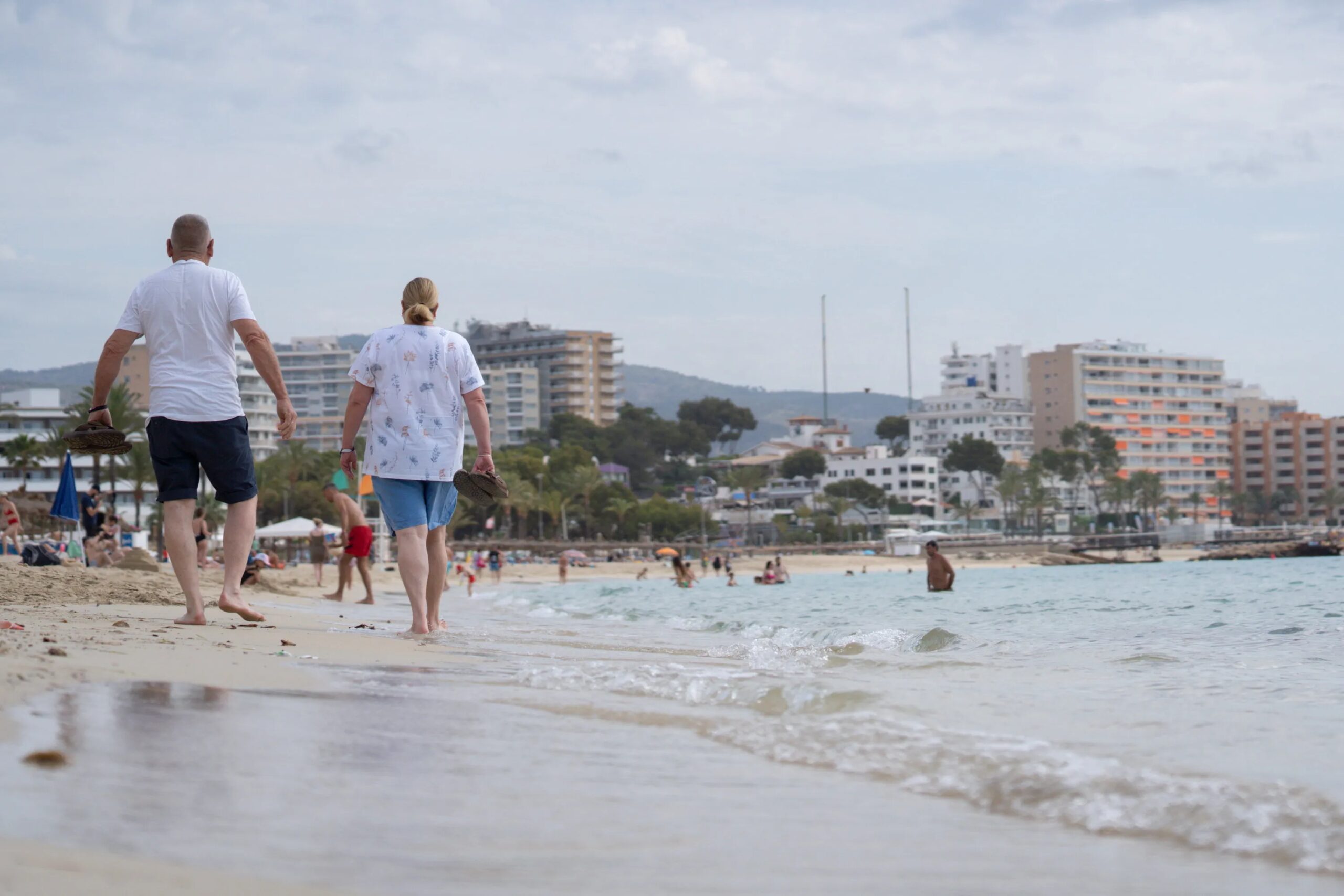
IF you’re wondering where the next big holiday trend is coming from, I can save you some time.
It’s not a brand new destination, and it’s not somewhere “undiscovered”.
It’s the places your parents went in the 90s.
I spend most of my time looking at holiday booking data, and this one trend keeps jumping out.
A whole wave of classic British package holiday resorts are making a serious comeback in 2026.
And the reason is simple: they’re still ridiculously good value.
From Europe to Africa, here are my top 10 cheap holiday spots that are booming again… and the deals you can get right now.
Skanes is a proper throwback to 90s package holidays – big beachfront hotels, short transfers, and everything centred around the resort.
And now, it’s having one of the biggest comebacks I’ve seen in the data, with bookings to Tunisia up massively again heading into 2026.
I found a really strong all-inclusive deal here – 7 nights at the 4* Hotel Liberty Resort, flying from London Southend (16–23 Aug 2026), from £535pp for a family of four. That’s roughly £76pp per night, and crucially, it’s all-inclusive.
What makes this one work is how family-friendly it is – big pool areas, loads going on for kids, and everything included, so you’re not constantly spending.
And the reason it’s this cheap is simple. Tunisia is still rebuilding demand, so hotels are pricing low to win Brits back. Which means right now, you’re getting proper beachfront value for a fraction of what you’d pay elsewhere.
Calpe was huge with British tourists in the 80s and early 90s – classic Spanish seaside, big beaches and that iconic rock backdrop.
Now it’s trending again in 2026, as people look for more relaxed, less chaotic alternatives to bigger resorts.
I found a great-value summer deal – 7 nights at the 4* AR Diamante Beach, flying from Bournemouth (3–10 Aug 2026), from £588pp for a family of four. That’s about £84pp per night, on a bed & breakfast basis.
This hotel stands out because it feels a bit more premium than your typical Costa Blanca stay – big modern rooms, great pool area, and close to the beach without being chaotic.
It’s cheaper because it’s not trying to be flashy or all-inclusive heavy. And for families, that works – because you can eat out cheaply and control your spending instead.
Hurghada was unbelievably popular in the 2000s all-inclusive boom, thanks to massive resorts, guaranteed heat and loads included in the price.
And now it’s properly back again, with bookings climbing fast into 2026.
This one’s properly eye-opening – 7 nights at the 4* Royal Lagoons Aqua Park Resort & Spa, flying from Belfast (22–29 Aug 2026), from £668pp for a family of four. That’s around £95pp per night, and it’s all-inclusive.
What makes it great for families is the waterpark setup with slides, multiple pools and enough going on to keep kids busy all week without leaving the hotel.
This is why Egypt is flying with Brits right now, despite its proximity to the Iran conflict. Because once you arrive, everything’s covered.
Flights are longer, which keeps demand slightly lower, but for families, that means ridiculous value for what you get.
Hammamet was one of the classic British beach holidays of the 90s – long sandy beaches, big hotels and loads of all-inclusive resorts.
Just like Skanes, it’s seeing a massive resurgence heading into 2026.
I spotted this while digging through peak summer prices – 7 nights at the 4* Houda Yasmine Hammamet, flying from London Southend (23–30 Aug 2026), from £553pp for a family of four. That’s about £79pp per night, and it’s all-inclusive.
It’s a proper classic family hotel with a massive pool, entertainment, and everything geared around easy, no-stress holidays.
Again, the price comes down to perception catching up with reality.
The hotels are good, the weather’s great – but demand hasn’t fully returned yet. So you’re benefiting from that gap.
Salou was massive with British families in the 90s and early 2000s with beaches, family hotels and PortAventura right next door.
And now it’s flying back again in 2026 as families rediscover how easy it is.
I couldn’t ignore this deal – 7 nights at the 4* 4R Playa Park, flying from Birmingham (21–28 Aug 2026), from £408pp for a family of four. That’s just £58pp per night, on a bed & breakfast basis.
This is exactly what Salou does well: simple, well-located hotels with good pools and easy access to everything – and at a really great price too.
And it’s such great value because you’re not paying for extras upfront.
But in Salou, that’s ideal – everything locally is affordable, so you can build your own budget holiday.
Torremolinos is where the British package holiday basically started back in the 60s and 70s.
And in 2026, it’s trending hard again thanks to how easy and reliable it is.
I found a really solid summer option here – 7 nights at the 4* Hotel Apartamentos Bajondillo, flying from Bournemouth (22–29 Aug 2026), from £518pp for a family of four. That’s about £74pp per night, on a self-catering basis.
What makes this one great is the location, as it sits right on the beachfront, with loads nearby, and perfect if you want flexibility with food and spending.
It’s not the cheapest on the list, but you’re paying for convenience – short transfer, loads to do, and no surprises.
Benidorm was the capital of British holidays in the 80s and 90s, and now a whole new generation is discovering it.
Bookings are up again in 2026, especially with younger families and couples.
I found this cracking value deal – 7 nights at the 3* Terralta Apartments, flying from Dublin (23–30 Aug 2026), from £403pp for a family of four. That’s roughly £58pp per night, on a self-catering basis.
It’s ideal for families too, as it’s home to spacious apartments, a big pool, and a quieter location just outside the main strip.
And this one’s cheap simply because Benidorm is built for volume: loads of apartments, loads of competition – which keeps prices low.
Best part is, once you’re there, everything else is cheap too.
Sousse has always been one of Tunisia’s most popular beach resorts – big hotels, great beaches and loads of all-inclusive options.
And just like the rest of Tunisia, it’s seeing a huge comeback into 2026.
One of the best-value all-inclusive deals I found – 7 nights at the 4* El Ksar Resort & Thalasso, flying from London Southend (16–23 Aug 2026), from £583pp for a family of four. That’s about £83pp per night, and it’s all-inclusive.
This is exactly what families want – beachfront setting, slides, big pool areas and everything included from day one.
This is where the value really shows.
Because when everything’s included, you’re not constantly spending – which makes it one of the easiest holidays to budget for.
El Arenal was massive in the charter flight era – big beach, loads of hotels and right next to Palma.
And now Majorca, and El Arenal in particular, is firmly back on the rise again in 2026.
I found a peak summer Majorca deal that really stood out – 7 nights at the 3* BLUESEA Costa Verde, flying from Bournemouth (19–26 Aug 2026), from £580pp for a family of four. That’s about £83pp per night, and it’s all-inclusive.
What makes this one work is simplicity – good pool, food included, and a no-frills base in a super easy destination.
It’s slightly pricier because Majorca never really goes out of demand.
But you’re paying for ease – short flight, reliable weather and a destination that just works.
Sharm El Sheikh was one of the BIGGEST British holiday hotspots of the 2000s.
And now it’s making the biggest comeback of all destinations worldwide heading into 2026.
And this is where the value really hits home – 7 nights at the 4* Xperience Saint George Homestay, flying from London Luton (5–12 Aug 2026), from £650pp for a family of four. That’s around £93pp per night, and it’s all-inclusive, in great hotel, with guaranteed heat.
This hotel is built for proper relaxation with multiple pools, loads of food options and everything set up so you barely need to leave. Just turn up, pay for nothing, and leave rested, relaxed and tanned.
And the reason it’s such good value, even in the summer holidays, is simple.
Flights have only relatively recently come back at scale, so demand is still catching up. But the hotels are still world-class.
Which means right now, you’re getting proper 4* all-inclusive… for less than most self-catering holidays in Europe.

A price board at a gas station displays regular gasoline at 1,796 won per liter (around US$1.20) in Incheon, South Korea, 13 March 2026. The government implemented a temporary fuel price cap system the same day to ease cost burdens amid supply concerns linked to the Middle East crisis. File. Photo by YONHAP / EPA
March 26 (Asia Today) — South Korea will raise its second round of fuel price caps starting at midnight Friday, pushing expected retail gasoline prices above 2,000 won per liter (about $1.50).
The government set the new ceiling for gasoline at 1,934 won ($1.45) per liter, up 210 won from the first round. Diesel will be capped at 1,923 won ($1.44) and kerosene at 1,530 won ($1.15).
Because refiners’ wholesale supply prices have already moved into the 1,900-won range, officials expect retail prices at gas stations to settle in the low 2,000-won range, or roughly $1.50 to $1.60 per liter.
The first round of price caps, introduced March 13, focused on shielding consumers from a surge in global oil prices. The second round reflects a shift in policy, allowing some price increases while trying to prevent excessive costs from being passed on to households as the crisis drags on.
The Ministry of Trade, Industry and Energy said the revised caps incorporate international oil price movements while factoring in inflation and household impact.
Yang Ki-wook, a senior official at the ministry, said the government did not apply global prices mechanically.
“We considered the broader impact on people’s livelihoods,” Yang said.
Based on the first round, when the nationwide average gasoline price reached about 1,810 won ($1.36), officials believe prices will now move into the low 2,000-won range.
The ministry said it may take two to three days for the new caps to be reflected at gas stations, as most retailers still hold inventory purchased under earlier pricing.
Stations that raise prices immediately could face scrutiny, Yang said, noting most hold five days to two weeks of supply.
The government estimates the price cap system lowers fuel costs by about 200 to 500 won per liter compared with a scenario without intervention.
Officials also rejected concerns that the policy conflicts with demand-control measures such as vehicle rotation systems. They said the second phase is intended to balance two goals: encouraging reduced consumption while preventing excessive price spikes.
Separately, the government extended fuel tax cuts through the end of May and increased the reduction rates. The gasoline tax cut was raised from 7% to 15%, and diesel from 10% to 25%.
Under the revised rates, fuel taxes now stand at 698 won ($0.52) per liter for gasoline and 436 won ($0.33) for diesel, down 65 won and 87 won, respectively.
Officials said the tax cuts were factored into the new price caps, resulting in effective reductions of about 200 won for gasoline and about 500 won for diesel and kerosene compared with market-based pricing.
The second round of price caps will remain in effect for about two weeks, through April 9.
— Reported by Asia Today; translated by UPI
© Asia Today. Unauthorized reproduction or redistribution prohibited.
Original Korean report: https://www.asiatoday.co.kr/kn/view.php?key=20260326010008302