WASHINGTON — The U.S. Department of Justice is investigating whether the decision of the White House television press pool to halt coverage of President Trump last month violated antitrust law, an agency spokesperson said Saturday.
Emily Covington, a spokesperson for the department, said group boycotts among business competitors might violate U.S. law. “The Antitrust Division is simply investigating to determine whether these news organizations have violated the antitrust laws,” she said.
The announcement came after the television pool of five broadcasters last month ceased presidential coverage after the administration barred CNN, MS NOW and Politico from the White House because of coverage Trump disliked.
Messages were sent late Saturday to the five outlets seeking comment: ABC, CBS, CNN, Fox and NBC.
The White House press pool, which is a rotating cast of news outlets that covers the president, has become a proxy for the wider fight over whether the president, or anyone, can control the content of news reports — a type of free speech, a pillar of American democracy.
Last month’s developments marked an extraordinary escalation in Trump’s efforts to restrict news reporters and outlets that he finds insufficiently supportive.
CNN, MS NOW and Politico sued over the days-long ban. It was lifted after a judge handed the three news organizations a reprieve, which is in place until Tuesday.
Television pool coverage of the White House has also resumed.
Jose Zamora, the Committee to Protect Journalists’ regional director of the Americas, on Saturday criticized the administration’s decision to investigate.
“The government should not use antitrust investigations to intimidate news outlets defending press access,” Zamora said on X. “The public’s right to know depends on that access.”
Durkin Richer and Taxin write for the Associated Press. Taxin reported from Santa Ana.
Beni, Democratic Republic of Congo – The Ebola outbreak in the Democratic Republic of the Congo (DRC) has spread to another health zone in the east, while a fatal imported case in Kenya has underscored the risk of cross-border transmission.
The World Health Organization (WHO) said in an October 8 update that Alimbongo health zone in North Kivu province had reported cases for the first time. As of October 6, four confirmed cases, including two deaths, had been recorded there.
The outbreak is caused by the Bundibugyo virus, a species of Ebola virus. According to the WHO, cases had been reported in 64 health zones across seven provinces in the DRC. Ituri remained the worst-affected province in cumulative cases, while North Kivu was accounting for a growing share of newly confirmed infections.
As of October 6, the WHO had recorded 8,728 confirmed cases and 4,205 confirmed deaths in the DRC. A further 2,269 people had recovered, and the crude case fatality ratio stood at 48.2 percent.
Kenya confirms imported case
Kenya confirmed its first imported case of Bundibugyo virus disease on October 6, according to the WHO. The patient, a Kenyan citizen who had been living in the DRC, fell ill there and received treatment at several health facilities before travelling to Kenya through Uganda.
The patient travelled by road to Kampala, Uganda, before flying to Nairobi, arriving on October 3. The patient was isolated in hospital and tested positive for the virus. Despite supportive treatment, the patient died on October 5, the WHO said.
Kenyan authorities identified 28 contacts, including family members and healthcare workers. The WHO also reported efforts to trace passengers and crew members from the flight to Nairobi.
Kenyan Ministry of Health officials screen arriving passengers at Jomo Kenyatta International Airport in Nairobi amid Ebola-related health precautions [AFP]
Public health measures have been initiated in Kenya and Uganda, including contact tracing and enhanced surveillance.
On October 8, preliminary laboratory results for a suspected Ebola case in Kenya’s Wajir County came back negative, according to the county governor. The result eased concerns about a possible second case, although monitoring continued.
The imported infection has underscored the importance of surveillance and coordination between neighbouring countries. Identifying exposed people and monitoring them for symptoms are central to detecting infections early and interrupting further transmission.
Treatment capacity under pressure
In the DRC, the response is facing mounting pressure from limited treatment capacity, insecurity and difficulties securing cooperation from some communities.
Daniel Makasi Levergénois, founder of Watoto Radio, said insecurity and misinformation were undermining efforts to contain the outbreak. In Beni and Butembo, both in North Kivu, rumours and misconceptions about Ebola had contributed to reluctance among some residents to cooperate with response teams, he said.
In an October 5 update, medical charity Doctors Without Borders, known by its French initials MSF, said North Kivu accounted for nearly 40 percent of newly confirmed cases nationwide, up from 24 percent at the end of August.
MSF also reported that, as of September 28, 34 percent of confirmed Ebola patients were being treated in non-specialised health facilities. Dedicated treatment centres lacked sufficient beds, while delays in diagnosis meant some patients were being treated outside facilities equipped to manage Ebola.
The organisation warned that many of these facilities lacked the resources and expertise needed to manage the disease, increasing the risk of transmission among patients and healthcare workers.
“For weeks, treatment capacity has stretched to its limit,” said Stephanie Hoffmann, coordinator of MSF’s Ebola treatment centre in Butembo.
“Because there are not enough beds available, we are sometimes forced to refer confirmed Ebola patients elsewhere, despite the significant risk this poses to the wider community. In addition, standards of care in some peripheral facilities do not always meet the requirements for Ebola treatment. This is extremely concerning.”
Mistrust threatens containment efforts
Alberto Lusenge, a community leader in Beni, said the failure to stop transmission early in Ituri province, followed by new cases and attacks on response workers in Beni and Butembo, had deepened public concern.
Lusenge warned that mistrust could discourage residents from reporting symptoms or cooperating with health workers. He said North Kivu could become a greater focus of the outbreak if authorities failed to secure stronger cooperation from local communities.
A worker in protective gear handles sanitary basins at an Ebola treatment centre run by MSF in Butembo, eastern DRC [Gradel Muyisa Mumbere/Reuters]
The WHO said response teams were following up 23,741 of the 29,535 identified contacts as of October 4, equivalent to 80.4 percent – below the response target of at least 85 percent.
Contact tracing allows health authorities to identify people who may have been exposed, monitor them for symptoms and detect infections early. Gaps in follow-up can make it harder to identify and interrupt chains of transmission.
The Africa Centres for Disease Control and Prevention (Africa CDC) has called for a community-centred response, including active case finding, systematic contact tracing, daily follow-up of exposed people and sustained engagement with local communities.
A history of deadly outbreaks
The DRC’s 2018–2020 Ebola outbreak, caused by a different virus species, killed nearly 2,300 people. The current outbreak presents distinct challenges: According to the WHO, there are no approved vaccines or specific treatments for Bundibugyo virus disease.
Early detection, supportive care and infection prevention therefore remain central to the response. But as infections spread into additional health zones and treatment facilities struggle to accommodate patients, health authorities face the dual challenge of containing transmission and maintaining public trust.
Jean Kaseya, director-general of Africa CDC, has stressed the importance of rapidly identifying and monitoring people exposed to the virus.
“To bring this outbreak under control, we need to know where every contact is, track them and quickly identify anyone showing symptoms before they pass the virus on to their family, their community or across borders. We will only bring this outbreak under control once the last chain of transmission has been broken,” Kaseya said in a news release seen by Al Jazeera.
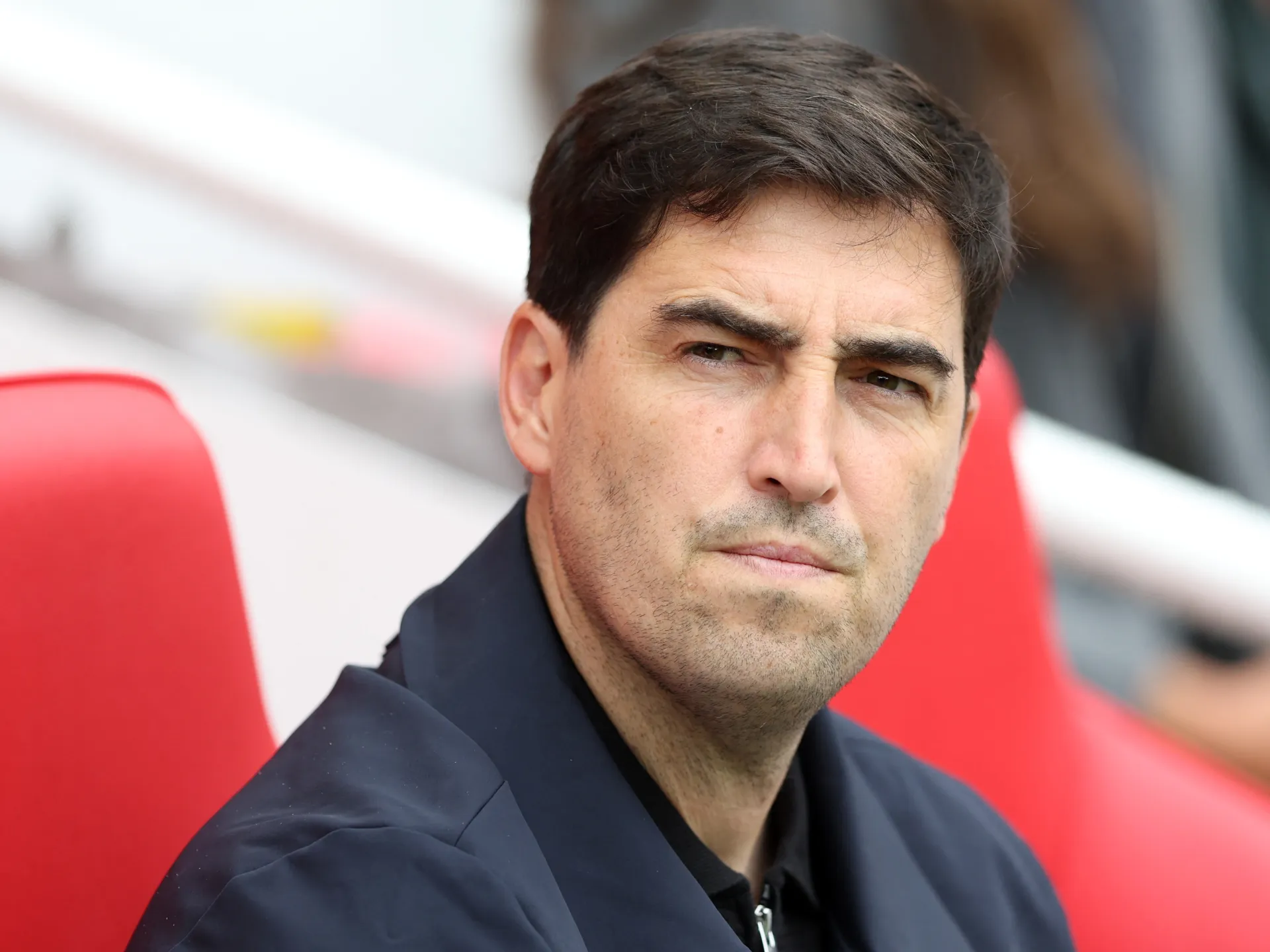
Liverpool’s Andoni Iraola looks to Manchester City clash and rival’s appeal over guilty verdict for financial breaches.
Published On 9 Oct 20269 Oct 2026
Liverpool boss Andoni Iraola said the lack of clarity over Manchester City’s future after the club was found guilty of multiple breaches of financial rules was causing uncertainty throughout the Premier League.
City remain adamant they have done no wrong and have appealed against the findings of an independent commission announced last week.
Recommended Stories
list of 4 itemsend of list
The Premier League leaders potentially face a severe points deduction that threatens their place in the English top flight.
Iraola believes the world’s richest league is caught in limbo until there is a definitive outcome.
“I think the worst thing probably is the uncertainty, that no one knows what’s going to happen,” the Spaniard said ahead of City’s first outing since the verdict at Liverpool on Sunday.
“But we have to focus on Liverpool – be the best club we can be, the best team we can be and that’s my challenge.”
Iraola only joined the Reds in June but is looking forward to a red-hot atmosphere at home.
“The atmosphere is going to be big, especially at Anfield,” he said.
“We want to give also our supporters reasons to be with us. When they see the team they want to see on the pitch, we can create an even better atmosphere and we will work for that.”
Liverpool are still unbeaten under Iraola, but three draws in their opening five league games means they start the weekend six points off the top.
Iraola’s options up front are limited after Alexander Isak and Cody Gakpo were injured on international duty.
“As a club manager, you are always waiting until the game ends (hoping) the doctor doesn’t call you, doesn’t give you bad news, but in this case we’ve been unlucky with Alex and Cody, both of them,” he said.
“They are injured and they are not going to be involved on Sunday.”
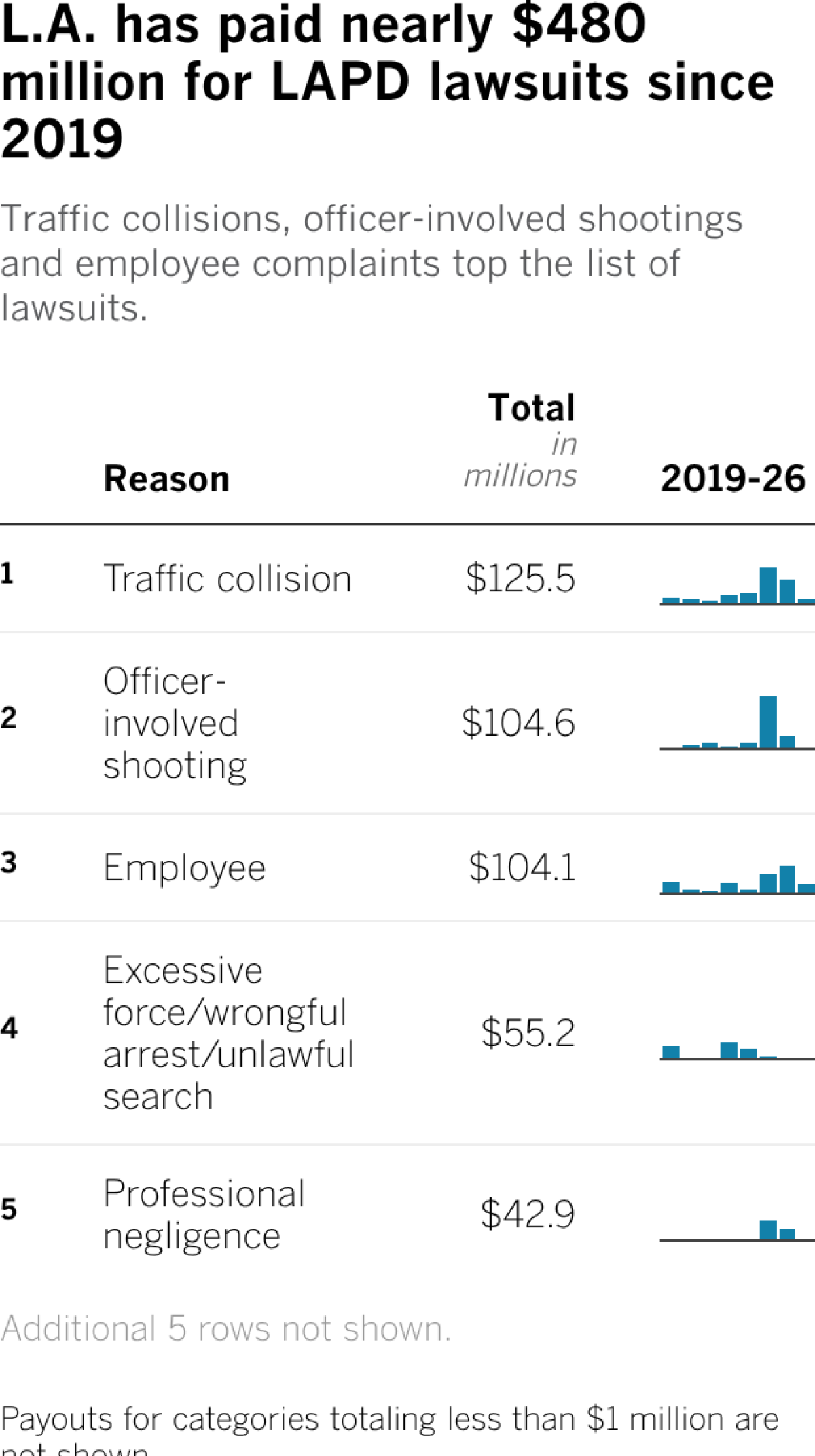
The city of Los Angeles has shelled out nearly $480 million over the last five and a half years to end legal disputes involving the Police Department, including claims of excessive force, litigation over traffic accidents and cases filed by employees who allegedly faced retaliation after reporting misconduct.
The soaring legal costs have come under greater scrutiny in recent years as Los Angeles’ financial problems have gotten worse. The city faced a $1-billion budget shortfall in 2025 but, after various cost-cutting measures, managed to set aside funding for the LAPD to hire more than 500 new officers in the coming year.
The LAPD’s annual lawsuit costs more than doubled from 2019 to 2025. The payouts peaked in 2024, when the city spent $178.6 million to resolve more than 300 police-related lawsuits and civil claims, before dropping to just over $100 million in 2025, according to a Times analysis of city attorney’s data.
The Times reviewed hundreds of pages of court documents and analyzed data from the city attorney’s office released through a public records request showing nearly 2,000 payouts dating to January 2019.
Through the first six months of this year, the city has paid out $20.3 million in legal settlements and court judgments involving LAPD officers. Several recentbig-dollarverdicts aren’t included in that tally because they hadn’t yet been approved by the City Council.
The surging cost of LAPD payouts depriving the cash-strapped city of money for pressing needs such as fixing roads and sidewalks, according to City Controller Kenneth Mejia.
“There’s a reason why your streetlights are out and they’re not fixed for a year, there’s a reason why your sidewalk won’t get fixed or your animal shelters are understaffed or underfunded,” said Mejia, whose office is conducting an audit of the city’s risk management strategies, the results of which will be released this year.
Experts are still untangling the reasons for the explosion of legal payouts involving police — which stretches far beyond L.A.
This year, a legal defense organization found that New York City has paid more than $796 million since 2019 to settle lawsuits involving accusations of police misconduct — including $117 million in 2025. In Chicago, the city is on track to blow past the $252 million spent last year to resolve police lawsuits, mostly involving plaintiffs who went to prison based on faulty evidence, according to local news reports.
In Los Angeles, the surge has come under the watch of City Atty. Hydee Feldstein Soto, who has blamed the rising costs on the way the office handled litigation of all kinds before her administration — as well as a national legal trend of so-called nuclear verdicts.
“The system is getting inflated in a way that is unhealthy and it creates, I think, incentives to sue and to do pie-in-the-sky settlements,” Feldstein Soto said in interview with The Times earlier this year. She said her office evaluates each claim case by case, deciding when it makes more sense to settle rather than go to trial, at which juries can issue decisions based on emotion or differing perceptions of what occurred. Feldstein Soto has lobbied for years to change state law to limit “non-economic” damages.
Feldstein Soto’s critics contend that she has pursued a hard-line approach in recent years, refusing to settle except in cases where it is clear the city is likely to lose in court.
That tough stance has led to mixed results. The city has lost some jury verdicts that could have been avoided if it had been willing to settle. It has also prevailed in several high-profile cases, including this year when a jury ruled that an officer was not liable for the 2021 death of a 14-year-old girl killed by a wayward bullet fired during a hasty confrontation with a suspect at a North Hollywood department store.
The city attorney’s office said in a statement to The Times that while it is proactively working to curb rising litigation costs “by every means possible,” it could not “control the number, timing or claimed damages of lawsuits filed against the City.”
“Nor does the Office have control over the alleged root causes of these liabilities: the City Attorney’s Office is not responsible for LAPD policies or personnel,” said the statement, adding that the number of lawsuits filed against the city has risen by roughly 20% in each of the last four budget years, straining the office’s resources.
Zachary Powell, an associate professor of criminal justice at Cal State San Bernardino, said that although data suggest that use of force by police has decreased since 2020, the public has become “much more aware of police abuses and conduct than they ever were before.”
“I think people also ask a lot more questions in a jury setting,” he said.
Other explanations, he says, are the passage of statewide police accountability measures and the fact that a backlog of cases from the pandemic years are finally coming due.
The Times’ analysis found that hundreds of legal battles involving officer-involved traffic incidents make up nearly a quarter of all payouts. Since 2019, the city has paid $125 million for the thousands of accident claims, just under a third of which stemmed from cases in which officers were found to have failed to stop or yield at crossings before crashing into another vehicle or a pedestrian. Pursuit-related claims and suits stemming from cases in which officers made improper left turns have also cost the city millions.
Other legal costs date back years — and in some cases decades.
The city is still paying $7,410 a month to Clarence Chance, who in the early 1990s was awarded a large payment over a wrongful arrest that led him to spend 17 years in prison for a murder he didn’t commit. Nearly $40 million has gone to people whose homes were damaged after the LAPD bomb squadbotched the detonation of seized fireworks and leveled part of a city block in 2021.
One of the biggest payout categories was $104.6 million spent since 2019 on claims related to police shootings — more than three-fourths of which involved people who were reported to be under the influence of a substance or in the midst of a mental health crisis, according to The Times’ analysis. Roughly $38.4 million was paid out after police shot someone wielding an edged weapon, such as a knife, the analysis found. Shootings involving gang officers cost the city nearly $4 million in that span.
Dozens of lawsuits remain pending, including claims related to the handling of mass pro-immigration protests since last year, likely putting taxpayers on the hook for more large payouts in the future. Police use of hard foam projectiles, house-mounted officers and other tactics against crowds have already cost the city at least $22 million in the last seven and a half years — just over half of which stemmed from the department’s response to the 2020 mass protests over the murder of George Floyd.
Such totals may not always include lawyer fees that are negotiated after a settlement is reached — or if a case is appealed.
Jonathan Evans, a civil rights attorney who has sued the department, thinks the big payouts show that greater public awareness of mental health issues is a factor. Recognizing this, he said, municipalities are agreeing to higher settlements than in years past.
“The decision to use lethal force is being more heavily scrutinized,” he said.
Tens of millions of city dollars have in recent years gone to disgruntled police officers who sued over workplace injustices such as sexual harassment, racial discrimination and retaliation. Since 2019, at least 27 LAPD employees have won million-dollar-plus jury verdicts or settlements from the city; many more have seen five- or six-figure paydays.
To clamp down on future legal costs, the department last year brought back a former senior official, Arif Alikhan — at a monthly salary of $20,000, paid for by a private donation — to study how to reduce the number of costly lawsuits. Alikhan did not respond to a call requesting comment.
The department maintains an early intervention system that flags officers based on risk factors, such as a relatively high volume of civilian complaints, frequent use force, and involvement in preventable traffic collisions or pursuits. The system is used to determine whether they need additional training or should be reassigned or placed on a performance improvement plan.
Within the LAPD, some officers and the Los Angeles Police Protective League, the rank-and-file union, argue that the city should fight back harder against claims with no credibility, instead of settling. They say officers who are most often sued tend to come from specialized units that do the type of proactive policing that the department and most of of the public wants: targeting gangs, drugs and guns.
Attorneys who represent officers that have sued the department over whistleblower retaliation dismiss the claim by Chief Jim McDonnell and others that some cops are exaggerating their claims in pursuit of a big payday. If anything, they contend, the continued large payouts are a product of entrenched racial and gender bias and inconsistent discipline — and the LAPD’s unwillingness to learn its lessons from past lawsuits.
Greg Yacoubian, a labor attorney, said there is little incentive for the current system to change because the costs of lawsuits are passed on to taxpayers — not the officers involved in misconduct and their bosses.
“The person responsible for the error never feels the pinch,” Yacoubian said.
Times staff writer James Queally contributed to this report.
Jose Mourinho, one of most outspoken against Man City spending when United manager, jibes EPL appeal to outlast him.
Published On 8 Oct 20268 Oct 2026
Real Madrid manager Jose Mourinho joked that he may not live to see the end of Manchester City’s legal battle with the Premier League after the club appealed against a ruling that found it guilty of serious financial rule breaches.
An independent commission found City guilty of all charges relating to breaches of Premier League financial regulations between the 2009-10 and 2017-18 seasons, as well as three of four charges relating to failures to cooperate with the investigation. City have denied wrongdoing and lodged an appeal.
Recommended Stories
list of 4 itemsend of list
The Premier League said that City used “sham” commercial agreements to inflate revenue and understate costs by more than 900 million pounds ($1.19bn) over nearly a decade, resulting in inaccurate financial reporting and breaches of spending rules.
Mourinho managed Manchester United from 2016 to 2018 and led them to a second-placed Premier League finish behind Pep Guardiola’s City in 2017-18.
“I would rather laugh about it,” Mourinho said when asked about the case in an interview with Italy’s Corriere dello Sport.
“I think we will eventually get an ending, but we are both in our 60s, and we’ll need to be lucky enough to still be around when the final verdict arrives.
“There will be a verdict, then appeals, then more appeals.”
Mourinho has long maintained that one of his greatest achievements in football management was finishing second behind Guardiola’s side, given their spending power at the time.
The Portuguese manager, now 63, said in 2024 that he had not given up on being awarded a winner’s medal for the 2018 season.
“I think we still have a chance to win that league because maybe they punish Man City with points and maybe we win that league,” he quipped at a press conference ahead of a Europa League match against United with his then-club, Fenerbahce.
“Then they have to pay me the bonus and give me the medal.”
The appeal process will be conducted in private, and it remains unclear whether any sanctions would be imposed before it is heard, or whether any punishment would take effect immediately.
City, seeking a sixth successive league win, are top of the Premier League with 15 points from five matches and travel to Liverpool on Sunday.
Holders Arsenal entertain Leeds on Saturday, while United host Tottenham later the same day.
Mourinho’s Real Madrid trail fierce rivals and La Liga leaders Barcelona by six points, with five wins and two defeats from their seven league matches this season.
Both Barca and Real are in action on Saturday, with Getafe and Villarreal visiting, respectively.
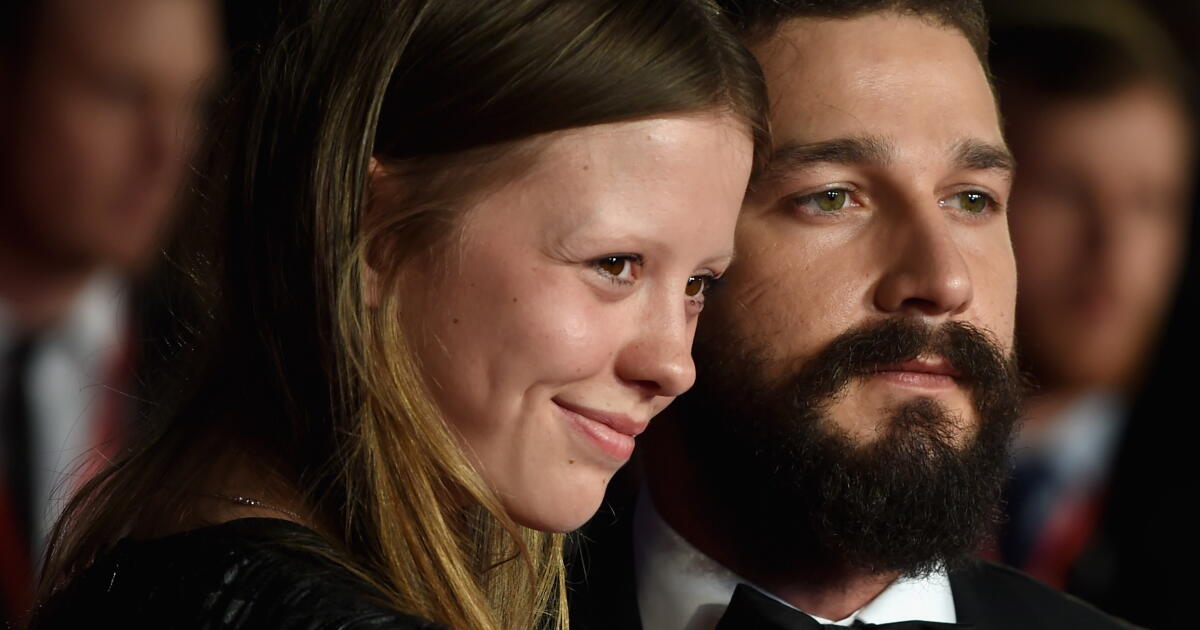
Horror star Mia Goth is ending her marriage to Shia LaBeouf just days short of their 10th wedding anniversary.
Goth, star of Ti West’s “X” trilogy, on Tuesday filed her petition to divorce “Peanut Butter Falcon” and “Honey Boy” actor LaBeouf in Los Angeles Superior Court. According to the petition, the estranged spouses married Oct. 10, 2016 but separated in July 2025. The petition confirms reports from earlier this year that the actors were on the outs.
Goth, 32, and LaBeouf, 40, share a 4-year-old daughter born March 2022, according to the petition. Neither representatives for the actors immediately responded on Wednesday to a request for comment.
The “Odyssey” actor filed her petition a day after LaBeouf’s ex-girlfriend FKA twigs brought her latest lawsuit against the former Disney Channel star to a close.
LaBeouf, who had an off-and-on relationship with Goth since their marriage, began dating FKA twigs, legal name Tahliah Barnett, in 2018. Barnett first sued LaBeouf in 2020, claiming she was subjected to frequent episodes of verbal and emotional abuse that escalated into physical assaults by the “Transformers” actor. She also accused LaBeouf of “knowingly infect[ing]” her with a sexually transmitted disease. The exes settled that case with prejudice last year but it returned to a legal spotlight in March.
The Grammy-winning “Eusexua” musician sued LaBeouf, alleging he “sought to silence her” from speaking out about his alleged abuse via an NDA which she claimed violated California law. Barnett on Monday notified the court that she and LaBeouf settled their case, noting that her ex “has agreed that the non-disclosure provisions (NDAs) contained” in the 2025 settlement “are terminated and void.”
LaBeouf faced additional legal turmoil for his arrests in February after his involvement in a Mardi Gras brawl. He pleaded guilty to three counts of simple battery in June.
Goth also faces legal issues. The British star was sued for battery in a 2024 lawsuit that accused her of “intentionally and willfully” assaulting and kicking an actor in the head while filming “Maxxxine” in 2023. Goth was sued alongside director West and movie studio A24. That case is ongoing and a jury trial is scheduled to begin April 17, 2028, according to a court order filed Monday.
It’s an annual fall tradition that Disneyland increase its prices — and stealthily in the night. Starting Tuesday, guests will pay more to experience the Happiest Place on Earth.
But the increases are relatively light. For the eighth year in a row, Disneyland did not raise the cost of the lowest-priced ticket, which is $104. And its highest-priced ticket, which is $224, also did not change. The increases were felt primarily on mid-level tiers for single-day, single-park tickets, and were limited to $5 apiece.
You’re reading Mr. Todd’s Wild Ride newsletter
Todd Martens’ newsletter delivers news and commentary on the past, present and future of theme parks, right from the theme park capital of the world — Southern California.
By continuing, you agree to our Terms of Service, which include arbitration and a class action waiver. You agree that we and our third-party vendors may collect and use your information, including through cookies, pixels and similar technologies, for the purposes set forth in our Privacy Policy such as personalizing your experience and ads.
Other prices also remain unchanged. The cost of Disneyland’s popular annual pass program, the Magic Key, did not increase. The top-tiered Magic Keys have been subject to hefty yearly spikes over the last decade. Parking remains fixed at $40, and multiday tickets have not been affected.
Collectively, this is one of the smallest overall increases made by the Disneyland Resort in recent history, as last year, its highest-priced single-day ticket jumped in cost $18. At a time when leisure costs are rising and forcing Americans to stay home, it comes as somewhat of a relief that Disneyland is not asking its fans to pony up substantially more cash to get through the gates.
While the Walt Disney Co. provided no official statement on the increases, Disneyland Resort officials noted in an email that it is aware guests are more closely watching their wallets in 2026. Thomas Mazloum, chairman of Disney Experiences, in a comment given to CNN, said, “Our goal is to put guests at the center of our decision making, and that starts by listening to them. That matters more now when families are watching every dollar, and we see it in the choices they make every day — in how they plan, in how far ahead.”
It’s also an indication that, at least for the time being, the Disneyland Resort has pushed its prices as far as they can go. Disneyland is blessed with an in-demand product, but every commodity has its limits.
In May, the Walt Disney Co. reported a 1% decline in attendance at its U.S.-based parks compared with the prior year, which the company attributed to “continued softness” in international visitors. In August, however, Disney bounced back, and noted, especially at Florida’s Walt Disney World, that attendance had perked up. Overall, visitation at its U.S.-based theme parks was 3% higher than in the previous year’s third quarter, the company said. This boost was largely attributed to a variety of summer deals.
As someone who is at Disneyland nearly every week, I can report that summer crowds were relatively manageable. There have been some asterisks, such as the World Cup and high heat, both likely keeping guests away, but anecdotally, Disneyland crowding hasn’t been nearly as extreme this year. I simply believe that people do not currently have the excess funds that they once had.
And Disney seems to be responding to the economic climate, especially in making it easier for its biggest fans to visit the resort. In conjunction with the price increases, Disneyland President Jill Estorino announced Tuesday that the company would be removing its no-show penalty on annual passholders. Additionally, passholders can now cancel their reservations up to 11:59 p.m. on the day of their reservations.
These are welcome changes, as previously guests were allowed three no-show penalties before their ability to make reservations was restricted, and had to cancel the night before. But plans change, and the reservation system restrictions, initially put in place to manage crowding during the COVID-19 pandemic, had increasingly felt like an impediment. While reservations are still required, which Disneyland has stated helps the resort plan its crowd-forecasting and staffing, the system is more lax and user-friendly than it has been.
Digging deeper into Disneyland’s pricing, there have been some small changes elsewhere. The cost of the line-skipping feature Lightning Lane, which can fluctuate based on crowding levels, now has a top price of $38, an increase of $1. And the park-hopper add-on for single-day tickets, which can also fluctuate, increased $5-$10, depending on the day. And earlier this year Disneyland did increase its prices on a number of food items.
The Disneyland Resort, to be sure, is not cheap. In the world of entertainment, it remains a luxury good on par with postseason Dodgers tickets (albeit with cheaper parking than Dodger Stadium). But I credit the Disneyland Resort for reading the cultural room. Pulling the plug on its recent steady and hefty price increases, especially on annual passes, shows the company can occasionally listen to its audience as much as it does Wall Street. Sure, a price decrease would be nice, but we don’t live in a fantasyland.
This week in SoCal theme parks
The Disneyland Resort has added new collectible pin trading vending machines.
(Todd Martens / Los Angeles Times)
Attention Disneyland pin traders! The Disneyland Resort has added a new pin line available in select vending machines throughout the property— look for them in San Fransokyo Square and Pixar Pier in Disney California Adventure and at the Star Wars Trading Post in Downtown Disney. Each pin is $18, and one buy gets you one egg-like orb with a mystery pin. There are 15 in the set — I got Simba, as seen above — and offerings include park staples such as the Hatbox Ghost as well as classic characters such as Princess Aurora and Dumbo. Some are marked limited edition — “chasers,” in Disney pin trading speak — so be on the lookout. Thanks to Mr. Daps for the heads-up.
A Disneyland ticket deal. With life constantly getting more expensive (see above), it’s a good time to hunt for a deal. If you’re a Costco member, reports are that there’s a pretty good one happening right now. Valid through Dec. 18, Costco is said to be selling a two-day Disneyland park hopper ticket with the line-skipping feature Lightning Lane already added in for $329.99. The offer includes a $60 dining card, and works out to a savings of a couple hundred. Disney Tourist Blog has more details on the limited deal.
An applaudable energy project. Six Flags Magic Mountain has announced the completion of its solar carport project, the largest solar carport in California. Covering 4,315 parking spaces, the project was designed to offset 100% of the energy consumption of Magic Mountain and Hurricane Harbor (while also providing some shade and sun protection for its parked cars). The project is interconnected with the Southern California Edison grid, meaning excess energy may be exported as well as allowing the parks to draw energy from the project when needed. The carport also offers 109 electric vehicle charging stations.
A pause at Castle Park. Riverside’s long-standing Castle Park is beginning the creation of what it says is a“reimagined experience.” As such, on Nov. 1 its Ride Park will halt operations for the foreseeable future. “We’re taking the time to plan the right rebuild and will share updates as plans take shape,” the company says in an FAQ on its site. Its mini golf and arcade areas will continue to welcome guests.
More on the noise issues around the ‘Fast & Furious’ coaster
Riders on Universal’s new Fast & Furious: Hollywood Drift.
(Ronaldo Bolanos / Los Angeles Times)
There will be no shortage of updates and news on Universal’s new Fast & Furious: Hollywood Drift coaster in the coming weeks, months and maybe even years, especially as the attraction continues todraw the ire of the park’s neighbors in Toluca Lake. Universal Studios Hollywood held a meeting with nearby residents on its studio lot last Wednesday. The session was closed to the media but was said to attract more than 350 neighbors. I spoke with a number of residents, as well as Universal, after the session, and indications are that the two sides still haven’t settled on a compromise. The issue, of course, stems from the sound of rider screams from the coaster drifting into the residential area.
Universal has promised, through the end of the year, to not begin operating the coaster before 9 a.m., and has also, in response to community feedback, installed a new sound barrier featuring an additional 1,900 square feet of sound absorbing material. The new barrier includes a sail that’s about 63 feet tall and 31 feet wide. But residents I spoke to feel it’s not yet enough. I’ve heard many stories from neighbors in recent weeks regarding the disruption caused to their lives. They range in extremes. A neighbor without air conditioning says they can no longer open their windows. A resident who offers meditation services from their home says their business is now potentially forever impacted. A teen was unable to complete a SAT prep test due to the incessant screaming. Many report insomnia from the rise in anxiety levels. There’s plenty more.
The meeting was said to grow contentious near its end. Residents provided data on how the effects of noise, specifically screams, can cause stress-related responses. Universal is said to have discussed the challenges in further mitigating the sound. County supervisor Kathryn Barger was in attendance and is calling for additional communication between the two sides. “The meeting’s dialogue made clear that the lives of surrounding residents are being impacted and disrupted,” Barger said via a statement. “I respect Universal’s decision to host this forum and listen to the concerns being raised. I encourage all stakeholders to maintain an ongoing honest dialogue.”
Tell us your stories. Ask us your questions.
Have a theme park tale to share? Whether it was a good day or less-than-perfect day, I would love to hear about it. Have a question? A tip? A fun photo from the parks to share? Email me at todd.martens@latimes.com. I may feature your note in an upcoming newsletter.
Ride on,
Todd Martens
—
This newsletter is free thanks to the support of L.A. Times subscribers. If you’re not yet a subscriber, explore subscription packages to unlock unlimited digital access and support award-winning local reporting.
Was this newsletter forwarded to you? Sign up here to get it in your inbox.
The first imported case of Ebola has been recorded in Kenya. The health minister said a Kenyan citizen who had been living in the Democratic Republic of the Congo, arrived in Nairobi on Saturday and died from the disease.
Student groups call for the abolition of Greek life and punitive action in wake of fraternity assault allegations.
Published On 5 Oct 20265 Oct 2026
Protesters in the United States have shattered a glass door at Cornell University’s main administrative headquarters and spray-painted messages on the building’s walls as backlash continues following allegations about a 2024 gang rape at a local fraternity.
In the early hours of Monday, the glass panes on an entrance door for the building, Day Hall, were smashed, leaving shards strewn across the floor.
Recommended Stories
list of 3 itemsend of list
Activists, outraged at the school’s handling of the case, also graffitied nearby walls with slogans like “At Cornell rapists are protected protesters are expelled” and “Smash the patriarchy”.
The predawn incident came ahead of a rally demanding “justice for survivors” by student groups on Monday.
Cornell spokesperson Kyle Kimball said Monday that the university was investigating the vandalism.
“We understand the frustration and strong emotions being expressed across our community,” Kimball said. “Those concerns deserve to be heard, but damaging property is not the answer.”
Cornell, a prominent Ivy League university in the state of New York, has been at the centre of a national firestorm over sexual violence on US campuses, after an anonymous student, Jane Doe, filed a civil lawsuit last month alleging a gang rape at the fraternity Chi Phi.
Her complaint accuses seven former students of perpetrating “heinous criminal sexual acts” against her during a fraternity party on the night of October 19, 2024, after she says she was pressured to drink and take the drug ketamine.
The fraternity, Cornell University and others are named as co-defendants in the suit. Lawyers for two of the former students have rejected claims that they participated in sexual assault.
The case has elicited outcry over how sexual assault is handled on campuses across the country.
At Monday’s demonstration, students demanded an overhaul of the university’s sexual assault complaint process, the termination of certain school officials and stricter disciplinary action against alleged abusers.
In a statement to the student news outlet The Cornell Daily Sun, student organisers wrote that they were calling for the “abolition” of the Interfraternity Council system on campus and the “expulsion/revocation of degrees for all Chi Phi members involved in the rape”.
They also demanded that Cornell’s Office of Student Conduct and Community Standards be replaced by a “democratic disciplinary system”. Monday’s protest, they added, was designed to draw attention to the systemic failures that allow sexual violence to occur.
“We wanted to ensure that Day Hall, the centre of Cornell’s administrative function, was not able to continue business as usual,” the students told the campus paper.
The alleged crime at the fraternity, they wrote, was part of a “rampant pattern of sexual assault perpetrated by members of Greek life at Cornell University and hundreds of other academic institutions throughout the country”.
Under pressure by New York Governor Kathy Hochul and Attorney General Letitia James, the university announced this week it would be appointing a law firm to conduct an independent internal review of how it initially handled the case.
A transcript, obtained by US media, shows that although no charges were filed, Doe told campus police at the time that she could “say with 100% confidence I was raped”.
Her lawsuit also alleges that Cornell “afforded” the accused fraternity members “the opportunity to mitigate their conduct by submitting essays” to the school. Two were later expelled, and another two were suspended.
A Russian agency links the lab worker’s death to ‘pneumonia of unknown’ origin.
Published On 5 Oct 20265 Oct 2026
An employee of a Russian anti-plague institute in the remote Siberian region of Irkutsk has reportedly died of a suspected pneumonic plague infection, according to a United States official.
“We are aware of reports of a fatal case of suspected pneumonic plague in Irkutsk Oblast, Russia. We are monitoring the situation closely with the CDC [Centers for Disease Control and Prevention] and our other interagency partners,” a State Department official told Al Jazeera
Recommended Stories
list of 3 itemsend of list
“Many details have not been confirmed. We encourage Russian authorities to share accurate information quickly and openly,” the official said.
Alexei Tsydenov, the governor of the Buryatia region, said in a post on his Telegram channel on October 3 that a woman in the neighbouring Irkutsk region had “died, maybe of the plague”.
Russia’s official TASS news agency reported on Sunday that the country’s consumer watchdog, Rospotrebnadzor, said in a statement that an employee of the Irkutsk Anti-Plague Research Institute of Siberia and the Far East had been diagnosed with “pneumonia of unknown aetiology”.
The watchdog also said it expanded testing of samples from the patient and found no microorganisms associated with her professional activities.
Pneumonic plague is caused by the bacterium Yersinia pestis, usually found in small mammals and their fleas. According to the World Health Organization (WHO), the plague is highly infectious and can be fatal if not treated early.
Local media named the woman who died as 28-year-old laboratory technician Darya Shipilova.
Media reports say that authorities in Siberia’s Irkutsk region have placed nearly 200 people under medical observation.
Last month, a woman identified as Jane Doe filed a lawsuit against Cornell University, the fraternity Chi Phi and the seven fraternity members she accused of gang-raping her on the night of October 19, 2024.
Her allegations have triggered a nationwide reckoning in the United States over the prevalence of sexual assault on college campuses.
Recommended Stories
list of 3 itemsend of list
But the case has also reignited efforts to reform laws in the state of New York.
While the left-leaning state has long presented itself as a leader in women’s rights, advocates say sexual assault survivors still face pervasive legal barriers when they seek justice.
Erica Vladimer, a lawyer and founding director of Harassment-Free New York, a survivor-led nonprofit, told Al Jazeera that much of the legislation currently in the spotlight is the culmination of years, if not decades, of work.
“These are bills that we have been fighting for for years when sexual violence is not in the news,” Vladimer said.
She drew a line between the #MeToo movement, which began in 2017 as an online campaign to denounce sexual misconduct, and the current wave of outrage following Doe’s allegations.
“It speaks to the fact that the #MeToo movement is not dead. It is a movement, not a moment,” Vladimer said.
Already, leaders in Albany, the state capital, have signalled they would take action following the Cornell case.
On Wednesday, the New York Assembly announced it had formed a working group to examine the state’s sexual-assault laws and develop recommendations for the 2027 legislative session.
Still, advocates say more concrete measures are needed to address the crisis.
“I appreciate that this work is happening,” said Lindsey Boylan, a New York City Council candidate. “It doesn’t undo the fact that rape culture is pervasive in the United States and very much so alive and well in New York.”
Boylan was the first woman to publicly accuse former New York Governor Andrew Cuomo of sexual harassment in another high-profile misconduct case, back in 2020. She is among those calling for greater reform.
Here are some of the measures advocates are pushing state lawmakers to adopt or amend:
‘Voluntary intoxication’ statute
The Cornell University case has brought renewed attention to New York’s “voluntary intoxication” statute, a legal loophole that can make it harder to prosecute sexual assault when a person has willingly consumed alcohol or drugs.
New York Governor Kathy Hochul pledged on Friday to work with lawmakers to close the gap.
“It should not matter whether they chose to use drugs or alcohol. Voluntary intoxication is not a license for sexual assault or gang rape. Period,” Hochul said.
Under the current state law, a person who voluntarily drinks or takes drugs is not considered “mentally incapacitated” during an assault, even if they become too intoxicated to consent.
That can make it harder for prosecutors to bring a sex-crime charge. The law primarily recognises incapacitation in the context of sexual assault when a person was involuntarily intoxicated, unconscious or otherwise “physically helpless”.
That distinction has become central to the Cornell case. Doe has acknowledged that she consumed substances before the alleged rape, saying that she was pressured into drinking alcohol and taking the dissociative drug ketamine.
The Tompkins County district attorney initially declined to bring charges, pointing to the law’s stance on “voluntary intoxication”. But the investigation has since been reopened, amid public pressure.
New York is one of 19 states in the US that distinguish between “voluntary” and “involuntary” intoxication when it comes to determining consent in sexual violence cases.
But the Cornell case has spurred a push to remove the distinction from the law books. Critics have argued that sexual assault is no less grievous if a victim is drunk or has chosen to take drugs.
“I mean, to have New York, a supposedly progressive state, penalise people who are sexually abused for drinking is disgusting,” Boylan told Al Jazeera.
Vladimer, for her part, explained that distinguishing between “voluntary” and “involuntary” intoxication as a means for pursuing sexual assault cases shifts the focus onto the actions of victims, rather than perpetrators.
“We essentially have codified victim-blaming by saying if you become voluntarily intoxicated and then are sexually assaulted, you essentially cannot seek justice in our court system,” Vladimer told Al Jazeera.
In June, the New York state Senate unanimously passed a bill to allow sexual assault charges regardless of whether a victim is intoxicated voluntarily or involuntarily.
But the legislation has yet to be taken up in the state Assembly.
Students look on at Cornell University’s campus in Ithaca, New York, on October 1 [Lauren Petracca/Reuters]
The rape-shield gap
New York’s rape-shield protections limit the use of evidence about a complainant’s sexual history and conduct in criminal proceedings. But those protections do not currently extend to civil cases.
This distinction could matter in the Cornell case because Doe filed a civil lawsuit.
Vladimer said questions about a survivor’s behaviour could come up in the discovery process of a civil case, as well as in court.
“There is the potential of her having to face questions about things like her sexual history,” Vladimer said.
Bridie Farrell, the director of victim rights advocacy and legislation at the law firm Weitz and Luxenberg, told Al Jazeera that she has seen major differences in how male and female survivors are questioned in civil cases where this practice is still permitted.
In one case involving a brother and sister who were both sexually assaulted, Farrell said the man was not questioned about his sexual history while the woman was “grilled on it”.
A bill sponsored by State Senator Liz Krueger would extend rape-shield protections to civil proceedings. The measure passed the Senate in June and is currently before the Assembly Judiciary Committee.
A student walks through an archway at Myron Taylor Hall on the Cornell University campus in Ithaca, New York, on October 1 [Lauren Petracca/Reuters]
Retaliatory defamation lawsuits
Advocates are also pushing for legislation to prevent retaliatory defamation lawsuits.
Boylan said she has spent more than $2m defending herself in legal proceedings connected to her accusations against Cuomo, who stepped down as New York governor in 2021.
He has repeatedly denied any allegations of wrongdoing, despite a state attorney general’s report that concluded he “engaged in conduct constituting sexual harassment”.
“Every step of the way, we have a system that penalises people for speaking up about their own harm,” Boylan said.
Boylan and Charlotte Bennett, a former aide who also accused Cuomo of sexual harassment, are proponents of the Speak Your Truth Act, which would provide legal protections for people who publicly report sexual assault, harassment or discrimination.
The bill, sponsored by Assembly member Jessica Gonzalez-Rojas, would make certain communications about sexual assault, harassment or discrimination privileged when they are made without malice.
It would also allow survivors of sexual misconduct who successfully defend themselves against a defamation lawsuit to recover legal fees and costs. The bill remains in an Assembly committee.
Cornell University and local officials in Ithaca, New York, have faced questions about how they handled the Jane Doe case [Lauren Petracca/Reuters]
A recent win, a long way to go
For Bridie Farrell, the victims’ rights advocate, the fight for legal change is personal.
Farrell was a 15-year-old competitive speed skater in 1997 when she said she was sexually abused by her 33-year-old teammate and mentor. She came forward with her story of abuse in 2013.
By then, the statute of limitations in her case had expired. Farrell later became an advocate for changes to New York’s laws, helping to pass the Child Victims Act in 2019 that extended the time available for survivors of childhood sexual abuse to pursue criminal and civil claims.
The law allowed Farrell to file her own case, which she did in 2020. She tells Al Jazeera that a trial has finally been scheduled for June 2027.
“Before we passed the Child Victims Act in 2019, New York was one of the worst in the country,” Farrell said of the situation for sexual assault survivors seeking justice.
Farrell considers the legal impediments to Doe’s case — like the “voluntary intoxication” statute — all too predictable. “I’m not surprised if we haven’t updated a law that is archaic,” she said.
Still, lawmakers have signalled willingness to reform such laws. In announcing the state Assembly’s working group on sexual-assault laws, Speaker Carl Heastie pledged to “thoughtfully” consider how the state can strengthen its laws.
“The allegations being reported out of Cornell University are truly horrifying,” Heastie said on Wednesday. “We want to do everything we can to ensure victims of sexual assault see justice served.”
But survivors and sexual violence advocates say the Cornell case points to problems that go beyond any single law. They hope to see widespread systemic and societal change.
“Changing legislation is incredibly important. But legislation in a lot of cases can only go [as far as] the paper that it’s written on,” Boylan said. “It would be amiss to orient this horrible, tragic, unacceptable, infuriating case in isolation without looking at the broader rape culture of our state and our country.”
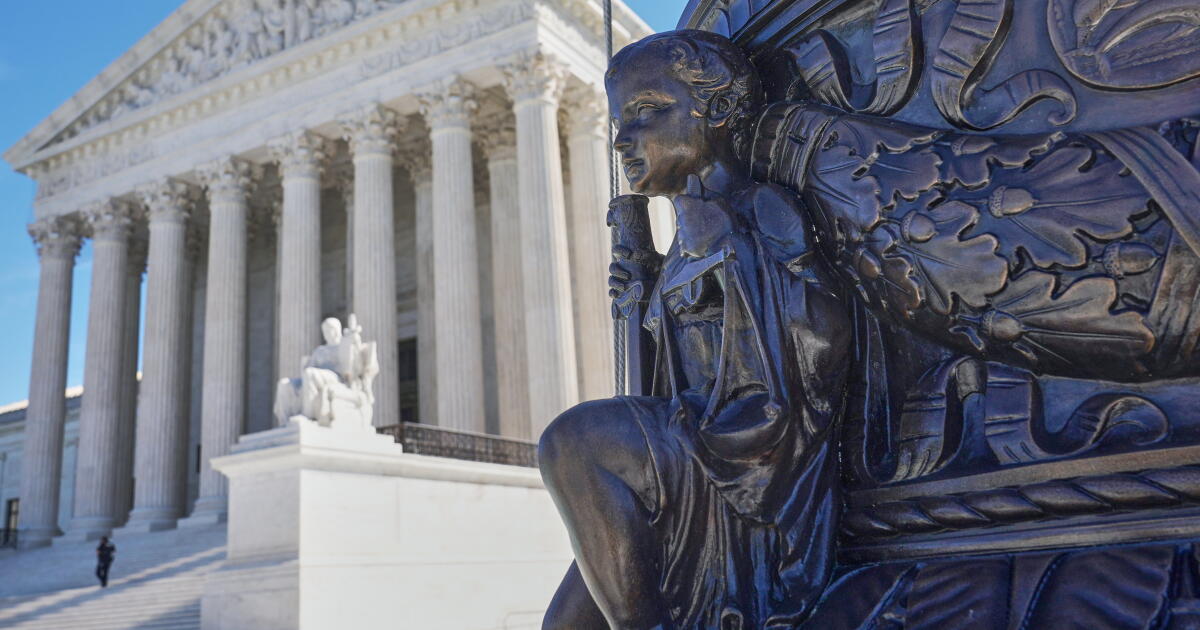
WASHINGTON — The Supreme Court will open its new term Monday by hearing arguments on whether the oil and gas industry may be forced to pay damages for the scorching heat waves, wildfires and droughts that are blamed on climate change.
It’s a momentous question the justices have put off deciding for nearly a decade — and may do so again.
California joined more than two dozen blue states and municipalities in 2023 when it sued the five largest oil companies, alleging “decades of deception” over the danger of a warming climate.
They have “privately known the truth for decades but have fed us lies and mistruths to further their record-breaking profits at the expense of our environment,” California Atty. Gen. Rob Bonta said.
Fire and smoke rise at the Chevron Refinery in El Segundo in October 2025.
(Robbin Goddard/Los Angeles Times)
Such climate-change lawsuits were patterned after the mass claims against the tobacco and opioid industries. Both were accused of concealing the dangers of their very profitable products.
But the climate suits have stalled. Judges have been divided over whether these potentially huge claims should be decided in federal or state court, and if so, under what law.
Last year, Boulder County, Colo., won a 5-2 ruling in the state Supreme Court that allowed its 2018 suit to proceed as a claim of a public nuisance, an unjust enrichment or a civil conspiracy. These are referred to as “common law” claims that are long-standing and traditional but do not rely on a measure approved by the Legislature.
The Colorado judges also said the climate-change suits are not “preempted” or blocked by federal anti-pollution laws because the suit for damages did not regulate greenhouse gas emissions.
The dissenters said the state court was giving Boulder a “green light to act as its own republic” to punish the Exxon Mobil Corp. for the impact of “global climate change.”
“Boulder, Colorado cannot make energy policy for the entire country,” they said. A ruling for the county would “authorize all 50 states and tens of thousands of municipalities” to ask their local juries to “impose ruinous liability” on the fossil fuel industry, they told the court.
The Trump administration joined in support of the industry’s appeal.
“Our federal system would disintegrate if each state could tackle inherently national or international problems by forcing its regulatory prescriptions on the other 49,” the administration’s lawyers wrote.
In February, the justices voted to hear the case and decide whether federal law blocks state law claims for the “effects of interstate and international greenhouse-gas emissions.”
The court scheduled the case of Suncor Energy and Exxon Mobil vs. Boulder County as the first of the new term.
Legal experts say the industry’s claim to be shielded by federal law is weak.
UCLA law professor Alejandro Camacho described the “preemption arguments as the latest and perhaps most ambitious effort to weaponize federal law to prevent polluters and fraudsters from paying for the harms they cause.”
Neither the Constitution nor the Clean Air Act provides such a shield, he said.
Legal experts on the other side question the notion that a public nuisance can be defined so broadly to include both the sale of a legal product and the impact on carbon pollution, much of it coming from China and India.
The outcome in the Supreme Court remains in doubt.
Supreme Court Justice Samuel Alito, left, shown with Justices Clarence Thomas and Brett Kavanaugh in 2025, withdrew from involvement in the climate case being argued Monday, when the court term begins.
(Chip Somodevilla / Getty Images)
Last week, Justice Samuel A. Alito, a reliable conservative, announced he was withdrawing from the case. He did not say why, but he owns stock in other oil companies that could be affected by the court’s decision.
A broad ruling for Boulder would send a shock through the fossil-fuel industry and clear the wave of climate-change suits to proceed in state courts.
The industry may turn to Congress. Republicans in the House and Senate have introduced bills that would shield energy companies from such liability claims.
Similarly, a broad ruling shielding the oil companies probably would block all of the climate change suits, including California’s.
The justices may opt out of ruling, however.
When they granted review of the case, they asked the lawyers on both sides to weigh in on whether the high court had “jurisdiction” to decide the Boulder case.
Usually the U.S. Supreme Court reviews only final judgments handed down by state courts, and the Boulder case did not result in a final ruling.
And without Alito, the court could split 4 to 4.
A decision based on a tie vote would affirm Boulder’s early stage victory but would not set a precedent that would govern other cases.
In its new term, the court also will hear major cases on immigration and guns.
Two of the cases test the Trump administration’s strict deportation policies. One denies bond hearings to people who entered the country illegally and may be deported.
In the past, the government usually offered bond hearings to those who could be held for months or even years while their claims were pending, so long as they could show they were not a flight risk or danger to the public.
But the Trump administration said it plans to detain tens of thousands of such persons indefinitely, even if they have no criminal record and pose no risk.
Government lawyers pointed to a provision of the 1996 immigration law that said people who entered the country illegally “shall be detained.” Previous administrations applied the mandatory-detention rule only to migrants who entered the U.S. illegally and were arrested near the border.
The other case involves so-called “third-country removals.”
The administration is determined to deport immigrants who have “final orders of removal,” many of whom have criminal records. But in some cases, they may not be sent back to their country of origin.
The policy of sending them to a third country has been condemned as harsh and cruel. Thousands of these people have been flown to impoverished countries that are dangerous and where they may be subjected to abuse.
The administration says it seeks assurances from those countries that the deported persons will not be not be abused or persecuted, but it refuses hearings for individuals.
U.S. District Judge Brian Murphy in Boston has ruled these deportees are entitled to a “meaningful notice” of where they are being sent and “meaningful opportunity” to contest this if they have a reasonable fear they will face persecution and torture.
Trump administration lawyers filed emergency appeals at the Supreme Court to set aside Murphy’s orders. They argued that the judge had gone beyond his authority, and the court’s conservatives agreed.
In December, however, the court will hear arguments from both sides on what the law calls for in such deportation cases.
Meanwhile, on Dec. 2, the court will hear a potential landmark on gun rights and and decide whether states may prohibit possession and sale of semiautomatic AR-15 rifles.
California and 11 other blue states have adopted such laws, often in response to mass shootings.
Gun rights advocates say these rapid-fire rifles are among the most popular weapons nationwide and should be protected as lawful under the 2nd Amendment’s right “to keep and bear arms.”
Michael Kotlikoff expresses deep sorrow over the case, calling it one of the most challenging periods for Cornell.
Published On 4 Oct 20264 Oct 2026
Cornell University’s president, Michael Kotlikoff, has called the alleged 2024 gang rape of a student at a fraternity house “deeply disturbing”, pledging greater transparency amid mounting outrage over how the school handled the case.
“My heart aches when I think of what she experienced,” Kotlikoff said in an eight-minute video message to the Cornell community on Saturday.
Recommended Stories
list of 3 itemsend of list
He characterised the past week as one of the most difficult in the university’s history and said it would weigh on the university for years to come. “It raises heartbreaking and troubling issues about sexual assault, dehumanisation and aspects of party culture, alcohol and drug use,” he said.
The woman, identified in court documents as Jane Doe, alleges she was sexually assaulted by multiple members of the Chi Phi fraternity in 2024 and has sued the university and seven former students.
Scrutiny over Cornell’s handling of the case intensified after New York Governor Kathy Hochul said newly released information had undermined her confidence in the local prosecutor, who initially declined to bring charges.
Hochul subsequently appointed state Attorney General Letitia James as special prosecutor to take over the criminal investigation, saying she would “not allow anyone to sweep this case under the rug”.
New York Governor Kathy Hochul, left, and New York Attorney General Letitia James attend a news conference in New York City on October 2, 2026, regarding an investigation into alleged sexual assault at Cornell University [Jeenah Moon/Reuters]
The case has also renewed scrutiny of the “voluntary intoxication loophole” in New York law that makes it difficult to prosecute sexual assaults involving victims who voluntarily consumed alcohol or drugs, even if they later became too intoxicated to consent.
Tompkins County District Attorney Matthew Van Houten had cited the legal provision in defending his original decision not to pursue charges. Hochul has pledged to push for changes to it.
At a student assembly hearing on Thursday, several speakers called for Kotlikoff’s resignation.
In Saturday’s video, Kotlikoff reaffirmed his support for an independent review of the university’s handling of the case and said Cornell’s Board of Trustees would announce details next week. He also called for a “serious look at the role of fraternities and sororities in campus life”.
James’s appointment has placed the case under a prosecutor whose office has repeatedly clashed with President Donald Trump. She has separately described the case as “an active criminal investigation”.
Real Madrid accuse Barcelona of paying former refereeing official Jose Maria Enriquez Negreira between 2001 and 2018.
Real Madrid have urged UEFA to conclude its ongoing investigation into the Negreira case with “utmost urgency” after European football’s governing body confirmed receiving a dossier from them on Thursday.
The case pertains to Barcelona football club allegedly paying millions of dollars to the company of Jose Maria Enriquez Negreira, the former vice president of Spanish football’s refereeing committee, between 2001 and 2018, to try to influence referee decisions.
Recommended Stories
list of 4 itemsend of list
Barcelona have denied any wrongdoing or conflict of interest and said they paid him for reports and advice related to refereeing.
Thursday’s statement by UEFA was the latest update in its investigation into the payments opened in 2023, while there is an ongoing Spanish criminal case as well.
Here’s everything you need to know about the case:
What is the Real Madrid vs Barcelona Negreira case?
Barcelona allegedly paid more than 7.3 million euros ($7.95m) between 2001 and 2018 to firms owned by Negreira, who was vice president of the refereeing committee of the Spanish football association from 1993-2018.
In March 2023, Spanish prosecutors formally charged Barcelona as well as two of the club’s former presidents, Josep Maria Bartomeu and Sandro Rosell, and Negreira and his son, Javier Enriquez Negreira, with corruption over the affair.
Barcelona was accused of corruption in sports, fraudulent management and the falsification of mercantile documentation; it denies any wrongdoing and says the payments were made for technical refereeing reports.
In June 2023, UEFA’s investigators decided that Barcelona would not face any punishment, and the club has continued to play in European competition since then.
Former FC Barcelona presidents Rosell and Bartomeu leave the court after being heard in the Negreira case on September 18, 2025 [Bruna Casas/Reuters]
What are Real Madrid’s accusations against Barcelona?
Real Madrid have primarily accused Barcelona of sports corruption and influencing refereeing decisions through payments to Negreira.
The club joined the complaint filed by Spanish prosecutors against Barcelona and expressed their “deep concern about the seriousness of the facts”.
According to reports in Spanish media, Real Madrid have requested that Barcelona be stripped of the nine titles they won between 2001 and 2018, the years in which the Catalan club paid Negreira.
What have UEFA, Real Madrid, and Barcelona said?
All three entities issued separate statements on Thursday night.
UEFA: The governing body confirmed receiving a “substantial amount of documents” — reportedly worth 50,000 pages — from Real Madrid pertaining to the investigation. “The UEFA Ethics and Disciplinary Inspectors have also received these latest documents which they will assess as part of their ongoing review,” it said in a statement.
Real Madrid: The club issued its statement following UEFA’s announcement and confirmed that it had provided “extensive documentation and evidence regarding events of extraordinary seriousness, which directly affect the integrity of the competition and confidence in the refereeing system.” It urged that UEFA’s investigation proceed with “utmost urgency until its full conclusion” now that the dossier has been handed over.
Barcelona: Accused party Barcelona issued a statement clarifying that the latest development pertains to the same ongoing investigation, and that “proceedings have not been reopened because they have never been closed.” “As of today, they have not made any new requests to FC Barcelona nor have they forwarded Real Madrid’s complaint to the Club. Should they do so, the Club will respond accordingly, as it has done up to now.”
What else is going on between Real Madrid and Barcelona?
Some reports in Spain claim that Real Madrid president Florentino Perez and FC Barcelona have been summoned to appear before a Madrid court on November 25 for a conciliation hearing ahead of possible criminal proceedings for defamation against Perez.
The hearing follows legal action launched by Barcelona on June 12 over comments made by Perez in May in the Negreira case.
Barcelona said the action was intended to force Perez to retract statements it described as knowingly false, defamatory and damaging to the club’s image and reputation.
The club warned that if the conciliation process failed, it would file a criminal complaint.
The dispute centres on comments Perez made at a May 12 news conference concerning the so-called Negreira case.
Perez described the affair as “the most serious case of corruption in football”, adding: “We could never have imagined Barcelona giving money to the head of the referees.”
He also claimed Real Madrid had been denied league titles, saying: “I’ve won seven leagues. I could have won twice as many. The others were stolen from me.”
Neither entity has issued any statement since UEFA acknowledged receiving Real Madrid’s dossier on Thursday.
Will the case have an impact on El Clasico?
The Spanish football giants will meet in the first leg of El Clasico on October 25 in La Liga. The case will have no bearing on the scheduling of the match but could provide an added touch of drama to what is known as one of the most bitter football rivalries in club football.
WASHINGTON — The Supreme Court on Thursday agreed to review a Trump administration policy denying bond hearings for immigrants as the government carries out a sweeping crackdown.
The justices will consider whether immigrants who have been living in the U.S. have a right to a hearing to determine if they should remain detained while challenging their possible deportation.
The case will test a key pillar of the Trump administration’s hard-line immigration agenda.
Most appeals courts to have considered the issue have found that it violates federal law to detain immigrants, including those living in the U.S. illegally, without a bond hearing. Those decisions conflict with rulings by the 5th and 8th circuits, which held that immigrants accused of illegally entering and remaining in the U.S. must be detained while their deportation cases are pending.
The high court agreed to hear the case of Ricardo Aparecido Barbosa da Cunha, a citizen of Brazil. Authorities say he entered the United States illegally two decades ago and applied for asylum in 2016. He sought a bond hearing after an immigration judge determined that his detention was mandatory following his September 2025 arrest.
He has never been charged or convicted of a crime, his attorneys said. The court is expected to hear the case in the coming months.
President Trump’s administration had urged the high court to take up a different but related case that involves the broader constitutional implications of the new policy.
Attorneys from the Republican administration argue the circuits’ split is “disrupting the orderly administration of immigration law.” They say the nation’s courts have been inundated with thousands of petitions filed by immigrants challenging the government’s legal interpretation.
“The result is an unworkable patchwork of inconsistent immigration enforcement, where aliens present without admission are subject to mandatory detention in some circuits but are entitled to bond hearings and often released in others,” lawyers for the administration wrote.
The plaintiffs are immigrants represented by the American Civil Liberties Union, which says hundreds of district court judges have joined most circuits in rejecting the Trump administration’s new reading of the statutes. Plaintiffs’ lawyers say the administration is trying to deny bond hearings for immigrants apprehended anywhere in the U.S. — no matter how long they’ve lived in the country — rather than limiting the restriction to noncitizens stopped at the border.
“Millions of noncitizens could be affected by the government’s new interpretation,” ACLU attorneys wrote.
The Trump administration says its new mandatory detention policy is legal under a 1996 immigration law. The policy change departs from the practices of prior administrations, which typically allowed most noncitizens without criminal records to request a bond hearing if they were arrested away from the border.
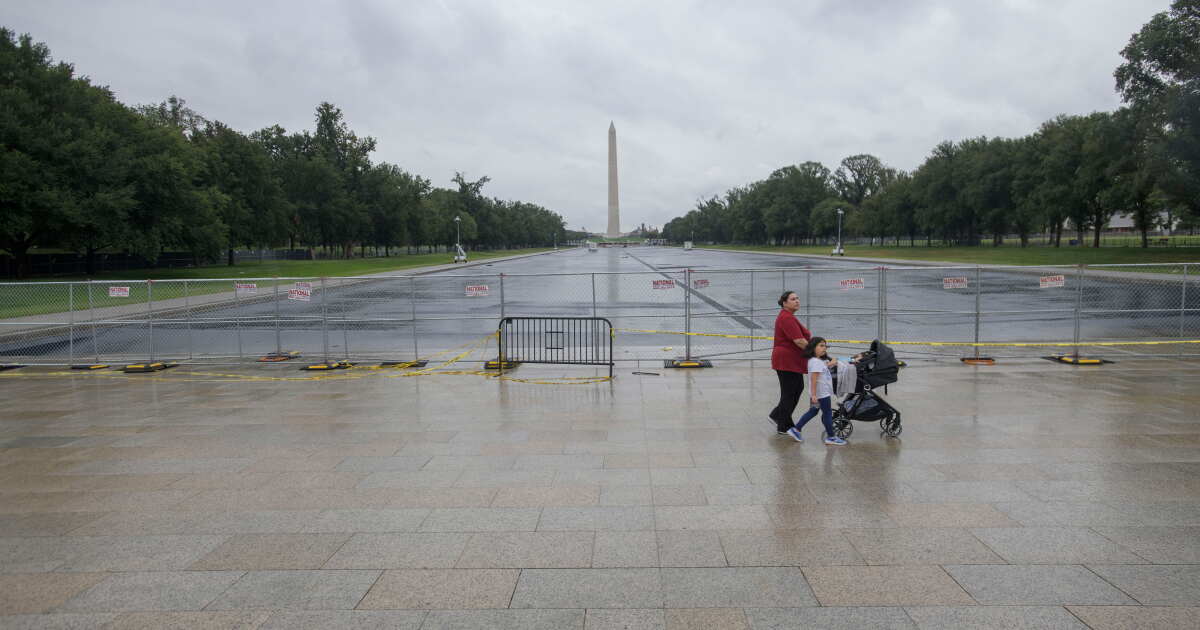
WASHINGTON — A judge in the nation’s capital agreed on Thursday to permanently dismiss a criminal case charging a former Olympian with vandalizing the Lincoln Memorial Reflecting Pool, a move that could prevent federal prosecutors from reviving the case under political pressure from President Trump.
D.C. Superior Court Judge Todd Edelman ordered the dismissal of David Hearn’s case with “prejudice,” which would block U.S. Atty. Jeanine Pirro’s office from refiling the felony charge against him. The judge ruled nearly a month after hearing attorneys’ arguments.
Hearn’s lawyers say Trump administration officials have continued to falsely accuse the Maryland resident of vandalizing the reflecting pool despite Pirro’s decision to drop the case on July 31. Trump responded by saying Pirro “choked” and “folded like an umbrella.”
In a court filing in July, Pirro said new evidence produced by the Interior Department showed Hearn wasn’t responsible for damage to the pool’s lining. Pirro’s office attributed the damage instead to a botched installation by a contractor as well as a rush to complete the project in time for this summer’s America 250 celebration in Washington.
Pirro’s admission was an embarrassing setback for the White House. Interior Secretary Doug Burgum has backed Trump’s claims that vandals damaged the pool.
Hearn has said he was on a bike ride on June 19 when he reached in to examine the pool’s newly peeled coating and briefly touched a chunk attached to the side of the pool. But he said he obeyed a park worker’s command to let go of it.
Hearn was charged with one count of property destruction, which carries a maximum prison sentence of 10 years. His lawyers questioned whether prosecutors properly presented the grand jury with adequate evidence to support the charge and the amount of damage alleged by the government.
Hearn, 67, of Bethesda, Maryland, competed in three Summer Olympics, earning his best finish, ninth, at the 1996 Atlanta Olympic Games, the U.S. Olympic and Paralympic Committee says on its website.
Trump, a Republican, appointed Pirro, a former Fox News host, to serve as the top federal prosecutor for the District of Columbia. Edelman was nominated to the bench by Democratic President Barack Obama.
Hearn’s attorneys said the ruling is “a victory for the rule of law and for an innocent American seeking justice” and allows Hearn to “move forward with his life as he deserves.”
“This administration chose to pursue an unjust prosecution against Mr. Hearn. It should not get repeated chances to wield the power of criminal prosecution against someone who should never have been prosecuted,” the lawyers said in a statement.
WASHINGTON — The Department of Justice filed a complaint Wednesday against federal judges in Minnesota over their remarks to the media related to the Trump administration’s immigration enforcement surge.
The complaint escalates the department’s battle with the federal judiciary, which has halted administration priorities, dismissed high-profile prosecutions and accused government lawyers in some cases of failing to comply with court orders.
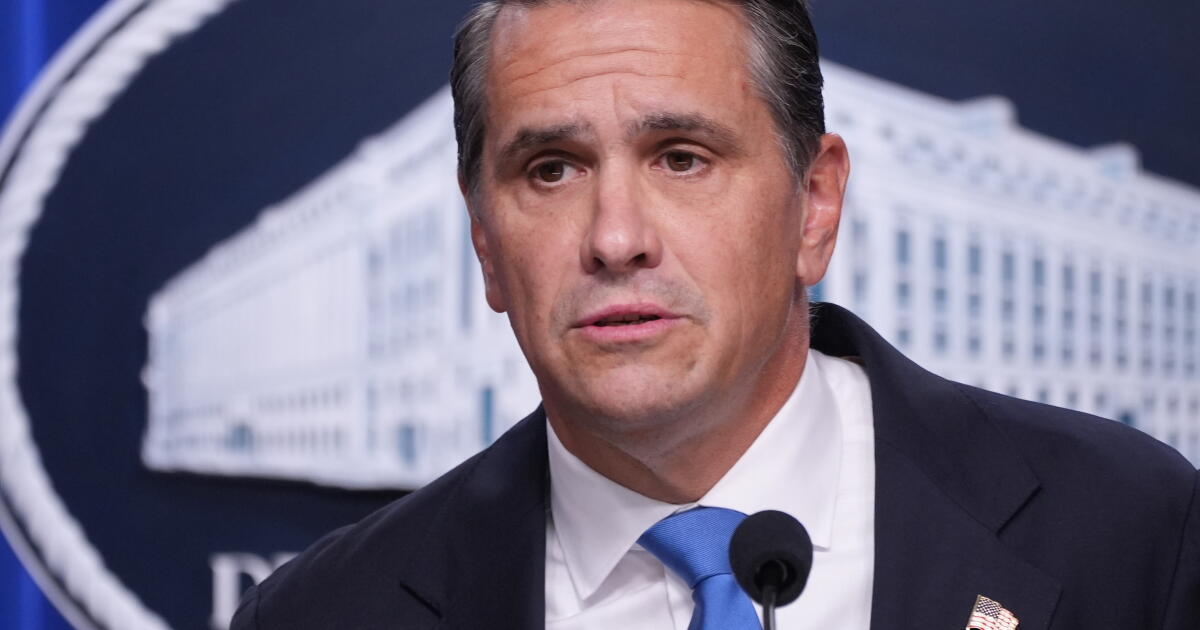
The department is demanding that the judges recuse themselves from all criminal or civil cases involving the Department of Homeland Security, Atty. Gen. Todd Blanche told reporters, because of what he described as “obvious bias they have shown” in recent remarks to the New York Times.
At issue is a September article in which seven federal judges in Minnesota — nominated by Democrats and Republican presidents — spoke on the record about their experience dealing with a flood of cases during last winter’s immigration crackdown that led to thousands of arrests.
The judge at the center of the story, Patrick Schiltz, accused the government in January of failing to comply with nearly 100 court orders. He said in a ruling that U.S. Immigration and Customs Enforcement, a part of Homeland Security, “is not a law unto itself.”
Schiltz, who was nominated by Republican President George W. Bush and served as a law clerk for Supreme Court Justice Antonin Scalia, told the newspaper that what happened in Minnesota’s federal court last winter “created a grave threat to the rule of law.”
In a statement Wednesday, Schiltz said he was “acting well within the ethical rules that apply to federal judges in speaking to The New York Times.”
“Indeed, in February of this year, the Committee on Codes of Conduct issued an advisory opinion to emphasize that federal judges” may speak or write “on core judiciary matters such as advocacy for the rule of law and judicial independence,’” Schiltz said. “That is exactly what I did.”
The complaint was filed with the chief judge of the U.S. 8th Circuit Court of Appeals, which oversees federal judges in Minnesota.
The Republican administration has railed against what it describes as “activist judges” who officials say are intent on thwarting Trump’s agenda. Yet some of the most critical and unfavorable court rulings have come from judges nominated by Trump and other Republican presidents.
“Cartoon Network was better than Disney Channel and Nickelodeon.”
“Men should be required to get a vasectomy after a certain amount of baby mamas.”
These are just some of the bold, controversial statements that have come up at “Unpopular Opinion,” a live, interactive event where people share and defend their hot takes in front of a spirited audience. To support their claims, they present slide decks filled with graphics and memes on a giant screen. Those in the crowd gasp, cheer and laugh.
The crowd from a past “Unpopular Opinion” event. The viral series is coming to the Regent Theater in L.A.
(Quest Hollis / SideQuest Visuals)
The event was created by Chance Albury and Sarah Prince, founders of the Washington, D.C.-based experiential production company Something Different. People were already having these types of impassioned conversations online, Albury says, and they simply wanted to provide that space in real life.
They debuted the series in February, and after recaps of events went viral, they decided to take it on tour. “Unpopular Opinion” makes a stop in Los Angeles on Thursday at the Regent Theater.
“Who knew rage-baiting could be such a unifier?” Albury says.
“Everyone loves to argue,” Prince adds.
Albury says that the success of the show relies on having different perspectives and opinions in the room. The slide decks are also a major draw. Unpopular Opinion is one of several events that takes PowerPoint-style presentations out of their traditional setting — the office or the classroom — and puts them front and center in a social scene. Over the last few years, slide decks have shown up at house parties, matchmaking events and even in bars at gatherings like Lectures on Tap.
Anyone who wants to present can submit their hot take through an application form. Albury and Prince receive roughly 50 submissions for each event, but only about seven to nine are selected.
Presenters defend their hottest takes on stage using slides and passion.
(Quest Hollis / SideQuest Visuals)
“There’s just so many topics that you can talk about so it can’t get old,” says Prince, adding that a lot of the speakers are funny and present like stand-up comedians.
Typically hosted at a live music venue, the vibe of “Unpopular Opinion” feels like a boisterous late-night game show. Drinks are available for purchase at the bar. A live DJ plays a mix of hip-hop, pop and other high-energy genres as a host hypes up the crowd. As an icebreaker, audience members are asked to submit their own unpopular opinions to be displayed on the screen for everyone to see.
Then the main event begins. Presenters are given 10 minutes to make their case. Unlike a traditional debate tournament, audience members are encouraged to get involved and make their thoughts known.
“There’s just so many topics that you can talk about so it can’t get old,” says co-founder Sarah Prince.
(Quest Hollis / SideQuest Visuals)
After each pitch, the host asks audience members to hold up their paddle, which has a green thumbs up and a red thumbs down to indicate whether they agree or disagree. Then a mic is passed around so attendees can share their thoughts or rebuttals.
Though the event is called “Unpopular Opinion,” there are times when the majority of the crowd agrees with the presenter. There are also times when the audience strongly disagrees. In either case, Albury and Prince ask that attendees are respectful to one another.
The presentation topics range drastically, from lighthearted social media discourse (“Women standing behind the DJ booth is more embarrassing than men”) to hot-button dating debates (“Splitting the bill on the first date is fine”) to deeper societal issues (“People hate everything about slavery but Christianity”).
Albury and Prince say they are exploring ways to bring “Unpopular Opinion” “beyond the show doors” for those who can’t make it to a live event. They already post man-on-the-street-style interviews on social media, in which they ask people to weigh in on hot button questions.
Albury says the beauty of “Unpopular Opinion” is that it shows people it’s OK to disagree. “Just because we have different opinions doesn’t mean we can’t talk about it,” she says. “We may not even come to terms on agreeing or disagreeing, but we’ve got that space.”
‘Unpopular Opinion,’ hosted by Something Different
When: Oct. 1. Doors open at 7 p.m. and showtime is at 8 p.m. Where: Regent Theater, 448 S. Main St., Los Angeles Info: Tickets start at $48.60 (including fees). Must be 21+ to enter.
Former Walt Disney Co. Chief Executive Bob Chapek knows his reputation among Disney fans, especially Disneyland loyalists. In his new book “Behind the Castle Walls,” he defends his changes to the Disneyland experience, the vast majority of which are still felt today.
“Contrary to what some people tried to paint me as,” he writes, “I wasn’t just a maniacal, money-optimizing machine.”
Sign up for Mr. Todd’s Wild Ride
An insider guide to the ever-changing world of theme parks, coming to you straight from SoCal — the theme park capital of the world.
By continuing, you agree to our Terms of Service, which include arbitration and a class action waiver. You agree that we and our third-party vendors may collect and use your information, including through cookies, pixels and similar technologies, for the purposes set forth in our Privacy Policy such as personalizing your experience and ads.
When I had the chance to talk to him last week, I wanted to know if having that image bothers him.
“I’m not concerned about it,” he says, speaking via phone from his Florida home. “I don’t give that any thought at this point. But I’m very proud of the performance of the parks segment during my time. The numbers bear that out.”
Chapek, in his role as chairman of the parks division and later CEO of the company, presided over an eight-year period beginning in 2015 in which Disneyland would significantly raise prices, introduce add-on perks, and, in my opinion, create the unsettling sense that you could be having more fun if you just spent more money.
When Chapek took over the parks segment, Disneyland would begin to fully remake its annual passholder program, largely by significantly increasing its price and limiting access. (In 2015, the top priced annual pass was close to $800. Today, it’s $1,899.) Single-day tickets to the parks would also begin a period of aggressive price hikes. Today, a one-day, one-park ticket tops off at $224. It’s widely expected that Disneyland will be raising its prices again this October, as it has done nearly every year in recent history.
Additionally, benefits that Disneyland guests long took for granted as free, such as the line-skipping Fastpass program, would become a paid perk on Chapek’s watch. Access to some attractions would be grouped together as part of a package now known as a Lightning Lane. In-demand rides such as Star Wars: Rise of the Resistance would be sold separately.
Bob Chapek has defended price increases at Disneyland, noting that ambitious projects like Galaxy’s Edge require capital.
(Allen J. Schaben / Los Angeles Times)
Prices on all of the above typically increase yearly. Today, guests who spring for the front-of-the-line Lightning Lane pass as well as individual access to Rise of the Resistance can expect to pay around an extra $65 per person once having their tickets scanned.
Chapek notes he faced significant opposition at Disney in making these changes.
“To all who come to this happy place, welcome,” goes Walt Disney’s original dedication speech, which for decades was used as a guiding light that every guest who entered Main Street, U.S.A., would be treated as an equal. That meant, with limited exceptions, no special access for anyone.
This was seen as an “inviolable virtue” at Disney, but one Chapek was ready to break, as he writes in his book.
“Everyone is equal when they come through the gates no matter what walk of life they come from,” Chapek tells me. “What’s different, though — and this isn’t because we say it’s different, it’s because the guests say it’s different — it’s that guests say they want an experience that’s tailored to what they can afford.”
Maybe. I don’t have access to guest satisfaction surveys, but that sounds like something only people with a certain privilege say. No doubt guests who can afford less don’t want a worse experience.
Chapek in his book describes himself as a “disruptor,” and considers Lightning Lane-like add-ons “bespoke” experiences that appeal to guests who crave a more customizable day. While they are common at nearly every theme or amusement park, I consider them classist, creating a haves-versus-have-nots mindset as soon as guests step through the gates.
Chapek defends the move to me, pointing out that while he presided over the parks, it’s lowest price one-day, one-park ticket stayed steady at $99 (today it’s $104). While true, and while Disneyland has even sought to increase the number of days offered at its introductory price since Chapek was ousted from the company in 2022, these are often midweek tickets, necessitating that working families take a day off and force a child to skip school.
“How about demand?” says former Walt Disney Co. CEO Bob Chapek, seen here with Minnie Mouse at Hong Kong Disneyland, when defending his price hikes.
(Kin Cheung / Associated Press)
“How about demand?” Chapek says to me when I point out that I have been critical of the moves. “Do people stop coming? That would obviously be a big concern. Even with the increase in prices that were taken on the annual passes, it would temporarily soften demand, but a year later they were subscribed just like they were before. Wall Street has certain expectations that may not be consistent with the expectations of guests of a certain pass type.”
Chapek reveals in his book that there is somewhere around 1.1 million annual passholders to Disneyland, which is today known as a Magic Key. With each price increase, he writes, that number would tumble to around 1 million, but within about 12 months they would be back to a level they were at before the rise in prices.
During Chapek’s reign, the company also introduced a reservation system, which asks guests to plan in advance. The price increase, later coupled with a reservation system, is designed to cut down, in part, on spontaneous trips to the resort, forcing guests to be more intentional about their Disneyland plans. This can aid, of course, in forecasting crowds and park staffing, but is also intended to limit days in which the park can feel overcrowded.
During his five-year tenure as parks chairman, Chapek writes that profits within the segment went up 18%. And that was largely due to an increase in individual guest spending. Over the decades, certain leaders of the Walt Disney Co. have arguably more closely ingratiated themselves with fans than Chapek has, but the fact remains that Chapek fundamentally and forever altered the approachability and the affordability of a Disneyland visit.
“In order to build things like Galaxy’s Edge and Avengers Campus, that takes capital,” Chapek says. “That capital takes revenue.”
My long-term fear, however, is that this has created a slippery slope. Disneyland guests now brace for yearly price hikes each fall, and this is coupled with yearly spikes on food prices each summer. Once the company and its shareholders become accustomed to such a financial boost, an environment where individual guest spending sharply increases even when domestic park attendance is soft or steady, there’s likely no turning back. Disney has created a business that will target the highest-spending consumer year in and year out.
And thus, guest equality, what was once an “inviolable virtue,” is forever a thing of the past, no matter who is in charge.
This week in SoCal theme parks
The X2 roller coaster at Six Flags Magic Mountain.
(Myung J. Chun / Los Angeles Times)
X2 has been retired. Six Flags has officially pulled the plug on Magic Mountain’s X2 coaster, which has been the subject of recent controversy after several lawsuits allege people were injured on the ride. Six Flags shut down X2 in July amid a state investigation into the coaster. “While X2 consistently passed a multitude of safety tests, we have decided to close the ride because we believe it’s the right thing to do. Ride safety is a cornerstone of our business, and when we see guest confidence affected, we take it seriously,” Brian Oerding, Six Flags Magic Mountain president, said in a statement. The Times’ Fedor Zarkhin has more on the news.
Don’t miss Disneyland’s mariachi band. There are a few more opportunities to catch Mariachi Alegría de Disneyland in Rancho Del Zocalo park inside Frontierland. The performances, set for the evenings of Oct. 6, 7, 13 and 14, are part of the resort’s National Hispanic Heritage Month celebrations. Also, beginning Oct. 4 and lasting through Oct. 15, guests can meet the character of Elena of Avalor near Royal Hall next to Sleeping Beauty Castle.
Heads up for those attending Halloween Horror Nights. If you have a visit planned to Universal Studios Hollywood’s Halloween Horror Nights and you’re interested in the park’s new Fast & Furious: Hollywood Drift coaster, there’s now an opportunity to ride it. For a cost. Universal is selling access to the coaster for $19.95 per person. Previously, the coaster was only available to those who sprung for the fancy R.I.P. Tour, which is now sold out.
Work out in Disneyland! The Disneyland Resort has announced new fitness classes across its two parks, an early morning perk for guests staying at one of its three hotels. Among the offerings is the ability to do yoga in Star Wars: Galaxy’s Edge, agility and strength exercises in Cars Land, and a mini-boot-camp-style class in Avengers Campus. Classes range in price, but most are under $49.
Tell us your stories. Ask us your questions.
Have a theme park tale to share? Whether it was a good day or less-than-perfect day, I would love to hear about it. Have a question? A tip? A fun photo from the parks to share? Email me at todd.martens@latimes.com. I may feature your note in an upcoming newsletter.
Ride on,
Todd Martens
P.S.
Me, enjoying a beverage, on the now shuttered Star Wars: Galactic Starcruiser.
(Allen J. Schaben / Los Angeles Times)
There is one area where the former CEO of the Walt Disney Co. and I are in complete agreement. Chapek and I both miss Star Wars: Galactic Starcruiser, colloquially known as the Star Wars Hotel. The ambitious, but costly, multi-day experience was one of the most creatively inspiring offerings in company history.
In “Behind the Castle Walls,” Chapek writes that he believes it was shuttered too soon. The Starcruiser closed after about a year of operation. “Was it perfect the first time? Absolutely not,” Chapek tells me. “Was it one of the most ambitious lodging experiences we have ever created? Yes.”
A place dedicated to play — and light role-play — the Starcruiser allowed guests to fully inhabit a fictional world. It was an argument that interactivity could have been the future of theme parks. “It seemed to have the plug pulled on it prematurely,” Chapek says, “and I think it was a big opportunity missed.”
— This newsletter is free thanks to the support of L.A. Times subscribers. If you’re not yet a subscriber, explore subscription packages to unlock unlimited digital access and support award-winning local reporting.
Was this newsletter forwarded to you? Sign up here to get it in your inbox.
California jury finds Apple infringed two Taction patents but did not willfully violate them; Apple plans to appeal.
Published On 28 Sep 202628 Sep 2026
Apple has been ordered to pay more than $5.7bn for using patented technology from Taction Technology to power haptic feedback, the vibrations users feel when they receive a notification or press a button.
A jury in federal court in the Southern district of California found that the iPhone maker infringed two patents owned by the San Diego-based company.
Recommended Stories
list of 4 itemsend of list
“We’re happy the jury found for Taction and vindicated its patent rights,” said Taction attorney Lance Yang following the verdict on Friday.
The verdict is the culmination of a legal battle that began in 2021, when Taction first filed its lawsuit against Apple. In 2023, a federal judge ruled that Apple had not infringed Taction’s patents, but an appeals court revived the case last year.
“Apple is capitalising on Taction’s innovation and success by selling devices that infringe Taction’s patents. Apple is utilising Taction’s patented inventions without license or authority from Taction. Taction has brought this action to remedy Apple’s infringement,” Taction said in the original 31-page complaint.
It also claimed that Apple “at a minimum believed there was a high probability that the accused products were covered by Taction’s patents, but willfully blinded itself to Taction’s patents and the infringing nature of the Accused Products”.
The jury, however, found that Apple did not wilfully infringe the patents.
Apple said it plans to appeal the verdict.
“Apple’s Taptic Engine is fundamentally different from Taction’s technology, which Taction’s own testing of Apple’s products confirmed during trial,” Apple said in response.
The verdict comes at a pivotal moment for the company, amid transitions in its C-suite. In September, John Ternus took over as CEO from Tim Cook, who led Apple for 15 years. The leadership change comes as the Cupertino, California-based tech giant lags behind other major technology companies in rolling out its artificial intelligence products.
Apple shares fell on Monday, declining about two percent as trading got underway.
Apple (AAPL) and Amazon (AMZN) will face part of a revived UK consumer case alleging that restrictions on Apple (AAPL) product sellers on Amazon’s (AMZN) marketplace hurt competition and raised prices.
The Competition Appeal Tribunal on Monday permitted claims tied
Melissa Nathan, the crisis management public relations pro hired by actor-director Justin Baldoni amid his lengthy legal feud with actor Blake Lively, is in the hot seat after Baldoni’s former publicist claimed that Nathan played a key role in operating a network of anonymous “smear” websites.
The publicist, Stephanie Jones, filed an initial complaint in New York Supreme Court in December 2024, accusing Baldoni’s crisis PR team of waging a coordinated effort to undermine her and deflect blame for what she called a retaliatory smear campaign targeting Lively.
But new documents filed last week brought front and center a “key question from the outset of this case”: Who was behind the creation of anonymous websites that popped up in May 2024 and accused Jones of “holding clients hostage” and leaking their secrets?
Nathan did not immediately respond to The Times’ request for comment Friday. But in a deposition, she said she was absolutely not the mastermind behind the now-defunct stephaniejonesleaks.com.
In the recent filing, Jones claims she repeatedly sought communications that could support her suspicions about the website’s origin, and last week received documents from Katherine Case, a former employee of Jones’ PR firm, Jonesworks, who subsequently worked for Nathan’s crisis management firm, the Agency Group.
Those documents, the filing alleges, show Nathan repeatedly testified falsely about the websites, and confirm that “Melissa Nathan was directly involved in a scheme to utilize untraceable websites to destroy the reputation of her competitors and those adverse to her clients. Stephanie Jones and Jonesworks were among her victims.”
In alleged text messages between Nathan and Case included in court documents, Nathan appears to have offered Case “three or four grand” to make the website copy tarnishing Jones’ reputation “a lot more meaty” — “good enough for us to be able to point a journalist towards.”
Nathan also appears to direct Case to discuss “holding clients hostage” and detail how people are “scared of” Jones, the documents allege.
Nathan is alleged to have instructed Case to write copy that would “follow along the lines of a purported ‘whistleblower’ narrative.” In Case’s notes from a subsequent phone call, she allegedly wrote, “Copy for the website along the lines of — I can’t sit and watch this woman continue to do this, this is what she does … it’s now a time where I can speak my truth about what I saw there.”
The filing claims that a record from Zelle, a money-transferring service, shows a subsequent payment to Case in the amount of $4,000 from “Melissa E. Nathan.”
The websites weren’t a one-off, according to the filing. They were allegedly one of Nathan’s specialties, and a hot commodity among embattled celebrities.
Three months after the Jones website went live, Nathan allegedly texted “Pitch Perfect” star Rebel Wilson, who was involved in a dispute with producer Amanda Ghost over Wilson’s directorial debut, the 2024 musical “The Deb.”
“Nathan quoted Wilson $110,000 for an untraceable site with a satellite, ghost server, ghost hosting, full build, maintaining, and full algorithmic push across all platforms … for 3 months,” the filing alleges. “The next day Nathan texted Case, ‘Rebel wants a one of those sites.’ ”


![Kenyan Ministry of Health officials screen arriving passengers at Jomo Kenyatta International Airport in Nairobi amid Ebola-related health precautions [AFP]](https://i0.wp.com/occasionaldigest.com/wp-content/uploads/2026/10/afp_6ac66094d7af-1791385748.jpg?w=640&ssl=1)
![A worker in protective gear handles sanitary basins at an Ebola treatment centre run by Médecins Sans Frontières in Butembo, eastern DRC [Gradel Muyisa Mumbere/Reuters]](https://i0.wp.com/occasionaldigest.com/wp-content/uploads/2026/10/reuters_6ab6e4f3-1790371059.jpg?w=640&ssl=1)