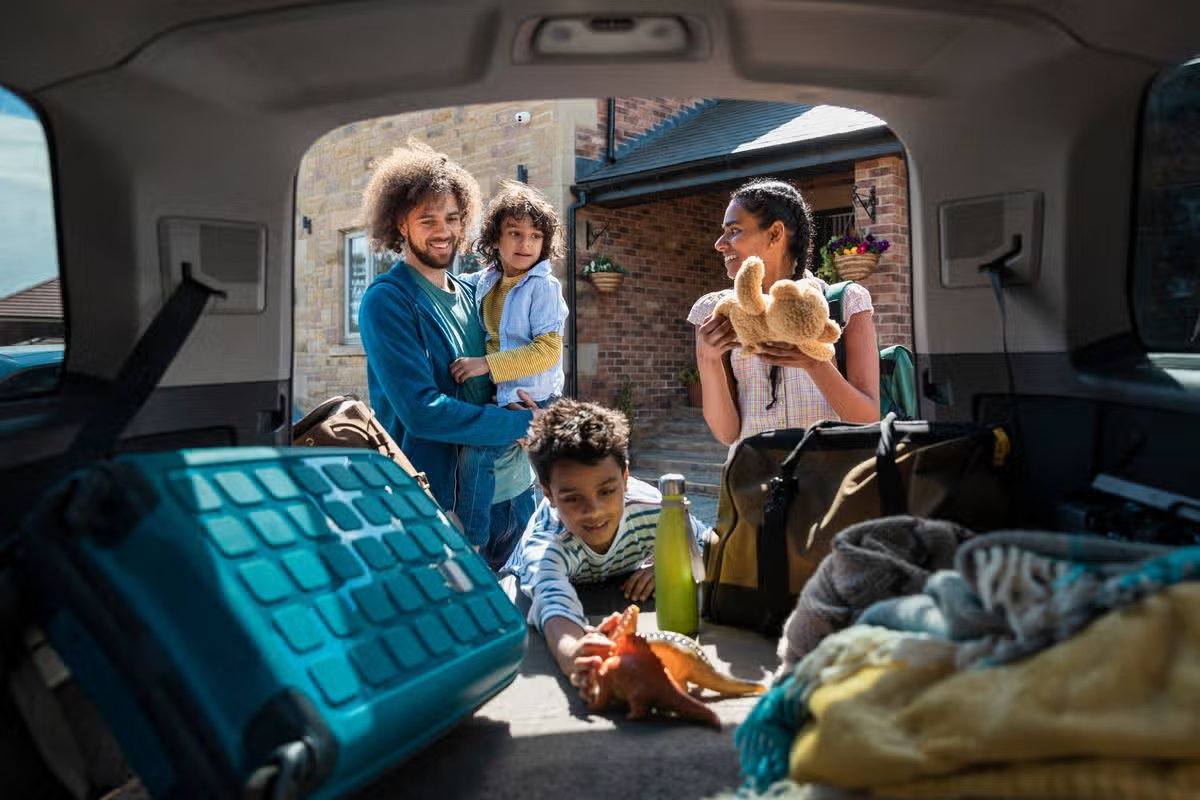
Brits now prefer taking multiple UK-based micro-cations throughout the year and EV savings make cost-effective short breaks even cheaper.
More than four in 10 Brits now favour taking several UK-based micro-cations throughout the year – rather than a single annual holiday, according to new research. A survey of 2,000 adults revealed they would rather put the money a big getaway would cost towards multiple short breaks spread across the year. A fifth are planning one of these short trips – within 100 miles of their home – this bank holiday weekend.
According to the findings, 44% are now taking more micro-cations than they were five years ago. Three quarters enjoy these types of breaks as they have helped them uncover more historical landmarks, coastal towns, and greater swathes of the British countryside.
The study, commissioned by Smart Energy GB, found 49% have taken a micro-cation in the past year alone, while 58% agreed micro-cations are now firmly part of their annual travel plans. For 44%, they have become a first-choice option.
Victoria Bacon, director at Smart Energy GB, said: “With household budgets under pressure, shorter breaks closer to home offer the chance to relax, recharge and create lasting memories without travelling far and often at a lower cost.”
The research also revealed that 69% agreed a micro-cation was more affordable than heading overseas, and of those who have swapped a foreign holiday for a micro-cation, 67% did so to save money.
Of those who’ve cut costs by taking this type of break, 34% have used the extra cash to enjoy more short trips, while 47% put it straight into their savings.
The research also surveyed 593 EV drivers and discovered that almost half (47%) said owning an electric vehicle has made them more inclined to take a micro-cation.
Two in five (39%) appreciated the ease of setting off from home with a fully charged car, without having to hunt down a service station or public charging point.
Based on publicly available data verified by New Automotive, a 200-mile round trip costs £36.57 in fuel in an average family car. By contrast, it costs as little as £14.92 to charge an EV at home on a standard electricity tariff to cover the same distance – a saving of 59%.
Meanwhile, smart meter owners can trim costs even further by charging overnight on a flexible EV tariff – bringing the cost down to just £4.57 on average. It turns out that 37% of electric car drivers are already doing this, compared to just 14% who opt for public charging points.
Victoria Bacon added: “By using a smart meter to access an EV tariff that fits your needs best, you can save a significant amount on travel costs by charging during cheaper, off-peak periods.”
Double Olympic champion and EV enthusiast, Helen Glover OBE, said: “Some of our best family adventures haven’t involved travelling hundreds of miles – they’ve been spontaneous trips that are less than a couple of hours away by car.
“Whether it’s the rolling countryside of Devon, the dramatic coastline of Cornwall or the peaceful trails of Dartmoor, there are so many hidden gems waiting to be discovered.
“As an EV driver, those local adventures can be more affordable, convenient and sustainable too.”
TOP 10 REASONS BRITS ARE PACKING FOR A MICRO-CATION:.
- Explore more of the UK
- Discover places closer to home
- Lower travel costs
- Avoid hassle of overseas travel
- More travel flexibility
- Easier to organise than a longer trip
- To make holiday budgets go further
- Easier to fit around work
- Spend more time exploring
- Easier to fit around family commitments