New research shows more Brits have visited the Eiffel Tower than some of Britain’s most iconic landmarks, with cost of living and lack of time cited as the main barriers to exploring closer to home.
Sand sculptures on Blackpool promenade
Britons are more likely to have visited landmarks overseas than those on their own doorstep, according to new research.
A survey of 2,000 adults found that more people have laid eyes on the Eiffel Tower (55%) than some of Britain’s most beloved landmarks, including the Tower of London (54%), Tower Bridge (53%) and Trafalgar Square (52%). The findings also revealed that people were better at identifying foreign landmarks than those closer to home.
More than three quarters (78%) of respondents could identify the Eiffel Tower, while 71% recognised the Leaning Tower of Pisa and 61% could identify Rome’s Colosseum. By contrast, fewer people were able to recognise St Paul’s Cathedral (58%), Westminster Abbey (53%) and Edinburgh Castle (52%).
In honour of these landmarks, Railcard.co.uk, which commissioned the research, collaborated with ‘Sand in Your Eye’ to craft a variety of attractions and famous sights from across Britain in sand. The sculpture was revealed on Blackpool promenade and will stay there for the public to view until the weekend.
Constructed using 12 tonnes of sand and taking three days to complete, the creation showcases the attractions topping Brits’ wish lists: Tower of London (22%), Edinburgh Castle (18%), Stonehenge (18%), Eden Project (18%) and Scotland’s Loch Ness (18%).
Catherine Lyver, from railcard.co.uk, which commissioned the research to encourage Brits to make the most of British landmarks by offering a third off travel for adults and 60% off for children, said: “It’s easy to overlook the iconic landmarks and hidden gems on our doorstep, yet Great Britain is full of incredible places to explore.
“We’re encouraging people to do a third more with their break, making it easier and more affordable to tick off some of the bucket-list-worthy destinations closer to home.”
“Whether you’re still looking to tick off historic favourites like the Tower of London or have added the modern Eden Project to your list, there are plenty of opportunities to make your summer go further when you travel by train.”
The overwhelming majority in the OnePoll.com survey for railcard.co.uk (79%) said they would like to discover more British landmarks – but the cost of living (43%) and lack of time (33%) are the primary obstacles preventing them.
When visiting British landmarks 23% will travel by train, because it’s relaxing (59%), more convenient (46%) and don’t have to worry about parking (43%).
Unity Holidays has three parks across the UK that still have availability over the summer holidays – and they’ve got a food and drink offer on too
This article contains affiliate links, we will receive a commission on any sales we generate from it. Learn more
A rendering of the parks
The summer holidays have officially descended upon us, and with the British weather actually offering up some sunshine and balmy temperatures, it’s no surprise that most of us are dreaming of our next staycation.
If you haven’t got anything locked in yet, the good news is that there are still plenty of tempting deals to be had, including one chain of holiday parks with family breaks under £400 including school holiday dates.
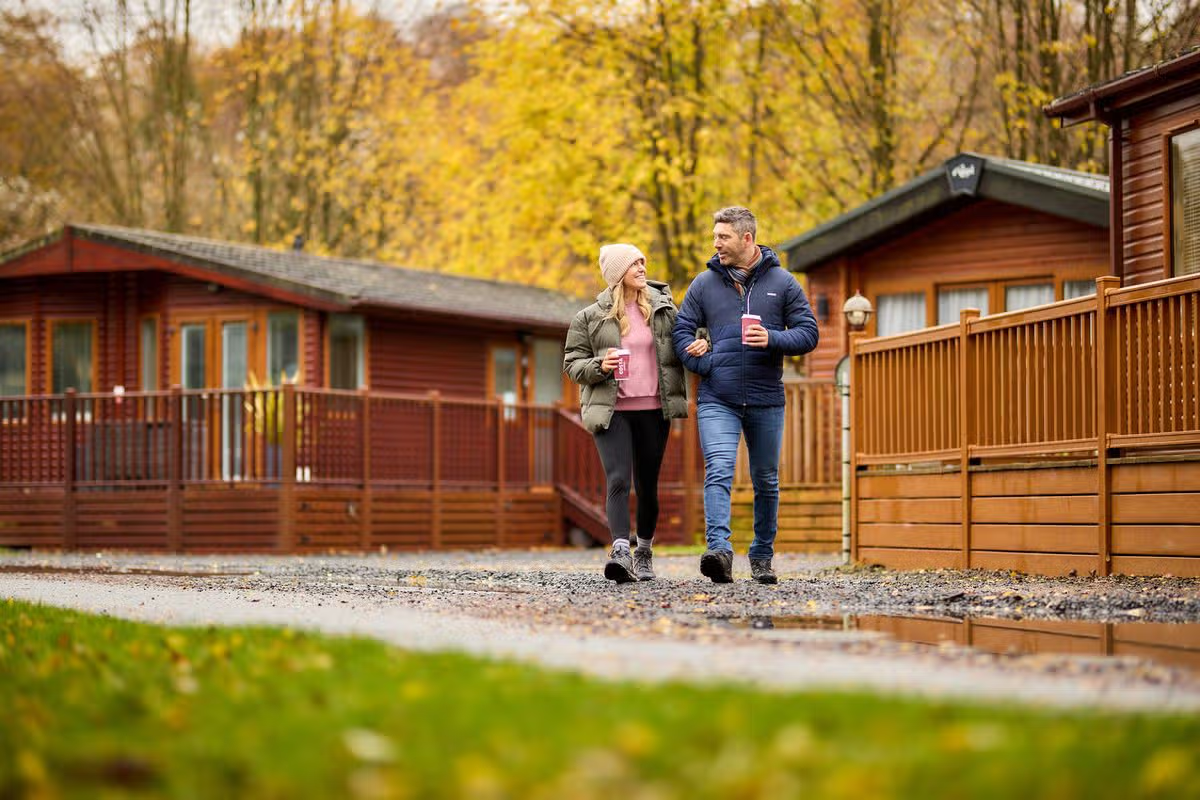
Unity Holidays recently gave its parks a £10million transformation to include new features such as lidos, splash parks, trampoline parks, dog agility parks and an array of activities from axe throwing to archery, so it’s worth having them on your radar. All alongside the likes of bars, restaurants, watersports, playgrounds and even soft play, it’s easy to see why it could be a hit with families on a budget this summer.
The brand has three sites, with prices for a family of four during the holidays from £209. That includes its Unity Beach in Somerset from £396, Skirlington in Yorkshire from £399, and Seven Lakes from £209, all of which can be booked on unityholidays.co.uk.
But that’s not all. For those who want to stretch their budget that little bit further, there’s more good news. For every summer break booked between July 3 and September 28, 2026, Unity Holidays are offering a £100 food and drink voucher that can be used at any of the venues on site (excluding the grocery stores). To claim the voucher, simply use the code UNITY100 when you book on unityholidays.co.uk.
Unity Beach’s brand new lido opened earlier this month, unveiled by former Olympic swimmer Baroness Sharron Davies MBE. The resort’s new lido, water park and festival gardens represented an £11million transformation, with the lido offering a capacity of over 400, with two heated pools including one specially designer for children. The holiday park already boasts an indoor pool, an indoor splash zone for Under-16s, two indoor water slides, and three more slides outside.
Baroness Sharron, who won an Olympics silver medal in the 400m individual medley in 1980 as well as two Commonwealth Games gold medals, said at the opening: “At a time when we are seeing the amount of swimming facilities in the country dwindle – we’ve lost 500 since 2010 – to have Unity Holidays investing millions in pools and lidos across the country, and creating jobs for local people, is tremendous.
“They are enabling children to gain water confidence and learn to swim, while giving families a stunning location to enjoy amazing spaces to play and relax.
“Our seaside towns need this injection of funds, and I was honoured to officially open the lido and water park in Brean while also seeing first-hand how impressive what a modern, 21st-century family holiday park has to offer can be.”
Unity Holidays isn’t the only firm to be offering up some tempting last-minute getaways.
Having always loved the idea of running her own bookshop, Mirror writer Julia Banim spent the night at Read and Rabbit in Loftus, which offers guests the opportunity to try their hand at bookselling
15:31, 17 Jul 2026Updated 15:49, 17 Jul 2026
Mirror reporter Julia Banim spent the night at Read and Rabbit in Loftus, Yorkshire(Image: Julia Banim)
It’s always been a bit of a daydream of mine to run a quirky bookshop, ideally in a suitably pretty location.
So imagine my delight when I learned about Read and Rabbit, a sweet pink bookshop nestled in the quaint village of Loftus, on the very edge of the breathtakingly poetic North York Moors National Park.
It’s here where literary-minded holidaymakers can stay above the shop in the cosiest of surroundings. Best of all, in between curling up with a book and exploring the many charms of the local area, guests can try their hand at running the shop themselves, tallying up change, and greeting customers looking for a good read, and indeed, a good rabbit.
If you’ve been waiting around for your romcom moment, then let this be your sign. I simply couldn’t resist.
Read and Rabbit is the baby of Marta Eleniak, a friendly and likeable host with an encyclopedic knowledge of local haunts. She tells the Mirror: “I love creating experiences for people. Of all the things that I’ve done in my life, it’s when I’ve organised holidays for other people and done things that made them smile, that’s kind, where I feel I’m in my element. It’s like my calling, really, creating experiences for others.”
Before clocking on for my bookshop shift, Marta and I stop by the nearby Cattersty Sands beach, a hidden gem offering enough tranquillity to dislodge even the most stubborn writer’s block. Those with pets will also be pleased to know that it’s dog-friendly.
A relative newbie to Loftus, Marta fell for the area while looking for somewhere new to live, ideally in a friendly, affordable community with woods to walk in and plenty of rolling hills.
While chatting about her search on a Facebook group, a fellow member suggested their hometown of Loftus, with its waterfalls and proximity to the sea. Marta was immediately sold.
Having familiarised myself with lovely Loftus, it was onto my shift. The bookshop itself is a real treasure, with creative displays and even a fun ‘Harry Potter experience’ that young bookworms, and perhaps those not so young, will no doubt enjoy.
Marta learned that the centuries-old shop, previously an artist’s pottery studio, was up for sale through the local walking group, and while she initially had no intention of buying, when she saw it in person, it was love at first sight. It was then that things started to come together.
With this new ‘run a bookshop’ experience, guests staying in the self-catering accommodation have free rein to run Read and Rabbit, should they choose to. If they decide to do so, the only rules are that they open on at least one of the core days between 10 am and 2 pm on Saturday and on one midweek day.
That aside, guests are free to do as they wish and can spend time organising the books, changing up the window displays, and even offering workshops. For those looking for a bit more of a transformative stay, Marta offers buddy-up sessions to help people overcome writers’ block.
For Marta, Read and Rabbit is about more than selling books. From spending time online, she’s come across people who don’t necessarily have many friends in the offline world, and feels a brick-and-mortar bookshop offers that all-important sense of physical connection that’s so often missing in today’s society.
Marta says: “When I was researching bookshops, lots of people who had bookshops said the positive is that bookshops are just happy places for so many people. If you’re neurodivergent, it’s often a place where you feel quite happy and at ease.
“I just thought, I want to make it a happy place for people. And I want to have fun, quirky stuff there that makes people laugh. So even if they come in and something just makes them laugh, and they don’t buy anything, that’s good enough for me.”
There’s a comforting feel to the place, and indeed, Marta herself, that seems to prompt people to open up. While peaceful, Read and Rabbit also gets its fair share of eccentric and interesting customers, including those from North Yorkshire’s thriving artistic community. Often, they’ll stop and chat, sharing their stories, a laugh, and any problems that might be troubling them, big or small.
Profits from book sales go towards creating affordable events for people, with Marta noting: “Meditation is great, but not everybody can afford £10 or whatever it is for a meditation session.” I’m soon getting a feel for the place and the wider village, selling everything from adorable children’s books to humorous cards.
Now, I’ve worked in the trenches of retail before and can assure future guests that this is a far more relaxed experience. As Marta herself put it: “It’s a bit like when you’re a kid, and you play shop, but you actually get a whole shop to play with, but it’s real.”
For lunch, I enjoy a delicious takeaway pie and brownie from the award-winning Willow Cake Shop, a much-loved local establishment that looks like a bakery straight out of a fairytale. It’s a sizeable portion, but I don’t leave so much as a crumb.
After we close for the day, Marta and I take a walk in the local woods, of which there are plenty. Outdoorsy readers will be spoiled for choice with ancient woodland to explore, with plenty of Tolkien-esque trees and dramatic waterfalls to fire up the imagination.
Afterwards, we head into nearby Staithes, a wonderfully atmospheric fishing village with labyrinthine cobbled streets, a rugged coastline, and the saltiest sea air.
Those writing novels populated with old-timey smugglers, crashing waves, and secrets shared in lantern-lit taverns will adore Staithes. Do make sure to check out the Cod and Lobster, which offers excellent fresh seafood and unparalleled views over the harbour.
Lungs filled with sea air, I settle into my accommodation at Read and Rabbit, a charmingly unique set of rooms with plenty of literary touches, from typewriters to, of course, plenty of books. With two rooms to choose from, I went for the larger one with the window seat overlooking the street.
The kitchen is well stocked, with Marta kindly leaving out fresh local eggs and oranges to pop in the press for juice. I particularly love the colourful roof garden, the perfect spot for a morning cuppa. I sleep well and spend the first hour or so reading happily by the window, rain tinkling on the pane outside.
When things brighten up a bit, I say a reluctant goodbye to Read and Rabbit, and head over to nearby Saltburn, a Victorian seaside town famed for its historic pier and surfing. Saltburn has a relaxed, youthful feel, while still maintaining its timeless British seaside feel.
Fish and chips are, of course, a must, and so I stop by The Seaview Restaurant, a popular local haunt where there are queues on an ordinary Monday afternoon. The delicious and generous servings are made all the more special by the sparkling ocean views.
With Wuthering Heights fever having gripped the nation earlier this year, it’s clear that Yorkshire’s wild literary culture is having a moment. Should you want to explore beyond the crowds at Whitby and Howarth, then overlooked yet well-positioned Loftus, and in particular Read and Rabbit, offers the perfect opportunity to do so.
You can find out more about staying at Read and Rabbit here.
Do you have a story to share? Email me at julia.banim@reachplc.com
People holidaying in France might bring this keepsake home without thinking twice
The beach of Longchamp situated between the towns of Saint Lunaire and Saint Briac sur Mer in France(Image: Bastien Ohier / Hans Lucas)
It may seem like a harmless memento to slip into your suitcase before heading home, but one common holiday habit could end up proving very expensive. Beach holidays are hugely popular, and while many travellers like to collect natural souvenirs as keepsakes or gifts, doing so in France could land them with a fine of up to €1,500 – which is around £1,300.
The little-known rule applies to natural materials including sea shells, pebbles and sand collected from French beaches. While many holidaymakers think nothing of taking home a small reminder of their trip, doing so is prohibited under French environmental laws designed to protect the country’s coastline.
Authorities say taking such items from beaches contributes to coastal erosion and can damage fragile ecosystems. Shells provide shelter for small marine creatures, while pebbles and sand play an important role in maintaining the stability of beaches.
France is home to more than 5,500 kilometres of mainland coastline and thousands of beaches stretching from the English Channel and Atlantic Ocean to the Mediterranean Sea. According to Atout France, the country’s official tourism development agency, its coastline attracts millions of visitors every year, making conservation efforts increasingly important.
The restrictions form part of France’s Environmental Code (Code de l’environnement), which protects the country’s natural coastal heritage. Anyone caught removing these materials without authorisation can face fines of up to €1,500, depending on the circumstances.
Environmental experts say the impact of individual tourists taking just a handful of sand or shells can quickly add up when millions of people visit beaches each year. According to the European Environment Agency, coastal erosion is already affecting many parts of Europe’s shoreline because of a combination of natural processes and human activity.
France remains one of the world’s most popular holiday destinations, welcoming millions of international visitors every year. Many head to coastal hotspots along the French Riviera, Normandy and the Atlantic coast, where authorities encourage people to leave beaches exactly as they found them.
The UK Foreign, Commonwealth and Development Office advises travellers to familiarise themselves with local laws before visiting overseas destinations. Even seemingly harmless actions can carry penalties if they breach environmental regulations.
Holidaymakers planning a trip to France are therefore encouraged to resist the temptation to pocket shells, pebbles or sand as souvenirs. Taking photographs instead is a simple way to preserve memories without risking an expensive fine or harming the environment.
Breaking a little-known beach rule may carry a hefty financial penalty
Group of children playing and splashing water in the ocean(Image: Getty Images)
Taking a dip in the sea is one of the highlights of any beach holiday. With the sun beating down, temperatures soaring and swimwear at the ready, millions of holidaymakers head into the water each year to cool off and enjoy time with family and friends.
Anyone travelling to Portugal hoping to do the same may want to brush up on local rules first, as breaking one little-known sanitation regulation could reportedly lead to fines of up to €750 (around £630). Knowing the law before you head to the beach could help you avoid an unexpected and potentially costly mistake.
It relates to urinating in the ocean, something many people – particularly children – have probably done at some point without giving it a second thought. While some may assume the sea would quickly dilute human waste, some travel experts say Portuguese rules are intended to protect marine ecosystems and coastal hygiene.
According to travel website Islands, beach sanitation rules allow authorities to issue fines of up to €750 for people caught urinating in the sea. It does mention, however, that there is no practical way for authorities to monitor the behaviour beneath the waves, and that enforcement is considered rare.
The law exists to reduce pollution in coastal waters, particularly in areas that attract large numbers of visitors during the summer months. Portugal’s beaches are among Europe’s most popular, drawing millions of holidaymakers each year to destinations including the Algarve, Lisbon Coast and Madeira.
Fortunately, most public beaches in Portugal provide public toilets or nearby facilities, making it easy for visitors to avoid any potential issues. Using designated toilets also helps protect water quality and the wider coastal environment.
Portugal is not the only European destination with strict rules covering beach behaviour. In parts of Spain, including Vigo and Marbella, local authorities have introduced similar bans on what they describe as “physiological evacuation” in the sea, with fines also reaching €750, according to local municipal regulations.
Holidaymakers should also be aware of other rules in Portugal. Several beaches prohibit loud music from portable speakers, while Albufeira has introduced regulations that could see people fined for wearing swimwear away from designated beach areas as part of efforts to tackle anti-social behaviour.
The UK Foreign, Commonwealth and Development Office advises British travellers to familiarise themselves with local laws and customs before travelling abroad. Checking the rules before heading to the beach could help visitors avoid unexpected penalties and ensure they enjoy a stress-free holiday.
Overlooking one item in particular could ignite some travel disruption which is not ideal for holidaymakers
Packing this could land you in some serious trouble(Image: Getty Images)
Packing for a holiday often means working your way through a seemingly never-ending checklist. From remembering your passport and boarding pass to making sure you’ve packed enough clothes, there’s also the important task of checking your bags for items that could cause problems before you even board your flight.
The warning applies to anyone flying with major airlines, including Ryanair, Jet2, TUI, easyJet and British Airways, among others. While each carrier has its own baggage policies, dangerous goods rules are governed by international aviation regulations and enforced during airport security checks.
Non-safety matches, for example, can cost as little as 60p in supermarkets, but packing them could end up costing you precious holiday time. Although they may seem harmless, they are classed as dangerous goods and are prohibited in both hand luggage and checked baggage under aviation safety rules.
This could spell bad news for anyone heading off on a camping holiday, planning to light birthday candles abroad or travelling with matches tucked away in a backpack without giving them a second thought. Even if they were packed by mistake, finding them during screening could trigger additional inspections and slow your journey through the terminal.
According to the UK Civil Aviation Authority, non-safety matches are not permitted on commercial flights because they present a fire risk. If they’re discovered during baggage screening, they may be confiscated and your luggage could be held back while officers carry out further checks.
Depending on when they’re found, this could mean anything from a manual bag search at the checkpoint to checked luggage being removed from the aircraft before departure. While procedures vary between airports, prohibited items are routinely removed to ensure flights comply with aviation safety rules.
There is, however, one important exception. The Civil Aviation Authority says passengers are generally allowed to carry one small packet of safety matches on their person for personal use, but they must not be packed inside either hand luggage or checked baggage. “Strike anywhere” matches and all non-safety matches remain prohibited.
Before travelling, it’s worth taking a few moments to check coat pockets, backpacks and suitcases for forgotten items.
A 60p box of matches might seem insignificant, but packing the wrong type could leave you facing unnecessary delays before your holiday has even begun.
Keeping the item with you until you’ve got off the plane and collected your luggage on the other side is best
11:39, 13 Jul 2026Updated 11:40, 13 Jul 2026
Jet2 urges passengers “do not get rid” of it(Image: Getty)
Millions of people are expected to go abroad during the six-week holiday, as the peak travel season typically sees masses of British families take advantage of the kids being off. With so many people set to pass through UK airports over the coming weeks, it is important to stay up to date with the latest guidelines and advice to ensure a smooth journey.
Jet2 is one of the most popular budget airlines in the UK, and welcomes around 20 million passengers on board each year. Jet2‘s website is full of information for passengers to read up on and keep in mind when travelling, including steps to take and things to do to minimise disruption and delays as much as possible, especially when bringing luggage to go into the aircraft’s cargo hold.
On its ‘Top Tips Before Travel‘ page online, the airline urges passengers to bring one particular item along with them on their journey, right until they collect their checked luggage at their chosen destination. By doing so, they can reduce the risk of longer delays should the worst happen
The airline explains: “At check-in, each item of checked baggage will be given a destination tag showing your flight number. Do not get rid of your checked baggage receipts (if given) until you pick up all checked baggage at your destination airport. Never carry unidentified items on behalf of other people.”
Why is it important to keep the luggage receipt with you?
It’s important to keep your checked baggage receipt because it helps you track down lost luggage, file for compensation, and prove ownership if security or customs officials need to check your bags. Usually, these are the small adhesive tags that get stuck to your boarding pass or passport after you drop off your luggage at the check-in desk.
When you check-in a bag, the barcode and receipt information are linked to your digital flight booking file. If your suitcase doesn’t show up, the barcode and the 10-digit number on your receipt help airline agents find your specific bag using global systems like WorldTracer.
If I lose my luggage receipt, will I face delays?
If your bag is lost and you have misplaced your checked baggage receipt, the airline can still look up your digital tracking information, but the process will require more manual verification and may face delays. Locating your profile manually can be time-consuming, particularly during busy travel times or when the booking system is experiencing delays.
If your bag is lost for good (missing for over 21 days), the airline or your travel insurance company may ask for more evidence of check-in. Misplacing the receipt can complicate the process of making a formal financial compensation claim, but your digital booking records usually serve as a valid paper trail, according to Citizens Advice.
Jet2 also urges passengers to label each piece of baggage with their name, flight number, and phone number. It adds: “Please ensure your baggage is strong and fit for purpose, to protect the contents and to withstand the normal baggage handling process. Soft sided cases and handles, wheels and locks can be particularly vulnerable.”
The airline also says: “Take care when claiming your baggage at your destination, as many suitcases look the same. It is best to always check the name on the baggage tag.
“You must contact the Jet2.com team at the airport (or our handling agents) immediately if your baggage is damaged or has not arrived. Irregularities must be reported immediately as claims cannot be processed once you leave the airport. Staff will help you to complete a Property Irregularity Report Form.”
Home Bargains shoppers can improve their packing technique with the retailer’s travel set
The travel set could be ideal for the summer holidays (Image: Getty)
Many families are getting their luggage ready for the upcoming holidays. For those who struggle to keep their suitcases tidy, Home Bargains could have just what they need. Known for selling seasonal products, the retailer is stocking travel accessories.
The latest range includes the multipack of Travel Lightweight Travel Cubes. Priced at £4.99, Home Bargains said the set is designed to help customers enjoy “hassle-free packing.” The pack is available to buy online now, with three “lightweight travel cubes” included in each set.
The product description states: “Keep your luggage organised with this simple family three-pack of lightweight travel cubes, featuring durable double zips and breathable mesh panels for easy packing on the go.” The retailer added that the set is “perfect for hassle-free packing on the go.”
Home Bargains sells a range of travel accessories, including the £1.99 Let’s Travel Lightweight Folding Rucksack. The retailer wrote: “The Let’s Travel Lightweight Folding Rucksack is a durable, compact 15-litre bag that folds into its own pocket, with a black design and adjustable straps.”
The description added: “Designed for convenience and versatility, this lightweight folding rucksack is the perfect companion for travel, day trips, and everyday use. Despite its compact design, it offers a surprisingly spacious interior—ideal for carrying your essentials on the go.
“Crafted from durable yet lightweight materials, the rucksack is built to withstand regular use while remaining easy to carry. It features adjustable shoulder straps for comfort and multiple zipped compartments to keep your belongings organised and secure. One of its standout features is its foldable design.
“The bag conveniently packs down into its own compact pocket, making it easy to store in your suitcase, handbag, or luggage when not in use. Simply unfold it whenever you need extra storage space.
“With an approximate 15-litre capacity, it provides ample room for essentials such as clothing, snacks, travel documents, or daily items—without adding bulk or weight.” For £4.99, Home Bargains sells the Travel Adjustable Travel Pillow.
The retailer said: “Stay comfy on the go with this adjustable travel pillow made from soft memory foam, complete with a handy carry bag. Perfect for short trips or long-haul flights, it’s your simple travel essential.”
There’s also the £3.99 Travel Hanging Organiser. The description read: “Stay organised on the go with the Travel Hanging Organiser from the Simple family, featuring 24 mesh pockets and four hooks for versatile storage wherever you are. Compact and practical for hassle-free holidays.”
The Which? survey has uncovered plenty of hidden gems to explore this summer, as well as revealing some surprises at the bottom of the rankings including some stylish seaside towns that failed to impress
The winning seaside town grabbed the title for the sixth year in a row(Image: Owen Humphreys/PA Wire)
Nothing beats a day at the seaside. A combination of heatwaves and the school summer holidays means the resorts are likely to be packed over the coming weeks.
That’s why consumer magazine Which? has run a survey on the best and worst seaside destinations, surveying over 5,300 people about their experiences in the past year. It quizzed visitors on everything from the quality of beaches and scenery, to the food and drink on offer, accommodation, tourist attractions, and value for money.
The results have yielded a number of surprises, but the town taking the top spot has remained the same for the sixth year in a row.
Bamburgh in Northumberland, famous for its vast coastline and beach featuring a castle, yet again came number one with an overall score of 84%. One visitor said: “It’s just gorgeous and is as good now as it was years ago; it’s not been spoiled by commercialisation. What made it successful then has been retained.”
The North East had a strong showing in the rankings, with Tynemouth in Tyne and Wear coming in second at 82%, making it a close competitor for Bamburgh. Its score included five stars for its seafront and food and drink including “wonderful fish and chips” according to one reviewer. Another said: “Tynemouth has a fantastic high street with a range of cafés, restaurants and shops complemented by historic buildings and a fabulous beach.”
Coming in third was St Andrews in Scotland with 81%, and Fife also scored another top ten place with Crail at number five. Known as the home of golf, St Andrews was praised for being a “lovely town with plenty of amenities. It does not feel overcrowded despite having many tourists.”
Many classic seaside towns in Norfolk, Suffolk, and Sussex came in at the bottom of the list, and there were some surprisingly low scores for the gentrified towns of Margate and Newquay, which failed to impress. Margate scored just 53%, its overall percentage brought down by getting one star for peace and quiet, while Newquay in Cornwall scored 55% and got only two stars for value for money.
One visitor said: “Newquay feels like it has seen better days. Apart from the beaches and pubs, it has relatively little to offer a tourist. It perhaps serves better as a base to experience other parts of Cornwall.” Another explained: “There are lovely bits and unlovely bits of Newquay. The beaches are wonderful but the town is a bit shabby and run down.” Its beaches still managed to score four stars in the survey.
Close to the bottom were Great Yarmouth in Norfolk, with 46%, and nearby Lowestoft in Suffolk, with the same score. However, the dubious honour of worst seaside town went to Bognor Regis in West Sussex on the south coast.
Scoring just 41% overall, Bognor got one star for most categories. One visitor said it was: “Lacking investment, slow to supply tourists what they need.”, and another wrote: “The place is run down and feels neglected.”
Rory Boland, Editor of Which? Travel said: “The North East has emerged as this year’s favourite seaside spot, a reflection of its outstanding beaches and the fact that holidays here can be fantastic value for money.
“It also shows that there are special seaside towns in every corner of the UK. From Swanage to Plockton, Southwold to Conwy, you’ll have a great time in many of the country’s lesser-known destinations, and should save some money too.”
Top 30 seaside towns and villages
Bamburgh — 84%
Tynemouth — 82%
St Andrews — 81%
Aldeburgh — 80%
Crail — 80%
Frinton-on-Sea — 80%
Portmeirion — 80%
St Davids — 79%
Bude — 78%
Southwold — 78%
North Berwick — 77%
Plockton — 77%
St Ives — 77%
Swanage — 77%
Lyme Regis — 76%
Lytham St Annes — 76%
Portstewart — 76%
Conwy — 75%
Dornoch — 75%
Filey — 75%
Lynmouth — 75%
Sidmouth — 75%
St Mawes — 75%
Tenby — 75%
Tobermory — 75%
Wells-next-the-Sea — 75%
Whitley Bay — 75%
Broadstairs — 74%
Falmouth — 74%
Llandudno — 74%
Bottom 30 seaside towns and villages
Ilfracombe — 57%
Minehead — 57%
Bridlington — 56%
Cleethorpes — 56%
Fishguard — 56%
Seaton — 56%
Torquay — 56%
Abersoch — 55%
Colwyn Bay — 55%
Morecambe — 55%
Newquay — 55%
Barry Island — 54%
Skegness — 54%
Mablethorpe — 53%
Margate — 53%
Paignton — 53%
Southport — 53%
Herne Bay — 52%
Littlehampton — 51%
New Brighton — 51%
Weston-super-Mare — 50%
Burnham-on-Sea — 48%
Clacton-on-Sea — 48%
Southend-on-Sea — 47%
Bangor — 46%
Blackpool — 46%
Fleetwood — 46%
Great Yarmouth — 46%
Lowestoft — 46%
Bognor Regis — 41%
Have a story you want to share? Email us at webtravel@reachplc.com
It is easy to see why people love the Northumberland village so much. The centre is quaint and pretty, the beach sandy and impressive, and the castle perfectly preserved and towering
Bamburgh has won, yet again(Image: TimMcGuinness/ChronicleLive)
Has there been a run as dominant as this in the history of British seasides?
Once again, Bamburgh has been named the best coastal town or village the UK has to offer, bringing the run of victory to six in a row in the Which? annual survey.
It is easy to see why people love the Northumberland village so much. The centre is quaint and pretty, the beach sandy and impressive, and the castle perfectly preserved and towering.
In a gushing show, 5,320 Which? readers handed Bamburgh perfect marks for its seafront, scenery and beach. “It is a wonderful historic village with miles of sand and glorious views,” one happy visitor enthused.
Another said: “Bamburgh Castle, a stunning building, is the core of the village and leads through the sand dunes to an extraordinary beach, which never fails to captivate us.”
And a third agreed: “It’s just gorgeous and is as good now as it was years ago; it’s not been spoiled by commercialisation. What made it successful then has been retained.”
But amid all of the enthusiasm for the settlement of 300 people, not everyone is convinced by its dominance of the Which? survey. In fact, a number of locals are fed up with the limelight that is being cast on Bamburgh.
“I wish they wouldn’t do things like this. All it does is make rich southerners read it and then decide to buy a holiday house there, pushing up house prices and pushing out actual locals,” one irked person wrote online.
Another chimed in: “Peace and quiet?! Not on a sunny summer’s day. The village (it is not a Town) is rammed with vehicles and visitors.”
The gripes are consistent. Back in 2022, when Bamburgh’s reputation as the best of the best was still being forged, resident John Graham shared his frustrations. He said: “When the sun is out the place can be overrun. In the day, you get the ice-cream brigade leaving their rubbish everywhere and in the evenings the drunken louts have their fun.
“On an average morning in the summer, I pick up five or six burnt-out disposable barbecues and half a dozen or so bin bags full of bottles and cans.”
One business owner said it is really sad to see a big increase in litter being dumped in the sand dunes below the castle. They added: “A friend of mine summed up the problem quite well the other day when he said it’s like over-fishing.
“Pubs and hotel owners might be enjoying the money rolling in, but the more people who come here, the more damage is done to the environment.”
I visited last summer and was not overly impressed by what I found. One major issue was the cars. On a hot June day, the stream of traffic on the arterial road that runs through Bamburgh’s centre is relentless. The closest train station is seven miles away in Chathill, and the buses are sporadic, so any hopes of embarking on a relaxing, car-free day trip will prove difficult.
For me, the real issue with Bamburgh is its vibe. Central to the charm of Britain’s great seaside towns is a slightly edgy, salty quality in some way connected to large quantities of sailors. Bamburgh, with its Farrow and Ball doors and memorial benches, has none of this.
The stars of the show in Bamburgh are the beach and the castle. It is undeniable that the combination of the two — how the 1,400-year-old fort hangs above the broad, sandy shore — is magnificent. You won’t find me criticising Bamburgh Castle.
The beach, however, is arguably a little one-note. Once you’ve waded out half a mile to get to a patch of water deep enough to paddle in, you’ll be frozen by a North Sea that rarely swells itself into anything remotely as interesting as what you’d find on the UK’s Atlantic coast.
If you’re in search of a very long beach, Camber Sands near Rye in East Sussex not only enjoys a lot more sunshine — as one of the sunniest places in the country — it also has superior sand dunes, particularly so if you’re a teenager interested in launching yourself off their summits.
If you’re looking for a crowd-free holiday, this island is the perfect option.
03:14, 11 Jul 2026Updated 08:18, 11 Jul 2026
This beautiful island is in the UK(Image: Daily Record)
As the summer holidays approach, the excitement of planning a getaway often comes with the puzzle of picking the perfect spot. Luckily, being in Britain puts the diverse beauty of Europe just a stone’s throw away.
Navigating the sheer volume of stunning destinations on our doorstep can be quite the task. For those who crave peace and quiet, the secret is finding those hidden gems tucked away from the main tourist paths that still promise a sun-soaked, relaxing experience. To help you out, the travel pros at Solmar Villas analysed over 160 locations to pinpoint the absolute best spots for a crowd-free break.
Whilst most of the destinations are overseas, there is one place right here in the UK that made the list.
The Isle of Harris in Scotland came in at sixth place on the list of the quietest places to enjoy a summer holiday. Harris is the southern island of Harris and Lewis which are in Scotland’s Outer Hebrides.
Despite being the third biggest island on the British Isles, Harris and Lewis has a population of just 20,500 people. Known for its white-sand beaches, dramatic landscapes and low population density, it remains one of the UK’s quietest summer staycation escapes.
One of the most famous sights on the island is Luskentyre Beach which is frequently mentioned on lists of the most beautiful beaches in the world.
This long stretch of bright white sand looks as if it’s been plucked straight from the Caribbean — although the water is likely a little bit colder.
Luskentyre Beach sits on the north coast of South Harris and is protected by the island of Taransay, which you can see across the water.
Taking a wander down the white sand you can spot dolphins, seals, otters, eagles and sometimes even whales. The Isle of Harris is a gorgeous spot for a relaxed summer holiday without having to bother about airport security or expensive international flights.
To get to the island, ferries go daily from the Scottish mainland and you can take a car with you too so you can better explore what the island has to offer.
Sharon Bradbury, a travel expert at Solmar Villas , said: “Many families don’t have the option of travelling outside the school holidays, so choosing the right destination becomes even more important.
“What stands out from this research is that some of the world’s most enjoyable summer destinations don’t necessarily attract the biggest crowds. For families looking to make the most of their summer break, it can be worth looking beyond the usual hotspots.
“A quieter destination often means a more relaxed experience from the moment you arrive.”
The 20 quietest places to visit on school holidays
A cabin crew instructor has revealed where he would choose to sit on the plane
16:40, 10 Jul 2026Updated 16:40, 10 Jul 2026
Some seats offer plane passengers more legroom (stock photo)(Image: Getty)
A cabin crew member has shared what he claims is the best seat on the plane. The regular flyer dished out advice for passengers looking to make the most of their journey. Wizz Air Cabin Crew Instructor Gabriel Randone shared his favourite seat. He also revealed the best seat for ‘free perks’ – if you’re lucky enough to get it.
Talking to the Mirror, Gabriel shared his preferred seat as a passenger. He said: “I absolutely love the front. Row one gives you extra legroom. There are some perks to staying there as well.
“For example, you would be the first one to disembark. Sometimes you’ll be the first one to come in as well. You have a reserved overhead compartment for yourself.
“So, yeah, row one is absolutely amazing. But to be honest, when I do travel, and I can choose to book a seat, I will book any window seat.
“I just love staring outside during the flight and enjoying the views.” According to Wizz Air’s website, front-row seats are classified as premium seats.
However, it’s not the only good option. Other premium seats include upfront seats at the front of the aircraft and extra-legroom seats in the emergency exit rows. Usually, passengers need to pay more for these seats, but sometimes they strike it lucky and get asked to move to emergency exit rows.
Gabriel explained that customers sometimes get ‘upgraded’ to these seats and get to enjoy the perks for free when the flight is not fully booked. “Sometimes, because the flights might not be fully booked, there would be no one close to the emergency exits”, Gabriel said.
“So what we need to do is to select someone who we call an ABP, an able-bodied person, and select them and to move them close to the emergency exits so that they can help out in case of an emergency”. He added: “Now, statistically, emergencies are quite rare, so that is basically an upgrade.”
Not everyone is eligible for these unofficial ‘upgrades’. The Wizz Air website explains: “For safety purposes, regulations prohibit passengers under 16 years old, overweight passengers, individuals with special needs, expectant mothers, and those travelling with infants (under 2 years old) from occupying Extra Legroom or Front Row seats.”
As Gabriel explained, these policies are implemented to ensure the safety of everyone onboard. In case of an emergency evacuation, passengers seated in the emergency rows will be instructed to open the doors. Any passengers seated in these rows will be briefed at the beginning of their flight.
Which? has released the results of its best and worst seaside towns and villages in the UK survey, with Bamburgh, Bognor Regis, Tynemouth, St Andrews and Clacton on Sea all making notable entries
Bamburgh has triumphed, yet again(Image: Andy Commins / Daily Mirror)
The greatest and most miserable seaside towns and villages on our fair island have been named.
Once again, coastal big hitters Cornwall and Devon have found themselves some way off the top of the list, while a pretty northern village has made it to the number spot for a sixth year in a row.
At the other end of the scale, a southern town known for its Butlin’s and for being one of the sunniest destinations in the UK has been condemned as the worst of the worst.
Which? surveyed over 5,300 people about their experiences of UK seaside destinations in the last year, asking their views on a range of criteria including the quality of the beaches, scenery, food and drink, accommodation, tourist attractions, shopping and value for money.
Bamburgh in Northumberland took the top spot in Which?’s survey for the sixth year running. With an overall destination score of 84 per cent, Bamburgh was given five stars for its beach, seafront and scenery. Visitors praised the “lovely beach overlooking Bamburgh Castle” and the “spectacular coastal scenery.”
Do you agree with the rankings? Email webtravel@reachplc.com or let us know in the comments below
It’s easy to see why Bamburgh is so loved. Situated not far from the mysterious Holy Island, it’s got a village feel, replete with chippies and well-manicured lawns. At the same time, it sits in the shadows of one of the most magnificent and intact castles in the country.
The North East cleaned up at the top of the charts, with Tynemouth, Tyne and Wear coming second and scoring an impressive 82 per cent. Tynemouth scored five stars for its seafront/pier and food and drink, with one visitor praising its “wonderful fish and chips.” Another visitor praised the “magnificent” golden sand beaches.
While it may not be blessed with the same intensity of sunshine and lack of rain as other parts of the UK, Scotland also did well, claiming places in the top ten. St Andrews came third with a score of 81 percent and scored five stars for its beach, tourist attractions, scenery, and seafront/pier.
Crail, in Fife, scored the number five spot, thanks to its whitewashed walls, cobbled streets, and charming fishing harbor.
The highest scorer down south was the Essex seaside town of Frinton-on-Sea, which charmed visitors with its lovely seafront and the general peaceful vibe of the place. One visitor called it the “perfect place for those who just want a day at the seaside with no frills and no noise.”
On the other end of the spectrum, Bognor Regis was named as the UK’s worst. It’s the second year in a row that the West Sussex settlement has come in last. The Mirror’s money editor Levi Winchester grew up in the town and has seen it slowly fall apart over the years.
“I remember many happy summers playing down the beach in Bognor Regis. At low tide, you could see sand for miles, as the smell of fish and chips wafted through the air,” Levi recalled when asked for her thoughts on a town that once served as a home to George V for three months.
“The town was always buzzing with families enjoying their trip to Butlin’s—and while the seaside resort still attracts large crowds every year, the town itself has lost its heart. The promenade lacks love and is in need of a serious revamp.
“Even under the lights of the pier, it still just feels grey and miserable. Like many other UK high streets, the main town centre is empty now with hardly any shops left. I barely recognised it when I last visited.”
Having been thrust into the spotlight this week thanks to its somewhat absent MP Nigel Farage, Clacton-on-Sea found itself with a low score this year. It was judged to be the eighth worst. Despite low scores, including one star for peace and quiet and scenery, the classic seaside resort has the largest pier in Europe, and visitors praised its “excellent amusement facilities.”
In the survey, many popular seaside towns had middling scores. Despite their reputation as trendy destinations, Margate (53%) and Newquay (55%) received just one star for peace and quiet and two stars for value for money.
Visitors commented that Margate’s town centre was ‘run down’, but many praised its independent shops and famous Turner Gallery, while even Madonna has declared herself a fan of the seaside town. One visitor said: “Margate is quirky and not overly commercialised. It’s got some great events and places to eat and shop. It’s still a bit rough around the edges but it knows it.” Margate’s event space, Dreamland, is especially busy with summer events which may put people off going for a quiet break.
Popular surfing spot Newquay scored 55 per cent, receiving just one star for peace and quiet. The beach town is popular for stag and hen parties and young surfers. One visitor said it was “great for youngsters and surfers but not so good for older visitors”. Another said: “Newquay is a brash and overly busy seaside town. There are better beaches and towns nearby which are quieter.” Despite this, visitors praised the “wonderful beaches” in Newquay and they received four stars for this category.
Made famous by the TV sitcom Gavin & Stacey, Barry Island received a destination score of 54 per cent. One visitor said: “Unless you are a big Gavin and Stacey fan I’d give it a miss.” Visitors described the seafront as “a bit tacky”; however, the beach scored three stars, and one visitor said it is an “old-fashioned and lively seaside town, great beaches and interesting walks.”
TOP 30 SEASIDE TOWNS & VILLAGES
Bamburgh — 84%
Tynemouth — 82%
St Andrews — 81%
Aldeburgh — 80%
Crail — 80%
Frinton-on-Sea — 80%
Portmeirion — 80%
St Davids — 79%
Bude — 78%
Southwold — 78%
North Berwick — 77%
Plockton — 77%
St Ives — 77%
Swanage — 77%
Lyme Regis — 76%
Lytham St Annes — 76%
Portstewart — 76%
Conwy — 75%
Dornoch — 75%
Filey — 75%
Lynmouth — 75%
Sidmouth — 75%
St Mawes — 75%
Tenby — 75%
Tobermory — 75%
Wells-next-the-Sea — 75%
Whitley Bay — 75%
Broadstairs — 74%
Falmouth — 74%
Llandudno — 74%
BOTTOM 30 SEASIDE TOWNS & VILLAGES
Ilfracombe — 57%
Minehead — 57%
Bridlington — 56%
Cleethorpes — 56%
Fishguard — 56%
Seaton — 56%
Torquay — 56%
Abersoch — 55%
Colwyn Bay — 55%
Morecambe — 55%
Newquay — 55%
Barry Island — 54%
Skegness — 54%
Mablethorpe — 53%
Margate — 53%
Paignton — 53%
Southport — 53%
Herne Bay — 52%
Littlehampton — 51%
New Brighton — 51%
Weston-super-Mare — 50%
Burnham-on-Sea — 48%
Clacton-on-Sea — 48%
Southend-on-Sea — 47%
Bangor — 46%
Blackpool — 46%
Fleetwood — 46%
Great Yarmouth — 46%
Lowestoft — 46%
Bognor Regis — 41%
Results are based on an online survey conducted in January-February 2026 of 5,320 Which? Connect panel members who spoke about 11,999 experiences of visiting a UK seaside town for leisure purposes in the previous 12 months.
The former theme park has remained vacant since it closed in 2016, but plans to transform the site into a ‘Center Parcs-by-the-sea’ style holiday resort with a Lidl supermarket have been recommended for approval
The park was shuttered in October 2016(Image: Pleasure Island Archive)
A theme park that was shuttered back in October 2016 and has been left abandoned ever since could be given a new lease of life in new holiday park plans that have been dubbed “Center Parcs-by-the-sea”.
Pleasure Island in the seaside town of Cleethorpes opened in 1993, and in its heyday it was much loved by locals and tourists thanks to its selection of 50 rides, live shows, and family-friendly entertainment.
After being closed, most of the rides were sold off, and the land has lain abandoned, with only a few rotting buildings and rusting structures giving away that this was once a vibrant attraction. However, there are now plans to redevelop the former Pleasure Island site into a £70million complex featuring a Lidl superstore, hotels and holiday park.
The plans have been put forward for approval by council officers. The proposal for the 60-acre location is expected to generate approximately 400 jobs for the local area, with a further 400 during the construction period. An application to overhaul the disused theme park was originally lodged in January 2023. Environmental assessments, flood risk evaluations and ecological impact studies have needed to be completed before councillors could fully consider the scheme.
At North East Lincolnshire Council’s planning committee on Wednesday, July 8, councillors will be urged to support the plan, subject to conditions.
The site changed hands six years ago, with developers unveiling their ambition for a “Center Parcs by the sea” featuring 272 lodges, hotels, restaurants and retail units with car parking. Lidl GB Ltd, YPG Fab2 ltd, Seaside Getaways and Church Lane Humberston Ltd sought permission in January 2023 to demolish the site and establish the new holiday centre, Lidl superstore and hotels, reports Grimsby Live.
The agent, Lichfields, based in Leeds, has put forward plans to clear the theme park site of the remaining structures and replace them with a large Lidl store and garden centre. The total size of the site within the proposal is around 60 acres.
Pleasure Island covered approximately 25 acres. Two hotels are proposed for the site, one boasting 58 rooms and another offering 148 rooms, both standing at five storeys tall. A drive-thru coffee shop, widely expected to be a Costa, features in the application, alongside a reception area serving 272 lodges, which will offer holiday accommodation ranging from two to four bedrooms.
Retail units and a cycle hire centre are also part of the plans. A lake remains at the heart of the site, and developers are keen to build an anglers’ hub beside it, complete with toilets, lockers and changing facilities for fishing enthusiasts.
Councillors gathered at Grimsby Town Hall to consider objections raised by rival retailers Tesco and Aldi, as well as local residents who have flagged concerns over traffic and the potential impact on wildlife. However, a significant number of people have voiced their support for the development, citing job creation, a boost to tourism and the removal of a long-standing eyesore from the area.
In a report presented to councillors, officials said: “It is considered in principle that a large proportion of the scheme, if not all of it, would support tourism and the visitor economy, in line with the policy aims, widening the choice and availability of such uses as a comprehensive scheme.
“The main site and overflow car park have been vacant for many years since the unfortunate closure of Pleasure Island in 2016. The main site has a derelict appearance which is now beginning to degrade the character and appearance on this key route through the resort.”
The comprehensive planning application report examined the ecological impact alongside access and traffic concerns, but found no serious or harmful effects.
Officials also evaluated the impact of expanding the Meridian Showground, situated next to the proposed holiday development. The Showground may soon accommodate crowds of up to 15,000 people and draw more prominent musical acts.
The noise assessment determined there would be no adverse impact on residents of the lodges or hotels. They described the proposal as “an effective use of the land” and stated it would “contribute to the local economy and the vitality of the resort.”
Adrian Smith, Director of Church Lane Humberston Limited, which is spearheading the development, told Grimsby Live: “We’re delighted that the proposal has been recommended for approval and has reached Committee stage.
“Together with our partners Lidl UK, and with great thanks to planning consultants Lichfields and to Cheryl Jarvis who heads NELC’s planning team, we are thrilled that the recommendation for approval of this £70m project, which will create nearly 400 jobs in the local market and provide an unprecedented boost to the local economy is nearer to delivery.”
Have a story you want to share? Email us at webtravel@reachplc.com
From this week, there will be strict rules on the consumption of alcohol in two popular UK seaside towns, and anyone not careful could face a fine of up to a staggering £1,000
Two UK seaside towns will have a ‘booze ban’ in place under a new order(Image: Getty Images)
Two popular UK seaside towns have introduced a ‘booze ban’, with the risk of £1,000 fines for anyone caught flouting the rules.
In a bid to help manage anti-social behaviour in Kent, a new Public Spaces Protection Order (PSPO) has been approved for three years. Under this order, which will be in force from Wednesday, 1 July, there will be a year-round blanket ban on the consumption of alcohol in Margate and Ramsgate high streets.
Anyone caught breaking a PSPO, which is a criminal offence, could be fined up to around £100. This can be reduced if it’s paid within 10 to 14 days; however, if anyone avoids paying the fine, they could face prosecution and be fined up to a staggering £1,000.
Margate has long been a popular destination in Kent, thanks to its traditional Victorian charm, stretches of golden beach and close link to London, often earning the nickname of ‘Shoreditch-on-Sea’. Ramsgate is just as popular with its sprawling beaches, Royal Harbour and thriving independent food scene.
But it’s not just these seaside towns taking the brunt of the new order.
The PSPO also sets out that in areas across Broadstairs, Cliftonville West, Margate and Ramsgate, there will be bans on anti-social behaviour related to the consumption of alcohol and not handing over alcohol when asked by authorities. It comes after Kent Police said fights had erupted on Broadstairs and Margate beach last week, while people were also assaulted at Margate Railway Station.
Some businesses in Thanet told BBC Radio Kent that they had been forced to close early on occasions due to anti-social behaviour in the area. One even said they were planning to move out of the area as it had become intimidating.
The aim of the order is to “introduce targeted restrictions to curb alcohol-related disorder, public urination, and defecation for a period of three years”, the Thanet District Council website noted. According to the BBC, East Thanet MP Polly Billington said following approval on Thursday: “It’s vital for our economy that people feel confident about keeping their doors open to their shop, and actually, [it’s vital] for the wellbeing of our residents and our visitors that everybody feels safe.”
Meanwhile, before the order was approved, Councillor Heather Keen, Cabinet Member for Neighbourhoods, highlighted: “We are incredibly grateful to everyone who took the time to share their views. Our communities deserve safe, clean, and welcoming public spaces, and this overwhelming support shows how passionate local people are about protecting their environment.
“If Cabinet agrees to implement these proposals, our safety teams and the police will have an effective tool to address persistent issues impacting our towns. We have listened closely to feedback, and while enforcement would always be a last resort, these measures could significantly improve the quality of life across Thanet.”
Do you have a travel story to share? Email webtravel@reachplc.com
Travellers can save money on the popular onboard drink if they place their order at the right time
Passengers could save money by placing their order ahead of time (stock photo)(Image: Getty)
Jet2 says passengers can save money onboard of they order their drinks early. Customers often love to make the most of the onboard refreshments when they’re jetting off on holiday.
The airline enables passengers to pre-order their in-flight meals, which typically include a hot dish, snacks, and a drink (Costa Coffee, Yorkshire Tea, hot chocolate or water). For those who enjoy a celebratory tipple, Jet2 also serves a selection of alcoholic drinks. According to the website, customers who order ahead could save money on one of the most popular alcoholic drinks.
Jet2 said: “To make your holiday extra special, you can pre-order champagne to enjoy on board. Plus, when you pre-order, you’ll save £5 on the onboard price!” Many passengers bring their own food and drink on board to save money, packing snacks such as sandwiches, salads, wraps, and pasta dishes.
However, there are some restrictions that people should be aware of. For instance, customers can’t bring hot food or drink onto planes for safety reasons, and they cannot bring their own alcohol onboard to drink during the flight. This means passengers cannot drink any duty-free alcohol onboard their flight.
Jet2’s website explains: “No, you can’t bring your own alcohol onboard to drink while on the plane. Only alcoholic drinks bought onboard can be consumed during your flight. And we reserve the right to serve alcoholic drinks at our absolute discretion.”
The airline’s current menu includes spirits, cocktails, wines, and beers, including Grey Goose Vodka, Aperol Spritz, and Heineken. There’s also a range of soft drinks, including Harrogate Spring Water and Robinsons Fruit Shoot.
Remember to drink responsibly (18+) and be Drinkaware. For advice and support on alcohol, visit the Drinkaware website here. Drinkaware warns that the risk of developing a range of health problems, including cancers of the mouth, throat and breast, increases the more you drink regularly.
To keep health risks from alcohol low, you should drink no more than 14 units a week, ensure you have several drink-free days, and avoid binge drinking. The NHS website offers information about alcohol support.
Passengers should be aware that being drunk on a plane is a criminal offence.
Gov.uk explains: “It is an offence under the Air Navigation Order to be drunk on an aircraft and airlines have the authority to prevent passengers they believe are intoxicated from boarding aircraft.”
The consumer experts shared a money-saving hack for holidaymakers this summer
11:45, 29 Jun 2026Updated 12:45, 29 Jun 2026
Martin Lewis founded MoneySavingExpert (stock photo)(Image: ITV)
MoneySavingExpert (MSE) has issued an alert for holidaymakers who still need to book their hotel or rental car. The consumer advice website, founded by journalist and broadcaster Martin Lewis, regularly shares tips for Brits.
In a recent social media post, the experts shared advice for people making travel bookings. Posting on X, MSE advised consumers to choose bookings that offer free cancellation if possible. The experts explained that travellers can use this tactic to get the best deal on their booking, as they can simply cancel and rebook if prices go down.
MSE wrote: “Top travel tip: Try to book a hotel or car hire with free cancellation. Why? Because if the price drops, you can simply cancel and rebook at this cheaper rate!” The post asked social media user to share their experiences in the comments.
The post asked: “Have you ever done this successfully? How much did you save?” In response, several MSE fans shared their own success stories.
For example, a commenter named Kathryn replied: “I’ve done this with a hotel. Got a much better grade room and saved about £50 on the price the original room would have cost! I usually try to do this now. I book the new room first though before cancelling the existing one… Just in case!”
Another social media user said: “I’ve done this for a hotel booking. Made a great saving on original booking price but found my room was at the furthest point away from the reception / dining areas. A good trade off in that situation.”
Someone else said they managed to find their £160 car hire reduced to just £80 using a similar tactic when they visited Portugal last year. Similarly, a commenter with another car story said they had booked their rental car three times, starting with an initial price of almost £300 and getting it down to £121, despite using the same rental company to book the same car.
They explained: “Pre-Christmas price over £300. 1st booking March £285. 2nd booking £185 early May. 3rd time mid-May £121.” Praising the method, the social media user added: “Refunded each time within four days. Result!”
Content cannot be displayed without consent
Sharing another success story, a holidaymaker claimed to save £400 on a trip to New York. The comment read: “£400 saved on a trip to NYC. Free cancellation costs more but the flexibility makes it worth it.”
Unity Holidays has three holiday parks in the UK that have undergone huge transformations – including outdoor lidos, boardwalks and heaps of activities
16:20, 24 Jun 2026Updated 17:05, 24 Jun 2026
This article contains affiliate links, we will receive a commission on any sales we generate from it. Learn more
There are plenty of cheap holiday park deals up for grabs this summer
When it comes to staycations, there’s no shortage of holiday parks to enjoy – but there are some underrated gems that have just had a huge transformation and well worth having on your radar.
Unity Holidays has three parks – Skirlington Coast in Yorkshire, Unity Beach in Somerset and Seven Lakes in Lincolnshire – and when we took a look we found breaks from £299 for a family of four, including the peak school holiday dates.
The three parks have each undergone a multi-million pound makeover too, with heaps of new restaurants, menus and entertainment, bandstands and boardwalks, as well as trampoline parks, and bookable activities ranging from axe throwing to archery.
The huge makeovers also include outdoor lidos, watersports, and aqua parks which will no doubt be a very welcome offering during those brutal UK heatwaves.
Some of the new highlights include:
Unity Beach: a lido and splash park, a trampoline park, a dog agility park and a boardwalk
Skirlington Coast: an outdoor lido, a splash park, a dog agility park, a new playground, and a boardwalk
Seven Lakes: a refurbed bar and restaurant, as well as outdoor seating with firepits
The holiday parks also boast the likes of soft plays (a lifesaver for any parent), and are dog-friendly, including dog agility parks if you want to let your beloved pet run off some energy before flopping down for a well-deserved meal (and a cheeky drink or two for owners).
In fact, Unity Holidays are currently offering a £100 food and drink voucher with every summer break booked between July 3 and September 28, 2026, to be redeemed at any of the venues on site (excluding the grocery stores). You can book at unityholidays.co.uk and use the code UNITY100 at checkout to claim the voucher.
When we took a look, we found plenty of family breaks under £400 on offer, including the peak travel seasons.
For those who aren’t tied to school holiday dates, there are plenty of cheap breaks to be found. For example, Parkdean Resorts has three-night stays from £129 towards the end of June, while Haven has breaks from £79 in early July (before the school holiday dates). Meanwhile Away Resorts offer four-night stays from £259 outside of the school breaks.
We’ve also got plenty more staycation inspiration whether you’re after a new destination to explore, want to find more last-minute deals, or want to read our reviews of the UK’s best holiday parks and hotels, so you can start planning your next trip!
Have a travel story you want to share? Email webtravel@reachplc.com.
The biggest hotel guest faux pas have been revealed – including jumping the breakfast buffet queue and stealing from rooms.
This article contains affiliate links, we will receive a commission on any sales we generate from it. Learn more
Jumping the breakfast buffet queue was one of the biggest hotel faux pas(Image: Hotels.com)
Frowned upon acts when staying in a hotel include reserving pool chairs with towels for long periods, leaving rooms excessively messy and being loud in the hallways late at night. Other divisive acts include hanging damp laundry on the balcony, not leaving a review after staying and being rude to hotel staff.
Smoking or vaping in hotel rooms is also considered a no-no, as are putting the incorrect number of guests on the reservation and leaving alarms or phones to ring for long periods of time without turning them off. While not reading reviews when booking and not collecting or cashing in rewards points are also viewed unfavourably.
In response to a survey of 2000 people who have ever stayed in a hotel, Hotels.com, which commissioned the research, is offering holidaymakers £100 in ‘Hotels.comCash’ for future trips after staying for 10 eligible nights through its rewards programme.
Melanie Fish, travel expert and spokesperson for the global marketplace, which has also teamed up with William Hanson for a ‘Grand Etiquette Hotel’ guide, said: “Small tweaks can make a world of a difference.
“Taking the time to check reviews or making the most of rewards can turn a good trip into a great one, and help your travel budget stretch further, too.”
Researchers found the vast majority (90%) consider themselves to be considerate guests – although 39% think residents have become less respectful in recent years.
Sneaking extra guests in and constant public displays of affection around the pool are also frowned upon by hotel guests.
Those polled were also asked which nationalities they consider to be the gold standard for politeness – and which ones they think tend to be rudest.
Japanese tourists were ranked as the most considerate, followed by Sweden in second place, with U.K. respondents placing themselves third.
At the other end of the scale, Americans are regarded as the most impolite.
They ranked just beneath those from Germany, according to Hotels.com research conducted through OnePoll.
William Hanson said: “Better hotel etiquette doesn’t just benefit others, it can directly enhance your own stay.
“At the heart of my guide is the idea that small, thoughtful behaviours add up to big rewards: from a better night’s sleep and improved service to savings on future trips.”
The abandoned Pontins resort in Prestatyn seems to have been left to decay since its closure in November 2023
The site has been left to rot(Image: Daily Post Wales)
A beloved entertainment hotspot has been left dormant for years and now looks a far cry from its former glory. Pontins in Prestatyn was once a thriving holiday destination, drawing families in droves with its private beach, swimming pools and children’s play areas. Now, the site sits largely deserted and crumbling, with many residents branding it a significant eyesore.
After over half a century of welcoming guests since it first opened its doors in 1971, the resort shut permanently in November 2023. The closure marked the end of a lengthy era in the town’s story, leaving behind a sprawling site that has since become a stark symbol of its deterioration.
Speculation has been rife in the three years since about its future. Rumours range from plans for a rejuvenated tourism venture to suggestions it may be bulldozed to make way for housing.
Images of the location continue to surface online, revealing boarded-up structures, unkempt grounds and clear signs of decay throughout the former holiday park. Once beaming with holidaymakers, large swathes of the resort now look abandoned, with several buildings visibly crumbling.
At the time, the closure of Pontins sent shockwaves through the entire local community. Britannia Hotels, which owns Pontins, had also shut down its Camber Sands resort in East Sussex.
Local residents previously shared their thoughts on the future of the site with North Wales Live. Among those to speak out was Pete Davis, who runs a cleaning firm that once worked with Pontins.
He said: “It ought to be used for something. I think it should be a holiday camp again. The council could issue a compulsory purchase order (to help that happen).”
A fellow resident shared the same view: “It’s empty and I’d rather it was a holiday camp again. We moved here in 1973 and it was never any trouble to us. I don’t want it knocked down for more houses as I don’t feel there are enough doctors’ surgeries and schools, not enough infrastructure to support them.”
A grandmother and grandson described the site as “decrepit” and an “eyesore”, saying: “It’s quite decrepit and an eyesore for the local community. Something needs to be done. It should be reborn as a holiday camp or used for modern apartments. Something needs to be doing to it otherwise it’s going to become a drug den or a place for fly-tippers.”
Residents aren’t the only ones calling for change at the derelict holiday park. Prestatyn’s Mayor, Cllr Adrian West, added his voice to the chorus, stating: “I want to see the site brought back into some form of productive use again.
“For it just to be lying idle is doing nobody any good. I would not want it used for some sort of industry, given that it’s right next to the waterfront.”
Not everybody is mourning the closure of Pontins, however, with one scathing TripAdvisor reviewer writing: “Thank god this rancid filthy cesspit has shutdown. Awful, worn out and really dirty. and it needed knocking down years ago.”
A further disgruntled visitor declared: “As time has gone by all the rooms are filled with mould, vomit, worse than a dog kennel. It looks like a rubbish dump,” while another pulled no punches, stating: “There are no words to describe how awful this place is. A prison cell would be preferable to the chalet.
“The areas outside are overgrown, potholes in the car park, pavements cracked and overgrown. Concrete on stairs broken, support for stairs rotten, nails sticking out.”
Cabü by the Sea in St Margarets, Kent, is a luxury coastal cabin staycation for city dwellers seeking coastal charm without a long journey – and it’s less than two hours’ drive away
Octavia Lillywhite Acting beauty and wellness editor
07:00, 13 Jun 2026
Pretty perfect: the pool is ideal for a dip on warm summer days(Image: Cabü)
At Cabü by the Sea, baby rabbits hop playfully across the grass. “They’re quite used to us,” our host explains as she guides us towards our cabin.
“But they dig everywhere, so do watch out for burrows.”
It’s a fitting welcome to our time at this wonderfully wholesome retreat. Cabü consists of a grassy expanse dotted with luxurious one, two and three-bedroom cabins, nestled against the sea wall in St Margarets, one of those tranquil coastal villages in Kent’s overlooked corner, where Dungeness extends a languid arm into the English Channel.
Uncomplicated and serene, the atmosphere washes over you the moment you arrive, reports OK!.
Discovering the ideal seaside cabin
This spot is defined by thoughtful touches. The log burner is already stacked and primed to ignite with just one match.
Plush, generously soft towels hang in the bathroom, with striped versions on the upper shelf – designated for beach and pool. In the kitchen, there’s a picnic hamper ready should you wish to prepare something for the shore.
If you’d rather not have to do it yourself, simply order from the onsite shop.
Each designer lodge resembles something plucked straight from the pages of a cabin lifestyle book (I know, because they’ve left a copy beside the kingsize bed). It’s difficult not to instantly embrace the notion that owning a modest cabin of your own could be the solution to life’s pressures. It certainly seems that way while you’re here.
Making the most of your time at Cabü
Cabü is a spot where simple pleasures take centre stage, with a handful of added treats thrown in. There’s a pool (fenced off, so you needn’t fret about little ones wandering), and alongside it sits the sitooerie – a space blending indoors and out, where families can bond over the pizza oven and toast marshmallows side by side.
Without children in tow, we hired our own barbecue, grilled burgers on the decking, and gazed at the stars instead.
There’s also the spa facilities you can reserve by the hour – generous wooden hot tubs, a sauna and an icy plunge pool complete with a bracing bucket shower. Steel yourself and give them all a go – it’s absolutely brilliant.
What to explore in the surrounding area
We left the car untouched throughout our visit, opting instead to borrow bikes for the seven-mile ride to Dungeness (the Fish Roll at the Dungeness Snack Shack is essential), where the 21st Century seems to dissolve amid the stark, post-apocalyptic stretch of shingle and weathered boat hulls. Head the opposite way and Dymchurch (3 miles) offers classic seaside charm with fairground rides, fish and chips and ice cream, plus superb meals at Coffee Lounge.
Can’t manage the distance? Fear not, because there’s an authentic miniature steam railway covering the entire route, with a station just a 10-minute stroll away.
How to book your own cabin getaway
Prices start at £375 for a 2-night break in a studio cabin. Studio, 1, 2 and 3 bedroom cabins are on offer, including dog-friendly choices and one featuring a private hot tub.
The money-saving experts shared a tip for people booking expensive holiday destinations
The tip could help holidaymakers save money (stock photo)(Image: Getty)
A savvy travel tip could help holidaymakers save money on trips to expensive destinations. MoneySavingExpert (MSE), founded by journalist and broadcaster Martin Lewis, often shares money-saving tips for the public. According to a previous blog post from the MSE team, some travellers could save money by booking a hotel they don’t need.
The experts explained that package holidays can sometimes offer better deals than scheduled flights for certain destinations. So travellers could save money by booking their flight as part of a package deal, then booking their preferred accommodation, assuming they’re not keen on the hotel included with the package.
MSE said: “Scheduled flights to some destinations, such as Orlando and Sri Lanka, can be silly money, yet packages there can sometimes come in much cheaper. If you only need the flight, check if there’s a cheaper package holiday, then grab it but DON’T stay in the hotel.”
The guidance added that Martin has previously had success with the trick, helping a friend book a holiday to Sri Lanka. MSE said the passenger paid £300 for the holiday to cover their flights, when the cheapest scheduled deal was over £1,000.”
In another blog post dedicated to cheap package holidays, MSE reiterates the advice. The experts explained: “If you’re going away specifically for seven, 10 or 14 days to a traditional holiday destination, package holidays are often best. They can sometimes be much cheaper than booking a scheduled flight… even if you DON’T want to use the hotel.
“For example, we found flights for a seven-day trip to Florida for £689 per person – a package holiday for the same dates was just £662 per person. It won’t always work, but it’s worth a try.”
When checking flight prices, passengers may wish to compare prices on sites such as Skyscanner. Booking on different days could help customers find the best deals.
Skyscanner says: “Flight pricing changes constantly based on demand, season and route. There’s no fixed ‘cheapest day’ to book but with the right tools, you can stay informed.
“Historically, Skyscanner pricing trends have shown that some airlines release deals late on Mondays, which may lead to lower fares early in the week. Prices tend to rise again as the week progresses and demand increases.”
Some holidaymakers wait until the last minute for deals. Skyscanner explains: “On quieter routes or off-peak travel days, prices may drop as the departure date approaches. But on popular routes or peak dates, fares often increase as the flight fills up.”