Fifa is set to propose a $3.4bn (£2.6bn) increase in the amount of money it hands out for football development across the world.
World football’s governing body wants to release the money from its reserves in a move which BBC Sport has been told would double the level of planned distribution funding for 2027-2030.
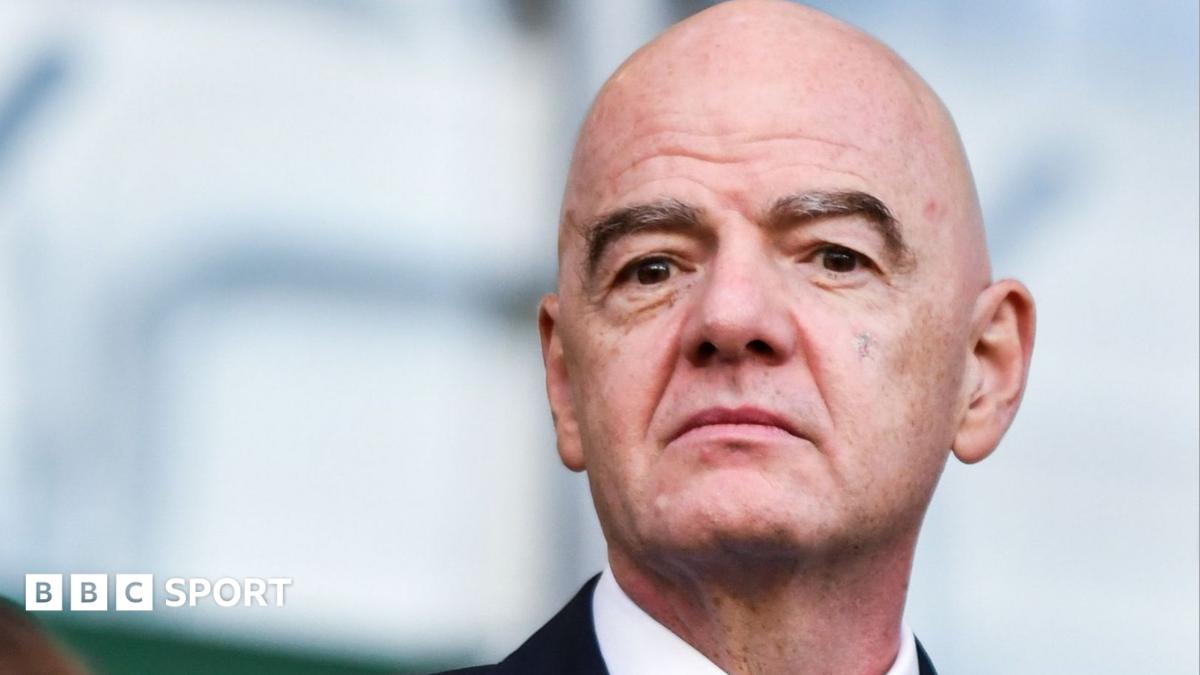
The proposal will be made at a meeting of Fifa’s council on Thursday and comes at a time when the organisation is under pressure following president Gianni Infantino’s aborted Fifa Forward Enterprise (FFE) plan.
Infantino wanted to sell stakes in the World Cup and other competitions to private investors but faced huge criticism for the proposal, with Uefa, Concacaf and the Asian Football Confederation questioning his position.
In a letter then sent to Fifa’s six continental confederations, Infantino – who will be standing for re-election for a fourth time in March 2027 – said he would support “the greatest level of additional funding that can responsibly be delivered”.
Fifa will now offer extra money from its reserves in addition to the current $2.7bn budgeted to be paid to all 211 member associations, the confederations, regional associations and certain non-Fifa affiliated associations.
The breakdown is as follows:
• $25m (£19m) per member association
• $99m (£75m) for each of the six confederations
• $8.25m (£6.3m) for each of the 13 zonal/regional associations
• $1.1m (£836,000) for 100 member associations for travel and equipment solidarity
The terms of the distribution would be as follows:
• One third would be allocated to women’s and youth football development
• One third would be allocated to infrastructure (of which there shall be equal access to women’s and youth football)
• One third would be allocated to projects
The plan, including the eligibility, application, approval, disbursement, control and audit requirements, will be finalised by the Fifa council at its next meeting in December 2026.
It will all be subject to approval by the 77th Fifa congress in March 2027.
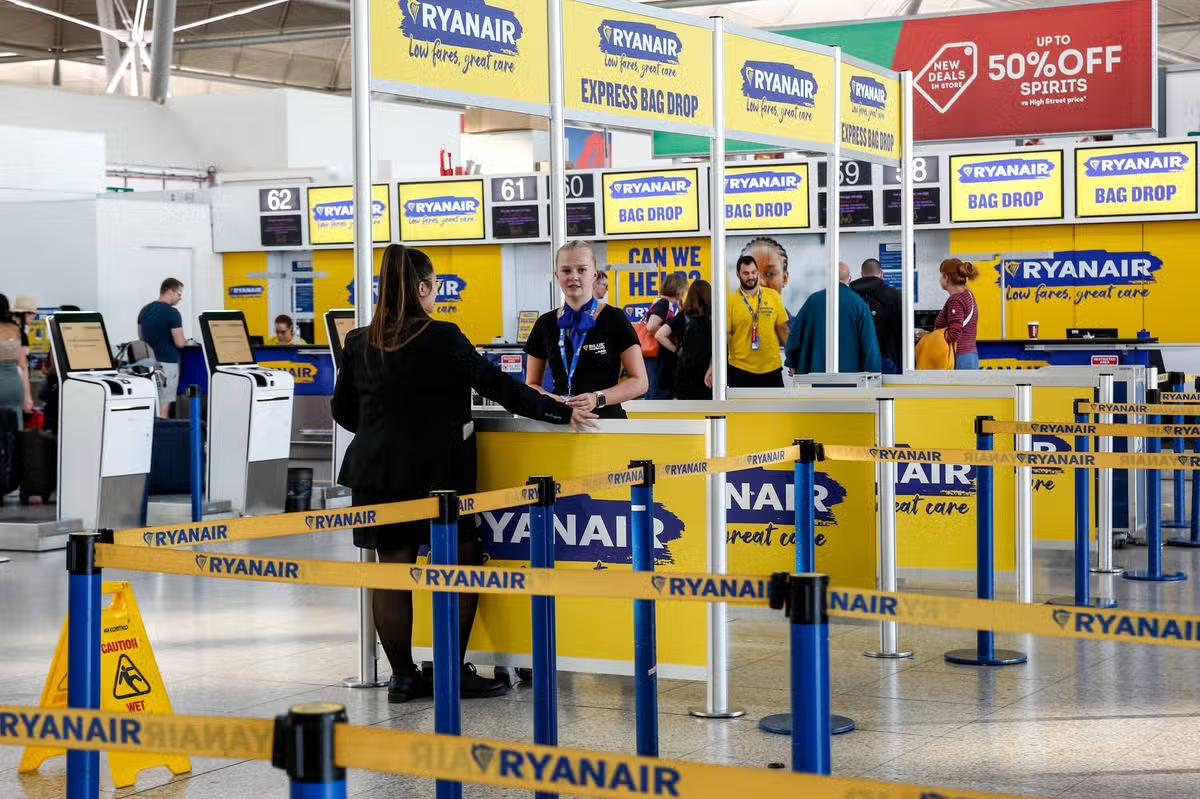
Ryanair and Jet2 both have clear policies(Image: Dominika Zarzycka/SOPA Images/LightRocket via Getty Images)
Passengers flying with certain airlines including Ryanair and Jet2 will need to produce an additional document in order to be allowed to board, according to the terms and conditions outlined on both carriers’ websites.
NHS guidelines state that most women can fly safely well into their pregnancy, providing they take the necessary precautions, such as securing adequate travel insurance. It is advised that travellers ensure their policy covers all potential eventualities, including pregnancy-related medical care during labour, premature birth, and the cost of amending the return journey date should labour occur.
While each airline has its own specific guidance, their policies concerning pregnant women flying at various stages are broadly similar. For example, beyond a certain point in their pregnancy, women travelling with Ryanair and Jet2 will be required to produce a medical document or face being refused boarding.
Ryanair
Ryanair’s guidance states that “you may fly up to 28 weeks of pregnancy” and once a pregnancy reaches week 28 “you will need to carry a completed ‘fit to fly’ letter from your doctor/midwife”. Further details on its website add: “If you have a single pregnancy, travel is not permitted beyond the end of the 36th week of your pregnancy; For a twin/triplet pregnancy, a ‘fit to fly’ letter is required between 28-32 weeks, and travel is not permitted beyond the end of the 32nd week of pregnancy.
“If you have any doubts about your suitability to fly or if you have had any complications while pregnant, please consult your doctor before booking your flights.”
Jet2
Jet2’s policy echoes this, and reads: “We are not able to carry expectant mothers after: the end of the 35th week of pregnancy in the case of a single pregnancy; or – the end of the 33rd week of pregnancy in the case of multiple pregnancies (for example twins).
“After the end of the 27th week of pregnancy, expectant mothers must provide us with a doctor’s certificate confirming their stage of pregnancy and that they are fit to fly, failing which we reserve the right to refuse carriage. This certificate needs to be dated within 7 days of the outbound date of travel and 16 days of the inbound date of travel.”
easyJet
easyJet’s guidance is comparable, noting “you are able to travel until quite late into your pregnancy” while adding: “If you have experienced any complications during your pregnancy, you should consult your medical practitioner before flying with us.
“You can travel up to the end of the 35th week for single pregnancies. If you are expecting more than one baby you can travel up to the end of the 32nd week”.
Expectant mothers wishing to travel with an infant on their lap are permitted to do so.
TEENAGE years were often consumed by the excitement of planning which festival to go to, met by the disappointment of not being able to afford (or even able to get) a ticket.
Fortunately, there is a way to get free festival tickets even as a now-adult.
I’ve attended loads of festivals for freeCredit: Cyann Fielding
Volunteering might remind you of litter picking in parks, but it looks a whole lot different at festivals.
With Oxfam, you can volunteer across a number of different roles while getting a free ticket to the festival.
Sign up for the Travel newsletter
Thank you!
Having done a number of festivals with the charity I can safely say that it is a lot more fun than you’d think, AND you get other great perks as well.
The role with the most positions available is to be a steward – you’ll carry out a range of roles across three eight-and-a-quarter- hour shifts including checking tickets on the gate, patrolling campsites or the arena and staffing accessibility platforms.
You will get all the training you need, as well as a meal voucher for every shift, free tea and coffee, crew camping (read, quieter campsites), hot showers and free phone charging.
Applications for the positions open in the new year and are served on a first-come first-served basis.
You will need to fork out the ticket price upfront but this essentially acts as a deposit to ensure you show up to your shifts – you will then get it back four weeks after the festival.
You will also need to be 18-years-old or over to volunteer by the time you arrive onsite.
Other roles include campaigning, which requires four, six-hour shifts ending before headline acts, and shop volunteers to run festival shops, with one six hour shift a day.
For the latter role, you will need to be a current shop volunteer, intern or member of Oxfam staff with at least three months of experience.
And you can as well via OxfamCredit: Getty
But in reality what does the work actually look like?
For my first festival, I volunteered at NASS although this sadly no longer runs.
As a smaller festival in the UK, I was only required to do two shifts and these both consisted of checking tickets into the festival – one on arrival day and another for second day arrivals.
It meant I missed NOTHING – not a single act.
Both my shifts were finished before music even started, which meant I had enough time to nip back to the spacious campsite with hot showers and freshen up before going and singing my heart out as Loyle Carner performed just metres from me.
The other festivals I volunteered at were much bigger and are household names – Boardmasters in Cornwall and Reading Festival.
Staff camping at Reading was a decent walk from the main arena and while that meant it was a bit of a pain to just ‘nip’ back to your tent, it did mean that I was away from ALL noise.
The campsite is spacious, peaceful, empty of drunken festivalgoers and has its own toilet block – which were actual toilets with no stench.
All you need to do is volunteer with the charityCredit: GettyFor weekend festivals you will need to do three eight hour shiftsCredit: Alamy
When I saw the toilets in the main campsites, I realised how appreciative I was of swapping some hours of my time for a free festival ticket.
I slept soundly each night with no thumping music or rowdy people around me.
As for my shifts at Reading, one of my three, eight-hour shifts was spent checking tickets on the first arrival day – before the festival had even properly started.
My second shift was patrolling campsites during the daytime, before any major acts were on.
And my third shift? Being right in the pit as Sea Girls played, handing out water to festival-goers.
None of these tasks, other than perhaps standing in the blazing sun, are strenuous and shift leaders are great at constantly making sure you have water as well as regular time in the shade if your shift involves being in the direct sun.
But you’ll get to camp in a separate area and get free meals as wellCredit: Getty
What is volunteering at Glastonbury like?
DEPUTY Travel Editor, Kara Godfrey has previously volunteered at Glastonbury Festival with Oxfam and here are her thoughts:
I am not a festival-goer – camping on the cold hard ground, traipsing through the inevitable mud and don’t get me started on refusing to use anything other than a standard, private bathroom.
And then being made to pay at least £400 just to be allowed in the gates? I never saw the appeal.
However, when I did work Glastonbury with Oxfam, I was very much converted.
Early access, so a more laidback first day without the huge crowds, three meals a day without having to pay extortionate amounts, and, of course, much nicer toilets and showers.
Being able to charge my phone and have a much quieter campsite – it felt like glamping without the cost.
The only downside was the shift patterns. I was on ticket checking duty, and you had to do a day, afternoon and overnight shift.
You in theory could swap with people, but good luck trying when there was a big performer (I was there the year of Dolly Parton).
But as long as you aren’t going just for one act, I had the best time hanging with my fellow Oxfam crew as we played our own party tunes at the entrance, shared snacks – and laughed our heads off at all the men dressed up as good ol’ Dolly herself.
Oh, and it barely cost me a penny once my ticket costs rolled back into my bank account. Win win!
Across these three shifts I only missed one act I wanted to see.
And last but not least, Boardmasters was a similar story – one of my three eight-hour shifts was spent checking tickets before the festival began, another was a day shift campsite patrolling and the third was an overnight campsite shift.
Again, with these I missed no acts I wanted to see and while the final overnight shift was tiring (and cold), it involved standing and sitting at the entrance to a campsite answering questions… hardly hard work.
Across all shifts you get a half hour break as well as a meal token which you can use at selected vendors across the festival.
These often include gourmet burger joints and pizza vans, so there is plenty of choice.
Depending on what festival you are at, you might get actual shower and toilet blocks too, a communal area on your campsite and quite often other goodies like free Coca-Cola from brand sponsors walking the festival ground.
There are other companies and charities you can go through for festivals too, such as Hotbox Events, My Cause UK and Festaff.
Though, I wouldn’t look further than Oxfam – everyone is there to have a good time and thanks to not having to pay a penny and camping with more space, I’d say I was happier than most paying festivalgoers each time I volunteered.
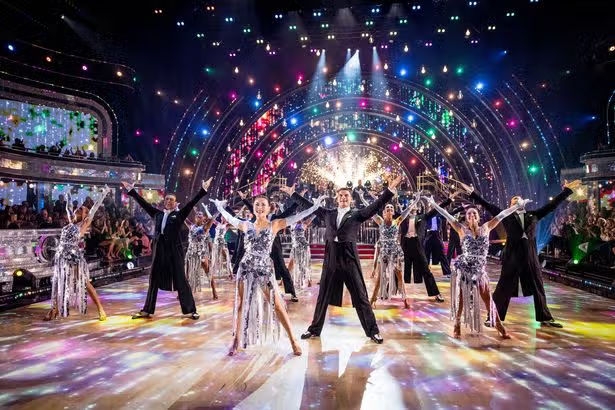
Just three hours to go, not that we’re counting or anything, ahem.
Someone who is especially excited is our TV Editor Nicola Methven who has bagged herself a seat in the audience for the live show tonight.
She’ll be witnessing the blood, sweat and tears up close – and that’s just from the new hosts Emma Willis, Josh Widdicombe and Johannes Radebe.
Nicola is heading to Elstree Studios in Borehamwood to ensure she meets the strict arrival time of between 4 and 4.50pm. It’s at this point she’ll have her phone taken away and she’ll be ushered into the bar. Tough gig.
But not before she gives us all the secret info she can from the Strictly front line.
We’re not sure if we can convince Nicola to go full hog with fake tan, a sequin dress et all (despite our best efforts) she’s more focused on sharing everything we’ll miss at home. What she’ll see when the cameras stop rolling.
Nicola has been reporting on Strictly for decades but thinks it’s time for a shake up. She says, “The nation is resistant to change but I feel as if we’ll get used to this presenting line up quickly. We’ll know instantly if the vibe is different, but lets face it, it’ll be the same studio, same music, same judges and we’re going to love it!”
Schools in England are to get around £500 million in extra funding towards the teachers’ pay award this school year, reducing the risk of a strike ballot by the largest education union.
Daniel Kebede, the General Secretary of the NEU, said the offer of more funding was a “significant” step in negotiations.
In a letter to the union on Wednesday, which has been seen by the BBC, the government said the increase would be funded by savings in employers’ contributions to the local government pension scheme.
The letter said the 4.9 percentage point drop in what employers are expected to contribute will deliver “significant savings” on the pay bill for support staff, which will not be clawed back by central government.
The National Education Union said it expected the extra money to be around £500m, which schools can now use towards teachers pay this year.
In July, ministers accepted the recommendation of the independent pay review body for teachers and agreed a 3.5% increase from September 2026 would be followed by 3% the following year.
The pay increase had been partly funded by an additional £700m for 2026-27 and £1.1bn for the following year.
Independent economists at the Institute for Fiscal Studies (IFS) said that left schools facing a shortfall of around 1% between rising costs and funding this year.
Luke Sibieta, IFS research fellow, said the extra money would mean the pay increase this year was fully funded – and on top of other funding increases, schools would be £1.6bn better off by next year than they had expected this summer.
The additional money could potentially bring the uplift for this year into line with next year.
Kebede said schools has been “running on empty” and the funding signalled “a welcome return to reality, and a message of hope for the entire school community”.
Paul Whiteman, General Secretary of the National Association of Headteachers, said the decision is “certainly welcome”, putting schools in a “better position”.
He said his union would look carefully at the detail “to determine whether this means the pay uplift is genuinely fully funded” for schools.
Pepe Di’Iasio, General Secretary of the Association of School and College Leaders, said he was “pleased” at the announcement of additional funding but “the wider pressure on school and college budgets remains intense”.
Similarly, the NASUWT union welcomed the news. General Secretary Matt Wrack added schools needed “a sustainable, long-term injection of extra funding” to meet the needs of young people.
In an indicative ballot by the NEU in April, 90% of teachers who voted said they would be prepared to take industrial action over funding and pay, on a turnout of 48%.
A formal ballot was due to begin on 3 October and close 15 December, raising the prospects of teachers pay strikes early in 2027.
The national executive of the NEU will meet on 24 September to consider whether to call that off following the additional funding on offer from the government.
A spokesperson for Education Secretary Lucy Powell said the government was “confident schools can now meet the costs of the award at a national level”.
“The Secretary of State has been clear from day one that supporting teacher recruitment, retention and wellbeing, and rebuilding the relationship with the profession, are among her top priorities.”