


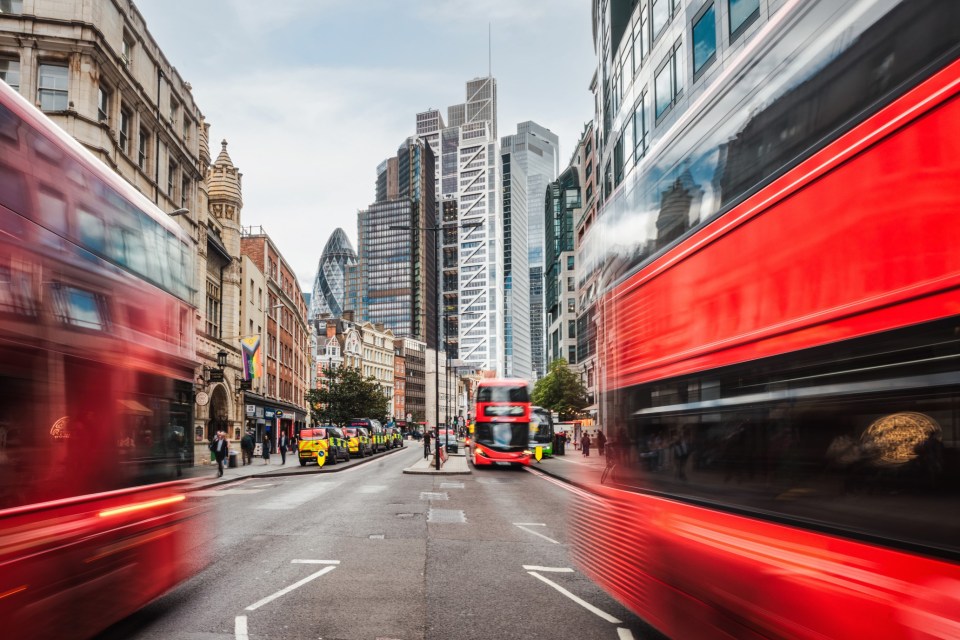
Bus prices are being hiked for millions in England for first time in three years
BUS fares are set to soar to a historic high in November, affecting millions of workers.
A single adult bus and tram fare in London will rise by 10p to £1.85 from next month, Transport for London (TfL) has announced.

It means the cost of fare has gone up by 35p alone in the last 10 years, although there has been a freeze on price hikes in place since March 2023.
Those with concession cards, like 16+ Zip Oyster cards or the Jobcentre Plus card, will also have their fares increase by 5p when the new prices come into effect on November 1.
In a blow to millions of people who use London’s bus and tram network every day, the hike will also affect the Hopper fare, which allows travellers to pay a single flat fare for unlimited journeys within an hour.
The daily bus and tram cap will increase to £5.55 from £5.25.


Originally, London Mayor Sir Sadiq Khan was set to hike prices in July.
But he extended the price freeze until November, after TfL said it was “an emergency cost-of-living measure to support Londoners on the lowest incomes”.
Price caps for tube, rail and Travelcards will remain frozen until March next year, TfL added.
Meanwhile, a new £2 price cap for all single bus tickets in England will come into force from January 1 2027, Prime Minister Andy Burnham announced.
The voluntary scheme will see millions of people across England able to access single bus tickets for £1 less than the current £3 cap – but it won’t apply to every single bus route.
School buses, buses that only run on school days and some other services won’t be subjected to the £2 cap, which will run until December 31, 2027.
Qatar announces ‘massive’ solar plant project in Lebanon | Energy News
Sheikh Mohammed also discussed Israeli ‘violations’ in Lebanese territory with Prime Minister Nawaf Salam.

Published On 16 Oct 2026
Qatar’s prime minister has announced plans to set up what he described as a “massive” solar plant in Lebanon to help ease its energy crisis.
Sheikh Mohammed bin Abdulrahman bin Jassim Al Thani made the announcement during his visit to Beirut on Friday, after meeting his Lebanese counterpart, Nawaf Salam.
Recommended Stories
list of 3 itemsend of list
“We have agreed to establish a comprehensive framework for cooperation in the energy sector and to present viable solutions,” Sheikh Mohammed said.
QatarEnergy has reached an agreement with French company TotalEnergies to jointly develop a solar power plant in Lebanon as an initial project.
The aim is to develop a major investment project “that would benefit the Lebanese economy, as well as the Qatari companies and entities participating in it”, he added.
Prime Minister Salam said he would put the plans for Lebanon’s electricity sector to the Lebanese Cabinet soon.
“The Qatari side will fund, implement and activate the project without any cost on the Lebanese state,” Lebanon’s leader said, adding that such a move is important because of the country’s financial crisis.
Lebanon’s state electricity company is one of the biggest sources of debt, haemorrhaging about $40bn over past decades with a bloated workforce and outdated infrastructure. The company provides only a few hours of electricity a day and the state, until a year ago, took advances from the Central Bank when diesel fuel ran out.
Sheikh Mohammed said Doha stands in “solidarity with the Lebanese people” and the entire region “in this dire hour”. Lebanon has been struggling with multiple energy crises in recent years and the situation has been compounded by the country’s financial collapse and Israel’s ongoing assault.
Earlier in the day, the Qatari PM also met Lebanon’s president and parliament speaker.
Among the topics discussed was the situation in southern Lebanon, where Israel continues its assault, capturing dozens of towns and villages.
Sheikh Mohammed said “Israeli violations within the Lebanese territories” were a large part of his talks.
He said that Israel should withdraw from Lebanon and cease its attacks, adding that Qatar is working in coordination with the United States to help lay the groundwork for future reconstruction in southern Lebanon to allow displaced people to return to their homes.
Israeli attacks on southern Lebanon have continued despite a ceasefire agreed in June. Under the agreement brokered by the US, the Lebanese government is to disarm Iran-backed Hezbollah. In return, Israeli forces will gradually withdraw from southern areas that they occupy. However, Hezbollah is not part of the agreement and has refused to disarm until Israel withdraws from the country.
Lebanese authorities say Israeli attacks have killed more than 4,300 people in the country since March. About 1.2 million people were also displaced in Lebanon at the height of the war.
Although most have returned home since the June ceasefire, more than 300,000 people remain displaced, according to the International Organization for Migration.
Lebanon’s PM Salam thanked Qatar for its “continuous” support during some of Lebanon’s “darkest hours”.
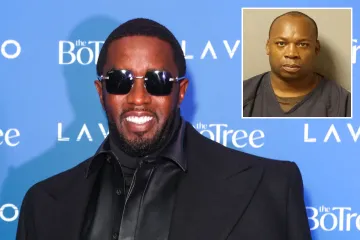
Diddy ‘transferred to new prison’ days after rapper rushed to hospital with head injury ‘from fight with prison kingpin’
SEAN “Diddy” Combs has been transferred to a new prison just days after he was hospitalised following a vicious brawl with another inmate, it is reported.
The disgraced music mogul was removed from his federal lock up in New Jersey, FCI Fort Dix, this morning.
Prison officials have not given a reason for the transfer to Allenwood in Pennsylvania, first reported by TMZ.
But Combs had been hauled into solitary confinement on two separate occasions for prison violations.
The former hip hop star was written up by staff at Fort Dix for phone violations and violent behaviour, the outlet reported.
Allenwood is a low security prison with just 1,000 inmates – compared with Fort Dix’s 4,000.


Combs, who has been behind bars since October 2025, reportedly suffered a medical emergency early Saturday morning.
It was later revealed he suffered a head injury in a brawl with Jamaican drug lord Christopher Coke, known as “Dudus”.
Multiple sources inside the prison told TMZ the pair came to blows last Friday but Dudus had the upper hand.
The fight was reportedly sparked over inmates’ anger at Combs for getting exposed in a recent NBC News report about his lavish lifestyle behind bars.
The shamed rapper reportedly had access to a cellphone, alcohol and had paid other inmates for their prescription medication.
As a result of the leak, prison officials conducted two raids and confiscated cell phones from inmates – including Dudas.
The convict – serving a 23-year sentence since 2012 – is a kingpin at the prison, sources told TMZ.
Combs was said to have been conscious and speaking following the alleged incident.
He was reportedly taken back to prison grounds before sunrise the same day.
After the punch- up, both men were reportedly hauled into solitary confinement for twoweeks’s punishment.
A rep for the Grammy winner previously told Page Six: “We are aware of the reports concerning Sean Combs and are working to confirm the circumstances.”
“Sean’s health and well-being are our immediate concern,” they continued, “and we appreciate everyone who has reached out.”
The shamed rapper was sentenced to 50 months in FCI Fort Dix prison last year on two charges related to prostitution.
Combs was acquitted on more serious charges of racketeering and sex trafficking.
He was due to be let out on May 8, 2028, under his initial sentencing terms but his final day behind bars has now been moved to January 21, 2028.
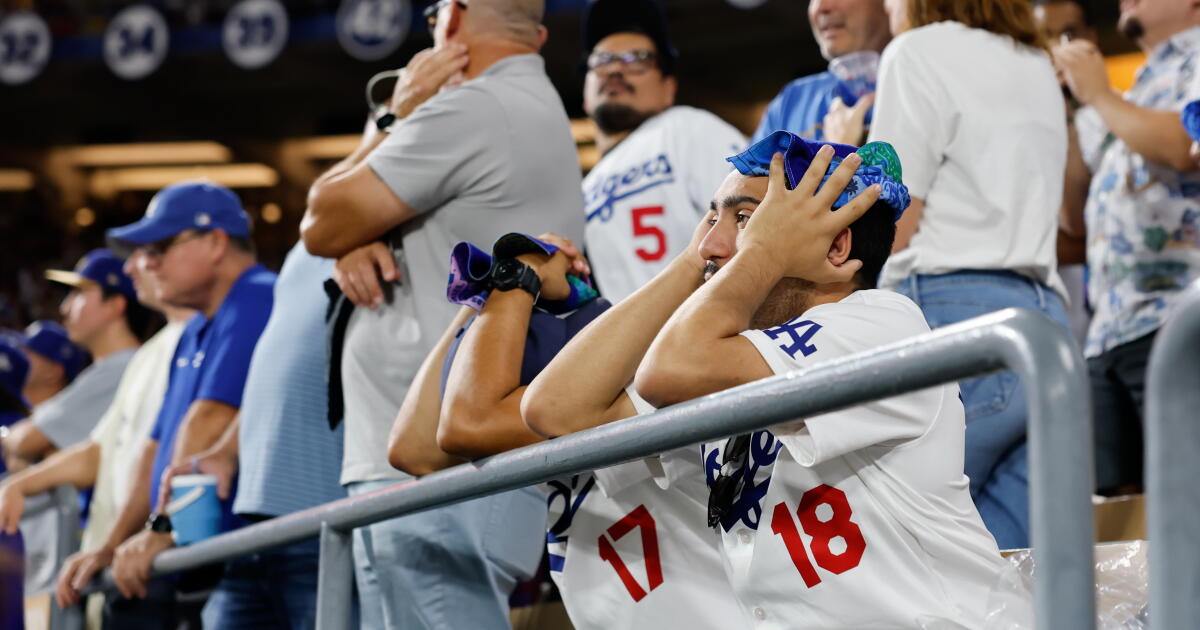
Dodgers Dugout: All good things…..
Hi, and welcome to another edition of Dodgers Dugout. My name is Houston Mitchell. Game 4. What will happen? Let’s find out together.
Game 4 thoughts
Pregame
—I’m interested to see how much energy and drive the Dodgers have in Game 4. Will they go down swinging (figuratively, not literally). Will they force the Brewers to rip the title from their hands?
—Fox did a great segment on Charley Steiner before Game 3. You can watch it here. There are things you can criticize the Dodgers for, but you also have to salute them for taking care of people like Steiner and Andrew Toles. They gave Steiner some hope during his cancer battle, and that’s very important.
—One thing about Shohei Ohtani before the game begins. It’s easy to pin the 3-0 deficit on him. He’s the most famous baseball player right now, and he’s not playing well. I wish there was a lot more clarity around his injuries. However, to pin the 3-0 deficit on him is unfair. Going into Game 4, here are the batting stats:
Miguel Rojas, 1 for 2
Mookie Betts, .250, no extra-base hits or RBIs
Kyle Tucker, .250, one double, no RBIs
Shohei Ohtani, .222, no extra-base hits or RBIs
Teoscar Hernández, .200, no extra-base hits, one RBI
Tommy Edman, .167, no extra-base hits or RBIs
Andy Pages, .125, no extra-base hits, one RBI
Max Muncy, .111, no extra-base hits or RBIs
Freddie Freeman, .091, no extra-base hits, one RBI
Will Smith, .091, one double, two RBIs
Kiké Hernández, 0 for 5
Team, .165, two doubles, five RBIs
Ohtani has hit better than most of the Dodgers this series.
First inning
—The one thing that bothers me about Tyler Glasnow: It seems he gets two quick strikes on a batter, then tries to get cute with the pitches.
—Holding the Brewers scoreless in the first is nice.
—First and second, one out. Really should score a run here.
—And a double play. This could be important later.
Second inning
—Hey, they got Jake Bauers out using only four pitches. Miracle!
—And the Brewers go down quietly.
—If you mute the TV and watch an ad, but can’t tell what the ad is for without the sound, then it’s a bad ad.
—Manny Machado was in an ad. Reminds me of the old Yogi Berra quote, “Nobody likes Manny Machado.”
—Kyle Tucker has been the star of the Dodger offense.
—Here comes Dustin May to pitch for the Brewers. The Dodgers used to have a pitcher named Dustin May. I wonder if they are related.
—First and third, nobody out. It would be advantageous to score here.
—Miguel Rojas, in what could be his final game, starts, but is pinch-hit for before getting a chance to bat. You can’t let Rojas end his career like that, so a win is in order.
—Max Muncy strikes out. The worst thing you can do in that situation.
—Now, a double play?
—Andy Pages singles! Another miracle! He’s the only Dodgers who can hit in the clutch this postseason. Dodgers 1, Brewers 0.
—Kiké flies to center. Now Ohtani.
—And a majestic home run! Ohtani let about two months of frustration out with that scream after the homer. Dodgers 4, Brewers 0.
—I feel like Tom Hanks in “A League of Their Own” after Geena Davis returns to the team. “We’re gonna win!”
—Now can the Dodgers stop the Brewers from responding?
Third inning
—Glasnow is pitching great.
—Max Muncy seemed to be anticipating that bunt.
—Now if Will Smith could just get going.
—The Dodgers go down quietly. But they have a four-run lead for the first time in forever.
Fourth inning
—”Buy one Subway footlong, get one free” sounds more like a punishment than a reward.
—”Meal of Horror” describes every meal at Jack in the Box, not just this special Krusty the Klown one.
—John Smoltz tried to explain why Glasnow can be dominant, but it made no sense whatsoever.
—Will Smith makes an ABS challenge and loses. Oh well, it happens.
—Brice Turang walks. Don’t walk people with a four-run lead.
—A ground-rule double. Let’s hold them to no more than one run here.
—Another ground-rule double. Uh oh. Dodgers 4, Brewers 2.
—And the Dodgers get out of it. But Glasnow will be on a short leash.
—The Dodgers can’t just rely on four runs to carry them.
—Max Muncy gets a much-needed hit for him.
—And that ends the fourth.
Fifth inning
—Please stop walking people with a lead.
—Frelick steals second. It’s not hard to steal off of Glasnow.
—And the Brewers immediately cash in. Dodgers 4, Brewers 3.
—Evan Phillips comes in. Still has never given up a run in the postseason.
—Brewers are like the Dodgers, making the pitcher work.
—Brewers load the bases with two out. And that’s it for Phillips.
—Can Alex Vesia escape the jam against the pesky Jake Bauers?
—He cannot. Bauers walked on four pitches. Remember all the little things the Dodgers did right the last two years to win the World Series? They are doing none of those things this year. Dodgers 4, Brewers 4.
—The Dodgers go down quietly. This is beginning to feel like the first three games.
Sixth inning
—And just like that, the Brewers lead. Team of destiny. Brewers 5, Dodgers 4. Some people don’t like that I’m named Houston. Will they hate that I’m named Mitchell too? Do I have to change my whole name?
—You certainly can’t blame any of the losses on Tucker. Another hit for him.
—But the Dodgers can’t cash in. This could be important later.
Seventh inning
—It’s so funny that Edwin Díaz is the steadying presence out of the bullpen after the season he had.
—But he will remain unusable, regular season or postseason in Strat-o-matic or APBA.
—Leadoff double by Pages. Can they cash in?
—Kiké bunts! Pages to third.
—And look who’s coming up.
—And Ohtani strikes out, and looks bad doing so.
—And the Dodgers waste another chance.
Eighth inning
—Well, at least it looks like the Dodgers have a closer for next season.
—Quick inning for the Brewers. Do the Dodgers have a run in them?
—Will Smith comes through. Man on third, one out. If they don’t score here, it’s over.
—And Tucker pops out.
—And Teoscar strikes out.
—Two innings in a row, the Dodgers have a runner on third and one out and fail to score.
Ninth inning
—Maybe Díaz should have pitched earlier in this series.
—Brewers add an insurance run. Brewers 6, Dodgers 4.
—Again, the Brewers are playing like the Dodgers did the last two postseasons.
—Dodgers have been out-homered 7-1 in this series.
—Bottom of the ninth. Do the Dodgers go quietly?
—Tommy Edman grounds out.
—Pages struck out.
—Kiké lines to left.
—That’s it. Remember that Tom Hanks quote from earlier? They lost that game.
—Remember what Joe Davis said at the end of last year’s World Series? “To beat the champ, you’ve got to knock them out.” And that’s exactly what the Brewers did.
—As Max Muncy said after the game, “They were relentless with everything that they did. They just strung together good at-bat after good at-bat. That’s usually what we do. We didn’t do it this series and they did.”
—The three teams with a shot to win the World Series: The Brewers, who have never won. The Rays, who have never won. The Guardians, who haven’t won since 1948. It will be fun to see who wins.
Miguel Rojas is retiring
That was indeed the final game of Rojas’ career.
“This is it, guys,” he said, announcing his retirement after Game 4. “It’s been a lot, the last four years of my life here. And obviously making my debut here in 2014 changed my life, not just for me but for my whole family. They took care of my son, my daughter, my wife, and everybody in my family. It’s really amazing what I can think about, what happened to me and to my family the last few years.
“I just wanted to say thank you to all the veteran guys for allowing me to be myself when I got here, even though I didn’t play one game for the Los Angeles Dodgers for the last eight or nine years before I came here. They allowed me to be the leader that I wanted to be, the person that I wanted to change the culture and kind of give a little bit more of a culture, chemistry to the clubhouse. I feel like that is going to be a legacy that I wanted to leave here, other than my performance on the field. … I want them to remember me as a guy who always did everything possible to help my teammates win and to help the team get better every single day.”
Wrapping it up
I had a reader email me in the ninth inning that he felt ill watching the Dodgers play. Really? The team won the last two World Series and reached the NLCS in the third year. To feel ill or angry over this team is just the wrong way to look at it. Disappointed? Sure. Sad? Sure.
But if those feeling linger into Friday, remember that this team has given you many memorable moments over the last three seasons. They were outplayed by a better team here. Tip your cap to the Brewers. And, after the disappointment ends, thank the Dodgers for three incredible seasons. In fact, here are the Dodgers since 2016:
2016, Lost in NLCS
2017, Lost in World Series*
2018, Lost in World Series
2019, Lost in NLDS
2020, Won World Series
2021, Lost in NLCS
2022, Lost in NLDS
2023, Lost in NLDS
2024, Won World Series
2025, Won World Series
2026, Lost in NLCS
*-Astros cheated to win.
An embarrassment of riches.
Up next
That concludes the 12th season of Dodgers Dugout. We’ll be back in the next couple of weeks to discuss the offseason and whether there will even be a 2027 season.
In the meantime, today’s a new day. Look at the sunshine. Look at your family and loved ones. Everything is OK.
In case you missed it
Dodgers’ three-peat dream dies with Game 4 NLCS loss to Brewers
Plaschke: The Dodgers had everything needed to three-peat. This is why they failed
Miguel Rojas announces his retirement after Dodgers’ NLCS loss
Dave Roberts on Dodgers losing the NLCS and having no regrets
And finally
The Dodgers win the 2025 World Series. Watch and listen here.
Until next time …
Have a comment or something you’d like to see in a future Dodgers newsletter? Email me at houston.mitchell@latimes.com. To get this newsletter in your inbox, click here.

Italy cuts flights by HALF today with hundreds of delays and cancellations

A look at your rights if a flight is delayed or cancelled, when your entitled to compensation and if your travel insurance can cover the costs.
What are my rights if my flight is cancelled or delayed?
Under UK law, airlines have to provide compensation if your flight arrives at its destination more than three hours late.
If you’re flying to or from the UK, your airline must let you choose a refund or an alternative flight.
You will be able to get your money back for the part of your ticket that you haven’t used yet.
So if you booked a return flight and the outbound leg is cancelled, you can get the full cost of the return ticket refunded.
But if travelling is essential, then your airline has to find you an alternative flight. This could even be with another airline.
When am I not entitled to compensation?
The airline doesn’t have to give you a refund if the flight was cancelled due to reasons beyond their control, such as extreme weather.
Disruptions caused by things like extreme weather, airport or air traffic control employee strikes or other ‘extraordinary circumstances’ are not eligible for compensation.
Some airlines may stretch the definition of “extraordinary circumstances” but you can challenge them through the aviation regulator the Civil Aviation Authority (CAA).
Will my insurance cover me if my flight is cancelled?
If you can’t claim compensation directly through the airline, your travel insurance may refund you.
Policies vary so you should check the small print, but a delay of eight to 12 hours will normally mean you qualify for some money from your insurer.
Remember to get written confirmation of your delay from the airport as your insurer will need proof.
If your flight is cancelled entirely, you’re unlikely to be covered by your insurance.
Spain punished by FIFA for Islamophobic chants during Egypt friendly | Football
Spain sanctioned by FIFA after incidents at Espanyol’s stadium in Barcelona, which staged the friendly with Egypt.
Published On 16 Oct 2026
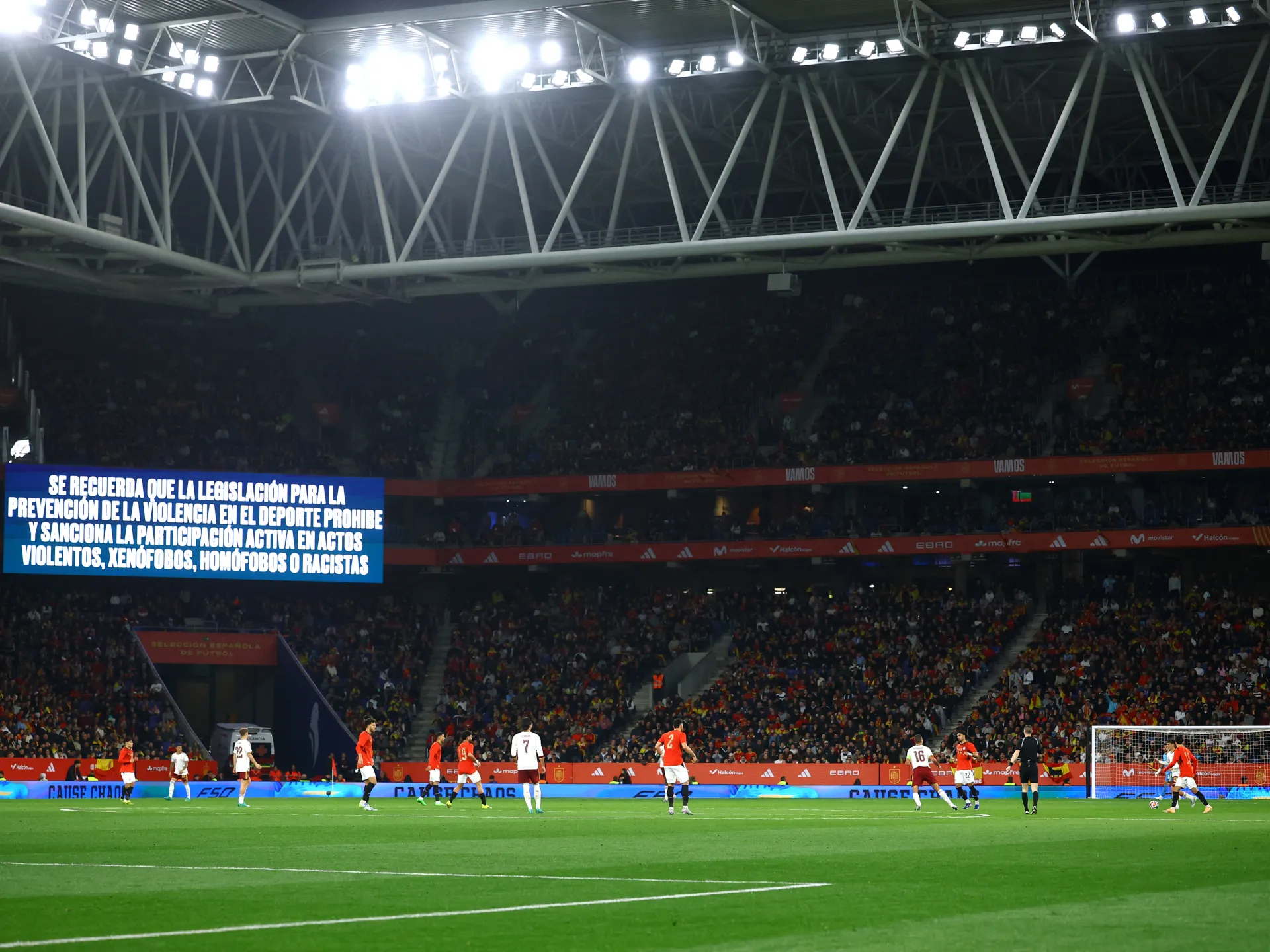
Spain have been fined $20,000 and ordered to partially close their stadium for their next friendly after supporters twice chanted Islamophobic slogans during the game against Egypt in March, FIFA said in a statement.
The sanctions relate to incidents at the RCDE Stadium near Barcelona, home of LaLiga club Espanyol, where some Spain fans chanted, “Who doesn’t jump is a Muslim” during a World Cup warm-up match which ended in a 0-0 draw.
Recommended Stories
list of 3 itemsend of list
After the second occurrence of the chant, the stadium announcer issued a warning and the scoreboard displayed a message against discriminatory behaviour.
Spain winger Lamine Yamal, who is Muslim, condemned the chants at the time, describing them as disrespectful and intolerable and calling those responsible “ignorant and racist”.
Spanish police launched an investigation the following day, while world governing body FIFA later started disciplinary proceedings against the Spanish football federation (RFEF).
It argued that the word ‘Muslim’ was “neither insulting nor pejorative”, adding that the fans’ conduct should be assessed under FIFA’s Article 17, which covers political, ideological, religious or offensive messages, rather than Article 15, which deals with discrimination and racist abuse.
However, FIFA’s disciplinary committee rejected that argument, saying Article 15 does not require the explicit use of a slur and that a term can be discriminatory when used in context as “an insult, taunt, or marker of inferiority”.
FIFA fined the RFEF and ordered the closure of at least 15% of available seats for Spain’s next friendly.
Al Jazeera has contacted the RFEF for comment.
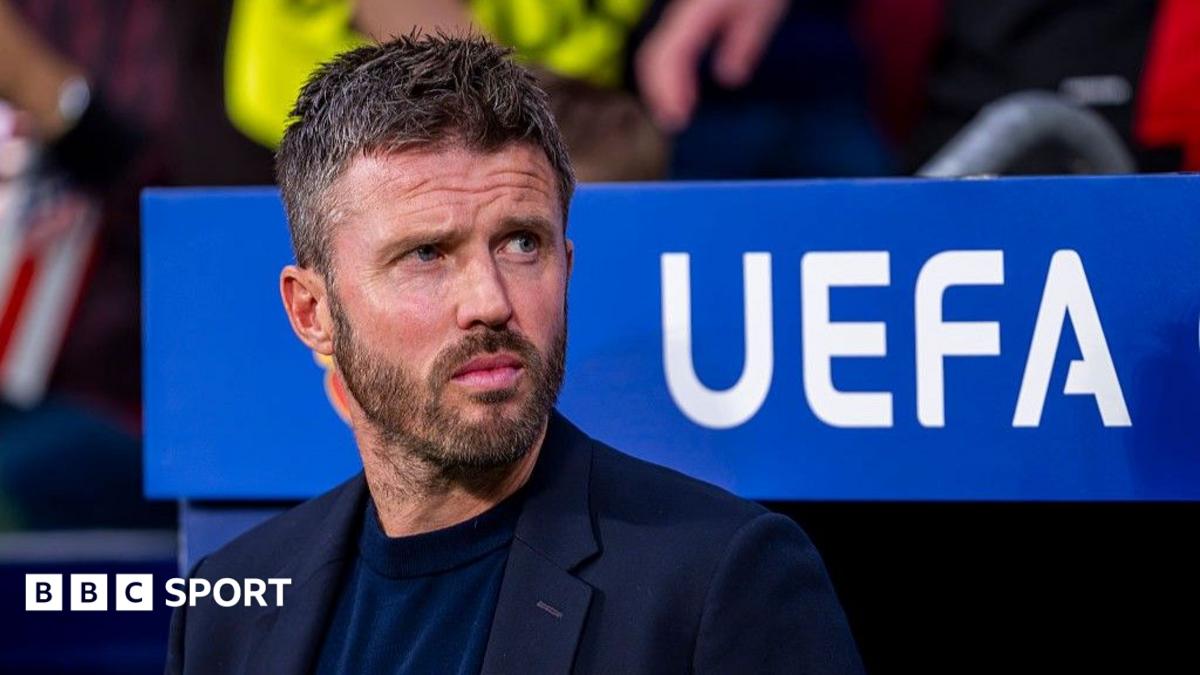
Man Utd boss Michael Carrick says squad not affected by Lisandro Martinez fallout
Manchester United head coach Michael Carrick says he is “telling the truth” when he says the club have moved on from Lisandro Martinez’s explosive post-match comments this week.
Carrick’s close friend and team-mate Wayne Rooney led the condemnation of Martinez, saying the Argentine defender could “rip the dressing room apart” with his attack on United’s hierarchy after the 2-0 Champions League defeat by Atletico Madrid.
Former United skippers Roy Keane and Gary Neville have also had their say, among a huge amount of analysis.
Martinez has apologised for the timing of comments, which turned the spotlight on director of football Jason Wilcox, but not for the words themselves.
“There’s a lot of people who say a lot of things – ex-pros or not ex-pros – it doesn’t necessarily mean they understand what is going on here,” said Carrick in his pre-match media conference at United’s Carrington training ground.
“Just because people talk on the outside doesn’t mean that is the truth. I am telling you the truth. The squad today was in a fantastic place, better than I have seen it for a while. That is it, plain and simple. We are living it every day and know what it feels like.
“We are emotional and care a lot. Sometimes someone says something that maybe you shouldn’t say at that certain time, but it doesn’t distract us from what we are creating here and the environment and spirit within the group.
“It [the squad] is not affected, I am telling you.”
Carrick confirmed Martinez would be “part of the squad” for Sunday’s Premier League trip to Leeds at Elland Road (14:00 BST).
More to follow.

The chilling questions haunting the coroner over Liam Payne’s final hours & the heartbreaking decision Cheryl must make

IT IS two years to the day since Liam Payne’s family – and his millions of fans – had their hearts broken when the pop star plunged to his death from a third-floor balcony at the Casa Sur Hotel in Buenos Aires.
Now, a bombshell update has ripped through the investigation. Argentinian businessman Rogelio ‘Roger’ Nores, 38, once facing the terrifying prospect of prison for negligent homicide, has been officially cleared of all criminal liability. Two hotel workers have also walked free.
Meanwhile, two defendants charged with selling cocaine to Liam await their fate, but case sources now think a full trial over his death will never take place.
For Liam’s grieving family and millions of devoted fans, Roger being cleared does not bring closure.
It simply shines a spotlight on the agonising black holes still in the official narrative as a UK inquest into Liam’s death is still ongoing, despite a series of setbacks.
Here are the chilling questions that still demand answers:
Who really delivered the fatal dose?
While Nores and two hotel workers, Gilda Martin and Esteban Grassi, have had manslaughter charges dropped, the drug trail hasn’t gone cold. Toxicology reports confirmed a lethal cocktail of “alcohol, cocaine, and a prescription antidepressant” in Liam’s system.
Two men, Ezequiel Pereya, 22, and Braian Paiz, 26, are currently languishing in an Argentine jail awaiting trial, accused of selling Liam the narcotics.
Braian Paiz was working at a high end restaurant in Buenos Aires when he first met the One Direction singer on October 2, 2024.
He has claimed as Liam was leaving he asked the starstruck waiter if he had any cocaine and the pair exchanged Instagram handles.
Over a week later Liam, who was still in the Argentine capital, contacted him to ask for drugs.
Braian admitted in his witness statement: “He ended up convincing me to get [drugs] for him. And, in all honesty, I didn’t want to miss the opportunity to see him again. That’s why I agreed to do it.”
In a later newspaper interview, he said: “I’ve suffered so much psychological damage due to all this and the social condemnation, and of course I’m worried now I might be in prison for many years. But I don’t regret meeting Liam. I was a fan.”
But it has become clear Liam was getting drugs from many sources, so the question remains: how did a global superstar, supposedly in a secure VIP suite, become a target for local dealers? Was there a wider network exploiting vulnerable guests at the Casa Sur?
When will the trial of the two accused take place?
The two defendants charged with selling cocaine to Liam in the lead up to his death are still awaiting trial.
Restaurant waiter Braian Nahuel Paiz, 26, and hotel worker Ezequiel David Pereyra, 22, served over one year in police precincts and in a federal prison until they were released in March.
The Sun understands that there have been negotiations for a plea deal for the two young men.
That could mean that a full trial over Liam’s death never takes place.
The pair are accused of selling drugs to Liam but if the plea deal goes ahead that charge could be reduced to supply of drugs for free, which carries a maximum sentence of six months.
According to legal experts, given the pair have no prior criminal convictions, the sentence would already be covered by time served.
Pereyra’s defense attorney, Augusto Maria Cassiau, told The New York Post: “We would be inclined to accept the offer.”
What part will Cheryl play in the ongoing investigation?
Another heartbreaking chapter involves Cheryl, who shares 9-year-old son, Bear, with Liam.
Since Liam tragically passed away without leaving a will, his entire £25.7 million estate will eventually pass to his young son.
In May 2025, Cheryl was officially named as a co-administrator of his massive estate alongside attorney Richard Mark Bray.
However, her power is strictly administrative. She and Bray can “manage the money” but cannot distribute it without further legal authority.
Shortly after Liam’s passing, Cheryl issued a searing statement condemning the “abhorrent reports and media exploitation” surrounding his death, begging for Liam to be given “the little dignity he has left”.
Cheryl is a plaintiff, on behalf of their son Bear, in the case against the waiter and the hotel worker, who are charged with supplying Liam drugs.
The Sun understands that she could ultimately have the last say over any plea deal agreed with the Argentine authorities – but she, or her lawyers, have so far not objected to the rulings in Roger’s favour.
Now as the inquest stalls, how much longer will Cheryl and Bear have to wait for the final legal chapter to close?
What happened on the balcony?
The most haunting mystery of all. We know Liam fell from the third floor of the hotel, where he was staying in Room 10.
But the moments leading up to that fatal plunge are still shrouded in silence. The UK coroner, Crispin Butler, has been desperately chasing “eyewitness statements” from Argentina since late 2025.
Following his death, it was reported that Liam jumped off his balcony, perhaps trying to reach the swimming pool below that it was claimed he had been denied access to because of his intoxicated state.
But it later became clear he had fallen backwards, possibly after falling unconscious, causing unsurvivable injuries to his head and dying instantly.
The toxicology report read: “Due to the position in which the body was found and the injuries from the fall, it is presumed that Payne did not adopt a reflexive posture to protect himself and may have fallen in a state of semi or total unconsciousness.”
After forensic experts studied the singer’s hands, they did not find any defensive injuries, which led them to believe that “the injuries on the body were vital and produced at the same time, and that no injuries were observed that could suggest the intervention of third parties”.
Are there witnesses who saw the build-up? Were there warning signs ignored by hotel management before he stepped onto the balcony? And why did they let him back into his room?
Why are the Argentine authorities not working more closely with their UK counterparts?
For Liam’s family, the wait for justice is becoming a cruel joke.
The UK inquest has been delayed repeatedly, first pushed to May 2026, and now stalled again because British coroners are still waiting on fully translated case files and evidence disclosures from the Foreign, Commonwealth and Development Office.
Coroner Crispin Butler told a pre-inquest hearing there had been no updates since a last review in January 2025, when he said he would seek full reports and eyewitness statements before a final inquest.
He added: “We have had no further disclosure of evidence from Argentina via the Foreign, Commonwealth and Development Office.”
It has been 24 months. Why are the Argentine authorities dragging their heels in handing over the final, unredacted timeline?
The Sports Report: Season is over for the Dodgers
Dodgers are swept by the Brewers
From Maddie Lee: The hope for a Dodgers comeback in the National League Championship Series ended with the smack of the ball hitting leather.
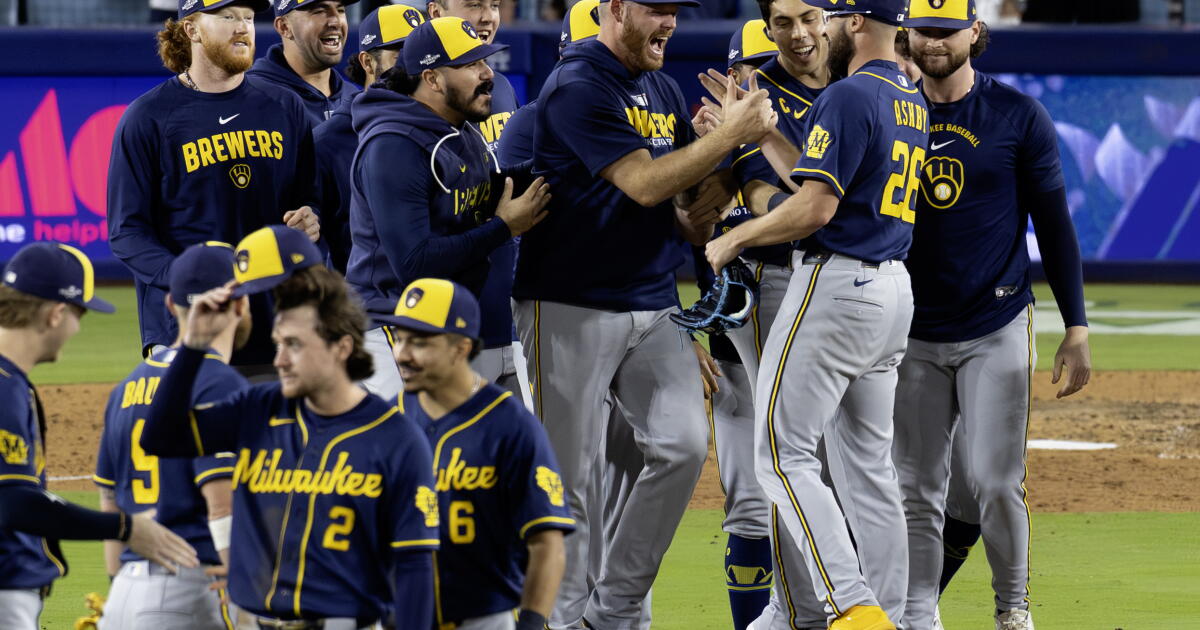
Milwaukee Brewers left fielder Jackson Chourio, sprinting toward the warning track, had to leap to reel in Kiké Hernández’s line drive in the gap. But he secured the catch. And ended the Dodgers’ season.
The Dodgers’ hopes of making National League history with a three-peat died with a 6-4 loss to the Brewers on Thursday, completing Milwaukee’s four-game sweep.
“It sucked,” veteran left fielder Teoscar Hernández said. “Especially after [what] we had done the last two years. This year at the beginning of the year, what we’ve been through, a lot of injuries throughout the year the last two years, a lot of ups and downs. It just sucked that we’re in this situation, but it’s part of the game.
“Somebody has to win, somebody has to lose. This time, we’re the ones that lost, and just reflect on everything that we didn’t do great this year and just try to do it next year.”
As the Dodgers’ postseason hype video declared before the game: “October doesn’t remember who came close. It remembers who triumphs.”
The Dodgers, after reinforcing to their back-to-back championship roster in the offseason and entering the year as the World Series favorites, fell short. And instead the Brewers will represent the National League, making their first trip to the Fall Classic in 44 years.
“They may have a bunch of Hall of Famers, but we have a bunch of gamers,” Brewers manager Pat Murphy said from the stage. “And the gamers won this week.”
Dodgers Debate NLCS Game 4: Dodgers are swept by Brewers
This is why the Dodgers lost
From Bill Plaschke: The two World Series championship trophies royally entered Dodger Stadium in a blue convertible while being cradled by two October heroes.
The 2024 trophy was held by Freddie Freeman, whose grand slam toppled the New York Yankees.
The 2025 trophy was held by Miguel Rojas, whose home run stunned the Toronto Blue Jays.
On this bright afternoon late last March, the Dodgers past shined and their future dazzled in a celebration that came with a promise.
It was elicited by an impromptu cheer by a pregame musician in a voice so loud, one could imagine it resonating until October.
“Three-peat!” shouted the man.
Yes, they were going for the three-peat, attempting to become the first team in National League history to win three consecutive championships.
On opening day, as epitomized by Freeman and Rojas, the Dodgers were unbeatable.
Six months later, the Dodgers were unrecognizable.
Miguel Rojas retires
From Maddie Lee: Miguel Rojas didn’t want to take his cleats off.
The veteran infielder stood by his locker at Dodger Stadium, his eyes red and watery, his uniform covered in dirt, knowing that when he pulled them off, it would be for the last time.
“This is it, guys,” he said, announcing his retirement, after the Dodgers were swept by the Milwaukee Brewers in the National League Championship Series on Thursday. “It’s been a lot, the last four years of my life here. And obviously making my debut here in 2014 changed my life, not just for me but for my whole family. They took care of my son, my daughter, my wife, and everybody in my family. It’s really amazing what I can think about, what happened to me and to my family the last few years.”
Rojas addressed the team after the 6-4 loss to the Brewers. He said he was going to stay loyal to the Dodgers organization but in a different role.
MLB postseason schedule
All times Pacific
NLCS
No. 1 Milwaukee vs. No. 2 Dodgers
at Milwaukee 2, Dodgers 1 (box score)
at Milwaukee 7, Dodgers 4 (box score)
Milwaukee 6, at Dodgers 2 (box score)
Milwaukee 6, at Dodgers 4 (box score)
ALCS
No. 1 Tampa Bay vs. No. 2 Cleveland
Cleveland 7, at Tampa Bay 3 (box score)
at Tampa Bay 3, Cleveland 1 (box score)
at Cleveland 3, Tampa Bay 2 (box score)
Friday at Cleveland, 5 p.m., TBS/truTV/UniMas/HBO Max
Saturday at Cleveland, 5 p.m., TBS/truTV/UniMas/HBO Max
*Monday at Tampa Bay, 5 p.m., TBS/truTV/UniMas/HBO Max
*Tuesday at Tampa Bay, 5 p.m., TBS/truTV/UniMas/HBO Max
World Series
No. 1 Milwaukee vs. TB/Cleveland
Friday, Oct. 23 at Milwaukee, TBD, FOX/FOX Deportes/FOX One
Sat., Oct. 24 at Milwaukee, TBD, FOX/FOX Deportes/FOX One
Monday, Oct. 26 at TB/Cle., TBD, FOX/FOX Deportes/FOX One
Tuesday, Oct. 27 at TB/Cle., TBD, FOX/FOX Deportes/FOX One
*Wed., Oct. 28 at TB/Cle., TBD, FOX/FOX Deportes/FOX One
*Friday, Oct. 30 at Milwaukee, TBD, FOX/FOX Deportes/FOX One
*Sat., Oct. 31 at Milwaukee, TBD, FOX/FOX Deportes/FOX One
* if necessary
Lakers’ Ziaire Williams brings needed energy
From Thuc Nhi Nguyen: He made one of the biggest splashes in the Lakers’ first preseason game. Ziaire Williams set the tone of the Lakers’ new defensive style, pressuring the ball the full length of the court and injecting energy into his teammates. The Sierra Canyon High alumnus sank three three-pointers in a stellar debut for his hometown team.
Then came the swelling in his left foot.
After a minor injury slowed Williams’ preseason ascent, the 6-foot-9 forward could be in position to return to the lineup for the Lakers’ preseason finale at 7:30 p.m. Friday against the visiting Denver Nuggets. Williams practiced fully Thursday after missing the last three games. He’ll leave the final call up to the Lakers’ medical staff as the team tries to maximize its preseason preparation.
“It’s important, man, just to get game reps with each other, but health is key,” said Williams, who had 13 points and a steal as a starter in the preseason opener against the Sacramento Kings on Oct. 5. “If you can’t go, you just can’t. It’s not the end of the world. Going back to championship identity, we’re looking ahead at the bigger picture. So it’s not worth [it] to risk your body for a game that doesn’t count and then be out for the real games.”
Rams’ Sean McVay is ready for anything
From Gary Klein: It was already going to be a short week, but Sean McVay navigated unexpected business that affected the start of preparation for Sunday’s game against the Arizona Cardinals.
After Monday night’s defeat by the Buffalo Bills, the Rams on Tuesday released struggling kicker Harrison Mevis, and signed Blake Grupe. Then left tackle Alaric Jackson was suspended by the NFL for punching a Bills player on the field after the game.
“You’re always ready for inevitable things to come up,” the Rams coach said Thursday.
Chargers’ Mike McDaniel is always coaching for his job
From Joaquin Ruiz: Chargers offensive coordinator Mike McDaniel didn’t shy away from discussing his job security Thursday amid a frustrating 0-5 start to the season.
“I feel like it’s core to my job to always feel that way,” McDaniel said when asked if he’s coaching for his job. “I need to do the very best I possibly can, all the time, because [of] the players, the organization, the fans.
“So, that’s second nature. … I think it’s disrespectful to all those that choose to invest in our game and our team to not look at things that way. The second you get comfortable in this league, it’s a wrap; it’s too good. I will be doing my very best, because from an integrity standpoint, I think it’s really insulting to do anything else. And that won’t change.”
This day in sports history
1897 — Michigan beats Ohio State 34-0 at Ann Arbor, the first meeting between theses storied rivals.
1909 — In his fourth title defense, Jack Johnson KOs Stanley Ketchel in the 12th round at Mission St Arena, Colma, California to retain his heavyweight boxing crown.
1932 — After a 0-0 tie earlier in the season, the Green Bay Packers beat the Chicago Bears 2-0.
1946 — Detroit’s Gordie Howe scores a goal and gets into two fights in his first NHL game. The Red Wings tie the Toronto Maple Leafs 3-3.
1964 — Babe Parilli of the Boston Patriots passes for 422 yards and four touchdowns in a 43-43 tie with the Oakland Raiders.
1968 — Americans Tommie Smith and John Carlos give Black power salutes during the medal ceremonies of the 200-meter race and are later banned for life from all Olympic competition by the IOC.
1971 — Norm Ullman of the Toronto Maple Leafs records his 1,000th point in a 5-3 loss to the New York Rangers. Ullman gets two assists to become the fourth NHL player to reach the milestone.
1976 — Tony Franklin of Texas A&M kicks two field goals over 60 yards for an NCAA record. The distances are 65 and 64 yards as the Aggies beat Baylor 24-0.
1977 — The Denver Broncos intercept seven passes off Ken Stabler of the Oakland Raiders in a 30-7 victory.
1977 — The Minnesota Vikings beat the Chicago Bears 16-10 in overtime with the only successful fake field goal in NFL overtime.
1987 — Mike Tyson retains his undisputed heavyweight title with a seven-round knockout of Tyrell Biggs in Atlantic City, N.J.
1999 — Fourth-ranked Virginia Tech hangs a record-setting 62-0 loss on No. 16 Syracuse. It’s the worst shutout loss by a ranked team in the history of The Associated Press poll.
1999 — Mount Union beats Otterbein 44-20 for its 48th consecutive victory, surpassing Oklahoma’s 42-year-old all-division mark of 47 in a row.
2004 — 17-year-old Lionel Messi makes his league debut for FC Barcelona in a 1-0 win against cross-town rivals Espanyol.
2004 — Mount Union beats Marietta 57-0 for its 100th consecutive regular-season victory. The Purple Raiders’ last regular-season loss was on Oct. 15, 1994, at home against Baldwin-Wallace.
2011 — Danell Leyva becomes the first American man gymnast to win a gold medal at the World Championships since 2003. Leyva wins the parallel bars title to become the first gold medalist for the U.S. since Paul Hamm claimed the floor exercise and all-around titles in 2003.
2011 — Dan Wheldon, 33, dies in a fiery 15-car wreck at Las Vegas Motor Speedway when his car flew over another on Lap 13 and smashes into the wall just outside turn 2.
2017 — Louisville’s Athletic Assn. officially fires coach Rick Pitino nearly three weeks after the school acknowledged that its men’s basketball program is being investigated as part of a federal corruption probe. The association, which oversees Louisville’s sports programs and is composed of trustees, faculty, students and administrators, vote unanimously to oust the longtime Cardinals coach following a board meeting.
Compiled by the Associated Press
Until next time…
That concludes today’s newsletter. If you have any feedback, ideas for improvement or things you’d like to see, email me at houston.mitchell@latimes.com. To get this newsletter in your inbox, click here.
Pro-Nazi chants before Ajax match slammed by Croatia leaders | Football News
Croatia’s Hajduk Split hosted Ajax on Thursday, but chants for pre-World War II regime precede UEFA Europa League game.
Published On 16 Oct 2026
Croatian leaders have slammed pro-Nazi and anti-Semitic chants by Hajduk Split football fans before their UEFA Conference League match against Ajax, while Israel’s embassy voiced shock.
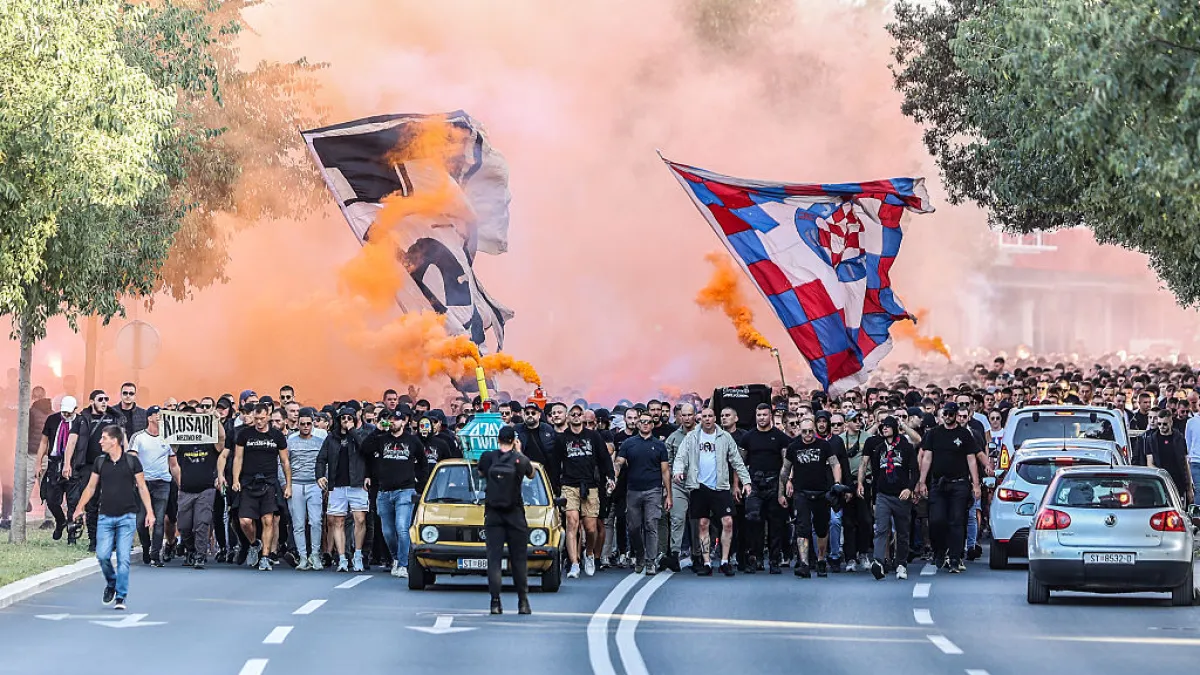
Groups of Hajduk Split fans, known as the Torcida, marched through the coastal town of Split before Thursday’s match chanting: “Crush the Jews”, “Rise up Adolf (Hitler)” and “Let’s go Ustasha”, referring to the country’s World War II pro-Nazi regime, local media reported.
Recommended Stories
list of 4 itemsend of list
Dozens of fans were detained before Thursday’s match for violence. During the match, Torcida fans set off flares and other pyrotechnics in the stands, forcing more than a 10-minute stoppage.
An investigation was opened into the pro-Nazi chants and suspects are being detained, police said.
President Zoran Milanovic in a Friday statement condemned the incident as “unacceptable and shameful”.
He urged swift action against the perpetrators to “show that there is no place in Croatia for the glorification of Nazism and Ustasha ideology”.
Israel’s embassy in Zagreb said on X it was “deeply shocked by the serious antisemitic incident that took place in Split and condemns it in the strongest possible terms”.
Conservative Prime Minister Andrej Plenkovic also condemned “messages of anti-Semitism … completely at odds with the values we want to uphold in Croatian society”.
Hajduk Split, who won the game 2-1, in a statement apologised to UEFA and Ajax who “witnessed scenes which we do not want Europe to remember”, while the Croatian football federation also condemned the incident.
Croatia’s ultra-nationalist hardcore supporters have tainted the country’s image for years, notably by chanting pro-fascist slogans and displaying Ustasha symbols.
The Ustasha regime killed and persecuted hundreds of thousands of ethnic Serbs, Jews, Roma and antifascist Croatians.
Croatia were docked a point by UEFA after their fans painted a swastika on the pitch in Split in 2015, before a Euro 2016 qualifier with Italy.
The perpetrators were never found.
In recent years, the country has seen a growing tolerance for its pro-Nazi past, and critics accuse authorities of failing to sanction the use of Ustasha emblems.

‘As soon as possible’ alert as UK passport holders told to ‘reduce risk’
HM Passport Office has issued an urgent alert to UK passport holders

You’ll need a valid passport to travel internationally(Image: Lu ShaoJi via Getty Images)
HM Passport Office (HMPO) has issued an alert to all UK passport holders, urging some to act “as soon as possible”.
Anyone in the UK wishing to travel overseas requires a valid passport to do so, and applicants must hold British nationality to apply for or possess a British passport. That said, having British nationality does not automatically guarantee you a passport. You may not get a new one – or have an existing one confiscated – in a number of circumstances.
These include being under suspicion of a serious crime, being on bail, or having previously been repatriated to the UK at the government’s cost without repaying the sum. Many people may also be unaware that your passport never truly belongs to you – it remains government property and can be revoked or withdrawn at any point.
In a fresh warning on X, formerly Twitter, on Friday, HMPO shared some crucial advice for British passport holders. The post reads: “Lost your passport? Report it as soon as possible. Doing so helps protect against misuse and allows you to apply for a replacement.”
Additional guidance on GOV.UK clarifies that reporting your passport as lost or stolen straight away will “reduce the risk of anyone else using your passport or your identity”. You can report a lost or stolen passport on behalf of someone else if they’re unable to do it themselves.
How can I get a new passport quickly?
For those requiring a new or replacement passport as a matter of urgency, a one-day service is available, although “the earliest you can get an appointment is two days after you apply”. You will be required to surrender your old passport at your appointment.
Your new passport will be ready to collect from the passport office four hours after your appointment. Bear in mind this service is exclusively available for adult passport renewals, and carries a cost of £239.50.
If you find yourself overseas and in urgent need of travel documents, you may be eligible to apply for an emergency travel document, though a fee will apply. Should you go down this route, there is no need to cancel your existing passport immediately, as it will be cancelled automatically as part of the emergency travel document application process.

Man seeking much younger girlfriend realises he may have to compromise on hotness
A MIDDLE-AGED man who wants a girlfriend in her 20s realises it is possible but she is unlikely to be the finest physical specimen.
Tom, not his real name, 48, would ideally like to date a 25-year-old knockout but accepts that her having options would be an obstacle to their relationship.
He said: “The apps let you filter for age but sadly not for beauty. I’ve written ‘young at heart’ on my dating profile because it clearly doesn’t apply to my body, which now makes weird noises both when coming and standing up.
“My youthful partner needs to be fun but not immature, confident but not intimidating, attractive but not vain, independent but still have time for me and, most importantly, have absolutely no interest in men her own age. Also she should insist on paying for herself. But strangely that’s proving hard to find.
“So I’ve accepted that her attractiveness may have to be dialled down. I’m prepared to accept facial features that may not be entirely symmetrical, or maybe even plain. It’s a big concession but I’m decent enough to make it.
“She needn’t be stick-thin either. She can have some fat, maybe even a slightly noticeable tummy. And for the breasts I’m prepared go down to a C-cup. Finding a mate is so much easier when you’re not a superficial guy.
“The main thing is she hasn’t yet reached 30. After that stage they grow opinions and that’s really unattractive.”
Norwegian teen ‘hitman’ Johannes Natland detained for UK murder plot
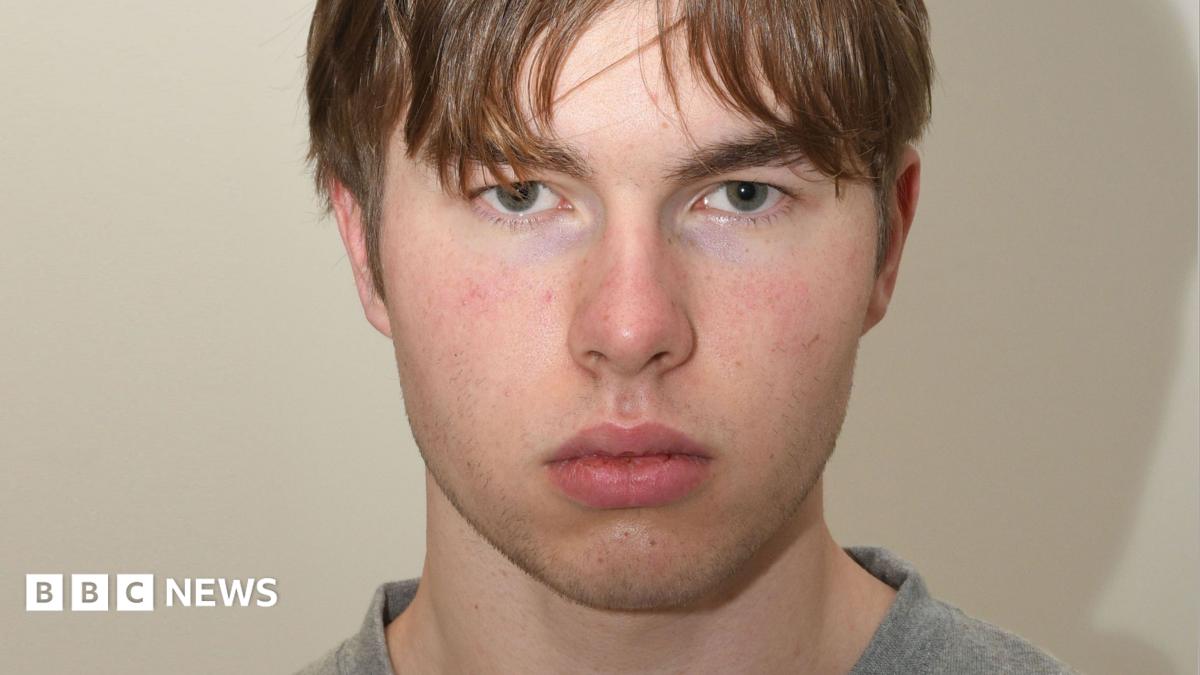
A teenager who travelled from Norway to the UK to carry out a “hit” for an organised crime group has been sentenced to 20 years’ detention.
Johannes Natland, 19, was arrested in a hotel room in Huddersfield, West Yorkshire, with two working guns and 19 rounds of live ammunition in March 2025, the Old Bailey previously heard.
During his retrial, a jury heard the teen was “recruited” by the Foxtrot Network, which was described as a Swedish organised crime group backed by the Iranian regime.
Natland, who had admitted to possession of the firearms and ammunition, was unanimously found guilty of conspiracy to murder and sentenced at Woolwich Crown Court on Friday.
The Foxtrot Network has been sanctioned by both the UK and the US for its close links to the Iranian government, with Natland’s target remaining unclear.
Commander Helen Flanagan, head of Counter Terrorism Policing London, said: “We haven’t been able to establish exactly who the intended victim was.”
The Foxtrot Network is known for pioneering a relatively new phenomenon of hiring teenage killers that Europol has called “violence-as-a-service” (VaaS).
At the sentencing hearing, Mrs Justice Cheema-Grubb told Natland: “The Foxtrot Network is an organised crime group which has developed an arm’s-length method of recruiting young people to carry out violent crimes.
“You were recruited to travel to England to kill an unidentified target.”
Natland flew into Manchester Airport on an emergency passport on 17 March 2025, shortly after his 18th birthday.
He was guided by videos on the messaging app Signal to Huddersfield, where the guns, a stolen car and a stash of cash were hidden.
He was prevented from carrying out the hit after Norwegian police arrested the teenager who had recruited him for the Foxtrot Network and found messages about the UK plot on his phone.
There was then a race against time to find Natland before he located his unknown target in England.
Addressing Natland, the judge said: “At the heart of this case is a stark fact. You agreed to assassinate another human being, a stranger to you, in a foreign country.
“You knew nothing of that person’s life or circumstances. You were just 18 years old when you placed yourself in readiness to murder for money.”

One-off gig from Brit duo sparks surge in hearing checks for thousands of over 50s

A GROOVE Armada gig has sparked a surge in hearing checks.
The Superstylin’ hitmakers headlined a one-off event exclusively for over-50s that saw music fans take action for their hearing health to be in with a chance of securing tickets.
The initiative, from Specsavers, saw more than 50,000 people complete a free three-minute online hearing screener before being entered onto ‘The Testlist’ a club guestlist exclusively for the over-50s across the UK and Ireland.
Among the over-50s who took the hearing screener, 75 per cent were told a check-up with a hearing expert could be worthwhile, while 25 per cent received results in the good-to-fair range.
The exclusive gig took place at Phonox in Brixton, London, last night, marking the first time Groove Armada have played the venue.
It followed further research of 2,000 adults which found 47 per cent of over-50s say some of their happiest memories revolve around the music they love.


While 21 per cent would attend more live music events if experiences were designed with their generation in mind.
Helping put that into practice was University of Derby’s associate professor of electroacoustics, Adam Hill, a live sound engineer and chair of the Healthy Ears, Limited Annoyance (HELA) Initiative.
He is also a supporter of the ‘Listen for Life’ campaign championed by the Night Time Industries Association and was enlisted to oversee safe listening measures.
Working closely with the venue, Dr Hill assessed the sound system’s performance, identified a dedicated quiet zone and conducted staff training.
During the event, sound levels were assessed and free hearing protection was provided to all attendees.
All these measures ensured that the event aligned with the World Health Organization’s Global Standard for Safe Listening Venues and Events.
Andy Cato, one half of the dance music duo, said: “We’ve been making and playing music for decades. For most of that time, the attitude to volume was the louder the better. Loud is exciting after all.
“As we approach our 30th birthday, still in DJ booths and still with lots of music to make, it would have been nice for there to have been greater awareness around enjoying the dancefloor experiences we all love whilst looking after your hearing.
“It’s nice to see this collaboration with Specsavers spreading the word and making a check-up for your ears as normal as one for your eyes.”
His bandmate, Tom Findlay, added: “When music’s been such a big part of your life, you don’t want to take your hearing for granted. It’s something I’ve come to appreciate more over the years, and I know what a difference taking care of it can make.
“The great thing is, it doesn’t mean changing the way you enjoy music, just being a bit more aware of it.
“And the fact that over 50,000 people took the online hearing screener to be part of this gig is fantastic.
“It’s a brilliant way to get people thinking about their hearing, while bringing everyone together through music.”
The poll of 2,000 adults also found 75 per cent of over-50s are still attending live music events, but 44 per cent have experienced ringing in their ears after a show.
Another 22 per cent have walked away from a venue with muffled hearing after a performance.
But 61 per cent added the availability of hearing protection would be important or essential when choosing where to go to enjoy live events.
Jo Cammell, from Oxfordshire, was one of the fans who secured a place at the Groove Armada gig after completing the free online hearing screener.
Now in her 50s, she returned to Brixton, where she last saw the dance music duo perform in 2004 while six months pregnant with her son Tom, alongside two lifelong friends.
Jo said: “Music has always brought our friendship group together. We started going out dancing in the early 90s and we’ve not hung up our dancing shoes yet. Nothing beats hearing music live.
“Superstylin’ has always been our tune, so coming back to Brixton to see Groove Armada more than 20 years after the last time feels incredibly special. It’s a reminder that dance music isn’t just for the young and that you’re never too old for a great night out.
“Taking the Specsavers hearing screener was really interesting because it made me stop and think about how important my hearing health is for the first time, so I can continue enjoying live music for years to come.”

‘Underrated’ city 3 hours from UK has magical Christmas market with Europe’s cheapest mulled wine for 82p a cup
IT’S easy to get into the festive spirit at a Christmas market and they’re even better on the cheap.
In one city that Brits can reach in three hours for less than £30, hotels are £15 per night, and mulled wine at festive stalls is as little as 82p.
Sibiu in Romania is the ideal city for a festive break and it was even named as the 18th most underrated destination by Time Out last year.
Not to mention it’s cheap, eurochange has compared the prices of mulled wine across 55 Christmas markets across Europe, and Sibiu came out on top.
A warm cup of infused red wine can be bought from 82p which is hugely cheaper than in the UK, where it can more than £7 a cup.
And you’ll be able to buy it soon too, as its Sibiu Christmas Market is set to open on November 13 all the way through until January 3, 2027.


Held in the Grand Square, the Christmas Market is completely free to enter.
There’s plenty to do, from hopping on the Ferris Wheel, to visiting Santa in his workshop, ice skating, and relaxing at the Chalet where festive drinks (including mulled wine) are served.
On certain evenings, the Chalet will even turn into a party spot with a live DJ.
One visitor described is as ‘magical’ and a ‘photographer’s playground’.
Outside of the Christmas market, there’s lots to see like The Bridge of Lies which has lots of legends and myths behind it – and when lit up at night, can make for a great picture spot too.
Another must-see spot in Sibiu is Muzeul Astra, the largest open-air museum in Europe.

Talking to Sun Travel, one Wizz Air flight attendant explained why Sibiu is a must-visit destination.
Niko said: “I’ve been to Sibiu in Romania several times already.
“You have the mountains, so there’s lots of nature, the food is amazing, everything is cheap and the people are so friendly.
“And you should try Papanasi. It’s a Romanian dessert that’s like a doughnut. It tastes amazing, but not good if you’re on a diet.”
It’s not just mulled wine in Sibiu that’s affordable – the price of a local pint of beer is less than £2 on average, according to Wise.
The price of a meal can be bought for less than £5 and coffee on average is also less than £2.
Brits can fly directly from London Luton to Sibiu three times a week with Wizz Air and one-way fares start from £26.99.
On Booking.com, one-night stays during November in Sibiu can cost less than £30 per night – or £15 each.
Here are the cheapest place for mulled wine in 2026…

Here are eurochange’s cheapest places for mulled once – and the average price of a cup…
- Sibiu, Romania – 82p
- Brașov, Romania – £1.63
- Craiova, Romania – £1.63
- Sofia, Bulgaria – £1.76
- Olomouc, Czechia – £1.77
- Brno, Czechia – £1.77
- Gothenburg (Christmas at Liseberg), Sweden – £1.89
- Bucharest, Romania – £1.96
- Plzeň, Czechia – £2.12
- Strasbourg, France – £2.57
- Mulhouse, France – £2.57
- Vilnius, Lithuania – £2.57
- Liège, Belgium – £2.57
- Warsaw, Poland – £2.59
- Graz, Austria – £3

Debuts, returns & tributes – teams named for European openers
Leinster, Munster, Connacht and Ulster name their matchday squads for Saturday’s opening Investec Champions Cup and Challenge Cup games.
Source link

Why is China buying up gold? | Explainer News
China is increasing its gold reserves in a bid to reduce its dependence on US dollar assets and protect against financial and geopolitical risks, analysts say, while households are turning to the precious metal amid uncertainty over the domestic economy.
The People’s Bank of China reported buying gold for a 23rd consecutive month in September, when the country’s central bank also made its largest monthly purchase in nearly three years. The sustained buying points to a longer-term effort to spread risk associated with its vast reserves, experts say.
Among concerns is high US debt and Western governments’ freezing of assets, which has highlighted the inherent risk in holding money overseas, particularly for emerging market and Global South economies. Gold bought and stored domestically offers protection against that risk because access does not depend on the will of another government.
But central bank buying and household demand for gold in China have different drivers. While Beijing is managing its financial exposure, private investors are seeking somewhere to preserve their savings. Here is what we know.
How much gold has China bought?
China’s central bank added approximately 23 tonnes of gold in September, bringing its reported holdings to about 2,410 tonnes, according to the World Gold Council. That was its largest monthly purchase since October 2023. Gold accounted for 8.5 percent of China’s total official reserves at the end of September, compared with 5.5 percent at the end of 2024.
Reserves are assets central banks hold to ensure they can meet international payments and respond to financial disruption. They usually include foreign currencies, foreign government debt and gold.
Private demand for gold within China has also risen, with purchases of gold bars and coins 28.4 percent higher in the first half of 2026 than during the same period last year, according to the China Gold Association. The buying of gold has continued amid falling prices, with gold down around 8.5 percent over the month.
The World Gold Council attributed the decline in gold prices partly to a stronger dollar and higher returns on US government debt. With interest rates going up in an attempt to curb inflation, these investments are attractive for buyers as they pay interest, making them more attractive to private investors than gold, which does not.
Why is China buying more gold?
A key objective is to reduce dependence on US government debt, known as Treasuries, according to Thu Lan Nguyen, head of commodity research at Commerzbank in Frankfurt.
China holds substantial reserves in dollar-based assets and, therefore, buying gold reduces its exposure to decisions taken in Washington. “China’s gold purchases are part of a broader effort to make its reserves more resilient,” Nguyen told Al Jazeera.
The freezing by Western countries of roughly $300bn in Russian Central Bank overseas assets following Moscow’s invasion of Ukraine in 2022 demonstrated how reserves held abroad can quickly become inaccessible.
The concern for China may be that a future confrontation with Washington could expose some of its overseas assets to similar restrictions. “Gold held domestically has a crucial advantage in this respect: it does not represent a claim on another country and is therefore much less exposed to sanctions or asset freezes,” Nguyen said.
“I would interpret it primarily as risk management,” she added, pointing to increased geopolitical tensions and economic and fiscal risks.
America’s rising debt, which hit $40 trillion for the first time in history earlier this year, adds another source of uncertainty. In February, the US Congressional Budget Office projected that federal debt held by the public would rise from 101 percent of the size of the US economy in 2026 to 120 percent in 2036. That provides context for concerns about Washington’s ability to repay that debt going forward should an economic crash occur. Much of this debt is held by China. Gold, therefore, offers a less volatile and risky asset to hold.
Chinese households have different motivations for buying gold. When confidence in other investments weakens, gold can become more attractive as a way to hold savings. “Strong demand for gold can partly reflect a search for alternative stores of value,” Nguyen said.
The World Gold Council has identified weak Chinese share markets as one factor supporting domestic demand for gold, while its property market is burdened by heavy borrowing and overbuilding, contributing to a fall in housing prices, making it a poorer investment.
What this means for the US dollar
Analysts warned that China’s increased buying of gold does not signal an imminent end to the dollar’s global dominance. “I would be cautious about describing this as a major shift away from the dollar,” Nguyen said. “The dollar remains by far the dominant global reserve currency.”
But a gradual shift could still matter if China and other central banks put more of their new reserves into gold, buying fewer US assets than they normally would. That could weaken one source of demand for US government debt. But the effect would depend on how widely and quickly the shift developed.
“The key point is, therefore, that this is likely to be a slow diversification process rather than a sudden abandonment of the dollar,” Nguyen said. She added that the consequences for the US economy would remain limited unless the trend broadened and accelerated substantially.
Central banks also need readily available foreign currency to support international payments and the dollar remains central to those transactions. So gold can provide financial protection, but it cannot directly replace all the functions of dollar reserves.
Who else is buying gold?
China is part of a wider trend, particularly among central banks in emerging economies, Nguyen said.
“The trend is particularly visible among emerging market central banks,” Nguyen said. “But sanctions are only part of the story.”
Poland has also become a more prominent buyer. Its central bank purchased 31 tonnes in the first quarter of 2026 and another eight tonnes in July, according to the World Gold Council.
Large holdings do not necessarily indicate recent purchases. India, for example, confirmed in June that its physical gold stock remained unchanged at about 880.5 tonnes. India’s gold reserves have changed little since mid-2025, according to the World Gold Council. It bought about four tonnes in 2025, down from 73 tonnes in 2024.
Despite China’s sustained buying, its reserves remain far smaller than those of the United States. Its holdings of about 2,300 tonnes at the end of 2025 amounted to less than one-third of the US stockpile of approximately 8,133 tonnes.
Malaysia’s welcome for Min Aung Hlaing undermines its stand on justice | ICC
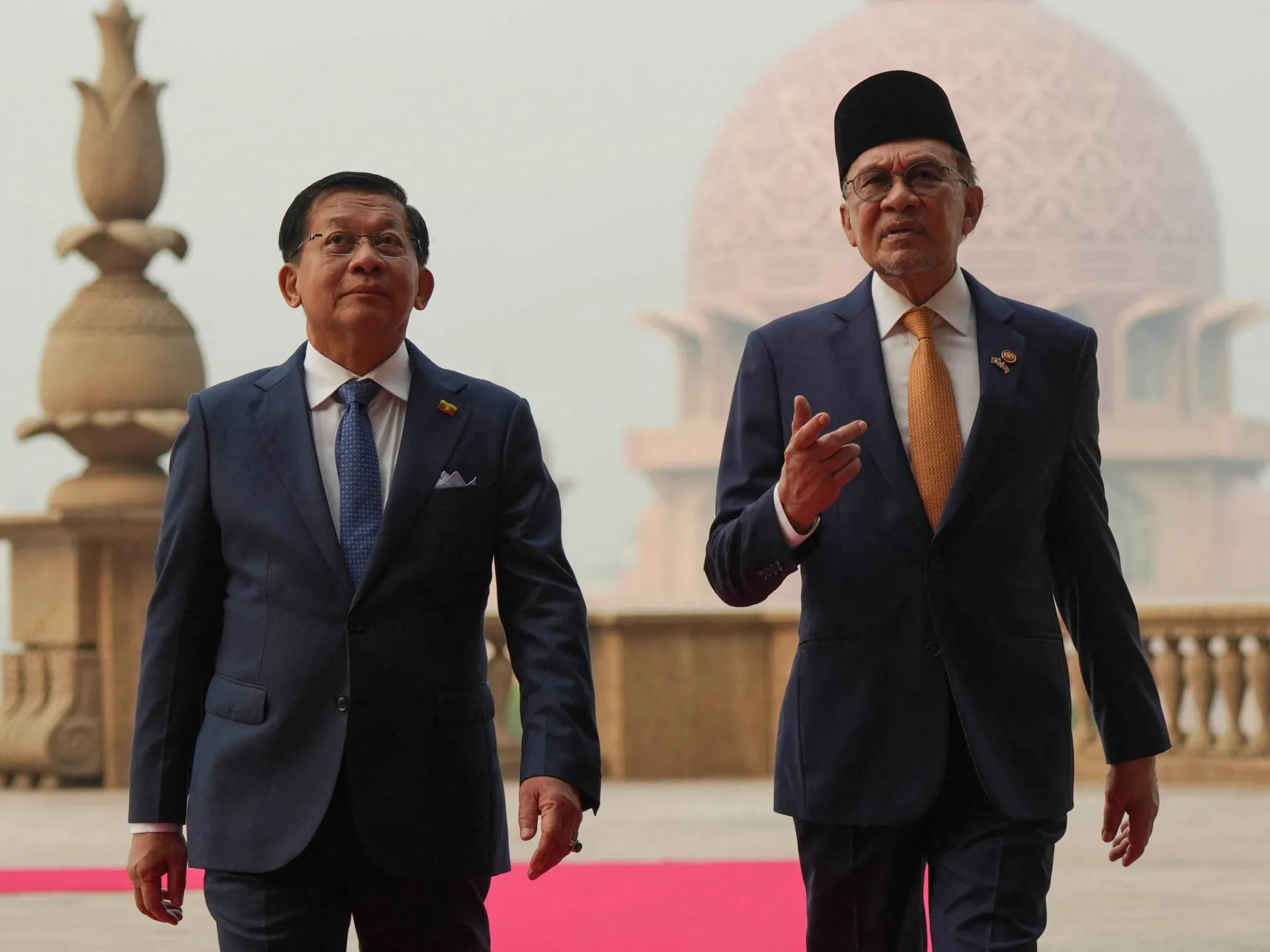
On October 8, Malaysian Prime Minister Anwar Ibrahim received Myanmar’s President Min Aung Hlaing in Putrajaya with a guard of honour and an official luncheon, in the military chief’s first visit since the 2021 coup. Nine days earlier, Malaysia sent 1,476 Myanmar nationals back by sea in the first phase of a plan to return 5,000 people.
Kuala Lumpur calls this pragmatic diplomacy. In reality, it lends a middle power’s credibility to the Trump administration’s retreat from international accountability, weakening the laws and institutions smaller states rely on most.
Domestic pressures
Since May, a surge of online hate speech and misinformation has targeted the Rohingya, Malaysia’s largest refugee community. By late July, at least nine Rohingya community schools had closed or faced closure orders, and more than 100 Rohingya told UNHCR that residents of their Penang village had driven them out.
The hostility ignores the facts: Malaysia’s police chief says Rohingya account for 0.02 percent of crime. Yet research by INITIATE.MY and the Center for the Study of Organized Hate found AI-generated content amplifying anti-Rohingya disinformation across Malaysia, Indonesia, India and Bangladesh, casting refugees as a threat and legitimising vigilante violence.
Electoral politics plays a part. After heavy losses in three state elections, and with a general election due by February 2028, Anwar’s coalition may see a hard line on Rohingya returns as a show of control, though voter disillusionment and right-wing rivals make any electoral gains uncertain.
Impunity goes mainstream
Malaysia is not acting alone. Mongolia hosted Vladimir Putin in 2024 despite an ICC arrest warrant, and Hungary welcomed Benjamin Netanyahu in 2025 despite another. Kuala Lumpur denies this is recognition, yet Anwar says Malaysia will work towards Myanmar’s full reintegration into ASEAN, and Min Aung Hlaing wants a seat at the bloc’s November summit in Manila. Each welcome makes the next easier and tells leaders accused of atrocities, from Netanyahu to Min Aung Hlaing, that diplomatic rehabilitation is possible without accountability.
ASEAN has tried this before. In April 2021, Min Aung Hlaing agreed to the Five-Point Consensus, then ignored it: The violence continued, the ASEAN special envoy never met Aung San Suu Kyi, and inclusive dialogue never began. The bloc’s one real lever was excluding military leaders from its summits. Myanmar Specialist, Arkar Hein, said “Welcoming him back with nothing asked in return rewards that defiance and tells Naypyidaw that time and a staged election can achieve what
compromise would otherwise require. Each handshake abroad also makes the regime less willing to offer its opponents real concessions, and convinces them that only the battlefield will decide Myanmar’s future.”
A question of consistency
Malaysia has spent decades building its credibility as a regional peacemaker, a hard-won reputation it now puts at risk. It has facilitated the Bangsamoro peace process since 2001, helping negotiate a landmark peace agreement in the southern Philippines, and has facilitated talks in southern Thailand since 2013. In November 2024, Anwar welcomed the ICC’s arrest warrants for Netanyahu and his former defence minister, saying they “should be arrested even if they are visiting other countries”. That same month, the ICC prosecutor sought an arrest warrant for Min Aung Hlaing for alleged crimes against humanity targeting the Rohingya, and an Argentinian court has since issued its own.
The Gambia’s genocide case against Myanmar at the International Court of Justice centres on the 2016-17 operations Min Aung Hlaing commanded, which killed thousands of Rohingya, included mass rapes and burned hundreds of villages, driving more than 700,000 people into Bangladesh. UN investigators called for him to face genocide charges. Malaysia is not a party to the Rome Statute and has no legal duty to arrest him. But its credibility as a peacemaker and on Palestine rests on applying one standard to everyone.
Returns without safeguards
The returns rest on assurances no independent body can verify. UNHCR says it was not involved in the returns and had no access to verify that they were voluntary, and that safe conditions do not exist. Those returned reportedly included 27 children. Though not a party to the Refugee Convention, Malaysia is bound by the customary principle of non-refoulement, and the UN Special Rapporteur on Myanmar has warned of substantial risks.
Naypyidaw says no Rohingya are involved because it does not recognise them as citizens, but other returnees also risk arbitrary detention, prosecution and forced recruitment. The military does not even control Rakhine State, where the Arakan Army holds more than 90 percent of the territory. On September 28, a day before returns began, a military air attack reportedly killed at least 50 civilians there, following more than a dozen other mass killings by the military earlier this year.
Nor can the military-backed government deliver the peace that safe return requires. Its election saw no voting in 67 of 330 townships, and when Min Aung Hlaing offered peace talks in April, the National Unity Government (NUG) and major ethnic armed groups refused. Without a ceasefire and an inclusive political process, assurances of safe return ring hollow.
Malaysia’s frustration is nonetheless legitimate. It has hosted refugees for decades with little international support, and resettlement has shrunk since the Trump administration suspended United States refugee admissions in January 2025. But failed burden-sharing cannot justify returns without safeguards.
Pressure on the court
The ICC exists so that victims of genocide, war crimes and crimes against humanity can find justice when their own states fail them. That mission now faces unprecedented pressure. On October 9, hours after former ICC judge Navi Pillay won the Nobel Peace Prize, the Trump administration sanctioned the court itself. Burkina Faso, Mali, Niger, Chad and Venezuela have announced their withdrawal.
Yet middle powers can push back. Seventy-nine ICC members, including Canada, Brazil, Mexico and South Africa, backed the court after the first US sanctions in February 2025, and in May Hungary’s new government reversed its predecessor’s withdrawal. In Southeast Asia, the Philippines surrendered former President Rodrigo Duterte to The Hague, and on October 8 judges found him fit to stand trial for crimes against humanity, with proceedings due to begin on November 30.
Middle powers should say no
Middle powers like Malaysia, and blocs such as ASEAN and the European Union, cannot stop US sanctions, but they need not follow the Trump administration’s lead. As Canadian Prime Minister Mark Carney told the World Economic Forum in January, middle powers “must act together, because if we’re not at the table, we’re on the menu”.
Malaysia and its neighbours should lead by saying no: No to efforts to weaken the court, no to treating Min Aung Hlaing’s presidency as a clean slate, and no to Rohingya returns into an active conflict. Malaysia should back efforts to hold him accountable if ICC judges issue a warrant, and reconsider acceding to the Rome Statute, a move it abandoned in 2019.
Saying no does not mean disengaging. Kuala Lumpur should tie Myanmar’s reintegration into ASEAN to real progress on the Five-Point Consensus, starting with an end to violence and inclusive dialogue involving the NUG and ethnic armed organisations. At home, it should pause returns until an independent body confirms they are safe and voluntary, and hold accountable those who evict, threaten or attack refugees.
Malaysia should not carry this burden alone. ASEAN partners, members of the Organisation of Islamic Cooperation and donors should fund refugee registration, education and integration, and resettlement countries should restore their commitments. Governments should also hold tech platforms accountable for amplifying anti-refugee disinformation and require swift action against incitement.
For years, Malaysia has offered refuge to the Rohingya and others fleeing Myanmar when few countries would. That record gives it the standing, and the responsibility, to defend the system of international justice it has long championed.
The views expressed in this article are the author’s own and do not necessarily reflect Al Jazeera’s editorial stance.

‘Heartbreaking’ true story Netflix viewers rush to watch is perfect for Green Mile fans
Netflix subscribers have been urged to check out a ‘heartbreaking’ true story that has been compared to Green Mile – but be warned as it’s said to be ‘one of the saddest films to ever exist’

Netflix viewers have been urged to check out the movie(Image: NETFLIX)
Netflix viewers have been left in floods of tears after watching a ‘hidden gem’ tucked away on the video streaming platform. Luke Eccleston, who reviews movies and television shows on social media, is urging Netflix subscribers to check out a ‘heartbreaking’ true story that’s perfect for Green Mile fans.
Luke, who posts under the username Eccy Reviews, said on TikTok: “I’m not saying this lightly, but you need to run to Netflix immediately because I’ve just discovered the biggest hidden gem. I’ll be very surprised if you’ve seen this film, and once you have, you will never, ever forget about it. The film that I’m talking about is called Miracle in Cell No 7. Now, if you’re someone who’s seen this film, you’ll know that this is one of the saddest films to ever exist.”
Ensure our latest headlines always appear at the top of your Google Search by making us a Preferred Source. Click here to activate or add us as Preferred Source in your Google search settings…
‘This is one of the saddest films to ever exist’
Based on the the Korean movie Miracle in Cell No 7, it tells a story of love between a mentally-ill father who was wrongly accused of murder and his lovely six-year-old daughter.
Luke added: “It is actually based on a true story. This follows this man with special needs who has this younger daughter.
“After an incident where another little girl is killed, he is framed and sent to prison. He is sentenced to death. The people in the prison believe that he did the things.
“What he is accused of and the things they do to him is honestly awful. After time, they begin to realise who and what he is.
“The story, what comes out of it is genuinely incredible. I was shocked so many times watching this film. I was in so many tears.
“I’ve recommended this to so many friends, and every single person who’s watched it has said that they cried.”
‘I loved this movie, cried and cried’
Starring Aras Bulut Iynemli, Nisa Sofiya Aksongur, and Deniz Baysal, the movie has won 12 awards alongside its 13 nominations.
Commenting on Luke’s video, one user said: “Just put it on, I’ve got my tissues ready.”
Another user added: “Similar to Green Mile.”
A third user said: “I loved this movie, cried and cried. Amazing!”

LAPD chief a polarizing figure as Bass, Raman diverge on police issues
In the race to become L.A.’s next mayor, the city’s top cop — LAPD Chief Jim McDonnell — has become a lightning rod for debate.
The two candidates — incumbent Karen Bass and City Councilmember Nithya Raman — have staked out differing positions about how the Los Angeles Police Department has performed under McDonnell.
Raman has vowed to replace McDonnell, saying he has not “met the moment” given the department’s response to federal immigration raids. Bass has publicly backed the chief she hired two years ago, saying the LAPD could be thrown into disarray if McDonnell is removed before the 2028 Olympic Games.
Raman’s potential ouster of McDonnell and desire to push reforms on the LAPD has pitted her against the Los Angeles Police Protective League, the powerful union for rank-and-file officers that campaigned against Bass during her first election but is now backing her. The union has poured millions of dollars into attack ads against Raman, who has said she declined contributions from the organization in the past.
In an op-ed published in the Protective League’s monthly magazine earlier this year, union president Richard Mendoza called the Democratic Socialists of America, which has endorsed Raman, an “imminent threat to our members.”
Last week, Raman faced criticism for an Instagram video in which she appeared to slam McDonnell and the mayor, saying at one point “only you can stop fascist liars.” She later denied that she was referring to Bass or McDonnell, saying her remarks were improperly edited — and that she had the video pulled.
The Raman campaign did not respond to numerous requests for an interview about her vision for the LAPD.
Raman, a Harvard-educated urban planner, has sought to burnish her credentials as a political outsider by publicly calling for a change in LAPD leadership — but she hasn’t given a clear timeline on when she would replace McDonnell.

LAPD Chief Jim McDonnell greets Mayor Karen Bass during a ceremony at police headquarters in downtown Los Angeles on May 27.
(Christina House / Los Angeles Times)
Last week, Raman told ABC7 she expected to replace McDonnell in 2030, after he has finished his first five-year term. Hours later, she pulled back a bit, issuing a statement saying she expects to replace him prior to the end of his term, which concludes in late 2029.
“Chief McDonnell is Mayor Bass’s police chief,” her statement said. “I have made it clear that I would seek a chief who can keep Angelenos safe and restore trust with our immigrant communities.”
Her comments at a mayoral debate this week threw further uncertainty about who will run the LAPD if she gets the top job.
Raman sidestepped a question about whether she would replace McDonnell before the Olympics.
“I believe he’s lost the trust of Angelenos, especially in light of the ICE raids,” she said, adding that she wasn’t sure that she could make a “unilateral decision” to fire McDonnell outright. Bass pounced on the comment, saying that the fact that Raman didn’t know the mayor has that authority to get rid of a police chief shows she is unfit for the office.
The LAPD didn’t immediately respond to a request Thursday for an interview with McDonnell.
Asked about Raman’s remarks during his regular appearance on Fox 11 Los Angeles on Wednesday, McDonnell said he found it “problematic” to hear criticism of the LAPD’s response to civil unrest from someone “who wasn’t there.”
He defended the department’s protest response, saying his officers acted appropriately when confronted by unruly demonstrators hurling bottles, bricks, Molotov cocktails and commercial-grade fireworks. Fifty-two officers suffered injuries, ranging from concussions to hearing loss, he said. Such “riotous situations” necessitated the use of tear gas against crowds, he said, something the department hadn’t done in decades.
“It was getting to a point where it could become a deadly force situation, which we were trying to avoid at all costs,” he said. “I don’t think it could’ve been done differently that could’ve had a better outcome.”

City Councilmember Nithya Raman speaks during a debate with incumbent Mayor Karen Bass on Oct. 13.
(Eric Thayer / Los Angeles Times)
Conventional wisdom holds that new mayors will eventually select their own chief, a decision that is considered as important as any in defining a city leader’s legacy. Some have waited longer than others to do it. Bass, for instance, oversaw the reappointment of McDonnell’s predecessor, Michel Moore, shortly after her election and stood by him for a year before Moore’s abrupt resignation in early 2024.
Mayors in other big cities have faced similar dilemmas.
In New York City, Mayor Zohran Mamdani, a democratic socialist whom Raman is sometimes compared to, recently announced that he intends to retain NYPD Commissioner Jessica Tisch, in a move that was decried by his progressive base. Mamdani told local media that he believed that Tisch was right for the job, based on a proven track record of rooting out corruption and had overseen a crime drop as commissioner, which is the equivalent of a police chief in L.A.
Bass selected McDonnell to lead the LAPD in November 2024 after a lengthy nationwide search.
His appointment was viewed with surprise in local political circles, where some questioned why a progressive mayor like Bass, with a background in community organizing, would hitch her fortunes to a law-and-order chief. Others argued that McDonnell was an appealing choice: An LAPD veteran who offered experience and respect after serving as the chief in Long Beach and later as L.A. County sheriff.
After numerous scandals under Moore, McDonnell was seen as offering stability while the city prepared for the massive security challenges of the World Cup and Olympic Games. In McDonnell, his supporters say, the mayor has an honest and principled leader who has managed to steady a department beset by low morale, dwindling staffing levels and aging facilities. Violent crime has fallen to historic lows under his watch, as it has it many other U.S. cities.
McDonnell, however, has faced withering scrutiny over a dramatic rise in police shootings last year and for the department’s use of hard foam projectiles, tear gas, horse-mounted officers and other tactics against protesters. Within the LAPD, some have also criticized McDonnell for taking a detached approach to running the department and ceding control to underlings, such as Assistant Chief Dominic Choi.
During Tuesday’s debate, Raman suggested that under McDonnell the LAPD has drifted back to being a more opaque, closed-off agency that no longer publishes basic information such as neighborhood-level crime statistics.
In a recent interview with The Times, Bass signaled her frustration with the slow pace of change within the LAPD.
Without singling out McDonnell by name, Bass said she was concerned about the lack of progress on revamping LAPD’s much-maligned disciplinary system, which the chief oversees and which — depending on who you ask — either punishes officers too harshly or fails to hold them accountable.
Bass said that when she toured police station houses after being elected, the number one complaint she heard was about the perception that lower-ranking officers are punished more severely than command staff.
“They feel that command gets away with a lot of things that the rank and file does not,” she said. “So I feel like the reform of the disciplinary system has not gone fast enough, and I am concerned about that.”
Bass has also vowed to make a priority of addressing police shootings of civilians, particularly those involving people experiencing mental health crises. Last month, she signed an executive directive calling for an outside review of the LAPD’s policies and training, which she referred to as “woefully inadequate.”

Los Angeles Police Chief Jim McDonnell speaks at a news conference at the Hall of Justice on Aug. 6.
(Arwen Clemans / Los Angeles Times)
If McDonnell has any doubts about his future, he hasn’t hinted at them during recent public appearances, often talking about the department’s role in the Olympics.
Bass told The Times that a push to replace McDonnell right before the 2028 Olympic Games would leave the LAPD with a leadership vacuum just as its leaders are supposed to be focused on security plans for that event. The last time city leaders recruited a new chief, the search process was nationwide, lasting more than 10 months, she said.
“I think that [Raman] is naive on what it means to do that,” Bass said. “I think she’s naive, and not understanding the instability to the department when leadership is in flux. And so if it took her the same amount of time, that means we’d have a new police chief about seven to eight months before one of the most high-profile security events in U.S. history.”

LAPD Chief Jim McDonnell with his wife Kathy, right, is introduced as the 59th chief of the Los Angeles Police Department with Dr. Erroll Southers, then the president of the Los Angeles Police Commission, left, and Mayor Karen Bass on Nov. 14, 2024.
(Brian van der Brug / Los Angeles Times)
In some ways, Raman and Bass are not as far apart on public safety as they previously were. Both candidates have been critical of the license plate reader company Flock Safety, advocated for investing in alternatives to policing and have recently indicated that they are committed to keeping the LAPD from shrinking any further. And since launching her mayoral bid, Raman’s campaign has publicly distanced itself from the “defund the police” movement that Bass has consistently rebuffed.
Where the two candidates diverge most sharply was over a package of police raises negotiated by Bass in 2023 that Raman said has deepened the city’s financial problems. Sold as a way to boost recruitment, the pay increases are among the reasons the police union has endorsed Bass’ reelection. The next mayor will be asked to negotiate a new police contract, which is set to expire next year.
Matt Klink, an L.A.-based Republican political consultant, said that law enforcement groups, such as the Protective League, were skeptical of Bass when she first took office but now back her because she has “shown through her first term in office that she has consistently supported the police.” He said that Raman, on the other hand, has played to the far left by villainizing McDonnell and downplaying concerns about safety.
“Mayor Bass has a stronger record of supporting the police,” he said. “She backed our contracts and our budgets — she has generally supported public safety.”
UCLA professor David Turner said despite his wariness of Bass’ centrist drift, he and other progressives are equally skeptical of Raman, who, has repeatedly voted to increase the LAPD budget without any meaningful efforts to rein in police misconduct.
“That money was proposed by Mayor Bass and voted and approved by Councilmember Nithya Raman,” said Turner, who runs Million Dollar Hoods, which seeks to map the impact of mass incarceration. Still, he said, he hopes that Raman’s tough talk about McDonnell will translate into more accountability for the LAPD.
“What I’m looking for and what L.A. progressives are looking for is a certain level of boldness and a willingness not to capitulate to the [Protective League] and their whims,” he said.
Times staff writers David Zahniser and James Queally contributed to this report.

Fabulous UK town packed with independent shops and a market that’s been running for 700 years
This gorgeous town is tucked inside one of the country’s most beautiful regions.

This gorgeous market town is a great place to explore(Image: chrisdorney via Getty Images)
One of the great pleasures of being on holiday is browsing the shops of wherever you happen to find yourself. Unearthing hidden gems or tasty local treats to take back home is one of the finest parts of any trip away.
Nestled in a stunning corner of the UK is a town boasting a market brimming with treasures that has been running for hundreds of years. The charming town of Keswick sits within the Lake District and is renowned for its breathtaking scenery – and naturally, its market.
Before the market as it exists today came into being, churchgoers would hold unofficial ones in the nearby church.
In order to regulate trading, the town was granted a Royal Market Charter in 1276 that gave it the legal right to hold a weekly Saturday market and an annual five day fair.
Today, the market continues to flourish and can be visited every Thursday and Saturday. There are roughly 60 different stalls to browse, selling everything from locally produced food and drink to vintage clothing and artisan gifts.
It’s not solely the market that makes Keswick such a wonderful destination. The town is also packed with stunning lakeside walks that burst into glorious shades of gold and orange throughout the autumn months.
As the leaves begin to turn, now is arguably the ideal time to pay Keswick a visit.
The market town sits in the northern section of the Lake District National Park, and ranks among the nation’s most stunning locations.
There’s an abundance of remarkable walks that highlight the area’s natural splendour. If you’re seeking panoramic vistas, then the Latrigg path is essential, winding up the hillside for three miles.
Upon reaching the top, you’re treated to sweeping views across Keswick and the neighbouring Derwentwater.
Another essential walk is the Castlerigg Stone Circle route which guides you along the former railway path, then up the lane towards the Castlerigg Stone Circle.
The stone circle occupies a natural plateau, and stands as one of Britain’s oldest stone circles stretching back to the Neolithic era.
Some of the 38 stones within the circle tower up to 10 feet high.
Taulupe Faletau and Josh Adams back for Cardiff at Northampton in Champions Cup
Northampton: Pater; Sleightholme, Hutchinson, Thame, Hendy; Belleau, Mitchell; Fischetti, Smith, Kundiona, Lockett, van der Mescht, Kemeny, Taylor, Chick.
Replacements: Langdon, Els, Neculai, Prowse, Ulcoq, McParland, Smith, Dingwall.
Cardiff: Young; Grady, Millard, Emanuel, Bowen; Evans, A Davies; Southworth, D Hughes (capt), Wainwright, Manz, Thornton, Paea, D Thomas, Faletau.
Replacements: E Lloyd, Barratt, Cowell, McNally, De La Rua, Mulder, Sheedy, Adams.
Referee: Jeremy Rozier (France)
Assistant referees: Thomas Charabas (France) & Cyrille Boulay (France)
TMO: Julien Castaignede (France)