


Why is Kenya turning against Tata Chemicals in Magadi? | News
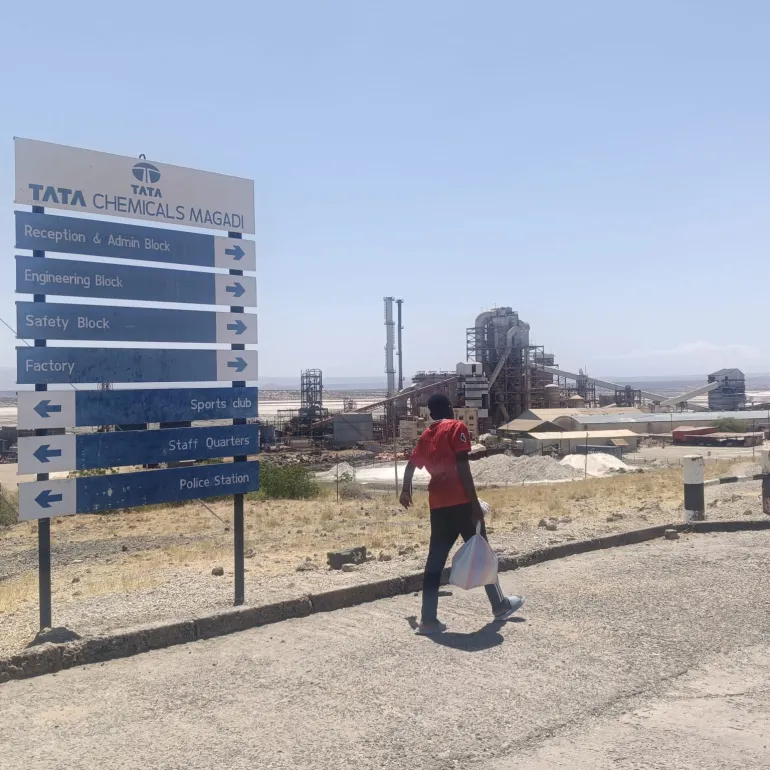
Magadi, Kenya – For more than a century, soda ash has shaped life in Magadi, a remote town on the shores of Lake Magadi in Kenya’s Kajiado County.
The mineral has brought exports, jobs and business. But for many people living around the lake, that activity has not brought enough opportunities or basic services. The result is a complicated relationship with Tata Chemicals Magadi, the company that has mined soda ash there for generations.
Now that relationship is under strain. The Kenyan government has suspended the company’s mining operations, and President William Ruto has ordered it to leave while a joint technical committee works with the company to resolve outstanding issues.
For Magadi, the dispute is also about what the community and Kenya have gained from a resource extracted there for more than a century.
A century of soda ash
Commercial soda ash production in Magadi dates back to 1911. Tata Chemicals acquired the operation in 2005 and later renamed it Tata Chemicals Magadi Limited.
The company has become one of Kenya’s major soda ash exporters, with much of its production destined for international markets. It has also become part of everyday life in Magadi, providing jobs and supporting services including water, healthcare and education.
But the government says its long history in the area does not exempt Tata from Kenya’s current mining laws.
Mining Cabinet Secretary Hassan Joho told Al Jazeera on September 11 that the regulatory environment changed after the 2010 Constitution and the Mining Act. He said a government-wide compliance audit found that Tata had not applied for a mineral right under the Mining Act and had instead relied on its land concessions.

According to Joho, Tata made its first application for a mineral right on July 26, 2024, after which the government began engaging with the company over compliance.
“Past oversights do not grant immunity from existing laws,” Joho said.
He said the review also identified issues around mineral royalties, community development agreements, local processing, employment of Kenyan citizens, procurement of local goods and services, and outstanding matters with the Kajiado County government.
The government says Kenya should get more value from the resource instead of mainly exporting it as a raw material.
Ruto has made a similar argument, saying communities have not benefitted enough from the mineral extracted from Magadi. During his visit to Kajiado, he said a new investor should establish major glass and chemical manufacturing facilities in the county, creating jobs and keeping more value in Kenya.
Why now?
The government’s decision has raised a question for a company that has operated in Magadi for more than a century: why now?
Joho told Al Jazeera that the answer lies in the government’s decision to carry out comprehensive compliance audits across the mining sector, including legacy concessions.
The ministry suspended Tata’s operations in July, citing regulatory concerns. Since then, the company and the government have been negotiating over how to resolve the outstanding issues.
Tata disputes the suggestion that it has ignored regulatory requirements.
In a statement to Al Jazeera, the company said its subsidiary submitted a comprehensive response to the ministry on August 11 regarding the issues raised in the July 28 suspension notice. Tata said the submission included information on its compliance with applicable regulations and that it was waiting for further direction from the ministry.
The company said it respected the authority of the Kenyan government and remained committed to constructive engagement with concerned agencies and regulators.
The economic stakes are significant. The Standard has previously reported that Tata’s Magadi operation contributes substantially to Kenya’s economy and that the company has argued that a shutdown would affect exports, foreign exchange and employment.
The operation supports hundreds of workers directly, while thousands more people in Magadi depend on the wider economy around it.
A community caught between dependence and frustration
For residents, the debate is not simply about whether Tata should stay or go. It is about what they have received from a company that has been at the centre of Magadi’s economy for generations, and what they could lose if it leaves.
Nkanoi Matipei, a Magadi resident, said locals want more jobs at different levels, more corporate social responsibility projects and access to land under Tata that they say is currently idle and used for grazing.
Another resident, Esther Nganoni, strongly opposed the idea of removing Tata.
“Tata Chemicals Company has been our lifeline,” Nganoni told Al Jazeera, pointing to bursaries, water and health services provided by the company.
She questioned what a replacement investor would offer the community and said residents must be consulted before any decision is made.
Cosmas Karera Kiratu, who previously served as the subcounty children officer for Kajiado West, told Al Jazeera that Magadi faces serious challenges, including poverty, water shortages, long distances to schools, inadequate infrastructure and teachers, child labour, teenage pregnancy, female genital mutilation and child marriage.
He said some schools are about 15km (9 miles) apart, while water remains particularly difficult to access.
According to Karera, the only clean water available through a piped system is supplied to Tata Chemicals from Ngurumani, about 40km (25 miles) away.
Residents depend heavily on Tata water bowsers, which he said do not reach all communities and often provide insufficient water for both domestic and livestock use.
“The local community was very dependent on Tata company in terms of water, health services, school bursary and schools upgrading,” Karera said.
He warned that an abrupt end to Tata’s operations could have serious consequences if alternative services are not put in place.
The technical committee and what happens next
That uncertainty is now at the centre of the government’s negotiations with Tata.
Joho said the ministry’s suspension was intended to give the company an opportunity to address the identified compliance issues. After Tata committed to remedy the outstanding matters, he said, a joint technical committee was established to guide the process.
Joho said the committee is dealing with the formation and gazettement of Community Development Agreement Committees, local processing facilities, outstanding mineral royalties, employment of Kenyan citizens, procurement of local goods and services and unresolved matters with the Kajiado County government.
He said discussions were progressing.

“Deliberations within the joint technical committee remain progressive, with a clear focus on achieving full statutory compliance under the Mining Act and securing socioeconomic returns for the extractive sector, the local community, and the nation at large,” Joho told Al Jazeera.
The Standard reported that the committee is also considering mineral beneficiation and in-country value addition, outstanding community benefits and royalties, unresolved land matters, the possibility of opening the area to multiple mineral extraction companies and outstanding issues involving Kajiado County.
For Kajiado Governor Joseph Ole Lenku, the county government must have a seat at the table.
“We want to thank the president for his firm stand and directives on Tata Chemicals Magadi. I have been vindicated,” Lenku told Al Jazeera.
He said county participation in negotiations was non-negotiable and identified payment of accrued land rates as the county government’s “irreducible minimum”.
He also said the grievances of Magadi residents had been known and repeated for years.
What does the future hold for Magadi?
The government has made clear that if a new investor eventually comes in, it wants more than the export of soda ash. It wants processing, manufacturing, jobs and a larger share of the economic value to remain in Kenya.
But residents are asking what happens to the services and livelihoods that currently depend on Tata.
For Matipei, keeping Tata does not mean accepting the status quo. She wants more jobs, greater community investment and access to land that residents say remains underused.
For Nganoni, removing Tata without a clear alternative could put the community at risk. She argues that residents must be involved in deciding what comes next.
Lenku wants the county government’s interests addressed, while Joho says the government’s objective is to bring the operation fully within Kenya’s mining laws and ensure that the country and local community receive greater socioeconomic benefits.
Tata says it is waiting for the government’s response to its August submission and remains committed to resolving the outstanding issues through engagement.
For Matipei, however, the question is what the community has gained from an industry that has shaped Magadi for generations.
“Over the years, the company’s assistance to the local community has been trickling, sustaining us but denying us economic freedom,” Matipei told Al Jazeera.

Emily Atack shows off third wedding dress after marrying Alistair Garner in Spanish ceremony
EMILY Atack has showed off yet another beautiful gown she wore during her Spanish wedding to other half Alistair Garner.
The actress, 36, had already tied the knot with husband Alistair Garner in the UK in August before jetting to Spain last week to host a second wedding surrounded by family and friends.
Her main dress was an off-the-shoulder gown with a stunning long white train, which was a different look from the shoulder-padded plunging dress Emily wore for her first ceremony.
And now, she has unveiled another dress she wore for the pre-wedding welcome drinks in Spain.
The beautiful number was satin with a feathered trim hem and a cowl neck design.
Donning the figure-hugging number, Emily had her blonde locks styled into a bouncy curl to welcome her wedding guests to the night one celebrations.


Sharing a picture from the evening to her Instagram Stories, Emily wrote: “Still can’t get over this dress. I wore this on the 1st night – the welcome drinks.”
Adding that it was a bespoke gown made for her, Emily then said: “Was having such a great time that I barely took any pics but here she is in all her feathery glory”.
Emily – who shares two-year-old son Barney with Alistair – said ‘I do’ again in the hilltop town of Mojácar, just three weeks after she tied the knot at a local church in Bedfordshire.
The wedding was held in the Costa Almería, a sentimental spot where the actress spent childhood holidays at her musician dad Keith’s old summer pad.
It was attended by many of her Rivals co-stars including David Tennant, Alex Hassell, Victoria Smurfit and Rufus Jones.
As well as her Rivals pals, a number of pictures show The Devil Wears Prada star Stanley Tucci and his wife Felicity Blunt front and centre.

Crude oil rebounds after losing streak; diesel futures drop after export restriction talk
Crude oil rebounds after losing streak; diesel futures drop after export restriction talk
Source link

Melania Trump 2-part docuseries arrives this year, first lady reveals
A two-part docuseries about Melania Trump arrives later this year, the first lady revealed Wednesday. The new project follows the January release of director Brett Ratner’s documentary, which made $16.7 million worldwide at the box office and was universally panned by critics.
“It will come out this year, and it will be very different what is in the movie,” Trump told “Fox & Friends” ahead of her appearance to ring the New York Stock Exchange opening bell. “It’s more [like a] conversation one on one with me.”

Trump indicated that the docuseries will cover new ground.
“So when I was traveling and doing all of the filming, the director was asking me questions, and there’s some private questions that I will answer that people never heard before,” she said.
The Times has reached out to Amazon Studios for more information on the project, which does not appear in press materials, though Ratner teased the new “chapters” in an Aug. 11 Instagram post.
“Here we go again….” the director wrote. “The saga continues …. can’t wait to share with everyone around the world the next two chapters of MELANIA, THE DOCU SERIES!”
Ratner’s film followed the first lady in the 20 days leading up to President Trump’s 2025 inauguration, promising “exclusive footage capturing critical meetings, private conversations, and never-before-seen environments” as Melania “orchestrates inauguration plans, navigates the complexities of the White House transition, and moves her family back to the Nation’s Capital.”
Critics, however, found the cinematic experience lacking.
“I’m hesitant to call ‘Melania’ propaganda because I can’t imagine anyone watching this movie and thinking that Melania Trump comes off well,” Times film critic Amy Nicholson wrote in a February review. “If this vapid, airless, mindless time-waster had subversive designs of being a satire about the first lady of the United States, there’s not much it would have changed. Yet somehow, ‘Melania’ is exactly the film that the first lady wanted to make — her company was paid $40 million for the rights to this self-greenlit production — and no one around her warned that it was a very expensive bad idea.”
“Melania” was Ratner’s first film since six women accused him of sexual assault in 2017. In February 2026, The Times reported that the “Rush Hour” filmmaker appeared in the unsealed Epstein files in photos with unidentified women and the financier, who died by suicide in 2019 while awaiting trial on sex trafficking charges.
In addition to the initial $40 million Amazon MGM Studios paid to license the project, the marketing and promotion budget was reportedly another $35 million.
Ex-NFL star Antonio Brown to accept plea deal in attempted murder case
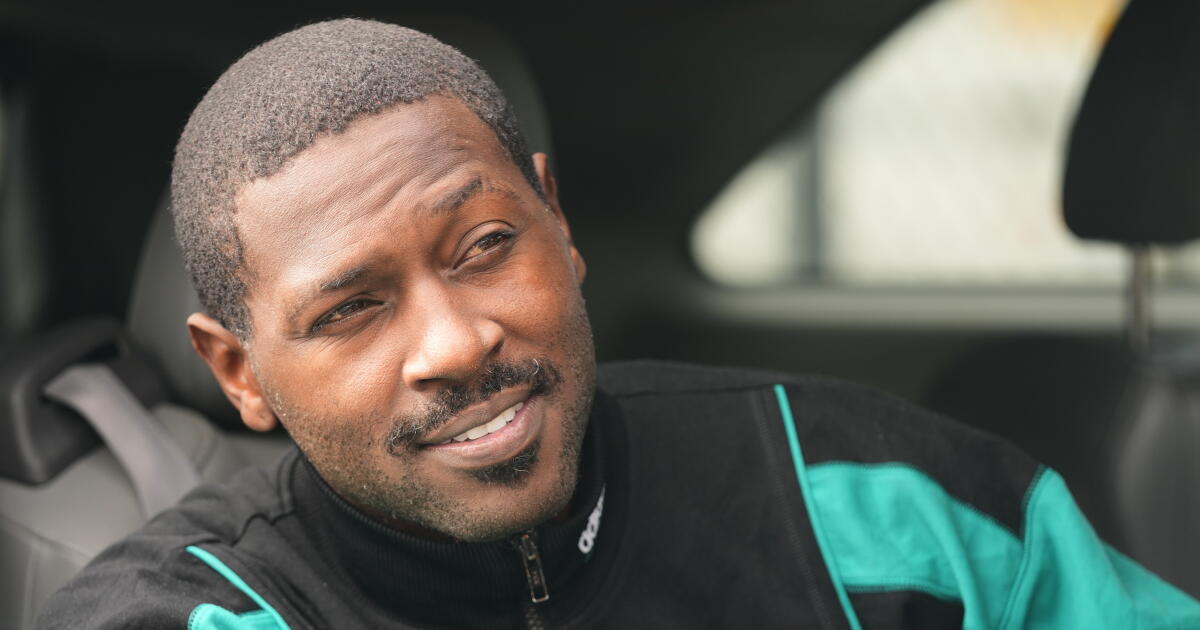
Former NFL star Antonio Brown has accepted a plea deal that will reduce the charge of attempted second-degree murder he’s facing in Florida to aggravated assault, his attorney told The Times on Wednesday.
The move will result in a significantly lighter sentence for the Super Bowl LV champion, according to attorney Mark Eiglarsh, who said Brown would receive three years of probation with the possibility of early termination after half that time is served.
A conviction for the first-degree felony of attempted second-degree murder with a firearm would have brought a prison sentence of 20 to 30 years.
Eiglarsh added that Brown will be given a withholding of adjudication, meaning he will not be considered a convicted felon. He also said that the main requirement of Brown’s probation is simply “staying away from the alleged victim, which he has no problem doing.”
“No community service hours,” Eiglarsh said. “No anger management. No evaluation psychologically. No drug treatment, no evaluations for anything like that. No letter of apology, no fines, nothing.”
A spokesperson for the Miami-Dade County state attorney’s office would not confirm that a plea deal had been reached, stating in an email that “whatever is to transpire regarding an open & pending case will be fully clarified at the next hearing,” which is scheduled for Sept. 30.
A warrant was issued for Brown’s arrest in June 2025 stemming from an altercation outside a celebrity kickboxing event in Miami the previous month. According to the warrant, “cell phone video obtained from social media” showed Brown advancing toward the other man with a gun in hand and captured “two shots which occur as Mr. Brown is within several feet” of the alleged victim.
Brown wasn’t arrested until November, when he was apprehended by U.S. Marshals in Dubai. He entered a not guilty plea to the first-degree felony charge of attempted second-degree murder with a firearm.
In December, Brown filed a motion for the case to be dismissed under Florida’s “Stand Your Ground” law, which means an individual has no duty to retreat before using deadly force in certain circumstances of self-defense.
Earlier this month, the alleged victim, Zul-Qarnain Kwame Nantambu, released a statement through his attorney saying that he “does not wish to participate” in Brown’s prosecution.
In a statement sent to news organizations on Wednesday morning, Eiglarsh said that despite changing his plea, Brown still maintains that he acted lawfully during the incident.
“Antonio believes in his innocence. He believes strongly in his Stand Your Ground defense, and he believes he would ultimately prevail at trial,” Eiglarsh said. “But when prosecutors put an offer on the table that transforms a potential decades-long prison sentence into a significantly reduced charge and probation, there was simply no way he could reasonably turn it down.”
He added: “Antonio has eight children who depend upon him, and every additional day this case remains unresolved creates extraordinary obstacles for him in securing endorsement opportunities and other business opportunities necessary to support his family. He has spent more than 10½ months living under the cloud of a case with no realistic end in sight. At some point, closure has tremendous value.”
AI corporate leaders tell UN the industry needs global regulation | United Nations News
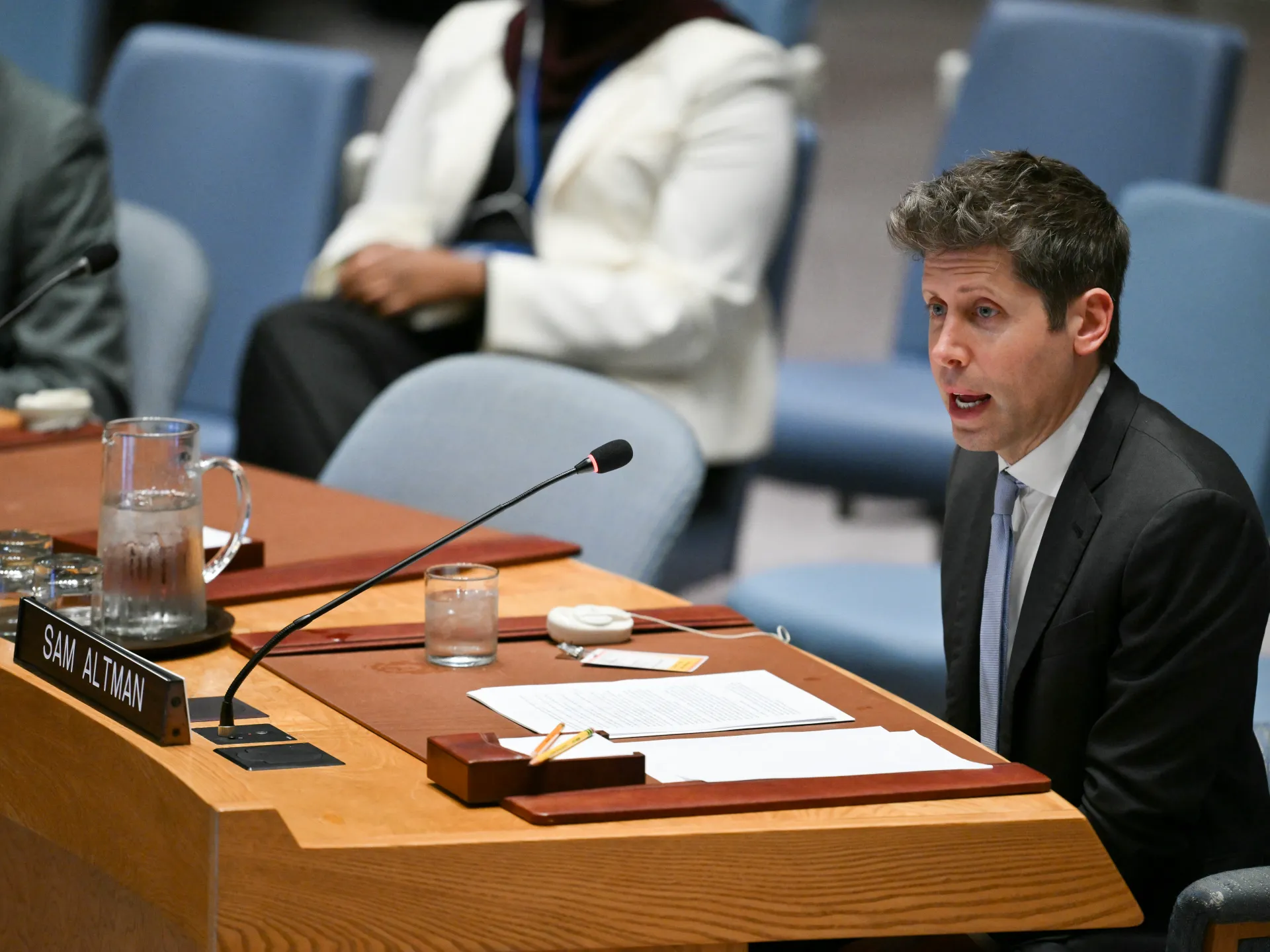
The heads of several major AI firms told the United Nations Security Council (UNSC) their industry urgently needed global oversight to avoid dangers that could threaten the whole world.
“If managed poorly, I even believe AI could be a risk to humanity as a whole,” Dario Amodei, the chief executive officer of Anthropic, told members of the body on Wednesday.
Recommended Stories
list of 3 itemsend of list
Sam Altman, the head of rival company OpenAI, echoed his concerns, telling the 15-member council tasked with tackling major crises globally that humanity could “lose control of the future of AI”.
The meeting, which coincides with the UN General Assembly (UNGA) gathering in New York City, was convened by France and comes at a time when experts are increasingly warning that the rapid development of AI needs more human oversight to ensure it does not slip out of control and cause a global catastrophe.
Altman and Amodei called on world leaders to take action.
“If AI is to be democratic, the most important decisions cannot be made by labs in San Francisco alone,” Altman told members. “They must be shaped through democratic processes and by governments accountable to the people they serve.”
Their concerns were shared by several representatives on the council, including the foreign ministers of France and the United Kingdom, who said the international community needed to step in and create common frameworks for how the technology should be controlled.
Hugging Face CEO Clement Delangue, whose company has come under attack by out-of-control AI models in recent months – incidents used by the other companies as evidence of the need for more safety measures – told the UNSC his company had relied on the technology to defend itself in those same incidents.
Delangue said Hugging Face had relied on a Chinese AI model to help defend against the attack by OpenAI’s AI agents, because it faced fewer restrictions than comparable US tools.
“We were attacked by AI, but more importantly, we defended ourselves with AI,” he told the council.
US and China reluctant to impose restrictions
In the United States, though, where the largest and most influential companies developing AI are based, the administration of US President Donald Trump has baulked at imposing new guardrails on the industry.
The administration’s representative at the UNSC meeting, Michael Kratsios, told members, “We totally reject all efforts by international bodies to assert centralised control and global governance of AI.”
Chinese President Xi Jinping is expected to discuss whether and how to regulate AI during a visit to Washington, DC, this week. The two countries are locked in a technological race to develop more powerful AI tools, a competition that experts say makes it less likely that either country would want to impose any major new restrictions on their efforts right away.
Yet there is a growing recognition at the UN of the danger AI potentially poses to the world, said Daniel Forti, head of UN Affairs at the International Crisis Group. Member states understand that “there will be much more of a need for international cooperation, setting some rules of AI, even if the biggest players are more focused on growth opportunities than on some sort of collaboration,” Forti said.
For several years, the UN has been participating in multilateral meetings to shape everything from protections for workers from AI in emerging economies and ensuring open access to this technology, to following how AI is used in military conflicts. In 2024, the UNGA unanimously passed its first resolution on AI, a nonbinding statement that called on member states to protect personal data, monitor AI for risks and safeguard human rights.
The adoption of AI has taken off dramatically since then, and with it have come dire warnings from environmental groups, human rights advocates, and even the tech moguls whose companies are developing the tech.
The future of AI “cannot be decided by a handful of countries or left to the whims of a few billionaires”, UN Secretary-General Antonio Guterres said at a global summit held earlier this year.
Last year, the UNGA formed two new bodies to deal with AI: the Independent International Scientific Panel on AI that brings together experts to provide governments with independent assessments, and the Global Dialogue on AI Governance, which provides a regular forum for discussing approaches to AI governance.
“The dangers are real and imminent,” Yoshua Bengio, a Canadian expert on AI and co-chair of the Independent International Scientific Panel, told the UNSC on Wednesday. “This council faces an unprecedented threat, one that none of its members would choose, that none can contain alone, and that does not respect the borders we defend.”