



Trump increased investments in drugmakers that benefited from Medicare exemptions, Democrats say
WASHINGTON — Investments in pharmaceutical companies made on behalf of President Trump increased significantly after he returned to the White House last year, with his portfolio adding millions of dollars in stock in firms that benefited from a Republican-backed law that shields certain medications from Medicare price negotiations, according to a report from congressional Democrats.
The report, released Friday by the Joint Economic Committee’s minority arm, found that Trump’s pharmaceutical stock holdings grew from a maximum reported value of $1.7 million in 2024 to as much as $56.2 million at the end of 2025. The report said that included up to $39.1 million worth of stock held in companies that benefited from exemptions to Medicare’s drug price negotiation program, which came through a provision in the Republicans’ 2025 tax and spending law.
Additional analysis of Trump’s financial disclosures provided by committee Democrats showed that his investment portfolio bought as much as $2.55 million in shares of pharmaceutical companies benefiting from the exemptions on three dates before he signed the legislation in July 2025. That included up to $950,000 in purchases on July 1, 2025, the day the Senate passed the bill. His portfolio also bought as much as $1 million in AbbVie stock in August 2025, after the bill became law.
The Republican president’s wealth has grown since he took office last year through a web of business interests, many of which have benefited from the policy moves of his administration. The White House has repeatedly denied any ethics issues and accused Democrats of “attempts to fabricate conflicts of interest.”
The report also noted that the exemptions policy could leave some Medicare beneficiaries paying thousands of dollars more for certain cancer treatments and other medications than they would have if Medicare had been allowed to negotiate lower prices.
The findings come as Trump has made lowering prescription drug costs a central part of his healthcare policy, striking deals with pharmaceutical companies that his administration says will make medications more affordable for Americans, although drug pricing is based on a complicated set of factors.
Recent polling from the Associated Press-NORC Center for Public Affairs Research shows that most Americans think Trump is profiting off the presidency in unethical or illegal ways and is focused more on his wealth than on helping people like them.
Democratic Sen. Maggie Hassan, who leads the Joint Economic Committee’s minority arm, called the report’s findings “outrageous and yet typical from this president, who makes the American people foot the bill again and again for his own gains.”
Davis Ingle, a White House spokesperson, said Trump’s stock and bond portfolio is independently managed by third-party financial institutions. He denied any conflict of interest.
“Neither President Trump nor any member of his family has any ability to direct, influence, or provide input regarding how the portfolio is invested or when investments are bought or sold,” Ingle said in a statement.
A law from President Biden’s Democratic administration allowed Medicare for the first time to negotiate prices for some of the costliest prescription drugs. Republicans’ 2025 tax and spending bill expanded an existing exemption for medications developed to treat rare diseases or conditions, delaying when certain costly drugs could become eligible for negotiations or excluding them entirely, according to healthcare research nonprofit KFF.
Also known as the orphan drug exclusion, the carve out allows drug companies to continue charging lucrative prices that might otherwise have been reduced through Medicare negotiations.
Supporters of the change argued that a broader exemption would encourage drug companies to develop treatments for rare diseases. Critics say it allows makers of blockbuster medications to avoid negotiations that could lower costs for Medicare and its recipients.
The report estimated that Medicare beneficiaries receiving the cancer drugs Keytruda, manufactured by Merck, and Opdivo, by Bristol Myers Squibb, could pay roughly $5,000 more annually than they would if Medicare negotiated prices for the medications. Trump’s portfolio includes stock in both firms.
The report also said that Trump’s portfolio continued to buy and sell pharma company stocks throughout the first eight months of 2026, adding as much as $3.5 million in stock wealth in the sector.
All recent U.S. presidents have dumped their stocks before assuming office, put their money in broadly diversified funds or set up a “blind” trust so they couldn’t even know what they owned.
Trump has put his broader business interests in a trust managed by his sons. But the arrangement rejects the conflict of interest protections that his recent predecessors in office had instituted.
Hussein writes for the Associated Press. AP writer Bernard Condon in New York contributed to this report.

Power outages to prevent wildfires force postponement of football games
On Friday morning, with a power outage at Simi Valley High in effect out of concern that power lines could ignite a wildfire to erupt because of strong Santa Ana winds, Simi Valley football coach Jim Benkert was frantically checking locations available to help keep on schedule a homecoming game against Newbury Park on Friday night.
But with Ventura County facing increased outages, the Simi Valley home game has been moved to Saturday at 3:30 p.m. Another change involves St. Bonaventure hosting Oaks Christian at 1 p.m. on Saturday.
Southern California Edison warned about possible shutoff of electricity because of the wind. Simi Valley students remained in classes on Friday because the school has emergency generators.
Westlake coach Rick Clausen said his team’s game at Ventura High remains on because the school has generators if power is cut off.
The Valencia-Canyon game has been moved to 4 p.m. at Canyon High on Friday due to possible power outages.

Can diplomacy resolve longstanding Ethiopia-Eritrea differences? | Conflict News
The United States calls for dialogue as regional East Africa tension escalates.
East African neighbours Ethiopia and Eritrea are once again perilously close to all-out war.
Territorial disputes have dogged their relations since Eritrea gained independence in 1993.
They fought a bitter war between 1998 and 2000. And despite a truce, they remained in a state of war for nearly 20 years.
The Jeddah accord in 2018 brought peace. But tensions have lingered.
Ethiopia accuses Eritrea of supporting rebels in its Tigray region, while Eritrea accuses landlocked Ethiopia of planning to capture one of its key Red Sea ports.
Can diplomacy end this deep-rooted conflict?
Presenter: James Bays
Guests:
Faisal Roble – Political analyst specialising in the Horn of Africa
Jervin Naidoo – Senior political analyst at Oxford Economics Africa
Matt Bryden – Strategic adviser at Sahan, a think tank focused on governance, politics and security in the Horn of Africa
Published On 16 Oct 2026

Trump told new press secretary to ‘reconsider’ role | Donald Trump
Al Jazeera has confirmed that White House press secretary Katie Zacharia is “transitioning out” of her role after less than a week on the job. President Donald Trump said he had told Zacharia she “should reconsider” her role, citing harsh media and public scrutiny.
Published On 16 Oct 2026
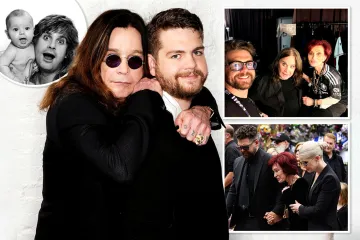
Sharon Osbourne reveals she has a dent in her face from botched surgery as she swears off future ops
SHARON Osbourne has revealed she has a dent in her face from botched surgery and sworn off future operations.
The former X Factor judge, 74, said she can still feel the indentation in the right side of her face as she discussed surgical procedures.
Speaking on The Osbournes podcast with her son Jack, she explained: “I have an indentation left from it here, all the way down here.”
As she showed the damage above her mouth, Sharon said: “I think the surgeon left it to his mate to do.
“I think he took a phone call and then his mate was all, tap in.”
Sharon once joked that she was on her “third face” after multiple procedures to stay youthful.


Sharon did not identify which operation had left the dent but said: “You go and you complain and you go there.
“And then he starts injecting, and you go, ‘What is in this that you’re injecting me with?”
She said he replied: “Don’t worry, it’s my special concoction. It’ll work!”
However, she revealed that it didn’t f***ing work because she was still left with a dent.
On the podcast, the TV personality, whose husband Ozzy Osbourne died last year, spoke about a hugely famous actor she had met many years ago.
She said: “The actor came over to me and he said you know what? I couldn’t believe that Ozzy married somebody that looks like a Fraulein.”
Jack explained that a Fraulein was a German word used to describe a full figured woman.
Sharon continued: “I knew exactly what he was saying and I wanted to grab him by the throat and say, you motherf*****, and headbutt him.
“But I thought it wouldn’t go down well. So I just ignored it. But when you are not expecting it you just go f***.”
Sharon explained how remarks about her appearance could erode her confidence.
She said: “You go home and you think, I have got to do something. I have to. So if you’re with this all the time, it affects you mentally.”
She also explained that she believed people who had never struggled with how they look might find it difficult to understand why others had surgery.
She said: “Unless you’re unhappy with your body or your face, other people don’t realise what it’s like to walk around in our bodies having that face that every time you look in a mirror, you don’t like it.
“And it bothers you and how insecure it makes you feel.”
She added: “From the minute you’re born, people are mean about you and you feel uncomfortable in the body that you have.”
However Sharon revealed that she was no longer interested in having more work done.
Asked whether she was finished with surgery on her face, she replied: “Who am I doing it for now?”
New York Democrats want parking lot owners to ban ICE from their properties
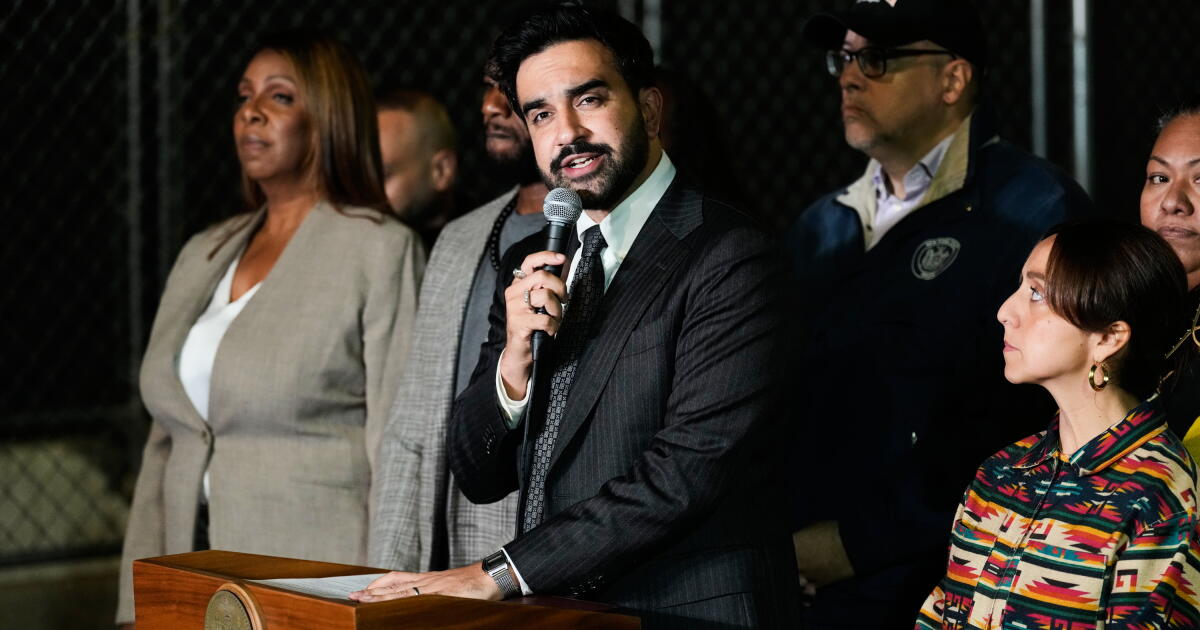
NEW YORK — Mayor Zohran Mamdani and top New York Democrats are calling on the owners of private parking lots to block federal immigration officers from using their properties as staging areas, days after immigration officers shot a man in the city.
In a Friday letter, Mamdani, Senate Democratic leader Chuck Schumer, House Democratic leader Hakeem Jeffries and dozens of state and local lawmakers told lot and garage owners that the city needs their “help at a critical juncture.”
“In solidarity with immigrant New Yorkers and in our shared commitment to the City we love, we ask that you do not rent, lend, or otherwise make your property available to ICE as a staging area for its enforcement operations,” the letter reads. “Make it known to ICE that it is not authorized to use your garages and lots.”
The plea came after immigration officers shot 28-year-old Dominican national Oscar Belgal during an arrest last week as he rode in a car with his young son. The shooting sparked protests and drew renewed attention to the federal government’s immigration crackdown.
The federal officers had been using a nearby private parking lot as a staging area before the shooting, according to Friday’s letter.
A spokesperson for the Department of Homeland Security slammed the letter in a statement that read: “Mayor Mamdani should be grateful to our brave law enforcement officers for cleaning up the streets of NYC since he won’t. Luckily, no terminated parking will stop ICE from deporting criminal illegal aliens to make New York safe again.”
Federal officials maintain the immigration officers believed their lives were in danger and opened fire only after Belgal smashed his car into two government vehicles and accelerated toward them.
New York City has previously barred outside law enforcement agencies such as DHS from setting up staging areas on city property unless they have a judicial warrant or qualify for certain “limited legal exceptions,” according to the letter. “But these laws govern City property, not the private lots and garages that you operate,” it adds.
Private businesses have at times found themselves in the middle of tense political fights over President) Trump’s administration’s immigration enforcement push.
In one instance, a Minnesota hotel that refused to let immigration officers stay there in January apologized after public criticism from DHS, saying the decision violated its internal policies. In another, protesters occupied the lobby of a Manhattan hotel they said was housing some immigration officers.
Izaguirre writes for the Associated Press.

Banana Ball 2027 schedule includes international games, Dodger Stadium
The Savannah Bananas embarked on their first so-called world tour five years ago. It included only one stop — in Mobile, Ala.
As the unique brand of baseball entertainment known as Banana Ball expanded into a six-team league, the tours have grown in size and scope but never actually ventured out of the United States.
That will change next year. The 2027 Banana Ball Championship League tour will visit 79 stadiums across 74 cities, including the first-ever international stops. Four teams will travel to Mexico, with the Bananas playing the Texas Tailgaters in Monterrey on Feb. 5 and 6 and the Party Animals taking on the Loco Beach Coconuts in Tijuana on Feb. 12 and 13.
The tour swings to Canada in late summer, with the Bananas playing the Indiananapolis Clowns in Toronto on Aug. 14 and 15 and the Tailgaters facing the Party Animals in Winnipeg on Aug. 26 and 28.
“We got a lot of criticism over the years. ‘It’s not a world tour, you’re playing in one city! It’s not a world tour, you’re playing in seven cities in the southeast!’” Banana Ball creator and owner Jesse Cole said Thursday on ESPN2. “But we saw where we could go, and we’ve always had a vision to create 1 billion fans, one fan at a time. And over the last two or three years, we’ve heard from a lot of different countries all over the world.”

The Savannah Bananas, featuring Banana Ball creator and owner Jesse Cole in his signature yellow suit and derby hat, perform onstage during the 2026 ESPY Awards in New York.
(Mike Coppola / Getty Images)
Cole said he expects the 2027 tour to draw an estimated 4.3 million fans.
“Everything we do is do one experiment and then see where it can go,” he said. “And this crazy experiment of Banana Ball has gone some places we never imagined.”
Another new stop next year will be Dodger Stadium, where the Bananas will play the Firefighters on April 23 and 24. The same teams also will face off at Angel Stadium on July 2 and 3, marking the third consecutive year the Bananas have played at the venue.
The schedule reveal show included a number of announcements, including the debut of a concept called Banana Ball 360 on June 26 at Notre Dame Stadium. Two baseball fields will be set up on opposite ends of the stadium, with the game taking place on each during alternating innings.
“I do believe that fans at that show are going to be able to see things they’ve never seen before, and also every single seat is a great seat,” Cole said. “And that was the idea.”
Also announced were a new Disney-produced film documenting the growth of Banana Ball, which will premiere June 12 at Atlanta’s Truist Park, and the league’s third cruise, “Bananaland at Sea + Puerto Rico,” in January 2028. The cruise will depart from the Port of Miami and will feature a Banana Ball game at Hiram Bithorn Stadium in San Juan.
UK PM adviser’s wife expresses ‘support’ for Palestine Action | Israel-Palestine conflict News
Police reviewing social media post by writer Sarah Helm, wife of Burnham’s National Security Adviser Jonathan Powell.

Published On 16 Oct 2026
British police are reviewing a social media post by the wife of National Security Adviser Jonathan Powell in which she appears to endorse Palestine Action, a group proscribed in the country as a “terrorist” organisation.
“God help us authors who support Palestine and Palestine Action,” Sarah Helm, a writer who is married to Powell – Prime Minister Andy Burnham’s national security adviser – wrote on X on Thursday.
Recommended Stories
list of 3 itemsend of list
She was responding to a post defending Irish novelist Sally Rooney, who this week announced her books would no longer be sold in the United Kingdom over her plans to use her royalties to support Palestine Action.
A Metropolitan Police spokesperson on Friday said Helm’s post is “being assessed to determine whether any further police investigation may be required”.
A government spokesperson cited by the Reuters news agency said the views expressed in Helm’s post “are held by an individual who does not represent the government in any capacity”.
‘Absurdly authoritarian ban’
UK-based activist group Defend Our Juries defended Helm for defying what it called an “absurdly authoritarian ban on Palestine Action”.
“We know of 36 people who have been arrested and had their homes raided for similarly expressing support for Palestine Action on social media,” said a spokesperson for the group.
“We hope Sarah will not face the same treatment for standing up for free speech and Palestinian lives.”
The UK government outlawed Palestine Action in July 2025, after activists from the group broke into a Royal Air Force base and sprayed red paint on two aircraft to protest against UK military support for Israel’s genocidal war on Gaza. Being a member or a supporter is punishable by up to 14 years in prison.
Since the ban went into effect, police have arrested more than 3,500 people in the UK for alleged support of the group, many of them for holding up placards, according to rights group Amnesty International.
Palestine Action has contested its proscription, but the Court of Appeal upheld it in June.
The UK’s new Foreign Secretary Ed Miliband last month said the government was “looking at” the Palestine Action ban, adding that he did not believe mass arrests resulting from its proscription were “anyone’s intent”.

Canada’s Snowbirds Say Farewell To The CT-114 Tutor Jet
The Canadian Forces Snowbirds brought the Canadair CT-114 Tutor’s aerobatic career to a close on Friday, October 16, with a final home-base demonstration at 15 Wing Moose Jaw, Saskatchewan. The private event, which was livestreamed, honored the Canadian-built jet trainer that defined the team for more than half a century, as well as the aircrew and support personnel who kept the increasingly demanding aircraft flying.
While Friday’s performance marks the end of the Tutor’s aerobatic display career with the team, a Grey Cup flyover in Calgary on November 15 remains on the schedule.
Speaking to MooseJawToday on October 15, Snowbirds team lead Maj. Maciej “Match” Hatta described the Tutor’s final season as an emotional milestone for the squadron, as well as an opportunity to recognize the families and support personnel who sustain the team during its annual touring season.

Hatta has a long personal history with the aircraft. He flew with the Snowbirds from 2014 to 2017, subsequently worked on testing the Tutor’s avionics upgrades, and returned this year to lead the team through its final season with the jet. Despite having flown around 30 different aircraft as a test pilot, he has a particular attachment to the Tutor.
“This is still my favorite airplane to fly,” he said.

Fly With The RCAF Snowbirds
Hatta recalled flying a maintenance test sortie alone the previous day, enjoying the opportunity to look out over the wings without the near-constant radio communications involved in leading a formation display. He also noted the differences between individual aircraft in the fleet.
“They all have their own personality,” Hatta said. “Some of them howl a little more than others. Some get hotter inside. Some have poor air conditioning.”
Lt.-Col. Guillaume Paquet, commanding officer of No. 431 Air Demonstration Squadron, Royal Canadian Air Force (RCAF), said the final season has prompted strong reactions from spectators, many of whom have grown up watching the Snowbirds perform in the Tutor.
“The reality is we’ve been touring this country for 55 years, so everyone has a story, a childhood memory,” Paquet said.
Golden Hawks To Snowbirds
Canada’s military aerobatic tradition dates back to 1929, when the biplane Armstrong Whitworth Siskin helped establish the country’s formation-flying heritage. The modern era began in 1959 with the creation of the Golden Hawks, formed to mark the 50th anniversary of powered flight in Canada and the 35th anniversary of the RCAF. Flying gold-painted Canadair-built F-86 Sabre fighters, the team initially was intended to operate for a single season. Its popularity led to several more years of performances across Canada and the United States before it was disbanded after the 1963 season amid the high costs of maintaining it.

Iconic Aircraft Series – F-86 Canadair Sabre
Canada’s centennial celebrations in 1967 brought a new demonstration team, the Golden Centennaires, which flew CT-114 Tutor jet trainers at 100 airshows across Canada and the United States. The Tutors would subsequently become the foundation of the Snowbirds. In 1969, Colonel O.B. Philp, newly appointed commander of No. 2 Canadian Forces Flying Training School at Moose Jaw, Saskatchewan, encouraged instructors to practice formation aerobatics using surplus Tutors left over from the Centennaires program. Initially presented as training and proficiency flying, the formations soon attracted public attention and gradually evolved into an established demonstration team.

The formation grew from four aircraft in 1970 to seven in 1971, when the Snowbirds name was adopted following a competition among schoolchildren. Two solo aircraft were added in 1972, establishing the team’s familiar nine-aircraft format. That year, its pilots were assigned to demonstration flying on a full-time basis. The team’s Tutors were modified to support solo operation from the right-hand seat and the demands of inverted flight during aerobatic displays. In 1974, the Tutors received their distinctive red, white, and blue paint scheme, and the team was authorized to perform a fully aerobatic display.

The Snowbirds subsequently achieved full squadron status as No. 431 Air Demonstration Squadron, becoming one of the most recognizable symbols of Canadian military aviation. Their officially stated mission was to demonstrate the professionalism, teamwork, and flying skills of the Canadian Armed Forces to audiences across North America.

However, the Tutor’s final years were marked by a series of serious accidents and renewed scrutiny of its aging systems.
In October 2019, a Snowbirds aircraft crashed in Georgia after an engine fuel-delivery failure, with the pilot surviving an ejection that was itself affected by a parachute malfunction. In May 2020, another Tutor crashed shortly after takeoff near Kamloops, British Columbia, killing the Snowbirds public affairs officer and seriously injuring the pilot; investigators determined that a bird strike had triggered an engine compressor stall. The fleet was temporarily grounded following that accident, with operations resuming under additional restrictions in August 2020.
A further accident at Fort St. John, British Columbia, in August 2022 prompted another fleet-wide operational pause after an engine failure during takeoff; investigators identified an improperly assembled oil filter as the cause. The aircraft returned to service the following month.

Subsequent safety measures included restrictions on certain aerobatic maneuvers and formations, minimum runway-length requirements, and limits on flying over water or performing some maneuvers outside gliding distance of a suitable landing surface.
At the same time, the persistent engineering challenges involving the Tutor’s airframe, engines, and ejection system were all factors in its retirement, with the RCAF concluding that further life-extension work was no longer practical.
Developing Canada’s Jet Trainer
Canadair Limited of Montreal began developing the CL-41A Tutor in the mid-1950s as a high-performance jet trainer to prepare RCAF pilots for the Canadair-built F-86 Sabre. The all-metal, low-wing, single-engine aircraft featured side-by-side seating and duplicate flight controls, allowing instructors to monitor students closely and take control when necessary. Two prototypes were built, with the first making its maiden flight on January 13, 1960, with Canadair test pilot Ian MacTavish at the controls.

Following an extensive testing and demonstration program, Canadian Minister of National Defence D.S. Harkness announced an order for 190 production aircraft on September 11, 1961. Deliveries began in 1963, with each aircraft reportedly costing approximately C$425,000 (around $394,000). Powered by a General Electric J85-CAN-40 turbojet built under licence by Orenda, the aircraft entered RCAF training service in late 1964 under the designation CT-114 Tutor.
As well as the RCAF, the Tutor found one other military operator in Malaysia. The Royal Malaysian Air Force received 20 examples designated the CL-41G Tebuan (meaning “Wasp” in the Malay language), which served between 1967 and 1986 in the ground-attack role.

The Tutor served as the RCAF’s primary jet trainer for decades, accumulating more than one million flight hours before its training role ended in 2000. It was replaced by the CT-156 Harvard II and CT-155 Hawk. The aircraft nevertheless remained in military service with the Snowbirds.
The Next Chapter
The Tutor’s retirement will bring an end to a long chapter in Canadian military aviation, but the Snowbirds are expected to continue flying with a new aircraft type. In May of this year, the Department of National Defence announced plans to replace the CT-114 with the CT-157 Siskin II, based on the Pilatus PC-21 turboprop trainer. The new demonstration capability will remain at 15 Wing Moose Jaw and is expected to become operational in the early 2030s.
The Siskin II has already been procured under Canada’s wider Future Aircrew Training (FAcT) program, for advanced fixed-wing and jet preparation. It is one of five aircraft types being procured under a 25-year, C$11.2-billion (approximately $7.9 billion) contract awarded to SkyAlyne in 2024. The other four types are the CT-102B Astra II (Grob G 120TP) for basic pilot training; CT-157 Siskin II for advanced fixed-wing and jet preparation; CT-145E Expeditor II (Beechcraft King Air 260) for multi-engine training; CT-153 Juno (Airbus H135) for helicopter training; and CT-142Q Citadel (De Havilland Canada Dash 8-400) for training air combat systems officers and airborne electronic sensor operators.

Paquet, the No. 431 Air Demonstration Squadron boss, said all Tutors are to be flown to IMP Aerospace in Trenton, Ontario, by March 31, 2027, where they will be disposed of. Some aircraft are expected to be preserved in museums or mounted on pedestals for public display, while others will be used as training aids for aircraft maintenance apprentices in Borden, Ontario.
“They’re not going to be flying. They’re not going to be flyable,” Paquet said.
Snowbirds team lead “Match” Hatta hopes to contribute his test-pilot experience to the transition, including testing the replacement aircraft and developing the new demonstration program.
“I would love to contribute to the team in terms of seeing them through the transition,” he said. “If I’m able to use my test background as well in helping that out, testing the new show, testing the new airplanes, and passing it on to a new boss down the road, then I’d love to do that.”

For Paquet, the immediate priority is completing the final display season without incident before turning to the next phase of the team’s history.
“I will definitely be emotional. The only thing I’m hoping for is that all the planes land safely, bring everybody home, and then we can check the box and say it was an extremely successful season. I brought everybody home, and we’ll move on to the next chapter.”
After more than six decades since its development began, the Tutor leaves behind a legacy spanning generations of military pilots and millions of spectators. Its final Snowbirds aerobatic display represents not simply the retirement of an aging aircraft, but the end of a long tradition in which the little jet trainer was one of the country’s most recognizable symbols of military flying and aerial performance.
Contact the author: thomas@thewarzone.com

David Surkamp dead: Pavlov’s Dog lead singer was 74
Rock band Pavlov’s Dog is mourning the loss of singer-songwriter and lead vocalist David Surkamp, who died Monday at age 74.
Violinist and Pavlov’s Dog member Abbie Steiling announced Surkamp’s death Wednesday on Facebook. Additional information about Surkamp’s passing, including a cause of death, was not revealed.
“David leaves behind a legacy of endless creativity, unmistakable artistry, and a body of music that has touched lives across generations and around the world,” Steiling said on the band’s behalf.
Pavlov’s Dog also remembered its vocalist for his “profoundly poetic spirit and a romantic heart that found its way into every note, every lyric and every performance.”
Surkamp was born May 23, 1952, and led Pavlov’s Dog, known for songs “Julia” and “Late November,” since its founding in 1973 in St. Louis. He founded the band alongside bassist Rick Stockton, violinist Siegfried Carver and drummer Mike Safron, according to the band’s website. The group, which first signed to ABC Records under a six-figure deal, released its debut album “Pampered Menial” in 1975. The release featured the band’s most popular songs and showcased Surkamp’s high-pitched and trembling, yet powerful, vocals.
Pavlov’s Dog’s second release “At the Sound of the Bell” followed in 1976 and its third, “Lost in America,” came more than a decade later in 1990. Surkamp departed Pavlov’s Dog while recording its junior album and traveled to Seattle to further develop his musical talents. This led to a collaboration with British musician Iain Matthews and their power pop duo Hi-Fi.
Surkamp and his Pavlov’s Dog collaborators reunited in the early 2000s and Surkamp’s wife, Sara, joined as a vocalist and guitarist. The group went on to tour Europe, including playing the Netherlands’ Arrow Rock Festival in 2006. Over the years, Pavlov’s Dog saw members come and go: Some musicians departed the group because of conflicting commitments and others — including founding members Carver and Rayburn — died in the late aughts and early 2010s.
The group, with Surkamp still at the helm, later released albums “Echo & Boo” in 2011, “Wonderlust” in 2025 alongside some live albums, remasters and unreleased demos.
“He always allowed the musicians around him to shine in their strengths, generous with the spotlight and appreciative of what each brought to the music,” Steiling continued in the band’s Facebook post. “No matter what life held for him, he came alive onstage. Even on his hardest days, when the lights came up and the count-off began, he was a consummate performer. If he was playing music, it was a great day.”
Surkamp was preceded in death by his wife Sara, who died in 2025 at age 72. He is survived by children Saylor and Evan.

Trump casts doubt on press secretary Zacharia’s future
WASHINGTON — President Trump signaled Friday that his embattled new press secretary, Katie Zacharia, may be on her way out — a mere week after he picked her for the post.
Speaking to reporters on the White House lawn as he left for a rally in Georgia, Trump said he’d spoken to Zacharia and that he felt she didn’t deserve what he called negative media coverage.
Recounting what was said in that conversation, the president suggested that Zacharia might not stay on the job for long: “I told her, ‘I think you’re better off being happy.’”
He added: “I said, ‘Katie, do you need this? I don’t think you need this,’” and that he wanted “her to have a good life” and not be subjected to criticism, which he likened to being “brutalized by the media.”
The president said he’d make a final determination later, perhaps after his campaign travel on Friday and this weekend, adding, “When I get back, we’re gonna talk.”
Zacharia’s short tenure has been defined by questions about her professional background and lack of polish in fielding questions from journalists.
She was a surprise choice when Trump announced her appointment on Oct. 9, as the successor to Karoline Leavitt, the youngest-ever White House press secretary who had been part of Trump’s inner circle for years.
Zacharia came under immediate scrutiny when she appeared uncomfortable during her inaugural briefing, delivering halting remarks touting the president and his accomplishments.
She took questions from just three reporters, all from conservative-leaning or Trump-friendly outlets, and left after only about 14 minutes.
Zacharia has said she wanted to keep her briefing short to ensure Trump had enough time later that morning for his own question-and-answer session with reporters, and that she had not been fully briefed by White House staff beforehand.
She later traveled with Trump when he held rallies on Wednesday and Thursday in Alaska, Arizona and Montana — but did not hold more press briefings.
In an appearance on Fox News Channel earlier Friday, Zacharia was asked if she had the president’s confidence and responded: “I hope to be able to build the trust and confidence of everyone around me.”
But she also wouldn’t say when her next press briefing might be.
Zacharia, a Pepperdine University law graduate, also faced criticism for calling herself a “lawyer” when she had not passed a bar exam or was otherwise credentialed to practice.
She had described herself as such when appearing as a commentator on conservative television outlets. Zacharia said the term was a proper one to use when she was offering legal analysis, and said she had worked as a lawyer in China.
Zacharia said Friday on Fox News that she wasn’t asked about passing the bar before becoming press secretary, and Trump noted in his subsequent comments that she was hired as a spokesperson for the White House, not as an attorney.
Before joining the White House, Zacharia had been working in communications for Trump Media, the company that oversees the president’s social media site, Truth Social. She also briefly worked at the Department of Homeland Security during the second Trump administration.
Weissert and Kim write for the Associated Press.

Buss family asks judge to dismiss Jeanie Buss’ Lakers sale petition
Lawyers for Janie and Joey Buss, two of the co-trustees of the Buss Family Trust that owns part of the Lakers, filed a response to Jeanie Buss’ petition Friday with intention to move forward with the proposed sale of the family’s remaining shares of the team.
While Jeanie is trying to block her five siblings from selling the team, the new response filed in L.A. Superior Court states that Janie and Joey, the two other co-trustees of the family trust, were authorized and required to implement the vote after a majority of the living siblings opted to terminate the trust in August. The vote of five siblings to sell the shares triggered the termination clause in the trust, and the filing argues that the trust doesn’t grant trustees discretion to disregard a valid vote to terminate.
The filing, which follows formal opposition filed on behalf of five Buss siblings last week that defended their right to vote to sell the team, asks the court to dismiss Jeanie’s petition or deny it in its entirety.
Jeanie argued that her siblings could not terminate the family trust and sell the remaining 17.82% of the team without her approval, citing a 2017 court order that instructed trustees to “take reasonably available steps” to support Jeanie’s annual election as Lakers controlling governor. The court order, obtained after Jeanie’s older brothers Jimmy and Johnny Buss tried to oust her from the organization, installed Janie and Joey as co-trustees.
But the court order did not prohibit a sale or termination of the trust, lawyers for Janie and Joey argue. While the order named “voting the trust’s shares” as a reasonable action, it did not require the trust to hold a 15% stake in the team to reach the NBA’s eligibility threshold for minority owners to serve on the league’s board of governors, the filing states.
Jeanie was selected by her father Jerry Buss to serve as the team’s controlling governor after his death in 2013.
Since the family patriarch bought the team, the Forum and the Kings for $67.5 million in 1979, the Lakers have become one of the most valuable brands in sports. Mark Walter, who purchased controlling ownership from the Buss siblings in 2025, sold his shares to venture capitalist Joshua Kushner and former Disney chief executive Bob Iger 14 months later at a record $12.5 billion valuation.
Using a tag-along provision secured during the sale to Walter, the five Buss siblings hope to maximize value for all six beneficiaries, including Jeanie, the new filing reports. Selling the 17.82% stake in the team would be worth about $2.2 billion.
A hearing is scheduled for Dec. 8. The Lakers open the regular season on Oct. 21 against the Golden State Warriors at Crypto.com Arena. Jeanie was seen at the Lakers’ home preseason opener on Oct. 8, sitting courtside on the baseline.

Ukraine president targets Trump, Putin at EU summit | Donald Trump
Ukrainian President Volodymyr Zelenskyy warned Russia’s ambitions extend beyond eastern Ukraine, saying its drone attacks threaten NATO. Speaking after an EU summit in Belgium, he also took a jibe at US President Donald Trump for saying he is harder to deal with than Putin.
Published On 16 Oct 2026
Jon Rahm sacrifices £75m to secure exit from LIV tour
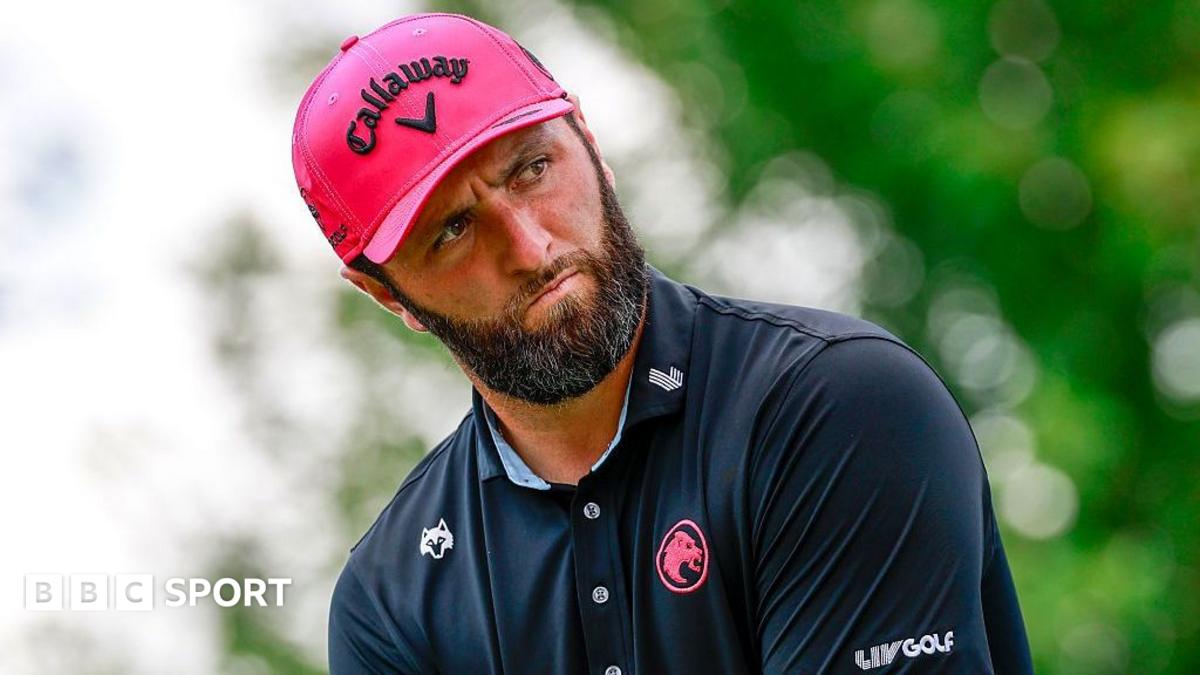
Jon Rahm will give up a reported £75m owed to him by LIV Golf after reaching a separation agreement that will secure his exit from the league.
The league filed for Chapter 11 bankruptcy protection in the United States in September after Saudi Arabia’s Public Investment Fund withdrew its multibillion-dollar backing.
Spaniard Rahm was listed as the organisation’s top unsecured creditor when LIV filed for bankruptcy, with $7.4m (£5.5m) owed to him for the rest of the 2026 season alone.
ESPN reported he is owed about $100m (£75m), external from the remainder of the $300m, (£222m) contract he signed when he left the PGA Tour for LIV Golf in December 2023.
Despite LIV securing a possible $300m in financing from BC Partners Credit to try and move forward with ‘LIV 2.0’, Rahm has deemed the proposed terms are “unacceptable”.
Instead, he has waived his entire claim in order to have a “complete economic walk-away”.
However, he will take the rights to ‘Legion XIII’ – the name of the LIV team Rahm captained – although he will not be allowed to use it to make a team in TGL – the indoor high-tech golf league launched by Tiger Woods and Rory McIlroy.
Rahm was the most high-profile name to join LIV when he left the PGA Tour.
Some players, including Brooks Koepka, have since returned to the PGA Tour, which rewrote its rules in December to allow the five-time major winner to come back, subject to certain sanctions.
Rahm did not follow suit and remained under long-term contract with LIV, but in May reached a deal with the DP World Tour – formerly the European Tour – to retain his membership and remain eligible for next year’s Ryder Cup.
LIV golfers are automatically banned for a year by the PGA Tour. The DP World Tour offers a pathway because the leading 10 players on the European circuit currently gain access to PGA Tour membership.
In August, former world number one Rahm won his third straight LIV season title.
He previously said he had no regrets over joining LIV and backed organisers to make it sustainable.

Celebrity Traitors’ Hannah Fry stunned to learn she’s related to Faithful co-star
Banished Traitors star Hannah Fry revealed she is actually related to one of her co-stars and shared her true opinions of them after leaving Ardross Castle

Hannah Fry was banished from the Traitors castle(Image: BBC)
The aim of the game is for faithfuls to hunt out the Traitors, but for one contestant, they discovered more than they bargained for in the latest series of Celebrity Traitors.
Recently ousted traitor Hannah Fry was part of the group of famous faces battling it out to bag a big lump sum for charity in the second celeb offering of the BBC show.
Thursday’s episode of the saw Hannah feel the force as fellow Traitors Maya Jama and James Acaster turned on her in a bid to save themselves. The mathematician and author, 42, discovered she is related to one of her co-stars.
When she was asked who she was closest to in the Ardross Castle, Hannah said: “I really like Joanne. We actually discovered that we’re cousins, by marriage. So her cousin is married to my cousin.”
To see more of the stories you love from The Mirror and to find them easily in Google, make us your preferred source. Free and easy to do, just click on the link here to find more from The Mirror at the top of your feed.
She then joked: “We’re basically sisters. I really loved her so much. She described herself as how she came out of the womb as a show pony.
“That’s the perfect description of that woman. She is phenomenal. She knows exactly who she is, and she is totally unapologetic about it. I cannot tell you how much I admire her. She’s phenomenal.”
In the same episode as Hannah being banished, comedian Rob Beckett was also murdered. He admitted he found being murdered funny. but Hannah she’d cried more during her five days of playing the game than at any other point in her life.
Speaking in the immediate aftermath of her leaving the castle, she said she found the whole experience a rollercoaster of emotions. Hannah said: “I laughed more, cried more and got more excited than I ever have in the entirety of the rest of my life combined.
“I really preferred being Faithful. I think it’s just a much more authentic experience.” She went on to say hat one of the lessons learned was that she hated “lying to people’s faces”.
She continued: “I think there’s actually some pride in being a rubbish Traitor.” And she admitted she knew she wasn’t destined to last long in the game.
“On the first day, I asked Michael Sheen who he would murder, and he said, ‘You’. At that point I knew I was really in trouble,” she said.
Like this story? For more of the latest showbiz news and gossip, follow Mirror Celebs on TikTok , Snapchat , Instagram , Twitter , Facebook , YouTube and Threads .

Trump wants the midterms to be all about himself. Judging by the ads, Democrats are happy to oblige
NEW YORK — President Trump says he wants voters to pretend that he’s on the ballot in this year’s midterm elections.
His rivals are doing their best to help his case.
Democratic candidates and their allies have spent more than $163 million since Sept. 1 on television advertising that mentions the Republican president, according to an Associated Press analysis of data from AdImpact, which charts media spending.
That includes airing ads that reference Trump on broadcast, cable and streaming nearly 180,000 times, the data shows. Republicans, meanwhile, have run ads that talk about the president just 16,000 times, at an estimated cost of $11 million, over the same period.
It’s a noticeable silence about the party’s dominant yet unpopular leader.
Many of the Democrats’ ads accuse Republican opponents of siding with the president over voters, particularly on issues like tariffs and the Iran war, which they blame for jacking up costs.
The ads include one from the campaign of Georgia Sen. Jon Ossoff, who is running for reelection and has spent nearly $3 million on a Trump-focused ad attacking his rival, Rep. Mike Collins, for his close relationship with the president.
“Mike Collins voted for Trump’s war in Iran, sending gas prices through the roof. He voted for Trump’s tariffs, sending grocery prices soaring. And Mike Collins voted with Trump to double health insurance premiums for more than a million Georgians,” it says. “Mike Collins sides with Donald Trump and makes you pay more.”
Republican National Committee spokesperson Natalie Baldassarre said Democratic messaging reflected the party’s hollowness instead of its strength.
“Democrats are lighting money on fire talking about President Trump because they have no agenda other than investigation, obstruction and impeachment,” she said. “Trump Derangement Syndrome isn’t a policy platform, it’s a $160 million way of saying you have nothing to offer to the American people.”
Democrats link Trump and his allies to economic woes
Another ad from the House Majority PAC, a super PAC dedicated to electing Democrats to the House, opens with a middle-aged woman standing over her kitchen stove and talking about how her family is “barely getting by” before she expresses her disappointment in Pennsylvania Rep. Brian Fitzpatrick, who is one of Republicans’ vulnerable incumbents.
“He used to be independent. But now it seems like he’s in lockstep with Donald Trump. It really bothers me,” she says, adding, “Congressman Fitzpatrick is not for us anymore.”
Indeed, all the Democratic ads that have aired in Pennsylvania’s tightly contested 1st Congressional District since Sept. 1 have mentioned Trump, even though Fitzpatrick voted against Trump’s tariffs and his power to wage war against Iran without congressional approval.
All four of the ads talking about Trump have aired a combined 2,000 times in that period, the AdImpact data shows. Fitzpatrick is being challenged by Democrat Bob Harvie, a county commissioner who is a former social studies teacher.
Democratic strategists say the messaging reflects the sentiment of voters.
“Every single poll and every single focus group shows affordability to be voters’ number one issue, and they specifically point to corrupt politicians as being responsible for driving up prices,” said House Majority PAC spokesperson Katarina Flicker.
Republican ads back away from the president
Out of dozens of issue categories tracked by AdImpact, the analysis found that Trump was the fourth most common issue mentioned by Democrats in House and Senate races’ final stretch. It was topped only by healthcare, taxes and accusations about opponents being beholden to special interests.
For Republicans in the same races, Trump-themed ads clocked in at number 33, by comparison. The top issues in their ads were taxes and crime.
Idaho Republican Senator Jim Risch tells viewers he “fought alongside President Trump to pass the biggest tax cuts for working families in American history.”
Overall in the race’s final stretch since Sept. 1, Democrats have spent or plan to spend $1.8 billion in ads across all federal, state and local elections. Republicans have spent or reserved $2.2 billion nationwide.
Republican strategist Alex Conant said Democrats are banking on Trump motivating their base to vote, an approach they’ve routinely used over the last decade.
“Democrats want this election to be a referendum on Trump. They want to equate a vote for a Republican candidate to a vote for Trump,” he said.
For Conant’s party, it’s a different calculus.
“We have a ton of money and we’re throwing every kind of message on the wall to see what sticks,” he said. “There’s not a cookie-cutter Republican ad this year. Whereas the Democratic ads are pretty obvious.”
Colvin and Kessler write for the Associated Press.

College Football Playoff expansion to 24 teams could benefit USC, UCLA
Neither USC nor UCLA has made the College Football Playoff since its inception in 2014. Yet the Trojans finished six of those 12 seasons ranked in the Associated Press top 25, while UCLA finished in the top 25 twice and is currently ranked No. 12.
Reports that the CFP is nearing a deal to expand the field from 12 to 24 teams in 2027 should be tremendous news for both schools. UCLA (5-0) is surging after its rousing upset over Oregon, and USC (6-1) is ranked No. 19 after beating Washington and Penn State.
Arduous tests loom during the second half of the season, however, making the chances of getting the nod from the CFP selection committee a coin flip at best.
Next season, however, all it would take is being among the top 24 teams as deemed by the 13-member committee, which considers on-field performance, head-to-head results and strength of schedule the primary criteria.
The Big Ten was the primary driving force behind the expansion, which gained momentum recently when the Southeastern Conference gave its blessing. The CFP management committee, made up of 10 FBS conference commissioners and Notre Dame’s athletic director, met Thursday to discuss the negotiations with ESPN, according to the Athletic and ESPN.
“When you get a room of 50 coaches or whatever we have in this conference together, it’s hard to get everybody to be unanimous on something,” USC coach Lincoln Riley said earlier this season. “This is something where our room has been unanimous.”
ESPN reported that the network would acquire the additional games and continue to be the exclusive home of the CFP through the length of its current six-year contract.
“Constructive discussions with ESPN continued this week,” the CFP said in a statement Thursday night. “We have enjoyed a strong partnership with ESPN since our inception and are appreciative of the productive dialogue we have had throughout the negotiating period and continuing over the last several days. We will provide additional updates on the matters of future format and media rights when appropriate.”
Expanding the CFP would not be without concessions. The lengthier postseason would force the regular season to begin one week earlier and likely eliminate Power 4 conference championship games, which while lucrative, can be redundant and potentially problematic in impacting the CFP slate. Lower and mid-tier bowl games might become extinct, although the six prominent bowls on and around New Year’s Day — Rose, Fiesta, Sugar, Orange, Cotton and Peach — should continue to host the CFP quarterfinals and semifinals.
The format has not been formally approved, but one scenario would give the top eight seeded teams a first-round bye and a home game in the second round. The other 16 teams would play first-round games hosted by the higher seed. It would take five games for a team seeded from nine to 24 to win the championship and four games for one of the top eight.
That’s a lot of football beyond the regular season. The wildly popular NCAA men’s basketball tournament will expand from 68 to 76 teams next spring, but the physical demands of the two sports are markedly different, making the expansion there less onerous on players. Still, if the expansion is approved, the CFP will have its own version of the NCAA’s trademarked titles Sweet Sixteen, Elite Eight and Final Four.
March Madness is another trademarked term, although the NCAA would need to come up with something new for the CFP: December Delirium, anyone?
USC and UCLA presumably would be happy with any name as long as they are invited to the festivities.

Sally Rooney can’t sell her books in UK over support for Palestine Action
We asked students what they think.
Source link

The artisanal miners behind Nigeria’s lithium boom | Mining
Nasarawa is at the heart of Nigeria’s lithium boom, where artisanal miners hope to benefit from the global clean energy race. But as investment grows, they say they face unsafe working conditions, child labour concerns and communities still waiting to see the benefits.
In collaboration with Light Oriye Tamunotonye.
Published On 16 Oct 2026

Aida Rodriguez talks new movie ‘Hurricane Seasons’ and Puerto Rico — beyond the storm
As Puerto Rico continues to grapple with the long aftermath of Hurricane Maria — from an unreliable electrical grid to ongoing water shortages — the need for stories that see the island as more than a backdrop feels especially urgent.
That’s part of what makes “Hurricane Seasons,” an intimate new independent film about a Puerto Rican family returning home, feel so timely. The film, which screens Sunday at the Newport Beach Film Festival, stars comedian Aida Rodriguez as Glori, a Brooklyn-based artist and community-center worker. She returns to Puerto Rico to help her sister (Justina Machado) care for their terminally ill mother (Priscilla Lopez).
When their matriarch convinces the family to embark on a bucket-list road trip around the island, old family secrets surface as the 2019 protests following Hurricane Maria unfold around them. Directed by Nicole Gomez Fisher and written by Xavier Ortiz — with Rodriguez also serving as a producer — the film is both a story of a multigenerational family and a love letter to Puerto Rico.
For Rodriguez, who is best known as a stand-up comedian, “Hurricane Seasons” also marked a return to a part of her artistic identity that existed long before comedy — her love of acting. But she admits that stepping back into acting, especially as the film’s protagonist, wasn’t an easy transition.

Aida Rodriguez, left, and Priscilla Lopez in a scene from “Hurricane Seasons,” directed by Nicole Gomez-Fisher.
(Laura T Magruder)
“It was terrifying. It was very scary because as a stand-up comedian, I work very hard at trying to obtain my most authentic self so that I can share it with everybody — to be my truest self, my truest Aida,” she says. “And when you loan yourself to a character and the art form of acting, you’re loaning yourself to that character and bringing yourself to that character, of course, because that is why they choose you. But you are telling a story from the perspective of another person.”
Rodriguez had pursued acting before going into stand-up comedy. Upon moving to Los Angeles, she quickly booked acting work, signed with an agency and began taking classes.
But comedy eventually taught her to do almost the opposite of what acting required.
“When I started doing standup, the direction and the notes were always like: ‘Release any character you have in mind and just access yourself,’” she says. “So it was a battle for me. Coming back to becoming an actor and giving the character Glori what Glori deserved — and allowing Glori to live, and Aida to sit in the back — became something important for me to do.”
She adds that it took a lot of work with coaches and classes for her to relax into acting again, allowing Aida the comedian to rest while focusing on what this role required of her.
The film’s protagonist, Glori, is a Brooklyn-born-and-raised Puerto Rican woman whose connection to the island runs deep, despite her living stateside. This is something Rodriguez, who is half Puerto Rican and half Dominican, born and raised in the States, also personally relates to.
That tension — between where you live, where your family comes from, and who gets to decide whether you are “Puerto Rican enough” — is one of the film’s central themes and one reason the script resonated with Rodriguez.
“My testimony through my art has always been finding unity, solidarity, power and connection with other people,” she says. “I think that the story of growing up in the States and connecting to the island is a universal story that most people, regardless of where they come from, experience. [There’s this] idea that you’re never American enough nor whatever you are — in this case Puerto Rican enough — because there’s always a judge and jury on both sides.”
Rodriguez sees those tensions as a consequence of a much larger and complex history. She believes so much of the judgment on both sides is a lingering effect of colonization.
“For me, that was one of the most attractive things about the script — [it] was being able to engage in a conversation about what being Puerto Rican really is,” she says. “Is it based on colonial standards? Or is it based on maintaining our cultural richness and our legacy, that is handed down to us regardless of where we are?”
That question takes on even more weight today as Puerto Rico sits in the aftermath of Hurricane Maria, which Rodriguez believes shifted the relationship between Puerto Ricans on the island and those living stateside.
“There was a shift, because there are wounds from both places,” she says. “There are wounds from the people on the island that stayed and stuck it out. [They want to ask] the ones who left, ‘why do you get to claim this, if you’re not here sticking it out with us?’ Then the people who leave feel like, ‘we had to do this, so that we can not only survive, but send money back to the island.”
Rodriguez explains that, in many ways, the aftermath of the hurricane sparked arguments on both sides that were necessary to begin healing the tension. She believes it highlighted issues that Puerto Ricans, as part of a diaspora, could no longer ignore; it also highlighted an island and a community that Americans outside of the Latine community paid little to no attention to.
“It took a hurricane for people to know what Puerto Ricans were,” she says. “I think there was a cultural shift and there was a conversation that needed to be had, about what happens on the island. And what that means to those of us who are not there.”
That conversation serves as the meat and bones of “Hurricane Seasons,” in which Puerto Rico isn’t simply a location. It’s an integral presence in the story. Rodriguez, Ortiz and Gomez Fisher all agreed that filming most of the movie on the island was essential, not only creatively but also economically and culturally.
“The other thing that was very important about taking the movie back to Puerto Rico was to invest in Puerto Rico and to stimulate some sort of revenues for the island and that the crew was a Puerto Rican crew,” she says. “The DP [director of photography] was a Puerto Rican DP — all people that live on the island.”
It was important to them that if they were going to tell a story about Puerto Rico that was also shot in Puerto Rico, that Puerto Ricans on the island actually benefited from the production.
“It’s not cool to go to Puerto Rico and shoot a movie and bring in your own people from the States, and the people in Puerto Rico have to be inconvenienced with their roads being blocked and things shut down and an influx of Americans that come there to be disrespectful and them not making anything out of it,” Rodriguez says.
This commitment shows in the protest scenes. Rather than using background actors, the film features real Puerto Rican residents, including a local activist and singer.
“It didn’t feel rehearsed. It didn’t feel fake,” she says. “I just think that the feelings and the passion and the rage and the sense of urgency is still there.”
Ortiz’s commitment to specificity extended to the family casting, intentionally matching the actors to the real-life relatives they are based on.

“It wasn’t performative. It was actually real because that’s what all of our families look like,” she says. “Puerto Ricans, Dominicans, we just have that diversity because of all the stuff that’s happened in the past.”
Glori’s character also represents a refreshing departure from the way Latina women are often portrayed onscreen. She is a mother, a daughter, a community center worker, an artist — and a woman with a complicated romantic and family history. She is beautiful and desirable, but her sexuality isn’t the defining characteristic of her existence — something we don’t see enough when it comes to Latina roles.
“For me, I didn’t have to step outside of myself for the role, which was really refreshing because every audition that I ever get, I do have to step out of myself because when people write Latinas in Hollywood, they tend to write them one way,” says Rodriguez. “They look a certain way, they talk a certain way, and that’s not the reality of what being Latino, especially in America, is like.”
Rodriguez could freely inhabit a Latina character without feeling as though she had to perform her Puerto Rican-ness for the audience.
“I didn’t feel like I had to perform my Latinidad. I could just exist in it,” she says.
Rodriguez adds she’s ready for a Hollywood that wants Latina actors to have the same range of characterization that white actors have long been afforded. She’s open to seeing Latinas being everything in TV and film, where can they exist in a world in which they can just be people who just happen to be Latinas.
“I really do look for a day when we can just be people and not just be the funny, spicy friend,” she adds. “Some Latinas are not spicy. Some Latinas are nerds, and some Latinas are quirky, and some of them are goofy and some of them are clumsy. And just like everybody gets to see the spectrum of whiteness with all the different kinds of characters, I would love to see that for our people. For all people of color, actually. I think it’s important to see us all as full human beings, and that means that we can be anything.”
The film’s multigenerational story touches on the cultural inheritance passed between mothers, daughters and grandmothers — whether through old traditions or ordinary rituals. It’s something audiences, regardless of background, can likely relate to.
“The most important message that I’ve kept from my [foremothers] was never to lose my sense of Puerto Rico; that, even if I don’t live in Puerto Rico, Puerto Rico lives in me,” she says. So much of that inheritance lives in the little things she remembers about her Puerto Rican grandmother, she says, from the té de tilo she’d make for an upset stomach; the recao that grew on her grandmother’s balcony because she didn’t have a backyard; or the azabache she still wears to this day for spiritual protection. They are the same small traditions she has passed on to her kids.
“My daughter makes better arroz con gandules than all of us,” Rodriguez says. “And her recipe is true to what my grandmother’s recipe was. That will continue to live on, until we are able to go back to our island and live in peace.”
That freedom is one reason Rodriguez believes independent film is so important for stories like “Hurricane Seasons.” Without a studio machine making decisions based primarily on commercial expectations, filmmakers have more room to tell a story on their own terms.
“Once the studio gets involved, they start thinking about dollars, which they got to make money, but they prioritize the dollars,” Rodriguez says. “And I think that’s why a lot of these big projects that they spend a lot of money on have failed because they don’t honor the storytelling. They don’t honor the authenticity of the world, the authenticity of the stories.”
Her hope is that “Hurricane Seasons” encourages more people to tell their own stories — especially Puerto Ricans.
“Puerto Ricans are not a joke; we’re not a punchline. You don’t get to tell us we don’t speak correct Spanish and make fun of our songs. Then, years later, appropriate our culture and become big time doing what we do, using our terms and our colloquialisms because it brings you capital,” she says. “We are people. We’ve been doing this for a very long time, and our grandmothers and our tias and tios matter, and they’re not [a] costume that you can just put on [to] make money off of it.”
Before we wrapped up the call, Rodriguez paused for a moment when I asked her what Puerto Rico means to her. Then her eyes lit up, and her voice softened as she described why the island means so much to her — and why so many people, even outside of the diaspora, find themselves drawn to it.
“Puerto Rico is a very special place, which is why so many people want to kick us out, so they can move [in],” she says. “But they’ll never have the magic, because the magic is us.”

Lewis Koumas: Feel-good story gives Liverpool something to smile about
The first player to celebrate with Lewis Koumas in front of the travelling supporters in Linz was Liverpool‘s hat-trick hero in Bradley Barcola.
This time last season, Koumas was on loan at Birmingham in the Championship while Barcola was at Paris St-Germain, who went on to win the Champions League for the second season in a row.
Quite a chain of events led to the pair starting together for Liverpool in their 6-3 win over LASK.
And as Barcola left the Raiffeisen Arena with the match ball after a superb hat-trick, the Frenchman knew that he wasn’t the only player who put the ball in the net three times on Wednesday in Austria.
Koumas had his first two strikes ruled out for offside, but thankfully it was third time luck for the 21-year-old Wales international.
And so, just three days after making his first Premier League start against Manchester City – with Alexander Isak, Cody Gakpo and Hugo Ekitike all injured – Koumas became the youngest Liverpool player to score and assist in a Champions League game.
Previously, the youngest to achieve the feat had been Steven Gerrard in 2001.
When that was put to him, Koumas wanted to know “Is that official?”.
“It’s not a bad stat, is it?” he said. “And it’s not a bad name to be alongside. Wow. What a legend. I just want more of this.”
He is enjoying his run in the first team but staying level-headed about it all, keen to point out: “This is my job.”
“I need to get goals and assists,” he said. “I hadn’t had any before Linz so it was really important to get them.”
In a Liverpool side where attention tends to be directed towards big-money names, Koumas provides a real feel-good story.
He joined Liverpool aged 11 and scored on his first-team debut as an 18-year-old under Jurgen Klopp.
After spells on loan at Stoke, Birmingham and Hull, where he helped the Tigers win promotion last season, Andoni Iraola decided in the first week of pre-season that Koumas was part of his Liverpool plans.
He made his Premier League debut at Newcastle before coming on against Atletico Madrid in the Champions League. He was man of the match on his first start of the season against Tottenham in the Carabao Cup after an energetic performance which left Iraola describing his playing style as “contagious”.
That night, Koumas went straight on a video call with his family after the game and it was the case again in Austria after he scored his first goal of the season.
“It was probably the best feeling in my career, 100%. I’m just really grateful to have the opportunity again,” said Koumas.
“I would not have been a happy man [if I didn’t score], I would have been gutted. I just kept going because I knew the more the game was going on, it was opening up.
“Going over to the fans at the end meant absolutely everything. They are the reason we do this and that we want this job. I wish I could have got in there with them, but there was a big metal cage in the way!”

Manchester Utd have ‘moved on’ from Martinez outburst, says Carrick | Football
Manchester United manager Michael Carrick says club have ‘moved on’ from Lisandro Martinez blast before Leeds trip.
Published On 16 Oct 2026
Michael Carrick said Manchester United had “moved on” from Lisandro Martinez’s outburst aimed at the club’s hierarchy this week, saying it was “really not a drama for us as a group”.
Argentina defender Martinez took aim at the hierarchy of the struggling club following United’s 2-0 Champions League loss to Atletico Madrid on Tuesday, saying Carrick had been left with an under-strength squad.
Recommended Stories
list of 4 itemsend of list
The centre-back criticised technical director Jason Wilcox, saying he had “100 percent” expected more investment during the summer transfer window after United finished third in the Premier League last season.
It is understood Martinez has been fined for his outburst, but Carrick said he would be in United’s squad for the Premier League match at Leeds on Sunday.
“It’s done, really,” Carrick said at his pre-match news conference on Friday when asked about Martinez’s comments and his subsequent apology and punishment.
“We’ve moved on from that,” he said. “It was one of those things. He has come out and acknowledged the situation, and as a group we’ve moved on.
“It is really not a drama for us as a group. The boys have trained really well; there was a really good feeling around training this morning.”
Martinez issues apology, but Keane calls Man Utd a ‘circus’
Martinez, 28, issued an apology on Thursday, saying he had held positive talks with the club’s leadership and Carrick.
“Everyone knows that I am a passionate person and that I live football with great intensity,” he said in a post on Instagram.
“The frustration of the defeat led me to express how I felt at a time and place that perhaps were not the right ones, and for that I want to apologise.”
Former United captain Roy Keane branded the situation at his former club as “a bit of a circus”.
United travel to Elland Road, the home of one of their fiercest rivals, with just two wins from nine games in all competitions this season.
They are 13th in the Premier League, with just one win from six matches and drew their last match 1-1 against 10-man Tottenham.