



Top Democrats join California immigrant, Nevada group to sue over federal election probes
Top Democrats in Congress have joined a California immigrant and the Nevada State Democratic Party in suing the Trump administration over its unprecedented voter fraud probes in both states and broader efforts to meddle in state-run elections nationwide — alleging they are a “pretext to seize control over elections.”
The lawsuit, filed in federal court in Washington, D.C., late Tuesday, accuses President Trump, Homeland Security Secretary Markwayne Mullin, Atty. Gen. Todd Blanche and the agencies they lead of using “shoddily compiled lists of supposed noncitizens” and “coercive threats of legal retaliation against state officials” to assert federal control over the Nov. 3 midterms.
In addition to Senate Minority Leader Chuck Schumer, House Minority Leader Hakeem Jeffries and several national Democratic groups, the plaintiffs include Erick Jose Jimenez, an “active California voter” and naturalized U.S. citizen since 2006 who now “fears that he will be unlawfully targeted for voting and disenfranchised (or worse)” given the Trump administration’s track record of misidentifying naturalized citizens as noncitizens.
Lauren Bis, a White House spokesperson, said in a statement that while “Democrats and the media continue to dismiss concerns about voter fraud, the Trump Administration is taking decisive lawful action to protect our elections,” including by “prosecuting election crimes, strengthening election infrastructure security, and protecting vulnerable voters from fraud and coercion.”
“Anyone who illegally votes in our elections will be held accountable,” Bis said.
A Justice Department spokesperson said “election integrity is a top priority” and that the department’s actions are “grounded in the law and being litigated in open court.” A Homeland Security spokesperson said it is “laser focused on prosecuting and removing aliens who vote and preventing the dilution of the votes of U.S. citizens.”
Officials from both agencies have asserted that California and other states have ineffective policies for ensuring noncitizens do not vote — relying in part on voters attesting to being citizens — and staunchly defended their own processes for identifying noncitizens on state rolls.
Democrats and leading elections experts say isolated voter fraud does occur and should be taken seriously, but that there is no evidence of widespread fraud.
Tuesday’s lawsuit cites Trump administration claims of thousands of potential noncitizens on Nevada voter rolls crumbling amid state scrutiny. It also cites an administration list of 20,000 “likely noncitizens” allegedly on California rolls being “proven remarkably slapdash” and inaccurate in recent litigation between the administration and California.
The lawsuit alleges a coordinated effort between Trump and other administration officials — in violation of the 10th Amendment and other federal law — to intimidate state and local elections officials nationwide into removing voters from rolls, denying ballots to legally registered voters and segregating the ballots of others “based on spurious and unreliable claims that they are not citizens.”
It says the president is pushing the above efforts not “in a vacuum,” but in the face of repeated steps by Congress and the courts to block his election agenda.
The lawsuit, backed by prominent Democratic elections attorney Marc Elias, follows another filed in the same court last month by attorneys with the UCLA Voting Rights Project, on behalf of the Coalition for Humane Immigrant Rights, or CHIRLA, and a California voter named Pedro Trujillo.
That ongoing lawsuit challenges the Trump administration’s use of unproven federal databases to allege registered California voters are not citizens, which it says risks misidentifying eligible voters and has left naturalized citizens frightened — the same argument made by Jimenez.
Jimenez, who could not be reached for comment, has “eagerly and consistently exercised his right to vote” since becoming a citizen two decades ago, and plans to vote in the Nov. 3 election but fears being misidentified as a noncitizen and targeted, Tuesday’s lawsuit says.
Administration officials have defended the accuracy of their lists, including in the lawsuit the Justice Department filed against California last week. In that case, the Trump administration has asked the court to force California to set aside the ballots of the 20,000 “likely noncitizens” it flagged until their citizenship is confirmed.
First Assistant U.S. Atty. Bill Essayli, the lead federal prosecutor in L.A., has said that list was compiled using public California voter registration records and third-party and law enforcement data, and that federal authorities have “overwhelming evidence” that those voters are ineligible.
On Monday, federal authorities filed fraudulent registration and other election-related charges against 28 lawful permanent residents in California, which Essayli said “prove our list is accurate and that noncitizens are actually voting.”
However, other administration officials have acknowledged the lists may not be entirely accurate. Acting Deputy Atty. Gen. Trent McCotter said Monday that “there may be some names on there who, it turns out, ultimately are citizens.” A Homeland Security official said in a court filing Monday that “discrepancies” have been found in about 189 of the records.
California Secretary of State Shirley Weber and Dean Logan, head of the Los Angeles County Registrar-Recorder/County Clerk’s office — both named defendants in the California case — have accused the Trump administration of illegally interfering in state elections and trying to purge voters in the immediate lead up to an election in violation of federal law using inaccurate data.
Logan’s office said Tuesday that a preliminary analysis of a subset of the administration’s list found many were born in the U.S., weren’t registered or had never voted.

South Africa vs Australia: Tourists facing defeat after remarkable day with careers on the line
If Katich’s words seem strong for a side 1-0 up in the series, this South African subsidence was the latest example of an Australian batting line-up only consistent for its inconsistency.
Bowled out for 132 in the first Test of the Ashes last winter, they piled up 511 in Brisbane in the next.
They scored 567 at the end of the Ashes, but were bundled out for 198 by Bangladesh in their next Test en route to a shock defeat.
Even the highs of Matt Renshaw’s 190 in the first-Test win in Durban were countered by the fact no other Australian made 50.
And after another failure, Marnus Labuschagne appears the most at risk. He will not get another chance to bat for his place before Cape Town hosts the third Test from 27 October.
After edging a drive to third slip for 14 off Anrich Nortje in the morning, he gave it away by hitting spinner Simon Harmer to long-on after tea for 39 – his third dismissal in the thirties in the series.
It was made worse by the fact he had only survived an lbw decision on review just three balls earlier.
It is now 47 innings since the 32-year-old, once the leading batter in the world, has made a Test century.
“Only he knows what was going through his mind when he tried to take Harmer down the ground, against the breeze, when Australia are trying to play for a draw,” added Katich.
“How will the Australian selectors view that dismissal?
“He’s been given plenty of rope over the past few years, when plenty of others haven’t, but he has.”

Paris shopkeepers fear more destruction after riots destroy livelihoods | Protests
‘I have nothing left.’ Small business owners in Paris say they are traumatised after rioters looted their shops. With more protests expected across France on Saturday, Al Jazeera’s Virginia Pietromarchi speaks to shopkeepers fearing further destruction.
Published On 21 Oct 2026
Macron makes surprise Saudi visit as France secures extra diesel supplies | Energy News
French president meets Crown Prince Mohammed bin Salman in Riyadh to discuss energy, security, and infrastructure as cost-of-living protests rage at home.

Published On 21 Oct 2026
French President Emmanuel Macron visited Riyadh on a surprise “solidarity” visit, making him the first Western leader to touch down in Saudi Arabia since the Houthis intensified their attacks this month.
The unannounced trip comes as Saudi Arabia agreed to supply extra diesel to France “for as many months as necessary”, the Elysee Palace told the AFP news agency on Wednesday.
Recommended Stories
list of 3 itemsend of list
The visit aims to “demonstrate France’s solidarity with the kingdom in the face of the attacks carried out by the Houthis against its territory, and to continue efforts undertaken on securing and diversifying hydrocarbon supplies”, the French presidency said earlier.
The diplomatic push follows days of rioting in France, fuelled by the cost of living, especially as the US-Iran war and Iran’s blockade of the Strait of Hormuz have kept energy prices high.
Faced with criticism of his Gulf tour at home, Macron told reporters he was just “doing his job” in a bid to “ease tensions” over petrol prices, one of the causes of social unrest in France.
“There must be no sign of febrility,” he said. “I am fulfilling my role. I am at my post.”
Macron met Saudi Crown Prince Mohammed bin Salman in the Saudi capital, and the two agreed to consult on expanding security cooperation and on infrastructure projects to bypass the blockaded strait, the palace said.
It did not say how much extra diesel Saudi Arabia would supply.
Macron’s Gulf tour
The deal follows pledges secured earlier in Macron’s Gulf tour. The presidency said on Tuesday that the United Arab Emirates had committed to about 100,000 tonnes a month, with a further 100,000 tonnes monthly to be secured in Bahrain.
Together with Saudi deliveries, France now has commitments for 295,000 tonnes a month, just more than 10 percent of its consumption, it said.
Meanwhile, France is also sending military assets to Saudi Arabia, under an earlier agreement, to help protect the Red Sea port of Yanbu, which has come under attack from the Iran-backed Houthis, an armed group also known as Ansar Allah (Arabic for Supporters of God).
The United Kingdom also announced on Tuesday that it would deploy fighter jets to help shield the kingdom. Both countries say their support is purely defensive.
Analysts say the moves protect Saudi oil exports that matter to Europe’s energy markets and bolster the Gulf alliance as the US shows reluctance to offer direct military help. They also carry risks, analysts say, potentially drawing the two European states into the protracted Saudi-Houthi conflict.

Sydney Sweeney gets ready for Santa in a white lace bra before wrapping her boobs in a bow for Syrn’s holiday campaign

SYDNEY Sweeney has stunned in a sexy ad for her Syrn holiday line, wearing sultry lingerie and wrapping her boobs in a bow.
The actress is gearing up for the holiday season with several fresh pieces from her lingerie brand, and she modeled them all in her new campaign.
Sydney, 29, shared the video ad on Wednesday via Instagram, which captured the Euphoria star curled up on a cozy chair, dressed in a loose-fitting white sweater, no pants, and matching knee-high socks.
She wore her blonde hair in loose waves as she tucked a bright red napkin into her sweater neckline while digging into a giant bowl of vanilla ice cream with chocolate syrup.
The model then pointed a remote at a retro TV box screen as she settled into the chair – a recreation of an iconic scene from the Christmas classic, Home Alone – to watch footage of herself dressed in various holiday-themed outfits inspired by other holiday films.
It started with a clip of Sydney seemingly playing Cindy Lou Who from Dr. Seuss’s How the Grinch Stole Christmas, as she mimicked the character’s wild, sky-high, braided hairstyle.
Sydney struggled to carry a stack of wrapped presents in front of a brightly decorated Christmas tree, donning a plunging ensemble and a furry pink coverup draped over her shoulders.
She also sported a red-and-white-checkered pajama set while screwing in light bulbs for her outside decorations.
The clip then transitions to Sydney rocking a darker look: sultry black lingerie, leather gloves, pin-straight hair, and heavy makeup, resembling Sally from The Nightmare Before Christmas.
The footage continued with Sydney in other provocative attire, including a tight red lingerie set that looked like she’d wrapped herself in a bow, paired with a white veil.
Most read in Entertainment
Sydney also modeled a baby blue lace lingerie set while waving a massive white feathered fan, and another all-white set while lounging on a bed.
“Welcome to the @syrn holiday shop officially open on october 27th,” The Housemaid star wrote in her caption.
This is the first holiday line for Syrn, which Sydney launched in January.
Sydney regularly models in the brand’s ad campaigns, showcasing her curvy figure in the revealing pieces.
The Handmaid’s Tale star sparked controversy last month when she posed completely naked in an ad for the sports betting app, Novig.
Photos showed Sydney wearing no clothes and concealing her breasts and private parts with various sports equipment.
The pics ignited massive discourse online, especially from female athletes, who accused Sydney of sexualizing women’s sports.
However, Sydney was unbothered by the backlash and is focused on leveling up in her career, a source told The U.S. Sun exclusively.
“Sydney’s goal is to become a billionaire mogul and ‘boss lady’ as soon as possible.
“She wants to do things entirely on her own terms, confident that her unique talent and beauty give her an edge, and she doesn’t care if people dislike her,” the insider said.
“Sydney is on the fast track to becoming an icon and an elite businesswoman, like Madonna, who she sees as the benchmark for combining sex appeal with massive entrepreneurial success.”

Uber Offers Early Indicator of the AI Effect
As Uber slashes corporate headcount, the cuts hint at how companies could finance an automated future.
When a highly profitable, fast-growing company decides to cut a tenth of its workforce, you must look beyond its formal statements. Uber Technologies’ recent move to run through three rounds of layoffs—cutting 10% of its global corporate team, or about 3,300 people—isn’t standard, defensive cost-cutting.
Instead, it offers a fascinating look at where big corporate money is moving. At the same time these office desks are being cleared, Uber is gearing up to pour up to $10 billion over the next few years in self-driving cars and autonomous vehicle networks. CEO Dara Khosrowshahi said the goal is to make the company “simpler and faster,” but that points to a much bigger trend in boardrooms everywhere: corporate layoffs are starting to look like a funding mechanism for an automated future.
Pinning down a direct link between artificial intelligence and job cuts requires reading between the lines of carefully crafted corporate PR. In its official announcements, Uber has been quiet on this front, explicitly linking only an early 10% cut in its customer service department to the embrace of AI. Later rounds in HR, recruiting, and middle management were described as strategic flattening and the removal of organizational layers. Yet broader data shows a trend moving much faster than company memos suggest. According to data from outplacement firm Challenger, Gray & Christmas, AI was cited as a reason for over 100,000 announced layoffs in the US during just the first half of the year—a massive jump compared to previous years.
This tension between streamlining operations and pivoting to new technology highlights a deep shift in how companies are built. Danielle LaFleur, an enterprise automation strategist and partner at TextBernie.me, believes we should view Uber’s layoffs as a sign of things to come for operations-heavy industries, rather than a one-off event. “Uber’s 10% reduction is a leading indicator, not an anomaly,” LaFleur said. “A profitable company does not cut a tenth of its workforce during a growth period to save money. It does so to reallocate resources: shifting investment from a labor model built on human drivers to one built on autonomous infrastructure.”
Reallocating for Autonomy
Moving capital away from old, labor-intensive setups marks a fundamental shift in how technology interacts with business. “Most corporate AI adoption to date has been additive,” LaFleur said. “Firms kept their organizational structures intact and layered AI tools on top. Uber represents the next phase, in which AI alters the firm’s structure itself. Operations-heavy industries should expect similar restructurings as autonomous systems mature.”
But the human side of this shift shows that the impact goes far beyond a smaller headcount. As independent coach Nataliia Rastehaieva pointed out: “AI may not simply remove jobs. It may change roles, responsibilities and expectations much faster than before. That creates uncertainty for the people who leave, but also for those who stay. They need to understand what is changing and what their place in the company will be. I would not treat Uber as proof of what AI will do to every company. But it may be an early example of how technology and management decisions together are reshaping work.”

Serhii Nikolaichuk, a former Uber driver and founder of The Capital Index, offers a closer look at the corporate layers being targeted. “Uber’s cut of about 3,300 jobs, roughly 10% of its workforce, isn’t aimed at drivers,” Nikolaichuk said. “It’s aimed at management: about a fifth of its managers, teams of one or two, and reporting chains more than seven levels deep. Technically, that makes sense. Most coordination work is routing: collect status, compress it into a report, and pass decisions down. That’s exactly what language models and workflow agents now do in seconds.
“The memo (of the company) doesn’t blame AI, but the money tells the story: more than $10 billion committed to autonomous vehicles. Uber already runs robotaxi rides in four U.S. cities, including Austin, [Texas] and has about 20 autonomous-vehicle partners. It even pays some drivers, between rides, to complete data tasks for its AI unit, whose clients include self-driving companies. The workforce is helping train the machines that will compete with it.”
A Leaner Future of Work
This leaves a big question for the rest of corporate America: what does this playbook mean for everyone else? Kyle Elliott, founder of Tech Career Coach and CaffeinatedKyle.com, sees it clearly: “Fewer managers and fewer layers between frontline employees and senior leaders. Companies will look for leaders who can manage larger teams without relying on several levels of management beneath them. AI does often play a supporting role in layoffs. Tools that speed up performance reviews, internal communications, and reporting let one manager oversee more people, which, in theory, makes some management layers easier to cut.”
At the end of the day, Uber’s latest moves carry significant weight for companies of all sizes and across sectors. As AI shifts from tech experiments to everyday infrastructure, the classic corporate setups designed to manage massive human networks will continue to shrink. The layoffs and reshuffling we’re seeing now aren’t just temporary speed bumps—they are early signs that tech and leadership decisions are completely changing the way we work.
Andrea Fiano is editor-at-large at Global Finance Magazine. Contact him at afiano@gfmag.com.

LeBron James’s 76ers debut: jawing with fans, spoiling ring night
The New York Knicks celebrated their NBA championship Tuesday night at Madison Square Garden, yet hardly anything went according to plan. And LeBron James found himself smack dab in the swirl of the fierce and funny festivities.
James made his Philadelphia 76ers debut memorable, helping his new team defeat the Knicks, 106-100. Asked by NBC sideline reporter Zora Stephenson if he was enjoying spoiling the Knicks’ ring night, James grinned and said, “Yeah, I do. It’s pretty special.”
Last seen in Los Angeles bidding a hasty farewell after eight seasons with the Lakers — Times columnist Bill Plaschke wrote that “He left before the door could hit him in the butt” — James, 41, began his 24th NBA season by contributing 14 points, nine rebounds and seven assists in the 76ers’ victory.

LeBron James of the 76ers exchanges words with fans during a regular-season opener against the Knicks at Madison Square Garden.
(Sarah Stier / Getty Images)
And James did so even while jawing with courtside Knicks fans about using a helicopter to commute from his new home in New York to Philadelphia. Of course, famed director and Knicks fan fixture Spike Lee couldn’t stay out of it.
“Hey, LeBron, just because you have a helicopter and you live in New York doesn’t mean we’re gonna cheer for you,” one fan yelled, according to NBC broadcaster Mike Tirico. Another fan dinged James for being soft simply because he lived in L.A. for so long.
James couldn’t let that one go, yelling back, “Ain’t nothing soft in the Midwest. I don’t know what the f—- you talking about. I’m not from the West Coast, I’m from Ohio, baby.”
Lee, resplendent in a bright orange and blue pinstriped suit with matching hat, stood from his front-row seat, seemingly serving as conciliator. Much of the exchange was caught on camera by NBC, with Tirico and fellow broadcaster Reggie Miller providing commentary.
“[James] said hello to somebody over here,” Tirico said. “Spike Lee is over for a look and a chat. … LeBron is taking the helicopter rides back and forth from Philadelphia to New York and engaged here in some front-row convo.”
Miller chimed in, “That’s the last thing you wanna do is get LeBron going here in this building…. And guess who’s playing peacemaker? Spike Lee! He’s over here playing peacemaker. Boy, I have seen everything.”
Fanatics is supplying James with the helicopter as part of a multiyear, exclusive trading card and collectibles contract signed in 2024. Although the deal raised the antenna of investigative reporter Pablo Torre — who won a Pulitzer Prize for uncovering the Clippers’ salary-cap circumvention with Kawhi Leonard — NBA commissioner Adam Silver called the helicopter arrangement “perfectly appropriate.”

LeBron James performs a pregame ritual before the game against the New York Knicks at Madison Square Garden.
(Caleb Bowlin / Getty Images)
Silver was at Madison Square Garden on Tuesday night. The Knicks celebrated their first NBA championship in 53 years with a ring ceremony and raising a banner to the rafters. They did their best to laugh off a typo on the T-shirts fans received that proclaimed the team as the 2026-2027 champions.
Despite the testy exchange with fans and enduring their “We don’t want you” chant while he shot free throws, James softened what he had said to Stephenson, sidestepping a suggestion by a reporter that the 76ers ruined the Knicks’ celebration.
“I wouldn’t say that,” James said. “It was a great night for New York fans. Fifty-plus years. I was a part of that at one point where we hadn’t won a major championship in Cleveland in over 50 years. The fans will never forget this moment.”

Macron’s surprise ‘solidarity’ visit to Saudi Arabia | Emmanuel Macron
French President Emmanuel Macron made an unannounced stop in Riyadh to meet Saudi Crown Prince Mohammed bin Salman during his ongoing Gulf tour. The surprise visit comes amid increasing attacks on Saudi Arabia by Yemen’s Iran-backed Houthis.
Published On 21 Oct 2026

Israel’s Ben-Gvir boasts of Gaza’s destruction, mocks Palestinian residents in AI-generated video – Middle East Monitor
Israeli far-right National Security Minister Itamar Ben-Gvir boasted Tuesday of the destruction of the Gaza Strip and mocked Palestinian residents in a campaign video released ahead of parliamentary elections, Anadolu reports.
Ben-Gvir, leader of the far-right Jewish Power party, posted the AI-generated clip on US social media platform X, presenting a vision of Gaza in 2030 based on the widespread destruction inflicted by his government.
The video shows the enclave as a ghost town, with its schools, infrastructure and port destroyed.
A scene showing a donkey is followed by the party’s message: “You’d have to be a donkey to stay in Gaza,” mocking Palestinians who remain.
Ben-Gvir has repeatedly demanded occupying Gaza, displacing its Palestinian population and establishing Israeli settlements on the territory.
READ: Israel’s Ben-Gvir uses fines against mosques in election campaigning
Israel’s genocidal war on Gaza, launched with US support in October 2023, has killed more than 74,000 victims and injured over 175,000, while destroying 90% of civilian infrastructure.
Despite a ceasefire that has been in effect since Oct. 10, 2025, Israel has continued shelling, shooting and demolishing Palestinian structures, further expanding the destruction.
The campaign video comes after Arab parties accused Ben-Gvir on Sunday of exploiting his measures and violations against Palestinians to rally support and intimidate Arab voters.
Israel is scheduled to hold parliamentary elections on Oct. 27, with Prime Minister Benjamin Netanyahu’s bloc competing against opposition parties.
A Channel 12 poll published Monday projected 55 seats for opposition parties and 51 for Netanyahu’s ruling coalition, leaving both blocs short of the 61 seats needed for a majority in the 120-seat Knesset.
READ: Netanyahu says Ben-Gvir will hold prominent ministerial position in next government

Big Brother star Yasmin’s fate ‘sealed’ after fans slam ’embarrassing’ moment
Big Brother fans have been unimpressed with one star who just days ago was favourite to win

According to latest betting odds, Yasmin is no longer favourite to win (Image: ITV)
The Big Brother star was in the running to win the show.
ITV Big Brother fans have admitted that one star has “fumbled” their potential win in a matter of minutes. Tensions continue to run high in the iconic house as the housemates live in this week’s House of Time.
Just last night (October 20), a game changing nominations twist saw four housemates up for eviction. This week will see Catrin, Twinks, Harry and Sam facing the public vote as viewers are being asked to choose who they wish to evict.
It comes after the housemates each took a turn in the Time Zone where they nominated as usual. But with four names in the zone, each housemate afterwards had the opportunity to swap two of those names – with the last person ultimately having the final say.
But amongst the drama, it was Yasmin who came under fire with fans after her nomination choices. As a result, she is now no longer favourite to win, according to latest betting odds.
According to Coral’s John Hill, despite being up for eviction, Twinks is actually the new favourite to win, with odds sitting at 5/4. Yasmin has drifted from 4/5 odds to now 7/4.
John Hill said: “Twinks is the safest of the four housemates, according to our odds. She is also the new favourite to win the show, with Yasmin’s odds drifting over the last couple of days.”
Ensure our latest TV stories always appear at the top of your Google Search by making us a Preferred Source. Click here to activate or add us as Preferred Source in your Google search settings.
Viewers have shared their disappointment with the star as one person wrote on X: “Yasmin is fumbling this win those cheers got to her head.” Another said: “Yasmin literally took away the win in one episode last night”, as a third fumed that the star had gone “from the people’s princess”, adding: “That is crazy.”
A fourth added: “Even since Yasmin heard the cheers on Friday night she now thinks she is untouchable. Get rid of her.” A fifth raged: “Yasmin really plummeted her own stock, how embarrassing.”
However, one person defended: “Yasmin has one bad episode and people are acting like she murdered someone oh ok.”
Another said: “Yasmin does one thing you deem as wrong and you all turn on her and insult everything about her.”
Of course, betting odds are not guaranteed to happen, the power is still in the public’s hand as they have the power of the vote. But with hours to go until the next live eviction on Friday, one star has been dealt a brutal blow.
Currently, Sam is favourite to go with odds sitting at 4/5 compared to Frankie’s odds at 3/1. Twinks’ odds sit at 8/1. Coral’s John Hill added: “This is the toughest eviction to call so far in the series. Sam is the favourite to go, but Frankie and Catrin are both in danger, especially if Big Brother decides to throw in a double eviction.”
Big Brother continues tonight at 9pm on ITV2 and ITVX

Chipotle price hikes reach 19.9% of stores, Deutsche Bank says
Chipotle price hikes reach 19.9% of stores, Deutsche Bank says
Source link

UK airport abandoned for 4 years reaches ‘major milestone’ in £160m reopening
There has been a significant update to a UK airport that closed its doors four years ago, with plans to reopen for passengers from 2028 following a £160 million project

Plans to reopen the beloved UK airport, which has been abandoned for four years, are underway(Image: Getty Images)
A UK airport that has been abandoned for the past four years has reached a ‘major milestone’ with plans to be under public ownership. There is hope that holidaymakers will be able to fly from the airport, which had provided routes to some of the most popular holiday hotspots across Europe, within the next few years.
Doncaster Sheffield Airport was forced to close in 2022 after its former owner, Peel Group, said it was no longer financially viable to continue operating. It came as a blow to travellers, particularly locals, who could conveniently fly from the airport to destinations such as Alicante, Palma, Amsterdam, Budapest, Dublin and Paphos, through Wizz Air, TUI or Ryanair.
Now, at a significant turning point for the airport’s future, the South Yorkshire Mayoral Combined Authority (SYMCA) plans to purchase Doncaster Airport, thereby becoming the freehold owner and landlord under the City of Doncaster Council’s lease. The exact details of the planned proposal and its approval are set to be discussed next week, but the update, which would see the airport come under public ownership, has been hailed as a “major win”.
Doncaster mayor Ros Jones said: “This partnership proposal to bring the airport into public ownership is a major win for Doncaster and South Yorkshire. I pressed this proposal back in 2022 and the landowner declined. We are now in a different place and a different time. This proposal will end our lease with the current landowner. As a council, we need to enter into a contractual arrangement with SYMCA to agree how this progresses in a phased approach. The meeting of cabinet next week will take the decisions the council needs for this to take place.”
Previous reports estimate that the airport could reopen with flights available for passengers during the winter 2027-28 season, following a £160 million project. Currently, the airport stands eerily abandoned until a final decision is made about its future, but the latest update has sparked excitement.
South Yorkshire mayor Oliver Coppard said the deal was a “major milestone”. He further commented: “I’m delighted to say that subject to formal approval of the MCA board next week and then Peel, we’ve agreed a deal that means we’re taking Doncaster Sheffield Airport and adjacent Innovation Quarter employment land into public ownership.
“This is a deal that puts the future of DSA back in our hands and finally gives one of the biggest and best growth opportunities in South Yorkshire the platform for long-term success that it needs and deserves. Four years ago, we were told that our airport would be closing. But alongside Ros Jones, I said I would do anything I could to save DSA, and I meant it.
“Which is why after months of negotiations and the growing flexibility afforded to us by the government’s devolution agenda, today we can announce that we have come to an agreement for SYMCA to buy the airport and Innovation Quarter employment land from Peel. Subject to the agreement of the MCA board next week, the airport and surrounding Innovation Quarter employment land will be owned and controlled by us, for us; the people of South Yorkshire. This deal means our future will be in our own hands again.
“When the airport closed, almost everything was against us; the owners did not want to sell, we had no legal powers to intervene or stop the airport from closing, and no backing from the government at the time. Today, the future for DSA is bright, with the airport back in our hands, the sky’s the limit.”
Do you have a travel story to share? Email webtravel@reachplc.com
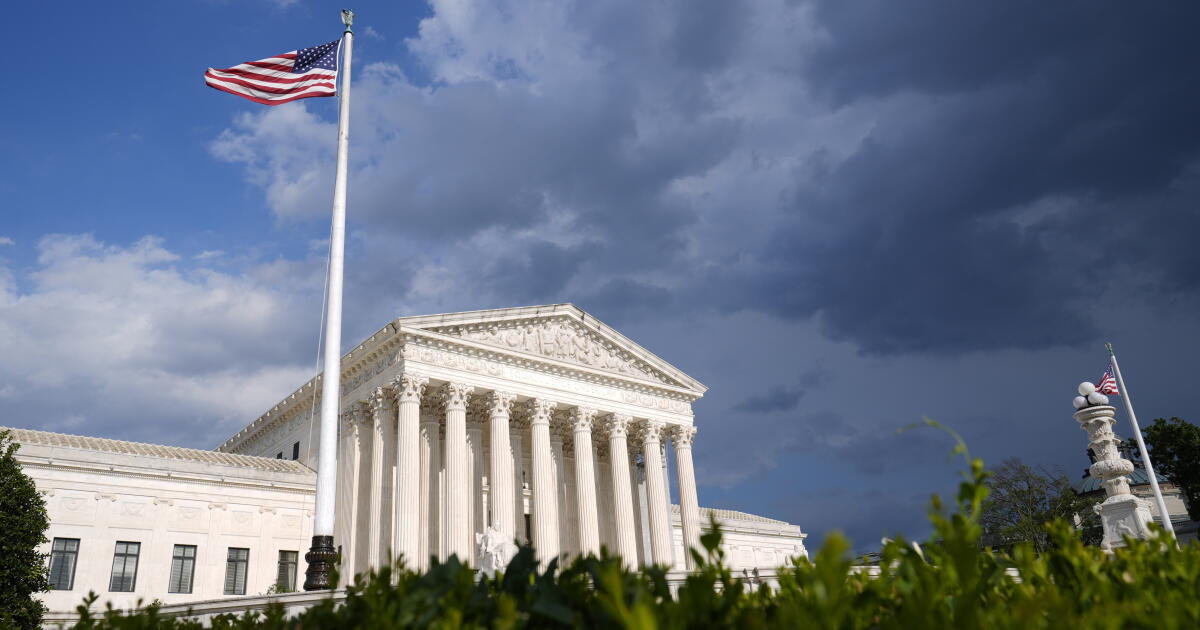
Supreme Court rejects Trump’s order to end hormone treatments for transgender prisoners
WASHINGTON — The Supreme Court on Wednesday turned down an appeal from President Trump and rejected his order to end hormone treatments and other gender-affirming care for transgender inmates in federal prisons.
The justices denied Trump’s appeal without comment, over dissents by Justices Clarence Thomas and Samuel A. Alito.
The order leaves in a place a decision by a senior judge appointed by President Reagan who had blocked Trump’s new prison policy from taking effect.
The decision is a rare win for trans rights at the Supreme Court.
In June, U.S. District Judge Royce Lamberth, a Reagan appointee, said he would “not wade into the culture war being waged against transgender individuals” and ruled the Trump administration did not have evidence or good reasons for changing the long-standing policy for these inmates.
He cited the Administrative Procedure Act, which forbids abrupt and “arbitrary” changes in federal regulations.
Lamberth said the Bureau of Prisons’ new regulation would “arbitrarily deprive inmates of medications and other lifestyle accommodations that its own medical staff have deemed to be medically appropriate.” The evidence showed that “gender affirming care is the only effective treatment for gender dysphoria and severe harm flows from the cessation of such care,’’ he wrote.
Last month, the D.C. Circuit upheld his decision on a 2-1 vote, prompting the administration’s appeal to the Supreme Court.
The American Civil Liberties Union, which sued on behalf of three inmates, said the court should not “overturn a three decades-long status quo.” Since 1992, the Bureau of Prisons has “treated people with gender dysphoria with hormone therapy,” their lawyers told the court.
In response to Trump’s order, the “BOP overrode its own medical providers’ clinical judgment and mandated the cessation of treatment for almost 1,000 people in its custody,” they said.
At issue in this latest legal dispute over trans rights was whether the government had evidence to justify a sharp change in its prison regulations.
In the past, the court has often deferred to prison officials on their handling and treatment of inmates.
“If deference to prison administrators means anything, it means that courts cannot second-guess their eminently reasonable choice to treat the mental-health condition of gender dysphoria with psychotherapy rather than physical, sex-rejecting interventions,” Solicitor Gen. D. John Sauer said in his appeal.

James Anderson not offered new contract by Lancashire
James Anderson’s legendary career could be over after Lancashire opted against offering England’s all-time leading wicket-taker a new contract.
Anderson, 44, chose to continue playing with Lancashire after England forced him into international retirement in 2024.
He captained Lancashire in the County Championship last season but the Red Rose endured a poor season, finishing next to bottom of Division Two.
Now, as first reported by the Times, Anderson will not be given the opportunity to play at Old Trafford in 2027 – the summer when he will turn 45.
It is not known whether Anderson will retire or look to extend his 26-year professional career with another county.
Anderson first played top-level cricket as a 17-year-old for Lancashire Cricket Board in 2000, then made his Lancashire debut the following year.
His exit from the Red Rose comes at a time of upheaval at Old Trafford. The county are undergoing a review of their cricket operations, led by interim chair Dame Sarah Storey and new chief executive Richard Kenyon. Paul Farbrace was appointed as Lancashire’s director of cricket earlier this month.
Although Anderson is in his mid-40s, he has remained in supreme form in a struggling team.
He took 50 wickets in the County Championship in 2026, a tally bettered by only six other bowlers in Division Two. Anderson was named Lancashire’s Championship player of the year.
Overall, 443 of Anderson’s 1,193 first-class wickets came for Lancashire, to go with 83 List A wickets and 50 T20 wickets for the county.
Trump says AI data centres should pay ‘dividends’ in pre-midterm shift | Donald Trump News
US president has continued to support data centres in advance of midterms, despite growing opposition from Republicans.
Published On 21 Oct 2026
United States President Donald Trump has said AI data centres should pay “dividends” to communities, in a shift before the midterm elections.
“If companies want to make their Data Centers popular, pay the community, and/or individuals within the community, a ‘dividend’” Trump said in a post on Truth Social on Wednesday.
Recommended Stories
list of 3 itemsend of list
The president’s comments come after he doubled down on his support for data centres, a stance seen as one of several political liabilities for Republicans in the run-up to the midterm election, as Trump’s approval rating has hit record lows.
Polls show dismal support for such centres amid concerns about the sprawling complexes’ water and energy use.
In the post, Trump advised companies that they could make the centres popular if they “pay the community, and/or individuals within the community, a ‘dividend’.”
“I have watched the process closely, and Data Centers that were highly unpopular in a certain area, have become extremely popular when a financial deal is struck,” he said. “MAKE DEALS, and get them built!!!”
Several top Republican candidates have opposed data centres before the midterm polls, with the issue emerging as an area of rare bipartisan consensus in advance of the November 3 vote.
Republican Senate candidates, including Ken Paxton in Texas, Mike Rogers in Michigan and John Husted in Ohio, have all called for more restrictions and oversight on the centres, in a reversal of earlier positions.
The issue featured prominently in a recent debate in Iowa, where Republican Senate Candidate Ashley Hinson said the local level should decide whether to build AI data centres.
Despite the shifting sentiment, Trump in late August issued an impassioned defence of data centres, decrying what he called “the anti-Data Center movement” as a gift to China.
“The only reason that communities throughout the USA should not want Data Centers is if they want to end up being backwards and poor,” Trump wrote at the time.
“If they want to be successful and rich, with far lower taxes and jobs all over the place, let Data Reign.”
Trump has taken several measures to accelerate data centre development, including issuing an executive order last year that called for measures to fast-track permitting and environmental review. The order promised to use federal land for the “expeditious and orderly development of data centers”.
Trump has also backed a voluntary pledge by AI companies to cover the full cost of the electricity data centres use, but has avoided supporting legally binding federal restrictions.
A Gallup poll conducted in March suggested that 71 percent of Americans opposed establishing AI data centres in their areas.
An ABC News/Washington Post/Ipsos poll released on Wednesday identified a similar rate of disapproval, with 72 percent of respondents saying that they opposed building new data centres in their communities.

The 25 best places to travel in the WORLD next year from tropical island to lesser-travelled UK hotspot
IN JUST over two months, we will be in 2027 and with that in mind you might want to start planning your next getaway.
The good news is that the best 25 places to visit in 2027 have just been revealed.
The list compiled by National Geographic features far-flung islands as well as European city gems.
So here are some of our favourites from the list:
Vestland, Norway
Vestland can be found in the southwest of Norway and is known for its waterfalls and wilderness.
Head to Folgefonna National Park where you can see one of the country’s largest glaciers and Trolltunga, a massive rock formation that sticks out of a lake.
Read more on travel inspo


There’s also Sognefjord, which is Europe’s longest and deepest fjord.
The best way to get to Vestland is by heading to the capital of the country, Bergen, with flights from the UK taking around two hours and costing from £91 return.
Luxor, Egypt
Luxor in Egypt is often forgotten about compared to the likes of Cairo and El Gouna but the destination is known for an ancient city and tombs.
Travellers can head to The Lost Golden City, which is the ancient city of Aten and is thought to be one of the largest ancient cities ever found in Egypt.
National Geographic also noted how getting to Luxor will be easier soon as there will be an extension of two free visas – the summer entry visa for travellers visiting on Egyptian-owned airlines and a four-day transit visa.
Flights direct to Luxor from the UK take around five-and-a-half hours and cost from £149 return.
Puerto Rico
Dubbed the ‘La Isla del Encanto’ which translates in English to ‘The Island of Enchantment’, Puerto Rico is dominated by a central mountain range covered in tropical rainforest.
In addition to this, the island is littered with white sand beaches and crystal clear waters.
Visitors can explore the historic forts of Old San Juan, where you’ll find blue cobblestone streets.
Flights from the UK to Puerto Rico usually include a stopover, taking between 11 and 15 hours and costing from £550 return.
Dumfries and Galloway, Scotland
The only UK spot to feature on the list is Dumfries and Galloway in Scotland, with sandy beaches and rugged coastline.
Often nicknamed the ‘Scottish Riviera’, Dumfries and Galloway can be found in the southwest of Scotland and is home to medieval castles, such as Caerlaverock Castle, which is a triangular pink sandstone castle with its own moat.
There’s also Galloway Forest Park, which is the UK’s first International Dark Sky Park, with clear views of around 7,000 stars as well as the Milky Way.
If heading to the region, it is about an hour-and-a-half from Glasgow Airport, which costs as little as £30 return to fly to from London.
Grenada
The Caribbean island of Grenada is known as the ‘Spice Isle’ for producing nutmeg, mace and cocoa, but also has beautiful mountains, rainforests and beaches.
Each August you could even travel to Spicemas on the island, which is an annual carnival with parades, street parties and Jab Jab (where people paint themselves with molasses and mud) – and the festival is celebrating 150 years in 2027.
While on the island you can also snorkel Molinere Bay, which features life-size submerged art.
Flights from the UK to Grenada usually involve a stop and cost from around £932 return.
Santander, Spain
If you are looking for somewhere different in Spain to head to in 2027, look no further than Santander, the coastal capital of the country’s Cantabria region.
Full of history, the city has a vibrant Old Town where you can visit the Magdalena Palace.
The city also has a fishing quarter, which is the ideal spot to dig into some local cuisine with favourite dishes including calamari with onions and clams in marinara sauce.
Flights between the UK and Santander take around two hours and cost as little as £29 return.
Normandy, France
Known for its Gothic cathedrals, Normandy is a great European destination for history lovers.
And in 2027 the city will celebrate Millennium 2027: European Year of the Normans with more than 1,000 events planned across the year including medieval feasts, street performances and concerts.
One event in June will see 40 Viking-style ships sail along the Normandy coast.
And you don’t even have to hop on a plane to get to the destination – instead, you could catch the ferry from Portsmouth costing as little as £28 per way.
Melbourne, Australia
For a long-haul trip, Melbourne in Australia is one of National Geographic’s highlight destinations for 2027 with sports, a vibrant nightlife and thriving food scene.
And for rugby fans, the waterfront Docklands district will host eight matches during the Rugby World Cup next October.
Make sure to visit St Kilda Pier and beach as well to spot the colony of local penguins.
Flights to Melbourne from the UK usually involve a stopover and cost from around £550 return.
Leipzig, Germany
For somewhere different in Germany, in 2027 you should head to Leipzig, which is the largest city in the state of Saxony.
The city is home to one of Europe’s largest railway stations, Leipzig Hauptbahnhof, which has a grand 300 metre facade as well as a multistorey shopping centre.
In 2027, there will also be several events celebrating all the famous musicians to come from the city including Bach and Beethoven, with a Beethoven Festival in May and Bachfest in June.
The closest airport with direct flights from the UK is Berlin with returning flights costing from £41 – it then takes around an hour-and-a-half to drive to Leipzig.
Tricity, Poland
Sat on Poland‘s Baltic coast, Tricity refers to the three neighbouring cities of Gdańsk, Sopot, and Gdynia.
Each city has its own character, heaps of history and vibrant seaside resorts.
For example, in 2027, Gdynia will host the regatta of the World Sailing Championships meanwhile Gdansk will have its St Dominic’s Fair with food, concerts and performances.
The best way to get to the region from the UK is by flying direct to Gdansk, which takes around two hours and costs from £29 return.
Full list of National Geographic’s top 25 places to travel to in 2027
- Vestland, Norway
- Penang, Malaysia
- Luxor, Egypt
- Madison, Wisconsin
- Puerto Rico
- Dumfries and Galloway, Scotland
- Niigata, Japan
- Chengdu, China
- Pacific Coast Highway, California
- Jaipur, India
- Grenada
- Salvador, Brazil
- Cape Froward, Chile
- Santander, Spain
- Normandy, France
- Southern Ozarks, Missouri and Arkansas
- Halifax, Nova Scotia
- The Transcaucasian Trail, Armenia
- Melbourne, Australia
- Leipzig, Germany
- Baltimore, Maryland
- Malawi
- Maya Ka’an, Mexico
- Tricity, Poland
- Kuélap, Chachapoyas, Peru
- Catalina Island

New Montana “Super Range” Complex Could Add Critical Weapons Testing Capacity
A plan for a new military weapons “super range” test center in Montana announced by President Donald Trump Wednesday night seeks to address a growing concern about the need for more such facilities. As the U.S. races to develop autonomous capabilities, hypersonic munitions, laser and directed energy weapons and improved electronic warfare systems, a limiting factor has been the lack of suitable locations for testing.
While the U.S. military has a wide array of installations where it can test these systems, it’s still not enough. In addition to the massive increase in weapons development and the need for more realistic training, the changing nature of war is outstripping the capacity of existing facilities as future kill webs will extend thousands of miles, not hundreds. There are only so many places with enough space to try out these systems even to a limited degree without butting up against statutes and regulations while also avoiding interference with civilian air traffic and communications, all in an environment remote enough to avoid prying eyes. The need for more and bigger testing grounds is an issue TWZ has long raised.
In addition to the backdrop of the increase in a wide range of weapons testing, much of it aimed at China, Trump’s super range announcement was delivered as the Pentagon and services are specifically creating commands dedicated to autonomous weapons. On Tuesday, during the annual Association of the U.S. Army (AUSA) conference in Washington, D.C., attended by TWZ, the acting Army Secretary unveiled one such new command, which we will discuss in greater detail later in this story.
“I’m pleased to inform you and announce that right here in Montana, the Department of War is going to establish a new ”super range” for testing advanced weapons and technologies, technologies including potential autonomous weapons, space, and electronic warfare technology, supersonics and hypersonics,” Trump said during a campaign rally in Kalispell. “Montana will help ensure the American military always reigns supreme.”
Trump provided no additional details about where this new “super range” will be located, when it will come online, exactly which systems will be tested or how much it will cost.
Thursday morning, the office of U.S. Sen. Tim Sheehy noted that he has been “a strong advocate for building an advanced training range in Montana, securing $10 million for a feasibility study in the FY27 National Defense Authorization Act that passed the Senate Armed Services Committee earlier this year.”
“The 21st-century battlefield is being redefined by new weapons and evolving technical frontiers that require a novel approach to how America will resource its warfighting capabilities,” the senator said in a statement. “Contested spectrum, electronic warfare, hypersonics, space capabilities and enhanced targeting require a new class of testing and evaluation facilities for our military. The U.S. faces a clear choice: adapt and expand our development infrastructure to the realities of modern warfare, or risk falling behind adversaries who iterate faster.”
The Montana Republican highlighted the value of his state’s huge swaths of undeveloped land for this effort.
“By combining our state’s vast landscapes, innovative spirit, and proud tradition of military service, we are the Last Best Place to ensure America’s fighting men and women have the technological edge they need to dominate the battlefield and win the wars of tomorrow,” he explained.

Like Trump, Sheehy offered no specifics about exactly where in Montana the “super range” will be located, when it will come online or how much it will cost. We have reached out to the White House, Sheehy and the Pentagon for more details. The Pentagon deferred us to the White House, which referred us back to the Pentagon. We also contacted the office of U.S. Sen. Steve Daines and Gov. Greg Gianforte.
There are already a number of facilities in Montana conducting the kind of military weapons testing described by Trump. One that closely matches what would be needed from such a location is the Montana Spaceport & Test Range and the affiliated Limestone Hills Innovation & Test Campus. A public-private aerospace and defense initiative, it already conducts testing for next-generation space vehicles, hypersonic, supersonic and ballistic weapons, drones and counter-drone systems and electronic warfare equipment.
Another potential site could be an expansion of the Big Sky Autonomous Systems Range (BSASR). Located near Bozeman, it is “the Lobo Institute’s primary training and testing facility for U.S. and allied military, federal, and partner organizations.” Operated under the Lobo Tactical division, BSASR is “a 6,000-acre, fully fenced complex purpose-built for advanced unmanned aerial systems operations, full-spectrum live fire, mounted and dismounted mobility, and full mission profile exercises grounded in the latest tactics, techniques, and procedures from active conflict zones,” according to the Lobo Institute. “The range pairs realistic terrain with the regulatory, infrastructure, and instructor depth required to train against the operational realities of today’s and tomorrow’s battlefields — and it does so in a remote, controlled environment where units can push hard while keeping risk to acceptable levels.”

We have reached out to both facilities for more details.
The new super range could also leverage existing range space on the ground and in the air. There is also the large Hays Military Operations Area (MOA) which could be expanded for this new test range effort. MOAs are blocks of airspace designated for military training. Malmstrom Air Force Base and its ICBM fields could also potentially be utilized. Overall, it’s possible a number of existing range areas could be interconnected, both digitally and via airspace corridors, to create a larger complex, as well.
The Pentagon has long realized the need to increase the areas where it can test out these systems, especially to evaluate them under combat-like conditions.
“The current open-air range space should be increased and better integrated to support system-of-systems assessments of air, land, and sea combat systems with capability for emerging long-range fires, hypersonic missiles, EMS warfare, unmanned systems, nuclear effects, and directed energy (DE) weapons,” the Pentagon’s Director of Operational Test & Evaluation (DOT&E) stated in a report last year. “The DoW needs to invest in and coordinate expanding and connecting the airspace available to the open-air ranges enabling testing and training of advanced capabilities.”

The current facilities are inadequate, DOT&E further explained.
“Threat systems and our own capabilities far exceed the current available air space on the open-air ranges,” according to the report. “The ranges need support and assistance to coordinate additional airspace and corridors with the FAA and industry. Expanding and connecting range air space is necessary to facilitate testing and training critical long-range capabilities that our warfighters need and to replicate the threats they will face.”
In addition, the report states that “to test missiles with longer ranges and gather data to support simulation validation, including for hypersonic missiles, the DoW should invest in long-range, overland missile flight test corridors with land-based impact areas and mobile hypersonic-specific range instrumentation to produce the required lethality data against threat-representative targets for terminal area assessments.”

The Defense Department had largely been conducting the testing of hypersonic weapons — those that can reach speeds of Mach 5 and above — at sea given the need for the long ranges for evaluation. Still, even that was limited. The Pentagon restricted the number and location of hypersonic tests it carried out each year because of the aging fleet of ships it used as its primary data collection assets to track the capabilities while in flight.
Retired Block 20 and Block 30 RQ-4 Global Hawks belonging to the U.S. Air Force, reconfigured as RangeHawks under the SkyRange hypersonic weapon testing infrastructure program, would help address some of those restrictions. You can read more about that in our story here.
However, if testing moves to an overland phase, the need for expanded air corridors could grow increasingly critical. Last year, the Pentagon’s Test Resource Management Center (TRMC) identified three candidate locations to perform those tests, one over Alaska, another at White Sands Missile Range in New Mexico and a third in Australia, Defense News reported at the time.

Hypersonic testing in Australia is already underway. Earlier this month, we broke the news that the U.S. Air Force’s scramjet-powered Hypersonic Attack Cruise Missile (HACM) had finally reached the flight test phase, with at least one “release” having been carried out so far over a range in Australia.

The military is also looking to expand where it can test electronic warfare systems to help ease the bottleneck at White Sands and a few other locations. Such testing is limited due to U.S. restrictions on jamming, which can interfere with civilian systems.
Before he resigned after tensions with Defense Secretary Pete Hegseth, former Army Secretary Dan Driscoll in June said the service had plans to set up at least two domestic ranges that mimic realistic conditions on Ukraine’s battlefields, where the electromagnetic spectrum is a highly contested domain. This spectrum would be even more heavily disputed in a fight with China.
“You can have a kind of electronic warfare and all of the contested environment created, and you can have drone manufacturers and counter-drone tool-builders engaging together,” Driscoll told reporters. “Then, we also want soldiers to be able to go there, so that they can strengthen their skills and work hand-in-hand with developers.”

Driscoll said there are already places in the U.S. where the Army can test safely, and separately, the service is looking at a global range outside the U.S. to do “much more aggressive testing,” including with hypersonics. When asked, Driscoll declined to say where these ranges would be until planning is farther along.
“At least some of the current counter-drone training for soldiers, like one CBS News saw in April, does not include electronic jamming — in part because the U.S. restricts jamming domestically,” CBS reported.
In August, the Army opened premier test ranges for the use of private industry to conduct internal research and development. Additionally, the service co-hosted a Denied, Disrupted, Intermittent and Limited testing environment, at Camp Grayling in September, and there are three more scheduled for Fiscal Year 2027, an Army spokesperson told us.

Trump’s news about the “super range” was delivered as the Pentagon and the services are working to ramp up the development and production of a range of autonomous systems.
Last month, as we noted earlier in this story, the Pentagon announced plans for a new functional combatant command, very broadly akin to U.S. Special Operations Command (SOCOM) or U.S. Space Command (SPACECOM), but for operational activities involving autonomous and robotic capabilities. In addition, Hegseth also announced new initiatives to help further accelerate the fielding of uncrewed systems in the air, at sea, and on land, as well as to explore future warfighting challenges. All of this builds on previous and long-overdue efforts to prioritize the fielding of various tiers of drones, as well as artificial intelligence (AI) and other emerging technologies, across domains, but there are questions about how these new efforts will translate into tangible developments.
On Tuesday, acting Army Secretary Adam Telle announced the creation of the service’s Futures and Autonomous Systems Command (FASCOM).
“This is our way to make sure that we take all of the great work that’s been happening with the resources that we have today, and we centralize it,” Telle said. “We’re pushing autonomy down into our units, but when it comes to having and making sure that the left hand in the Army knows what the right hand of the Army is doing, this happens at FASCOM; then FASCOM feeds up into AutoWarCom.”
Telle added that FASCOM “will work with the other services to create scale for purchasing power and share best practices on autonomy.”
“It is too soon to speculate about anything related to FASCOM,” the Army told us. “Specifics on structure, command, mission, etc. will be announced at a future dates [and] will require the kind of additional testing facilities that a new Montana super range could provide.”
The use of highly cooperative autonomous weapons platforms that can swarm and operate collectively over large areas will also tax existing ranges beyond their capacity.
Details about the new range proposed by Trump are scant, and it remains to be seen whether it will live up to the hype or even be built. As we noted earlier in this piece, a feasibility study, which hasn’t even been funded yet, is still needed before major work can begin. However, if and when it does come online, a new Montana test range will be welcomed by a military in need of additional places to test out its latest capabilities.
Contact the author: howard@twz.com

The Paradox’s pop-punk saviors are coming to a town near you
Eric Dangerfield is surrounded by senior citizens.
After a packed set at Riot Fest the previous weekend, the 25-year-old lead singer and rhythm guitarist of the Paradox welcomed the quiet of his boomer-dominated neighborhood.
“I’m a suburban dude,” he said, smiling from his home in metro Atlanta, his cropped two-toned dreads bobbing as he spoke.
The Paradox spent much of the summer on the festival circuit, powering through a growing discography of pop-punk gems, so Dangerfield and the three other band members are taking a brief breather before their Proceed With Caution Tour starts this month — their first as headliners.
It’s peaceful. That is, “Except when the boys come over,” he adds.
On a late morning in September, the boys are here and accounted for: patching in to a video call, minutes apart, from their homes, also in suburban ATL. Dangerfield, born with the perfect stage name, has ideas that flow faster than he can seem to get them out. Then there’s Donald Bryant on bass. Yin to Dangerfield’s yang, with a quiet, commanding presence.
Percy “PC3” Crews has been playing drums since he was 3, and his vicious skills on the drum kit contrast with a cheery, relaxed demeanor. Finally, there’s Christopher Bernard, a.k.a. Xelan — the lead guitarist and Dangerfield’s vocal complement.
Dangerfield likens the four to musical superheroes from a Marvel series. But not so much the “Earth’s mightiest heroes” variety.

On their first headlining tour, the band brings its new EP, “Proceed With Caution,” to Los Angeles while claiming space in a historically white genre and weaving social commentary into its pop-punk sound.
(Shorefire Media)
“I’m like Mister Fantastic and Donald’s my Invisible Woman. Xelan’s the Thing, and Percy is John Storm,” he says of his partners in musical mischief. “If I’m ugly, just say that,” quips Xelan, the band’s oldest member at 30. “Yeah. Because you’re strong, bro,” reassures Eric.
By this time, the interview has devolved into fun-loving chaos.
They finish each other’s sentences and switch up their Google Meet backgrounds, cracking up as an awkward graduation portrait pops up. At some point, Bernard decides to give a bedroom tour, showing off his collection of Blink-182 and Fall Out Boy posters.
A photo of him with Travis Barker hangs next to a framed Billboard plaque on a nightstand. Barker was featured on the Paradox’s 2025 single “Bender” and performed with the group at Vans Warped Tour the same year.
The Billboard plaque commemorates the band’s song “Get the Message” from its debut EP, “NSFW,” reaching No. 1 on the Alternative Airplay chart in January — a great achievement for any rock artist — but the Paradox also happens to be the first all-Black band to do so.
The success, although rapid, didn’t come from nowhere. All of the members have been working toward music in some form for years.
Dangerfield had a deal with a small label where he was originally making a go of it as a pop and R&B soloist. He also put out his music online. Looking for something different, he remembered his passing interest in pop-punk from his days growing up in Palm Coast, Fla. It was the “Fat Lip” video by Sum 41 that sealed the deal.
Yearning to be in a band, he started working with Bernard, whom he met online and shared his passion for the genre. Bryant was Dangerfield’s childhood friend from Palm Coast who had also moved to Atlanta, while Crews had been a fixture on the local music scene. And the name? It came from Dangerfield’s love of quantum physics.
Shortly after the group officially formed in June 2024, Dangerfield’s then-girlfriend — now wife and band “momager” Lexi Dangerfield — opened Instagram and TikTok accounts filming and posting their homey videos. The band’s song “Kaitlyn” and some covers blew up. The artists’ perspective, filtered through a Gen Z lens, struck a multigenerational nerve.
Attention came so quickly that Dangerfield felt the need to defend against online detractors who were convinced the group was an industry plant.
From there, the fairy-tale plot thickened. Billie Joe Armstrong followed Dangerfield on Instagram, and the two struck up a friendship that led to the Paradox opening for Green Day on the Atlanta stop of its Saviors Tour. But this was, of course, after Jack White’s people called — who the group ended up opening for at Basement East in Nashville.
Things haven’t slowed down in the two years since, with opportunities coming fast and furious. In the spring of last year, the band signed a deal with Hundred Days Records, a subsidiary of Virgin Music Group, and teamed up with producers Mike Pepe and Robopop to work on “NSFW.”
“Bender,” the group’s collaboration with Barker, and “Do Me Like That” are featured on Madden NFL 27 and NBA 2K26 video game soundtracks. Last month, the musicians streamed a concert from Twitch superstar Kai Cenat’s house. And now, instead of opening for their idols, they are inviting them up on stage as guests. For their second Warped Tour in Long Beach, that meant Deryck Whibley of Sum 41 and Logan Henderson from Big Time Rush.

The embrace from established musicians has definitely helped the band navigate its rise. In a moment of doubt, Crews said Good Charlotte’s Joel Madden, in particular, came through with sage advice.
“He asked me a question: ‘How does it feel being where we were?’ And I was like, ‘It feels like a dream.’ It felt like I was gonna wake up on my desk sophomore year with drool on my f— table. And I was telling him that, and he was like, ‘You know, it may feel that way, but it is real … It’s real, and it’s you … you belong in these rooms.’”
The irony of being embraced in a mostly white subgenre of punk rock while Black American culture formed its foundation is not lost on the group. Had the band come about during one of Dangerfield’s favorite eras of music, the ’50s and ’60s — there would likely have been rooms in which they weren’t welcomed.
While the band members understand the impact their visibility has — especially for non-white kids who grew up in the suburbs as they did: skating, riding BMX, building Legos, watching anime, dreaming of a life onstage — it does require some balance. “They’re not asking Taking Back Sunday this stuff,” Dangerfield acknowledged when asked if they might tire of the representation mantle. “Or Blink, but … We are a minority in this space and in this country, and I think that you know the stuff that comes with being Black should definitely be talked about. I think those conversations are important.”
He said as much in August, when the group made its Tiny Desk debut in celebration of NPR’s Black Music Month. “Now, like they said, we made history,” he said, leaning into the mic after the first song. “And the Paradox is in the business of bringing rock ’n’ roll back to the originators.”
A glance at the comment section under the video makes clear the group’s authenticity resonates with those who haven’t felt seen or heard in certain spaces.
“I’m a black girl from the suburbs of Metro ATL,” wrote @rainjojo. “And I’m glad to see representation of people who are like me indulging in punk rock. I got into this genre from childhood shows like “16,” “Stoked”, and other early 2000 to 2010 shows, and I remember being bullied for being whitewashed. Please keep making more music like this.”
The tour is named after “Proceed With Caution,” the band’s sophomore EP released on Oct. 2. Across six tracks, it continues in the same vein as “NSFW,” with sharp melodies and a dash of humor thrown in. But on “That’s Not Fair,” the group wades deeper into social commentary. It was also the most difficult to record, cut raw with no click track.
“We were just trying to think of things that were not fair, [from] small and trivial like losing your keys to, I don’t know, using it as a bridge to talk about larger issues and things like that,” Dangerfield says of the song. “I think a big thing for me personally, it’s not political … is kind of the fact that everything is getting so expensive. The price of everything is rising so rapidly, and the salaries that people are being paid are not really growing to match that.”

The Paradox perform at The Moroccan Lounge on Thursday, Oct. 22.
(Hunter Lyon)
“And it’s like, we got very lucky, but the thing is, most people don’t,” he continued. “If you’re gonna sacrifice all your time, slaving away working for big corporations and stuff like that, you should at least be able to, you know, buy a candy bar or something.”
So far, the musicians aren’t taking anything for granted and are trying to enjoy the in-between moments.
Dangerfield and his wife took their daughter on a Disney cruise for her second birthday — she’s spent much of her young life traveling with the band.
With some of his publishing money, Bernard indulged his love of vintage Japanese fashion and has a 2000s-era Tuscan house on his vision board. Crews stays healthy, listens to lots of Snarky Puppy, and looks forward to the relaxed cannabis laws of L.A. when the tour stops at the Moroccan Lounge on Oct. 22 and 23. If time allows, he might even have time to surf in Malibu.
Bryant, who counts Mike Dirnt, Mark Hoppus and James Jamerson among his biggest influences, balances a dream of seeing his band play for thousands with looking forward to a life lived like his older brother: a chiropractor with a nice family.
But some dreams will have to wait as the band goes back to making music, hopefully with lasting impact. The members want to become household names, “like Nirvana,” with music people will play for hundreds of years. Why not?
Anything is possible when you are a fantastic foursome.

These are the 10 BEST campsites for autumn and winter in the UK with saunas and cosy lodges from £8pp
DO YOU think camping is just for summer? Think again.
With the help of Pitchup.com, we’ve put together a list of the 10 best campsites for the autumn with on-site saunas, spas, and even lodges with central heating.
Wighill Park Glamping, West Yorkshire
When it’s dark and gloomy, some of us would rather not sleep in a flimsy tent, and at Wighill Park Glamping are some super cosy camping spots.
Campers can shelter from the elements inside the individual wooden pods.
The smallest sleep up to two people but still have all the essentials like a little kitchenette, sofa, bed and its own toilet and shower room.
For a little extra, you can opt a hot drink pack, fireside kit and even a bottle of gin and a bottle of tonic.


Some of the larger pods even have their own hot tubs and can sleep up to five people.
The farm is part of Wighill Park, once a private cricket pitch for Lord Hawke (a well-known figure in the world of cricket). Its woodland trails are perfect for an autumn walk, and dogs are welcome too.
If you’re after some exploring further afield, the campsite is a 25-minute drive away from York and under 40 minutes from Leeds and Harrogate.
Rates start from £85 per person per night.
Moddershall Oaks Country Spa Retreat, Stafford
If you really want to take your camping holiday to the next level, how about a retreat with an on-site spa?
The wooden pods at Moddershall Oaks Country Spa Retreat sit on a huge estate with woodland and lakeside walks.
But when the Great British weather inevitably turns, huddle inside the spa, gym, restaurant and bar.
At the spa are swimming pools, a steam room, hydrotherapy pool, heated tiled loungers, experience showers and a relaxation lounge.
When it comes to the pods, these sleep from two up to four with large beds, black-out curtains, air conditioning and an ensuite with a rainfall shower.
There are luxury toiletries, a flatscreen TV, mini-fridge, GHD hair dryer and tea and coffee also inside.
Guests staying in the pods get complimentary gym access during their stay as well as breakfast which is in the adjoining Oak House restaurant (spa and exercise classes are charged separately).
Rates start from £150 for two people per night.
Whitehouse Farm, Suffolk
Tucked away in Suffolk is Whitehouse Farm, a campsite perfect for anyone who is after a quiet and peaceful retreat.
On the campsite are cosy shepherd’s huts which come with snug double beds, a kitchenette, small dining area – some also come with firepits and barbecues.
Or for those who have their own motorhome, simply book the pitch.
Pitches are either in the meadow, or the old orchard where there are fruits like damsons, apples and pears in early autumn.
For those on a family trip, there’s an outdoor climbing frame for children who don’t mind the weather.
And on the campsite, dogs are welcome too as long as they’re kept on a lead.
During the cooler evenings, adults can take advantage of the on-site sauna which is a new addition and sits above the pond.
Rates start from £30 for two people per night.
North End Farm, Dorset
Down in rural Dorset is North End Farm which is close to beaches and local pubs.
There are three spots available to book, a cosy stay called the North End Cabin which sleeps two people.
The Potting Shed cabin has lake views and also sleeps two people, then there’s the Old Cricket Pavilion lodge which has two bedrooms, a TV and most importantly for winter, central heating.
The site is dog-friendly with plenty of walking trails and there are three lakes suitable for swimming.
There’s a hot outdoor shower on the lakeside so anyone brave enough to get into the water can warm up afterwards.
Slightly unusual additions include the chance to go paragliding as the owner owns a paragliding company. It’s also possible to organise clay pigeon shooting and fishing trips.
For a pub lunch and a trip, the farm shop is a five minute drive away and the Jurassic Coast beach at Seatown is two miles away.
Rates start from £160 per two people for two nights.
Woodside Country Park, Herefordshire
For long walks in the Malvern Hills National Park on a campsite which has wild water swimming and fishing, head to Woodside Country Park.
The campsite is in amongst 28 acres of landscaped grounds with lots of chances to see birds and wildlife.
Campers can choose to stay on a non-electric or electric pitch in a tent either on the ground of a rooftop tent, to a caravan, campervan or motorhome.
There’s also a choice of camping pods which sleep up to five people and while they don’t have any facilities, it will will be cosy.
When it comes to activities, a lakeside wood-fired sauna is available for private hire or public sessions.
Or head out on one of its many trails, including a fairy door trail for children.
For the adults, a 15-minute walk along the Herefordshire Trail leads to a vineyard and winery which holds both guided and self-guided tours and tastings.
Rates start from £29 per two people for two nights.
Andark Lake, Southampton
Any campers who actually enjoy the darker days and don’t want to compromise when it comes to activities should head to Andark Lake.
Six miles outside of Southampton, the campsite is centred around a lake – which is purpose-built for scuba diving.
It holds pre-booked training courses, recreational dives, kit hire and air fills for certified divers.
Other facilities include its lakeside sauna which is perfect for a warm up after a cold lake plunge.
There are open-water swims at the weekend (for an extra £7 charge) and nearby at Swanwick Marina, visitors can try their hand at sailing, paddleboarding, kitesurfing and windsurfing.
The on-site café serves snacks, light lunches as well as hot and cold drinks throughout the day.
For a more hearty meal, there are three pubs within walking distance.
Rates start from £25 per two people per night.
Wildswim2sauna, Devon
After a secluded no-frills campsite with wild water swimming right on your doorstep? Wildswim2sauna is an option for autumn.
The campsite in South Devon is open year-round and is very much an off-grid site.
There are non-electric grass tent pitches or non-electric grass touring pitches – and make sure to take supplies as well as the site has no showers.
What it does have however is a river right on your doorstep for wild swimming or chilly cold plunges.
There are also hot tubs and a sauna which can be hired for warming up after a swim.
Within the site, it’s possible to organise mackerel fishing trips, sea swims and coastal cruises in and around Salcombe.
One visitor wrote in their review: “Amazing beautiful and remote location, incredible swimming right by our tent. So peaceful waking up to the birdsong and rustling of animals on the river.”
Rates start from £40 per two people per night.
Lunga Pier and Shore Camping, Argyll
For a taste of adventure, head to Lunga Pier and Shore Camping in Argyll – it’s a remote spot and even quieter in the off-season.
The campsite sits on the Craignish Peninsula in western Scotland, with impressive coastal views that reach the Corryvreckan Channel.
Thanks to its location by the water, the site is ideal for wild swimmers, paddleboarders, anglers and kayakers.
There are also rugged coves and nearby islands to explore – just don’t forget your wetsuit.
Visitors have seen wildlife such as otters playing in the sea and you’re also likely to see seals, hares, herons and curlews.
Campers have also praised the site for its incredible pitch views across the water.
The village of Ardfern, with a shop, restaurant and pub, is ten minutes’ drive away.
Rates start from £28.88 per two people per night.
Herding Hill Farm and Caravan Camping Site, Northumberland
While most dislike the early nights of autumn and winter, it’s the perfect time for stargazing.
Herding Hill Farm Caravan and Camping Site in Northumberland even has stargazing kits and visitors could even catch a glimpse of the Northern Lights.
The on-site petting farm will prove popular with the kids who are welcome to help with the twice-daily feeding of the animals.
Children can also make use of the playground and ball field behind the cabins.
Pitches vary from electric hardstanding for tents, caravans and campervans. It also has pods which have raised beds and mattresses – some also have private hot tubs.
Other things to do include seeing Hadrian’s Wall which is half-a-mile away and the market town of Haltwhistle is a five-minute drive away.
There’s a camping kitchen with vending machines and the accessible shower block has underfloor heating so it’ll be warm even in the winter.
Along with the stargazing kits, firepits and barbecues all available to hire too. Rates start from £30 for two people per night.
Wassell Grove Camping and Caravanning, West Midlands
Wassell Grove Camping and Caravanning is a great find for anyone who loves fishing with three lakes available to its campers.
For those who aren’t into fishing, the nearby woodland is lovely for an autumn stroll.
Not to mention both Cadbury World and West Midland Safari Park are under half an hour away.
Kids will love the woolly addition to the campsite, the friendly alpacas which campers can feed with food bought from the café.
The on-site café also serves hot and cold food throughout the day for guests, or for those who decide to embrace the chill, there’s the option to fire up the barbecue instead.
If you fancy a cosy stay not in a tent, the campsite has pods that sleep up to three people and cabins which are basic but will keep the chill away.
The cabins have an outdoor picnic table and a kettle.
Rates start from £16 per two people per night.
The best restaurants and bars within one mile of LAX (minus In-N-Out)
Dread is usually the first sensation Angelenos conjure when they hear “LAX.” It doesn’t have to be this way, L.A.
You might be preparing to check in toward a faraway destination, or doing what is often called the ultimate expression of love here: driving someone to or from one of the busiest airports in the world. Either way, if timed right, your journey can become a satisfying dip into the culinary scene surrounding our vice for the airborne, our awkward beauty, El Ay Ex.

Mariscos El Chente staff members Denise Miranda and Maria Peñuelas.
(Daniel Hernandez / Los Angeles Times)
No, you don’t have to limit yourself to the touristy In-N-Out on Sepulveda Bouelvard. Skip Randy’s Donuts if you’ve done it before. For this guide, we’re zeroing in on local favorites in the quietly robust scene of dining and drinking within one mile of the airport’s perimeter. No hotel restaurants or lounges.
A tight proximity to the runways means you’re mostly surrounded by busy LAX workers and hardcore locals from the communities of Westchester, El Segundo, Lennox, Hawthorne and Inglewood. Sprinkle in people who’ve just landed from just about anywhere in the world, and the magic of the LAX cultural orbit comes alive. I’m no longer kidding or holding my secret: Because of the restaurants and bars, I actually love hanging out around the airport.
This makes me part of a low-key membrane of Angeleno who enjoys watching jetliners serenely glide their passengers through the sky, landing a kiss away from the gleaming Pacific, as we sip a nice lager or chomp into a mulita. I can trick my brain on any day into thinking I’m just about to take off myself.
Ramaswamy takes responsibility for ad with Amy Acton’s mother and will spend millions to promote it
COLUMBUS, Ohio — Republican Vivek Ramaswamy ’s team confirmed late Tuesday that it produced a controversial advertisement featuring the estranged mother of Amy Acton, and the campaign said it will spend $4 million to promote it despite facing bipartisan rebuke for dredging up the painful childhood of his Democratic opponent in Ohio’s governor’s race.
The decision exacerbates a deeply personal element in one of the country’s most closely watched and expensive campaigns for state office. Questions about the video will likely shadow Ramaswamy, a biotech billionaire who previously ran for president but has never before held public office, in the final two weeks of the contest. Democrats said he was growing desperate at a moment when more than 676,000 people have already cast ballots in Ohio.
The advertisement features Acton’s birth mother, Donna Arthur, calling her “a liar” and insinuating she has mental health issues. Acton, Ohio’s former public health director, has made no secret of facing homelessness and abuse as a child. Arthur lost custody of her children after their stepfather was indicted for raping Acton.
The video’s origins were initially murky when it started circulating online. It first surfaced in a post by an Ohio political blogger, then spread across social media. It did not include the “paid for” tag that is legally required to air on television so viewers can know who produced and paid for it. D.J. Brynes, who blogs as “The Rooster,” told CNN he got the video from a voter who viewed it as part of a poll and recorded it.
Connie Luck, a spokesperson for Ramaswamy’s campaign, said Acton’s mother was not paid for the one-minute video, which she said will stream online and air on television.
Acton spent Tuesday condemning Ramaswamy for the ad even before his campaign confirmed its provenance.
“I won’t normalize somebody who has said that my childhood is just something I’m complaining about, who today just released an ad using my birth mother, who I was removed from at the age of 12 for severe abuse and neglect, and sexual abuse,” she told Spectrum News, a cable news outlet in Ohio.
She said Ramaswamy made similar personal attacks during his run for the Republican presidential nomination two years ago, calling it “a lifelong pattern.”
Ramaswamy’s campaign initially issued a statement that did not address whether he was responsible for the ad or knew who produced it. In the earlier statement, Luck said Acton “has some serious problems with the truth that the public needs to be aware of.”
Democrats and Republicans condemn the ad
Casey Putsch, a car designer and YouTube provocateur who competed against Ramaswamy for the Republican nomination for governor, said on social media that he would be voting for Acton in the wake of the ad’s release. He called the video “pretty damn low.”
Acton’s campaign released a statement from her brother, Philip Stearns, who said the two were removed from their mother Donna Arthur’s custody as children after their stepfather, Arthur’s husband, was indicted for raping Acton as a child. Acton has not seen Arthur, whose last known address was in Pennsylvania, since they were in a courtroom together in 1978.
Later Tuesday, the Acton campaign released a video featuring Stearns, who recalls his older sister taking “the worst” of the abuse they faced as children in order to protect him and disparages Ramaswamy and his allies for exploiting the situation.
According to police and court documents obtained by the Associated Press, Cledith Arthur was arrested and charged with the rape of his stepdaughter, then 12, in July 1978, after Acton’s biological father reported him to authorities. The abuse allegedly happened from December 1976 to April 1978.
Cledith Arthur pleaded not guilty. He was indicted by a grand jury that September, but failed to show at a court hearing and remained a fugitive until at least 1981. He has since died.
High-profile Republicans who back Ramaswamy — including Donald Trump Jr. and influencer Laura Loomer — elevated the video in online posts.
But others joined Democrats in condemning the ad. Meghan McCain called it “dastardly” and Dan Hauser, a strategist for Republican Sen. Mike Lee of Utah, said he deleted his post sharing the video once he realized “the very serious accusations that caused their issues.”
The Democrat running for U.S. Senate in Ohio, Sherrod Brown, described the spot as “disgusting” and said everyone — including his opponent, Sen. Jon Husted — should be willing to condemn it. Husted’s campaign didn’t respond to a request for comment.
Smyth writes for the Associated Press. AP writer Ali Swenson in New York contributed to this report.

This week’s top high school football games
A look at two of this week’s top high school football games in the Southland:
FRIDAY
San Pedro (6-1) at Carson (7-1), 7 p.m.
The intensity level on the field and in the stands will be something to see in this Marine League title-decider. It really comes down to the quarterback. Seth Solorio of San Pedro has 23 touchdown passes. Chris Fields III of Carson has passed for 16 touchdowns and run for 12 more . Stop Fields and everything changes. The pick: Carson.
San Clemene (7-0) at San Juan Hills (7-1), 7 p.m.
San Clemente is on the verge of a Southern Section Division 1 playoff berth but needs to win out. The Tritons’ defense will be tested by San Juan Hills receiver Luke Frith, who will have a new quarterback because of an injury. San Clemente QB Preston Beck is also hurting, with receivers Ryan Matheson and Jaxson Rex potential big-play weapons. The pick: San Clemente.