



A ‘golden age’ vs. ‘we’re working on it’: Trump and Vance give different pitches on the economy
WASHINGTON — President Clinton famously said he could feel voters’ pain over the economy. But these days, when it comes to questions about high prices, President Trump insists that the pain is his.
“They hit me with affordability, and that’s the first time I ever heard the word used,” he complained in Nebraska earlier this month.
The White House leaves Vice President JD Vance to use a softer touch. Last month in Texas, he admitted “there are people out there who are frustrated by the pace of progress.” And during a CBS News town hall on Saturday, Vance said, “I recognize that gas prices are too high right now” and “we’re working on it.”
Depending on which Republican is speaking, Americans are getting a different perspective on how bad things are with the economy. Trump says “the golden age of America is upon us.” Vance walks a tightrope to show that he knows voters are feeling an economic pinch while still selling them on Trump’s agenda.
The disconnect comes as Americans’ confidence in the economy sank to the lowest level in more than a decade this month, the average long-term U.S. mortgage rate jumped this month to its highest level in nearly three years and the unemployment rate ticked up last month.
Recent economic data released this month shows that high gasoline prices are intensifying inflation and more expensive oil and gas have begun to push prices up in other parts of the economy.
While most of Trump’s supporters don’t hold him at fault, some acknowledge that the president’s penchant for salesmanship may not hit the mark.
“I think he talks it up,” said Conda Little, a 76-year-old retiree who went to see Trump in Dalton, Ga., on Friday. “I think Vance is more real.”
Little takes the president at his word that he will achieve a victory over Iran in a way that benefits U.S. consumers back home. But she said it’s impossible to deny the fallout from the conflict.
“Everybody’s real upset about the gas” and “groceries are out of sight,” she said. “It’s hard. It’s really hard,” she said, adding that, “I think that people need to hear the truth.”
‘We need to do more’
Trump is loath to acknowledge concerns. He told reporters earlier this month that he gives himself “an A+ on the government, on economics, on everything.” He has dismissed concerns about high costs, arguing that concerns about affordability are a “hoax.”
“We’re in the golden age of America. So our nation is doing better now than ever before,” he told a crowd in Kentucky on Saturday while campaigning for Republican candidates.
Trump has occasionally acknowledged that gas prices are high, but has called it “a small price to pay” for keeping the country and the world safe with the Iran war.
Trump’s discordant message with one of the top concerns voters are voicing ahead of the midterm elections has seemed heightened by his fixation on beautifying Washington and building a large ballroom at the White House.
During a visit this month to an economically struggling corner of Arizona, he regaled the crowd with the story about how he ended up with a luxury jet gifted by Qatar to use as Air Force One.
Vance, as he crisscrosses the country, is quick to say that the administration has more work to do.
To cast blame, the vice president often says that his administration’s Democratic predecessors put the country in such a deep hole that they need more time to climb out.
To show empathy, he often references his own experience growing up in a working-class family in a Rust Belt town. That’s far different from Trump, who comes from a wealthy family, is a billionaire and even joked during his speeches on Friday and Saturday that if people have lunch at his Mar-a-Lago club, “for $5,000, you’ll get one hamburger and a small dessert.”
Vance, during a CBS News town hall that aired on Saturday, said: “I grew up in a working-class family. When gas prices were high, I know that it made my grandmother suffer, and I’m sure that you’re struggling with it in a variety of ways.”
When asked by the moderator about the mixed message he and Trump are giving on the economy, Vance said Trump was speaking about new investments coming into the country, but said the changes take time.
“We need to do more, and we can certainly do better,” he acknowledged.
Many Trump supporters trust his pitch
Some voters said Trump’s rosy view on the economy turns them away, like Santiago Rodriguez, a 19-year-old Texas college student who will be voting for the first time this year.
Rodriguez, who attended a campaign rally last week for Democratic Senate candidate James Talarico, said he would consider voting for a Republican but not while Trump is in charge because he doesn’t grasp the high cost of living for Americans.
“I think he’s out of touch, I think he’s never seen what a true day as a Texan or anybody in general who is in the working class,” Rodriguez said.
Trump’s most loyal supporters aren’t interested in blaming high prices on anything the president has done.
Cindy Massengill, a 67-year-old who came to see Trump in Dalton, Ga., said she felt he’s doing the best he can.
“I’m positive that he’s got done more than any other president after the mess we were left with Obama and Biden,” she said.
Mary Bunker, a 67-year-old Republican who attended Trump’s Monday rally near Wichita, Kan., said she works multiple jobs, including as a waitress and DoorDash driver.
She feels the pressure of high gas prices, but she likes the tax breaks that Trump signed into law last year and she doesn’t fault the way he speaks about economic concerns.
“I think he’s a very good businessman,” Bunker said. “He’s been in business a long time, so I think he knows what he’s talking about.”
Price writes for the Associated Press. AP writers Bill Barrow in Dalton, Ga., Jesse Bedayn in San Marcos, Texas, and Nicholas Ingram in Park City, Kan., contributed to this report.

Bukayo Saka’s injury ‘does not look good at all’ – Arsenal boss Mikel Arteta
Arsenal‘s style of play has been criticised this season but, even before Saka’s withdrawal, the Gunners played on the front foot and enjoyed more possession than their German opponents.
Losing Saka, who has scored four goals in 11 appearances in all competitions, will be tough to deal with.
But the Gunners have invested heavily in their squad over the past two summer transfer windows and have options.
Madueke can play on both wings, while summer signing Christos Tzolis – although currently out with a hamstring injury – has started the season well.
The Gunners also have 16-year-old Max Dowman as an attacking option, and the youngster has already shown that he can have an impact for the senior side after scoring in the Premier League last season.
Arteta, who was asked what the rest of the forward line will need to do in Saka’s absence, said he was pleased with what he saw against Bayern.
“I think Ebs [Eze] had a great game. Not only the ball, but the actions. His overall performance, I think his commitment without the ball as well,” he said.
“And when the other ones come in, I think they really contributed to this. First of all, the energy.
“And then to bring different tools that the team needed in that moment to get something out of the game. So, very pleased again.”

easyJet launches new scheme where they will PAY for baby passports
EASYJET is allowing parents to claim back the cost of their baby’s first passport from today.
Simply book an easyJet holiday, use the promo code and the £66.60 will come off the price of the break.
The new initiative starts from today after research showed that almost four in five parents said a baby’s first holiday was a landmark family moment.
Usually when Brits apply for a baby passport online, it costs £66.60 – a paper application sent by post increases the price to £80.
But with the airline, this cost will be paid for by easyJet when families book their next holiday.
Use the promo code FIRSTPASSPORT when making the booking to get the extra discount.


There’s no minimum spend on the holiday and children must be two-years-old or younger at the time of travel.
The offer ends on November 26 at 11pm – for more information, head here.
Stuart Wright, Customer Director at easyJet holidays, said: “Travel has a unique way of bringing families together, and a baby’s very first holiday is often one of those moments parents remember for years to come.
“By covering the cost of a baby’s first passport, we’re helping more families start making those memories that little bit sooner.
“Combined with our great-value packages, family-friendly hotels and thousands of Free Kids Places, it’s another way we’re making family holidays easier and more affordable.”
If you need some inspiration on where to book, easyJet recently announced it would be launching six new routes from UK airports in time for autumn.

One of these flights will be from Newcastle to Fuerteventura which will start on October 25, and operate twice a week – on Thursdays and Sundays.
Easyjet’s Luton-Ljubljana flights start on October 26 three times a week on Mondays, Wednesdays and Fridays.
There are 18 new routes launching next summer too with a choice of city breaks to island escapes.
Two of these routes will be to Girona which will be a first for easyJet.
One will take off from Liverpool on March 28 and operate twice a week on Wednesdays and Sundays.
Girona will also take off from Gatwick starting on June 3, operating three times a week on Tuesdays, Thursdays and Sundays.
Canadian publisher drops writer Thelyson Orelien over AI use in novel | Technology News
Publisher Boreal says investigations confirmed the Hatian-Canadian Thelyson Orelien used AI in his breakthrough novel.

Published On 21 Oct 2026
The publisher of best-selling Haitian-Canadian writer Thelyson Orelien says it has severed its professional relationship with the author after confirming he used artificial intelligence to help write his novel, “It Was Either That or Die”.
Boreal said on Wednesday that it conducted a further investigation after allegations surfaced in September to determine whether AI was used to write the novel.
Recommended Stories
list of 3 itemsend of list
“New information, confirmed over the past few days, indicates that artificial intelligence was used in the writing process” of the novel, a Boreal statement said.
Orelien had previously denied allegations surrounding his breakthrough novel, and last week, the Canadian publisher said it was standing by the 38-year-old writer.
Boreal said it did not know the extent of AI’s use in the writing process “and we will likely never have a definitive answer”.
It said it gathered all the working versions of the novel and hired an outside party to analyse the various drafts.
“The results obtained this week revealed traces of AI tags in the metadata of certain documents,” Boreal said.
The publisher said it had tried to work with Orelien to gather the evidence necessary to prove his innocence.
That effort was inconclusive, and Orelien “subsequently announced that he would not provide any further information,” the publisher said.

‘Slander and heresy’
Orelien’s novel about migration, known by its original French title “C’etait ca ou mourir”, had been scheduled for translation in more than 20 countries.
France’s top book prize, the Goncourt, removed “C’etait ca ou mourir” from its shortlist after tests with the AI detector Pangram indicated a 100 percent probability that it contained computer-generated text.
But Orelien called the allegations “slander and heresy” in a statement sent to AFP earlier this month.
“Here and there I did use tools for research, particularly for foreign idioms,” he said.
“But not a single sentence in this book was created by a machine, nor the meaning or the structure of a story that comes from my gut,” Orelien said.
On Wednesday, he stood firm, telling the French newspaper Liberation that he had used AI “in the creative process” for “historical research”.
The author said he began writing the book in late 2017, before AI services such as ChatGPT were widely available.
When the allegations first surfaced in September, Orelien said he suspected racism was behind the attacks on him.

Navy F/A-18 Super Hornet Spotted Carrying New AIM-174B And AIM-260 Long-Range Missiles Together
A U.S. Navy F/A-18F Super Hornet assigned to Air Test and Evaluation Squadron 31 (VX-31) has been spotted carrying both the AIM-174B and AIM-260 Joint Advanced Tactical Missile (JATM) during a flight over Ridgecrest, California. This represents the first known publicly documented instance of these two advanced air-to-air weapons appearing on the same aircraft.
The aircraft was photographed on October 14 by aviation photographer @photosxlyss2, who shared the result with TWZ. The same Super Hornet was also carrying an IRST21 infrared search-and-track pod on its centerline station.

Two critical elements of the modernization of the U.S. military’s air-to-air missile arsenal, the AIM-174B and AIM-260 provide complementary capabilities, addressing different aspects of the Navy’s evolving air-combat requirements.
Based on the SM-6 missile family, the AIM-174B provides the Navy with an extended-range air-to-air weapon. Its size and reach make it particularly relevant to engagements against high-value airborne assets, including aerial refueling tankers and airborne early warning and control aircraft.

Threatening these support platforms at extended distances complicates an adversary’s ability to sustain fighter operations, maintain airborne surveillance, and coordinate engagements across domains. Such targets are especially important in the Indo-Pacific, where distances are vast and combat aircraft may depend heavily on tanker support to reach and remain on station over contested areas.
The range of this missile is classified but should be far in excess of that of the AIM-120D AMRAAM, probably in the hundreds of miles, as discussed in the video below.

How The Navy’s New Very Long-Range AIM-174 Will Pierce China’s Anti-Access Bubble
The AIM-174B has already appeared in several major exercises, including RIMPAC 2024 and Northern Edge 2025. Following developmental trials at RIMPAC, the weapon entered Live Fire Test and Evaluation in 2025. Some examples of the missile have since reached forward-deployed Navy squadrons in Japan.
The AIM-260, meanwhile, is being developed to provide a next-generation beyond-visual-range air-to-air capability. It is intended to address increasingly sophisticated aerial threats and improve upon the capabilities of the very widely used AIM-120 Advanced Medium Range Air-to-Air Missile (AMRAAM) family.
It was another F/A-18F from VX-31 on which the AIM-260 was first publicly seen when departing Eglin Air Force Base in Florida in May of this year. The same type of weapon has since also appeared on a Royal Australian Air Force F/A-18F, as you can read about here.

The AIM-260’s precise specifications remain classified, but it is designed to deliver significantly greater range than the AIM-120 AMRAAM while maintaining a broadly similar form factor. Its compact design is important, as the missile is intended for both external carriage and internal carriage aboard aircraft such as the F-22 Raptor and F-35.

The AIM-260 is being developed to counter the growing long-range air-to-air threat posed by China’s PL-15 and other advanced missiles. Although no official range figures have been disclosed, previous reporting has indicated a target range of at least 120 miles, with the potential to reach considerably farther.

It is unclear when the first operational AIM-260s may begin entering the U.S. inventory. Together, however, the two weapons give the Super Hornet access to a broader range of engagement options, depending not only on the range of the target, but also on the nature of the engagement and overall tactical situation.
The presence of an IRST21 pod is also noteworthy. The infrared search-and-track system passively detects and tracks airborne targets rather than relying exclusively on radar emissions.
Passive sensing is especially valuable in environments where electromagnetic emissions must be managed carefully. Although an IRST system does not automatically provide all the information needed to support a long-range missile engagement, it can contribute to a broader sensor picture and potentially help crews detect targets without immediately revealing their own position through radar emissions.
After a long and troubled development, a full-rate production contract for Block II IRST21 sensors to go into pods for U.S. Navy and U.S. Air National Guard fighters was awarded this time last year, as you can read about here.

The appearance of both missiles on a VX-31 Super Hornet is a notable development in the Navy’s ongoing testing of advanced air-combat capabilities. VX-31, based at the sprawling Naval Air Weapons Station China Lake in California, conducts test and evaluation activities involving naval aviation weapons and systems.
On this occasion, the jet is carrying inert missiles (denoted by their blue bands) in a captive-carry configuration. The flight may have been part of ongoing weapons-integration testing, handling and compatibility evaluations, or another test activity.
At the very least, the configuration offers an intriguing glimpse into how a Navy Super Hornet might go into battle in a future high-end air combat scenario. Pairing the extended-range AIM-174B with the next-generation AIM-260 would provide a powerful combination.
Added to those two will be the AIM-424 Malice, an all-new, very long-range air-to-air missile, the existence of which was only disclosed in August of this year. This is reportedly a two-stage design, which should result in extreme range — said to be in excess of 250 nautical miles — and very high speed. It isn’t known where Malice slots in next to the AIM-174B, although the newer missile is purpose-designed for air launch, unlike the Standard-derived weapon.

As the service prepares for increasingly demanding scenarios in the Indo-Pacific, the new photo underscores the fact that the ability to threaten a wider range of targets at greater distances is one of the key considerations in the evolution of the Navy’s carrier-based fighter force.
With thanks to @photosxlyss2_; check out more of her work via PhotosxLyss on Facebook.
Contact the author: thomas@thewarzone.com

North West posts rare candid photo of mom Kim Kardashian SLEEPING for her 46th birthday
NORTH West trolled her mom, Kim Kardashian, in a hilarious post of the reality star sleeping on her birthday.
The 13-year-old gave her famous mom a shoutout for her 46th birthday, but it most likely wasn’t what Kim expected.
In the post, shared to North’s Instagram Stories on Wednesday, the teenager captured a selfie of the mother-daughter pair in what looked like a conference room.
North smiled widely alongside Kim, who had fallen asleep in her chair.
The up-close shot showed Kim with her head tilted back as she slept in full glam.
“Happy birthday @kimkardashian ily,” North wrote above the unflattering photo of the Skims founder.

The post comes just hours after Kim shared numerous photos of her dramatic Halloween makeover, in which she transformed herself to look like her eldest daughter.
Kim looked identical to her first-born child, whom she shares with her ex, Kanye West, matching North’s style from head to toe.
The model was a carbon copy of North, wearing a vibrant blue wig, heavy eye makeup, long black nails, and multiple face and hand piercings.
She even copied the youngster’s signature gothic style of all-black attire and a massive skull necklace.
Most read in Entertainment
Fans have repeatedly raised concerns over North’s mature style, especially with her numerous body piercings.
Recently, North debuted her neck, cheek, and thigh piercings, which sparked an uproar on social media, with critics saying she is too young to have them.
However, North and Kim clarified on a livestream earlier this month that the teen’s body piercings were, in fact, fake.
Kim also assured that she’s fine with North expressing herself with piercings, as long as they are fake.
When North teased that she’s considering getting a real bridge piercing one day, Kim made it clear she isn’t on board.
“We can glue on for now,” the actress compromised.
Kim and Kanye are also parents of a daughter, Chicago, 8, and sons Saint, 10, and Psalm, 7.
While they split their time between both parents, who divorced in 2022 after nearly seven years of marriage, Kim has a team of nannies to help when she needs them.
According to her profile in The Times, published earlier this month, Kim employs five nannies, with one on duty at a time while the others rotate.
The magazine also notes that Kim describes herself as an “intermediate-strict parent,” as she does school drop-offs and pick-ups each day, and has dinner with them, despite a nanny always being nearby.
“I’m extremely patient and loving. I still have a kid sleep in my bed when they want. I read books with the kids every night,” she added.

Maine Sen. Collins enlists former colleague Manchin in effort to highlight her independence
LEWISTON, Maine — Maine Republican Susan Collins has promoted her reputation as one of the most independent U.S. senators and she is using the waning days of the election season to sell that message to voters by campaigning with a former colleague who has endorsed her.
Collins is trying to fend off a challenge from Democrat Troy Jackson, a onetime state Senate president, and on Wednesday she made appearances with Joe Manchin III, a West Virginian who was a Democrat then became an independent late in his career before retiring.
After stopping for breakfast at Simones’ Hot Dog Stand in Lewiston, Collins spoke of how she and Manchin were “part of every piece of bipartisan legislation that passed and became law” during their time together in office.
Manchin said to lose Collins would be “to lose the soul of the Senate.” He praised her independent streak, her willingness to buck Republican President Trump and her record of fighting for Maine’s interests.
“This is a true blue-blooded Maine person who knows exactly where she came from,” Manchin said.
They planned a stop later at a New Balance shoe facility in Norway. Jackson, 58, is scheduled to campaign Thursday in Portland with Alexandria Ocasio-Cortez, the progressive congresswoman from New York.
Collins, 73, is in what may be her toughest reelection fight as she seeks her sixth term.
It’s only the second time that she has sought reelection in a midterm with a sitting Republican president, and the national trends are much less favorable to the GOP than they were the last time she did so, in 2002. Trump’s approval has fallen well below where it was when he took office last year, and a recent poll from the Associated Press-NORC Center for Public Affairs Research found that a strong majority of voters want change in Washington.
Collins has been working to persuade voters that she is independent of Trump and willing to break with him. In Manchin, she enlisted a politician who was one of the most moderate voices in the Senate. Manchin said in 2023 that Trump would “ destroy democracy in America” if he was elected to a second term.
Among the few dozen Collins supporters at the Lewiston event was Mike Marcotte.
“I may not have always been a fan of her complete package of votes, but when I look at the vitriol that’s in the U.S. Senate right now, we need more people like Susan Collins,” he said.
Jackson got a late start on campaigning after the party’s initial nominee exited the race but trails Collins in the money race by less than $3 million after an aggressive quarter in which he raised more than $20 million. Jackson has campaigned relentlessly and his events have drawn hundreds. Collins has largely stuck to smaller appearances.
Some of Jackson’s backers demonstrated across the street from the hot dog stand. A few held signs bearing the face of Brett M. Kavanaugh, the U.S. Supreme Court justice whom Collins voted to confirm and whose vote eventually helped overturn the constitutional right to abortion.
“Someone needs to stand up and be a check on Donald Trump and his harmful policies,” said David Sysko.
Collins has broken with Trump and Republicans over the years. She voted to convict him at his impeachment trial in 2021. Increasingly during the campaign, she has worked to distance herself from the president as Democrats argue that she is too close to him.
Collins said in early October that she is “not exactly his favorite senator,” and that she did not expect Trump to campaign in Maine. He has steered clear of the state with the Nov. 3 election nearing.
Pinning Collins to Trump is central to the Democrats’ strategy. In one ad, a nurse says the state is in a healthcare crisis “because of Susan Collins and Donald Trump,” citing Collins’ vote for Trump’s push for Medicaid cuts. Collins did vote to advance the bill but ultimately voted against it.
Trump also was a major focus of four contentious debates between the candidates this month, where Collins sought to distance herself from the president and Jackson repeatedly accused her of doing Trump’s bidding.
Asked at the final debate to name a time in which she bucked her own party and succeeded, Collins gave the example of rallying support against Trump’s nomination of Pete Hegseth, who was confirmed as Defense secretary.
Democrats seized on the moment and released a statement that said the exchange “underscores a central question in the Maine Senate race: Does Collins, a Republican in a state that disapproves of President Donald Trump and has grown bluer in recent years, stand up to her party enough to earn the independent streak she has staked her career on?”
Jackson has characterized Collins as out of touch with the struggles of working-class people in Maine. He has described Collins as a “rubber stamp” for the president and criticized her votes on Kavanaugh and Robert F. Kennedy Jr., Trump’s second-term Health secretary. Collins has said she does not regret either vote.
Republican ads against Jackson, a logger from northern Maine, have focused more on accusations of his having a volatile personality and behaving like a bully with female colleagues. Jackson has denied those accusations.
Collins distanced herself on Wednesday from a Republican super PAC attack ad that she said “should be taken down.”
The senator was a top target of Democrats in 2020 when she defeated challenger Sara Gideon by nearly 9 percentage points. Collins is the only Republican senator from New England, a distinction she has had since January 2013.
Whittle writes for the Associated Press.

Dodgers’ Dalton Rushing to undergo elbow surgery for partial UCL tear
Dodgers catcher Dalton Rushing was scheduled to undergo elbow surgery Wednesday, according to multiple people with knowledge of the situation who weren’t authorized to speak publicly on the matter.
To address a partial UCL tear, he was expected to undergo a hybrid internal brace procedure, which would set him up to return to catching full time in nine months. He would be able to hit well before then.
Rushing had two stints on the injured list with a flexor strain in his right forearm, along with the UCL tear. He said last month that imaging suggested the slight tear in his UCL hadn’t worsened since 2022.
Rushing took on a larger role this season when primary catcher Will Smith was sidelined for three months by a nagging neck injury. By Aug. 1, Rushing had already logged 245 plate appearances, dwarfing his 2025 rookie season’s total in the majors (155).
Though he’d carried high workloads in the minors before, being a major-league starting catcher comes with added responsibility. Rushing went through a learning curve juggling his defensive and offensive responsibilities, and navigating intense online scrutiny of his outbursts on the field and in the dugout.
He’d settled into the role, and owned an .809 OPS, when his elbow injury flared while throwing before a game on Aug. 2. He landed on the IL the next day and returned at the beginning of September in a pinch-hitting role.
Rushing logged just four at-bats (0-for-4) before he aggravated the injury trying to build up in a throwing program. He returned again for the last series of the regular season, firmly in a battle for a postseason roster spot as a bat off the bench, and went hitless in three at-bats.
Rushing had initially been hopeful he’d be able to avoid surgery.
“My main plan moving into playing every day in the future is, make sure that my body can hold whatever stress or whatever is needed for this team — first base, behind the plate, whatever they need,” Rushing told the Times last month. “I want to make sure my body can handle it and do it for 162.”

Real Madrid rout RB Leipzig 4-1 to continue perfect Champions League start | Football
Kylian Mbappe and Yan Diomande score stunners as Real beat Leipzig to make it three from three in Champions League.
Published On 21 Oct 2026
Real Madrid claimed a third Champions League victory in as many games, thrashing RB Leipzig 4-1 on Wednesday, with Kylian Mbappe and Yan Diomande among the goalscorers for Jose Mourinho’s side.
Bernardo Silva opened the scoring for Madrid from close range late in a tight first half, with Arda Guler doubling the advantage of the record 15-time European champions soon after the interval.
Recommended Stories
list of 4 itemsend of list
Mbappe bent home a third before Tidiam Gomis pulled one back for the German side, and Diomande rammed a volley into the top corner late on to cap Madrid’s triumph.
Their fourth consecutive win across all competitions will boost Madrid’s morale ahead of Sunday’s La Liga Clasico against bitter rivals Barcelona.
Without a major trophy in two seasons and after a shaky domestic start, Madrid can at least boast a perfect record in Europe, unlike Barca after their defeat at Paris Saint-Germain on Tuesday.
Mourinho started Vinicius, serving a four-match ban in La Liga, on the left flank and benched former Leipzig winger Diomande, despite his improving form.
The coach also brought Bernardo Silva and Eduardo Camavinga into midfield and put midfielder Federico Valverde at right-back again, as he did in Sunday’s win at Sevilla.
Visitors Leipzig created the first big chance, with Madrid stopper Thibaut Courtois getting down low to make a superb save from Romulo Cardoso.
Vinicius, who improved on a poor showing at Roma last week without breaking out of his rut, drew a full-stretch save from Leipzig’s Maarten Vandevoordt.
Madrid carved out an advantage in the final stages of a low-key first half when Valverde cut the ball back for Guler, whose shot Vandevoordt saved. However, the goalkeeper could not clear it, and Silva darted in to prod over the line.
It was the former Manchester City midfielder’s first goal for the club after joining this summer.
Vandevoordt saved well from Valverde’s fierce effort before Guler put Madrid two goals ahead in the 52nd minute.
Jude Bellingham crossed to the back post and Mbappe nodded the ball across goal, with Guler able to hold off a defender and turn home.
Mbappe lashed a shot into the side netting after Bellingham teed it up, as Madrid looked to put the game out of sight.
Mourinho sent on Diomande for Vinicius with 20 minutes remaining, and the Brazilian looked disappointed on the bench, knowing he cannot play again until November 4, when Madrid visit AEK Athens.
Madrid’s record 140 million-euro ($157m) signing, Diomande, pulled the ball back to Mbappe on the edge of the box for Madrid’s third, and the French forward bent it home.
Leipzig quickly grabbed a consolation goal at the other end as Dean Huijsen switched off, with Gomis firing past Courtois.
Diomande ended proceedings with a bang, rattling an emphatic volley from Brahim Diaz’s cross into the top corner for his third goal in his last four appearances.

Tehran displays mock installation of Trump behind bars | Donald Trump
An Iranian performer in Tehran’s busy Tajrish Square has impersonated US President Donald Trump behind bars in an art installation featuring the slogan: “It is a crime not to see this scene.”
Published On 21 Oct 2026

The Repair Shop guest shares ‘guilt’ after accidentally smashing son’s prized award
The Repair Shop expert Kirsten Ramsey was on hand to help restore a prized Pride of Birmingham Award, which was accidentally smashed

A mum was left feeling guilty after accidentally breaking her son’s Pride of Birmingham Award (Image: BBC)
A mum was left feeling terribly guilty after accidentally breaking her son’s most prized possession while doing the housework.
During Wednesday’s (October 21) episode of The Repair Shop: Beyond the Barn, BBC viewers saw ceramics expert Kirsten Ramsey tasked with fixing an award statuette belonging to Mikey Akers from Coventry. In a cutaway scene, viewers saw Mikey alongside his mum Louisa share more about the incredible story behind the award.
In 2018, Mikey was 16 years old when he won a Pride of Birmingham Award for his tireless campaigning to raise awareness about verbal dyspraxia, after being diagnosed with the rare neurological speech disorder when he was two.
Mikey struggled to learn to speak and, throughout his childhood, needed intensive speech therapy to find his voice.
When he was 13, he wrote a poem called I Am The Boy about his struggles and set up campaign organisation, Mikey’s Wish, to raise awareness and support other young people with the condition.
Louisa explained: “It affects the messages from the brain to the mouth, and they struggle to move the muscles and the nerves in order to form the sounds needed for speech.”
Speaking about his diagnosis, Mikey added: “Growing up with verbal dyspraxia was quite lonely. People outside of my family struggled to understand what I was saying. It was quite common that people thought I weren’t as intelligent because of my speech. It was very frustrating.”
Mike was ecstatic with the Pride of Birmingham award and called it his “proudest achievement”; however, the angel-like trophy was damaged when Louisa knocked it off a shelf while doing housework, shattering it. “When it shattered, I was mortified. I felt so guilty”, Louisa told the camera.
Back at the Repair Shop, Kirsten was determined to make the award look brand-new again and said, “You don’t get this unless you’ve done something quite extraordinary.”
The expert explained that it would be tricky to recreate the award’s shiny surface because of all the broken pieces that would need to be reattached.
As Mikey and Louisa visited the barn to collect the award from Kirsten, Louisa said she “just wanted to see it back in one piece again.”
Miraculously, Kirsten had managed to make the award statuette look brand new, leaving Mikey elated. “Oh wow, Thank you”, he told Kirsten while Louisa joked: “The guilt has gone”, as the mother and son giggled.
“I am proud of him”, Louisa added as Mikey confirmed: “It brings me back to when I first got it, it’s a nice feeling.”
Kirsten commented: “You’re clearly an inspiration to many, many people, which really spurred me on to try and do the best job that I possibly could, and It’s ready to go back to whatever safe spot you’ve got for it. “
The Repair Shop Beyond the Barn is available to stream on BBC iPlayer

As midterms near, bipartisan furor grows over Trump targeting Ukraine
WASHINGTON — President Trump’s latest embrace of Russian President Vladimir Putin is deepening alarm in Washington and among America’s allies that the White House pressure campaign could leave Ukraine vulnerable as Moscow advances.
Trump’s push to end the war, which has raged since 2022, comes on the cusp of a midterm election that could give Democrats partial or full control of Congress, expanding their oversight powers, and as polls show more than two-thirds of Americans disapprove of the president’s handling of foreign policy and support Kyiv’s fight against Russian aggression.
On Monday, Trump dismissed Russia’s ongoing assault on its neighbor, telling reporters that “they haven’t been doing much,” even as Russian forces bombed a park in Kharkiv that day, killing a mother and her 14-month-old child in her stroller.
Two days later, in St. Petersburg, Trump’s special envoy, Steve Witkoff, described Putin as a “humanitarian,” despite his invasion unleashing Europe’s deadliest conflict since World War II.
“You talk so much about my president, President Trump, being a humanitarian. You are a humanitarian also, sir,” Witkoff said after securing the release of a detained U.S. citizen from the Kremlin. At least two other Americans, both from Los Angeles, remain wrongfully detained by Russia. “I salute you, and I commend you,” he added.
Rep. Don Bacon (R-Neb.) described Witkoff’s remarks as “another embarrassment” after a steady stream of entreaties to Moscow from the Trump administration.
The diplomatic push follows Trump’s decision two weeks ago to import Russian diesel, a move that could bolster Moscow’s war effort and violate U.S. law. Days later, after Ukrainian President Volodymyr Zelensky publicly condemned the move, Trump ally Elon Musk reportedly throttled the speed of Starshield, a military-grade satellite internet service from Starlink that Kyiv relies on to defend itself against Russian attacks.
The Trump administration failed to provide Kyiv with intelligence warnings of incoming ballistic missile strikes, blaming the weather. The president waived sanctions on Russia that were passed just months earlier with overwhelming bipartisan support in the aftermath of the death of Sen. Lindsey Graham, a Trump ally and Ukraine supporter. And Trump declined to approve the transfer of interceptor missiles to Ukraine — more defensive weaponry used to protect the country from Russian strikes that have increasingly targeted civilian areas.
The developments have raised fresh questions over whether Trump has exceeded his legal authority in reshaping U.S. policy on Ukraine.
Russian diesel imports could violate a 2022 federal ban, the Ending Importation of Russian Oil Act, and throttling Starshield, withholding intelligence and delaying missile transfers could breach contractual or statutory obligations set forth by Congress — all potential subjects of investigation for a willing Congress.
And Trump’s push comes at a moment of political peril, as he faces the prospect of a Democratic-led legislature and a Republican Party ready to move beyond his lame-duck presidency.
But freedom from political obligation could also allow Trump to pursue his agenda without the needs for coalitions or popular support.
The prospect of an unchecked Trump has stoked fears on Capitol Hill that the White House could abandon Kyiv altogether.
Nine senators from both parties have asked the Pentagon’s inspector general to investigate the Starlink episode, while lawmakers across the aisle have condemned the speed restrictions. And should they take power after the midterms, Democrats are also weighing whether to make Defense Secretary Pete Hegseth’s resignation a condition of further defense funding, citing his criticism of Ukraine, according to a report in the newspaper the Hill.
“Congress will unequivocally reaffirm that Ukraine is an indispensable ally to the United States, that Russia is a self-declared enemy of the United States, and that the United States will 100% support and defend the people of Ukraine in their fight for their own freedom against this brutal, illegal, and unprovoked Russian invasion,” said Rep. Brian Fitzpatrick (R-Pa.).
“The United States must provide any and all defensive equipment that Ukraine needs to defend itself,” Fitzpatrick added. “Anyone who attempts to limit the use of Starshield for Ukraine will be fully investigated and will be held fully accountable, to include public congressional oversight hearings.”
Marco Rubio, the president’s secretary of State and national security advisor, was initially silent on Trump’s moves. But he ultimately defended them when confronted by reporters on a recent visit to Central Asia.
“We’re no longer going to be defensive about this topic,” Rubio said. “If it were not for the assistance of the United States, including under the Trump administration, there would be no Ukraine right now. Ukraine, as a sovereign state, would not exist.”
Still, Rep. Michael R. Turner (R-Ohio), a former chair of the House Intelligence Committee, said Sunday that Rubio’s explanation of Ukraine’s loss of Starlink access was “absolutely not” sufficient.
“This is something where there needs to be an investigation, there needs to be a congressional investigation,” Turner told CBS. “Lives are at risk, and lives are lost over these things.”
Trump has told reporters in recent days that his goal remains to secure a peace deal that ends the world’s deadliest conflict since World War II. But Mitt Romney, a former GOP senator from Utah and the Republican presidential nominee in 2012, dismissed Trump’s arguments as a break from U.S. values.
“Churchill could have shortened WW2 by years if he had just ‘done a deal’ with Hitler,” Romney wrote on social media. “George Washington could have done a deal to end the American Revolution.”
Zelensky “is in good company,” he added.
Europe, too, is preparing for a new confrontation with the Trump administration over the defense of Ukraine.
Germany’s chancellor rejected Trump’s approach, saying of Europe, “We are the firewall.” And the European diplomatic service responded with derision to Trump’s waiver of sanctions.
“When Russia escalates aggression against Ukraine,” the European Union’s diplomatic service said in a statement, “Europe responds with more pressure on the aggressor.”
Trump has floated a trilateral summit with Putin and Chinese President Xi Jinping in Shenzhen, China, next month, fueling European fears that he could strike a deal on Ukraine without Kyiv at the table.
The Russians and Ukrainians agreed this week in principle to begin peace talks at a technical level moderated by the United States. No timeline or framework has been set for the talks.
In an interview on Fox News, Zelensky said that he was prepared to agree to a peace deal that froze the existing battle lines, ceding nearly a quarter of Ukrainian land to Russian control. Over the last year, Russia has demanded that Kyiv also relinquish land in the Donbas region that it has failed to conquer through military means.
“Right now, we have to freeze. And I think this is a real way to end this war. We call this ceasefire,” Zelensky said. “This is minimum what we need from Russia today.”
“The most important is peace, and secure peace,” he added, “not to be afraid that occupation will come back, aggression will come back, killing will come back.”
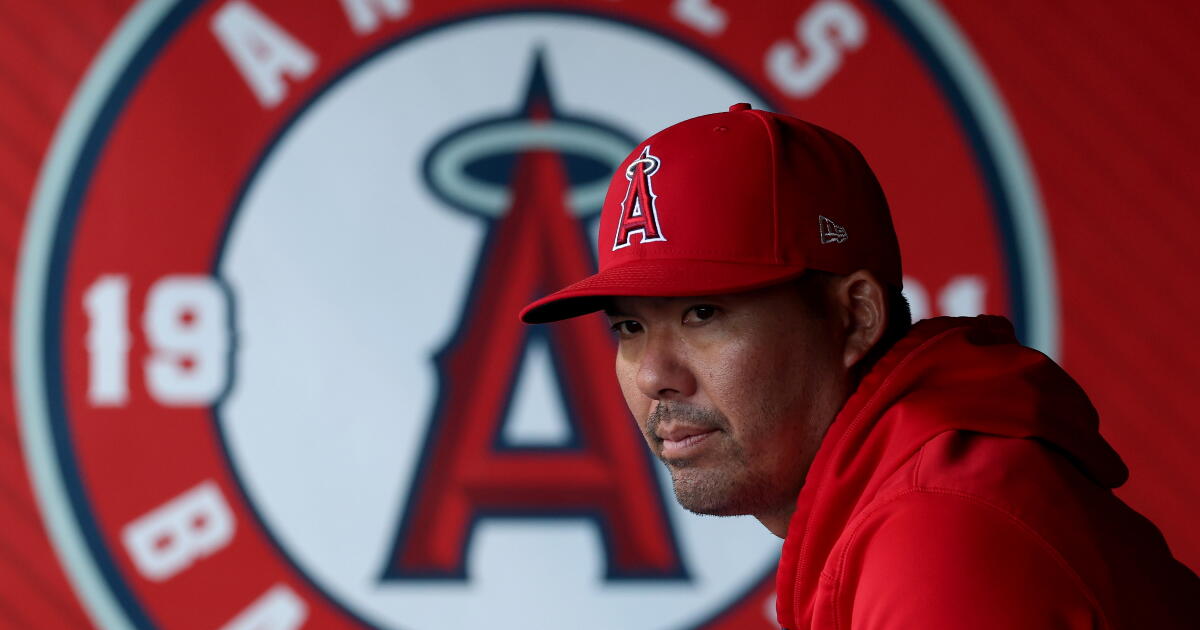
Angels fire manager Kurt Suzuki after losing 100 games
The Angels have fired manager Kurt Suzuki after he lost 100 games in his only season in charge of the long-struggling club.
Baseball operations consultant John Mozeliak announced Wednesday that the Angels declined the option on Suzuki’s contract and would open a search for a new manager in 2027. Suzuki has been offered the opportunity to stay with the organization as a special assistant.
“Kurt has earned tremendous respect in our clubhouse, and I’ve seen firsthand how much he cares about our players,” Mozeliak said in a statement. “I do not believe our record this year was a true reflection of his true abilities as a manager.”
Mozeliak indicated he made the decision in coordination with Kroenke Sports & Entertainment, which reached a deal to purchase controlling ownership from Arte Moreno on Sept. 1. The sale is not expected to close until next year, but the sports conglomerate run by Los Angeles Rams owner Stan Kroenke is already making significant changes to its beleaguered baseball team.
The Angels went 62-100 — the first 100-loss season in franchise history — and finished last in the AL West in their only season under Suzuki, who ended his 16-year major league playing career as a catcher for the Angels in 2021-22. Suzuki had never been a manager at any level before he was given the job by general manager Perry Minasian, who had employed Suzuki as his special assistant for the previous three seasons.
Minasian was fired by Moreno last June, and longtime St. Louis Cardinals GM Mozeliak stepped in on a temporary basis to run the front office while leading the search for a permanent GM to replace him. That transition plan has been thrown into flux by Moreno’s decision to sell, and Mozeliak didn’t indicate whether he has a long-term future in his own job, although he said he had been looking “toward 2027 and beyond” while reaching the decision to fire Suzuki.
Mozeliak also indicated that Suzuki’s entire coaching staff is not expected to return in its current positions, but some members had been offered staff positions in the organization.
Mozeliak already fired Suzuki’s pitching coach, Mike Maddux, and two staffers in August because he felt the team wasn’t making sufficient use of the technology and analytics available to its pitchers. Mozeliak promoted Tim Leveque, the Angels’ Double-A pitching coach, to the major league staff at the time.
Suzuki’s replacement will be the seventh manager, including interims, to lead the team in nine seasons since it parted with Mike Scioscia after the 2018 season. The Angels have had 11 consecutive losing seasons and 12 straight non-playoff seasons, both the longest active skids in the major leagues.
The Angels now have MLB’s third current managerial vacancy, all in the AL West. The Seattle Mariners and the Houston Astros also parted ways with their managers after the season.

Video shows Israeli settler assaulting Palestinian child | Israel-Palestine conflict
An Israeli settler was filmed shouting at and assaulting a Palestinian child during an attack on a family east of Yatta, in the occupied West Bank, where settler violence has surged in recent years. Rights groups say perpetrators are rarely held accountable.
Published On 21 Oct 2026

Colombia seizes 7.6 tonnes of cocaine in biggest haul in a decade | Newsfeed
Colombian authorities have seized 7.6 tonnes of cocaine at the Caribbean port of Cartagena in a shipment bound for the Netherlands, marking the country’s largest drug seizure in a decade. President Abelardo de la Espriella says the operation is part of a wider crackdown on drug trafficking.
Published On 21 Oct 2026

Amy Winehouse’s closest pal reveals final chat hours before she died

IN the last six months of her short life, there was one person Amy Jade Winehouse could turn to unreservedly.
Dale Davis, her band leader and confidante, provided her with a shoulder to cry on and a reason for her to break into the infectious laughter that came with her wicked sense of humour.
He was there to give Amy “a cuddle” during her final public outing, and three days later — on the night before she died aged 27 in 2011 — he spent 15 minutes on the phone to her, telling her she was “the best”.
“We were always chatting in those final months,” he says today to mark the 20th anniversary of Amy’s stellar Back To Black album.
“I remember her saying to me, ‘Dale, I’ve just realised that I’ve spent my whole adult life with you’.
“I was with her from when she was 19 to 27. The things I miss about her most are her big grin and that glint in her eyes.”
Dale joined Amy’s band in 2003 as bassist because the original choice was “too expensive” and, as he self-deprecatingly admits, he was “the uglier, cheaper” alternative.
A year later, he became her musical director and remains the keeper of her flame by leading The Amy Winehouse Band on its regular tours of the UK and abroad.
Though he was 17 years her senior, they bonded over a shared love of “hip-hop, soul and Nineties R&B”.
He adds: “We were also the only members of the band who drank Jack Daniel’s — so there was a lot of affinity there. If Amy loved you, no matter who it was, she loved you hard. She always had my back and I always had hers.”
Reaching the 20th anniversary of Back To Black, released on October 27, 2006, is a milestone Dale finds “surreal”.
Amy’s second album, the follow-up to her debut Frank, catapulted the vivacious, naturally talented singer on to the world stage and has sold more than 20million copies (and counting).
It contained raw, personal songs loaded with pathos and humour, such as Rehab, Me & Mr Jones, Tears Dry On Their Own and Love Is A Losing Game, all delivered in deliciously smoky, jazzy tones.
It charted in graphic detail Amy’s turbulent relationship with the love of her life, Blake Fielder-Civil, as well as her battles with drug and alcohol addiction.
“I believe she was the first star of this millennium, of the broadband generation,” maintains Dale.
“She was a most courageous performer and human being. Amy had a massive heart, but it left her open to the highs and the lows.”
To give an example of her inner conflict, Dale vividly recalls being with her on February 10, 2008, when she scooped five Grammy awards in the wake of Back To Black.
“Life was never dull and that night I saw an indication of what she was going through,” he says.
Amy could not attend the ceremony in Los Angeles because she’d been denied a visa amid drug and legal issues, but she was hooked up remotely to perform from London’s Riverside Studios.
“When she won her third Grammy, it was just me and her on stage,” continues Dale.
“Everyone else had walked off. I said, ‘Well done, Amy’. And she just said, ‘No, this is s*** because Blake’s not here’.
“While she was winning all those awards, her heart was going through the extreme pain of not being with him. There was no middle ground with Amy, and things like that are so destabilising to your mental health.”
When he considers the Back To Black songs, he says Wake Up Alone was Amy’s favourite, but he singles out a sad track, Love Is A Losing Game, and a funny one, Me & Mr Jones.
There’s an exquisite demo rendition of Love Is A Losing Game on the new, expanded anniversary editions, just Amy’s sublime, soulful voice and the strums of an acoustic guitar.
Dale says: “She was equally comfortable with an orchestra or on her own.
“The great thing about that version is that she delivers the most beautiful performance and then, at the end, she goes, ‘Is that all right?’. That really sums her up.
“Amy was so bright and so intelligent, but because she spoke so normally, it fooled people.”
Of Me & Mr Jones, with its old-school jazz vibe and jaw-dropping line, ‘What kind of f***ery is this?’, Dale says: “That’s my favourite song on the album. It’s right up my street. It’s got doo-wop. It’s got swing.
“I can imagine the mischievous grin as she’s thinking, ‘Right, I’m going to turn this into a funny old song’.
Also, you can’t play it on the radio. That’s the great thing about Amy — she knew no boundaries.”
Yet Dale senses that the star who burned bright for a fleeting moment “sold herself short in the end”.
“Amy was the most rebellious person I’ve ever come across,” he decides.
In 2004, the year Frank came out, Dale remembers “having breakfast with Nick (Shymansky, her first manager), who said, ‘We’ve got some issues with Amy’. I said, ‘Just leave her be, she’s a punk’.
“She had that spirit which could be destructive. However, the only harm she ever did was to herself.
“At the same time, she was so funny — her observational humour was ridiculous.
“I could always tell something funny was coming when I saw that glint in her eyes.
“Had she lived, Amy would have been like Barbra Streisand or Bette Midler — an all-round entertainer.
“I can imagine her having her own TV programme or being a great actress. She even talked about wanting to do some acting.”
When I caught up with Dale this week, he was preparing for last night’s Back To Black 20 show, directed by the album’s producers, Mark Ronson and Salaam Remi, at The Roundhouse in Amy’s London stomping ground of Camden.
Among the singers due to step into her ballet flats at the gig were Baby Rose, Corinne Bailey Rae, FLO, Jessie Reyez, Jorja Smith and Lianne La Havas.
Mention of the venue prompts Dale to cast his mind back to Amy’s final public outing, which took place there on July 20, 2011 — three days before she left us too soon.
Dale was by her side for a showcase by her goddaughter, the singer Dionne Bromfield.
Amy bravely appeared on stage — “dancing and being a good sport” — to support Dionne, but declined to take the mic.
“She was wearing a vest and jacket and looking as well as when I first met her,” says Dale.
“After the show, Amy said, ‘Let’s hang out’. So I spent two hours with her and we chatted so much. Before we left, we went outside and she said, ‘Cuddle me because I’m cold’.
“I spent the last ten minutes holding her. When I look back on that moment, I’m thinking it wasn’t like her because she was never cold.”
Dale believes Amy’s “eating disorder got her in the end”, a subject of great sadness to him.
He says: “She was never ever big — curvy at most. But I know a comment was made one year and then suddenly all the weight came off. I felt sorry for her.
“It has taken me a long time to realise what eating disorders are.
“I wish I’d had more knowledge so I could have helped.
“Towards the end, her nervous system was getting more and more shocked with the lack of eating.
“And when Blake went to prison, she also stopped sleeping. That had a massive impact on her physical state.”
This brings us to Dale’s phone call with Amy, which started at 11.15pm on July 22, 2011, hours before she died.
He says: “Purely by chance, I had the longest conversation with her that night.
“Even at her funeral service, I ended up right next to the coffin because there was no room for me elsewhere. All those weird things draw me in to make sure that I protect her legacy.”
Dale describes their final conversation: “Amy said, ‘Dale, I’ve had a little bit to drink’. And I said, ‘Well, you don’t sound at all drunk’.
“Then she said, ‘I’ve been watching some old clips of me on YouTube. I CAN sing, can’t I?’. And I just said, ‘Of course you can. You’re the best’.
“I’m so glad that, on her last evening, she could turn round and say that because she was the least arrogant person about her abilities.”
In the wake of Amy’s tragic death, there have been blame games involving various parties — Blake, management, the music industry, the media, her parents.
Mention of this prompts Dale to launch a staunch defence of Amy’s divorced mum and dad, Janis and Mitch.
He says: “I feel so sorry for Janis because when Amy started to get famous, Janis had her own health problems.
“Amy always said her mother was so serene — and then she had to go through her struggles and watch the demise of her daughter.”
Turning to her London cabbie dad, who left the family home when Amy was about ten but became more involved in her life as her career took off, Dale says: “People point the finger at Mitch.
“Me and my dad don’t really get on, but we love each other and are there for each other.
“It was very difficult for someone like Mitch coming back into Amy’s life when she’d become a self-made multimillionaire. It must have been quite hard to try to direct someone when they’ve made it themselves.”
On a more general note, Dale adds: “The industry and everyone else can take steps to do everything they can — but there’s always going to be someone who slips through the net.”
Next up for him is a UK tour with his Amy Winehouse Band, a chance to hear some of that beautiful, rebellious spirit.
“They tried to make me go to rehab but I said no, no, no.”
- UK tour details at theamywinehouseband.com. The Back To Black 20 Concert is on BBC Two on Saturday, 9.35pm, and Radio 2, Monday, 7pm. Expanded editions of Back To Black, with unheard demos and a 2007 live show, are out on Friday.
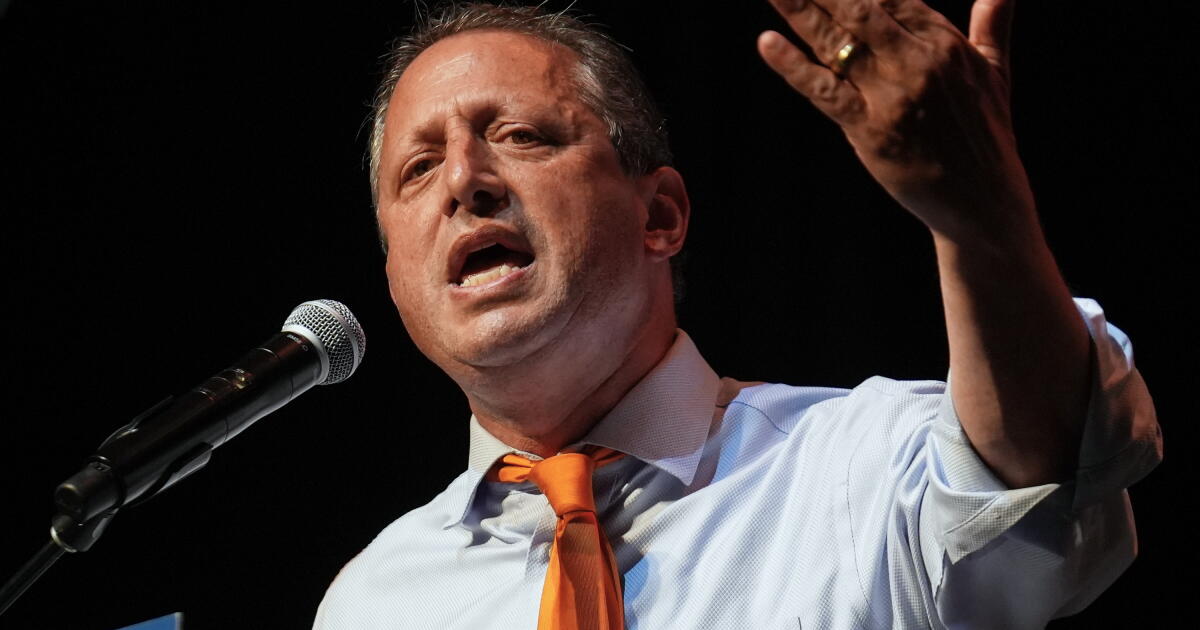
Israeli forces detain and then release U.S. congressional candidate at West Bank harvest
Israeli forces detained U.S. Democratic congressional candidate Brad Lander on Wednesday as he helped Palestinian farmers harvest olives in the occupied West Bank, releasing him hours later while dozens of other volunteers, including a group of American rabbis, remained in custody.
The incident was the latest in an annual olive harvest that has been marked by violence between Israeli settlers and Palestinian villagers attempting to gather their crops.
The Israeli military said the farmers and volunteers had failed to seek prior approval for the harvest and were detained “due to the security risk posed by conducting an uncoordinated harvest near an Israeli community.” It later added that it viewed “the arrival of dozens of activists as an act intended solely to provoke, which undermines the harvesting process.”
Lander is running in the U.S. elections on Nov. 3 to represent a heavily Democratic New York district in the U.S. House of Representatives.
“The occupation is a crime under international law,” Lander wrote on social media after he was detained. “Harvesting olives isn’t a crime under any law I know.”
“These detentions by the IDF are one more attempt to undermine Palestinians’ right to harvest their olive groves, travel on their roads, and live in their homes,” he added in a post after his release.
This year, Palestinians have been required to coordinate with the Israeli military to access more of their privately owned farmland than in previous years. The anti-settlement group Peace Now said last week that the army had expanded by nearly 30% the area of farmland that Palestinians cannot enter without prior approval, to 34 square miles. The Israeli military declined to comment on the exact figures but said Palestinian farmers must coordinate access to areas under Israeli security control.
The detained volunteers were taken to a police facility. Lander was among them but “released after it became known that he was a congressional candidate,” the Israeli police said in a statement.
Israeli rights group Yesh Din and the Palestinian Farmers’ Union have said the 2026 harvest has been the most violent in recent history, with hundreds of reported thefts, clashes and arson attacks.
Much of the violence has unfolded on land outside Palestinian villages, where Palestinians have historically harvested olives and Israeli settlers have increasingly erected outposts without authorization from Israel’s government.
But there were no clashes before Israeli forces arrived Wednesday, according to Beck Strober, a spokesperson for Protect the Harvest, the advocacy group that organized the volunteers at the grove.
Jill Jacobs, one of a dozen American rabbis detained, condemned the Israeli government restricting the ability of Palestinians to harvest freely.
“The Israeli government is actively advancing the forced displacement of Palestinian communities across the West Bank, using its military to deny Palestinians access to their land and intimidate those who stand alongside them,” Jacobs, chief executive of T’ruah: The Rabbinic Call for Human Rights, said in a statement.
Lander, who was endorsed by New York City Mayor Zohran Mamdani and U.S. Rep. Alexandria Ocasio-Cortez, defeated U.S. Rep. Dan Goldman in a primary for New York’s 10th congressional district. The race was viewed as a referendum on the Democratic party’s support for Israel. Both candidates are Jewish and have criticized Israel, but only Lander called the war in Gaza a genocide.
Lander was not the first U.S. politician detained in the West Bank this year. U.S. Rep. Ro Khanna, a California Democrat, said Israeli forces detained him during a visit in July.

Titans’ Robert Saleh: Jordan Elliott gun incident was ‘call for help’
A day after the Tennessee Titans released defensive tackle Jordan Elliott after an alleged incident involving a gun at the team’s practice facility, coach Robert Saleh defended the veteran player as “a good man” who “had a terrible lapse in judgment that I recognize as a call for help more than a criminal act.”
The Titans announced Elliott’s dismissal on Tuesday but provided no details on the incident that prompted it. The NFL confirmed Wednesday that it was looking into the matter.
“The league’s firearm policy prohibits any personnel from bringing a firearm to club facilities, stadiums, and team hotels and on team planes or buses,” NFL spokesperson Brian McCarthy said in an email. “The club promptly notified the league of the matter which is under review.”
Details have since emerged that Elliott got into an altercation with offensive lineman JC Latham at practice last Thursday, then went out to his car in the players’ parking lot to get his gun, according to reports by multiple media outlets. Latham told reporters Wednesday that the incident between him and Elliott just happened in the “heat of the moment” and “we’d actually never had an argument leading up to it.”
“It’s no bad blood,” Latham said. “Nothing personal on my end.”
Defensive lineman John Franklin-Myers reportedly helped Elliott regain his composure before anything happened involving the gun. Latham said he was still on the practice field and not with Elliott when Franklin-Myers intervened.
“The D-line room is really close,” Saleh told reporters Wednesday, “and for JFM to go out there and just kind of help Jordan with whatever he was dealing with at that moment I thought was really admirable on JFM’s part.”
Elliott played five seasons with the Cleveland Browns and two with the San Francisco 49ers before signing a two-year, $8-million deal with the Titans this past offseason. Saleh, who was the 49ers’ defensive coordinator last season, told reporters Wednesday that the Titans and the league provided Elliott “with clinicians he needed to speak to help him in that moment.”
“He’s never committed a crime in his entire life, and he pulled a gun in the parking lot,” Saleh said. “And the first question that I think everyone forgets to ask is why would a great man, a great father, a man who shows up on time every day, works his ass off every day, contributes the way he’s supposed to contribute, is well-liked in the locker room — why did he go off the rails and grab a gun?
“To me, those are small signs of a cry for help, in terms of obviously there’s something greater happening,” he continued. “And I thought the team and the NFL did an outstanding job with regards to pausing and asking those questions and checking every single box with regards to getting him the help that he needs.”
Saleh added: “I will stand on the table for Jordan’s character. Unfortunately, rules are rules with regard to guns on property, and sometimes it’s far greater than the knee-jerk reaction of kicking somebody when they’re down. My message to 31 other teams would be: If you need a hell of a run-stopping D-tackle that can help you on a playoff run, give me a call. I’ll tell you everything you need to know about him.”

What happened to Australian politician Helen Haines? | Newsfeed
Australian Lawmaker Helen Haines has lost both legs after a car rammed into her in an attack police believe to be deliberate. The driver Brendan Nugent has been charged with intentionally harming a commonwealth public official. What led to the shocking attack?
Al Jazeera’s Marah Rayan explains.
Published On 21 Oct 2026

Meta fined $25bn for ‘lies’ over user data privacy
Meta, the company behind Facebook, Instagram and WhatsApp has been hit with the largest ever fine against it for its business practices.
A judge in New Mexico on Wednesday ordered the company to pay $25bn (£18.6bn) following a two week trial earlier this year that found it had spent years lying to the public about how it handled Facebook user data.
“The lies extend beyond Facebook’s data practices as well,” the judge said, adding they went to “the heart of Facebook’s core business practices.”
The fine is the largest to date against Meta, which has either been fined or agreed to settle several other lawsuits this year, including an $18bn deal with California over child safety.
The lawsuit stemmed from the role of Meta, then known as Facebook, in what became known as the Cambridge Analytica scandal.
That firm utilized data and information from millions of Facebook users as part of its work in political consulting, including on work related to the 2016 US Presidential election, which saw Donald Trump elected for the first time.
The US Federal Trade Commission in 2019 levied a $5bn fine against the company over its data privacy practices.
Lawyers for New Mexico sued the company over many statements Meta executives had made over the years that user data was never shared with or accessed by third parties without a user’s permission, when in reality it had been.
They claimed that the entire population of the state, roughly 2 million people, was impacted by Meta’s dishonesty regarding the way it controlled user data. A jury found that Meta had violated state laws more than 40 million times.
“For too long, powerful technology companies have operated as though their size and influence put them beyond the reach of the law,” New Mexico Attorney General Raúl Torrez said Wednesday.
“Today’s result makes clear that no corporation is too powerful to be held accountable.”
The state lawyers sought up to $40bn in fines against Meta. Meta had argued anything beyond $3.4bn would be unconstitutional.
Judge Francis Mathew on Wednesday was direct in his decision to fine Meta an amount roughly equal to its profits each quarter.
He said Meta’s violations of law and misrepresentations to the public about how their Facebook data was used and shared were “willful” and spanned “more than 11 years,” stretching from 2010 to 2021.
Communications between senior executives, including Mark Zuckerberg, were “designed to mislead the public,” Judge Mathew wrote in his order.
While the full amount of the penalty against Meta, based on thousands of violations of state law, was calculated as $219bn, Judge Mathew reduced the penalty to the $25bn fine.
A spokesperson for Meta did not immediately respond to a request for comment.
New Mexico has been one of Meta’s most notable adversaries in court. The state this year also fined Meta almost $1bn for misleading the public about the safety of its social media platforms for children.
The judge overseeing that lawsuit ultimately compared Meta to an industrial polluter of the air, with its form of pollution being “the psychological harm and sexual exploitation of children.”
California and several other states had collectively sued Meta over similar issues related to a lack of child safety features on Meta’s platforms and resulting harms to children.
Meta and the states reached a mutual settlement deal, which did not include a fine or any admission of wrongdoing, to end that case only a few days into what was expected to be a multi-week trial.

Film and TV shoots in L.A. continue to drop despite state tax credit
Los Angeles is still struggling to bring filming back to the region, though projects that receive a state tax credit are making up a growing share of local shoot days, according to a new report.
For the three-month period that ended Sept. 30, there were 4,171 shoot days in the greater L.A. area, down 4.8% compared with the same period last year, according to FilmLA Research, a program of FilmLA which tracks on-location production. That’s also down about 11.5% from the second quarter, and nearly 29% below the five-year average.
“Where the tax credit applies, it’s working to bring productions back to Los Angeles and put local crews to work,” FilmLA Chief Executive Denise Gutches said in a statement. “Still, overall production remains far below where Los Angeles needs it to be, and crews and businesses across the region are feeling it.”
The report counts only on-location filming. Productions shot on certified soundstages aren’t included.
Television shoot days totaled 1,400, a 2.8% slide from the third quarter of 2025 and a drop of nearly 53% compared with the five-year average. About 23% of the TV shoot days were for incentivized projects, up from about 9% a year earlier. Among them was the CBS drama “Tracker,” which relocated to L.A. from Vancouver for the show’s fourth season after receiving a state tax credit.
“California’s incentive is what made it possible to bring ‘Tracker’ here,” Elwood Reid, showrunner and executive producer of “Tracker,” said in a statement. “Los Angeles is the big leagues, and after more than a decade away, I’d forgotten what I was missing.”
Within television, comedy made the biggest gains, with 192 days of filming, up 143% from the 79 days in the third quarter of 2025. More than 60% of the comedy shoot days were for projects that received a production incentive, FilmLA said. The organization said this figure could be even higher, as many comedies shoot on soundstages, which are not included in this report. Promisingly, the third-quarter comedy numbers were a 16% improvement on the five-year average.
Other TV genres lost ground, including drama (494 days, down 9.4%), reality programming (630 days, down 2.9%) and pilots (9 days, down 52.6%).
Feature film production was a bright spot, with 533 shoot days, up 2.1% from a year earlier and about 20% from the second quarter. About 24% of that filming came from incentivized projects, up from about 22% a year earlier, including Netflix’s “13 Going on 30” reboot and Jonah Hill’s comedy “Cut Off” from Warner Bros., according to FilmLA. However, the third-quarter numbers are still a 19.3% decline when compared to the five-year average.
Production for commercials, which are not eligible for a state tax credit, continued to struggle, with 562 shoot days, down nearly 16% from the same time period in 2025, though it improved 3.5% from the second quarter.
FilmLA’s “other” category, which includes student productions, still photo shoots, documentaries and online content, totaled 1,676 shoot days, a 4.2% drop from the same period in 2025. Within that category, however, online content accounted for 556 days of filming, up 16.3% from last year.

How Latino voters will influence the 2026 midterm elections
What role will the Latino vote have in the upcoming midterm elections?
In the latest episode of “The De Los Podcast,” hosts and Times editors Fidel Martinez and Suzy Exposito welcome Times columnist Gustavo Arellano to dissect the increasingly important electorate, one that will help decide races locally and at the national level.
Long considered a reliable vote for the Democratic Party, Latinos shifted rightward in 2024.
“The Republican Party has always known — going back to the days of [President Dwight D.] Eisenhower — that there is something there in this demographic as it starts getting bigger,” Arellano said.
Arellano documented the history of Democratic support among California Latinos, highlighting the passage of 1994’s California Proposition 187 — which prohibited undocumented immigrants from using the state’s public services including non-emergency healthcare and education resources — as a turning point.
“It turned a whole generation of Latinos into voting Democrat, but it also showed the Republican Party that anti-immigrant politics work,” he said. “The problem with the Democratic Party in California for basically the next 30 years is all they would do is say, ‘You as a Latino should never vote Republican because they did 187.’”
A Pew Research Center study showed that in the 2024 presidential election, a slight majority of Latinos voted for former Vice President Kamala Harris — but they also voted for President Trump at a much higher rate than they did in 2020.
Trump garnered 48% of the Latino vote compared with Harris’ 51% share and significantly jumped past the 36% clip he received in the 2020 presidential election. The study’s results reveal that the initial 2024 exit polls actually underestimated Latinos’ Trump support, with the Republican candidate tracking at 46% of the Latino vote on election day.
Arellano contributed this shift in voting pattern to a lack of effective messaging from Democrats and widespread material hardships among Latinos.
“[You now have] an entire generation who have grown up and life has been harder for them because they are working-class folks,” he said. “And they’re saying, ‘The Republicans are racist? Well, life hasn’t improved for me as a Democrat, let me just take my chance with the racist.’”
But recent polling shows Latinos might have buyers’ remorse. The community cited increased cost of living, immigration tactics, involvement in wars across the world and a struggling economy as reasons for retreating from Republican leadership. Trump’s approval rating among Latinos dipped to 27% in an early October NBC News study. That same poll found that Democrats have a 24-point lead on whom Latino voters want to see in control of Congress.
“The Republican Party was given this extraordinary gift of the Latino vote, and what did they do? They blew it,” Arellano said.
He spotlighted Texas as a prime of example of how Republicans squandered their grip on Latino voters. The demographic voted heavily in favor of Trump in 2024, even in the long-Democratic borderland region of the state.
“Texas [Republicans] gerrymandered their state because they thought, “We have now this permanent Latino shift to our party, so let’s make these districts even more Latino because they’re going to vote Republican,’” Arellano said. “And now Latinos are running away [from the Republican Party] hard.”
Across the country, Latinos have also soured on the Republican Party due to the public display that Immigration and Customs Enforcement officers have put on in recent years, Arellano noted.
“To see people dragged and beaten … that weighs on you,” he said. “On top of that, the economy sucks, we’re in a stupid war, this president is increasingly saying crazy things … and now this immigration stuff. So [people are wondering] what good is it to be with [Trump] now.”
You can watch the entire episode below.
