


Former Disney actor, Bobb’e J. Thompson, sentenced to federal prison
Former child star Bobb’e J. Thompson, who acted in “That’s So Raven” and “30 Rock,” has been sentenced to more than two years in federal prison.
Thompson was arrested last fall after police said he was driving 104 mph — more than 30 mph over the speed limit — in Cerro Gordo County, Iowa. A news release issued by U.S. attorney’s office of the Northern District of Iowa said an officer stopped the vehicle and spotted Thompson and the passenger switching seats. The officer reported that, when he approached the car, there was a smell of marijuana coming from the vehicle.
Officers searched the vehicle and, according to the news release, found a backpack holding bags of dispensary-bought marijuana and a .40-caliber handgun that was fully loaded with a 15-round magazine. Police said the gun had been reported stolen from a car in Kansas City, Mo.

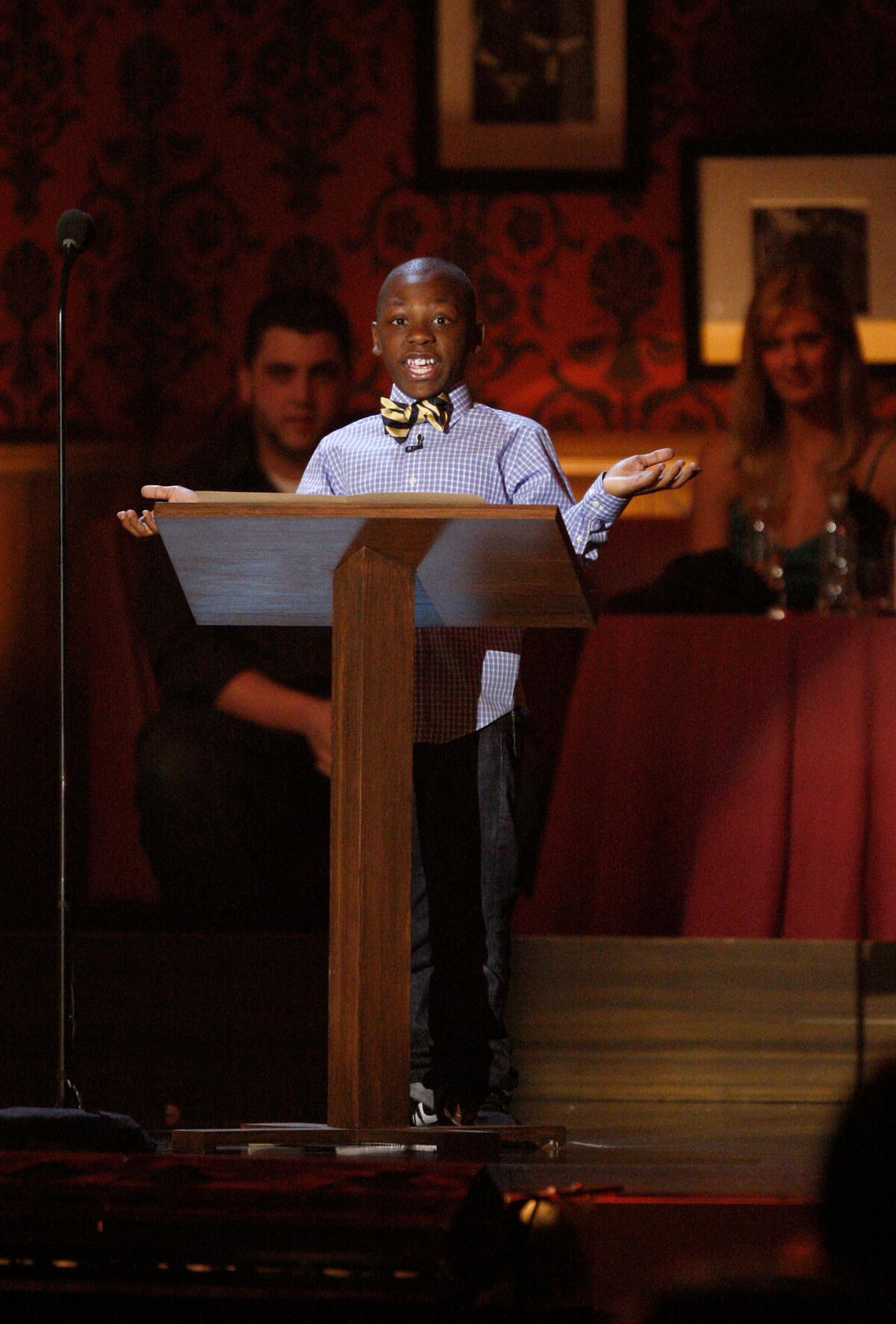
Actor Bobb’e J. Thompson speaks at Spike TV’s 2009 Guys Choice Awards at Sony Studios in Culver City.
(Kevin Winter / Getty Images)
The “Role Models” and “Tyler Perry’s House of Payne” actor was also convicted of battery and assault in 2020. Then in 2022 he was convicted of possession of a firearm, which was prohibited because he was a felon.
In April, Thompson pleaded guilty to possession of a firearm, and last week he was sentenced by an Iowa district judge to more than two years in prison.
Thompson’s “That’s So Raven” co-star Kyle Massey told TMZ on Monday that he loved his former co-star no matter what.
“Free Bobb’e J., man, that’s my brother,” he said. “We love you, we support you, we got your back, whatever you need, man, we’re gonna take care of you. It just always sucks to see one of your friends or someone that you love go through something hard like that. So we’re just gonna be rooting for him no matter what.
“Keep your head up, we’re here and we love you,” he added. “We love you so much, bro. No matter what.”

British Columbia sues OpenAI, Altman over Tumbler Ridge shooting
British Columbia sues OpenAI, Altman over Tumbler Ridge shooting
Source link
test – BBC Sport
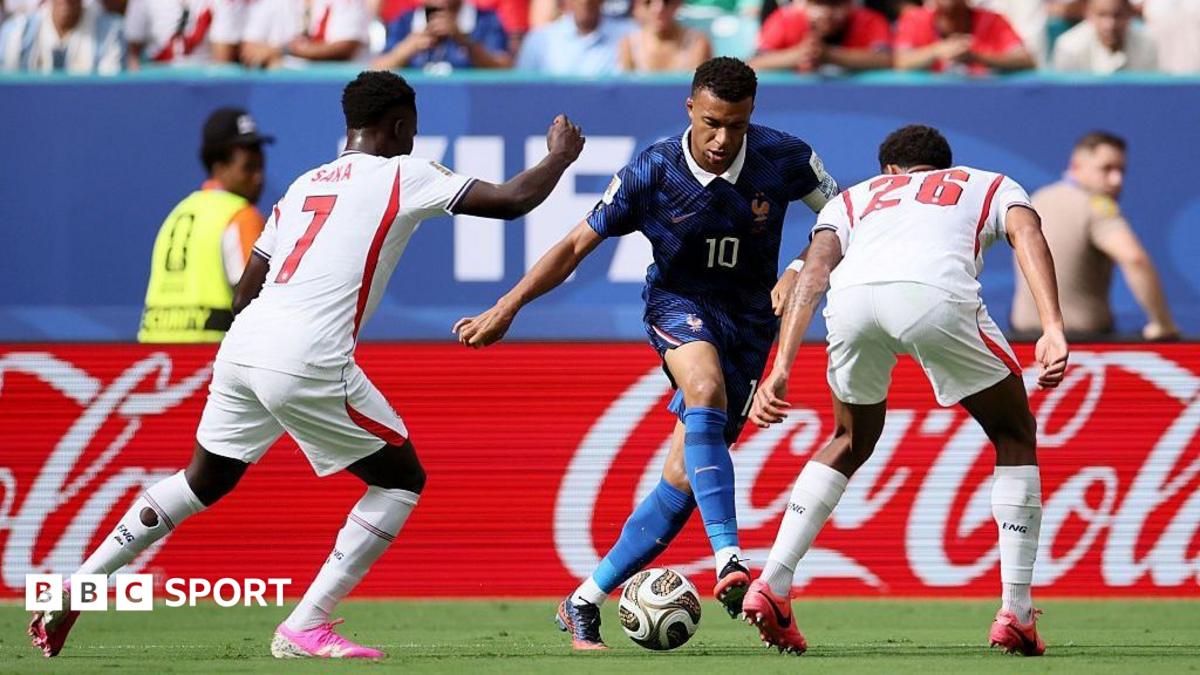
Football fans were shown a “constant bombardment” of advertisements promoting junk food and drinks during matches at the 2026 Fifa World Cup, according to a new study.
Researchers at the University of Bristol and University of Oxford created an AI tool to analyse ads which were visible to television viewers during live play in the tournament’s 104 matches, mostly displayed on pitchside advertising boards and around stadiums in the USA, Canada, and Mexico.
They found that logos and products for brands that produce junk food and drinks – defined by the UK government as being high in fat, salt or sugar – were displayed 65,722 times in total.
And the study also found that those adverts were visible for 28.1 hours’ time across the tournament, or just over 16% of the total time that matches were being played.
The ads were all shown on the international feed of matches during play – meaning they were visible to every viewer in every country broadcasting matches – and do not include ads shown during pre-match coverage, half-time commercial breaks, or the controversial in-match hydration breaks.
The model used by the researchers estimated that there were an average of 576 visible ads for junk food and drink shown during each individual match.
Coca-Cola had the highest number (21,893), followed by McDonald’s (13,915), Powerade (12,777), and Lay’s – the crisps manufacturer known as Walkers in the UK – (12,087).
All four brands are official partners of world football governing body Fifa, with the Powerade energy drink owned by the Coca-Cola company.
In response to the findings, Fifa argued that the vast majority of its revenue is put back into football, including on projects promoting health and wellbeing in which thousands of people participate.
A Fifa spokesperson said: “Fifa works with a broad, global portfolio of partners, all of which are subject to its governance and compliance frameworks.
“Fifa’s social impact campaigns, including Be Active, delivered messages of unity, inclusion, health and friendship to audiences on an unprecedented scale throughout the World Cup”.
BBC Sport also contacted Coca Cola, McDonald’s and PepsiCo – which owns Lay’s – but did not receive a reply.
UN General Assembly 2026: When is it, who is speaking and when? | United Nations News
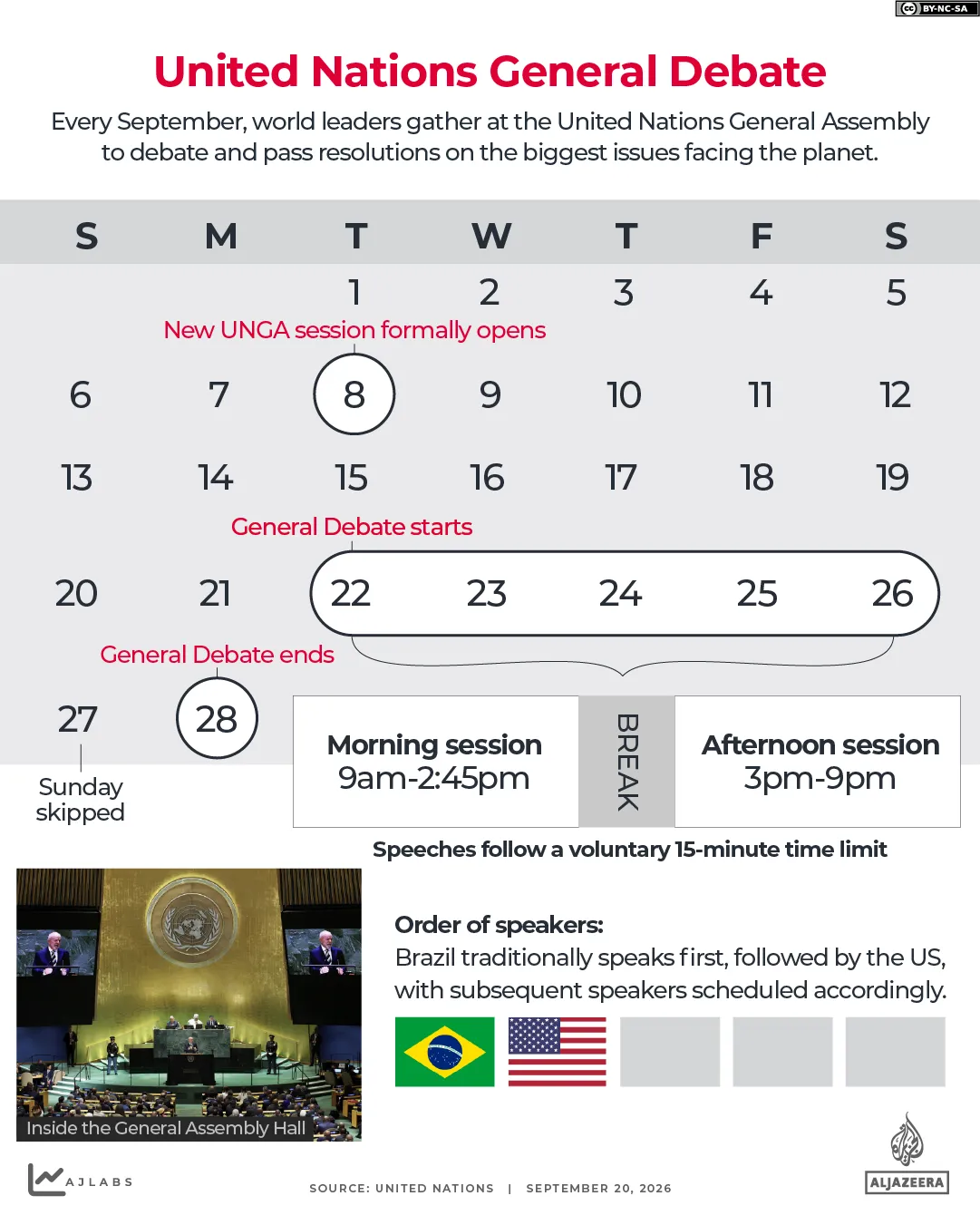
On Tuesday, nearly 130 heads of state and government are expected to begin taking the podium at the annual United Nations General Assembly (UNGA) in New York as the high-level general debate opens.
The debate is the key event of the UNGA’s annual session, which began on September 8, when Khalilur Rahman of Bangladesh took office as president.
In this visual explainer, Al Jazeera looks at what happens at the UNGA, who will speak, and the key moments to watch.
When is UNGA 2026?
The debate opens on Tuesday, September 22, runs through Saturday, September 26, and resumes on Monday, September 28, as no sessions are held on Sunday.
It runs in two daily sessions: from 9am to 2:45pm local time (13:00 GMT to 18:45 GMT) and from 3pm to 9pm (19:00 GMT to 01:00 GMT the next day).
Statements are expected to observe a voluntary 15-minute limit, though many run longer, and meetings continue until all scheduled speakers have spoken.

Who is speaking at UNGA 2026, and when?
The session opens with UN Secretary-General Antonio Guterres, who introduces his annual report and is expected to give his final address, followed by UNGA President Khalilur Rahman, who formally opens the debate.
By tradition, Brazil is always the first country to speak, a practice that began in 1955 when it volunteered to open the debate, when no other country would. The United States, as the host country, usually speaks second, and President Donald Trump is expected to take the podium after Brazil on Tuesday morning, likely around 9:45am local time (13:45 GMT).
For all other member states, the speaking order is determined by the level of representation (head of state, head of government, or minister), expressed preferences, and geographic balance.
The Holy See (Vatican City), the State of Palestine, and the European Union are also invited to participate, with their speaking slots set according to their representation.
Speakers for day one are shown in the graphic below. The speaking schedule for the remaining days will be published in the coming days.

Where is the UNGA held?
The UNGA is held at the UN headquarters, which is located along the East River in Manhattan, New York.
The complex, built between 1949 and 1952, is owned by the UN and is considered international territory. It serves as the main hub for international diplomacy.
The UNGA has not always been held in New York. The first six UNGA sessions took place in different cities, beginning in London and later including Paris. Since 1952, however, nearly all sessions have been held at the UN headquarters in New York.

Some notable exceptions include 1988, when the UNGA met in Geneva, Switzerland, after the US denied a visa to Palestinian leader Yasser Arafat.
This time, for the second year running, the US has denied visas to Palestinian officials, so President Mahmoud Abbas will address the UNGA by prerecorded video after member states voted to allow it.
The Trump administration’s decision has drawn widespread criticism, with the UN asserting that it violates the Host Country Agreement, which obligates the US to allow heads of state and government to travel to New York for annual meetings and other diplomatic business, with full diplomatic immunity.
What is on the UNGA 2026 agenda?
The 81st UNGA has the theme “Restoring trust, managing transformation: a United Nations that delivers for all”, which is set out in the UN’s information note on the arrangements for the high-level week.
Alongside the speeches, the UN has scheduled high-level meetings on climate action and a just transition and on the 40th anniversary of the Declaration on the Right to Development (September 23), on sea level rise (September 24), on pandemic preparedness (September 25), on the 25th anniversary of the Durban Declaration against racism (September 28), and on eliminating nuclear weapons (September 29).
Many speeches are also expected to focus on the wars in the Middle East and Ukraine, artificial intelligence and the UN’s funding squeeze, while diplomats watch the race to succeed Guterres, whose term ends on December 31.
Who will be the next UN chief?
The UNGA formally appoints the secretary-general, but the choice is not expected to be made this week. The UN Security Council (UNSC) is still holding straw polls and must recommend a candidate first.
Guterres’s second and final term ends on December 31, and the race to succeed him is under way. There have been nine secretaries-general since the UN was founded in 1945, all of them men. Several UNSC members have said they want a woman to lead the organisation for the first time.

Seven candidates remain in the running, four women and three men, but more could still enter the race:
- Rebeca Grynspan (Costa Rica): Secretary-general of UNCTAD and former vice president of Costa Rica
- Carolyn Rodrigues-Birkett (Guyana): Guyana’s permanent representative to the UN and former foreign minister
- Ivonne Baki (Ecuador): Diplomat and former minister of foreign trade
- Maria Fernanda Espinosa (Ecuador): Former president of the UNGA and former foreign minister
- Rafael Grossi (Argentina): Director general of the International Atomic Energy Agency
- Macky Sall (Senegal): Former president of Senegal
- Olara Otunnu (Uganda): Former foreign minister and ex-UN undersecretary-general
Former Chilean President Michelle Bachelet withdrew on Saturday after winning support from only one of the 15 UNSC members in the latest informal vote. The same vote put Costa Rica’s Grynspan narrowly ahead, with nine of the 15 members encouraging her candidacy, five discouraging it, and one with no opinion. Guyana’s Rodrigues-Birkett came second, with eight votes to encourage, six to discourage and one with no opinion, diplomats and sources close to the process said.
The UNSC must settle on one candidate with no veto from its five permanent members before recommending them to the UNGA.
When did each nation join the UN?
The UN was established after World War II, growing from 51 members in 1945 to 193 today, with two non-member observer states: Palestine and the Holy See (Vatican City).
The aim of the UN was to prevent future conflicts, promote international peace and security, foster cooperation among nations, protect human rights and support social and economic development worldwide – goals that many critics say it is increasingly failing to deliver on.
Each member has one vote in the UNGA, whose resolutions are generally nonbinding recommendations. That sets it apart from the 15-member UNSC, where five permanent members hold a veto and decisions can be legally binding.
Use the table below to find out when each country joined the UN.
Venezuela: Rodríguez Hosts Paraguayan President to Relaunch Diplomatic Ties
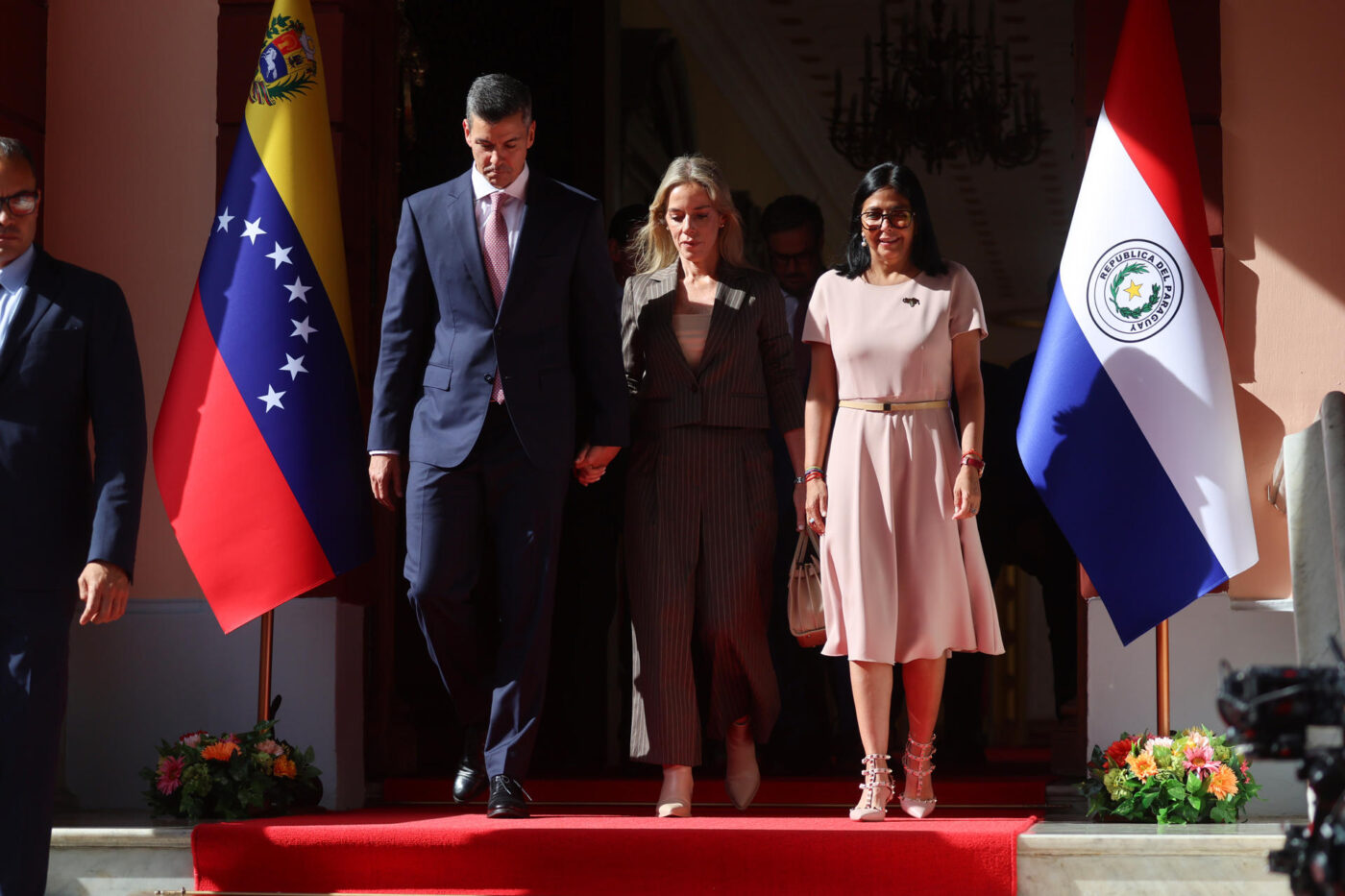
Caracas, September 21, 2026 (venezuelanalysis.com) – Venezuelan Acting President Delcy Rodríguez hosted Paraguayan counterpart Santiago Peña at the Miraflores Presidential Palace in Caracas on Saturday as the two South American nations relaunch bilateral diplomatic and consular relations.
The high-level working meeting reportedly focused on establishing a shared agenda centered on trade expansion, energy cooperation, consular assistance, and joint efforts to combat transnational organized crime.
The summit concluded with a joint statement announcing the renewed bilateral relations, signed by foreign ministers Félix Plasencia and Rubén Ramírez Lezcano for Venezuela and Paraguay, respectively.
Following the signing ceremony, Rodríguez and Peña expressed optimism regarding the reestablished cooperation.
“We are working together for a more integrated Paraguay,” Peña declared in a press conference, emphasizing that the dialogue was focused on “the well-being of citizens” from both countries.
For her part, Rodríguez claimed the accord did justice to principles of sovereignty, dialogue, and South American integration in Venezuela’s foreign policy.
“Venezuela continues to advance a sovereign diplomacy of peace, rooted in mutual respect, self-determination, and constructive dialogue among our nations,” she stated. “This meeting opens a new stage of cooperation aimed at addressing shared challenges and serving the concrete interests of both our peoples.”
The Caracas meeting reversed years of political friction and diplomatic tensions between the two nations. Bilateral ties were initially severed in January 2019 under former Paraguayan President Mario Abdo Benítez, who aligned Asunción with Washington’s regime-change strategy by recognizing opposition figure Juan Guaidó’s self-proclaimed “interim government.”
Relations experienced a brief thaw in late 2023 under Peña’s incoming administration before breaking down again in January 2025. The Venezuelan government formally severed diplomatic channels after Peña supported far-right opposition candidate Edmundo González’s victory claim in the July 2024 Venezuelan presidential elections. The Paraguayan president further backed Venezuelan anti-government forces by attending María Corina Machado’s Nobel Peace Prize ceremony in December 2025.
A central point on the reopened diplomatic agenda was the resolution of a long-standing debt owed by Paraguayan state oil company Petróleos Paraguayos (Petropar) to Venezuela’s state energy company, Petróleos de Venezuela S.A. (PDVSA).
The financial dispute stems from fuel shipments received by Petropar under the 2004 Caracas Energy Accord, an energy integration initiative launched under President Hugo Chávez to provide favorable financing conditions for oil imports across Latin America and the Caribbean. Paraguay currently maintains an outstanding principal debt estimated at approximately US $300 million.
Addressing the issue ahead of the summit, Paraguayan Foreign Minister Rubén Ramírez Lezcano acknowledged the core obligation but highlighted technical disagreements regarding accumulated interest calculations.
“The differential of that debt is linked to interest that applies outside the commercial agreement that exists with that country,” Ramírez explained during a press conference last week, noting that the specific arbitration over interest rates remains before the International Chamber of Commerce (ICC) in Paris.
The resolution of the debt has been paralyzed for years primarily due to the severing of diplomatic ties, compounded by unilateral sanctions imposed by the United States against PDVSA.
With diplomatic channels now reopened, both governments signaled their intention to structure a viable settlement mechanism outside of imperial financial restrictions.
Since the January 3 US military strikes and kidnapping of President Nicolás Maduro, the acting Rodríguez government has aligned its foreign policy with Washington, mending or expanding ties with US partners in Latin America and beyond while scaling back support for long-term allies such as Cuba and Iran.
Following Saturday’s summit in Caracas, Acting President Rodríguez departed Venezuela for New York City, where she will attend the 81st Session of the United Nations General Assembly (UNGA) this week.
According to Reuters, Rodríguez is slated to hold discussions on energy and mining agreements, as well as Venezuela’s ongoing debt restructuring process.
On Monday, the Venezuelan acting president met with IMF Managing Director Kristalina Georgieva, though no details of the talks were disclosed. Caracas has sought to unblock around $4.5 billion in IMF-issued Special Drawing Rights (SDR) for recovery efforts following the June 24 double earthquake.
Likewise on Monday, Rodríguez held talks with World Bank President Ajay Banga.
Edited by Ricardo Vaz in Lisbon, Portugal.
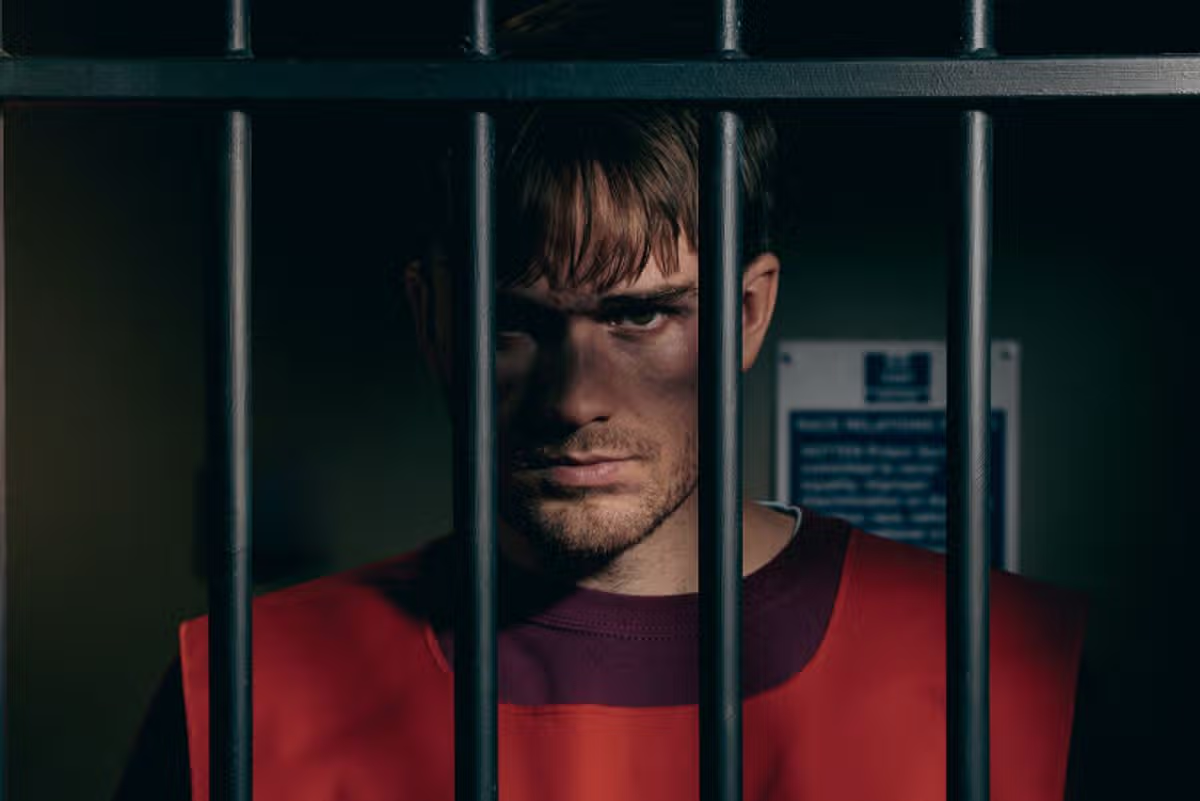
Emmerdale villain Tom King returns in terrifying twist for Belle Dingle
Emmerdale villain Tom King – played by actor James Chase – will make his return to the Dales later this year in a devastating twist for Belle Dingle and her new partner Kammy

Emmerdale villain Tom King is returning
Emmerdale villain Tom King is returning to the Dales in a shocking twist.
Actor James Chase is reprising his role as the abusive Tom King for new scenes later this year. Belle Dingle – played by Eden Taylor-Draper – was targeted by her abusive ex-husband Tom.
Throughout their relationship, she was controlled by Tom, where he psychological abused her, cyber-stalked her and even harmed the family dog Piper to coercively control his wife.
He was convicted and sent to prison but now he is up for parole, and his unexpected return in Belle’s life threatens to turn her life upside down once again. Can the Dingles find a way to keep him in jail or will he manipulate those around him once more?
Emmerdale producer Laura Shaw said of the new storyline: “James’ return isn’t just about bringing back a familiar face; it’s about reigniting a complex and challenging story.
“When Belle gets the news that Tom is up for parole she’s forced to confront a trauma she battled hard to overcome. With her family and new partner Kammy by her side, we explore the lasting impact of Tom’s abusive actions on Belle as she fights to keep Tom away from the village.”
James Chase added: “Stepping back into Tom’s shoes is a responsibility I don’t take lightly. He is a character driven by obsession and a desperate need for control, and it is both fascinating and challenging to step back into that mindset.
“The audience knows exactly who he is and what he is capable of, so the challenge now is to show the lengths he is willing to go to in order to get what he wants, even if it means dismantling Belle’s life all over again. It’s a dark path, and I’m ready to see how far Tom will push it.”
Actor James left the show back in December 2024 after his character’s 10 month campaign of mental and physical abuse against Belle Dingle. He said of his departure: “One hundred per cent this is the right outcome for King.
“If the Dingles had gone after him and killed him, or even Belle kill him, I think that would be understandable but she and the family would be stooping to his level. By keeping it in the realms of legality, it is the right course of action.”
He added at the time: “This storyline has really resonated with viewers and, sadly, it’s been happening for a long time behind closed doors. Unfortunately, in real life, these things can go on for years.
“By doing the storyline for most this year, we have brought that feeling across – that you are trapped, you are with someone who is awful and you can’t find your way out of it. I feel really proud of what we have achieved and I’m especially proud of Eden (Taylor-Draper) who plays Belle Dingle. She is bloody brilliant and it has been intense. She has spent nearly every day crying.”
Emmerdale airs 8PM, weeknights on ITV1 and STV or from 7AM on ITVX and STV Player and YouTube.
Like this s tory? F or more of the latest showbiz news and gossip, follow Mirror Celebs on TikTok , Snapchat , Instagram , Twitter , Facebook , YouTube and Threads .

Nvidia-backed AI drugmaker Iambic Therapeutics seeks U.S. listing
Nvidia-backed AI drugmaker Iambic Therapeutics seeks U.S. listing
Source link
Matthew Stafford and Davante Adams shine as Rams beat Giants
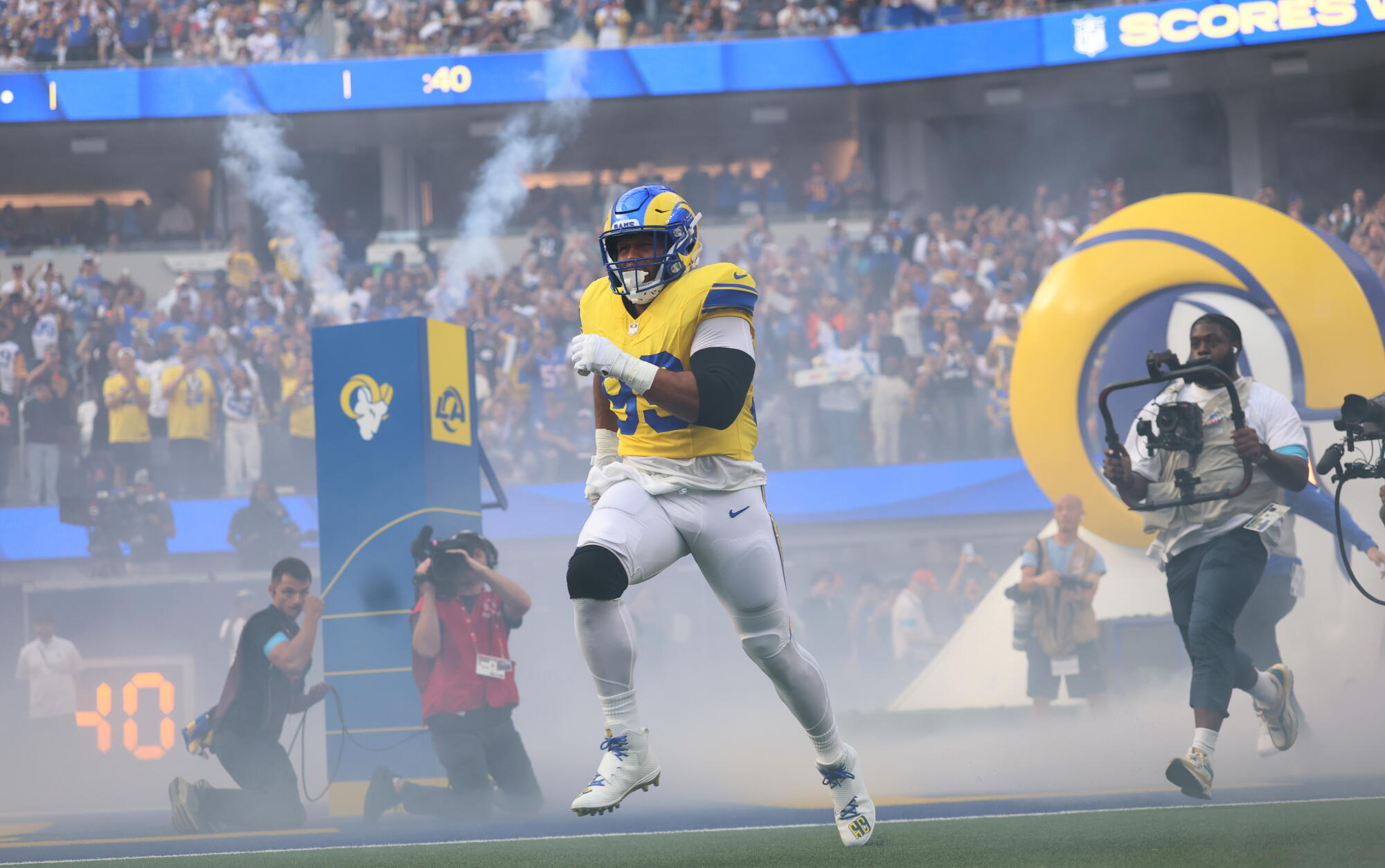
Aaron Donald made his triumphant return to NFL relevance on Monday night, and notably so did the Rams.
The team that looked lost in its Down Under debut returned to form against the New York Giants, even with star receiver Puka Nacua watching in street clothes because of hip pain.
Matthew Stafford was surgical with his passing, throwing four touchdown passes in a 28-6 victory. Receiver Davante Adams made several acrobatic catches befitting of the retina-burning yellow “Classic Sol” jerseys that turned the Rams into human highlighter pens.
Cornerback Trent McDuffie, acquired by the Rams in an offseason trade with Kansas City, made the most of his home debut with an interception in the second quarter that snuffed a Giants scoring threat. He broke up a game-high four passes.

Rams defensive tackle Aaron Donald runs onto the field during player introductions before a 28-6 win over the New York Giants at SoFi Stadium on Monday.
(Allen J. Schaben / Los Angeles Times)
SoFi Stadium, meanwhile, was a house of horrors for the Giants, who lost starting quarterback Jaxson Dart five minutes into the game when he was sandwiched by Rams defenders Byron Young and Josaiah Stewart and his left leg bent in an unnatural way.
That was a devastating blow to the Giants (1-1), who watched Dart wincingly limp off the field and into the blue medical tent. Later, it was off to the locker room for the second-year quarterback, and TV cameras showed him getting picked up by a cart in the bowels of the stadium, presumably for a more thorough medical examination before he was ruled out with a knee injury.
Surely, Dart could hear the roar of the Rams-heavy crowd as Adams made catch after catch — including a 31-yard touchdown in the first quarter and an 11-yarder in the third — and Kyren Williams pitched in with some pivotal plays of his own.
The Rams (1-1) extended their lead to 14-0 in the second quarter when, on third and six, Stafford connected with Williams on a 10-yard touchdown pass. That was set up by a 64-yard reception by Adams.
Stafford threw touchdown passes to Adams and Terrance Ferguson in the second half to take over sole possession of sixth place on the NFL’s all-time list with 427 passing touchdowns.
These were the Rams that most everyone anticipated seeing, the team with designs on ending this season with another Super Bowl at SoFi, where they raised the Lombardi Trophy in 2022.
Losing Dart was a gut punch to the Giants, who also got a scare early in the second quarter when standout receiver Malik Nabers doubled over in pain after a pass breakup. It was a shoulder injury that briefly sidelined him, although he was able to return later in the quarter.

Rams quarterback Matthew Stafford passes under pressure in the first half against the Giants.
(Allen J. Schaben / Los Angeles Times)
Dart delirium was growing among Giants fans after the quarterback threw for three touchdowns and had a lofty passer rating of 134.2 in a 28-20 season-opening win over Dallas. So to lose him is a spirit-withering development.
Oddsmakers had the Rams as 7½-point favorites.
By the second half, a somber Dart was watching from the sideline in street clothes. It was a brutal weekend for a few of the NFL’s rising-star quarterbacks. Washington lost Jayden Daniels to an elbow injury, and Chicago’s Caleb Williams was carted off the field in tears, although that hamstring injury apparently wound up less serious than originally feared.
Donald, who spent his entire 10-year career with the Rams, retired after the 2023 season as one of the greatest defensive players in NFL history. After months of speculation, he decided to unretire and rejoin the Rams, who had traded for star Cleveland Browns defensive lineman Myles Garrett.
Garrett underwent knee surgery after the season-opening loss to San Francisco and was placed on injured reserve, meaning he will miss four games. Donald helped pick up the slack Monday, and got a rollicking ovation in pregame as the last Rams defender announced.

Rams defensive tackle Aaron Donald wraps up Giants running back Najee Harris for a three-yard loss near the goal line late in the second quarter Monday.
(Allen J. Schaben / Los Angeles Times)
Donald, who frequently commanded double-team blocking, made a memorable play near the end of the second quarter with the Giants — who had feasted on a Williams fumble — threatening to score.
On third down from the three, Donald pushed his way into the Giants’ backfield and wrangled running back Najee Harris for a three-yard loss. The beleaguered visitors opted to kick the first of their two field goals.
The Rams are squarely in the national spotlight with four prime-time games in five weeks. First, the opener in Australia, followed by the Monday night game. Next week, a Sunday night game at Denver, followed by a day game at Philadelphia, and finally another Monday night home game against Buffalo.
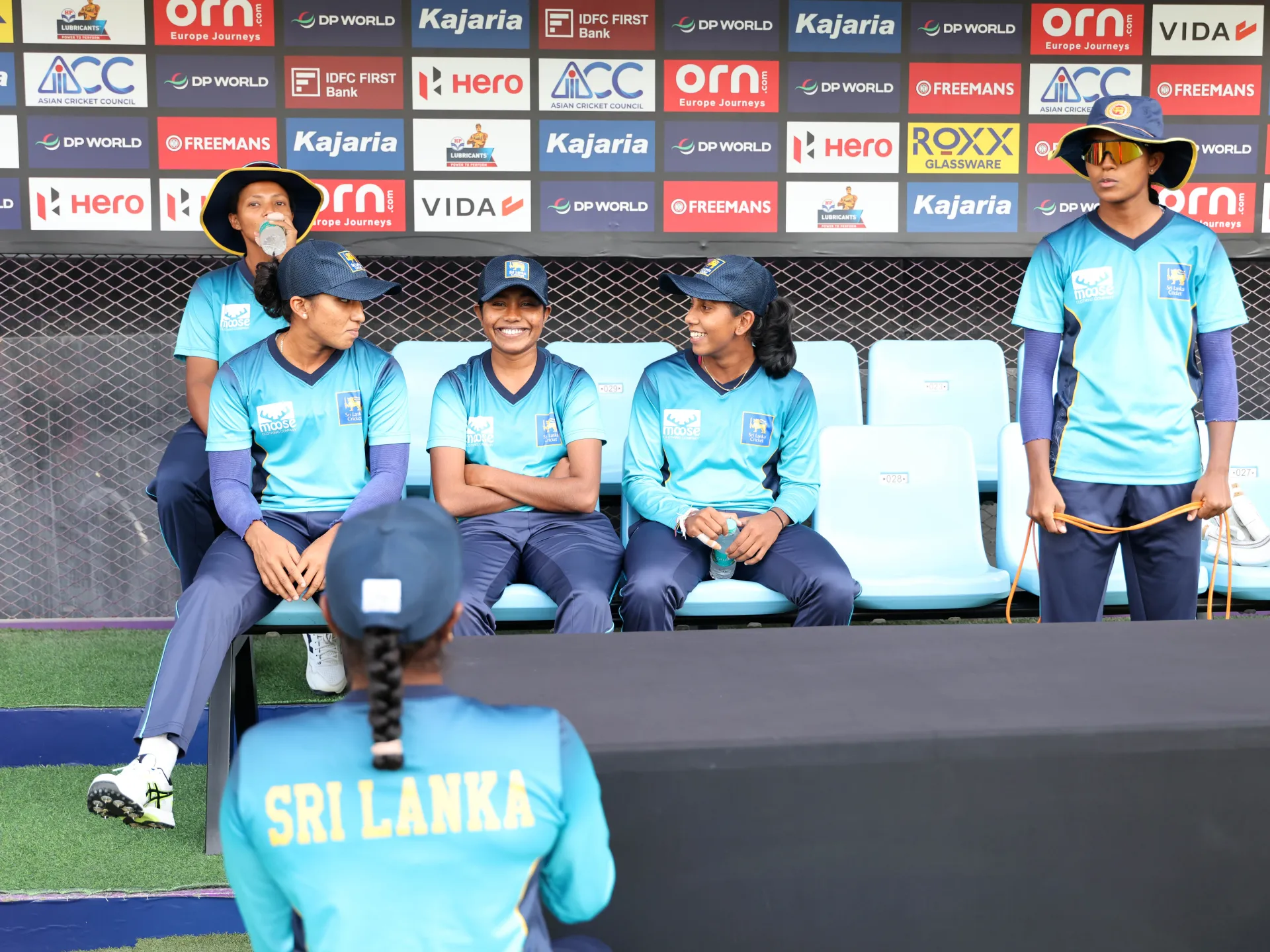
India vs Sri Lanka live: Asian Games – Women’s cricket final
Follow our live build-up, team news, score and text commentary stream from the match in Nisshin, Japan, at 05:00 GMT.
Source link
20 countries propose global oversight body to manage AI dangers | Technology News
Countries including Germany, South Africa and Canada suggest international institution to set and enforce standards.
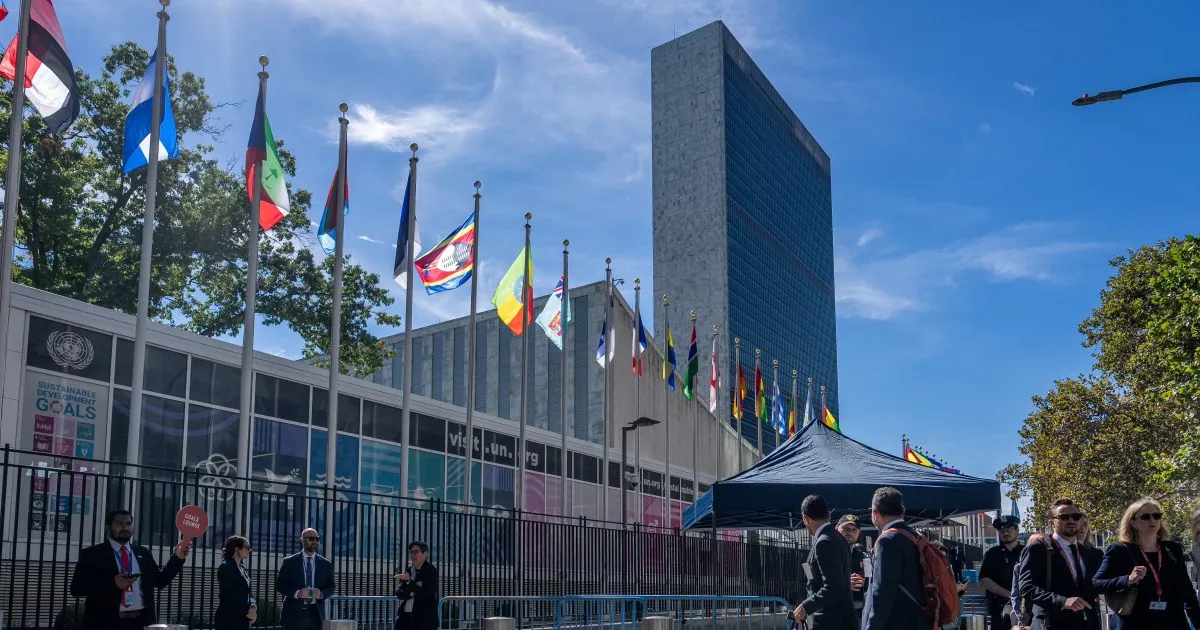
Twenty countries and the European Union have issued a call for international cooperation to ensure AI remains under human control, including the potential creation of a global oversight body to set and enforce standards.
The countries, including Germany, South Africa, Canada, Australia, the United Arab Emirates and Singapore, issued the joint statement on Monday as global leaders prepare to discuss the risks posed by rapidly advancing AI at the annual gathering of the United Nations General Assembly.
Recommended Stories
list of 4 itemsend of list
The declaration, released by the office of Finnish President Alexander Stubb, calls on governments and industry to act immediately to ensure that AI is developed in line with international law and remains under “human direction, oversight and control”.
“To realise AI’s potential, industry, governments and society must act now,” the statement says.
“We must address these risks and strengthen oversight – without widening the gap between countries in access to the benefits of AI.”
The declaration urges countries to develop and coordinate “common standards”, share reports of serious safety incidents, and explore the establishment of an international institution to “set standards, enable verification, and convene states when capability thresholds are crossed”.
Signatories include German Chancellor Friedrich Merz, Norwegian Prime Minister Jonas Gahr Store, European Commission President Ursula von der Leyen, Kenyan President William Ruto, Kazakh President Kassym-Jomart Tokayev and Turkish Foreign Minister Hakan Fidan.
The United States and China, the world’s two leading AI powers, did not join the statement, which remains “open for endorsement” by other countries.
US President Donald Trump and Chinese President Xi Jinping are expected to discuss AI when they meet at the White House on Thursday for their third face-to-face summit in less than a year.
Washington and Beijing, which are in a race to dominate cutting-edge technologies, have both rebuffed calls to slow down AI development to ensure greater safety.
Other AI players not among the signatories include India, South Korea, Japan, the UK and France.
The declaration comes as the AI sector is engaged in a heated debate about safety following calls for a slowdown in development by top industry leaders.
In an essay earlier this month, Anthropic CEO Dario Amodei called on firms to “slow the pace” of development to mitigate risks, a proposal that was swiftly endorsed by rivals including OpenAI CEO Sam Altman and SpaceX and Tesla CEO Elon Musk.
Amodei’s call followed a series of cases of AI models engaging in unsanctioned malign activity, including an incident in July in which AI agents being tested by OpenAI hacked the AI start-up Hugging Face.
In the latest intervention by industry on Monday, OpenAI said the US should lead an international effort to develop technical standards for advanced AI.
“The United States is well positioned to lead because its AI industry is at the technical frontier, and it still stands in a privileged global network position in critical areas such as finance, trade, defense, technology, and information systems,” the San Francisco-based AI giant said in a blog post.
“Leading now will determine whether the United States shapes the global AI framework or watches a fragmented, uneven, and conflict-ridden system take hold around it.”
The UN-backed Independent International Scientific Panel on AI, which examined the Hugging Face incident, on Monday also added its voice to calls for new guardrails, saying the cyberattack had exposed the “unravelling” of existing safeguards.
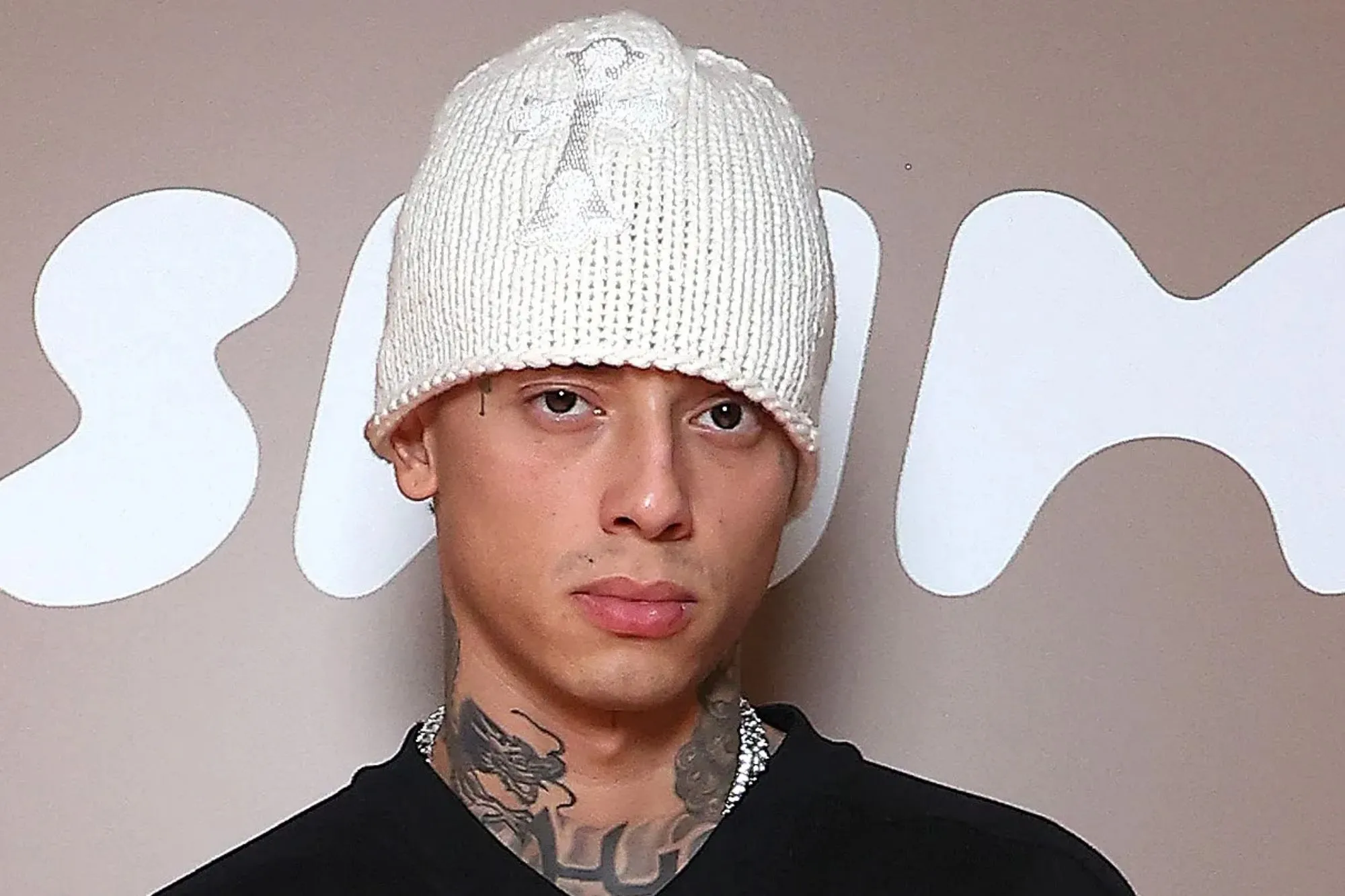
How Central Cee is pulling out all the stops to win over Love Island’s Yasmin

CENTRAL Cee and Yasmin Hadlow’s romance has ramped up a notch – as insiders tell me he’s going all out to make her his girlfriend.
Just weeks after revealing he fell for Yasmin, 23, after watching her cracking on inside the Love Island villa, the Sprinter star, 28, is using every tool in his armoury to get her interested.
And the first is his bank balance.
Onlookers spotted the London-born rapper, real name Oakley Caesar-Su, in a very select part of Harrods on Friday with Yasmin, where he was overheard telling her: “Buy whatever you want.”
An onlooker said: “Cench seems he knows how to treat the ladies and Yasmin is no exception.
“Before they went on a date to his party at 77 London, he had organised a shopping experience for her.
“He had it all arranged to go to the private area of the store and told her to spend whatever she wanted and he’d pick up the bill.
“Cench wanted Yasmin to choose whatever she wanted for the date and more.
“She absolutely loved it. It seemed like no one had ever done anything like that for her before.
“You could tell he’s really into her because he was happy to spend thousands on her to make her feel special.
“They’re not officially dating but it seems like Cench was making a heavy play for her to want to see him as boyfriend material.”
We first revealed they were hooking up last week, after Yasmin was seen on a date with the Cee.
He made a move on Yasmin earlier this summer while she was still dating her villa co-star Tommy Stagg.
When asked if he had a celebrity crush, on 60 Seconds With Missy, Cench replied: “I do have one, I’ve got one I’m sure. Yasmin from Love Island.”
Helpfully, Yasmin and Tommy split not long after flying back from Mallorca – and Cee made his move.
Confirming their break up, Yasmin said: “Me and Tommy aren’t together anymore.
“It ended up being… It was just a lot to adjust to on the outside.
“We just ended up saying that we’ve got a lot going on. Our lives essentially weren’t aligning on the outside, but we’re still friends.”
Insiders said it was still early days between the pair but admitted Cee was smitten.
“He’s acting like he’s won the jackpot,” a source told me.
“Cench really fell for Yasmin after seeing her on the show and then on social media.
“Now he’s managed to get her on a date he is going all out to show Yasmin how special he thinks she is.
“It’s early days between them but Cench is absolutely mad for Yasmin.”
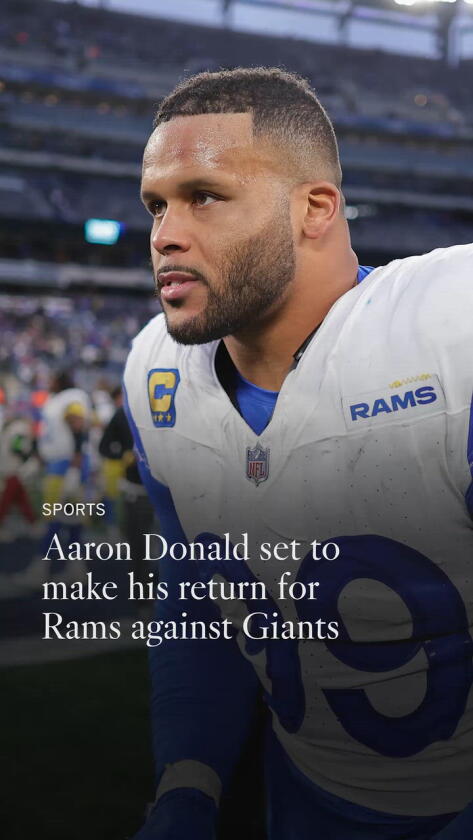
Rams confident they’ll get back on track vs. Giants after debacle
The Los Angeles freeway system has its downsides, especially during traffic-jammed weekdays, but the Rams are absolutely looking forward to commuting from their Woodland Hills facility to SoFi Stadium for Monday night’s game against the New York Giants.
After traveling about 16,000 air miles round trip for their season-opener in Australia — and suffering a humiliating loss to the San Francisco 49ers — the home opener requires only a 28-mile journey and offers a chance for a reboot.
And the embarrassed-but-still-Super-Bowl-favorite Rams are eager for the opportunity.

-
Share via
Aaron Donald will play for the Rams against the New York Giants on Monday, but will Puka Nacua be on the field?
“An eternity,” coach Sean McVay said when asked about the 11-day wait between games. “It has been forever. We’re excited to compete again.”
In the 27-7 defeat by the 49ers, the Rams’ offense never established a rhythm, the defense gave up three touchdown passes and special teams gave up a long kickoff return.
Veteran receiver Davante Adams cautioned about overreaction.
“Everybody’s freaking out, which I understand,” he said. “We didn’t put together the greatest showing out there. But you’re a fool if you think that that’s what it’s going to look like every single week.”
The Rams will be without edge rusher Myles Garrett, who is on injured reserve for at least four games following knee surgery. Star receiver Puka Nacua is listed as questionable because of a hip injury.
But defensive lineman Aaron Donald is expected to give Rams a much-needed boost.
Donald, 35, ended a two-year retirement when he returned to the team a few weeks ago. The three-time NFL defensive player of the year did not travel to Australia for the opener, but McVay is happy to have him available for the first time since 2023.
“Aaron is a stud, and he’s been at the forefront of setting the foundation of everything that we’re about here,” said McVay, who is in his 10th season as Rams coach. “I remember my interview process included meeting with him and he’s looking at me like, ‘This is the guy that they’re thinking about hiring?’”
One of the reasons Donald returned was to play alongside Garrett, a two time NFL defensive player of the year who amassed an NFL season-record 23 sacks last season.
Now that combination — which boasts a combined 236½ sacks — is on hold.
The double- and triple-team schemes Donald thought he had put behind might once again be in full effect.
“You think they’re going to double/triple team me [after] not playing for two years?” Donald quipped when asked about the prospect. “They ain’t worried about me, man. They don’t have to be worried about me.
“They don’t have to worry about me at all. No man, they don’t have to worry about me.”
But does he anticipate getting that kind of attention?
“I don’t know what they’re going to do out there,” he said of opponents. “I don’t know what I’m going to get. All I can know is I got a game plan. I’m going to go out there, execute it, and just try to play ball. That’s it.”
The Giants, under new coach John Harbaugh, are coming off a 28-20 victory over the Dallas Cowboys.
Second-year quarterback Jaxson Dart, receiver Malik Nabers, tight end Isaiah Likely and running back Cam Skattebo lead the offense, outside linebacker Brian Burns the defense.
Rams players have said that they quickly put their performance against the 49ers behind and were focused on the Giants.
Quarterback Matthew Stafford, the reigning NFL most valuable player, passed for only 155 yards, with an interception, against the 49ers.
“You get trained, whether it’s a game or a play. Good, bad, and different, move on to the next,” said Stafford, an 18th-year pro. “Don’t think too much about it. Don’t harp too much about it. Just be honest with yourself, play in and play out, game in and game out.”
That next game is here.
The Rams will be “primed and ready,” Adams said, “at the right time.”
Brazil election: Lula and Flavio Bolsonaro tied in latest polls | Elections News
Luiz Inacio Lula da Silva is running in October’s election for a fourth non-consecutive mandate as Brazil’s president.

Published On 22 Sep 2026
Brazilian President Luiz Inacio Lula da Silva and Senator Flavio Bolsonaro remain deadlocked in the latest polls, with the first round of Brazil’s election less than two weeks away.
Two new polls on Monday showed that the pair are statistically tied in simulated runoffs ahead of next month’s election. If no candidate wins more than 50 percent of valid votes in the October 4 first round, the two frontrunners advance to a runoff on October 25.
Recommended Stories
list of 3 itemsend of list
Lula is seeking a fourth non-consecutive term as Brazil’s president, but faces a challenge from the political right in Flavio Bolsonaro, the son of former far-right President Jair Bolsonaro, an ally of US President Donald Trump.

The elder Bolsonaro was ruled ineligible for office after Brazil’s top electoral court found he had abused his power while in office. He was later convicted separately over a plot to overturn his 2022 election loss to Lula.
A Quaest poll released on Monday showed Bolsonaro with 42 percent of voter support in a potential runoff, versus 41 percent for Lula.
Meanwhile, a BTG Pactual/Nexus poll has Lula receiving 46 percent of voter support, compared with 45 percent for Bolsonaro in a potential runoff.
The latest polls mark a narrowing from an earlier Quaest poll on August 5, which put Lula ahead by a wider five-point margin, 44 percent to 39 percent.

US pressure looms over election
Lula launched his re-election bid on August 2 at the Workers’ Party convention in Sao Paulo, casting himself as a defender of Brazilian “sovereignty” as pressure from the US administration looms over the race.
The US imposed two fresh rounds of tariffs on Brazilian products in July, which Lula denounced as an attempt to influence the elections through economic pressure.
The Brazilian leader is currently in New York, where he is preparing to address the United Nations General Assembly.
Lula met New York City Mayor Zohran Mamdani for the first time on Monday. In a brief statement to reporters after the meeting, the Brazilian president said the two had talked about problems common to both Brazil and the United States, particularly the rising cost of living.
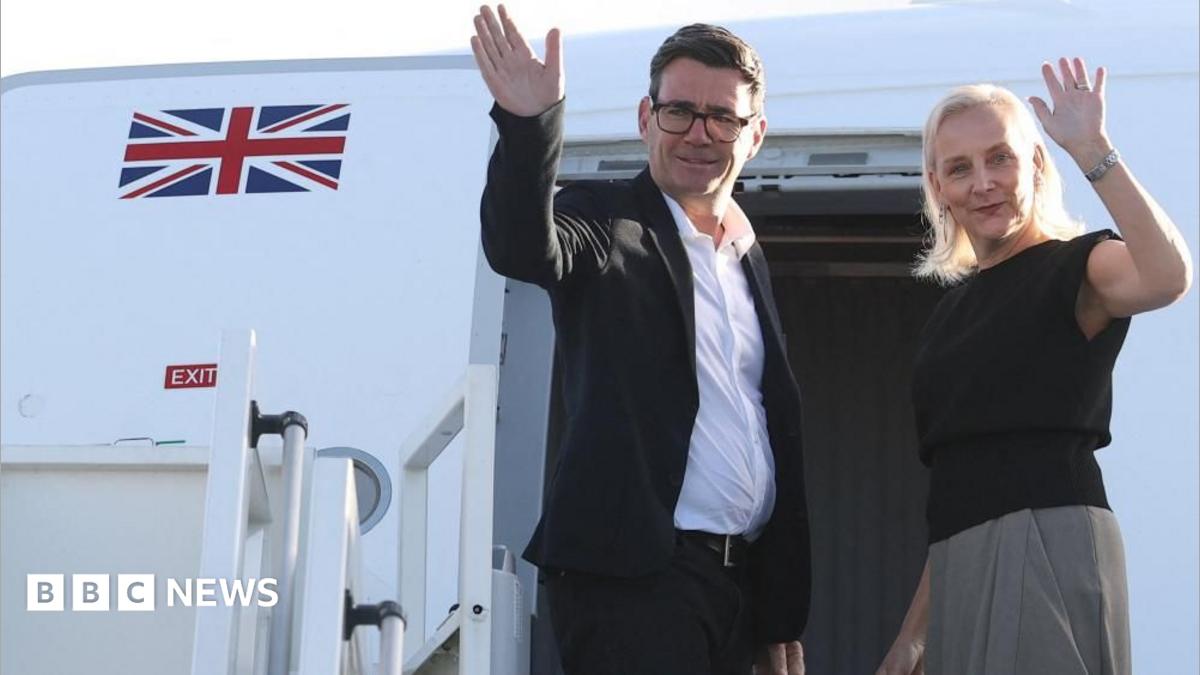
Andy Burnham expects to find ‘common ground’ with Trump in first meeting
Asked about the state of the relationship between the UK and US, the prime minister said he believes it is “as strong as it’s ever been”.
Burnham has travelled to New York with his wife, Marie-France Van Heel, for a day of diplomacy and a speech to the UN General Assembly, which is expected to focus on the opportunities and dangers associated with artificial intelligence (AI).
He said: “I will be making the case for closer international co-operation on AI, a just and lasting peace in Ukraine, and renewed efforts to bring an end to the conflict in the Middle East because what happens abroad impacts each and every one of us at home.”
The prime minister will also announce the start of work on a new AI and Autonomy partnership between the UK and the US, focused on protecting critical national infrastructure using AI tech.
Lib Dem leader Sir Ed Davey is expected to criticise this plan at the final day of his party’s conference, saying it “doesn’t come close to meeting the scale of the threat” and “only risks making us more dependent on a Trump administration in the pocket of the tech bros”.
He will also call for a global pause on superintelligent AI and propose a new International AI Safety Agency.
His criticisms come after a series of stark warnings from the AI industry about the technology’s possible dangers.
For a new British prime minister, the first meeting with a US president has always been a pivotal encounter, but officials are well aware of the added jeopardy of a public appearance alongside the most unpredictable president in American history.
In advance of the meeting, the UK revealed that the UK and the US have, for the first time, fired an American torpedo from a British undersea drone in a military exercise.
The torpedo, described as “heavyweight” by UK officials, is “designed to sink ships and deep diving submarines”, Downing Street said.
It was launched in UK waters last week from a 12-metre long undersea drone called Excalibur, made in Plymouth.
It is the first time either the UK or the US have launched a torpedo from an uncrewed underwater vessel, rather than a crewed submarine, and is seen as a breakthrough in attempts to protect vital infrastructure such as deep sea data cables.
“Our work together already shows what can be achieved when our two countries combine our expertise and innovation,” the prime minister said.
Burnham was also asked by reporters about the UK government seeking to hand over the Chagos Islands to Mauritius and pay to lease back the joint US-UK military base on Diego Garcia.
It was confirmed in April that the deal had been paused indefinitely because of Trump pulling his support.
Burnham spoke to the Mauritian prime minister, Navin Ramgoolam, on Monday.
He was asked by reporters to outline what he had told Ramgoolam, whether he supported the deal and if he had a plan to convince Trump to back it.
Burnham replied: “I said that we remain determined to secure the long-term operation of the base, which is crucial to our security and that of our allies.
“The assurance I gave was I will work towards a resolution, at the moment we don’t have that, but I gave an assurance that I would commit to working towards one.”
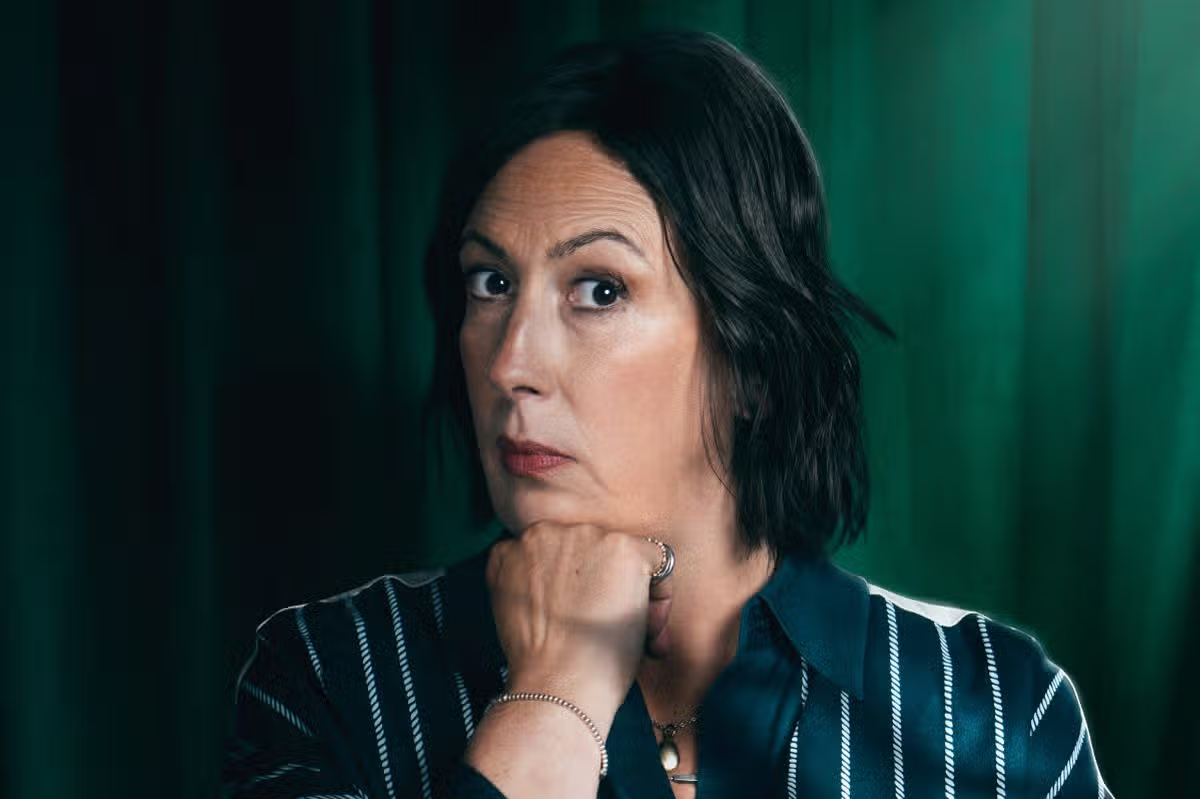
Miranda Hart reveals why she signed up to Celebrity Traitors after health issues
Miranda Hart has explained why she decided to sign up to Celebrity Traitors, which comes after years out of the spotlight as she dealt with a series of health struggles

Miranda Hart is making her television comeback with Celebrity Traitors(Image: CREDIT LINE:BBC/Studio Lambert/Cody Burridge/BBC Creative)
Miranda Hart has explained why she decided to sign up to Celebrity Traitors following her “long term ill health issues.” The comedienne, 53, is best known for fronting her eponymous sitcom in the late 2000s but took a break from the spotlight after becoming increasingly unwell.
The TV star previously told how she had suffered a “tick-borne illness” while living in the USA as a teenager. At one point, she was diagnosed with myalgic encephalomyelitis (ME), also known as chronic fatigue syndrome, before eventually being diagnosed with Lyme Disease in 2020.
The Celebrity Traitors will mark Miranda’s first mainstream television appearance in six years, and she has now explained that she jumped at the chance to take part.
She said: “My decision making in life generally, and certainly work, is follow the joy. I haven’t done much TV work for a long time, having only recently come out of long-term ill health issues and when I was offered this, my whole body sort of relaxed, I smiled, and I just wanted to jump about like a schoolgirl with joy.
“It’s just fun. It’s outdoors, it’s games. All the stuff I love. It’s play basically. And I’m passionate about encouraging people to play more generally, and this game is that in spades.
“It’s a brilliant television show – the only flaw in taking part is that as a fan of the show it will be less fun to watch it with myself in it!”
Despite her new lease of life, the former Call the Midwife star, who secretly got married in late 2024, is still living with elements of her illness and is struggling to a point but has been able to manage her symptoms and insisted she felt well enough to join Claudia Winkleman’s hit BBC game show.
She added: “I’m still living with elements of ME, and that brings fatigue and pain to manage, but I have come to a point where I feel well enough to step out, and that’s also partly why I’m doing this.
“The joy of mucking about on television again will hopefully outweigh some of the challenges. And I think it will be challenging on my body, so it’ll be interesting, and it’ll take some courage as this is a big next step.
“When you live with a chronic illness, it’s invisible, so people don’t know that you’re sitting there in pain. But then it reminds you that everybody’s got their thing. So, I’m also really looking forward to making friends and looking after each other and hopefully they can carry me up a hill or whatever we’re going to have to do!”
Miranda, who will appear alongside the likes of Little Mix singer Leigh-Anne Pinnock, Coronation Street legend Julie Hesmondhalgh, and Love Island host Maya Jama, even teased that there could be a nod to her sitcom past.
She added: “When someone said on Instagram, “Oh, I hope you gallop in the castle,” I foolishly replied, Right, I now take that as a dare.” So that was idiotic of me.
“I will have to at some point gallop down a corridor. I’ll gallop when no one’s watching…or who would be the best person to encourage to gallop?
“I don’t know. I mean, Kenny probably doesn’t even know who I am. So, if I could get him to gallop…I could get a new generation galloping.”
Like this story? For more of the latest showbiz news and gossip, follow Mirror Celebs on TikTok , Snapchat , Instagram , Twitter , Facebook , YouTube and Threads .

Three El Camino Real soccer players commit to Cal State Northridge
If El Camino Real’s boys’ soccer team wins its third consecutive City Section championship this season, then Cal State Northridge soccer fans should be feeling good because three of the team’s players are taking their talents to CSUN.
Jayden De La Cruz, Diego Apolinar and Roman Holiday are teammates at El Camino Real, play on the same club team and also will be college teammates next year.
Holiday is the goal scorer, with De La Cruz and Apolinar serving as the playmakers to get him in position to score.
The Royals will be this year’s City title favorite, but rival Birmingham is lurking, and the two teams are scheduled to open West Valley League play on Jan. 6 at El Camino Real.
When asked if the team was ready to face Birmingham, Holiday suddenly got excited.
“Oh my God, yes,” he said.
This is a daily look at the positive happenings in high school sports. To submit any news, please email eric.sondheimer@latimes.com.
Mamdani challenges Trump over White House press ban during meeting | Donald Trump News
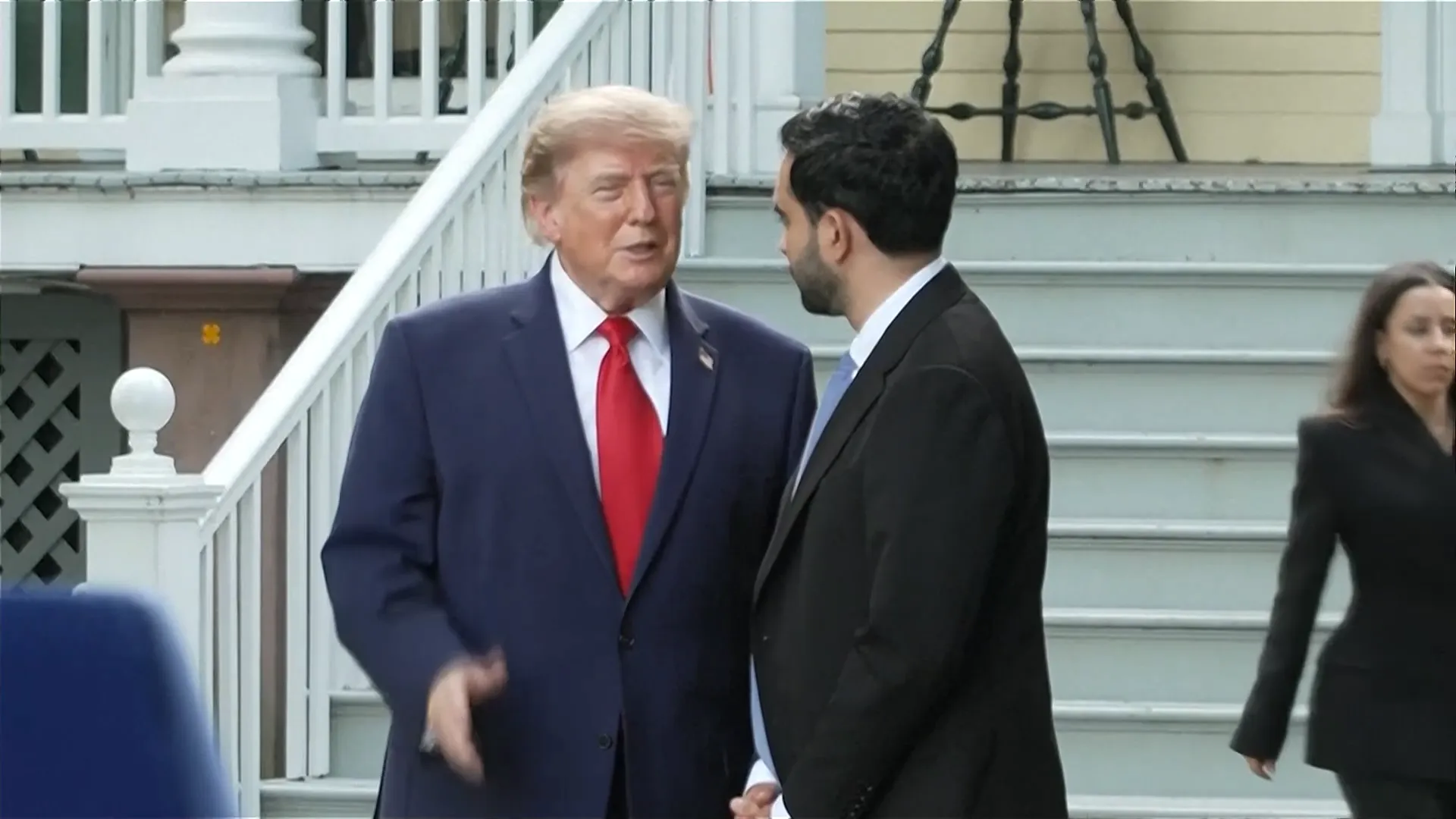
President Donald Trump met New York Mayor Zohran Mamdani at his official residence, one day before Trump speaks to the UN General Assembly. The two discussed issues affecting the city, and acknowledged their differences – particularly over Trump’s restrictions on the press.
Published On 22 Sep 2026
Influencers Jake and Logan Paul visit the Pentagon | Social Media
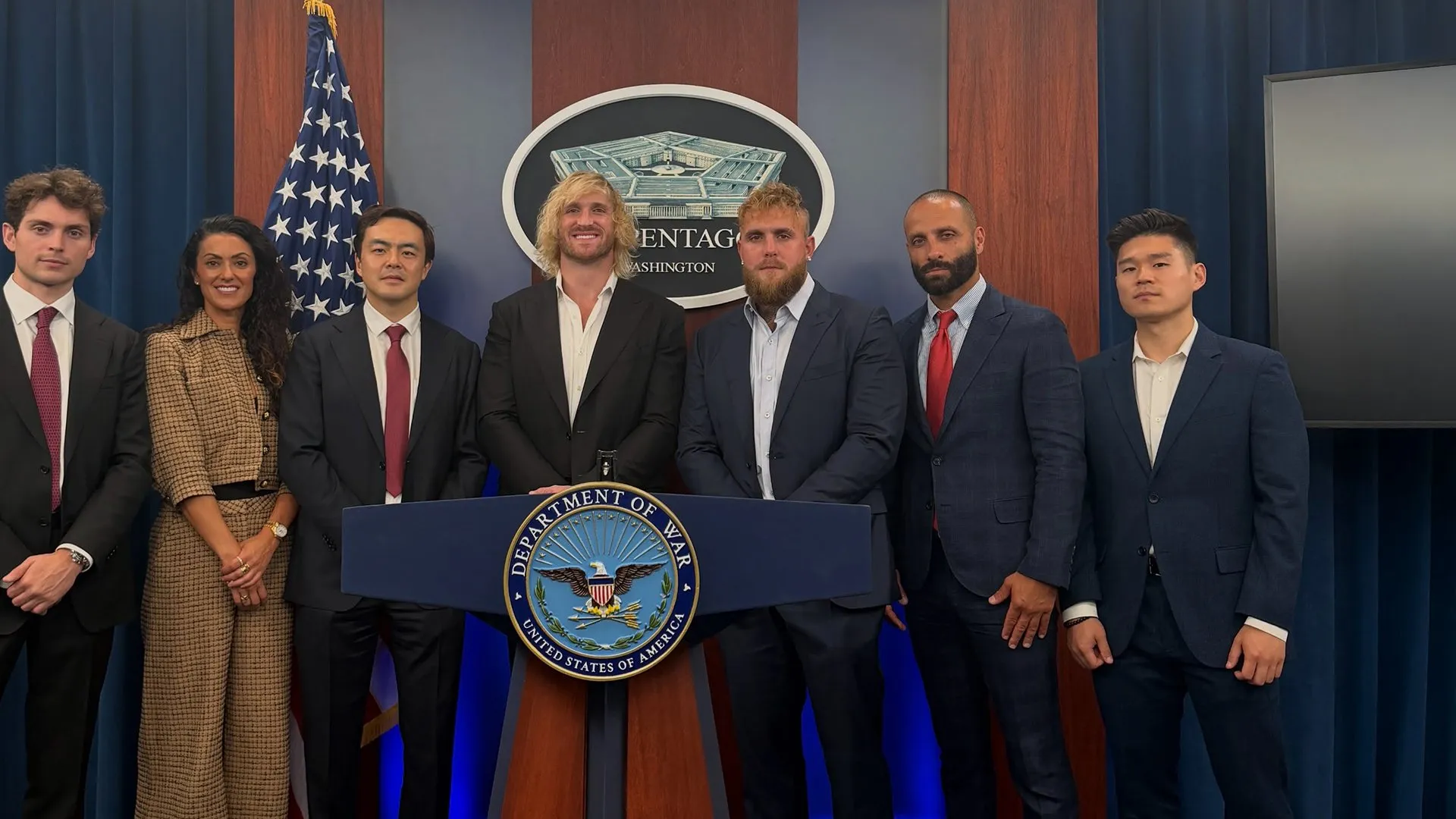
Influencers Jake and Logan Paul visited the Pentagon and addressed US troops last week, praising them for serving the country. It isn’t clear who invited them, but they met Defense Secretary Pete Hegseth, whose department said they came ‘to meet with our warriors’.
Published On 22 Sep 2026
Police search for possible source of drugs in death of Presley Gerber, Cindy Crawford’s son
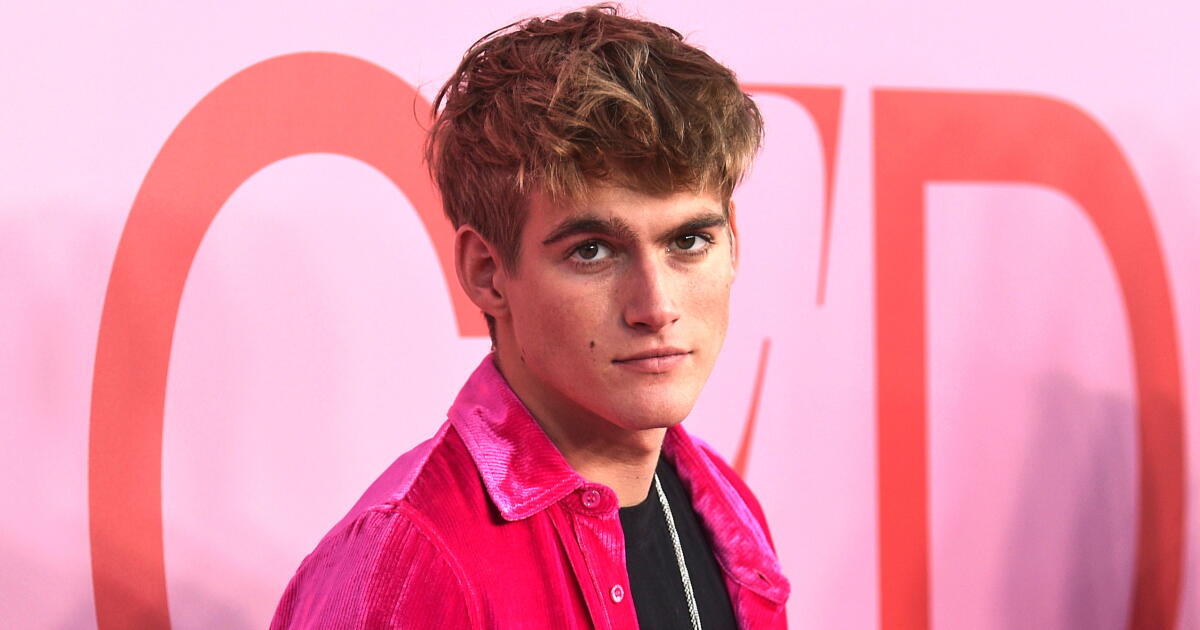
Dispatch calls reveal supermodel Cindy Crawford’s son, Presley Gerber, who died Sunday, suffered an apparent overdose while staying at a luxury outpatient rehab facility.
After Santa Monica police received a call reporting a cardiac arrest and another call for an overdose, officers responded to Resolutions Living, a $7.7-million, seven-bedroom mansion that operates as a rehabilitation home, at about 9:35 a.m., a law enforcement source told The Times.
Paramedics pronounced Gerber dead at 9:45 a.m. Sunday. The onetime Calvin Klein model had checked into the facility just hours before, around 10 p.m. Saturday.
On Monday, the L.A. County medical examiner’s office said that it was in the early stages of investigating the 27-year-old model’s death and that limited information was available.
An autopsy was performed Monday, but the cause and manner of death have been deferred, “which means additional testing and/or studies were requested in order to make a determination.” Due to the ongoing investigation into Gerber’s death, the medical examiner’s office cannot disclose what testing and/or studies were requested.
It could take a few months for a cause of death to be determined, the statement continued.
Police say that, at this time, there is no indication of foul play, but they are also investigating Gerber’s apparent overdose. According to the law enforcement source, police are attempting to track where and whom the drugs came from.
According to Resolution Living’s website, it operates as a partial hospitalization and intensive outpatient program for the treatment of myriad mental health issues, including depression, trauma and addiction, and offers dual diagnosis treatment for co-occurring disorders.
Gerber had been candid about his mental health struggles for years through various podcast appearances and his social media, and revealed that he’d sought treatment through various rehab facilities from the time he was a teenager.
In 2023, he told “Studio 22” podcast that he wanted to use his own experience to help others battling the same issues.
“Having struggled with mental health, depression and some other things that come along with that,” he said, “I think that whether I help one person or 100 people get out of that place that I was in at one point in my life, that’s all I need to do.”

Mrs. Marcos’ Logs Show $50,000 Gift to Ex-Gov. Ariyoshi
NEW YORK — Imelda Marcos made a cash payment of $50,000 to then-Gov. George Ariyoshi of Hawaii when she visited Honolulu in 1982, three days after the Democrat announced that he was running for reelection, according to logs of the former Philippine first lady’s travel expenses.
A record of the previously undisclosed cash payment to Ariyoshi was found amid voluminous evidence recently introduced here by federal prosecutors in the fraud and racketeering trial of Mrs. Marcos.
It was unclear from the document whether the $50,000 cash payment was intended to aid the Ariyoshi campaign or was tendered for some other reason. Ariyoshi did not list it among his campaign contributions, which by law were limited to $2,000 from any one source in the primary election.
Although unrelated to any of the criminal charges pending against Mrs. Marcos, the Ariyoshi payment discovered in the Marcos expense logs raises new questions about how the former first lady spent what the U.S. Justice Department asserts were Philippine government funds.
No explanation for the $50,000 expenditure was listed in the court documents, and Ariyoshi did not respond to numerous requests by The Times for an interview.
In the past Ariyoshi has acknowledged receiving gifts from the Marcoses but has declined to describe the extent or nature of those offerings, calling gift giving “a private act of courtesy” that he would not discuss publicly.
The recently admitted court documents are notebooks in which a private secretary to Mrs. Marcos, identified in testimony as longtime aide Fe Roa Gimenez, maintained a running log of expenses incurred by the Philippine first lady and her entourage during trips abroad. Many of the handwritten entries record payments for art, jewelry and shopping trips that federal prosecutors contend were financed with money looted from the Philippine national treasury.
Prosecutors submitted the expense logs to support charges in the federal indictment that Mrs. Marcos spent great amounts of Philippine public money for non-governmental and other personal expenses. For instance, some of the recorded art and jewelry transactions have been confirmed by other documents and testimony.
Ariyoshi’s name appears in the log of a July, 1982, trip that Mrs. Marcos made to the Soviet Union, Morocco and the United States.
On a page listing “cash disbursements” for July 20, 1982, is the brief handwritten entry: “$50,000–Given to Gov. Ariyoshi.”
Also on July 20, Ariyoshi’s lieutenant governor, Jean King, announced that she would challenge him for the Democratic gubernatorial nomination. It would be, according to local news accounts, the toughest campaign of Ariyoshi’s political career.
The Marcoses’ possible financial interest in U.S. political campaigns became the object of a federal investigation in 1986, soon after the deposed couple arrived in Honolulu after fleeing a popular revolt that February.
U.S. customs agents, going through more than 300 boxes and suitcases filled with cash, jewelry and documents, found a financial statement indicating that the Marcoses may have made illegal contributions in excess of $175,000 to 10 U.S. politicians, including then-President Ronald Reagan and former President Jimmy Carter. The document was dated 1982 and purported to recount spending of Philippine military intelligence money in the United States as approved by Fabian C. Ver and Irwin Ver, former leaders of military and security forces under Marcos.
Based in part on discovery of that document, the Federal Election Commission launched an inquiry into whether the Marcoses had secretly funneled intelligence funds into American political campaigns through a California company owned by a Philippine businessman.
The investigation was dropped in 1988 for lack of evidence, over the objection of one commission member who complained that investigative leads had not been thoroughly pursued. How the document came to be among Marcoses’ private papers was never established.
Although contributions from foreign sources are not permitted in federal elections, Hawaii state races were not subject to such restrictions in 1982. The names of contributors who gave more than $100 had to be reported to the Hawaii Campaign Spending Commission, however, and a limit of $2,000 from any single source in both the primary and general gubernatorial campaigns was set.
State records show that Ariyoshi, who was governor from 1974 to 1986, did not report the $50,000 payment from Mrs. Marcos as a campaign contribution.
The former governor and his wife, Jean Ariyoshi, are longtime friends of the Marcoses, and Mrs. Ariyoshi has been a regular shopping companion of Mrs. Marcos on the former Philippine first lady’s frequent stopovers in Hawaii.
When the Marcos regime fell in 1986 and the Marcoses were forced to go into exile, Ariyoshi invited them to make their new home in Hawaii.
When the Marcoses stepped from an American military aircraft at Hickham Air Force Base in Honolulu, the governor was the highest-ranking American official to meet them, offering a traditional red carpet and Hawaiian lei greeting.
Soon after the Marcoses arrival, reports surfaced that the Ariyoshis had received unspecified gifts from the Philippine leader over the years. Under pressure from local media, Ariyoshi issued a statement in which he called gift giving by officials “a custom which prevails among people as private citizens or formal representatives.”
“The govern engages in this custom with government officials and other dignitaries, national and international,” the statement continued. “This is done in a variety of settings and is an especially traditional custom in Asia and the Pacific.
“Because the governor regards the bestowing and receiving of gifts a very personal matter, it will remain a private act of courtesy between himself and others.”
Ariyoshi is now an attorney in private practice in Honolulu. A secretary said he was traveling on business in Japan but that she had forwarded The Times’ interview requests to him.
Honolulu freelance writer Susan Essoyan contributed to this story.
Mike McDaniel is turning Chargers’ offense into a disaster
Be careful what you wish for when you’re wishing for a new offensive coordinator.
Chargers fans were so over Greg Roman. Anything would be better than his run-heavy scheme stunting quarterback Justin Herbert’s anticipated ascension. Anyone would be preferable to the man holding the reins while the Chargers scored just three points in last season’s wild-card loss to the New England Patriots, after which Roman was fired.
Anyone such as, say, former Miami Dolphins coach and purported offensive guru Mike McDaniel?
Yeah?
About that.
Somehow, after just two games, the Chargers’ offense under McDaniel has Bolts fans wishing anyone else was running the show. Roman included.
Because Roman wouldn’t have overcomplicated a third-and-inches play-call. He wouldn’t have had the 6-foot-6, 240-pound Herbert line up in shotgun and call for motion.

-
Share via
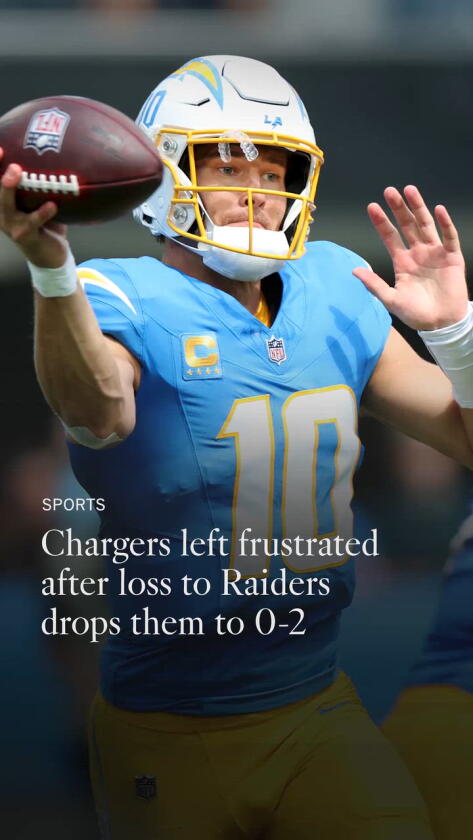
The Chargers lost to the Las Vegas Raiders 26-14 on Sunday, and the schedule doesn’t get any easier for them moving forward.
And the subsequent snap wouldn’t have hit receiver Tre’ Harris before it got to Herbert. And instead of losing five yards and having Herbert, in a rare show of emotion, slapping the turf in frustration, the Chargers probably would have gotten a fresh set of downs.
So far, McDaniel’s brief Chargers’ tenure hasn’t just been a disappointment. It has, through two games, been a disaster. Because the Chargers really needed these first two wins against opponents who both won only three games last season.
Instead, the Chargers’ offense looked as disjointed and discombobulated in Sunday’s 26-14 loss to the Las Vegas Raiders as it did the previous week in their 26-14 loss to the Arizona Cardinals.
It was an unwanted second helping of “humble pie,” as McDaniel described the Chargers’ Week 1 defeat. And it was nasty.
Now the Chargers’ schedule is about to come at them fast, with their next games against the Buffalo Bills, the Super Bowl champion Seattle Seahawks, Denver Broncos, Kansas City Chiefs and then the Rams, the preseason Super Bowl favorites.
After consecutive 11-win seasons under Jim Harbaugh — who’d never lost to the Raiders and never previously lost two consecutive games to start a season — the Chargers might blink and find themselves 0-7.
What’s worse than frustratingly quick postseason exits? Not making the playoffs at all.
And the Chargers are going to need to engineer a quick turnaround if they’re going to be among the 15% of teams that start a season 0-2 and still reach postseason play.

Chargers offensive coordinator Mike McDaniel walks on the sideline before a preseason game against the San Francisco 49ers at SoFi Stadium on Aug. 20.
(Robert Gauthier / Los Angeles Times)
To do that, they’ll need to score more points. They’ll need to stop shooting themselves in the proverbial feet and take some better shots downfield. Stop dropping the ball — figuratively, literally. They fumbled six times Sunday!
And stop thinking so much. Sundays are for reacting, and any amount of thinking is overthinking.
Maybe it’s personnel? The fact that, outside of Ladd McConkey, the Chargers are short on receivers who can reliably create separation.
Maybe it’s just a matter of time that the Chargers don’t have much of, cramming to learn McDaniel’s methods, to dial in the timing and coordination.
Or maybe, for McDaniel, it’s as simple as simplifying what he’s trying to do with this Chargers offense.
When he was hired in January, the prevailing thought was that the cerebral partnership between McDaniel and Herbert would prove a perfect match.
Even though McDaniel was dismissed after the Dolphins missed the playoffs two consecutive seasons, the coach — who’d developed a reputation as a talented offensive mind under Kyle Shanahan with the San Francisco 49ers — was a hot commodity on the coaching market.
McDaniel reportedly drew interest from the Baltimore Ravens, Cleveland Browns, Tampa Bay Buccaneers, Bills and Raiders. But he opted to come to L.A. to work with Herbert as the All-Pro QB’s fifth offensive coordinator in seven seasons (following three offensive coordinators in his four years at Oregon).
Starting over again, in these two games with McDaniel, Herbert has thrown for a modest 401 yards, just two touchdowns and three interceptions — though one of them bounced off David Njoku’s hands Sunday.

Chargers quarterback Justin Herbert watches a pass attempt fall incomplete after he is hit by Raiders defensive end Malcolm Koonce during the fourth quarter Sunday.
(Allen J. Schaben / Los Angeles Times)
There have also been protection problems, fumbles, a missed field goal, and lots of penalties — including four on star left tackle Joe Alt, who was called for a hold that resulted in a safety on an anything-that-can-go-wrong-will-go-wrong Sunday.
“I’m not looking in any one direction,” Harbaugh said Sunday. “I’m looking at it all.”
On TV, Herbert appeared to be looking off into space on the sideline as McDaniel sat chattering beside him, the game mercifully winding down.
Asked what McDaniel’s message was to the offense, Herbert said: “I haven’t been able to speak with him after.”
There’s a lot to talk about, but be careful what you ask.
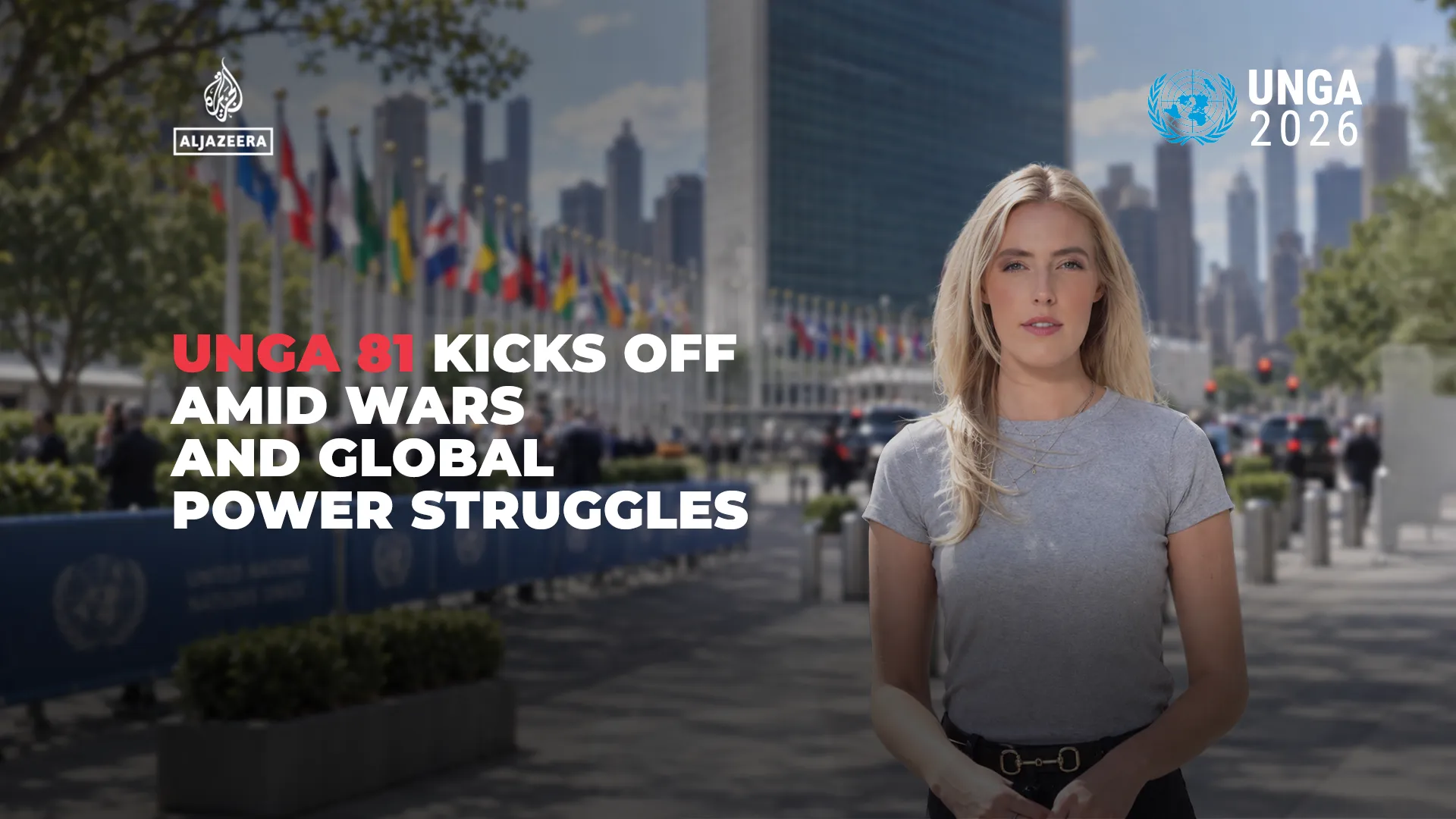
Here’s what to pay attention to at the UNGA | United Nations
World leaders arrive in New York for UNGA 81 as wars multiply and trust in international institutions erodes. Al Jazeera’s @EmmaWithrow explains the real question is whether global rules still matter when powerful countries choose to ignore them.
Published On 22 Sep 2026