



Mamdani challenges Trump over White House press ban during meeting | Donald Trump News
President Donald Trump met New York Mayor Zohran Mamdani at his official residence, one day before Trump speaks to the UN General Assembly. The two discussed issues affecting the city, and acknowledged their differences – particularly over Trump’s restrictions on the press.
Published On 22 Sep 2026
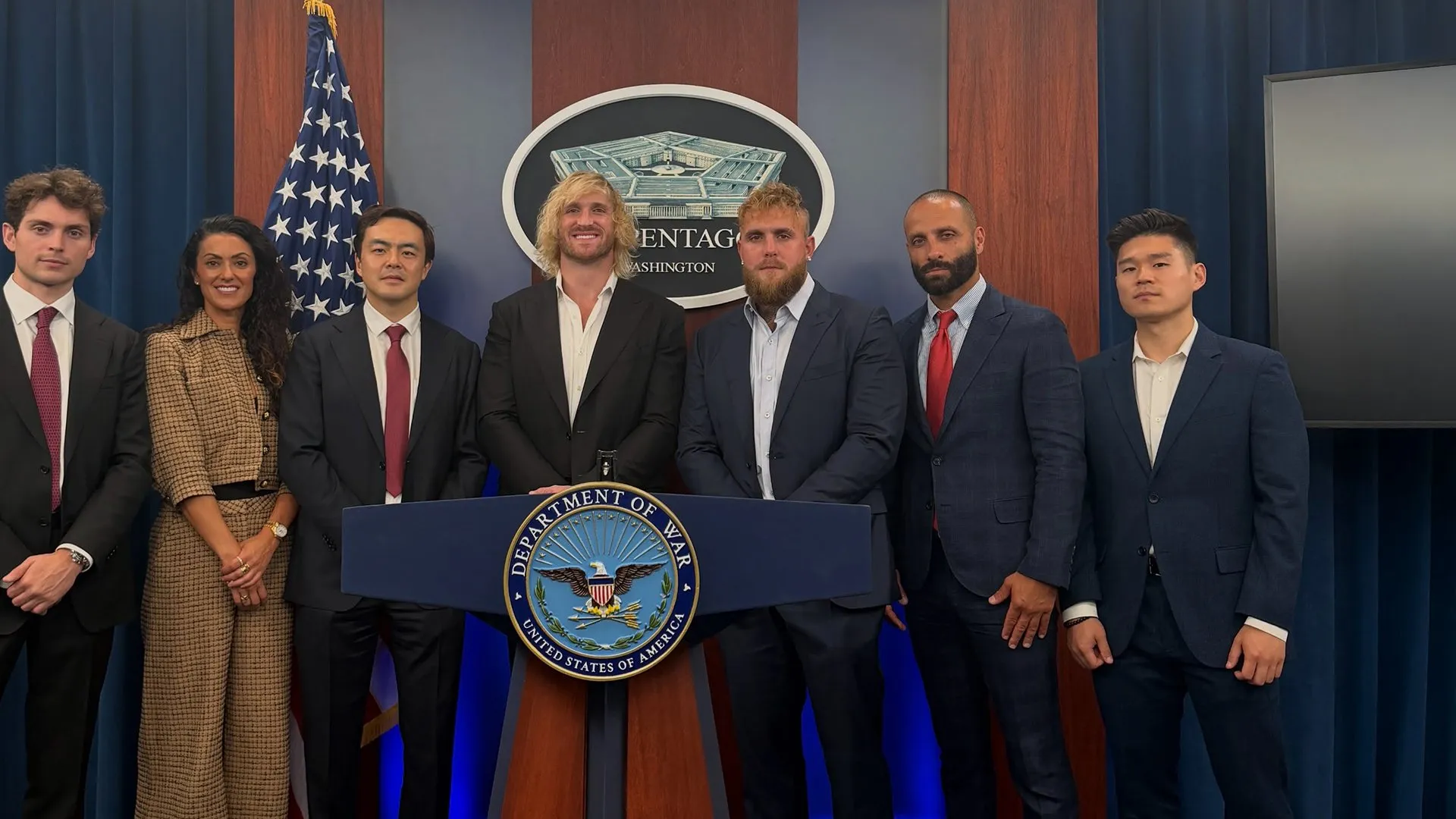
Influencers Jake and Logan Paul visit the Pentagon | Social Media
Influencers Jake and Logan Paul visited the Pentagon and addressed US troops last week, praising them for serving the country. It isn’t clear who invited them, but they met Defense Secretary Pete Hegseth, whose department said they came ‘to meet with our warriors’.
Published On 22 Sep 2026

Police search for possible source of drugs in death of Presley Gerber, Cindy Crawford’s son
Dispatch calls reveal supermodel Cindy Crawford’s son, Presley Gerber, who died Sunday, suffered an apparent overdose while staying at a luxury outpatient rehab facility.
After Santa Monica police received a call reporting a cardiac arrest and another call for an overdose, officers responded to Resolutions Living, a $7.7-million, seven-bedroom mansion that operates as a rehabilitation home, at about 9:35 a.m., a law enforcement source told The Times.
Paramedics pronounced Gerber dead at 9:45 a.m. Sunday. The onetime Calvin Klein model had checked into the facility just hours before, around 10 p.m. Saturday.
On Monday, the L.A. County medical examiner’s office said that it was in the early stages of investigating the 27-year-old model’s death and that limited information was available.
An autopsy was performed Monday, but the cause and manner of death have been deferred, “which means additional testing and/or studies were requested in order to make a determination.” Due to the ongoing investigation into Gerber’s death, the medical examiner’s office cannot disclose what testing and/or studies were requested.
It could take a few months for a cause of death to be determined, the statement continued.
Police say that, at this time, there is no indication of foul play, but they are also investigating Gerber’s apparent overdose. According to the law enforcement source, police are attempting to track where and whom the drugs came from.
According to Resolution Living’s website, it operates as a partial hospitalization and intensive outpatient program for the treatment of myriad mental health issues, including depression, trauma and addiction, and offers dual diagnosis treatment for co-occurring disorders.
Gerber had been candid about his mental health struggles for years through various podcast appearances and his social media, and revealed that he’d sought treatment through various rehab facilities from the time he was a teenager.
In 2023, he told “Studio 22” podcast that he wanted to use his own experience to help others battling the same issues.
“Having struggled with mental health, depression and some other things that come along with that,” he said, “I think that whether I help one person or 100 people get out of that place that I was in at one point in my life, that’s all I need to do.”

Mrs. Marcos’ Logs Show $50,000 Gift to Ex-Gov. Ariyoshi
NEW YORK — Imelda Marcos made a cash payment of $50,000 to then-Gov. George Ariyoshi of Hawaii when she visited Honolulu in 1982, three days after the Democrat announced that he was running for reelection, according to logs of the former Philippine first lady’s travel expenses.
A record of the previously undisclosed cash payment to Ariyoshi was found amid voluminous evidence recently introduced here by federal prosecutors in the fraud and racketeering trial of Mrs. Marcos.
It was unclear from the document whether the $50,000 cash payment was intended to aid the Ariyoshi campaign or was tendered for some other reason. Ariyoshi did not list it among his campaign contributions, which by law were limited to $2,000 from any one source in the primary election.
Although unrelated to any of the criminal charges pending against Mrs. Marcos, the Ariyoshi payment discovered in the Marcos expense logs raises new questions about how the former first lady spent what the U.S. Justice Department asserts were Philippine government funds.
No explanation for the $50,000 expenditure was listed in the court documents, and Ariyoshi did not respond to numerous requests by The Times for an interview.
In the past Ariyoshi has acknowledged receiving gifts from the Marcoses but has declined to describe the extent or nature of those offerings, calling gift giving “a private act of courtesy” that he would not discuss publicly.
The recently admitted court documents are notebooks in which a private secretary to Mrs. Marcos, identified in testimony as longtime aide Fe Roa Gimenez, maintained a running log of expenses incurred by the Philippine first lady and her entourage during trips abroad. Many of the handwritten entries record payments for art, jewelry and shopping trips that federal prosecutors contend were financed with money looted from the Philippine national treasury.
Prosecutors submitted the expense logs to support charges in the federal indictment that Mrs. Marcos spent great amounts of Philippine public money for non-governmental and other personal expenses. For instance, some of the recorded art and jewelry transactions have been confirmed by other documents and testimony.
Ariyoshi’s name appears in the log of a July, 1982, trip that Mrs. Marcos made to the Soviet Union, Morocco and the United States.
On a page listing “cash disbursements” for July 20, 1982, is the brief handwritten entry: “$50,000–Given to Gov. Ariyoshi.”
Also on July 20, Ariyoshi’s lieutenant governor, Jean King, announced that she would challenge him for the Democratic gubernatorial nomination. It would be, according to local news accounts, the toughest campaign of Ariyoshi’s political career.
The Marcoses’ possible financial interest in U.S. political campaigns became the object of a federal investigation in 1986, soon after the deposed couple arrived in Honolulu after fleeing a popular revolt that February.
U.S. customs agents, going through more than 300 boxes and suitcases filled with cash, jewelry and documents, found a financial statement indicating that the Marcoses may have made illegal contributions in excess of $175,000 to 10 U.S. politicians, including then-President Ronald Reagan and former President Jimmy Carter. The document was dated 1982 and purported to recount spending of Philippine military intelligence money in the United States as approved by Fabian C. Ver and Irwin Ver, former leaders of military and security forces under Marcos.
Based in part on discovery of that document, the Federal Election Commission launched an inquiry into whether the Marcoses had secretly funneled intelligence funds into American political campaigns through a California company owned by a Philippine businessman.
The investigation was dropped in 1988 for lack of evidence, over the objection of one commission member who complained that investigative leads had not been thoroughly pursued. How the document came to be among Marcoses’ private papers was never established.
Although contributions from foreign sources are not permitted in federal elections, Hawaii state races were not subject to such restrictions in 1982. The names of contributors who gave more than $100 had to be reported to the Hawaii Campaign Spending Commission, however, and a limit of $2,000 from any single source in both the primary and general gubernatorial campaigns was set.
State records show that Ariyoshi, who was governor from 1974 to 1986, did not report the $50,000 payment from Mrs. Marcos as a campaign contribution.
The former governor and his wife, Jean Ariyoshi, are longtime friends of the Marcoses, and Mrs. Ariyoshi has been a regular shopping companion of Mrs. Marcos on the former Philippine first lady’s frequent stopovers in Hawaii.
When the Marcos regime fell in 1986 and the Marcoses were forced to go into exile, Ariyoshi invited them to make their new home in Hawaii.
When the Marcoses stepped from an American military aircraft at Hickham Air Force Base in Honolulu, the governor was the highest-ranking American official to meet them, offering a traditional red carpet and Hawaiian lei greeting.
Soon after the Marcoses arrival, reports surfaced that the Ariyoshis had received unspecified gifts from the Philippine leader over the years. Under pressure from local media, Ariyoshi issued a statement in which he called gift giving by officials “a custom which prevails among people as private citizens or formal representatives.”
“The govern engages in this custom with government officials and other dignitaries, national and international,” the statement continued. “This is done in a variety of settings and is an especially traditional custom in Asia and the Pacific.
“Because the governor regards the bestowing and receiving of gifts a very personal matter, it will remain a private act of courtesy between himself and others.”
Ariyoshi is now an attorney in private practice in Honolulu. A secretary said he was traveling on business in Japan but that she had forwarded The Times’ interview requests to him.
Honolulu freelance writer Susan Essoyan contributed to this story.

Mike McDaniel is turning Chargers’ offense into a disaster
Be careful what you wish for when you’re wishing for a new offensive coordinator.
Chargers fans were so over Greg Roman. Anything would be better than his run-heavy scheme stunting quarterback Justin Herbert’s anticipated ascension. Anyone would be preferable to the man holding the reins while the Chargers scored just three points in last season’s wild-card loss to the New England Patriots, after which Roman was fired.
Anyone such as, say, former Miami Dolphins coach and purported offensive guru Mike McDaniel?
Yeah?
About that.
Somehow, after just two games, the Chargers’ offense under McDaniel has Bolts fans wishing anyone else was running the show. Roman included.
Because Roman wouldn’t have overcomplicated a third-and-inches play-call. He wouldn’t have had the 6-foot-6, 240-pound Herbert line up in shotgun and call for motion.

-
Share via
The Chargers lost to the Las Vegas Raiders 26-14 on Sunday, and the schedule doesn’t get any easier for them moving forward.
And the subsequent snap wouldn’t have hit receiver Tre’ Harris before it got to Herbert. And instead of losing five yards and having Herbert, in a rare show of emotion, slapping the turf in frustration, the Chargers probably would have gotten a fresh set of downs.
So far, McDaniel’s brief Chargers’ tenure hasn’t just been a disappointment. It has, through two games, been a disaster. Because the Chargers really needed these first two wins against opponents who both won only three games last season.
Instead, the Chargers’ offense looked as disjointed and discombobulated in Sunday’s 26-14 loss to the Las Vegas Raiders as it did the previous week in their 26-14 loss to the Arizona Cardinals.
It was an unwanted second helping of “humble pie,” as McDaniel described the Chargers’ Week 1 defeat. And it was nasty.
Now the Chargers’ schedule is about to come at them fast, with their next games against the Buffalo Bills, the Super Bowl champion Seattle Seahawks, Denver Broncos, Kansas City Chiefs and then the Rams, the preseason Super Bowl favorites.
After consecutive 11-win seasons under Jim Harbaugh — who’d never lost to the Raiders and never previously lost two consecutive games to start a season — the Chargers might blink and find themselves 0-7.
What’s worse than frustratingly quick postseason exits? Not making the playoffs at all.
And the Chargers are going to need to engineer a quick turnaround if they’re going to be among the 15% of teams that start a season 0-2 and still reach postseason play.

Chargers offensive coordinator Mike McDaniel walks on the sideline before a preseason game against the San Francisco 49ers at SoFi Stadium on Aug. 20.
(Robert Gauthier / Los Angeles Times)
To do that, they’ll need to score more points. They’ll need to stop shooting themselves in the proverbial feet and take some better shots downfield. Stop dropping the ball — figuratively, literally. They fumbled six times Sunday!
And stop thinking so much. Sundays are for reacting, and any amount of thinking is overthinking.
Maybe it’s personnel? The fact that, outside of Ladd McConkey, the Chargers are short on receivers who can reliably create separation.
Maybe it’s just a matter of time that the Chargers don’t have much of, cramming to learn McDaniel’s methods, to dial in the timing and coordination.
Or maybe, for McDaniel, it’s as simple as simplifying what he’s trying to do with this Chargers offense.
When he was hired in January, the prevailing thought was that the cerebral partnership between McDaniel and Herbert would prove a perfect match.
Even though McDaniel was dismissed after the Dolphins missed the playoffs two consecutive seasons, the coach — who’d developed a reputation as a talented offensive mind under Kyle Shanahan with the San Francisco 49ers — was a hot commodity on the coaching market.
McDaniel reportedly drew interest from the Baltimore Ravens, Cleveland Browns, Tampa Bay Buccaneers, Bills and Raiders. But he opted to come to L.A. to work with Herbert as the All-Pro QB’s fifth offensive coordinator in seven seasons (following three offensive coordinators in his four years at Oregon).
Starting over again, in these two games with McDaniel, Herbert has thrown for a modest 401 yards, just two touchdowns and three interceptions — though one of them bounced off David Njoku’s hands Sunday.

Chargers quarterback Justin Herbert watches a pass attempt fall incomplete after he is hit by Raiders defensive end Malcolm Koonce during the fourth quarter Sunday.
(Allen J. Schaben / Los Angeles Times)
There have also been protection problems, fumbles, a missed field goal, and lots of penalties — including four on star left tackle Joe Alt, who was called for a hold that resulted in a safety on an anything-that-can-go-wrong-will-go-wrong Sunday.
“I’m not looking in any one direction,” Harbaugh said Sunday. “I’m looking at it all.”
On TV, Herbert appeared to be looking off into space on the sideline as McDaniel sat chattering beside him, the game mercifully winding down.
Asked what McDaniel’s message was to the offense, Herbert said: “I haven’t been able to speak with him after.”
There’s a lot to talk about, but be careful what you ask.

Here’s what to pay attention to at the UNGA | United Nations
World leaders arrive in New York for UNGA 81 as wars multiply and trust in international institutions erodes. Al Jazeera’s @EmmaWithrow explains the real question is whether global rules still matter when powerful countries choose to ignore them.
Published On 22 Sep 2026

Tuesday 22 September Independence Day in Mali
Mali is a landlocked country in Western Africa. From the 11th century, the Malian Empire ruled in the upper Niger basin, extending its realm right to the Atlantic coast. Mali’s imperial influence declined in the seventeenth century as other powers in the region gained prominence.
When the Malian emperor, Mansa Musa, made his famous pilgrimage to Mecca in the fourteenth century, he traveled with over 70,000 people and up to 50 pounds of gold. He built a mosque every Friday on his entire trip. Mansa Musa left so much gold to the people along his way, he inadvertently caused inflation in the regions he passed.
In the nineteenth century, France was taking an increasingly interest while Islamic religious wars had led to creation of theocratic states in the region.
In 1898, during the so-called ‘Scramble for Africa’, France conquered Mali, making it a part of French Sudan.
In April 1959 the French Sudan merged with Senegal to form the Mali Federation. A transfer of power agreement was signed with France on 4 April 1960, which led to formal independence on 20 June 1960.
The Mali Federation proved to be very short-lived and broke up on 20 August 1960, when Senegal proclaimed its independence.
A month later, on 22 September 1960 French Sudan declared its independence from the Mali Federation as the Republic of Mali.
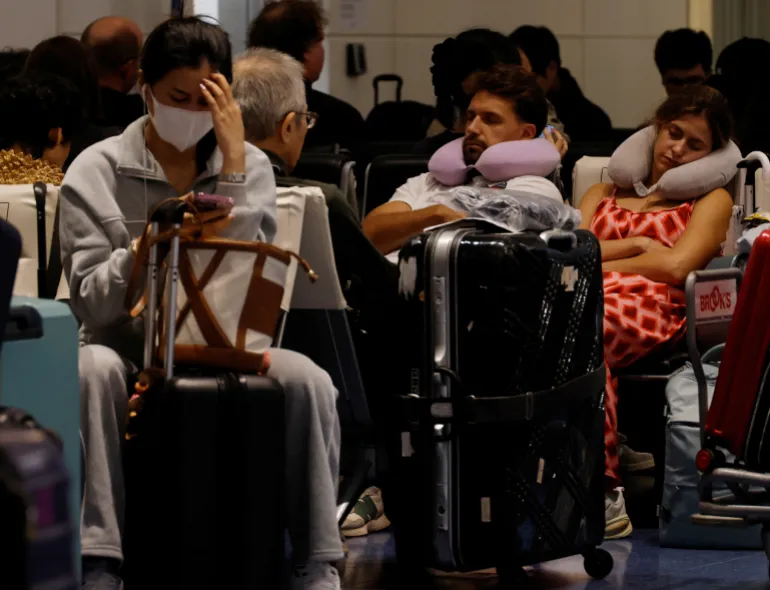
Typhoon Dujuan kills two in Japan, causes travel chaos near Tokyo | Aviation News
Storm is moving northeast of Japan’s eastern coast across the Pacific, leaving a path of destruction behind.
Published On 22 Sep 2026
A powerful storm has triggered evacuation advisories for more than 1.6 million people, causing widespread travel chaos, flooding and landslides near Tokyo.
On Monday, Typhoon Dujuan packed wind speeds of about 144 kilometres (89 miles) per hour as it moved 130km (80 miles) south of Katsuura, near the Japanese capital, cutting power to thousands of households.
Recommended Stories
list of 3 itemsend of list
Two people have been confirmed dead, Kyodo News reported, citing local authorities.
By early Tuesday, the storm had shifted away from the coast and was heading northeast out to sea towards the Aleutian Islands, with slightly diminished winds, the Japan Meteorological Agency (JMA) said.
In areas where warnings have been issued, “there’s a risk the rain will continue as the typhoon moves north”, the JMA’s Takuya Hosomi said.

Passengers were stranded at airports after Japan Airlines cancelled 135 flights and All Nippon Airways scrapped 140 on Monday.
Some rail services were suspended, including bullet train services connecting Tokyo and Osaka, Japan Railways said.
The JMA warned on Sunday that rain and winds were expected to intensify even before the typhoon’s arrival.
“The total rainfall through Tuesday could exceed the average monthly rainfall for September, resulting in record-breaking heavy rain,” the agency said.
Social media posts showed images of flooded roads in front of Kamakura station, a popular sightseeing spot.
“There is flooding in various parts of the city, so travelling by car is dangerous,” Kamakura Mayor Takashi Matsuo said on X.
Floodwaters also inundated parts of Ichikawa, east of Tokyo.
Dujuan forced the early closure of the Tokyo Game Show, one of the world’s biggest video game trade fairs, on Monday, its final day.

A major outdoor music festival and a baseball match, both scheduled to be held in Chiba, were also cancelled.
Dujuan is Japan’s 25th typhoon this year. The country often sees strong typhoons in the late summer and early autumn.

I blagged a selfie with Kim Kardashian after gatecrashing her top secret London SKIMS party in a £35.99 knock off outfit
I CRASHED Kim Kardashian’s ultra-exclusive VIP launch of her London Skims store in a £35.99 knock-off jumpsuit – and ended up sipping dirty martinis with the A-list.
Arriving at the top-secret Regent Street bash in the pouring rain after a long day at work, I was armed with nothing but a mission and the confidence to somehow convince everyone I was wearing Kim’s Skims brand.
Amazingly, it worked.
In fact, I’d bought my entire outfit, a £35.99 Bershka gym jumpsuit, on the way there — and everyone believed it was one of Kim’s £116 creations.
And, after a humbling 30 minutes in the rain, I blagged my way inside at 7.40pm on Friday.
A couple of months ago I trekked down to an MPS Body and Paint car garage in Kent to recreate Kim’s Met Gala outfit.


Now I’d gone one step further and found myself inside her crazy world — with the crowds parting like the Red Sea as the 5ft 2in brunette bombshell stepped inside.
Security assumed I had been there from the start and began backing everyone else up behind me.
Before I knew it, I was apparently first in line for a selfie with Kim — and I certainly wasn’t about to correct them.
Kim, 45, looked incredible in a custom leather Ludovic de Saint Sernin gown and, despite my unconvincing Skims impersonation, told me: “It’s lovely to meet you, you look amazing.”
Sadly, I later heard her parrot that to every other person she met in the plush new shop, so alas the compliment wasn’t just rolled out for me.
Famed for her selfie taking, and as one of the most photographed women in the world, it came as little surprise that Kim takes this very seriously.
And as I stepped forward for my snap, I was almost blinded as one of her assistants suddenly held up a huge dazzling torch over our faces.
But after a day at work and a trek through the rain, I have never been more grateful for good lighting.
Kim had three outfit changes throughout the night and I’d already experienced one of them from the front row.
Earlier, I found myself at the front of a queue for the loo when Kim was suddenly escorted ahead of everyone.
In what felt like the longest wardrobe change in history, at least ten people were left waiting cross-legged before she eventually emerged in the same dress.
Kim later fully committed to the change and slipped into a brown leather corset and a floor-length skirt.
Her third and final look of the night was a tight-fitting, nude two-piece which drew gasps of appreciation from the seven people glued to her side at all times.
As well as two burly security guards — and her lighting flunky of course — she spent the evening with Ludovic, the man who had designed her gown, Tracy Romulus Nguyen — chief communications officer of Skims — and two other assistants who were on hand to bat away anyone trying to get more than Kim’s pre-planned compliment out of her mouth.
Three immaculate bars were dotted around the store, serving gorgeous cocktails in translucent and nude shades to match Kim’s three looks.
Staff floated around with the prettiest — and tiniest — canapes I’d ever seen, from tuna tartare to miniature potatoes smothered in caviar.
I feared I’d be starving by the end of the night, but thankfully the microscopic morsels of food were eventually replaced with much more substantial burgers and fries.
I also made good use of the bar, sipping dirty martinis with celebs including Emma Grede, Rochelle Humes, Love Island’s Lorenzo Alessi and rapper Central Cee.
Kim’s famous hairdresser and current Strictly contestant Chris Appleton was also never far from her side, checking up on her hair throughout the evening and constantly patting down stray flyaways.
Just under two hours later, Kim was whisked away to an afterparty, held in lavish private members. club Maison Estelle. She used a secret lift to escape the 200 fans who had gathered outside.
My exit was a little more down to earth and, naturally, I got my hands on two Skims goody bags before jumping on the Northern Line home.
Inside one of them was an unreleased branded tracksuit worth £220, which some cheeky party-goers have since put on eBay for almost double the price.
Given how much of an upgrade it was from my Bershka number, I’ll be holding onto mine.

Chevron plans to ramp up number of wells it drills next year, E&P executive tells FT
Chevron plans to ramp up number of wells it drills next year, E&P executive tells FT
Source link
Traffic deaths are rising. Why is the LAPD pulling over fewer drivers?
Marvin Reid can’t say how many pedestrians he’s seen get hit while trying to brave the North Hollywood intersection of Magnolia Boulevard and Tujunga Avenue. He gave up keeping count long ago.
One afternoon last spring, he watched a man get run over while walking toward a 7-Eleven on the corner. Fortunately, the man popped to his feet “like nothing ever happened” and hustled into the store, Reid said. A week or two prior, he said, an out-of-control motorist nearly plowed into the statue of Amelia Earhart that sits next to a library bearing the famous aviator’s name.
“This is really a bad spot,” said Reid, who has helped run a Jamaican food pop-up at the busy street corner for the past five years. “It doesn’t matter if it’s an old lady crossing the street with a walker.”
The number of Angelenos who die in traffic crashes now regularly outpaces those killed by homicide. From 2016 to 2023, the annual traffic death toll rose nearly 29% overall, and pedestrian deaths jumped roughly 54%. Fatal crashes fell slightly last year, but deaths still exceeded 300 in each of the last three years.
The city is rolling out 125 speed cameras in school zones, known street-racing corridors and places where speeding has contributed to a high rate of collisions — including Reid’s intersection.
But for him, the cameras aren’t a replacement for police traffic enforcement, which he said seems virtually nonexistent.
Even though LAPD squad cars are posted up outside the library “everyday,” he says, they rarely do anything about the drivers who come careening off the exit ramps from the nearby 170 Freeway.
Similar complaints are being echoed around the city. Historically, Los Angeles — like other places across the U.S. — has relied on police stops to produce road safety. But in recent years, public pressure has compelled city leaders to think more critically about whether enforcement can continue without the historical harms that has come along with it.
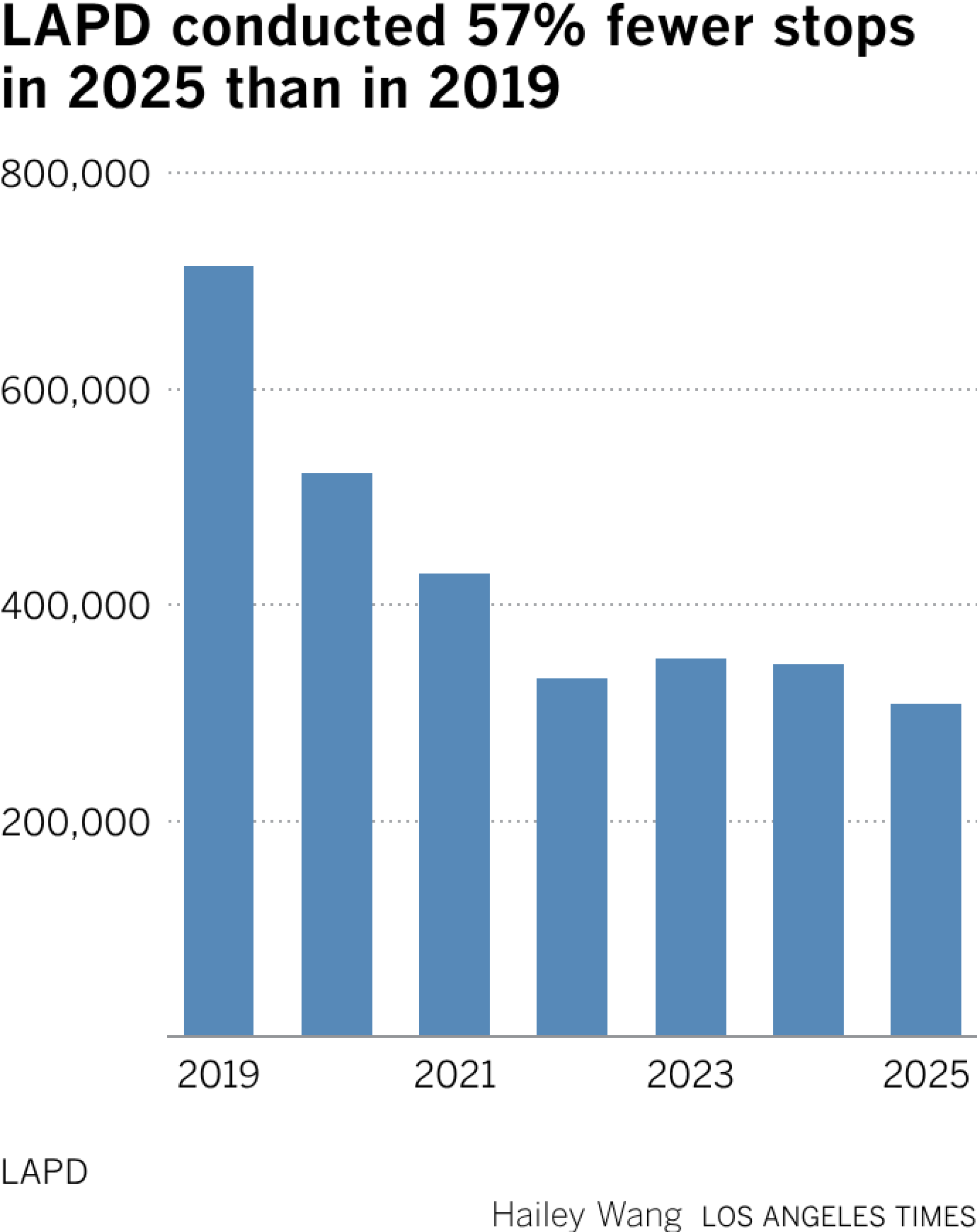
LAPD data show the department is far less proactive than it used to be.

In 2019, LAPD officers made about 713,000 stops across the city; by 2025, that number had decreased to roughly 308,000 — a roughly 57% decline. A Times analysis of police stop data found that the drop-off was especially pronounced in the Central, West Valley, 77th Street and Southeast police divisions.
In some ways, the decline in stops is unsurprising. Other large U.S. cities have seen similar changes in enforcement strategies by police since the pandemic. As the department continues to shrink, LAPD commanders say they have fewer resources to devote to traffic duty. Officials have been under pressure to curb the use of so-called “pretext stops,” in which officers use a minor violation — a broken turn signal, say, or a cracked windshield — as justification to stop someone in order to investigate whether a more serious crime has occurred.
The largest declines were in the Central and 77th Street areas
Change in police stops, 2019 to 2025
LAPD
Hailey Wang LOS ANGELES TIMES
Reform activists and some city leaders argue the stops are fishing expeditions that lead to police abuses — while failing to deliver safer streets.
The practice of pulling over random vehicles, often based on little more than a hunch, has been a cornerstone of the city’s crime-fighting strategy for decades. The tactic is especially prevalent among the department’s elite Metropolitan Division and anti-gang units, several of which have come under investigation in recent years for failing to document the stops and improper searches.
Since 2019, when a Times investigation found significant racial disparities in LAPD crime suppression tactics, officials have slowed — but never abandoned — the practice of flooding neighborhoods with tactical officers to pull people over and search their vehicles.
Four years later, stops for minor violations began dropping again after LAPD overhauled its policies to limit the circumstances under which officers can make pretext stops, joining law enforcement agencies in cities like Philadelphia, Seattle and Berkeley, Calif.
Yet a report published last year found that officers are still disproportionately targeting Black and Latino drivers.
LAPD Chief Jim McDonnell and other department leaders have fought against more restrictions, arguing they risk losing an essential weapon against serious crime.
But in May, the Los Angeles City Council passed a measure urging the Police Commission, the LAPD’s policy-making body, to further limit arbitrary pull-overs for non-moving traffic violations.
Commission officials said they would wait for the results of a pair of audits by the inspector general’s office before making any further policy changes. The first report suggested that problems with the department’s gang officers were far more widespread than the department has publicly let on.
While LAPD officials had acknowledged issues in a handful of police divisions, the latest audit found that gang units citywide routinely flouted the department’s rules on pretext stops, including by often failing to obtain proper consent to search the vehicles they stopped. The inspector general’s office also found that gang officers didn’t always turn on their body-worn or dashboard cameras as required during these encounters and at times failed to properly log who they were stopping — resulting in an undercount of “both the number of detentions and the enforcement actions taken,” the report said.
The review, based on a sample of 300 stops as well as interviews with current and former gang officers, also highlighted ongoing confusion about what the department expects its officers to do when pulling someone over.
The findings of the second report — which reviewed pretext stops by officers from other units in January — are expected to be presented at an upcoming commission meeting.
The Los Angeles Police Protective League, the union for rank-and-file officers, and other proponents of pretext stops argue that elected leaders don’t grasp the consequences of doing away with the tactic, which the U.S. Supreme Court has deemed lawful.
Reform advocates have fought to deploy unarmed civilians instead of LAPD officers for traffic enforcement — as the city has already started doing for certain mental health-related calls — but the union has warned that the work is too dangerous. A state bill that would have allowed trained civilian workers to make traffic stops failed to make it through the state assembly.
With the death toll from speeding on the rise, more enforcement is needed, not less, department leaders say. The city, they argue, can’t afford to wait on alternative programs that require study, money and public buy-in that could take years.
Amid the debate over how to proceed, LAPD enforcement hasn’t vanished completely.
Even though the department no longer dispatches officers to the scenes of minor accidents, LAPD statistics show that enforcement the department’s 308-member traffic bureau has gone up. As of July, the number of traffic tickets issued had climbed 44% from the same time last year — increasing to more than 14,600 from around 10,100. Citations for impaired driving have also risen, and the department continues to crack down on street takeovers.
Still, progress toward new, non-police approaches to traffic enforcement has been frustratingly slow in Los Angeles, advocates say.
Advocates have pointed to mounting research in other cities that showed road improvements along high-injury street corridors were more effective than police at changing driver behaviors, ultimately reducing the number of traffic-related deaths and serious injuries more than the threat of being ticketed.
Supporters of so-called “self-enforcing” roads say narrowing lanes can lead to a considerable decline in crashes as drivers reduce their speed and move more cautiously than when the road is less wide. Such changes also reclaim space for protected bike lanes, public transit lines, or safer walkways — after long prioritizing convenience for cars, advocates say.
Car accidents are dangerous for everyone involved, but they have become even more hazardous for pedestrians and cyclists.
Experts cite speeding and cellphone distractions as two of the biggest problems.
Another factor is the proliferation of larger vehicles — a phenomenon known as “autobesity” — which have bigger blind spots and more likely to seriously injure a pedestrian or bicyclist.
Andres Ramirez, executive director for the transportation advocacy nonprofit People for Mobility Justice, said he’s cautiously optimism that the mayor’s promise of a “No Car” 2028 Olympic Games will help fast-track some of the most pressing road safety projects.
“The streets needs to be a lot safer for pedestrians, for bicyclists, different modes,” Ramirez said. “The most obvious way is ensuring that infrastructure projects are prioritized in communities that have long been ignored.”
No timeline on Jayden Daniels; Caleb Williams not ruled out for Week 3
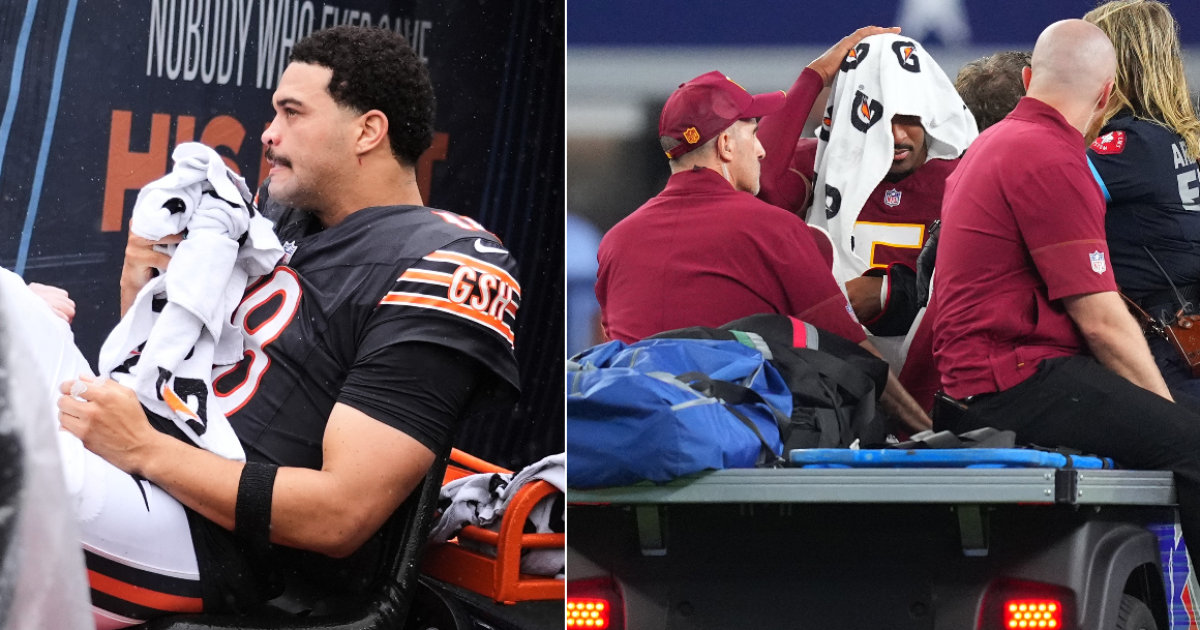
Fox Sports announcer Tom Brady might have spoken for all of us when viewing the play in which Washington Commanders quarterback Jayden Daniels dislocated his left elbow Sunday against the Dallas Cowboys.
Brady said an expletive on the air, expressing a genuine reaction to the gruesome sight of Daniels’ joint bending in the wrong direction after he planted his left hand to break a fall.
The same expression was no doubt used by countless Commanders fans who had seen their quarterback miss much of the 2025 season with the same injury to the same elbow.
Chicago Bears fans also probably reacted with similar words when star quarterback Caleb Williams was carted off the field with a hamstring injury.
The coaches of both teams had injury updates Monday about the quarterbacks who were selected first (Williams) and second (Daniels) in the 2024 draft. Bears coach Ben Johnson told WMVP in Chicago that Williams appears to have avoided a major injury but would “likely miss some time.”
Hours later, however, Johnson told reporters he wasn’t yet ruling out Williams for the Bears’ “Monday Night Football” game against the Philadelphia Eagles. He said Williams underwent an MRI scan on Monday and that the team received news that was “somewhat encouraging.”
“He’s right now working through every avenue that he’s got available to get back on track here,” said Johnson, who added that Williams probably would not practice this week. “We’ll see what that looks like. Here’s what I know: This guy’s a little bit different than the average human being. … He gets back, he has in the past, a lot faster than what people can anticipate. I’m not putting a timeline on this. We’re going to say week to week.”
Commanders coach Dan Quinn told reporters that Daniels underwent imaging that morning and would see specialists the following two days.
“We’ll go through the process from there,” Quinn said. “I know you’ll have some questions regarding timelines, but until we go through that process, I’d be guessing to give you any.”
Quinn did say that veteran backup Marcus Mariota would start Sunday against the Seattle Seahawks and that he might have an update on Daniels on Thursday or Friday.
Williams, after going 5-12 as a rookie, threw for a franchise-record 3,942 yards while leading the Bears to an 11-6 record and the NFC North title. He got hurt during Chicago’s 9-3 loss Sunday while scrambling deep in Minnesota Vikings territory midway through the fourth quarter.
Williams was replaced by Tyson Bagent, a fourth-year player who has appeared in 13 games and is 2-2 as a starter. Johnson told reporters Monday that he was confident in Bagent should he have to start any games in Williams’ place.
“If it goes that route, I feel strongly about what he’s capable of, and our team does, too,” Johnson said. “They know he’s a darn good football player.”
Daniels was an immediate star in Washington, leading the Commanders to a surprise appearance in the NFC championship game his rookie season, but he missed all but one game in the second half of last season after dislocating the same elbow Nov. 2 against the Seattle Seahawks.
He injured it Sunday on a play from the Dallas one-yard line with three seconds remaining before halftime. Left guard Chris Paul stepped on Daniels’ foot as he backed away from center and the quarterback threw a wild incomplete pass as he braced himself on the ground with his other hand.
Mariota replaced Williams in the second half and completed 11 of 16 passes for 111 yards with one touchdown.
The Associated Press contributed to this report.
FAA halts flights to major US East Coast airports amid outage | Aviation News
FAA halts East Coast flights due to equipment outage, affecting major US airports in New York, Newark, and Philadelphia.

Published On 21 Sep 2026
The United States Federal Aviation Administration (FAA) has halted flights to several busy East Coast airports amid an equipment outage, snarling more than 1,000 flights.
On Monday, the FAA issued ground stops at large commercial airports, including New York’s John F Kennedy International (JFK) and LaGuardia; Newark Liberty International in New Jersey, as well as Boston Logan and Philadelphia International Airport.
Recommended Stories
list of 4 itemsend of list
The flights were halted on the day that 130 world leaders and dozens of ministers were arriving in New York for the annual high-level meeting of the United Nations General Assembly.
US Transportation Secretary Sean Duffy said in a post on social media platform X that flights have resumed into New York’s LaGuardia and into Philadelphia, but that ground stops are still in effect at Newark, JFK, and Teterboro Airport in New Jersey. The ground stop has also been lifted in Boston.
FAA Administrator Bryan Bedford told reporters on Monday that it had “lost the primary circuit” at what is called Philadelphia TRACON, or Terminal Radar Approach Control, which controls air traffic into Philadelphia and airports across the busy northeast US airspace.
Bedford said that the backup fibre had a break and told reporters that it could take up to 13 hours to repair. He said the cut was between the city of New Brunswick, New Jersey, and Newark, New Jersey, which is home to Newark Liberty International Airport.
“An Amtrak construction crew accidentally cut into a fiber line in New Jersey which caused a telecom outage and forced FAA to pause flights in the Northeast,” Duffy said in a post on X.
Newark delays
At Newark alone, more than 1,000 flights had been delayed or cancelled. Throughout the US, there were nearly 4,000 delayed flights and 500 cancelled.
United Airlines said it would waive change fees for impacted travellers. Newark serves as a major hub for the airline.
“Flights that had been destined for Newark have either been held at their departure airport or diverted to alternative airports. Once the FAA outage is resolved, we will work to safely get our customers to their destinations and have issued a travel waiver to give our customers flexibility to manage their travel plans,” a representative for United Airlines said in a statement provided to Al Jazeera.
Newark has recorded the highest levels of delays and cancellations of any airport, according to FlightAware, which tracks flight disruptions in real time. As of 3pm Eastern Time in the US (19:00 GMT), 31 percent of departing flights from Newark had been cancelled, along with 29 percent of inbound flights. Meanwhile, 17 percent of departing flights from the United hub had been delayed, as had 17 percent of inbound flights.
A ground stop was also issued at Teterboro Airport in New Jersey, a private airport neighbouring New York City.
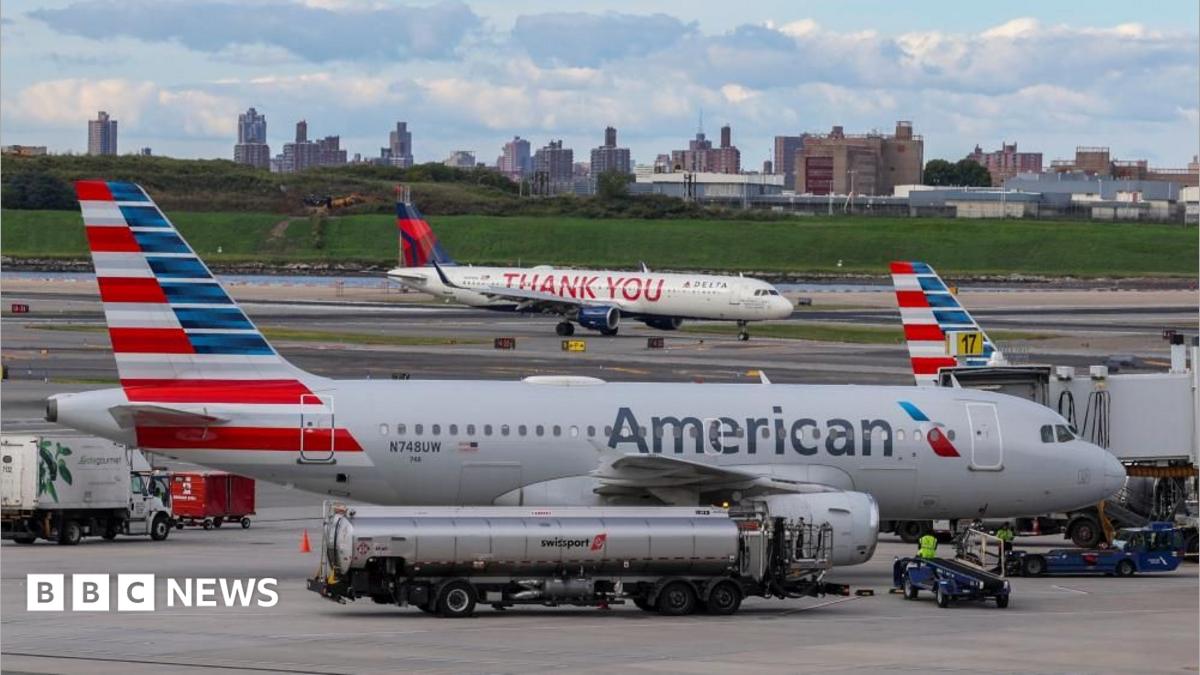
Flights at major US airports delayed after cable cut by construction workers
Hundreds of flights have been delayed at major airports in the US after construction workers accidentally cut a cable needed for air traffic control.
Ground stops and delays were issued on Monday afternoon for airports in New York, Pennsylvania, New Jersey and Massachusetts.
Hours later, US Transportation Secretary Sean Duffy said the cable had been repaired and airports would resume normal operations, though delays were still expected.
The major east coast disruption came ahead of the UN General Assembly (UNGA) in New York City on Tuesday, which is expected to be attended by scores of world leaders arriving into New York-area airports.
That includes UK Prime Minister Andy Burnham, who managed to board his flight before the delays began and was expected to arrive on time.
The delays happened after the damaged cable impacted the Terminal Radar Approach Control system, which is used to guide planes during takeoff and landing, transport officials said.
New Jersey public transportation agency NJ Transit told CBS News, the BBC’s US partner, that its construction workers had accidentally severed the line and that markers had been wrongly placed at the digging site.
The BBC has reached out to NJ Transit for comment.
Duffy earlier said the damage was caused by workers from Amtrak, the US national operator of intercity railroad service, who were doing the construction work. This “caused a telecom outage” which forced the Federal Aviation Administration (FAA) to ground flights, Duffy posted on X.
An Amtrak spokesperson said in a statement, reported by US media, that the incident involved a NJ Transit contractor. Telecommunications company Verizon, which owns the cable, also said it was not responsible.
The severed cable was actually a backup network, and the error was only discovered after the primary circuit failed, according to the head of the FAA, Bryan Bedford.
Newark Liberty International Airport in New Jersey – one of the three major airports that services New York City – was the most heavily impacted by today’s air traffic control disruptions, according to flight-tracking website FlightAware.
It reported that 267 departing flights were delayed today, while a further 257 flights destined for Newark were also delayed.
John F Kennedy International Airport and LaGuardia Airport, both in New York, were also affected, as was Philadelphia International Airport.
One passenger, Douglas Tewnion, said he boarded a flight to New York from Edinburgh and that his plane had been diverted to Boston, Massachusetts instead.
He told the BBC that, two hours after his flight was due into New York, he and the other passengers were still “sitting on the same plane, on the tarmac at Boston with no information”.
Though “everyone is in good spirits”, Tewnion said “it’s just a pain” to see two more hours waiting added onto a lengthy flight.
Additional reporting by Ione Wells

California establishes Dolly Parton Day on Sept. 25
The Queen of Country is being honored with a special day on Californians’ calendars.
Gov. Gavin Newsom signed legislation Sunday that establishes Sept. 25 as Dolly Parton Day. The date’s significance may be obvious to fans of the late country legend: 9-2-5 references Parton’s hit single “9 to 5” from the soundtrack of the 1980 comedy film of the same name that starred Parton, Jane Fonda and Lily Tomlin.
“Dolly Parton was an icon,” Newsom said in a video accompanied by his wife, Jennifer Siebel Newsom, announcing the bill’s passage. “Dolly was larger than life with big hair and a bigger heart. People around the world have been touched by her music, by her philanthropy, and by her humor.”

Parton died Aug. 25 at 80 years old following a battle with cancer. The beloved songwriter, recording artist, actor and businesswoman was an honored musician, earning 10 Grammy Awards and 10 Country Music Assn. Awards, as well as two Academy Award nominations and a Primetime Emmy. She was the recipient of the National Medal of the Arts in 2005 and the Kennedy Center for the Arts Award in 2006. Parton was also inducted into the Country Music Hall of Fame in 1999 and the Rock & Roll Hall of Fame in 2022.
“Her legacy goes well beyond her music,” Sen. John Laird (D-Santa Cruz), who co-authored the bill with Sen. Shannon Grove (R-Bakersfield), said in a statement. “Through the Imagination Library, she put books into the hands of millions of children, and throughout her life she led with kindness, acceptance, and a belief that everyone deserves to be treated with dignity and respect. She was also no stranger to the Central Coast, where she performed for packed crowds and spent time over the years. Now, every 9-2-5, California gets to celebrate Dolly and the remarkable legacy she shared with all of us.”


Paramount settlement is less than desired, more than nothing
Did California come out a winner when Atty. Gen. Rob Bonta settled a multi-state lawsuit against Paramount Skydance on Monday, allowing its $111-billion purchase of Warner Bros. Discovery to move forward?
That’s the question everyone is trying to figure out, as the 32-page agreement is parsed, with pundits pouring over minutiae of cable streaming and tax credits. I’ll leave that to the business experts, but I’m here to give you a big picture of politics, power and possibilities — and one short but unsatisfying answer about whether this deal is good for the Golden State: Yes and no.
I’ll start with this: Did California win is the wrong question. There was always something bigger at play here that was lost behind the fear of further decimation to an industry so central and crucial to the state. The question the lawsuit asked is, “Do we live in an America where government institutions are so broken that power makes its own rules?”
The settlement might not give the entertainment industry all it hoped for but it was “a fight worth fighting,” said George Hay, a professor at Cornell Law School and a former attorney with the U.S. Department of Justice’s Antitrust Division, because it sought to answer that question in favor of consumers, and showed that states like California can and will step up to fill a dangerous void.
Under the Trump administration, the U.S. Department of Justice hasn’t so much abdicated its responsibility to enforce antitrust laws — it has embraced an oligarchic ethos that seems happy to feed the American economy into the mouths of behemoths, allowing companies such as Paramount free reign to gobble up whatever lies in their paths like an old-school Pac-Man.
Our president personally invests in industries he’s supposed to regulate (I’m looking at you, Silicon Valley). Corporations dump money into elections that average people can never hope to match. The free press is under increasing attack with multiple outlets banned from the White House — including CNN, which Paramount hopes to own along with CBS and whose editorial independence is at least addressed in this settlement, albeit weakly.
States, even powerful states such as New York and California, don’t have the muscle or money of the federal apparatus, and were never meant to play the role of national enforcer on issues such as these.
The fact that Bonta and the 11 other states involved in the antitrust litigation pulled together not just a credible, but effective team is a victory for all American consumers, and a message to other Pac-Man companies out there that even if federal regulation is on life support, there are still rules.
The states “showed that they could quickly and effectively put together a formidable litigation team, and achieve significant initial success. That’s a big deal. That that changes the role of the states for a long time into the future,” said William Kovacic. He’s a law professor at George Washington University and a former chair of the Federal Trade Commission, so like Hay, he knows a bit about antitrust enforcement.
“This has a ripple effect that goes through the entire federal enforcement system because they showed they could do something that was very difficult,” Kovacic said. “That’s a big institutional win for the states.”
To hear Bonta describe it, California is absolutely a winner in its own right, though, and this will be “very good” for the state. Which to be fair, is exactly what any decent politician would say.
“It will be good for consumers, good for prices, good for jobs, good for choice, quality, competition,” Bonta told me Monday afternoon.
Kovacic is a bit more measured, calling it a “modest win.”
The deal has many parts, but it covers a five-year period in which the new Paramount mega-studio must release between 30 to 32 films each year, many in theaters and some independent. It also has to keep open and running both the Paramount and Warner Bros. lots, a not-insignificant source of L.A. jobs — and maybe one of the most visible wins for the city.
The new company also must spend at least $1.5 billion over the five years on production in the U.S., and increase that figure if there are certain, uncapped federal or state tax credits available to them.
In California, where the budget deficit is in the billions, creating uncapped credits may be a hard sell, but Bonta told me he’s making it a priority in the next legislative session and will push the next governor — likely Xavier Becerra, who once held his job — to back them.
“I think we’re going to get it in California,” he said. It’s somewhat important because the settlement doesn’t specifically address production in California — and tax credits from other states have been drawing production away for years.
We’ll see how successful Bonta is on that endeavor — he hasn’t always gotten what he wants from governors.
Much has been made about the recent threats from Paramount Skydance Chief Executive David Ellison to move business operations out of California. That pressure has been cited as one of the factors pushing the state to settle, and it probably was — but not just because of Ellison.
Gov. Gavin Newsom made it clear that he preferred a settlement to a drawn-out court case, especially after that threat.
You may recall our governor has presidential aspirations, and is in a long-running battle with Trump over whether California is a wasteland for business beset by fraud and regulation, or a utopia of economic activity fueling the world’s fourth largest economy. Paramount reupping its threat to leave, or even worse, decamping for someplace such as Nashville, is not a great look.
So this case, which was never going to be a slam-dunk to win in court and which could easily have run into 2028 if it proceeded, was never a winning issue for Newsom.
Newsom Monday called the deal “a practical path forward,” which it definitely is — for him.
Hay, of Cornell, said it was a “big blow” when the governor failed to back Bonta and go all-in on litigation.
“Once [Newsom] once came out on the other side, it made things really, really difficult,” Hay said.
So there was pressure on Bonta to make a deal even from his friends, though Bonta told me that “what you call pressure was just noise to me. I never felt pressured in this process.”
But of course, nearly everything that happens in politics and litigation is about pressure — who has the power to apply it and who has the power to withstand it. Bonta, to his credit, applied pressure where Paramount never expected it.
“If I were in California, I’d be proud of the attorney general. At the end of the day, he got the best he could,” Hay said. “I’m glad they were there when the government bailed out because it made Paramount tow the line, and maybe that’s all that we could hope for.”
The Paramount settlement is more about possible than perfect, but it proved that states — and consumers — are not powerless, and every brawl that proves that is, as Hay said, a fight worth fighting.
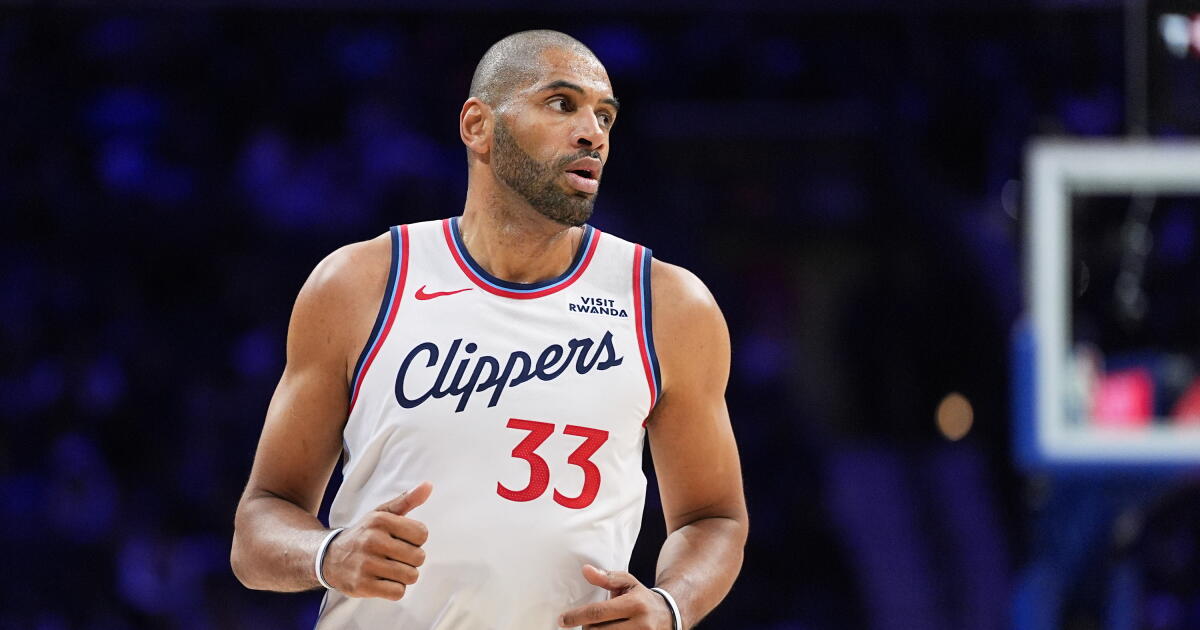
Former Clippers forward Nicolas Batum announces his retirement
Versatile forward Nicolas Batum is retiring following an 18-year NBA career and a long stint with the French national team.
The 37-year-old Batum announced his retirement in a social media video with his son on Monday.
“I decided to retire from basketball for several reasons,” Batum told 10-year-old son, Ayden, in the video. “I want to come home and be with you. I’m going to take care of you and make room for others. I think I’ve done my time. My time with France ended two years ago. And the NBA is over too. You know, when you’ve played as much basketball as I have, at some point, you have to know when to stop. … I’ve done everything I needed to do.”
Batum played two seasons in the French league before being selected in the first round of the NBA draft by the Portland Trail Blazers. The 6-foot-7 forward spent seven seasons in Portland before playing the next six with Charlotte.
Batum spent most of his final six seasons with the Clippers, with a short stint in Philadelphia in 2023-24. He also was a stalwart on French national teams that won silver medals in the 2020 and 2024 Olympics.
Batum averaged 9.6 points, 4.7 rebounds and 3.0 assists while shooting 37% from three-point range during his NBA career.
US man convicted in 2023 shooting of three Palestinian students in Vermont | Courts News
Jason Eaton faces up to life in prison after a jury rejected his insanity defence.
Published On 21 Sep 2026
A jury in the US state of Vermont has convicted a man of attempted murder for shooting three Palestinian college students in 2023, rejecting his defence that he was not guilty by reason of insanity.
Jason Eaton, 51, faces up to life in prison for the attack near the University of Vermont campus in Burlington. It left Hisham Awartani paralysed from the waist down and wounded his friends Tahseen Aliahmad and Kinnan Abdalhamid.
Recommended Stories
list of 4 itemsend of list
The jury deliberated for several hours on Monday before reaching its verdict after a week-long trial that included testimony from the three men and psychiatric experts called by both the defence and prosecution.
Eaton was ordered jailed pending sentencing, which has yet to be scheduled.
Awartani and Aliahmad, who were sitting in the front row of the courtroom, smiled and hugged people around them as the verdict was read.
Eaton did not dispute that he shot the three men in November 2023. Instead, his lawyers argued that he should be found not guilty by reason of insanity.
The defence said Eaton was suffering from a delusional psychotic disorder and believed the CIA and Israel’s Mossad were transmitting messages to him through FM radio.
Joshua O’Hara, the supervising attorney at the Chittenden County Public Defender Office, told jurors that Eaton believed the intelligence agencies had enlisted him to “overwatch duty” to protect a Jewish family living across the street and that God was commanding him to act.
Prosecutors rejected the insanity defence, telling jurors that a state psychiatrist had concluded Eaton did not have a mental disease or defect and that the evidence showed he intended to kill the three men.
‘He pulled out a handgun and started shooting’
Awartani, Aliahmad and Abdalhamid, now 23, grew up together in Ramallah in the occupied West Bank before moving to the US for university.
They were visiting Awartani’s grandmother in Burlington over the Thanksgiving holiday when they went for a walk near the University of Vermont campus after dark.
Awartani testified that the friends were smoking cigarettes and speaking a mix of English and Arabic. Two of them were wearing keffiyehs.
He said Eaton was standing on the porch of the apartment building where he lived before approaching the friends without saying anything.
When Eaton was about five to 10 feet (1.5 to three metres) away, Awartani testified, he pulled out a handgun and began shooting.
Awartani, then a student at Brown University, was shot in the chest and left paralysed from the waist down. Aliahmad, who attended Trinity College, was shot in the collarbone, while Abdalhamid, a Haverford College student, was shot in the right buttock.
The shooting prompted calls for a hate crime investigation, but no hate crime charges were filed.
Police later found three shotguns in Eaton’s apartment as well as a Ruger .380-calibre handgun that crime laboratory testing identified as the weapon used in the shooting.
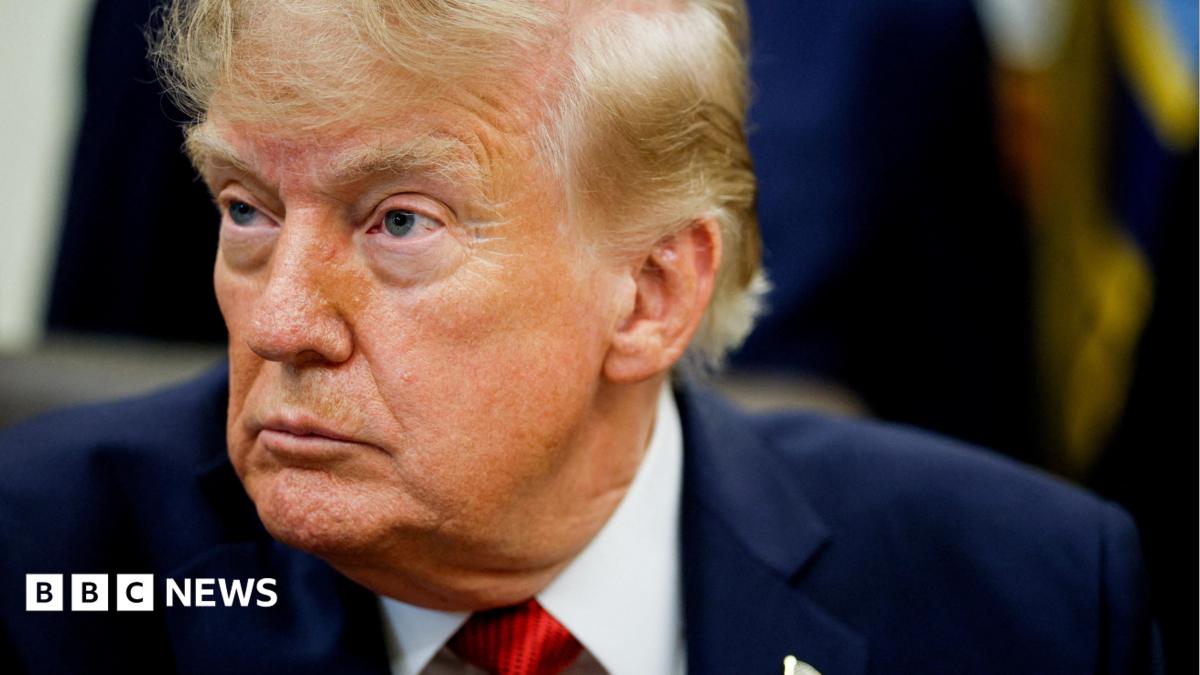
CNN, MS NOW and Politico file lawsuit against Trump’s White House ban
Trump later reacted to news of the lawsuit, calling the news organisations “Third Rate Clowns” and “Crooked and Corrupt Press” that “trivialise and demean” his achievements.
“Fake News people and publications that only write negatively, and who violate our National Security by writing false and defamatory stories with unknown ‘sources,’ shouldn’t be allowed access to the most important Office anywhere in the World,” Trump wrote on his Truth Social platform.
He added that “almost without question” his team will file an appeal.
The First Amendment forbids the government from “abridging” the freedom of the press – language that courts have traditionally interpreted as preventing the government from discriminating against the media based on the content of their coverage.
The statement from CNN, Politico and MS NOW said: “Without notice or process, the White House revoked our journalists’ credentials because it objected to our reporting.
“Left unchallenged, this threatens press freedom and the public’s right to independent journalism free from government interference.”
The media organisations filed the lawsuit on Monday in US District Court in Washington, asking a judge to quickly rule Trump’s ban unconstitutional and prevent his aides from enforcing it.
On Monday morning, major US TV networks pulled out of White House pool duties, which sees media organisations share material with each other to save on costs and space when broadcasting presidential events to the American public.
Fox News Washington bureau chief Bryan Boughton, who currently holds a rotating role helping to organise media TV crews covering the White House, wrote in an email seen by the BBC that “effective today, the TV pool will not be covering designated as pool coverage” of President Trump.
The message said the move followed the White House “preventing” CNN from fulfilling its pool duties for Trump’s trip to New York and that “there will be no replacement pool put in place”.
CNN – one of only five US news outlets in the White House press pool for live television – was originally due to cover Trump’s trip to the UN General Assembly in New York on Monday and Tuesday.
But on Monday morning, the five-seat CNN booth in the basement of the White House press area – typically manned throughout the day from the early hours of the morning – was empty and closed. Screens and monitors inside were turned off.
Instead, a CNN crew was outside the secured area of the White House grounds, broadcasting live from a public pavement.
Five TV networks, ABC, CBS, CNN, Fox News and NBC, issued a joint statement: “The public has a vital interest in receiving accurate, independent information about its government.
“No administration should restrict a news organisation because it objects to its reporting.”
Those five networks are considered the only ones with the money and infrastructure to distribute live coverage from the White House and presidential events.
For now, the White House media slot has remained vacant and instead the conservative TV outlet, Real America’s Voice, was listed as “secondary” crew on Trump’s trip to New York, where he will meet Mayor Zohran Mamdani and French President Emmanuel Macron on Monday.

Team GB stars Katarina Johnson-Thompson & Keely Hodgkinson turn heads as they join Lila Moss & Iris Law at fashion bash
TEAM GB stars Katarina Johnson-Thompson and Keely Hodgkinson looked on track for fashion golds at Burberry’s London Fashion Week event yesterday.
Daring heptathlete Katarina, 33, wore nothing under her blazer while 800m hero Keely, 24, teamed a silk shirt with velvet flares.
They rubbed shoulders at the bash, held at Chelsea College of Arts, with models including Iris Law, 25, and Lila Moss, 23.
Iris opted for a denim two-piece while Lila wore a sparkling tweed minidress.
Rosie Huntington-Whiteley, 39, teamed a black Burberry mac with a £6,900 price tag, with a diamond necklace.
She arrived with action hero husband Jason Statham, 59, before taking her place on the front row for the runway show.


Actress Jodie-Turner Smith, 40, turned heads in a purple all-leather outfit with long boots.
Also at the do — which coincided with Burberry celebrating its 170th anniversary — were Romeo Beckham, 24, and girlfriend Kim Turnbull.
Kim, 25, is a rising star of the catwalk and was sent Burberry items to show off including a £1,295 handbag and £1,460 cropped trench coat.
Runner Keely recently put on a leggy display as she celebrated her 400m win at Athlos.
The Team GB star dominated her race as she caught people’s attention in a black catsuit.
Hodgkinson, 24, celebrated her victory at a glitzy hotel in London.
She took to Instagram to share a post in which she could be seen wearing a mini-skirt and a pink top.

Jeld-Wen creditors are said to discuss debt extension, fresh capital (JELD:NYSE)

Nes/E+ via Getty Images
Jeld-Wen Holding (JELD) and its creditors are discussing a debt transaction that could extend upcoming maturities, raise new capital and give some unsecured bondholders a stronger position in the company’s capital structure.
Under the proposal, holders of Jeld-Wen’s first-lien loan due