



Liam Gallagher’s cheeky joke to fans who missed out on tickets as Oasis sells out 42-date tour after scam alert
LIAM Gallagher has made a cheeky joke to fans who missed out on Oasis Live ’27 tickets after all 42 dates sold out in three days.
Tickets went on sale on Friday and remained available over the weekend before completely selling out.
Following the news, Liam, 52, took to X this evening to issue a statement as he left a parting joke with their fans.
He said: “That’s all folks, we have officially sold out. No more tickets left.
“Congratulations to everyone who got a ticket and to those who didn’t, sneak in, f**k it, YOLO. LG x.”
Excited fans who managed to luckily get tickets rushed to the comments section as one said: “See you in 2027, Liam!


“I’ll be travelling just to see you guys! Best wishes from Costa Rica!”
Another person commented: “See you at Knebworth! Let’s have it!”
However, some unlucky fans weren’t able to get their hands on tickets as one fumed: “I was manifesting it so much, I’m upset.”
While a second moaned: “Liam I’m so sad, I was born and raised on Oasis and I didn’t get a code. I hope I can see you one day.”
Pre-registered fans were randomly selected to receive a unique code for nine onsale windows running from Friday to Sunday.
This registration process was the only way members of the general public could buy tickets.
Since the tickets have sold out, fans have been issued with a warning to remain vigilant and avoid scams on social media.
Resale tickets will only be available to purchase via the Ticketmaster and Twickets websites, for the prices originally paid, nearer to the tour dates.
Earlier today, Liam and Noel, 59, issued the stark warning to desperate fans considering buying from sites selling tickets to their gigs at inflated prices.
The statement on the Oasis social media pages said: “All codes have now been sent out, with the final sale windows happening today.
“Please avoid scams involving social media accounts selling codes or tickets. These will be fake or invalid.
“Tickets currently on secondary websites are liable to be cancelled.
“Resale tickets will be available nearer the events and will only be available, at the price originally paid, through Ticketmaster and Twickets.”
Brothers Noel and Liam will kick off their 2027 mega world tour with performances at the Parkhead stadium on May 21, 23, 25, 28 and 29.
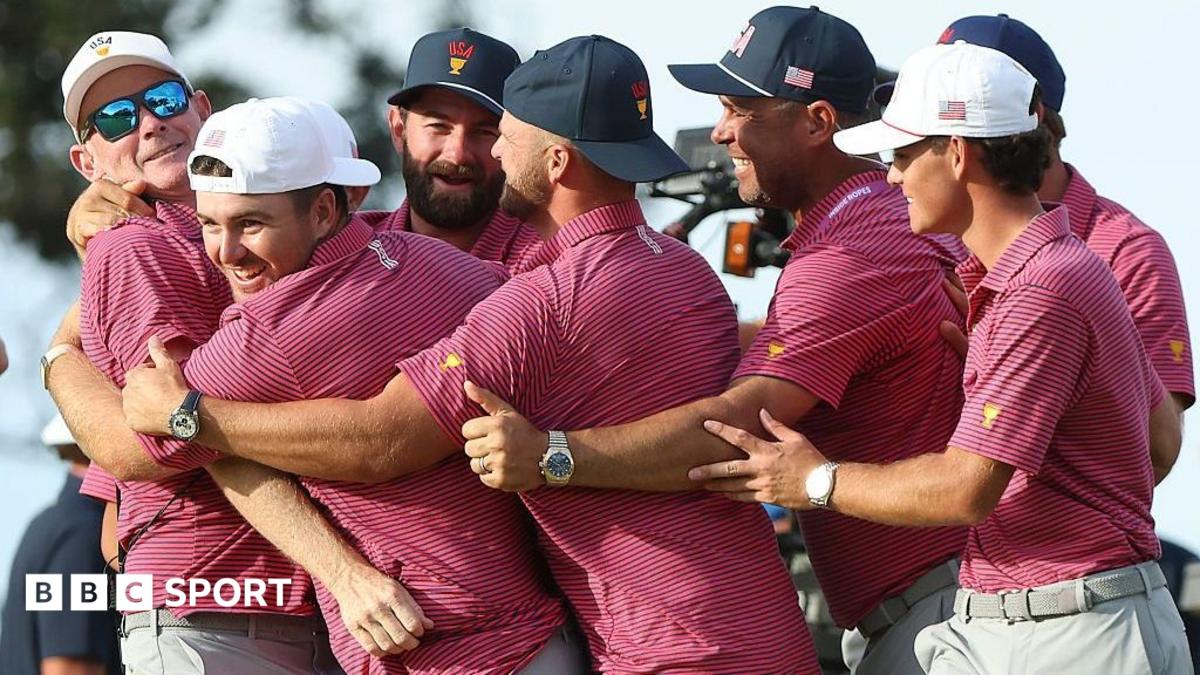
United States complete thrilling comeback to retain Presidents Cup
The United States completed a thrilling comeback on the final day to beat the Internationals and win an 11th successive Presidents Cup.
The hosts, containing eight of the world’s 11 top-ranked players, trailed by three points going into Sunday and were looking to avoid just a second defeat since the biennial competition began 32 years ago.
They dominated the singles, winning nine of the 12 matches, to seal a 17-13 win at Medinah – the scene of Team Europe’s famous Ryder Cup comeback win in 2012.
Jacob Bridgeman secured the decisive point by holing a four-foot par putt at the 18th to seal a one-up win over Australia’s Min Woo Lee.
There were also wins for Cameron Young, Justin Thomas, Scottie Scheffler, Chris Gotterup, Collin Morikawa, Patrick Cantlay, Xander Schauffele and Jackson Koivun.
“I told the guys last night that funny stuff happens here. Medinah’s got a history of funny things happening,” said US captain Brandt Snedeker, who was a member of the team beaten by Europe in 2012.
“All these guys fought for each other, fought for this country, fought for this team.”
International captain Geoff Ogilvy said: “The US team came out firing, we knew they would.
“It was on a knife edge all day. If some of those one downs we had out there had flipped to one up, the numbers looked really good and who knows what momentum that could give.”
US President Donald Trump was in attendance in his role as honorary chairman, greeting the players and making a speech before the matches got under way.
Powerful storm floods US Northeast, causes power outages | Climate News
The nor’easter causes another round of flooding in low-lying areas in New Jersey and New York City and knocks out power to tens of thousands of homes into New England.
Published On 27 Sep 2026
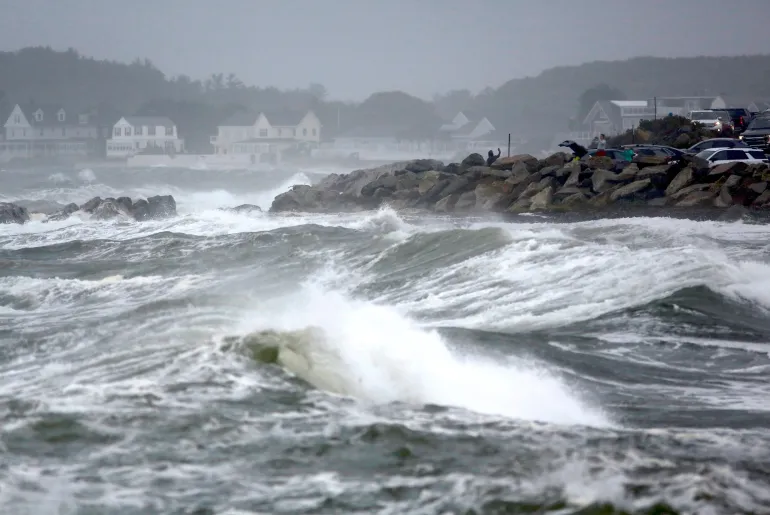
A powerful storm is pummelling the shoreline in the northeastern United States for a second day, causing another round of flooding in low-lying areas and knocking out power to tens of thousands of homes.
Tidal surges swamped low-lying neighbourhoods in New Jersey on Sunday, while wind gusts toppled trees on New York’s Long Island, damaging homes and bringing down utility poles.
Recommended Stories
list of 3 itemsend of list
In New York City, streets in the Howard Beach neighbourhood of Queens were inundated.
The slow-moving storm, which killed a New York City housing authority worker when a tree fell on Saturday, was expected to linger through Sunday, with heavy rain, strong winds and dangerous surf all the way to New England.
Extreme amounts of rain – more than 10cm (4 inches) since Friday in some spots in New Jersey – combined with a surging ocean led to flooding amounts not seen for close to a decade in places used to dealing with high water, residents said.
The storm, known as a nor’easter, triggered memories of Hurricane Sandy, which left behind more than $60bn in damage across the eastern US in 2012. While this storm’s impact has been nowhere near that, it could be the first of several along the East Coast this fall because of an El Nino climate pattern disrupting this year’s weather.
Images of waves crashing into sea walls and onto beaches raised concerns about coastal erosion.
More than 100,000 customers were without power across the Northeast and mid-Atlantic at times on Sunday, according to PowerOutage.us. The most widespread outages were in counties along the coast from New Jersey to Connecticut.
Numerous flights were cancelled or delayed up and down the coast. More than 250 flights had been cancelled at Boston Logan International airport by late Sunday morning as wind gusts reached 64km/hour (40 mph), according to the Massachusetts Port Authority.
The worst of the remaining rainfall was expected on Sunday from northern New Jersey into southern New England.
While the storm was gradually weakening, tidal flooding would stay through high-tide cycles Sunday night, said Bob Oravec, a lead forecaster with the National Weather Service in College Park, Maryland.
![People watch the ocean as a nor'easter storm hits Rye, New Hampshire, US on Sunday, September 27, 2026 [Caleb Jones/AP Photo]](https://i0.wp.com/occasionaldigest.com/wp-content/uploads/2026/09/AP26270677753401-1790545375.jpg?w=640&ssl=1)

Burnham set to nationalise Avanti West Coast services next year as Labour pledges to start ‘delivering for passengers’

ANDY Burnham is set to nationalise Avanti West Coast next year as Labour pledges to start “delivering for passengers”.
The Government will take control of the private operator from March 7 as the PM said passengers had been failed “time and time again”.

An extra £10million is set to be invested in power and signalling maintenance in addition to £840million earmarked for infrastructure on the West Coast Main Line, reports ITV.
The government hopes timetable changes will also improve services for passengers as well as boosted WiFi connectivity.
It was also announced that Euston station in London will receive a £50million upgrade.
Transport Secretary, Heidi Alexander said: “For years, we’ve heard stories of Avanti underperforming, with passengers left paying the price. Enough is enough.


“That is why we will bring Avanti into public ownership at the earliest opportunity, in March next year.
“This Labour Government is committed to putting essential services back in public hands, connecting people to opportunity and delivering growth in every postcode and this move reflects that commitment.
“We will also introduce a comprehensive improvement plan, focused on delivering for passengers, not shareholders.”
Avanti West Coast’s contract is due to come to an end on March 7, 2027.
That will leave East Midlands Railway and Cross Country as the only train operators yet to be nationalised.
Prime Minister Andy Burnham blasted Avanti, saying they had failed passengers “time and time again”.
In a post on X he said: “We’re putting essential services back in public hands and building a railway that actually works for the people who use it.”
It comes as Avanti West Coast recorded the highest number of cancellations in the UK this summer, according to analysis by The Times.
That is double the national average as they made 1.4million delay repay claims in the year to March – around a million more than in 2019, according to the outlet.
Andy Mellors, managing director at Avanti West Coast, said: “We’re proud of what we’ve achieved over the last six years – from refurbishing our Pendolino fleet and introducing our new Evero trains to running more services than ever before.
“Together, these improvements have given customers greater choice, more capacity and better connectivity, while we’ve continued to innovate to shape the future of the West Coast and wider rail industry.
“Over the coming months, we’ll work closely with the government to ensure a seamless transition into public ownership while remaining focused on delivering for our customers and communities.”
The Sun reported earlier this month how Avanti had cut back hundreds of its journeys in the run-up to Christmas.
A reduced timetable will also continue between Christmas and the new year due to engineering works, with the scheduled change aiming to “save taxpayers money“.

Five arrested as counter-terror police investigate major incident near RAF Fairford
A local resident told the BBC she alerted the police to suspicious activity near the base early on Sunday.
The woman, who did not want to be named, said she initially called the Ministry of Defence (MoD) police but nobody answered, and then called 999. She said she had seen three parked vans and a group of men wearing masks.
The MoD declined to comment.
Several residents said they had been led from their homes in the early hours and evacuated to a leisure centre.
Julian Tudsbury said he was woken up at 07:00 by police banging on his door in Whelford, where 85 households were advised to evacuate.
“There were several police, three police cars in the drive, and they said you need to evacuate, there’s been a major incident, said he couldn’t elaborate,” he said.
He said another local had seen three vehicles making their way to the base and called the police “straight away”.

‘A Different World’ review: Class is in session again at Hillman College
“A Different World,” a multicamera comic collegiate soap opera spun off from “The Cosby Show,” has been updated and reborn as a single camera sequel a mere 39 years after the original series welcomed its freshman class and 33 after it packed them off into adulthood. It’s a different “A Different World,” times being what they are, but in many respects the same, set over a school year at the same fictional Hillman College, “the preeminent HBCU in the country.”
As before, we begin with the arrival of new students, sorting themselves out, meeting roommates, finding friends. Many members of the original cast have returned, including Jada Pinkett-Smith, Cree Summer, Charnele Brown, Jenifer Lewis, Dawnn Lewis, Glynn Turman and Joe Morton, as parents or teachers or counselors, three decades older though not necessarily wiser. In a way I can’t exactly articulate — and which has nothing to do with the earlier series, which I know hardly at all — the new “A Different World” made me happy, especially in the early episodes, before the characters are entangled in plot and everything is new, infused with sweetness and energy. (A climactic talent show is just as corny and unpersuasive as every other climactic talent show in television history.)
At the center of a large and sometimes confusing Gen Z cast is Deborah Wayne (Maleah Joi Moon), the daughter of Dwayne Wayne (Kadeem Hardison), who is now the provost, and Whitley Gilbert-Wayne (Jasmine Guy), who in the intervening years founded and sold a beauty empire, which is to say that Deborah, accent on the “bo,” is a rich girl — not at all mean and not especially spoiled, though she doesn’t know how to operate a washing machine. (It also means she is not afraid to raise a ruckus.) She thinks of herself as an artist, but her admission to NYU’s Tisch School of the Arts was rescinded after “a horrible misstep.” And at Hillman, she is required to keep a B average and not get into any trouble, both of which will prove difficult.
Shaquille Johnson (Cornell Young IV), a football star who arrives a week late to practice in a Lamborghini accompanied by his domineering father — it’s Ron Johnson (Darryl M. Bell) from the original cast — who thinks it’s a shame that his son is at tiny Hillman when he could be making a pot of money elsewhere. (Shaquille promised his late mother he’d go there.) “Not everything is about money,” he says. Shaquille also has a gone-wrong romantic past with Deborah, but they are glad to see one another again.

While the show features members of the original cast, the younger generation sorts itself into trios, including Kojo (Chibuikem Uche), left, Shaquille (Cornell Young IV) and Amir (Jordan Aaron Hall).
(Quantrell Colbert/Netflix)
Deborah wants to show her parents, who have been separated for six months but are rarely apart, that she can “enter my full studious season.” This will lead to her engaging a tutor, Ellington (Vincent Jamal Hooper), introduced for some light romantic tension vis a vis Shaquille. Athletic RA Candace (Renee Harrison), who likes Shaquille, provides a counterweight.
The younger generation sorts itself into two entwined trios. For a roommate Deborah draws Rashida (Alijah Kai), who’s from Compton and supposedly a champion gymnast, a characteristic that seems to exist simply to support a joke about Deborah’s “most improved” trophies for Choate women’s pickleball, since it’s never mentioned again. (Some storylines do just melt away.) She’s majoring in criminal justice “to get my cousins out of prison” and thinks Deborah is an unserious student. They’re joined by Hazel (Kennedi Reece), a nice Christian girl looking for a nice Christian guy.
On the boys’ team, alongside Shaquille, are Amir (Jordan Aaron Hall), a gay Harlemite whose deferred admission was because of a year in what they seemingly still call juvie and whose dream is to design clothing; and Ghanian Nigerian “by way of the U.K.” Kojo (Chibuikem Uche), an aspiring influencer bootlegging T-shirts of Shaquille; he, too, has marriage on his mind. They will learn as much in the dorms as they do in the classroom, but the classroom scenes are more on point than they often are in school-set shows.
Shaquille has a rival on the team, Andre (Joshua Suiter), whose wrist he fractures in a locker room fight — but this never really turns into anything. There aren’t any villains here, just young people making young people mistakes and older people making older people mistakes. No one is evil, but people do stupid things, which accords with my own memories of college.
Created by Felicia Pride, who has writing credits on “Queen Sugar,” “Bel-Air” and “Grey’s Anatomy,” it also includes plenty of scenes in which the young folks just have fun, dancing and singing. Big scenes are very well staged, which might have something to do with having choreographer Debbie Allen, director of the premiere episode (and 83 episodes of the original series), as an executive producer. (She also reprises her role as academic counselor Dr. Langhorne, whose motto is “Relax, relate, release,” as if anyone could.)
Over the course of 10 episodes, we’ll encounter many issues relevant to student life and beyond — dyslexia, ADHD (this was my introduction to the parking lot and pomodoro techniques), how lockdown “wreaked havoc” on a generation’s ability to read social cues, STDs, adultification bias, federal cuts to education (Hillman is in the red, and students are losing their grants). bell hooks is quoted on socializing men toward love instead of sex, and, indeed, the series is refreshingly modest on that account.
Welcoming the incoming freshmen, Deborah’s father says, “This is a watershed moment where this country that we built is trying to erase our Black history. Our gains, our culture. They wanna demoralize us. They wanna deport us, they wanna jail us, they wanna shoot us down in the street. But you, you all are their greatest threat. You future leaders who are about justice and community and each other. I know you will stand up. I know you will fight, build and change the world.” It’s a bit speechy — well, it’s in an actual speech — but it’s nice to have that laid out so cleanly in a Netflix sitcom in these difficult days.
And in the wake of a bomb threat, Deborah will declare to the world, “We are not going anywhere. We are studying, we are partying, and we are living our best young, gifted, Black, talented lives right here in our space.” Which sums it up nicely.

Here are the major earnings before the open Monday
Here are the major earnings before the open Monday
Source link

Thompson goal enough to give Chelsea feisty derby win over Arsenal
Chelsea beat Arsenal in a feisty encounter at Stamford Bridge to continue their steady start to the Women’s Super League season.
Source link
Ireland defeats Israel in controversial UEFA Nations League match | Football News
Ireland’s players wore black armbands in support of Palestinians, bowed their heads during the Israeli anthem, and refused pre-match handshakes.

Published On 27 Sep 2026
The Republic of Ireland has won the first of two football matches against Israel at the UEFA Nations League, defeating the Israeli team 3-0 after calls to boycott the match drew international attention.
Ireland’s players wore black armbands at the game in Hungary on Sunday in support of Palestinians killed during Israel’s genocidal war on Gaza. Irish players also bowed their heads during Israel’s national anthem and did not shake the hands of the Israeli team. Ireland’s captain, Dara O’Shea, has also pledged to donate all of his earnings from the match to aid Gaza.
Recommended Stories
list of 3 itemsend of list
On Saturday, Football Association of Ireland (FAI) chief executive David Courell said the players would wear black armbands “in recognition of all lives lost in the conflict” as he confirmed that the match would take place after hours of talks and a vote among the team. Israel was informed in advance by the FAI that Ireland’s players would not shake hands, and UEFA accepted the arrangement.
After the FAI confirmed that it would participate in the match, the Republic of Ireland’s first-choice goalkeeper, Gavin Bazunu, became the only player to publicly opt out of the fixture.
Bazunu posted a statement on social media on Saturday, saying he felt “it would be wrong to participate in the upcoming fixtures against Israel”.
He withdrew from both legs of the fixture, including the next match set to take place on October 4 in Backa Topola, Serbia.

The match on Sunday proceeded despite months-long pressure on the FAI to boycott the match due to Israel’s genocide in Gaza.
Since May, leading Irish footballers have joined a campaign run by Irish Sport for Palestine, urging Ireland to boycott the match against Israel. More than 160 Irish athletes signed an open letter urging the FAI to reconsider its decision to proceed with the games.
The campaign says Israel has breached UEFA and FIFA statutes by allowing teams to play on occupied Palestinian land and should be stripped of its membership at both football bodies.

Inside Yemen’s front-line city as Houthis battle for control
He told me he had sent his children to a displacement camp because they could no longer cope with the shelling and gunfire. He had stayed with his wife and sisters to look after their animals.
“I am terrified,” he said, “but I have no choice, we will all go hungry without our animals and die anyway.”
He gave only his first name, fearful of repercussions if the Houthis take over the area in the days ahead. Contacts from the Houthi side have told us they are consolidating troops, preparing for a major offensive. When we asked government forces about this they said they are aware and were preparing too.
At the closest checkpoint to the front line, we met some fighters who had just returned from positions high on the mountain, just a few hundred metres from advancing Houthis. One of them said the bodies of 18 government soldiers lay in an area his unit could fire across but not reach.
“We shoot over them, but we can’t pull them out,” he said.
Fighting around Taiz has intensified since the Houthis seized the strategic Red Sea port of Mokha, 85km to the west of the city, on 10 September, after a ceasefire that had largely held for four years unravelled.
The group took control of a swathe of territory overlooking the strategic Bab al-Mandab Strait – a crucial shipping corridor linking Europe and Asia. This contributed to a rise in oil prices as fears rose of further disruption to supplies from the region.

How Venezuela Fury is set to make millions from new venture inspired by Molly-Mae after quitting I’m A Celeb spin off
VENEZUELA FURY may have crashed out of the running in I’m A Celebrity . . . The Wild Frontier, but boxing champ TYSON’s teen daughter is still sitting pretty.
I can reveal the young entrepreneur aims to launch her own make-up and skincare line.


Plans are afoot for a firm called No Tomorrow, and Venezuela hopes to unveil the range next year as she makes the most of her growing profile.
She also has brilliant inspiration in her corner – her aunt Molly-Mae Hague.
Molly, who is engaged to Venezuela’s uncle Tommy, is now worth an estimated £20million thanks to years of hard graft in the fashion and beauty industries.
A source said: “Venezuela has just turned 17 so it’s a huge achievement to be launching her own business and she’s so excited.
“She has a top team behind her but the ideas are all hers.
“She wants to make her family proud.
“Having Molly-Mae and obviously her mum Paris as inspiration is a huge boost too.”
While details are still being worked out, it is likely that the No Tomorrow x Venezuela Fury range will include everything from make-up and skincare to fake tan and false eyelashes.
Venezuela celebrated her birthday yesterday while on holiday with husband Noah Price.
She earned the break after having a rough time filming Ant & Dec’s I’m A Celeb spin-off in the Canadian wilderness.
Venezuela and Noah, who married in May, quit just 72 hours into filming after she became unwell and started vomiting.
Viewers will be able to tune in to the new reality show when it airs next spring.
But we’ll be hearing a whole lot more from Venezuela before then, I’m sure.
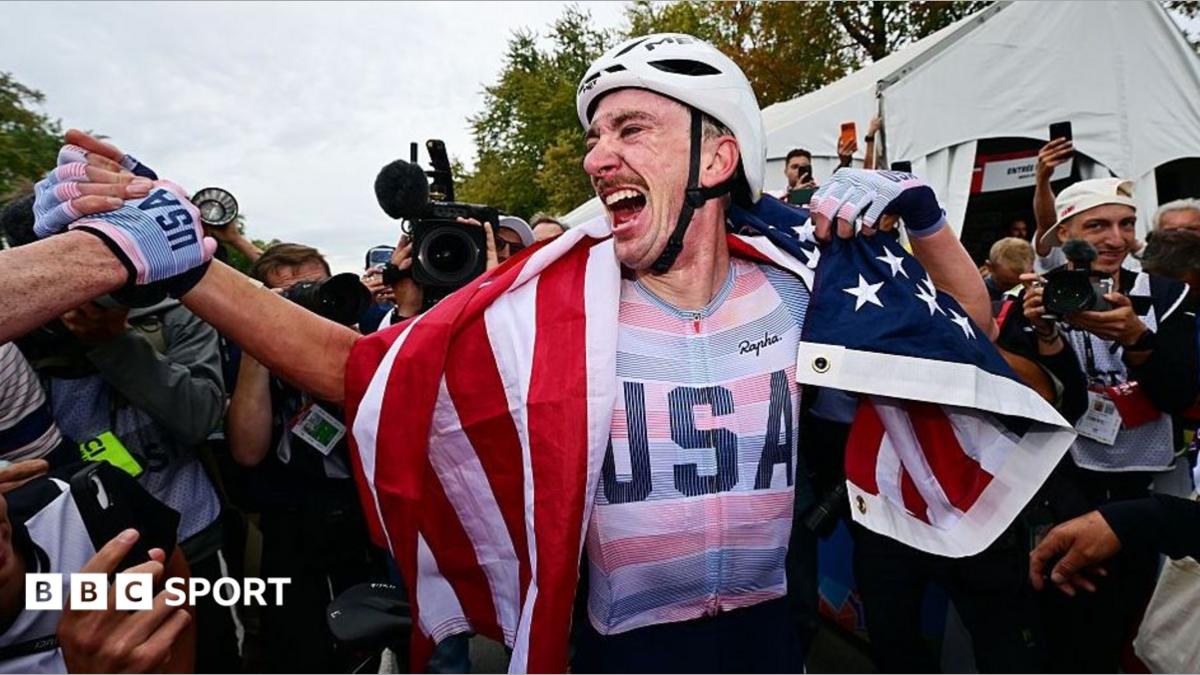
UCI Road World Championships: Brandon McNulty becomes first American winner in 33 years
Brandon McNulty became the first American winner of the men’s road race world title in 33 years with a stunning victory in Montreal.
The 28-year-old put his hands on his head in disbelief as he crossed the line 13 seconds clear of the chasing pack, completing the gruelling 273.4km course in six hours and 17 minutes.
Australian Michael Matthews was second, with former winner Mathieu van der Poel, of the Netherlands, in third.
The last American winner of the race was Lance Armstrong in 1993.
“Until the last 800m I didn’t believe, I was so tired,” said McNulty.
“I’m at a loss for words. I knew something could happen but it would take a miracle and I guess today a miracle happened”.
He launched an attack going into the final 30km and was 50 seconds clear going into the last lap.
McNulty visibly began to tire on the final climb and his lead was cut to just 10 seconds, but the chasing pack were unable to reel him in.
Britain’s Tom Pidcock finished seventh, with Ireland’s Ben Healy 10th and Remco Evenepoel of Belgium in 12th place.
‘Atrocious’ crime: Cuban official decries possibility of US military action | Politics News
Cuba’s deputy foreign minister slams US sanctions, labelling them ‘equivalent to genocide’.

Published On 27 Sep 2026
A senior official in Cuba has warned that any prospective United States military action taken against the island nation would constitute a serious international crime, and has rejected claims made by US President Donald Trump that Cuba is a failed state.
On Sunday, Carlos Fernandez de Cossio, the country’s deputy foreign minister, told the US cable television channel C-SPAN’s flagship programme, Washington Journal, that it would be an “atrocious international crime for the US to use military force against Cuba, which is a peaceful neighbouring country”.
His comments come after Trump said during his Tuesday speech at the United Nations General Assembly (UNGA) that “freedom will be coming” to the island. His remarks prompted the Cuban delegation to exit the assembly hall. On Saturday, Trump brought up military action, telling reporters, “I don’t think we’ll need the military. Cuba is failing very badly.”
Fernandez de Cossio said that coercing nations who do not “submit” by disrupting their commercial shipments, attempting to handicap a population through starvation, depriving it of stable healthcare and withholding fuel, as the US has “done for nine months now”, is “equivalent to a genocide”.
The US has maintained a foreign policy of maximum economic pressure against Cuba for more than 60 years. The Trump administration has previously said that it wants a shake-up in Cuba’s government. Earlier this year, the administration enforced an additional oil and fuel blockade against the island, which has crippled the nation’s infrastructure, causing widespread fuel scarcity and rolling power outages. Government officials in Cuba cited systemic difficulties in securing food supplies and other basic necessities for the country of more than 10 million.
Fernandez de Cossio said Havana must ready its citizens for the prospect of US military aggression, adding that while Cuba recognises it might stand alone, it will still exercise its legitimate right to self-defence.
He explained that bilateral diplomatic channels with the US remain open but have yielded minimal results due to the economic stranglehold of ongoing sanctions, adding that Havana remains willing to engage with Washington in a “respectful manner” only if discussions accommodate mutual dignity, benefit both populations, and respect state sovereignty.
Several countries condemned the US’s continued economic sanctions and blockade of Cuba during the UNGA earlier this week.
Marine One VH-92A Makes First Operational Use Of New White House Helipad
President Donald Trump’s departure from the White House South Lawn earlier today marked the first operational use of its new granite helipad, and the VH-92A Patriot — not the older VH-3D Sea King or VH-60N White Hawk — was the airframe that carried him off the pad. The flight represented a dual milestone: the first time a VH-92A had carried the president from the White House, and the first operational use of the roughly $5-6 million helipad that was built to enable regular operations by the helicopter from this location.
Trump marked the occasion with a ribbon-cutting on the South Lawn, using a pair of oversized gold scissors to sever a red, white, and blue ribbon before shaking hands with White House officials and members of the construction crew. Auxiliary power unit noise from the waiting VH-92A drowned out any remarks Trump may have made on the landing area; he instead posted afterward that the flight was the “maiden voyage” from the newly completed pad. He did not stop to take shouted questions from reporters before boarding for the helicopter’s first flight off the new surface. The VH-92A took Trump to Joint Base Andrews, Maryland, with his final destination New York, where he will be at the UN General Assembly this week.
The VH-92A’s operational limitation in this context had been its exhaust and rotor system. Heat and rotor wash directed downward from the helicopter had scorched and torn up the South Lawn’s turf badly enough that the Marine Corps continued relying on the VH-3D and VH-60N for White House landings even after the VH-92A entered presidential service under Biden in August 2024. Trump has said the newer helicopter is roughly two and a half times more powerful than the airframes it’s replacing — powerful enough, by his account, that a single landing once left “half of the grass…sitting in front of the Oval Office front door.”
For decades, Marine pilots set down on a simple metal disc placed directly on the South Lawn turf — a low-tech solution that worked well enough for the lighter VH-3D and VH-60N, but that pilots occasionally missed, tearing up grass around the marker in the process.
Construction of the new helipad began in late June but hit a snag in early August. As you can read about here, Trump ordered contractors to tear out and redo weeks of work — including a 100-foot-wide carved granite presidential seal that was already taking shape — reportedly over dissatisfaction with the pad’s appearance and the slope of the surrounding lawn.
The South Lawn’s natural grade, reported at up to 20 degrees in places, exceeds FAA heliport guidance calling for landing surfaces to be reasonably level. In the interim, Trump had been using the Ellipse, a park south of the White House, as a temporary landing zone — a workaround today’s flight presumably does away with.
Sikorsky, the Lockheed Martin subsidiary that builds the VH-92A, is financing the helipad project. Trump has said this is intended, at least in part, as compensation for not fully disclosing how disruptive the helicopter’s exhaust characteristics would be. The four-inch-thick granite, quarried in California, has been promoted by Trump as effectively indestructible, with a “million-year” lifespan. That claim, like similar durability promises made about his Lincoln Memorial Reflecting Pool refurbishment — which reportedly saw paint fade and its liner peel within days — has not been independently substantiated.
The helipad is the latest in a string of exterior additions Trump has made to the White House since returning to office, most notably two roughly 88-foot flagpoles installed on the North and South Lawns in June 2025. Trump said the building had “needed flagpoles for 200 years” since the only flag previously flew from the roof, and described paying for the poles — about $50,000 each — himself.

Landing on the White House lawn is only the most visible of the VH-92A’s issues. TWZ has tracked the $5-billion, 23-aircraft program’s string of setbacks for years.
A 2021 Pentagon testing report found the helicopter failing to meet the reliability, availability, or maintainability thresholds set for it, judging it fit for routine “administrative” runs but not for the emergency contingency missions the role actually demands. Central to that finding were flaws in the aircraft’s Mission Communication System, the secure link meant to keep the president connected to the National Command Authority in a crisis — a system a Pentagon summary said often delayed critical communications at the beginning of contingency missions.
Meanwhile, today’s flight doesn’t necessarily mean the older airframes are done at the White House.
The Marine Corps has said it intends to retire the iconic VH-3D Sea Kings fully this year, but plans to keep flying the VH-60N through at least 2030 for its hot-and-high-altitude performance. This means the ‘White Hawk’ could make occasional South Lawn appearances even with the VH-92A now cleared for routine use.
Whether today’s departure becomes the new baseline, or proves to be a one-off tied to the ribbon-cutting itself, will be revealed in how often the VH-92A — versus the older ‘White Top’ fleet — appears on the pad in the weeks ahead, particularly once the higher-profile test of Chinese Premier Xi Jinping’s state visit arrives.
Contact the author: thomas@thewarzone.com

Celebrity Traitors star Joe Marler says he put on a stone during filming
Joe Marler has revealed that he put on a stone during filming for Celebrity Traitors after overindulging in the extravagant breakfasts that are on offer for players

Joe Marler has revealed that he put on a stone during filming for Celebrity Traitors(Image: CREDIT LINE:BBC/Studio Lambert/Paul Chappells)
Joe Marler has revealed that he put on a stone during filming for Celebrity Traitors. The rugby star, 36, was one of several famous faces to enter the famous castle last year before comedian Alan Carr walked off with the top prize.
The show is famed for its extravagant breakfasts, which players enjoy as they discuss the game, and now Joe has recalled just how much he indulged during production of their show.
Speaking to Richard Osman and Marina Hyde at their live version of The Rest is Entertainment podcast, he explained: “So you get flown up there and then you get shoved in the Marriott Hotel in Inverness Airport. It was gorgeous!
“I was in the room, you put a card under the door, your food gets brought to you, you can have as much as you like. “There’s no interaction with anyone, any other contestants and then you’re taken to the castle.
“For the first bit of enjoying yourself, just watch what you’re eating, to go in there and put on eight kilos. Some people engage in a second breakfast, some people it would be their first breakfast. Some people it might be a third breakfast.”
During his time on the programme, Joe, a Faithful, reached the final and correctly sussed that Alan, along with Cat Burns, were Traitors. But in a shock move, he was banished in the final at the last minute, meaning that Alan could walk away from the show victorious.
Viewers are just days away from the new series of Celebrity Traitors, which will launch on October 1 and feature will feature a stellar line-up of names including Coronation Street legend Julie Hesmondhalgh, Little Mix star Leigh Anne Pinnock and singer James Blunt.
Maya Jama, best known for fronting Love Island, as well as best friends and comedians Rob Beckett and Romesh Ranganathan will be seen taking part as well, amongst a host of others.
Before the official release date was confirmed, Joe appeared alongside Pointless star Richard at an event and it seemed as if the pair had accidentally revealed the launch date, although this turned out not to be the case.
It’s reported that he asked Joe if he had any advice for the upcoming group of contestants, and he said: “What is it, September 23, the next series?”
Then, Richard replied: “By the way, to point out, it’s absolutely embargoed that it starts on September 23. Let’s talk about what we call the events of September 23 this year … the cat’s out of the bag, isn’t it? Not to repeat it.” A BBC spokesperson declined to comment.
Like this story? For more of the latest showbiz news and gossip, follow Mirror Celebs on TikTok , Snapchat , Instagram , Twitter , Facebook , YouTube and Threads

Trump to host Anthropic CEO Dario Amodei for private White House dinner
Trump to host Anthropic CEO Dario Amodei for private White House dinner
Source link
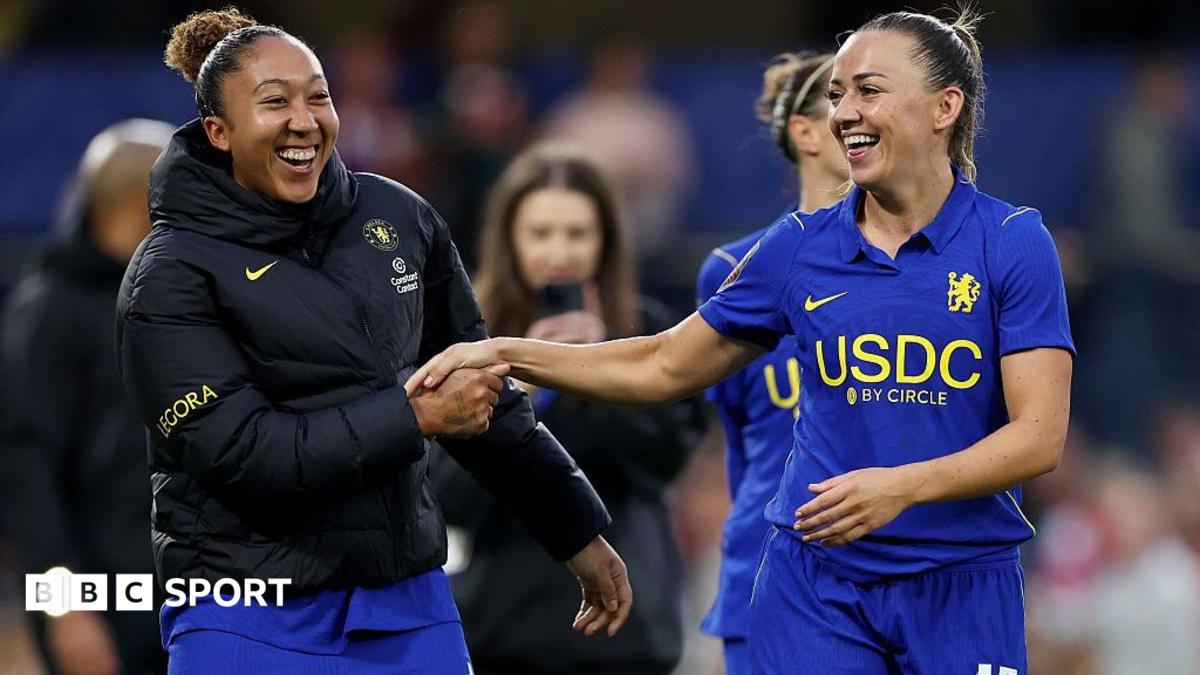
Chelsea: Resilience is back so can Blues regain the WSL title this season?
It is a result that could be the catalyst Chelsea needed to push on and put pressure on Manchester City, who face Arsenal next in the WSL (Sunday, 16:30 BST).
Chelsea’s match-winner Alyssa Thompson said their victory over the Gunners was “amazing for team morale”.
Even Bompastor admitted Chelsea are “a different team from last season” and there are tangible examples of their improvements.
England midfielder Keira Walsh was a standout performer against Arsenal and it was her strike which was parried into the path of Thompson for the only goal.
Her new parternship with 20-year-old Lexi Potter is flourishing and has allowed Walsh to get further up the pitch and play with more freedom.
Bompastor said the 29-year-old was “a boss on the pitch” when she reaches those levels and it helps the team have “better foundations”.
Goalscorer Thompson has consistently delivered up front, while the arrival of summer signing Melvine Malard from Manchester United has given them an outlet.
The French striker missed their opening two matches with a minor injury but scored on her debut against Birmingham City and caused havoc against Arsenal.
“She’s massive for us. She puts in work off the ball and sets off the press,” said team-mate Walsh.
“Her awareness of people around her and her ability… She’s an incredible striker and she will be very good for us.”
That press, led by Malard, has moved higher up and teams have struggled to break through, while full-back Ellie Carpenter continues to overlap dangerously.
Katie McCabe, who switched from Arsenal to Chelsea this summer, has brought leadership and bite – an aggression that was lacking at times last season.
Most of all, the Blues look like a team who believe they should be champions and are willing to work for it.
It was in contrast to toothless Arsenal, who have one victory in their first four WSL games and scored just twice.
“We’ve got both sides to our game and we showed that tonight in spells. Everyone was fighting for each other. Every first and second ball was ours,” added Walsh.
Stuck between Israeli military checkpoints | Newsfeed
Israeli road closures and delays to simple journeys have become a part of daily life for Palestinians in the occupied West Bank. A 45-minute drive turned into a five-hour marathon for Al Jazeera’s Leila Warah after Israeli forces shut routes around the city of Ramallah.

Published On 27 Sep 2026

British Police Arrest Men Driving Toward U.S. Bomber Base In The U.K. With Suspected Explosives
Details continue to come in, but police in the United Kingdom have declared a “major incident” and ordered evacuations near RAF Fairford after the arrest of “several men on suspicion of offenses under the explosives act,” the Gloucestershire Constabulary stated.
RAF Fairford is a major hub for U.S. military aircraft in the United Kingdom. It is a regular host of strategic assets, including bombers and U-2 spy planes. It also acts as a pit stop for other aircraft, including fighters, that are being ferried to and from the United States. Bomber strikes launched from Fairford were a central aspect of major U.S. combat operations against Iran earlier this year.
“A number of properties are currently being evacuated in the Whelford area following the declaration of a major incident,” the Gloucestershire Constabulary also announced today in light of the incident.

The evacuations were spurred by the arrests.
“The Army’s specialist explosive ordnance disposal team are currently examining a number of vehicles,” Gloucestershire Constabulary added. “The local residents are being evacuated to a nearby leisure center.”
“A cordon is currently in place, but we’d like to reassure people that we believe this incident is contained,” the law enforcement agency explained. “We are working closely with our partners and are enacting the well-rehearsed plans we have in place.”
The incident began around 12:45 AM local time Sunday “when police received a call relating to three suspicious vehicles traveling towards RAF Fairford,” according to Gloucestershire police Assistant Chief Constable Richard Ocone. “Armed officers responded and subsequently arrested five men in the Whelford area on suspicion of committing offenses under the Explosives Act. The men were taken into custody, where they remain.”
“A 400-meter cordon has been put in place around the vehicles while the army’s explosive ordnance disposal unit examined them,” Ocene continued. “As a precaution, around 85 households have been advised to evacuate while these examinations take place.”
Video has emerged showing British military explosive ordnance disposal robots reportedly defusing the vans used by the suspects.
“We are aware of the current reporting, for questions regarding off-base incidents please contact the local authorities,” a U.S. Air Force spokesperson told us in response to our questions about whether the incident had raised force protection levels at RAF Fairford or other installations in the area hosting American forces. Unconfirmed reports by the local aviation spotter community claimed RAF Fairford had been placed under what is called FPCON Delta, the highest level of alert at U.S. military installations.
“For operational security reasons we will not discuss specific force protection measures,” the Air Force spokesperson added. “The 501st Combat Support Wing and our fellow UK-based Wings remain vigilant and will take appropriate actions to ensure the safety and security of our U.S. service members, civilians, contractors, and their families. We constantly assess a variety of factors that determine what measures we institute or modify to protect our installations, our people and their families.”
It is unclear if airfield operations at RAF Fairford have been affected. U.S. Air Force officials did not immediately respond to our request for comment.
The British Defense Ministry did not immediately provide comment on this unfolding event.
RAF Fairford is a major hub for U.S. military aircraft, with strategic assets, like B-1B Lancer bombers, being forward deployed to the base and tactical and other assets often using it as a pit stop during flights ‘across the pond.’

As mentioned, RAF Fairford played a key role in major combat operations against Iran earlier this year. No connection has been established yet between today’s incident and any particular group, but the base has drawn direct threats from the regime in Tehran in the past.
“The American aggressor army, which used to launch cruise missiles from its vessels in the Indian Ocean in its aggression after the official resumption of the war, with the end of the missile reserves of the aforementioned vessels, yesterday switched to using B1 planes flying from Fairford Air Base, England,” Tasnim News Agency, a quasi-state outlet in Iran with ties to the country’s powerful Islamic Revolutionary Guard Corps (IRGC), claimed on Telegram on July 23. “As the officials of the Ministry of Foreign Affairs also stated, any base that is used to invade Iran’s territory is our legitimate goal.”
Considering its importance to U.S. military operations, the base is a major potential target for nefarious actors, in general. Like other bases across Europe, it is a major potential target for Russia’s ‘hybrid war’ or ‘gray zone’ activities, as well.
Asked about the threats at the time, a British official told us that the country was prepared to defend itself.
“Our Armed Forces are ready to keep the United Kingdom safe from any kind of attacks, whether it’s on our soil or from abroad,” a government official told TWZ. “The UK stands ready 24/7 to defend itself. This includes through operating a layered approach to air and missile defense, provided by Royal Navy, British Army and Royal Air Force assets equipped with a range of advanced capabilities, working closely with our NATO allies.”
“In the Defense Investment Plan we have made air and missile defense a priority after years of underfunding, dedicating £790 million to enhance protection of the UK homeland and overseas bases from air, drone and missile threats,” the official added. “That is complemented by more than £2 billion of funding to deliver further air defense and counter-drone capabilities, and to upgrade and sustain our Typhoon fleet.”
This is a developing story.
UPDATE: 10:49 AM Eastern –
A Temporary Flight Restriction (TFR) has been imposed over Whelford, Gloucestershire, following the incident. It applies to all aircraft, including “any small balloon, any kite, any UAS and any parachute, including a parascending parachute or paramotor,” according to the FAA. “Pilots are forbidden to fly within the designated area without permission.”
The TRF runs through Oct. 5.
Contact the author: howard@twz.com

Huge 90s boyband secretly planning huge UK tour since 2022 with huge gig at London’s O2
BACKSTREET BOYS are returning to the UK next year for a string of huge shows, including a concert at London’s O2 Arena.
Nick Carter, Howie Dorough, AJ McLean, Brian Littrell and Kevin Richardson had been locked in rehearsals at a facility in Bedfordshire for the launch of their concert residency in Dusseldorf, which kicked off on Friday.
But I can reveal the band are in advanced talks to perform their first shows in Blighty since the 2022 DNA World Tour.
A source said: “Backstreet’s back — and they’re coming to London.
“All the details are under lock and key but the residency means the guys are on top form and are ready to head out on tour.
“The concerts will take place next year, with one at London’s O2 Arena which will make up part of the venue’s 20th anniversary celebrations.


“The lads are beyond excited about this and have been working so hard.”
Earlier this year, Backstreet Boys kicked off their Into The Millennium residency at The Sphere in Las Vegas.
The show is now in Germany before more dates in Sin City in December and January.
The lads have sold more than 450,000 tickets for the residency in Dusseldorf, with fans being treated to a 26-song set list.
As a group, Backstreet Boys dominated Germany in the early days of the band, with fans there catching on early as to what huge stars they would become.
After the residency began, Brian said: “When we talk about this being a homecoming, it’s because Germany is where everything clicked for us.
“It’s where our dream stopped being hypothetical and became something real.
“Coming back for these shows feels full circle.”
After they struck gold, the band went on to become one of the biggest groups in the world, selling more than 150million records worldwide and achieving 16 UK Top Ten singles, including No1 hit I Want It That Way in 1999.
As a huge fan, I shall be jumping in the queue for tickets once the show is announced.
Rita can go Anywhere
LIKE me, Rita Ora was a late starter when it came to passing her driving test.
But, aged 35, she’s now finally got her licence and posed proudly with her certificate in front of her Dollar Driving School car in Los Angeles.
The company previously taught stars including model Winnie Harlow how to drive.
See you on the M1, Rita – and feel free to bring your cute four-legged friend along too.
MARIAH HERE TO BRING MORE FESTIVE CHEER
IF you missed out on tickets for Mariah Carey’s upcoming UK Christmas tour dates, I have good news.
I’m told the star is in advanced talks to perform at this year’s Capital Jingle Bell Ball.
My moles tell me the annual event will take place on December 5 and 6 at London’s O2 Arena, with bosses working around the clock to secure the US chart queen as a performer.
A source said: “Bosses are still locking in the exact line-up but it’s looking likely Mariah will be a special guest at one of the dates.
“They think she would be an amazing addition to the line-up.”
We revealed in July how Mariah was set to return to our shores to play her first run of winter shows here in eight years.
She will begin the gigs on November 27 in Birmingham before concerts in London and Manchester.
Welcome back, Mimi.
We’ve missed you.
It’s heavy petal for Olivia
OLIVIA RODRIGO could be lining up a partnership with Interflora, if the opening night of her Unraveled Tour was anything to go by.
The Drop Dead singer performed in a sea of giant flowers – with 16 gardeners on hand to rearrange the blooms as her US show in Connecticut went on.
As well as singing tracks from her previous two records, Olivia performed nearly every song from No1 album You Seem Pretty Sad For A Girl So In Love.
She repeatedly changed dresses during the 23-song set – and wowed fans when a white frock she was wearing dissolved as “rain” fell on stage, to reveal a bright-red corseted number underneath.
She will bring the show to the UK for a nine-night run at London’s O2 Arena next April.
CELINE’S DOLLED UP FOR XMAS
CELINE DION is being immortalised as a Barbie doll to celebrate her incredible live music comeback.
I can reveal the My Heart Will Go On singer, who is playing a residency in Paris, will have her own limited edition doll released just in time for Christmas.
A source said: “Celine was contacted by Mattel last year and was told bosses were keen to turn her into a collectable Barbie.
“Naturally, she was honoured, and agreed to the partnership straight away.
“The doll will be based on one of her most iconic looks.”
Celine is not the first star to be turned into the famous toy.
In February, Kylie Minogue had a plastic-fantastic makeover, while Marilyn Monroe got her own doll to celebrate what would have been her 100th birthday in August.
POP star Mabel has given birth to her first child, a year on from her wedding to record label executive Preye Crooks.
The singer, who hadn’t revealed she was pregnant, shared a home video on Instagram yesterday of their newborn and was congratulated by fellow artists including Craig David, Fleur East, Tinie Tempah and Ella Eyre.
POP IDOL WILL GOES LIVE AT 25
WILL YOUNG is heading out on tour next year to mark 25 years since he won Pop Idol.
The Evergreen 25th Anniversary gigs will see Will, inset, perform with his band.
The shows kick off at Manchester’s O2 Apollo on February 20 before other stop-offs include Glasgow, Sheffield, Nottingham, Birmingham, Southend, London and Cardiff.
Will said: “I can’t wait to celebrate with the full band and play Evergreen, as well as all the songs that have come since, from Light My Fire to Leave Right Now.”
X Factor star Olly Murs has also confirmed a string of summer shows for 2027.
His eight-date run will start at Bristol’s Good Times Festival on May 30.
Tickets for Will’s and Olly’s shows go on sale at 10am this Friday.
THE WEEK IN BIZNESS
TOMORROW: Pussycat Dolls kick off the long-awaited UK leg of their reunion tour in Birmingham, while Swedish folk sisters First Aid Kits put on the first of two special shows at London’s Royal Albert Hall.
FRIDAY: Tom Cruise returns to cinemas in the satirical comedy Digger, while Dakota Johnson’s new thriller Verity, based on the novel, is also out.
SUNDAY: Prepare for an online bunfight as £408 tickets for Glastonbury 2027 go on sale.
An estimated 2.5million people tried to get tickets for the 2025 event, with even more expected to log on this time around.

California Gov. Newsom signs bill restricting meme coins tied to public officials

Dalin Ou/iStock via Getty Images
California Gov. Gavin Newsom on Sunday signed legislation that bars public officials from issuing meme coins and restricts cryptocurrency platforms from offering certain tokens linked to politicians to California residents.
Assembly Bill 2409, authored by Assemblymember Avelino Valencia, is aimed at preventing

No handshakes between Republic of Ireland and Israel players before Nations League game
The Republic of Ireland and Israel players did not shake hands with each other before Sunday’s controversial Uefa Nations League game in Hungary.
After walking on to the pitch at Nagyerdei Stadion, the Republic of Ireland squad stood for their national anthem and appeared to bow their heads before Israel’s anthem.
Following the anthems, the two teams did not line up for the traditional handshakes.
There was also no exchange of pennants between Republic of Ireland captain Dara O’Shea and Israel skipper Manor Solomon, who did not shake hands.
The fixtures have been embroiled in controversy since February when the two teams were drawn to play each other in Group B3.
The Republic of Ireland players have faced calls to withdraw from the games because of the ongoing Israel-Gaza war with a “Stop The Game” campaign – organised by the pressure group Irish Sport for Palestine – gathering pace.
However, the players voted to fulfil the fixture during a lengthy meeting at the team’s hotel in Debrecen on Saturday.
Later on Saturday, goalkeeper Gavin Bazunu confirmed he had withdrawn from the squad, saying he felt it “would be wrong to participate” in Sunday’s game and the return fixture in Serbia on 4 October.
The Irish players wore black armbands, which Football Association of Ireland chief executive David Courell said on Saturday was a gesture “in recognition of all lives lost in the [Gaza] conflict”.
More to follow.