



Northern Star shares jump as miner rejects $27B Gold Fields bid

RHJ
- Shares in Australia’s Northern Star Resources (NESRF) rose more than 9% on Monday after the gold miner rejected a $27B takeover proposal from South Africa’s Gold Fields (GFI).
- Gold Fields proposed acquiring 100% of Northern Star through a combination of

Bill makes arts funding more accessible; LAUSD stills faces lawsuit
More state money to pay for arts teachers will reach local schools if legislation signed Sunday by Gov. Gavin Newsom works out as intended, but the new law will not resolve a lawsuit accusing the Los Angeles school district of misspending as much as $77 million in its share of the funding.
The aim of Assembly Bill 2440 is to encourage more school systems to use arts funding made available through Proposition 28, which voters passed in November 2022.
“The clear message we heard was that many school districts have been struggling to navigate legal ambiguity regarding compliance with Proposition 28,” said bill author Al Muratsuchi (D-Rolling Hills Estates) in a recent statement to The Times. He said his goal was to provide “statewide guidance” so that all or most school systems could use the money without concern over violations of spending rules that could result in financial penalties.
Proposition 28 sets aside an amount equal to 1% of the state’s base education funding — close to $1 billion per year — to increase arts education. This extra funding is drawn down from the state’s general fund — so it adds to the total allotted for education.
The initial funding, nearly a billion dollars statewide, went out for the 2023-24 school year and has continued annually. But millions of dollars have not yet been spent, according to early reviews of the data.
Some local officials said they were holding back over concerns that they would inadvertently violate the rules for spending the money — and would then have to pay it back, creating significant financial risk.
This bill had backing from arts organizations, education and school district officials and the California Teachers Assn. No opposition was recorded in the legislative record; nor were there any opposing votes as the bill worked its way through the legislative process.
But then Austin Beutner — the author of Proposition 28 — learned of the measure and stepped forward with concerns. He contendedthe bill would make using the arts money easier, but in wrong ways. He said the bill would undermine the guarantee that new arts funding would reach every school. Also it would in effect eliminate the provision that campuses serving low-income communities receive higher levels of new funding. Moreover — and of key importance — the legislation would allow districts to use the new arts money to replace existing arts funding, leaving students no better off than before, he said.
Beutner had structured Proposition 28 precisely to prevent this supplanting of funds. Districts not willing to provide the required increased instruction at every school would, by design, lose access to the new arts money.
Beutner began to rally opposition, including United Teachers Los Angeles, L.A. mayoral candidate Nithya Raman and San Diego school board President Richard Barrera, who is running for state superintendent of public instruction — and who has the endorsement of the California Teachers Assn.
Beutner also announced his attention to file litigation against the bill.
Muratsuchi said he had no intent to undermine the goals of Proposition 28 — and a compromise soon emerged.
The final version — which has Beutner’s approval — clarifies that small schools or small school districts can pool their money to share an arts teacher, provided that every school gets the additional arts instruction. The bill also gives some legal protection for school districts against financial penalties if their arts funding decreases as a result of factors beyond their control, such as the expiration of a grant.
An LAUSD lawsuit continues
Beutner alleges that L.A. Unified has intentionally misused the new arts money.
Beutner pursued passage of Proposition 28 after serving as superintendent of L.A. Unified. His stint ended in mid-2021 with the expiration of a three-year contract.
“LAUSD has done exactly what the law prohibits,” Beutner alleged in an ongoing lawsuit filed in February 2025. “It has eliminated existing funding sources for existing art teachers, and replaced those funds with Proposition 28 funds, thereby violating the requirement that the funds supplement rather than supplant existing sources.”
The lawsuit lists 37 elementary schools with the same or reduced money for arts instruction from 2022-23 to 2023-24 — when the new funding first arrived — and alleges that most L.A. Unified schools faced a similar funding situation.
Before the lawsuit, but in response to growing criticism, L.A. Unified officials quietly added $30 million to the elementary school arts budget for the 2024-25 school year amid ongoing accusations from Beutner, union leaders and parents.
The district has defended its actions.
“We continue to follow implementation guidance as provided by the state of California to ensure that we are fully complying with the requirements of Prop. 28,” the district said in a statement at the time of the lawsuit, a contention that it has made repeatedly.

Rams blow 16-point lead in stunning loss to Denver Broncos
DENVER — Mile sigh.
The Rams came here aiming to put together a second consecutive impressive prime-time performance.
And for the first half against the Denver Broncos on Sunday night, it looked like the Rams would do just that.
But the Rams’ 16-point halftime lead literally vanished into thin air.
After rallying briefly, the Rams could not hold off the Broncos in a 30-26 defeat in front of 76,633 at Empower Field at Mile High.
Matthew Stafford passed for two touchdowns, and Harrison Mevis kicked four field goals for the Rams, but it was not enough.
Broncos quarterback Bo Nix passed for two second-half touchdowns and dived one yard for a touchdown with 47 seconds left, dropping the Rams’ record to 1-2.
Under 10th-year coach Sean McVay, the Rams had started a season 1-2 only once before. In 2024, the Rams were 1-2 after three games and 1-4 after five. They rebounded to finish 10-7 and advanced to the divisional round, where they lost to the eventual Super Bowl-champion Philadelphia Eagles.
Next Sunday, the struggling Rams play the Eagles in Philadelphia.
Against the Broncos, less than a week after limiting the New York Giants to two field goals in a 28-6 victory at SoFi Stadium, the Rams’ defense dominated for two quarters.
But the Rams could not overcome Nix or a Broncos defense that got a 66-yard interception return for a touchdown by safety Talanoa Hufanga, who also intercepted a pass in the end zone on the final play.
The Rams built a 16-0 halftime lead on Stafford’s touchdown pass to Tyler Higbee and three field goals by Mevis.
But the Broncos ended any hope of a shutout midway through the third quarter when what had been a mostly anemic offense came to life.
Nix fired a five-yard touchdown pass to Pat Bryant and then completed a two-point conversion pass to Jaylen Waddle to cut the lead in half.

Denver Broncos quarterback Bo Nix passes against the Rams in the first half Sunday.
(Jack Dempsey / Associated Press)
A few minutes later, Nix found tight end Nate Adkins for an eight-yard touchdown pass and then fired a two-point conversion pass to Bryant to tie the score.
The Broncos were driving again early in the fourth quarter when Rams cornerback Josh Wallace intercepted a pass, setting up Mevis’ fourth field goal for a 19-16 lead.
The Rams got the ball with about seven minutes left and Stafford connected with Adams for a 49-yard gain. But Hufanga picked off a pass and returned it for a touchdown that put the Broncos ahead, 23-19.
But Stafford’s 48-yard touchdown pass to receiver Konata Mumpfield put the Rams back in front, 26-23.
Nix all but sealed the victory when he dived and reached over the pile for the one-yard touchdown with less than a minute left.
The Rams drove to the Broncos’ 14-yard line with two seconds left. But after a false-start penalty, Stafford’s pass was intercepted by Hufanga in the end zone.
Stafford completed 30 of 55 passes for 390 yards. He was sacked four times.
Davante Adams caught seven passes for 137 yards and Higbee had eight catches for 62 yards.
Running back Kyren Williams rushed for 88 yards and had 70 yards receiving.
Nix completed 17 of 34 passes for 186 yards.

Russian strikes kill eight, injure dozens across Ukraine | Conflict News
Ukrainian President Zelenskyy says Moscow launched nearly 4,000 drones, aerial bombs and missiles against his country in past week.
Published On 28 Sep 2026
A Russian military strike on northeastern Kharkiv, Ukraine’s second-largest city, has injured at least 22 people, including children, less than a day after eight people were killed in attacks nationwide.
Kharkiv Mayor Ihor Terekov said on his Telegram account that a guided Russian aerial bomb hit an apartment block early on Monday, destroying two floors of the multistorey building.
Recommended Stories
list of 3 itemsend of list
He said six children were among the injured.
Russian attacks were also reported across Ukraine on Sunday.
Ukrainian Minister of Internal Affairs Ivan Vyhivskyi said three people, including a 16-year-old girl, were killed in air strikes that damaged a children’s centre in the northern city of Sumy.
Authorities in the Odesa region, meanwhile, said a “massive strike” on the south of the Black Sea region killed one person and damaged residential buildings, a shop, a hotel, a medical building, and a grain warehouse.
And in the capital, Kyiv, Mayor Vitali Klitschko said a woman and two 16-year-olds were injured and hospitalised.
“The enemy continues to relentlessly attack the Kyiv region with strike drones,” the city’s administration said.
“Sixteen sites have been damaged”, including 12 houses, a warehouse and a production facility, it added.
Ukrainian President Volodymyr Zelenskyy said on Sunday that three people were killed in strikes in the southern Zaporizhia region and that a Russian drone strike had killed one man in Kyiv.
Zelenskyy said in a post on his X account that Russia had launched more than 2,200 attack drones, 1,630 aerial bombs and 38 missiles of various types against Ukraine in the past week.
“If Russia were truly preparing for any real steps towards de-escalation, as it claims, particularly to American negotiators, this wave of Shahed terror would not be happening,” Zelenskyy said in later comments, referring to the Iran-developed drones Moscow has used against Ukraine.
In Moscow, Russia’s Ministry of Defence said it had bombed a Kyivstar data centre in Kyiv and another belonging to the Omega Telecom company. It said that the firms were providing services to the Ukrainian army.
Russian Minister of Foreign Affairs Sergey Lavrov told the United Nations General Assembly in New York on Saturday that Moscow intended to continue its military campaign “to the end”.
Ukrainian drones struck an oil depot in Russia’s Krasnodar region on Monday, according to local reports.
Ukrainian Telegram channel Exilenova+ published footage of a large fire and identified the facility as the Pavlovskaya oil depot.
No injuries have been reported so far.
Ukraine has intensified its targeting of Russian oil infrastructure in recent weeks.
United States-led talks to end the war, which began with Russia’s full-scale invasion of Ukraine in February 2022, have failed to produce a breakthrough, and the UN has highlighted the growing civilian toll.
Both sides deny targeting civilians.

Ben-Gvir releases video threatening to kill senior Hamas figure in jail | Hamas
Israel’s security minister Itamar Ben-Gvir has released a video in which he is seen threatening to kill senior Hamas figure Hassan Salameh. Salameh is serving multiple life sentences for his role in a series of Hamas-orchestrated attacks in 1996, including bus bombings.
Published On 28 Sep 2026

Benidorm stars Sherrie Hewson and Tony Maudsley reunite amid rumours of a revival
Sherrie Hewson has reunited with Tony Maudsley almost a decade after they finished filming Benidorm and fans have been quick to demand a reboot of the sunny sitcom

Sherrie Hewson has reunited with Benidorm co-star Tony Maudsley(Image: Instagram/tonymaudsley1)
Sherrie Hewson has reunited with Tony Maudsley almost a decade after they finished filming Benidorm. The actress, 76, played hotelier Joyce Temple-Savage on the sunny sitcom, which came to an end in 2018 after 10 series.
Tony starred as hairdresser Kenneth Du Beke, and took to social media to share a snap of himself and his former co-star Sherrie both enjoying their time together over the weekend,
He wrote on Instagram: “Back with my old sparring partner, Joyce Temple Savage. Had the best time reliving our Benidorm days.” In a second post, he wrote: “Laughs a-plenty with Dame Sherrie Hewson.”
Sherrie, who replaced Crissy Rock in the role of the hotel boss after series four, became a household name through her role as Maureen Holdsworth on Coronation Street in the 1990s and now Tony, 58, stars as George Shuttleworth on the ITV soap.
The post instantly caused a stir amongst fans of the show, and several of them rushed to the comments section to beg for a reunion.
One said: “Am still watching and loving the reruns,” and another wrote: “We need a Christmas special,” and a third wrote: “Will it be on TV again??”
A fourth said: “These two were the best in Benidorm … wish it was brought back to give us all some genuine comedy,” and a fifth wrote: “We need a petition up to bring it back ! @tonymaudsley1 you were both amazing in Benidorm. I watch it most nights. How did you walked in them tight shorts all day.”
Sherrie recently told The Mirror that she would be keen do return to her role of Joyce and thought that a reboot should be in the form of a feature-length film.
She said: “In the difficult world we’re living in now… as soon as that music comes, it softens their world, and they feel so much better. And they laugh and laugh. Wouldn’t it be great as a film? The Benidorm film! A 2.5 hour film, wouldn’t that be fabulous?
Benidorm, created by The Catherine Tate Show star Derren Litten, first aired from 2007 until 2018 on ITV and focused on a group of holidaymakers at the Solana resort. Over the years, the cast featured a stellar lineup of names from the acting world.
For the first six series, Siobhan Finneran and Steve Pemberton played a couple who holidayed with their children alongside Sheila Reid as the cantankerous Madge Harvey. The programme was filled with several other fan favourites including swingers Donald (Kenny Ireland) and Jacqueline Stewart (Janine Duvitski), quiz enthusiast Geoff Maltby (Johnny Vegas) and barman Mateo Castellanos (Jake Canuso).
Others to have appeared over the years included screen favourites Sheridan Smith, Hannah Waddingham, Una Stubbs and Amanda Barrie.
In 2023, show creator Litten revealed he had ideas for countless new episodes – and sent fans into a tailspin during an online Q&A. Taking to X, one fan asked the screenwriter: “Would be great to see new episodes…
“Derren Litten surely living in Benners you have plenty of stories you could pen.” Derren responded: “I don’t live in Benidorm but I live fairly close by.”
He then went on to tease: “I have more stories for another 74 episodes; if ITV wants them, they know where I am!” Benidorm fans were quick to react to his message – and began begging him, ITV and even Netflix to make his suggestion become a reality.”
Like this story? For more of the latest showbiz news and gossip, follow Mirror Celebs on TikTok , Snapchat , Instagram , Twitter , Facebook , YouTube and Threads

SK Hynix falls as Solidigm US IPO plan sours mood (SKHY:NASDAQ)

- SK Hynix (SKHY) shares slipped on Monday following media reports that its U.S. subsidiary could be listed, raising concerns about the chipmaker’s complex ownership structure.
- The company’s shares dropped 5%, the most in two weeks, after Bloomberg confirmed over the weekend that

Newsom signs bill banning tee-time brokers at public golf courses
Gov. Gavin Newsom has signed a bill that prohibits third-party brokers from advertising, selling or transferring tee-time reservations at publicly owned golf courses without the written consent of the course operator.
The state legislation is a response to a network of brokers that had sprouted up around Los Angeles municipal golf course tee times.
These brokers, many of whom were in the Korean community, would gobble up tee times, then advertise them on social media, particularly the Korean app KakaoTalk. They charged up to $40 as a booking fee.
Getting tee-time reservations at L.A. municipal golf courses had long been difficult. But after golf influencer Dave Fink revealed evidence of the broker network to his viewers, the problem became public.
“This is an issue that affects everybody who pays taxes in the city, and anybody who plays golf as well, so I just felt like it was my duty to say something,” Fink said in an interview with The Times in March 2024.
After Fink’s videos went viral, the L.A. Department of Recreation and Parks announced an investigation into the practice.
The state has more than 200 municipally owned golf courses, according to Assemblymember Christopher M. Ward (D-San Diego), who authored the bill.
“Public golf courses belong to the public, and residents shouldn’t have to compete with brokers buying up tee times just to turn around and sell them at inflated prices,” he said in a statement Sunday.
The legislation “puts an end,” he said, “to this unfair practice and helps ensure local residents, seniors, students and families can continue accessing the public courses their communities support.”
Palestine Action protesters arrested outside UK Labour Party conference | Censorship News
Demonstrators protest against UK government’s proscription of Palestine Action as a terrorist organisation.

Published On 28 Sep 2026
Police in the United Kingdom have arrested more than 50 people protesting in support of the banned Palestine Action group outside a Labour Party conference in the northwestern English city of Liverpool.
The local Merseyside Police confirmed the arrests in a statement published on Sunday.
Recommended Stories
list of 3 itemsend of list
The police said those taken into custody at the protest, organised by Defend Our Juries, had displayed material in support of Palestine Action, proscribed as a “terrorist” group by the Labour government in July 2025 under the Terrorism Act.
According to the statement, police respected the rights of people to protest lawfully while aiming to keep the peace and ensure the public are safe.
![A policeman speaks to a supporter of the proscribed group Palestine Action as they gather to protest outside the conference venue on the first day of the annual Labour Party conference in Liverpool, north-west England on September 27, 2026 [Oli Scarff/AFP]](https://i0.wp.com/occasionaldigest.com/wp-content/uploads/2026/09/AFP__20260927__C9GU2MN__v1__HighRes__BritainPoliticsLabourConferencePalestineConflic-1790556936.jpg?w=640&ssl=1)
More than 250 protesters sat outside the conference centre holding banners with words supporting the group on Sunday, before dozens of police began making arrests.
English band Massive Attack singer Robert Del Naja was among those arrested.
After asking demonstrators if they were going to continue holding up the signs, officers led people away, telling them they had been arrested under the Terrorism Act.
Reporting from Liverpool, Al Jazeera correspondent Milena Veselinovic said the protesters wanted to put proscription “front and centre of the UK Prime Minister Andy Burnham’s agenda” on the first day of his party’s annual conference.
“Being arrested is nothing in comparison to what the people in Gaza are going through, and it’s also worth it, because this is about our right to free speech,” one protester told Al Jazeera.
Another said that “there are priests, there are healthcare workers, there are people who deeply care, and deeply care about right and wrong.”
Kerry Moscogiuri, chief executive of Amnesty International UK, said protesting “is one of the most effective tools” to make government leaders listen and described the arrests as “a truly shameful attack on freedom of speech”.
“The new prime minister can reform our laws so that communities are protected in coming together and demonstrating on the issues they care about. Will he do so?” she said.
Activists also confronted Foreign Secretary Ed Miliband inside a restaurant in Liverpool, demanding that he lift the ban on the group and declare Israel’s genocide in Gaza.
The activists left after Miliband reportedly refused to comment.
A civil disobedience campaign has emerged since Palestine Action was outlawed in July 2025, with more than 3,600 people arrested for showing their support for the group, often while holding signs reading, “I oppose genocide. I support Palestine Action.”
The UK Supreme Court is now set to hear the case after London’s Court of Appeal upheld the government ban in June.
Venezuelans rally for opposition leader’s return and presidential elections | Elections News
Nobel laureate Maria Corina Machado has been living in exile, with plans to return to Venezuela spoiled multiple times.
Published On 28 Sep 2026
Hundreds of supporters of Venezuela’s opposition leader Maria Corina Machado have taken to the streets to demand her safe return and presidential elections that could lead to a democratic transition in the country.
In Caracas, hundreds of activists in sky blue shirts – the colour of Machado’s Vente Venezuela party – rode motorcycles through the capital’s main avenues on Sunday, honking their horns and waving Venezuelan flags. Similar demonstrations were held in state capitals, including Valencia, Maracaibo and Merida.
Recommended Stories
list of 3 itemsend of list
“This is not a matter of parties or politics,” said Flavio Valentini, a Vente Venezuela activist in Caracas who grabbed a megaphone and addressed the crowd. “This is a movement for the people and by the people.”
Machado has been living in exile for the past nine months and has had plans to return to Venezuela spoiled multiple times. Opposition activists have accused Venezuela’s government of blocking her return, a claim the authorities deny. Machado’s party said that on Monday night, the opposition leader made three unsuccessful attempts to return.
“We hope this transition process leads us to presidential elections and consolidates a free, democratic country that will be the main ally of the United States,” said Anthony Romero, a leader for Vente Venezuela, in the nation’s capital.
The government has been widely accused of stealing elections, jailing dissidents and stifling freedom of speech. But late last week, Venezuela released more than three dozen political prisoners following a second round of talks backed by the US between the interim government and the opposition.
Machado, one of Venezuela’s most popular political leaders, was barred from running in Venezuela’s last presidential election by courts under the control of former President Nicolas Maduro. But her stand-in candidate is widely believed to have won the election with almost two-thirds of the vote.
Maduro claimed victory nevertheless and unleashed a violent crackdown against dissidents who protested the official results, forcing Machado and dozens of opposition leaders to go into hiding. Machado smuggled herself out of Venezuela last year after she was awarded the Nobel Peace Prize for her efforts to restore democracy in the country.
US special forces abducted Maduro from his Caracas home in January, but Machado has been unable to return to Venezuela since then.
The government is now led by Delcy Rodriguez, a Maduro ally who has opened Venezuela’s oil industry to foreign investment and is working closely with the administration of US President Donald Trump.
Rodriguez told the United Nations General Assembly (UNGA) on Wednesday that Venezuela would hold elections as part of a transition to “full democracy”, but did not give a date for the vote.
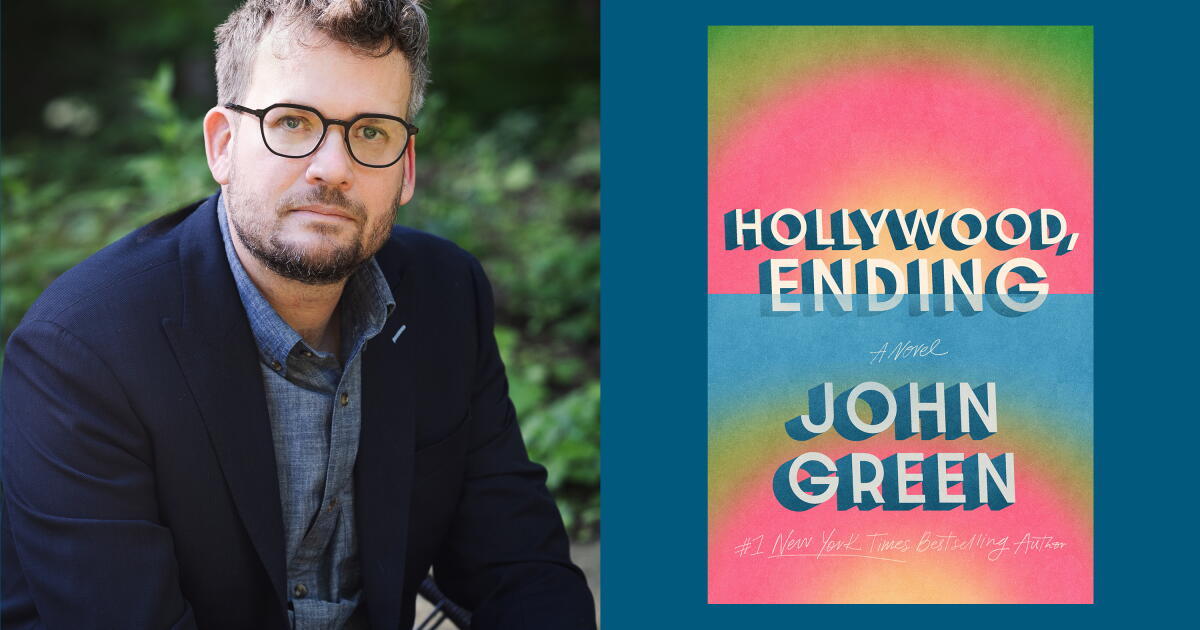
John Green on ‘Hollywood, Ending’, Andy Warhol and the attention economy
John Green’s nine-year hiatus from fiction has ended, and his adult debut, “Hollywood, Ending,” comes right on time to explore the dark side of fame.
The novel centers on former child actor Juniper Castillo and Hollywood newbie Kai Laramie, who are cast in the artsy biopic “Andy Warhol Never Gets Old,” with hotshot movie star Matthew Malone in the title role. It’s Juniper’s chance to establish herself as an adult actor and Kai’s first foray into the spotlight, a position he quickly realizes doesn’t come without a personal cost.
“There’s no way I could have written this book without spending a lot of time on film sets,” Green told The Times in a recent call.
On the Shelf
Hollywood Ending
By John Green
Dutton: 304 pages, $32
If you buy books linked on our site, The Times may earn a commission from Bookshop.org, whose fees support independent bookstores.
Over the last two decades, several of the author’s bestselling young-adult novels have been adapted for the screen. His debut, “Looking for Alaska” (2005), was adapted as a Hulu limited series in 2019, the same year Netflix released the feature film adaptation of his co-authored holiday anthology, “Let It Snow” (2008). On the big screen, “Paper Towns” (2008) made its film debut in 2015, while his bestseller “The Fault in Our Stars” (2012) became a box-office hit in 2014. Most recently, his 2017 novel, “Turtles All the Way Down,” received a feature film adaptation in 2024.
“I hope the book is a love letter to movies. But I also wanted to be honest about how difficult it is to make a work of art that, in order to be commercially successful, has to be loved by millions of people,” Green said. That’s where the Hollywood machine comes in. “It’s really hard to figure out how to get millions of people to pay to watch something, and that challenge leads to all kinds of compromises and sacrifices.”
While Green’s young-adult novels have often explored the teenage experience, he never felt confined by the YA genre. “I think teenagers have infinite intellectual capacity,” he said, adding that he doesn’t really think about which shelf will hold his novels inside a bookstore. In “Hollywood, Ending,” his main characters are navigating their early 20s, a period which Green finds especially interesting.
“The questions in this novel explore how it feels in those early years of adulthood when there are still so many possibilities, so many directions you might go,” he said.
The following conversation has been edited for length and clarity.
How did you land on Andy Warhol as a celebrity figure and metaphor to use in telling this story about Kai and Juniper?
I think Andy Warhol saw so much of our world coming. He saw that three-dimensional experience was going to be rendered in two dimensions. He’s most famous for taking cylindrical soup cans and making them flat, but he also saw celebrity culture coming.
There’s the famous quote about everybody being world-famous for 15 minutes. I think he understood that normal people were going to experience celebrity, and he also saw the way that the repetition of images, as I write about in the novel, would lead to a certain desensitization. So I think everything from screen-based experience to the ways that technology was going to reshape our lives, he was the patron saint of all of that.
One of the images that really struck me is when you talk about him dying wigless and being too uncomfortable with that to have friends come and visit him in the hospital.
I think Juniper says at one point that fame is a kind of armor. I don’t know how Warhol thought of his wigs, but I wanted it to be a sort of emblem of protection for him.
Your wife, Sarah, is an Andy Warhol scholar. Was that a major strength while you were writing this?
There’s a huge advantage to being able to fact-check something by shouting down the hall. I also wanted to include Warhol partly as a love note to Sarah … She co-wrote a book about Andy Warhol’s relationship with money and business called “Andy Warhol Enterprises.” After 25 years, our way of looking at art and the art that we’ve shared together is so deeply intertwined that anything I write is unimaginable without her. She’s my first reader and most important reader … It’s only thanks to her that Warhol’s in the book.
You really humanize the young actors in “Hollywood, Ending,” which, unfortunately, is a unique thing. This is an intimate, vulnerable portrayal of behind-the-scenes Hollywood — why was that important for you to examine?
I wanted to write about the machine that takes private experience and commodifies it, and I think that machine is especially challenging to navigate when you’re young, when you’re in early adulthood, because you don’t yet have those relationships that are going to carry you through. You don’t have the love that you need to survive all that you’ve got to survive. When my work became very successful, I was in my 30s. I was married. I had two kids. I lived in Indianapolis. I had best friends. I was pretty grounded, and it was still very disorienting.
How so?
It’s a completely different life to have everybody have opinions about your work than it is to take your kids to school every day. So I was thinking partly about that, but I was also thinking about the influencers I’ve known, and the actors I’ve known who’ve had to go through that [while] much younger, and what that’s been like for them as well.
You do a really good job of examining the dark side of the attention economy. Why was this especially of interest?
Well, it used to be that the attention economy was mostly a problem for actors and other celebrities, but now the attention economy is something we all participate in. We’re all taking our private experiences and packaging them up for public consumption on Facebook and Instagram and Twitter and Reddit, and I think we gain something from that, or we wouldn’t do it. But we also lose a lot.
I wanted to try to be honest about what we gain, and also be honest about what we lose. My last novel, nine long years ago, was about a young woman with OCD. I also have OCD, and I had to make a decision when I was promoting that book, about whether I would talk about having OCD, and I decided that I would, and that became a huge part of talking about the novel — talking about my own experiences with mental illness, and it was a gift in many ways because so many people have said to me that it helped them to see that it’s possible to have a good and fulfilling life while living with a serious mental illness, and it was helpful for me because it helped me feel less alone in it.
But it was also complicated because there are real costs when you share something. It’s not yours anymore in ways that are a relief, but also in ways that are difficult.
You’re offering it up for scrutiny in a way that can be really scary.
It is really scary to have your private life scrutinized in that way, right? And there’s an element of judgment that comes with creative expression that’s a natural and healthy part of conversations about what art is and what art should be, but being in the middle of those conversations isn’t always fun.
I think you capture that in Kai’s experience. He is really pressured to come out and talk about his traumatic experience, and he doesn’t want to. The “machine” wants to sell tickets and exploit his trauma in the process.
It’s one thing to try to make good art. It’s another thing to try to make good art that lots of people interact with, and a portion of that second issue is inevitably finding ways to interest an audience, and nothing interests an audience quite like a personal story, especially a personal story of overcoming difficulty.
Was the movie star Matthew Malone based on anyone specifically?
I have aphantasia, this brain condition that causes me not to be able to imagine anything visually. I have no visual imagination, and so I can’t see actors when I’m writing. I can’t see characters when I’m writing. I can’t see anything. Everything’s made out of language, and so there’s no way I could have cast the movie in my mind or had somebody in mind for the character. It’s been great to hear all the folks who people were thinking of. I’m curious who you were thinking of.
I thought of Tom Cruise a couple of times. Have other people said that?
A couple people have said that as well. Yeah.
That’s so interesting about your work with language solely. Do you think that’s been a strength with you as a writer? Because you create such vibrant visuals for your readers.
It’s the only way I’ve ever been. I never knew that other people had this vibrant visual imagination until I was in my 40s, and my wife said I think maybe the reason you don’t have a sense of direction and you have to open up all the cabinets when you put away the dishes and you don’t know whether there’s a rug in the living room is because you don’t have a visual imagination, and I was like, of course I don’t. Nobody does, and she was like, you can’t picture an apple in your head? And I was like, no, nobody can picture an apple in their head. They say they can, but they mean it metaphorically … And Sarah explained to me that, in fact, the vast majority of people can see an apple, which still seems fictional to me, like science fiction stuff.
Some people don’t have that inner voice in their head (anendophasia).
I do have an inner voice. I think. But this all gets to something really interesting about being a person, though, which is that you’re stuck the whole time you’re here inside of one consciousness and looking at the world through one set of eyes. And I have no idea what it’s like to be you. The great thing about writing fiction for me is that act of imagination, that attempt to empathize, that attempt to escape the self and imagine what it would be like to be somebody else with some clarity, but of course, there’s always a limit to my ability to do that, and that problem has fascinated me my whole career.
Your books have meant so much to so many people, and in recent years, I’ve reported quite a bit on your book, “Looking for Alaska,” being one of the most commonly banned books. How do you feel about that?
I’m really concerned about attempts to limit intellectual freedom in the U.S., especially when it comes to libraries and schools. We have professionals we’ve trained to make collection decisions and to make curricular decisions in schools, and those professionals are teachers and librarians, and I’m very disturbed when other people come into that conversation and try to usurp the work that teachers and librarians are doing. I think a lot of times authors get most of the credit for the fight against book bans, and the truth is, all the credit should go to the teachers and librarians who are often putting their jobs on the line, making really difficult decisions to try to do the best by the kids that they’re representing and working with.
John Green will be in conversation with Julia Whelan to discuss “Hollywood, Ending” at 7 p.m. Tuesday, Oct. 13, at a ticketed ALOUD event hosted at Saban Theatre. 8440 Wilshire Blvd., Beverly Hills.



Nations League: Craig Bellamy ‘hurting’ as Wales outclassed by Denmark
Defeat – which came just three days after a 1-0 loss to Portugal in Lisbon – has left Wales with plenty of work to do.
They will at least have home advantage at Cardiff City Stadium as they prepare for the remainder of the current international break, with matches against Norway on Thursday, 1 October, and then Denmark the following Sunday.
Captain Davies felt Wales were being taught some harsh lessons in what is their second stint in the top tier of the Nations League.
“It was a tough game. They are a good team and made it a hard game for us,” the Spurs defender told BBC Match of the Day Wales.
“It was really frustrating to concede from two set-pieces. The Nations League games are against the best teams in Europe, it was always going to be tough.
“If you’re not at 100% then you are going to get punished at this level. We have to regroup and go again on Thursday.”
Despite the setback in the Danish capital, winger Sorba Thomas echoed Bellamy’s sentiments.
“Thankfully we’ve got two games at home still to come. We’ll have home advantage so we need to show a reaction,” he told BBC Match of the Day Wales.
“We are just going to get better. We are a small nation but we’ve got big hearts and beliefs and for us it’s about showing that more on the pitch.”

Anthropic CEO Amodei to have dinner with Trump at White House | Technology
Private dinner will be the first one-on-one meeting between the two men, according to reports.
Published On 28 Sep 2026
Anthropic CEO Dario Amodei is set to dine one-on-one with US President Donald Trump at the White House.
The meeting on Sunday evening, confirmed by Trump, comes after months of open conflict between the artificial intelligence startup and the Trump administration.
Recommended Stories
list of 4 itemsend of list
The private dinner would be the first one-on-one meeting between the two men, according to US media, including Axios, which first reported the dinner.
Trump confirmed the dinner on Sunday evening and reaffirmed his stance against slowing the pace of AI development.
Trump also reiterated his belief that new regulations would open the door for China to outpace the United States in AI advancement.
Although he acknowledged Amodei’s concern that going too fast on artificial intelligence could expand risks, Trump said it was more important for the US to maintain a technological edge over China.
“We’re about maybe a year and a half up on China,” Trump told Fox News while attending the Presidents Cup golf tournament in Illinois.
“We’re leading, and we’re building tremendous, trillions of dollars’ worth of places. And why should we give that up?”
The meeting comes two days after a federal appeals court upheld the Pentagon’s decision to classify Anthropic as a “supply chain risk”, which prohibits the US military from using its models.
The startup was sanctioned by the Trump administration after refusing in February to allow its tools to be used for fully autonomous weapons or domestic mass surveillance.
Trump also badmouthed Amodei, saying he was trying to be “a perfect little angel” after the Anthropic chief called for a pause in AI development.
Amodei was absent from the state dinner held for Chinese President Xi Jinping on Thursday, attended by AI industry leaders, including Amodei’s rival Sam Altman of OpenAI.
Despite mounting calls to slow down AI development due to the risk of losing control of the technology, the US government believes that the sector’s major players – OpenAI, Anthropic, Google, and Meta – cannot afford to slow down for fear that China will gain the upper hand.
Trump and Mike Johnson, the speaker of the House of Representatives, are set to meet with leading AI executives on Tuesday.

UK Foreign Secretary confronted by activists over Palestine Action ban | Israel-Palestine conflict
UK Foreign Secretary Ed Miliband was confronted by activists at a Pizza Express restaurant in Liverpool over the proscription of Palestine Action. Nearby, more than 50 demonstrators were arrested while protesting in support of the group outside a Labour Party conference.
Published On 28 Sep 2026

Taylor Swift’s Patient Zero music video shocks fans with grim twist as she makes surprise VMAs appearance
TAYLOR Swift debuted Patient Zero music video at the MTV Video Music Awards after accepting a massive honor.
The Fate of Ophelia singer accepted the first-ever Artist Director Honor at the annual awards ceremony on Sunday.
Taylor’s good friend, Dakota Johnson, who also stars in the music video for her new single Patient Zero, presented her with the award.
The global pop star kept her acceptance speech short and sweet before introducing the world premiere of the highly anticipated music video.
She shared a teaser of the video, which also stars Colin Farrell, on Friday, before announcing that all will be revealed during Sunday’s ceremony.
Fans were taken aback by the video’s grim twist, as she portrayed Colin’s character’s deceased former partner, but it overall received rave reviews online.
Read More on Taylor Swift

“Taylor really wanted to team up with MTV to do something to celebrate the release of Patient Zero,” a source told Page Six about Taylor’s VMAs appearance.
“They created this award just for her. It’s their first time handing out this award.
The insider also said that the “timing made sense,” given the release of Taylor’s latest single, alongside three other new tracks.
The four new songs are a part of The Life of a Showgirl: The Encore, an extended deluxe edition of her 2025 album, The Life of a Showgirl.
Most read in Entertainment
“She really wanted to be there, and the network wanted to figure out a moment in the show that was special to her where she wasn’t just in the background, so MTV made this moment happen,” the source added about the collaboration.
Taylor, 36, was one of the last to arrive on the red carpet at Peacock Theater in Los Angeles in a stunning black and silver gown.
Her husband, NFL tight end Travis Kelce, 36, skipped the event to play with the Kansas City Chiefs in their game against the Miami Dolphins in Florida earlier in the day.
While Taylor has supported her man on the sidelines since the football season began, she couldn’t miss this night as she was the first recipient of the Artist Director Honor.
This marked the singer’s 31st Moon Man trophy, breaking her tie with Beyoncé for the most VMA wins.
The vocalist was also nominated for nine other awards – the second-most of the night behind Madonna, who had 11 nominations – and won the Video of the Year award.
Taylor has kept a lower profile since her and Travis’s extravagant July 4th wedding.
MOST AWARDED ARTISTS IN VMA HISTORY

Since the iconic MTV Video Music Awards first premiered to shake up pop culture in 1984, artists across all genres have tried their best to score the coveted Moonman trophy. Here are the top 10 musician’s who have taken home the most hardware:
- Taylor Swift – 31 wins: Taylor is now the most-awarded artist in VMA history. She has won Video of the Year five times, including for her hit All Too Well, and picked up a record nine awards in one night for Midnights in 2023.
- Beyoncé – 30 wins: Beyoncé’s haul includes six wins for Formation in 2016, plus Video of the Year for Single Ladies in 2009. Her total also includes two wins with Destiny’s Child.
- Lady Gaga – 22 wins: Gaga dominated the 2010 VMAs, taking home seven awards for Bad Romance. She has also won Artist of the Year twice.
- Madonna – 20 wins: The original VMA powerhouse has collected wins for Vogue, Ray of Light and Express Yourself, as well as the Video Vanguard Award.
- Eminem – 15 wins: The rapper is the most-awarded male artist in VMA history, with wins including Without Me, The Real Slim Shady, Not Afraid and Houdini.
- Ariana Grande – 13 wins: Ariana has collected 13 Moonmen, including Video of the Year and Best Pop for Brighter Days Ahead and three wins for Rain on Me with Lady Gaga.
- Peter Gabriel – 13 wins: Peter holds one of the biggest records in VMA history: 10 wins at the 1987 ceremony, including nine for Sledgehammer.
- R.E.M. – 12 wins: The rock band swept the 1991 VMAs with six wins for Losing My Religion and later added four for Everybody Hurts.
- Justin Timberlake – 11 wins: Justin’s haul includes Video of the Year for Mirrors, multiple wins for Cry Me a River and the Video Vanguard Award.
- Green Day – 11 wins: Boulevard of Broken Dreams powered Green Day’s VMA haul, winning six awards in 2005. 21 Guns added even more to their collection in 2009.
She showed her love for her husband last week while celebrating his touchdown against the Indianapolis Colts.
The Out of Style singer was caught on video screaming and clapping as Travis darted across the field to score.
She could also be heard yelling, “That’s my husband!” while pointing at her $1 million wedding ring.

Netball World Cup: Northern Ireland qualifying ‘surreal’ – Caroline O’Hanlon
World-ranked number 15 Northern Ireland’s emphatic 73-50 victory over Republic of Ireland in their final qualifier was not enough to secure one of the two qualification spots automatically.
However, Scotland’s narrow win over Wales in Sunday’s later game booked both teams spots with Wales, who are ranked ninth in the world, missing out.
“It was a real rollercoaster of a day,” O’Hanlon continued.
“Obviously we started out with a hard-fought win against the Republic of Ireland, but we knew that we were still relying on Scotland.
“That match was just up and down the whole way through, so we were nerve-wrecked watching that. Just sitting in the stands, not being able to control anything, was nerve-wracking.”
O’Hanlon was captain of the side when they finished 10th in the World Cup seven years ago.
But, now, the 42-year-old said the squad will head to Sydney with ambitions of competing for results rather than simply gaining experience.
“The last one we were at was in Liverpool and there was a lot of home support, but Sydney is the home of netball at the minute,” O’Hanlon added.
“Sydney is the centre of the best league in the world. It’ll be a brilliant spectacle and it’s just class to be a part of it.
“The group will be going into the games not just to experience, not just to learn, but to actually go on and compete and try to win games and get results. That’s the next step for us really.”

Ireland beats Israel 3-0 wearing black armbands to support Gaza | Football
Ireland scored a 3-0 victory over Israel in a politically-charged UEFA Nations League match played in Hungary. The game went ahead despite calls for a boycott with the Irish players wearing black armbands in support of the people of Gaza.
Published On 28 Sep 2026

Refugees in South Africa fear new attacks as September 30 deadline looms | Human Rights News
Durban, South Africa – Bishop Raphael Bahebwa is in hiding, afraid he could be attacked for speaking out for the rights of foreigners in South Africa.
“I am in hiding now because they say they are going to kill me for speaking about the rights of foreigners,” he told Al Jazeera.
Bahebwa has lived in South Africa for 26 years, after arriving as a refugee from the Democratic Republic of the Congo (DRC).
In that time, he has watched antiforeigner sentiment flare repeatedly in the country he came to call home. But he says this year feels different.
A September 30 deadline declared by March and March, an anti-immigration movement that has led protests across South Africa this year, has renewed fears of violence among migrant communities.
The group has called for undocumented foreign nationals to leave South Africa and has warned of further demonstrations if its demands are not met.
For Bahebwa and other refugees in Durban, however, the distinction between documented and undocumented migrants offers little comfort. They say the hostility they experience on the streets rarely begins with a request to see their papers.
Fears of renewed violence
South Africa will hold local government elections on November 4, in a campaign in which migration has become an increasingly prominent political and social issue.
For months, Bahebwa was among hundreds of refugees and asylum seekers who slept on the pavement outside the Durban Refugee Reception Centre on Che Guevara Road.
Many were from the DRC and Burundi, with others from Uganda, Mozambique and Tanzania. They said they had fled their communities because they feared antiforeigner attacks.
They arrived outside the Department of Home Affairs (DHA) office seeking safety.
Instead, the pavement became their home.
For roughly four months, men, women and children slept outside, exposed to the elements and dependent on civil society organisations and volunteers for food and other necessities.
“It has been very tough,” Bahebwa said. “Never before have I experienced something like this.”
Some of the migrants told Al Jazeera that conditions became desperate. They described irregular access to food and medication and said one man who had tuberculosis died while living at the camp. Al Jazeera has not independently established the circumstances of his death.
The camp was also not far removed from the hostility its residents said they had fled.
On September 3, members of March and March confronted refugees and asylum seekers living outside the centre. Violence broke out, and police intervened. At least four people were reported injured.
At another protest days later, police officers stood between the two groups, forming a barrier as tensions rose.
March and March has described its mobilisation as a campaign against undocumented immigration, crime and deteriorating conditions in South African communities.
The group says the government’s response to immigration enforcement has been insufficient.
Its leaders have repeatedly rejected accusations that their campaign is xenophobic and insist their target is undocumented migration rather than foreign nationals generally.
Bahebwa said documented and undocumented migrants alike have been caught in the hostility.
Earlier this year, six refugees working in salons around Durban’s Warwick Street Market were beaten by men carrying sticks, according to public-interest news outlet GroundUp. Two were hospitalised.
Bahebwa said the migrants had also struggled to obtain help from the authorities after earlier attacks.
“Police said we can’t open cases because we are foreigners. We had nowhere to go,” he alleged. Police have not publicly responded to that specific allegation.
Nowhere obvious to return to
In mid-September, the government moved to clear the makeshift camp outside the refugee centre.
The refugees were given a choice: return to the communities they had fled or accept temporary accommodation at the Lindela facility in Gauteng, hundreds of kilometres from Durban. Lindela is a government-run immigration detention facility used to hold people facing deportation.
The choice divided them.

Some feared going to Lindela, a facility historically associated with immigration detention and repatriation. Others felt they could no longer endure life on the pavement.
On September 15, 274 people were transported by bus from Durban to Lindela. About 150 others chose to remain in Durban and began trying to find alternative accommodation.
For those who stayed behind, leaving the pavement did not resolve the problem that had brought them there in the first place.
Kafuti Muyumba, a small business owner from the DRC and a representative of the refugee community, said many were afraid to return to neighbourhoods where they had built businesses and lives.
People are afraid, he said. “Even the police allow March and March violence. They came with sticks and say we are attacking them,” Muyumba told Al Jazeera.
He said many refugees had lost their livelihoods during the months of upheaval and were now desperate to find accommodation.
“This is not the first time we are experiencing xenophobia,” he said. “In 2008 and then in 2015 we also experienced this.”
In 2008, xenophobic violence spread through townships and informal settlements, killing dozens and displacing thousands.
Further outbreaks of violence against foreign nationals followed in subsequent years.
For Muyumba, those memories make the rhetoric surrounding September 30 difficult to dismiss.
“We don’t trust the police. They are not being fair with us. Some of them are also saying we must go,” he said.
Police have said there are no plans to change their normal policing approach because of the September 30 deadline and that any protesters will be expected to remain within the law.
March and March said all it wants is for undocumented immigrants to leave the country and return home.
But Muyumba said returning to the DRC is not a viable alternative for many Congolese refugees.
“There is still war there,” he said.
A country tightening its borders
In response to ongoing protests, the South African government said it had intensified its immigration enforcement.
Between June 14 and August 20, authorities processed 86,596 foreign nationals for deportation and repatriation, according to the government’s Inter-Ministerial Committee on Migration.
Malawians made up the largest group, followed by Zimbabweans and Mozambicans.
Government data says 90 percent of those repatriated had entered South Africa illegally, while 95 percent were classified as having crossed the border outside official ports of entry.
The government says the operations form part of a broader effort to strengthen border management and enforce immigration law.
At the same time, officials have repeatedly warned private groups against taking immigration enforcement into their own hands.
March and March’s September 30 deadline has no legal authority. The government says common citizens cannot deport anyone from South Africa.
![Protesters hold placards during an anti-immigration march in Durban, South Africa, calling for tighter border controls and the deportation of undocumented migrants [Thuli Dlamini/Reuters]](https://i0.wp.com/www.aljazeera.com/wp-content/uploads/2026/06/2025-11-07T155727Z_1005019881_RC2NRHA84QWK_RTRMADP_3_SAFRICA-PROTEST-1782784993.jpg?w=640&ssl=1)
But deadlines do not need legal force to create fear, as was the case for an earlier deadline of June 30. For the refugees who spent months sleeping outside the DHA office in Durban, September 30 is another uncertainty layered on top of many others.
Some have been moved hundreds of kilometres away.
Others are trying to find new homes in the same communities they once fled. But among the migrants Al Jazeera spoke to, there is a shared anxiety that paperwork may offer limited protection when anger is directed first at being foreign.
Bahebwa has spent more than a quarter of a century in South Africa. For now, he says he is hiding and does not know what September 30 will bring.
“They are scapegoating us as foreigners,” he said. “It is not going to end on September 30. It has to do with the elections.”
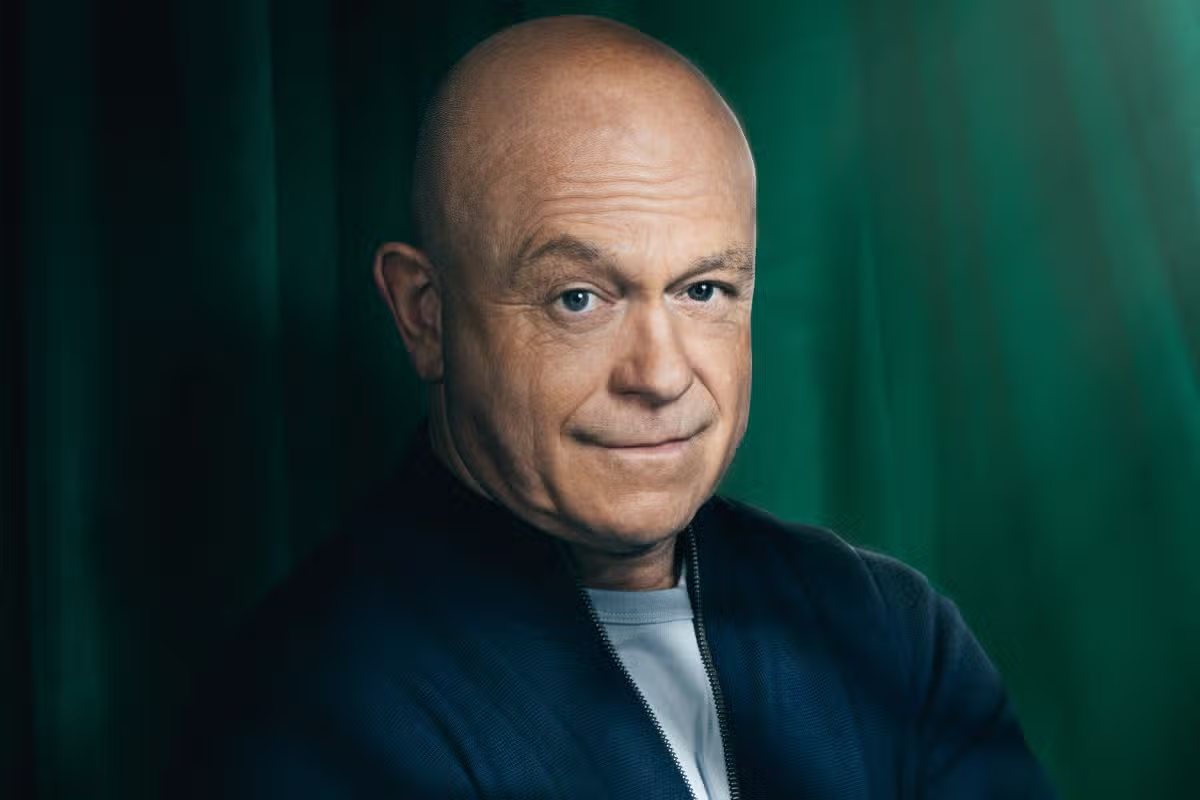
Celebrity Traitors stars share strategies to beat each other to BBC prize pot
Ross Kemp wants to prove he’s more than just a tough guy while Richard E Grant hopes being ‘geriatric’ will excuse him from the money-making missions

Ross Kemp wants people to know he’s got a sense of humour under that tough exterior(Image: CREDIT LINE:BBC/Studio Lambert/Cody Burridge/BBC Creative)
There’s just three days to go until the new series of Celebrity Traitors hits the screens and some of its biggest stars have revealed what drove them to sign up for the hit BBC1 show.
Former EastEnders star turned documentary maker Ross Kemp says he is a huge fan of the series, and of host Claudia Winkleman, and wants to show people that there’s more to him than just playing, or being, a tough guy.
“I think if I’m able to stay or survive for a period of time, it would give people an opportunity to see that I’m not just Grant Mitchell or a man that goes around the world confronting people with guns,” he says. “I think obviously there will be people that will only know me as Grant, and then people may have seen the documentaries, which are often quite brutal. I think people probably think that I don’t have any kind of sense of humour whatsoever, which hopefully will come out.”
That said, the 62-year-old admits that being a real-life hard man might actually be his biggest asset when it comes to The Traitors. “My strength hopefully would be some of the physical challenges. I’m a qualified HSE diver, so anything with water I should be able to do. I don’t mind heights too much, I don’t mind cold weather, I’ve completed hostile environment training and I don’t mind being uncomfortable, so I should be able to make a good contribution to Missions.”
But ahead of filming, he admitted he did have a few nerves. “There’s an element of: A, I don’t have control over this; B, I don’t want to let the side down; and C, I don’t want to let my family down by making myself look an idiot.”
Unlike Ross, actor Richard E Grant is hoping to pretty much swerve the Missions altogether – using his age as an excuse. The 69-year-old says: “Jerry Hall and I are the geriatrics of the great group. So, I’m rather hoping there will be some leeway about whether we’re expected to bungee jump off the castle’s wall.”
Richard, whose wife Joan Washington died five years ago, openly admits he is desperate to be picked as a Traitor because he feels they hold all the power. “Absolutely! I would love to be a Traitor,” he laughs. “You have no control in real life over anything. Any chance for that would be welcome – and a little bit of mischief is always welcome.”
He feels he’d be good in the role because he is “definitely” better at telling lies than spotting them and believes that a competitive nature is a pre-requisite for actors. “You can’t survive the profession without being so. It’s too brutal.”
But he doesn’t think his award-winning acting skills will actually help him much. “I think it’ll make people more suspicious because they assume that you’re a natural-born liar. I’ve played so many villains that I assume people will think that I’m a bad egg.”
Whatever happens, he’s hoping his positive attitude will help him to thrive at the Round Tables. “My weakness will be trying to hide what I feel about somebody, and my strength is that I’m a glass three-quarters full person.”
Jerry, 70, says she’s “completely obsessed” with the TV game and was thrilled when she learned that pal Richard was also taking part. “Richard was my neighbour for 30 years and we did a movie together called Tooth, where we played Tooth Fairies, and it was ridiculous,” she says. “We had such a laugh, and I went on holiday with him earlier this year, just after Christmas, to Africa with some friends. And we danced all night and had so much fun! Little did we know back then that we’d both be here.”
Unlike Richard, she is embracing the Missions and believes she can contribute to the effort to win the £100,000 prize pot despite being the oldest in the game. “I am quite an active person,” she explains. “I don’t sit down much. I have a lot of animals – two dogs, a cat, three horses, eight chickens. I do a lot of gardening. I’m very, very busy, and then I babysit my three grandchildren a lot.”
And she has revealed certain secret skills that might come in useful. “I was a girls’ leg wrestling champion in my school district growing up which is very popular in Texas. I come from a very athletic family. My sister Cindy was a girls’ champion bull rider and my sister Rosie was a Dallas Cowboys cheerleader. We all used to train horses too and you just get bucked off all the time.”
She says the whole of her immediate family is behind her, including former husband Mick Jagger and their four grown-up kids. “I’m very competitive, as are Mick and our children. My competitive nature will always override any fear. I’m going to try to behave myself on the show. I’m going to try and be a good sport.”
She would like to be a Traitor, even though she thinks she has Faithful-style sleuthing in her genes. “All the men in my family have been law enforcement officers and in the military. My father was General Patton’s staff sergeant on all his campaigns, so I think I get my organisational skills from him. All my uncles, even my nephews, have been policemen.”
Maya Jama was advised to take part by her Masked Singer pal Jonathan Ross – the first Traitor to be outed last year – having decided she wanted to take part in something “where people get to see more of my personality”.
The Love Island host reckons: “I can be warm, but I can also be quite direct when I need to be, so maybe people won’t quite know what to expect.” Laughing that she’s “not massively” competitive, she says her gameplan is to not overthink things, reasoning: “Sometimes you actually do better when you’re relaxed.”
But she also fears her naturally jolly nature might not go down well with those playing the game in earnest. “I’m not naturally very serious, and obviously this is a very serious game. It’ll be interesting to see whether I can keep a straight face.”
Maya, 32, has prepared by watching old episodes to remember deflection techniques if she finds herself accused of being a Traitor. In reality, she’s not actually sure which role she’s aiming for. “At first, I thought I’d rather be a Faithful, but then I started thinking, if I’m doing this experience, why not go all in?”
– The Celebrity Traitors starts on Thursday 1st October at 8pm on BBC One and BBC iPlayer.
Like this story? For more of the latest showbiz news and gossip, follow Mirror Celebs on TikTok, Snapchat, Instagram, Twitter, Facebook, YouTube and Threads.

Dodgers aren’t fretting over lack of designated playoff closer
SAN FRANCISCO — Stop me if you’ve heard this a million times, but the Dodgers are trying to become the first team to win three consecutive World Series championships since the New York Yankees, from 1998 to 2000.
Those Yankees had a Hall of Fame closer. In 1998, Mariano Rivera got the final four outs of the clincher. In 1999, he got the final four outs. In 2000, he got the final three outs.
These Dodgers? Their closer? Your guess is as good as theirs.
“I do not know,” said Andrew Friedman, the Dodgers’ president of baseball operations.
This might be a good time to know, no? The regular season is over. The postseason is upon us.
“I feel very confident that we’re going to be going into October with arguably the deepest and best pitching staff that we’ve had,” he said. “Exactly what their roles will be and how things will be ordered, I don’t know right now.”
Perhaps the Dodgers are overthinking this. They have done that before.
Tanner Scott converted 25 of 29 save opportunities this season, including saves Friday and Saturday.
But the strongest hitters on the Dodgers’ possible division series opponents are left-handed — Matt Olson, Drake Baldwin and Michael Harris II on the Atlanta Braves; Bryce Harper and Kyle Schwarber on the Philadelphia Phillies — and the Dodgers may not hesitate to use the left-handed Scott against those guys in the seventh or eighth inning.
In theory, these Dodgers have three candidates as closer: Scott, their marquee closer signing for 2025 and actual closer for most of 2026; Edwin Díaz, their marquee closer signing for 2026; and Roki Sasaki, their accidental closer last October.
Yet Friedman said he could envision scenarios where Evan Phillips could close, or even Brock Stewart, or perhaps Alex Vesia against a run of left-handed hitters. The Dodgers hope to activate Edgardo Henriquez for the playoffs. The starters could close, too, especially a well-rested Tyler Glasnow early in the first round.
“We’ve got a number of guys that we really trust,” Friedman said. “Depending on who we’re playing, how deep our starter goes, there are a lot of factors that would go into it. But, more than who will be that pitcher on the mound, is the fact that we have so many candidates we feel really good about.”
That the Dodgers have improvised an October relief corps, transformed a rookie starter into a postseason closer and run bullpen games in elimination games might lead you to conclude Friedman does not really believe in the concept of a designated closer. In a world where “high leverage” is the trendy jargon, maybe a closer is more of an anachronism than a necessity.
That the Dodgers invested $72 million in Scott and $69 million in Díaz in consecutive winters would lead you to conclude Friedman does indeed believe in the concept of a designated closer. In fact, he does.
“I think it’s extremely helpful,” he said.
The Dodgers do not hold splashy news conferences to introduce closer candidates. When the Dodgers introduced Díaz last December, Friedman proudly introduced the three-time All-Star as the closer.
“For us, we have a high bar,” Friedman said then. “To name someone the closer, you have to be one of the best. You have to be elite and dominant at what you do.”
Díaz’s season went awry, limited to 18⅔ innings after elbow surgery and then a neck injury. But in five September appearances since his activation from the injured list, he gave up no runs and one hit in five innings, striking out nine of the 17 batters he faced. (In the same span, Scott has given up no runs and two hits in five innings, striking out nine of the 19 batters he faced.)

Dodgers reliever Edwin Díaz high-fives teammates in the dugout after pitching against the San Diego Padres on Sept. 22.
(Gina Ferazzi / Los Angeles Times)
“What we’ve seen out of Díaz recently has been really encouraging,” Dodgers manager Dave Roberts said. “What that ultimately means, we don’t know yet.
“Of course, if you have a reliever who is really hot in October, that can be extremely valuable. It doesn’t mean you use him exclusively in the ninth. But, by and large, that’s how you would use him.”
Roberts saluted Díaz for working hard to get back to an uncertain assignment.
“I’m really proud of Edwin, given the deal he signed, to work it out, to go to the minors, to come back and pitch in whatever role we ask of him, that shows a lot of character,” Roberts said.
“He could have mailed this year in. That’s something that has not gone unnoticed. And we’ll see how October plays out.”
The Dodgers could be forgiven for believing it will all work out in the end. Their final pitcher in each of the World Series clinchers under Friedman, all starters: Julio Urías in 2020, Walker Buehler in 2024, Yoshinobu Yamamoto in 2025.
The pitchers to record a postseason save in those championship seasons: Kenley Jansen, Joe Kelly, Brusdar Graterol, Blake Treinen and Urias in 2020; Alex Vesia, Treinen and Buehler in 2024; Glasnow, Sasaki and Treinen in 2025.
The organizational flexibility can lead to some uncomfortable discussions within the clubhouse, as Roberts and coaches keep the relievers updated on the latest plan for how they might be used.
“It is tricky,” Roberts said. “These are constant conversations. They are ever-evolving. They are ongoing.”
If all goes right for the Dodgers, those conversations will be ongoing for another month.
Iran war live: Tehran says it’s fully prepared for war amid Hormuz tensions | US-Israel war on Iran News
Live updatesLive updates,
Abbas Araghchi’s warning comes after Washington rejected a seven-day roadmap to end the war and reopen the Strait of Hormuz.


Published On 28 Sep 2026