



New claims that Netanyahu rejected Hamas offer to release captives | Israel-Palestine conflict
More reports are emerging that Israeli PM Benjamin Netanyahu rejected a Hamas proposal to release all civilian captives taken on October 7, 2023. Netanyahu’s actions have become a key topic less than a month before national elections.
Published On 3 Oct 2026

India’s Cockroach Party headlines day of anti-establishment protests | Civil Rights
India’s Cockroach Janta Party has launched a new protest demanding change after millions of voters were allegedly improperly removed from electoral rolls. Other protest movements joined the rallies, which led to scuffles and arrests in the capital.
Published On 3 Oct 2026

Olivia Dean SUED by late music legend’s publishers after ‘copying melody of his 1981 classic’ in one of her hit songs
OLIVIA DEAN may be the queen of singing about self-worth, but she won’t be feeling the love right now.
The British chart-topper is facing a messy legal battle after being sued over her song I’ve Seen It.
A fresh lawsuit has been filed claiming she copied the melody of Bill Withers’ 1981 soul classic Just The Two of Us.
Publishers of the late singer’s catalogue allege Olivia’s track, which appears on her album The Art Of Loving, “shares musical features so striking” that they cannot be by chance.
Rather than going after Olivia or her co-writers directly, the lawsuit lists Olivia’s American record label Capitol Records and its parent company Universal Music Group as the defendants.
The song has been streamed 246million times on Spotify alone.


In comparison, Bill’s hit has 948million global streams.
Talking about penning the emotional track, Olivia previously said: “I’d had a lot of red wine.
“When I heard it back for the first time, I burst into tears.
“It felt like the loveliest note to end on.
“Whether it’s within your friends, your family, or just the love that exists in the strangers around you, it’s there, and it’s inside of you, too.”
APPRENTICE DUO LAND SWEET GIG
IT may sound like a flaky idea, but Apprentice star Lawrence Rosenberg will dress up as a croissant to launch a new bakery.
He is reuniting with Kieran McCartney Jones, his fellow competitor on the BBC One show, at Tuesday’s opening of Signorelli Broadgate in London.
And the pair will replicate the street-trader energy they wowed with on TV.
They gained an army of fans selling out supplies of their team’s carbonara at Greenwich Market this year in Lord Sugar’s talent hunt.
I don’t doubt they’ll make this stunt a success, too.
At the bakery, Lawrence will swap the egg costume he wore during the Apprentice challenge for a croissant outfit. He told me: “We’ll be begging for tips like Lord Sugar’s watching.
“I’ll be dressed in a croissant costume and you can even pretend to be Baroness Brady and mark our performance.”
Sounds like a recipe for making dough . . .
CONGRATULATIONS to Chris Martin and Coldplay.
Their 2000 hit Yellow has just passed 4 BILLION streams on Spotify. It’s their first song to achieve this, but I’m sure it won’t be their last.
Viva La Vida isn’t far behind on 3.5 billion. No wonder they sold out ten nights at Wembley last summer.
AUSSIE rapper Iggy Azalea is plotting a comeback.
Sliding into Instagram DMs, Iggy wrote: “I stepped away from music for a long time, but now I’m back in the studio, this felt like the right place to share my journey.”
Iggy has had huge hits with the likes of Rita Ora and Britney Spears previously.
LILY STEPS UP DOWN UNDER
LILY ALLEN is legging it Down Under.
The Smile singer shows off her pins in an arty shoot after wrapping up the UK and US legs of her West End Girl show.
Lily is enjoying a break before returning to the stage in Auckland, New Zealand, on October 21.
She will then play six shows across Australia – belting out the brutal album about her divorce from Stranger Things actor David Harbour.
Lily said: “Doing the shows feels like an act of storytelling.
“It’s almost like I’m in a play every night, because I have to brush myself down and take myself back to a time and a place that isn’t now.
“It doesn’t really feel like it’s about me any more. It’s about other women who have experienced something similar.”
PIXIE SHOWS A LOTTA STYLE
PIXIE LOTT looks fashionable as ever as she heads home from another night on stage.
Dressed in a quirky jacket and tiny hotpants, Pixie strutted through London’s West End.
She’s currently starring in Who Killed Marilyn? At the Emerald Theatre.
Pixie plays the lead role of movie legend Marilyn Monroe, who died in 1962 aged just 36.
Talking about Marilyn, she said: “I grew up loving her. She was very strong and intelligent and witty.
“This whole story is told from her perspective.”
SUPERSTAR Ariana Grande is rumoured to be releasing a remix of a track from her hit album Petal.
In February 2024, she teamed up with Mariah Carey for a remix of her hit single Yes, And?
Previously, Ari featured on The Weeknd’s 2021 remix of Save Your Tears.
If she does have something in the works, I see history repeating itself.
DECEMBER 10’S HAIRY NIGHT OUT
DECEMBER 10 are going from strength to strength, but four of the lads were in for a fright this week ahead of Halloween.
John, Hendrik, Cruz, and Nicolas were seen at the scare mazes at Thorpe Park’s Fright Nights.
Simon Cowell‘s boyband have a busy winter of gigs ahead including in London and Birmingham.
Not bad for a band many thought wouldn’t amount to much.

L.A. Measure FD voter guide: Hiking Fire Dept. sales tax
p]:text-cms-story-body-color-text”>
The ballot initiative was spearheaded by the United Firefighters of Los Angeles City Local 112, the union representing rank-and-file firefighters, which has long argued that the department is underfunded.
The president of the union has said that the tax would be the most important thing for the LAFD “really ever.”
“The most important thing for the citizens of L.A. is our response times; this ballot measure would help us get more firefighters, more paramedics, more fire stations and more apparatus, which would let us respond faster to citizens of L.A.,” said Doug Coates, the president of UFLAC.
“In the Palisades, this measure would have let us respond quicker, knock it down faster, protect more homes … We would have saved more homes if we had had more firefighters, period,” he said.
The sales tax would represent the biggest investment in the city’s fire department since 2000, when voters approved Proposition F, a ballot measure that authorized the issuance of a $532-million bond — more than half of which was allocated to build 19 neighborhood fire stations and a helicopter maintenance facility.
The initiative also has received support from Mayor Karen Bass as well as Councilmember Traci Park, who represents Pacific Palisades.

Football gossip: Chiesa, Haaland, Kayode, Olmo, Mitoma, Mora, Tresoldi, Guardiola
Liverpool forward Federico Chiesa is on the radar of a trio of Serie A clubs, Man City striker Erling Haaland is more likely to join Barcelona than Arsenal if he leaves the club, Brentford‘s Michael Kayode is wanted by Juventus.
Inter Milan, Lazio and Atalanta are interested in signing Liverpool‘s Federico Chiesa, 28, with the Italian forward ready to leave Anfield in January. (Calciomercato – in Italian), external
Arsenal have the finances to sign Erling Haaland, 26, from Manchester City, but the Norway striker is more likely to join Barcelona than the Gunners. (Teamtalk), external
Juventus remain keen on Brentford‘s 22-year-old Italian right-back Michael Kayode. (Gazzetta dello Sport – in Italian), external
Barcelona’s Spanish forward Dani Olmo, 28, does not want to leave despite links with Arsenal, Chelsea and clubs in the Saudi Pro-League. (Caughtoffside), external
Tottenham and Liverpool are monitoring Brighton‘s Japan winger Kaoru Mitoma over a possible January move for the 29-year-old who is out of contract next summer. (Teamtalk), external
Mexico attacking midfielder Gilberto Mora, 17, would prefer to join Real Madrid or Barcelona over Liverpool if he leaves Club Tijuana next year. (Football Insider), external
Barcelona are keeping tabs on Italy-born Germany Under-21 striker Nicolo Tresoldi, 22, who continues to impress for Club Brugge. (Sport – in Spanish), external
Ex-Manchester City boss Pep Guardiola is planning to attend the club’s Champions League game with Paris St-Germain on 14 October in a show of support to his troubled former club. (Express), external

Brazil’s Lula and Bolsonaro draw thousands as campaigns near end | Newsfeed
Brazilian President Lula da Silva held his final campaign rally in Rio de Janeiro on Friday, while his opponent, Flavio Bolsonaro drew thousands to the streets of Montes Carlos in the country’s interior. The candidates are locked in a virtual tie ahead of the October 4 election.
Published On 3 Oct 2026

Bunker Talk: Let’s Talk About All The Things We Did And Didn’t Cover This Week

Welcome to Bunker Talk. This is a weekend open discussion post for the best commenting crew on the net, in which we can chat about all the stuff that went on this week that we didn’t cover. We can also talk about the stuff we did or whatever else grabs your interest. In other words, it’s an off-topic thread.
This week’s caption reads:
NANTWICH, ENGLAND – MAY 24: The BBC broadcasting studio inside the former RAF Hack Green secret nuclear bunker on May 24, 2023 in Nantwich, England. Hack Green played a central role in the defence of Britain for almost sixty years. It was chosen during WW2 to protect the land between Birmingham and Liverpool from hostile attack and as a location for the new RADAR equipment. The bunker went on to be used for shelter and protection during the Cold War. As relations between East and West thawed many of the UK’s nuclear bunkers were sold off. The Secret Bunker is now privately owned by the Siebert family and is run as a museum trust. (Photo by Christopher Furlong/Getty Images)
PRIME DIRECTIVES:
- If you want to talk politics, do so respectfully and know that there’s always somebody that isn’t going to agree with you.
- If you have political differences, hash it out respectfully, stick to the facts, and no childish name-calling or personal attacks of any kind. If you can’t handle yourself in that manner, then please, discuss virtually anything else.
- No drive-by garbage political memes. No conspiracy theory rants. Links to crackpot sites will be axed, too. Trolling and shitposting will not be tolerated. No obsessive behavior about other users. Just don’t interact with folks you don’t like.
- Do not be a sucker and feed trolls! That’s as much on you as on them. Use the mute button if you don’t like what you see.
- So unless you have something of quality to say, know how to treat people with respect, understand that everyone isn’t going to subscribe to your exact same worldview, and have come to terms with the reality that there is no perfect solution when it comes to moderation of a community like this, it’s probably best to just move on.
- Finally, as always, report offenders, please. This doesn’t mean reporting people who don’t share your political views, but we really need your help in this regard.

Brooklyn Beckham and Nicola snub his family AGAIN by giving Victoria’s PFW show a miss despite being just two miles away
BROOKLYN Beckham seemed to snub his family again by attending a Paris Fashion Week event — then giving his mum’s nearby show a miss.
Brooklyn flew to the French capital with wife Nicola Peltz for a VIP bash just two miles from where designer Victoria was later unveiling her own collection.
As their feud with his parents continued, they were at the Messika Womenswear 2027 show at the Grand Palais on Thursday.
Meanwhile, in a display of unity from the rest of the family, ex-Spice Girl Victoria was yesterday joined at La Conciergerie museum by hubby David, sons Romeo, and Cruz, daughter Harper and Cruz’s singer-songwriter girlfriend Jackie Apostel.
Despite being a car journey of just a few minutes away, it appeared Brooklyn and Nicola stayed away.
Brooklyn has been estranged from his family for almost two years.


In January, he wrote a savage statement on Instagram — telling the world he had no desire to make up.
After cruelly accusing Posh and Becks of treating him as a commodity to further their image rather than as a son, Brooklyn, 27, wrote: “I do not want to reconcile with my family.
“I’m not being controlled, I’m standing up for myself for the first time in my life.”
Just days later, former footie superstar Sir David was asked about young people and social media.
In what many saw as a public response to Brooklyn, David said: “I’ve been able to use my platform and following for Unicef, and it’s been the biggest tool to make people aware of what’s going on around the world for children.
“I’ve tried to do the same with my children, to educate them. They make mistakes.
“Children are allowed to make mistakes, that’s how they learn . . . but, you know, you have to sometimes let them make those mistakes as well.”
Last year, Brooklyn missed both his dad’s knighthood ceremony at Windsor Castle and all his 50th birthday celebrations.

L.A. Mayor’s race election guide: Karen Bass vs. Nithya Raman
p]:text-cms-story-body-color-text”>
Los Angeles Mayor Karen Bass is in the fight of her political life, facing a vigorous challenge from City Councilmember Nithya Raman, a savvy campaigner who was until recently a close ally.
Raman publicly endorsed Bass at the start of the year, then launched her own mayoral bid weeks later, saying the city “can’t seem to manage the basics.” She came in second behind Bass in the June 2 primary election, edging out the flashier and more attention-grabbing Spencer Pratt, a onetime reality television star.
Now, Raman and Bass — both Democrats — are heading toward a generational showdown.
Bass, 72, is a veteran lawmaker who served in Sacramento and Washington D.C., before coming to City Hall. She’s drawn support from more traditional corners of the city’s political establishment, including Los Angeles County’s Democratic Party and its Federation of Labor, which represents hundreds of thousands of workers.
Raman, 45, arrived in L.A. in 2013 and launched a City Council bid six years later. She’s been endorsed by the Democratic Socialists of America and other groups that are newer to city politics, including Streets For All, which seeks to expand the city’s bus and bike lane network.
Bass has been dogged by high unfavorable ratings since the Palisades fire, which broke out in January 2025 while she was out of the country, destroying thousands of homes and leaving 12 dead. She has faced criticism over her handling of the wildfire response and recovery work.
Since the primary, the mayor’s political challenges have intensified.
The Lineage cold-storage warehouse fire broke out in June, causing communities on L.A.’s Eastside to cope with the stench of rotting meat for two months. The latest homeless count showed an increase in the number of people living on the street, dealing a setback to a mayor who staked her reputation on the issue.
Raman contends that Bass is simply a bad manager, pointing to those crises and other problems facing the city.
“I respect very much her long career of public service,” Raman said. “But the election has to be about results.”
The mayor isn’t backing down.
She says Raman has little to show for her three years running the council’s powerful housing and homeless committee. She contends that Raman is on the wrong side of the issues — particularly public safety — and does not work well with others.
“It says something that you do not have strong working relationships with any of your colleagues. Not one,” Bass said. “Each council member had a story to tell about how difficult she was to work with.”

The Prem: Bath 40-34 Exeter: Bath beat Chiefs in 11-try thriller
Bath director of rugby Johann van Graan told BBC Radio Somerset:
“It was a crazy game of rugby once again, Bath versus Exeter. We started the game really well but then they came out punching after half-time and scored three unanswered tries.
“But then that’s why this game is a 23-man effort as we then came back with the impact of our eight (subs) who made a really good difference, so I’m really happy with the five points.
“We’re very proud of our bench and numbers 16 to 23 at this club are just as important as numbers one to 15.”
Exeter Chiefs director of rugby Rob Baxter told BBC Radio Devon:
“The important emotion is I’m walking away going ‘we’ve got a team here and we’ve got something to work with’.
“Last week was such a patchy performance (losing 45-24 to Gloucester) but today we showed a lot of good qualities.
“The qualities of being in a fight to the death, that’s what Exeter Chiefs are about. Do you want to be perfect or do you want to be in a fight every single week? Well we’ll be in a fight every single week.
“I’m quite happy with that, that’s what we’re good at and I saw that today.”
Bath: Donoghue; Cokanasiga, Lawrence, Redpath, de Glanville; Russell, van der Linde; Obano, Dunn, Stuart, Roux, Ewels (capt), Richards, Pepper, du Preez.
Replacements: Frost, Kirk, Griffin, Hill, Reid, Carr-Smith, Ojomoh, Coetzee.
Exeter: Woodburn; Feyi-Waboso, Slade, Butt, Wyatt; Skinner, Varney; Burger, Yeandle, Iosefa-Scott, Wilson, Jenkins (capt), E Roots, James, Fisilau.
Replacements: Gulley, Goodrick-Clarke, Tchumbadze, Beckerleg, Worley Brady, Wolstenholme, Haydon-Wood, Wimbush.
Sin-bin: Varney (61)
Referee: Luke Pearce

Dominican Republic bans Haiti from its stadiums after football fans clash | Football
Groups of fans forced through entrances, damaging a gate at the teams’ CONCACAF Nations League match in Santo Domingo.
Published On 3 Oct 2026
The Dominican Republic has banned Haiti’s national football team from playing at its sports venues after crowd trouble at a CONCACAF Nations League match between the two island neighbours.
Sports Minister Kelvin Cruz announced the ban after incidents before the match on Thursday night at the entrances to the Felix Sanchez Olympic Stadium in Santo Domingo.
Video posted on social media showed groups of fans forcing some entrances, with one gate damaged.
“What we saw yesterday with a gate at the Felix Sanchez, a sports facility that has cost millions and millions of pesos to make it shine, is unacceptable,” Cruz said, citing a zero-tolerance policy on indiscipline.
Dominican Republic President Luis Abinader backed the decision, saying: “The position of the Sports Minister is the position of the Government.”
Haiti’s embassy in Santo Domingo said the remarks, made “in the heat of competition and the intensity characteristic of sporting events”, did not reflect the position of the Haitian government and thanked Dominican authorities for the event.
“Sporting rivalries must not call into question relations of good neighborliness and mutual respect that must prevail between the two states,” the embassy said in a statement.
In a post on X after the match, the federation called it a “beautiful night for Haiti, beautiful night for the island we share”, adding: “On the field, competition; off the field, respect for the neighbor.”
Haiti won the match 4-1, with Sunderland striker Wilson Isidor scoring twice. The win gave Haiti nine points in Group A, while the Dominican Republic remained on six points. Haiti play Costa Rica in San Jose on Sunday.
Isidor was filmed saying: “Hispaniola is Haiti.” Hispaniola is the Caribbean island shared by the Dominican Republic and Haiti, which have long clashed over migration and border security.
Dominican Football Federation president Jose Deschamps called Isidor’s remark “a lack of respect for national sovereignty” and said the federation would file a complaint with FIFA and CONCACAF.
Abinader’s government has stepped up deportations of undocumented Haitians since October 2024, when it pledged to deport up to 10,000 people a week.
Sport has been drawn into the neighbours’ disputes before.
In 2023, after Abinader shut the border in a dispute over a Haitian canal on the shared Massacre River, Haiti’s sports ministry ordered its football federation to stop staging national team matches in the Dominican Republic.
Israeli air attack on Gaza City apartment kills at least five | Gaza News
BREAKINGBREAKING,
No warning given before Israeli deadly strike hit Rimal area, one of Gaza City’s most densely populated neighborhoods.

Published On 3 Oct 2026
An Israeli air attack on a residential apartment in western Gaza City has killed at least five people and severely wounded at least six others, according to medical staff at al-Shifa Hospital.
The strike hit the al-Asala building in the Remal neighbourhood early on Saturday without prior warning, according to Al Jazeera’s Hani al-Shaer, reporting from Khan Younis.
Recommended Stories
list of 3 itemsend of list
Remal is one of Gaza City’s most crowded residential areas, home to thousands of displaced people sheltering in makeshift camps across the neighbourhood.
Al-Shaer said the attack came in the middle of the night, when residents were asleep.
“We heard fighter jets getting louder, then three strikes followed, hitting the apartment and killing those inside,” he said.
The strike penetrated the targeted apartment and tore through the floors below, causing further destruction throughout the multi-storey building.
Fires burned for at least an hour before Palestinian Civil Defence crews managed to put them out.
Al-Shaer described the scene as “horrific”, with people buried under the rubble as they slept.
Civil defence crews were still searching the site for missing people and bodies, he said, as Israeli drones continued flying over the area and fighter jets were heard flying low across the Strip.
Al-Shifa Hospital said the dead included four women, among them an elderly Christian woman and her daughter.
The six wounded were taken to al-Shifa Hospital for treatment.

Halle Berry’s reacts to ex-husband’s restraining order, abuse claims
Halle Berry is speaking out against her ex-husband Olivier Martinez, after he accused the actor of physically abusing their 12-year-old son and was granted a restraining order against the Oscar winner.
Marina Beck, an attorney for the 60-year-old “Catwoman” and “John Wick: Chapter 3” star, in a statement downplayed Martinez’s protective order, granted Thursday by a Los Angeles Superior Court judge.
“To say this filing is entirely meritless and deliberately misleading would be an understatement,” Beck said, later accusing Martinez of repeatedly violating court orders and interfering with “necessary therapeutic and educational interventions to the detriment” of his son with Berry.
The attorney added: “In a way, today’s filing is not entirely unexpected from an individual with a well-documented history of erratic, possessive and violent behavior. Fortunately, Halle is used to this kind of outrageous conduct from Mr. Martinez and, while she is deeply saddened, she will not allow it to deter her from fighting for Maceo’s best interests and providing him with the love and support he needs.”
Patrick Baghdaserians, an attorney for Martinez, did not comment on the statement from Berry’s legal team, but said the welfare and safety of Berry and Martinez’s child remains paramount.
According to the order reviewed by The Times, Berry is prohibited from contacting Martinez, 60, and their son Maceo beyond the terms of her August 2023 split-custody agreement. The judge also modified the actor’s visitation time, limiting her hours with her son to Mondays, Tuesdays and weekends between 10 a.m. and 8 p.m.
Berry and Martinez wed in France in July 2013, shortly after confirming they were expecting a baby together. They welcomed their son in October. Berry shares a daughter with ex-boyfriend Gabriel Aubry. The actor was also previously married to ex-MLB pro David Justice and singer-actor Eric Benét and is currently engaged to musician Van Hunt.
Berry filed to divorce Martinez in October 2015. Their divorce finally came to an end after eight years in August 2023, when they agreed to joint custody of their son and Berry agreed to pay Martinez $8,000 a month in child support. The “Monster’s Ball” actor was also ordered at the time to also pay Martinez 4.3% of any income she receives above $2 million.
Martinez’s request for a domestic violence restraining order centered on an alleged Sept. 26 incident involving Berry and their son. Martinez alleged the actor “physically abused our son, Maceo, by jumping on him, putting her hands around his neck, and choking him.”
The financial terms of their divorce also appeared to be central to another alleged incident in 2023, when Berry allegedly told Maceo, then 9, that his father is “ ‘a white b— trying to rob a Black woman’ due to child support issues,” the request said. Martinez’s filing included a declaration of Berry’s alleged history of abuse, screenshots of his text conversation with Berry following the alleged September incident in which she appears to have written, “I feel terrible about what happened last night.”
Martinez requested sole legal and physical custody of Maceo. He also asked that Berry refrain from drinking or partaking in other substances during her visitation time and asked that she complete sobriety testing “before, during and after” her visitation, according to court documents. The judge denied those sobriety testing requests until a further hearing for the order on Oct. 16.
Berry has been a vocal supporter for victims of domestic violence and a volunteer at the Jenesse Center, a nonprofit organization dedicated to domestic violence intervention and prevention. The actor has also spoken about her own experience with domestic violence growing up. She recalled her father’s abusive treatment of her mother during a gala in 2015.
“She stayed for too long and her children, my sister and I, saw far too much and I’ve suffered the damage of being a child of domestic violence,” Berry said at the time.
Former Times staff writer Jonah Valdez contributed to this report.

California state schools superintendent election voter guide: Barrera vs. Shaw
p]:text-cms-story-body-color-text”>
The Times submitted surveys to the candidates. Unedited excerpts from the surveys, in which candidates lay out detailed goals and policy analysis, can be found at the links below.
Aligned with their parties
Shaw, 44, is the president of the Chino Valley Unified Board of Education, overseeing a relatively large school system of 26,000 students in San Bernardino County.
Barrera, 59, is the president of the San Diego Unified Board of Education, which governs the state’s second-largest school system with about 113,000 students. Barrera also serves as a senior adviser to state Supt. Thurmond, whom Shaw has sharply criticized.
Both are parents. Barrera’s children are grown; Shaw’s still are in school.
Shaw broadly characterizes the public education system as failing because of liberal Democratic policies, although she praises the quality of the public school system over which she presides. On the culture-war front, she supports flag bans at schools — which were conceived to target gay pride flags — and book restrictions that target content deemed as sexually obscene.
She became politically activated by the pandemic’s prolonged school closures, COVID vaccine mandates and mask mandates — all of which she opposed.
Despite a consistent policy alignment with the Trump administration, Shaw, a longtime religious conservative and a small business owner, objects to any implication that she is falling into line behind Trump or that she is subservient to his policies.
“I don’t put loyalty behind a person,” Shaw said. “I put my my effort and my love and my everyday sacrifice behind protecting kids, whether it’s this president, the next president or whatever. If they’re on the right side of protecting kids, then, of course, when it comes to the issues, I’m all in. I really honestly hate the division. In my heart, if we just speak on our issues, it’ll bring people together. We could see more eye to eye. We can actually have decent conversations, right?”
At times, Shaw presents a sharp rhetorical style, as when she characterized a September court ruling that placed limits on when school officials would have to notify parents about their child’s gender issues. Shaw believes such notifications should be mandatory. Her first emphatic comment, in an interview and a social media post after the hearing, which she attended, was: “Kangaroo courts. Dishonorable judges.”
Shaw sidesteps discussions about Trump’s immigration enforcement. “Districts should follow the law, communicate clearly with families and keep their attention on the classroom … That’s where our energy belongs,” she said.
Barrera, in contrast, calls Trump’s immigration raids harmful.
“This assault on our immigrant families by the Trump administration absolutely is a real issue that affects students and affects educators,” he said. “And I’m going to stand up to those assaults, and Californians will continue to stand up to those assaults.”
Barrera defends the quality of public schools and advocates for increased funding and expanding what works from successful campuses to those with poorer academic results.
Barrera sees the superintendent as a convener and organizer to advance initiatives that benefit students — with or without state funding or direction from the governor and Legislature.
As an example, he cited the education department’s effort to promote affordable workforce housing projects on school district property. He also cited efforts to reduce chronic absenteeism, for which the department gathered a working group that has produced guidance for schools.
Barrera has a long career in community and labor organizing and worked as a senior official in two unions. That background, combined with his 18 years on the San Diego school board, where he has been a union ally, made him an ideological fit with CTA. Neither Barrera nor CTA had to compromise values or shift positions to join forces for this campaign.
“I have absolute respect and … a long demonstrated partnership with the unions that represent our educators,” Barrera said, “and believe strongly that unions are democratically elected, governed institutions where the educator voice comes out most powerfully, and so for me, the unions are a partner and will always be a core voice in influencing the way that I make decisions.”

Ukraine 0-3 Northern Ireland: Who has ‘no ceiling’ as Michael O’Neill’s side shine?
Brown’s two goals were just reward for a player who has been quietly impressive for far longer than this campaign, and he was part of a back-five which stood out in what was a third consecutive clean sheet.
Brodie Spencer and Terry Devlin were drafted in at the full-back positions and both impressed, but Brown’s centre-back partners McConville and Tom Atcheson really shone.
Norwich City defender McConville, 21, commanded his area well and, as well as an assist for Brown, he also allowed the ball to trickle over the line when he could have touched home for the third goal instead of his team-mate.
Atcheson, himself only 20 and playing for Blackburn Rovers in the Championship, made his Northern Ireland debut in Wales in March, but showed composure beyond his years.
O’Neill said both players were “terrific” as he told BBC Sport: “They have no ceiling, to be honest.
“They are both playing in the Championship at the minute but they are ready to go to the next level.
“They will make mistakes at times and we’ve put a lot on them in terms of the physicality. The two of them were brilliant.”
O’Neill was also delighted for Brown, who said he had “really grown” into a senior role in the absence of injured Sunderland defender Dan Ballard.
“Three 90 minutes at this level is tough,” said O’Neill of the 28-year-old.
“He plays his club football in League One and he’s a better player than that.
“He brings a lot to the team. He was our most senior player tonight and he has really grown into that.”
India vs Pakistan live: Asian Games cricket final | Cricket
Live updatesLive updates,
Our live updates on team news, weather forecast, prediction, toss, score and text commentary of the gold medal match.


Published On 3 Oct 2026

Dutch royal house helped slave trade to survive, study finds | News
In-depth study also says the royal house made huge profits from the Dutch colonial policies in past centuries.
Published On 2 Oct 2026
A historical study has found that the Dutch royal house benefited from the country’s colonial policies in past centuries and helped the slave trade to survive.
The in-depth study, commissioned by King Willem-Alexander and conducted by Leiden University, showed the House of Orange-Nassau “actively supported Dutch colonialism for centuries, but only rarely determined colonial policy”, according to the university’s statement, published on Friday.
Recommended Stories
list of 3 itemsend of list
“The involvement of the House of Orange-Nassau was wholehearted and without any real reservations,” Dutch historians and human rights experts concluded after a three-year study looking at the period from 1600 to the present.
“The research leaves us in no doubt that the House of Orange shares responsibility for the survival over the centuries of the Dutch slave trade and slavery,” the study said, noting that most of the rulers showed no objections to slavery.
King Willem-Alexander said on Friday he was personally affected by the “explicit” conclusions of the study.
“It is a painful and confronting conclusion. A conclusion that affects me, even though I am three generations removed,” Willem-Alexander said in a speech at the presentation of the research.
“We know the effects of colonialism and slavery are still being felt today. Discrimination and economic exploitation unfortunately happen every day,” he added.
The study also showed that the royal family at times profited substantially from the colonial system, mostly from trade in the Dutch East Indies, modern-day Indonesia.
In the 19th century, for instance, profits accumulated to about $650m in modern terms, the researchers said.
On the other hand, the royal family earned “almost nothing” from the slave trade, the research showed.
Apologies without reparations
The Dutch monarch, who in 2023 apologised for his ancestors’ lack of action against slavery, highlighted their lack of “counter-current leadership” in the face of colonialism.

The House of Orange has ruled the Netherlands since the late 16th century, first as “stadtholders” who presided over the republic, and later as the royal house when the Netherlands became a monarchy.
For most of this time, the Dutch ruled over vast colonies in Southeast Asia and the Caribbean, including what is now Indonesia and Suriname.
The findings could stir up the debate around reparations in the Netherlands. The Dutch government apologised in 2022 after acknowledging the Dutch state bore responsibility for transatlantic slavery. King Willem-Alexander apologised the following year.
The government at the time ruled out reparations, instead creating a 200 million euro ($238m) fund for social initiatives, which anti-racism campaigners have dismissed as insufficient.
The National Institute for the Dutch Slavery Past and Heritage (NiNsee) lauded the king for commissioning the study but said it should lead to a next phase.
“Research impacts society when the new insights into the past contribute to awareness, dialogue, corrections and additions to our national history in the school curriculum and the conversation about responsibility and reparatory justice,” NiNsee director Bianca Groen Gallant said.
The Dutch played a major role in the global slave trade from the 17th century until the Netherlands abolished slavery in the second half of the 19th century.

Vinnie Jones wins planning battle to create guests units at his telly farm despite 5,000 objections
ACTOR Vinnie Jones has won a planning battle at his telly farm despite almost 5,000 objections.
The former footballer, starring in Guy Ritchie’s Netflix hit The Gentlemen, will be allowed to turn redundant buildings into seven guest units.


Campaigners argued he wanted to host shooting parties and raised fears over gunfire, traffic and protected wildlife.
Blackwool Farm in the South Downs National Park, West Sussex, features in the Discovery+ reality show Vinnie Jones in the Country.
Protect the Wild said: “National parks are . . . not for commercialised bloodsports or luxury shooting retreats.”
But Jones’s planning team hit back, accusing opponents of making “false assumptions and inaccuracies”.


Planners sided with Jones, 61, saying: “The application is not for a shooting use, simply visitor accommodation that may or may not include shooting.”
Jones has made no secret of his love of country sports. He plays Geoff Seacombe, the loyal gamekeeper on the sprawling Halstead estate at the centre of the show.
After the recent streaming success, Netflix has already confirmed The Gentlemen will return for a third series.
And Jones could reportedly be joined by Meghan Markle, who has been linked with a possible role in the next series.
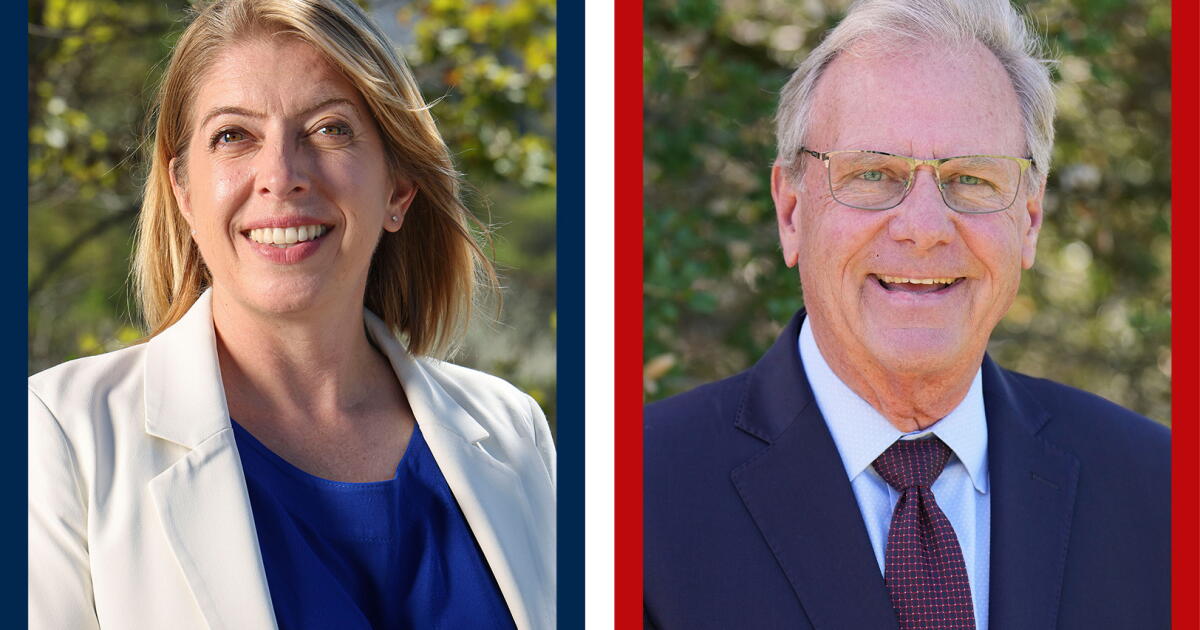
California Congressional District 48 election guide: Von Wilpert v. Desmond
p]:text-cms-story-body-color-text”>
Von Wilpert, 43, has served as a member of the San Diego City Council since 2020, representing District 5.
Before her foray into politics, she was an attorney who founded a legal health clinic in Mississippi to combat discrimination in housing, employment and medical care against HIV/AIDS patients. She later served as counsel on the House Education and Labor Committee and focused on labor rights during the second Obama administration.
As a council member, Von Wilpert authored bills to ban untraceable guns and launched housing grant initiatives for educators. She focused much of her tenure working to update labor laws to allow federal workers to organize, bargain with employers and establish monetary penalties for labor violations.
Desmond, 70, has served as a member of the San Diego County Board of Supervisors since 2019.
Desmond is a Navy veteran and former Delta Air Lines pilot and served as the mayor of San Marcos from 2006 to 2018. As mayor, he worked to reform the pension system in order to balance the city’s budget, growing $40 million in fiscal reserves.
He has been a staunch, fiscally conservative voice on the county board of supervisors, representing county District 5, with a focus on regional infrastructure and supporting additional behavioral health facilities after San Diego County had a series of closures.

Puka Nacua will play for Rams vs. Eagles, but Aaron Donald is out
Star receiver Puka Nacua will play against the Philadelphia Eagles on Sunday in Philadelphia, but star defensive lineman Aaron Donald is out because of a back issue, Rams coach Sean McVay said Friday.
Donald, a three-time defensive player of the year, has not practiced this week following the Rams’ loss to the Denver Broncos on Sunday in Denver. McVay said Donald, 35, was experiencing back soreness.
“He’s as tough as it gets. Just not feeling good enough,” McVay said, adding, “He would do it and he could probably go be productive but part of our job is to protect these tough dudes like him from themselves.”
Donald has played in two games since ending a two-year retirement in late August. He did not make the trip to Australia for the season opener against the San Francisco 49ers, but made three tackles in the Rams’ 28-6 victory over the New York Giants at SoFi Stadium.
Donald had one tackle and one quarterback hit in the 30-26 loss to the Broncos.
“He’s working as hard as he can to get himself feeling as good as possible and we’re hopeful and optimistic that good days are ahead,” McVay said.
Nacua sat out the last two games because of a hip injury that caused hip, groin and abdominal soreness.
McVay said Nacua has been “strong, looks sturdy, looks explosive,” during practice this week.
“I think it will really just be a feel for the overall conditioning,” McVay said, adding that he hopes “the magic of the [game] jersey” will help Nacua have a productive game against the Eagles.
Tight end Terrance Ferguson (ankle) and cornerback Jaylen Watson (shoulder) will not play on Sunday, McVay said. Tight end Colby Parkinson (shoulder, knee) and edge rusher Josaiah Stewart (groin) are questionable.
Rams place Terrance Ferguson on injured reserve

Rams tight end Terrance Ferguson jogs back to the locker room against the Giants on Sept. 21.
(Kyusung Gong / Associated Press)
The Rams opened the season with five tight ends on the roster, which some might have regarded as a surplus.
But the Rams need the depth.
On Friday, the team put Terrance Ferguson on injured reserve because of an ankle injury.
Ferguson, a 2025 second-round draft pick, was injured Sept. 21 against the Giants, but he played through it against the Broncos.
Ferguson has seven catches for 63 yards and a touchdown.
Ferguson must sit out at least the next four games against the Eagles, Buffalo Bills, Arizona Cardinals and Las Vegas Raiders. He is eligible to return for the Nov. 1 game against the Chargers.
The Rams began the season with five tight ends on the roster. Tyler Higbee and Davis Allen are at full strength. Max Klare, a second-round draft pick from Michigan, could get his first action on offense against the Eagles.
Rams release punt returner Xavier Smith

Rams wide receiver Xavier Smith runs the ball against the Kansas City Chiefs during a preseason game in August.
(Charlie Riedel / Associated Press)
What a difference a day makes.
Less than 24 hours after Rams special teams coordinator Bubba Ventrone said the team was not going to replace punt returner Xavier Smith, the team released him.
“We just need better production out of that position,” McVay said, adding that some of the “decisions” that Smith made in last Sunday’s loss to the Denver Broncos proved costly.
“We’ve got to make better decisions,” McVay said. “We’ve got to be able to field it.”
Receiver Alex Bachman is expected to be promoted from the practice squad to handle punt returns. McVay said he was “optimistic that I think we’re going to see some good stuff from Alex on Sunday.”
Smith, 29, is a third-year pro who signed with the Rams as an undrafted free agent and worked his way into a role as a kick returner and rotational receiver.
Smith appeared to be on his way to overcoming a major error in last season’s NFC championship game, when he lost a fumble in the 31-27 defeat by the Seattle Seahawks.
But through three games, Ventrone on Thursday described Smith’s performance as “inconsistent.”
“We need to do a better job of tracking the ball, judging the ball, fielding the ball when necessary, not fielding it in other situations,” Ventrone told reporters. “He knows that and hopefully we’ll get the improvements that we need in that area.”
Ventrone was asked if there was any thought about replacing Smith as the punt returner.
“No, we have a lot of trust in ‘X’, I really do,” Ventrone said. “He’s put in a lot of time and effort in training camp and obviously moving into the season. I think that he’ll do the necessary things to be able to sustain at that position for us.”
But on Friday morning, the Rams announced they had waived Smith.
McVay said the Rams “weren’t thinking” about making a change when Ventrone spoke to reporters Thursday.
“As you get a chance to kind of take a step back, evaluate the totality of our group, what’s the best way to try to be able to put together all three phases, did feel like that was in the best interest of the group,” McVay said, adding, “and that decision was made kind of later [Thursday night].”
US and Australia suspend diplomatic operations in Brazil before election | Elections News
Security threats prompt US and Australia to suspend diplomatic operations in Brazil before pivotal election day.
Published On 3 Oct 2026
The United States has suspended consular services in Brazil, prompting Australia to close its embassy in the Brazilian capital, two days before Brazil’s presidential election on Sunday.
In a statement released on Thursday, the US embassy said it would suspend consular services starting on Friday and advised American citizens seeking assistance not to visit its embassy, consulates or other diplomatic facilities.
Recommended Stories
list of 3 itemsend of list
The statement cited security concerns but gave no further detail on the nature of the threat or any link to the election.
The US State Department said it was working closely with Brazilian counterparts to address the security concerns, adding that embassies and consulates routinely issue alerts about local threats and developments.
Australia’s ambassador to Brazil, Sophie Davies, said on social media that the Australian embassy would also close on Friday, citing the US alert, and advised Australians to avoid US diplomatic facilities.
Brazil’s federal police said they carried out preventive search and seizure warrants in Sao Paulo and the Federal District, the administrative region surrounding the capital, Brasilia, as part of an investigation into suspected plans that could threaten US diplomatic facilities.
Police said the operation followed cooperation with foreign intelligence agencies, but that investigators had found no evidence corroborating the initially reported threat, nor identified any suspects linked to criminal organisations.
An investigation was continuing after the seizure of communications equipment, according to the police.
The closures came two days before the Brazilian presidential election, which pits incumbent Luiz Inacio Lula da Silva, who is seeking re-election, against Senator Flavio Bolsonaro, son of former President Jair Bolsonaro. Jair Bolsonaro is serving a 27-year sentence for attempting a coup.
If neither candidate wins more than 50 percent of the vote on Sunday, a runoff will be held on October 25.
Edinho Silva, president of Lula’s Workers’ Party, called the closures “unprecedented”, saying: “It makes no sense at all. It’s one of Trump’s ways of trying to influence Brazilian public opinion.”
Lula’s allies have pointed to US tariffs and an effort by Washington to send officials to Brazil to “discuss electoral integrity” as evidence of foreign interference.
Brazilian intelligence officials briefed French and German delegations in Brasilia this month on what they described as US and Russian interference in the race.
US President Donald Trump has publicly praised Flavio Bolsonaro, a close ally, without formally endorsing him, saying he is “watching that election very closely”.

Saturday 3 October German Unity Day in Germany
Since 1990, the ‘Tag der Deutschen Einheit’ has been a national holiday in Germany. It is the only official national holiday. All other holidays are managed at a federal level.
On November 9th 1989, the Berlin Wall fell, paving the way towards the reunification of Germany which had been split at the end of the second world war.
The reunification of Germany took place on October 3rd 1990 when the former German Democratic Republic (GDR) was incorporated into the Federal Republic of Germany (FRG).
Following the GDR’s first free elections on March 18th 1990, negotiations between the GDR and FRG culminated in a Unification Treaty.
Further negotiations between the GDR and FRG and the four occupying powers produced the so-called “Two Plus Four Treaty” granting full sovereignty to a unified German state, whose two halves had previously been bound by a number of limitations as a result of its post-WWII-status as an occupied nation. The treaty was signed on September 20th 1990.
Originally November 9th was proposed to be the national German Unity Day reflecting the huge step taken toward Germany’s unification on that day.
However, the unification treaty declared October 3rd as the official national holiday, ending the division between east and west of Germany.