Government forces close a key crossing connecting Houthi-held al-Houban to government-held Taiz city.
Published On 3 Oct 20263 Oct 2026
Yemen’s internationally recognised government forces have carried out nearly 500 military operations, killing or wounding 1,540 Houthi rebels in the past 24 hours, according to the army.
Warplanes, drones, artillery, missiles and rocket launchers were used to target Houthi positions in various parts of Yemen, military spokesman Colonel Majed Abdullah al-Nazili said on Friday evening.
Recommended Stories
list of 3 itemsend of list
Most of the casualties came in the governorate of Taiz where the operations halted the Houthi advance, al-Nazili said. The government-held city of Taiz has become a focal point of the renewed fighting.
The army spokesman did not mention any casualties among government forces.
Key border crossing closed
On Saturday, the army’s media official Ammar al-Sami’i told Al Jazeera that the government had closed the al-Houban crossing in Taiz.
The crossing had previously been closed for nine years and was later reopened to civilians in 2024 for “humanitarian reasons”, Sami’i said, as the road is one of Yemen’s most important connections between territory held by the opposing sides. It connects Houthi-held al-Houban to government-held Taiz city.
Sami’i said security reasons are behind the closure, following an attempt by the Houthis to infiltrate Taiz via the road, attacks in the vicinity and a general military buildup.
A fragile truce struck between the government and the Houthis in 2022 collapsed in July this year, and fighting in Yemen has escalated significantly since then.
In mid-September, the Houthis swept across parts of western Yemen, seizing the port city of Mocha and key strategic islands in the Bab al-Mandeb strait.
Since then, anti-Houthi forces have largely stabilised the front lines.
Yemen has been embroiled in civil war since the Houthis seized the capital of Sanaa in 2014, forcing the internationally recognised government to retreat to Aden.
“Tip Toe,” a fine new drama from Russell T Davies premiering Friday on Starz, begins at the end, with Leo Struther (Alan Cumming, phenomenally good), a gay Manchester bar owner, hanging dead from a streetlight outside his house, as a woman screams and his neighbor Clive Goss (David Morrissey) stands breathing heavily on his porch. Then, as so many series do nowadays, it goes back in time — 10 days here — to tell the tale that got them there.
And so you are prepared from the beginning for tragedy, though not everything that happens in its five episodes will be tragic — some of what we see will be sweet and even celebratory — and one might forget for a moment where this is all heading, and even believe that what we’ve already seen will turn out differently.
The series sets off in a comparatively light mood. Chasing a one-night stand who’s stolen his laptop, Leo finds he’s locked himself out of his house, and, dressed only in his underwear, goes next door to ask if he can borrow a phone to call his friend Stephanie (Elizabeth Berrington) to bring him a spare key; here we meet the Goss family, Clive, an out-of-work electrician; his wife, Marie (Pooky Quesnel), who doesn’t like Clive; 16-year-old son George (Jackson Connor), gay and closeted; and 25-year-old son Saul (Joseph Evans), an easygoing hunk who lives at home, secretly makes money on OnlyFans and accepts everyone for who they are. Leo and the Gosses have been living amicably at arm’s length for 14 years, though their lives are about to become closely entwined, with disastrous results.
In an act of something like willful, somewhat disturbing friendliness, or a desire not to have to deal with Leo the next time he’s locked out, Clive makes a copy of Leo’s key and installs a lock box by his door. (By the Chekov’s gun rule, a key copied in Episode 1 is bound to be turned in a lock in whatever later act Davies deems advantageous.) Then, Leo gives Clive work at his bar.
Alan Cumming and David Morrissey play neighbors whose relationship escalates to violence in “Tip Toe.”
(Ben Blackall / Starz)
Leo’s bar, Spit and Polish, sits on Canal Street in Manchester’s long-established “gay village.” It’s a safe space for his employees and regulars, including Zee (Iz Hesketh), who’s been sleeping hidden in the bar, frightened of new flatmates since coming out as a trans woman, and Melba (Paul Rhys, brilliant), a former drag performer who holds down the end of the bar like Norm from “Cheers” and carries a torch for Leo.
Things will go generally downhill from here, in a narrative of escalating misunderstanding — not in the sense of an innocent mistake, of simply getting the wrong end of the stick (though that’s part of it), but as a contemporary habit of mind, blinkered, closed to facts but open to conspiracies. (Clive, a consumer of social media disinformation, believes that AIDS and COVID are fake); he lives in fear.
Directed by Peter Hoar, it’s a rough watch, yet beautifully wrought and delicately performed, inspiring and depressing, hopeless and hopeful by turns Davies has points to make — hanging your protagonist is not subtle — but his dialogue carries a lot of weight lightly; long conversations ebb and flow and rise and fall like compressed playlets. If there is something schematic about the arc, the characters within it, Clive as much as Leo, are completely human. They stand for something bigger than themselves, but they also stand for themselves.
Davies brought gay life in its infinite variety to television with the 1999 series “Queer as Folk” (also set on Canal Street) and gender fluidity to “Doctor Who,” the series he revived in 2005 and returned to in 2023. (The Tardis is currently in limbo.) His “Cucumber,” about middle-age gay men, and “Banana,” about young LGBTQ+ people, are also set in Manchester, where Davies has lived since the late 1980s. “Tip Toe” has been crafted for an age of surging homophobia and anti-gay violence. “The president of America has given these men permission to attack us,” says Melba, as he sits with Leo late one night by the canal. The series’ dark prophet, he gives it its title.
“It’s a storm, it’s a tide, it’s a great big tsunami. We’re in the middle of it right now … If you’d asked me in 1996 what do you think 2026 will be like, I’d have said ‘glory days’ … But they tricked us didn’t they? They let us all come out, so now we’re standing in he open ready for them to shoot us down. I used to walk into a room and just go, ‘Ta-da!’ Now I tip toe, just in case.”
Tran, 45, is an attorney and U.S. Army veteran who served in the U.S. Operations Noble Eagle and Enduring Freedom. He runs a pharmacy with his wife, Michelle. He is the son of refugees who fled communist Vietnam and grew up in the San Gabriel Valley, graduating from Rosemead High School.
Tran is endorsed by the unions for Orange and Los Angeles counties’ deputy sheriffs, the International Assn. of Fire Fighters, the California Federation of Labor Unions and the Planned Parenthood Action Fund.
Vo, who fled Vietnam as a child, served as the mayor of Cerritos while a member of the city council from 2020 to 2025. Vo, 50, recently retired after working as an officer for the Torrance Police Department since 1999.
On the city council, Vo touted some of Cerritos’ success, including the creation of the city’s annual Moon Festival, the extension of a Kia automotive dealership extension until 2045 and the redesign of the city’s website.
He differentiates himself from Tran by saying he is “not a career politician promising to fix D.C. from the inside.”
“I’ve spent my life doing the work on the ground and serving our community,” he said.
Vo is endorsed by the California Republican Party, Los Angeles County Lincoln Clubs, Orange County Supervisors Janet Nguyen and Don Wagner and a slew of city mayors from Fountain Valley to Garden Grove and Norwalk.
DOES everything feel a bit much at the moment? If so, I can let you in on the perfect way to escape the turbulence of 2026.
My family and I have just taken a step back in time to a bygone era — The Black Country Living Museum in the West Midlands.
The Black Country Living Museum in the West Midlands is like travelling back in time to a bygone eraCredit: SuppliedBoys Jasper (left) and Wilf with grandad Dave Watkins, enjoyed exploring the 26-acre attractionCredit: Supplied
This gem is genuinely one of the most fascinating attractions I have ever experienced with my boys Wilf, nine, and Jasper, six. And it is a masterclass in escapism.
The open-air attraction spans 26 acres and is packed with history.
Sign up for the Travel newsletter
Thank you!
It’s so much more than your average museum, though. This is an extremely immersive way for families to experience, first-hand, the Black Country — a region in the West Midlands with a history of coal mining, ironworking and brickmaking.
There are life-sized streets, dockyards and blacksmiths, laid out as they would have been at the height of the Industrial Revolution.
Visitors can wander among more than 80 original shops, houses and buildings, with actors recreating what life was like inside — and the historic characters will chat to you as if they are really in the past.
It will take at least three hours to get around, but I would give it five.
Our day began with a double-decker bus taking us down the winding, cobbled streets as the old-time conductor gave my boys authentic tickets for their journey.
To make the experience more exciting for the lads, I brought along their grandad, Dave Watkins, 70, a Brummie who has lived and worked in the Black Country his whole life — and supports local football team, West Bromwich Albion.
The Blacksmith’s Workshop gave onlookers a demonstration of chain-making in a furnaceCredit: SuppliedAn old traditional English street features old school sweet shops and fish and chip shopsCredit: Supplied
In one shop, he was delighted to find the brand of cigarettes his dad used to smoke. But it’s not just the sights of history you experience, it’s the tastes, too.
We ordered lunch at the Hobbs & Sons fish and chip shop — a reconstructed 1930s store that originally stood in this very town.
It was, hands down, the best cod and chips any of us had ever had. Chefs follow a traditional recipe and the novelty of eating from chip paper on a picnic table beside the canal that runs through the museum got extra wow points, too.
If you’re not a fan of a chippy supper, you can bring your own picnic — or there’s the Workers’ Institute Cafe, where we grabbed a cheese sandwich for the boys to share on the car journey home.
There’s also the T. Cook’s sweet shop, where costumed staff weigh out classic sweets, like mint humbugs, into paper bags.
Next-door is the cute Veal’s bakery, where the boys gobbled down a brownie.
The museum captures authentic smells, too. The industrial scent of coal filled the air, the homes you can go inside smelled authentically lived-in and even the outdoor lavvies were stinky, which my boys obviously found hilarious.
As is the way with primary school kids, the lads were delighted to hear the gross facts the dressed-up characters cheerily shared.
The barman in one of several old-fashioned pubs was happy to answer their questions about why there was sawdust sprinkled on the floor (it was, disgustingly, to soak up the spit of the working men).
Wilf thought the best part was the tour of the faithfully-rendered boat docks — the dock worker was so charismatic.
Jasper, on the other hand, was most enamoured with the historic fairground filled with a few of the beautiful, vintage rides (which cost an extra £2.50 each), as well as the Blacksmith’s Workshop, where we all enjoyed watching an extremely engaging demonstration of chain-making in a furnace.
Fans of Peaky Blinders will get a thrill walking round the museum as its historic streets and buildings have been used as filming locations in all six series of the BBC show.
There really is so much to fit in that we didn’t have time to try the retro putting green or join in with an authentic Edwardian school lesson — we were kicking ourselves for only allowing ourselves three hours.
But the bonus of the Black Country Living Museum is that if you buy a day ticket, you have unlimited return visits for 12 months.
Grandad Dave and I vowed to have a pint together when we return.
These old-fashioned pubs really are the perfect place to distract yourself from the modern day.
GO: BLACK COUNTRY LIVING MUSEUM
ADULT tickets cost from £27.95 when booked in advance, while child tickets cost from £15.50.
Day tickets come with an UnChained Annual Pass, which gives unlimited return visits for 12 months. See bclm.com.
Santa Margarita High football coach Carson Palmer said special teams is the Eagles’ best phase of play. Not the elite defense, which had seven sacks and held Mater Dei to seven points on Friday night. Not the offense led by his son Fletch, who completed 65% of his passes for 155 yards.
No, he was adamant that it is the special teams unit. Two plays from junior free safety Jake Martin proved his coach right.
Twice Mater Dei attempted a field goal and twice the kick was missed. Martin juked out blockers late in the first half to deflect the first attempt, keeping the score at 7-7. Then, he helped preserve a seven-point lead in the fourth quarter as his pressure on the outside forced a second miss.
“We’re unbreakable,” Martin said after the Eagles’ 14-7 win. “We’re trying to go back-to-back. This is the team that’s going to do it.”
The chances of a second straight CIF Open Division state championship look good so far. Winning the Trinity League opener at Saddleback College kept the Eagles undefeated at 6-0. Mater Dei dropped to 4-2.
Of course, the Eagles’ offense and defense made plenty of important plays.
The game was sealed with an interception from freshman safety Jayden Jack, as Mater Dei freshman quarterback Paytyn Guess heaved the ball to the end zone with the Monarchs out of timeouts and out of options. That, coupled with a big sack from sophomore defensive lineman Kingston Jimmerson, killed the momentum on the visitors’ final drive.
It wasn’t a bad night for the young quarterback, though, as Guess staked his claim to the starting role for the Monarchs.
Mater Dei rotated three quarterbacks in nonleague play, and coach Raul Lara kept his cards tight to his chest before the game. The starter was Guess, who took more than 90% of the snaps on a night when he finished 16 for 22 for 163 yards with one interception and no touchdowns.
“He’s dynamic, but the problem with him is that he’s a freshman who just came into the program and is getting his feet wet,” Lara said before kickoff.
The impressive Santa Margarita front exposed those growing pains. Guess held on to the ball too long and took too many hits.
His playmaking ability did give Mater Dei a chance until the final moments, as he scrambled around and found senior wide receiver Gavin Honore down the sideline. The inconsistency on offense, though, has been a source of frustration for Lara.
“It all comes down to execution. We have to execute,” he said. “When we have the opportunity to make a play, we need to make that play and take advantage of it.”
Mater Dei’s defensive line had a solid game, holding Santa Margarita star sophomore running back Adrian Petero to 41 yards on 11 carries, although he scored his team’s first touchdown.
It was Santa Margarita’s junior quarterback who had the decisive play as Palmer found junior wide receiver Grant Van Raaphorst in the back of the end zone for a six-yard touchdown in the third quarter.
Mater Dei sophomore running back Asir Nembhard had the only touchdown for his team, which gave the Monarchs their only lead of the night in the first quarter.
Before the game, Palmer said tat he tells his players to never take an opponent too lightly nor build it up too much. The former NFL quarterback played in a division with the prime Pittsburgh Steelers and Baltimore Ravens, so he knows a thing or two about a competitive schedule like the Trinity League offers.
“We’ve got a target on our back after last year, and we know that,” Palmer said. “We know that we are highlighted on other teams’ schedules.”
He also emphasized that his team could improve in every aspect of the game. That is certainly a scary prospect for foes facing the No. 1 team in the state.
Latvia is not expected to shift its pro-Europe and pro-Ukraine trajectory, but coalition negotiations could be complex.
Published On 3 Oct 20263 Oct 2026
Polls have opened in Latvia for an election taking place against the backdrop of perceived security threats from Russia and a nationwide cost-of-living squeeze.
Saturday’s vote is the first electoral test for Prime Minister Andris Kulbergs after coming to power in May this year when his predecessor resigned due to a backlash from stray drone incursions from Ukraine.
Recommended Stories
list of 3 itemsend of list
Kulbergs, whose right-wing United List party is currently polling at about 20 percent, is expected to hold onto his position, but the decline of two allies in his current coalition means he is set for a complicated negotiation over the makeup of any future government.
Polls opened at 05:00 GMT and will close at 17:00 GMT. The results are not expected to change Latvia’s pro-European and pro-Ukrainian course.
A woman holds an election campaign leaflet of the Latvia First party with a picture of the party’s leader, Ainars Slesers, before the general election [File: Ints Kalnins/Reuters]
About 1.5 million people are eligible to vote in the country’s 11th parliamentary election since independence from the Soviet Union in 1991.
Latvian politics are highly fragmented, with parties rarely seeing above 20 percent vote share and coalitions being the norm.
This year, 14 electoral lists are contesting the election, but polls indicate only seven are likely to enter parliament, with the rest expected to fail to meet the minimum 5 percent vote threshold.
Rising living costs, low wages, strains on the healthcare system and long-term population decline have all featured prominently in campaign debates.
Fragmented political parties
Most parties in Latvia are pro-Ukraine; however, the populist Sovereign Power party – which says it wants Ukraine to win but argues money spent supporting Kyiv would be better spent at home – looks likely to become the country’s second-biggest party, with more than 9 percent of the vote. Most other parties have ruled out forming a coalition with Sovereign Power.
Latvia First, a pro-Ukraine and populist nationalist party currently polling at about 9 percent, could be a potential coalition partner for PM Kulbergs.
The Progressives, a pro-European social democratic party, are polling at 6 percent.
Ethnic Russians make up roughly one in four Latvian citizens, but their vote, which has traditionally been cast along identity-based lines, looks set to be made according to economic and social issues.
Latvia is the poorest of the Baltic states, and it has sharply increased its defence spending since Russia invaded Ukraine, now allocating nearly 5 percent of its gross domestic product (GDP) to defence.
Portadown, Northern Ireland – When the summer holidays arrived, Chris Nelson worried about his mother.
At night, he lay awake waiting for her to return. During the day, he rang family members to ask if she was safe. There were threats and letters through the door.
Recommended Stories
list of 4 itemsend of list
“I was afraid to leave the house,” he told Al Jazeera.
His mother, Rosemary Nelson, was a lawyer representing the Catholic residents opposing the Protestant Orange Order parade along Portadown’s Garvaghy Road in Northern Ireland in the late 1990s.
Every July, as marching season approached, there was a standoff.
Orangemen sought to return from Drumcree church along what they regarded as their traditional route. Residents opposed the passage of the anti-Catholic organisation through a majority Catholic street. In some years, police forced the parade through. In later years, it was blocked.
Rosemary would spend summer evenings alongside the residents on Garvaghy Road. Before leaving home each evening, she told her son that she was going to look after families and make sure their children were okay. She compared them to his friends at primary school.
“She was a big believer in helping the underdog,” said Chris, now 39. “She did a lot of work for free.”
His mother helped people from both sides of the community. When work allowed, the family went to Bundoran, across the border, and for a day the fear would pass.
But one night, during a standoff in 1997 when the state police force, the Royal Ulster Constabulary (RUC), used batons to clear Catholic locals from the road, “she was beaten by the police”, said Chris. “She was spat on”, bruised and bloodied.
“That was very traumatic. I was always thinking something was going to happen to my mum.”
On a Monday in March 1999, nearly a year after the Good Friday Agreement brought an end to the conflict, Rosemary drove away from her home in Lurgan.
As she braked at a nearby junction, a bomb beneath her car exploded. Her eight-year-old daughter, Sarah, was at primary school nearby and heard the blast. The family had spent the previous weekend in Bundoran together.
Chris, 11 at the time, and his older brother were away on a school ski trip when they received a phone call with the news of her death.
“That was hard”, he said, his voice tailing off.
A legacy of loss
Nearly three decades later, another standoff has recast these childhood memories into fears for the next generation, with a renewed attempt by the Protestant Orange Order to march through the Catholic neighbourhood, threatening to unravel a fragile peace.
The Troubles began in the late 1960s as protests by Catholics against discrimination were met by repression and violence. Republican paramilitaries fought for a united Ireland as loyalists and the army battled to preserve British rule, in a conflict that killed more than 3,500 people.
The 1998 Good Friday Agreement established a framework for peace and power-sharing.
Under the agreement, the people of Portadown have lived in relative peace for the past 28 years.
But this was suddenly unsettled by a last-minute decision by the High Court to allow the march. In response, Catholic residents blocked the road. Many camped out as Orange men gathered at the top of the road, awaiting police permission to pass – an image of division that never truly left.
Portadown Orangemen march from Drumcree Church to start their march towards Garvaghy Road, which was stopped a short distance later by police, in Portadown, Northern Ireland on September 27, 2026 [AFP]
Many of the Garvaghy Road residents are now parents, and fear what their children might inherit from a dispute they hoped had been left behind.
Paul O’Connor, of the Pat Finucane Centre human rights group in Northern Ireland, said Rosemary Nelson is among 21 people whose deaths were linked to the Drumcree dispute.
Many are still being investigated, with families continuing to seek justice and pressing for public inquiries amid concerns about collusion between the British state and loyalist paramilitaries, many of which were members of the Orange Order.
“These murders encompass LVF (Loyal Volunteer Force) killings at that time, and are all linked to the Drumcree disputes. They were responsible for many of the killings around the Mid Ulster area at that time. They were trying to destabilise the peace process, with many riots spreading around, including into Derry,” O’Connor told Al Jazeera.
He worked with Rosemary Nelson and is now seeking a public inquiry into the murder of Sean Brown, another Drumcree-linked case, he believes. The 61-year-old father of six from Bellaghy, County Derry, was abducted and murdered in May 1997.
The following year, the three Quinn brothers – Richard, 10, Mark, nine, and Jason, eight – died after loyalists petrol-bombed their home in Ballymoney, County Antrim, as they slept. Their deaths, during the unrest surrounding Drumcree, brought widespread calls for the Orange Order to end its standoff.
Protesters block the Garvaghy Road in Portadown, Northern Ireland on September 27, 2026, preventing a parade of marchers from the Orange Order using the route through the mainly nationalist area of the town [AFP]
Fear and loathing in Mid Ulster
In Portadown town centre, a Union flag flies among plinths dedicated to the Ulster Defence Regiment, a locally recruited unit of the British army and the Ulster Covenant – a document signed when nearly 500,000 people opposed a form of self-government for Ireland in 1912.
Around the corner, in the Edgarstown housing estate, Ulster Volunteer Force (UVF) flags hang from lampposts, and the kerbs are painted red, white and blue, alongside a mural of a Rangers FC badge.
The area is one of the heartlands of unionism. The Orange Order was founded in 1795 in the village of Loughgall, a few miles from Drumcree.
The Orangemen say they have marched the route through Garvaghy Road since 1807. The parade has been blocked from Garvaghy Road since 1998, but the Orangemen have continued submitting requests to march.
The latest Parades Commission decision permitted 35 men to walk without music. Since then, Orangemen have repeatedly approached the police line before returning to the church.
UVF flags fly alongside UK flags in the Edgarstown estate, Portadown, Northern Ireland, on October 1, 2026 [Caolán Magee]
Irish nationalists have criticised the police assessment underpinning the decision to allow the march, while unionists have denounced police for failing to forcibly remove protesters blocking the route.
Al Jazeera contacted the three main unionist parties – the Democratic Unionist Party (DUP), the Traditional Unionist Voice (TUV) and the Ulster Unionist Party (UUP) – for comment but received no response.
Addressing around 200 supporters in Portadown, loyalist activist Jamie Bryson described protesters as “an unlawful snarling mob”.
He has called for the First Minister, Sinn Fein’s Michelle O’Neill, and police Chief Constable Jon Boutcher to resign, and demands that the Orange men must be allowed to walk the Garvaghy Road.
O’Neill has faced criticism for standing beside the protesters.
At Drumcree Church, the Orangemen were not marching, but sitting down drinking tea and eating crisps. Around six men, one wearing his sash, huddled under a gazebo in the cold.
“We are waiting patiently for the chief constable to apply the law of the land,” Nigel Dawson, the Portadown Orange Order district master, told Al Jazeera.
“Portadown District has never in its history stopped a parade down the road to have a confrontation with its neighbours, ever. So I don’t know where the fear and trepidation comes from.”
Another Orangeman, who requested anonymity, added: “We are determined to get home after Sunday service … We just want to go home.”
Orange Order members sit outside Drumcree church as they await passage along Garvaghy Road in Portadown, Northern Ireland, on October 1, 2026 [Caolán Magee]
Around a mile further down the Garvaghy Road, Irish folk band the Mary Wallopers performed to hundreds of residents and supporters.
Children danced and slid down the embankment, as parents watched from above. Palestine and Ireland flags flew in the wind.
Linda O’Neill, 51, a Garvaghy Road resident, told Al Jazeera the scene would have been unimaginable 30 years ago.
“It was horrendous growing up as a teenager. We stayed in our own community. We didn’t access the town centre … This community was a ghetto. And that was deliberate.”
Another resident, Ciaran O Ferghail, remembered summers spent surrounded by British forces.
“This community was turned into a war zone. There were tanks and British Army everywhere, thousands of RUC. This community was completely under siege every summer, by the Orange Order, the British military, the RUC and loyalist paramilitaries. We were surrounded on every road and in every direction.”
O’Neill said the confrontation changed as residents began asserting their rights.
In 1995, hundreds sat down on Garvaghy Road to block the parade. The ensuing violent standoff between security forces and Orangemen and their loyalist supporters ended in a compromise allowing the march through. Residents say they understood it would be the last.
But the following summer, the parade returned. Police initially blocked it, then reversed course after five days of widespread loyalist attacks. Officers forced residents off the road and beat them, sparking riots in Catholic communities.
In 1997, security forces sealed off the Catholic neighbourhood before dawn and allowed the parade through at midday amid loyalist threats to kill Catholics if it was stopped. Nationalist protests and violence followed. From 1998, the march was banned from Garvaghy Road. But for residents, summers remained marked by the army’s steel barricades until 2000.
Children play on the embankment as music rings out along Garvaghy Road in Portadown, Northern Ireland, on October 1, 2026 [Caolán Magee]
Lessons from the past
Chris Nelson, almost 40, is around the same age his mother was when she was killed.
The Garvaghy Road protests mark the first time he has chosen to speak publicly about his mother.
He went on to study law at university, but says his life would have followed a different trajectory if she were still here.
The public inquiry into his mother’s death found no evidence that state security agencies had “directly facilitated” her murder, but it “could not exclude the possibility” that individual members of those agencies had helped the perpetrators.
The inquiry brought the past back repeatedly as he tried to get on with his life. But seeing photographs of families linking arms on Garvaghy Road brought back unavoidable memories of his mother.
“If she were here, that’s where she would be,” he said, “standing with the people of the Garvaghy Road”.
While there has been no violence in Portadown, in Derry’s Waterside, two recent nights of disorder saw petrol bombs and masonry thrown at police. Officers described the crowd on the second night as mostly young people.
The renewed attempt to bring the Orange Order parade through Garvaghy Road risks leaving its mark on children on both sides. With some schools closed, Chris Nelson worries about parents having to explain to their kids what is happening.
“Children don’t forget things“, he said. “They absorb everything.”
He remembers how it felt waiting for his mother each night, and how that worry followed him through the summer holidays. He wants something different for the children growing up now.
“Children shouldn’t grow up knowing the difference between Catholic and Protestant.
“It isn’t something that should be brought into the mind of a child.”
A ‘Garvaghy Road says no’ sign with an Irish tricolour in the background in Portadown, Northern Ireland, on October 1, 2026 [Caolán Magee]
The 49th Kennedy Center Honors gala will go on despite the recent closure of the Kennedy Center, with the event moving to the Capital One Arena in Washington, D.C., on Dec. 7. The honorees and a broadcaster for the program will be disclosed at a later date.
The annual event will take place amid an ongoing legal battle as President Trump attempts to add his name to the building.
Hours after a federal judge blocked the president’s attempt to restore his name, the Kennedy Center’s board voted on Sept. 15 to shutter the venue for renovations. Trump, however, threatened on social media to block the $250-million renovation, which he initially proposed, if his name weren’t added to the facade.
In mid-September, a picture of the president aboard Air Force One reviewing plans that were titled “Kennedy Center Demo[lished]” prompted panic as architectural, preservation and civic organizations asked the court for a “neutral officer to protect the building and institution.”
A federal judge ordered Kennedy Center leaders to provide 30 days’ notice before any changes, including demolition.
Last year’s Kennedy Center Honors gala, which recognizes artists who have contributed to American culture, was hosted by Trump and televised on CBS and Paramount. The ceremony, honoring Sylvester Stallone, Kiss, Gloria Gaynor, Michael Crawford and George Strait, earned the lowest ratings in its history. It was not announced whether Trump would return as master of ceremonies for this year’s event.
OUR Spotlight On column shines a light on the best things to see and do in popular holiday destinations, and some spots that are relatively under the radar.
This week we head to the Caribbean island of the Dominican Republic and the coastal town of Miches.
Here’s everything you need to know about the Dominican RepublicCredit: AlamyYou can see whales in the winter season as wellCredit: Alamy
Often said to be one of the cheapest islands in the Caribbean, it is also 30C in winter and beers are under £1.80.
eurochange has predicted where Brits will be jetting off to in 2026 thanks to recent money transactions – and it’s the Dominican Republic.
Sign up for the Travel newsletter
Thank you!
Laura Evans Fisk, Head of Digital & Engagement at eurochange said: “As we’ve seen transactions for the Dominican peso surge this year ahead of any other currency, we can definitely expect to see the Dominican Republic at the top of travel bucket lists for UK tourists in 2026.”
Direct flights make it easy to get to as well, taking around nine hours from London (both British Airways and TUI fly there) so here are some of our top tips.
Playa Esmeralda is Miches’ showstopper. This vast ribbon of golden-white sand on the Dominican Republic’s northeastern coast stretches for miles, backed by coconut palms.
The water shifts from turquoise to deep emerald blue, giving the beach its name.
Unlike busier Caribbean resorts, it’s entirely possible to walk for half an hour here without seeing more than a handful of people – no fight for the sun loungers here!
Nature lovers shouldn’t miss Laguna Limón. This peaceful freshwater lagoon surrounded by tropical vegetation is home to dozens of bird species.
Boat tours glide through the wetlands while guides point out herons, pelicans and other wildlife.
Nearby, the crystal-clear pools of Caño Hondo offer a refreshing alternative to the beach, with natural pools cascading through lush forest.
HIDDEN GEM
The town itself and surrounding coastline – a place where emerald mountains tumble into palm-fringed beaches, humpback whales cruise offshore in winter, and brand new luxury hotels sit alongside sleepy fishing villages.
Unlike many Caribbean destinations, Miches still feels wonderfully undiscovered.
You can spend the morning hiking to panoramic viewpoints, the afternoon kayaking through mangroves and the evening watching the sun disappear over miles of virtually empty sand.
In recent years new resorts have arrived, but developers have taken a more low-key approach than elsewhere in the Dominican Republic, keeping much of the coastline untouched and embracing the natural surroundings.
Expect barely crowded beaches and very hot wintersCredit: Alamy
BEST VIEW
But the Instagram-worthy swings of Montaña Redonda have become one of the Dominican Republic’s most recognisable photo spots.
Perched hundreds of metres above sea level, the hill offers spectacular 360-degree views over lagoons, rainforest and the Atlantic Ocean.
Take a seat on the swing that stands at the end of the viewpoint and push out over the incredible green landscape.
RATED RESTAURANTS
Away from the resorts, Miches town offers a glimpse of local life. Small family-run restaurants serve freshly grilled fish, lobster, coconut rice and sancocho, the Dominican Republic’s famous hearty stew.
Try out Rajanoris in town, it’s an unassuming spot not often visited by tourists but it’s a good bet for meeting the locals and tasting mofongo, a savoury pork and plantain dish with lots of garlic!
BEST BAR
Rancho Lounge Miches has a casual atmosphere and lively music and serves up ice cold beer and of course, lots of rum!
WHERE TO STAY
The Zemi Miches All-Inclusive Resort, Curio Collection by Hilton is set on it’s own 800-metre stretch of sand, with nothing but palm trees and mountains for company.
Even though it’s secluded, there’s a wealth of things to do.
There are four different pools, including a kids pool, 11 bars and restaurants, and a swish spa for some pampering.
As for activities, there’s everything from a bowling alley to a padel court! See hilton.com.
Seven nights’ all-inclusive is from £1,569pp including flights from Manchester on November 17, 20kg luggage and transfers. See tui.co.uk.
Kounalakis is well known in state politics. She is serving her final term as lieutenant governor, a largely ceremonial role that includes seats on various higher-education boards including the University of California Board of Regents and the California State University Board of Trustees.
A major Democratic donor, Kounalakis in 2023 launched a campaign to become California’s next governor before dropping out of the race and announcing in August 2025 she would run for state treasurer.
Kounalakis holds a master’s in business administration from UC Berkeley and is the daughter of Sacramento real estate magnate Angelo Tsakopolous. She spent 18 years working for AKT Development, the business her father founded, eventually becoming its president. In 2009, she was appointed to the U.S. ambassador post in Hungary by President Obama.
“I have been using my international experience serving the state as our representative for international trade and investment, which has a very heavy economic development piece to it,” she said this year.
Hawks is a retired businesswoman and a Republican activist. She has served as president of Palo Alto Republican Women Federated, been involved with the California Federation of Republican Women and has gathered signatures for the GOP-led voter ID measure, Proposition 39.
Hawks spent two decades working as an executive assistant at the Sacred Hearts School, a private Catholic school in the tony Silicon Valley town of Atherton, before her retirement in 2021. Before that, she worked in various human resources and office manager roles.
“I am a people person,” Hawks said on Assemblymember Carl DeMaio’s (R-San Diego) Reform California podcast. “I’ll get to know [the] rank-and-file in there, and I will garner their trust.”
US country music star Zach Bryan wore a ‘Free Palestine’ shirt while performing at Gillette Stadium, owned by US businessman Robert Kraft. The pro-Israel billionaire recently prevented Macklemore performing there on a Ed Sheeran tour, over pro-Palestine remarks.
When it comes to the future of Tail 844, the SR-71 Blackbird that mysteriously disappeared from NASA’s Armstrong Flight Research Center, few people have more insights than Tim Conners. When he worked at NASA in the 1990s, Conners was the lead propulsion engineer for the agency’s Blackbird program. He worked extensively on 844 and has an intimate knowledge of what made the iconic aircraft tick. Now, he brings an insider perspective on NASA’s secretive work to get the Blackbird back in the air and speculates on what it would take to do so, as well as the famed jet’s possible flight test role for the agency after 27 years of dormancy.
In an exclusive interview with TWZ, Conners, now technical director for advanced weapons systems at Tiberius Aerospace, gave us his take on NASA’s Blackbird revelations and insights into what NASA is working on and how far along they are in the process.
Some of the questions and answers have been slightly edited for clarity.
Tim Conners
Q: Tell me about your background with the SR-71 program. How did it begin? How long did it last? And what did you do?
A: So that basically fell in my lap when I was an engineer at NASA’s Dryden [Flight Research Center] back in the early ’90s when NASA took delivery of three of the airframes when the Air Force was retiring the fleet. So NASA got two A models and a trainer. Obviously, tail number 844, which is NASA’s designation, is the one that’s getting all of the attention right now. But those came to Dryden in the early ’90s.
By luck of the draw, I was in the propulsion group. We were short-staffed for a number of reasons, and they needed an engineer on Blackbird. And I had been with NASA for about three or four years at that point, and I got tapped to prepare the NASA side of the mission for the upcoming research flights. So I had a few years to get familiar. That was a part-time job, by the way. I also owned the F-15 fleet at NASA as a propulsion engineer, and that was occupying a lot of my time, but it did give me an adequate amount of time to get familiar with the way that the airplane operated, at least from the propulsion standpoint. And then we began doing research missions in ’96. I left NASA in ’98, but I was able to support the program through two years of flight testing and all the years of preparation for those two years.
Q: Tell me more about your role with the Blackbirds.
A: I was lead propulsion engineer on the NASA side. So what NASA would do is they would assign disciplinary leads across from their industry and government counterparts. So Dryden’s disciplinary leads, their job was basically to make sure that any experimental packages were integrated safely with the airframe, and that we could execute the proposed test missions safely and successfully. I owned propulsion and I also owned performance. So if you recall the Lockheed Linear Aerospike rocket engine activity, that package weighed 20,000 to 25,000 pounds and was mounted externally on the back of the SR-71. That was a drag issue, obviously. So part of my role was to make sure that we could actually accelerate through the transonic drag rise with that package and get out to the target test conditions.
SR-71 tail number 844 during its service with NASA. This picture was taken on October 31, 1997, during a flight in support of the NASA/Rocketdyne/Lockheed Martin Linear Aerospike SR-71 Experiment (LASRE). NASA
Q: There is a tremendous amount of interest in seeing the Blackbird fly again. The biggest question seems to be why? What kinds of experiments or research would an SR-71 provide that couldn’t be done more effectively with a modern aircraft, rocket or unmanned vehicle? Can you walk us through some of the reasons NASA would like to see it in the skies again?
A: Yeah, that’s a question that everybody’s been asking. Why? I’m speculating, although I do have a good feel for where this is going. So bear with me.
They probably are not going to do this for — or trying to do this — for aerodynamic reasons. You can do CFD [computational fluid dynamics]-based modeling in this speed regime all day long and very accurately in this day and age. It does not take a lot of time or money to do that. What you cannot do is an accurate representation of a new type of engine integrated into a high-speed airframe. You can do the conceptual modeling of it. Of course, it’s difficult to get the final installed answer, especially if it involves an engine that operates at long duration. That is where I think they’re going with this. I believe that they’re developing basically a high-speed engine test bed. That would make the most sense to me.
Q: That’s something you couldn’t do with a more modern aircraft or rocket or unmanned vehicle?
A: That’s a good question. But you know, probably two-thirds of that battle is just developing the airframe. It does depend on the size of the engine that you’re after.
Obviously, if this were a Williams engine or that size class, you could get by with probably a bespoke drone to do your testing. That wouldn’t be that expensive. If your goal is to test something that’s man-rated or very large, like a J58-size engine, what better way to do it than use an airframe that’s already proven to fly at that speed?
SR-71 Blackbird. (Courtesy photo via USAF)
Q: Were you asked to join a team at NASA tasked with getting a jet back in the air? Who else was asked, and what kind of team were they building?
A: I did not receive an offer. There was a tongue-in-cheek text that I got earlier in the year that said, ‘Hey, Conners, how would you like to help get the Blackbirds flying again?’ And that was from somebody who was positioned with inside information. That is where I first heard of this. This was back in spring, but nobody formally reached out to me.
I believe that the only one that’s been tagged so far, as far as a retiree, was Mike Relja. Mike was a crew chief on the Blackbird, and that makes sense that they would potentially want to pull on him. But there was no formal offer, and I tell you what: If somebody approached me to work it, I don’t think I could turn them down.
Q: Do you know where the idea for this project came from and who is in charge?
A: I don’t have an answer. I’d love to know as well.
Q: What can you tell me about this effort? What are the latest developments in this project that you know of?
A: So what I’m hearing is that they’re looking at doing power-on testing fairly soon. That’s pretty big. So of course that’s not engine power on. That’s external power applied to the airframe, seeing which systems still live, which ones don’t, and then moving from there. So that would be an expected first step.
It’s an encouraging step. That means NASA would have gotten beyond cracking open all the bays, inspecting the interior, making sure that the thing at least passes visual inspection for airworthiness from that standpoint.
Q: Have they actually gotten any systems working?
A: No, they’ve done the visual inspection, actually, putting electrons on the airframe. [To get systems working] would be the next step, but it is forthcoming, from what I understand.
(NASA) Courtesy Photo
Q: What is the timeline?
A: That’s supposed to happen within the next couple weeks.
Q: Really? Where is this work taking place?
A: That I do not know for sure. Although I assume it’s happening at [NASA’s] Armstrong [Flight Research Center].
Q: So what is going to happen?
A: That’s a good question. Let me tell you about what I heard more recently, and then you can begin to connect the dots. JP-7. People ask about the fuel. I think it’s pretty well known that NASA had a huge amount of JP-7 stockpiled that they received from the Air Force back in the early ’90s. So much that it was in a dedicated tank, like one of the giant jet fuel tanks at Edwards Air Force Base. You know, the tanks up on the ridge.
From what I understand, that supply unfortunately was discarded about 20 years ago, and JP-7 is a unique fuel. Obviously, low volatility. When I poked at what might be the way forward there, it didn’t sound like that was a showstopper. I got the impression that there’s been dialogue underway with refineries for a replacement or a surrogate that would work. So I went from being deflated, hearing that the fuel was gone, to being encouraged that potentially there was a surrogate workaround.
A statically mounted Pratt & Whitney J58 engine with full afterburner on disposing the last of the SR-71 JP-7 fuel prior to the program’s termination. (NASA)
But that led to the question regarding the engines themselves, so the feedback there was more discouraging in that it looks like the engines are indeed unserviceable. I don’t believe that is based on an actual attempt to run them. It is based on inspection. Probably no surprise. They’ve sat idle, you know, for 27 years. That is what led to questions going back and forth regarding how the airframe would be powered. And that’s what led into where, if you connect the dots, that’s where the airframe would be used as an engine test bed.
So different engines, they would have to be high-Mach bypass systems. We can speculate on which engine company might be developing those systems, but yeah, I don’t want to give it too much away because I don’t want us to lose the inside information that we got.
Q: Are they working on a completely different engine to power Blackbird?
A: I don’t know that for sure. I think if the J58s are not an option for powering the Blackbird, you either button it back up and walk away from it, or you go bring in engines that are already under development that we’re not privy to at this point in time. But there’s no other option. So what are we going to use? It’s not like we can slap in F100s or F110s. They’re not going to cut it.
The Pratt & Whitney J58 – The Engine of the SR-71 Blackbird
Q: Obviously, restoring an aircraft sitting out in the elements for years into one able to withstand the rigors of Mach 3 flight is one hell of an undertaking. In your mind, what are the biggest hurdles to this endeavor?
A: Number one would be the engines for sure. Number two would be anything that’s made of elastomerics. Plastics, wiring. Covering connectors. All that stuff degrades and oxidizes with time. You can imagine what frayed wiring and broken wiring insulation – what kind of havoc that would create. What Blackbird has going for it is that all those casings and connectors were built for the rigor of sustained Mach 3.2 flight for an hour, an hour plus, so they are not going to deteriorate quickly. The question is: Have they deteriorated in 27 years? So, if the answer is not a significant amount, then we’ve probably addressed one of the biggest questions – other than the engines – regarding reviving the airplane.
Q: Do you think NASA is going to attempt to just fly Tail 844 largely in its original configuration, or will they deeply modify it or build something new based on it?
A: Completely unknown. They definitely have the ability to modify the airframe, right? They did it before in the ’90s to carry the Linear Aerospike package. That was a huge undertaking on the airframe itself. They did it successfully. Armstrong still has a pretty deep bench in that area, so if they wanted to take on modifying the titanium structure, I think they could do it.
View of the Linear Aerospike SR Experiment (LASRE) pod on NASA SR-71, tail number 844. (Photo by Heritage Space/Heritage Images via Getty Images) NASA
But it’s a good question. Again, that would probably point to aerodynamic studies, and if it were me and my dollar as a taxpayer, I would lean on computational studies to get those answers. That’s what I tend to do in my day job is forego testing in lieu of computational when it involves external aero, but it’s when you do the integrated propulsion in this speed regime, that’s really when you need test data from the actual operating conditions.
Q: As opposed to digital modeling?
A: Yes. For instance, say the aerodynamic databases for Blackbird are gone, which they might be. I know there are simple aerodynamic models that still exist, but like a true high-fidelity model that would go into a piloted simulator, that could probably be regenerated fairly quickly. Probably on the order of months computationally in this day and age. So I think simulation capability could be stood up in fairly short order. That, of course, will be foundational for the pilot training task.
Q: We’ll talk more about pilot training later, but first I want to ask about modernization. If NASA were to inject modernized features into the SR-71, what would you like to see? And what makes the most sense in terms of material science, avionics, propulsion and so on?
A: I’m not a materials expert. I think it would be really interesting to see how the airframe could be optimized using adaptive flight control capabilities. So, if the flight control system could be digitized, I think that would lead to some very interesting in-flight experiments. I doubt that that would be. I could be wrong, but if the goal is to get the airframe back up as a propulsion test bed, you don’t need to cut out the hydromechanical flight control system and replace it with a digital one.
A left-side view of an SR-71 aircraft from the 9th Strategic Reconnaissance Wing landing. The aircraft is silhouetted against the sunset. (U.S. Air Force) U.S. AIR FORCE
That all said, what I would like to see is what we talked about a few minutes ago, and that’s basically modern high-speed engine technology. So what could be done? The J58s were low operating pressure ratio systems. What could be done with a modern, digitally controlled, multistream, high-Mach engine, I think, would be truly trailblazing.
One of the reasons why there’s interest in this speed regime, it was neglected for a number of years. The focus was on hypersonics. If you proposed anything going back, say, 15 years in the Mach 3.5 speed regime, it was ignored. The glitz and glamor was on hypersonics. Hypersonics is great tactically for certain scenarios, but the weaknesses of hypersonics are now becoming apparent.
And as far as countermeasures, hypersonics still has a place. Don’t get me wrong, but every system cannot be hypersonic from an affordability standpoint. So, now you’ve seen it over the last, say, five years. A lot of systems are coming back on the scene that operate in the Mach 2 to Mach 4 regime, and there’s a reason they’re all fitting in there, right? You stay below the speed limit that requires more exotic metallics. You stay in the titanium regime. You can fly, of course, up to [Mach] 3.5 with brief excursions up to about [Mach] 4, so that is tactically relevant against a lot of military targets and defensive systems. So here it is. You know we now have a potential flying test bed that can carry engines in the J58 size class.
The Mighty J58 – The SR-71’s Secret Powerhouse
Q: How much could a project like this cost, and is it really economically feasible? How long do you think it could take?
A: I’ve been thinking that over, and I think it depends on who does it. I don’t want to disparage my former government brethren. I had great respect for the folks at NASA when I worked with them, but one of the reasons why I left the agency is because it was becoming so risk-averse. That was adding bloat to everything. And what we used to do quickly, we no longer could do quickly or cheaply at what was Dryden Flight Research Center, so that is what concerns me.
If NASA could operate with the agility that it had, if Dryden/Armstrong could operate with the agility it had 30 years ago, they could do this work in probably a few years. I would say again, it would depend on what exactly they need to do to the airframe. If it’s to resurrect the airframe and bolt in new engines using existing interface hardpoints, that would go much, much more quickly than doing extensive airframe modifications.
Q: Given that 844 has been sitting idle since 1999, what would be the very first thing you would want to inspect or test before even considering putting it back in the air?
A: Exactly what I’m hearing the rumor is that they’re doing this. What is the condition of all the components in the airplane that are flowing electrons? Because if the entire airframe is shorted out, you know how it is.
If you have a car where you’ve hooked up the battery cables backwards – I had a car once where somebody jumped in and did that. It ruined the car because I was chasing shorts constantly, constantly breaking down in the months that followed because the wiring was compromised, melted, bubbled all over the vehicle. And then it would get wet. You get shorts. That, I believe, is what one of the objectives of power-on testing is. To make sure continuity still exists, reliable continuity throughout the airframe. So that’s exactly the first step.
I would say the second would be hydraulics. That vehicle is hydromechanical. So what is the state of the actuators and whatnot?
Q: And you said that work is taking place now?
A: It’s certainly being inspected. That was one of the reasons why they pulled it off of the display pad at Armstrong. But that work has been going on for a couple of months, and it certainly seems that there was at least reason to be encouraged and to go forward with this next step. Otherwise, they would have just towed it back to the parking spot.
The SR-71 Blackbird, Tail 844, when it was on display at NASA’s Armstrong Flight Research Center (Google Earth)
Q: And the next step is testing the systems?
A: That is correct.
Q: We touched on this a little before, but how realistic is it to get an SR-71’s J58 engines operational again after nearly three decades of inactivity? What would worry you most about those engines? How many are left?
A: Well, that’s a good point. As far as [engines] that are readily available, there are several that are at the [Air Force Flight Test (AFFT) Museum at Edwards AFB]. I believe they’ve been stored outside. But if you consider all the museums around the world with Blackbirds on display, almost all of them have installed J58s, and there’s usually one sitting alongside the airframe on display, so there are plenty of engines. Whether or not they’re serviceable, that of course is the question.
But probably the biggest problem with an engine – well, there are several with a gas turbine that sits unmoved for decades – it’s going to be that you’re going to flatten the bearings. Probably not visible to the eye, but rotating turbo machinery doesn’t like flats on the bearings. So for obvious vibration reasons, you got that. And you’ve got the seals. Seals are going to crack. Trapped fuel is going to turn to gunk and clog up lines. That engine was all hydromechanical, of course, or no digital controls on that because of the heat involved. So fuel hydraulics played a big role in that engine.
There is likely a lot of goo in those lines. I believe that’s why they’ve essentially been written off as unserviceable. I was discouraged because one of the questions I asked that I didn’t get an answer to was: Did anybody try to run the engines or pull them apart? But I don’t even know if the instructions exist to unstack a J58 at this point. I’m sure it could be figured out with the right people, but you know how it is. Pulling something apart is a lot easier than putting it back together.
Q: So there’s no manual for that anymore?
A: I don’t know if there’s a manual specific to that. Like I told Steve [Trimble] at Aviation Week, there certainly are operating manuals. You’ve probably seen the pilot’s manual for the SR-71A. It’s a beauty. There are a lot of copies online. You can get PDFs of those. They are very well-written, huge manuals. I know prints exist for the airplane. Those were in the keeping of the Edwards Museum. I believe those have been handed back over to NASA. So, it’s not like there’s a complete dearth of information.
SR-71 Blackbird 844 basks in the evening moonlight at Edwards Air Force Base, California. (Air Force photo by Todd Schannuth) Todd Schannuth
When I was at NASA, I was the person who received everything that Pratt & Whitney had left on the J58s when the Air Force decommissioned the program, and that information was in two or three smallish boxes and consisted of hard copy code printout or printout of numerical data, along with some magnetic reels of code. It was not much. And I was told at the time the only reason I received that information was somebody missed it when the Air Force gave the destruct notice. It was under somebody’s desk, so it was not much in the way of knowledge transfer, unfortunately.
Q: What did you do with all that?
A: I left it behind in 1998 when I left NASA.
Q: What happened to it?
A: I have no idea. Hopefully, somebody scanned it. But again, that was J58 info, right? So if they’re going with a new engine, they’ll have the full digital models for those new systems. And I do believe that recreating the aerodynamic database, including inlet performance, that kind of data can all be regenerated fairly quickly with computational tools.
Q: We touched on this a little bit before, but how difficult would it be to reproduce the JP-7 fuel that powered the Blackbird? It would need designated tankers too, correct?
A: So that was one of the questions I asked is whether or not that formulation exists still. The answer I got back was that essentially a refinery should be able to recreate a suitable surrogate. If you think about it, JP-7 was unique in that it had a very low volatility characteristic.
What I’ve learned about Jet A from some of the ramjet work that I’ve been doing is that it has a ridiculously low volatility too, of course, by design. So I don’t know that JP-7 is that far apart from the chemical characteristics of a Jet A-class fuel, JP-8-type fuel. JP-8 was a significant change from JP-4, so the Air Force was using JP-4 in their fleet, and then moved to JP-8 to be consistent in the ’90s with the Navy with their formulations. That’s a lower volatility fuel, and at NASA we had to recharacterize the flight performance of all of our jets with JP-8, but it worked fine.
We were concerned about operability – that we were going to have flameouts and engine relight and flight relay problems. Those did not materialize, so I don’t want to oversimplify it, but I am thinking that you might be able to take an existing Jet A and with the right additives knock down the volatility to a level that’s safe for flying in the Blackbird.
Airman 1st Class James Douds, a fuels specialist with the 386th Expeditionary Logistics Readiness Squadron, offloading JP-8 jet fuel. (U.S. Air Force photo by Tech. Sgt. Jonathan Hehnly) Senior Master Sgt. Jonathan Hehnly
Q: What would need to happen to have aerial refueling jets be able to handle fuel for the Blackbird?
A: There were dedicated JP-7 tankers for the Blackbird. I don’t know if they can take an existing system and flush it. It would depend on the formulation, right? JP-7 was notorious for its unseemly characteristics. It was toxic.
I had a shirt that got dripped on when I was standing under the wing of the Blackbird once, and I had to throw it out. I could not get the stink out of that shirt from the JP-7. It was a weird fuel. So if you can get one that’s more aligned with the fuels used in the service, then I don’t believe that’s going to be a showstopper as far as tanker support, but you do know tanker support is going to be required for that airplane.
Q: You said the JP-7 fuel stank. What did it smell like?
A: I just remember it turning my stomach. Like I kept smelling something as the day went on, and I reached over and saw a stain on my shoulder. I don’t recall what happened the rest of the day, but I just remember being repulsed by the odor and then not being able to get it out when I washed the shirt.
Q: Beyond the fuel, the SR-71 depended on a huge ecosystem of specialized equipment, fluids, personnel and procedures. Which parts of that infrastructure would be hardest to recreate today?
A: That was something that Mike Relja pointed out when he talked to Steve Trimble. That’s a good one. You probably heard that the J58s were started with a start cart that was basically a bank of Buick 12-cylinder engines, all next to each other. It’s a beautiful-sounding system, but very unique. But what is starting, you know, other than you’re either doing a power takeoff via shaft, or you’re using compressed air. It depends on what the engine demands. So I think the start cart development would be fairly straightforward.
But there is a lot of specialized equipment, like Mike pointed out, the wings when they’re split up, they are held in place by a specific scaffolding. The way the engines were craned out of the wing required special equipment. Pulling the inlet spike off that required a special cradle. Those are not insurmountable, but you don’t want to wait till the last minute to realize you need unique equipment. So it’s all got to be taken into consideration.
This engine starter cart was developed specifically for the SR-71 family of aircraft. It used two Buick V-8 racing car engines, linked together through a common gear box, to deliver power to the starter drive shaft of the aircraft engine. More than 600 hp from the two V-8 engines was required to “spool up” the J58 to about 3,200 rpm for starting. (U.S. Air Force photo)
Q: Could existing SR-71s in museums realistically be used as sources of spare parts for 844, or would cannibalizing those aircraft create more problems than it solves? Were those airframes left structurally intact?
A: I believe that was the agreement with the Blackbirds. If a museum were to put one on display, there was a certain expectation regarding care and maintenance. Not so much maintenance, but care and preservation. If you think about it, many of them are under [a] roof in climate-controlled facilities. I know several of them that are preserved like that, including one here in Tucson. That, of course, is the best place for preserving anything with elastomerics and plastic. So I think it’s encouraging that so many of them have been so well cared for. Again, it’s going to come down to which components, regardless of whether or not they’re indoor or outdoor, which components are going to fail first, and I believe that’s the exercise NASA is looking at.
Then you’ve got to start beating down, chasing supply chain sources for some of this, and you know the nightmare that’s out there with supply chain and aerospace. So it’s not going to be an easy task. I don’t want to act like it is. I don’t think it’s insurmountable though.
Q: So these aircraft can be used as sources of spare parts?
A: Sure, absolutely.
Q: Is anyone with a Blackbird already contributing parts?
A: I know that the Edwards Air Museum is contributing what they can as far as spares and prints. I don’t know who else, although I believe the second NASA SR-71A went to the Evergreen Aviation & Space Museum in Oregon. I would expect them to be in the loop.
(TWZ reached out to the Evergreen to find out what, if anything, it is contributing to this effort.)
An extremely well preserved Blackbird on display inside at the North American Aerospace Museum in Oregon (formally the Evergreen Airventure Museum). (NAAM) Stephanie Tassone
Q: How difficult will it be for modern test pilots to fly Tail 844, or whatever aircraft is created from this project? What would actually be the hardest part of training a pilot to fly the aircraft today? Do you think they will convert it into an unmanned configuration?
A: Well, that would be a difficult airplane to convert to unmanned, unless it went with a digital backbone, and like I said, I think that would be an enormous undertaking. It’s not unheard of. NASA, along with McDonnell Douglas, converted a couple of F-15s to all-digital backbones before the F-15E program began. It can be done. It’s just expensive. It’s not easy.
But the piloting task starts with a good simulator, right? The piloting task is absolutely a big deal. I saw it firsthand at Dryden. That said, it took a couple years, probably two. I would say that’s about right for the Dryden pilots, who are pretty good at what they do, to learn to fly the Blackbird safely, and that was with the use of the two-seat trainer, which we’re not going to have this time.
So I think the key to this happening is getting a digital sim together very quickly, and it wouldn’t surprise me if NASA has begun this process already. Getting that together, plus getting the former pilots who are still with us in the seat to make sure that it aligns with what they recall as far as the unique features of the airplane.
I have 100 hours of stick time on the Air Force Blackbird simulator. I’m not a pilot, but I used to pre-fly the maneuvers for the pilots and NASA on the high-drag missions, so I’m familiar with the way the airplane flies up and away, and it is a bear to fly. It is not easy. So training is not insurmountable. Like I said, it takes a good, high-fidelity sim. NASA is expert at building those kinds of simulators, modular simulators quickly. In this day and age, we should be able to put a high-fidelity sim together fairly quickly for training.
If you recall, the cockpit is an analog nightmare on a Blackbird. Breakers everywhere. Dials everywhere. I doubt that somebody suggested that we go with an all-digital cockpit. That would be so much work to do. But if we go for it with just a pure analog cockpit that we used previously, that’s going to require a lot of familiarity. I do believe that the training systems might still exist for that. It would just be for that airplane. It would just be getting them all cobbled back together.
SR-71 Cockpit Checkout
Q: What made the Blackbird so difficult to fly?
A: It’s a low-G airframe, so you got to baby it. It’s easy to get an angle of attack out of range. And then with those chined surfaces, it’s easy to get a pitch-up with the airplane. That’s how I always managed to wreck it in the sim. I would let alpha get away from me.
Q: Do you know if any of the pilots have been recalled for this effort to get this thing flying again?
A: No, I don’t know.
Q: It has been close to 70 years since the A-12 Oxcart first flew. There had to have been other high-speed aircraft that at least came and went in the classified test environment. Considering all the work in hypersonics today, it isn’t hard to believe new platforms exist. Why would the SR-71 still have relevance here, and why not use one of those aircraft instead, if they exist? If they do, is it because the SR-71 is declassified?
A: Yeah, that could very well be what we’re looking at here. I’ve had friends ask that question this week. We were talking about the SR-72. Where is that at? I don’t know. I know people who went to work on it years ago. I’ve never heard anything since. So it could be that that’s so deep black that there’s no way that platform could be used as a test asset. So I think it’s precisely what you said. The Blackbird’s no longer classified, and that it’s possible that the engines that might be used in Blackbird wouldn’t be classified either.
A rendering of the proposed SR-72. Lockheed Martin
Q: Would any of those engines be applicable for this SR-71 reboot?
A: Certainly.
Q: Do you know if they exist anywhere?
A: No. But from what was leaked or hinted at regarding the size of the vehicle, it would seem that whatever was the power plant for that aircraft, it would be about the right size.
Q: What do you think generally about the renaissance of sorts in high-speed aerospace capabilities in recent years?
A: I worked on HAWC [Hypersonic Airbreathing Weapon Concept] at Raytheon, which became HACM [Hypersonic Attack Cruise Missile]. One of the systems that I helped design was the inlet isolator used on HACM, which is not operational yet, but it will be. But it’s an air breather by Raytheon. That gave me a lot of exposure to the level of exquisite technology that’s required to field a system like that.
It is expensive. It’s difficult. Supply chain is a challenge. There’s a reason why they cost what they do per unit. So you see the push to develop lower-cost hypersonic systems like Castelion’s Blackbeard [lower-cost hypersonic missile]. It’s not an air breather. So I think it’s an easier problem than what we dealt with at Raytheon with an air breather. But nevertheless, it’s impressive that they’ve gotten a price point down to what they’ve gotten, so you see that happening in hypersonics.
You’re kind of stuck in the same block of speed, but the price is dropping. And then meanwhile, you’ve got this massive group of munitions that are setting up camp in a Mach 2 to Mach 4 speed regime for reasons I mentioned. Those are running much cheaper per shot and per effect, which is why that’s happening. So that you give up something on survivability by pulling down into that speed range, but the price point allows you to volley at such a level that you overwhelm the defensive systems.
To date, this is the only picture the US Air Force has released showing an actual air-breathing hypersonic cruise missile test article related to the Hypersonic Attack Cruise Missile (HACM) program and/or the Defense Advanced Research Projects Agency’s preceding Hypersonic Airbreathing Weapon Concept (HAWC) effort. (USAF)
Q: If an SR-71 took to the skies again, would it not be one of the highest-profile aviation moments in a generation? It would certainly capture the imagination of many young and old. What do you think about the social aspect of all this?
A: I have yet to find anybody who isn’t excited by the prospect. Certainly, everybody within aviation thinks it’s cool. Some of my family who don’t know much about airplanes – they all think it’s cool. Everybody thinks it’s just super. That said, everybody also wonders why we’re doing it. But what’s funny is everybody still says, ‘Let’s do it anyway because it’s such an iconic airplane, beautiful airplane, an inspiration.’ Hopefully, there would be a good reason to spend the money. But I think even if it’s a bad reason, everybody wants it to take to the skies again.
Q: If you were a betting man, Tim, what would you say are the odds of this thing flying again?
By naming the product of two mergers Skydance, David Ellison relegates two of Hollywood’s founding studios to a sub-brand stew and attempts to erase a bunch of controversial hires.
What a surprise. David Ellison has decided to name the Frankenstudio media company created by the merger of Paramount Skydance and Warner Bros. Discovery simply Skydance.
And why not? “Massive Debt Funding Media” doesn’t really roll off the tongue (though “Ultra Leveraged” has a nice ring); “Ellison and Dad” is a bit too on the nose; and “Skydance” is, after all, the name he chose for the one company out of those four that he built rather than bought.
Skydance is a poetic term with some definite “Star Wars” overtones and perhaps unintentional symbolism. Before the aviation-loving Ellison claimed it, “sky dance” referred to the aerial mating of certain birds, most famously the American woodcock, also known as the timberdoodle or (I’m not making this up) the bogsucker.
(“Timberdoodle Media,” now that’s a splendid name, and “Bogsucker Productions” could work as well.)
In his attempts to acquire Warner Bros. Discovery, Ellison has certainly engaged in some high-flying … well, courtship might not be the right term for the dizzying mix of cajoling and threats he has employed to get the deal done, and it certainly does not seem fair to the American woodcock. I’m no expert, but I don’t think their mating rituals involve using the New York Times to plead their case or, when that doesn’t work, threatening to move en masse to Tennessee.
For those inexplicably hoping for ParaBros, Skydance seems a bit of a letdown, especially considering all the trouble Ellison went to. It’s been quite a show, the various razzle-dazzle versus strong arm tactics (not to mention the Middle Eastern money) he mobilized to turn two of Hollywood’s preeminent founding studios into ingredients in sub-brand stew that also includes CNN, HBO Max, CBS, DC Comics, Nickelodeon, MTV and Food Network.
Overseeing such a diverse mix is obviously too big a job for one person so Ellison added yet another flavor by drafting Ynon Kreiz as co-chief executive. Kreiz was previously chairman and chief executive of Mattel, where he facilitated the toy company’s big Hollywood push with “Barbie,” “Masters of the Universe” and the upcoming Hot Wheels movie. (Polly Pocket, now in development at Reese Witherspoon’s Sunshine Productions, should be preparing for her close-up.)
By sticking with Skydance, Ellison is not just making a large swath of Hollywood indisputably his own, he’s showing remarkable confidence in a name that first came to many people’s attention in 2019 when he hired John Lasseter.
Six months after Walt Disney Co. ended its relationship with the then-chief creative officer of Pixar and Disney Animation Studios following an investigation into multiple accusations of sexual harassment and workplace misconduct, Ellison hired him to oversee Skydance Animation.
Unsurprisingly, this led to all manner of protest, within and outside the company. When Emma Thompson learned of Lasseter joining Skydance, she withdrew from its highly anticipated upcoming animated film “Luck.” In a stinging letter she sent to the company at the time (and allowed The Times to make public), she wrote: “It feels very odd to me that you and your company would consider hiring someone with Mr. Lasseter’s pattern of misconduct given the present climate in which people with the kind of power that you have can reasonably be expected to step up to the plate.”
Lasseter was not Skydance’s only controversial hire. After merging with Paramount, the company made deals with or hired multiple men, including Brett Ratner, Max Landis and Jeff Shell, who had been accused of sexual harassment and/or misconduct.
Shell was made president of Paramount less than three years after losing his job as NBCUniversal chief executive following the disclosure of an “inappropriate relationship” with an NBC employee. He stepped down from Paramount in April after a monthslong legal battle with a Las Vegas gambler and self-described “fixer” who claimed that Shell had reneged on a deal to develop a series in exchange for free crisis control.
Now, of course, all of that is ancient history. Now Paramount is merely a sub-brand and Hollywood is less concerned with who Skydance hired as it is with who, and how many, Skydance will fire.
Also how exactly the CNN/CBS oversight committee Ellison agreed to create as part of the settlement with 12 states is going to work. And what will happen if Skydance does not release 30 new films each year, which Ellison has promised to do as part of the settlement deal. And how expensive the new Skydance streaming bundles are going to be. And if, perhaps, in some language Skydance translates to “the end of the entertainment industry as we know it.”
Most important, is it too late for the American woodcock to sue?
Experience: Buelna serves on the board. He also is an attorney and teaches history and political science at Cal State Northridge. He previously led Plaza Community Services, a nonprofit that provides education, health and other services to children and families.
“I bring an unusual combination of personal, professional and governing experience,” he said. “I understand higher education from several perspectives — as an educator, a policymaker and someone who has spent much of his career working with families facing economic and social barriers.”
District challenges: “Our biggest challenge is not simply getting students through the door. It is making sure they can afford to remain enrolled, complete their education and translate that education into economic opportunity.” Among the barriers Buelna cited were the high cost of housing, food insecurity and child care.
Buelna said the board also must conduct strong fiscal oversight of the billions in voter-approved bond funds. “The board has a responsibility to ensure those resources are spent transparently, responsibly and in ways that produce measurable benefits for students,” he said.
Priorities: Buelna said his priorities include addressing student affordability, better connecting education to economic opportunity and “removing barriers to access and completion.”
He said the district needs to “move aggressively to implement” its commitment of up to $500 million for affordable student and staff housing and “strengthening food assistance, mental-health services and other basic-needs programs.” Buelna said the district also needs to expand career technical education and paid internships, while “strengthening transfer pathways for students seeking four-year degrees.”
In addition, he wants to expand multilingual education and support for working adults and students with families while “protecting immigrant and undocumented students.”
Budget: Buelna would continue to advocate for state and federal funds as well as community partnerships that bring additional resources to the colleges. He said the district also must scrutinize its own spending, including ensuring “major construction and capital projects are completed responsibly.”
“LACCD must be both an advocate for greater investment in community colleges and a responsible steward of the resources taxpayers have already provided,” he said.
Student enrollment and success: “We need to design our colleges around the students we actually serve rather than expecting students to adapt to unnecessary institutional barriers,” he said.
“LACCD students include recent high school graduates, working adults, immigrants, parents, first-generation college students and people returning to school for new skills. Their barriers are different, so our solutions must be flexible.”
Tonia Arey is running for the Los Angeles Community College Board of Trustees Seat 6.
Experience: In June, Arey ran unsuccessfully to represent District 3 on the Los Angeles County Board of Supervisors, a campaign that allowed her to travel throughout the district to hear the concerns of constituents. “My experience in real estate, public advocacy and community engagement has taught me how to listen, solve problems, manage complex transactions, and hold people accountable,” she said. As a realtor, she said she handles contracts, budgets, negotiations, legal requirements and competing interests — helpful skills in a trustee role.
District challenges: “The biggest challenges facing the Los Angeles Community College District are campus safety, student success and career readiness, and accountability to students, employees, and taxpayers,” she said.
Arey would work to implement campus safety plans, support additional academic advising and career education and more “closely examine spending, contracts, program outcomes and administrative costs to ensure resources reach classrooms and directly support students.”
“Although LACCD is a four-year term, there are no term limits and current trustees can no longer be trusted,” she said.
Priorities: She cited campus safety, student success and career readiness, accountability and respect for employees.
Budget: Arey would review the district’s budget to “identify waste, duplication and spending that does not directly improve student outcomes” and said “cost reductions should begin with unnecessary administrative expenses, not classroom instruction, campus safety, counseling or essential student services.”
She‘d work to strengthen the competitive bidding process for contracts and work to ensure the district’s construction bond program is effectively managed. On the revenue side, she’d work to pursue government grants, raise money from donors and “explore responsible uses of underutilized district property.” She‘d also look at ways to boost enrollment, since state funding is tied to the number of students served.
Student enrollment and success: Arey would work to make “enrollment simpler, faster, and easier to navigate” and do more to help students who enter the classroom.
That includes flexible class offerings, basic needs assistance, robust counseling and the use of data to understand where students are falling through the cracks.
Randall Winston is running for Los Angeles Community College Board of Trustees Seat 6.
Experience: Winston, a licensed architect and attorney, serves as Los Angeles’ deputy mayor of infrastructure and climate resilience under Mayor Karen Bass. This fall he is teaching a class in public sector leadership skills at West Los Angeles College and said he’s also lectured at UCLA and mentored graduate students.
Under former Gov. Jerry Brown, Winston ran the California Strategic Growth Council, which helps fund sustainable development.
District challenges: Winston listed enrollment and the inability of students to afford basic needs as major challenges. Citing the district’s $5.3-billion bond-funded construction program he said: “Every dollar lost to delays, litigation or fraud is a dollar not reaching students and the faculty and staff who serve them.”
Priorities: Winston’s priorities for the district include ensuring colleges are a pathway to opportunity and good jobs, students can afford basic needs and people historically shut out of higher education are let in.
All colleges should partner with labor and employers to offer apprenticeships and “family-sustaining union careers,” he said, and the district should expand dual enrollment to allow more high school students to earn college credit. He also cited a need to provide more support to groups like veterans and first-generation students.
Budget: Winston said boosting enrollment to increase state funding is the “most direct” way to increase revenue. He‘d also pursue other government funding as well as employer and philanthropic partnerships. There also needs to be “rigorous” oversight of the district’s construction program, he said.
“What I won’t do is balance budgets on instruction or on the people who deliver it,” he said. “Classrooms, faculty and staff come first.”
Student enrollment and success: Winston said most barriers to enrollment and student success are “logistical, not academic.” He‘d push to “invest in simplified onboarding, proactive advising and better counselor ratios.”
“Students who connect with a counselor early are far more likely to finish, and our counselors are stretched too thin to reach everyone who needs them,” he said.
Name: Roberto David LaCarra
Occupation that appears on the ballot: community college professor
Heading into the Birmingham-Cleveland high school football game on Friday night, something had to give in the West Valley League opener. The host Patriots hadn’t lost a league game since 2017 and had beaten Cleveland 13 consecutive times, by an average score of 40-8.
Cleveland, however, was undefeated and looking for its first 6-0 start since 2004.
It wasn’t pretty, but a superlative defensive effort and two impressive first-half drives gave the Cavaliers just enough to defeat the Patriots 14-9. Birmingham fell to 1-5.
Neither team’s most potent offensive weapon was able to take over the game.
Cleveland running back Moyosoreoluwa Odebunmi did most of his damage early, rushing for 40 yards on the Cavaliers’ opening drive, which ended with quarterback Julio Avalos’ one-yard touchdown run.
Odebunmi again carried much of the load on Cleveland’s second drive, contributing 39 yards and scoring on a two-yard run to give the Cavaliers a 14-0 lead.
While Odebunmi was producing for Cleveland, the Cavaliers largely stifled Birmingham’s top offensive threat, wide receiver Paul Turner.
Turner’s biggest play was a 45-yard punt return that set up the Patriots’ lone touchdown, a six-yard pass from quarterback Daniel Kakooza to Aidin Irizary late in the third quarter that cut Cleveland’s lead to 14-9.
“We knew that was one of the keys to getting the win, containing him,” Cleveland coach Mario Guzman said of Turner. “We knew he’d get his catches. That’s inevitable — the kid’s a baller. But we knew if we could contain him, rally and tackle, we’d be in a good position.”
The fourth quarter turned into a comedy of errors. Birmingham blocked a punt to take over at the Cleveland 11, only to have Cleveland block the ensuing field-goal attempt. The Patriots later got another opportunity when Chris Barrera recovered a fumble.
Kakooza then rediscovered Turner, connecting with him six times on the drive as Birmingham drove to the Cleveland three-yard line. But the Patriots again came away empty.
The prosecutor general of the United Arab Emirates has said a Flydubai co-pilot “attempted to carry out a terrorist act” during a flight earlier this week, using a crash axe against the pilot inside the cockpit.
State news agency WAM quoted Hamad Saif al-Shamsi as saying on Saturday that the attacker of Wednesday’s flight FZ1073 tried to take control of the aircraft’s flight controls.
He said the investigation is under way “to uncover all the circumstances of the incident, its motives, and related connections, in addition to completing technical examinations and examining physical and digital evidence”.
The final results will be announced as soon as the necessary procedures are completed, Al Shamsi said.
A crash axe is a tool kept in a cockpit to help pilots cut through the plane in emergencies.
The volume of munitions expended in the course of U.S. operations against Iran this year has been and continues to be a hot topic of discussion, and there has been relatively little official data provided on this front. However, now we know that the F/A-18F Super Hornets of the U.S. Navy’s Strike Fighter Squadron 41 (VFA-41), the “Black Aces,” launched 421 missiles and bombs during their time supporting Operation Epic Fury.
This new insight into VFA-41’s role in the conflict with Iran comes from a photo of a large board listing the squadron’s weapons expenditures during Epic Fury, via Jeff Rojas, who goes by the handle @jro_photography on Instagram. Rojas also shared pictures recently taken of VFA-41’s Super Hornets. The Black Aces were one of the squadrons assigned to the Nimitz class aircraft carrier USS Abraham Lincoln, which has been on a marathon deploymentsince last year. The carrier only left the Middle East region last month and is now set to formally return home to San Diego, California, within days. Per the Pentagon’s official timeline, Operation Epic Fury began on February 28 and concluded on May 5, though U.S. forces have continued to conduct strikes on Iran, on and off, since then.
One of VFA-41’s F/A-18F Super Hornets spotted recently. Jeff Rojas Jeffrey Rojas
The complete tally of munitions employed as shown on the board, broken down by type, from greatest to fewest, is as follows:
The total cost of all of these munitions, using available data from U.S. military budget documents, is very roughly $43,646,000, at least. Unit costs fluctuate regularly due to a variety of factors. Furthermore, the exact price tag for different JDAMs can be somewhat difficult to calculate given how the individual components are budgeted.
The JDAM is really a family of kits that turn standard unguided ‘iron bombs,’ which can vary significantly in the kinds of effects they are designed to produce, into warheads for precision-guided munitions. This is exemplified by the (V)2 and (V)4 subvariants of the GBU-31/B mentioned here, which are built using standard high-explosive and bunker-buster bombs, respectively. No specific subvariants of the GBU-32, GBU-38, or GBU-54 were mentioned in the information provided. Standard JDAMs can also only be employed against static target coordinates. The LJDAM kits add a laser guidance component (akin to what is found on Paveway-series bombs) that enables strikes against moving targets.
A JDAM, as well as a pair of AIM-9Xs, seen under the wing of a VFA-41 Super Hornet in August. NAVCENT
No specific version of AGM-154 is mentioned, either, but the C and C-1 types, which have multi-stage bunker-busting warheads, are the only ones understood to be in service today. Remaining A variants, which were loaded with 145 small bomblets, were removed from U.S. service in 2008 as a result of new guidelines on cluster munitions issued under President George W. Bush. A planned AGM-154B, which would have contained six “smart” Sensor Fuzed Munition bomblets, was never produced. You can read more about the full JSOW family here.
We do not know exactly what targets any of these munitions were employed against. However, a picture that Jeff Rojas grabbed of one of VFA-41’s Super Hornets, seen toward the top of this story and in part below, shows a very interesting broken submarine kill marking, with the added text “Sub Buster.” The jet also has a number of more typical bomb-shaped kill marks.
A close-up look at the broken submarine and other kill marks on one of VFA-41’s Super Hornets. Jeff Rojas Jeffrey Rojas
The video montage in the social media post below includes a clip, starting at 0:13 in the runtime, of a Hellfire missile hitting what looks to be a Ghadir class diesel-electric midget submarine in port.
U.S. forces are degrading the Iranian regime’s ability to project power at sea and harass international shipping. For years, Iranian forces have threatened freedom of navigation in waters essential to American, regional and global security and prosperity. pic.twitter.com/gIBN02mowh
It is extremely likely that the AIM-9Xs and AIM-120s were fired at Iranian drones, though they could have been launched at incoming cruise missiles, as well. At the time of writing, there are no known or reported instances of U.S. military jets engaging crewed Iranian aircraft in the course of the conflict to date. In 2024, the Navy carried out a crash program that increased the total number of AIM-9Xs that F/A-18E/Fs could carry per sortie, specifically in response to Houthi drone threats. Super Hornets loaded with nine air-to-air missiles are now referred to as “Murder Hornets.”
It is also important to remember that this is a discussion of the munitions expended by just one Navy strike fighter squadron. Lincoln‘s air wing includes four strike squadrons, three with Super Hornets and one with F-35Cs, as well as units flying other types of aircraft and helicopters. The carrier was just one part of a much larger array of air, naval, and ground forces that participated in Operation Epic Fury and subsequent operations against Iran. For additional context, consider that the entire Eisenhower Carrier Strike Group, including its entire air wing and escorting ships, fired off 770 munitions in total, by the official count, during very active combat operations in and around the Red Sea between November 2023 and June 2024.
VFA-41 Super Hornets seen flying together recently. Jeff Rojas
As such, the tally of munitions launched from VFA-41 Super Hornets offers a very interesting view into that squadron’s contributions to Operation Epic Fury, as well as the full scale and scope of the conflict with Iran.
Special thanks again to Jeff Rojas for sharing the details about VFA-41’s participation in Operation Epic Fury and his pictures with us.
JESSICA Alba blew fans away with her ageless looks as she danced the night away with celebrity pals at a party thrown by Paris Hilton.
The Fantastic Four star, 45, shared a video of her dancing with Keke Palmer and Kelly Sawyer in a purple lit room.
Jessica Alba looked incredible as she posed in her Y2K outfitCredit: jessicaalba/instagramThe star embraced the look in a tiny miniskirt and suede bootsCredit: jessicaalba/instagram
Pictures from the same post showed Jessica embracing her Y2K style in a star-printed cut-off tank top, mini skirt and brown suede boots.
Completing her look with a half-up hairstyle, Jessica looked like she had stepped straight out of 2001 for a night of partying.
Sign up for the Showbiz newsletter
Thank you!
She captioned the video: “A @parishilton y2k end of summer party w my girls @keke@kellysawyer … that’s hot”
Keke clearly had a lot of fun as well, commenting on the post: “I found love when I found you two 😍”
Jenna Dewan posted: “I’m so sad to have missed this!! You look amaze”, while boyfriend Danny Ramirez simply posted a string of heart-eyed emojis.
But fans were blown away by the ageless star, with one writing: “wow she looks almost the same she did 20 years ago, real y2k legend 😍🔥”
Fans said she ‘hadn’t aged in 20 years’ as she posed in her outfitCredit: jessicaalba/instagramThe star shot to fame in the early 2000s thanks to Dark AngelCredit: jessicaalba/instagram
“Natural beauty! You make it look easy,” wrote another.
“Baddest baddie in the history of baddies” said a third.
Most read in Entertainment
While a fourth wrote: “That woman who never grows old, always shines like a new coin.😍”
Jessica Alba shot to fame in the early 2000s, appearing in cult-smash movie, Dark Angel.
She later appeared in a string of blockbusters including Sin City and Honey, before becoming Sue Storm in the Fantastic Four movies in 2005.
She’s currently working on a new TV series, Confessions on the 7:45, starring as Selena Murphy, a woman whose life is turned upside down when she meets a stranger.
Between the treetops, I can see the towers of a distant mist-shrouded castle. Is it possible I could make contact with the spirit of the great Welsh hero Owain Glyndŵr so soon, at the very start of our hike? We are not even on the actual trail of Glyndŵr’s Way. I’ve had to make a detour to find accommodation that takes dogs, as Stevie the terrier is with me. The Castle Inn at Knucklas is a mile off the route, and two miles or so from the pretty border town of Knighton – where the 135-mile (217km) Glyndŵr’s Way officially begins.
The towers slide away behind trees and a railway viaduct emerges. The medieval castle ruins, it turns out, are believed to have been plundered to build the viaduct in the 1860s, and the builders dropped in a couple of crenelated towers to honour the origins of the stone. I fear this may be an early omen: the spirit of Glyndŵr will be as elusive as the man himself was in his lifetime.
After his great rebellion of 1400 devolved into a murderous guerrilla campaign, the last Welsh prince of Wales simply disappeared. His English adversaries thought he had supernatural powers. Writing two centuries after the events, Shakespeare has Glyndŵr declare (under the anglicised name Owen Glendower) in Henry IV: Part I that “the earth did shake when I was born” and “I can call spirits from the vasty deep”. The last known sighting was in about 1819, when William Blake saw him in a vision and sketched his gaunt head. Since then, nothing. If he’s been hard to pin down for six centuries, what chance now?
Welsh rebel leader Owain Glyndŵr seen in battle in a painting by AC Michael. Photograph: Lordprice Collection/Alamy
I plan to cover the 75-mile southern section of the national trail’s great horseshoe across mid-Wales, starting with a late afternoon two-mile warm-up from Knighton station up to Knucklas. On our first full day of walking, we head south out of Knucklas and soon reconnect with the main path. The hills are bone dry, lying like dead giants across our route, defended by armies of sheep. Stevie is nonchalant. He was born near Rhayader and is good friends with a tup called Patrick. Nevertheless, I keep him on a tight leash.
The rebellion started with a land theft, an English lord helping himself to some of Glyndŵr’s hectares, a personal feud that laid bare a vast hinterland of Welsh disgruntlement. Men flooded back from England to join Glyndŵr. Edward I’s great fortress at Conwy was captured; a battle near Knighton was won. It was all going well until the teenage son of Henry IV (the future Henry V) was put in charge of the English forces. Not for the first time, British history turned on an arrow: this one burying itself six inches into the young Henry’s skull at the Battle of Shrewsbury. He survived. The rebellion faltered.
It is coming over Bailey Hill that Stevie gets the first hint of danger. A flock of sturdy old ewes spot him and form a tight huddle, a testudo formation, to slink up behind us. Stevie turns and does a comedy backwards leap of surprise. The ewes stamp their feet. Stevie hides behind a tussock. The ewes creep forward. I pull him through a gate. He has not barked or rushed at them. He has done well. Soon, we drop down into the hamlet of Llangunllo, where there is a pub. “It’s closed,” says a local woman. “Evenings and weekends, and for drinking only.” There is a dearth of facilities along Glyndŵr’s Way, widely considered the most remote of all 17 English and Welsh national trails, and I have brought a stove and teabags. This will prove a good decision. We set off up the lane and then on to the hills. It is quiet, very quiet. Nothing moves except the distant wind turbines.
The writer on remote Glyndŵr’s Way. Photograph: Kevin Rushby
Rebellion is in the air at the moment. The Uprising, a film about the 1381 Peasants’ Revolt, directed by Paul Greengrass, will be released in the UK on 9 October. And a new play by Gary Owen, Owain & Henry, opens on 5 November in Cardiff with Michael Sheen in the lead role. On a call before I set off, I ask Sheen why Glyndŵr remains such a potent hero. “His vision for a Welsh nation was based on a Welsh parliament, universities, religion and the laws of Hywel Dda,” he tells me. “It’s a vision that resonates. The play feels like a conversation between then and now.”
Sheen himself has walked parts of Glyndŵr’s Way. He says: “Owain could only do the uprising because of that landscape; it enabled a guerrilla war and you still feel that today.”
Stevie and I take a break in the Llangunllo bus shelter. There are no refreshments, but there are stacks of unwanted books. I find a copy of Francis Kilvert’s Diary, by the Victorian curate who kept a vibrant record of life in the Welsh borders. “Who died on the cross to save us all?” he asks one wild child from a remote Welsh farm. “Lord Chesterfield,” she replies. I tuck the book in my pocket.
Approaching the hamlet of Llangunllo. Photograph: Simon Whaley Landscapes/Alamy
Soon we are climbing over hills where the heather and gorse is in glorious bloom and there are no roads except droving tracks. These green lanes were once used to send cattle and sheep across the border, a tough, brawling existence hinted at in Kilvert’s Diary. By then, however, the railways had arrived and the old droving life was doomed.
At our first encounter with cattle, Stevie is happy to be carried. Different breeds, we soon learn, represent different threats: big cows can’t be bothered, small feisty ones are to be avoided. We take some long detours.
Our second night is at Brandy House farm, a welcoming place with various types of accommodation. We choose the vintage caravan. Nearby Felindre has a simple pub, the Wharf Inn, serving one of my favourite beers, Wye Valley Brewery’s Butty Bach.
Now the walk really begins to deliver. Majestic upland stages pass epic locations such as the Castell y Blaidd, the castle of the wolf, before arriving at Abbeycwmhir, the abbey that Glyndŵr reputedly sacked. I’m staying in a cabin at Wales in the Woods, a couple of miles up the hill in a deep, silent pine plantation, perfect for Glyndŵr reflections.
The ‘lovely, eccentric’ town of Llanidloes. Photograph: Joe Dunckley/Alamy
Next day, rain threatens, but we dodge all the showers, passing Saint Harmon, where Kilvert was briefly vicar, enjoying a stop at the superb Welsh Mountain Cider, then dropping down to Llanidloes. After three days on the trail, this lovely, slightly eccentric town seems like the big city, with so many pubs to choose from. We stay at the Unicorn. The following morning, we pass the Clywedog dam and climb to Y Star Inn, one of the highest pubs in Wales, which has three smart new pods to stay in. From here, the path rises again on what, for me, is the greatest stage of all. Leaving the trail, Stevie and I climb the 564-metre hill of Foel Fadian, opening up great panoramas of Cadair Idris, Yr Wyddfa (Snowdon) and the Irish Sea. We follow the trail down and reach our destination, Machynlleth, a town that has the same eccentric edge as Llanidloes, with lots of interesting independent shops, pubs and cafes.
It was in Mach (as the locals often call it) that Glyndŵr briefly set up his parliament, and the building, albeit partially reconstructed in 1460, survives. It is an atmospheric spot and there, on the wall, charging into battle, is the great hero himself. Now I get the ghostly shivers. But it turns out the Victorian artist used the face of his patron, David Davies, the indefatigable railway builder of the 1850s and 60s. After five days of walking, Owain has eluded me yet again.
Occupation that appears on the ballot: environmentalist/anthropologist/educator
Experience: Pearlman says she served on the board of trustees from 2001 to 2017 and taught part-time at all nine colleges before and after her time on the board.
“I know the needs of part-time faculty, I know what staff wants, and I know what students want and need because I have been involved with the LACCD since I attended City College in 1968,” she said.
District challenges: Pearlman said low enrollment is the biggest challenge, followed by ensuring students are given the necessary support and resources to succeed. She also cited the need make sure faculty receive equal pay and that the district’s construction program remains environmentally sustainable and within budget.
Priorities: Her priorities would be addressing the challenges the district faces and “keeping the chancellor and presidents accountable and working for the community college district mission,” which she described as the main responsibility of the board.
Budget: “Excess spending must be stopped with analysis of how much administration makes versus faculty and staff,” she said. Pearlman supports campus efforts to create foundations for scholarships and lobbying Sacramento and Washington to keep funding, including student aid, at necessary levels.
Student success: Faculty members need to communicate with their students to determine what the student needs to pass their classes, whether it is additional tutoring, “advising them how to be a better student” or giving them textbooks, “which I did from my own pocket when they couldn’t afford them,” she said.
Darryn Harris is running for the Los Angeles Community College Board of Trustees Seat 4.
Occupation that appears on the ballot: community college educator.
Experience: Harris works as a government and community affairs officer for St. John’s Community Health and recently started teaching a class on student skills at Santa Monica College, which is not an LACCD campus. He also worked at UCLA and in the halls of Congress as an aide to U.S. Rep. Sydney Kamlager-Dove (D-Los Angeles) and Los Angeles Mayor Karen Bass, when she served in the House of Representatives.
“I’ve spent most of my career in public service,” Harris said. “I know how government works, how budgets and policy decisions get made, and how to bring people together when they don’t always agree.”
He wants to hear from students, faculty and staff before big decisions get made — not after. “One of the biggest things I’ve learned is to listen to the people closest to the work,” he said.
District challenges: The high cost of living in L.A. County makes it hard for students to stay in school and more needs to be done to “help more students finish and make sure their education leads somewhere,” he said.
Priorities: Harris wants to tackle the affordability crisis blocking student achievement by building more low-cost housing on district land and making it “easier for students to get help with food, transportation, child care, and other basic needs.” Harris also wants to boost student success through better counseling, transfer support and career training, including partnerships with employers and labor.
Budget: The district needs to “be aggressive” in securing additional partnerships and government funds that “can bring more resources into our colleges,” he said. Prior to cutting classes and student services, he would want to look for savings in “administrative costs, consultants, outside contracts, open positions, and construction spending.”
“We have to look at both sides,” he said. “I want to know what we are spending, why we are spending it, and whether students are actually benefiting from it.”
Student success: Harris would push to make the enrollment process easier and do more to help students finish, including through better counseling and basic needs support. “Then we need to pay attention when someone starts struggling … Reach out early with counseling, tutoring, mentoring, or whatever support they need,” he said.
Adam Bruno is running for the Los Angeles Community College Board of Trustees Seat 4.
(Adam Bruno)
Name: Adam Bruno
Age: 42
Occupation that appears on the ballot: No listing
Experience: Bruno said he attended community college and as a therapist has counseled children, adults and families. This experience gives him “valuable insight” to understand student needs.
“I know what it’s like to feel neglected by an overburdened system, and I know how difficult transitioning to adult life and seeking higher education can be,” he said. Often high school graduates with learning needs can “feel too intimidated and overwhelmed to apply for college” and others, including adults, “may be unaware that community college is even an option.”
District challenges: The primary challenge is overcoming low enrollment, which Bruno said stems from financial challenges facing students. “It is very hard to focus on school when you’re just trying to survive from one day to the next,” he said.
Priorities: “My top three priorities: increase enrollment, increase accessibility to education for students and help educators feel appropriately supported and compensated.” Bruno said he’d explore student stipends as a way to enable more people to attend community college successfully.
Budget: Bruno would look for additional funding sources through donations and other measures and attempt to use the extra revenue to address financial needs of students.
Student enrollment and success: Both can be improved through additional outreach, counseling and efforts to make college more affordable, he said, so that students can “focus on education rather than being overwhelmed with day-to-day survival.”
Elaine Alaniz is running for the Los Angeles Community College Board of Trustees Seat 4.
Occupation that appears on the ballot: healthcare workforce specialist
Experience: Alaniz has worked in a number of fields, including healthcare, workforce development, disaster recovery, public administration and film production. She said she received associates’ degrees in film production and fire technology from Los Angeles City College and Los Angeles Valley College and currently serves as a public affairs specialist with the U.S. Small Business Administration’s Office of Disaster Recovery and Resilience.
“Rather than following one narrow professional track, transferable skills have allowed me to adapt across industries and remain employable as circumstances and opportunities changed,” Alaniz said. “That is what I want our students to have.” She recalled that her college professors “who taught me technical and academic skills helped make my own career possible.”
District challenges: Alaniz cited the need to ensure classroom instruction “keeps pace with a rapidly changing workforce” in the age of artificial intelligence and other technologies. She said the district needs to teach those technologies and also give students “the technical, occupational, communication and human skills employers will continue to need.”
“I would expand programs that combine academics with industry-recognized credentials, apprenticeships and hands-on training in healthcare, skilled trades, technology, public safety, logistics, advanced manufacturing, media and other growing sectors … LACCD has an opportunity to become an even stronger bridge between education and employment.”
Priorities: Alaniz wants the district to do more to ensure students are ready for the workforce. Other priorities would be more flexible class schedules and online courses for working adults and parents, and “expanding digital access to required course materials and coursework at little or no additional cost to students wherever feasible.”
“Students who prefer physical textbooks should absolutely retain the option to purchase them, but students who cannot afford a printed book should have another way to access the materials they need to succeed,” she said.
Budget: Alaniz would examine district spending, including on administration and programs with weak enrollment, to identify what works and what does not. “Before asking students or taxpayers for more money, the district should demonstrate that existing resources are producing measurable results,” she said. At the same time, Alaniz said, “LACCD should aggressively pursue appropriate state and federal grants.”
Student enrollment and success: To help students, Alaniz said it’s important to recognize that LACCD serves a diversity of students, including recent high school grads, parents and people changing careers. “I do not believe students should always have to reorganize their entire lives around the institution,” she said. “Sometimes the institution needs to become more responsive to the student.”
The enrollment process needs to be examined, she said, to ensure students are not “being lost between application, financial aid, counseling, registration and their first day of class.”
Name: Isidro J. Armenta Occupation that appears on the ballot: Fire Department employee
Did not reply. .
Priscilla Umana is running for the Los Angeles Community College Board of Trustees Seat 4.
(Priscilla Umana)
Name: Priscilla Umana
Age: 43
Occupation that appears on the ballot: American Sign Language educational interpreter
Experience: Umana said her work as an “ASL interpreter in diverse educational environments has given me a firsthand understanding of how different circumstances affect students, faculty, and staff. Through this work, I have developed a deep passion for quality education and for the future of our students.”
District challenges: “One of the biggest challenges facing our community college district is the high percentage of students experiencing housing insecurity, homelessness, and food insecurity. These challenges not only affect students’ quality of life, but also their ability to succeed academically and complete their programs.”
Priorities: Umana said her top three priorities would be affordability, accessibility and community. She would work with the district to expand affordable housing, work-study opportunities and food aid and seek to remove language and disability barriers to make college more accessible. “Education cannot be separated from the basic needs that allow students to participate in it,” she said. “To help students enroll, persist, and graduate, we must provide the stability and support they need.”
She also wants to “build stronger connections between students, faculty and staff” and learn from them how to better foster community. “My goal is to help create community colleges where every student feels supported, included, and empowered to succeed,” she said.
Budget: Umana would review the district’s budget to identify “opportunities to reduce waste while improving services.” This would include examining courses with low enrollment and deciding whether participation can be increased or if money should be redirected to where it’s more needed. She’d also work to raise additional revenue by “partnering with local businesses, nonprofits and entertainment organizations to host campus events, build community partnerships and share proceeds.”
Student enrollment and success: She would work to prioritize “basic needs, accessibility, and clear educational pathways.” She’d do so in part by advocating for expanded financial aid and proactive check-ins with students. “Our goal should be simple: make success easier to navigate and support every step of the way,” she said.
Darryn Harris is running for the Los Angeles Community College Board of Trustees Seat 4.
Occupation that appears on the ballot: Business owner/journalist
Experience: Aula said he has worked as a political campaign consultant and has “nearly 10 years experience as a businessman in technology and small share ownerships” in tech firms that use mobile apps for deliveries and transportation, experience that “has given me an understanding of the world today that few have.” Aula also said he has worked with LACCD labor unions “through business” but did not elaborate.
District challenges: Aula alleged one of the biggest issues facing the district is “financial fraud,” and in his answers referenced cases in which fraudsters posed as community college students to steal financial aid. He proposed a moratorium on noncitizens attending LACCD.
Priorities: Aula wanted to address the basic needs of students “in the interests of U.S.A citizens.” He would “increase the diversity of curriculum” to “authentically represent the United States of America citizens and interests.” He would include “protecting athletics funding, football in particular, making new partnerships with Navy to serve the district’s needs, and growing the partnership with law enforcement.”
He also said he wants to “confront pandemic learning loss.”
Budget: Aula said he would make financial deals only “that are in the interests or benefits of U.S.A. citizens.”
Editor’s note: The Times declined to publish much of Aula’s written questionnaire responses, which contained comments, proposals and unsubstantiated accusations dealing with suspected terrorists, the Chinese Communist Party, the Palestinian militant group Hamas and cannibalism.
For weeks last spring, Sherman Oaks Notre Dame High coaches and players waited for The Decision from their best football player, Tahj Skinner, on whether he would agree to play quarterback.
“It was never yes. It was never no,” one of Skinner’s teammates said.
Skinner wanted to focus on being a top safety even though he started high school at Chaminade playing quarterback, transferred to Notre Dame as a sophomore and played quarterback for the junior varsity team. He wanted that college scholarship as a defensive back.
Finally, in June, after committing to UC Davis as a safety, Skinner agreed to play quarterback for the good of his high school team, and Friday night’s 28-21 win over Chaminade in a Mission League opener showed how much the Knights (6-0) need him.
Skinner passed for three touchdowns, intercepted a pass and returned it 54 yards for a touchdown and recovered Chaminade’s attempted onside kick to seal the win.
“It was completely up to me,” Skinner said of playing quarterback. “But at the end of the day, I’ll do anything for coach [Evan] Yabu. I mean he’s the only reason I’m in the position I’m in right now.”
Mica Weaver of Sherman Oaks Notre Dame is hoisted up after a touchdown.
(Craig Weston / For The Times)
In handing Chaminade (5-1) its first defeat, Notre Dame took advantage of the absence of Chaminade quarterback Jeremy Mellalieu, whose right hand was wrapped in a soft cast because of a ligament injury. The Eagles were able to come up with a new game plan, using freshman quarterback Hendrix Coleman along with several running backs and receiver Andrew Cordero in a wildcat formation.
Coleman came through with two touchdown passes to Cordero. The game went back and forth until Skinner’s game-clinching, 54-yard pick-six with 1:18 left gave Notre Dame a 28-14 lead.
Tahj Skinner, the QB but really a safety, shows off his immense skills with a game-clinching pick six with 1:18 left. Notre Dame 28, Chaminade 14 pic.twitter.com/YYN9Cpvcs4
“Thankfully, he said yes,” Yabu recalled of the waiting and anticipation once Skinner agreed to add quarterback to his other duties.
There was entertainment from both sides in unsung players stepping up. After throwing his first touchdown pass to Cordero on fourth down, Coleman saw his 300-pound teammate, Kingston Williams, moving toward him in a celebratory mood. It looked like Williams wanted to do a chest bump.
Coleman, at 170 pounds and the cousin of former Newbury Park quarterback Brady Smigiel, didn’t become a quarterback without having some quick instincts and intelligence. He turned his body slightly as Williams approached and gave the giant lineman a pat in his chest as the stadium lights went on and off.
On fourth down freshman QB Hendrix Coleman throws his first high school TD to Andrew Cordero. And he’s happy. Chaminade 7, Notre Dame 7 pic.twitter.com/hVRozulcjM
The first half ended in a 7-7 tie as both teams struggled to move the ball. Notre Dame got its touchdown on its opening possession, on a 50-yard pass from Skinner to Mica Weaver.
Chaminade put together an impressive 80-yard scoring drive to start the third quarter, taking a 14-7 lead on Marquis Jones’ seven-yard run. Again Skinner showed off his athleticism with a touchdown pass of 51 yards to Weaver to tie the score 14-14.
Finally, in the fourth quarter, Skinner connected with speedster Emmanuel Pullins for a 44-yard touchdown and a 21-14 lead before his interception return.
“I was having so much fun,” Skinner said. “I knew what this game was going to take. It was important for us to come out and show Chaminade what we had.”





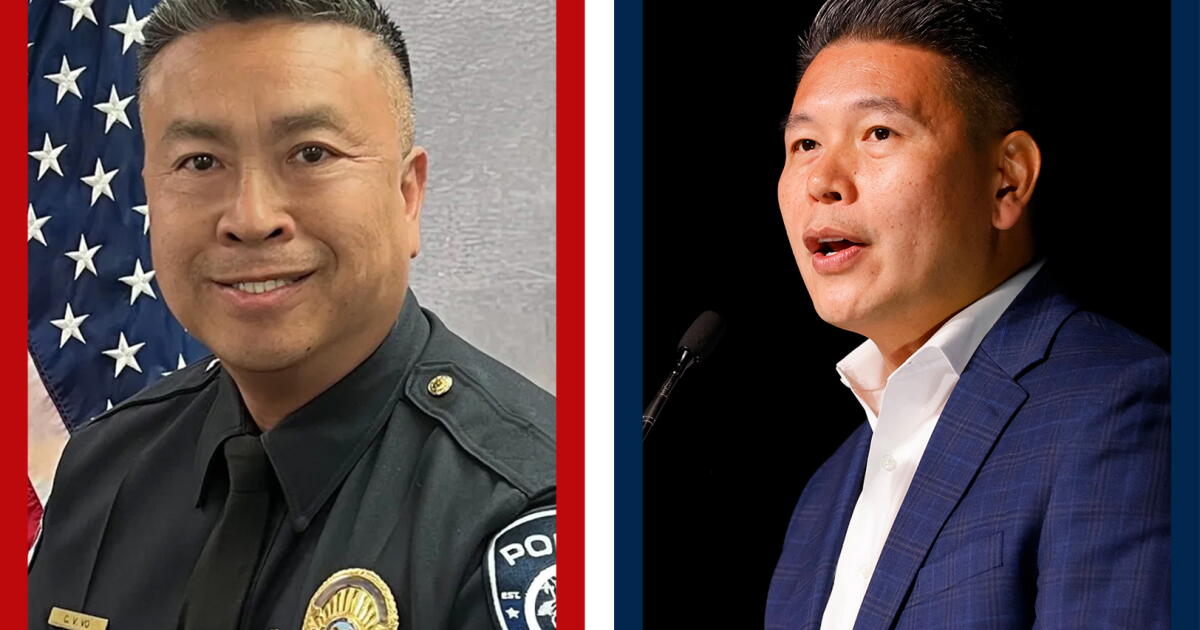






![Portadown Orangemen march from Drumcree Church to start their march towards Garvaghy Road, which was stopped a short distance later by police, in Portadown, Northern Ireland on September 27, 2026 [AFP]](https://i0.wp.com/www.aljazeera.com/wp-content/uploads/2026/10/afp_6abfeb6d30a8-1790962541.jpg?w=640&ssl=1)

![UVF flags fly alongside UK flags in the Edgarstown estate, Portadown, Northern Ireland, on October 1, 2026 [Caolán Magee]](https://i0.wp.com/www.aljazeera.com/wp-content/uploads/2026/10/DSC00033-1790961495.jpg?w=640&ssl=1)
![Orange Order members sit outside Drumcree church as they await passage along Garvaghy Road in Portadown, Northern Ireland, on October 1, 2026 [Caolán Magee]](https://i0.wp.com/www.aljazeera.com/wp-content/uploads/2026/10/DSC00113-1790961532.jpg?w=640&ssl=1)
![Children play on the embankment as music rings out along Garvaghy Road in Portadown, Northern Ireland, on October 1, 2026 [Caolán Magee]](https://i0.wp.com/www.aljazeera.com/wp-content/uploads/2026/10/DSC00134-1790961539.jpg?w=640&ssl=1)
![A ‘Garvaghy Road says no’ sign with an Irish tricolour in the background in Portadown, Northern Ireland, on October 1, 2026 [Caolán Magee]](https://i0.wp.com/www.aljazeera.com/wp-content/uploads/2026/10/DSC00064-1790961515.jpg?w=640&ssl=1)