



I paid £850 for a week’s holiday on a container ship with no pool, snacks, entertainment
NO signal, no all-you-can-eat buffet and your bed is next to hundreds of shipping containers – it’s certainly not your average cruise.
Yet this didn’t stop passenger Pieter Stroop Van Renen from shelling out £850 to travel for a week on board the shipping boat.
Pieter, 59,said he was stunned to realise you could pay to travel onboard the ships that are usually for cargo rather than leisure.
Talking to The Sun, he said he jumped at the chance to go on one and loved the idea of being the “only passenger onboard.”
Paying around €1,000 (£848) to travel aboard the Elbcarrier, the 140m-long vessel sailing was from Rotterdam to Dublin and back again.
It’s safe to say that the ship is the opposite of a luxury liner – there’s no infinity pool, no cocktail-fuelled small talk with fellow tourists and no breakfast buffet.


The first major difference from a commercial cruise was before the journey even began – as nobody could tell Pieter exactly when the ship would leave.
Even in the week before his holiday, he did not know whether he would depart on the Friday, Saturday or Sunday.
Pieter eventually boarded the Elbcarrier at 4pm on Saturday – but the ship did not set sail until 12 hours later, at four in the morning.
As he waited, confined to his cabin while loading was completed, the reality of spending several days aboard a working cargo ship began to sink in.
Peter said: “I thought, will I get bored, or will I get seasick, or what happens there? Where can I walk? Who are these guys, and do they know I’m coming?”
But that wasn’t a problem for Pieter, who instead spent hours on the bridge watching the captain and officers navigate, studying the ship’s radar screens, chatting to the crew and touring the engine room.

Pieter continued: “The bridge was beautiful at night. They keep the lights off, so it’s pitch black outside and all you can see are the navigation lights and the equipment glowing in the darkness. It was magical.”
At the invitation of the captain, Pieter had one of the best seats in the house as the vessel headed out towards the North Sea.
The journey to Dublin usually takes at least 48 hours by sea, but Pieter’s crossing lasted around 52 hours.
Pieter also couldn’t wander about as he pleased on deck – passengers aren’t allowed to walk between the stacks of containers, which can tower four or five containers high.
Pieter explained: “If something happens [and one falls], then you’re crushed and you’re dead.”
Mealtimes gave him another taste of life aboard a working ship.
Pieter’s ticket included three hot meals a day – there were fried eggs for breakfast and hearty dinners of meat and vegetables in the evening.
What Pieter had not prepared for was getting peckish between meals – but luckily the captain sold chocolate bars and cans of beer.
Sleeping was another challenge altogether because while daytime conditions were relatively calm, it’s a different story at night.
Pieter explained: “You’re just rolling in your bed from left to right continuously. I didn’t get seasick. But I didn’t sleep at all at night.”
He warned that anyone particularly prone to seasickness should think carefully before following his lead – especially as there’s no getting off the boat for excursions like on a usual cruise.
Anyone expecting to spend the voyage scrolling TikTok will also be disappointed as on the Irish Sea, there’s no connection whatsoever.
Pieter had to wait until he was back on dry land before posting about his experience on social media – where clips from the trip unexpectedly took off.
While the internet is impressed with his thirst for adventure, his family, however, were less enthusiastic about joining him on board a working ship.
He said: “I couldn’t get them to come. They would never do this. So, time for myself.”
To see more of Pieter’s container ship holiday, head here.

Lakers’ intriguing preseason battles will help shape team
Welcome back to a new season of the Lakers newsletter, where we’re working with a brand new cast of characters.
Out are LeBron James, Rui Hachimura, Marcus Smart (and others). Walker Kessler, Quentin Grimes and Collin Sexton are among those who have been welcomed to the Lakers ensemble.
The newbies have a lot of work to do: The Lakers lost 50.8% of their points, 55.7% of their rebounds and 47% of their assists from last year. As coach JJ Redick acknowledged during his preseason press conference alongside Rob Pelinka, “There’s a lot of minutes … up for grabs.”
We know three of the starters. We start with the biggest question mark in that rotation:
Position battle we’re watching most this preseason
Austin Reaves has tormented the NBA with his crafty finishes in the lane and step-back threes. In many of his new Lakers’ teammates, he has found equally frustrating counterparts, defenders that twist him into knots like he does to them.
“They all annoy the hell out of me,” Reaves said of defensive pests such as Ziaire Williams and Matisse Thybulle.
It’s the best — and most important — problem for the Lakers to have. The Lakers’ deep group of perimeter defenders have the most to prove and could be the biggest X-factor in the season’s success.
The wing group felt so unsettled late into the offseason that the Lakers were among the final teams willing to wait out the Jonathan Kuminga sweepstakes. The 6-foot-7 forward did not make his decision until Aug. 26, spurning the Lakers for the Minnesota Timberwolves.

The Kings’ Darius Acuff Jr. dribbles under pressure from Laker Ziaire Williams during a preseason game in Sacramento on Monday.
(Thearon W. Henderson / Getty Images)
The only other offseason bandaids the Lakers could acquire were Williams and Thybulle. After signing minimum contracts, they were both in the starting lineup for the Lakers’ preseason opener Monday.
Williams, the 6-foot-9 forward from Sierra Canyon High, is relishing the chance to play for his hometown team. The former top-10 pick is on his third NBA team in six seasons, never finding solid footing with Memphis or Brooklyn. He is coming off a career-high 10.3 points per game for the tanking Nets. The expectations will be drastically different with the Lakers and the Lancaster native is ready to meet them.
“There’s not really anything I’m not comfortable with,” said Williams, who reported he currently weighs 215 pounds, up 30 from his previously listed weight with Brooklyn. “If it’s a smaller guy bringing the ball up, I pick up 94 [feet]. If it’s a bigger wing who likes to play off a live dribble and jab step, being more physical off the ball.”
Thybulle is listed at 6-foot-5, but renowned for a nearly 7-foot wingspan. Not only does he torment opponents with his length, his defensive anticipation is “top-tier,” Reaves gushed.
The Washington alumnus was a two-time second-team all-defensive honoree with the Philadelphia 76ers. The hope has always been that his three-point shot could match that defensive talent.
Thybulle is a 34.9% three-point shooter, averaging only 2.6 attempts per game during his career, although his attempts increased in Portland. Thybulle and Williams (32.2% on threes in his career, four attempts per game) are consistently shooting threes after every practice. Williams made all three of three-point attempts in Monday’s preseason game while Thybulle made two of four.

Lakers forward Sandro Mamukelashvili drives to the basket in front of Kings guard Daeqwon Plowden during a preseason game in Sacramento on Monday.
(Sara Nevis / Ap Photo/sara Nevis)
“For me personally, at this point, [it’s about] having the confidence in my shot to know that when it comes, I’m ready for it, as opposed to just hoping for the best,” Thybulle said. “I think it goes a long way as well.”
Mamukelashvili offers three-point shooting that stretches the floor. Redick described the 6-foot-9 forward as “an offensive connector” who can revive seemingly dead plays with a simple pass or a cut. After shooting 38.9% from three last season (115-of-296) with Toronto, he’s a potential starter at power forward, but the defensive matchups could be different when he and Walker Kessler share the floor compared to one of the other perimeter-oriented wings pairing with Kessler.
Young wing players including Adou Thiero and Cameron Carr have also impressed coaches and teammates with their athleticism and eagerness to learn. Reaves affectionately hailed Thiero, who was Reaves’ primary matchup during offseason pickup games, as a “freak of nature” and “one of the best athletes in the league.” That talent was obvious during his injury-plagued rookie season when Thiero scored his first NBA basket on a high-flying dunk last November.
Redick said Thiero’s development in the summer has been “unbelieveable.” The most critical part has been his health, said Thiero, who battled nagging injuries to both knees last season.
Between the veterans trying to prove themselves and the young players hoping to make an impact, the Lakers could go six or seven deep at the wing, Redick said. Depth is a critical ingredient of this era of the NBA. The Lakers are confident in theirs.
“We got some dogs on this team,” Williams said. “Everyone plays one through four. All the wings are great. There’s no slack; you see four or five wings out there playing hard, everybody else has to pick it up a notch.”
Position we should watch this preseason

Lakers center Kevon Looney drives to the basket under pressure from Kings Dylan Cardwell and Nique Clifford during a preseason game in Sacramento on Monday.
(Thearon W. Henderson / Getty Images)
There is no reason to panic about Kessler’s preseason absence. He jammed his left pinky finger on the backboard in practice last week and Redick said Kessler is “day-to-day.”
But the sight of the star center on the sideline is still an unnerving way to start preseason games, especially after the Lakers invested so much to get Kessler. The 7-foot-2 center, who cost the Lakers four first-round draft picks and a four-year, $130-million contract, is supposed to be a lynchpin of their defense. Without him, the Lakers’ entire plan could fall apart.
The only true center the Lakers have behind Kessler — who only played in five games last year because of a shoulder injury — is Kevon Looney. The former UCLA star started in Kessler’s place Monday, playing 18 minutes with nine rebounds, three assists and two points. Mamukelashvili, a power forward, can also rotate to center.
The Lakers have so much riding on the center position this year. Their backup options don’t feel strong enough to bear the weight of a possible Kessler injury. But Redick said the team’s wing players could shoulder some of that burden.
“Loon, Mamu, those guys, they’re not going to be Kessler,” Redick said. “Mamu is versatile enough that he can do different things, whether that’s a hedge or a switch or a drop, and we’ll figure out what works best for this team with that when we’re in man. Then with Loon, I think he’s smart enough and savvy enough that he can get the job done. But again, none of that matters if we’re not guarding the basketball.”
Looney, 30, is the unexpected veteran on a team of 20-somethings. Redick used the three-time champion’s experience with the Warriors for inspiration on the first day of practice, saying Looney faced plenty of adversity during those years. The Warriors fell behind in multiple series and still clawed back to win, Redick said. The Lakers expect Looney to stablize the team during the inevitable rocky periods of the season.
“What a great vet,” Kessler said. “He’s done it before. He knows what it takes to win a championship on and off the court.”
On tap
Tuesday at Warriors, 7 p.m. PDT
The Lakers open the preseason with a road back-to-back. Expect that while the Lakers have no pressing injury concerns, most of the key players will be on an early load management schedule.
Thursday vs. Kings, 7:30 p.m. PDT
The Lakers’ third game in four days – a workload that should be banned in the preseason – will be the debut of Lakers public address announcer Derrin Horton. The former KTLA broadcaster will take over for franchise legend Lawrence Tanter, who died last week at 76. Tanter retired from his game day role in June after 43 iconic years as the “Voice of the Lakers.”
Favorite thing I ate this week

From Broken Spanish Comedor, the ceviche (left) and the camote, a coal-roasted Japanese sweet potato served with pork rinds.
(Thuc Nhi Nguyen / Los Angeles Times)
I’d been reading great things about Broken Spanish Comedor, and after finally trying the new Culver City restaurant, I’m surprised to report that my favorite dish from a modern Mexican restaurant was a Japanese sweet potato. The camote was an ideal combination of textures thanks to the creamy coal roasted sweet potato and crunchy pork rinds and sweet, smokey and spicey flavors. We also ordered the ceviche, which came with a deserved heat warning, and the chicharron. The server insisted we get the hand-pressed tortillas and who’s saying no?
In case you missed it
Luka Doncic scores 21 as Lakers unveil new defense in preseason win over Kings
Lakers ace defender Matisse Thybulle learning from savants Luka Doncic, Austin Reaves
Bronny James continues to refine his skills and role with the Lakers
Lakers select Derrin Horton to be new public-address announcer
Lakers’ early defensive prowess impresses Austin Reaves, JJ Redick
‘This is a meritocracy’: Lakers open training camp with mandate of competition
How a healthy and motivated Walker Kessler could transform the Lakers’ defense
Swanson: Lakers paid Austin Reaves to be a star. Now they need him to prove his durability
Luka Doncic and Austin Reaves ready to take charge of new-look Lakers
Plaschke: It’s no myth, Lakers’ Pelinka and Redick enter season on the brink
Lakers’ new era opens with a thanks for the LeBron James era
Beloved Lakers public address announcer Lawrence Tanter dies at 76
Until next time…
As always, pass along your thoughts to me at thucnhi.nguyen@latimes.com, and please consider subscribing if you like our work!

Major train station to CLOSE for 44 days including Christmas holidays for historic £70million upgrade

A HUGE UK train station is set to close for even more days – and it hits right by Christmas.
Huddersfield Station has only just reopened after a 16-day closure, which is part of a £70million upgrade.


The works date back to 2023, as the station is hoping to become fully electric by 2023.
And it has since been announced that it will close for another six days from this weekend, followed by more than a month in January 2027.
Transpennine Route Upgrade confirmed the following weekends would see the station closed in 2026:
- October 10
- October 11
- November 14
- November 15
- December 13
- December 20
Read more on train stations


The December closures will affect the two Sundays before Christmas, so travellers are being warned to plan ahead.
This will then follow a huge 38-day closure from Christmas Eve (December 24, 2026) to January 31, 2027.
Liam O’Shaughnessy, TRU programme delivery lead for Northern, said: “The work that has been completed over the last 16 days in the Huddersfield area is another crucial step towards delivering the benefits that the Transpennine Route Upgrade will bring for customers across the north.
“We have worked closely with our industry partners to keep customers on the move, and these works have continued, and we would like to thank customers and local communities for their patience and cooperation, whilst these improvement works have been taking place.”
Upgrades include two new track lines through Huddersfield, restoration of the station’s roof and platforms, as well as upgrades at Deighton Station, and nearby road upgrades.
The station dates back to 1850, and named one of the most beautiful by Lonely Planet.
Now, it welcomes 3.1million passengers a year with routes across Yorkshire.
The station was even famously home to a cat, Felix.
Previously having a Sunday Times bestselling biography, he passed away in 2023.
France protests: What we know as schools brace for nationwide action | Protests News
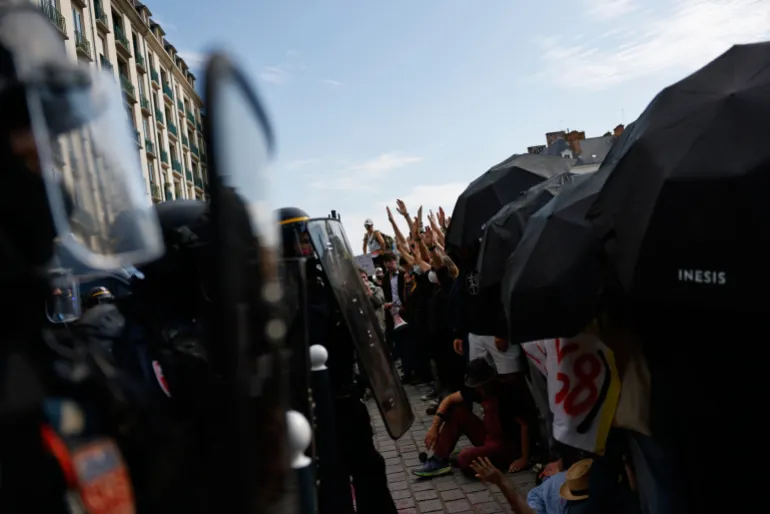
Protests have continued across France for a third week as tens of thousands of school pupils and trade unionists have taken to the streets across many cities.
Students initially began boycotting classes in deprived areas of Paris on September 21 over teacher shortages and poor conditions, but protests have quickly morphed into a nationwide movement, with some of the largest demonstrations taking place on Tuesday.
Recommended Stories
list of 4 itemsend of list
School blockades have turned violent, with protesters accused of hurling items at police and officers allegedly responding forcefully using batons, tear gas and rubber bullets. In one case, a teenager lost his hand in a grenade explosion.
The mass demonstrations, which also coincided with a public sector strike over government budget plans last week, have presented another challenge for President Emmanuel Macron’s cash-strapped government ahead of next year’s elections, amid an ongoing fiscal crisis as government debt has rocketed in recent years.
Here’s what we know:

What do protesters want?
Students have been protesting over what they say are poor conditions in France’s high schools – or lycees – especially in poorer areas. Protests have been held in Strasbourg, Bordeaux, Nantes, Marseille, Lyon and other towns and cities.
Students say absent teachers are not replaced, dilapidated school buildings are sometimes rodent-infested, there are inadequate tables and chairs, large class sizes and long classroom hours.
The intense heatwave which hit France in the summer exacerbated existing problems in neglected school buildings, which also suffer from a lack of air conditioning, school pupils say.
The protests have coincided with ongoing nationwide public sector strikes over a proposed 2027 cost-cutting budget that aims to achieve 54 billion euros ($61.3bn) in savings as Macron’s government races to bring a large public deficit under control.
Public sector staff and unions object in particular to a government plan to freeze salaries to save about two billion euros ($2.27bn).
Parents are also increasingly present at protests amid widespread anger about the police response to demonstrating minors.
But the protests are happening amid wider discontent over soaring fuel and commodity prices and reduced public spending under Macron.
Government officials have meanwhile accused political opposition groups and unionists of taking advantage of the student movement. Prime Minister Sebastien Lecornu accused political opponents last week of encouraging escalation.
What has happened so far?
At least 6,100 people had been arrested by early Tuesday, many of them under the age of 18, as police tactics come under intense scrutiny.
Serious injuries have also been reported.
A 15-year-old lost a hand in the northern city of Lens on Monday after he reportedly came into contact with a police stun grenade, which then exploded. Public prosecutors say investigations are ongoing into whether the youth actively picked up the grenade or if it landed on him.
Overall, at least 190 high school students have been injured, Education Minister Edouard Geffray said on Monday. On Sunday, he said 78 teaching staff had been injured, and 24 schools had been burned or ransacked.
Some 715 police officers have been injured, according to Interior Minister Laurent Nunez on Tuesday.
Officials said as many as 589 schools have been disrupted this week, down from 735 on Friday last week.
Rights groups, including Amnesty International, have criticised the use of force against minors amid media reports of students being hit with batons and rubber bullets, as well as sprayed with tear gas.
What happened on Tuesday?
Protesters again blockaded schools on Tuesday as thousands demonstrated over their demands.
Placard-waving crowds were reported in southern Marseille, eastern Strasbourg and other major cities.
In Paris’s 20th district, protesters outside the shut Helene Boucher lycee tipped over rubbish bins and bicycles and created a makeshift barricade, The Associated Press news agency reported. Parents, meanwhile, positioned themselves between the demonstrators and police to protect their children.
“They are our children. Teachers, parents, federations, we all share the same goal: the protection of children’s rights, and it is a legitimate right to demonstrate and to make demands,” said Emilia Sichili Suriam, one member of a parents’ association.
Interior Minister Nunez rejected criticism of the police on Tuesday, saying the response has been proportionate in “almost all cases”. He claimed that the protests were transforming into “riots”.
What does this mean for the French government?
These are only the latest in a series of high-profile protests that have marked Macron’s presidency and undermined his government’s reform efforts ahead of elections in April and May.
Macron will not run in next year’s elections, but his image and that of his government have no doubt been tainted by photos of police chasing students in the streets, France expert Jacob Ross, from the German Council on Foreign Relations (DGAP), told Al Jazeera.
“He is not taken seriously any more because many think of him as already out of government,” Ross said of Macron. “But this is still very significant for his government because it has become clear that they don’t have the capacity to calm things down. There’s clearly little fiscal room to manoeuvre.”
Macron’s terms have long been beset by political and financial instability. Successive prime ministers have faced difficulties in pushing through policies in the highly polarised National Assembly where Macron’s centrist Renaissance party and allied blocs lack a majority.
Critics have taken aim at Macron’s deeply unpopular austerity measures, which have seen drastically reduced government spending taking a toll on pensions and healthcare. Officials, however, have defended these policies amid rising debt following COVID-19-era spending.
On Sunday, Lecornu said the government had kickstarted initiatives to address the protesters’ demands and that a report was expected by the end of the month. He, however, added that Paris would not “yield an inch” to violence.
Meanwhile, frontrunner and opposition leader Marine Le Pen of the far-right National Rally party submitted a shadow budget on Tuesday promising 140 billion euros ($157.6bn) in cost savings by 2032 if elected next year.

UK holiday park reveals ‘biggest ever’ £4million upgrade with new splash park, sports bars and ice cream parlours
A UK holiday park has revealed its huge multi-million pound upgrade – and will be its largest in history.
Thurston Manor is less than an hour from Edinburgh, and has stays for as little as £18 per night.
Along with its cosy caravans and lodges, there are some very exciting additions coming its way.
The park has announced it is undergoing a huge £4million upgrade with work starting this November.
One of the largest upgrades will be to its existing indoor swimming pool which will be expanded to become 18-metres long.
It will also add a new toddler splash area, designed specifically for little children – and for adults, there will be a new jacuzzi, steam room and sauna.


The pre-existing gym facilities will also be upgraded.
Its entertainment complex is set to be revamped too with new activities and facilities both indoors and outdoors.
Outside will be a new pirate-themed 9-hole adventure golf course, giant chess and lots of things to do like table tennis, curling – and it will install a padel court.
Inside will be a new soft play area with an upgraded games arcade including interactive darts.
The Hunter’s Bar and Restaurant is being refurbished, and will have a brand-new sports bar, as well as a transformed showbar where there will be entertainment for guests.
A new outdoor terrace will be a new spot that guests can enjoy throughout the year with open-air seating through the summer and covered for when the weather doesn’t play ball.

For those wanting sweet treats, there will also be a brand-new ice cream parlour.
When it comes to accommodation, holiday homes and pitches will be added to the site too.
Currently, guests can stay in basic caravans, to luxury lodges including The Hideout and The Hideaway which have outdoor decks and lots of inside space.
Work is due to start in November of this year with a Grand Opening event planned for Easter 2027.
For those who want to book a break that coincides with the new additions, three-night breaks on April 23 start from £219 – or £18.25pppn.
With this break, a family of four can stay in an Essential Clover Caravan which has two bedrooms (one double, one twin), kitchen and living area.
Simon Lane, CEO of Verdant Parks, said: “This is an incredibly exciting time for Verdant Parks, our employees, our owners and our holidaymakers.
“We’re committing our biggest investment to date to Thurston Manor Holiday Park and completely transforming what guests can see, do and experience when they visit.
“From the extended swimming pool and new toddler splash area to the new padel court, pirate-themed adventure golf and transformed entertainment offering, there will be something for everyone to enjoy.
“We’re delighted to reveal our plans for the next chapter of Thurston Manor and we can’t wait to share more details and sneak peeks as the transformation takes shape over the next six months.”

The P-3 Orion Airborne Early Warning Aircraft Has Flown Its Last Mission
U.S. Customs and Border Protection (CBP) has retired the last of its P-3 Airborne Early Warning (AEW) aircraft. The AEW version is instantly recognizable from the saucer-like radar dome on top, as seen on other AEW types like the E-2 Hawkeye and the E-3 Sentry. CBP was the only operator of this variant of the P-3 Orion and is said to have been the only law enforcement agency to fly any kind of dedicated AEW plane. The retirement of these aircraft comes at a time when American AEW assets, in general, are under heavy strain by demands globally.
CBP officially retired its final P-3 AEW on September 30, 2026, after a final flight from National Air Security Operations Center Jacksonville (NASOC Jacksonville), in Jacksonville, Florida. CBP has also flown Long Range Tracker (LRT) variants of the P-3, configured for more traditional maritime surveillance missions. The current plans for the LRT aircraft, and whether their sunset may also be on the horizon, are not immediately clear, and TWZ has reached out for more information. Orions of all types have been steadily disappearing from service with the U.S. military and elsewhere across the U.S. government as the aging aircraft become more difficult to operate and maintain.
“Our Jacksonville-based P-3 AEW fleet has served as a cornerstone of America’s outer-layer border security,” according to a brief announcement from CBP about the retirement on social media. “Its crews flew far beyond our borders, providing wide-area surveillance across the Caribbean, Gulf of America [Gulf of Mexico], and the transit zones of Central and South America, helping detect and track threats before they could reach the United States.”
By all indications, including official CBP sources, the P-3 AEW fleet consisted of eight aircraft at its peak. There is a confusingly worded 2014 CBP press release that mentions an “11th and final Lockheed Martin P-3 Airborne Early Warning (AEW) aircraft overhaul,” but that figure looks to also include three of the six LRT versions. The same release says that CBP only had 14 P-3s of all types at that time.
What was then known as the U.S. Customs Service (USCS) first began operating the P-3 AEW version in the late 1980s. The aircraft were converted from second-hand maritime patrol variants of the Orion. The first example had started life as a P-3B for the Royal Australian Air Force (RAAF). Ex-U.S. Navy P-3s were also converted.

The initial three P-3 AEWs were equipped with the AN/APS-138 radar. The same radar was used on early E-2C Hawkeye airborne early warning and control aircraft operated by the U.S. Navy, as well as several other armed forces internationally.
“The Customs Service had previously borrowed U.S. Navy E-2Cs to meet its antinarcotics surveillance requirements, but required an aircraft with longer range and on-station time,” according to a 2006 report from Forecast International. “In June 1989, the U.S. General Accounting Office issued a report on the drug interdiction P-3B AEW aircraft. The findings indicated that the radar performance was as specified, but the P-3B (when compared to the E-2C) was less costly to operate per square mile of area covered because of the higher cruising speed and longer endurance. The P-3B had at least twice the in-flight endurance of the E-2C.”
Starting in the 1990s, USCS began the process of acquiring additional P-3 AEWs with newer AN/APS-145 radars, as also used on later model E-2Cs. The original AEW Orions were eventually refitted with APS-145s, as well. It’s worth noting here that the U.S. Coast Guard separately moved to acquire an AEW version of the C-130H, designated the EC-130V, in the 1990s, which used the AN/APS-125 radar, also used on older E-2s. Budget cuts led to the end of that program. The EC-130V that had been built was redesignated as an NC-130H and subsequently used for test purposes.


The P-3 AEWs were also equipped with a sensor turret containing electro-optical and infrared (EO/IR) video cameras, allowing the aircraft to more closely investigate targets spotted on radar. CBP regularly conducted P-3 operations that paired AEWs with LRT variants to provide an even broader array of sensor capabilities on missions. The LRTs have EO/IR sensor turrets, as well as AN/APG-66 and SeaVue radars. The pulse-doppler AN/APG-66 is primarily designed for spotting and tracking aerial targets, and was originally used on early variants of the F-16 fighter. SeaVue is a multi-function type with surface search and synthetic aperture radar (SAR) imagery modes. Images produced via SAR are highly detailed maps of the surface below, and can be captured day or night, and regardless of any cloud cover, smoke, or dust.
Beyond radars and other sensors, the P-3 AEWs also had a robust communications suite consisting of VHF and UHF radios, as well as satellite communications links by the end of their career. CBP’s entire P-3 fleet, including the AEWs and LRTs, has received various updates over the years, including new ‘glass cockpits’ starting in the early 2000s.

CBP Air and Marine Operations: Extended Border Operations
Though primarily employed in support of counter-narcotics interdiction operations, the airborne radar and command and control capabilities were also applied to other missions, including disaster relief and humanitarian assistance efforts at home and abroad. As an example, CBP’s P-3 AEWs helped with air traffic coordination, as well as provided other support, during relief efforts in Texas in the wake of Hurricane Harvey in 2017.
At the same time, CBP’s entire P-3 fleet, including both the AEW and LRT versions, has only been getting increasingly older and difficult to sustain. The P-3B variant first entered U.S. Navy service in the 1960s. CBP did put its P-3s through a Service Life Extension Program overhaul in the 2010s, which included “new wings and tail for each aircraft and completely strips down the aircraft to its bare metal for an inspection,” according to a 2014 press release.

As mentioned, the P-3 family has been in steadily dwindling service in the United States, overall, in recent years. The U.S. Navy has completely retired the Orion as a maritime patrol platform, and the service has also fully divested its more specialized EP-3 intelligence-gathering variants. The Navy had retained a small number of P-3s for research and development and test and evaluation activities, but growing sustainment challenges have been prompting the retirement of those planes, as well. The last NP-3C assigned to the Navy’s Scientific Development Squadron One (VXS-1), the “Warlocks,” was also retired last month. VXS-1 previously operated a ‘domed’ NP-3D, similar to, but distinct from, CBP’s P-3 AEWs, as well. The National Oceanic and Atmospheric Administration (NOAA) is also in the process of replacing its pair of P-3s, configured as civilian hurricane hunter aircraft, with new C-130J Hercules-based platforms. The shrinking U.S. Orion operator base can only have a knock-on impact on CBP P-3 operations.
A key question now is how CBP will fill any gaps left by the retirement of the final AEW version. The agency does continue to operate a mix of other crewed fixed-wing aircraft with mixtures of radars and other sensors, as well as MQ-9 drones, but none of these platforms are equipped with a sensor like the AN/APS-145. CBP also has a network of tethered aerostats with radars at fixed sites around the Caribbean. As an aside, General Atomics, together with Saab, is now working on an AEW configuration for the MQ-9B drone, but there are no known U.S. orders for that capability at the time of writing. That platform will not offer the same level of flexibility and look-down capability as modern crewed AEW aircraft, either. Look-down AEW capability is only growing in importance today amid expanding and evolving drone threats, including to the U.S. homeland.

High demand for AEW support, in general, means that the U.S. military regularly steps in to provide additional coverage with U.S. Navy E-2s and U.S. Air Force E-3s to aid in U.S. counter-drug operations around Latin America. Newer E-2D Advanced Hawkeyes notably have far more powerful radars than the E-2C or the P-3 AEW, with added surface search and track capability, too. At the same time, as mentioned at the start, those assets are in heavy demand, especially in light of the conflict with Iran. On top of that, the Air Force’s E-3 fleet is facing serious sustainment challenges itself, with replacement E-7 Wedgetail aircraft still years away from being delivered.
The Air Force, in particular, is also aiming to eventually push most, if not all, air moving-target indicator (AMTI) tasks currently performed by aircraft like the E-3 and E-7 into space. The service is heavily investing to accelerate the fielding of those capabilities, which could eventually offer revolutionary constant, persistent coverage globally. The first of those satellites are still not expected to reach an early operational state until 2028. It is possible that CBP could get access to a tailored data feed from this system when it does become operational. It still does not obviate the need to have crewed or uncrewed aircraft capable of more closely investigating tracks of interest using EO/IR cameras and other sensors.
Whatever the future might now hold, CBP’s unique time as the operator of the P-3 AEW aircraft has come to an end.
Contact the author: joe@twz.com

Four in a Bed viewers furious over contestant’s ‘tacky’ comment
Four in a Bed viewers jumped to the defence of one team after comments made by another contestant.

Melissa’s comments left viewers furious (Image: Channel 4)
Four in a Bed viewers have been left furious over one contestant’s feedback.
A new series of the Channel 4 competition recently took place in Northern Ireland, concluding with a payment day episode airing on Friday, October 2.
It saw Belfast city-centre luxury apartments owner Melissa criticise Enniskillen hotel owners Shaun and Aoife over their taste in decor. Having walked into her home for the night, she had commented: “It’s nice and bright,” before inspecting the panelling and wallpaper above the bed.
She said: “We’ve got panelling here, an LED light and this pattern here, there’s far too much going on, it’s a bit tacky.” She also rated them a low score of six for facilities, for a lack of fridge and coffee machine in her room.
“That’s disappointing,” the hosts had remarked at the time, before bringing up the issue around the payment day table. “I really hope there is some justification for these comments,” Shaun added.
During Friday’s episode, Aiofe asked Melissa about her “harsh” criticism of the decor, with Melissa replying: “It might have been your personal taste, but you need to keep it as neutral as possible.”
Shaun hit back: “I think the language, dated and tacky… there’s so many words available to us.” Melissa argued: “What I say is what I think.” Another contestant jumped in to say that Melissa didn’t need to use the word tacky, though she stood by her comment, saying she didn’t know what else to use to “describe three different patterns”.
“Busy,” Shaun quickly replied. Melissa said: “Tacky to me, I don’t think it’s that bad of a word.” “It’s too subjective,” Shaun added, saying: “It really undermined the value of the rest of the feedback.”
He went on: “An overall six is a hard score,” saying it was a “strategic” move of Melissa to underpay her competitors. He added to the cameras: “Feeding back in that way, it was low in quality, high in ego and that isn’t a set of characteristics that command respect.”
Melissa meanwhile said: “I never knew tacky was such an upsetting word.” Viewers jumped in to Shaun and Aiofe’s defence, with one writing: “Calling someone’s decor tacky is rude and untrue.”
Another called Melissa “awful” after her comments, while someone else said: “Oh shut up Mel! The decor might not be to your taste but it is not tacky, and a standard white bathroom is not dated. She really rates her own abilities.”
Another said that Mel “showed her true colours”, while someone else said Mel was “desperate to mark every B&B down just so she wins the competition”.
Four in A Bed is available to watch on Channel 4

Lattice Semiconductor in focus as William Blair initiates with Overweight rating (LSCC:NASDAQ)

mustafaU
Lattice Semiconductor (LSCC) was in focus on Tuesday as William Blair initiated coverage on the semiconductor firm with an Overweight rating and a fair value of $160 per share.
“Lattice is benefiting from a product re- fresh cycle, replacing legacy small footprint

What's it like to be the World Cup final referee?
Slavko Vincic, who refereed the 2026 World Cup final, reveals what it’s like to take charge of the biggest game in football.
Source link
Former German spy chief arrested on suspicion of treason and espionage | Espionage News
August Hanning’s former chief of staff was also arrested on suspicion of ‘aiding and abetting attempted treason’.

Published On 6 Oct 2026
Germany’s former foreign spy chief has been arrested on suspicion of espionage and treason, prosecutors have said.
August Hanning, 80, is under investigation for attempted treason and acting as an agent for a foreign intelligence service, the Office of the Federal Public Prosecutor General confirmed on Tuesday.
Hanning was president of Germany’s Federal Intelligence Service between 1998 and 2005.
He was arrested in Bad Toelz-Wolfratshausen in southern Germany. His former chief of staff, partially identified as Manfred D, was arrested in Steinfurt in western Germany on suspicion of “aiding and abetting attempted treason and treasonous espionage”.
The prosecutor’s office said, “On one occasion, Hanning used classified intelligence provided by Manfred D to draft an analysis for an officer of a foreign intelligence service.”
Prosecutors said Manfred D also served as the chief of staff for Hanning’s successors between 2012 and 2026, and used his role to gain access to confidential information which he then passed on to Hanning “in exchange for remuneration”. Hanning then used the information in his private consulting work, prosecutors added.
“The current findings suggest that, over the years, Manfred D provided Hanning with approximately 2,000 documents, many of which contained classified information to be used exclusively by the federal intelligence service for internal purposes, particularly for executive intelligence briefings,” the statement said.
The statement did not reveal who the two men were suspected of spying for or which country the foreign agent worked for, adding that “it has yet to be determined if the material reached the intended recipient”.
German MP Marc Henrichmann told the AFP news agency that Germany “will not tolerate the betrayal of secrets”.
Henrichmann, who chairs the German parliament’s intelligence oversight committee, said, “Whoever allies themselves with the enemies of our liberal democracy will be found out.”
The premises of Manfred D and Hanning were being searched in several locations, including in the capital, Berlin.

Spain Picks Airbus A321 For New Electronic Intelligence Aircraft
Spain is moving ahead with plans to rebuild its airborne signals intelligence (SIGINT) capability, with the Airbus A321 — part of the highly successful A320 twin-engine airliner family — selected as the basis for three new SIGINT aircraft.
The choice is disclosed in the latest issue of Spain’s Revista de Aeronáutica y Astronáutica, the Ministry of Defense’s official publication. Airbus and Indra are currently working on the program’s conceptual design under the Santiago II initiative, which aims to deliver a crewed platform capable of collecting and processing intelligence across the electromagnetic spectrum.
The program is intended to restore a capability Spain lost when its last Boeing 707 SIGINT aircraft was retired in 2014. Equipped with Israeli SIGINT equipment, this 707 was designated TM.17-4 in Spanish service, and nicknamed Reina del Espectro (Queen of the Spectrum).
It served in the 47th Mixed Air Force Group, alongside four Dassault Falcon 20s (designated TM.11 in Spain), that were used for navigation aid calibration, remote sensing, and electronic warfare training.

The new aircraft will have to undergo extensive modification, including the installation of antennas, receivers, signal-processing equipment, operator consoles, communications systems and associated electrical and cooling infrastructure.
Indra is expected to provide much of the mission-system architecture. The company’s AirSign concept, unveiled in 2023, incorporated COMINT and ELINT sensors alongside data fusion, real-time signal analysis, communications, and command-and-control functions.

While COMINT is concerned primarily with collecting intelligence from communications, ELINT focuses on non-communications electromagnetic emissions, including radar signals. Together, these capabilities provide a much fuller intelligence picture of not only what the enemy is doing in terms of their electronic emissions, but what they are planning, and their processes of operation.
Bizjets have become the platform of choice for many new intelligence aircraft, particularly where operators want a relatively low-cost, long-endurance platform with a smaller logistical footprint. Aircraft such as the Bombardier Global 6000/6500, Gulfstream G550, and Dassault Falcon 8X have been adapted for electronic intelligence and special-mission roles.

Spain’s decision to use the substantially larger A321 points instead toward the other end of the spectrum, providing significantly more room for antennas, processing hardware and crew, and allowing the aircraft to carry a much larger and more power-hungry mission system than the typical bizjet-based SIGINT platform.
At one time, the A321 was envisaged as the platform for NATO’s Alliance Ground Surveillance (AGS) system, which provides the alliance with reconnaissance capabilities, including synthetic aperture radar. However, this capability was eventually fielded on NATO’s fleet of five RQ-4D Phoenix uncrewed aerial vehicles, specialized versions of the Global Hawk.

Elsewhere in Europe, Airbus launched a risk-assessment study for France’s future maritime patrol aircraft (MPA), also to be based on an A321 platform. Billed as a “flying frigate” by the company, the new MPA is intended to replace the French Navy’s Dassault Atlantique 2 fleet and emerges at a time when NATO nations are increasingly adopting the in-production Boeing P-8 Poseidon for their maritime patrol requirements.

Airbus does, however, have relevant experience in the conversion of airliners for military roles. The company’s A330 Multi-Role Tanker Transport (MRTT) aircraft are modified at Airbus’s Getafe facility, providing an existing industrial base for converting commercial-derived aircraft into specialized military platforms.

The Santiago II program is currently in its definition phase. Spain awarded Airbus and Indra a €16-million ($17.9-million), 18-month contract to study the platform and define the overall system. A subsequent phase will cover modification and integration of the three aircraft. The Spanish Ministry of Defense estimates the complete program at approximately €436 million ($489 million).
The program also has an industrial objective. Spanish authorities want domestic industry to acquire expertise and control over the integration of the SIGINT system, rather than simply purchasing a finished foreign intelligence aircraft.
The A321-based Santiago II fleet is intended to address the shortfall left by the retirement of the specially modified Boeing 707, providing a substantially more modern platform, and with more airframes for improved availability.
The three new aircraft will also complement Spain’s emerging uncrewed SIGINT capability. The Spanish Air and Space Force is introducing the L3Harris Scalable Open Architecture Reconnaissance (SOAR) system on its Predator B drones, giving the fleet ELINT and COMINT collection capabilities. The two systems are likely to fill different niches: the Predator B offers a relatively persistent, lower-cost uncrewed collection option, while the much larger A321 will provide substantially greater payload capacity, onboard processing, and crewed mission-management capabilities. Together, they will give Spain a layered airborne SIGINT architecture.

Spain’s decision also reflects a broader drive to invest in long-range SIGINT platforms capable of collecting, processing, and fusing vast amounts of electromagnetic data, as competition over the electromagnetic spectrum becomes increasingly central to modern warfare.
If the program remains on schedule, three heavily modified A321s will eventually provide Spain with a persistent airborne capability to detect, classify, locate, and analyze electromagnetic emitters in support of a host of operations. Especially when paired with the Predator B, the capability will likely be of considerable interest to other NATO partners in Europe, too.
Contact the author: thomas@thewarzone.com

Macklemore’s replacement on Ed Sheeran tour revealed as star speaks out on Gaza live on stage
MACKLEMORE’S replacement on Ed Sheeran’s under-fire tour has been revealed and the stand-in singer has spoken out on Gaza live on-stage.
Brit singer Ed‘s Loop series of US gigs descended into chaos when his support act and pal Macklemore was dropped by promoters over his pro-Palestine stance.
Billionaire businessman Robert Kraft banned the American musician, real name Benjamin Haggerty, from his stadium after he made a speech on stage in support of Palestinians amid the ongoing conflict with Israel.
At the time, Robert deemed his words “hate speech” and the move sparked a mass exodus of support acts who all quit 35-year-old Ed’s tour in solidarity with the Thrift Shop hitmaker.
Ed continued to perform alone, but he has now been joined by surprise guest, The Fray’s Isaac Slade.
The rock band’s former frontman, 45, opened proceedings at Atlanta’s Mercedes-Benz Stadium on Saturday, with his band’s hits, which included How to Save a Life and You Found Me.


Despite politics taking precedence over performances during the Loop tour, Isaac had his say.
He told fans: “What’s happening over there [in Gaza] is wrong, but if we’re going to get through it, we’re going to need people to step into that middle place, that common ground.
“That bonfire in the middle of the field that sees both sides, that understands that peace is not a lack of conflict. Peace is not a blank canvas that we need to guard and be polite.”
“[Peace] holds enough beauty, enough tragedy, enough sorrow, enough joy and life if we learn how to integrate it and hold each other in balance.
“We will find a way through this together”.
It isn’t the first time that Isaac, who quit The Fray in 2022, has appeared on the tour.
He also took to the stage in Toronto in August.
Following the Macklemore controversy, which saw Billie Eilish‘s brother Finneas, Irish acts Aaron Rowe and Beoga, and Danish pop star Lukas Graham withdraw in solidarity, Ed spoke out.
Ed insisted in a statement that he would not be drawn on voicing his own views on the Israel/Gaza conflict publicly but is committed to ensuring his gigs are a place of “safety and sanctuary” for people from all ethnicities, faiths and backgrounds.
He also made it clear that he was not personally responsible for Macklemore’s departure and had been trying to find a solution with promoters and billionaire Robert, who owns Massachusetts‘ Gillette Stadium.
New England Patriots owner Robert had accused Macklemore of having a “broader history of antisemitic rhetoric and imagery that we believe has been deeply offensive and hurtful to the Jewish community”.
It was Macklemore declaring “Free Palestine” ahead of his protest song Free Hind’s Hall, written about pro-Palestinian protesters at Columbia University, which sparked the controversy.
In his own statement, Macklemore insisted his stance was a “criticism of apartheid and genocide” and not of the Jewish people.
Ed wrote on social media: “Macklemore coming off tour was the promoter’s decision, it was not mine.
“I would never let down the fans who had made plans, nor would I abandon the touring crew and the other support acts and musicians who rely on me for work and to make a living.”
He added that fans at his shows did not want a “political forum” and that despite his apolitical stance he is “not complicit”.
Ed and Macklemore’s friendship goes back 13 years and the latter said he hoped it would continue despite them having had “difficult conversations”.
The other acts also highlighted their friendships with Ed and their gratitude for being given the opportunity to perform on such a high-profile tour, but said they could not continue with clear conscience knowing a fellow artist had been “silenced”.


New Ryanair check in rules to launch next month

NEW rules are being rolled out for Ryanair passengers next month.
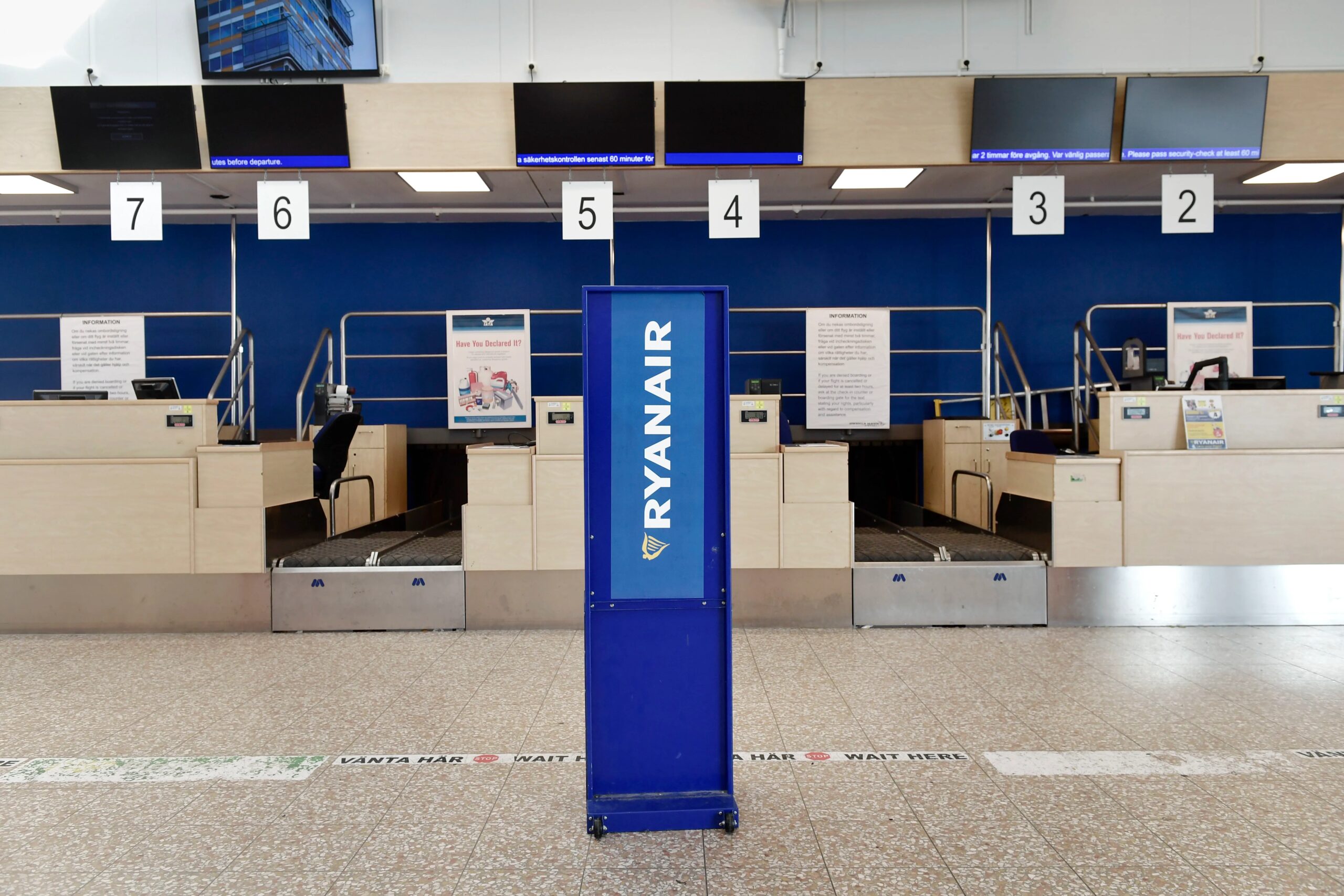
From November 10, the budget airline will close its check in desk much earlier.
Rather than closing 40 minutes before a flight, it will now close 60 minutes before a flight.
Ryanair claims this is to allow passengers “more time to get through security”.

This comes after a summer of chaos due to the new biometric EES checks which resulted in three-hour queues and even missed flights.
The new rules will of course only apply to passengers checking in a bag or suitcase.


Anyone travelling with just hand luggage won’t be affected.
The airline claims this is as many as 80 per cent of passengers who don’t ever have checked bags.
But anyone who likes to rock up to their flight and still check a suitcase at the last minute will be in for a shock.
Ryanair CMO, Dara Brady, said: “This will allow these 20% of our customers (who check in a bag) more time to clear through airport security and passport queues, and get to their departure gate on-time, especially during busy travel periods when some of these airport queues can be longer.”
More self-check in machines have since been rolled out as well in a bid to speed up the process.
Last year, the airline scrapped printed boarding passes and now requires all passengers to use mobile ones instead.

James McClean: Ex-Republic of Ireland international hits out at Derry City treatment amid dispute
Reports have indicated in recent months that Derry attempted to terminate McClean’s contract because of persistent injuries, a matter alluded to in Tuesday’s statement by the PFAI.
The statement says that Derry had attempted to invoke Section 18 of the Standard Players Contract, which permits them to terminate a contract with six months’ notice when a player is deemed to have a “permanent incapacity”, as confirmed by an independent physician.
“For any club to feel it is OK to attempt to terminate a player’s contract without any due process or just cause is incomprehensible, and it sets a dangerous precedent for every player in this league,” said McClean.
“I am not permanently incapacitated, or anything even remotely close to that. I am capable of contributing and doing well in the League of Ireland. I train as hard and give as much as anyone.
“I will decide when I retire. Nobody else will make that decision for me. When that time comes, my body will tell me. This is my life and my career. I deserve the same duty of care and fairness given to the majority of other players at Derry City FC.”
The PFAI gave further information on the nature and extent of the player’s injury.
“In short, James has had a hip injury which had been causing intermittent issues for him. This has caused him to miss some games and occasional training sessions,” the statement read.
“He has sought medical treatment for this and is currently fit and well.
“He has trained fully for the last nine weeks and has made himself available for selection. He recently played in an internal match arranged by the club. He believes he can help the team and has not been provided with a satisfactory reason for being left out of the squad.”
BBC Sport NI contacted Derry City for comment but a spokesperson said that the club were presently “solely focused on this weekend’s FAI Cup semi-final against Galway United (Saturday, 15:00 BST kick-off).

Mapping where US bombers are based globally | Military News
Over the course of Sunday, a dozen B-1B bombers took off from Royal Air Force (RAF) Fairford in western England and flew home to the United States. Their departure abruptly ended the base’s role as a launchpad for US strikes on Iran, which began on February 28.
The base, roughly 160km (100 miles) west of London, is the US Air Force’s only European airfield for heavy bombers and a key forward operating location for deployed bombers.
Over the past two weeks, six people were arrested on suspicion of “terrorism”. They were all released on bail.
US President Donald Trump said on Monday the bombers were moved because “there were some threats”, which he believed were linked to Iran. “So we moved them around a little bit, not very far,” he told reporters at the White House.
Hours earlier, US Secretary of State Marco Rubio played down any link to the alleged plot, saying it was “not unusual to see rotations happen” and that he had confidence in the security of US bases.
What happened at RAF Fairford?
On September 27, police arrested five men on suspicion of plotting to plant explosives near Fairford in the United Kingdom. They were released on bail a day later.
Investigators found petrol but no explosive devices in their vans, though UK officials say the men remain under investigation. On Thursday, police arrested a 25-year-old UK-Iranian dual national in London on suspicion of plotting an attack on the airbase. He was also released on bail on October 3.
UK Prime Minister Andy Burnham suggested that “Iran played a part” in the alleged plot but declined to give details. Iran has denied any such scheme and summoned the UK ambassador in Tehran in protest at the arrests.
What bombers does the US have?
The US Air Force flies three types of bombers, with a fourth on the way.

The B-52 Stratofortress is the oldest. The B-52H model currently in service was built in the early 1960s. With a wingspan of 56 metres (185 feet), it is the largest US bomber and can carry about 31 tonnes of weapons, including nuclear bombs and cruise missiles.

The B-1B Lancer, which entered service in the mid-1980s, is the fastest of the three. It can reach 1.2 times the speed of sound and has a swing-wing that sweeps back for high-speed flight. It carries the largest conventional payload, about 34 tonnes, but no longer carries nuclear weapons. These were the aircraft that left Fairford.
The B-2 Spirit is a flying-wing stealth bomber designed to slip past air defences. Only 20 were built, of which 19 remain in service. It can carry both nuclear and conventional weapons, including the 13,600kg (30,000lb) “bunker buster” bomb used in US strikes on Iran’s nuclear sites in June 2025.

The B-21 Raider, a smaller stealth bomber, is still in flight testing, and it remains on track for delivery in 2027. Over the next decade and a half, the air force plans to replace the B-1B and B-2, leaving a future fleet of B-21s and upgraded B-52s.

Where do these bombers fly from?
All US bombers are permanently based in the US, at five main airbases:
- B-52H: Barksdale Air Force Base in Louisiana and Minot Air Force Base in North Dakota
- B-1B: Dyess Air Force Base in Texas and Ellsworth Air Force Base in South Dakota
- B-2: Whiteman Air Force Base in Missouri
- B-21: Due to arrive at Ellsworth in South Dakota in 2027
All of these bases have long, wide runways, typically exceeding 10,000 feet (3,048 metres).
That makes bomber runways about as long as those at a big international airport. What limits where bombers can operate is not tarmac but security, weapons storage and support.
For missions abroad, the US rotates bombers through a handful of forward bases. Other important overseas operating locations include Andersen Air Force Base in Guam and Diego Garcia in the Indian Ocean.
Beyond these, the air force sends small groups of bombers to allied airbases for a few weeks at a time, in what it calls Bomber Task Force deployments. Recent rotations have included B-52s at Moron in Spain, B-1Bs at Orland in Norway and Misawa in Japan, and B-52s at Tindal in northern Australia, which arrived in September.
The bombers can also go on a strike mission from the US with the help of aerial refuelling. Bomber missions during the US-Israel war on Iran lasted more than 30 hours there and back. Each group of three bombers needed six to nine tanker aircraft to refuel them along the way.


Houthis Lose Ground Along Strategic Bab Al Mandeb Strait In Saudi-Backed Counteroffensive
The Saudi-backed Yemeni forces battling the Iranian-backed Houthi rebels claim they have regained a large swath of territory in a new counteroffensive launched on Monday. This includes the recapture of the Red Sea port city of Mokha and other key positions near the highly-strategic Bab al-Mandeb Strait (BAM). As we reported last month, the Houthis had taken these areas during an offensive of their own.
“On Monday, the Nation Shield Forces, the Giants Brigades, and the Tihama Resistance—supported by the Popular Resistance—seized control of the city of Al-Mokha in western Taiz Governorate following fierce battles against the terrorist Houthi militias backed by the Iranian regime,” the official Yemeni Saba news outlet reported. “The forces, aided by air support, succeeded in capturing Al-Mokha after clashes with the terrorist Houthi militias, which had controlled the city since early last September. The battles, which took place at various locations surrounding Al-Mokha, involved the use of diverse weaponry and resulted in casualties among the terrorist Houthi militias, the capture of several of their members, and the flight of others.”
Dubbed Operation Yemen Dawn, the counteroffensive aims to “restore state institutions, liberate the capital Sana’a, and end the Houthi terrorist militia coup,” Rashad al-Alimi, president of the internationally recognized government of Yemen, stated Monday on X.
“With God’s aid, the will of our people, the valor of our armed forces and all military formations, and the support of our brothers and friends, Yemen will march toward a new dawn of freedom, peace, and stability,” al-Alimi added.
The claims about the recapture of Mokha follow statements made earlier on Monday that the National Shield Forces and Giants Brigades, “liberated Dhubab [also spelled Dhobab] District and strategic positions around the Bab al-Mandab Strait in western Taiz Governorate on Monday following clashes with Iran-backed Houthi militias,” Saba claimed. “The clashes left a number of Houthi fighters dead or wounded, while others fled under pressure from the military operation. Several military vehicles and pieces of equipment were also destroyed or disabled. The forces are continuing clearance and security operations in the liberated areas and cutting Houthi supply routes.”
In addition, the Kingdom’s Maj. Gen. Turki al-Maliki, spokesman for the Saudi-led coalition, stated that “100 fighter jets were providing support to the forces of Yemen’s internationally recognized government fighting against the Houthis,” according to The Associated Press. “He said the coalition has secured ‘air protection’ of the strategic Bab el-Mandeb Strait and destroyed hundreds of Houthi targets as part of the ongoing campaign.”
After Yemeni officials announced the new counteroffensive on Sunday, al-Maliki vowed “full operational support” to the Yemeni government forces, until the Houthis are “eliminated,” the AP added.
On Monday, the Humanitarian Operations Coordination Center (HOCC), an organization closely aligned with the Houthis, confirmed increased Saudi airstrikes and threatened a response. HOCC warned “all airlines operating in Saudi airspace that it is unsafe, with the exception of the airspace over ‘Mecca and Medina,’” the official Houthi Telegram channel reported.
HOCC did not elaborate on that warning.
While TWZ cannot verify these claims, independent Yemen analyst Mohammed al-Basha said it appears that the anti-Houthi forces have gained ground on the Red Sea coast.
The founder of the widely quoted Basha Report stated on X that he had “high confidence” that Yemeni government forces recaptured Dhobab Airport, “cutting off the Houthi supply route between Mocha and Bab al-Mandab.” He added that “Southern Giants Forces are now heading towards the city of Dhobab, Al-Omari Camp, and Bab al-Mandab.”
Videos have emerged showing what appears to be Saudi-backed forces running over Houthi fighters. The Houthis have called this a war crime.
Amid the spike in fighting, the State Department issued a new warning to Americans in Saudi Arabia.
“Due to the ongoing security situation in Saudi Arabia and the potential for aerial drone or missile attacks on Saudi Arabia, the U.S. Mission strongly encourages all U.S. citizens to remain vigilant and follow the guidance of national alerts released by Saudi Arabia’s Civil Defense,” the department stated on X.
Yemen Dawn was launched in the wake of large-scale Houthi advances. As we noted earlier in this story, the rebel group captured the port of Mokha and two key islands in the Red Sea, increasing its control over the Bab al-Mandab Strait (BAM). That moved the front lines to the key city of Taiz, which sits astride a major roadway linking it to the port city of Aden. The Houthis recently captured strategic hilltops near Taiz, advancing on the last road between the city and Aden, which serves as the interim capital of the Yemeni government.
The conflict between Saudi Arabia and the Houthis grew out of a civil war in Yemen that erupted in 2014. It expanded a year later when a Saudi-led coalition joined forces with the government ousted by the Houthis and raged on until the parties reached a tenuous ceasefire in 2022. The Saudis held off on getting involved in the recent Red Sea conflict which saw the U.S. and coalition warships duking it out with the Houthis, and eventually led to a U.S.-led air campaign over Yemen. Tensions, however, reignited after that conflict ended when the Houthis joined the U.S.-Iran conflict on the side of their major supporter.
Earlier this year, the Houthis imposed a blockade on the BAM and began striking Saudi ships in the southern part of the Red Sea as well as targeting critical energy terminals on that body of water and Saudi refineries. Iranian proxies have also struck the vital East-West pipeline that carries oil to the Red Sea to bypass the Strait of Hormuz, where Iran has vastly curtailed shipping after the launch of Operation Epic Fury. That line has reportedly since reopened after being shut down following a long-range drone attack.

On Monday, Turkey and Pakistan said they will undertake a “rapid deployment” of troops to Saudi Arabia under the Mecca Joint Defense Agreement, a pact designed to assist the Kingdom’s fight against the Houthis, the Middle East Eye reported.
“The announcement on Monday came after representatives of the three countries held an emergency meeting in Riyadh where they condemned recent attacks on Saudi Arabia, in particular those targeting the holy cities of Mecca and Medina, without mentioning the Houthis by name,” the publication added.
Concern about maintaining the flow of energy resources from the region has spurred France and the U.K. to send additional forces to help the Saudis.
As we reported two weeks ago, French President Emmanuel Macron said he was sending “soldiers, radar systems and defense systems, to protect” the Kingdom’s Yanbu oil facilities. Two days before Macron’s announcement, U.K.’s Royal Air Force (RAF) said it would deploy one of its Voyager aerial refueling jets to help Saudi Arabia defend against Houthi attacks. As with the French move, it is a response to concerns about the flow of oil.
You can see Macron’s announcement in the following video.
The U.S. also appears to be increasing its assistance to Saudi Arabia. Though President Donald Trump turned down the Kingdom’s request to directly attack the Houthis, the U.S. is “providing aerial refueling for Saudi warplanes conducting defensive air patrols,” The New York Times reported on Sunday. That’s in addition to the previously known assistance to Riyadh provided by “more than 200 U.S. intelligence and military analysts working in Saudi command centers helping to analyze and select targets in support of its Yemeni allies,” the newspaper added.
The stark reality, especially facing European leaders like Macron, is that if Saudi oil infrastructure and transport nodes near the Red Sea are destroyed or the pipeline that feeds them is shut down for months, the last major oil lifeline from the region — and especially to Europe — will be closed off, sparking a deeper energy crisis.
Iran has already severely curtailed the flow of oil through the Strait of Hormuz since the U.S. and Israel attacked it on Feb. 28. The movement of oil has been further impeded by a U.S. blockade on Iranian ports. However, transits have been increasing as of late, thanks in large measure to U.S. military escorts that U.S. Central Command claims have allowed more than a billion barrels of crude to pass through the Strait of Hormuz.
Still, the price of Brent crude continues to hover over $100 per barrel due to a combination of factors that still make this a very dangerous region. This includes the ongoing threats from the Houthis in the BAM and the aforementioned spike in fighting between the Houthis and Saudi-backed forces. In addition, there are continuing Iranian attacks on shipping, including one today and three over the weekend, the skyrocketing cost of insuring vessels and the possibility Gulf countries may be paying Iran to allow their oil through. Such payments, essentially a toll, are “potentially handing Tehran a significant portion of the value of the cargo,” Al Jazeera noted.
Asked about the Saudi-backed counteroffensive, Trump said “It will all work out very well.”
Meanwhile, talks between the U.S. and Iran to end hostilities between the countries remain at an impasse, though the two sides have not directly attacked each other in weeks. The U.S. rejected Iran’s conditions for reopening the Strait of Hormuz, and Tehran says it is preparing a reply to the U.S. counterproposal, CBS News reported Monday morning.
For his part, Trump continues to waver, suggesting the U.S. could “leave tomorrow” or resume striking Iran.
It is far too early to tell whether the new Saudi-backed counteroffensive in Yemen will have any lasting effect on the battlefield. The coalition arrayed against the Houthis isn’t known to be highly robust and the quality of its forces have been in question. Still, it has been clear that the Saudis and their allies had to act strongly, and this would be exactly that.
Contact the author: howard@twz.com

BBC viewers struggle to watch heartbreaking documentary that ‘cuts deep’
The documentary is now available to stream on BBC iPlayer, but there is a strong viewer warning

The BBC documentary has been dubbed a hard watch as it hears from family and friends including Tunde Taylor (Image: BBC/Optomen TV)
BBC viewers have struggled to watch a heartbreaking documentary that they say “cuts deep” as a strong warning has been issued.
Just last night (Monday, October 5), BBC Two took viewers back to 2000 in a cast that shocked the UK. Damilola Taylor was just 10 years old when he was stabbed and killed in what became one of the country’s most high profile killings.
He was stabbed in the leg just metres from his home whilst leaving an after school club. For the first time for some, Damilola’s friends and family speak out about that tragic event, sharing previously unheard testimony, including that from Star Wars actor John Boyega.
Damilola: The Untold Story revisits the young boy’s killing, 26 years on as it premiered on BBC Two last night (October 5). However, for those that missed it, it can be streamed on BBC iPlayer, but viewers have warned it is a hard watch.
Taking to X, one person wrote: “I watched the documentary on bbc (yes bbc) on the senseless murder of Damilola Taylor, Rip poor little lad, heart breaking, although the documentary was focal on Damilola and the those immediately impacted, it also drew the lens back to show the amount of kids murdered.”
Another said: “I’m not sure I have it in me emotionally to watch this Damilola Taylor documentary”, as a third admitted: “That Damilola Taylor documentary is so heart wrenching.”
A fourth added: “This Damilola Taylor documentary cut deep. Imagine stabbing a 10 year old innocent boy and leaving him to bleed to death. Those two brothers are evil with so much hate in their hearts.”
A fifth replied: “It was a very hard watch. I had to pause a few times. RIP Damilola, Mr Richard and Mrs Grace Taylor.” Another penned: “The ending of the Damilola Taylor documentary, I can count my family members and school friends in that montage of lost souls. I started watching the doc as a mother, ended it as a child, if that doesn’t speak to the cycle… and its longevity then idk what does.”
Taking to TikTok to share the recommendation, one true crime fan admitted it was a “heartbreaking watch”, adding: “Be warned because it’s quite shocking.”
One person replied: “Just watched this last night… so sad.” Another commented: “Absolutely heartbreaking you’re right, so incredibly sad.” A third wrote: “This will be a hard watch.”
Taking viewers back to the final 24 hours of his life, the documentary also explores the years it took to bring a conviction. Two brothers, who were themselves aged 12 and 13 at the time, were convicted of manslaughter.
An official synopsis reads: “Made 26 years after the murder of 10-year-old Damilola Taylor shocked Britain, this documentary returns to his story with new testimony that sheds fresh light on what happened to him.
“Actor John Boyega, who was eight when Damilola died and was one of the last people to see him alive, joins Damilola’s childhood friends to return to his final months and the years of youth violence that followed his death.”
Damilola: The Untold Story can be streamed on BBC iPlayer

The UK’s 15 most beautiful beaches revealed from Caribbean-like sands to seals right on the shore
WITH between 1,000 and 1,500 beaches in the UK, knowing which ones are a ‘must- see’ can be a hard feat.
Fortunately, the best beaches in the UK have just been revealed in perfect time for your next beach trip.
The list compiled by Condé Nast Traveller ranks the beaches from reader ratings.
Here’s the full rundown of the 15 best beaches in the UK:
15. Whitby Beach, North Yorkshire, England
Scoring 73 out of 100, the Blue Flag Whitby Beach in North Yorkshire features a long stretch of golden sand as well as lots of rock pools to explore.
The famous Whitby Abbey also overlooks the beach from the cliffs that surround the sand.
Read more on travel inspo


The spot is particularly loved for paddling thanks to its shallow waters and that it has lifeguards in the summer season.
There are parking and toilets close to the beach.
14. Rhossili Bay, Gower Peninsula, Wales
Over in Wales, scoring a slightly higher 74.73, the three-mile- long Rhossili Bay beach often sits on Wales’ top 10 beaches list.
It has even previously been described as the ‘supermodel of British Beaches’ by The Independent.
The beach is ideal for having a picnic or heading into the water for a surf.
You can also visit Worms Head, where you may see seals basking in the water below.
13. Luskentyre Beach, Isle of Harris, Outer Hebrides
Scoring 75.56, Luskentyre Beach on the Isle of Harris in Scotland came in at 13th place.
Luskentyre Beach features rolling dunes, turquoise waters and miles of white shell sand.
What makes the spot even more special is that it is often visited by free-roaming white Highland ponies.
There is a small car park not too far from the beach.
12. Bournemouth Beach, Dorset, England
Bournemouth Beach managed to score slightly higher, securing 75.83 out of 100.
The beach is a great family-friendly spot as it is known as one of the safest beaches in the UK, with lifeguards based at the beach between April and September.
Between April and the end of October there is also a land train that runs along the promenade.
For a small charge, you can hop on it between Bournemouth Pier and either Boscombe Pier or Branksome Chine.
11. Barafundle Bay, Pembrokeshire, Wales
Just missing out on the top 10 is Barafundle Bay in Wales, scoring 76.67.
This golden beach is backed by dunes covered with long grass and pine trees.
According to Visit Pembrokeshire, it is even often compared to a Caribbean beach.
It is worth noting though that the beach has no facilities and is a half- mile walk over cliffs from the closest car park.
10. Woolacombe Beach, North Devon, England
Taking 10th place with a score of 78.48 is Woolacombe Beach in North Devon.
Often ranked among the best beaches in the UK, Woolacombe Beach stretches for three miles and is known for its golden sand and great surfing conditions.
It is great for a family day out as well, with large car parks close to the beach, public toilets, shops and restaurants.
Travel Reporter Cyann Fielding, who has visited the beach several times, said: “Woolacombe Beach is so big you will always find a spot in the sun to relax but make sure to go for a swim too as the water has shallow entry making it ideal for paddling with the little ones.”
9. Durdle Door Beach, Dorset, England
Scoring 80, Durdle Door Beach – home to the famous landmark – came in at ninth.
The beach sits on the Jurassic Coast which is made of natural limestone.
Along the shingle beach you will find limestone caves too, though you cannot enter them.
It is also worth noting that there is a steep 15-to-20-minute walk from the car park to the beach including more than 140 steps.
8. Porthmeor Beach, St Ives, Cornwall, England
Porthmeor Beach is next up, scoring 82 overall.
The pale yellow, soft- sand beach is backed by the picturesque buildings.
The beach is ideal for surfing as well as a swim when the wind is calmer – and there are several rock pools ideal for the little ones wanting to investigate.
For a nice walk, the beach sits on the South West Coast Path, so there’s plenty to see.
7. Porthcurno Beach, West Cornwall, England
Another Cornish beach – Porthcurno Beach – came in seventh place with a score of 83.11.
Boasting soft white sand, the beach is ideal for families with little kids as there is a stream down one side of the beach ideal for splashing and paddling in.
Thanks to a towering headland around the beach, it is quite sheltered from the wind too.
From the beach, you can also head off on a walk to other coves or even to Treryn Dinas – a headland home to a fort dating back to the Iron Age.
6. Newborough Beach, Anglesey, Wales
Just missing out on the top five with a score of 83.33 is Newborough Beach in Wales.
This golden beach stretches for 3.5 miles and is backed by Newborough Forest.
The beach is also known for its connections to Llanddwyn Island – a tidal island with a striking lighthouse.
You can walk to the island at low tide and see views across the sea.
5. West Wittering Beach, West Sussex, England
Coming in fifth place is West Wittering Beach in West Sussex with a score of 85.
The Blue Flag beach has views across the Solent to the Isle of Wight.
When at the beach, there are multiple watersports activities to try out including windsurfing, kitesurfing and stand-up paddleboarding.
Or go on a walk across East Head, which is a National Trust-owned sand dune next to the beach known for its wildlife.
4. Tenby South Beach, Pembrokeshire, Wales
In fourth place is Tenby South Beach in Wales, with a score of 88.67.
The family-friendly beach stretches between Penally and Castle Beach with views of Caldey and St Margaret’s Islands.
The beach is also popular with gentler watersports, thanks to calm waters.
There is also a car park and a cafe at the beach.
3. Perranporth Beach, St Agnes, Cornwall, England
Scoring 93.33, Perranporth Beach in Cornwall came in third place.
This Cornish gem is loved for both swimming and surfing, as well as snorkelling.
And it is accessible, making it great for visiting with little ones.
When the tide heads out, you can walk to Ligger Point which is around two miles.
2.Camusdarach Beach, West Highlands, Scotland
Coming in second place and just missing out on the top spot is Camusdarach beach in Scotland with a score of 95.13.
Camusdarach Beach boasts white shell sand and also has crystal- clear turquoise waters.
From the beach you are also able to see the islands of Rum, Eigg, Muck, and Skye.
From the car park, it is only a three-to-five minute walk to the beach.
1. Llanddwyn Beach, Anglesey, Wales
The 3.5-mile beach that then came out on top as the best in the country is Llanddwyn Beach in Wales, scoring 96.67.
With views over Eryri National Park, Llanddwyn Beach has large sand dunes and soft sand.
At the western end of the beach is a tidal peninsula with Twr Mawr lighthouse, old pilots’ cottages and the ruins of a 16th- century church.
At low tide you can cross to the island and explore the buildings.
Though if you want to spend your time on the beach, there is still plenty to see and do with the spot being a prime location for windsurfing and kitesurfing.

Nations League 2026-27: How does promotion, relegation, knockouts and Euro 2028 work?
While England’s League A campaign has gone well so far, Wales’ has been trickier.
In a tough group with Portugal, Denmark and Norway, Wales have picked up three points from four games after beating Norway 2-1 in Cardiff.
With Portugal already qualified for the last eight, Wales will need close to maximum points in their final matches against Norway and Portugal to stand any chance of making the last eight.
A third-place finish would put them in a play-off to avoid relegation in March, while coming last in the group would guarantee a drop down to League B.
Like England, Scotland have three rounds of fixtures remaining. They face Slovenia at Hampden Park on Tuesday.
Going into that tie, they are third in League B1 but only behind Slovenia on goal difference. A win for Sebastien Pocognoli’s side would put them second behind Switzerland heading into the November break.
With Scotland’s penultimate match coming against bottom of the table North Macedonia, wins in their next two games would all but seal a place in the top two heading into their final match against Switzerland, who are expected to clinch the automatic promotion spot.
Northern Ireland have had a successful international break with two wins, two draws and no goals conceded in their four matches in Group B2.
They sit top of the group by a point, with their remaining matches against bottom side Georgia and second-place Hungary.
Should they beat Georgia and Hungary fail to beat Ukraine in November’s first round of fixtures, they will guarantee top spot and promotion. A win for them and Hungary doing the same would mean the two sides face off in a promotion-decider in the final round of games.
The Republic of Ireland are third in Group B3 following five points from their first four matches.
Their remaining two fixtures are against the top two teams Austria and Kosovo. Wins in both would guarantee a top-two finish and would also put them in a strong position to win the group, depending on goal difference and the result of Austria’s meeting with Israel.

Pro-Palestine Greens challenge Labour’s grip on Starmer’s former seat | Elections News
London, United Kingdom– At a meeting organised by a Muslim group in London ahead of a closely watched by-election, candidates from the Green and Liberal Democrat parties made their cases to residents beside empty seats. Their Labour and Conservative peers did not turn up.
Labour candidate Sagal Abdi Wali, a Somali-Muslim woman, told The Guardian she did not attend because she had a prior obligation and the invite had come too late. But the organiser, the Camden Muslim Network, pushed back, saying that she was invited earlier.
Recommended Stories
list of 3 itemsend of list
Fifteen candidates are in the race for former Prime Minister Keir Starmer’s old seat, including Green Party leader, Zack Polanski, who hopes to become a member of parliament.
Since the seat was created in Holborn and St Pancras in 1983, the Labour Party has held it. Starmer was first elected in 2015 and held it until his resignation, which triggered the by-election.
At the meeting, the conversation ranged from local issues such as housing to Israel and Palestine.
Lib Dem candidate Patrick Stillman said his party had long called for Palestinian statehood but would not support a full boycott.
But Polanski had a different opinion.
“I think the Labour government’s position is deeply cynical to apologise over Gaza, to recognise that mistakes have been made but to continue to sell arms to Israel, a country that’s committing a genocide,” he said to applause, adding that his party, which recently voted to describe Zionism as racism, supports a full boycott.
‘Vote Palestine’
In leaflets sent to constituency residents, the Green Party focused on Abdi-Wali’s time as a Labour councillor and, more recently, as leader of Camden council – a role she secured in May.
One reads: “Bring change, Replace Labour, Vote Green”. On its reverse: “Every single Camden Labour councillor refused to sign the Palestine solidarity pledge or support pension fund divestment. Only Greens continue to stand firm on Palestine.”
Last month, Abdi-Wali spoke to the Camden New Journal, a local newspaper, about Gaza and the Green Party’s leaflets.
It was “obviously inaccurate” to say the Labour council did not feel strongly about the issue, she told the paper. “I want to focus on making sure that we’re able to put the message of what [Foreign Secretary] Ed Miliband is now doing with the government and on Palestine and Israel and Gaza and the West Bank.”
In January, Camden Friends of Palestine (CFOP), a local group that formed in response to Israel’s genocidal war on Gaza, presented a petition to the local council with 4,000 signatures calling for the council to divest its pension fund from companies involved in Israel’s actions in the occupied Palestinian territories.
Abdi-Wali, then a Labour councillor, did not support the motion. Rather than committing to divestment, most councillors voted to refer the question to the pension board for review.
“My impression of her and her politics is that she’s just really incredibly silent on everything, if there isn’t a career motive for her, and that’s kind of disappointing,” said 38-year-old Shadin, a resident and CFOP organiser, who plans to vote for Polanski.
“Watching a livestreamed genocide has made a lot of people that I know … disengage from mainstream politics or parliamentary politics”.
Like many London constituencies, a key issue is housing.
According to a “2026 state of the borough” report by Camden council, 8,380 households were on the waiting list for social housing at the end of March 2025, “an increase of 9.5 percent on the year before.”
On Friday, in the constituency’s more affluent area of Primrose Hill, one resident said they would vote for Labour in the upcoming election, while another believed that regardless of who wins, life will not change.
In Camden, another resident told Al Jazeera that while they live in the area, they were not aware of the election, as Labour canvassers buzzed to gain entry into a nearby estate in the background.
As both parties make their final efforts to secure victory, recent polls predict a close race.
In the 2024 general election, Starmer won the seat with 49 percent. Andrew Feinstein, a pro-Palestine independent candidate came second, with 19 percent. The British gambling firm Ladbrokes and Stats for Lefties, which examines polling, both predict Labour will win.
Fort Hood shooter to be executed by firing squad: All to know | Crime News
United States President Donald Trump has approved the death by firing squad of Nidal Malik Hasan, a former army officer convicted of carrying out a 2009 mass shooting at Fort Hood, an army base in Texas.
The move, if it proceeds, will revive executions in the army, which has not carried one out since 1961.
Recommended Stories
list of 4 itemsend of list
Death sentences, as well as executions in the US military, are rare and require presidential approval.
Under the army’s code of military justice, premeditated murder does carry the death penalty, but the process is often strict and prolonged.
However, the Trump administration has shown more willingness to seek death penalties for serious crimes, including against civilians.
Here’s what we know about the case:
What is the presidential order?
Defense Secretary Pete Hegseth had initially recommended an execution order for Hasan, and Trump has now approved it, according to an X statement posted by Pentagon spokesperson Sean Parnell.
Parnell said the time and date of the execution will be set by Army Secretary Adam Telle, who is serving in an acting capacity.
“Judgement day for Hasan has finally come,” he wrote.
What happened at Fort Hood?
On November 5, 2009, the US-born army major, Hasan, a psychiatrist in the force, walked into an army processing centre in Fort Hood, shouted “Allahu Akbar” (God is great) and opened fire on fellow staff members waiting to get medical attention.
Thirteen people were killed, including a pregnant soldier, and 32 others were wounded during 10 minutes of shooting. Analysts have called it the worst shooting at a US military base targeting members of armed forces.
Hasan was shot several times after two officers engaged him and remains paralysed from the waist down.
What happened during the trial?
Hasan was immediately court-martialled, and military prosecutors, from the start, sought the death penalty against him.
However, the process would play out over the course of several years even after his conviction – largely because the US military is averse to capital punishment.
During the trial, Hasan represented himself and admitted to the attacks, saying he was trying to stop deployments to Afghanistan and the killing of his fellow Muslims. He was due to be deployed weeks later.
Investigations revealed Hasan had exchanged emails with Yemeni-American scholar Anwar al-Awlaki, accused of ties to al-Qaeda, before the shooting. He had also repeatedly voiced opposition to the US wars in Iraq and Afghanistan to colleagues and the treatment of Muslims in the army.
Hasan made little effort to defend himself, and his assigned lawyers claimed his testimony aided the opposing side.
He was charged and convicted on 13 counts of premeditated murder in 2013, and jurors recommended the maximum sentence of death. Controversially, Hasan was charged with “workplace violence” because the military justice code does not address the crime of “terrorism”.
The judgement was further delayed by appeals mandated by the military, not because Hasan sought them.
In 2020, the US Army Court of Criminal Appeals upheld the death penalty for Hasan, and in 2023, the US Court of Appeals for the Armed Forces did the same. In March 2025, the US Supreme Court denied a mandatory petition for a judicial review.
In September 2025, Hegseth announced he was seeking presidential approval for Hasan’s execution.
At the time, there was no report of Hegseth specifically seeking death by firing squad.
The president holds the ultimate authority to specify the designated method of execution.
Other forms of execution could have been lethal injection or hanging, which the US military has used in the past.
What next?
While Trump’s approval will begin a series of steps towards preparing for the execution, Hasan can still put the process on hold for years with an appeal in the civilian federal court system.
However, that might be unlikely as Hasan made no effort to defend himself during the trial.
He has been remanded to the US Disciplinary Barracks at Fort Leavenworth in Kansas, where three other men have also been on the military death row for years.
Among them is Hasan Akbar, convicted of two counts of murder after attacking fellow army members on a Kuwait base in 2003, during the invasion of Iraq.
Another is the convicted serial killer and rapist Ronald Gray, who was found guilty of four counts of murder and eight counts of rape in 2008. He was approved for execution in the same year under President George W Bush, but the process was put on hold by a judge.
Timothy Hennis, a former sergeant, was convicted in 2010 of a triple murder and is also on death row.
The last military execution took place in 1961, when former soldier John Bennett was hanged for the rape of an 11-year-old girl.