



UK travellers told ‘check passports’ as new rule ‘now in effect’
Advice has also been given on other changes

Another rule change has come in(Image: Oscar Wong via Getty Images)
Brits are being urged to check their passports before travelling, with a new rule now in effect.
Experts said the changes highlighted the risk of simple travel document mistakes. They have explained the rule change and given advice on wider passport checks to make before travelling.
From September 28, passengers travelling on Irish Ferries’ Dublin-Holyhead and Rosslare-Pembroke routes, in both directions, are required to present a valid passport or Irish passport card before boarding. But new research from Saga Travel Insurance suggests many Brits could still be caught out by basic passport and travel document rules.
It said 16% admitted they didn’t know when their passport expires, with a 8% currently holding an expired passport. Further, 10% had less than a year remaining on their passport and one in 14 (7%) had previously been denied entry to a country because they didn’t have enough time left on their passport.
Saga said there was also widespread confusion around post-Brexit travel rules, with half (50%) of holidaymakers saying they were not confident they understood the visa and travel requirements for visiting Europe.
Michelle Cooper, director of Travel Insurance at Saga, said: “Nobody should have their holidays ruined because of a simple passport error. A few quick checks can help people avoid unnecessary stress, unexpected costs and disruption at the airport.”
The travel insurance provider surveyed 500 people in the UK and found that Brits could be at risk of avoidable disruption when travelling overseas due to simple oversights.
The passport rules catching Brits out after Brexit
Half (50%) of holidaymakers are still not confident they understand the visa and travel requirements for visiting Europe after Brexit, the survey found.
Michelle said: “If you’re travelling to Europe for an extended period, you may now be required to apply for a new visa type. Travellers can spend up to 90 days in the Schengen area within any rolling 180‐day period, but it’s not as simple as it sounds.
“The 180 days are counted backwards from each day you’re in the EU or a Schengen country, so every trip adds up. That means even frequent short breaks can push you over the limit without realising.
“If you go beyond 90 days, you could face fines or even a ban from re-entering. Anyone planning to stay longer will need to apply for the new Schengen Visa.”
What is the Schengen area?
The Schengen area is a group of 29 European countries where travellers can move between countries without routine passport checks. It includes popular holiday destinations such as France, Spain, Italy, Greece and Portugal.
Confusion around the ‘10-year passport rule’ is the most widely discussed passport concern online, according to the analysis from Saga Travel Insurance, with Reddit discussions on the issue amassing 35,417 upvotes.
Michelle explained: “EU and Schengen countries require passports to be less than 10 years old on the day of entry. While all new passports last exactly ten years, passports issued before 2018 remain valid for 10 years and nine months. If you have an older passport, make sure you check both the issue date and expiry date before travelling to avoid problems at the border.”
Brits warned over new ETIAS travel checks for Europe
From late 2026, British travellers visiting most European countries will need to apply for a new European Travel Information and Authorisation System (ETIAS) before travelling. The new system is similar to the UK’s Electronic Travel Authorisation (ETA) scheme and will apply to visa-exempt travellers visiting 30 European countries for short stays of up to 90 days within a 180-day period.
Michelle said: “Travellers may not realise that visiting Europe will soon involve an additional pre-travel authorisation step. From late 2026, British holidaymakers will need to apply for ETIAS approval before travelling to many popular European destinations.
“The authorisation will be linked directly to your passport, meaning travellers could be denied boarding if their ETIAS details don’t match their travel document or if the authorisation has expired. Most ETIAS applications are expected to be processed within minutes, but it could take longer if additional checks are required. Holidaymakers should apply well in advance of departure to avoid last-minute disruptions.
“Similar systems already exist elsewhere. For example, UK travellers visiting the United States must apply for an Electronic System for Travel Authorisation (ESTA) before departure. These systems are becoming more common globally, so it’s important to check requirements for each destination well ahead of travel.
“As with passport validity rules, people are responsible for making sure they have the correct travel authorisation before they leave the country. If someone is unable to travel because they failed to obtain valid ETIAS or ESTA approval, travel insurance is unlikely to cover costs associated with denied boarding or cancelled trips.”
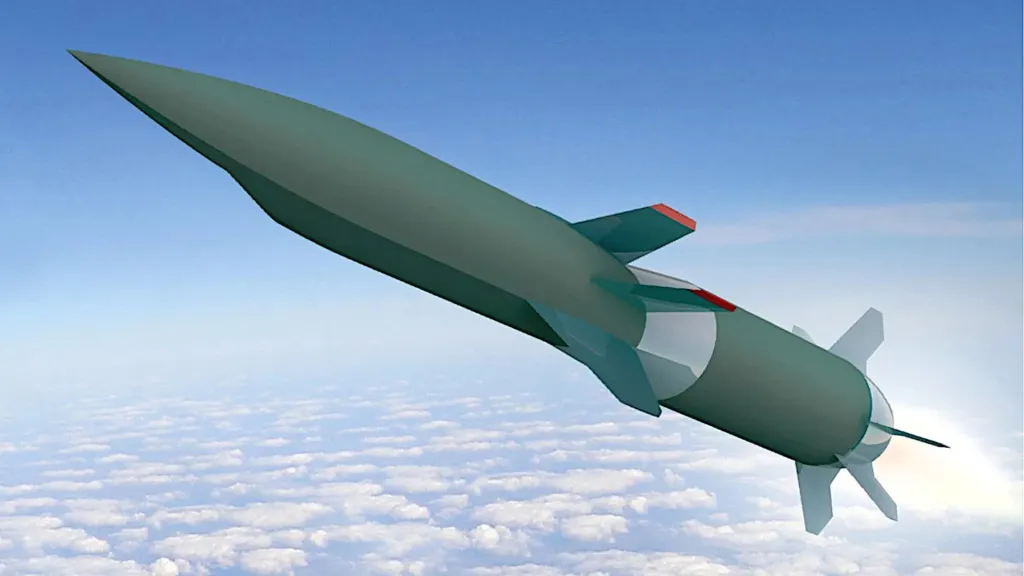
First Release Of USAF’s New HACM Hypersonic Cruise Missile Has Happened Over Australian Range
The U.S. Air Force’s scramjet-powered Hypersonic Attack Cruise Missile (HACM) has finally reached the flight test phase, with at least one “release” having been carried out so far over a range in Australia. HACM has suffered significant delays, and the Air Force has taken the risky step of scaling back overall testing plans to try to keep the program on schedule. The stated goal is to be able to make a decision to start rapidly acquiring HACMs in 2027.
The Air Force has been working on HACM in cooperation with the Royal Australian Air Force (RAAF). The program has been conducted, in part, under the broader umbrella of the U.S.-Australian Southern Cross Integrated Flight Research Experiment (SCIFiRE). The Defense Advanced Research Projects Agency’s (DARPA) Hypersonic Air-breathing Weapon Concept (HAWC) project also fed into HACM. Raytheon (now formally RTX), in cooperation with Northrop Grumman, was chosen to develop the missile in 2022. The weapon has reportedly been designated AHM-4A in a new branch of the U.S. military’s joint service nomenclature system for aircraft and missiles.

“The U.S. Air Force, in partnership with Australia, has conducted a flight test of the Hypersonic Attack Cruise Missile (HACM) as part of our continuous work to advance long-range strike capabilities,” an Air Force spokesperson confirmed to TWZ today. “This effort is part of the Southern Cross Integrated Flight Research Experiment (SCIFiRE), a collaborative agreement built on more than 15 years of partnership between our two nations.”
“Leveraging this enduring alliance, the Royal Australian Air Force executed the release of a HACM flight test unit over a designated Australian test range, gathering crucial data to advance the program’s objectives,” the spokesperson added. “The flight was the culmination of an extensive series of tests designed to measure the missile’s performance under realistic flight conditions.”
The spokesperson did not name the test range where the “release” was conducted or say when that occurred. Whether the missile flew under its own power for any amount of time after release is unknown. What aircraft was used to carry the missile aloft is also not known. TWZ has reached out for more information.
The Air Force did say previously that it planned to conduct HACM launches in Australia. The expectation has long been that this would be done at the country’s sprawling Woomera Test Range, which provides an ideal location for extended-range flight testing activities in general. The U.S. and Australia have partnered on other hypersonic testing at Woomera in the past, as seen in the video below. The remote inland location of the range complex makes it well suited for conducting more sensitive tests away from prying eyes, as well.

HiFiRE 5B rocket reached Mach 7.5
The Government Accountability Office (GAO), a Congressional watchdog, has also reported in the past that RAAF F/A-18F Super Hornets would be used to conduct at least some of the HACM test launches. This would fit with today’s statement from the U.S. Air Force saying that it was the RAAF that “executed the release.” The Air Force’s initial launch platform is the F-15E Strike Eagle, though others are expected to follow.

To date, neither the Air Force nor Raytheon has released a confirmed picture or rendering of HACM. In 2023, the Air Force did release a picture, seen below, showing an air-breathing hypersonic cruise missile test article related to either HACM or the preceding HAWC effort.

“The missile consists of two stages, a rocket booster and a scramjet cruiser, which separates from the booster and eventually dives toward its target,” according to GAO. Scramjets do not function effectively at lower speeds, and designs powered by them require some form of initial boost to a high Mach velocity. Hypersonic speed is generally defined as anything above Mach 5, but what HACM’s peak speed might be is unknown.
Two-stage air-breathing missile-like hypersonic vehicle designs have been tested on several occasions in the past. This includes Boeing’s scramjet-powered X-51 Waverider and HyFly 2 hypersonic test vehicles, among others. The X-51 (as its name indicates) and HyFly 2 also notably had so-called ‘waverider’ configurations designed to ‘skip’ on the shockwaves generated during high-speed flight to help provide additional lift. Whether HACM might also use this principle is not known.

X-51A WaveRider Scramjet Second Hypersonic Flight Test
It’s also worth noting here that Castelion’s Blackbeard hypersonic missile also has a two-stage configuration. It remains unconfirmed whether or not the second stage of that weapon is powered, but it does not appear to be an air-breathing design either way. Castelion is currently developing an air-launched version of Blackbeard for the U.S. Navy, which is also in flight testing now, as well as a ground-launched type for the U.S. Army. You can read more about that missile here.
Scramjet-powered air vehicle designs, including aircraft and missiles, have historically proven challenging. As noted, HACM has suffered delays over the years. The original goal had been to begin flight testing in 2024, which slipped first to 2025 and then 2026.
“The HACM program is on track to conduct its first flight test in the second quarter of fiscal year 2026, but officials said there is effectively zero margin left in the schedule for the rapid prototyping effort. The program has already descoped the rapid prototyping effort from seven to five planned flight tests,” GAO said bluntly in a report published in July. “The Air Force plans to produce 13 missiles during the rapid prototyping effort, including test assets, test spares, and operational rounds.”
“If a significant flight test failure occurs, it is likely that the program will not be able to complete all five tests within the 5-year rapid prototyping timeframe,” the report continued. “According to the program, completing at least the first three flight tests is critical for informing the Air Force’s decision to initiate a rapid fielding effort and procure HACM in fiscal year 2027.”
GAO’s July report, which had a January cutoff date, noted later on that the Air Force’s target date for initiating the rapid fielding effort, more specifically, was the first quarter of Fiscal Year 2027. This fiscal period began last Thursday and runs through the end of the year. Whether the service is still aiming to keep to that part of the schedule is unclear, but it would seem extremely difficult to do so.

“The HACM program has taken on risk to maintain its current schedule. According to program officials, maintaining the schedule has required aggressively resequencing activities to focus almost exclusively on those necessary to support the first flight test date,” GAO’s report added. “In some cases, officials said this has involved risky strategies, such as concurrently performing parts validation testing while completing the system’s design, which could require the redesign of key parts if they fail validation testing.”
In terms of U.S. hypersonic missile developments, challenges have also not been limited to scramjet-powered types like HACM. Air Force, Navy, and Army efforts to develop a variety of air- and surface-launched hypersonic missiles in various sizes and configurations have all suffered setbacks in the past decade or so. The Navy notably cancelled its own air-launched hypersonic cruise missile program, called Hypersonic Air-Launched Offensive Anti-Surface Warfare, or HALO, last year. The service subsequently shifted focus to the aforementioned Blackbeard under a program called the Multi-mission Affordable Capacity Effector (MACE). This has all prompted particular concerns about a growing and increasingly worrisome gap in this regard between the United States and its chief global competitors, especially China.

There is also a cost question. HACM traces to a time when hypersonic missiles were generally viewed, at least publicly, as highly capable, but also higher-cost and lower-density, assets. Blackbeard, for example, reflects a more recent push to develop and field more economical munition designs across the board that can also be more readily produced at scale. This demand signal has become even more pronounced in light of the dwindling American stockpiles of critical munitions due to the conflict with Iran, as well as other crises globally in recent years. More exquisite munitions, including hypersonic types, will still be part of the larger U.S. arsenal going forward.
Regardless, the U.S. military, as well as its Australian counterparts, have made it clear in the past that they view hypersonic weapons as critical for success in future conflicts, especially high-end fights, such as one in the Pacific against China. In general, air-breathing hypersonic cruise missiles offer a valuable and highly flexible way to strike targets, especially time-sensitive ones, quickly and over extended ranges. The weapon’s high speed and maneuverability drastically increase its ability to penetrate through enemy air defenses and reduce the total time an opponent has to react.
Whether or not the Air Force will be able to avoid any more major delays with HACM remains to be seen. The service’s goal to start at least limited production of HACM before the end of 2027, if not sooner, is even more ambitious now after years of schedule slips. As mentioned, officials have already acknowledged there was no more margin for error at the start of the year. There are many questions still about what form any initial fielding will take, and how that might be further impacted by the truncated testing plan.
The HACM program has at least now hit the important milestone of beginning flight testing.
Contact the author: joe@twz.com

Princess Andre breaks silence on romance rumours after being spotted out with Love Island bad boy
PRINCESS Andre has broken her silence on romance rumours after being spotted out with a Love Island bad boy.
The 19-year-old was spotted out with Harrison Solomon, 23, on Friday night at the VIP launch night of Shocktober Fest at Tulleys Farm.
Princess and Harrison, who shot to fame on the ITV2 show in 2025, were also seen at a Thorpe Park event the night before.
This has raised a few eyebrows and many have been left wondering if the pair are an item.
Princess, who is the daughter of Katie Price and Peter Andre, took to TikTok to clear some things up.
She took to the social media platform and wrote: “Rumours are really funny.


“Firstly we are part of the same management hence being at the same events.
“Also, just because a boy and a girl are laughing doesn’t mean anything romantic, me and Harrison.”
On Friday, the duo were seen spending most of the night with each other and their wider group of pals for the fun-filled evening.
Harrison brought his little sister along for the evening and made sure to keep a watchful eye over her whilst Princess enjoyed spending time with two of her best pals.
They also enjoyed an event at the popular theme park with their pals.
Despite appearing very chummy, however, a source close to Princess insists the pair are just pals.
“They share the same management company as Harrison recently signed to the same reps as Princess. There is nothing romantic going on,” they insisted.
Harrison took part in the 12th series of Love Island in 2025 and entered the villa as a bombshell.
During his stint in the villa he was slammed by Women’s Aid for ‘misogyny and sexism’ in a statement because of his treatment towards Lauren Wood while in a love triangle with Toni Laithes.
“Despite these positive steps, we still see unhealthy patterns of behaviour on these shows, showing just how steeped in misogyny and sexism our society still is.
“Women are often lied to, slut-shamed and manipulated, as well as laughed at behind their backs.
“Misogyny and sexism lay the foundation for the tolerance of abuse and violence – it reinforces a culture that excuses and trivialises violence against women and girls.
“More must be done to educate contestants on sexism and misogyny, and it is a great credit to viewers who take to social media, continuing to call out these behaviours as soon as they see them.”
In response to the statement, Harrison told Daily Mail: “I have seen the backlash and it’s hard to digest.
“I would disagree with a lot of it in terms of my respect for women, I do respect women.
“The worst has been from Women’s Aid. I know myself and the girls on the show too, Toni said she knows I’m not a bad person, just went about situations in the wrong way, but the Women’s Aid statement wasn’t nice… it’s not nice coming out of the villa to my mum upset by that so I would say that’s been the hardest.”

Tuesday 6 October Earthquake Memorial Day in Turkmenistan
The source provides an overview of Earthquake Memorial Day in Turkmenistan, which marks the devastating natural disaster that struck near Ashgabat on October 6, 1948. It explains that a massive magnitude 7.3 earthquake completely leveled the capital city and numerous surrounding villages in a matter of moments. While the Soviet government initially censoredthe true extent of the catastrophe and reported only 10,000 fatalities, later estimates revealed a staggering death toll of 110,000 people, representing ten percent of the nation’s population at the time. Despite government censorship and the immense scale of destruction, medical professionals and neighboring Soviet regions rushed to assist survivors following the tremor. The article also notes how the tragedy impacted future leadership, specifically mentioning that former President Saparmurat Niyazov was left an orphan after losing his entire family in the disaster.

Train station is returning to tiny UK village for the first time since World War One in ‘hugely significant’ milestone
A TRAIN station is set to return to the centre of a tiny UK village after more than 100 years.
Work has started on bringing the station back following a “major breakthrough” on issues that delayed the scheme.


Villagers in Cheadle, Stockport, last had the use of a train station in 1917, when it was located near to the high street.
Since then, residents have been forced to use public transport and cars when travelling to nearby areas, including Manchester city centre.
Stockport Metropolitan Borough Council said concerns that other trains on the rail network might be delayed had stalled progress of the scheme.
However, in what has been described as a “hugely significant” move, council officials said work had now started on bringing back the station, which will be built near The Alexandra Hospital.


Funding for the station was approved in 2022, with planning permission granted in 2023, but concerns over timetabling led to delays.
In a statement, Cllr Mark Roberts, leader of Stockport Council, said: “This is a hugely significant moment for Cheadle and for Stockport.
“For years we’ve fought for this station because we know the difference it will make to residents, businesses and the future prosperity of the area.
“Cheadle Station has always been about improving connections, creating opportunities and making it easier for people to travel for work, education and leisure and I am delighted that the highways work can now start on site later this month thanks to the persistence and partnership of all involved.”
Services are expected to run from Cheadle into Stockport town, Manchester Piccadilly and Chester.
It remains unclear when the station will open to the public.
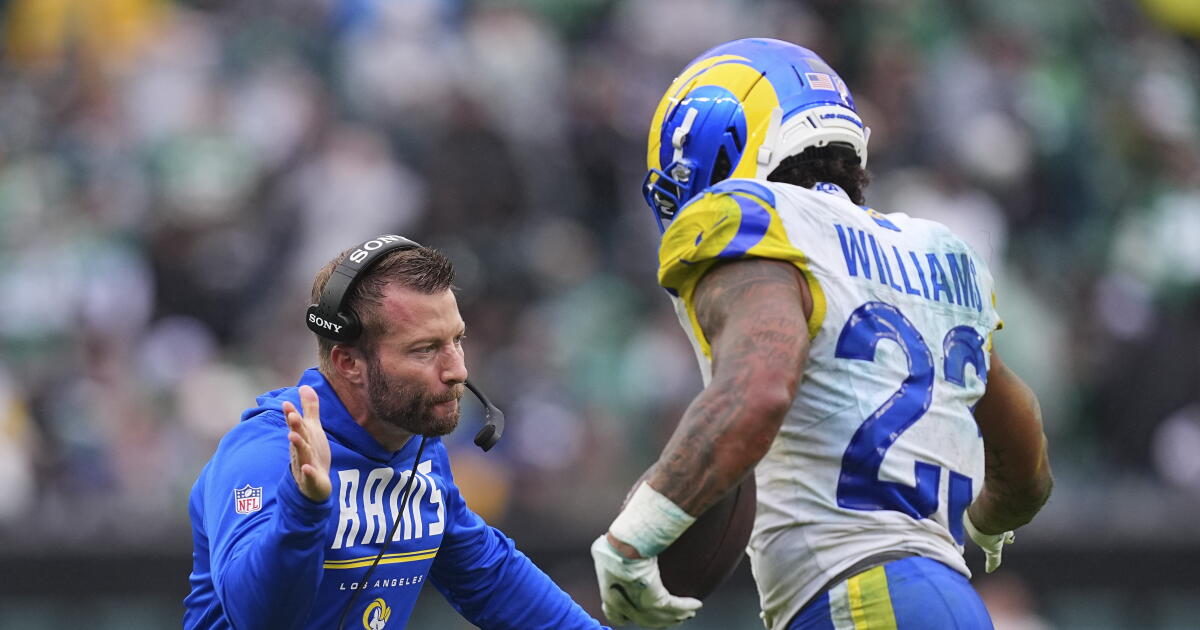
Sean McVay says addressed Rams assistants’ behavior toward Eagles fans
Rams coach Sean McVay told reporters Monday that he had spoken with his assistant coaches about the way some of them behaved toward the end of the team’s 24-20 win over the Philadelphia Eagles on Sunday at Lincoln Financial Field.
“We did talk about it,” McVay said, “and that won’t be an issue moving forward.”
Videos posted on X by user @RBPhillyTake appear to show some Rams coaches inside a glass-enclosed booth interacting with Eagles fans sitting outside directly below them. The caption on one of the videos says the coaching staff was “taunting Eagles fans after the game-winning touchdown.”
“The Rams coaches started to bang on the windows and flip off Eagles fans which caused retaliation (which also isn’t right),” the caption reads. At least one person in the Rams’ booth can be seen giving the middle finger to those outside. A fan appeared to throw a water bottle at the glass window, while others yelled and displayed their own middle fingers.
In another post, the user wrote that “the Rams coaches started banging on the windows for about 30 seconds after the touchdown which then resulted in the Eagles’ fans turning around and chirping back.”
Trailing 20-10 late in the fourth quarter, the Rams appeared to be on their way to a second-straight loss and a 1-3 start to a season in which they were considered by many to be the Super Bowl favorites. But Kyren Williams rushed for touchdowns of one and seven yards in the final four minutes to lift the Rams to a stunning comeback victory.
The sudden turn of events may have gotten folks in the Rams’ coaching booth a little too amped up.
“We’ll be better in those situations,” said McVay, a former assistant coach in Washington. “I’ve been a part of that situation where when I was with Washington calling it from the booth, and you get excited and emotional. … You know, we’ll learn from that. We’ll be better.
“Those fans are really into it. But I know we want to make sure we’re representing the class and just the calm steadiness that we want to have while also being emotionally into it. And there’s ways that we can have that reflected.”
The NFL did not immediately respond to a request for comment on the matter. Its personal conduct policy states that “everyone who is a part of the league” must refrain from behavior detrimental to the integrity of and public confidence in the NFL. Earlier Monday, two officials were suspended for separate instances of “unprofessional conduct toward a player” during Sunday’s games.
Staff writer Gary Klein contributed to this report.

South Korea considers steps to force North Korea apology for DMZ mine blast | News
Seoul has urged the North to remove any other mines planted on the southern side of the military demarcation line.
Published On 6 Oct 2026
South Korea is weighing measures to force an apology from North Korea over a recent landmine blast that wounded three soldiers in the Demilitarized Zone (DMZ) between the two countries, a Defence Ministry spokesperson has said.
A joint South Korean-United Nations investigation concluded on Monday that two landmines that exploded last month in the DMZ were planted by North Korean forces about a year ago, prompting Seoul to demand an official apology.
Recommended Stories
list of 3 itemsend of list
“We are not ruling out any options or prejudging anything when it comes to additional measures,” Defence Ministry spokeswoman Chung Bin-na told reporters on Tuesday when asked if steps were being planned to force an apology from Pyongyang.
Chung did not offer specifics about what actions might be employed.
Seoul has also called on nuclear-armed North Korea to remove any other mines planted on the southern side of the military demarcation line (MDL) that runs through the DMZ, the heavily fortified frontier that has divided the Korean Peninsula since the 1953 Armistice Agreement.
Pyongyang has denied responsibility for the September 21 blast, with Kim Yo Jong, the powerful sister of North Korea’s leader, slamming the call for an apology as “despicable”.
Chung said Seoul is calling on Pyongyang to come to the table to discuss a misalignment of the MDL. Differing views of the border line are one factor contributing to tension in the area, she said.
The comments come a day after South Korea’s military carried out a mine-clearing operation south of the MDL. It pledged to continue with clearing operations in the area if Pyongyang fails to remove the remaining explosives. The United States-led UN Command (UNC) confirmed the mine placement violated the 1953 agreement.
Defence Minister Kang Shin-chul told the Yonhap news agency on Tuesday that the military’s “decisive” response was “unprecedented in history”.
“All responsibility lies with North Korea,” Kang told reporters, adding that armed forces would “respond decisively” to any actions threatening national security.
The escalation comes as Pyongyang rejected diplomatic overtures from Seoul. Unification Minister Chung Dong-young proposed on October 2 that both sides jointly resurvey the MDL, noting that only about 200 of 1,292 original boundary markers remain intact and that Seoul and the UNC differ on roughly 60 percent of border coordinates.
Kim Yo Jong rejected the proposal as a “wild dream”, declaring Pyongyang would define its sovereign boundary “by the use of force, not by means of negotiation”.

Ryanair passengers told to check black, navy or grey suitcases before their flight
Many of us own one of these common colours for a suitcase but it is worth following simple advice that will stop any problems from arising

Many of us think they can spot their suitcase when it is on a baggage carousel(Image: mtreasure via Getty Images)
Ryanair continues to grow, with the airline carrying a record 208.4 million passengers in its latest full financial year – a four per cent increase on the previous year. However, the budget airline has also been cutting back at some European airports, with Ryanair withdrawing or reducing flights in certain locations.
The airline has pointed to factors including aviation taxes and airport charges. Despite this, the UK remains a key part of Ryanair’s expansion plans.
Its winter 2026 schedule includes 435 routes, with three new services from London Stansted and a new route between London Luton and Venice. A further 18 new routes have also been added from other UK airports.
As Brits gear up to the October half term holidays and winter, Ryanair has issued a warning to passengers who typically fly with black, navy or grey suitcases, urging them to ‘change’ their luggage to avoid any confusion when they land.
The budget carrier advised travellers to make their checked-in bags more distinctive on the carousel given the prevalence of these colours.
What Ryanair says
As reports the Express, Ryanair said: “Make it easier to spot your checked-in luggage on the carousel, especially if your luggage is black, navy or grey (like 99.9 percent of the population). Add a colourful luggage tag or ribbon to the handle so that there’s no confusion on arrival.”
Ryanair also recommends passengers create copies of their passport, driving licence, and/or ID card and email them to themselves.
It’s also suggested to photograph these documents and store them on your phone for offline access at your destination,
The well-known budget carrier transports an impressive 52 million passengers to and from the UK annually with its fleet of 107 UK-based aircraft.
In June, Ryanair experienced a spike in passenger numbers with 19.3 million people opting to fly with them across one of their 106,000 flights. This marked the first occasion the airline transported more than 19 million travellers and an 11 per cent rise compared to June 2023.
The airline also pulled out all the stops for England fans during the Three Lions’ Euro 2024 run, laying on over 1,500 extra seats to and from Berlin for the cup final.
On a separate note, if you’re on the hunt for stylish cabin bags and suitcases, Antler is well worth a look. Their Iconic Stripe Case, retailing at £175, is available in seven gorgeous colours, including mist blue.
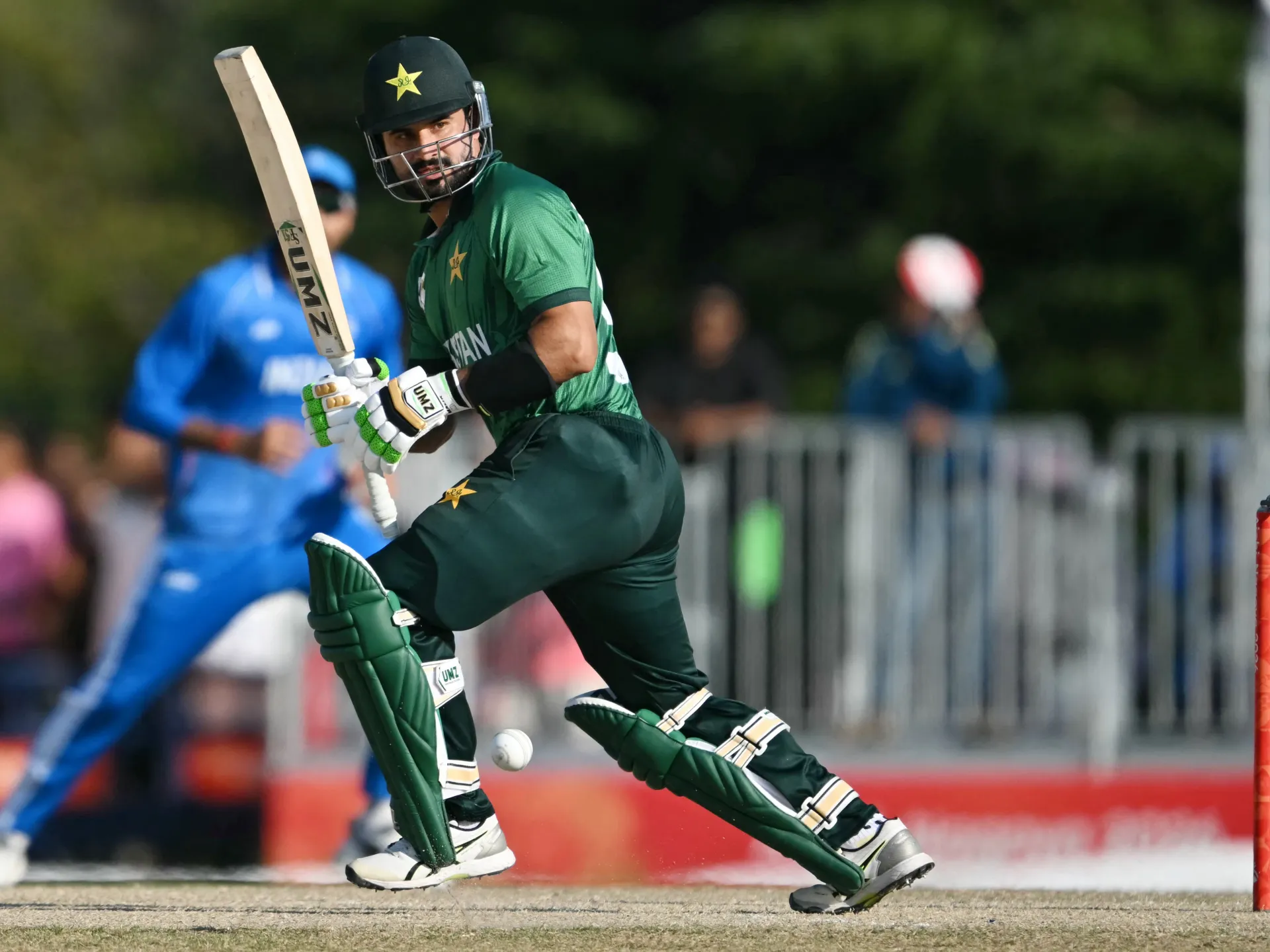
Sahibzada Farhan named Pakistan’s T20 captain as Naseem Shah returns | Cricket
Salman Agha axed before T20 home series against Sri Lanka, but Shaheen Shah Afridi is retained as ODI captain.
Published On 6 Oct 2026
Sahibzada Farhan has replaced Salman Ali Agha as Pakistan’s Twenty20 cricket captain, ushering in changes to the leadership and squad for the upcoming three-match home series against Sri Lanka.
Farhan led Pakistan to a silver-medal finish at the Asian Games, losing to India in the final on Sunday.
Recommended Stories
list of 4 itemsend of list
Batter Hasan Nawaz and fast bowler Naseem Shah were recalled to the T20 squad.
Nawaz had been out of favour since November, but in the Asian Games final he hit 96 and was out off the final ball as Pakistan lost by 19 runs.
Shah last played in the shortest format at the T20 World Cup in February. He was also added to the one-day international squad for the following tri-series with Sri Lanka and England.
Rising star Razaullah was rewarded for his impressive performance on his Test debut against England last month in Birmingham and was included in the T20 and ODI squads. He is yet to make his white-ball debut.
Fast bowler Shaheen Afridi was retained as ODI captain of a team that included Agha and Babar Azam.
But the selectors ignored Mohammad Rizwan because the wicketkeeper was under investigation by the National Cyber Crime Investigation Authority. Rizwan was one of the seven players who were summoned home after Pakistan lost the second Test to England at Lord’s in August.
Khawaja Nafay was the specialist wicketkeeper for the T20s while Ghazi Ghori, who made his Test debut in England, was the first-choice gloveman for the ODIs.
Rawalpindi will host the three Sri Lanka T20s from October 9-13. The tri-series begins on October 18.
Tait back as bowling coach
Former Australian fast bowler Shaun Tait was named as Pakistan’s bowling coach after his recent stint with the Bangladesh team. Under Tait, Bangladesh beat Pakistan 2-0 in the Test series this year.
Tait replaced Ashley Noffke, who has been contracted by the Netherlands.
Pakistan T20 squad: Sahibzada Farhan (captain), Abdul Samad, Abrar Ahmed, Arafat Minhas, Fakhar Zaman, Hasan Nawaz, Muhammad Imran Randhawa, Khawaja Nafay, Maaz Sadaqat, Naseem Shah, Razaullah, Saim Ayub, Mohammad Salman Mirza, Shadab Khan, Sufiyan Moqim.
Pakistan ODI squad: Shaheen Shah Afridi (captain), Abrar Ahmed, Salman Ali Agha, Arafat Minhas, Babar Azam, Faheem Ashraf, Fakhar Zaman, Ghazi Ghori, Haris Rauf, Hasan Nawaz, Naseem Shah, Razaullah, Saad Baig, Saim Ayub, Shadab Khan, Sufiyan Moqim.

Christopher Abbott movies and TV shows as East of Eden soars Netflix charts
The acclaimed actor stars as the sweet-natured Adam Trask in Netflix’s East of Eden

East of Eden is now streaming on Netflix(Image: Netflix)
East of Eden viewers are wondering where they’ve seen one of the show’s stars before.
The Netflix series is an adaptation of John Steinbeck’s novel of the same name and stars a glittering cast including Florence Pugh as literary legend Cathy Ames, while Mike Faist and Christopher Abbott portray the brothers who fall for her, Charles and Adam Trask.
Netflix’s synopsis reads: “This fresh interpretation of Steinbeck’s masterpiece will explore the multigenerational saga of the Trask family, focusing new attention on its indelible antihero, Cathy Ames.”
The seven-part series arrived on the streaming platform just last week and it is currently at the top of Netflix’s most-watched TV series in the UK list. As fans dive in to the episodes, many have wondered about one particular cast member.
Christopher Abbott plays the sweet-natured Adam Trask who shows kindness to Cathy Ames when she appears bloodied and beaten at the door of his home, shared with his brother, who at first is much more sceptical of their new arrival. Adam nurses her back to health and they go on to marry.
Even before he whisks her away to California however, cracks have started to show. While it is a place he has always dreamed of, Cathy does not share that dream and she makes no secret of it.
Google searches for Christopher Abbott’s past movies and TV shows have soared since East of Eden’s debut, so where might viewers know the star from?
What films and TV shows has Christopher Abbott been in?
His breakout role was as Charlie Dattolo in the HBO series Girls. He was a recurring cast member, portraying the kind boyfriend of Marnie Michaels (Allison Williams). More recently he has had leading roles in Poor Things alongside Emma Stone, 2025 horror film Wolf Man and 2022 comedy-thriller, Sanctuary.
He is no stranger to literary adaptations and previously took the lead role of Yossarian in Catch-22, a TV series based on the Joseph Heller novel of the same name.
Discussing his role as Adam, Christopher told Netflix’s Tudum: “He’s a character that has lived a lot of different lives, and he’s sort of changed his personality throughout it.
“He starts off, like, hopping trains and living like a vagabond and stealing stuff and then becomes a different human when he has son. It’s a big epic arc to track.”
East of Eden is now streaming on Netflix.

Move Shohei Ohtani down in Dodgers’ lineup? Dave Roberts ‘open’ to it
ATLANTA — As the Dodgers mull potential lineup changes for Game 3 of the National League Division Series, manager Dave Roberts said he is “open” to moving Shohei Ohtani lower in the batting order.
In his three seasons with the Dodgers, Ohtani has batted first or second in every game he has started. However, as he has admitted he is trying to “manage” in the aftermath of knee and arm injuries, and as Roberts has acknowledged Ohtani is “not 100%,” the lack of success could compel the manager to replace him at the top of the lineup with a more productive hitter at some point.
“I would,” Roberts said Monday. “I would. I think it’s something that, you know, I think moving him from 1 to 2 — but going further than that? I’m open to it.
“And it’s something that if I do, I would obviously have the conversation with Shohei to explain why. And at the end of the day every conversation I’ve had with him is whatever’s best for the team, he’s all-in on. So I know that undoubtedly.”
The Dodgers are batting .215 through the first two games of the NLDS, with the Atlanta Braves scheduled to pitch left-handed ace Chris Sale in Game 3 on Tuesday. If the Dodgers lose, they would need to win back-to-back elimination games to advance beyond this series.
Roberts said the lineup changes he would consider include starting Kiké Hernández and Miguel Rojas, both of whom hit well against left-handers. That could mean infielders Max Muncy (0 for 7 against Sale, with five strikeouts) and Tommy Edman (0 for 11 against Sale) might not start.
Center fielder Andy Pages, who batted so poorly last October he was benched for the final three games of the World Series, is hitless in seven at-bats in this series, with four strikeouts.
“I’m gonna continue to give Andy leash,” Roberts said. “I believe in him. I feel that for us to win the World Series this year, we’re gonna need him to be an active part of our team.
Roberts said he did not envision benching catcher Will Smith, who is 0 for 8 in the series. The Dodgers’ backup catcher, Hunter Feduccia, is a career .205 hitter with no postseason experience.
But, even with the Dodgers’ star-studded lineup, the spotlight shines brightest on Ohtani.
Ohtani has not homered since Aug. 18. He hit .157 between then and the end of the regular season, striking out in 41% of his at-bats. In this series, he has two hits and two strikeouts in eight at-bats, and his inability to refrain from swinging at pitches outside the strike zone has become a glaring weakness.
“He’s not 100%,” Roberts said. “But, at the end of the day, he can still do a better job of staying in the strike zone.”
Ohtani hasn’t given the Braves a reason to challenge him within the strike zone.
“Everything orbits around Shohei, in the sense of his talent,” Roberts said. “And the Braves are going to enter with caution. And, so, knowing that, they’re going to continue to expand as long as we keep giving that to them. So until we show some discipline, they’re going to continue to kind of use that playbook.”

Harmanpreet Kaur steps down as captain of India’s women’s cricket team | Cricket
The 37-year-old is the longest-serving cricket captain, among both men and women, to have captained in more than 150 T20I games.

Published On 6 Oct 2026
India’s long-serving captain of the women’s cricket team, Harmanpreet Kaur, has stepped down from the role across all formats, bringing down the curtain on a successful stint as she led the South Asian team to their first ICC Women’s World Cup title at home in 2025.
Kaur announced her decision in a social media post on Tuesday, two weeks after leading India to a successful defence of their gold medal at the Asian Games.
Recommended Stories
list of 4 itemsend of list
“Today, I step down as captain of the Indian Women’s Cricket Team across all formats,” she wrote in an Instagram post.
“This is not an easy decision. It carries years of memories, emotions, sacrifices, and moments that will stay with me for the rest of my life.”
The 37-year-old was the Twenty20 captain for more than a decade after assuming the role in 2016, followed by ODI and Test captaincy in 2022.
Kaur, who made her T20I and ODI debuts for India in 2009, has had an illustrious career as skipper.
Indian media reports said Kaur’s decision came a day after she met Devajit Saikia, secretary of the Board of Control for Cricket in India (BCCI), to discuss the future of the women’s team.
Opening batter Smriti Mandhana, who has been Kaur’s deputy since 2022, is the favourite to take over the captain’s role.
Under Kaur’s captaincy, India won their maiden Women’s Cricket World Cup title in November last year on home soil.
Most recently, she led India to title defence at the Asian Games, thrashing Sri Lanka, just after lifting the Women’s Asia Cup trophy earlier in September.
The top-order batter helped India reach the semifinals of the 2018 and 2023 Women’s T20 World Cups, as well as finish runners-up in the 2020 edition.
Kaur has captained India in five Tests, 51 ODIs and 155 T20Is, and is also the first cricketer — male or female — to captain her side in international cricket in more than 150 T20I games.
“I leave the captaincy today with a heart full of emotions, but also with peace … because I genuinely believe my team is in a good place,” she said in her Instagram post. “I feel I have done my duty.
“Captaincy may end today, but my love for Indian cricket never will.
“Now, I’m ready to play for the love of the game again. Captaincy ends. The journey continues.”
Are pets replacing human babies? | Economy
People are adopting pets over having babies, making the pet care industry grow. But why are people having fewer babies? Al Jazeera’s Yasmeen ElTahan explains.

Published On 6 Oct 2026

First look at ‘gripping’ new detective thriller by Death in Paradise writer
The unpredictable crime drama follows the puzzling deaths of four guests at a dinner party

Emmett J Scanlan transforms into Niall Conway for the Channel 5 drama(Image: 5)
MobLand star Emmett J. Scanlan is starring in a new murder mystery alongside Celebrity Traitors’ Sharon Rooney.
Channel 5 has released a first look at their upcoming thriller, An Impossible Way to Die, which follows two detectives who are tasked with uncovering the mysterious deaths of four guests at a dinner party.
The six-part series has been described as “gripping” by the broadcaster, and follows Sharon Rooney’s character, DS Katie Salter, whose quiet local policing life is upended when she is thrust into a high-pressure murder investigation with DI Niall Conway, played by Emmett J Scanlon.
Described as a character-driven, unpredictable drama exploring identity, protection, power, and corruption, the story will see DS Katie Salter “happily solving everyday crimes until fate drags her into an impossible murder mystery”.
The synopsis continues: “Four people sat around a table seemingly set for a dinner party – except they are all dead. The only clue is a scorpion crawling out of one of the victim’s mouths.”
It continues: “Salter is not your stereotypical damaged and tormented TV detective. Smart, diligent, and committed to her family, tensions quickly surface when Salter is partnered with DI Niall Conway, lead investigator on the case. Salter’s measured, grounded approach clashes with Conway’s all-consuming dedication to the job.
“At first, the two detectives appear fundamentally incompatible. Yet, as the investigation deepens and the pressure intensifies, Conway begins to recognise the value of Salter’s empathy, optimism, and instinctive understanding of people.”
The synopsis adds: “As the case grows increasingly impossible, secrets are unearthed and conspiracies emerge, lives are put at risk as the detectives race against time to connect seemingly disparate cases and unmask a killer before it’s too late.”
DS Katie Salter actress Sharon Rooney is best known for playing Rae Earl in My Mad Fat Diary and was recently seen competing in the latest series of The Celebrity Traitors. While Emmett J. Scanlan is famed for portraying Paul O’Donnell in Paramount+ crime series MobLand, his other recent roles include A Working Man, Gangs of London, and How to Get to Heaven from Belfast.
Coldwater and Vigil star Lois Chimimba will star alongside Rooney and Scanlan, and will be joined by Black Mirror’s Jonny Lavelle and This Country’s Ashley McGuire.
The crime series is scheduled to air in 2027 and has been penned by Death is Paradise’s Jillian Mannion, alongside Ciara Conway, David Persiva, Robin Ganderton, and Rowena Johnson.
Adam Wimpenny serves as director for the thriller, which is executive produced by Clapperboard’s Mike Benson and Myf Hopkins. Amber Howorth also serves as producer
An Impossible Way to Die will air on Channel 5 in 2027

Central America’s Trade Squeeze | Global Finance Magazine
Deeper integration could attract more nearshoring, but governments will have to step up, too.
This article appears in the October issue of Global Finance Magazine.
With Panama joining Mercosur and Costa Rica wrapping up negotiations to join the Trans-Pacific Partnership, the rest of Spanish-speaking Central America risks being left behind.
Regional integration efforts have hitherto focused on custom unions, stock market interoperability, the Central American Integration System (SICA), the Central American Parliament, and the Central American Free Trade Agreement (FAUCA).
“Panama’s accession to Mercosur as an associate state creates competitive pressure on the rest of Central America,” said Costa Rica-based financial analyst Daniel Suchar. “This could divert foreign direct investment that traditionally viewed Central America as a gateway to the Americas, forcing the other countries in the region to accelerate their own trade agreements to avoid falling behind.”
As a Mercosur member, Panama gains access to a market of 260 million people as well as value chains in Brazil, Argentina, and Uruguay, notably in logistics, financial services, and agribusiness. This opens the door to negotiations for a Central American bloc to join Mercosur, using Panama as a bridge.
“From a business perspective, the more connected, competitive, and open to trade Central America is, the greater the possibilities for developing regional value chains and attracting investment,” said Rosmer Jurado, president of the Union of Panamanian Industrialists.

Financial Analyst
Since last year, talk of a renegotiation of the Dominican Republic-Central America-United States Free Trade Agreement (CAFTA-DR) has been circulating among governments in the region. Should talks begin—the Dominican Republic is pushing hard for a trade deal—they would likely include proposals for further integration and increased rules and regulations.
“A new agreement would be expected to include chapters on the digital economy, SMEs, resilient supply chains, and more stringent labor and environmental standards,” said Suchar. “A modernized CAFTA-DR should also address trade facilitation and regional cumulation of origin so that Central America can sell as a bloc and not as six separate countries.”
Opportunities in Nearshoring
Central America remains a diverse region, however, both politically and economically, which makes further integration challenging. Nicaragua is in danger of being frozen out of US trade after effectively banning elections, and Costa Rica has historically prioritized market diversification over Central American integration. Forging closer ties with the U.K. is part of its strategy to insert itself into high-value global production chains, particularly in medical devices, services, and technology.
The future of the Northern Triangle states—Guatemala, Honduras and El Salvador—is likely to be conditioned by their capacity to attract nearshoring and reduce non-trade costs. If they improve legal security, infrastructure, and energy, Suchar said, they can position themselves as alternatives for light manufacturing and textiles for companies leaving Asia.
Nearshoring has been hailed as the region’s magic bullet; a 2024 report by the Center for Strategic and International Studies suggested that U.S. nearshoring alone could add at least $3.3 billion a year to Central American exports. But this is where governments will have to step up, Jurado noted. “Central America can take advantage of nearshoring,” he said, “but the opportunity will not automatically arise simply because of our location. The region must transform its proximity to the U.S. and its strategic position into concrete advantages: better infrastructure, lower logistics costs, specialized talent, competitive energy, trade facilitation, and clear rules for investment.”
Trade agreements, supply chain conditions, and geopolitical risk will all play a role. “Trade agreements are no longer just about tariffs,” said Suchar. “They focus on supply chain resilience, ESG standards, and geopolitics.”
Nic Wirtz is a contributing writer based in Guatemala.

LIV Golf: Competition secures potential $300m investment to emerge from restructuring
The credit firm, which provides financing to middle-market companies, said the funding would support the next phase of LIV Golf, under which players would become equity owners of both the league and its teams.
The financing remains subject to bankruptcy court approval and customary conditions.
“This investment is an important step forward for LIV Golf,” said LIV Golf CEO Scott O’Neil in a statement.
“We’re delivering on our major milestones, and while there is still work ahead, today marks meaningful progress toward a player-owned, team-focused, truly global league that complements the wider game and creates new opportunities for players, fans, partners, and the next generation of golfers.”
Since LIV’s controversial launch in 2021, more than $5bn (£3.7bn) has been spent by Saudi Arabia’s Public Investment Fund (PIF), with major winners including Jon Rahm and Bryson DeChambeau lured by lucrative contracts and vast prize money.
However, the future of the concept – and its star players – has been shrouded in uncertainty, with the 2026 season having ended early.
Documents in the petition outline money owed to LIV Golf’s creditors with the 30 largest unsecured claims.
Two-time major winner Rahm tops that list with an unsecured claim of $7.5m (£5.5m).
DeChambeau ($5.7m – £4.2m), Dustin Johnson ($5.5m – £4.1m), Cameron Smith ($4.8m – £3.5m) and Tyrrell Hatton ($3.4m – £2.5m) are also among the top 30 creditors, as well as Brooks Koepka, who left to rejoin the PGA Tour in January but has an unsecured claim of $1.7m (£1.25m).
The total amount owed to the 14 current and former LIV players in the top 30 creditors is just over $45m (£33m).
A source familiar with the figures told BBC Sport the creditors list outlines the “amount owed and not paid for Q3” of 2026, not the full amounts.
Chapter 11 protection postpones a US company’s obligations to its creditors, giving it time to reorganise its debts or sell parts of the business.
PIF is providing a bankruptcy loan of $49.6m (£36.6m) – called ‘debtor in possession’ (DIP) financing – to help fund the process.

Will Cristiano Ronaldo play for Portugal after a row with coach Jesus? | Football
The drama surrounding Cristiano Ronaldo’s international future took another turn after Portugal head coach Jorge Jesus left the door open for the 41-year-old superstar’s return following his abrupt departure from the national team’s training camp.
The sentiment is shared by the Portuguese Football Federation president Pedro Proenca, who believes the episode is a mere misunderstanding that could be resolved internally.
Recommended Stories
list of 3 itemsend of list
But how did the apparent rift start, and will Ronaldo ever play again for Portugal?
What happened between Ronaldo and Jesus?
Ronaldo left the Portugal squad late on Wednesday, shortly after the head coach’s news conference, where Jesus confirmed that the five-time Ballon d’Or winner would be left out of his starting lineup for the match against Denmark, marking a second consecutive Nations League game absence.
Ronaldo’s decision to walk out came as a shock, as he had been due to train with his teammates at the Parken Stadium in Copenhagen.
Portugal’s leading scorer had already spent the entirety of the 2-1 Nations League win away to Norway on September 27 on the bench, having captained the side in the 1-0 home victory over Wales three days before.
The game in Oslo was the first time since November 2024 that Ronaldo had not featured for Portugal despite not being injured or suspended.
What has Ronaldo said?
Ronaldo appeared to indicate that the reasons behind Jesus’s decision to bench him ran deeper and hinted at a departure from the national team he has graced for more than two decades.
“In due course, I will tell the truth to all the Portuguese people about my reasons for leaving the national team, to which I have always been dedicated,” Ronaldo said in a cryptic Instagram post, announcing his sudden exit from the camp.
Spanish sports daily Marca said Jesus and Proenca followed Ronaldo to Copenhagen airport in an attempt to persuade him to stay with the squad, before the player boarded his private jet.
There were reports that Portuguese Prime Minister Luis Montenegro had even discussed the issue of Ronaldo’s involvement with the coach on Wednesday.
Jesus insisted that there was no rift between them, although the 72-year-old, who was appointed in July, acknowledged that his captain was disappointed to remain on the bench against Norway.
How did Portugal play without Ronaldo?
Despite his absence, Nations League title holders Portugal won, defeating Denmark 4-2 in Copenhagen and Norway 2-1 in Porto. They also became the first team to qualify for the quarterfinals, ensuring a top-two finish in Group A4.
Forward Goncalo Ramos stepped up in Ronaldo’s absence, scoring three goals to be the team’s joint top scorer along with Joao Felix, while the AC Milan player also bagged an assist.
What did Portugal’s coach say about Ronaldo?
On Sunday, coach Jesus said Ronaldo could return to the national team if he chooses to.
“If he wants to, he’ll return to the national team. We can talk before the next call-up, but Cris is the one who’s going to decide,” said Jesus, who also coached Ronaldo at Saudi Arabian club Al-Nassr.
“He’s the one who should decide how he wants to end his time with the national team. In my first call-up, I said, ‘I need you, I need you to be close to me, playing or not playing, I need you’. And now I’m saying the same thing.”
Jesus expects the forward to be available for the next international window if he wants to return.
What have the Portugal players said about Ronaldo?
Midfielder Bruno Fernandes said on Saturday he had spoken to Ronaldo and dismissed suggestions of a rift within Portugal’s squad.
“I had a chat with him and what I said to him is what I’ll repeat here: the most important thing is that, whatever happens, Cristiano Ronaldo will never cease to be the greatest symbol of our national team, of our football and of the country,” Fernandes told a news conference.
“For what he has achieved not only in Portugal, but all over the world. He has a place reserved not only amongst the all-time greats, but also in the hearts of all Portuguese people.”
“The most important thing is that we stop stirring up trouble; there are no divisions within the national team. It is one team and will remain so, despite any noise that may come from outside.”
Fernandes called for unity after a tumultuous few days in which Portugal fans’ opinions have been split over Ronaldo’s decision.
“We are outside of this controversy, but what I ask is that the country does not divide itself, does not make choices, that it respects all sides, but, at the same time, Cris is and will be the biggest icon of our national team. He deserves everyone’s respect, regardless of who likes him more or [who likes him] less,” Fernandes added.

When was Ronaldo’s last match for Portugal and how did he perform?
Ronaldo featured just once for Portugal during this year’s Nations League, playing 67 minutes in their 1-0 home win over Wales.
It was a frustrating night for the Al-Nassr forward, who misfired several times. He found the side netting once and shinned an inviting volley high over from close range.
Around the hour mark, Ronaldo slid the ball into the Wales net but, to his evident disbelief, was ruled offside.
He was still shaking his head when Jesus substituted him seven minutes later.
Will he play for Portugal again?
The jury is still out.
Ronaldo, who made his Portugal debut in 2003 at the age of 18, has said this will “probably” be his final year in football. The forward has been a fixture of the national team for more than two decades and has played at six World Cups.
Former Real Madrid and Manchester United attacker Ronaldo is Portugal’s record scorer and most-capped player, with 146 goals in 234 international appearances.
He reached the World Cup semifinals in 2006 and captained his country to glory at Euro 2016. Ronaldo and Portugal were eliminated by eventual winners Spain in the last 16 of this year’s World Cup.
When is Portugal’s next match?
Portugal have completed their quota of four Nations League fixtures in this extended international window.
Their upcoming matches are in the next window: a home game with Norway on November 14 and an away match against Wales three days later.
Those matches will wrap up Portugal’s league phase in the Nations League, which they have won twice.

Croatia vs Spain: UEFA Nations League – Yamal, Modric, head-to-head | Football
EXPLAINER
Coming on the back of a 10-match winning streak, Spain face Croatia with sights on the Nations League quarterfinals.
Who: Croatia vs Spain
What: UEFA Nations League 2026-27, Group A3 match
Where: Stadion Poljud, Split, Croatia
When: Tuesday, October 6, at 8:45pm local time (18:45 GMT)
How to follow: Al Jazeera Sport will bring you all the build-up and live updates from 15:45 GMT.
FIFA World Cup holders Spain can confirm their ticket to the UEFA Nations League quarterfinals when they face Croatia on their trip to Split.
Recommended Stories
list of 3 itemsend of list
With a perfect record in the tournament and an overall 41-match unbeaten streak, the odds swing heavily in Spain’s favour to clinch victory.
La Roja’s attack has been on fire this term – they have netted 10 goals from seven scorers in three games, with teenage sensation Lamine Yamal leading the scoring charts.
Unlike Spain, Croatia’s performance has been far from exemplary, with Luka Modric’s side suffering their heaviest defeat in history in the last fixture.
Before the clash of generations 2.0 between Yamal and Modric, Al Jazeera breaks down everything you need to know:
What is the UEFA Nations League?
The UEFA Nations League was founded in 2018 to reduce the number of meaningless friendlies and give nations competitive matches against equally ranked teams.
In this competition, countries from across Europe participate in a league structure, which features promotion and relegation.
How does the UEFA Nations League work?
The teams compete across four divisions, facing every other team in their group twice: Once at home and once away. The league phase ends in November.
In the top league, League A, the top two teams from each group advance to the quarterfinals, which take place in March 2027.
The finals will again be contested between four teams. The host and dates of the finals have not been confirmed yet.
How have Croatia and Spain played in the Nations League?
Croatia are third in this group with three points from three games.
Spain are first in the group with nine points.
Croatia vs Spain: Head-to-head
- Matches: 12
- Croatia wins: 3
- Spain wins: 7
- Draws: 2

Croatia vs Spain: Form guide
(Last five matches; latest match first)
Croatia: L-L-W-L-W
Spain: W-W-W-W-W
Who are the top players to watch?
Luka Modric and Ivan Perisic (Croatia): The evergreen Modric, very much the heartbeat of the Croatian midfield even at 41 years old, has found the net once in this campaign. His fellow experienced teammate, Perisic, has also been impactful with his two assists.
Lamine Yamal and Alex Baena (Spain): With four goals in three games, Yamal is the joint leading scorer in this year’s Nations League, alongside three others, including England’s Harry Kane. The Barcelona star has found the net in each game, including a double against Croatia in the initial face-off in Seville. Atletico Madrid’s Baena, on the other hand, has been influential in more ways than one, bagging two assists and a goal.
Team news and predicted lineups
Croatia
Centre-back Martin Erlic is sidelined with injury until mid-October, while Josip Juranovic is unavailable due to illness.
Probable Croatia XI: Dominik Livakovic; Josip Stanisic, Luka Vuskovic, Josko Gvardiol, Ivan Perisic; Luka Modric; Franjo Ivanovic, Petar Sucic, Mateo Kovacic, Martin Baturina; Petar Musa
Spain
As many as four Spain squad players are doubtful due to injuries: Ferran Torres (physical discomfort), Alejandro Grimaldo (thigh), Joan Garcia (knee) and Nico Williams (thigh).
Probable Spain XI: David Raya; Ivan Fresneda, Robin Le Normand, Aymeric Laporte, Fran Garcia; Rodri, Pedri; Lamine Yamal, Dani Olmo, Alex Baena; Roberto Fernandez
Croatia vs Spain: TV channel, livestreaming
- Croatia: gol
- Spain: RTVE PLAY
- United Kingdom: Prime Video UK
- United States: FOX Sports, FuboTV, ViX
- India: Sony Sports Network
- Middle East and North Africa: beIN SPORTS
- South Africa: DStv Stream
You can find your regional broadcaster on UEFA’s official list.

EastEnders spoilers reveal who blackmails Mark and Lauren and Craig’s next target
EastEnders spoilers for next week confirm Craig’s behaviour escalates, as does his grip on Amy Mitchell, while Ned Hawkins makes a discovery that leads to blackmail

EastEnders spoilers reveal who blackmails Mark and Lauren(Image: CREDIT LINE:BBC/Jack Barnes/Kieron McCarron)
There’s big twists and drama on EastEnders next week.
Ned Hawkins rallies the community together to celebrate him becoming the co-owner of Harry‘s Barn, amid drama with Nicola. Nicola senses tension between Ned and his son Ryder, and offers Ryder some support.
Nicola also learns about the struggles faced by one of Ryder’s former football teammates, after he came out, and so she understands Ned’s reluctance. Nicola encourages Ryder to be honest with those close to him.
He decides to have a conversation with his mum. Meanwhile, Ned makes a discovery after Lauren and Mark meet in secret and get caught red-handed.
In exchange for his silence, Ned demands a favour from Mark. Later, Ned blackmails Mark with a shocking request, and a fearful Lauren tells him to do whatever Ned says.
As the Hawkins celebrate the successful event at Harry‘s Barn, Ned continues to pressure Ryder to conform while he also reminds Mark of the consequences should his affair be exposed. Elsewhere, Amy Mitchell visits Denise in hospital where she’s encouraged to focus on her studies, rather than her new boyfriend.
Amy soon finds it hard to ignore her feelings for Craig and he continues to demand attention. As Amy becomes distant with her friends, it causes drama.
Amy invites Lily to Craig’s flat but she’s shocked when Ricky and others attend too. When Jack Branning finds out daughter Amy‘s skipping classes, he decides to speak with her about it.
After a heartfelt conversation, Jack thinks it’s Denise’ illness that has sparked Amy‘s recent behaviour. Amy is soon caught out by Craig though when he realises people have been in his flat.
With Penny and Jack wanting answers from Amy about recent events and her mystery boyfriend, she remains tightlipped. Craig continues bombarding her with messages though and even more so when he finds Denzel‘s ID at the flat.
As demands to check Amy’s phone he finds a shirtless photo of Denzel that was recently sent. Amy explains herself and Craig accepts this but his resentment towards Denzel deepens.
Elsewhere, Nancy Carter frustrated with mum Linda, before she runs into Zack. Following their reconciliation, Nancy and Zack agree to meet for a drink.
Finally, Kat continues to struggle in the aftermath of Zoe’s death. Jean attempts to lift her spirits but it does not work. As Kat is consumed by grief, she pushes her loved ones away and hits the booze. After suffering a breakdown, Kat’s relationship with Alfie hangs in the balance.
EastEnders airs Mondays to Thursdays at 7:30pm on BBC One and BBC iPlayer. * Follow Mirror Celebs and TV on TikTok , Snapchat , Instagram , Twitter , Facebook , YouTube and Threads .

KKR strikes $5.1B deal for fund administrator Gen II (KKR:NYSE)

ra2studio/iStock via Getty Images
- KKR (KKR) to acquire Gen II Fund Services from Hg, General Atlantic and other minority investors through a core private equity strategy for a total enterprise value of $5.1B.
- Gen II is a private-capital fund administrator and provides fund administration, tax, compliance, treasury, and

Quiz: Name England's all-time leading appearance makers
Harry Kane will become England men’s joint all-time leading appearance maker if he plays against Czech Republic on Tuesday.
Source link

Erling Haaland faces injury scare ahead of Man City vs Liverpool | Football
The Manchester City star asked to be substituted and was replaced in the 67th minute of the 2-1 defeat in Porto.
Published On 6 Oct 2026
Norway coach Stale Solbakken has revealed that he had a “heart-to-heart conversation” with Erling Haaland regarding concerns about the striker’s heavy workload ahead of a Nations League loss to Portugal, in which the Manchester City star asked to be substituted.
Haaland gestured to Norway’s bench that he needed to come off and was replaced in the 67th minute of the 2-1 defeat in Porto on Sunday.
Recommended Stories
list of 4 itemsend of list
He was seen limping on the field in advance of the substitution, raising concerns about his fitness before his return to City — a club under heavy scrutiny as the subject of a huge financial scandal in the Premier League.

Speaking after the Portugal match, Solbakken did not say Haaland had sustained an injury but talked about the heavy workload the striker had been facing after playing the full game in each of Norway’s first three Nations League fixtures — a win over Denmark and losses to Portugal and Wales.
That came after a busy start to the English season with City, after reaching the World Cup quarterfinals with Norway over the summer.
“He [Haaland] was tired against Wales. That’s why we had a heart-to-heart conversation yesterday. We went through the possible options,” Solbakken said in quotes carried in the Norwegian media.
“He might have played the last 45 minutes against Portugal. That was a discussion. But he has very bad vibes and feelings about it … I am very pleased that he managed to pull out 60 good minutes.”
Haaland did not score on Sunday or against Wales on Thursday — the two games Norway has played since the verdict by an independent commission on City’s financial case was published. He had scored in the first two games in this international break and is on a record 65 goals in 59 appearances for his country.
Haaland is the only senior, out-and-out striker in City’s squad whose first match back after the internationals is at Liverpool on Sunday.
“He plays pretty much everything on the club team,” Solbakken said.