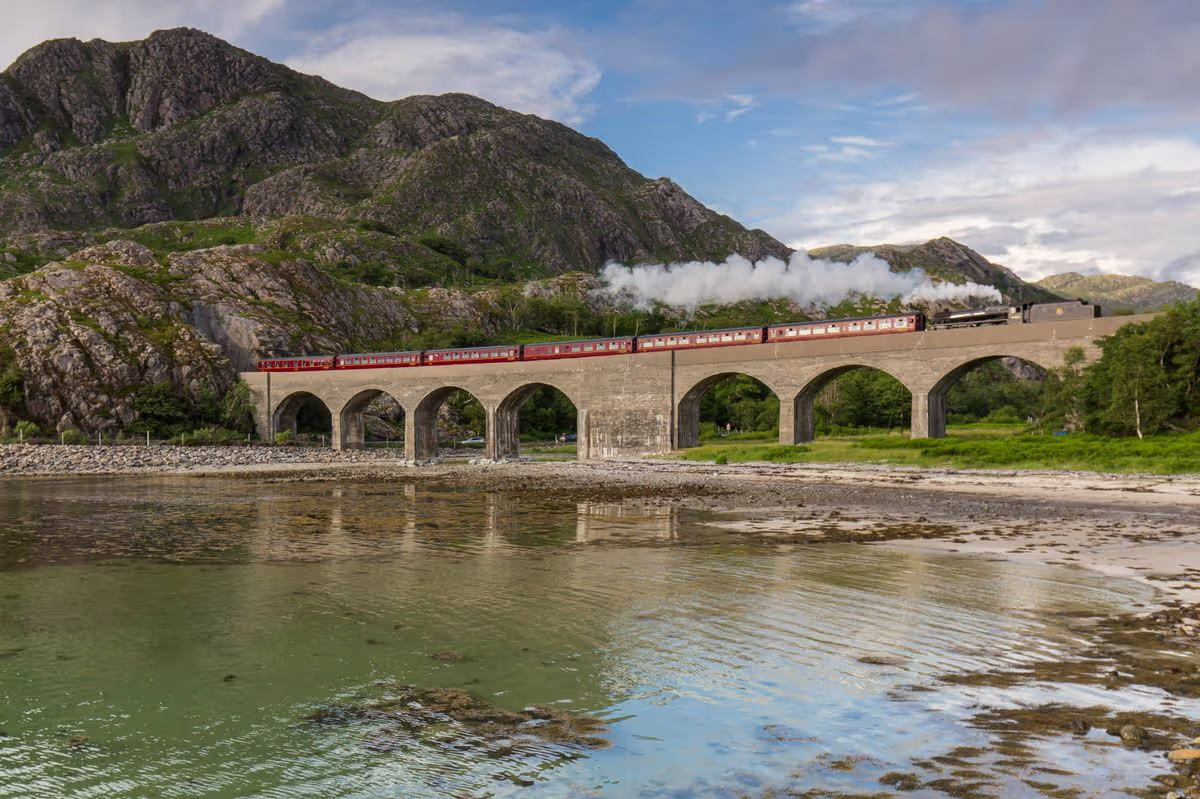
The West Highland Line has been named the world’s most beautiful railway, but does Scotland’s iconic 164-mile train journey truly live up to the hype? I boarded the train through the Scottish Highlands to find out.

The West Highland Line has it all (Image: Gordie Broon Photography via Getty Images)
“I think this is the most beautiful train line I’ve ever been on.”
Those words genuinely escaped my mouth as my wife and I rattled through the Scottish Highlands, skirting the edges of glistening lochs, weaving between ancient mountains, and crossing hauntingly stark yet stunning moorland.
“You’ve been on it before,” she kindly reminded me. Thankfully, my tendency to experience something and then completely forget about it doesn’t diminish its beauty one bit.
The legendary West Highland Line departs Glasgow and plunges deep into the west coast, steaming alongside the Clyde to Helensburgh, before heading north via Garelochhead and Loch Long towards either Oban or Mallaig. Shortly after escaping Scotland’s largest city, the undulating, wind turbine-topped hills begin to swell as the Highlands draw near.
READ MORE: We asked Brits who ditched the UK what they most miss – they all said the same thingREAD MORE: Dictator’s EU island with giraffes now open to the public with £35 UK flights
The railway carries you northward along the coastline, passing through the Loch Lomond and The Trossachs National Park. At Crianlarich, the track divides, continuing either past Loch Awe towards Oban, or climbing high up to Rannoch Moor.
The line traverses the moorland for 23 miles, ascending to over 400 metres and offering unrivalled vistas of one of Europe’s last remaining wild places: an enormous expanse of blanket bog, lochans, rivers, and rocky outcrops where curlews, grouse, roe deer, and red deer roam freely.
The Moor captured near-national fascination during the Victorian period, when initial fear and mild disgust at its wild and forbidding character transformed into devotion. Among the early travellers were the poet William Wordsworth and his sister Dorothy, who visited in 1803 and tentatively described the place as “desolate and extensively wild”.
Just seven years later, Scotland’s greatest champion, Sir Walter Scott, published his celebrated poem The Lady of the Lake. The work showcased Loch Katrine in the Trossachs, south of Rannoch Moor, thrusting it into the spotlight. Inspired visitors descended on the region to witness how “Summer dawn’s reflected hue to purple changed Loch Katrine blue” for themselves.
Travelling north to the Highlands and back again a few days later, we experienced both faces of this remarkable landscape. During our night journey, the glens and Munros loomed against the train window, making our tiny illuminated carriage feel insignificant as it rattled along. On the bright, sunny return trip, the breathtaking vistas — sparkling lochs nestled beneath sheer mountains capped with lush greenery — felt more reminiscent of Switzerland or Austria than bonny Scotland.
Without doubt, the most iconic spot along the route is the Glenfinnan Viaduct, immortalised in the Harry Potter films as the path of the Hogwarts Express. Passengers cross this magnificent structure en route to Mallaig, the terminus of the 164-mile line.
However, spending an afternoon at the viaduct may be worth reconsidering. During my visit, a persistent drizzle dampened the spirits of the crowds of Potter enthusiasts, many of whom appeared rather deflated by what was on offer: two pipers playing sombrely and some railway infrastructure. Add to that the fact that the locals of the 100-person village are fed up with the crowds, and the choice to give it a miss seems straightforward.
Mallaig is a far superior option, boasting excellent whale-watching excursions that provide frequent sightings of the cheerful minke pods inhabiting the waters.
There are numerous other attractions to discover along the route.
Corrour, Britain’s highest-altitude railway station, draws Trainspotting enthusiasts due to its prominent appearance in the film. It is equally picturesque and captivating. There are no roads here, so visitors head directly onto the walking trails via a quick meal at the Corrour Station House.
Another gem is Tyndrum. This former mining settlement is now the smallest location in Britain to boast two railway stations. They enable travellers to branch off, climbing steeply up the glen towards the north or west.
For me, the town marks the final stop in the Lowlands, the spot where you pause before heading across the Moor and into the mountains. Such adventures require fuelling up on fish and chips or curry at the superb Green Welly Boot Stop while watching its wonderful collection of birds.
The West Highland Line is far more than just a train journey. Step aboard and you’ll find yourself rubbing shoulders with forestry workers heading to work, mountain bikers, walkers, local schoolchildren, and railway enthusiasts eager to discover whether a route once crowned the world’s most beautiful truly lives up to its reputation. It’s a living tapestry of Scotland at its finest: mountains, moorland, lochs, wildlife, and history, all rolling out before you at a gloriously unhurried pace.