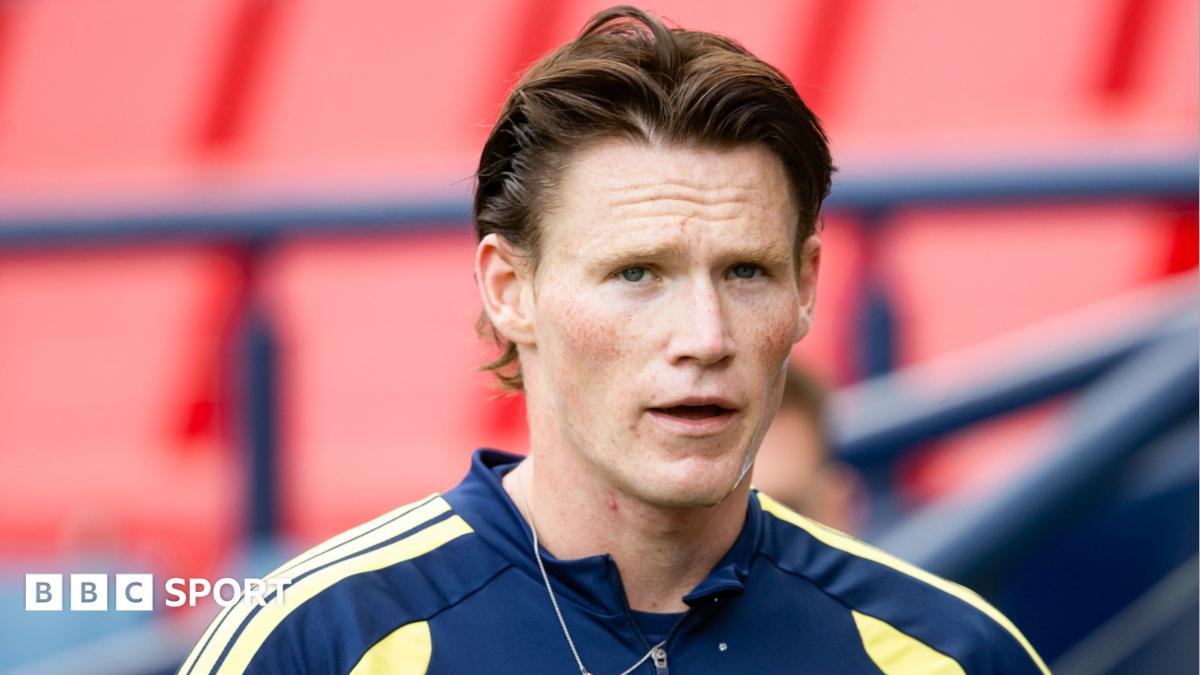
Scotland midfielder Scott McTominay has returned to training at Napoli following his recent heart surgery.
The 29-year-old’s ablation procedure – a minimally invasive operation to correct irregular heart rhythms – took place in Manchester last month and was described as “a complete success”.
And Napoli said: “On Wednesday, Scott McTominay underwent further diagnostic tests, which showed that he is fit to play.
“The Napoli player therefore resumed training with the rest of the team after the period spent training separately.”
McTominay was substituted after 56 minutes of Napoli’s 2-1 Serie A defeat by Como in August. A mild benign arrhythmia was discovered, prompting the corrective treatment.
According to the NHS,, external an arrhythmia is when the heart beats too quickly or too slowly, or the heartbeat is not steady.
The British Heart Foundation explains, external that a cardiac arrhythmia ablation involves using heat or cold energy to create tiny scars in the heart to block faulty signals and restore a typical heartbeat.
During his absence, McTominay missed four Scotland fixtures, including Tuesday’s Nations League defeat by Slovenia.
The Scots’ next games are against Switzerland and North Macedonia in November.
TWO HISTORIC Palm Houses that are home to hundreds of rare plants have reopened following an ambitious revamp.
The buildings that are almost 200-years-old are part of the Royal Botanic Garden in Edinburgh, but were forced to close for five years to repair leaks and rust.
The Palm House in Edinburgh has reopened following a renovationCredit: instagram/@an_italian_in_hortIt’s filled with hundreds of rare plants which were temporarily removedCredit: instagram/@an_italian_in_hort
Plans were first drawn up to upgrade the two Palm Houses in 2017 – but it wasn’t until 2021 when they closed, and then in 2022 the restoration began.
As of October 2, they are now open to the public once again after extensive work costing £23.5million, as reported by The Times.
Sign up for the Travel newsletter
Thank you!
During the works, more than five thousand panes of glass were replaced, and the ironwork that had been corroding has been repaired and repainted.
The stone work was renovated and a wall that once separated the two houses has been knocked down.
Around 800 rare plants like palms, conifers, ferns and begonias were temporarily moved during the restoration work – luckily the majority of them survived.
However, one 200-year-old Sabal palm tree had grown too tall for the glass house and couldn’t be saved.
But some of its seedlings have been kept.
The oldest of the two Palm Houses is the Tropical Palm House which was first built in 1834 and was the tallest traditional palm house in the UK at the time.
The second is the Temperate Palm House which was built in 1858 and still remains as one of the tallest traditional palm houses in the world.
Talking to the BBC, David Knott, the director of horticulture at the Botanic Garde, said: “For many people in Edinburgh and throughout Scotland and throughout the world, the palm houses in Edinburgh really are one of the most iconic features of the Botanic Garden here.”
Two structures form the Palm Houses at Royal Botanic Garden in EdinburghCredit: Alamy
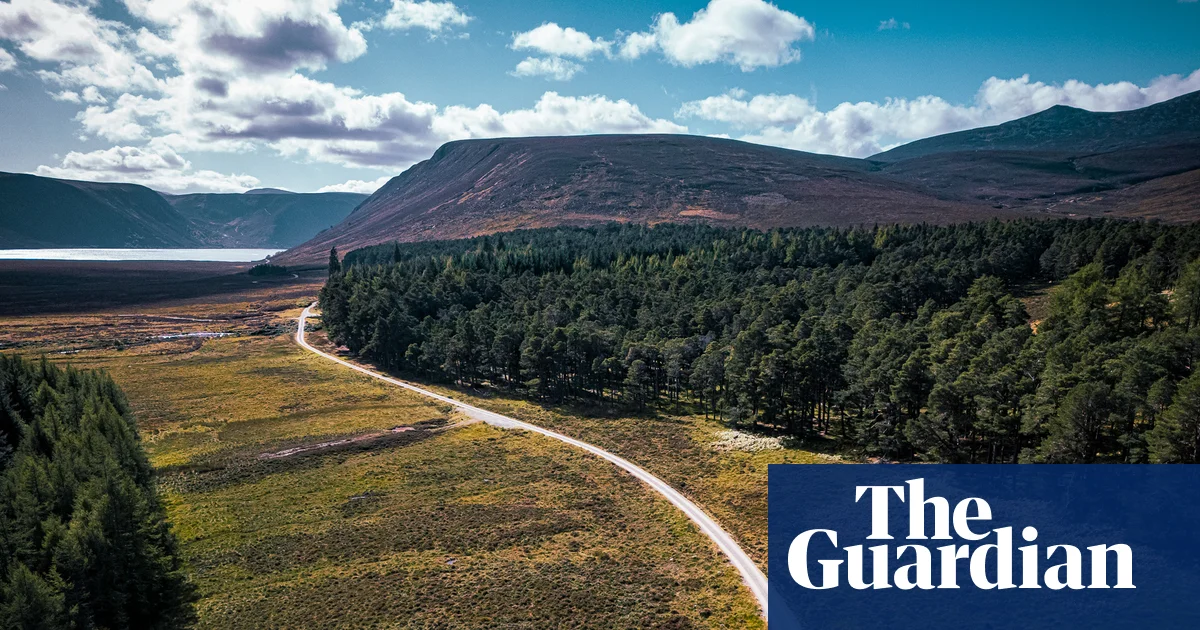
In the Cairngorms national park, the bracken is changing from dark green to russet and umber. Birch leaves are lined with gold, while the Scots pines remain proudly green. Autumn is arriving with a little sigh of relief here, after a summer few will forget.
The wildfire that began near Glenmore and Abernethy on 15 July burned more than 33 sq km (13 sq miles) of moorland and forest. More than 500 firefighters were involved; homes and businesses were evacuated; and the emergency response lasted over a month. Visiting now, it’s hard to see, or even imagine, the damage. Much of the burned area is high on the hill and far from the roads. It’s a huge loss but, in a national park stretching 4,528 sq km (1,748 sq miles), surprisingly easy to miss.
I have come with a gravel bike to retest new bikepacking routes with Kees Wouters and Yannick Ferbeek from Legendary Rides, which offers self-guided tours, and Bikepacking Scotland founder Markus Stitz, who helped develop the routes.
Ailsa Sheldon on the trail
I arrive in Aviemore from Edinburgh on an electric Ember bus, which allows bikes to be booked on board, a welcome development in Scottish public transport. Soon I’m heading out of town through heather and Scots pines, my bike bags stuffed with everything I need for the next few days.
The original route would have taken us through Glenmore, past Loch Morlich and Ryvoan bothy, but there are still path closures. Instead, we take a new line towards Nethy Bridge. Sunlight falls through birch and rowan and the track is soft with pine needles. At Loch Garten, where ospreys nest in spring and summer, it is hard to imagine the smoke and helicopters of July.
Graham Niven lives in Nethy Bridge with his wife, Amy, and runs the self-catering business Arbor Nethy beside the forest. He joined the local volunteer firefighting effort coordinated by the RSPB, part of a huge community response. “We see the forest as an extension of our home,” Graham says. The Abernethy forest is ecologically rich, filled with ancient Caledonian pine trees that are hundreds of years old. “It’s a unique and special habitat, and it’s very fragile. We were all just grieving for the forest,” he tells me.
Cycling by the River Avon
The news cycle has long moved on, but locals are still dealing with the effects of the wildfire. “Only in the last few weeks have we been able to look back on it as something that’s come to an end,” Graham says. Peat smouldered underground for months, meaning firefighters had to keep returning to hotspots.
While business has largely returned to usual, Graham has noticed a dip in bookings for photography workshops and holiday lets. “What is less measurable is people’s confidence in booking or coming back. The buzzwords were ‘apocalyptic fire’ and Abernethy and Nethy Bridge, Cairngorms, and that does stick in people’s minds. People think of Abernethy and say: ‘Oh, it’s been burned down.’ I think it’s less than 10% of the old forest affected.” Nearby, Polly Cameron at The Dell of Abernethy has seen the same effect: “Bookings wise, we certainly experienced a dip, and October has still been much slower to fill.” That matters in a landscape where tourism is a vital part of the local economy.
We ride on along the Speyside Way, following the river through woods and farmland. Then the landscape opens. The Cairngorms change character as you head east: deep forests give way to sheep, grouse moors, abandoned crofts and long gravel roads. This is whisky country too, and we ride through the grounds of Glenlivet Distillery. It’s after hours, or the smell of malted barley would have tempted me to stop.
By late afternoon the hills have turned heather-purple. We started late and by the time we reach Hotel Square in Tomintoul, darkness has settled. Our bikes go into a storage room and, happily, hot curry and cold beer are still available.
The next day is shorter but steeper, taking us on to sections of the old military roads built in the 18th century after the Jacobite risings. I’m reminded of that history later at Corgarff, a white fortress on the crest of a hill. Built in the 16th century and later converted into a barracks, it was used to suppress Jacobite sympathisers and, later, the illicit whisky trade.
Cairngorm Bothies near Ballater
We spend the second night at Cairngorm Bothies, off-grid cabins surrounded by Scots pines. In each, there’s a little nature journal and I leaf through pages of children’s handwriting with tales of red squirrels and deer. When the rain starts, any disappointment about missing out on seeing the dark skies is replaced by relief not to be camping.
With a flexible route we stop often, for photos, snacks and whenever the fancy takes us. We walk through woodland to visit Burn O’Vat, a huge glacial pothole in the Muir of Dinnet national nature reserve. At Ballater we stop for coffee and morning rolls at The Bothy while one of our group gets a quick bike repair. The route is deliberately forgiving, and Legendary Rides provides shorter alternatives for challenging weather or tired legs, with prebooked accommodation, a personalised plan, GPX routes and WhatsApp support. “It allows you to relax and just enjoy the ride,” says Yannick.
From Ballater we wind towards Loch Muick, through the Balmoral estate. After a long, winding ascent over Capel Mounth the riding becomes rougher, with a rocky descent. The gentle undulating roads that follow to Glen Clova are a welcome contrast as we roll to Alyth.
I’ve visited the Cairngorms region often in the past, but this trip broadens my awareness of the diversity of landscapes it holds. To mountain peaks and forest trails I add river valleys, whisky country, high moorland, farmland and roads so empty that the only sound is the freewheel of a bicycle.
A waterfall at Burn O’Vat
But this is not untouched wilderness. We cross private estates managed for deer stalking and grouse shooting, as well as national nature reserves. Debates over the right ways to manage this land span centuries, with wildfire prevention now a key part of that conversation. Scotland’s right to responsible access allows us to pass through this landscape, provided we leave no trace, close gates and avoid disturbing livestock and wildlife.
Autumn is an ideal time for this kind of journey. The midges have retreated, the roads are emptier and there is still plenty of golden light in the days. Cycling through the area helps to support local cafes, shops and accommodation providers, and there’s never been a better time to do so. “We want people to know we’re still here, we’re still awesome,” says Graham.
My tired legs power me to a final Pitlochry cafe stop before my Ember bus back to Edinburgh.
The trip was provided by Legendary Rides and Bikepacking Scotland. Legendary Rides offers four-day bikepacking trips from £759pp, including detailed route planning, accommodation, breakfast and personal support via WhatsApp
“I thought coming into this camp, Pocognoli would probably need a period of grace,” Halliday said on Sportsound. “I think that period of grace is now over.
“That was as poor a Scotland performance as I can remember for a while against an opposition you are expecting us to go and beat.”
Slovenia got in behind Scotland’s high defensive line repeatedly and former national team captain Willie Miller is unsure if Pocognoli will stick with his back three.
“This is Pocognoli’s preferred system and he’s had time to work with the system, it was just all over the place,” Miller said on Sportsound.
“Time and time again there were huge gaps appearing and Slovenia were taking advantage.
“Our situation is we’ve got a new manager in, he’s got a preferred system, what does he do? Does he just bin it? Are we back to a back four?
“His preferred system is a back three, but it was unbelievably poor.”
A back three that has looked impressive was hassled to distraction, calm replaced with confusion. Scotland’s go-to leaders did not lead.
Robertson said his team was out-fought, which was a telling comment. Fight is the easiest part to get right, the thing that requires no talent.
On Saturday in Skopje, everything was easy for Scotland because North Macedonia were no good. They scored two and could have scored five and six.
Was there a sense of them believing in their own hype? Hard to imagine given that it was only North Macedonia they’d beaten, but there was a lack of edge about Scotland on Tuesday that begs that question.
Or can it all be laid at the door of the system? Slovenia did their work on that. Ripped it to pieces, in truth.
Pocognoli needs time, of course he does. He needs his most potent attacking midfielder, Scott McTominay, at the heart of things and needs more training sessions to drill his message into his players.
November is his next chance, away to Switzerland and home to North Macedonia. No real margin for error now. They had a big chance to make it a healthy seven points from four games and they blew it.
The head coach will need to nurse his wounds after this. He will have learned a lot about his players and has much thinking to do.
The honeymoon period is over. The reaction of the Hampden crowd at the end told you that the first marital row has now occurred.
Along with its cosy caravans and lodges, there are some very exciting additions coming its way.
The park has announced it is undergoing a huge £4million upgrade with work starting this November.
Sign up for the Travel newsletter
Thank you!
One of the largest upgrades will be to its existing indoor swimming pool which will be expanded to become 18-metres long.
It will also add a new toddler splash area, designed specifically for little children – and for adults, there will be a new jacuzzi, steam room and sauna.
The pre-existing gym facilities will also be upgraded.
Its entertainment complex is set to be revamped too with new activities and facilities both indoors and outdoors.
Outside will be a new pirate-themed 9-hole adventure golf course, giant chess and lots of things to do like table tennis, curling – and it will install a padel court.
Inside will be a new soft play area with an upgraded games arcade including interactive darts.
The Hunter’s Bar and Restaurant is being refurbished, and will have a brand-new sports bar, as well as a transformed showbar where there will be entertainment for guests.
A new outdoor terrace will be a new spot that guests can enjoy throughout the year with open-air seating through the summer and covered for when the weather doesn’t play ball.
For those wanting sweet treats, there will also be a brand-new ice cream parlour.
When it comes to accommodation, holiday homes and pitches will be added to the site too.
Currently, guests can stay in basic caravans, to luxury lodges including The Hideout and The Hideaway which have outdoor decks and lots of inside space.
Work is due to start in November of this year with a Grand Opening event planned for Easter 2027.
For those who want to book a break that coincides with the new additions, three-night breaks on April 23 start from £219 – or £18.25pppn.
With this break, a family of four can stay in an Essential Clover Caravan which has two bedrooms (one double, one twin), kitchen and living area.
Simon Lane, CEO of Verdant Parks, said: “This is an incredibly exciting time for Verdant Parks, our employees, our owners and our holidaymakers.
“We’re committing our biggest investment to date to Thurston Manor Holiday Park and completely transforming what guests can see, do and experience when they visit.
“From the extended swimming pool and new toddler splash area to the new padel court, pirate-themed adventure golf and transformed entertainment offering, there will be something for everyone to enjoy.
“We’re delighted to reveal our plans for the next chapter of Thurston Manor and we can’t wait to share more details and sneak peeks as the transformation takes shape over the next six months.”
The word “process” has been used so many times by the Scotland head coach and his players in recent days it’s probably the new team motto.
But there is truth in it.
Pocognoli is trying to implement a radically different system to his predecessor. Not only that, it’s a different mindset. All while trying to embed a clutch of new players.
It’s early days for the Belgian, his group, and, of course, Bowie. But the man on loan at Sassuolo believes things are clicking, and it’s an opportunity for him to make his mark.
“It’s a lot longer international break,” he explained. “We spend a lot more time together so it’s good for him to get his message across and his ideas. Also, we play more games so we have to train a little bit less of course.
“I think for me it’s a fresh start with a new coach and different ideas.
“He said to me ‘you don’t need to prove yourself, just go and do what I know you can do’ and I feel like I’m just doing that.”
Bowie, who made his Rovers debut at 16, added: “I think people, obviously Scottish fans, have the same idea of how I was when I was at Hibs and that’s all they can remember.
“But I feel like since I moved to Serie A, it’s a different challenge against more experienced players and at a higher level.
“So, yeah, I feel like I’ve definitely kicked into another gear and I feel like I’m showing that.”
Ben Gannon-Doak turned North Macedonia inside out and upside down. He is woefully short of minutes for his club, Bournemouth, and lacks sharpness and ruthlessness as a consequence. His delivery has always lacked accuracy.
His raw materials, though, are exhilarating. His pace, his involvement, his number of touches, his chances.
He never left North Macedonia alone. They survived only because he blasted over with one of his chances, shot tamely with another, lost composure with a third one. Having tormented North Macedonia, he allowed them off the hook, but he was a one-man thrill-fest.
He’s 20, that can’t be forgotten. He’s going to be around for a lot of years and will play a heap of big games, but with his club he’s got some decisions to make.
Two minutes against Liverpool, 19 against Sociedad, eight against Brentford, one minute against Newcastle and Man City. The only game he has started this season was a League Cup tie against Lincoln.
Bournemouth is a tough team to get into, but he needs more time on the grass, more opportunity to develop. Maybe a loan move in January would make sense for him, if his club allows him to go. A big ‘if’.
That’s a situation Gannon-Doak needs to resolve for himself – and for Scotland.
What should be a little more straightforward is giving Kieron Bowie another start.
The Sassuolo striker was sacrificed just over 10 minutes into his first Scotland start to make space for Welsh in defence.
His partnership with Oli McBurnie showed promising signs in the 20 minutes or so they were together in Slovenia, but there was little time to build on that cameo against the Swiss. Surely he and the Hull City striker will get another chance?
If there were any concerns McBurnie wasn’t up for the fight – five years on from his last international involvement – they have been quashed in these past two games.
His work-rate as a largely solo striker – hauling his team up and holding the ball in – was commendable. If only Bowie was still on the field for the flurry of flick-ons he won in the first half.
Pocognoli has inherited one of the overriding problems Clarke wrestled with during his spell – scoring goals. That’s four games now without one, and the Scots are just 25 minutes away from setting a new – unwanted – record for failing to score.
In 1970-71, they went 447 minutes without finding the back of the net – it’s been 422 minutes of football since McGinn’s deflected strike against Haiti in Boston.
Scotland fans came to Hampden to welcome the new man, Sebastien Pocognoli, and left with all the woes of old weighing them down as they went.
More calamitous defending in the beginning, another self-inflicted wound that was a complete game-changer, another day without a goal – four in a row now.
In the early minutes when Jack Hendry got himself sent off, we may as well have been back amid the meltdown of Miami. Then, Scotland gifted Brazil one goal and then two when they made a fiendishly-difficult job an impossible one on the back of slapstick in defence.
So it was again on Tuesday. Hendry’s red card was a grim moment that sucked the life out of the occasion.
Switzerland don’t lose many games. Argentina had the devil’s own job in seeing them off in extra-time at the World Cup. Germany beat them 4-3 in a friendly, the winner only coming in the 85th minute.
They’re full of nous and strength and belief. Their coach, Murat Yakin, has the calm authority of a man who knows, with absolute certainty, that his team will prevail.
Once the opening goal went in, Yakin turned around in his technical area with a half-smile on his face. Job done, already.
Named among the world’s five coolest neighbourhoods, it packs cafés, international food and welcoming pubs into a small pocket of a major city.
The neighbourhood is jam-packed full of coffee shops, pubs and restaurants(Image: Nicola Roy)
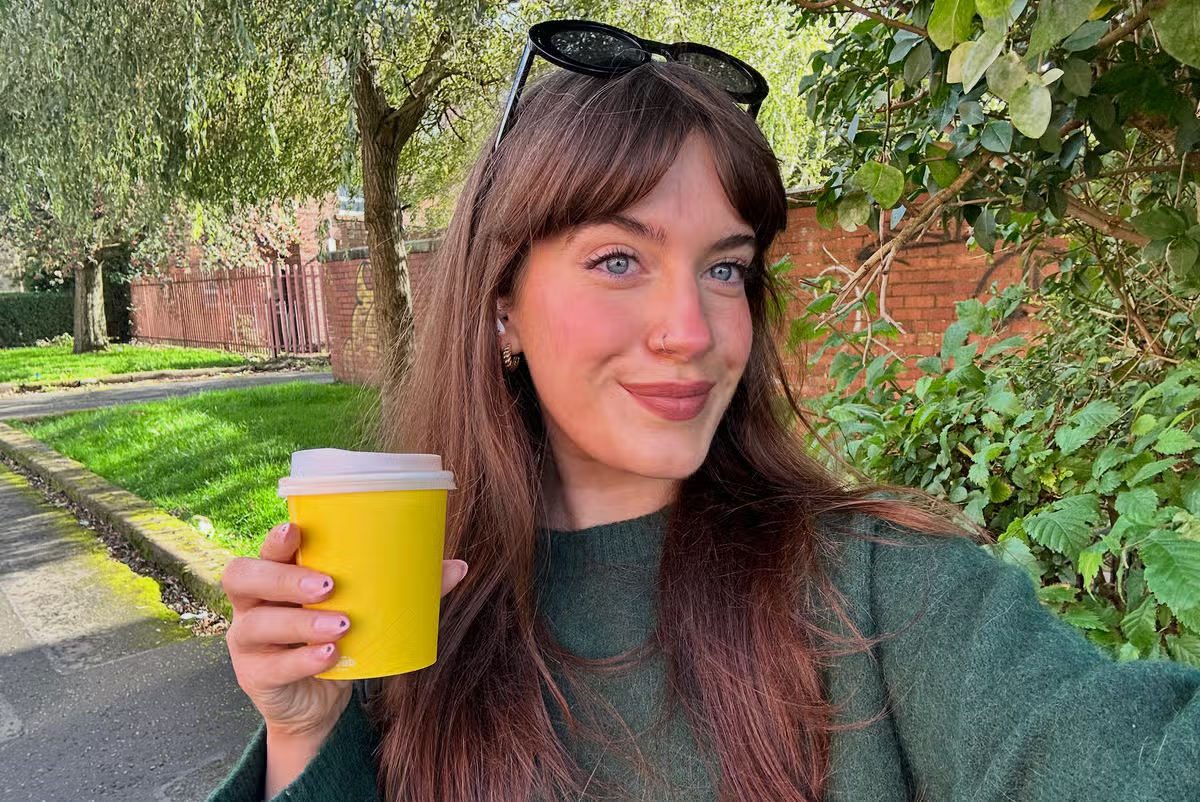
A £4.60 oat milk mocha might not be everyone’s idea of a bargain. But at Zennor in Govanhill, I’d argue it’s worth every penny – and the surrounding streets offer plenty of reasons to stay after the last sip.
The neighbourhood on Glasgow’s south side earned a place among the world’s five coolest neighbourhoods in Time Out’s annual list. Its appeal goes well beyond fashionable coffee shops, with a diverse mix of people, cultures and businesses shaping the area.
From Turkish börek to Pakistani street food, independent cafés to a pub named after a footballing legend, there’s plenty to explore. Some may say it’s all new coffee shops and no substance, but they couldn’t be more wrong.
A neighbourhood best explored on foot
Victoria Road is a natural starting point. Busy with dog walkers, friends catching up and people carrying takeaway coffees, it leads towards the green space of Queen’s Park.
Govanhill is one of Scotland’s most diverse neighbourhoods, reflected in its cafés, bakeries, takeaways and gift shops. You could easily spend hours browsing and stopping for something to eat.
Options include a flat white from a Transylvanian coffee shop or traditional Turkish börek from Pistachio. For me though, Zennor was the destination of choice.
On the corner of Langside Road and Dixon Avenue, Zennor’s second Glasgow location combines Scandi-inspired light wood and stainless steel décor with paper lanterns and the smell of freshly ground coffee.
Zennor’s seasonal specials are really where they excel, but I didn’t spot anything on there that caught my eye on this occasion, so I opted for a mocha. And you can’t pop in here without grabbing a sweet treat, such as their dark chocolate and sea salt cookie – utter bliss.
With oat milk, my coffee order totalled £4.60. It pains me to admit, but I don’t think that’s too steep these days, particularly when it’s this good. And it’s worth every penny in my opinion.
Where to head for a pint or a plate of pasta
Directly opposite Zennor is the Rose Reilly, my favourite pub in Govanhill. Named after the legendary footballer, it offers a welcoming atmosphere, a good choice of drinks and plenty of outdoor seating for sunny days.
For something more substantial, I recommend Pakistani Street Food for a samosa, Bar Vini for a generous serving of pasta and Errol’s Hot Pizza for the best pizza you’ll ever eat.
Together, these venues offer plenty of scope to turn a quick coffee visit into a longer afternoon or weekend exploring the neighbourhood.
More than a ‘coolest neighbourhood’ label
Govanhill’s fashionable reputation is only part of its story. The area faces challenges, and residents hold differing views about how it has changed, with gentrification a particularly contentious issue.
My view, however, is that its mix of people and cultures is what makes it such a lively and fascinating place to discover. The coffee may provide a reason to stop, but it is far from the only attraction.
There’s also libraries, craft spaces, workshops, community projects and events, and with great public transports links too, you’re never too far from other parts of the city. Other nearby neighbourhoods in Glasgow’s south side, like Pollokshields, Strathbungo and Mount Florida, are also full of fun things to do.
Scotland and Northern Ireland secured qualification for the Netball World Cup after a three-day event in East Kilbride.
The top two sides from the four-team tournament won their spots in the finals, which take place in Sydney, Australia, with Wales and Republic of Ireland failing to qualify.
Northern Ireland’s emphatic 73-50 win in the early match on Sunday meant they would qualify should Scotland win or draw, while Wales’ only path to qualification was through a victory over Scotland.
Heading into the final match of the tournament between the Scots and Welsh, the event hosts had their spot in the finals secured unless Wales won with an overwhelming points haul and Scotland ran out 55-48 victors.
The World Cup runs from 25 August-5 September 2027.
Scotland suffered a third successive defeat in the WXV Global Series as clinical Australia proved too strong in Edinburgh.
After losses against Canada and New Zealand – ranked two and three in the world – hopes were high the Scots could get off the mark against the side one place below them in the world rankings.
Despite leading 10-5 at the break, Scotland could not live with the rampant Wallaroos, who ran in three tries in a devastating eight-minute second-half spell to secure a comfortable win.
The sides meet again in Sydney next weekend.
Evie Gallagher, following her two tries against New Zealand last weekend, gave Scotland the lead on 15 minutes, dotting down to round off a period of pressure on the Australian line.
The hosts were on top, with Meryl Smith in midfield and lock Holland Bogan carrying hard and asking questions of the Australian defence, but loose work at the line-out cost Dave Butcher’s team some promising attacking positions.
The Wallaroos grew into the game as the half wore on and hit back with a well-worked try. Scotland repelled a rolling line-out maul close to their own line, but the visitors remained patient and spun the ball wide for Georgina Friedrichs to put Desiree Miller over in the corner.
The Scots hit back immediately when Australia were penalised for holding on straight from the restart, and Helen Nelson banged over a penalty to give her side a five-point lead at the break.
However, Australia flew out of the blocks after the interval and turned the game on its head with three tries in quick succession.
The first came when a rolling line-out maul was halted just short and scrum-half Samantha Wood was on hand to dive over. She converted her own try to nudge the visitors in front for the first time, and it was a double blow for Scotland as Gallagher was sin-binned for illegally bringing down the initial maul.
With the numerical advantage, the Wallaroos came on strong as Brianna Hoy and then Faitala Moleko cut through to score and put the visitors in charge at 24-10.
Wood knocked over a penalty to put Australia beyond two scores and added another late on to cap off a dominant second half from the Wallaroos.
Sebastien Pocognoli’s first match in charge of Scotland ends in a goalless draw against Slovenia as they are made to rue several missed chances in Ljubljana.
Defenders: Georgia Brown (Jacksonville), Jenna Clark (Liverpool), Nicola Docherty (Rangers), Sophie Howard (Como), Emma Lawton (Ipswich Town), Rachel McLauchlan (Newcastle United), Amy Muir (Glasgow City).
Midfielders: Chelsea Cornet (Birmingham City), Erin Cuthbert (Chelsea), Christy Grimshaw (AC Milan), Sam Kerr (Liverpool), Kirsty Maclean (Liverpool), Maria McAneny (Celtic), Miri Taylor (Aston Villa), Caroline Weir (Lyon).
Every footballer has a story, but not many are quite as trippy as the one Luis Binks tells while sitting among the palm trees of La Manga, Scotland’s training headquarters for a few days this week.
At 25, the Brondby centre-half and captain is pushing hard for a Scotland debut against Slovenia on Saturday, a spot in the heart of Sebastien Pocognoli’s defence having opened up since Grant Hanley and John Souttar were jettisoned once the Belgian took over from Steve Clarke.
Binks, with a grandparent from Dunbar, is among the eight uncapped players in the new manager’s squad.
That’s a lot of new faces and a lot of new stories.
Binks talks about the early weeks of his time at Montreal Impact in the MLS; February to March, 2020. He was 18 and recalls: “I’d been at Tottenham since I was very young, but I just wanted to go and play first-team football.
“That was my biggest thing, to not get caught up in the whole youth system. I feel that if you get caught in that, it’s not real football. I wanted to test myself.”
Which brought him to Montreal where his manager was the great Thierry Henry.
“I’d signed in February and then we went into Covid lockdown in March,” Binks explains. “I hadn’t yet found an apartment. I was in one hotel and Thierry was in another. The one I was in was then shut down.
“He was staying at the Ritz on his own. They wanted to move me to a hotel by the airport and I didn’t want to go because there was nothing there. It felt like prison, almost. One day I get a call from him, saying: ‘Do you want to move to where I am? You can go on the other floor’.”
The Ritz-Carlton is a five-star retreat with 129 rooms. Henry and Binks were the only residents.
“I’d go for runs in the morning and he’d be sat in the reception on his own. When I’d get back from the run, he’d still be sat there. I’d spend a few hours with him, just trying to pick his brains.
“I remember one night I was sat in my room just playing PlayStation and he rings me and goes, ‘do you want to get a pizza?’. There’s me and him driving around Montreal looking for a pizza. It’s a bit surreal, but that was how it was.
“I’m saying it now like it’s just anybody, but there’s a big aura around him. I was nervous at the time, but I asked him who’s the best defender he’s played with and against and why and it was a good time.
“It’s a bit of a blur now, but I always remember him talking about Sol Campbell and just saying what made him great and how I could improve as a defender.
“I owe a lot to him because he gave me my first chance in senior football.”
THE 40 most trendy spots in the world have been announced, and three neighbourhoods in the UK have made it onto the list.
The locations were chosen by Time Out’s on-the-ground experts based on criteria like food and drink, nightlife and liveability – so which ones came out on top?
Govanhill in Glasgow is officially one of the world’s trendiest neighbourhoodsCredit: AlamyAnother trendy neighbourhood is the Cathedral Quarter in BelfastCredit: Alamy
According to Time Out,one of the best neighbourhoods is Govanhill in Glasgow – it came in fifth place.
Just beating it to the punch were Jongno 3-ga in Seoul, the L’Ocean District in Rabat, Neos Kosmos in Athens and Chinatown in Los Angeles.
Sign up for the Travel newsletter
Thank you!
Talking about Govanhill, the publication described it as for years being “Shawlands‘ rougher little sibling”.
But over the past few years it has been transformed with trendy new bars, bookshops and brunch spots.
It added: “Gen Z are migrating from West End bars and brunch spots to trendy new spots in Govanhill, injecting this once-overlooked sandstone suburb with quirkiness and energy.”
When it comes to pubs, Time Out suggests popping into the Bell Jaror theRose Reilly.
Reporter for the Scottish Sun Oliver Norton gave us the inside track on the neighbourhood, he said: “The Govanhill district of Glasgow has just been voted the fifth coolest neighbourhood in the world. I’m not surprised.
“I don’t live there, but I spend a lot of time in the area as it’s home to some of my favourite people and places.
“There’s always something going on, and the multicultural vibe has totally transformed what some once considered a deprived dump.
“The area in the south side of the city is home to around 17,000 people and has experienced a visible wave of gentrification over recent years.”
Oliver says that Govanhill has recently transformed into a trendy suburbCredit: Alamy
Oliver continued: “It is now home to people from at least 52 different nationalities speaking over 88 different languages, also making it Scotland’s most culturally diverse neighbourhood.
“As a regular visitor, I’ve experienced how dedication from local activists, entrepreneurs and creatives has helped raise the profile of the area and made it a welcoming home to many.
“Time Out, which tipped Govanhill among its top five cool neighbourhoods, hailed it for it for the ‘vibrant community spirit, independent shops, and creative culture’.
“And that’s a fair assessment.
“When visiting, I like to swing by Cibo, an Italian kitchen and deli, or one of the trendy cafes before browsing through local book and record shops.
“Later in the day, the area comes alive thanks to some of Glasgow’s best pubs – far away from the stress of the city centre.
“Personal favourites include McNeill’s Bar or Ryan’s Bar where some of the city’s finest DJs and selectors have provided the soundtrack to many a night.
“Pubs like The Rose Reilly or the The Bell Jar, both name-checked by Time Out, are great for relaxed drinks with friends.
“Govanhill also hosts regular arts and music festivals, concerts and exhibitions which draw people from across the city and beyond, especially during the summer.
“My personal highlights this year include the Sub Club Southside Weekender with house pioneer Kerri Chandler and Detroit techno legend Robert Hood’s Floorplan project.
“Queen’s Park, which is great for a walk or a picnic with friends, also hosts regular events, including concerts, film screenings and entertainment for kids.
“In July, Libertines front man Pete Doherty headlined the annual Recovery Connects festival which is alcohol-free and aimed at supporting people in recovery.”
Travel Reporter Jenna Stevens loves exploring the Cathedral Quarter in BelfastThere are buzzy bars, pubs and independent shops
“The Govanhill Street Music Festival and the Govanhill International Festival and Carnival are also hot tips for music and art lovers planning to visit.”
Two other UK spots made the list – and coming in 24th position is the Cathedral Quarter in Belfast.
It was described as having “cobbled lanes and old warehouses house galleries, gig spaces, restaurants, yoga studios and enduring cultural institutions.”
Travel Reporter Jenna Stevens said: “Whether you’re wanting a pint in a pretty setting, the city’s coolest souvenir shopping or a backdrop for your Instagram pictures, the Cathedral Quarter is the place to be in Belfast.
“The area is anchored by St Anne’s Cathedral, where cobbled streets branch out to reveal buzzy bars, pubs and independent shops.
“Once an old warehouse district, this trendy quarter is now the city’s creative heart. Victorian warehouses that used to store linen and rope now house art galleries and indie coffee shops.
“Red brick walls are plastered with impressive murals of hyper-realistic portraits and landscapes.
“It also hosts many of the city’s festivals, including the yearly Cathedral Quarter Arts Festival packed with comedy, street theatre and arts, and a hilarious Improv Festival in September.
“The Metropolitan Arts Centre is always switching up with the latest theatre and art exhibitions, while the Golden Thread Gallery and Oh Yeah Music Centre are a shrine to the city’s musical heritage, celebrating artists from Van Morrison to Snow Patrol.
“When it comes to shopping, here you’re trading bland malls for independent gems. Hill Street and Commercial Court house vintage clothing, boutiques and specialist shops.
“One must-visit is The Friend in Hand, a whiskey shop and museum that feels like a Harry Potter wand shop, with warm orange lighting filling the small wooden space.
“Inside you’ll find a plethora of Irish whiskeys, including the Writers’ Tears collection celebrating the city’s best authors. King Charles and Queen Camilla even visited in 2025, and you’ll see a framed photo of them propped up at the till.
“Then there’s the food and drink scene, which is one of the quarter’s biggest draws.”
The top neighbourhood on the world’s most trendy is Jongno 3-ga in SeoulCredit: AlamyNew York’s financial district is one of the must-visit spots tooCredit: Alamy
Jenna added: “The Dirty Onion and Yardbird is a popular pub housed in Belfast’s oldest building, which puts on traditional music seven nights a week and has a massive beer garden. You can grab a crispy fried chicken burger for £13.50, or a rack of ribs smothered in sauce for £25.50.
“The Muddlers Club is a more modern spot, serving Michelin small plates in an eight-course tasting menu for £80pp – which is great if you have a special occasion to celebrate.
“As for cheap eats, Common Market is a giant food hall where you can grab dirty loaded fries, gyros, wings and more to sink down with a perfectly-poured pint. Lunch here will cost around £8 – £15.
“For something sweet, Established Coffee does a banging banoffee french toast and lemon meringue pie, plus unique drinks like an apple pie latte (£4.80).
“Whether you’re after a cosy traditional pub, a vintage clothes shop or industrial cocktail bar, the Cathedral Quarter offers them all – often on the same street.
“Oh, and make sure to visit Commercial Court when it gets dark to get that classic picture underneath the neon-lit hanging umbrellas.”
The last spot in the UK to make the list is the neighbourhood of Newington Green in London which came in at number 33.
Time Out describes Newington Green as a mix of old and new London.
The publication said: “These days it’s brimming with brilliance. From newly forged, hipstery gastropub Golden Tooth and small-herd butcher-cum-nightclub Stella’s to legendary Turkish seafood joint Sariyer Balik and the old Mildmay Club, Newington Green successfully combines both new and old London.”
Some of the top spots are Jolene, a trendy bakery and restaurant that is constantly popping up on Instagram thanks to its daily rotating menu, pastries, and natural wines.
There’s a trendy pizzeria called Bar Etna, Stella’s restaurant and the Army & Navypub.
The full list of Time Out’s 40 trendiest neighbourhoods around the world…
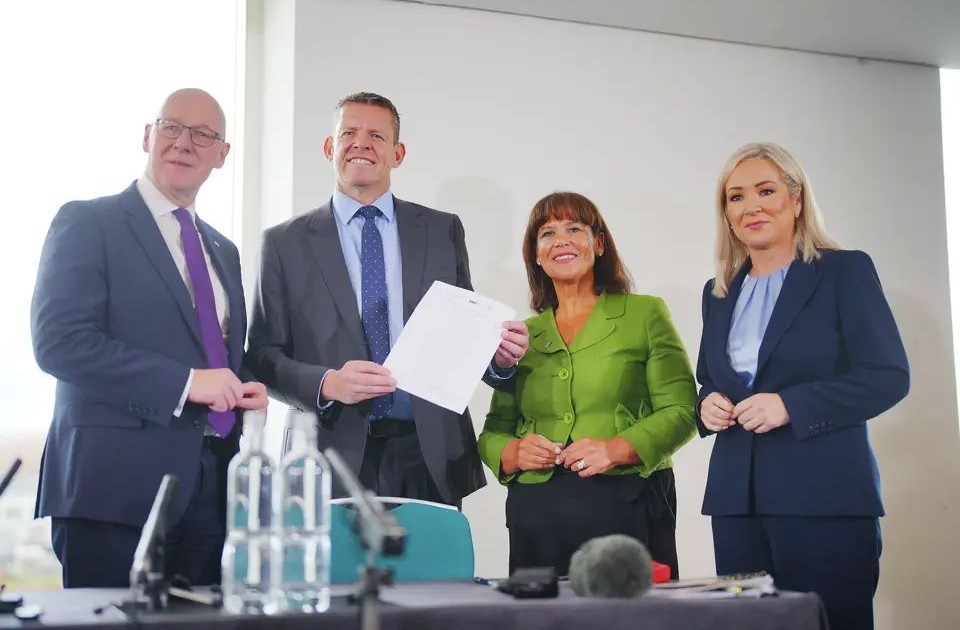
LONDON: The leaders of Wales, Scotland and Northern Ireland signed a pact Monday that threatens to lead to the breakup of the United Kingdom.
The first ministers of the three semiautonomous regions of the U.K. told Prime Minister Andy Burnham and his government to prepare for constitutional change and that their future lies with the European Union.
“For people watching across these islands — for people watching around the world — there could be no clearer sign that Westminster’s time is coming to an end,” they said in a memorandum of understanding, referring to Parliament.
The announcement came about 48 hours after U.S. President Donald Trump waded into the waters of the politically contentious issue when he said he would “ love to see ” a reunified Ireland during a trip to visit his golf course hosting the Irish Open.
It’s the first time the leaders of all three countries are either from pro-independence parties, or pro-unification in the case of Northern Ireland, which was partitioned and remained part of the U.K. when Ireland won independence from Britain over a century ago.
Tensions remain despite devolution of power
Burnham’s spokesperson brushed aside the threat and said the prime minister strongly believes in the union and was more focused on lowering the cost of living than dealing with constitutional debates.
“The United Kingdom is at its best when people come together around our shared values and problem-solving, rather than division,” Tom Wells said.
Nicola McEwen, director of the University of Glasgow Center for Public Policy, said the summit was symbolically important but has no legal significance.
“I don’t see the threat to the union being bigger today than it was yesterday,” McEwen said.
In the late 1990s, the U.K. passed legislative acts that decentralized government through the process of devolution, giving each country except England some level of policy independence and self-governance through their own parliaments. But tensions have remained with the U.K.-wide government in London, which retained control over national issues and those concerning England.
Scotland’s John Swinney and Northern Ireland’s Michelle O’Neill called for independence referendums in their countries, while Rhun ap Iorwerth did not provide a timetable for one in Wales.
The three leaders appeared in their political capacity, rather than their official one, possibly because O’Neill is in a power-sharing government with the Democratic Unionist Party.
Northern Ireland’s Deputy First Minister Emma Little-Pengelly, of the DUP, accused O’Neill, of the Sinn Fein party, of “weaponizing” the role of first minister by signing the agreement.
“I am first minister in the north of Ireland,” O’Neill replied. “This is about historic change happening all around us.”
Scottish nationalists believe support for independence is rising
Scotland tried unsuccessfully to break away in 2014, with voters rejecting a referendum 55% to 45%. But McEwen said support for Scottish independence has grown since Brexit, in which the U.K. formally left the European Union in January 2020, following a referendum in June 2016.
Swinney, leader of the Scottish National Party, said he believed voters would now vote for independence if the U.K. government approved a referendum.
Burnham told Parliament last week he would allow such a vote to be held if there was a “clear consensus” in Scotland, but later sent Swinney a letter saying a vote was “off limits.”
The 1998 Good Friday peace accord that ended three decades of sectarian violence in Northern Ireland known as “The Troubles,” requires a vote on unification if polls there indicate it would likely pass, a threshold the U.K. government says has not been met. Ireland would also have to approve the change in a referendum.
Burnham has made devolution a major theme since taking office less than two months ago, but his focus has been on regional governments across England, a reflection of his years as mayor of Greater Manchester.
Swinney tried to turn Burnham’s ideology to his advantage, saying his frequent talk of devolution “leads you to the logic of recognizing the right of the people of Scotland, in my case, to decide their own future.”
Beyond any threat of departing the union, McEwen said the greatest impact of the three joining forces could be that they agreed to cooperate with each other routinely and that could help to exert more influence on the U.K. government.
“It does keep on the agenda that question about, well, if the United Kingdom is a union based on consent, what is the pathway where it looks like that consent may no longer be there?” McEwen said. “Any U.K. government has been very reluctant to engage in that discussion.”