commute

Trump slams Newsom’s move to commute death sentences as showing mercy to ‘the most evil monsters’

President Trump on Monday criticized Gov. Gavin Newsom’s recent move to commute the sentences of everyone on California’s death row to life without the possibility of parole, calling it “one of the most shocking acts of injustice our country has ever seen.”

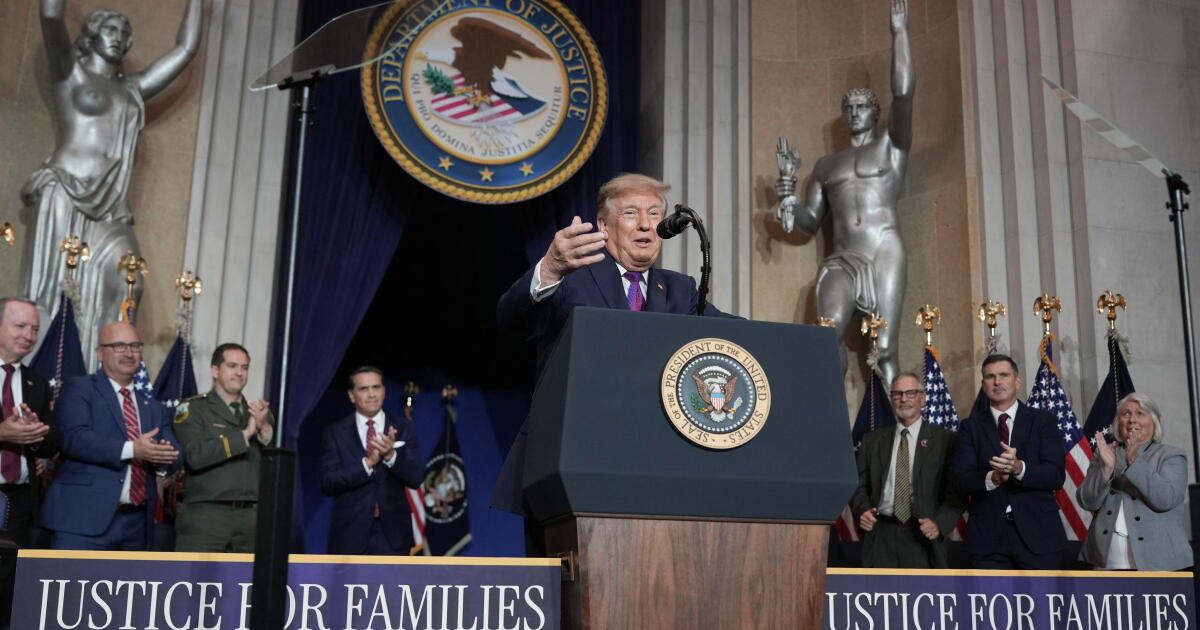
“We come together to stand against the travesty and to wrap our arms around the families of victims who were so cruelly betrayed by bad government and our political system,” Trump said during a speech at the Justice Department in Washington, where he was joined by the families of several California murder victims whose killers were among those whose sentences were commuted.

Trump accused Newsom of showing mercy to some of “the most evil monsters on the face of the Earth” — while denying compassion and closure to the victims’ families.

Trump also claimed that he and Justice Department officials were working to get Newsom’s actions “overturned in some form,” though it’s unclear how they could do so.

Newsom immediately fired back by calling out Trump for pardoning “unrepentant wealthy political allies, convicted fraudsters and individuals with connections to his political orbit,” as well as four private military contractors for the security firm Blackwater who were convicted in a massacre of Iraqi civilians in 2007 — freeing them all from confinement.

The governor said the condemned inmates whose sentences he commuted will remain behind bars for life, while those pardoned by Trump are free.

“I won’t take lectures on accountability from a president who has used the pardon power to help wealthy friends and business associates avoid accountability while victims are left fighting to recover what was stolen from them,” Newsom said. “Justice should be about the people we serve, not the political interests of the people in power.”

Newsom also addressed the victims’ family members who stood with Trump, saying that their “grief is real” and the reason why “every person on California’s former death row will die in prison. No one walks out.”

Some of those family members said Newsom had turned his back on them. They said they were “outraged” and “disgusted” with the governor, whom they accused of making a “political move” with his commutations, while thanking Trump for his support.

“Gov. Newsom, we deserve to be heard. You never heard what my child endured, or lived with the emptiness of having an empty chair at every holiday and milestone,” said Sandy Friend, the mother of 8-year-old Michael Lyons, who was abducted, sexually assaulted and killed in 1996. “Yet, you took the only justice we had and left families feeling abandoned by the state that promised to protect us.”

Trump’s speech, in the Justice Department’s ceremonial Great Hall, was preceded by remarks by U.S. Atty. Gen. Todd Blanche, the president’s former personal attorney who has presided over a stunning realignment of the department to one that pursues Trump’s political interests.

On Trump’s first day in office, he issued an executive order calling on the Justice Department to ramp up use of the death penalty. Blanche said it had done exactly that, with federal prosecutors seeking the death penalty nearly 50 times since the start of 2025, compared to just one time during the entire Biden administration.

The list of individuals who stormed the U.S. Capitol on Jan. 6, 2021, and were later pardoned by Trump included people convicted of beating Capitol police officers. Trump has also pardoned a slew of political allies and donors, including after receiving direct contributions from them or their family members.

Criminal justice and government ethics experts have denounced Trump’s handling of his pardon power, while Democrats in the House Judiciary Committee released a report in August claiming that donors offer political contributions and use connections to Trump family businesses in exchange for presidential pardons.

The report, which Newsom highlighted Monday, claims Trump’s alleged “clemency-for-cash racket” has resulted in a loss of $1.7 billion in restitution, fines and forfeitures owed to victims and taxpayers.

“Donald Trump doesn’t oppose mercy. He sells it,” Newsom said in a social media post.

Newsom has received substantial criticism for his commutations — including from a coalition of law enforcement leaders in California and the families of people killed by the inmates receiving commutations, several of whom spoke with Trump on Monday.

In addition to Friend, they included Marc Klaas, whose 12-year-old daughter, Polly, was kidnapped at knifepoint and murdered in 1993; and Jason Davis and Gloria Vega, the brother and daughter of law enforcement officers from Placer County and Palm Springs who were shot and killed in the line of duty in 2014 and 2016.

“For three decades, our family lived with the understanding that the justice system’s decision would stand. Today, I stand before you outraged — outraged — that Gov. Gavin Newsom unilaterally erased that sentence,” Klaas said.

“I am disgusted and frustrated. My brother did not die in vain,” Davis said.

Newsom — who previously placed a moratorium on executions in the state in 2019 — informed the California Supreme Court earlier this month of his intentions to commute the sentences of all 548 state prisoners awaiting execution. Newsom can unilaterally commute the sentences of about 40% of those inmates, but the high court will have to approve commutations for inmates convicted of multiple felonies. It has yet to rule on the matter.

Newsom also explained the move in a letter to Californians, writing of his belief that “state-sanctioned killing is incompatible with California’s values, undermines the foundation of our legal system, and diminishes each of us.”

California voters have twice rejected ballot measures to abolish the death penalty, first in 2012 and again in 2016. In fact, voters in 2016 approved a ballot measure, Proposition 66, to fast-track executions in California.

In a 2023 survey by the Public Policy Institute of California, 62% of adults in the state said they “strongly favor” or “somewhat favor” the death penalty in murder cases. When asked which punishment they prefer for a first-degree murder case, 55% said life without parole and 43% chose the death penalty. More than three-quarters believe there “is some risk that an innocent person will be put to death.”

Newsom’s office on Monday released statements from victims’ family members who approved of the commutations, including one from Jess Nichol — another daughter of Klaas, who said she used to also want the death penalty for her sister’s killer, but has since changed her mind.

“We all know that some people sentenced to death have done terrible, horrific things. No one is saying otherwise,” Nichol said. However, victims “deserve so much more than a promise of justice through vengeance. They deserve counseling, medical care, financial support, and a justice system that helps them heal. I want something better for survivors: real, tangible support.”

Other victim family members have applauded Newsom’s action.

Beth Webb, whose younger sister Laura was one of eight people killed during a mass shooting at a Seal Beach beauty salon in 2011, called it “extraordinarily brave and moral” and acknowledged it “is not a popular thing he did.”

“I’m not the biggest Gavin Newsom supporter one way or the other, but in this case I believe it was the greatest thing I’ve ever seen a politician do, bar none,” said Webb, whose mother was also injured in the 2011 attack, which remains the deadliest mass killing in Orange County history.

The last time Trump spoke at the Justice Department was in March 2025. He denounced the various investigations into him under the Biden administration, including for trying to block Biden’s legitimate election in 2020, and vowed retribution, including against individuals within the department who had participated in those investigations.

Judges and grand juries have largely rejected those efforts to target Trump’s opponents, though various investigations remain underway. Newsom and his wife, First Partner Jennifer Siebel Newsom, have also come under federal investigation over funding received by his administration — which Newsom has dismissed as baseless political retribution by Trump and his Justice Department loyalists.

In addition to condemning Newsom’s commutations, Trump announced several new federal law enforcement measures.

He said he was issuing an order directing the Justice Department to seek the death penalty in more cases, including for child murderers, and to “expedite the execution” of people sentenced to death — making sure such sentences are “swift and certain.” People currently spend years if not decades on death row as appeals in their legal cases wind through the courts.

Trump said he was working with Rep. Brandon Gill (R-TX) to codify those directives into law, and issuing $150 million in new federal grants to ramp up law enforcement and speed up response times to sexual assault and domestic violence calls nationwide.

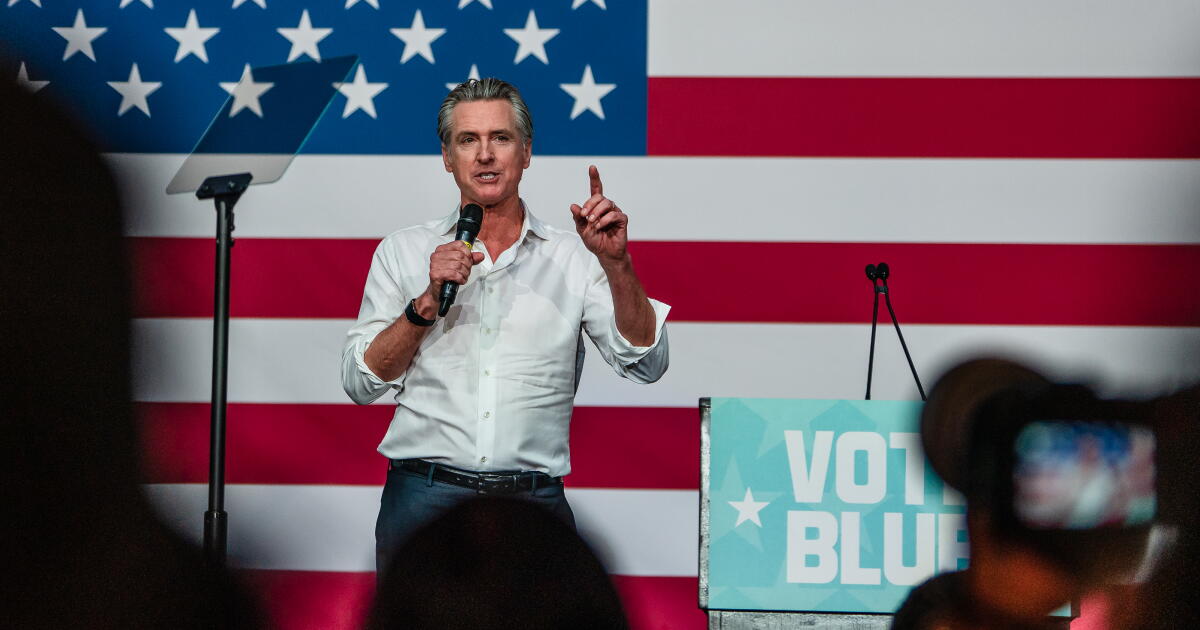
When he announced his commutations in early November, Newsom said he knew the move would create a political vulnerability for him if he runs for president in 2028, something he has said he is seriously considering.

“I’m not an idiot. The ads write themselves,” Newsom said in an interview with The Times.

However, Newsom said he would feel fake if he didn’t stand up for his convictions on the issue.

“I wouldn’t be myself and if I’m going to be up there and not be myself, I couldn’t do that,” Newsom said.
Source link

UK weather: Fog disrupts Monday commute as Met Office yellow warning in force

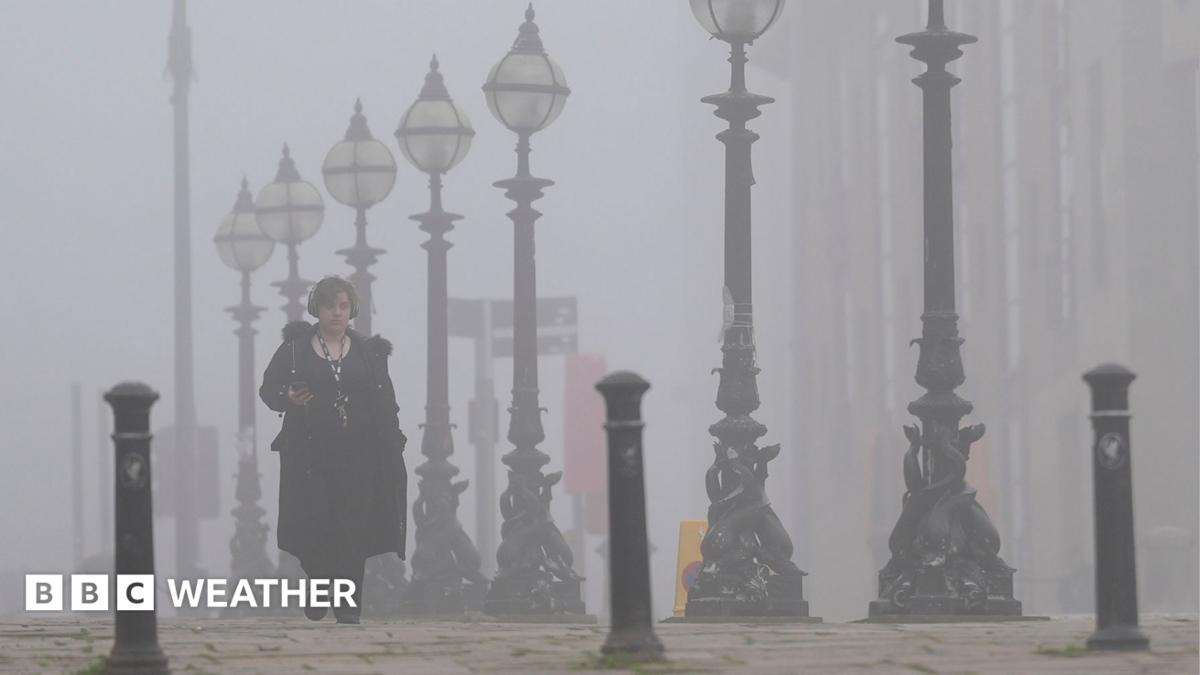
With a large area of high pressure across the UK, conditions are ideal for the formation of dense fog.

Temperatures overnight into Monday morning dropped to around 3 to 5C across England and Wales which meant moisture at ground level condensed into water droplets, creating cloud – which is essentially fog.

Light winds then meant fog was able to get denser through the night, leading to visibilities less than 100 meters on Monday morning.

Fog has been particularly dense and widespread on Monday morning because there has also been a lot of fireworks and bonfires over the last few days.

Tiny smoke particules act as extra cloud condensation nuclei which allows more water vapour being able to turn into droplets.

Patchy fog could also develop outside the warning area in northern parts of the UK wherever skies remain clear for long enough.

Mist forms in the same way but is less dense, with visibility generally greater than 1,000 metres (1km).

Source link

Newsom moves to commute California death sentences to life in prison

Gov. Gavin Newsom told the California Supreme Court Thursday that he will commute the death sentences of all 548 state prisoners awaiting execution, reducing their punishments to life in prison without parole.

Newsom can commute about 40% of the death sentences with the stroke of a pen, but the rest will require the high court’s approval in order to be finalized.

The mass commutation would apply to inmates convicted of some of the most heinous acts in the state’s history. Newsom and other opponents of capital punishment have long argued that the process is costly, cruel and discriminatory, with death sentences disproportionately handed down to defendants of color.

“I take this action because I firmly believe that state-sanctioned killing is incompatible with California’s values, undermines the foundation of our legal system, and diminishes each of us,” Newsom wrote in a letter to Californians explaining his decision. “I know we cannot execute people in our imperfect legal system and remain true to our core values, first among them justice and human decency.”

The move comes in Newsom’s final months as governor and as he considers a run for president. Reducing the death sentences could help him in a primary with a Democratic base of like-minded liberal voters, but potentially hurt him in a general election with a national electorate that supports capital punishment.

The decision to officially spare the condemned inmates is largely symbolic in a state that has not executed a prisoner since 2006, though experts say it could save millions of dollars in court costs every year. Only 13 inmates have been killed since voters reinstated the death penalty in 1978. The state’s electorate reaffirmed its support a decade ago, voting down a ballot initiative that would have abolished capital punishment. Polls show its popularity has waned in the years since.

Despite his outspoken opposition to state-sanctioned executions, the governor has declined to use his political influence with voters to pursue a ballot measure that would amend the state Constitution to align with his position and officially end the death penalty. Without changing state law, criminals can continue to be sentenced to death in California.

“California voters have voted to keep the death penalty on the books and I respect that,” Newsom wrote in the letter to Californians. “But the constitution also gave every governor clemency authority, and that power exists for moments when law as applied cannot be squared with justice. For me, this is that moment.”

Newsom made national headlines two months after his inauguration in 2019 when he issued a temporary moratorium on executions and vowed to dismantle the death chamber at San Quentin State Prison, now called San Quentin Rehabilitation Center.

Calling the death penalty system a “failure,” Newsom said the punishment is also often reserved for poor people who cannot afford expensive legal representation, fails to deter crime and wastes taxpayer money.

Careful to avoid elevating a death penalty debate in the midterm elections, Newsom intentionally waited until after the general election on Tuesday to go a step further and launch the process of commuting all California death penalty sentences.

The decision is another bold signature Newsom move that sits well with his base of support in California and wealthy, white and college-educated national voters who would be crucial to his success in a Democratic presidential primary, said Mike Madrid, a Republican political consultant.

However, his liberal stance on government executions could also create a vulnerability for him if he advances in the 2028 presidential election as the party’s nominee.

“Gavin’s exactly right with that base Democratic voter on that position,” Madrid said. “One hundred percent. It makes him a champion.”

But more moderate blue-collar voters who helped the party flip Congress in the midterms, Madrid added, are “not in line with him on this.”

A poll conducted in August by the Pew Research Center found that about two-thirds of voters nationally favor the death penalty for people convicted or murder.

Those numbers could shift following the botched lethal injection of Christa Pike in Tennessee in September and Defense Secretary Pete Hegseth’s now-scuttled plan to livestream the execution of Ft. Hood shooter Nidal Hasan by firing squad.

“Those events have really ripped the veneer off the death penalty in this country,” said attorney Natasha Minsker of the California Anti-Death Penalty Coalition. “The death penalty is an act of violence. It’s taking another life. I think that’s become clear to the entire country.”

The state spends more than $200 million a year to adjudicate automatic death penalty appeals and habeas corpus petitions for inmates who, in all likelihood, will never be executed, according to a 2025 report by the Habeas Corpus Resource Center.

The case of Clarence Ray Allen, the last inmate killed by lethal injection in California 20 years ago, is emblematic of how the law has failed, death penalty opponents say.

Allen was 76, making him the second-oldest person ever executed in the United States. He had been on death row for 23 years and his appeals cost the state more than $750,000. Many current condemned inmates are even older — some in their 80s and 90s — and their appeals even more drawn out and expensive.

“It’s just a broken system,” said Michael Hersek, former executive director of Habeas Corpus Resource Center and an ex-state public defender.

Taxpayers foot the bill for both the defense and the prosecution in post-conviction capital cases, as well as the administrative judicial costs associated with years of complicated appeals in state and federal court.

The existing appeal requirements were instituted to counter long-standing racial bias in capital sentencing. Attempts to reform and expedite the appeals process over the years have further gummed up the system.

“There is no indication that the situation has improved, and … [there are] data indicating that it has worsened,” Justice Leondra R. Kruger wrote for the California Supreme Court in 2024.

It’s estimated that death penalty appeals alone constitute about a quarter of the work of the California Supreme Court.

“It’s ludicrous, the amount of time, resources and energy put into these cases,” Hersek said.

Some victims’ families agree.

“The death penalty is this promise to people who are angry and broken that you’re somehow going to make them feel better by executing this person,” said Bethany Webb, whose sister Laura was among eight people killed in a mass shooting in Seal Beach in 2011.

Their mother was also shot and badly injured in the attack.

“It is brutalizing to family members, the whole system,” Webb said.

Others say Newsom’s latest move is a betrayal of the justice they were promised.

“It’s total disrespect for the victims. It’s a slap in the face,” said Sandy Friend, whose 8-year-old son Michael Lyons was abducted, raped and murdered in 1996.

She and other relatives stressed the unique brutality of many capital crimes, saying Newsom did not consider victims’ suffering when commuting their killers’ sentences.

The commutations would go to inmates such as Charles Ng, who was convicted of killing six men, three women and two infant boys in Northern California in 1984 and 1985. Also in line to benefit is Richard Allen Davis, who abducted and murdered 12-year-old Polly Klaas of Petaluma in 1993, sparking a months-long search that gripped the nation. Another condemned inmate, Christopher Cheary, was convicted of murdering, raping and torturing his girlfriend’s 3-year-old daughter, Sophia Acosta, in Tulare County.

Gov.-elect Xavier Becerra also opposes the death penalty. If state leaders wanted to resume executions, experts say it would take the better part of a decade and millions of dollars in new spending for the state to design and approve a workable protocol for lethal injections, rebuild a death chamber and secure the gray-market drugs necessary to perform executions.

Legal experts believe the end of the death penalty is likely inevitable in California, with or without Newsom’s involvement.

In 2024, the Office of the State Public Defender sued California Atty. Gen. Rob Bonta’s office, arguing “persistent and pervasive racial disparities infect California’s death penalty system.”

This spring, the California Supreme Court ordered Bonta’s California Department of Justice to show cause why it should not declare the death penalty unconstitutional — a move widely read as signaling the justices’ ultimate intent to end it.

“The statistical findings in the studies invoked by petitioners are extraordinarily disturbing,” Bonta wrote in his reply to the order in August. “Evidence of pervasive racial disparities in the administration of the death penalty could show that California’s capital punishment system gives rise to a constitutionally intolerable risk of arbitrariness.”

Around 60% of the inmates in line for commutations would require review and approval by the California Supreme Court before Newsom’s term ends in January. Those cases involve prisoners who had a felony conviction on their record prior to receiving a death sentence, or racked up additional crimes while awaiting execution.

The high court previously rejected 10 clemency cases without much clarification when Gov. Jerry Brown submitted them in 2018 months before he left office.

If approved by the California Supreme Court, the immediate effect could be relatively muted. The death chamber was taken down and all but a handful of the remaining condemned inmates were relocated from segregated housing in San Quentin to other facilities across the state after Newsom’s 2019 moratorium.

The decision to formally pause executions drew support from the late Pope Francis during Newsom’s 2024 trip to the Vatican, according to the governor’s retelling of a brief conversation between the two men.

In a subsequent interview, the governor said his Catholic background and the inequities in the criminal justice system influenced his refusal to sign off on executions. His father, the late William Newsom, also opposed the death penalty.

His father and grandfather were involved in the case of Pete Pianezzi, a friend who was wrongfully convicted of first-degree murder in the shooting and killing of a gambler and busboy in Los Angeles in 1937.

Pianezzi escaped the death penalty by a single vote and served 13 years in prison. He was later exonerated.

Even if it were possible to limit inequity and wrongful convictions in the criminal justice system, Newsom has said he would still be against the death penalty.

“The decision is among the most difficult in my career, not because I doubt its necessity for our state but because I know its announcement may surface excruciating memories for victims’ families,” Newsom wrote in the letter to Californians. “Today I am acting on my long and deeply held conviction that individually and collectively we are stronger as a society when we reject state-sanctioned killing.”

Source link