scenic

Best views in the UK ranked – as London landmarks lead Britain’s most scenic spots

A new poll has crowned the UK’s 20 most beautiful views, with London landmarks Big Ben and Tower Bridge topping the list of Britain’s most scenic spots

Big Ben and the Houses of Parliament have been named Britain’s most spectacular view, a new survey has revealed. The London landmarks came out on top, with 38% of the 2,000 Britons surveyed selecting these as the most iconic sights.

Respondents chose them due to their instantly recognisable silhouette (67%) and post-card worthy setting (26%). Another London landmark, Tower Bridge (36%), came in a close second, with voters highlighting the bridge’s legendary status (60%) and global recognition (58%).

The study, commissioned by Samsung, which will be unveiling innovative new form factors live from Galaxy Unpacked in London on 22nd July, also revealed favourites from across the UK including Giant’s Causeway in Northern Ireland (21%).

Alongside the imposing heights of Arthur’s Seat in Edinburgh (13%) and St Michael’s Mount in Cornwall (12%). Elsewhere, the natural arch of Durdle Door in Dorset (12%), the rugged Cheddar Gorge in Somerset (12%), and hidden gem Glencoe, Scotland (10%) also proved popular picks.

Meanwhile, 25% say they will post a beautiful view on social media within hours of finding it, underlining just how quickly Britain’s beauty spots are making their way online.

Nearly half admitted (49%) they have travelled to an area primarily because they had seen photos or videos of it online, with social media the most likely platform to inspire those trips (64%).

For younger Brits, the internet is no longer just inspiring the itinerary, it is setting it – shown by the 80% who have visited somewhere after seeing it online, more than three times the number of Boomers (25%).

They’re also over four times more inclined to hunt down iconic city skylines while travelling (25% versus 6%).

Regarding capturing that crucial photograph, the study indicates amateur snappers want greater control to edit them.

The findings, conducted to spotlight Samsung’s Galaxy Z Fold 7 and its Photo Assist feature, which makes it easier to remove unwanted background distractions, revealed 28% would find the ability to remove people from photo backgrounds most useful.

Another 24% added they would most value being able to remove unwanted objects from their pictures.

THE UK’S 20 MOST BEAUTIFUL VIEWS:

  1. Big Ben and Houses of Parliament, London.
  2. Tower Bridge, London.
  3. Giant’s Causeway, Northern Ireland.
  4. Arthur’s Seat, Edinburgh.
  5. St Michael’s Mount, Cornwall.
  6. Durdle Door, Dorset.
  7. Cheddar Gorge, Somerset.
  8. Glencoe, Scotland.
  9. Seven Sisters Cliffs, East Sussex.
  10. Royal Observatory, Greenwich Park, London.
  11. Portmeirion, Wales.
  12. The view from Sky Garden, London.
  13. Buttermere, Lake District.
  14. Richmond Hill, London.
  15. Primrose Hill, London.
  16. The Fairy Pools, Isle of Skye.
  17. Mam Tor, Peak District.
  18. Castlerigg Stone Circle, Lake District.
  19. The Ridgeway, Essex.
  20. White Scar Cave, North Yorkshire.

Source link

‘I spent a day on the UK’s most scenic railway and I’ll never look at a commute the same way again’

The West Highland Line has been named the world’s most beautiful railway, but does Scotland’s iconic 164-mile train journey truly live up to the hype? I boarded the train through the Scottish Highlands to find out.

“I think this is the most beautiful train line I’ve ever been on.”

Those words genuinely escaped my mouth as my wife and I rattled through the Scottish Highlands, skirting the edges of glistening lochs, weaving between ancient mountains, and crossing hauntingly stark yet stunning moorland.

“You’ve been on it before,” she kindly reminded me. Thankfully, my tendency to experience something and then completely forget about it doesn’t diminish its beauty one bit.

The legendary West Highland Line departs Glasgow and plunges deep into the west coast, steaming alongside the Clyde to Helensburgh, before heading north via Garelochhead and Loch Long towards either Oban or Mallaig. Shortly after escaping Scotland’s largest city, the undulating, wind turbine-topped hills begin to swell as the Highlands draw near.

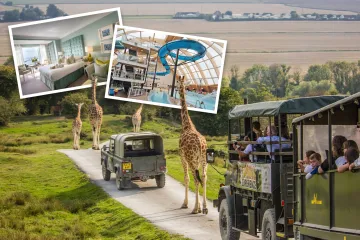
READ MORE: We asked Brits who ditched the UK what they most miss – they all said the same thingREAD MORE: Dictator’s EU island with giraffes now open to the public with £35 UK flights

The railway carries you northward along the coastline, passing through the Loch Lomond and The Trossachs National Park. At Crianlarich, the track divides, continuing either past Loch Awe towards Oban, or climbing high up to Rannoch Moor.

The line traverses the moorland for 23 miles, ascending to over 400 metres and offering unrivalled vistas of one of Europe’s last remaining wild places: an enormous expanse of blanket bog, lochans, rivers, and rocky outcrops where curlews, grouse, roe deer, and red deer roam freely.

The Moor captured near-national fascination during the Victorian period, when initial fear and mild disgust at its wild and forbidding character transformed into devotion. Among the early travellers were the poet William Wordsworth and his sister Dorothy, who visited in 1803 and tentatively described the place as “desolate and extensively wild”.

Just seven years later, Scotland’s greatest champion, Sir Walter Scott, published his celebrated poem The Lady of the Lake. The work showcased Loch Katrine in the Trossachs, south of Rannoch Moor, thrusting it into the spotlight. Inspired visitors descended on the region to witness how “Summer dawn’s reflected hue to purple changed Loch Katrine blue” for themselves.

Travelling north to the Highlands and back again a few days later, we experienced both faces of this remarkable landscape. During our night journey, the glens and Munros loomed against the train window, making our tiny illuminated carriage feel insignificant as it rattled along. On the bright, sunny return trip, the breathtaking vistas — sparkling lochs nestled beneath sheer mountains capped with lush greenery — felt more reminiscent of Switzerland or Austria than bonny Scotland.

Without doubt, the most iconic spot along the route is the Glenfinnan Viaduct, immortalised in the Harry Potter films as the path of the Hogwarts Express. Passengers cross this magnificent structure en route to Mallaig, the terminus of the 164-mile line.

However, spending an afternoon at the viaduct may be worth reconsidering. During my visit, a persistent drizzle dampened the spirits of the crowds of Potter enthusiasts, many of whom appeared rather deflated by what was on offer: two pipers playing sombrely and some railway infrastructure. Add to that the fact that the locals of the 100-person village are fed up with the crowds, and the choice to give it a miss seems straightforward.

Mallaig is a far superior option, boasting excellent whale-watching excursions that provide frequent sightings of the cheerful minke pods inhabiting the waters.

There are numerous other attractions to discover along the route.

Corrour, Britain’s highest-altitude railway station, draws Trainspotting enthusiasts due to its prominent appearance in the film. It is equally picturesque and captivating. There are no roads here, so visitors head directly onto the walking trails via a quick meal at the Corrour Station House.

Another gem is Tyndrum. This former mining settlement is now the smallest location in Britain to boast two railway stations. They enable travellers to branch off, climbing steeply up the glen towards the north or west.

For me, the town marks the final stop in the Lowlands, the spot where you pause before heading across the Moor and into the mountains. Such adventures require fuelling up on fish and chips or curry at the superb Green Welly Boot Stop while watching its wonderful collection of birds.

The West Highland Line is far more than just a train journey. Step aboard and you’ll find yourself rubbing shoulders with forestry workers heading to work, mountain bikers, walkers, local schoolchildren, and railway enthusiasts eager to discover whether a route once crowned the world’s most beautiful truly lives up to its reputation. It’s a living tapestry of Scotland at its finest: mountains, moorland, lochs, wildlife, and history, all rolling out before you at a gloriously unhurried pace.

Source link

One of the UK’s most scenic trains launches £1.50 tickets for summer

ONE railway with some of the best views in England is dishing out tickets for £1.50.

The Settle & Carlisle Railway is celebrating 150 years of being one of Europe‘s most scenic train journeys and is treating its passengers to a bargain offer.

The Settle & Carlisle Railway has released tickets for just £1.50 Credit: Alamy
The train crosses the famous Ribblehead Viaduct in North Yorkshire Credit: Getty

Follow The Sun’s award-winning travel team on Instagram and Tiktok for top holiday tips and inspiration @thesuntravel.

The 73-mile route in the North of England is considered one of the most beautiful thanks to its views of the Yorkshire Dales and Cumbria countryside.

The railway is allowing passengers to ride the entire length of the route from Leeds to Carlisle – and everywhere in-between for £1.50.

You can buy one of these cheap tickets from now until May 22 for travel between May 22 and July 17.

SIGHT SEA

£9.50 holidaymakers’ favourite Skegness activities… away from the beach


GRUBS UP

Best pubs, fish and chip shops and cafes in Sussex – by Sun readers & locals

Alex Hornby, Northern’s Commercial and Customer Director said: “The Settle to Carlisle Railway is famous around the world for its spectacular scenery and community engagement.

“We want as many people as possible to share in the experience of this wonderful line, which is why we’re offering everyone the chance to travel for just £1.50 during the 150th anniversary year.”

The stretch of railway has consistently been dubbed one of the most picturesque by the likes of Lonely Planet.

Travellers can take the entire route for just £1.50 Credit: Northern Railway

It said: “Passengers can feast their eyes on mile after mile of magnificent Yorkshire Dales and North Pennines scenery, interrupted only by stations so pretty you would expect to find them pictured on a box of biscuits.”

The line is part of the British rail network and serves both mainline and steam trains.

The most famous part of the route is the the Ribblehead viaduct which was first built in 1870.

It’s described as “a stunning piece of Victorian engineering” by the Yorkshire Dales National Park website.

They added: “Ribblehead viaduct is just over the border from Cumbria into North Yorkshire and is undoubtedly the most impressive structure on the Settle-Carlisle Railway.”


Source link