US Japan Currency Intervention Signals Shift Away From G7 Coordination
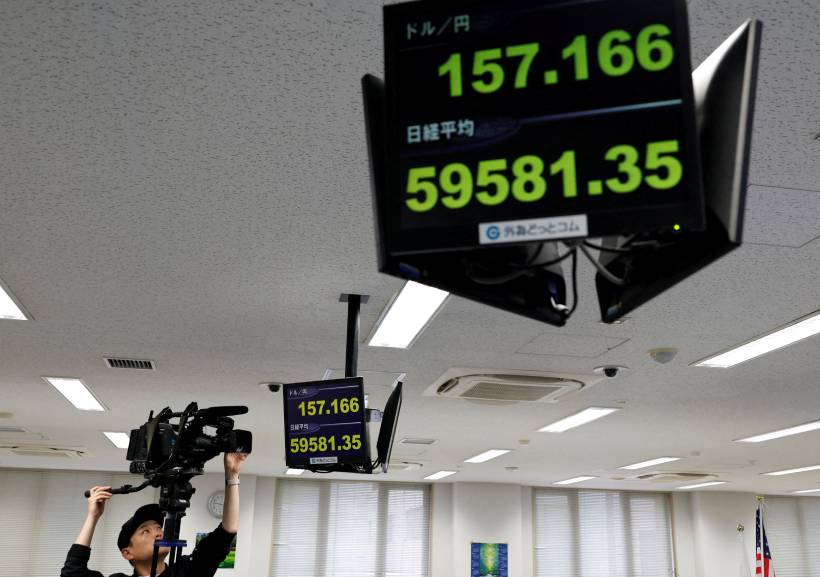
Last week’s joint intervention by the United States and Japan to support the Japanese yen has raised fresh questions about the future of international currency coordination, as the operation proceeded without broader participation from other Group of Seven (G7) economies.
Although the intervention temporarily strengthened the yen, analysts argue that the absence of coordinated action from Europe and other major economies reflects a broader decline in multilateral economic cooperation and a growing preference for bilateral deals under the Trump administration.
The intervention was jointly carried out by Washington and Tokyo after the yen weakened to multi decade lows against the U.S. dollar. U.S. Treasury Secretary Scott Bessent and Japanese Finance Minister Satsuki Katayama later confirmed the operation and defended its objectives.
The yen has largely maintained its gains since the intervention, although investors remain uncertain whether further support will follow or whether the Bank of Japan will reinforce the move through additional interest rate increases.
Stay ahead of the geopolitical week.
MD Briefing delivers expert analysis across five global fronts — the Indo-Pacific, energy, geoeconomics, European security, and the Middle East — every Monday morning. Free.
Treasury Market Concerns Shaped Washington’s Decision
One key factor behind U.S. involvement appears to have been concerns over the U.S. Treasury market.
Japan remains the largest foreign holder of U.S. government bonds. A large unilateral intervention by Tokyo would likely have required selling significant amounts of U.S. Treasuries to obtain dollars for prolonged currency operations, potentially disrupting already volatile bond markets.
By participating directly, the United States reportedly helped provide dollar liquidity while selling euros rather than dollars, reducing pressure on Treasury markets and limiting broader financial instability.
G7’s Absence Raises Questions
Despite the shared interest among G7 economies in preventing excessive currency volatility, other members of the group did not participate.
Historically, major currency interventions have often involved coordinated action across the G7. Following Japan’s 2011 earthquake and tsunami, G7 nations jointly intervened to weaken an excessively strong yen. Earlier coordinated efforts also included interventions supporting the euro in 2000 and global liquidity operations after the September 11 attacks.
In contrast, the latest operation remained strictly bilateral, even though the United States reportedly sold euros during the intervention without direct European participation.
The European Central Bank declined to comment publicly, while the International Monetary Fund has also remained largely silent.
Shift From Multilateralism to Bilateral Deals
The intervention reflects a broader shift in U.S. foreign economic policy under President Donald Trump, whose administration has increasingly favored bilateral negotiations over multilateral coordination.
Rather than pursuing comprehensive international agreements similar to the Plaza Accord or Louvre Accord, Washington has increasingly relied on country specific arrangements.
Japan has also deepened bilateral economic cooperation with the United States, including major investment commitments linked to previous tariff negotiations, reinforcing this new framework.
Regional Currency Pressures
U.S. officials also pointed to wider regional concerns.
Treasury Secretary Bessent argued that continued yen weakness risked placing downward pressure on other Asian currencies, particularly South Korea’s won, as exporters sought to remain competitive with Japanese manufacturers.
China’s yuan remains another major regional factor, although Beijing falls outside the G7 framework. Broader discussions involving China are expected only at future G20 meetings.
Historical Role of the G7
For decades, the G7 served as the primary forum for coordinated responses to major currency instability.
From stabilizing the euro during its early years to responding collectively after major financial crises, coordinated interventions carried significant market credibility because they demonstrated unified political and monetary commitment.
The latest U.S. Japan intervention marks a departure from that tradition, suggesting that future currency management may increasingly rely on bilateral arrangements rather than collective action.
Analysis
The U.S. Japan intervention highlights more than an attempt to stabilize the yen. It reflects a structural shift in global economic governance. The declining role of coordinated G7 action suggests that multilateral mechanisms are gradually giving way to transactional bilateral partnerships, particularly under the Trump administration.
While bilateral interventions may offer quicker and more flexible responses, they lack the collective market impact that historically made G7 operations highly effective. The absence of Europe and other major economies also raises questions about the future cohesion of the G7 as a forum for managing global financial stability.
For investors, this evolving landscape increases uncertainty. Without unified international coordination, currency markets may become more volatile as governments pursue national interests independently rather than through collective action. Whether future administrations restore broader multilateral cooperation or continue this bilateral approach will shape the next phase of global foreign exchange policy.
With information from Reuters.