exchange

Trump administration offers $100m in aid to Cuba in exchange for reform | Donald Trump News

Amid an oil blockade against the island, the US blames Cuba’s communist leadership for ‘standing in the way’ of aid.

The United States has offered $100m in humanitarian assistance to Cuba on the condition that the island’s communist government agrees to “meaningful reforms”.

The sum was made public in a statement from the US State Department on Wednesday, though the administration of President Donald Trump underscored it had made the offer privately in the past.

Recommended Stories

list of 3 itemsend of list

But the $100m comes with strings: namely, that Cuba’s government commits to Trump-approved changes.

“Today, the Department of State is publicly restating the United States’ generous offer to provide an additional $100 million in direct humanitarian assistance to the Cuban people,” the statement said.

“The decision rests with the Cuban regime to accept our offer of assistance or deny critical living-saving aid and ultimately be accountable to the Cuban people for standing in the way of critical assistance.”

The statement marks the latest chapter in an ongoing pressure campaign designed to destabilise Cuba’s communist leadership.

Since Cold War tensions in the 1960s, the US has placed a comprehensive trade embargo on the Caribbean island, in part as a reaction to the Cuban Revolution.

It has become the longest-running trade embargo in modern history, and the US has justified its continuation by pointing to systematic repression under Cuba’s communist government.

But critics have denounced the trade embargo as worsening humanitarian conditions on the island.

The crisis reached a tipping point in January, after Trump abducted Venezuelan President Nicolas Maduro, a close ally of Cuba.

In the following weeks, Trump cut off Venezuelan funds and oil supplies to Cuba. He then threatened economic penalties against any country that supplied Cuba with fuel, implementing a de facto oil blockade on the island.

Since then, only one Russian oil tanker has reached Cuba in late March. That month alone, the island suffered two island-wide blackouts.

Cuba relies heavily on foreign imports of oil to power its ageing energy grid. Only 40 percent of its oil supply is produced domestically, according to the International Energy Agency.

The United Nations warned earlier this year that Cuba faces the possibility of humanitarian “collapse”, with public transportation grinding to a halt, food prices soaring and public services like hospitals struggling to keep the lights on.

Trump, meanwhile, has repeatedly threatened to shift his focus to Cuba after the US-Israeli war on Iran ends, saying the island is “next” on his list of countries where he would like to see regime change.

“As we achieve a historic transformation in Venezuela, we’re also looking forward to the great change that will soon be coming to Cuba,” Trump told Latin American leaders at a summit in March.

“Cuba’s in its last moments of life as it was. It’ll have a great new life, but it’s in its last moments of life the way it is.”

Earlier this month, the US president issued a fresh wave of sanctions against the Cuban government, accusing the island of posing “an unusual and extraordinary threat to US national security and foreign policy”.

Media reports have also indicated that the Trump administration has stepped up its surveillance flights around Cuba, possibly in preparation for a surge of military assets to the Caribbean.

In Wednesday’s statement, the State Department blamed the communist system for having “only served to enrich the elites and condemn the Cuban people to poverty”.

It did not mention the US role in the humanitarian crisis on the island but instead described Cuba’s government as a hurdle to delivering much-needed aid.

“The regime refuses to allow the United States to provide this assistance to the Cuban people, who are in desperate need of assistance due to the failures of Cuba’s corrupt regime,” the State Department wrote.

It added that, should Cuba accept its terms, the $100m would be distributed through the Catholic Church and “other reliable independent humanitarian organizations”, rather than through the island’s government.

Source link

FBI Director Kash Patel denies drinking allegations in heated Senate exchange

FBI Director Kash Patel angrily lashed out at a Democratic lawmaker at a budget hearing Tuesday, calling allegations that he drinks excessively on the job and has been unreachable at times to his staff “unequivocally, categorically false.”

“I will not be tarnished by baseless allegations,” Patel told Sen. Chris Van Hollen when the Maryland Democrat confronted him about a recent article in the Atlantic magazine that painted an unflattering portrait of his leadership of the nation’s premier federal law enforcement agency. Patel has sued over the story. The Atlantic has said it stands by its reporting and will vigorously defend against the “meritless lawsuit.”

Patel shouted over Van Hollen and sought to turn the tables by accusing him of “slinging margaritas” in El Salvador, a reference to a visit the Democrat paid last year to Kilmar Abrego Garcia while he was jailed there following his arrest in Maryland.

The testy exchange occurred at an annual Senate committee budget hearing featuring Patel and other senior law enforcement leaders.

Tucker writes for the Associated Press.

Source link

UFC 328: Khamzat Chimaev kicks Sean Strickland despite armed police presence after ugly exchange

Khamzat Chimaev kicked Sean Strickland – despite the presence of armed police on stage – as the pair faced off following an ugly news conference before UFC 328 on Saturday.

A bitter and personal exchange escalated even further when Chimaev, despite being held back by UFC security, beckoned Strickland towards him as the pair traded insults, before launching a kick at the American.

As the crowd roared, security and armed police escorted each fighter off stage in separate directions as they continued to hurl expletives at each other.

Tensions have threatened to boil over throughout fight week, with Russian-Emirati middleweight champion Chimaev set to defend his belt against American Strickland in Newark, New Jersey on Saturday.

It is not uncommon for UFC fighters to insult each other in the hope of building hype around a fight, but Strickland has been particularly volatile while addressing Chimaev – launching derogatory and racist comments which have attacked his religion and heritage.

Last week, Strickland threatened to shoot Chimaev if the 32-year-old and his team-mates confronted him in the build-up to the fight.

In response, the UFC has hired extra security to protect each fighter and reportedly kept the pair in separate hotels.

Chimaev has been calm and reserved during fight week, despite Strickland’s derogatory comments, but was animated during the news conference.

Before the pair had even taken their seats, security had to intervene and, as Strickland continued to goad Chimaev, he responded with ugly comments about childhood trauma which the American has spoken about in the past.

“You’re making fun of child abuse,” replied Strickland, who followed up with further expletives.

When asked if he enjoyed the bitter rivalry between Chimaev and Strickland, UFC president Dana White – who was stood between the pair – responded “it is what it is”.

He previously described it as a “top-three” heated rivalry of all time in the UFC.

Despite the offensive comments from Strickland and Chimaev, it is unlikely the UFC will take any disciplinary action with White a vocal supporter of free speech.

“I think probably the most important free speech to protect is hate speech,” White said last year.

“Because when a government or a certain person can come out and determine saying ‘this is hate speech’, it’s a very slippery slope and it’s dangerous, in my opinion.”

Strickland did not appear to be hurt by Chimaev’s kick and afterwards wrote “exactly what I expected a coward to do”, on social media.

It is unclear whether the New Jersey Athletic Control Board will punish Chimaev for the altercation.

Source link

Zambia blasts the U.S. over a $2-billion health deal in exchange for critical minerals

Zambia is accusing the United States of tying a $2-billion deal for critical health assistance to access to the southern African nation’s rich mineral assets, and calling the outgoing U.S. ambassador’s allegations of corruption “mischievous” and “undiplomatic.”

The comments by Zambia’s foreign affairs minister, Mulambo Haimbe, on Monday brought into the open simmering tensions over President Trump’s “America First” strategy, which is reshaping aid to Africa into transactional agreements.

Some African leaders and health experts have criticized the new U.S. stance and its demands for sensitive health data in exchange for badly needed support for health systems strained by the Trump administration’s dismantling of foreign aid. Some say they would not receive access to health innovations like vaccines in return.

The U.S. is also seeking to challenge China, a dominant player in Zambia and much of Africa, whose minerals are critical to the green energy transition, including inputs for solar panels, electric vehicle batteries and energy storage systems.

Zambia says talks stalled over data-sharing demands

In a statement, Haimbe described the accusations of Zambian graft and negotiation inertia by outgoing U.S. ambassador Michael Gonzales as “mischievous” and “deeply regrettable, undiplomatic and inconsistent with the spirit of mutual respect.”

Haimbe also accused the U.S. of tying access to critical minerals to the conclusion of the health deal, which Gonzales earlier dismissed as “alarmist allegations” that he called “disgusting” and “absolutely and patently false.”

Negotiations have continued for months to conclude the deal, one of dozens the Trump administration is pursuing in some of the world’s most aid-dependent countries.

Gonzales in late April said Zambian leaders had “abdicated their responsibilities, letting the United States pay for healthcare while officials diverted government funds to their own pockets.” He said Zambian authorities had “ignored” U.S. overtures to conclude a new deal.

But Haimbe said negotiations had stalled over “unacceptable” data-sharing demands “in violation of our citizens’ right to privacy” and “the insistence on preferential treatment of U.S companies over Zambia’s critical minerals.”

Zambia “takes the view, first and foremost, that Zambians must have a say on how her critical minerals are used, and second that no one strategic partner is to be treated preferentially to others,” he said.

The U.S. Embassy did not immediately respond to a request for comment.

U.S. says its approach aims to reduce donor dependency

The U.S. approach replaces decades of engagement anchored in the now-dismantled United States Agency for International Development and the President’s Emergency Plan for AIDS Relief, or PEPFAR.

In their place, U.S. officials are negotiating country-by-country agreements that recast aid as a transaction, tying funding to conditions including commercial provisions, domestic financing commitments, disease surveillance, pathogen sharing and even religion.

Since late last year, the U.S. has signed agreements with about 30 countries, many in Africa. Washington says the approach is meant to reduce donor dependency, promote local ownership and safeguard American interests, including against an aggressive China that dominates trade in Africa but contributes less aid.

There has been pushback.

Ghana last week said it had rejected a proposed deal over provisions granting broad access to sensitive health data without safeguards. Zimbabwe walked away from a $367-million package over similar concerns. In Kenya, a $2.5- billion agreement signed in December has been put on hold after a court challenge arguing it violates data protection laws.

In Lesotho, draft U.S. proposals sought 25 years of access to health data and biological samples before local officials secured a shorter five-year deal.

Health experts say data would largely flow one way

Critics say the data-sharing demands tilt toward U.S. interests and warn the information-sharing would largely go in just one direction: toward Washington.

The new agreements aim to ensure the flow of disease surveillance data and biological samples, but through bilateral channels, after the U.S withdrew from the World Health Organization in January, said Asia Russell, executive director of advocacy group Health GAP.

Countries currently report disease outbreaks primarily through the WHO, which coordinates responses and is negotiating new frameworks on pathogen-sharing and equitable access to vaccines.

The U.S., now outside those talks, is pursuing direct access instead.

“[The U.S. wants] to understand what’s actually happening,” said Jen Kates, a senior vice president at the Washington-based nonprofit KFF. “But they are trying to do it in a very different way.”

Health advocates say this risks creating a parallel global health system. In Zimbabwe, a government spokesperson in February said the government terminated negotiations because the U.S. was not offering a “corresponding guarantee of access to any medical innovations — such as vaccines, diagnostics or treatments — that might result from that shared data.”

“That raises serious concerns about who benefits,” said Atilla Kisla of the Southern Africa Litigation Center.

Advocates point to the harsh experience of the COVID-19 pandemic, when African countries contributed data and samples but were largely last in line for vaccines.

Experts warn against health as a ‘bargaining chip’

The agreements with the U.S. are drawing criticism for closed-door negotiations and limited public scrutiny.

“Secrecy is at the center of this. That puts accountability for results at risk,” said Health GAP’s Russell. “It’s impossible to evaluate these deals properly without seeing the full terms. Part of what made PEPFAR successful was transparency. Now that’s been taken away.”

The deals also come with tighter financial conditions. Many include reduced funding compared to previous levels of U.S. assistance, while requiring countries to increase domestic health spending, with aid at risk if targets are not met.

“These are going to be very heavy lifts,” said KFF’s Kates. “Countries are already under strain.”

Critics say some agreements also advance U.S. commercial and political interests, blurring the line between aid and transactional diplomacy.

“When health becomes a bargaining chip, everyone becomes less safe,” Russell warned.

Mutsaka and Imray write for the Associated Press. Keketso Phakela in Maseru, Lesotho, contributed to this report.

Source link

House Oversight chair says some members support a Ghislaine Maxwell pardon

The Republican chair of the House Oversight Committee said some of its members would support a presidential pardon for convicted sex trafficker Ghislaine Maxwell in exchange for her assistance in the committee’s investigation into Jeffrey Epstein.

But good luck getting any of them to admit it.

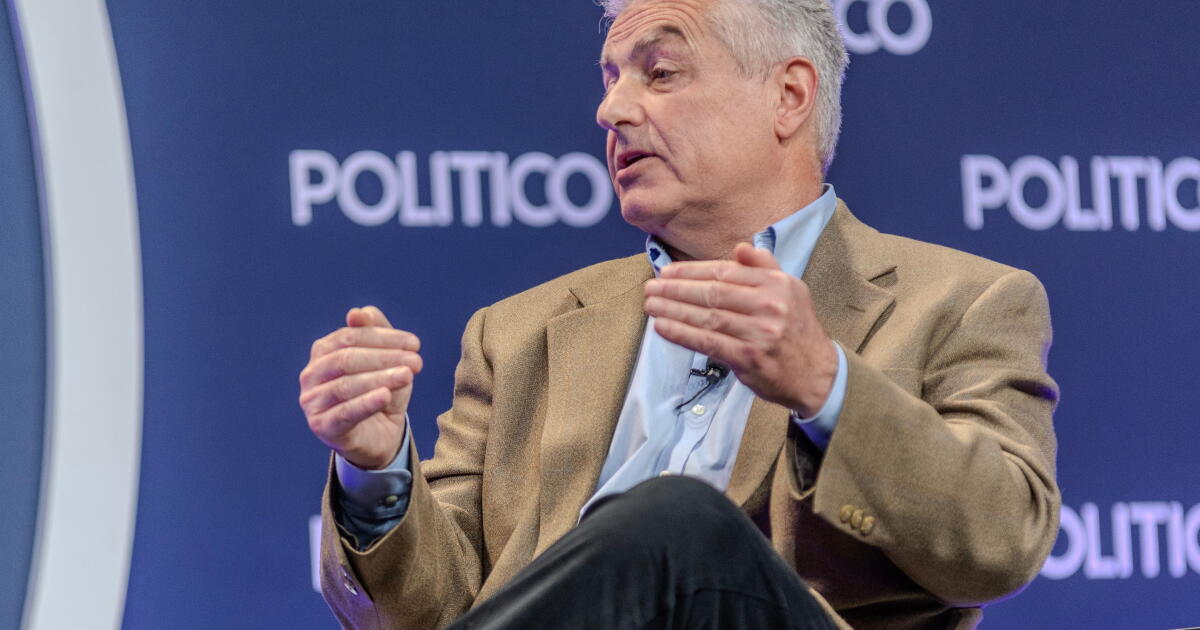
Rep. James Comer (R-Ky.) told Politico Wednesday that “a lot of people” support the idea of Maxwell receiving a pardon from President Trump in exchange for her cooperation in the committee’s investigation.

Although Comer said he opposed a pardon himself — “other than Epstein, the worst person in this whole investigation is Maxwell” — he offered that his committee was “split” on the issue.

Rep. Robert Garcia of Long Beach, the top Democrat on his committee, condemned the idea of a Maxwell pardon and said Democrats on the committee uniformly oppose it.

“It’s outrageous that Republicans on the Oversight Committee are considering a pardon for Ghislaine Maxwell,” Garcia said in a statement. “She is a sexual abuser who facilitated the rape of women and children.”

The Times reached out to all 26 Republicans on the committee to see who, if anyone, supported the idea of a pardon.

Although most didn’t respond, the few who did expressed outrage at the idea.

“I am absolutely not supporting a pardon for her nor have I heard that from anyone else,” said Rep. Anna Paulina Luna (R-Fla.).

“Never in a thousand years,” said Rep. Clay Higgins (R-La.).

Maxwell declined to answer the committee’s questions during a video deposition in February from the Texas federal prison where she is serving her 20-year prison sentence.

She is still challenging her 2021 conviction on five counts related to the sex trafficking of minors for her role in recruiting and grooming girls for Epstein to abuse. She was accused at trial of also participating in the abuse of one victim.

At the time of her February deposition, Maxwell’s attorney David Oscar Markus said she would offer the “unfiltered truth” if granted clemency by Trump.

Attorneys who have represented victims abused by Epstein and Maxwell strongly opposed the idea of a pardon.

“This is a woman who belongs behind bars for the rest of her life for what she did to women,” said Spencer Kuvin, who has represented numerous Epstein victims.

Sigrid McCawley, a managing partner at Boies Schiller Flexner, questioned the value of information Maxwell could provide.

“Ghislaine Maxwell is a proven self-serving liar,” McCawley said in a statement. “There is nothing credible that she will offer the government, and the assertion that she would provide information is simply a smoke screen.”

Trump has not said he is considering a pardon but when asked by reporters he has declined to rule it out.

Epstein abused more than 1,000 girls and young women over the span of decades. He negotiated a lenient deal nearly two decades ago with federal prosecutors in south Florida that allowed him to serve 13 months in a Palm Beach County jail where he was allowed to come and go freely to settle claims that he had abused dozens of high school girls.

Following investigative reporting on that deal by the Miami Herald, federal prosecutors in the Southern District of New York brought new sex charges against Epstein in July 2019. He died in federal custody one month later.

Epstein and Maxwell counted members of the British royal family, multiple presidents and business titans among their friends.

They have been accused of forcing some of their victims to have sex with some of those men. But Maxwell is the only other person who has ever been charged in connection with Epstein’s crimes.

The committee has deposed numerous people who knew Epstein, including Ohio billionaire Les Wexner, who hired Epstein to manage his finances, and former President Clinton and former Secretary of State Hillary Clinton.

The committee has not, however, deposed Trump, who once famously called Epstein a “terrific guy” and said, “I just wish her well,” when told of Maxwell’s arrest in 2020.

The Department of Justice has also released millions of pages of documents from its investigations into the deceased sex offender in response to the bipartisan Epstein Files Transparency Act, which was signed into law last year.

The release of the files has led to criminal inquiries in the United Kingdom into Andrew Mountbatten-Windsor, the former prince, and Peter Mandelson, the former British ambassador to the United States, over allegations that they provided secret government information to Epstein.

So far, the files have not led to any publicly known criminal investigations in the United States.

Source link