rates

Trump vs. Powell: Interest rates, investigation and a replacement

April 22 (UPI) — Federal Reserve Chairman Jerome Powell‘s term is nearing its end and President Donald Trump is pushing for his replacement but an investigation into Powell may hold up the appointment of a new chair.

The Justice Department opened an investigation into Powell over the renovation of the Marriner S. Eccles Federal Reserve Board Building in Washington, D.C., which Trump claims has exceeded $3 billion. The renovation was not the beginning of Trump’s feud with Powell but it has added to his effort to oust the chairman before the end of his term.

Powell’s term as chairman of the Federal Reserve will end in May but he will remain on the Board of Governors until January 2028.

Typically when a Fed chair’s term ends, they resign. However, Powell said he plans to stay put until a replacement is appointed.

At least one lawmaker, Sen. Thom Tillis, R-N.C., said he would not vote on a new chairman until the investigation into Powell is over.

The Justice Department alleges that Powell made false or misleading statements to Congress about the cost of the renovation project at the Federal Reserve headquarters during his testimony to the House Committee on Financial Services in June.

Powell’s testimony was part of his semiannual report to Congress on monetary policy.

Following the hearing, Rep. Anna Paulina Luna, R-Fla., submitted a request to then-Attorney General Pam Bondi for Powell to be investigated for perjury and making false statements. Luna said that Powell denied there would be “luxury features” included in the renovations, including a “VIP dining room, premium marble, water features and a roof terrace garden.”

Luna added that Powell “falsely claimed that the Eccles building ‘never had’ a serious renovation.” She notes that the building underwent renovations in 1999 and 2003.

“These are not minor misstatements,” Luna said. “Chairman Powell knowingly misled both Congress and executive branch officials about the true nature of a taxpayer-funded project. Lying under oath is a serious offense — especially from someone tasked with overseeing our monetary system and public trust.”

No charges have been formally filed against Powell. The challenge the Justice Department faces in convicting Powell of perjury or false statements is in proving that he willfully, knowingly made statements he knew to be false at the time.

Powell, who was Trump’s nominee for chairman in 2017, has said that the investigation into him and the Federal Reserve renovation is “pretext” to punish him for not following Trump’s direction to lower interest rates.

“No one, certainly not the chair of the Federal Reserve, is above the law, but this unprecedented action should be seen in the broader context of the administration’s threats and ongoing pressure,” Powell said in a video message in January. “This is about whether the Feed will be able to continue to set interest rates based on evidence and economic conditions — or whether instead monetary policy will be directed by political pressure or intimidation.”

Last month, federal prosecutor George A. Massucco-LaTaif told Chief U.S. District Judge James E. Boasberg that the Justice Department does not know of any evidence that a crime has been committed in the Federal Reserve renovation project.

“We do not know at this time,” Massucco-LaTaif said. “However, there are 1.2 billion reasons for us to look into it.”

The fissure between Powell and Trump began and has continued over the Federal Reserve’s decision to maintain elevated interest rates in response to inflation. Trump has repeatedly called on the Federal Reserve to lower interest rates, saying the United States should “have the lowest interest rate in the world.”

All along the Federal Reserve continues to hold an elevated interest rate, currently between 3.5% and 3.75%, in an effort to tame inflation. Its target rate of inflation is 2% on an annual basis.

Economic markers from the U.S. Bureau of Labor statistics show the rate of inflation remains at about 3%.

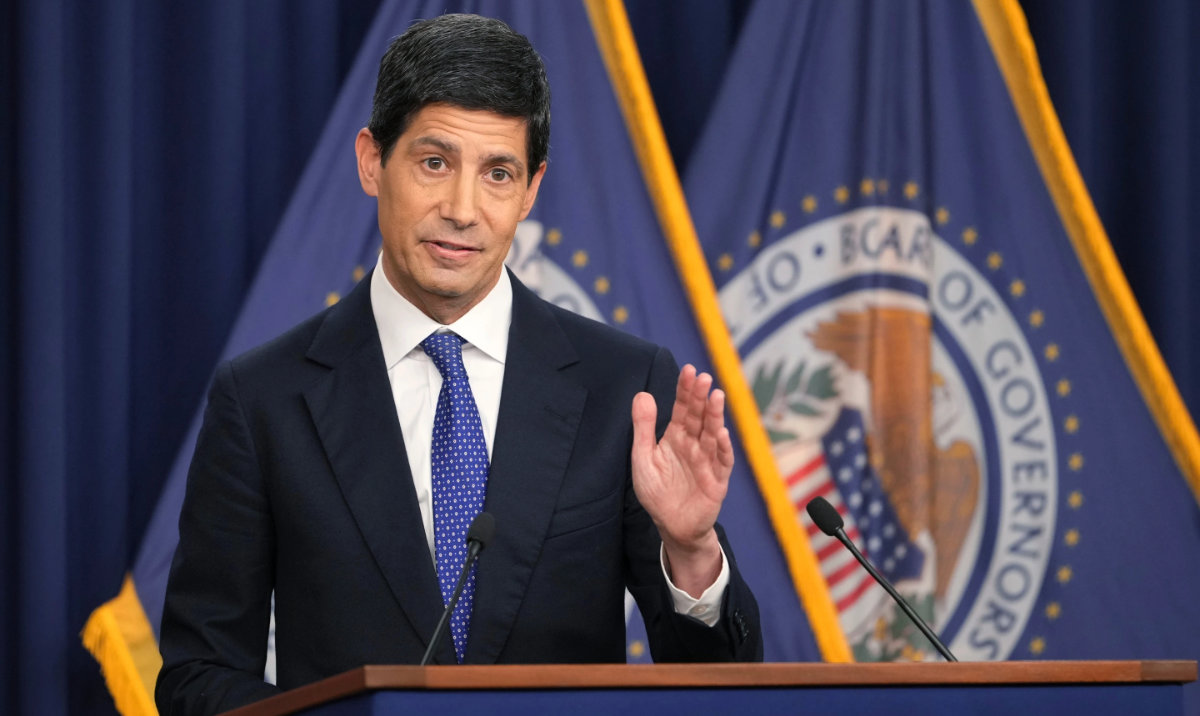
Trump has nominated Kevin Warsh to succeed Powell. Warsh served on the Fed’s board for five years after being appointed by President George W. Bush in 2006.

“I have known Kevin for a long period of time, and have no doubt that he will go down as one of the great Fed chairmen, maybe the best,” Trump posted on social media in January. “On top of everything else, he is ‘central casting,’ and he will never let you down.”

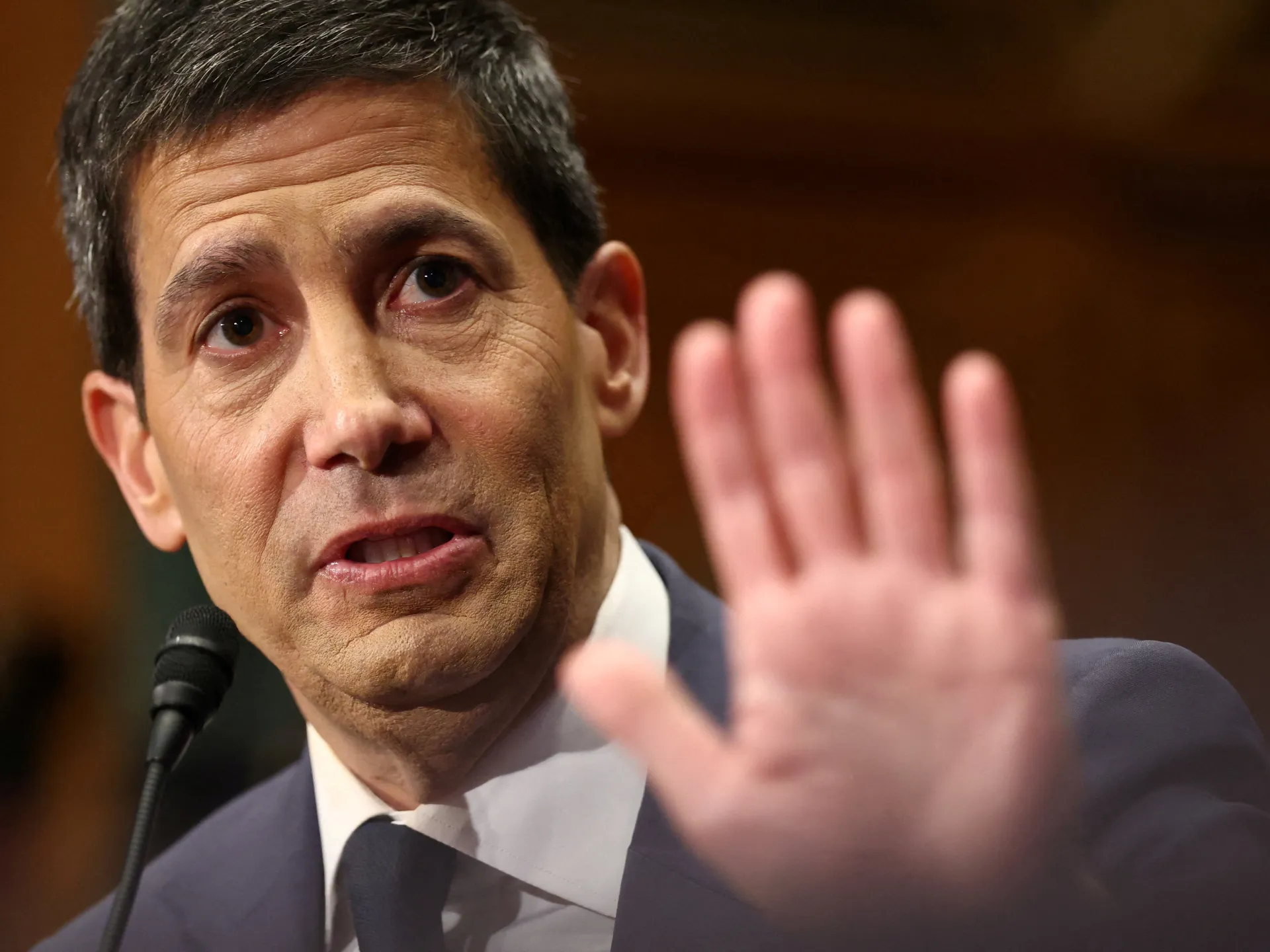
Warsh faced his first hearing on the path toward confirmation on Tuesday when he testified before the Senate Banking Committee. Questions by senators centered on the Federal Reserve’s independence, something Trump’s influence has called into question.

If appointed, Warsh would be the wealthiest person to lead the Federal Reserve.

Presidents have butted heads with the Federal Reserve throughout its history, as monetary policy can reflect on how the U.S. population views the president’s performance. A president has never tried to fire the chairman of the Federal Reserve.

The Federal Reserve is a non-partisan, independent agency made up of a board of governors posted in Washington, D.C., and 12 regional banks located across the United States.

Independence is key to the Federal Reserve’s function, keeping it from choosing policy based on the political goals of those occupying the White House and other branches of government.

Trump has not attempted to fire Powell yet but he did attempt to fire Fed board Gov. Lisa Cook. The attempt was unsuccessful as the U.S. Supreme Court intervened in October and ruled that she can remain at her post on an interim basis, at least for 2026.

The president does have some authority over choosing or designating a new Federal Reserve chair, Peter Shane, a constitutional law scholar in residence at NYU Law School, told UPI. However, a president must demonstrate a good reason for doing so.

There are two mechanisms in place that are meant to protect the independence of the Federal Reserve and its chair from political influence.

First, there is Supreme Court precedent. In 1935, the high court made a ruling in the landmark case Humphrey’s Executor vs. the United States. In this case, the court ruled that President Franklin D. Roosevelt could not fire the commissioner of the Federal Trade Commission, another independent agency, without cause.

The ruling affirmed that the authority to remove the head of any independent agency falls to Congress.

Second, there is the Federal Reserve Act. President Woodrow Wilson signed the Federal Reserve Act of 1913 to decentralize the control over monetary policy in the United States. This established the Federal Reserve and set its independence as a foundational feature of its existence.

The Federal Reserve Act makes the Federal Reserve independent in setting monetary policy without the influence of the president or Congress.

Congress has the ability to change the Federal Reserve Act. It did so in 1977 with the Federal Reserve Reform Act.

This amendment, signed into law by President Jimmy Carter, codified the objectives of the agency and established a requirement for the board of governors to report to Congress in hearings twice a year. It also added the requirement of Senate confirmation hearings for the chairman and vice chairman of the board of governors.

Last year, Rep. Thomas Massie, R-Ky., introduced the Federal Reserve Board Abolition Act, calling for the board of governors of the Federal Reserve and all Federal Reserve banks to be abolished.

“Americans have suffered under crippling inflation and the Federal Reserve is to blame,” Massie said in a statement.

Since being introduced in March 2025 the bill has not progressed beyond being referred to the House Committee on Financial Services.

FBI Director Kash Patel speaks during a press conference at Department of Justice Headquarters on Tuesday. The Trump Administration announced charges against the Southern Poverty Law Center, which the government alleges funneled over $3 million toward white supremacist and extremists groups. Photo by Bonnie Cash/UPI | License Photo

Source link

Warsh says he got no pressure from Trump to cut rates even as president publicly pushes for them

President Trump’s nominee to chair the Federal Reserve said Tuesday that he never promised the White House that he would cut interest rates, even as the president renewed his calls for the central bank to do so.

“The president never once asked me to commit to any particular interest rate decision, period,” Kevin Warsh, a former top Fed official, said under questioning by the Senate Banking Committee. “Nor would I ever agree to do so if he had. … I will be an independent actor if confirmed as chair of the Federal Reserve.”

Warsh’s comments came just hours after Trump, in an interview on CNBC, was asked if he would be disappointed if Warsh didn’t immediately cut rates and responded, “I would.”

The comments underscore the challenge faced by Warsh, 56, a financier and former member of the Fed’s board of governors whom Trump named in January to replace the current Fed chair, Jerome H. Powell. Democrats on the committee accused Warsh of flip-flopping on interest rates over the years, supporting higher interest rates under Democratic presidents and advocating rate cuts during Trump’s time in office. Investors are watching the hearing closely to see how Warsh balances Trump’s demands with worsening inflation, as the war in Iran pushes up the price of gasoline.

Higher inflation typically leads the Fed to raise rates, or at least keep them unchanged, rather than cut them. When the Fed changes its key rate, it can affect mortgages, auto loans and business borrowing.

Yet Warsh’s account was challenged by Sen. Ruben Gallego, an Arizona Democrat, who said that Wall Street Journal reporting last year found that Trump had urged Warsh to reduce borrowing costs.

“Who’s lying here? Is it you or the president?” Gallego asked.

“I think those reporters need better sources,” Warsh responded.

For all the back and forth, the hearing didn’t appear to advance Warsh’s nomination, which has been delayed by a Justice Department investigation into the Fed and Powell, over brief testimony Powell gave last June before the same panel about a building renovation.

Sen. Thom Tillis, a North Carolina Republican on the committee, reiterated Tuesday he wouldn’t vote for Warsh until the investigation is dropped. With the committee closely divided and all Democrats opposed to his nomination, Tillis’ opposition is enough to bottle it up in committee.

“We have got to get rid of this investigation,” Tillis said, “so I can support your nomination.”

Tillis has previously said that all seven Republicans on the committee have signed a letter stating that Powell did not commit a crime when he testified before the panel last June. Federal prosecutors, led by U.S. Atty. Jeanine Pirro, are investigating his testimony for potential perjury, though a judge said last month they offered no evidence to support the charge when he threw out subpoenas Pirro had issued.

Prosecutors from her office as recently as last week sought access to the Fed’s building project but were turned away, revealing that the Trump administration has not reversed course despite opposition from members of his own party that are essential to Warsh’s confirmation.

In his opening remarks, Warsh told the Senate Banking Committee that one of his top goals would be to fight inflation, which remains elevated at 3.3% annually.

“Congress tasked the Fed with the mission to ensure price stability, without excuse or equivocation, argument or anguish,” Warsh said. “Inflation is a choice, and the Fed must take responsibility for it.”

Warsh would be in a tough spot if confirmed. Inflation is worsening, making it much harder for the Fed to implement the interest rate cuts Trump so desperately seeks. The conflict could also slow the economy, as well as hiring. And if Warsh ultimately becomes chair, he may very well find his predecessor, Powell, still sitting on the Fed’s governing board, an uncomfortable arrangement that hasn’t occurred since the late 1940s.

Warsh said the Fed’s political independence is “essential,” and that the central bank wasn’t threatened when “elected officials — presidents, senators, or members of the House — state their views on interest rates.” Trump has repeatedly urged Powell to cut the Fed’s key rate from its current level of about 3.6% to as low as 1%, a view almost no economist shares.

Sen. Elizabeth Warren, a Massachusetts Democrat, said that Trump has not just stated his opinions on rates, but has sought to fire a Fed governor and is investigating Powell.

“The Senate should not be aiding and abetting Donald Trump’s illegal takeover of the Fed by installing his chosen sock puppet as chair,” she said Tuesday.

Warren also noted that Warsh has not disclosed all of his financial holdings, which include investments in startups and private companies, or the size of those financial stakes. For example, Warsh has said he has holdings in SpaceX and Polymarket, but has not said how large those investments are.

Warren charged that Warsh is not in compliance with ethics requirements. Warsh argued that the Office of Government Ethics has signed off on his plan to sell all his assets within 90 days of his confirmation.

The turmoil could make a potential transition from Powell to Warsh an unusually turbulent one for the world’s most pivotal central bank, which has historically experienced smooth transfers of power. Should the change in leadership prove particularly bumpy, it could unnerve markets and lift longer-term interest rates.

Powell’s term as chair ends May 15. He said last month that he would remain as chair until a successor is named. Powell also is serving a separate term as a member of the Fed’s governing board that lasts until January 2028. Fed chairs typically leave the board when their terms as chair end, but Powell said last month he would remain on the board, even if a new chair is approved, until the investigation is dropped.

Trump said he would fire Powell if he attempted to remain at the Fed. Yet Trump’s previous attempt to remove a Fed governor, Lisa Cook, has been tied up in court. During oral arguments in January, a majority of justices on the Supreme Court appeared to lean toward leaving Cook at the Fed.

Rugaber writes for the Associated Press.

Source link

BOK chief urges caution, cites Middle East risks over rates

Rhee Chang-yong, governor of the Bank of Korea, speaks during a press briefing in Seoul on April 10. Photo by Asia Today

April 10 (Asia Today) — Bank of Korea Gov. Rhee Chang-yong said Thursday that uncertainty in the Middle East is having a greater impact on South Korea’s economy than interest rate policy, calling for a cautious, wait-and-see approach.

Speaking after a monetary policy meeting, Rhee said policymakers should first assess how the Middle East situation and related negotiations unfold before making decisions on rates.

“There was little discussion about raising or lowering rates, and many members agreed to monitor the situation for now,” he said.

The central bank held its benchmark interest rate steady at 2.50%, marking a seventh consecutive freeze since July.

Markets had expected that rising oil prices linked to the Middle East conflict could push inflation higher and prompt a policy shift. Consumer prices rose 2.2% in March, up 0.2 percentage points from a month earlier, adding to upward pressure.

Rhee dismissed concerns about stagflation – a combination of slowing growth and rising prices – as unlikely if the current crisis is resolved soon.

“If the situation ends at this point, the possibility of stagflation is low,” he said, while warning that unpredictable developments could still lead to a worst-case scenario.

He highlighted potential damage to Iran’s energy infrastructure as a key variable, noting that prolonged disruptions could weigh on South Korea’s economy even after the crisis subsides.

The central bank also indicated that this year’s economic growth could fall below its February forecast of 2.0%, citing weaker sentiment and production disruptions since March despite earlier gains from exports and consumption.

Inflation, however, is expected to exceed the earlier projection of 2.2% due to higher global oil prices.

Rhee gave a generally positive assessment of the government’s supplementary budget, which relies on excess tax revenue rather than bond issuance, easing concerns about fiscal stability.

However, he expressed concern that about 5 trillion won (about $3.7 billion) of the budget is allocated to local education funding under existing rules, suggesting the need to review whether such allocations are appropriate during an economic slowdown.

On exchange rates, Rhee said the value of the Korean won should be assessed relative to the U.S. Dollar Index rather than focusing solely on the won-dollar rate, noting that short-term fluctuations can be driven by domestic supply and demand factors.

Thursday’s meeting was Rhee’s final rate-setting session before his term ends April 20.

— Reported by Asia Today; translated by UPI

© Asia Today. Unauthorized reproduction or redistribution prohibited.

Original Korean report: https://www.asiatoday.co.kr/kn/view.php?key=20260410010003215

Source link

Distressed firms surge in South Korea amid high rates

1 of 2 |
Illustration depicts rising corporate distress in South Korea, with the number of at-risk firms climbing to 3,364 in 2025. Graphic by Asia Today and translated by UPI

April 5 (Asia Today) — The number of financially vulnerable companies in South Korea has surged to a record high, with many firms struggling to cover even interest payments as high borrowing costs and weak domestic demand persist.

According to data from five major commercial banks, 3,364 companies were classified as at high risk of becoming distressed in 2025 credit assessments, up 828 from a year earlier. The figure marks the highest level since records began in 2005 and exceeds levels seen during the COVID-19 pandemic.

The increase reflects prolonged high interest rates and a slow recovery in domestic consumption, which have made it difficult for many firms to repay both principal and interest on loans.

More companies are also slipping into actual distress. Firms categorized as showing clear signs of financial trouble rose to 45, while those deemed unlikely to recover climbed to 98.

The strain is evident in broader financial indicators. The Bank of Korea said 46.4% of companies had an interest coverage ratio below 1 as of the third quarter of last year, meaning nearly half were unable to generate enough operating profit to cover interest expenses.

The rise in vulnerable firms is adding pressure on banks, which are already tightening lending standards. Non-performing corporate loans at the five major banks reached about 4.2 trillion won ($3.1 billion), even as overall corporate lending growth slowed.

Banks have responded by applying stricter credit risk assessments, but the rapid increase in troubled borrowers is raising concerns about asset quality in the financial sector.

Analysts warn that risks could grow further if geopolitical tensions in the Middle East continue to push up oil prices, fueling inflation and weakening corporate profitability.

A central bank official said prolonged external shocks could erode companies’ ability to service debt, potentially undermining financial stability.

— Reported by Asia Today; translated by UPI

© Asia Today. Unauthorized reproduction or redistribution prohibited.

Original Korean report: https://www.asiatoday.co.kr/kn/view.php?key=20260406010001361

Source link

Stocks with high correlation to interest rates reached all-time high in March

Businessman Looking At Prospect Of Higher Interest Rates

DNY59/E+ via Getty Images

Companies whose stock prices have historically shown high correlation to movement in interest rates recently saw an all-time high as odds of rate hikes may seem more plausible for investors than rate cuts.

Although it has lagged in the past

Source link

US Fed keeps interest rates steady amid economic, geopolitical uncertainty | Banks News

The United States Federal Reserve will hold interest rates steady as the labour market cools and prices on goods and services surge following the US and Israel’s joint strikes on Iran.

The central bank will maintain its benchmark rate at 3.5–3.75 percent, consistent with the Fed’s decision last month, when it also held rates steady.

Recommended Stories

list of 4 itemsend of list

“The Committee seeks to achieve maximum employment and inflation at the rate of 2 percent over the longer run. Uncertainty about the economic outlook remains elevated. The implications of developments in the Middle East for the US economy are uncertain,” the central bank said in a statement announcing its policy decision and referring to its Federal Open Market Committee.

“The Committee is attentive to the risks to both sides of its dual mandate.”

Holding rates steady was in line with estimates. CME FedWatch, a tool that tracks monetary policy decisions, forecast that there was a 99 percent chance that rates would hold steady.

The stall comes after three rate cuts in 2025.

Global gripes

Consumers are also facing the repercussions of US President Donald Trump’s trade and military policies in their daily expenses.

“Despite meaningful progress on inflation in 2024, Trump’s tariffs have stalled progress and kept inflation persistently above the Fed’s target. Wholesale prices are running hot as service prices surge, and now, Trump’s war in Iran is rocking commodity markets around the globe,” Elizabeth Pancotti, managing director of policy and advocacy at Groundwork Collaborative, an economic think tank, said in comments provided to Al Jazeera.

Last month, the US Supreme Court ruled against the president for his use of the International Emergency Economic Powers Act (IEEPA). The high court said the president exceeded his authority and that the tariffs imposed under that order must be refunded. However, the president then imposed new tariffs not covered by IEEPA.

The White House announced a 15 percent tariff through Section 122, which allows the president to impose tariffs for 150 days. Those changes were reflected in the producer price index report released by the US Department of Labor’s Bureau of Labor Statistics on Wednesday.

Wholesale prices rose by 0.7 percent for the month, marking the biggest one-month surge in a year. Goods prices rose 1.1 percent overall after tumbling for two months. Energy prices rose by 2.3 percent, with the cost of gas or petrol rising by 1.8 percent. Those costs are expected to get higher as tensions rise in the Strait of Hormuz following joint US-Israel strikes on Iran in late February and the subsequent retaliation.

“In the near term, higher energy prices will push up overall inflation; however, it is too soon to know the scope and duration of the potential effects on the economy,” Fed Chair Jerome Powell told reporters.

In the last month, petrol prices have jumped for US consumers. The average price for a gallon of regular gasoline is $3.84, up from $2.92 this time last month.

“The Fed’s inflation worries extend beyond weathering a fleeting wave of one-off price hikes associated with tariffs and, more recently, an energy price spike,” Stephen Stanley, chief US economist at Santander US Capital Markets, told the Reuters news agency.

Labour market stalls

Holding rates steady also comes as the job market stagnates. The latest jobs report, which was released earlier this month, showed that the US economy lost 92,000 jobs, with unemployment rising to 4.4 percent.

Meanwhile, the Job Openings and Labor Turnover Survey, or JOLTS report, which came out last week, showed 6.9 million open jobs in the US, unchanged from the month prior. That shows that employer hiring has stalled and that those who have jobs are seldom leaving for new ones.

“This might be one of the toughest moments in recent memory for the Federal Reserve’s Open Market Committee,” Michael Linden, Senior Policy Fellow at the Washington Center for Equitable Growth, said in remarks provided to Al Jazeera. “Recent data has revealed that economic growth in the back half of last year was extremely weak, the labour market seems to be on the precipice of disaster, and prices keep rising faster than anyone feels comfortable with.”

Political undercurrents

Wednesday’s decision is the second-to-last one of current Fed Chair Powell, whose term is up in May. Powell, who was first appointed by Trump during his first administration, has been a target of Trump’s scorn and criticisms for not cutting interest rates fast enough.

“When is ‘Too Late’ Powell lowering INTEREST RATES?” Trump posted on his social media platform Truth Social on Wednesday morning ahead of the decision.

Previously, Trump said he would not nominate someone to lead the central bank unless the nominee agreed with his position.

“Anybody that disagrees with me will never be the Fed Chairman!” Trump said in a post on Truth Social in December.

“We at the Fed will continue to do our jobs with objectivity, integrity and deep commitment to serve the American people,” Powell told reporters.

Trump’s nominee to succeed Powell, Kevin Warsh, has his nomination in flux as Republican Senator Thom Tillis said he would not vote to advance any of Trump’s nominees to the central bank until a criminal probe into the current chairman, Powell, is closed.

Tillis sits on the Senate Banking Committee, which vets nominees for the central bank, including Warsh. He said he will not approve Trump’s Fed nominees until the probe of Powell is closed. The criminal probe of Powell centres on Fed building renovations after a judge quashed grand jury subpoenas and called the investigation a pretext to pressure the central bank to lower interest rates.

If Warsh has not been confirmed by the Senate in time for the Fed’s June 16–17 meeting, Powell would continue to lead the rate-setting Federal Open Market Committee.

“If my successor is not confirmed by the end of my term as chair, I would serve as chair pro tem until he is confirmed. That is what the law calls for,” Powell said.

“On the question of whether I will leave while the investigation is ongoing, I have no intention of leaving the board until the investigation is well and truly over with transparency and finality.”

Source link

Fed holds interest rates steady amid Iran war, poor inflation report

March 18 (UPI) — The Federal Reserve announced that it is leaving its benchmark interest rate untouched Wednesday in its first Federal Open Market Committee statement since the start of the war with Iran.

The Fed’s benchmark interest rate remains at a 3.5% and 3.75% range as the committee held on to its projection of at least one rate cut coming this year.

“Available indicators suggest that economic activity has been expanding at a solid pace,” the FOMC statement said. “Job gains have remained low and the unemployment rate has been little changed in recent months. Inflation remains somewhat elevated.”

As for the war in Iran, the statement said its impact on the U.S. economy is “uncertain.”

The Fed continues to pursue monetary policies it believes will bring the rate of inflation down to 2%. In its statement it said it is “committed to supporting maximum employment,” in pursuit of its target.

Economic reports that inform the Fed’s decision have indicated pressures from inflation remain and economic growth has slowed.

Wednesday’s announcement comes on the heels of a producer price index report earlier in the day that showed the largest increase to the index for final demand goods since August 2023.

Last week, the U.S. Bureau of Labor Statistics reported that nonfarm payrolls fell by 92,000 in February. The unemployment rate increased to 4.4%.

These reports have economists and traders cooling on the potential for interest rate cuts. Eugenio Aleman, chief economist at Raymond James, said in a statement that the wholesale inflation report on Wednesday, “likely reinforces a hold decision.”

Data from the producer price index report predates the beginning of the war with Iran.

President Donald Trump receives a bowl of shamrocks from Irish Taoiseach Micheal Martin to celebrate St. Patrick’s Day at the White House on Tuesday. Photo by Yuri Gripas/UPI | License Photo

Source link