
Al Jazeera meets iconic pro-Palestine Japanese activist | Protests
Pro-Palestine activist Yusuke Furusawa is still protesting daily in Tokyo against Israel’s genocidal war on Gaza. He told us why.
Published On 27 Oct 2026
Pro-Palestine activist Yusuke Furusawa is still protesting daily in Tokyo against Israel’s genocidal war on Gaza. He told us why.
Published On 27 Oct 202627 Oct 2026
Share
Prince Ali bin Hussein said nobody was allowed to speak, question, debate or talk with the media at the AFC Congress.

Published On 25 Oct 202625 Oct 2026
The head of Jordan’s Football Association (JFA), Prince Ali bin Hussein, has accused FIFA President Gianni Infantino of hijacking the Asian Football Confederation Congress for political purposes ahead of his re-election bid for a fourth term.
At the AFC’s extraordinary congress in Tokyo on Friday, its president Sheikh Salman bin Ibrahim Al-Khalifa endorsed Infantino’s bid for re-election as FIFA president.
list of 4 itemsend of list
Months after the confederation accused Infantino of a “fundamental breach of trust” over the abandoned FIFA Forward Enterprise (FFE) proposal, Sheikh Salman told the congress that Asia was now united behind Infantino.
But JFA’s Prince Ali, who has been a vocal critic of FIFA’s leadership, painted a starkly different picture of events in Tokyo.
“Having come back from Tokyo where the AFC Congress took place, the first two days were about football, which we all serve. The last day was pure politics at the behest of Gianni Infantino,” Prince Ali wrote on X.
“There were reports that Asia has a united position when it comes to electing the next FIFA President. In fact, nobody was allowed to speak, question, debate or talk with the media.
“Lack of transparency leads to lack of accountability. No amount of coercion, threats or bribes should be allowed.”
Prince Ali did not elaborate on his statement.
Al Jazeera reached out to FIFA and the AFC for a comment but had not received a response at the time of publication.
Infantino also addressed the AFC Congress, giving Sheikh Salman his backing for another term.
In August, Prince Ali launched a public attack on Infantino, accusing him of “blackmail” and saying FIFA had offered to help solve the kingdom’s problems in exchange for his endorsement.
Two days later, Prince Ali confirmed Jordan’s players and staff had received outstanding reward money for their participation in the 2025 Arab Cup.
The association had been waiting since December for prize money for reaching the Arab Cup final in Qatar.
On Saturday, Infantino laughed off questions about whether he had considered resigning in the wake of the failed FFE proposal, pointing to what he described as overwhelming support from member associations around the globe.
The Swiss-Italian administrator’s re-election prospects were strengthened significantly after the AFC endorsement, leaving Europe increasingly isolated and exposing the lack of a challenger.
Authorities warn of ‘destructive winds’ and urge residents to shelter as the storm passes the island’s northeast.
Published On 23 Oct 202623 Oct 2026
Typhoon Champi has struck Taiwan, killing one person and injuring at least 350 others, as authorities warned of “destructive winds” and instructed people to stay indoors.
The storm swept past the island’s northeast on Friday, toppling trees, shutting shops and schools, cutting power to thousands of households, and forcing more than 4,300 people to evacuate from their homes.
list of 3 itemsend of list
Champi is heading towards China and Japan, forcing the cancellation of hundreds of flights in the region.
“From tonight through tomorrow morning conditions will be very windy and stormy everywhere,” Central Weather Administration (CWA) forecaster Lin Ping-yu said in a briefing. “Please try to stay indoors.”
Champi was briefly a super typhoon with winds of nearly 300 kilometres per hour (186 miles per hour) but has since weakened. The US Joint Typhoon Warning Center reported maximum winds of 185km/h (115mph).
Worse is still expected to come on Saturday. Champi could drop up to 900mm (35 inches) of rain between Thursday and Saturday, with the northeast hit hardest, the CWA said. More than 400mm fell in Yilan County on Friday.
CWA forecaster Lu Kuo-chen said the typhoon could slow near the island’s northeastern tip, prolonging its impact.
About 8,400 households in Japan’s Okinawa islands were without power on Friday afternoon, according to the Okinawa Electric Power Company. Champi is forecast to hover near Okinawa and then China’s eastern coast before turning northeast towards mainland Japan.
Champi is the latest storm in a Pacific season supercharged by El Nino.
The United Nations said on Wednesday that El Nino, a natural cycle that warms the tropical Pacific, is heading off the charts.
“The current El Nino event could be unprecedented in strength. Literally off the monitoring charts that we have used for the past four decades,” said Celeste Saulo, secretary-general of the World Meteorological Organization.
It is expected to peak in December, with its impact lasting into 2027 and beyond.
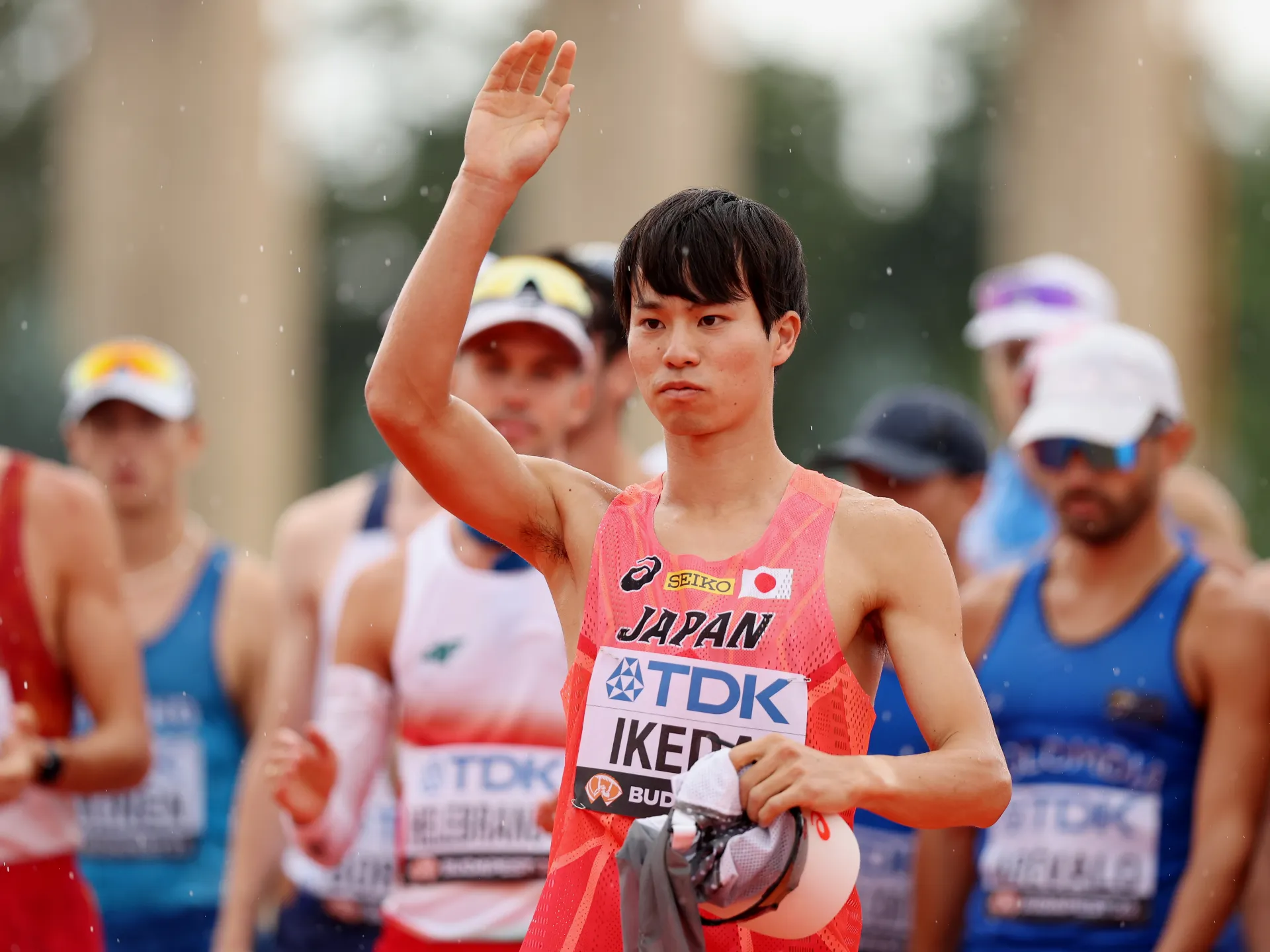
Race walker Koki Ikeda returns to competition immediately; Ethiopia’s marathon runner Ruti Aga given 6-year doping ban.
Published On 23 Oct 202623 Oct 2026
The Court of Arbitration for Sport (CAS) upheld an appeal by Japanese race walker Koki Ikeda against World Athletics, clearing the Tokyo Olympic silver medallist of an anti-doping rule violation and making him immediately eligible to compete again.
The 28-year-old was provisionally suspended in November 2024 before receiving a four-year sanction from the Athletics Integrity Unit (AIU) in February 2025 for allegedly using or attempting to use a banned drug.
list of 4 itemsend of list
Ikeda was not allowed to participate in the Japan Race Walking Championships in February 2025, and all his competitive results between June 20, 2023 and November 1, 2024 were disqualified.
Ikeda challenged the ruling at CAS in March 2025, rejecting the doping allegations brought by World Athletics, which had alleged blood manipulation based on abnormalities in his Athlete Biological Passport.
The case was heard by a CAS panel in Lausanne in May. While the panel accepted that several readings in Ikeda’s biological profile were abnormal, it found there was a reasonable non-doping explanation for the findings.
CAS said Ikeda supported his case with substantial medical and expert evidence, providing a broader factual basis than was available during the proceedings before the World Athletics tribunal.
The appeal body overturned the four-year sanction, concluding that the anti-doping charge had not been established and that no ban should apply.
Ikeda placed second in the 20km event at the Tokyo Games as well as at the World Championships in Eugene in 2022. He finished seventh at the 2024 Paris Olympics.
Ethiopian marathon runner Ruti Aga, winner of the 2019 Tokyo Marathon, was given a six-year ban for the presence or use of the prohibited substance methylprednisolone and tampering with evidence, the AIU said on Thursday.
The AIU said Aga, 32, received a two-year ban after testing positive for methylprednisolone, a prohibited steroid that can reduce pain and fatigue and aid recovery, after winning a half marathon in China in March.
It added four years to the ban after finding she had misled investigators during an interview and submitted a fake prescription to justify her use of the substance.
Aga has been provisionally suspended since September 10, with the ban running from that date.
She has finished second three times and third twice at World Marathon Majors.
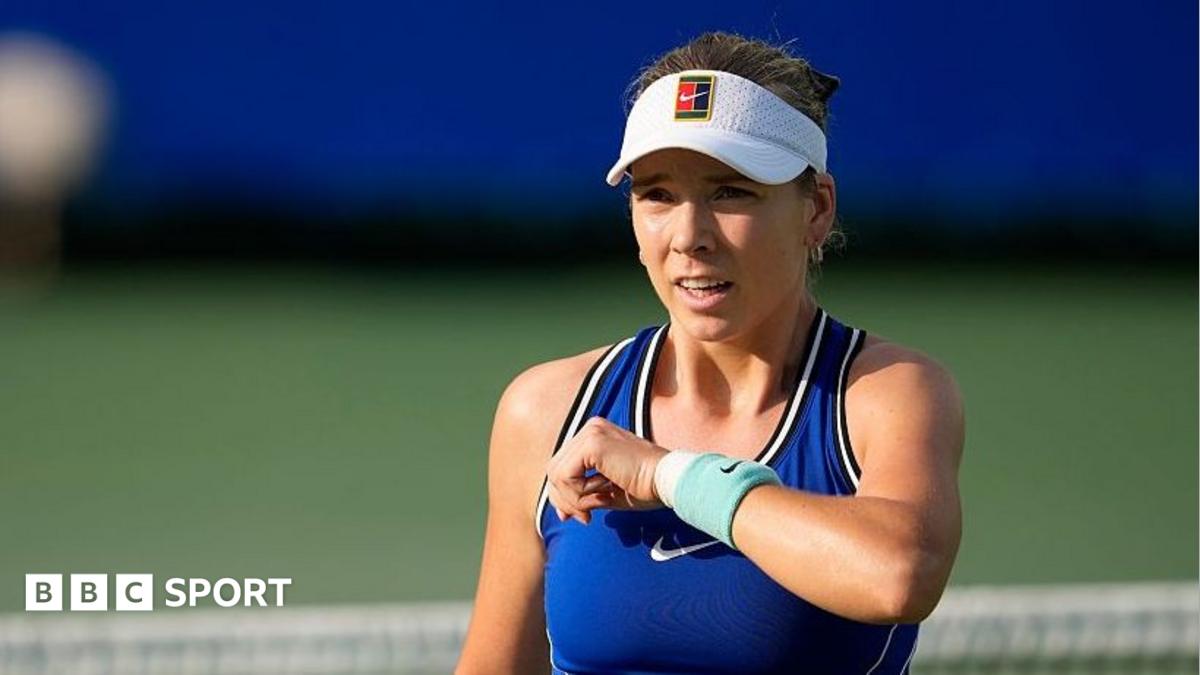
The immense pride which Kartal felt about becoming the British number one came shining through, describing it as being “up there” in her career achievements.
While she will only initially hold the status for a week, Kartal’s impressive comeback and Boulter’s decent run creates a fascinating subplot for the leading British women in the final throes of the season – and the start of 2027.
Boulter will have the chance to further improve her ranking when she plays in Tokyo and Hong Kong in the coming weeks, with Kartal’s plans for the rest of the season still uncertain as she sensibly manages her workload.
And don’t forget about Emma Raducanu. It seems increasingly unlikely she will play again this season because of the shin injury which ruled her out of Wimbledon, but is clearly too good a player not to be pushing back into the top 50 when she does return.
When all three are back competing on the WTA Tour at the same time, it promises to be an interesting tussle between them in the rankings.
Boulter and Raducanu both insisted they were not transfixed by the British number one spot when they exchanged positions in 2025, instead preferring to focus on their own career paths and the bigger picture of the world rankings.
But there is no doubt that Boulter, in particular, could see the opportunity to cement her place as the nation’s best player as an extra incentive to continue finishing 2026 strongly.

Tsuneyasu Miyamoto says it will be difficult for Saudi Arabia to host next year’s tournament as scheduled.
Published On 23 Oct 202623 Oct 2026
The ongoing security situation in Saudi Arabia makes it difficult for the country to host football’s 2027 Asian Cup as scheduled, Japan Football Association President Tsuneyasu Miyamoto has warned.
Several major sporting events in Saudi Arabia have been cancelled or postponed amid escalating attacks by Yemen’s Iran-backed Houthis, raising doubts over whether the continental tournament can take place as planned from January 7 to February 5 next year.
list of 4 itemsend of list
“Based on what I’ve learned from the news, the situation is still unsafe, so at this point, I don’t think it would be easy to hold the [Asian] Cup there,” Miyamoto told reporters at the Asian Football Confederation’s (AFC) extraordinary congress in Tokyo.
“I just had a meeting with the Saudi side and they said that their top priority is the safety of the players, the fans, and everyone who would be attending the tournament.”
“They said they would work with the AFC to decide whether the tournament can go ahead, so they did mention that it would take some time (to make that decision).”
Asian football chief Salman bin Ibrahim Al-Khalifa said last week a postponement until 2028 remained a possibility if necessary, but the local organising committee (LOC) later said it was sticking to the original schedule.
“Preparations across all organisational and operational areas are progressing according to the approved schedule, including work on venues, facilities and supporting services,” the LOC had said in a statement last week.
“(The LOC) will continue to monitor developments relevant to the tournament and ensure the appropriate conditions are in place for its successful delivery.”
Earlier this month, golf’s Asian Tour postponed the Saudi International indefinitely and cycling’s Urban World Championships were cancelled following a deadly attack on Riyadh’s international airport, which killed at least 12 people and wounded more than 300.
Other events have also been disrupted. The Six Kings Slam exhibition tennis tournament in Riyadh was moved from October to December, while FIFA postponed the FIFAe Finals 2026 video game competition in Jeddah until an unspecified date.
The Saudi government has invested heavily in sport through its Public Investment Fund (PIF) in recent years and the Asian Cup was pitched as an early rehearsal for hosting the FIFA World Cup in 2034.
Until now, the virus was considered non-transferable to humans, making the patient the first documented human case.
Published On 22 Oct 202622 Oct 2026
French authorities have confirmed that a patient who died at a Lyon hospital earlier in October was infected with the Shamonda virus, the first such report of the virus in a human.
In a statement on Thursday, the French Ministry of Agriculture stressed that there were no identifiable health risks to the general population at this time.
list of 4 itemsend of list
Shamonda is an orthobunyavirus – a group of viruses primarily carried and spread by insects – transmitted to animals, mainly cattle, by biting midges of the genus Culicoides.
It was first detected in Nigeria in the 1960s, but has since been reported sporadically in East and Southern Africa, as well as Japan.
Until now, the virus was considered non-transmissible to humans, making the patient in France the first documented human case.
The French announcement said the leading hypothesis was that the patient was infected in eastern France, where the virus had circulated among animals this spring and summer.
“Clinical, biological and epidemiological investigations are continuing in conjunction with expertise in human, animal and environmental health,” the statement added.
Shamonda was first confirmed in Europe in late July after genomic tests on sick cattle in southern Germany, Switzerland and eastern France.
A report from France’s weekly animal health surveillance bulletin said the virus had also been detected in Austria, Belgium, Ireland, Italy, Liechtenstein, Luxembourg, the Netherlands, Portugal, Slovenia, Spain, and the United Kingdom’s Jersey.

The Metcalfe sisters played for Wales together for the first time when lock Branwen came off the bench for her first cap against Canada at the 2025 World Cup.
They started the uncapped fixture against the Baa-Baas but join forces in the XV for the first time at Test level against Japan.
Branwen, 20, starts her sixth successive Test and has a new second-row partner in fellow bright prospect Aiono.
Nel, 21, returns on the wing rather than full-back for her first cap since the World Cup after a knee injury that forced her to sit out the Six Nations.
“She was a shining light at the World Cup, which was tough for us,” said Lynn.
“Every time that she gets the ball, something will happen. She has got fitter, stronger and faster, and she’s excited to go out there on Saturday.”
Wales are 11th in World Rugby’s rankings, a spot above Japan.
Last month the Sakura Fifteen lost 55-21 to Italy and were beaten twice by Ireland, 31-24 in the WXV Global Series and 43-19 in an extra Test.
“Japan ran Ireland close in the first Test and they are very efficient in what they do, very regimented,” said Lynn, who opts for six forwards on his bench.
“They’ve got a very good maul and we are not going to be taking them lightly at all.”
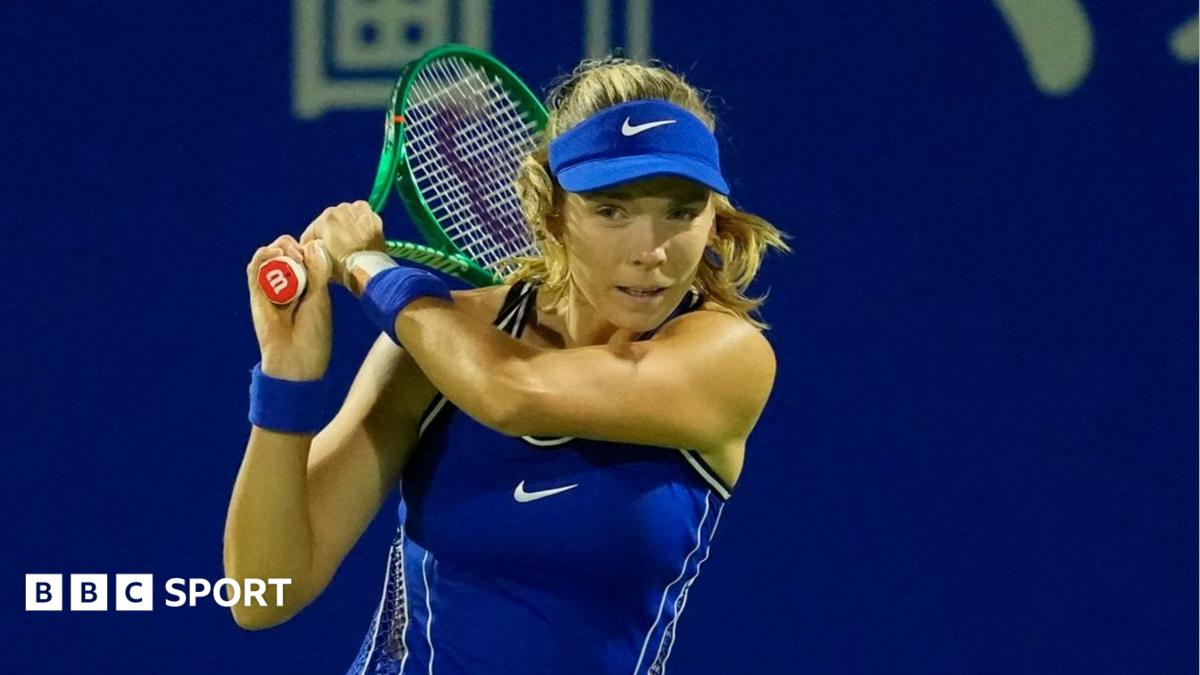
Katie Boulter moved into the quarter-finals of the Japan Open after she beat Viktorija Golubic in less than an hour.
The British number two defeated her Swiss opponent 6-2 6-1 in Osaka and will face either Croatia’s Antonia Ruzic or American Kayla Day in the next round.
Boulter saved a break point in the opening game but dominated from 2-2 in the first set, winning nine games in a row before Golubic took the penultimate game of the match.
The 30-year-old lost the British number one spot to Sonny Kartal on Monday, but is set to retake the position following her run this week.
Boulter, who is seeded eighth in the competition, said she was pleased with how she handled “difficult conditions”, with a strong wind affecting play.
“I think one of the biggest things for me is staying patient in the wind,” she said.
“Sometimes I can get a little frustrated, and I’m very pleased that I didn’t allow that to affect me today and I think I ended up playing some really good tennis in the second set. I’m really pleased with the performance.”

Japan has launched a five-year uncrewed mission to collect samples from Phobos, one of Mars’ two moons, and return them to Earth by 2031. If successful, it would be the first mission to bring back samples from a moon of Mars for scientists to study.
Published On 20 Oct 202620 Oct 2026
Share
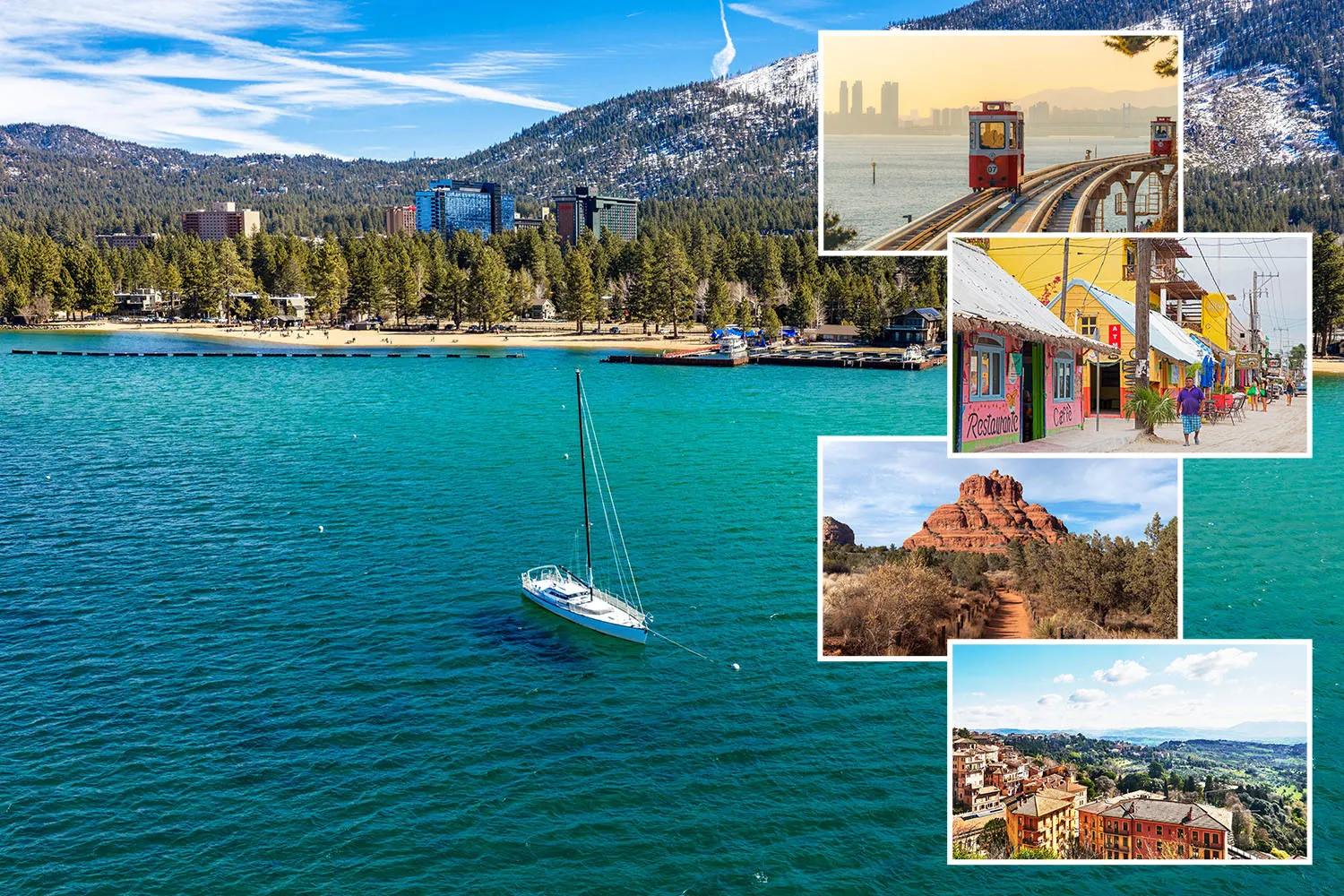

IF you’re planning your 2027 holiday already, then you can get ahead of the curve with these 10 destinations.
A new report released by Expedia has revealed the trending hotspots for next year, which have seen a boom in searches.
Along with the soon-to-be-popular destinations, it also looked at other trends, such as set-jetting (destinations popular after being featured in films or TV shows) as well as ‘trip snacking’ which are shorter, sometimes only 24-hour, trips.
Called the Unpack ’27, Expedia Group CEO Ariane Gorin explained: “In 2027, travellers are being more intentional in choosing their next adventure, seeking experiences that are more personal and purposeful to them.
“We’re making it easier to discover, plan, and book the right trip, so travellers can spend less time managing the details and more time enjoying the moments that matter.”
Here are the 10 destinations set to be big next year.
The destination that has seen the biggest jump in searches is South Lake Tahoe, up 195%.
This is one for the outdoor enthusiasts, thanks to its beautiful mountain ranges and huge lake.
It is a year-round resort, meaning it is great for hiking in the summer skiing in the winter.
Brits will need to fly to the main Reno-Tahoe International Airport in Nevada, which requires a layover at another US airport.
Japan is on everyone’s lips right now, but ditch Tokyo and Kyoto for Hyogo.
The prefecture in the Kansai region has seen searches increase by 95%.
It’s main attraction is Himeji Castle, as well as its hot springs too and world-famous Kobe beef.
To get there, Brits can fly to Tokyo or Osaka, then hop on a domestic flight or high speed train.
Nicknamed the St Tropez or Monaco of South America, searches to Uruguay‘s Punta del Este are up 65%.
This is where the rich and the famous often visit, with luxury beach resorts lining the beach visited by celebs such as Shakira and Naomi Campbell.
While it is mainly known for its resort like, with yacht clubs, casinos and nightclubs, make sure to visit the unusual La Mano, a huge human hand sculpture from the 1980s.
Flights here from the UK will require a stopover, most likely in Madrid or Brazil.
The desert city of Sedona in Arizona is also booming in popularity.
With searches up 55%, the destination is most known for its huge red rock formations, which have hundreds of walking and hiking trails.
It’s unique landscape means it was also used to film a number of movies (mainly Westerns between 1940 and 1960), leading to it’s nickname of Arizona’s Little Hollywood.
Brits wanting to visit should fly to Phoenix Airport, then rent a car to drive there.
KPop Demon Hunters, KBeauty and new Virgin Atlantic flights from the UK – it’s safe to say Korea is having a moment.
But outside of Seoul, the city of Busan has seen searches up by 50 per cent.
The second-largest city in the country, it is known for its huge sandy beach (best seen from the Busan X the Sky observation deck on floor 100) and the huge Lotte World Adventure theme park.
To get there, fly to Seoul from the UK then take the high speed train to Busan.
The tiny, car-free island of Holbox has been a popular destination with backpackers wanting to get off the beaten track.
But the Mexican island has since seen a jump in searches, up 45%.
Beautiful soft sand beaches, clean blue waters and colorful streets of graffiti and cheap tacos – what more could you want?
Fly to Cancun Airport, then take a bus and a ferry to get to the island.
The only mainland European destination to make the list, Perugia has seen searches increase by 35%.
Found on the hilltop, the Umbria capital is one for the foodies, being famous for its chocolate (and annual chocolate festival).
There is also Jazz festivals, historic fortresses and beautiful architecture to explore as well.
It is super easy to get to as well – Ryanair have direct flights from London Stansted from £20.
Most people won’t have heard of The Tweed in Australia,
But searches for the New South Wales region have gone up by 35%, according to Expedia.
It is known for its river trails and national parks, sharing a border with Queensland.
This makes it easier to get to, with Brits needing to fly to Sydney of Melbourne followed by an internal flight.
The Ontario town, Niagara-on-the-Lake, has seen searches 35% up.
It is often said to be one of the region’s prettiest towns, and is where Niagara River meets Lake Ontario.
Expect Victorian architecture – it was built by Brits as a military defence – and unique ice wines.
Brits need to fly to Toronto Pearson Airport, followed by a drive to get there.
Bizarrely, the English city of Chichester made the list as well.
With searches up 30, the city is known for its 1,000 year old cathedral as well as its even older 2,000 year old Roman history.
It is also the only city in West Sussex, although remains one of the UK’s smallest with just 29,000 locals.
Suspect was arrested on Russia’s far-eastern Sakhalin Island before being transferred to Moscow, says Russia’s FSB.
Published On 13 Oct 202613 Oct 2026
Russian authorities say they have arrested a Japanese journalist on the far eastern Sakhalin Island, accusing him of espionage.
The Federal Security Service (FSB) announced the arrest on Tuesday, saying the man was believed to have gathered information on Russia’s defence capabilities for Japanese intelligence. The charges carry up to 20 years in prison.
list of 3 itemsend of list
Russia’s Ministry of Foreign Affairs named the journalist as Imai Yuki, who it said worked for Japan’s Hokkaido Shimbun newspaper.
The Japanese government was trying to verify reports of the journalist’s detention, according to an official at Tokyo’s embassy in Moscow cited by Japan’s Kyodo news agency.
The journalist was arrested on Yuzhno-Sakhalinsk, the main city on Sakhalin Island, as he was preparing to leave Russia, said the FSB. He was then flown to Moscow, where a court ordered him to be held behind bars pending the probe, the agency added.
A video shared by Russia’s TASS news agency, attributed to the FSB, shows masked officers appearing to handcuff the suspect in a hotel room, before transporting him to an interrogation room.
The suspect was then shown boarding a plane accompanied by two FSB servicemen, before appearing in a cage on trial in a Moscow court, which authorised his custody for nearly two months.
The Japanese man’s arrest comes amid a spike in tensions between Russia and Japan following Russian President Vladimir Putin’s trip in August to the Kuril Islands, the Moscow-controlled Pacific archipelago that is claimed by both countries.
The Sakhalin region includes Sakhalin Island and the four southernmost islands of the Kuril chain, which Japan calls the Northern Territories.
Russia and Japan never signed a formal World War II peace treaty, with the main obstacle being the unresolved territorial dispute over the Kuril Islands.
Authorities in Russia have arrested numerous foreigners for alleged espionage since it invaded neighbouring Ukraine in 2022.
One of the most prominent cases was the detention of Wall Street Journal reporter Evan Gershkovich in 2023. He was found guilty of espionage by a Russian court, sentenced to 16 years and then freed in a major prisoner swap involving Russia and Western countries in August 2024.
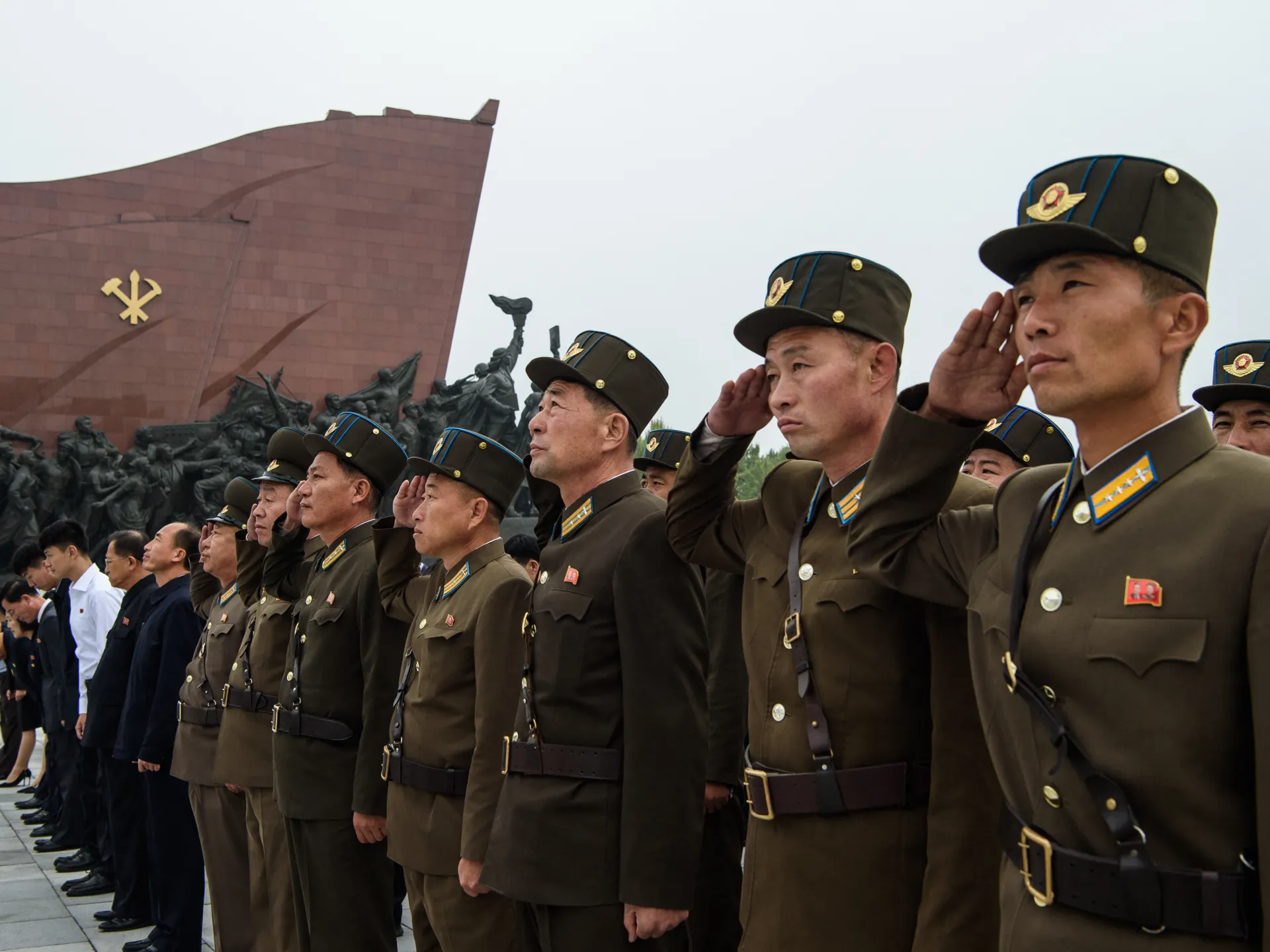
Latest missile launch appears to be a show of force since South Korea’s hypersonic missile test-fire, Seoul says.
Published On 12 Oct 202612 Oct 2026
North Korea has fired multiple ballistic missiles towards the sea off its east coast, South Korea’s military says.
South Korea’s Joint Chiefs of Staff (JCS) said one of the missiles flew more than 900km (559 miles) from the Pyongyang area on Monday. The joint chiefs did not specify how many missiles were detected.
list of 3 itemsend of list
Japan’s coastguard said on Monday that North Korea had fired two unidentified projectiles, believed to be ballistic missiles, which appeared to have already fallen.
South Korea’s presidential office said that Pyongyang’s repeated missile launches violate United Nations Security Council resolutions, urging an immediate stop.
Monday’s missile launch adds to heightened tensions on the Korean Peninsula, as both countries have been conducting weapons tests.
JCS spokesperson Jang Do-young said the latest missile launch appears to be a show of force since South Korea’s hypersonic missile test-fire.
On Thursday, South Korean President Lee Jae Myung oversaw the country’s first test-firing of a hypersonic missile, a rare public showcasing of a missile test by a South Korean president.
Lee’s office said the hypersonic weapon, once fully developed, would enhance South Korea’s ability to strike key targets by surprise in the “Korean Peninsula theatre of operations”.
On October 3, North Korea also tested a hypersonic intermediate-range missile designed to evade missile defences in South Korea and Japan.
Last week, Seoul demanded an apology after a landmine blast wounded three soldiers in the Demilitarized Zone between South and North Korea. A joint South Korean-UN investigation concluded that two landmines were planted by North Korean forces about a year ago. Pyongyang dismissed the claim and accused South Korea of provocation.
Prior to the border mine blast, Seoul said it was conducting “preliminary coordination efforts” to facilitate dialogue between Pyongyang and Washington.
Lee pledged to reopen dialogue with North Korea in his first speech after taking office in 2025.
North Korean leader Kim Jong Un continues to flaunt his nuclear weapons programme, while rejecting US and South Korean offers to resume stalled diplomacy.
Talks between Kim and US President Donald Trump abruptly ended in 2019. Kim Jong Un’s government continues to demand that Washington abandon its “hostile” policy towards Pyongyang and drop demands for North Korea’s denuclearisation as a condition for talks.
The United States has imposed a new set of sanctions against the International Criminal Court (ICC), prompting several countries – including US allies – to condemn the move and reiterate their support for the world’s war crimes tribunal.
On Friday, US Secretary of State Marco Rubio announced that Washington would be banning transactions with the “rogue court, cutting off their resources and crippling its ability to operate”, adding that President Donald Trump would “never allow” the Hague to prosecute Americans.
list of 3 itemsend of list
The ICC was created in 2002 to prosecute individuals accused of genocide, war crimes and crimes against humanity when national authorities are unable or unwilling to do so.
The US Treasury Department announced the penalties with a six-month initial grace period and other exemptions that would allow some transactions for telecommunications, software, pension payments and transactions related to detainees.
Rubio said the sanctions would give the court and its member states an opportunity to address US concerns and would be adjusted if they did not meet those demands.
The Trump administration says the court has exceeded its authority by pursuing officials from countries that are not ICC members, such as Israel. The United States and Israel have never joined the court.
In response to the sanctions, the ICC said that the move was an “assault on the rule of law and on the very foundations of the international legal order”. It called on its 125 member states to defend the institution.
“The Court cannot stand alone. Its fate now rests also in the hands of the states that created it,” the ICC said in a statement. “This is not just about defending a single institution, but about safeguarding the international order grounded upon the rule of law. History will judge this moment.”
The Trump administration sanctioned more than a dozen judges and prosecutors before issuing sanctions on the court itself Friday.
Soon after the US announcement, top United Nations officials condemned the move.
UN Secretary-General Antonio Guterres was “deeply alarmed” by the expected impact of the sanctions on the court as a whole, particularly its ability to carry out its mandate, a statement from his spokesperson Stephane Dujarric said.
“Today’s decision marks a serious blow to our collective pursuit of international criminal justice, of which the ICC is a key pillar,” the statement added.
UN Human Rights chief Volker Turk called for immediate measures to protect the ICC. “These sanctions – the latest in a series of retaliatory steps against the ICC and its personnel for the work they do every day to advance accountability for the very worst violations of human rights – are unacceptable,” he said.
ICC member states that are US allies also expressed dismay at the decision.
Dutch Foreign Minister Tom Berendsen, whose country hosts the ICC, said the US’s decision was “deeply regrettable”.
“We will stand firm in defence of the court. At the same time, it’s important to note that the sanctions will not take effect immediately and that service providers can continue to work for the ICC. The six-month period before the sanctions take effect creates scope for dialogue,” he said.
In a joint statement, the foreign ministers of Britain, Denmark, France, Germany, Italy, the Netherlands, Canada and Japan said they “regret and strongly disagree” with the sanctions.
“If put into effect, these sanctions will have a significant impact on the Court’s work, its dedicated staff and their families … We remain both united in our support for the ICC and committed to engaging in constructive and inclusive dialogue with non-States Parties,” they said.
Belgian Foreign Minister Maxime Prevot also said Brussels would discuss support for the ICC with European Union foreign affairs colleagues on Monday and at the upcoming European Council.
“We will press for concrete protection. The court’s independence cannot depend on whom it investigates. Europe must act. Belgium is calling for the activation of the EU Blocking Statute to protect the court,” Prevot said.
Similarly, organisations and rights groups sounded the alarm over the implications of the US decision.
Philippe Bolopion, executive director of US-based Human Rights Watch, said the Trump administration had made clear its aim to “destroy” the ICC and “shield US and Israeli officials from facing charges before the court”.
“The ICC was created to ensure that no one, no matter how powerful, is above the law. Governments that value human rights and accountability should condemn this outrageous move and take swift action to protect the ICC, its staff, and all those who cooperate with it, starting with the European Union using its laws to mitigate the sanctions’ impact in the region,” he said.
The Executive Director of the Open Society Justice Initiative, James Goldston, said the sanctions were a “calculated attack on the rule of law and the principles of judicial independence and equality that underpin it.”
“This is the latest move in a campaign of coercion intended to destroy the system of international justice,” he said.
Amnesty International called on countries to “resist”. Trump’s “sanctions are designed to isolate and ultimately destroy the International Criminal Court”, Erika Guevara Rosas, Amnesty’s senior director for research, policy, advocacy and campaigns, said in a statement. “This existential attack must fail. States must take concrete action to resist the imposition of these measures.”
Amid widespread criticism, Israel commended the US move.
Prime Minister Benjamin Netanyahu hailed the sanctions and praised Trump and Rubio for taking this “critical decision”.
“The ICC is not a court. It is a political body that poses a mortal threat to law-abiding democracies worldwide and to the very idea of national sovereignty,” Netanyahu wrote on X.
In 2024 the ICC issued an arrest warrant for Netanyahu on war crimes and crimes against humanity charges for the war on Gaza.

The market is just emerging, but domestic banks may already be exposed to global risk.
This article appears in the October issue of Global Finance Magazine.
Japan’s private credit market may still be small, but its exposure to private credit is not.
That is an important distinction as the Bank of Japan warns that growing links between Japanese financial institutions and global private credit funds could have implications for financial stability.
The BOJ’s concern is not that Japan has suddenly embraced the $2 trillion-plus private credit industry. It is that Japanese banks and institutional investors are becoming part of it, just as vulnerabilities in the asset class are attracting greater scrutiny.
For now, regulators see no evidence of a systemic problem. According to reports, Japan’s Financial Services Agency has been examining financial institutions’ lending and investment exposure to private credit, while Finance Minister Satsuki Katayama has said Japan’s exposure is not substantial.
But Japanese banks have increased financing to global private credit funds in search of higher returns, while exploring domestic strategies in the same vein, creating potential channels through which overseas stress could spill into Japan.
In 2020, for example, Sumitomo Mitsui Financial Group’s (SMFG) banking division took a 4.9% stake in U.S.-headquartered Ares Management Corp., making a strategic commitment to support the U.S. entity’s private credit business.
Earlier this spring, SMFG and Nippon Life Insurance were reported to be in talks to create a new private credit fund of at least 500 billion yen to finance leveraged buyouts, real estate and mezzanine transactions.
“The market is only emerging,” said Yuuichiro Nakajima, managing director at Tokyo-based M&A advisory firm Crimson Phoenix. “It is certainly not replacing bank finance in any meaningful way.”
Nakajima pointed out that Japan may well have less need for private credit than the U.S. or Europe because its banks remain deeply embedded in corporate finance and continue to provide relatively inexpensive funding.
Furthermore, Nakajima expects private credit to complement rather than displace traditional lenders, particularly as mergers & acquisitions in Japan become more complex and larger: Japanese M&A involving domestic companies reached a record 53 trillion yen in 2025, according to LSEG data cited by Reuters.
Indeed, take-privates, succession deals, overseas acquisitions and infrastructure investment are generating financing requirements that can stretch conventional bank structures.
In such an environment, private credit can fill gaps in leveraged buyouts, mezzanine finance and other transactions where flexibility, speed or longer maturities matter.
“As the variety of M&A transactions becomes broader and more complex,” Nakajima said, “it wouldn’t be hard to imagine banks finding it difficult to keep up with the pace of financing needs.”
Global managers are betting on precisely that opportunity. According to reports, Apollo Global Management Inc., Blackstone Inc. and KKR & Co. are building private-credit capabilities in Tokyo, although industry executives expect adoption to take years rather than months.
But the domestic opportunity should not obscure the systemic risk concern: private credit globally has grown rapidly while remaining relatively opaque and illiquid.
John Amari is a contributing writer based in Japan.

Shanelle Williams has already fulfilled one childhood ambition after making her Wales debut and now she is preparing for another milestone in Japan.
The 19-year-old former Gwernyfed RFC junior came off the bench in Wales’ 50-19 win over South Africa in the WXV Global Series in September.
As a child, Williams had written on her Christmas list that she wanted to play for Wales.
“I didn’t actually know that there was a women’s team,” the hooker said.
“I used to tell my dad that I was going to play for Wales with the boys.
“Then I obviously realised that I actually can play for Wales. Since then, everything I’ve done, rugby’s always been a priority.”
Williams had forgotten about the Christmas list until her older sister reminded her after she won her first Wales Under-18 cap.
“It’s quite a nice reminder that I have been working for this for so long, so it has all been worth it,” she said.
Williams started playing rugby at Gwernyfed aged eight, spending four years there before joining the Red Kites and later moving into the Wales pathway.
She went on to play for Cardiff Quins and Cardiff Rugby before attending Hartpury College.
Her father played a key role, regularly making the journey from home to Cardiff for training.
“Obviously I’m from Gwernyfed, so it was about an hour and a half down to Cardiff,” she said.
“He used to take me for training on Friday nights straight after school.
“I wouldn’t have been able to do it if my dad hadn’t given me that opportunity, so I’m very lucky.”

THE top cities in the WORLD have been announced from far-flung Asia to the ‘city of love’ that has cheap UK flights.
Readers of Conde Nast Traveller voted for their “favourite urban sprawls across the planet” to decide which ones are the best and it might be time to book that bucket list trip to Thailand.
Taking the number one spot on the list is Bangkok which was praised for its “buzzy markets, glittering palaces and captivating religious sites unite – street food sellers dishing up tasty food between them all, of course.”
When Assistant Travel Editor Sophie Swietochowski visited Bangkok she picked up tasty dishes for the equivalent of £1 – you can also pick up beer for as little as £1.14 according to Wise.
She said: “Within an hour of being in Thai capital Bangkok’s Chinatown we have sampled street food including noodle soup splashed with vinegar, fish sauce and sugar; crunchy corn parcels.
“A bowl of salty critters, displayed next to a row of scorpions on sticks; purple mashed potatoes shaped into doughy, salty balls; and traditional sweet luk chup, made with mung beans.”
She also visited Lebua Hotel’s Sky Bar, which was the filming location from 2011 buddy comedy film The Hangover 2 and it’s home to the “world’s highest open-air whisky bar”, Alfresco 64.
The city coming second on the list is much closer for Brits to visit, it’s Paris.
The French capital is said to have “topped bucket lists of international travellers for centuries thanks to an unrivalled food culture, grand monuments, world-class museums and subtly seductive atmosphere.”
From the UK it’s easy to reach the French capital either on the Eurostar or plane with one-way flights as little as £13.
There’s so much to do in Paris from sight-seeing landmarks like the Eiffel Tower or wandering around the Louvre.
When Travel Reporter Alice Penwill ventured to Paris for an extreme daytrip on the Eurostar she had some suggestions on how to spend time there.

She said: “To start the morning off right, it would be a crime not to pop into one of Paris’ many bakeries, or boulangeries, for a croissant and a coffee.
“Take one to go and stroll along the Seine before heading into the Musée d’Orsay where you can see work by artists like Monet, Renoir and Van Gogh.
“Afterwards, head back along the Seine to see the beautiful Notre Dame which has now reopened to visitors. And if you’re a fan of books, pop across to the famous bookshop, Shakespeare And Company.”
Turkey’s capital, Istanbul was named the third best city in the world which was called “chaotic in all the best ways.”
The publication said: “Centuries of history sit alongside a vibrant contemporary culture, with new waves of artisans luring travellers into chic boutiques after tours of places like Topkapı Palace, the Blue Mosque and the sweet-scented Grand Bazaar.”
Meanwhile, Deputy Travel Editor Kara Godfrey suggests visiting the Karaköy neighbourhood which is set on Istanbul’s European side.
She described it as a “trendy pocket of an otherwise busy, but beautiful city.”
If you wander into Karaköy’s backstreets and climb towards neighbouring Galata, you’ll find that cobbled lanes and historic buildings lead to the landmark Galata Tower.
Head up for spectacular views across the Golden Horn, Bosphorus and historic peninsula – it’s especially beautiful in the late afternoon.
Valletta in Malta comes in at number five and it’s a popular spot for Brits thanks to its 300 days of annual sunshine.
Even in November it can see highs of 18C – and it’s reachable from the UK in just over three hours and flights are as little as £15.
It was voted last year’s top city thanks to its mix of ancient but also modern feel and architecture.
Other popular winter sun destinations that made the list include Cape Town in South Africa which in January and February has highs of 25C – while the UK shivers in highs of 8C.
There’s also no jet lag because Cape Town is either one or two hours in front of the UK – depending on the time of year.
When Head of Travel (Digital) Caroline McGuire visited, she saw Table Mountain, lots of wildlife, vineyards and was impressed with an area called Kalk Bay.
She said: “At the town’s upmarket Harbour House restaurant, we dined on seafood and good wine for the price of a Pizza Hut meal in the UK — all while watching seals swimming in the harbour.
“Our accommodation was the charming Chartfield Guesthouse, staying in a huge two-bedroom apartment. It was bigger than my house back home, and cost only £94 a night.
“Kalk Bay is a prime spot for visiting the endangered African penguins of neighbouring Simonstown – there must have been around 100 on the town’s shoreline.”

Scientists honoured for solving mystery of asymmetric ‘mirror image’ molecules that has helped in manufacture of pharmaceuticals.
Published On 7 Oct 20267 Oct 2026
Scientists Henri Kagan and Kenso Soai have won the 2026 Nobel Prize in Chemistry for solving a longstanding riddle of asymmetric “mirror image” molecules, a discovery hugely important for pharmaceutical manufacturing.
The Royal Swedish Academy of Sciences said on Wednesday the pair – Kagan, 95, from France; and Soai, 76, from Japan – were honoured “for the discovery of nonlinear effects and autocatalysis in asymmetric organic synthesis”.
list of 2 itemsend of list
Their findings showed how chemical reactions can be driven to favour a single molecular mirror image, work that has been key for chemists who design reactions for the manufacture of pharmaceuticals.
Many of the molecules essential to life exist in two forms that are mirror images of each other, like left and right hands. Yet living organisms almost exclusively use only one version, a phenomenon known as “homochirality” – from the Greek word for hand – that has puzzled chemists for more than a century.
“The left-handed version of the drug can have one effect, and the right-handed version can have another effect, and then we need methods for selectively preparing them,” said Peter Somfai, a member of the Nobel Committee for Chemistry.
“In developing such methods, the findings of this year’s laureates are important. They provided powerful tools for that,” he said.
Heiner Linke, chair of the committee, said the two scientists provided “a solution to a chemical mystery that is over a century old: how homochirality can emerge spontaneously”, calling the chemical reactions they developed “spectacular”.
Soai, speaking by phone to the Nobel Prize news conference, said he had been out shopping when he received the news.
“This is the most exciting day in my life, I am very glad to share this prize with Professor Henri Kagan,” he added.
Last year’s chemistry award went to scientists Susumu Kitagawa, Richard Robson and Omar Yaghi for the development of so-called metal-organic frameworks, molecular constructions that can help tackle challenges such as climate change and lack of freshwater.
The chemistry Nobel is always the third prize to be awarded during Nobel week, following those for medicine and physics.
The literature laureate will be revealed on Thursday, while the keenly anticipated peace prize is due on Friday.
Established in the will of Swedish inventor and businessman Alfred Nobel, the prizes for achievements in science, literature and peace have been awarded since 1901, with a few interruptions mostly due to the world wars.
Nobel, a chemist by trade, amassed huge wealth in the 19th century from inventions primarily tied to warfare, most notably dynamite. The economics prize is a later addition funded by the Swedish central bank.

Novac Djokovic won 102nd match of his career, while ATP 500 tournament victory was Carlos Alcaraz’s third of the year.
Published On 6 Oct 20266 Oct 2026
Novak Djokovic won the China Open after his opponent Alex de Minaur retired from the final with injury, while Spaniard Carlos Alcaraz retained his Japan Open crown to continue his resurgence after a lengthy wrist injury layoff.
The 39-year-old Serbian won the first set in the tie-break 7-6 (7-3) and was down a game in the second set when the Australian ended the match with retirement on Tuesday.
list of 4 itemsend of list
Djokovic extended an astonishing unbeaten streak in Beijing and winning the 102nd title of his career.
De Minaur left the court for a medical timeout after losing the first-set tie break but played on with his left thigh heavily bandaged. However, he had to stop after winning the first game of the second set, leaving him trailing 7-6(3) 0-1.
“I don’t feel great … I want to say sorry to all the amazing fans,” de Minaur said at the trophy presentation.
“I didn’t want to finish like this … hopefully see you next year,” added the 27-year-old fifth seed.

Alcaraz made another slow start before cruising past unseeded Czech Jiri Lehecka 7-6(4) 6-4 in the Japan Open final on Tuesday.
The ATP 500 tournament victory is Alcaraz’s third of the year after the Australian Open and Qatar Open, before the 23-year-old was sidelined by an injury for nearly five months and returned at the US Open in late August.
“I’m really happy to be able to lift a trophy again,” Alcaraz said. “It’s been a while and obviously it’s extra special after my injury and my comeback, in the second tournament that I’m playing.
“It was a really tough week and I didn’t play my best tennis and my best level but I did find good solutions and that’s what matters in the end.”
Alcaraz became the first man to go back-to-back in Tokyo since American Pete Sampras won the men’s title in both 1993 and 1994.
The world number three started shakily, dropping serve in the first game, but soon recovered and dialled up the intensity to break world number 19 Lehecka’s serve with a scorching backhand to level at 3-3.
More uncharacteristic errors from Alcaraz gave Lehecka hope in the tiebreak, but the Spaniard unleashed a sublime drop-shot en route to clinching the opening set to lay the platform for his 27th title overall.
The seven-time Grand Slam champion took control midway through the second set, breaking to claim a 4-3 lead before sealing victory by forcing an error on match point and then celebrating wildly with his team courtside.
Alcaraz said his triumph helped erase the doubts that he faced during his injury break.
“A lot of negative thoughts come to your mind,” Alcaraz added: “If you’re going to come back healthy, if you’re going to come back the same as you were before, if I will be able to hit the ball normally without pain. I trusted myself and it worked out.”
Alcaraz will return to action at the Shanghai Masters where he will take on Argentina’s Juan Manuel Cerundolo or a qualifier first. The main draw of the ATP 1000 event begins on Wednesday.
People are adopting pets over having babies, making the pet care industry grow. But why are people having fewer babies? Al Jazeera’s Yasmeen ElTahan explains.

Published On 6 Oct 20266 Oct 2026
Share
The 20-year-old soldier denies the charge as protests held on Okinawa and in Tokyo.
Published On 5 Oct 20265 Oct 2026
Japan’s prime minister says the killing of a woman, allegedly by a US Marine stationed in Okinawa, is a “heinous crime”, and she has called on the United States to “thoroughly enforce discipline” amid growing outrage in Japan.
Sanae Takaichi told lawmakers on Monday that the government has urged the US to provide “full cooperation with the investigation” and called for “strict discipline among US military personnel”.
list of 4 itemsend of list
About 54,000 US military personnel, including 18,000 Marines, are stationed in Japan. The majority of these forces are based in Okinawa, a Japanese island that came under US administrative control at the end of World War II and was returned to Japan in 1972.
Crimes including rapes, assaults, hit-and-run and drink-driving incidents by US personnel have long sparked protests on the island.
The new case involves a 20-year-old Marine who was arrested on suspicion of killing a 39-year-old woman at a hotel in the city of Naha and stealing her wallet, police said on Sunday.
The Kyodo News agency, quoting police, reported that the woman’s body was found in a hotel room and she appeared to have been strangled.
The Marine was arrested by Japanese police on Sunday and sent to prosecutors on Monday, according to Kyodo News. He has denied the charges.
“The occurrence of such a heinous crime is extremely regrettable,” Takaichi said.
Chief Cabinet Secretary Minoru Kihara told reporters on Monday that Tokyo will “continue to urge the US side to thoroughly enforce discipline” among its soldiers in Japan.
Kihara, who is in charge of mitigating the impact of US forces in Okinawa, said Tokyo has protested to the US at “various levels”.
The incident has caused outrage across Japan, and the Japanese Ministries of Foreign Affairs and Defence have summoned the US ambassador and the commander of US forces in Japan.
According to Jiji Press, about 100 people held protests outside the Okinawa prefectural government building on Sunday and shouted: “How much longer do we have to bear all of this?”
Another 100 people participated in a rally in Naha on Sunday, Japanese media reported.
Okinawa native Sorane Sakihama, 24, who organised a similar rally in Tokyo on Sunday, said she cried upon learning about the woman’s death.
“We couldn’t protect her. That made me so angry and sad,” the university student told the AFP news agency, adding that she was planning to organise another protest in front of the US embassy on Tuesday evening.
“I want to ask them: What are these soldiers stationed here for? They might say they are here to protect lives or boost security. But how can they say that when a life was taken by one of their own?”
Since Okinawa was returned to Japan, about 6,000 US military personnel have been arrested in Japan, according to the Yomiuri Shimbun newspaper.
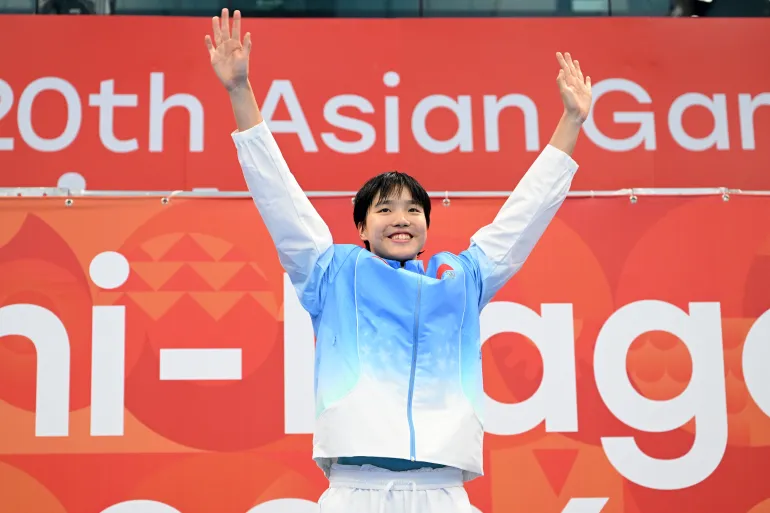
Teenage athletes have headlined some of the biggest Asian Games triumphs, leading their countries to historic gold medals, breaking records and cementing their legacy as formidable forces in the field.
Far from being intimidated by competitors double or triple their age, these schoolchildren remained cool and unfazed as they cruised to gold at their Asian Games debut.
list of 4 itemsend of list
Many are already familiar with the pressure and expectations of the world stage and have dominated their sport all season.
Al Jazeera Sport looks at some of the stars who left their mark in Japan:
China: Swimming
At just 13, Yu was named female Most Valuable Player (MVP), as she bagged three gold medals and broke as many Asian Games records in a fairytale debut.
The schoolgirl stormed to victory in the women’s 200m butterfly, 200m and 400m individual medley (IM) and had a comfortable lead over her competitors.
Her time of two minutes and 6.10 seconds (2:06.10) in the 200m IM stands as a world junior record and second-fastest time ever.
“I don’t think I am what people describe as a prodigy,” she said after being crowned MVP. “I will continue to train hard, push myself and work alongside young athletes across Asia to inspire more young people to love and take part in sports, especially swimming.”

China: Swimming
Zhang held up seven fingers after his 400m freestyle win to count out his gold medals at the Games – the most at this edition, and more than what 27 of the 45 participating nations had in their medal tally at the conclusion of the event.
He set Games records in the 400m and 800m freestyle, an Asian record in the 200m, and helped power China to gold and Asian records in the men’s 4x100m and 4x200m freestyle relays.
But the 19-year-old has bigger victories in sight.
“The Asian Games is not the goal. I’m still aiming for the Olympics and competing with the best,” he said.
The teenager’s haul helped China sign off from swimming with 30 golds out of 41 medal events in the pool, with chief rival Japan a distant second with seven titles.

Japan: Swimming
Ohashi broke the world record in the men’s 200m breaststroke (2:04.83) in front of a home crowd to become the first swimmer under the 2:05 mark.
The gold added to his title in the 100m breaststroke shared with China’s Dong Zhihao, bronze in the 50m breaststroke, and silver in the mixed and men’s 4x100m medley relays.
The teenager said he was surprised and honoured that Olympic champion Leon Marchand knew who he was, after the Frenchman described the 17-year-old as a “scary” prospect ahead of the 2028 Los Angeles Olympics.
“I respect him because I know just how strong he is. But if I want to win, he’s someone I know I’ll have to beat.”
Ohashi’s world record performance came just a week after the teenager recovered from COVID-19.

China: Athletics
Yan was already javelin world number one and Asian record holder when she stepped onto the field for her Games debut – her first and only throw of 70.46 metres was enough for gold and a Games record.
It was the sixth-best of all time and well ahead of Olympic champion and home hero Haruka Kitaguchi’s 62.70m.
Yan is closing in on the world record of 72.28m set by Barbora Spotakova in 2008. In May, she hurled a world-leading, record-breaking 71.74m to open an unprecedented season.

China: Athletics
Chen stormed to a new Games record in the women’s 100m en route to her first gold as she announced herself as the new sprint queen in Asia.
“I have no limits,” was her response when asked how much faster she hopes to run.
She followed up her podium finish with a silver in the 200m and gold in the women’s and mixed 4x100m relays.

Japan: Athletics
Goto narrowly missed gold in the men’s 400m hurdles, but his 47.93s was enough for a world under-18 best time, Asian under-20 best time, and a new personal best.
The teen star has run sub-50 seconds eight times this season alone, an impressive feat for a 17-year-old. His Asian Games silver added to the World Under-20 one he bagged in August.

India: Archery
Mohod scripted history for India when she became the first Indian to win an individual recurve archery gold at the Games. The 17-year-old helped India to gold in the women’s team recurve, and partnered with Dhiraj Bommadevara for mixed team silver.
Mohod’s gold was no stroke of luck; she defeated South Korea’s reigning world champion and Olympic medallist Kang Chaeyoung in the quarterfinals before dominating China’s Zhu Jingyi in the semifinals.
“Ever since I’ve made it to the national team, I’ve been visualising this moment. I had visualised shooting an X, and that is exactly what happened,” she told reporters after the match, according to Indian media.

India: Squash
World junior champion Anahat Singh has been India’s finest in the sport for several years now. Despite only being 18, Aichi-Nagoya was Singh’s second Asian Games outing after competing at Hangzhou 2023, where she won two bronze medals in the mixed doubles and women’s team events.
This time round, she won a silver in the women’s singles against world number five Sivasangari Subramaniam of Malaysia. However, her semifinal match against Japan’s Satomi Watanabe was what she called the “best win” of her career after producing a stellar comeback to defeat the world number six.

Japan: e-sports
At just 11 years of age, e-sports prodigy Kurihara became the youngest gold medallist in Asian Games history when he won Puyo Puyo Champions.
“I’m really happy. The gold medal is really beautiful, shiny and heavy,” Kurihara said after his final, where he barely broke a sweat.
Kurihara started playing Puyo Puyo in his first year of primary school – where he still studies – and soon started competing and winning in tournaments. He obtained his pro licence in April this year and regularly beats adults, often triple his age.
![TOKONAME, JAPAN - SEPTEMBER 26: Gold medalist Yuki Kurihara of Japan poses on the podium at the medal ceremony for the Esports Puzzle [Puyo Puyo Champions] on day seven of the 20th Asian Games Aichi-Nagoya at Aichi Sky Expo on September 26, 2026 in Tokoname, Aichi, Japan. Kurihara becomes the youngest gold medalist at the Asian Games at the age of 11. (Photo by Toru Hanai/Getty Images)](https://i0.wp.com/www.aljazeera.com/wp-content/uploads/2026/10/getty_6ac2424a21-1791115850.jpg?w=640&ssl=1)
Taipei: Skateboarding
Ku took silver in the men’s skateboarding park with 87.33 points, and was just one of several teenagers – in his case, a pre-teen – who medalled in skateboarding at the Games.
Japan’s Izuru Nagahara, 15, took gold in the event. China’s Zhu Yuanling, also 15, won gold in the women’s street skateboarding competition.
China’s Cao Shiqi finished fourth in women’s skateboarding park and was the youngest athlete in China’s delegation at the Games.


