weakened

Has the US Japan Currency Intervention Weakened the G7’s Influence on Global Exchange Rates?

US Japan Currency Intervention Signals Shift Away From G7 Coordination

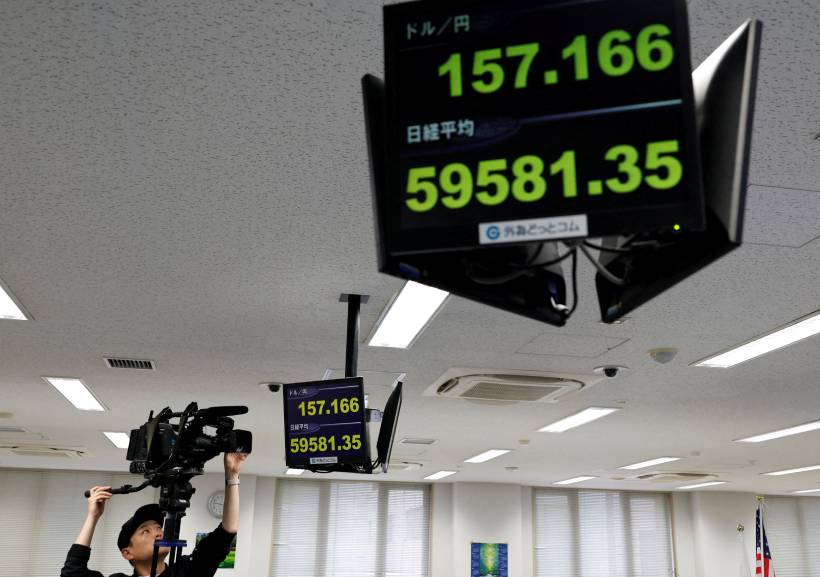
Last week’s joint intervention by the United States and Japan to support the Japanese yen has raised fresh questions about the future of international currency coordination, as the operation proceeded without broader participation from other Group of Seven (G7) economies.

Although the intervention temporarily strengthened the yen, analysts argue that the absence of coordinated action from Europe and other major economies reflects a broader decline in multilateral economic cooperation and a growing preference for bilateral deals under the Trump administration.

The intervention was jointly carried out by Washington and Tokyo after the yen weakened to multi decade lows against the U.S. dollar. U.S. Treasury Secretary Scott Bessent and Japanese Finance Minister Satsuki Katayama later confirmed the operation and defended its objectives.

The yen has largely maintained its gains since the intervention, although investors remain uncertain whether further support will follow or whether the Bank of Japan will reinforce the move through additional interest rate increases.

Stay ahead of the geopolitical week.

MD Briefing delivers expert analysis across five global fronts — the Indo-Pacific, energy, geoeconomics, European security, and the Middle East — every Monday morning. Free.

Treasury Market Concerns Shaped Washington’s Decision

One key factor behind U.S. involvement appears to have been concerns over the U.S. Treasury market.

Japan remains the largest foreign holder of U.S. government bonds. A large unilateral intervention by Tokyo would likely have required selling significant amounts of U.S. Treasuries to obtain dollars for prolonged currency operations, potentially disrupting already volatile bond markets.

By participating directly, the United States reportedly helped provide dollar liquidity while selling euros rather than dollars, reducing pressure on Treasury markets and limiting broader financial instability.

G7’s Absence Raises Questions

Despite the shared interest among G7 economies in preventing excessive currency volatility, other members of the group did not participate.

Historically, major currency interventions have often involved coordinated action across the G7. Following Japan’s 2011 earthquake and tsunami, G7 nations jointly intervened to weaken an excessively strong yen. Earlier coordinated efforts also included interventions supporting the euro in 2000 and global liquidity operations after the September 11 attacks.

In contrast, the latest operation remained strictly bilateral, even though the United States reportedly sold euros during the intervention without direct European participation.

The European Central Bank declined to comment publicly, while the International Monetary Fund has also remained largely silent.

Shift From Multilateralism to Bilateral Deals

The intervention reflects a broader shift in U.S. foreign economic policy under President Donald Trump, whose administration has increasingly favored bilateral negotiations over multilateral coordination.

Rather than pursuing comprehensive international agreements similar to the Plaza Accord or Louvre Accord, Washington has increasingly relied on country specific arrangements.

Japan has also deepened bilateral economic cooperation with the United States, including major investment commitments linked to previous tariff negotiations, reinforcing this new framework.

Regional Currency Pressures

U.S. officials also pointed to wider regional concerns.

Treasury Secretary Bessent argued that continued yen weakness risked placing downward pressure on other Asian currencies, particularly South Korea’s won, as exporters sought to remain competitive with Japanese manufacturers.

China’s yuan remains another major regional factor, although Beijing falls outside the G7 framework. Broader discussions involving China are expected only at future G20 meetings.

Historical Role of the G7

For decades, the G7 served as the primary forum for coordinated responses to major currency instability.

From stabilizing the euro during its early years to responding collectively after major financial crises, coordinated interventions carried significant market credibility because they demonstrated unified political and monetary commitment.

The latest U.S. Japan intervention marks a departure from that tradition, suggesting that future currency management may increasingly rely on bilateral arrangements rather than collective action.

Analysis

The U.S. Japan intervention highlights more than an attempt to stabilize the yen. It reflects a structural shift in global economic governance. The declining role of coordinated G7 action suggests that multilateral mechanisms are gradually giving way to transactional bilateral partnerships, particularly under the Trump administration.

While bilateral interventions may offer quicker and more flexible responses, they lack the collective market impact that historically made G7 operations highly effective. The absence of Europe and other major economies also raises questions about the future cohesion of the G7 as a forum for managing global financial stability.

For investors, this evolving landscape increases uncertainty. Without unified international coordination, currency markets may become more volatile as governments pursue national interests independently rather than through collective action. Whether future administrations restore broader multilateral cooperation or continue this bilateral approach will shape the next phase of global foreign exchange policy.

With information from Reuters.

Source link

L.A. city attorney’s role could be weakened under charter reform proposal

In a few days, Los Angeles voters will be casting ballots for city attorney — and in a few months, they could be voting to sharply diminish the city attorney’s authority.

The city’s Charter Reform Commission has proposed splitting the city attorney’s office into two parts — an elected city prosecutor, charged with handling criminal misdemeanors, and a mayor-appointed and City Council-confirmed city attorney who would represent the city in civil cases and advise the mayor, city council and city departments.

The City Council is reviewing the recommendation as part of sweeping changes to city government, including expanding the council from 15 to 25 seats, which could go before voters in the Nov. 3 general election.

The proposed changes to the city attorney’ office, however, come in the midst of a heated primary campaign, where incumbent Hydee Feldstein Soto is up against three challengers, including a state deputy attorney general and a deputy district attorney.

Both of those challengers say plans to bifurcate the city attorney’s office are rooted in longstanding conflicts between Feldstein Soto and the City Council.

Council members have expressed frustration over her handling of rising costs from an outside law firm, where the payout amount has grown to nearly $7.5 million — with some attorneys billing the city roughly $1,300 an hour.

And last year, City Council took a 12-0 vote to direct Feldstein Soto to withdraw an effort to halt a federal judge’s order prohibiting LAPD officers from targeting journalists with crowd control weapons.

“When I first heard about this idea, I thought it was probably the greatest indictment of the current city attorney that I’ve heard yet,” said John McKinney, a Los Angeles County deputy district attorney who is running for city attorney in Tuesday’s primary.

McKinney opposes the bifurcation, saying it will cause overlap and confusion. “If she was doing a good job … we wouldn’t even be having this discussion,” he said.

Marissa Roy, another candidate in the race, hasn’t taken a position on bifurcation but said Feldstein Soto’s actions triggered the proposed change.

“The only reason that bifurcation, or splitting the city attorney’s office, is even going to be going before voters is because we’ve had an incumbent city attorney who has gone so rogue to politicize the role,” said Roy, a deputy state attorney general.

Roy said accused Feldstein Soto of inappropriately blocking an affordable housing project in Venice. And in her office’s role of drafting ordinance language, Roy said, Feldstein Soto has returned to city council ordinance language that isn’t “faithful to the intent of the drafter.”

Feldstein Soto said the proposal to bifurcate the office has nothing to do with her performance.

“This issue comes up every single time charter reform comes up,” Feldstein Soto said. “To me this is all political opportunism.”

Feldstein Soto has opposed the split, and former city attorneys have also come out against it, saying an appointed position threatens the independence of the city attorney’s office, takes away from voters the right to elect a city attorney and could cost taxpayers money in order to split the office.

In a March letter to the Charter Reform Commission, Feldstein Soto said an attorney “serving at the pleasure” of the mayor and city council would face an “innate, human pressure to harmonize legal advice with the political goals of the appointing officials.”

“I have been able to provide honest, accurate legal advice to the Mayor, City Council, Controller and departments — even when that advice is unwelcome — precisely because I am an independently elected officeholder with an ultimate duty to the public,” she wrote. “An appointed City Attorney, serving at the pleasure of the Mayor and City Council, faces enormous political pressure on all of these issues, behind closed doors, cloaked in privilege without an independent voice.”

Burt Pines, a former city attorney who served from 1973 to 1981, deeply opposes the bifurcation proposal, citing the threat to independence as the largest issue at stake. As city attorney, he said, he was empowered to tell city officials when a proposed action was unlawful and refuse to support it.

“You want to be able to call the shots as you see them, true to the law,” Pines said in an interview.

Advocates say other cities have bifurcated offices, and splitting it could reduce conflict and provide a clear delineation of roles.

After consulting with experts and good governance groups, the commission agreed the benefits of bifurcation outweighed the negatives, and it passed unanimously by the commission.

“It was easy to get consensus on this,” said Raymond Meza, chair of the commission. The commission’s proposal calls for the city attorney to be nominated by the mayor, and confirmed by the City Council.

In its report, the commission said that “the current structure creates conflicts when the same office advises the city and prosecutes cases. Separation provides clearer roles, reduces conflicts, and allows each function to be performed effectively.”

Other cities have different models for the city attorney’s office: Long Beach has a similar model with bifurcated duties, while New York City has legal representation split up several ways. The San Francisco City Attorney provides legal representation for the city and county of San Francisco, and the San Francisco District Attorney’s Office handles criminal cases in the city and county.

Mike Bonin, executive director of the Pat Brown Institute, said he has seen the question of splitting the office come up with at least three different city attorneys to varying degrees.

“Given that the city attorney is an elected position, there’s always going to be somebody who doesn’t like them,” Bonin, a former city council member, said. “You need to divorce the question from the occupant and focus on the role — the charter is not about a particular person, the charter is about the function of the office.”

Source link