Economics

Dollar Steadies, Oil Pulls Back After Trump Signals Iran War May End Soon

Global currency and commodity markets stabilised slightly on Tuesday after a volatile start to the week triggered by the war involving Iran, United States and Israel. The U.S. dollar steadied against major currencies after earlier declines, following remarks from U.S. President Donald Trump that the conflict could end “very soon.”

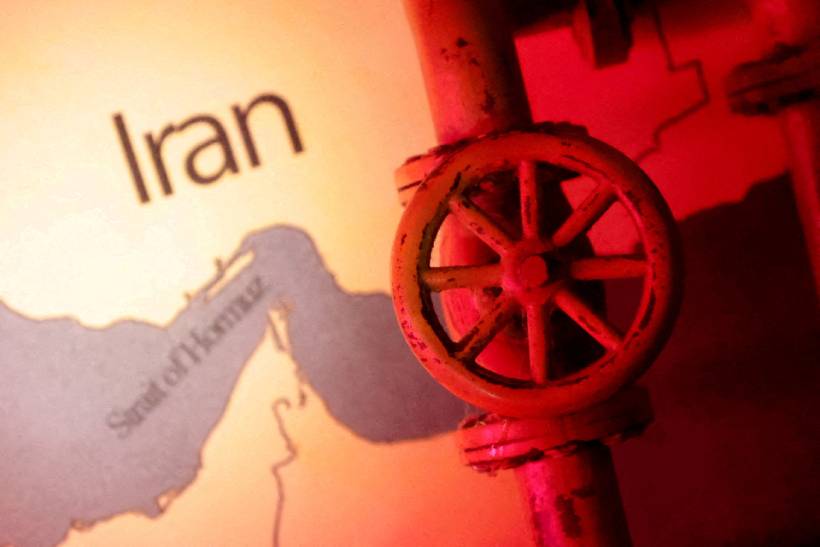
Financial markets had been thrown into turmoil a day earlier amid fears that a prolonged war could trigger a major global energy shock. The conflict has disrupted oil and gas exports through the critical Strait of Hormuz, a vital shipping route for global energy supplies.

Although markets calmed somewhat after Trump’s comments, the broader environment remains highly uncertain as investors continue to assess the potential economic fallout from the conflict.

Dollar Holds Ground as Oil Prices Ease

In Asian trading, the U.S. dollar was largely steady against other major currencies after retreating from the highs reached during Monday’s market turbulence.

The currency traded at around 157.73 yen against the Japanese yen and about $1.1632 against the euro, reflecting a stabilisation following the sharp movements seen earlier.

Meanwhile, oil prices remained elevated but declined from the dramatic peaks reached at the start of the week. Brent crude traded at roughly $93 per barrel, still significantly higher than levels before the outbreak of the war but well below Monday’s surge toward $120.

The pullback in oil prices helped ease immediate concerns about a severe energy shock, although analysts caution that volatility could continue if the conflict escalates again.

Investors Remain Cautious

Despite the relative calm in currency markets, analysts say investors are far from convinced that the crisis is nearing resolution.

Rodrigo Catril, a currency strategist at National Australia Bank, warned that markets could continue to experience sudden shifts in sentiment as geopolitical developments unfold.

According to Catril, it remains unclear whether the Iranian leadership would be willing to pursue de-escalation, suggesting that the risk of renewed market volatility remains high.

The Islamic Revolutionary Guard Corps in Iran dismissed Trump’s suggestion that the conflict could end quickly, describing the remarks as “nonsense.”

Risk-Sensitive Currencies Under Pressure

Currencies closely linked to global economic sentiment weakened as investors remained cautious.

The Australian dollar slipped to around $0.7063, while the New Zealand dollar fell to roughly $0.5912. These currencies often decline during periods of geopolitical uncertainty or when investors shift toward safer assets.

The dollar, by contrast, has benefited from its traditional role as a safe-haven currency during times of crisis. The escalation of the conflict and disruption to energy markets prompted investors to move funds into U.S. assets, supporting the currency.

The British pound recovered from losses earlier in the week to trade around $1.3434.

Energy Prices and Global Growth Concerns

Investors remain concerned that sustained high energy prices could slow global economic growth. Rising oil costs increase expenses for businesses and households, effectively acting as a tax on economic activity.

At the same time, higher energy prices could complicate monetary policy by pushing inflation upward and making it harder for central banks to lower interest rates.

Analysts at Deutsche Bank noted that a broader market sell-off in risk assets would likely require several conditions to occur simultaneously: persistently high oil prices, a shift in central bank policy expectations and clear evidence of a slowing global economy.

Strategist Henry Allen said markets are now significantly closer to those thresholds than they were just a week ago, though the full conditions for a major downturn have not yet materialised.

Analysis: Markets Brace for Prolonged Volatility

The market reaction to the Iran war underscores how closely global financial conditions are tied to geopolitical developments in the Middle East.

While Trump’s comments about a possible quick end to the conflict helped stabilise markets temporarily, the underlying risks remain substantial. The disruption of energy supplies through the Strait of Hormuz continues to threaten global oil flows and could trigger renewed price spikes if the conflict intensifies.

For investors, the situation presents a delicate balance. On one hand, hopes for de-escalation could stabilise energy prices and reduce pressure on financial markets. On the other, continued fighting or further disruptions to oil shipments could quickly reignite volatility across currencies, commodities and equities.

Until there is clearer evidence of either de-escalation or escalation, markets are likely to remain highly sensitive to political developments, with the dollar continuing to benefit from its role as a global safe haven.

With information from Reuters.
Source link

Bangladesh Secures Diesel After Iran War Disrupts Fuel Shipments

The war involving Iran, United States and Israel is increasingly affecting energy supplies far beyond the Middle East, with Bangladesh now scrambling to secure fuel imports after disruptions to regional shipping routes.

Bangladeshi officials say the country has begun receiving diesel shipments from suppliers including China and India, allowing authorities to secure enough fuel to meet roughly one month of national demand. Arrangements are also being made to secure supplies for an additional month.

The South Asian nation of about 175 million people depends heavily on imported energy, with roughly 95% of its fuel requirements sourced from abroad. The disruption of Middle Eastern oil flows following the war has therefore exposed Bangladesh to severe supply risks.

Fuel Rationing and Economic Disruptions

To manage the supply shortage, authorities have introduced emergency measures including fuel rationing for vehicles, restrictions on diesel sales and the temporary closure of universities.

Energy shortages are also affecting Bangladesh’s critical export industries. The country is the world’s second-largest clothing exporter after China, and many garment factories rely on diesel-powered generators during power outages.

Industry leaders say the situation has worsened since the conflict began in late February. Power cuts have doubled to as much as five hours per day, forcing factories to rely more heavily on backup generators.

Mahmud Hasan Khan, president of the Bangladesh Garment Manufacturers and Exporters Association, said many companies are struggling to obtain sufficient diesel to keep their operations running during electricity outages.

The shortages threaten to disrupt production in one of Bangladesh’s most important economic sectors, which accounts for the majority of the country’s export earnings.

Emergency Diesel Shipments Arrive

To stabilise supplies, the state-run Bangladesh Petroleum Corporation (BPC) has arranged diesel shipments from international traders.

Energy officials say around 60,000 metric tons of diesel are currently being delivered by three trading companies, with another 90,000 metric tons expected to arrive later this month.

A cargo of approximately 27,000 metric tons from PetroChina has already arrived at Chittagong Port, while another shipment of roughly 28,000 metric tons from Vitol is waiting at the port’s outer anchorage.

Additional supplies are also arriving through a cross-border pipeline from India’s Numaligarh Refinery, which is currently providing about 5,000 metric tons of diesel. Officials said negotiations are underway to secure a further 30,000 metric tons from Indian Oil Corporation.

Bangladesh typically consumes about 380,000 metric tons of diesel each month. However, officials estimate that rationing measures have reduced current demand to around 270,000 metric tons per month.

Oil Imports Threatened by Hormuz Disruptions

While refined diesel cargoes have continued to arrive, Bangladesh faces greater risks in securing crude oil shipments for its domestic refineries.

The country imports about 1.4 million metric tons of crude oil annually under long-term supply agreements with Saudi Aramco and Abu Dhabi National Oil Company.

However, shipments from these suppliers must travel through the strategically vital Strait of Hormuz, which has been heavily disrupted by the war. Officials say at least one cargo of around 100,000 tons from Saudi Aramco has already been delayed in the Gulf due to the ongoing crisis.

The Strait of Hormuz is one of the world’s most important energy transit routes, and any prolonged disruption could have far-reaching consequences for countries heavily dependent on imported fuel.

Gas Shortages Add to Energy Crisis

Bangladesh’s energy difficulties extend beyond diesel shortages. Severe natural gas shortages have already forced the closure of four of the country’s five state-run fertiliser factories.

Authorities have redirected the available gas supply toward electricity generation in an effort to stabilise power production during the crisis.

The combination of diesel shortages, disrupted oil imports and limited gas supplies is placing growing pressure on Bangladesh’s energy system at a time when global fuel markets are already experiencing heightened volatility.

Analysis: Energy Dependence Exposes Economic Vulnerability

Bangladesh’s struggle to secure diesel supplies illustrates how the war involving Iran is affecting energy-importing economies far beyond the immediate conflict zone.

Countries that rely heavily on imported fuel are particularly vulnerable to disruptions in global energy shipping routes, especially those linked to the Strait of Hormuz. Even temporary interruptions can lead to fuel shortages, higher prices and broader economic disruption.

For Bangladesh, the situation highlights the structural risks created by its dependence on imported energy. Industries such as garments, which rely on stable electricity supplies and backup diesel generators, are especially exposed to supply shocks.

Although emergency shipments from China and India have temporarily stabilised supplies, the situation remains fragile. If the conflict in the Middle East continues to disrupt oil shipments or drive up prices, Bangladesh could face prolonged energy shortages with significant implications for its economy and export industries.

With information from Reuters.
Source link

G7, EU Leaders to Hold Talks on Soaring Energy Prices Amid Iran War

G7 energy ministers will hold a call on Tuesday to discuss sharply rising energy prices triggered by the ongoing war in Iran, officials said. A separate call later in the day will see European Union leaders addressing similar concerns, reflecting heightened global anxiety over fuel supply and costs.

Oil prices surged to their highest levels since mid-2022 on Monday, driven by fears of reduced Gulf output and disruptions to tanker traffic through key shipping routes. Even before the Iran conflict, European energy prices were generally higher than those in the United States and China.

G7 Prepares Response, But Stops Short of Releases

G7 finance ministers signalled readiness to take “necessary measures” in response to the price surge but did not commit to coordinated emergency releases of strategic oil reserves.

The G7, which includes United States, Canada, Japan, Italy, Britain, Germany, and France, will hold the call at 1245 GMT. French Finance Minister Roland Lescure, whose country holds the G7 presidency this year, said that Europe and the U.S. currently do not face immediate supply shortages.

EU Leaders Target Competitiveness and Energy Costs

Later on Tuesday, EU leaders will discuss energy prices and competitiveness, joining German Chancellor Friedrich Merz, Italian Prime Minister Giorgia Meloni, Belgian Prime Minister De Wever, and others.

The EU is highly exposed to global energy volatility, importing more than 90% of its oil and roughly 80% of its gas. EU Commission President Ursula von der Leyen has pledged proposals at next week’s EU summit to address rising prices.

Officials have already discussed measures including adjustments to energy taxes and potential amendments to the EU carbon price, which contributes around 11% to industrial power costs.

Coordinated Action Sought but Uncertain

The calls by the G7 and EU reflect a growing urgency to manage energy price shocks caused by the Iran war. While governments have the tools to intervene, officials are balancing the need to stabilize prices with broader fiscal and strategic considerations.

With oil and gas markets highly sensitive to geopolitical developments, both G7 and EU leaders face pressure to act quickly to prevent price spikes from translating into economic slowdowns or political unrest across their regions.

With information from Reuters.
Source link

Redefining Empowerment: A Critical Look at Microcredit and Women’s Economic Agency

Introduction

In 1974, Muhammad Yunus began experimenting with an initiative to give small loans to impoverished rural women to foster a sense of empowerment through entrepreneurial start-ups – an initiative that was institutionalised through the famous Grameen Bank. In just a couple of years, this initiative had snowballed into the United Nations declaring 2005 the International Year of Microcredit, with Yunus winning the Nobel Peace Prize for economic development.

In an age of international globalisation and neoliberal theories, microcredit seemed to be the solution to the ills of the developing world. Economists, development theorists, and journalists began to discuss the multiple success stories from the Grameen Bank and the vast impact small loans were having on people.

But a much darker reality came to take place. Although Yunus said that credit is a human right, he failed to address the fact that debt follows. Stories like Razia’s became far too frequent.

The Feminisation of Debt: Razia’s Story

Razia had taken out an initial microcredit loan of around $50 from Grameen Bank to put food on the table and pay for her children’s education; to her, this money was a lifeline to meet her family’s immediate needs. She was offered an interest rate of 20%, which she did not initially realise due to her limited fiscal literacy, and she could not pay.

Loan sharks targeted her family with violent threats when they were unable to meet payment deadlines; she had to sell her heirloom jewellery, her belongings, and eventually her home to make the payment – and even now, she continues to face threats from the loan sharks.

Razia’s story is not uncommon and illustrates how a linear model of microcredit has led to the feminisation of debt: women took out these loans to cover basic needs and fulfil their societal roles as caretakers, only to be uniquely burdened and targeted because they were unable to meet deadlines. This led women to be prone to economic vulnerability, social shame due to the procurement of debt, and violence from debt collectors.

Questioning the Efficacy of Microfinance

In addition to Razia’s story, the reality of the Grameen Bank’s efficacy is also up for debate. More and more economists became wary of the narrative that microfinance helps start income-generating enterprises, and recognised that this led many to feed their families or afford education. Another fundamental assumption was that microfinance would empower the poor, especially women, through microenterprises, given their financial bargaining power within the community. The neoliberal social policies used to model microenterprises for poor rural women to sell their labour or to ‘sub-contract’ their services were broadly not adopted, and forced women into disempowering roles in the informal sector.

Dr. Lamia Karim conducted research on the particular claims on gender empowerment by microcredit programmes and ended up creating a ‘local economy of shame’; repayment of these loans was tied to a woman’s standing and honour within the community, and these norms created environments of disempowerment, subjugation, and stress to repay the loans.

Theoretical Frameworks: From WID to GAD

Yunus’s microcredit initiative followed the theoretical prescriptions of Women in Development (WID), which sought to address gender-based economic disparities and integrate women into existing economic systems. The Grameen Bank was able to meet these goals; however, the linear model of empowerment used and the integration of women within the neoliberal economic market failed to meet the overall goals of empowerment.

As organisations, advocates, and economists saw the initial model struggling to meet the holistic goals of empowerment, they integrated theoretical prescriptions from Gender and Development (GAD), which sought to confront the root causes of gender inequality and to meet both the practical and strategic needs of women. This empowers women not only to meet economic goals to ensure survival, but also to develop collective action skills to confront power structures that lead to their subjugation.

Proshika: A New Model for Empowerment

Proshika was formed in 1979 under the WID model and focused on targeting rural communities, but realigned its goals with a GAD model in 2009. Their mission statement was revised to reflect the integration of collective-action training into their microcredit initiatives. As an organisation, they planned to “develop their capacity, so they can claim their due rights from the government” and “ensure life security” – a revolutionary shift within the broader conversation about microcredit.

Proshika had a model very similar to the Grameen Bank microcredit programmes; however, they added organisational spaces for women to meet and discuss community issues, embedding collective action within the programme. When a woman signed up for a loan, she was connected with other women in her community and asked to discuss pressing issues. Proshika organised a total of 42,809 groups; these various groups looked into important societal issues, such as the prevention of child marriage, the prevention of violence against women, and the abolition of dowry practices.

These trainings connected women with existing government systems and taught them how to access the judicial system, enabling them to pursue institutional avenues of change.

Building Social Capital and Political Agency

These spaces within the community allow women to build social credit, serving as places where information flows and as essential spaces for building trust and relationships. They increase social awareness, social interaction outside of one’s family unit, and increase domestic power and civic participation.

Dr Paromita Sanyal studies the role of microfinance agencies in Bangladesh, and credits NGOs such as Proshika for building both vertical and horizontal lines of social credit. Vertical social credit enables women to build essential connections within their own communities, and horizontal social credit allows them to connect with NGOs, politicians, and governing bodies. This axis of power builds political agency within communities and empowers women to challenge restrictive gender norms.

Proshika operates in 8,784 villages, 1,639 unions, 266 sub-districts, 42 districts, and 7 divisions within Bangladesh – they have organised 33,982 female groups across the nation. Through their collective action programmes, they were able to see a statistically significant decrease in child marriages, dowries, and gender-based violence within rural villages.

Towards True Empowerment

Proshika’s microfinance initiative not only enabled income-generating activities in rural villages but also empowered women to make a difference in their communities. Proshika’s success story should serve as a model for reforming existing microfinance institutions and incorporating collective action mechanisms into programmes.

Unlike the Grameen Bank, which focused solely on women’s practical needs, Proshika made an effort to address women’s and community members’ strategic needs. This led to statistically significant decreases in domestic violence and child marriages, as well as increased awareness of government systems and the justice system as a whole, with civic engagement opening accessible avenues for change.

Dr. Andrea Cornwall’s critical feminist analysis of women’s empowerment suggests that true empowerment is about changing asymmetrical power relations and requires building critical consciousness to help people recognise fundamental inequalities. Empowerment is relational and involves the interplay between personal and political to create a process, rather than focusing on an outcome.

Unlike the Grameen Bank, Proshika focused more on the various aspects of empowerment, without adopting a linear view of tangible results. This led to successful grassroots movements that brought attention to women’s structural needs and raised awareness of women’s value to community spaces.

Empowerment comes from changing power relations within the community, and Proshika met both women’s practical and strategic needs. It is essential to address the extreme poverty that women face, but also to build avenues for them to challenge the institutions they participate in.

Source link