Economics

United States China Tech Rivalry Delays Nvidia AI Chip Exports

The latest developments surrounding Nvidia’s H200 chip sales to China highlight the growing complexity of the technological rivalry between the United States and China. Although Washington has reportedly approved several major Chinese firms to purchase Nvidia’s advanced artificial intelligence chips, no deliveries have taken place so far.

The situation reflects how geopolitical competition is increasingly disrupting even officially approved commercial agreements in the semiconductor sector.

Nvidia, the world’s leading artificial intelligence chip manufacturer, now finds itself caught between United States export control policies and China’s push for technological self reliance.

What Is the H200 Chip?

The H200 is Nvidia’s second most powerful artificial intelligence chip and is designed for advanced AI model training and data center operations.

The chip is particularly valuable for companies developing large language models, cloud computing systems, and next generation AI applications.

Before export restrictions tightened, Nvidia dominated China’s advanced AI chip market with an estimated market share of around 95 percent.

China also represented a major source of revenue for Nvidia, making access to the Chinese market strategically important for the company’s long term growth.

Which Chinese Companies Were Approved?

According to reports, the United States Commerce Department approved around ten Chinese firms to purchase H200 chips.

These reportedly include major Chinese technology companies such as:

  • Alibaba
  • Tencent
  • ByteDance
  • JD.com

Several distributors were also reportedly approved, including:

Under the licensing terms, each approved customer could reportedly purchase up to 75,000 chips.

However, despite these approvals, no actual sales or deliveries have yet been completed.

Why Have the Sales Stalled?

The delays appear to stem from concerns on both the United States and Chinese sides.

Chinese Concerns

Chinese authorities reportedly fear that reliance on Nvidia chips could undermine Beijing’s efforts to strengthen its domestic semiconductor industry.

China has invested heavily in local AI chip development, particularly through companies such as Huawei.

Beijing increasingly sees semiconductor self sufficiency as a national security priority amid escalating technological competition with Washington.

There are also concerns within China regarding supply chain security and possible vulnerabilities linked to imported American technology.

Recent Chinese regulations aimed at reducing foreign dependence in critical technology sectors have reportedly intensified scrutiny of these chip purchases.

United States Restrictions

The United States has simultaneously imposed strict export control requirements on advanced semiconductor sales to China.

Chinese buyers must reportedly prove that the chips will not be used for military purposes and that adequate security procedures are in place.

Nvidia must also satisfy inventory and compliance conditions under American export laws.

Additionally, reports suggest the Trump administration negotiated an unusual arrangement in which the United States would receive a portion of revenue generated from the chip sales. This reportedly requires the chips to pass through American territory before shipment to China.

Such conditions have further complicated the transaction process.

Jensen Huang’s Diplomatic Push

Nvidia Chief Executive Officer Jensen Huang has emerged as a key figure in efforts to preserve Nvidia’s access to the Chinese market.

Huang reportedly joined President Donald Trump during a diplomatic visit linked to talks with Chinese President Xi Jinping.

His participation underscores the economic significance of the semiconductor dispute and the importance of China to Nvidia’s business strategy.

Huang has repeatedly warned that export controls risk permanently weakening Nvidia’s position in China while encouraging Chinese firms to accelerate domestic alternatives.

The Larger Strategic Battle

The Nvidia dispute reflects a broader struggle between the United States and China over technological dominance in artificial intelligence.

Washington increasingly views advanced semiconductor technology as a strategic national security asset. American policymakers fear that unrestricted access to advanced AI chips could strengthen China’s military and technological capabilities.

China, meanwhile, sees semiconductor independence as essential to reducing vulnerability to foreign pressure and sanctions.

As a result, both sides are attempting to balance economic interests with long term strategic competition.

Implications for the Global AI Industry

The uncertainty surrounding Nvidia’s China business could have major implications for the global artificial intelligence industry.

If Chinese companies lose access to Nvidia chips, they may accelerate investment in domestic alternatives, potentially reshaping the global semiconductor market over time.

At the same time, restrictions on AI chip trade risk fragmenting the global technology ecosystem into competing American and Chinese spheres.

This could reduce international collaboration, disrupt supply chains, and intensify geopolitical competition over emerging technologies.

Future Outlook

Despite current delays, neither the United States nor China appears willing to completely sever technological and commercial ties.

However, the Nvidia case demonstrates that semiconductor trade between the two powers is becoming increasingly politicized and strategically sensitive.

The future of AI competition may ultimately depend not only on innovation, but also on which country can build the most resilient and independent technology ecosystem.

For Nvidia, maintaining its position between the world’s two largest economies will likely remain one of its greatest strategic challenges.

Conclusion

The stalled Nvidia H200 deal illustrates how deeply geopolitical tensions now shape the global technology industry.

Although the United States has approved limited chip exports to China, political distrust, national security concerns, and strategic competition continue to obstruct implementation.

As artificial intelligence becomes central to economic and military power, semiconductor trade is no longer simply a commercial issue. It has become a defining arena in the broader contest between Washington and Beijing for technological leadership in the twenty first century.

With information from Reuters,

Source link

Trump, Xi and Cold War 2.0: Managing Rivalry in a Fragmented World

The world today is no longer witnessing isolated geopolitical crises. From Ukraine and West Asia to Taiwan and the Indo-Pacific, almost every major flashpoint bears the imprint of an expanding strategic contest between the United States and China. The emerging order increasingly resembles a “Cold War 2.0” — though very different in structure, methods and consequences from the US-Soviet rivalry of the 20th century.

Unlike the earlier Cold War1.0, the present contest is not defined by ideological blocs alone. The US and China remain deeply intertwined economically, technologically and financially even as they posture against each other militarily, diplomatically and strategically. It is therefore a paradoxical competition: adversarial coexistence under conditions of mutual dependence.

The forthcoming summit between US President Donald Trump and Chinese President Xi Jinping in Beijing assumes significance far beyond bilateral optics. It is not merely about tariffs or trade balances. It is about whether the world’s two largest powers can manage competition without pushing the international system into prolonged instability.

Cold War 2.0: Similarities and Differences

There are unmistakable similarities between the old Cold War and the current strategic rivalry. Technology races, military posturing, proxy theatres, sanctions, espionage, supply-chain wars and ideological narratives are again shaping global politics. Taiwan today resembles what Berlin once symbolised during the original Cold War — a potential trigger point with global implications.

Yet the differences are even more important.

The US and Soviet Union operated largely in separate economic ecosystems. In contrast, America and China remain deeply integrated through trade, manufacturing, investment flows and technological supply chains. As a result, Cold War 2.0 is less about total decoupling and more about selective disengagement, strategic denial, and competitive coexistence. China’s rise has also changed the nature of power transition; unlike the Soviet Union, China is economically embedded within the global capitalist system while simultaneously challenging Western strategic dominance. Beijing does not seek immediate overthrow of the international order; rather, it seeks gradual restructuring of global institutions and norms to reflect Chinese power and preferences.

Because of this interdependence, direct conflict is expensive for both parties. As a result, selective disengagement, strategic denial, and competitive coexistence are more important in Cold War 2.0 than total decoupling.

The nature of power transitions has also changed as a result of China’s growth. China, in contrast to the Soviet Union, both challenges Western geopolitical dominance and is economically integrated into the global capitalist system. Beijing aims to gradually restructure international institutions and norms to reflect Chinese strength and preferences rather than topple the current international order.

Trump’s Return: Strategic Pressure with Transactional Flexibility

President Trump’s return has introduced a more personalised and transactional dimension to US-China relations. His approach combines aggressive economic nationalism with pragmatic deal-making. Trump views geopolitics substantially through the prism of economic leverage, tariffs, industrial revival and negotiated advantage.

During his earlier tenure, Trump launched the trade war against China, challenged Chinese technological expansion and questioned assumptions of unlimited globalisation. In his second term his tariff rhetoric and coercive stance seems tampering down by Beijing’s stiff retaliation and domestic vows through courts; hence appears focused on “managed competition” rather than ideological confrontation.

Current indications suggest that Trump seeks three broad objectives from Beijing:

  • Reduction of trade imbalances and greater market access for American companies.
  • Chinese restraint regarding Iran, fentanyl precursors and strategic technology transfers.
  • Taiwan and Indo-Pacific tensions should be relatively stable to prevent unchecked escalation. At the same time, Trump appears willing to negotiate tactical understandings with Beijing if they produce visible economic or political gains domestically.

This reflects an important distinction between traditional American strategic establishments and Trump’s worldview. Washington’s institutional security establishment and deep state often sees China as a long-term systemic challenger. Trump, however, also sees Beijing through the lens of bargaining opportunity. This creates unpredictability both for allies and adversaries.

Xi Jinping’s China: Strategic Patience and Controlled Assertiveness

If Trump represents transactional nationalism, Xi Jinping represents centralised strategic continuity with greater diplomatic maturity.

Beijing’s military modernisation, naval expansion, technological aspirations, and Belt and Road outreach reflect a long-term strategy aimed at reducing dependence on the West while enhancing China’s centrality in global affairs. Under Xi’s leadership, China has evolved from a cautious economic power into an increasingly assertive geopolitical actor. Beijing’s long-term objective to lessen reliance on the West and increase China’s influence in world affairs is reflected in its military modernisation, navy expansion, technological aspirations, and Belt and Road outreach.

Xi’s leadership style is marked by centralised authority, ideological discipline and strategic patience. Unlike the short electoral cycles of Western democracies, China’s leadership can pursue long-duration geopolitical objectives with consistency.

Beijing today appears more confident than during Trump’s first presidency. Despite economic headwinds, demographic pressures and property-sector challenges, China has strengthened domestic technological capabilities and diversified export networks.

China’s approach to global dominance differs fundamentally from America’s traditional model.

The United States historically exercised leadership through alliances, military presence, financial systems and institutional influence. Its dominance relied substantially on coalition-building and normative legitimacy, an approach, which seems to be eroding under President Trump, America First/America only agenda.

China’s model is more infrastructure-centric, economically transactional and state-driven. Beijing prefers influence through trade dependency, technology ecosystems, strategic investments and manufacturing centrality. It avoids formal alliances but expands leverage through economic penetration and calibrated coercion.

In essence, Washington exports political influence backed by military power to dislodge all potential competitors; Beijing exports economic dependency backed by state capacity aims at not dislodging potential markets to include U.S., EU and India.

The Taiwan Factor and Indo-Pacific Competition

No issue captures Cold War 2.0 more sharply than Taiwan.

For China, Taiwan remains a core sovereignty issue tied to national rejuvenation. For the United States, Taiwan represents strategic credibility, Island chain dominance in the Indo-Pacific and the larger balance of power against China.

Neither side currently appears to seek direct military confrontation. Yet both are steadily preparing for prolonged strategic competition around Taiwan. China continues military signalling and grey-zone pressure, while the US strengthens Indo-Pacific partnerships and defence arrangements.

Trump’s Beijing visit is therefore expected to prioritise “stability management” rather than dispute resolution. Beijing seeks assurances against perceived American encouragement of Taiwanese independence and military capacity building, while Washington seeks deterrence against coercive reunification efforts.

With recent claims of President Trump on Greenland, Canada, and Panama and actions in Venezuela, he doesn’t have any moral leverage to lecture China on Taiwan, because his security concerns over these areas are woefully short of Chinese security concerns of Island chains. Thus the reality of Cold War 2.0 is more of escalation management more than genuine reconciliation, as competition remains.

The Real Issue: Supply Chains and Technology Agendas

Artificial intelligence, semiconductors, rare earths, cyber systems, quantum technologies and critical supply chains have become strategic weapons. Economic security is increasingly inseparable from national security.

America still leads in advanced innovation ecosystems, financial influence and military alliances. China dominates large parts of manufacturing, industrial supply chains and infrastructure scalability.

The contest is therefore asymmetric. Washington seeks to slow China’s technological ascent through export controls and alliance-based restrictions. Beijing seeks self-reliance through indigenous innovation and strategic diversification.

Simultaneously, both nations are competing to shape global narratives.

The US projects democratic resilience and rules-based order. China projects efficiency, development delivery and non-interference. Many countries in the Global South increasingly engage both sides pragmatically rather than ideologically.

US-Israel War on Iran: Uneasy Calm Amid Strategic Contestation

China and the United States both need  regional stability in Middle East to avoid economic shockwaves and disruption of global energy flows, but their strategic intentions are quite apart. Trump led America’s action plan, duly influenced by Israeli lobby includes military action, coercive deterrence, and the retaining American strategic dominance in West Asia, especially Petro-dollar domination. China, on the other hand, is attempting calibrated balance, openly supporting de-escalation while covertly defending its long-term geopolitical, economic, and energy links with Tehran.

Beijing will refrain from any overt alignment that could lead to direct conflict with Washington, but it is unlikely to desert Iran. China seems confident that it can endure supply chain crisis in Strait of Hormuz longer than Trump and Iran. In any case a over-engaged US with depleted reserves works towards Chinese strategic advantage.

The larger strategic picture shows for Beijing, the crisis offers an opportunity to project itself as a responsible stabilising power while gradually expanding influence through economic leverage and diplomatic positioning; as a result, the likely outcome is not cooperation in the classical sense, but competitive crisis management—limited convergence to avoid uncontrolled escalation, while China advances through strategic patience, economic penetration, and calibrated diplomacy. Demonstrating credibility and deterrence to adversaries, such as China, is another goal for Washington in the Iran theatre.

Thus, Iran becomes yet another arena in which China gains through strategic patience, economic penetration, and calibrated diplomacy, while the US primarily depends on military power and a weakening alliance structures.

Likely Outcomes of the Trump–Xi Engagement: Competitive Coexistence, Not Resolution

Expectations from the Trump–Xi engagement must remain realistic and free from rhetorical overstatement. The structural contradictions driving US–China rivalry — Taiwan, technological dominance, supply chain control, military competition, sanctions regimes and competing visions of global order — are too deep to be resolved through summit diplomacy alone. At best, both sides may seek temporary stabilisation of tensions to avoid simultaneous economic disruption and strategic overstretch. Therefore, the likely outcome is not reconciliation, but managed confrontation under conditions of deep interdependence.

Trump’s pressure tactics may slow certain aspects of China’s technological rise and compel tactical adjustments, but they are unlikely to reverse Beijing’s long-term strategic trajectory or ambition for greater influence in global governance structures.

Equally, China is not positioned to replace the United States as a singular global hegemon, as yet. Internal economic pressures, demographic decline, debt vulnerabilities, trust deficits and the absence of robust alliance structures remain important constraints on Chinese power projection.

Consequently, the more plausible scenario is a prolonged strategic contest marked by partial economic bifurcation in critical technologies, competing digital and AI ecosystems, intensified military signalling in the Indo-Pacific, and expanded geopolitical competition across the Global South through infrastructure financing, trade dependency, arms transfers and narrative warfare.

Emerging World Order: What should remaining World Do?

Cold War 2.0 will not produce a neat bipolar world nor purely multipolar. Unlike the 20th century, today’s international system is multipolar, economically interconnected and technologically diffused. Middle powers such as India, regional blocs and strategic swing states will play increasingly important roles in shaping outcomes through strategic balancing avoiding bloc politics. The aim remains to avoid collateral damage in a competition, which neither U.S. nor China can decisively win in the foreseeable future.

The prudent course lies in strategic autonomy backed by economic resilience, technological self-reliance, diversified partnerships and flexible diplomacy. Nations will increasingly pursue sector-specific alignments while resisting pressure to become instruments of either camp’s maximalist strategic narratives.

In this evolving landscape, Trump’s coercive unilateralism and “America First” orientation may paradoxically accelerate the very multipolarity Washington seeks to resist. Many nations, including close American partners, increasingly seek strategic hedging against unpredictability in US policy, even while remaining cautious of China’s expanding influence and coercive economic practices

Cold War 2.0 is unlikely to end through a dramatic collapse or military victory. It will instead remain a long geopolitical test of endurance, adaptability, economic resilience and strategic patience in an era of competitive coexistence, issue based cooperation and crisis management below the threshold of military confrontation.

Trump’s leadership may make the contest louder, sharper and more transactional, while Xi’s China may continue pursuing calibrated expansion with long-term strategic discipline. Yet the underlying structural reality remains unchanged: the US–China rivalry is here to stay, and the rest of the world must learn to navigate carefully between pressure and prudence, rhetoric and reality, competition and coexistence.

Source link

Hungary’s New PM Magyar Picks Karman to Lead Fiscal Recovery

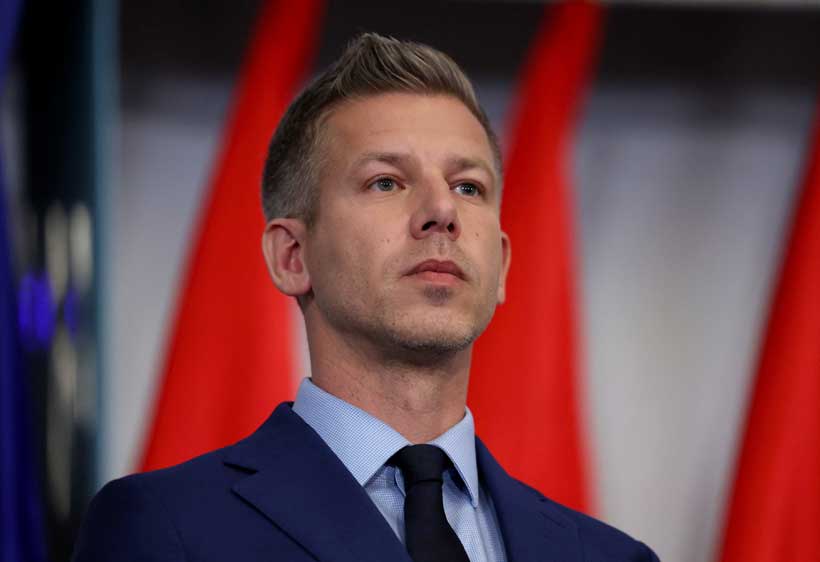
Hungary’s state-heavy ‘Orbánomics” is officially over. Enter Péter Magyar, who wishes to ‘mend relations’ with the EU.

Now that Péter Magyar has taken office as Hungary’s new prime minister, he will look to András Karman, his nominee for finance minister, to execute a rapid fiscal pivot, dismantling 16 years of state-heavy “Orbánomics” and restoring investor confidence in the Central European hub.

Real GDP is expected to grow by 1.7% to 2.3 % this year, with average consumer prices rising 3.8% and the unemployment rate at 4.2%, according to the International Monetary Fund’s April World Economic Outlook.

The outgoing government of Viktor Orbán did not give Karman much to work with, as the first-quarter cash-flow deficit reached 3.4 trillion forints ($11.3 billion). At 80% of the full-year target, leaving the incoming administration with negligible fiscal headroom.

“[Former Prime Minister Viktor] Orbán has always regarded fiscal order as equal with neoliberal ideology or austerity attitude, or ‘something the Left does in office,’” says Péter Ákos Bod, professor emeritus in the Department of Economic Policy at Corvinus University of Budapest and former governor of the Central Bank of Hungary.

Path to Stabilization

Growth is picking up after a three-year post-pandemic stall. Fitch Ratings now projects GDP to rise by 2.3% this year and 2.6% in 2027, driven by a rebound in domestic demand and heavy investment in the auto and battery sectors.

However, fiscal risks persist. While inflation is cooling toward 3.5%, the deficit widened to 5% last year and is expected to hit 5.6% in 2026. This “fiscal slippage” led Fitch to issue a negative Sovereign Outlook in December, signaling the narrow window Karman has to stabilize the books.

A life-long banker, Karman’s immediate task will be to free approximately €17 billion in EU Cohesion Funds and a Recovery and Resilience Facility, which have been frozen since late 2022.

“While the funds ostensibly hinge on meeting 27 ‘super milestones’ around judicial independence, anti-corruption, and procurement transparency,” said Sili Tian, a Central and Eastern Europe analyst at the Economist Intelligence Unit. “We expect a relatively quick disbursement as Mr. Magyar seeks to quickly mend relations with the EU.”

That may be difficult to achieve, he said, as many Orbán loyalists are entrenched across the bureaucracy, the tax authority, the judiciary, and Hungary’s largest enterprises, some with tenure into the 2030s.

Longer-term goals, such as exiting the EU’s Excessive Deficit Procedure, will require Hungary to reduce its budget deficit and its debt-to-GDP ratio. The process will likely take longer than the incoming government’s four-year term.

Justin Keay contributed to this article.

Source link

Control of the Strait of Hormuz May Define the Next Phase of the Iran Conflict

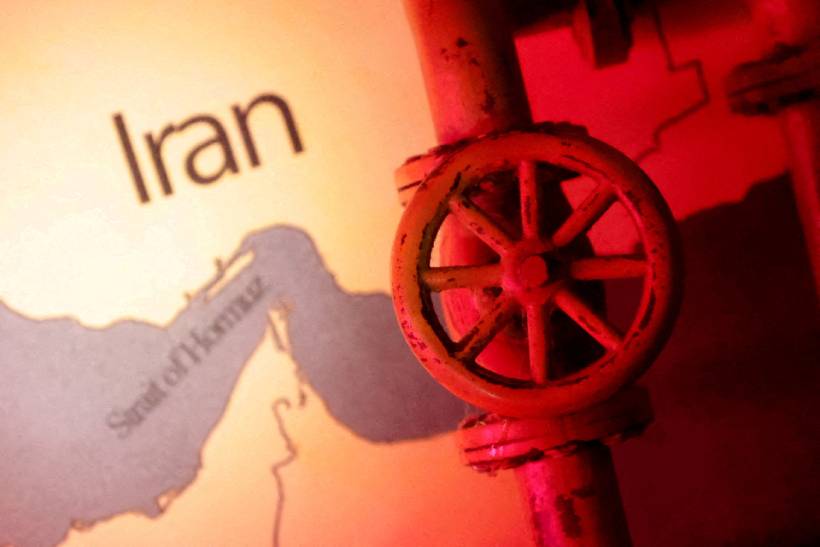
The Strait of Hormuz has become the central strategic battleground in the ongoing confrontation involving Iran, the United States, and regional Gulf powers. What initially appeared to be a military conflict is increasingly evolving into a struggle over maritime control, energy security, and geopolitical influence.

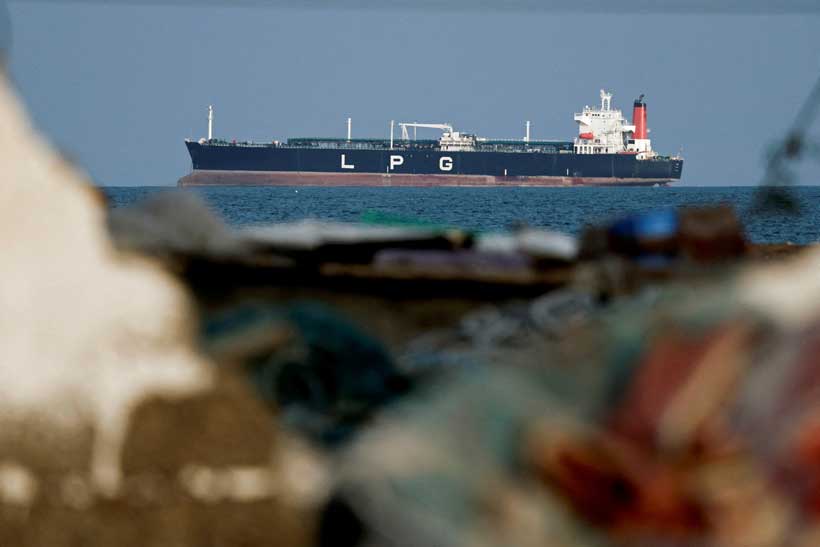
Since the outbreak of hostilities following the joint United States and Israeli strikes on Iran in February, Tehran’s near closure of the Strait of Hormuz and Washington’s retaliatory naval blockade have severely disrupted global energy markets. The conflict has reduced the movement of oil and liquefied natural gas through one of the world’s most critical maritime chokepoints, creating economic instability far beyond the Middle East.

Recent tanker movements coordinated through informal understandings with Tehran suggest that Iran may now be shifting from blocking Hormuz entirely to selectively controlling access. This emerging dynamic could fundamentally reshape Gulf security and international energy politics.

Hormuz Is No Longer Just a Trade Route

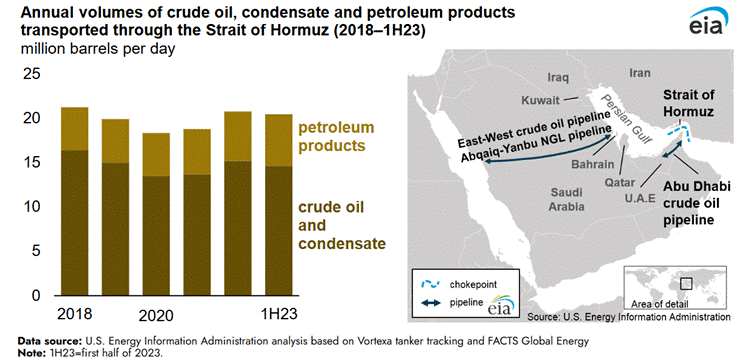
The Strait of Hormuz is one of the most strategically important waterways in the global economy. Before the conflict, roughly one fifth of global oil and liquefied natural gas shipments passed through the narrow corridor each day.

Its disruption has exposed the vulnerability of global energy markets to geopolitical conflict. Asian economies have been particularly affected because of their heavy dependence on Gulf energy exports. Oil supply disruptions and rising transportation risks have intensified inflationary pressure, energy insecurity, and market volatility across multiple regions.

The recent passage of a limited number of oil and gas tankers with apparent Iranian approval demonstrates that Tehran may now be exercising selective authority over maritime transit rather than enforcing a complete blockade.

This distinction is critical because it suggests Iran is attempting to transform military leverage into long term political and economic influence.

Iran’s Emerging Strategy of Selective Access

The limited reopening of shipping lanes indicates that Tehran may be developing a new model of strategic control. Rather than permanently shutting down the strait, Iran appears to be determining which countries, companies, or shipments can safely transit through the waterway.

This selective access system gives Tehran several advantages.

First, it allows Iran to maintain pressure on global energy markets without fully halting trade flows that could trigger overwhelming international military intervention.

Second, it creates potential economic benefits through informal transit arrangements, leverage over energy dependent states, and indirect influence on oil pricing.

Third, it positions Iran as a gatekeeper within one of the world’s most important strategic corridors, expanding its geopolitical relevance despite sanctions and military pressure.

The reported coordination involving Pakistan and Qatar also demonstrates how regional diplomacy is becoming intertwined with energy security and conflict management.

Gulf States and the United States Face Strategic Risks

For Gulf Arab states such as Saudi Arabia, United Arab Emirates, and Qatar, any arrangement that allows Iran to regulate maritime access poses a direct strategic threat.

Their economies depend heavily on uninterrupted hydrocarbon exports, and Iranian control over transit patterns would increase Tehran’s regional influence at their expense.

Asian importers are equally vulnerable because selective access introduces political uncertainty into global energy supply chains. Countries dependent on Gulf oil and gas would become increasingly exposed to Iranian political calculations.

For the United States, accepting Iranian dominance over Hormuz would undermine Washington’s broader strategic objectives in the region. The Trump administration has repeatedly emphasized restoring unrestricted freedom of navigation as a core war aim.

Allowing Iran to effectively manage maritime access would signal a major geopolitical shift and weaken perceptions of American regional dominance.

Why the Current Situation May Become More Dangerous

The most concerning aspect of the emerging situation is that temporary wartime arrangements could solidify into a long term strategic reality. Even if a ceasefire is eventually reached, Iran may resist fully restoring unrestricted navigation because Hormuz now represents its strongest source of leverage against the United States and regional rivals.

This creates the conditions for a prolonged state of instability rather than genuine conflict resolution.

A system based on selective transit rights would likely produce repeated confrontations as regional powers, Western navies, shipping companies, and energy importers challenge or negotiate the limits of Iranian control.

Such a situation would institutionalize uncertainty in global energy markets and increase the likelihood of future military escalation.

Analysis

The battle over the Strait of Hormuz reflects a broader transformation in modern geopolitical conflict where control over trade routes and economic chokepoints can become more strategically valuable than territorial conquest.

Iran appears to recognize that its greatest strength lies not in conventional military superiority but in its ability to disrupt the global economy through maritime leverage. By controlling the flow of energy through Hormuz, Tehran can influence oil prices, inflation, international diplomacy, and political stability in rival states.

This gives Iran asymmetric power against economically stronger adversaries.

The United States faces a difficult strategic dilemma. Military escalation aimed at fully reopening Hormuz could deepen regional conflict and further destabilize global markets. However, tolerating selective Iranian control risks weakening American credibility and altering the regional balance of power in Tehran’s favor.

The current situation also exposes the limits of military power in resolving structural geopolitical disputes. Even if active fighting declines, the underlying contest over maritime control, energy security, and regional influence will likely persist.

Ultimately, the future of the Gulf may increasingly depend not on battlefield victories, but on who shapes the rules governing the movement of energy through the Strait of Hormuz. If selective Iranian control becomes normalized, the region could enter a prolonged era of economic coercion, strategic competition, and recurring confrontation.

With information from Reuters.

Source link

Dollar Steady as Iran War Uncertainty Weighs on Markets

Global currency markets remained broadly stable on Monday despite escalating geopolitical tensions linked to the ongoing conflict involving the United States and Iran. The limited movement in the US dollar came after President Donald Trump rejected Iran’s response to a United States peace proposal, reinforcing concerns that the conflict in the Middle East may persist for an extended period.

At the center of global financial attention is the interaction between geopolitical risk, energy prices, and monetary policy expectations. Rising oil prices, driven by uncertainty in the Strait of Hormuz and broader regional instability, continue to shape inflation expectations across major economies. However, currency markets have shown relative restraint, suggesting that investors are balancing immediate geopolitical risks against expectations of eventual diplomatic stabilization.

The US dollar index, which measures the currency against a basket of major global currencies, remained largely unchanged. At the same time, oil prices rose sharply, reflecting renewed concerns about supply disruptions and prolonged conflict conditions.

Geopolitical Risk and Market Equilibrium

Financial markets are currently operating in a state of tension between short term geopolitical shocks and longer term expectations of resolution. The stability of the US dollar suggests that investors are not fully pricing in a sustained breakdown in global energy flows, despite elevated uncertainty in the Middle East.

The oil market, by contrast, continues to respond rapidly to political developments. The rise in crude prices reflects concerns that prolonged instability could restrict supply routes and tighten global energy availability. This divergence between currency stability and commodity volatility highlights the uneven transmission of geopolitical risk across financial systems.

Market analysts note that expectations of diplomatic engagement between the United States and China remain a key stabilizing factor. Investors increasingly view high level diplomatic meetings as potential mechanisms for de escalation, particularly given the influence both countries exert over global energy and trade systems.

The Role of the United States and China in Market Sentiment

A major factor influencing market behavior is the anticipated summit between President Trump and Chinese President Xi Jinping. The meeting is expected to cover a wide range of strategic issues including energy security, artificial intelligence, nuclear policy, and regional conflicts.

Markets are closely monitoring this engagement because both the United States and China possess significant leverage over geopolitical and economic developments in the Middle East. China’s role as a major energy importer and diplomatic stakeholder in the region gives it potential influence over Iranian policy, while the United States remains the dominant military and financial actor in global markets.

This dual influence creates expectations that broader geopolitical tensions may eventually be moderated through strategic dialogue. As a result, investors are partially pricing in the possibility of containment rather than escalation, which helps explain the relative stability of major currencies.

Inflation Expectations and Central Bank Positioning

Energy price movements remain central to global inflation dynamics. Rising oil prices directly influence transportation costs, production expenses, and consumer prices, creating upward pressure on inflation across both advanced and emerging economies.

In the United States, recent economic data has reinforced expectations that the Federal Reserve will maintain a cautious monetary stance. Strong employment figures combined with persistent inflation risks have reduced expectations of near term interest rate cuts. This has contributed to support for the US dollar, as higher interest rate expectations typically attract capital inflows into dollar denominated assets.

The interaction between monetary policy and geopolitical risk is becoming increasingly complex. Central banks are now required to respond not only to domestic economic indicators but also to external shocks originating from energy markets and international conflicts.

In this environment, currency movements reflect not just economic fundamentals but also expectations regarding central bank behavior under conditions of sustained uncertainty.

Diverging Currency Movements and Global Economic Signals

While the US dollar remained stable, other major currencies exhibited modest weakness. The euro, yen, and British pound all recorded slight declines, reflecting broader caution in global markets.

The movement of the Chinese yuan, which briefly strengthened to its highest level in several years, adds another dimension to the global currency landscape. This reflects both domestic economic data and broader expectations regarding China’s role in global trade and energy markets.

China’s economic performance, particularly in exports and industrial activity, continues to be closely linked to global energy prices and supply chain dynamics. Strong export growth suggests resilience in external demand, even amid geopolitical uncertainty and rising production costs.

These currency movements collectively indicate that global markets are navigating a period of uneven economic signals, where regional conditions and geopolitical developments interact in complex ways.

The Interplay Between Markets and Political Uncertainty

One of the defining characteristics of the current financial environment is the speed at which geopolitical developments translate into market expectations. Currency traders and investors are increasingly sensitive to political signals, particularly those involving energy producing regions and major global powers.

However, despite heightened volatility in oil markets, the US dollar’s stability suggests that investors still view the global financial system as structurally resilient. Rather than anticipating systemic disruption, markets appear to be pricing in cyclical instability followed by eventual stabilization.

This reflects a broader pattern in which financial markets absorb geopolitical shocks through short term volatility without fully abandoning long term confidence in global economic integration.

Analysis

The stability of the US dollar amid escalating geopolitical tensions highlights a critical feature of contemporary global markets. While energy prices and regional conflicts generate significant short term volatility, currency markets remain anchored by expectations of monetary policy stability and eventual diplomatic resolution.

The current environment is characterized by three overlapping dynamics. First, geopolitical risk is elevated due to sustained conflict in the Middle East and uncertainty surrounding diplomatic negotiations. Second, energy markets are highly sensitive to supply disruptions, producing rapid price fluctuations. Third, central bank policy expectations continue to play a stabilizing role in currency valuation.

The anticipated meeting between the United States and China represents a key focal point for market sentiment, as investors look for signals of broader strategic coordination or de escalation. However, the underlying structural tensions in the global system remain unresolved.

Ultimately, the current stability of the dollar should not be interpreted as a sign of reduced risk, but rather as evidence that markets are temporarily balancing competing expectations of conflict, diplomacy, and monetary policy. In such an environment, volatility in commodities and geopolitical headlines may continue, even as major currencies appear relatively stable on the surface.

With information from Reuters.

Source link

‘Africa Forward Summit’ Envisions Sustainable, Balanced Partnerships

For decades, France and all of Europe have been key partners, providing diverse development support for Africa. But the time has indeed changed. With the heightening of geopolitical threats and tensions, France struggles to sustain its presence in Africa, targeting to increase its business profile by leveraging the Anglophone community of potential investors in the forthcoming investment conference in Nairobi, the capital of Kenya, located in East Africa. The France-backed and organized conference marks a distinctive commitment to expanding financing across the continent.

According to authentic reports, Kenya and France will co-host the ‘Africa Forward Summit’ in Nairobi on May 11–12, under the theme ‘Africa-France Partnerships for Innovation and Growth,’ marking the first time this summit is held in an English-speaking African country. President Emmanuel Macron and President William Ruto will lead the summit, focusing on economic partnerships, digital innovation, green industrialization, and global financial reform.

Details of the summit are listed as follows:

Significance: The move signals a shift in France’s Africa strategy beyond Francophone regions. It highlights Kenya’s role as a major diplomatic and regional hub.

Key Topics: Discussions will cover sustainable finance, energy transition, health, agriculture, and AI, aiming for an action-oriented approach to economic growth.

Attendees: Over 30 heads of state and 2,000 CEOs/business leaders from France and Africa are expected to attend.

Structure: The event includes high-level state meetings, a business forum to explore investment, and a sports segment.

Objective: To strengthen the Africa-France partnership and reform global financial architecture to ensure better access to capital and signify a new, balanced economic relationship between the two regions.

French corporate executives are also stepping up their engagement in Africa’s innovation economy, eyeing the wide investment landscape through a new ‘Global Gateway Strategy’ with the EU allocating €300 billion ($340 billion), signaling a deepening of financial ties with Africa. Ready-made funds are a contributing capital to support early- and growth-stage startups, which reflects a broader shift in how European investors view long-term business with Africa today. 

While France indicates a long-term potential driven by demographics, digital adoption, and expanding urban markets, African entrepreneurs are increasingly positioning themselves to take advantage, teaming up for development priorities, innovation expertise, financial support, and France’s investment strengths. What is important here is that the May conference would offer insights into the growing appetite for Link-Up Africa and signal the involvement of French financial institutions and the expected roles in supporting economic diversification across Africa’s emerging markets.

Malawian President Lazarus Chakwera has acknowledged the drastic changes, proposing a shift from an aid-driven relationship, at least, to win-win investments that are more purposeful, describing it as a new level kind of partnership. “We are saying economic integration on the continent should be prioritized as much as we have bilateral agreements with external nations outside the continent,” Chakwera said. “We need also to find mutual ways of facilitating the implementation of development projects, progressive ways of trading, and attractive policy approaches with the involvement of European investors in economic sectors in Africa.” 

President William Ruto and French President Emmanuel Macron both acknowledged the strategic pathway with a focus on unlocking Africa’s development potential, driving sustainable industrialization, and targeting economic growth across Africa. Harnessing the untapped resources and utilizing the huge human resources is France’s priority in consolidating the existing bilateral engagement and collaboration.

In a statement, President Ruto underlined the summit reflects a shared commitment to strengthening bilateral ties and deepening multilateral cooperation to advance global goals. Ruto further described the summit as part of the renewal of relations between France and Africa, emphasizing genuine partnerships and shared progress. The agenda will focus on key areas including reform of the international financial architecture, energy transition, green industrialization, the blue economy and connectivity, artificial intelligence, sustainable agriculture, and health. It will spotlight the role of young entrepreneurs, civil society, and international organizations in shaping solutions to pressing global and regional challenges.

In addition, the European Union countries are increasingly strong economic partners for many African countries. It therefore behooves African leaders and business people to necessarily explore available possibilities and windows that have been opened. The EU has unveiled a €300 billion ($340 billion) alternative to China’s Belt and Road Initiative—an investment program the bloc claims will create links, not dependencies.

In an official document, it said the European Commission is broadly examining the following:

– Support AfCFTA implementation and the green transition;

– Improve the trade and investment climate between the EU and Africa;

– Reinforce high-level public-private dialogue;

– Enhance long-term dialogue structures between EU and Africa business associations;

– Unlock new business and investment opportunities, including in the areas of manufacturing and agro-processing as well as regional and continental value chain development.

It is further included in the joint communication of the European Commission (EC) entitled “Toward a Comprehensive Strategy with Africa,” which sets forth what the EU plans with Africa. The Joint EU-Africa Strategy takes into cognizance the most common interests, such as climate change, global security, and the achievement of the United Nations Sustainable Development Goals (SDGs).

Just as China, India, and the United States do, so also France and other European countries are exploring emerging opportunities offered by the African Continental Free Trade Area (AfCFTA), which provides unique and valuable access to an integrated African market of 1.4 billion people. In practical reality, it aims at creating a continental market for goods and services, with free movement of business people and investments in Africa.

Analysts, however, say deepening economic partnership and investment ties between Europe and Africa could rapidly change the landscape in Africa. But challenges significantly remain, particularly the official state bureaucracy combined with infrastructure and security in the continent. France has currently broadened its scope, moving more toward Anglophone African countries and courting them with trade and investment. According to source EU data 2024, aggregate trade was €355 billion between Europe and Africa.

According to Isabelle Herbert-Collet, a customer insights and market expert, a new approach must factor in what she referred to as “local exchange” in the new relationship. “It’s not only about investment; it is about imagining the right products and services and simply facilitating the intercultural exchange,” she said.

Looking ahead, France intends to capitalize on Africa’s most transformative economic sectors and make strategic moves by collaborating, as mutual partnership remains dynamic and adaptable. Despite growing geopolitical tensions, France’s approach and its long-standing ties still offer an alternative partnership model that many African leaders find very appealing. 

The challenge for the future will be to ensure these ties evolve in ways that serve Africa’s development needs while navigating the increasing complexity of global politics. As Africa is indiscriminately open for business, on May 11-12, African and French heads of state and government meet together to chart a new path for innovation, growth, and mutual cooperation. Kenya will hold this investment summit for France to position Africa as a key partner in innovation and economic development while strengthening bilateral ties with France and advancing further Africa’s collective agenda on the international stage.

Source link

Egyptian military bases: a strategic linchpin for China’s interests in the Eastern Med and Red Sea

Chinese military and intelligence analyses for 2025 and 2026 indicate that China views the expansion of the Egyptian Armed Forces in establishing numerous naval and air bases, such as the Bernice and Gargoub bases, with strategic interest. Beijing considers this trend, spearheaded by the Egyptian political leadership under President El-Sisi and the Egyptian Ministry of Defense, a vital component of a comprehensive strategic partnership between Egypt and China, aimed at securing shared interests in strategically vital regions. Chinese intelligence and military agencies view the Egyptian expansion in establishing military bases, such as the Mohamed Naguib base, the July 3 base, and bases east and west of the Suez Canal, as part of a comprehensive Chinese strategy to develop the Egyptian Armed Forces and enhance their deterrent capabilities against Beijing’s adversaries in the region. This perspective aligns with Beijing’s view of Egypt as a key strategic partner in Africa and the Middle East. The Chinese military establishment’s vision for this Egyptian military development of air and naval bases up to 2026 can be detailed, as follows: Supporting the Egyptian political leadership’s vision, from a Chinese perspective, of Egyptian military development under President Abdel Fattah al-Sisi, is seen as a serious attempt to modernize the army and transform it into a smart deterrent force capable of protecting national security and the country’s economic interests. This aligns with China’s +1 strategy (localization), as China seeks to leverage the development of Egyptian bases to become centers for localizing Chinese military technology in Egypt, particularly in the areas of unmanned aerial vehicles (UAVs), such as the Wing Loong and advanced air defense systems, such as the HQ-9B.

In this context, China views Egypt’s expansion in establishing military bases, such as the Mohamed Naguib Base, the July 3 Base, and the bases east and west of the Suez Canal, with strategic interest as a crucial element in strengthening the comprehensive strategic partnership between Cairo and Beijing. China considers these Egyptian military bases, especially those located on the Mediterranean Sea and near the Suez Canal. Bases like the July 3rd Air Base serve as vital support points for protecting China’s commercial interests and the routes of its Belt and Road Initiative, which passes through the Egyptian Suez Canal. Egypt represents a cornerstone in China’s 21st-century strategy. Therefore, China aims to bolster Egypt’s deterrent capabilities (a defense partnership). Chinese military officials believe that modernizing the Egyptian armed forces through these naval and air bases and localizing Chinese defense industries in Cairo, in accordance with President Sisi’s vision, enhances the independence of Egyptian military decision-making, paves the way for multipolarity, supports developing countries in the Global South, and contributes to regional stability. Relations between Egypt and China have moved beyond mere arms deals to the localization of Chinese technology within Egypt, enabling Egypt to confront regional challenges more effectively and creating a kind of regional balance of power. Here, Beijing, by supporting Egyptian military expansion through these bases, aims to create a strategic balance in the region amidst a growing Egyptian-Chinese rapprochement seen as an alternative to or complement to traditional partnerships with the West. This can be inferred from the military exercises. The air capabilities and joint military exercises between Egypt and China are reflected here. Joint air exercises, such as Eagles of Civilization 2025, and cooperation at Wadi Abu Rish Air Base are Egyptian-Chinese joint training exercises aimed at exchanging expertise in air combat and protecting maritime routes. This coincides with Egypt’s interest in military and arms deals with China, such as the J-10C. Other Egyptian military negotiations with China regarding the purchase of advanced submarines, known as the Yuan class, are also underway. This reduces Egypt’s military dependence on Washington and the West and strengthens the Chinese presence in the Egyptian military arsenal. This reflects a convergence of military visions between the two countries, with China supporting Egypt’s efforts to modernize its military infrastructure. The new bases are considered a cornerstone for securing shared interests in the Eastern Mediterranean and the Red Sea.

Beijing also aims to strengthen the comprehensive strategic partnership. Here, the Chinese vision extends beyond mere arms deals; it views this as a core partnership aimed at establishing a broad military alliance with Egypt to develop the Chinese military Silk Road. This includes joint operational planning and training exercises, as demonstrated in the Civilization Eagles 2025 maneuvers. China seeks to effect a comprehensive shift in the regional balance of power. Chinese intelligence believes that establishing bases and developing naval and air forces will grant Egypt strategic independence and reduce its dependence on the West. This, in turn, opens the door for China to enhance its influence in the region through defense cooperation, thereby securing shared Chinese and Egyptian military interests. Beijing considers securing Egyptian bases for maritime routes (the Suez Canal) and the Red Sea to be in line with Chinese economic and security interests within the framework of the Belt and Road Initiative. In general, the Chinese military establishment views Cairo as working to build a strong regional pivot point, and Beijing sees this expansion as an opportunity to deepen defense and technological ties with Cairo, paving the way for the formal declaration of a Chinese-Egyptian military Silk Road partnership.

China views the new Egyptian military bases as a means of protecting its strategic interests within the framework of the Belt and Road Initiative. These bases, particularly those located on the Red Sea, the Mediterranean Sea, and the Suez Canal, occupy vital maritime chokepoints, and China considers them a guarantee for the security of its international trade routes. The relationship between Egypt and China has evolved from mere arms purchases to the localization of defense industries, such as the production of unmanned aerial vehicles (UAVs) and electronic warfare systems, increasing Egypt’s military reliance on Chinese technology. These Egyptian military bases, which enhance Egypt’s rapid deployment capabilities, align with China’s interests in establishing a multipolar regional order that reduces American influence in the Middle East. Chinese intelligence, military, defense, and security reports indicate a qualitative shift in Egyptian military doctrine. Chinese military institutions affiliated with the People’s Liberation Army analyze that Egyptian military bases, such as the July 3rd base, provide strategic depth and protection for economic assets (gas fields and the Dabaa nuclear power plant), thus contributing to the economic stability in which China participates. For this reason, the Chinese People’s Liberation Army (PLA) is seeking to train and qualify the Egyptian military elite through the Military Academy for Advanced Studies as an alternative to Western and American training.

The Chinese intelligence and military establishments view the Egyptian army’s expansionist vision in establishing naval and air bases within Egypt as part of the development strategy adopted by the Egyptian Armed Forces and the political leadership of President El-Sisi. This strategy aims to complete the modernization of the Egyptian Armed Forces and advance the Chinese military Silk Road with Egypt’s assistance. China supports the Egyptian Armed Forces’ efforts to modernize Egyptian military infrastructure, considering the new Egyptian military bases a cornerstone for securing China’s shared interests in the Eastern Mediterranean and the Red Sea. China views these new Egyptian military bases, particularly on the Red Sea, as essential for securing Chinese trade routes (the military/maritime Silk Road) and mitigating risks. In addition to the significant role Egypt plays for China as a regional power center and a key player in the balance of power, relevant military circles in Beijing analyze the modernization of the Egyptian army as a center of gravity for stability in the Middle East and Africa. A strong and stable army serves China’s interests in the Eastern Mediterranean. Therefore, China translates its vision into tangible support, including modernizing Egypt’s military infrastructure to align with the Chinese Belt and Road Initiative in its maritime, air, and naval components and equipping it with advanced weapons systems.

Based on the preceding understanding and analysis, we conclude that the new Egyptian military bases (naval and air) are considered, according to the Chinese military and strategic vision, strategic strengths. Their benefits extend beyond Egypt, securing China’s commercial and military interests in the Mediterranean and Red Seas. They also provide a Chinese technological alternative in a region previously dominated by Western and American platforms, paving the way for China’s gradual expansion of its military Silk Road initiative.

Source link

China and UAE’s Exit from OPEC: Risks and Opportunities

The United Arab Emirates’ announcement of its withdrawal from OPEC and the OPEC+ alliance, effective May 1, 2026, represents a major strategic shift in the global energy market, with direct and significant implications for China, the world’s largest oil importer. The primary impact of this UAE withdrawal on China is the enhancement of Chinese energy security, as it will increase available supplies. The UAE will now be able to raise its production towards its target of 5 million barrels per day by 2027, without being bound by OPEC quotas. This expansion will provide China with a substantial and stable source of oil outside the constraints of production alliances. Furthermore, the UAE’s withdrawal from OPEC will impact China’s diversification policy, as China relies on imports to cover approximately 70% of its oil needs. The UAE’s departure will grant Beijing greater flexibility in purchasing from the spot market at potentially more competitive prices.

This also has a significant impact on import costs (prices) through prolonged downward pressure. The UAE’s increased oil production (up to 680,000 barrels per day above previous levels) is expected to put downward pressure on global Brent crude prices in the medium term (12-24 months), thus reducing China’s energy import bill. This could lead to short-term volatility, as, despite the potential benefit, the closure of the Strait of Hormuz (due to current regional tensions in April 2026) limits the immediate ability to capitalize on the UAE’s withdrawal from OPEC, since most of the UAE’s exports to China pass through this waterway.

China could benefit from the UAE’s withdrawal from OPEC by enhancing its capacity for financial and trade cooperation and expanding trade in local currencies, particularly the Chinese yuan. The UAE’s departure from OPEC could (facilitate the expansion of oil trade agreements) in rubles, rupees, and yuan, moving away from OPEC’s traditional dollar pricing. This aligns with China’s drive to internationalize the yuan. Such a move could boost joint investments, given China’s existing stakes in UAE oil concessions. With Abu Dhabi freed from restrictions, these Chinese investments could generate higher returns through increased production. Furthermore, China might leverage the UAE’s withdrawal from OPEC to bolster the strategic and geopolitical value of weakening OPEC’s influence. This withdrawal diminishes OPEC’s ability to control global supply, which benefits major consuming nations like China by reducing the likelihood of price shocks resulting from collective production cuts.

In this context, Chinese discussions and analyses have intensified, examining the potential benefits for China from the UAE’s withdrawal from OPEC. Chinese experts are analyzing the likelihood and impact of such a move should it materialize, particularly given the UAE’s increasing production capacity and its desire for greater flexibility. If we assume the UAE’s withdrawal from OPEC is indeed the case, China stands to be the biggest beneficiary for the following reasons. First, it would break the dominance of the petrodollar. The departure of a player the size of the UAE from traditional OPEC constraints opens the door wide to bilateral agreements for pricing oil in digital yuan (or Chinese yuan), thus supporting Beijing’s strategy of internationalizing the yuan to reduce its dependence on the Western financial system (SWIFT). In addition to the increased Chinese-Emirati supply, since Chinese companies such as CNPC and CNOOC hold stakes in oil concessions in Abu Dhabi, the UAE’s release from OPEC production quotas means these companies can increase production and secure China’s growing energy needs at preferential prices and with favorable terms. This facilitates the revitalization of joint UAE-China investments, allowing for deeper Chinese capital flow into the UAE’s refining and petrochemical sector. The exchange of finished goods and crude oil within an economic cycle based on local currencies reduces conversion costs and the risks associated with dollar fluctuations. This supports China’s policy of moving towards BRICS+. As the UAE is a member of the BRICS group, any move away from traditional OPEC frameworks aligns with the group’s overall direction to create a parallel financial system that supports the ruble, rupee, and yuan. This scenario, if it were to occur, would transform the relationship from one of buyer and seller to a comprehensive strategic partnership, making energy the driving force behind the new financial system that China seeks to lead.

Accordingly, the UAE’s withdrawal represents a strategic gain for China in terms of increased supply and potential cost reductions, but maximizing the benefit remains contingent on the stability of shipping lanes in the Arabian Gulf.

Source link

Iran War Widens Divide Between Trading Driven European Oil Majors and US drilling Giants

The conflict involving Iran and the disruption of the Strait of Hormuz have shaken global energy markets. Supply constraints and extreme volatility have driven oil prices sharply higher, exposing a growing structural divide in how major oil companies operate across the Atlantic.

European majors profit from trading strength
Companies such as BP, Shell, and TotalEnergies have benefited from strong oil trading performance. Their global trading networks allow them to move crude and refined products across regions, taking advantage of price differences created by supply disruptions.

These firms trade volumes far exceeding their own production, turning volatility into profit. In the current crisis, trading has significantly boosted earnings, offsetting weaker performance in other segments.

Volatility creates both gains and exposure
The sharp rise in Brent crude prices and market instability has created lucrative arbitrage opportunities. Companies have rerouted fuel shipments across longer and unusual routes to capture higher margins.

However, these strategies come with risks. Trading at such scale requires large amounts of capital, and holding cargoes for extended periods increases financial exposure if market conditions shift.

Trading as a shock absorber
For European majors, trading divisions have acted as a buffer during the crisis. Losses from disrupted production or regional exposure have been partially offset by gains in trading, highlighting the strategic importance of these operations in volatile markets.

US majors rely on production strength
In contrast, Exxon Mobil and Chevron focus primarily on large scale oil and gas production. Their output significantly exceeds that of European rivals, giving them a strong advantage when prices rise.

While they have more limited trading operations, their upstream strength allows them to generate substantial cash flow in high price environments without relying heavily on market arbitrage.

Structural differences in strategy
The divergence reflects long term strategic choices. European companies invested more heavily in renewables and diversified energy portfolios, which limited growth in their upstream production. US firms, by contrast, maintained a strong focus on expanding oil and gas output.

As a result, European majors depend more on trading to drive returns, while US majors depend on production scale.

Analysis
The Iran war has highlighted a clear split in the global energy industry between trading focused and production focused business models. European majors have shown that strong trading capabilities can generate significant profits during periods of disruption, effectively turning volatility into an advantage.

However, this model is inherently unpredictable. Trading gains depend on market conditions and may not be sustainable if volatility declines. In contrast, the US model offers more stable returns tied directly to production levels and commodity prices.

In the long term, this divide could shape investor perceptions and valuations. If European companies continue to rely heavily on trading while lagging in production, the gap between them and US rivals may widen. The industry is increasingly defined by a fundamental question: whether it is more profitable to move oil around the world or to produce it at scale.

With information from Reuters.

Source link

America Replaces OPEC as Global Oil Shock Absorber

The ongoing Iran war has reshaped global energy dynamics, shifting influence away from OPEC toward the United States. Traditionally, OPEC and key producers like Saudi Arabia acted as “swing suppliers,” adjusting output to stabilize markets.

However, disruptions caused by the closure of the Strait of Hormuz have left millions of barrels stranded, limiting OPEC’s ability to respond and opening space for the United States to take on that stabilizing role.

Collapse of OPEC’s Leverage

The near shutdown of Gulf energy routes has forced major producers to cut output significantly. Even Saudi Arabia’s alternative export routes have proven insufficient to offset the scale of disruption.

This has weakened OPEC’s traditional power, which relied heavily on spare production capacity to manage supply shocks and influence prices.

Rise of U.S. Energy Dominance

The United States has stepped in decisively, leveraging its position as the world’s largest oil producer. Since surpassing both Saudi Arabia and Russia in output in 2018, the U.S. has built unmatched capacity to influence global markets.

Exports have surged to record levels, with both crude and refined products flowing to regions hit hardest by supply shortages, particularly in Asia. This rapid response has helped cushion the global economy from a deeper energy crisis.

Strategic Tools Beyond Production

Washington’s influence extends beyond production alone. The government has released oil from its Strategic Petroleum Reserve, providing an additional buffer against supply shocks.

It has also used sanctions policy as a flexible tool, selectively easing restrictions on Russian and Iranian oil to increase global supply when needed, while tightening measures to maintain geopolitical pressure.

Economic and Political Impact

For U.S. producers, the crisis has generated substantial financial gains through higher export revenues. At the same time, Washington’s actions have helped stabilize global markets, reinforcing its role as a central player in the energy system.

However, these moves carry political risks, including potential contradictions between economic goals and foreign policy objectives.

Limits of U.S. Power

Despite its growing influence, the United States cannot fully replicate OPEC’s traditional role. Unlike centralized producers, the U.S. oil industry operates within market constraints, limiting the government’s ability to directly control output.

Policies such as export restrictions could theoretically impact global prices, but would also risk damaging domestic production systems and relations with international partners.

Analysis

The Iran war has accelerated a structural shift in global energy power. The United States has effectively become a “swing supplier,” not through coordinated production cuts like OPEC, but through a combination of market scale, strategic reserves, and policy flexibility.

This transformation highlights a new model of energy influence, where rapid responsiveness and financial depth replace centralized control. While OPEC remains relevant, its ability to dominate global supply dynamics has been significantly weakened under current conditions.

At the same time, U.S. dominance introduces new complexities. Balancing domestic political pressures, international alliances, and market stability requires careful calibration. The use of sanctions as a supply management tool also raises questions about long term consistency in foreign policy.

Ultimately, the shift signals a more fragmented and dynamic energy landscape. The United States may not control the market in the traditional sense, but its ability to shape outcomes quickly and at scale makes it the most influential actor in the current crisis.

With information from Reuters.

Source link

A defining week in Africa: between moral voice, political tensions, and economic reality

Africa has shown itself in the past week again as a continent of dramatic contrasts, in which moral leadership, political turmoil, and financial aspiration come into collision in a manner that would not only chart its own future but also that of the world. The continent is going through a time that is both precarious and radical, as the potent moral rhetoric of a papal visit gives way to an ever-worsening political persecution and systemic economic disparities.

A Moral Voice in a Fractured Continent

The visit of Pope Leo in some parts of Africa, such as Angola and Cameroon, has been one of the most intriguing this week. His message attracted crowds of more than 10,0000 people, and it was not only religious but also very political, declaring Africa a beautiful but wounded continent and demanding unity, justice, and an end to violence.

It is not only the size of the meetings but also the content of the message that is important. The Pope was outspoken in an attack on corruption, inequality, and exploitative governance systems—the problems that are at the core of most of the struggles in Africa today. His words about people being more important than corporate interests are well-received in a continent where natural resource wealth has not always translated into widespread prosperity.

This visit was, in a sense, a symbol of a greater fact: Africa is not merely economically or politically challenged; it is morally and structurally challenged. The unity cry in Angola, the nation that is yet to overcome the adverse effects of decades of civil war, is a symptom of the bigger continental necessity to mend the wounds of the past and deal with the inequalities of the present.

Political Tensions and Disappearance of Space of Dissent

As the moral pleas of unity reverberated in stadiums, political realities on the ground painted an even more disturbing scenario. The South African arrest of activist Kemi Seba is part of an increasing trend in some parts of Africa, where there is an increased crackdown on dissenting voices.

Seba, the anti-colonial and anti-Western rhetoricist and critic of Western influence, now risks extradition to Benin on charges of inciting rebellion. His detention highlights a broader conflict: the fight between state power and political activism in an area where the democratic institutions are not yet balanced.

This is not a one-time event. Governments all over the continent are striking a fine balance between ensuring stability and political expression. In other instances, this equilibrium is leaning towards control over being open, and this leaves one worrying about the future of democratic governance.

The consequences are not confined nationally. The political situation in Africa is a topic of keen interest to the rest of the world, not just due to its size and population but because it offers one of the final avenues of democratic growth in the 21st century. Political space is reduced here, causing ripples way beyond the continent.

Structural Gaps in Economic Promise

Africa is still a puzzle economically. On paper, the figures are encouraging. Recently, South Africa obtained the promise of billions of investments, which indicates a great interest of other countries in the areas of green energy, infrastructure, and digital development. But the facts speak otherwise. Of these promised investments, only around 42 percent have been translated into real economic activity—much less than world averages. This delivery gap is indicative of an ongoing problem: it is one thing to attract investment and another to implement it.

Simultaneously, the recent climate financing agreement of South Africa with Germany that provides hundreds of millions of euros of loans and green energy assistance reminds us about the increased role of the continent in the global climate plan. Africa is also being increasingly viewed not only as a beneficiary of aid but also as a prime actor in the shift to sustainable energy.

However, structural problems are quite rooted. The effectiveness of economic initiatives is still hampered by policy inconsistency, poor infrastructure, and governance issues. Even the most ambitious plans of investment have a chance of failing without these underlying problems being addressed.

The Overlooked Crisis: Environment and Illicit Economies

The other trend of importance this week has been the further increase in wildlife trafficking in Nigeria, even though the legislation has been taking measures to reduce it. A lack of complete legislation on wildlife protection has allowed the illegal trade to continue, with several seizures of endangered species over the past few months.

The problem is indicative of a larger problem: that of a nexus between environmental degradation and ineffective enforcement. Africa has one of the most biodiverse regions in the world, but it is rapidly being threatened by illegal trade, climate change, and the exploitation of resources.

The inability to adequately deal with such problems not only damages the ecosystems but also weakens the governance and the stability of the economy. In places where there is poor regulation, illegal economies flourish and, as a result, establish parallel economies that undermine state power and promote corruption.

Africa: Moment between Opportunity and Uncertainty

Collectively, what happened this last week shows a continent at a crossroads. On the one hand, there is an increasing international appreciation of the significance of Africa, be it in climate policy, economic investment, or geopolitical strategy. Conversely, internal threats persist to restrict its ability to exploit these opportunities to their full potential.

The message of unity and justice that the Pope is calling for is the spirit of this moment. Africa is not poor in resources, talent, and potential. The greater challenge it confronts is alignment itself, leadership and citizens, economic growth and social equity, and global engagement and local realities.

Conclusion: A Turning Point, Not a Passing Moment

The events of this week do not represent one-off headlines, but they are evidence of larger trends that are defining the future of Africa. The continent is not just responding to the global events—it is steadily becoming one of the main arenas where the global issues are acted out.

The doubt now arises whether Africa will be able to utilize this moment of attention to become a changed continent. Will investment be translated into development? Will politics become more open? Do ethical demands of cohesion result in practical change?

The responses are unclear. Nevertheless, there is one thing that is clear: Africa is never at the periphery of world affairs any longer. It is here in the center, and what occurs here during times of this kind will make the continent and indeed the world.

Source link

Why UAE Is Becoming the Global Hub for Entrepreneurs and Investors

In recent years, the United Arab Emirates (UAE) has transformed itself into one of the most attractive destinations for entrepreneurs, startups, and international investors. What used to be primarily known as an oil-driven economy has now evolved into a diversified, innovation-focused business hub with strong global connections.

For anyone considering international expansion, relocation, or asset structuring, the UAE offers a combination of strategic advantages that are difficult to match elsewhere. From tax optimization to ease of doing business, the country continues to attract companies from Europe, Asia, and beyond.

Strategic Location and Global Connectivity

One of the key reasons why the UAE stands out is its geographic position. Located between Europe, Asia, and Africa, it serves as a natural gateway for international trade. Major cities like Dubai and Abu Dhabi are well connected through world-class airports and seaports, making logistics and operations significantly more efficient.

This strategic positioning allows businesses to operate across multiple markets with minimal friction. Whether you’re running an e-commerce operation, a consulting firm, or a trading company, the UAE provides access to billions of consumers within a few hours’ flight.

Business-Friendly Environment

The UAE government has made significant efforts to create a pro-business environment. Over the past decade, regulations have been simplified, and bureaucratic barriers have been reduced.

Some of the key advantages include:

  • Fast company registration processes
  • Minimal reporting requirements compared to many Western jurisdictions
  • Strong legal framework protecting investors
  • Access to free zones with tailored business benefits

Entrepreneurs who previously struggled with complex regulatory systems in their home countries often find the UAE refreshingly straightforward.

If you’re exploring international expansion, understanding the process of company formation in uae is one of the first steps to unlocking these advantages.

Tax Efficiency and Financial Benefits

One of the most compelling reasons businesses move to the UAE is its tax structure. While global tax regulations are evolving, the UAE still offers highly competitive conditions:

  • 0% personal income tax
  • Competitive corporate tax rates
  • No capital gains tax in many cases
  • No withholding taxes

For founders and business owners, this translates into significantly higher retained earnings and better capital allocation.

However, it’s important to approach this strategically. Many entrepreneurs make the mistake of focusing only on “zero tax” narratives without understanding compliance requirements, substance rules, and international reporting obligations. Poor structuring can eliminate all the benefits you’re aiming for.

Free Zones vs Mainland: What Actually Matters

A common misconception is that choosing between free zones and mainland structures is just a formality. In reality, this decision has long-term consequences for your operations.

Free zones offer:

  • 100% foreign ownership
  • Simplified setup
  • Industry-specific ecosystems

Mainland companies provide:

  • Access to the local UAE market
  • Fewer restrictions on business activities
  • More flexibility in scaling

The right choice depends entirely on your business model. If you’re running a digital business or international service company, a free zone might be sufficient. But if you plan to operate locally or work with government contracts, mainland becomes necessary.

Most founders underestimate this decision and later face restructuring costs. That’s avoidable if the setup is done correctly from the beginning.

Reputation and Credibility

Beyond operational and tax benefits, the UAE also provides a strong reputational advantage. Having a company registered in Dubai or Abu Dhabi often enhances credibility when dealing with international partners.

Clients and investors tend to view UAE-based companies as more stable and globally oriented compared to entities registered in offshore or less regulated jurisdictions.

This matters especially in industries like:

  • Finance and consulting
  • E-commerce and trading
  • IT and digital services

A well-structured UAE company can significantly improve your positioning in competitive markets.

Banking and Financial Infrastructure

Opening a corporate bank account has become more complex globally, and the UAE is no exception. However, compared to many jurisdictions, it still offers relatively accessible banking solutions—if your structure and documentation are prepared correctly.

Key considerations include:

  • Clear business activity
  • Transparent ownership structure
  • Proof of business operations
  • Compliance with AML requirements

Many entrepreneurs fail at this stage not because the system is broken, but because they approach it unprepared. Proper planning significantly increases approval chances.

Scaling Opportunities

The UAE is not just a place to register a company—it’s a platform for scaling.

The country actively supports:

  • Startups and innovation hubs
  • Venture capital and investment funds
  • Tech and digital transformation initiatives

Dubai, in particular, has become a hotspot for founders building global products. Access to capital, talent, and infrastructure creates an environment where scaling is not just possible—it’s expected.

However, there’s a blind spot many entrepreneurs have: they move to the UAE expecting growth to happen automatically. It doesn’t. The environment amplifies good strategies, but it also exposes weak ones.

If your business model is flawed, the UAE won’t fix it—it will just make the problems more expensive.

Cost Considerations

While the UAE offers numerous advantages, it’s not a “cheap” jurisdiction.

Typical costs include:

  • Company registration fees
  • License renewals
  • Office requirements (depending on structure)
  • Visa costs

This is where many people miscalculate. They focus on tax savings but ignore operational expenses. The result? A setup that looks good on paper but doesn’t make financial sense.

The correct approach is to evaluate total cost vs. total benefit—not just taxes.

Long-Term Perspective

The biggest mistake entrepreneurs make when entering the UAE is treating it as a short-term hack rather than a long-term strategic move.

If you approach it purely as a tax-saving tool, you’ll likely:

  • Underinvest in structure
  • Ignore compliance
  • Face issues with banks or authorities

But if you treat it as a base for international growth, the UAE becomes one of the most powerful jurisdictions available today.

Final Thought

The UAE isn’t a magic solution—but it’s one of the few places where business, tax efficiency, global access, and infrastructure align at a high level.

Most people either overestimate it (“it solves everything”) or underestimate it (“just another offshore”). Both views are wrong.

The real advantage comes from execution:

  • Choosing the right structure
  • Setting up properly from day one
  • Aligning your business model with the environment

If done correctly, the UAE doesn’t just optimize your business—it changes the trajectory of it.

Source link

AI Cost Cuts Could Unlock $22 Billion for Gaming Industry -Morgan Stanley

Advanced artificial intelligence tools could significantly reduce video game development costs, potentially saving nearly half of expenses and unlocking around $22 billion in annual profits for game makers, according to Morgan Stanley analysts. AI can automate tasks like creating game environments, generating dialogue, and testing software, making production faster and cheaper. However, these financial gains may not be evenly spread across the gaming industry.

Morgan Stanley estimates that global spending on video games will reach $275 billion this year, with 20%, or about $55 billion, reinvested into game development and operations. Game development, which is typically costly and labor-intensive, could become more efficient as AI allows for smaller teams and quicker enhancements post-launch. A prime example is Take-Two Interactive’s Grand Theft Auto VI, in development since 2018 and expected to launch in November 2026.

Potential winners from this AI integration include major gaming platforms like Tencent, Sony, and Roblox, along with large publishers such as Take-Two and Electronic Arts, which can utilize AI across multiple titles. Conversely, companies with weaker franchises may struggle, facing increased competition as AI reduces costs for making mid-scale games. The report also discusses how AI could enhance revenue by keeping games engaging, encouraging spending on add-ons, in-game purchases, and subscriptions. Publishers may increasingly focus on enhancing existing franchises rather than relying solely on new game releases.

With information from Reuters

Source link

Trump Tariffs ‘Here to Stay’ as US Signals Tough Line in USMCA Talks with Mexico

The Jamieson Greer has told Mexican industry leaders that tariffs imposed by Donald Trump will remain in place, even as negotiations to revise the United States-Mexico-Canada Agreement intensify ahead of a July review deadline.

The remarks, delivered during meetings in Mexico City, signal a major shift from decades of tariff free trade under USMCA and its predecessor NAFTA.

End of Zero Tariff Era

According to multiple sources, Greer made it clear that the United States does not intend to return to a zero tariff framework.

This marks a fundamental change in North American trade policy, where free trade in autos and parts had been the norm for over 30 years. The introduction of tariffs, including a 25 percent duty on automotive imports, has disrupted deeply integrated supply chains across the region.

Impact on Key Industries

The implications for Mexico are significant:

  • More than half of Mexico’s auto and steel exports go to the United States
  • Vehicle exports have already declined, with job losses in the auto sector
  • Steel and aluminum industries face steep duties, some as high as 50 percent

These pressures have weakened Mexico’s competitive position, especially as the United States has negotiated lower tariffs with other partners.

Shifting Trade Rules

U.S. negotiators are also pushing for stricter rules of origin.

Proposals include requiring 100 percent North American sourcing for key components such as engines and electronics, up from current thresholds of around 75 percent. This would force manufacturers to further regionalize supply chains, potentially increasing costs but aligning with Washington’s goal of boosting domestic production.

Mexico’s Position

The Mexican government, led by Claudia Sheinbaum, is seeking relief from tariffs as part of the USMCA review. Officials aim to secure at least partial reductions, particularly in the auto and steel sectors, before finalizing broader trade revisions.

However, the latest signals from Washington suggest that while some easing may be possible, a full rollback is unlikely.

Why It Matters

This development underscores a broader shift in global trade policy away from pure free trade toward managed trade and economic security.

For Mexico, the stakes are high due to its deep economic integration with the United States. Persistent tariffs could reshape manufacturing patterns, investment decisions, and employment across North America.

What’s Next

Formal negotiations are set to begin in late May, with both sides aiming to resolve key disputes before the July deadline.

Key areas of focus will include:

  • Tariff levels on autos and metals
  • Rules of origin requirements
  • Broader economic security cooperation

The outcome will determine the future structure of North American trade.

Analysis

The U.S. position reflects a strategic recalibration rather than a temporary policy shift. By normalizing tariffs, Washington is prioritizing domestic industry and supply chain control over traditional free trade principles.

For Mexico, this creates a structural challenge. Its export driven model, built on open access to the U.S. market, now faces persistent barriers. While some adjustments may preserve competitiveness, the era of frictionless trade appears to be over.

Ultimately, the negotiations will test whether North America can adapt to a new trade paradigm or whether tensions will deepen within one of the world’s most integrated economic regions.

With information from Reuters.

Source link

European Markets Fall as US–Iran Tensions Reignite and Peace Hopes Fade

European stock markets slipped on Monday as investor sentiment weakened amid renewed tensions between the United States and Iran. The downturn followed the seizure of an Iranian cargo ship by US forces and Tehran’s vow of retaliation, raising fears that a fragile ceasefire nearing its expiry may collapse.

The situation has been further complicated by Iran’s rejection of fresh peace talks and ongoing uncertainty over maritime security in the Strait of Hormuz, a critical global energy route.

Market Reaction

The pan-European STOXX 600 index declined by 0.8%, reflecting broad-based caution across financial markets. Major indices also moved lower, with Germany’s DAX down 1% and France’s CAC 40 falling 0.9%.

Losses were concentrated in sectors sensitive to geopolitical risk. Travel and leisure stocks led declines, followed by banking and automobile shares, which also came under pressure. In contrast, energy stocks rose as oil prices surged, reflecting concerns about supply disruptions.

Oil and Energy Impact

Crude oil prices jumped sharply, with Brent crude rising more than 5% to around $95 a barrel. The increase reflects heightened fears of disruption in the Strait of Hormuz, through which a significant portion of global energy trade passes.

Energy-dependent European economies remain particularly sensitive to price volatility, adding to investor caution across broader markets.

Geopolitical Tensions

Market sentiment shifted sharply from the previous week’s optimism, when easing signals from the Strait of Hormuz had briefly boosted equities. That optimism faded quickly after renewed maritime incidents and political escalation.

The United States and Iran continue to exchange accusations over ceasefire violations, while diplomatic efforts appear increasingly uncertain. The rejection of fresh negotiations by Iran and continued US pressure have added to concerns that the conflict could intensify further.

Outlook

Financial markets remain closely tied to developments in the Middle East. With the ceasefire approaching its expiration and no clear diplomatic breakthrough in sight, volatility is expected to persist.

Investors are likely to remain cautious until there is greater clarity on both maritime security in the Strait of Hormuz and the future of US–Iran relations.

With information from Reuters.

Source link

The “cake” being pushed in front of Xi is getting bigger and bigger

The smartest thing Trump can do for the United States is to adopt a “cake-sharing” strategy to cope with the arrival of a multipolar era. He wants to ensure that America still gets the largest slice of the cake, with its power base rooted in traditional energy—oil and natural gas.

This aligns well with “Cold War thinking.” From the perspective of oil reserves, the United States plus its friendly Gulf states accounts for about 55%–60% of the global total. If Venezuela—now under U.S. control—is added, the share rises to 72%–77%.

Spreading out the energy map, according to estimates by the U.S. Geological Survey (USGS), Greenland holds approximately 39 billion barrels of oil equivalent (combining East and West Greenland). Cuba has 4–5 billion barrels.

Nigeria, a major oil-producing country in Africa, has 37 billion barrels of oil reserves. The Trump administration has threatened military action against it under the pretext of “persecuting Christians.”

Iran’s oil reserves stand at 2,086 billion barrels, accounting for 13.3% of the global total.

The regions Trump has singled out—Iran, Venezuela, Greenland, Cuba, and Nigeria—clearly show that he is deciding how to “share the cake” with China and Russia based on the traditional energy map.

Although reserves and actual output are two different things, for Trump this is irrelevant. What he puts on the negotiating table is merely a piece of paper for “bidding”—he doesn’t need to worry about minor details.

On the other side of the negotiating table, China’s chips are new energy and critical minerals. In the area of critical minerals, Iran, Venezuela, Greenland, Cuba, and Nigeria all possess rich potential, and all have varying degrees of investment and cooperation ties with China.

One reason Trump scorns “new energy” may be that, within his limited term, competing with China in the new energy field is simply impossible. In the traditional energy domain, however, the United States holds a significant advantage.

Successfully pocketing Venezuela has encouraged Trump to take risks in Iran. Originally, Trump wanted to approach Beijing for a major deal from the position of a traditional energy hegemon, but Iran’s fierce resistance has dampened his ambitions. The United States has been outmaneuvered by Iran, and Trump has postponed his visit to China.

Iranian President Pezeshkian publicly stated: “China is now also seen by the United States as its main enemy; we are just next in line. They want to take us down first, then deal with China.” Behind this statement lies the landscape of U.S.-China competition over energy and critical minerals.

It cannot be said that Trump is unrealistic—this “cake-sharing” strategy has its own rationality. Nor can it be said that Trump has overestimated America’s military strength, because he knows very well that the United States cannot even handle the Houthis, let alone Iran. One can only say that the success of the “decapitation operation” in Venezuela has inflated his sense of luck, and Israel has exploited this psychology to successfully lure Trump into risking involvement in Iran.

The United States and Israel jointly eliminated the appeasement faction in Tehran and greatly underestimated Iran’s counterattack capability. They wanted to control oil but ended up being controlled by Iran on oil export routes. This is a complete strategic failure, and its medium- to long-term damage to the United States far exceeds the energy sector.

We don’t even need to discuss the rise and fall of petrodollars versus petroyuan—just look at the new energy sector. This round of energy crisis has greatly heightened the global urgency for new energy development, and the countries and regions most urgently in need are precisely America’s allies worldwide, including the Gulf states.

America’s allies are mostly developed countries. They have long recognized that China is a superpower in new energy. Before the Iran war, the broader Western camp was developing new energy while trying to reduce dependence on Iran. Now, however, the sense of urgency has pushed these countries to rely even more deeply on China.

These countries and regions include France, Germany, Portugal, Spain, the United Kingdom, and the European Union, as well as India, Japan, South Korea, and Southeast Asian nations such as Vietnam, Thailand, the Philippines, and Indonesia. They are either industrially advanced or rapidly industrializing countries that heavily depend on stable energy supplies.

In the core area of the Iran war—the Gulf states—are also actively accelerating the development of new energy industries, with the solar industry as the key focus. China is the only source capable of providing cheap, high-quality equipment and products. After the war ends, Iran may also exchange oil for the components needed for new energy development with China, achieving economic diversification like the Gulf states and reducing reliance on oil exports.

China’s solar equipment originally suffered from overcapacity; now it stands to gain relief.

What revolves around the core issues of new energy is nothing more than industrial supply chains and critical minerals. In this regard, mainland China’s industrial strength needs no emphasis. In critical minerals, the Democratic Republic of the Congo—China’s deep cooperation partner—will see half of its cobalt mines belong to Chinese enterprises. Given that Congo holds the world’s largest cobalt reserves, China will possess an indisputable “cobalt dominance.” Cobalt is a key mineral for lithium-ion batteries.

In addition, graphite and tantalum are also dominated by China. Tantalum is a critical metal for capacitors, which are essential for stabilizing wind and solar power generation. Graphite is the anode material for lithium-ion batteries and an indispensable mineral for renewable energy storage systems and solar panel production.

Currently, renewable energy plus nuclear power accounts for 40% of global electricity generation, while fossil fuels still account for 60%. However, when looking at the global share of “capacity” (installed capacity) for renewable energy plus nuclear, it has already reached about 55%. Among this, renewable energy accounts for 49.4% and nuclear for about 5%.

“Capacity” refers to installed capacity—in plain terms, the theoretical maximum power generation. The actual global generation share of renewable energy is about 32%. The gap between theoretical and actual values exists because renewable energy generation is less stable than fossil fuels. Adding nuclear’s actual generation share (about 8%), the actual generation share of so-called low-carbon energy reaches 40% globally.

There is no doubt that the oil crisis will inevitably trigger a “green energy surge.” Looking ahead five years, the actual generation share of green energy will exceed 50%. Assuming nuclear can grow to 10% of actual generation and renewables grow by 8%, China’s additional revenue from the global renewable energy business in the next five years could reach the level of hundreds of billions of dollars.

From this perspective, China—which strongly supported green energy development from the very beginning of the climate agenda—did so not so much for carbon reduction as for industrial preparation in the name of energy security. Expanding the global new energy business is merely an added value.

Of course, the key technologies for manufacturing new energy equipment may be even more important than critical minerals. Last November, China imposed export controls on certain lithium batteries, key cathode and anode materials, and their manufacturing equipment and technologies. Given that China controls about 96% of global anode material production capacity and 85% of cathode material capacity, the impact of these export controls is enormous.

On April 15, according to Reuters, China has held preliminary consultations with solar panel production equipment suppliers and is considering restricting exports of the most advanced technologies and equipment to the United States. If true, Beijing is raising the stakes in new energy, waiting for Trump to come to the negotiating table in May.

Admittedly, Trump has no intention of developing new energy. However, considering that the Democrats may return to the White House in three years, Beijing is now blocking America’s path to new energy development, essentially laying the groundwork for U.S.-China competition three years from now.

If Trump’s energy strategy map on the table also included a new energy layer, he should realize that the setback in the Iran war has allowed the new energy domain to encroach upon the traditional energy domain, enabling China to expand its energy power without firing a single shot. As for critical minerals, the United States has made no outstanding progress—at least nothing sufficient for Trump to boast about.

Now, the “cake” being pushed in front of Xi Jinping is getting bigger and bigger. On the surface, Beijing has gained it effortlessly, but today’s harvest is mainly due to strategic 布局 made one step ahead. These layouts are often “low-profit” but highly effective investments, and new energy is merely one of them.

In an uncertain world, those who provide “certainty” win. Therefore, the winner of the Iran war is China—even if Beijing is extremely reluctant to admit it.

Source link

Why The Middle East Crisis Cannot Be Read Through Power Alone

There is another way to read the ongoing Middle East crisis, one that makes legible what standard analysis consistently struggles to explain. It begins not with capability but with the geometry of the system through which capability must travel to produce effects. The United States and its partners possess overwhelming military superiority over Iran, and that superiority is not in question, yet the conflict has produced a pattern that defies its logic. A superpower coalition has been unable to impose coherent strategic outcomes against an adversary operating through proxies, low-cost disruption, and the systematic exploitation of global commercial vulnerabilities.

Over the past two years, we have seen multiple instances of this kind of disruption with consequential effects on the global system. Houthi drones force the rerouting of global shipping, with Red Sea cargo volumes falling by roughly 50% through early 2024 as major carriers diverted around the Cape of Good Hope, adding up to two weeks to transit times, driving freight costs sharply higher across European markets, and costing Egypt nearly $800 million per month at peak in lost Suez Canal revenue. A non-state network spanning Lebanon, Yemen, Iraq, Syria, and Gaza has absorbed sustained air campaigns, targeted eliminations of senior commanders, and repeated ground operations without losing its capacity to generate coordinated pressure across multiple theaters simultaneously. The asymmetry seems to follow a deliberate strategic logic that raw power analysis struggles to read, precisely because the conflict operates on a surface that capability assessments were never designed to map. What this suggests is that the decisive variable is not what actors possess but whether the relationships connecting them can transmit coordinated action when the system is under strain.

When that system cannot coordinate, something important breaks down. An alliance that formally exists but faces operational friction at every decision point ceases to be an alliance in any meaningful strategic sense. A security guarantee that cannot be transmitted rapidly to the partner it is meant to protect has, in effect, already failed its primary function. It follows that the gap between what a system formally is and what it can actually do under pressure is not a secondary consideration but the surface on which this conflict is being decided. Conventional analysis, calibrated to count warheads and assess intentions, consistently leaves this gap unmapped.

Analysts know that Saudi Arabia’s OPEC production decisions have repeatedly positioned Riyadh against Washington’s economic preferences, they know that European energy dependency complicates transatlantic alignment, and they know that Iran’s proxy network extends across five countries and absorbs military pressure without fracturing. Yet what the available frameworks cannot do is convert that knowledge into a structural reading of the system. They show that these conditions exist. What they cannot show is how those conditions interact, where they compound, and what the aggregate geometry of their interaction means for whether coordinated action is possible at all.

Power analysis was built to read capability differentials between states, and it does that well. Alliance theory was built to read the conditions under which formal commitments hold or fail, and it does that too. Neither, however, was built to read the operational weight of the ties through which capability and commitment must travel to produce effects.

The instruments available are calibrated to answer questions different from those the current situation poses. Deploying them on a problem they were not designed to read produces the consistent failure to explain what is actually happening that has marked analysis of this conflict from the start.

Adjacency mapping is an instrument designed to read that gap by mapping connectivity, by which I mean their operational weight, specifically their capacity to carry coordinated action under strain. What distinguishes it from standard approaches is its unit of analysis. Rather than the actors themselves, it treats the weight of the relationships as primary. The question it asks is not who holds power but whether the ties connecting power-holders can transmit that power when the system needs them to. Two states can be formally allied, operationally integrated in name, and structurally disconnected at the same time, and nothing in standard analysis will tell you which of those conditions is actually operative until the moment of crisis reveals it.

The instrument assigns each significant relationship in the system a weight between 0 and 1, reflecting how frequently the two actors interact operationally, how reliably information moves between them, how the tie has behaved under recent stress, and how quickly it transmits pressure when the system is under strain. At the higher end of the scale, a weight at or above 0.6 indicates that coordination approaches automaticity, and the tie carries load without constant investment to maintain it. Around 0.3, friction accumulates. In this setting, decisions require deliberate effort at every juncture, slowing the system and making it susceptible to gradual degradation that never triggers a visible rupture. At or below 0.2, the tie has effectively ceased to function as a transmission pathway, leaving the actors operationally disconnected regardless of what their formal relationship nominally says.

These weights are analytical judgements calibrated against observable evidence. In other words, their value lies in making visible what experienced analysts already carry as intuition and in giving that intuition a structure precise enough to argue about. The numbers are therefore analytical judgements, not measurements. A more rigorous application would derive them from quantifiable indicators across each dimension, including military interoperability, intelligence exchange depth, crisis responsiveness, economic interdependence, and signaling consistency, averaged and weighted systematically. That work lies beyond the scope of this piece, but the architecture is designed to accommodate it.

There is a risk management dimension to this reading that is worth making explicit. Standard geopolitical risk assessment focuses on actor-level variables such as regime stability, military capability, and leadership intentions. What adjacency mapping adds is a structural layer that those assessments typically miss. A coalition whose load-bearing relationships operate in the friction zone is exposed to a category of risk that capability assessments do not capture and that becomes visible only when the system is read structurally.

What the matrix adds is the ability to see how compound weakness across multiple relationships produces cascading effects that bilateral assessment alone would struggle to predict. A system whose dominant actor holds several weak partnerships faces more than friction. As a consequence, the geometry of those weaknesses determines whether any concerted response is structurally possible at all. Aggregate capability becomes, in that light, secondary to that question.

If we apply this to the Middle East security complex, the instrument produces one possible reading. This reading differs considerably from the picture conventional analysis generates. Its value is not in the precision of the numbers but in making the system’s geometry visible enough to argue about.

The matrix below maps operational connectivity across the system’s key actors. The numbers are analytical judgements, not measurements.

The geometry they make visible is what matters here.

  US IL SA QA UAE OM KW BH PK IR PN
US 0.8 0.4 0.8 0.6 0.5 0.7 0.8 0.6 0.1 0.1
IL 0.8 0.5 0.4 0.6 0.2 0.2 0.4 0.1 0.1 0.1
SA 0.4 0.5 0.5 0.6 0.4 0.6 0.7 0.6 0.2 0.1
QA 0.8 0.4 0.5 0.4 0.4 0.4 0.3 0.3 0.2 0.1
UAE 0.6 0.6 0.6 0.4 0.3 0.5 0.6 0.4 0.1 0.1
OM 0.5 0.2 0.4 0.4 0.3 0.3 0.3 0.3 0.4 0.1
KW 0.7 0.2 0.6 0.4 0.5 0.3 0.5 0.2 0.2 0.1
BH 0.8 0.4 0.7 0.3 0.6 0.3 0.5 0.2 0.2 0.1
PK 0.6 0.1 0.6 0.3 0.4 0.3 0.2 0.2 0.5 0.1
IR 0.1 0.1 0.2 0.2 0.1 0.4 0.2 0.2 0.5 0.7
PN 0.1 0.1 0.1 0.1 0.1 0.1 0.1 0.1 0.1 0.5

The matrix is intentionally non-symmetric. Where operational influence flows asymmetrically between two actors, the weights reflect that directionality.

The matrix reveals, in this light, a system whose dominant actors are connected at fundamentally different weights. And more significantly, its most important bilateral relationship is operating in the friction zone. It’s formally excluded adversary has constructed the only alternative connectivity architecture in the system. What this implies is that the geometry of the conflict runs considerably deeper than standard alliance analysis tends to suggest.

On the coalition side, the US has high adjacency with Qatar, Bahrain, Israel, and Kuwait, ties that enable rapid coordination and require little maintenance, constituting the operational backbone of what Washington can actually activate quickly.

Its relationship with Saudi Arabia, however, sits at 0.4. That number is analytically more significant than almost anything else in the matrix. Saudi Arabia remains, on most readings, the relationship on which Gulf order coherence formally depends, the anchor of the security architecture since the 1970s, and it is operating in the friction zone where every significant decision requires renegotiation from scratch rather than flowing through an established channel. Saudi Arabia’s invitation to join BRICS in August 2023, yuan-denominated oil transactions with China, and its participation in the Chinese-brokered rapprochement with Iran in March 2023 all point in the same direction. Riyadh is hedging structurally toward China and the broader non-Western order, a posture that sits uneasily alongside its formal security alignment with Washington. Taken together, these are not isolated political episodes but evidence of a tie that has been operating below the coordination threshold for years and whose weakness is, on this reading, the system’s most consequential structural vulnerability.

Through the normalization architecture, the UAE has arguably become the system’s most structurally reliable node at 0.6 with both the US and Israel, its operational integration exceeding Saudi Arabia’s despite Saudi Arabia’s formal primacy. The Abraham Accords of September 2020 established the formal foundation for that integration. The operational depth it has since generated, across intelligence sharing, defence cooperation, and coordinated positioning on Iran, has made the UAE the coalition’s most functionally connected Gulf partner. Oman holds what is perhaps the system’s most anomalous position, meaningful adjacency with both the US coalition and Iran simultaneously, a profile no other state actor in the matrix replicates. That structural position gave Oman the back-channel role it played through the early phases of the conflict, with documented precedent in the secret US-Iran nuclear negotiations that began in Muscat in 2012 and ran through 2013. As the conflict has intensified, Pakistan has assumed the primary mediation function, but Oman’s position as a quiet facilitator has not disappeared; it has simply been supplemented by a node with more direct access to both capitals at this particular moment.

Pakistan has emerged as the conflict’s primary mediation node, hosting the highest-level direct negotiations between Washington and Tehran since 1979 and brokering the April 2026 ceasefire. That role reflects a structural position the matrix makes legible: high Saudi adjacency, a functioning Iran tie, and a rehabilitated relationship with Washington that no other regional actor currently combines. China’s influence over both Pakistani and Iranian decision-making operates as an exogenous pressure that the matrix only partially captures, and Pakistan’s own domestic constraints, including its difficulty developing direct channels with the IRGC, limit how far that mediation role can ultimately reach.

Iran’s position is where the matrix becomes most analytically revealing. Across the state actors in the system, Iran’s adjacency sits at or near fragmentation, built up through sanctions, absent operational channels, and decades of adversarial signalling that have left Tehran formally isolated from the coordination architecture the United States and its partners have constructed.

And yet the only high-weight tie Iran holds is with its proxy network at 0.7. That single number may go further toward explaining the architecture of the entire campaign than any other figure in the matrix.

It is an asymmetric relationship in which Tehran’s capacity to activate and direct exceeds the reverse influence those actors exert over Iranian strategic decisions. What that single structural condition implies goes further toward explaining the architecture of Iranian pressure operations than most analyses of Iranian intentions or capabilities tend to reach. Iran is geographically central and formally excluded. It is precisely that combination, positioned to apply pressure across every theatre while bearing none of the coordination costs that formal inclusion imposes. That, from this vantage point, is what makes legible a strategy that standard analysis, focused on actors and their capabilities, cannot see.

Seen through this lens, what Iran is doing across the region is something more structurally ambitious than a military campaign. It is attempting to restructure the matrix itself. The goal appears to be less about battlefield victory than about the gradual degradation of the ties connecting the United States to its regional partners, below the threshold at which coordinated response becomes automatic, eroding the will to keep paying the price of alignment while simultaneously building alternative adjacency in the nodes where US-aligned connectivity is weakest.

The Houthi campaign against Red Sea shipping is calibrated to stay below the threshold that would compel a unified military response. It introduces friction into the economic relationships connecting European states to the Gulf system, raising the cost of alignment with Washington’s regional posture without forcing the kind of direct confrontation that would unite the coalition. Strikes on Gulf infrastructure follow the same calibration, persistent enough to signal that the US security guarantee cannot insulate its partners from costs, yet restrained enough to avoid crossing the point at which coalition fragmentation becomes irrelevant because a unified response becomes compulsory. Across Iraq and Syria, simultaneous pressure from affiliated militias prevents the concentration of attention that sustained coalition coordination requires. In each case, the instrument targets a relationship rather than a capability, specifically the weight of the ties whose degradation would restructure the system’s geometry without requiring Iran to displace the existing order directly.

The US-Saudi tie at 0.4 is the primary focus of that degradation effort. Should that threshold be breached, Saudi Arabia hedges. As hedging reduces operational interactivity the tie weakens further. The process risks becoming self-reinforcing. Iranian military superiority over any individual partner is not required to sustain it.

The same logic extends across European actors, though not uniformly. Germany’s industrial exposure to energy price volatility, France’s residual strategic autonomy instinct, and the EU’s institutional preference for de-escalation all produce different thresholds for continued alignment with Washington. Their shared energy dependency gives them asymmetric stakes in the Gulf system’s stability, but their appetite for risk diverges from Washington’s in ways that are not identical across capitals, and each time Iran forces a decision about the cost of continued alignment, that divergence fragments the coalition’s coordination surface further.

By sustaining operational ties with non-state actors across the region, Iran is constructing alternative adjacency in precisely the nodes where US-aligned connectivity is weakest. These are populations and factions that the existing regional order has excluded from the dominant coalition’s coordination architecture. Deliberately so — Iran is building in the structural gaps the system leaves open. Displacing the existing order appears unnecessary. Becoming the more reliable pole of alignment for the actors that order has failed to integrate may be sufficient. All that is required is that the order fragment sufficiently at its margins for that offer to appear credible, and the current trajectory of US-Saudi friction and European hedging is steadily moving in that direction.

The coalition’s instruments are calibrated to military threats. The system, however, is failing along a different surface entirely, or so this reading suggests. The formal architecture remains largely intact, security guarantees have not been withdrawn, Gulf states remain formally aligned, and normalisation agreements hold. And yet the operational adjacency that gives that architecture its functional weight is under sustained pressure from an actor that has correctly identified the gap between formal commitment and operational tie as the system’s primary vulnerability. That identification is outpacing the coalition’s capacity to respond.

On this reading, the surface on which the conflict appears to be decided is not the one the coalition is defending.

What adjacency mapping reveals is a story about geometry. The system’s dominant actor holds formal commitments at weights the system cannot sustain under the pressure being applied to it. Its adversary, in turn, has built the only alternative coordination architecture in the space that those weakening ties leave open. The conflict is likely to be determined by which ties the system can no longer afford to lose under sustained and calibrated pressure. The question is whether the actors currently holding those ties in the friction zone can rebuild them to the coordination threshold before the process of degradation becomes irreversible. That is a question that capability assessments are not well-positioned to answer, and one that a structural reading of the system’s connectivity at least helps to make visible.

Source link

Norway Signals Syria’s Financial Comeback, Lifts Wealth Fund Ban on Syrian Bonds

Norway is preparing to lift restrictions preventing its $2.2 trillion sovereign wealth fund from investing in government bonds issued by Syria.

The move follows the political transition after the ousting of Bashar al-Assad and the rise of Ahmed al-Sharaa, whose government has been seeking economic recovery and international reintegration after more than a decade of war and sanctions.

At the same time, Norway plans to newly restrict investments in bonds issued by Iran, aligning with ongoing international sanctions.

Policy Shift and Financial Context

The Norwegian sovereign wealth fund, the largest in the world, plays a major role in global financial markets. Its investment decisions often influence broader investor behaviour.

The updated policy removes Syria from the exclusion list for government bonds while adding Iran, reflecting changing geopolitical and sanctions dynamics.

Although the fund does not currently hold investments in Middle Eastern government bonds, the policy shift opens the door for future allocations and signals a reassessment of risk and legitimacy.

Geopolitical Significance

Norway’s decision represents a notable step toward Syria’s re-entry into the global financial system. It comes alongside other developments, including the restoration of Syria’s financial links with international institutions after years of isolation.

The move also highlights a divergence in how states are being treated: while Syria is gradually being reintegrated, Iran remains economically isolated due to continued tensions and sanctions.

As one of the world’s most influential sovereign investors, Norway’s stance could encourage other countries and institutions to reconsider their own restrictions on Syria.

Analysis

The decision reflects a broader recalibration of international economic engagement based on political change and shifting strategic priorities. By opening the possibility of investment in Syrian bonds, Norway is signalling cautious confidence in the new government’s direction and stability.

At the same time, the move remains largely symbolic in the short term. The wealth fund has no immediate exposure to Syrian debt, and actual investment will depend on risk assessments, market conditions, and institutional safeguards.

More importantly, the policy underscores how financial tools are increasingly used as instruments of foreign policy. Inclusion or exclusion from global capital markets can legitimise governments, incentivise reforms, or reinforce isolation.

In Syria’s case, gradual financial reintegration could support reconstruction and economic recovery, but it also raises questions about governance, transparency, and long-term stability after years of conflict.

With information from Reuters.

Source link