currency

Cash shortages grip Yemen despite currency stabilisation | Business and Economy News

Mukalla, Yemen – The Yemeni government’s measures to curb the devaluation of the Yemeni riyal have finally borne fruit, but they have created another problem: A severe liquidity crunch.

The government’s central bank, based in the southern city of Aden, has shut down unauthorised exchange firms it says were involved in currency speculation, centralised internal remittances under a controlled system, and formed a committee to oversee imports and provide traders with hard currency.

Recommended Stories

list of 3 itemsend of list

These measures have helped curb the riyal’s freefall, from about 2,900 to the United States dollar months ago to about 1,500 today, a move that was initially welcomed. But the gains have been short-lived, as public frustration has grown over a worsening shortage of cash in riyals.

People across government-controlled cities such as Aden, Taiz, Mukalla and others have said they are facing an unprecedented shortage of Yemeni riyals in the market. Many, particularly those holding US dollars or Saudi riyals, said local banks and exchange firms are refusing to convert foreign currency, or are limiting daily exchanges to as little as 50 Saudi riyals per person, citing a shortage of local cash.

This has left many Yemenis unable to access cash or use their savings in hard currency at a time of mounting economic pressure, paralysing businesses and giving rise to a black market where traders exchange foreign currency at more unfavourable rates to the customer.

Businesses grind to a halt

Mohammed Omer, who runs a small grocery shop in Mukalla, said he has spent hours crisscrossing the city’s exchange firms trying to convert a few hundred Saudi riyals he received from customers. “I’ve gone from one exchange to another, and they refuse to exchange more than 50 riyals,” said Omer, a man in his early 50s with a salt-and-pepper goatee. “It’s a waste of time and effort – I’ve had to close my shop.”

Yemen has endured an economic meltdown for more than a decade, stemming from a war between the Saudi-backed government and the Iran-aligned Houthis that has killed thousands and displaced millions.

Alongside the fighting on the battlefield, the warring sides have targeted each other’s main sources of revenue, leaving both the Houthis and the government strapped for cash, struggling to pay public-sector salaries and fund basic services in areas under their control.

At a board meeting in March, the Central Bank in Aden said it was aware of the cash shortage and had approved several unspecified “short- and long-term” measures to address the problem, noting that it is pursuing “conservative precautionary policies” to stabilise the riyal and curb inflationary pressures.

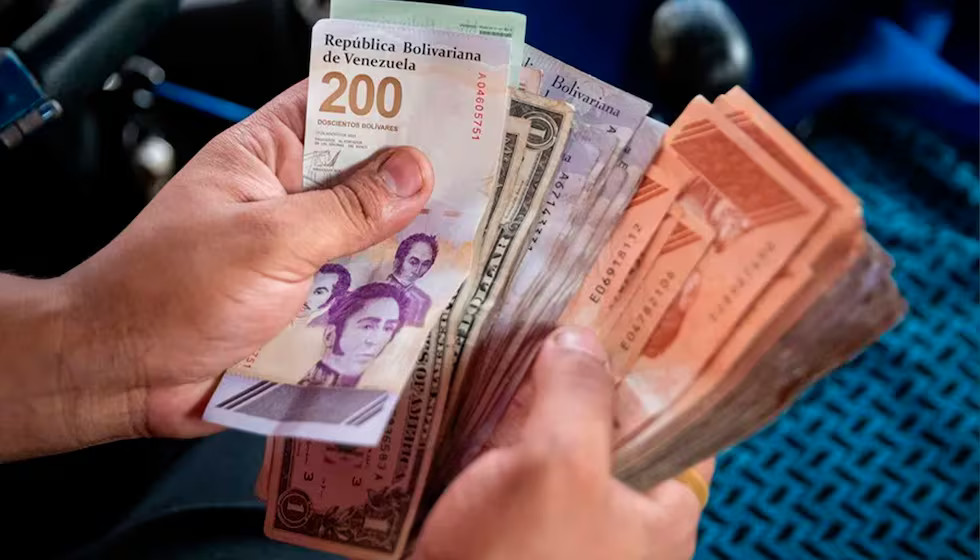
Government employees have also complained that the cash-strapped Yemeni government is paying salaries in low-denomination banknotes – mainly 100 riyals – forcing them to carry their wages in bags.

Munif Ali, a government employee in Lahj, took to Facebook to express his frustration, posting a video of himself sitting beside large, tightly packed bundles of 100- and 200-riyal notes that he said he received from the central bank. Munif, like many Yemenis on social media, said traders are refusing to accept large quantities of low-value notes. “Merchants are refusing to recognise this,” Munif said, referring to the stacks of 100- and 200-riyal notes in front of him. “Legal action should be taken against them.”

People who have kept their savings in Saudi riyals, the de facto currency in parts of Yemen, as well as Yemeni expatriates who send remittances in hard currency to their families, and soldiers paid in Saudi riyals, are among those most affected by the cash shortage.

Finding workarounds

To cope with cash shortages and the refusal of exchange firms to convert hard currency, Yemenis have adopted a range of workarounds. Some rely on trusted shopkeepers who allow delayed payments, while others exchange foreign currency at local groceries or supermarkets, often at lower, unfavourable rates. Banks and exchange firms have also introduced online money transfers, which have helped ease the crisis for some.

In rural areas, where internet access is limited and exchange shops are scarce, the problem is even more acute.

Saleh Omer, a resident of the Dawan district in Hadramout, told Al Jazeera that he received a remittance of 1,300 Saudi riyals sent from Saudi Arabia. But the exchange firm that handed him the money refused to convert it into Yemeni riyals, citing a lack of cash, and advised him to try nearby shops.

With the official exchange rate at about 410 riyals to the Saudi riyal, a shopkeeper agreed – after repeated appeals – to exchange only 500 riyals, and at a lower rate of 400. “I nearly begged the shopkeeper to exchange 500 riyals,” Saleh said. To convert the remaining 800 riyals, he added, he would have to return another day and go from one shop to another. “We are suffering greatly just to convert Saudi riyals into Yemeni riyals.”

Connections matter

Well-connected individuals are often better positioned than others to navigate the cash shortage, with some relying on personal contacts at banks and exchange firms to access cash. Khaled Omer, who runs a travel agency in Mukalla, said most of his business transactions are conducted in Saudi riyals or US dollars. But when he needs Yemeni riyals to pay employees or cover utilities, he turns to a trusted contact at a local exchange firm. “We work with a money exchange trader when we need riyals to pay salaries or meet basic expenses,” Khaled told Al Jazeera. “Exchange companies say they are facing a liquidity crunch.”

On social media, Yemenis say some patients have been denied medication as health facilities refuse to accept payment in Saudi riyals, while exchange firms decline to convert the currency into Yemeni riyals.

In Taiz, Hesham al-Samaan said a local hospital refused to accept Saudi riyals from a relative of a patient, forcing him to roam the city in search of someone to exchange the money to pay for treatment. “Is there any justice for the people, oh government? Will anyone hold accountable those who refuse to exchange currency and exploit people’s needs?” al-Samaan wrote in a Facebook post that drew dozens of comments from others reporting similar experiences, including being denied medical services because they did not have local currency.

For traders who import goods from Saudi Arabia, the cash crisis has become something of a blessing in disguise, as Saudi riyals are increasingly available at discounted rates. A clothing trader in Mukalla told Al Jazeera that he accepts payments in both Yemeni riyals and Saudi riyals, partly to attract customers and partly to secure the foreign currency he needs for his business. “As a businessman who sells goods in Yemeni riyals, I benefit from the cash shortage,” he said on condition of anonymity. “Exchange companies that need local currency I hold sell me Saudi riyals at lower rates.”

Source link

South Korea passes currency stabilization bill amid economic strain

Lawmakers pass a revision to the Restriction of Special Taxation Act during a plenary session at the National Assembly in Seoul, with 206 votes in favor, 2 against and 2 abstentions out of 210 members present. Photo by Asia Today

March 31 (Asia Today) — South Korea’s ruling and opposition parties agreed Tuesday to pass a package of economic measures, including a currency stabilization bill, as the won weakened sharply amid prolonged conflict in the Middle East.

The legislation was approved during a plenary session alongside more than 60 bills aimed at stabilizing the economy and supporting livelihoods.

The currency measure includes tax incentives designed to encourage domestic investment by individuals who have invested in overseas markets, often referred to in South Korea as retail investors in foreign stocks. Officials said the goal is to increase demand for the Korean won and reduce volatility in foreign exchange markets.

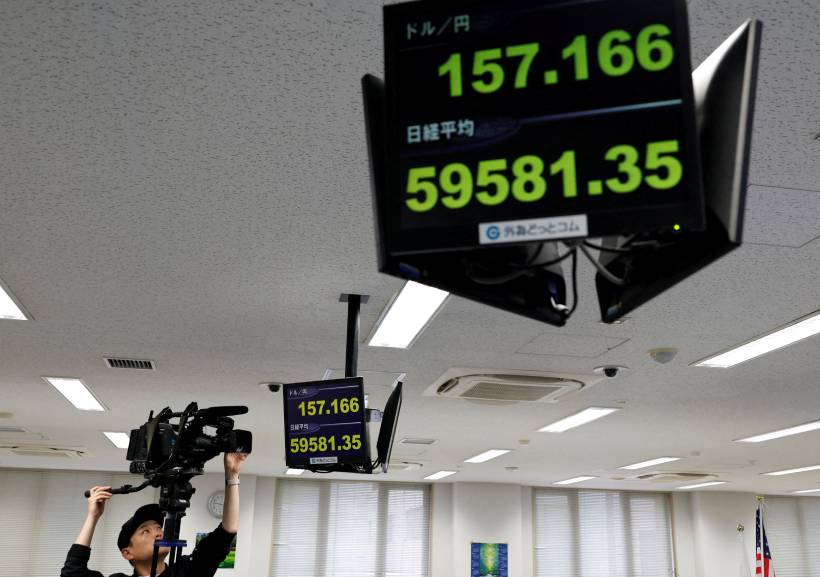
The won traded at 1,530.1 per U.S. dollar on Tuesday, well above the psychologically significant 1,500 level, adding to inflationary pressure.

Floor leader Han Byung-do said the worsening Middle East crisis had begun to affect everyday life, emphasizing the need to contain exchange rate volatility and shield the economy from external shocks.

Lawmakers also approved additional economic legislation tied to the crisis. These include a measure to support corporate restructuring, allowing companies to streamline mergers and spin-offs and receive tax benefits as they respond to industrial challenges and shift into new sectors.

Other bills passed include revisions to trade-related laws aimed at helping businesses adapt to changes in the global trade environment.

Separately, lawmakers voted to fill several vacant leadership posts in National Assembly committees. The Democratic Party nominated Rep. Seo Young-kyo as chair of the Legislation and Judiciary Committee, along with Rep. Kwon Chil-seung and Rep. So Byung-hoon for other committee leadership roles. Their terms will run through May.

The votes were conducted by secret ballot and passed with support from the Democratic Party, while the People Power Party is believed to have opposed the selections.

The People Power Party had argued that the judiciary committee chair should be held by the opposition to ensure checks and balances, noting that the Democratic Party already holds the position of National Assembly speaker.

— Reported by Asia Today; translated by UPI

© Asia Today. Unauthorized reproduction or redistribution prohibited.

Original Korean report: https://www.asiatoday.co.kr/kn/view.php?key=20260401010009707

Source link

Treasury plans to put Trump’s signature on U.S. bills in first for sitting president

The U.S. Treasury Department is working on plans to put President Trump’s signature on all new U.S. paper currency, the agency announced Thursday.

The move would be a first for a sitting president. The news was first reported by Vanity Fair.

It’s the latest instance of Trump putting his name and likeness on American cultural institutions, following his renaming of the U.S. Institute of Peace, the Kennedy Center performing arts venue and a new class of battleships, among other tributes.

The plans come in tandem with an effort to get Trump’s face on a coin.

This month, a federal arts commission approved the final design for a 24-karat gold commemorative coin bearing Trump’s image to help celebrate America’s 250th birthday on July 4.

Treasury Secretary Scott Bessent’s signature would also appear on the currency, according to a Treasury news release.

Bessent said in a statement that “there is no more powerful way to recognize the historic achievements of our great country” than with U.S. dollar bills bearing Trump’s name.

U.S. Treasurer Brandon Beach said in a statement that printing Trump’s signature on the American currency “is not only appropriate, but also well deserved.”

The Mint, which is part of the Treasury Department, manufactures and distributes the currency.

Hussein writes for the Associated Press.

Source link

Editorial: Oil, currency surge raises stagflation fears in South Korea

Fuel prices are displayed at a gas station in Seoul, South Korea, 15 March 2026. South Korea implemented a temporary cap system on 13 March to ease soaring fuel prices and reduce the burden on consumers, setting maximum prices for products oil refineries supply to gas stations and distributors. Photo by YONHAP / EPA

March 16 (Asia Today) — This commentary is the Asia Today Editor’s Op-Ed.

International oil prices and South Korea’s currency are rising sharply again as the Middle East conflict intensifies, raising growing concerns that the country could slide into stagflation.

On March 13, global crude prices climbed back above $100 per barrel, while the Korean won weakened beyond 1,500 per U.S. dollar in overnight trading. The simultaneous surge in energy prices and the exchange rate has heightened fears that South Korea could face a worst-case scenario in which economic growth slows while inflation accelerates.

Such developments threaten to derail the government’s economic targets for the year – about 2% growth and inflation in the 2% range – making emergency policy responses increasingly urgent.

Brent crude futures for May delivery closed at $103.14 per barrel, up 2.7% from the previous day. It was the first time Brent crude exceeded $100 since August 2022.

U.S. West Texas Intermediate (WTI) crude futures settled at $98.71 per barrel, approaching the $100 threshold. Meanwhile, Dubai crude, the benchmark most relevant to South Korea’s imports, surged to $123.50 per barrel, up $34.60 from the previous week.

As oil prices surged, investors turned toward the U.S. dollar as a safe-haven asset. The won-dollar exchange rate closed at 1,497.5 won per dollar in overnight trading, up 16.3 won from the regular daytime session. During trading, the rate briefly rose to 1,500.9 won, crossing the psychologically important 1,500 level for the first time in seven trading days.

The twin surge in oil prices and the exchange rate has been driven largely by escalating tensions in the Middle East.

Iran has openly threatened to block the Strait of Hormuz, a critical chokepoint through which about 20% of the world’s crude oil supply passes. Iran’s new supreme leader, Mojtaba Khamenei, declared a prolonged confrontation in his first official statement on March 12, saying Tehran should continue using the possibility of a Hormuz blockade as leverage against the United States and Israel.

Oil prices, which had briefly stabilized after U.S. President Donald Trump suggested the conflict might end soon, surged again following the statement.

Tensions escalated further after the United States launched airstrikes on Kharg Island, Iran’s largest oil export hub, on March 13. Iran retaliated by attacking the Fujairah port in the United Arab Emirates, a key oil-export route that bypasses the Strait of Hormuz, putting global energy supply chains on alert.

Trump has also urged five countries – including South Korea, China and Japan – to dispatch naval vessels to the Strait of Hormuz, pushing regional military tensions to a new peak.

Economic analysts warn the shock could have serious consequences for South Korea’s economy.

The Korea Development Institute (KDI) warned last week that rising oil prices linked to the Middle East conflict would increase inflationary pressure while weakening economic growth.

The Hyundai Research Institute estimated that if oil prices climb to $150 per barrel, South Korea’s economic growth rate could fall by 0.8 percentage points.

The government is considering a supplementary budget of 10 trillion to 20 trillion won ($7.5 billion to $15 billion) and temporary fuel tax cuts. However, these measures would only offer short-term relief.

A more fundamental solution lies in reducing South Korea’s heavy reliance on Middle Eastern crude oil, which accounted for 69% of total imports last year. Diversifying energy sources by expanding imports from countries such as Brazil and Norway should be pursued urgently.

The government must mobilize every available policy tool – including measures to stimulate domestic demand – to prevent what could become the fourth Middle East-driven oil shock from pushing the economy into stagflation.

— Reported by Asia Today; translated by UPI

© Asia Today. Unauthorized reproduction or redistribution prohibited.

Original Korean report: https://www.asiatoday.co.kr/kn/view.php?key=20260315010004332

Source link