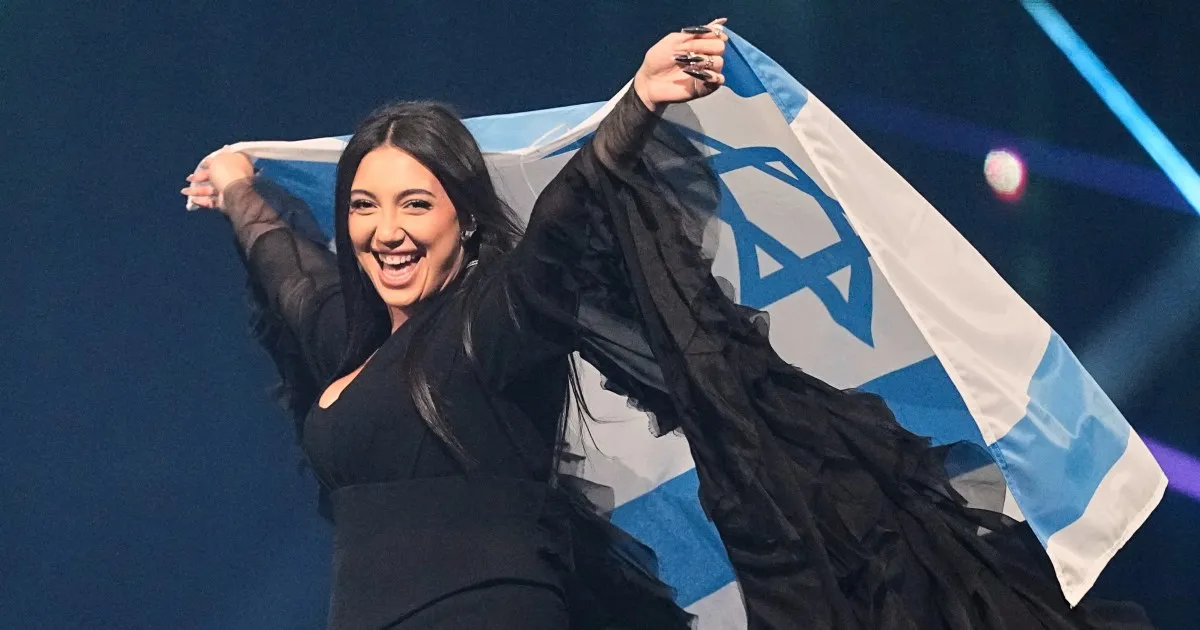
Ireland, Spain, Netherlands, and Slovenia refuse to participate in next year’s event after calling for Israel to be banned.
Published On 4 Dec 2025
Ireland, the Netherlands, Slovenia and Spain have said they will boycott next year’s Eurovision Song Contest, following the decision to allow Israel to compete.
The response on Thursday came immediately after the European Broadcasting Union (EBU), which runs the competition, said there would not be a vote on whether to exclude Israel, despite calls from some countries to do so.
Recommended Stories
list of 4 itemsend of list
Opponents of Israel’s participation criticise it over its genocidal war on Palestinians in Gaza – which has so far killed at least 70,125 people – and over allegations that it unfairly intervened in the most recent competition to the benefit of its entrant.
In a statement which cleared Israel to take part, the EBU said on Thursday that its members had shown “clear support for reforms to reinforce trust and protect [the] neutrality” of the contest.
The changes, which include the reintroduction of an expanded professional jury at the semifinal stage, aim to discourage governments and third parties from disproportionately promoting songs to sway voters.
In response to Israel’s inclusion, the Dutch broadcaster AVROTROS said that “under the current circumstances, participation cannot be reconciled with the public values that are fundamental to our organisation”.
It has accused Israel of “proven interference” in last year’s contest while also noting its “serious violation of press freedom” during the Gaza war.
Ireland will not take part in Eurovision 2026 either, with its broadcaster RTE citing “the appalling loss of lives in Gaza and humanitarian crisis” as the reason for its boycott.
Nor will Slovenia, whose national broadcaster said that its move came “on behalf of the 20,000 children who died in Gaza”.
Meanwhile, Spain’s public broadcaster RTVE also announced that it would also not participate in the event in Vienna, which will be the contest’s 70th edition.
“The situation in Gaza, despite the ceasefire and the approval of the peace process, and the use of the contest for political goals by Israel, make it increasingly difficult to keep Eurovision a neutral cultural event,” its secretary-general, Alfonso Morales, said in a statement.
Not all countries took the same stance. In the lead-up to the EBU’s decision, Germany said it would not take part if Israel were barred.
“Israel belongs in the Eurovision Song Contest,” said German Culture Minister Wolfram Weimer.
Israeli President Isaac Herzog welcomed the EBU announcement, arguing that his country, which says it faces a global smear campaign, “deserves to be represented on every stage around the world”.