MINNEAPOLIS — A crowd of critics and supporters of Indiana guard Sophie Cunningham’s stance on transgender participation in women’s sports gathered around and inside Target Center on Sunday as the Fever faced the Lynx in Minnesota.
Lynx coach Cheryl Reeve wore a light blue shirt under her jacket that said “Trans kids belong” as she directed her team — the top team in the WNBA — to a 108-100 win over the Fever. There were fans in the stands wearing T-shirts that read, “Trans kids belong in sports.”
It’s the third straight Fever game that drew a rally after Cunningham recently voiced support for barring transgender girls and women from girls’ and women’s sports in an ESPN article published last week.
Before the contest, Cunningham and Reeve held a conversation at midcourt. Reeve didn’t want to share the exact nature of their talk.
Lynx guard Olivia Miles shoots over Fever guard Sophie Cunningham Sunday in Minneapolis.
(Abbie Parr / Associated Press)
“Both of us understand that we have platforms and we both talked about wanting to, more than anything, educate,” Reeve said. “There are some things that we have in common, and maybe some things you differ on, just like any issues. I think it’s how you handle things. It was nice to be in person, for sure.”
Cunningham was booed by the crowd on her first touch of the game and throughout.
Asked how she and the team are navigating the outside conversations, Caitlin Clark said after the game, “I think we’re excellent.
“I think it’s for leagues and governing bodies to work with their athletes to find solutions,” Clark said. “Our focus is on basketball. That’s what we talk about and how we can get wins and obviously we didn’t do that tonight. So we need to find an area to improve in that way.”
Any reaction?
“I just answered,” Clark said.
Cunningham said Friday in Portland that she wasn’t concerned about rallies against transgender participation in women’s sports becoming a distraction for the Fever.
“I think everyone who knows me personally, they know that I’m full of love. I’m bubbly. I love the people around me,” Cunningham said Friday. “I love basketball. I love inspiring the next generation and doing that in a positive light. And so that doesn’t even cross my mind. Doesn’t cross my teammates’ minds.”
Minnesota rookie sensation Olivia Miles spearheaded an efficient offense with 28 points and Courtney Williams added 27 points, helping the Lynx win their 10th straight game despite the controversy surrounding the contest.
People hold signs and point in defense of and opposed to trans athletes in women’s sports before a Lynx-Fever game Sunday.
(Abbie Parr / Associated Press)
Minnesota had a 96-82 lead with 6:41 to play before the Fever, who had scored 100 in a record sixstraight games, pulled within 100-98 with more than 2 1/2 minutes to go. Miles and Williams both came up with big baskets as the Lynx won their 10th straight for the first time since 2016.
The league’s No. 1 offense definitely made life difficult for the league’s No. 2 defense, but the Fever, who played in Portland on Friday night, couldn’t stop the Lynx on the offensive end. Both teams shot 57% with 11 three-pointers and went 11 of 15 from the foul line with a combined 55 assists. The big difference was Indiana had 12 turnovers compared with six for Minnesota, which had an 11-5 advantage in offensive rebounds.
Napheesa Collier had 18 points, eight rebounds and seven assists for the Lynx (25-6). Natasha Howard scored 13 points and Kayla McBride had 10.
The Fever (19-11), who had their five-game winning streak halted, were led by Kelsey Mitchell with 37 points, her fifth 30-point game of the season and 14th straight 20-point game, second in league history behind A’ja Wilson’s 15 straight in a single season. Clark added 19 points and 10 assists and Aliyah Boston had 15 points, eight rebounds and seven assists.
Come 2028, the Democratic presidential campaign promises to be a banger, with all sorts of intrigue and subplots layered within a wide-open fight for the nomination.
In the meantime, Democrats have seemingly resolved at least one 2028 fight, a fracas marked by snarking, backbiting and plenty of acrimony — all the things that make our politics such a grand and glorious endeavor.
We speak of the contest to determine which state will hold the first vote of the 2028 nominating process. And the winner is … South Carolina!
This was a blow to Nevada, the runner-up in the calendar sweepstakes, and not a very sporting one at that. The state Democratic Party issued a huffy news release, insisting Nevada will be the candidates’ first true test of 2028 — emphasis added — reprising the argument over which state offers the best starting path to reclaim the White House and, thus, deserves the coveted lead voting slot.
(California, a perennially frustrated onlooker, is not set to vote until March 7, several weeks into the balloting, which is supposed to start Jan. 22.)
Iowa went first, holding its quaint and quirky precinct caucuses — neighbors gathered in church halls, school libraries and the like as they worked through arcane rules involving “realignment” and “viability thresholds” — followed by New Hampshire’s first-in-the-nation primary.
The change set off a free-for-all this time around, as a dozen states bid for the chance to vote first.
(The two major political parties set the rules for choosing their presidential nominees, independent of one another. Republicans are expected to stick to the traditional lineup, starting with the Iowa caucuses and New Hampshire primary, followed by contests in Nevada and South Carolina.)
Last month, after nearly a year of consideration, the Democratic Party’s Rules and Bylaws Committee voted for six states to hold their contests in a window between late January and the end of February. They are, in order, South Carolina, Nevada, New Hampshire, New Mexico, Michigan and Virginia. The lineup will be presented to the full Democratic National Committee to be voted on and finalized later this month.
Doubtless, you — a normal person — have paid little or no attention to any of this. You’ve got more important things to do, like binge-watching “Widow’s Bay,” or not melting.
But party leaders and political insiders take the process extremely seriously. At stake: bragging rights, a modest economic boost and the chance for local analysts and office-holders to make frequent appearances as experts on the cable-TV chat shows.
The jostling grew particularly fierce between South Carolina and Nevada.
More than 50% of the Democratic primary electorate in South Carolina is Black. In Nevada, Latinos are a substantial and increasingly powerful voting bloc. So, naturally, the competition between the two states assumed fraught racial overtones, which is unfortunate but not surprising, given Democrats’ penchant for picking at sore spots and turning on each other at the slightest provocation.
It was also rather pointless. The order of the presidential calendar is consequential, but far from determinative.
Presidential campaigns have changed drastically in the 50 years since a little-known Jimmy Carter quietly burrowed into Iowa, spent months bunking in folks’ extra bedrooms, then burst to national fame by outperforming his more prominent rivals. Today, the race is a 24/7 affair, followed by voters in all 50 states.
Obviously, the voting has to begin somewhere and the competition between states is well and good. But the trash-talking and, especially, antagonism over race and ethnicity is gratuitous and needlessly divisive. Candidates will show they have the stuff to win the nomination, or not, by building their best case and pitching it to voters.
No matter if it’s a Black church in Las Vegas or a Latino neighborhood in North Charleston. Any location will do.
CHICAGO — Azzi Fudd had no idea she was the first rookie to win the WNBA All-Star three-point contest. She put forth a stellar effort in the championship round to do it.
Fudd, the No. 1 pick in the WNBA draft by Dallas, scored 30 points in the finals to top Portland’s Bridget Carleton.
“I was shocked, that’s crazy to be the first is definitely an honor,” Fudd said of being the first rookie to win.
Fudd’s 30-point effort was tied for the second-most ever, equaling Sabrina Ionescu and Allie Quigley’s total. Ionescu holds the record, scoring 37 points in 2023.
Fudd hit her first six shots in the finals to get into rhythm. Carleton, from the expansion Fire, had 29 points in the opening round, but struggled in the finals, scoring 19 points.
Fresh off her victory, Fudd issued a playful request for a rematch with Golden State Warriors guard StephenCurry. The two had a 3-point competition when Fudd went to his camp when she was in high school.
“I mean Steph if you’re listening, I’m asking for a rematch,” Fudd said.
The three-point competition capped off the Friday night festivities. Elena Delle Donne, Shakira Austin and high schooler Jezelle Banks led team Washington to the Shooting Stars championship to tip off the action. The trio scored 31 points to edge Seattle’s three in the finals, with Banks hitting two of the 4-point shots from just inside halfcourt to put the team over the top.
“She carried. She carried,” Austin said of Banks. “You could just tell in her energy, like as soon as we started, like it was confidence and I think that showed in how she hit those tough shots.”
In the three-point competition, Carleton had a stellar first-round, scoring 29 points. She hit 13 of her first 16 shots. Fudd also had a great opening round, scoring 24 points. She made four of her final five shots. That carried over to the finals.
Carleton’s hot shooting in the opening round brought the crowd, which included Jayson Tatum, Russell Westbrook, NBA commissioner Adam Silver, Dwyane Wade and Sheryl Swoopes, to its feet.
Dallas Wings guard Azzi Fudd competes in the WNBA All-Star three-point shooting contest Friday.
(Geoff Stellfox / Getty Images)
Other players in the three-point contest were Atlanta’s Rhyne Howard, who scored 20 points, Golden State’s Janelle Salaun, who had 19 points; Toronto’s Marina Mabrey, who had 18 and Minnesota’s Natisha Heideman, who had 17.
In the Shooting Stars competition, Seattle had 24 points to finish as runner-up after missing all of the team’s four-point shots.
This was the first year that the contest was conducted. A skills competition was done in previous All-Star weekends. The format was a two-round, timed shooting competition in which teams had 70 seconds to score as many points as possible from seven shooting locations around the court. The competition featured shots ranging from a layup to the 4-pointer.
Washington had the highest score in the preliminary round, posting 35 points. Once again, Banks hit four-point shots to help her team reach the championship round.
Seattle’s squad needed to beat the 20 points that the Detroit/Dallas team put up to advance to the finals. High schooler Tatianna Griffin hit two of the 4-point shots to help Seattle reach the finals. Minnesota finished in fourth with 19 points with a team of Courtney Williams, Rebbekah Brunson and Ryan Carter.
Detroit/Dallas had former Shock great Deanna Nolan, Wings All-Star Jessica Shepard and high schooler Morghan Reckley.
The new CBA gave Fudd $20,000 for winning the 3-point contest and each participant received $10,000. That’s about eight-times last season’s prize money.
Each shooting stars winner received $15,000. Each competitor, not including the high school players, will receive $7,500. Last year, the winners of the skills contest each received $2,575 from the WNBA.
In addition Aflac, like it has the past two years, gave extra money to the winners. Fudd took home $40,000 for winning the three-point contest. Carleton received $30,000 for finishing second and Howard got $15,000 for placing third.
Team Washington got $40,000 from Aflac with Seattle receiving $32,500 and Dallas $12,500.
July 3 (UPI) — The 2026 Nathan’s Famous Fourth of July International Hot Dog Eating Contest introduced this year’s slate of competitors, including 17-time champion Joey Chestnut, at a weigh-in ceremony Friday.
The Friday ceremony at the flagship Nathan’s Famous location in Coney Island, Brooklyn, introduced the 14 men and 10 women who will compete to see who can eat the most hot dogs and buns in 10 minutes at Saturday’s annual Fourth of July contest.
Chestnut, a 17-time champion and the current holder of the coveted Mustard Belt, predicted he will emerge victorious again this year.
“I’m hungry, and I’m going to dominate,” Chestnut, who downed 70.5 hot dogs in last year’s contest, said at the weigh-in.
Miki Sudo, the reigning women’s champion with 11 titles to her name, also predicted a repeat of her 2025 performance, where she finished 33 hot dogs and buns.
“It’s hot, but I’m bringing the heat,” she said. “I was born for this.”
The field of competitors this year features eaters from across the United States, as well as eaters from Britain, Australia and the Czech Republic.
Until not so long ago Latin America had been considered a quiet region, located far from the world’s superpower main strategic confrontations, with sporadic but crucial moments that helped to shape the international order as we know it today. The Cuban Missile Crisis is the clearest example: it became the starting point for a series of agreements and treaties on nuclear and strategic security, involving both the US and the Soviet Union at first, and later extending to other actors of the international community, from Europe, Asia and Latin America, which became the first region free from nuclear weapons after the signing of the Treaty of Tlatelolco in 1967, 5 years after the crisis. After this episode, the region’s relevance seemed to fade, and Latin American countries appeared condemned to a destiny of surfing between weak political cohesion internally and relatively stable economies, even as most of its governments remained closely aligned with Washington on foreign policy matters.
It was precisely during this period of perceived irrelevance that China began building its presence in the region, very gradually and over the course of a little more than two decades. Washington largely ignored this process, even as it became clear that the Asian giant was becoming the largest trading partner for several South American countries, such as Peru and Brazil, and in many cases also the main investor in their economies. This neglect was not born of ignorance: it reflected, instead, a confidence that local governments would remain compliant regardless of who was investing in them. President Trump’s first term illustrates this well. Despite isolated clashes with the governments of Mexico and Venezuela, these episodes looked minor when compared to the “tariff wars” waged against the EU and China. In fact, the only time Trump ever set foot in the region during his entire first term was in November 2018 when he attended the G20 Forum in Buenos Aires. Significantly, there was a planned short visit in Colombia after this event, but I was cancelled. This was widely read at the time as a confirmation that Latin America remained a low priority for Washington’s foreign policy agenda, more due to the expectable compliance of local governments than ignorance of the importance of the region as a resource base capable of fueling US power projection in other regions.
It was only during Trump’s second term that American foreign policy has shifted towards the Western Hemisphere, attributing strategic importance to the region and setting the objective to maintain a near-absolute dominant presence, involving both economic and military dimensions, as is stated in the latest National Security Strategy of 2025.
By the time this shift was formalized, China’s footprint in the region was already deep and country-specific. In Brazil, China had been the largest trading partner since 2009; bilateral trade hit a record $171 billion in 2025, with China accounting for 27.2% of Brazil’s total foreign trade, besides, EV plants and a still planned bi-oceanic railway linking Brazil to Peru’s Pacific coast were being negotiated as part of the Chinese investment strategy in both countries. In Argentina, China became the primary supplier of mobile network infrastructure, part of a broader Chinese push into Latin American 5G and data-center markets. And in Peru, China invested around $1.3 billion in the strategic port of Chancay, a deepwater facility that entered full operation stage in November 2024, and set a new phase for trade between China and South America, bypassing the traditional deepwater ports located in the US, like the ports of Oakland and Stockton. Reinforcing this, China pledged in May 2025, at the CELAC forum ministerial meeting in Beijing, to ramp up its regional engagement even further. These were not isolated transactions but a structural presence, one that the 2025 National Security Strategy now identifies strictly as the rival foothold it intends to dislodge.
Stay ahead of the geopolitical week.
MD Briefing delivers expert analysis across five global fronts — the Indo-Pacific, energy, geoeconomics, European security, and the Middle East — every Monday morning. Free.
Now, within this context in 2026 the declared shift of interests proved it wasn’t merely rhetorical. The year started with the launching of Operation Resolve, when a group of American special military forces conducted a military raid and captured President Nicolás Maduro and his wife in Caracas, transporting them to New York to face narcoterrorism charges. Trump declared that the US was now “in charge” of Venezuela until a transition takes place. This meant in practice that the US would hold control over the country’s oil exports, which during the first four months after Maduro’s capture were estimated at $8 billion, but the data on how much oil has been sold, the revenue from it and the use given to those funds remains secret. The main importers of Venezuelan oil during this period were the United States (43 percent), India (26 percent, part of the strategy to reduce Indian import of Russian oil), and Spain (8 percent). This episode, condemned by critics as a return to the old days of imperialism, set the tone for the rest of the year: a hemisphere where Washington would use military force, tariffs, and other mechanics for pressuring countries to sign economic deals where American core interests prevail.
An example of this is the new and controversial Trade and Investment agreement signed by the United States and Argentina in February of this year. According to the text, Argentina shall adapt the regulatory framework to implement US trade standards and prioritize American direct investment in the country, while the counterpart shall “try to review its tariffs” and “consider supporting investment financing”. Milei’s government has justified this as the price for ideological loyalty and continued financial support after the $20 billion credit line that helped to stabilize the local currency (peso) last year.
On the other hand, Brazil took the opposite path: rather than just seeking accommodation to this policy, the government of Lula da Silva accelerated diversification, finalizing the long-delayed EU-Mercosur agreement in January, deepening trade with China and signing a memorandum of understanding with aims for further strategic partnership with Russia. Notably, the US has implemented another mechanism of pressure here, condemning the imprisonment of former president Jair Bolsonaro and holding a meeting with his son Flavio Bolsonaro, who will participate in the presidential elections this October. This gives clear signs of indirect support for this far-right candidate, following the regional trend with Milei in Argentina and Keiko Fujimori in Peru.
Peru, meanwhile, illustrates a third pattern and an interesting case, because alignment here is imposed less by negotiation than by sheer state fragility. Amid a presidency turning over for the ninth time in a decade, the US State Department warned in February that China’s control over the Chancay megaport threatens Peru’s sovereignty, following a Peruvian court ruling that exempted the port from national oversight. Peru’s case pictures a scenario where both counterparts keep pushing for concessions and more privileges. Under the government of José María Balcázar, the ninth president in 10 years, the country has been involved in the controversial purchase of 12 F-16 jetfighters with a cost of around $3.5 billion. On April he postponed the official ceremony where this deal was supposed to be signed arguing that it would have to be the responsibility of a new president, the decision was met with pushback, both internally, with declarations from the Ministry of Defense and in the US Embassy, with ambassador Bernardo Navarro declaring “If you deal with the U.S. in bad faith and undermine U.S. interests, rest assured, I, on behalf of [President] Trump and his administration, will use every available tool to protect and promote the prosperity and security of the United States and our region.” After this, with both internal and diplomatic pressure, the deal was signed on the 17th of April.
Taken together, these cases suggest the current US approach to Latin America is not fueled by a single ideological logic, but by transactional calculations that value compliance and heavily punishes resistance, exploiting weaknesses here and there and aiming to these policy goal indifferently to whether the country in question is led by a right, left or ideologically undefined government. What seems quite clear is that the decades of quietness in Latin America have ended, not necessarily because the region has changed, many of the deep challenges for development are still present, but because the rivalry that once defined the Cuban Missile Crisis has returned, this time fought over trade tariffs, infrastructure and technology access rather than missiles.
On Sunday, Mexico will take on England at Mexico City’s famed Estadio Azteca for a round of 16 World Cup match in one of the most hotly anticipated contests of the tournament so far.
But days before anything goes down on the pitch, Mexico and England fans have already started bickering with each other online — from cheeky jabs to heated debates about which country does beans on toast better.
Joining in on the soccer smack talk are two of the biggest rock stars from the countries — Liam Gallagher of Oasis fame and Maná frontman Fher Olvera.
The “Wonderwall” singer’s prediction was so audacious that Olvera took it upon himself to publicly respond with an Instagram video Wednesday evening.
“The singer of Oasis said that Mexico will lose to England 5-0,” Olvera said in Spanish with a giant grin on his face while draped in a Mexican flag. “No way! Check yourself dude! 5 to 0? Calm down! We’ll see you Sunday to see how it goes, dude. Don’t play with me.”
By Thursday morning Gallagher amended his prediction for the match.
“[L]et me just clear someting up I was obv kidding when I said England will beat Mexico 5-0,” the English rocker wrote in an X post. “I reckon it’ll be more like 3-0 to England.”
Maná already made its mark on this year’s World Cup when it played its 1992 hit “Oye Mi Amor” at the tournament’s opening ceremony in Mexico City ahead of the Mexico-South Africa match on June 11.
Sunday’s contest between England and Mexico also marks the first time the English side will play at Estadio Azteca since the 1986 World Cup when they lost to eventual-champions Argentina in a quarterfinal game infamous for Diego Maradona‘s “Hand of God” goal.
The last time Mexico and England squared off in a World Cup setting was during the 1966 World Cup in England where the Three Lions beat El Tri 2-0 in a group stage match at Wembley Stadium.
At a fan zone, we met Egyptian fans cheering on Mexico days before their team takes on Iran. For them gay pride was irrelevant.
“Right now it’s about two teams trying to get to the next round,” Makarius Demian told us, adding that he supports gay rights. “Pride match or no Pride match, that’s not what matters.”
Not far from the big screen, an Egyptian restaurant pop-up is getting ready for the match – and for fans craving a taste of home. ‘Koshari’ is a staple Egyptian dish; a mix of lentils, chickpeas, pasta, fried onions and garlic tomato sauce.
Owners Ayman Almasri and Amani Abouammo shut their restaurant Koshari for the duration of the World Cup to open a pop-up version at the fan zone where they were serving up the vegan Egyptian street food.
They say having Egypt and Iran play in a Pride match is awkward and rooted in cultural misunderstanding.
“Here it is the culture. People are used to that,” Abouammo said. “Back home, people are not used to it. It’s this piece of confusion that each party cannot understand the other party.”
On the pitch, there is plenty at stake. Egypt come into this match with momentum after beating New Zealand, and with a real chance of winning Group G.
Iran, meanwhile, arrive in a very different mood – their tournament already shaped by politics, travel restrictions and complaints about preparation time, even if they have been allowed to get to the host city earlier than in previous matches.
As Egypt and Iran try to edge closer to the knockout stages, this match is about more than what happens on the pitch.
It is also a glimpse of what happens when a World Cup lands in a city celebrating one set of values, while two of the teams taking part arrive carrying very different ones of their own.
The race for the Golden Boot at World Cup 2026 is shaping up to be one for the history books.
After just two games, Argentina talisman Lionel Messi leads the way with five goals, followed by France’s Kylian Mbappe and Erling Haaland of Norway with four goals each.
Recommended Stories
list of 4 itemsend of list
Germany’s Deniz Undav has three with Jonathan David of Canada on the same mark after a hat-trick against Qatar.
A further 20 players have scored twice in their opening two games, including 2018 Golden Boot winner Harry Kane of England, Cristiano Ronaldo of Portugal, Vinicius Jr of Brazil and Mikel Oyarzabal of Spain.
The stars are all shining and, given the rate of scoring so far, it seems possible double figures might be needed to win the Golden Boot, something done only three times in history – by Hungary’s Sandor Kocsis in 1954, Just Fontaine of France four years later and Gerd Muller of Germany in 1970.
Fontaine holds the record of 13 goals in one World Cup in just six matches in Sweden, but the expanded 48-team format in 2026 means the nations qualifying for the semifinals in July will play an unprecedented eight games in this edition.
At the 2006 World Cup in Germany and in South Africa four years later, only five goals were needed to claim the Golden Boot while nobody has scored more than eight in the past 13 editions, a feat achieved only by Brazil’s Ronaldo in 2002 and Mbappe four years ago in Qatar.
Kylian Mbappe followed his double against Senegal with another against Iraq in this year’s World Cup [Siphiwe Sibeko/Reuters]
Why have so many goals been scored at World Cup 2026?
It took just 33 matches for a century of goals to be racked up in this edition, second only to 1954 in terms of pace.
After Portugal’s 5-0 win over Uzbekistan on Tuesday, 139 goals had been scored across the first 45 games – the most in the group stages of a single edition of the finals, overtaking the 136 scored in 2014 in three fewer matches.
The record number of goals in one edition came in Qatar 2022 with 172 from 64 games. With an extra 40 matches in the new expanded format that went into effect this year, it was always likely to be broken, but the rate of scoring suggests the old mark will be obliterated.
The Adidas Trionda ball used in World Cup 2026 [Simon Fearn/Imagn Images]
One reason for the increase in goals might be the Adidas Trionda ball, which FIFA commissioned for this World Cup.
Before the tournament, FIFA said it boasts several key performance innovations, including intentionally deep seams designed to produce optimal in-flight stability by ensuring sufficient and evenly distributed drag as the ball travels through the air – in short, it flies through the air – while the surface of the ball is designed to increase grip when striking or dribbling in wet or humid conditions, which we have seen plenty of in the opening matches.
Austria head coach Ralf Rangnick said: “This ball is as fast as a cannonball. If you kick the ball in the right position, it’s extremely difficult to save.”
The controversial addition of hydration breaks to each half may also mean players are performing at their peak for longer, leading to the glut of late goals so far. Of course, the fact that 48 teams are taking part, drawn from the world’s leading 85 teams in the rankings, means there are some mismatches in the first phase.
Colombia coach Nestor Lorenzo also said attackers are more protected by officials than they used to be, which may contribute to the increased scoring, adding: “They didn’t have this protection some 20, 30 years ago when they were hit a lot more, when rough play was a lot more common.
“Today, any team that defends well and uses counterattacks and tries to play can manage to do well.”
Erling Haaland has scored two goals in each of his first two World Cup appearances. [John Sibley/Reuters]
Who is likely to win the Golden Boot?
Much will depend on fitness and, of course, how deep a country goes in the tournament, but Messi has to be considered the favourite to win his first accolade.
The 38-year-old scored seven goals at the last World Cup and has now scored in six straight tournament matches, having netted in every knockout round in Qatar and the first two games of this edition. He even missed a penalty against Austria, which would have made it back-to-back hat-tricks.
Argentina’s final group game on Sunday is against already eliminated Jordan although Messi’s inclusion from the start in that one is by no means a given as his side have already secured the top spot in Group J.
They look set for favourable knockout fixtures, though, with the potential for Uruguay or Cape Verde in the last 32, potentially Australia or Iran in the round of 16 and the possibility of Croatia or Colombia in the quarterfinals, should they make it.
Only in the semifinal might they come up against a powerhouse nation, likely in the form of England or Brazil or dark horses Japan, Norway or Mexico.
Mbappe also looks likely to have a favourable run and is likely to feature against Norway on Friday in the group finale, which will decide the top spot in Group I.
Winning the group could mean a round of 32 meeting with Sweden, Germany the potential opponents in the last 16 and the Netherlands or Morocco awaiting in the last eight.
Whoever finishes second out of France and Norway could face a tricky task against the Ivory Coast in the last 32 with Brazil or Japan awaiting the winners and the possibility of England lurking in the quarterfinals, which might put a ceiling on Haaland’s prospects, despite having scored 59 goals in 52 international games for Norway.
Kane will seek to enter the conversation with England facing a must-win Group L finale on Sunday against Panama with the prospect of a last-32 meeting with Cape Verde to follow and Mexico likely lying in wait in the Azteca (known during the World Cup as Mexico City Stadium) in the round of 16.
Cristiano Ronaldo may have left it too late to begin a real quest, given Portugal face Colombia on Sunday in their final Group K game and could face resolute Ghana in the last 32 with Spain potential opponents in the last 16.
But Vinicius Jr could add to his two goals when Brazil face Scotland on Thursday in their final Group C game although the knockout rounds would appear a stiffer test.
The world of influencer boxing takes another surreal turn on Saturday when former World’s Strongest Man Eddie Hall faces reality television star and professional boxer Tommy Fury in Manchester.
The heavyweight contest at the AO Arena is understood to be an exhibition bout, meaning it will not count towards either fighter’s professional boxing record.
It is scheduled for six two-minute rounds, bringing together two Britons from entirely different worlds.
The event is promoted by Misfits and is the latest example of a boxing show that increasingly blurs the lines between professional sport, entertainment and social media celebrity.
Fury’s professional resume includes high-profile victories over influencers-turned-boxers KSI and Jake Paul.
He insists his ambitions remain tethered to world-title aspirations. In reality, however, the 27-year-old has cemented himself as the poster boy for the influencer boxing boom.
Hall, 38, headlined what was billed as ‘The Heaviest Boxing Match in History’ in 2022 against rival Hafthor ‘Thor’ Bjornsson.
After losing to the Icelander in the exhibition bout, Hall transitioned into MMA and scored a knockout victory over fellow former strongman Mariusz Pudzianowski last year.
The undercard perhaps best illustrates the unusual crossroads at which modern boxing now finds itself.
Sharing the bill is social media personality ‘The Ibiza Final Boss’, real name Jack Kay, who became an internet sensation in 2025 after videos of his confident dancing, distinctive bowl haircut and gold-chain-wearing persona went viral on TikTok.
Also appearing on the card is two-time Olympic taekwondo gold medallist Jade Jones.
WNBA games are being officiated differently this season and it’s been a struggle for the Sparks to adapt.
After complaints about the league being too physical last season, the WNBA created a task force of coaches and general managers to develop more consistent officiating.
Foul calls have been up so far this season, with officials focused on freedom of movement or letting offensive players move without being knocked away from the ball.
“It’s hard, especially when you’ve been playing for a certain way for a long time and then having to switch it up more often, in my opinion, as a defender, but it just is what it is,” Sparks guard Ariel Atkins said. “So, yeah, you just have to adjust.”
Across the league, teams are averaging 20.9 fouls per game. Last season, it was 17.5 per game. The Sparks are fouling 22.0 times per contest, the fifth most in the WNBA.
The Connecticut Sun led the WNBA last season with 19.6 fouls per contest. In 2026, 10 of the 15 teams are averaging more than 20 fouls against them per contest.
“I’m cool with it, as long as it’s called the same for 40 minutes, like both ways,” Sparks coach Lynne Roberts said. “I think the officials have been given a tough task that’s hard, but I think they’ve done a decent job of being pretty consistent with it. Players, coaches, you just have to adjust, and I think the one thing that I’d like to see us get better at is just [being] not so reactive, just have a little more toughness, in terms of not responding. That’s how they’re going to call it — we got to move on to the next play.”
The increase in calls seems to have given teams more room to score, as intended, despite more starts and stops to game flow.
Entering Sunday, four teams had offensive ratings more than 110 after Minnesota’s 109.5 was the best in the league in 2025. Indiana leads the league in pace at 99.50 after the Sparks led the league last season at 96.84. Five teams are working at a pace of 97 or higher, which would have placed last year’s Sparks at sixth.
One of the Sparks’ offseason priorities was improving their league-worst defense, but that’s been more difficult than ever with how the game is being called.
Sparks forward Cameron Brink blocks a shot from Toronto’s Laura Juskaite during a game on May 15.
(Jeff Lewis / Associated Press)
“Getting used to it as a player, kind of understanding the flow of the game, that’s probably the toughest part for me,” Atkins said. “There’s no real flow or like rhythm to it, right? I’m hoping that the corner turns or we both adjust on both sides.”
The Sparks’ pace is on track to be similar to last season at 97.67 — fifth in the WNBA — through nine games. Their offensive rating of 107.9 is eighth in the WNBA, but they’ve played half of their games without league-leading scorer Kelsey Plum.
Defensively, though, they haven’t made much of an adjustment. They have a league-worst 114.1 defensive rating.
Cameron Brink’s 4.0 fouls per game are the fifth most in the WNBA, and Atkins’ 3.6 also ranks among the bottom 10 players in the league. Plum is at 3.1 just below Atkins, Dearica Hamby isn’t far behind at 3.1 and Erica Wheeler is at 2.9, giving the Sparks the most players in the league in the bottom 30 on a single team.
“It’s hard, I think, on a defensive end, especially when you’re somebody that enjoys the physicality and you like to lean into it,” Hamby said.
The Sparks already had an uphill climb to improve on the league’s worst defense, but as they continue to adjust to the way games are being officiated, it’s all the more difficult.
Add it to the list of things the 4-6 squad needs to work on to climb back near the top of the WNBA.
“I try to not center officiating as a part of my experience,” Nneka Ogwumike said. “I know it’s part of the game, and something we can’t control, but I do think we can do better in our response to it.”
On the cusp of California’s gubernatorial June 2 primary, voters are closely divided among three candidates vying to succeed Gov. Gavin Newsom at a perilous moment in the state and nation’s history, according to a poll released Thursday.
Among likely California voters, 25% support Xavier Becerra, a Democrat and former Biden Cabinet secretary, according to the survey by UC Berkeley’s Institute of Governmental Studies that was co-sponsored by the Los Angeles Times. Republican Steve Hilton, a former Fox News commentator and British political strategist, has the backing of 21%, while 19% backed billionaire hedge fund founder turned environmental activist Tom Steyer, a Democrat.
California gubernatorial candidate Xavier Becerra takes a selfie at an event while campaigning on May 26, 2026 in San Francisco, California. Becerra is the former United States Secretary of Health and Human Services and is running as a democratic candidate for governor. California’s statewide election is on June 2.
(Benjamin Fanjoy / Getty Images)
The survey provided the clearest indication yet that the three have separated themselves from the rest of the field. Support increased for Becerra, Hilton and Steyer since the last Berkeley IGS poll in March. Becerra leapfrogged everyone. In early March he wallowed near the bottom of the pack at just 5% support among likely voters, and now is the front-runner.
The other candidates floundered. Support for Riverside County Sheriff Chad Bianco, a Republican, dropped 5% and he now finds himself in a distant fourth place. Former Democratic Rep. Katie Porter of Irvine dropped by almost half to 7%. San Jose Mayor Matt Mahan, former Los Angeles Mayor Antonio Villaraigosa and state Supt. of Public Instruction Tony Thurmond — all Democrats — remained mired in the single digits.
Poll director Mark DiCamillo cautioned that it remains unclear which candidates will finish in first and second place in the June 2 primary, a pivotal question since only the top two finishers will advance to the November general election regardless of party affiliation. The low voter turnout thus far makes predicting the outcome especially difficult.
Although every registered voter in California was sent a mail-in ballot, many have not returned them or dropped them off at voting locations — a telltale sign of the uncertain nature of this year’s governor’s race. The survey, which included all 61 of the gubernatorial candidates on the ballot, found that Democratic turnout thus far is noticeably lower compared with past primary elections, DiCamillo said.
Steve Hilton, Republican gubernatorial candidate for California, arrives for a news conference at the San Jose Diridon Station in San Jose, California, US, on Tuesday, May 26, 2026. Republican gubernatorial candidate Steve Hilton is announcing his intention to halt future taxpayer-funded payments for California’s High-Speed Rail project, if elected in November.
(Jason Henry/Bloomberg via Getty Images)
“We’re assuming that … the Democrats will in fact turn out in the final week after we had concluded our poll and begin to make up ground on what looks like an early lead for Hilton, and those voters favor Becerra,” DiCamillo said.
The survey, conducted between May 19 and 24, found that likely Democratic voters favored Becerra over Steyer by 11 percentage points. Voters registered as “no party preference” were evenly divided between Becerra, Steyer and Hilton. Among likely Republican voters, Hilton led Bianco by almost 2 to 1.
Becerra also had a notable edge over Steyer among women and Latino voters, while Steyer had an advantage among Black voters. Hilton was favored over the two Democrats among self-identified libertarians and among voters in Orange County, the Central Valley and northern coast and Sierra region.
The poll found that 7% of voters remained undecided.
For the first time in more than a quarter of a century, the contest to lead the nation’s most populous state and the world’s fourth-largest economy has consistently lacked a front-runner despite a plethora of candidates.
Two of California’s best-known Democrats, former Vice President Kamala Harris and U.S. Sen. Alex Padilla, both toyed with a run for governor before deciding not to run, which contributed to the sluggishness of the race. The 2026 campaign for governor also languished in the shadow of the mayhem stirred up by President Trump, including his immigration raids throughout Southern California, and the devastation wrought by the 2025 Pacific Palisades and Altadena wildfires.
But a whirlwind of recent developments has drawn attention to the race.
Tom Steyer, Democratic gubernatorial candidate for California, during a campaign event in Santa Rosa, California, US, on Wednesday, May 27, 2026. California is holding its primary election on June 2. Photographer: David Paul Morris/Bloomberg via Getty Images
(Bloomberg/Bloomberg via Getty Images)
Additionally, record-breaking amounts of money have flowed into the race. Steyer has smashed state self-funding records by contributing $212 million to his campaign as of Tuesday, according to the California secretary of state’s office. Nearly $85 million has been donated to independent expenditure committees by corporations, labor unions, tech titans, Native American tribes and other special interests, most of which will have policy interests that will be in front of the next governor.
Although the 2026 California governor’s race lacks the allure of recent contests that featured candidates such as global movie star Arnold Schwarzenegger, political scion Jerry Brown and former San Francisco mayor and likely 2028 presidential candidate Gavin Newsom, it is unfolding at a crucial time for Californians.
The state’s most vulnerable residents are facing severe reductions to medical care because of looming federal healthcare funding cuts, and California’s budget, already volatile because of its reliance on the state’s wealthiest residents, may grow more unpredictable. California’s highest-in-the-nation gas prices increased even more because of the U.S.-Iran war, adding to the state’s entrenched affordability crisis, which has driven many residents out of the state.
The cost of living, homelessness and public safety were among the top concerns expressed by voters, according to the poll. Protecting voting rights was also supported by most voters, though their underlying concerns could be starkly different based on their political views.
Democrats have been focused on the disenfranchisement of voters, a fear that has heightened in the aftermath of a recent Supreme Court decision that gutted a section of the Voting Rights Act that forced states to draw voting districts to help elect Black or Latino representatives to Congress. Republicans echo President Trump’s claims of elections being rigged.
Los Angeles, CA – MAY 06, 2026: Chad Bianco is interviewed after the California Gubernatorial debate at Skirball Cultural Center on Wednesday, May 6, 2026 in Los Angeles, CA.
(Jason Armond/Los Angeles Times)
Voters split largely along party lines about issues such as Trump’s policies about climate change, immigration and taxes.
Voters’ uncertainty in the governor’s race is partly driven by California’s unique, voter-approved “jungle” primary system, in which the two candidates who win the most votes in the June 2 primary advance to the November general election, regardless of party affiliation.
Although the state’s voters are largely registered Democrats, the party’s leaders feared earlier this year that they would splinter among the multiple Democrats on the ballot, leading to Hilton and Bianco advancing to the November general election and ensuring that a Republican would be elected governor. Bianco had the backing of 11% in the new Berkeley survey.
The Republicans were once roughly tied in polls, until Trump endorsed Hilton in April. More than one-third of likely Republican voters said Trump’s endorsement of Hilton made them more likely to support him. Among voters who identified with the “Make America Great Again” movement, nearly two-thirds supported Hilton while less than 3 in 10 backed Bianco.
Though Bianco’s followers seem to be more passionate, “Hilton has got the much broader base of support, and then he got Trump’s endorsement,” DiCamillo said.
He added that Hilton’s rise is unusual in California, where statewide candidates typically spend enormous sums of money to raise their visibility among the state’s 23.1 million registered voters.
“What’s interesting about Hilton is that he hasn’t really done much of his campaigning in the traditional way. He hasn’t run huge amounts of television advertising, you don’t see his name out there in the traditional media, other than in free media,” DiCamillo said. “You can see that in the data, because almost a third of voters still have no opinion of Hilton … about what it was back in March, which is startling for a candidate who is among the leaders.”
Democrats’ fear of being locked out of the November general election led party leaders and allies to effectively urge low-polling candidates to drop out of the race in remarkable public statements in March.
The tables have since turned — the prospect of two Republicans winning the top spots in the June primary appear nonexistent, while polling shows a small possibility of two Democrats advancing to the general election.
“I’m not saying it’s likely, but it’s possible that two Democrats could emerge, and that would have huge implications on turnout in the [November] election,” DiCamillo said, pointing to California congressional races that could shape control of the U.S. House of Representatives. “If you don’t have a Republican at the top of the ticket, it would be dismal for the Republicans’ chances.”
The poll of 8,578 registered California voters was conducted online in English and Spanish and has a margin of error of about 2 percentage points in either direction.
German art student Miriam Wiskemann has won a year-long right-of-use agreement for the uninhabited island of Marsten off Sweden’s west coast – but there is a major catch
Starting next Monday, 27-year-old art student Miriam Wiskemann will become the sole guardian of an uninhabited island situated off Sweden’s coastline. The diminutive island of Marsten, measuring just 180 metres by 50 metres, attracts kayakers and paddle boarders throughout the summer season, but for most of the year remains the exclusive territory of a cormorant colony.
The only stipulation is that Miriam must relinquish her title in June 2027. She is among a handful of fortunate winners of a competition organised by Visit Sweden. According to Visit Sweden’s website, the initiative aimed to demonstrate that “true luxury isn’t about excess, but rather about time, space and balance”.
Miriam and four other individuals from across the globe will be granted a year-long right-of-use agreement alongside a travel voucher worth 20,000 Swedish krona – approximately £1,590. The prize doesn’t include permanent residency, as there are no structures on the island.
Miriam, who is pursuing a degree in art, intends to spend some time on Marsten in September, collecting inspiration for her final creative project for her illustration degree. She remarks: “The main prize is actually the journey there.”
Miriam, originally from Dusseldorf in Germany, is currently studying at the Burg Giebichenstein University of Art and Design. She reveals she aspires to eventually pursue a master’s degree in Sweden’s capital city, Stockholm.
The art student, who has actually lived in Sweden for a year, explained to German news agency dpa: “Sweden just has a more relaxed pace of life that I’ve often found myself missing in Germany. This trip is all I’m going to be thinking about for the rest of this term.”
“I’ll take time to cycle around the island and draw a lot of inspiration from my surroundings,” she said. “Having this luxury of being able to travel there will definitely have a big influence on me.
“The Swedish nature and the stark differences of the seasons have always really inspired me and my art,” she added.
Marsten sits amongst a cluster of islands located roughly four miles from Sweden’s western coastline. With over 267,000 islands dotted along the Swedish shores, a key objective of the competition was to spotlight these hidden gems.
VisitSweden’s “Your Swedish Island” campaign attracted almost 2,500 applications from 100 countries. The other winners hail from Canada, the US, the Netherlands and Switzerland. Each successful applicant will serve as guardian of their own remote island for the coming year.
VIENNA — Vienna’s famed coffeehouses have embraced the Eurovision Song Contest. They have also been touched by tensions over Israel’s inclusion in the sequin-drenched pop music competition.
When officials announced a list of “Eurofan Cafes” — Vienna coffee shops offering food and music from competing countries — Israel was initially left out.
MQ Kantine, a modern café in the city’s arty museums quarter, offered to step in. Now it has falafel, bagels with lox and kosher wine on the menu, a string of small Israeli flags hanging from the ceiling — and a police officer outside the door.
Security is tight across Vienna during the international music contest, whose “United by Music” slogan rings sightly hollow this year. Five countries are boycotting because Israel is taking part. Pro-Palestinian activists are planning a protest concert — one of several Eurovision alternatives across Europe — and an anti-Israel march before Saturday’s grand final.
At MQ Kantine, volunteers take turns to monitor for potential trouble. But so far the mood has been supportive, said Daniel Kapp, a PR consultant and pro-Israel campaigner.
“It’s beautiful,” he said, as people drank coffee and beer on the café terrace in the spring sunshine, though he noted that the police officer on duty showed that all is “not entirely normal.”
“My feeling is that Austria to a certain degree has learned from its history,” Kapp said, referring to the deadly antisemitism under the Nazis before and during World War II. “Which is why the support for Israel is a lot more normal than it is in other countries.”
Israel has competed in Eurovision for more than 50 years, and won four times. But its participation has been contested since it launched a war in Gaza after 1,200 people were killed in a Hamas-led cross-border attack on Oct. 7, 2023. More than 73,000 Palestinians have been killed since the war began, according to the territory’s Health Ministry, which operates under the Hamas-run government and whose detailed records are viewed as generally reliable by the international community.
Israel’s government has repeatedly defended its campaign as a response to the Oct. 7 attack. But a number of experts, including those commissioned by a United Nations body, have said that Israel’s offensive in Gaza amounts to genocide. Israel, home to many Holocaust survivors and their relatives, has vigorously denied the claim.
The latest Israel-Hezbollah war in Lebanon and the U.S.-Israeli war on Iran have driven tensions still higher.
The 2024 Eurovision contest in Malmo, Sweden, and last year’s event in Basel, Switzerland, saw pro-Palestinian protests that called for Israel to be expelled. Five countries — Iceland, Ireland, the Netherlands, Slovenia and Spain — pulled out of the 2026 contest after organizers allowed Israel to compete.
Partying amid tight security
The tensions have produced a Eurovision of two halves. An upbeat party atmosphere prevails inside the Wiener Stadthalle arena and in the separate Eurovision Village fan zone. But getting in means passing through a ring of steel, with searches, scanners and a ban on all bags inside the arena. Armed police are a very visible presence on the streets.
Awareness of risk from terror plots is high in the city after a 21-year-old Austrian man accused of pledging allegiance to the Islamic State group pleaded guilty to plotting to attack a Taylor Swift concert in Vienna in 2024.
Israeli singer Noam Bettan told Israeli media that, like last year’s Israeli competitor Yuval Raphael, he practiced performing while being booed. There were scattered shouts amid the cheers when he performed in the first Eurovision semifinal on Tuesday. He secured a spot in Saturday’s final by being one of the top 10 finishers in voting by viewers and national juries.
Organizers said four people were removed from the 10,000-strong audience for disruptive behavior.
Austrian Eurovision fan Ivo Herzl, who attended the semifinal, said “the vibe was incredibly positive.” He is showing support for Israel by making and selling Mazel Lov T-shirts — a play on “mazel tov,” a Hebrew and Yiddish phrase of congratulations.
“Vienna has always been a city of tolerance,” Herzl said. “It’s the city of music and we’ll always do everything possible for everyone to enjoy a musical event.”
Some Israeli fans said they were reassured by the tight security. Oz Yona, attending his first Eurovision, said he had experienced “no hate” and felt Austria took antisemitism seriously.
He came with friends to cheer for Israel, though he was not optimistic about Bettan’s chances — for musical rather than political reasons.
“I don’t think he will win,” Yona said. “Finland is better this year. Greece is better this year. We have a good song, but not a winning song.”
Birgitta Peterson and Kristina Nilsson, who wear matching pink bomber jackets and call themselves the Swedish Ladies, love to explore new cities and meet up each year with their “Eurovision family” of fellow fans. They plan to wave Israeli flags at Saturday’s final, after Swedish contestant Felicia said earlier this year that she didn’t think Israel should be in the contest.
They say tensions over Israel have divided a fan community long known for its friendliness and embrace of diversity.
“The wounds are very deep at the moment,” Nilsson said.
“This event should really be about ‘united by music’ and happiness,” she added. “That’s what Eurovision is all about.”
The Eurovision Song Consest has closed out its milestone seventieth year as another winner of the international competition has been confirmed after a close call
00:04, 17 May 2026Updated 00:17, 17 May 2026
Bulgaria has won the Eurovision Song Contest(Image: Jessica Gow/TT/Shutterstock)
Bulgaria has won the Eurovision Song Contest. Singer DARA, 27, had been representing the country with Bangaranga and managed to reign supreme in the international competition by accumulating 516 points in total.
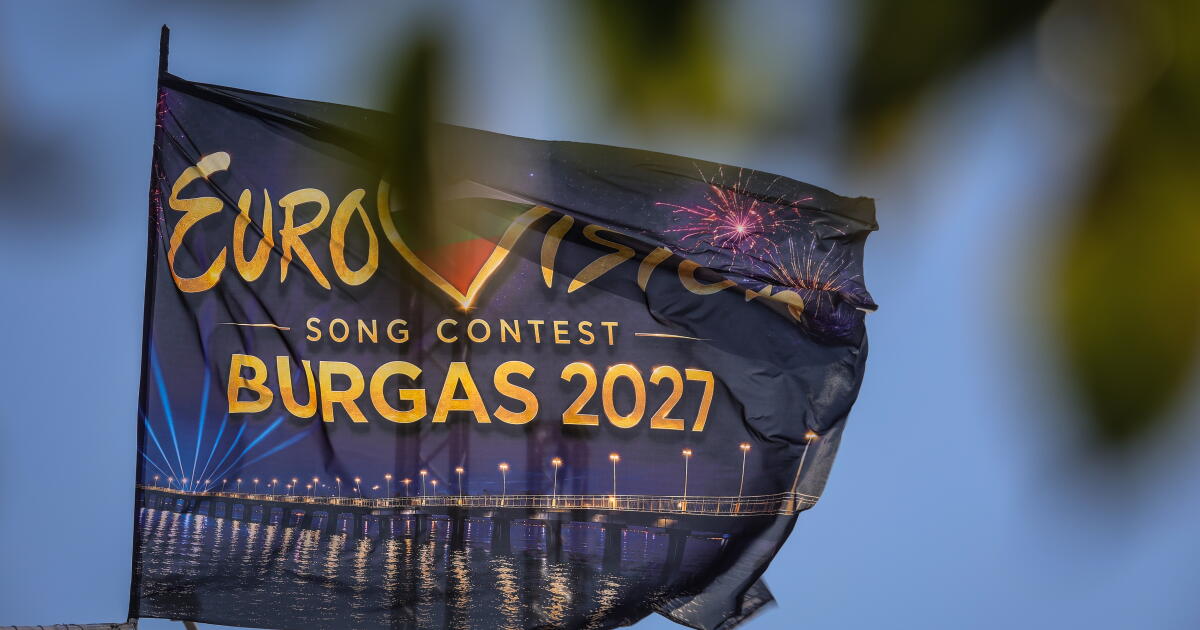
To cheers from around the stadium in Vienna, she then performed the track once again to close out the contest, and, in the process, confirming that it will all take place in Bulgaria next year. Just moments before her big win, DARA admitted: “Honey, I still do not know what’s going on.
“I want to thank everyone who gave us those points, we really tried to give our best. Thank you so much for the whole show.”
Last year’s winner, JJ, then presented the trophy as he screamed: “Oh my god, I love you, congratulations girl!” It all got tense in the last few moments as it was either going to be Israel or Bulgaria but, in the end, Bulgaria stormed ahead with having been awarded an incredible amount of points.
Things didn’t end so well for the United Kingdom as Look Mum No Computer crashed out of the competition with just one point.
The YouTuber, whose real name Sam Battle, picked up one point from the jury votes and zero from the public tonight. Three previous acts – Remember Monday, Olly Alexander and Mae Muller – also received zero points from the public vote.
The UK gave its 12 points to France in the jury vote of the Eurovision 2026 grand final. The result, presented by Strictly Come Dancing star La Voix, also saw Bulgaria awarded 10 points, Czechia awarded eight and Ukraine given seven.
The social media star was fairly optimistic just hours beforehand, but it just wasn’t to be. Asked if he has a fear of scoring nothing, he said: “No, in fact, there’s a T-shirt that I’m dreaming of saying, ‘Look Mum, No Points’ There’s an outcome where there’s still fun to be had, even if there is nul points.”
Sam admitted that while it was a “very risky” track to put forward to represent the nation, he is confident that he has put a lot of effort into making it right for the big night.
Speaking to The Sun, he added: “It’s got a good ring to it, even though I have a feeling in my crystal ball, I might be wrong — and don’t hold me to this — I do think we’re gonna get points.
You can sign up forTwitter/X alerts for breaking newshereand follow us@MirrorCelebfor all the latest updates. Or keep up-to-date with your must-see news, features, videos and pictures byfollowing us on Facebook.
Mexican lawmakers have long struggled to balance the country’s ongoing fight against narco-trafficking with the international popularity of corridos tumbados — which they say promote violence and crime.
On Monday, the famed corrido singer Junior H joined President Claudia Sheinbaum during her daily news conference to promote México Canta: a binational music competition for artists from both Mexico and the United States, organized by México’s Ministry of Culture.
During his speech, the 25-year-old supported the contest, now in its second iteration, which was designed to help amplify the musical potency of México while moving away from its violent reputation.
He also reflected on his own ascent to fame, which came through popular songs like 2023’s “El Azul” (alongside Peso Pluma), a narcocorrido believed to be about a Sinaloan drug lord Juan Jose Esparragoza Moreno; as well as his 2022 banda-fused track, “El Hijo Mayor,” which some speculate to be about the son of Joaquín “El Chapo” Guzmán.
“In my initial [career], some of the stories that I shared in my music didn’t add to the positive message that reflect my current compositions,” said Junior H, whose real name is Antonio Herrera Pérez. “I kept growing and I learned that music, besides being a form of expression, also implies a responsibility when millions of people hear you worldwide.”
Junior H — who grew up in Guanajuato before immigrating to Utah — continued to speak on his evolution as an artist and human, acknowledging the role he plays in shaping how his listeners, which amount to over 30 million on Spotify, visualize their futures.
“A culture of peace does not mean we cease to stop talking about our reality. It means finding new ways to express them,” said Junior H. “I invite all young generations to participate, to believe in your talent and to never stop believing in your dreams.”
Two months ago, the singer struck a different chord when he performed “El Azul” at the South by Southwest music festival on March 14 as part of the Billboard showcase. “It’s the government against us, or us against the government,” said Junior H to the audience, in resistance to censorship.
As of now, 10 out of 32 Mexican states have implemented bans or limitations on corridos in public spaces; lawmakers assert that the lyrics promote organized crime. The penalty for singing such ballads can range between a monetary fine to prison time.
In October, Junior H was reportedly fined 400,000 pesos (more than $23,000) after performing “El Azul” during a festival in Zapopan, Jalisco, per Billboard. The Zapopan municipal president, Juan José Frangie Saade, allegedly banned the artist from performing in the city during his term, which ends in September 2027.
As of now, the singer is slated to perform at the Baja Beach Fest in Rosarito, Baja California, on Aug. 8.
Contrary to her predecessor, Andrés Manuel López Obrador, a staunch critic of corridos tumbados, President Sheinbaum is keeping an open mind to the power of the trap-infused subgenre. As a result, this year’s edition of México Canta will place its focus on regional Mexican music acts.
“We are not censoring [regional music], because I don’t believe in censorship,” said Sheinbaum during the news conference. “I don’t think prohibiting music or its contents will solve anything. More than anything, we need to promote nonviolent music. That’s the objective of this contest.”
Open calls for México Canta are now open through June 10. The semifinals will take place at the Million Dollar Theatre in Los Angeles on Aug. 23 and at the Angela Peralta Theater in Mazatlán on Aug. 30. The grand finale will take place Sept. 13.
EUROVISION 2026 is shaping up to be one of the most controversial editions of the contest in its 70-year history.
Five countries have confirmed they are not sending entries to Vienna, and some won’t even be airing the show on national TV.
Sign up for the Showbiz newsletter
Thank you!
A number of nations are boycotting the Eurovision Song Contest 2026Credit: ReutersNoam Bettan is representing Israel with his song MichelleCredit: @EurovisionSongContest / Youtube
Why is the Eurovision 2026 boycott happening?
The Eurovision walkouts followed the European Broadcasting Union’s (EBU) general assembly in Geneva on December 4, 2025.
EBU members voted on new rules to tighten voting and promotion guidelines, but did not put Israel’s participation itself to a separate vote – meaning Israeli broadcaster KAN was cleared to compete.
The boycotters have cited the war in Gaza and concerns over the integrity of recent contests.
Which countries are boycotting Eurovision 2026?
Spain was the first of the contest’s Big Five broadcasters – the five biggest financial contributors – to officially confirm it was boycotting Eurovision.
Secretary general of Spanish national broadcaster RTVE, Alfonso Morales, said: “We would like to express our serious doubts about the participation of Israeli broadcaster KAN in Eurovision 2026.
“The situation in Gaza, despite the ceasefire and the approval of the peace process, and Israel’s use of the contest for political purposes, make it increasingly difficult to maintain Eurovision as a neutral cultural event.”
A statement from Ireland’s national broadcaster RTÉ added: “RTÉ feels that Ireland’s participation remains unconscionable given the appalling loss of lives in Gaza and the humanitarian crisis there, which continues to put the lives of so many civilians at risk.”
Dutch broadcaster AVROTROS, in a statement from director general Taco Zimmerman, said: “Culture connects, but not at any cost. What has happened over the past year touches on our boundaries.
“Universal values such as humanity and freedom of the press have been seriously violated and are non-negotiable for us.”
Slovenian broadcaster RTVSLO’s chair Natalija Gorščak said: “For the third year in a row, the public has demanded that we say no to the participation of any country that attacks another country.
“We must follow European standards for peace and understanding.”
Iceland’s RÚV became the fifth country to confirm a boycott, with the broadcaster saying in a press release: “Given the public debate in this country and the reactions to the decision of the EBU that was taken last week, it is clear that neither joy nor peace will prevail regarding the participation of RÚV in Eurovision.”
What has Israel said about the boycott?
Israeli broadcaster KAN has defended its right to participate.
Addressing EBU members during the general assembly in Geneva, KAN CEO Golan Yochpaz said: “The attempt to remove KAN from the contest can only be understood as a cultural boycott.
“A boycott may begin today with Israel, but no one knows where it will end or who else it may harm.
“Are EBU members willing to be part of a step that harms freedom of creation and freedom of expression?”
Israeli President Isaac Herzog welcomed the EBU’s decision in a post on X, writing: “Israel deserves to be represented on every stage around the world, a cause to which I am fully and actively committed.
“I am pleased that Israel will once again participate in the Eurovision Song Contest, and I hope that the competition will remain one that champions culture, music, friendship between nations, and cross-border cultural understanding.
“Thank you to all our friends who stood up for Israel’s right to continue to contribute and compete at Eurovision.
“This decision demonstrates solidarity, fellowship, and cooperation, and reinforces the spirit of affinity between nations through culture and music.”
Israel is being represented at Eurovision 2026 by Noam Bettan with the song Michelle.
The Eurovision 2026 semi-finals are scheduled for Tuesday, May 12 and Thursday, May 14, while the Grand Final is set to take place on Saturday, May 16.