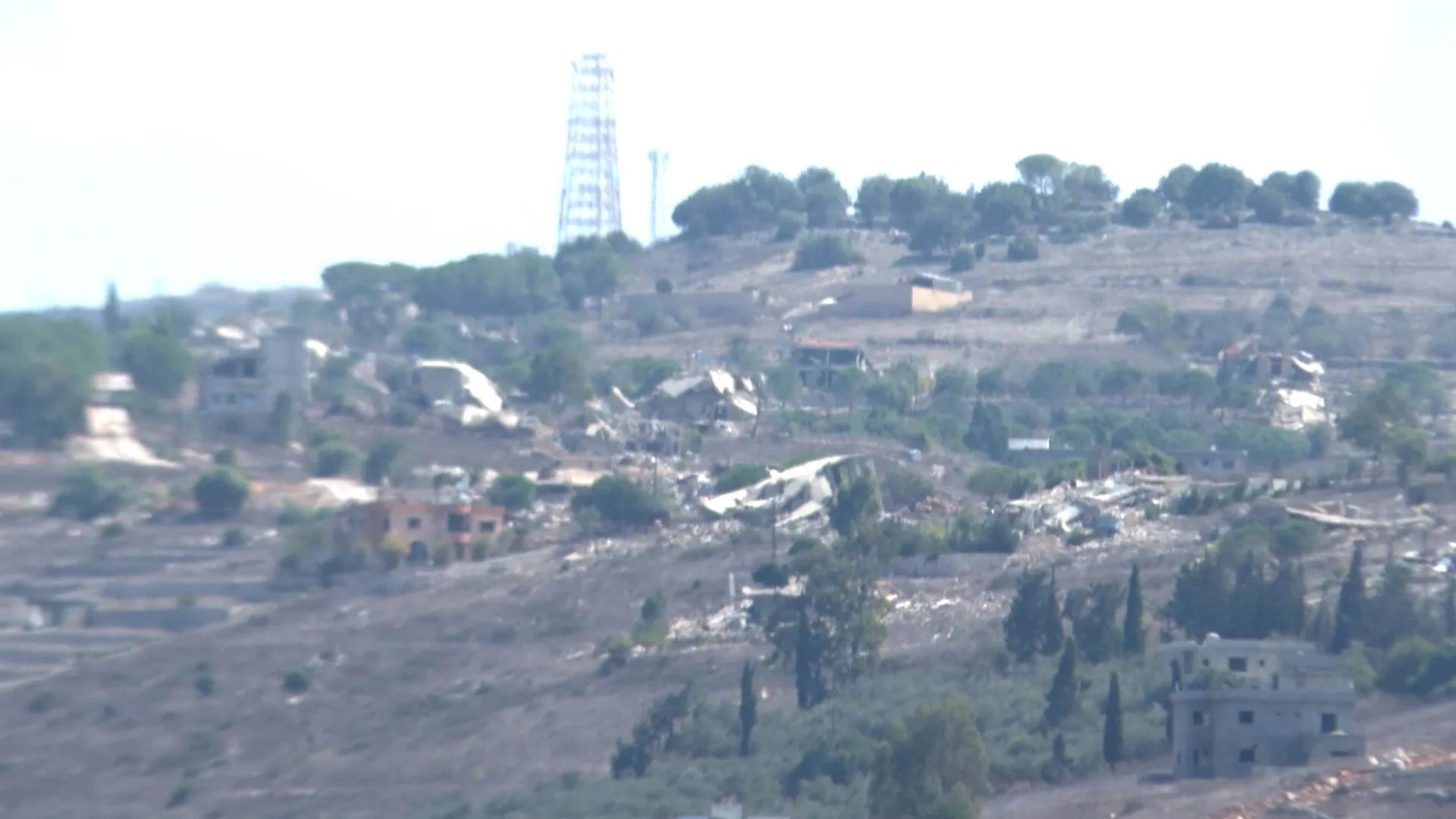
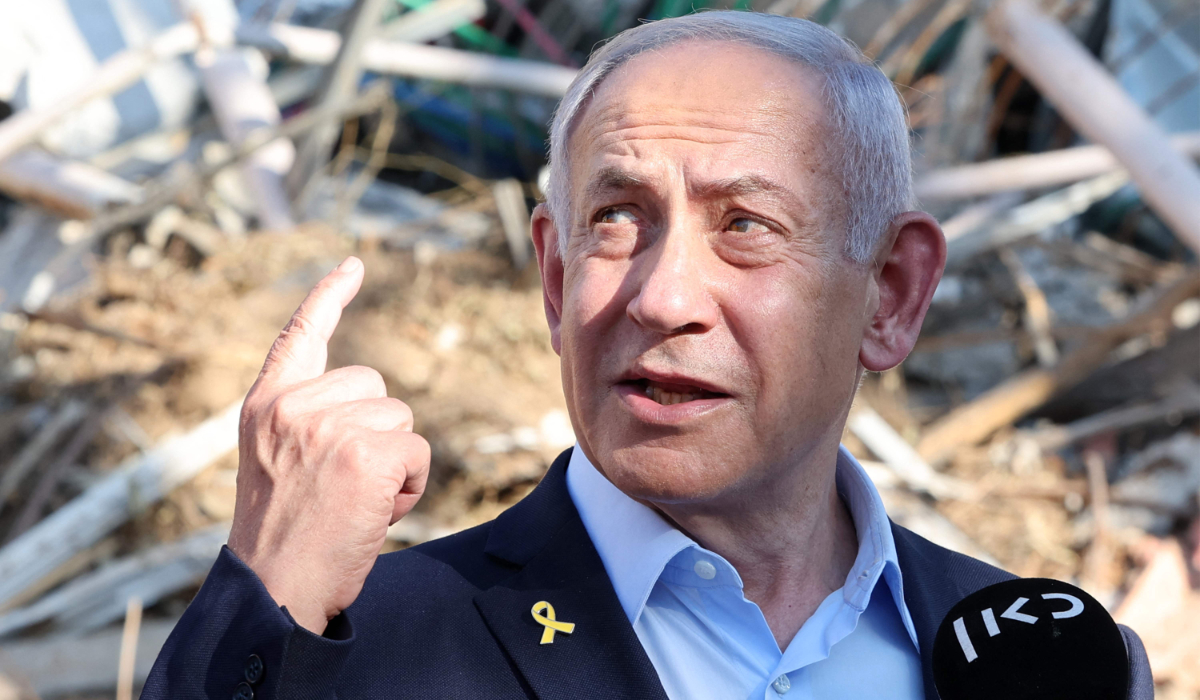
Al Jazeera’s Nida Ibrahim reports from Ramallah in the occupied West Bank where Israeli forces raided several NGOs, including the Union of Palestinian Women’s Committees and a prison support and human rights association. They also stormed the courtyard of a government hospital.
Israel has expanded its military occupation in the Gaza Strip in violation of a United States-brokered ‘ceasefire’, forcing Palestinians into an ever-smaller share of the besieged territory, devastated by Israel’s ongoing genocidal war.
Nearly two-thirds of Gaza is now under Israeli military control or subject to access restrictions.
The original ‘Yellow Line’, established under US President Donald Trump’s 20-point plan to end the war, marked the area to which Israeli forces initially withdrew. They were expected to make further withdrawals gradually, but instead, they have seized more territory.
On Sunday, Israeli forces moved yellow concrete blocks dozens of metres west in Shujayea, a neighbourhood in southeastern Gaza City, forcing Palestinian families to flee and bringing more of the neighbourhood under Israeli military control.
A yellow block demarcating the ‘Yellow Line’, which has separated the Gaza Strip’s Israeli-held and Palestinian zones since a ‘ceasefire’ began a year ago, is seen in Khan Younis in the southern Gaza Strip on January 22, 2026 [Abdel Kareem Hana/AP Photo]
“It’s not simply about where the ‘Yellow Line’ is today but where it can move next,” Al Jazeera’s Ibrahim al-Khalili said, reporting from Gaza City. “For families who have been repeatedly displaced in the past three years, the situation remains dire, and they have to make the impossible decision of where they can go.”
More than 90 percent of Gaza’s 2.1 million population has been forcibly displaced by Israel’s war, launched on October 7, 2023, after Hamas-led attacks on southern Israel.
Using maps, Al Jazeera shows how much of Gaza Israel has grabbed since the ‘ceasefire’.
Gaza before the war
Before the war, Palestinians were spread across the Gaza Strip, a 365sq km (141sq-mile) territory roughly 41km (25 miles) long and from 6km to 12km (4 to 7 miles) wide.
That made it one of the most densely populated places on Earth with about 6,000 people per square kilometre, similar to Nairobi or London. Each person had, on average, about 160sq metres (1,722sq ft) of land.
Even then, not all of Gaza’s land was accessible. Israel enforced a buffer zone along the fence with Israel, and Palestinians who approached it risked being shot. In 2010, the United Nations Office for the Coordination of Humanitarian Affairs (OCHA) estimated that the restricted area covered 17 percent of Gaza’s land and 35 percent of its farmland.
Gaza has been under an Israeli land, air and sea blockade since 2007.
Gaza at the ‘ceasefire’
Under the first phase of the “ceasefire”, Israeli forces were to withdraw to the “Yellow Line” within 24 hours, after which a 72-hour period began for the handover of Israeli captives held in Gaza. Trump first published a map of the line on his Truth Social platform.
The line left Israel in control of 53 percent of the Strip, mostly farmland and border areas in the east, and confined Palestinians to the remaining 47 percent, about 172sq km (66sq miles).
By October 2025, two years of war had killed more than 67,000 Palestinians, and tens of thousands more had left the territory, reducing Gaza’s population to about 2.1 million.
Pushed into less than half of Gaza’s territory under the “ceasefire”, its density doubled to about 12,000 people per square kilometre, comparable to New York City. Each person was left with about 82sq metres (883sq ft).
(Al Jazeera)
Gaza today
Since the “ceasefire”, Israeli forces have repeatedly moved the yellow concrete blocks marking the “Yellow Line” farther west, sometimes overnight, expanding the areas under their control. Satellite imagery has also documented continued demolitions in areas held by Israeli forces.
The research group Forensic Architecture estimated that Israel controlled 58 percent of Gaza by December. In March, the Israeli military sent aid agencies maps of a new “orange line”, a restricted zone beyond the “Yellow Line” where humanitarian movements must be coordinated with the army.
According to OCHA, restrictions now cover 65 percent of Gaza. Israel itself said it controls about 70 percent of the territory, a UN official told the Security Council in June.
(Al Jazeera)
That leaves 2.1 million people in about 35 percent of the Strip, roughly 128sq km (49sq miles). The population density has nearly tripled since before the war to about 16,000 people per square kilometre, close to central Tokyo.
Each person now has about 61sq metres (657sq ft) of land for everything: shelter, roads, schools, hospitals and farmland.
Unlike Tokyo, Gaza has little space left to house its people. The UN Satellite Centre, UNOSAT, found 82 percent of structures in the Strip are damaged or destroyed. The UN Food and Agriculture Organization says only 3 percent of Gaza’s cropland is both undamaged and accessible.
(Al Jazeera)
OCHA says the remaining 35 percent of Gaza is “already overcrowded” and access restrictions are a key obstacle as aid groups try to relocate families before the rainy season. More than 950,000 people live in displacement sites at risk of flooding, according to the UN, most of them in tents and makeshift shelters, as seen in the satellite image below.
Approaching the ‘Yellow Line” can be deadly. Israel treats areas beyond it as a free-fire zone, and Palestinians who come near it have been shot. Nearly 1,500 people have been killed across Gaza since the ceasefire was announced.
As Israel entered the final month before its October 27 election, Prime Minister Benjamin Netanyahu had a chilling warning to share.
Israel’s enemies, he said on September 29, were plotting an attack on the country before the vote. Without providing any evidence, he then quickly referred to continuing attacks by Israeli troops in the Gaza Strip, where he said they had killed more than 100 “terrorists” in recent weeks.
That link drawn by Netanyahu – between the genocidal war on Gaza that began after the Hamas-led October 7, 2023 attacks, the upcoming elections, and Israel’s national security – was not coincidental, say analysts.
Netanyahu’s insistence that he alone can secure Israelis from a range of threats they face from across the country’s borders, they say, lies at the heart of his re-election campaign, even as his alleged failures during the attack three years ago and in securing the quick release of captives have offered his opponents ammunition.
When a Flydubai flight packed with Israeli passengers on their way from Dubai to Tel Aviv a day after his recent warning nearly crashed after a co-pilot attacked his pilot with an axe in the cockpit, Netanyahu was quick to seize on the incident to argue that he is still man for the country’s top job.
Polls suggest that he faces a stiff test in what is the first general vote since the 2023 attacks, which led to the killing of 1,139 people in Israel and triggered the genocidal war on the Gaza Strip, where Israeli have attacks have since killed more than 74,000 Palestinians.
Three years later, the war has become inseparable from the domestic debate over Israel’s direction while also accelerating a political shift to the right – with once-fringe positions on Palestinians now very much the mainstream view.
Few embody this transformation more than Israel’s far-right financial Minister Bezalel Smotrich, sanctioned by a number of Western countries and known for his incendiary and racist language and policies towards Palestinians.
In one of his characteristically inflammatory statements, Smotrich told Israeli outlet Ynet late last month that the Israeli army should “go to war” in the occupied West Bank and “do there what we did in Gaza”.
Less than two weeks later, Smotrich’s electoral ally Moshe Feiglin added fuel to the fire.
“The enemy is Gaza, not Hamas”, he told the Jerusalem Post, calling for the annexation of the besieged territory after the election. “The baby that will be born tomorrow in Gaza will do exactly the same,” he said, in reference to the 2023 attacks.
Palestinian political analyst Ahmed Najar said these are not “stray comments” from marginal figures but an electoral message from power-seeking politicians aimed at portraying Palestinians as “not a people with rights, but a demographic and security problem to be expelled, conquered or destroyed”.
He added: “The frightening reality is that the coming election risks becoming a competition not over whether Palestinian life should be protected, but over who can promise to erase it most aggressively.”
‘This is madness’
Following October 7, the younger generation in particular slid rightwards, said Ahron Bregman, an Israeli security analyst and senior teaching fellow at King’s College London.
He said the forces driving Israel to the right had been gathering for decades.
“The trend toward the right began after the Yom Kippur War in 1973, but it has intensified dramatically since October 7,” Bregman told Al Jazeera, referring to the bloody 19-day October War, or the 1973 Arab-Israeli War – a conflict between Israel and a coalition of Arab states led by Egypt and Syria.
More recently, the far right has been emboldened through electoral politics as part of Netanyahu’s government since 2022 – the most right-wing government in Israeli history.
Another outspoken cabinet member alongside Smotrich is Minister of National Security Itamar Ben-Gvir, a far-right provocateur who has previously been convicted of inciting racism and of supporting a terrorist organisation.
“Netanyahu’s greatest mistake – among many – was bringing figures like Ben-Gvir and Smotrich into his coalition,” said Bergman. “By doing so, he legitimised them as influential forces in Israeli politics.”
Ben-Gvir has been so cemented into Israel’s political system, he has hopes pinned on becoming the next Israeli defence minister, the analyst pointed out.
“This is madness. But that’s contemporary Israel,” said Bergman.
Attendees listen and applaud during an election campaign meeting on October 5, 2026 in Tel Aviv, Israel [Erik Marmor/Getty Images]
Analysts also pointed out that several parties running, including ones that are currently in power and a number that are challenging the current coalition, all advocate for the expulsion of Palestinians from Gaza, as one of the examples of the shift to the right.
Omar Baddar, director of Palthink for Strategic Studies, said the messaging from across the Israeli political and military spectrum in the lead-up to the election shows that there is “a consensus” to continue the attacks on Gaza, where nearly 1,500 have been killed since a “ceasefire” last year.
“They’re using the threats to get more votes,” he said, pointing out to what he described as the radicalisation of the society.
With the election approaching, added Baddar, Israeli leaders are seeking to undo one another: “Who[ever]’s more radical is more likely to get more votes.”
As Ehab Jabareen, a Palestinian political analyst and researcher from inside Israel, writes, “what it means to be ‘right-wing’ in Israel today is above all to take a harder line on Palestinian national claims, security and territorial control.”
He adds: “On security and the Palestinians, a large part of Jewish Israeli politics already works from assumptions that would have been treated as right-wing a generation ago: Deep suspicion of a sovereign Palestinian state, a high tolerance for prolonged military control, and a stronger insistence on Jewish sovereignty as the starting point rather than one value among others.”
Observers and rights groups say the disparity is even evident in the electoral process. A prominent politician and Palestinian citizen of Israel, Sami Abu Shehadeh, has been forced to withdraw from the election over his remarks about the Gaza war, while Israeli far-right leaders have remained untouched despite their violent rhetoric against Palestinians.
Netanyahu’s security credentials endure
Recent polling indicates that the events of October 7 are top of mind for Israelis, who also have questions about who was responsible for the security failures of that day.
Just last month, reports surfaced indicating that Netanyahu had received two separate warnings about an imminent Hamas attack in 2023, from Egypt’s intelligence chief, Abbas Kamel, and United Arab Emirates President Sheikh Mohamed bin Zayed Al Nahyan.
Netanyahu’s two main rivals in the race for prime minister have cited the alleged warnings to call the prime minister “unfit” to remain at the helm of the country.
But Netanyahu has denied suggestions that he had been forewarned about the attack, and the reports do not appear to have had a significant effect on opinion polls.
While October 7 represents a profound rupture in Israelis’ sense of security, public trust in the Netanyahu government had already been badly shaken by its controversial judicial overhaul, introduced when the prime minister’s current coalition first came to power, said Mairav Zonszein, an Israel-Palestine analyst at the International Crisis Group based in Tel Aviv.
Despite these breaches of trust, the Israeli leader retains support.
“Israelis in general still see Netanyahu as kind of the guy on security. And more to the point, they don’t really see an alternative,” Zonszein told Al Jazeera.
A June survey by Mitvim – the Israeli Institute for Regional Foreign Policies found that the Israeli public supports its government’s military and security solutions, and rejects resolving the Palestinian issue and ending the Israeli occupation of Palestinian territory. This is the case even while it has been concerned about international isolation and the decline of Israel’s international standing since the beginning of the genocidal war on Gaza, the survey reported.
Yet Israelis are also increasingly war-weary, even as they back the use of more force. Its troops – stretched between six fronts of war in the last few years – are bearing the brunt of this fatigue in Israeli society.
Israel’s Ministry of Defence said on Tuesday that nearly 30,000 soldiers and security personnel are facing psychological trauma since the war.
The ministry said its rehabilitation department’s budget has increased by 88 percent over the past three years to 10 billion shekels ($3.3m), with the majority supporting treatment for mental health conditions and post-traumatic stress disorder.
As Israel expands, the two-state solution fades
Still, Israel in recent months has been more and more vocal about its expansionist vision, with officials brazenly stating the goal of “Greater Israel”. The claim for the conquest is based on a biblical verse (Genesis 15:18-21).
For decades, Israel has ignored international law in its continuous occupation of Palestinian and Syrian land, and has shown little respect for its neighbours’ sovereignty, occupying more land in Syria, as well as in Lebanon in more recent years.
According to Najar, the political economist, the “complete dehumanisation” of Palestinians as evidenced during the campaign reveal that Gaza “is being presented to Israeli voters not as a catastrophe or a crime for which there must be accountability, but as a blueprint to be repeated elsewhere”.
In southern Lebanon, where Israel has been carrying out near daily attacks and and has occupied large swathes of land, residents have told Al Jazeera they expect little to change even if Netanyahu is defeated in the election.
Netanyahu’s main political challenger, Gadi Eisenkot – head of the Yashar party and former army chief of staff – is the father of the so-called Dahiyeh Doctrine, and is just as hawkish about expansion. That doctrine, since Israel’s war with the Lebanese group Hezbollah in 2006, calls for the use of huge force, even against civilian infrastructure, as a deterrent against enemies and was deployed in Israel’s recent wars, particularly in Beirut’s southern suburbs.
If it were up to Eisenkot, the Lebanon front of war would have never scaled down: He has accused Netanyahu of bowing to US pressure to halt operations in Beirut, and has insisted that the military should be able to attack Hezbollah anywhere in Lebanon.
For Israelis still reeling from the events of October 7, Eisenkot could fill the security void many are feeling, said Zonszein.
“They really … see the world as kind of very hostile towards them, the world not understanding what they went through on October 7, and [therefore why] the need to have these security buffer zones in Lebanon, in Syria, and Gaza,” she said.
A two-state solution to the Israel-Palestine conflict is therefore out of the question, said the analysts – and has not even made a blip of an appearance in campaigning before the election.
The idea first emerged during the Oslo Accords more than 30 years ago, which set out a negotiating process aimed at resolving the Israeli-Palestinian conflict, predicated on the belief that the creation of a Palestinian state alongside Israel was imperative to forge peace.
But since the Oslo process began in 1993, the number of Israeli settlers in the West Bank has ballooned from about 260,000 to more than 700,000, embedded deep inside West Bank areas that would be needed for a contiguous Palestinian state.
“The concept of a two-state solution is currently irrelevant and likely will remain so for another decade or two, if not longer,” said Bergman. “It is unlikely to become a reality in the foreseeable future, as no Israeli leader can propose it to the Israeli public after the events of October 7.”
The only way it could regain prominence is if there is substantial international pressure, including severe sanctions on Israel, and a non-violent intifada, or an uprising by Palestinians, he said.
The outright rejection of Palestinian statehood has simply become much more “acceptable”, said Zonszein.
“There’s several parties who advocate these views, whereas there isn’t a single Jewish Zionist Party that puts the need for a two-state solution or a Palestinian political process at the forefront,” she said.
Taken all together, Israel’s election appears less a demand for change than a further entrenchment of the jingoism that surged after October 7, 2023.
“[There’s] more and more movement towards more military force, more need for pushing the borders … out of a lot of fear that another October 7 could happen,” said Zonszein.
Thursday marks 30 days since Israel’s foreign minister ordered the closure of the UK consulate in occupied East Jerusalem.
Published On 8 Oct 20268 Oct 2026
Workers at the UK consulate in occupied East Jerusalem have removed its signage as the Israeli shutdown deadline arrives, further damaging strained ties between allies.
Journalists from the Reuters news agency saw workers remove a plaque reading “British Consulate General” from the building on Thursday, as well as another sign for its consular section. The UK flag was still flying over the building.
Recommended Stories
list of 3 itemsend of list
Thursday marks 30 days since Israeli Foreign Minister Gideon Saar ordered the closure of the consulate in occupied East Jerusalem. The move was in response to the UK’s wave of sanctions on illegal Israeli settlements, including a ban on importing goods made there.
The United Nations and most countries consider the settlements illegal under international law. Israel disputes this.
The United Kingdom threatened to expel 27 Israeli diplomats if Israel proceeded to close the consulate in occupied East Jerusalem, according to unverified Israeli media reports.
The consulate has not responded to an immediate request for comment.
Israel has been adamant the consulate will close even as the UK has sought to keep it open, including sending the country’s top national security adviser to Israel last week for talks.
The UK’s presence in the city dates back almost 200 years, long before the state of Israel was established in 1948. The closure order does not affect the UK’s embassy in Tel Aviv, which handles diplomatic relations with Israel’s government.
The consulate, in the Sheikh Jarrah neighbourhood of occupied East Jerusalem, handles the UK’s relations with Palestinians in Jerusalem, as well as in the occupied West Bank and Gaza. It also provides consular services to Palestinians.
The UK Foreign Office on Wednesday declined to comment when asked whether the consulate was still operating or if diplomats working there had returned to the UK.
Despite the current strains, the UK and Israel are close economic, security and intelligence partners.
London, United Kingdom – Claire, 52, lives in the Scottish countryside, not far from Edinburgh.
She describes her work as “low-level administration” and does not use social media. She lives a quiet life with her dog, reading and baking in her spare time. Until three years ago, she did not consider herself political.
Recommended Stories
list of 4 itemsend of list
Now, she faces 14 years in prison for her suspected show of support for Palestine Action.
Claire, who requested Al Jazeera withhold her surname, is one of the many people in the United Kingdom who, until three years ago, did not consider themselves activists.
But as the genocide in Gaza was livestreamed, many have rallied around the cause of Palestinian solidarity.
Organisations like Defend Our Juries, Artists for Free Palestine, Workers for Free Palestine, and virtually every other insert-profession-here for Palestine have cropped up across the UK.
In the summer of 2023, Claire read I Shall Not Hate by Dr Izzeldin Abuelaish, a Palestinian physician in Gaza who lost his three daughters to Israeli tank fire. Not long after finishing the book, Claire watched the aftermath of October 7 unfold online.
“For me, there wasn’t a delay between ‘Israel has a right to defend itself’ and then lies,” she told Al Jazeera.
She went to a pro-Palestine rally on Armistice Day, calling for a ceasefire, and “was horrified” by then Home Secretary Suella Braverman, who called the protests “hate marches”.
“I was determined not to ignore [Palestine],” she says.
A protester wears eyewear in the colours of the Palestinian flag and holds a fan featuring a watermelon design during a rally organised by Defend Our Juries in Parliament Square, London, Britain, August 9, 2025 [Jaimi Joy/Reuters]
She continued to march, writing letters to lawmakers and fundraising for various Palestinian aid programmes.
In August 2025, she began publicly protesting against the proscription of Palestine Action with Defend Our Juries, the group behind a campaign of civil disobedience aimed at lifting the ban. To date, more than 3,000 people have been arrested for showing support for the pressure group that was banned in 2025.
Earlier this year, police arrived at her door to arrest Claire under Sections 11 and 12 of the Terrorism Act: “Being a member of a proscribed organisation and encouraging others to join a proscribed organisation.”
“I’ve never been in trouble before,” she says. “I’m not backing down.”
A police officer holds a pro-Palestinian protester during a demonstration outside the Parliament, organised by campaign groups including Palestine Solidarity Campaign, Avaaz and Parents for Palestine, calling for sanctions on Israel over ongoing hunger among Gaza’s war-struck population, in London, Britain, June 4, 2025 [Isabel Infantes/Reuters]
Marji, 70, lives in Colchester and had a similar feeling after hearing Braverman’s words.
“I had never been to a protest in my life,” she says, until she carried a “Ceasefire Now” sign at an Armistice Day march in 2023.
“I knew it wasn’t a ‘hate march’.”
Marji’s father served in the British Army, and her father-in-law was in the Royal Air Force and taken as a prisoner-of-war in Japan during World War II.
“Our parents’ generation fought fascism,” she says. “Now Britain is breaking British law.”
Marji, who also requested to be identified only by her first name, had a successful career in financial services, while her husband held an executive-level role.
They are now retired grandparents.
In July, they were arrested in Westminster under Section 12 of the Terrorism Act and are now waiting to see if charges will be laid.
“We’ve had to decide … is it safe to have grandchildren here? When the police could come to the door?”
Her children remain supportive.
“I think they’re proud of us, even if there’s been fear on their part.”
People protest on Vauxhall Bridge during a march in solidarity with Palestinians in Gaza in London, Britain, November 11, 2023 [Kevin Coombs/Reuters]
Across sectors, from the arts to railways, financial services and administration, Britons have risked professional and legal repercussions for the sake of Palestinian solidarity.
Hundreds of thousands have taken to the streets to protest against Israel’s genocidal campaign in Gaza and what they see as the UK’s role in the conflict. They have urged the UK government to cease all arms sales to Israel and cut diplomatic and trade ties as the genocide goes on in Gaza and violence escalates in the occupied West Bank.
This week, tensions have flared again as the Metropolitan Police warned pro-Palestine protesters against rallying on the three-year anniversary of October 7. The force said on Wednesday that five people were arrested outside the Board of Deputies of British Jews in north London for “inciting racial hatred, involving allegedly shouting or chanting slogans calling for Intifada”.
Israel’s latest war on the Gaza Strip – it has waged several since 1948 – began after Hamas, the group that governs Gaza, attacked southern Israel. About 1,200 people were killed that day, while more than 240 were taken captive, including Israeli soldiers, citizens and some foreign nationals.
Since October 7, 2023, Israel’s relentless bombardment has killed more than 74,000 people and devastated Gaza, making life for survivors nearly impossible. The small territory is now home to the largest group of child amputees in modern history.
“The narrative that we had grown up with was wrong – that the people who were there and living peacefully have been cast as ‘terrorists’, when they have suffered terrorism,” Marji says.
A demonstrator argues with the police as students take part in an inter-university march organised by the University of London Coalition in support of Palestinians, on the third anniversary of October 7, 2023 in London, Britain [Carlos Jasso/Reuters]
“The government participation, complicity, and their lies. Their gaslighting makes people more determined,” says Claire.
As the legal dangers and rhetorical backlash mount against pro-Palestine protesters, Marji, whose maternal grandmother was Jewish, is only more resolved: “We knew that saying ‘stop the genocide’ doesn’t mean you’re an anti-Semite. We’re not stupid, we can differentiate between Jewish people and people who support illegal occupation.”
Workers for Free Palestine, which includes a range of trade unions, formed in late 2023 and soon began holding protests.
“Many people oppose how their labour is used to prop up an apartheid state, but have been told there is nothing they can do as individuals,” a spokesperson told Al Jazeera.
Many workers are nervous to speak out against their workplace’s role in producing weapons, their investments in Israel, or other ways of enabling Israel’s war.
“Many are unfamiliar with their rights as workers and are afraid of the repercussions of speaking up – and these repercussions can be very real,” the spokesperson said.
Still, for some, there is not just resolve but optimism.
“Doing nothing makes us feel sick, angry and powerless,” says Marji. “I hope people will wake up and see how our own civil liberties … are being eroded to protect the interests of Israel.”
Al-Awsaj, occupied West Bank – On September 23, weeks before Israel’s parliamentary elections, ministers and lawmakers gathered on an occupied West Bank hilltop to inaugurate a new settlement, Metzoke Eretz, illegal under international law. Finance Minister Bezalel Smotrich used the ceremony to salute the settler outpost that made the eventual settlement possible.
“The first pioneering settlers who were here on the farm… we will lift them up as our greatest joy,” Smotrich said. “It shows that the method works: establish a farm, seize the land, prepare it, turn it into a community, move to the next point. There are many, many such heroes – those who prove they are not doing real estate. They are doing Zionism.”
Recommended Stories
list of 3 itemsend of list
Metzoke Eretz was previously an outpost – the name given to the Jewish settlements illegal even under Israeli law – called Netzah Harel, established in 2023 in the middle of al-Muarrajat, a Bedouin community on private Palestinian land east of Ramallah. Alia Mleihat, 29, and others from the community remember those settlers well. “Of course, this outpost played a major role in displacing the Palestinian Bedouin communities in al-Muarrajat and the areas east of Ramallah,” said Alia, now living in a tent in al-Awsaj, a few kilometres away, after her forced displacement in July 2025. “[The Netzah Harel settlers] took part in every attack the settlers carried out on families, and confiscated sheep, under the protection of the Israeli police and army.”
Dror Etkes, founder of Israeli NGO Kerem Navot, said Smotrich’s description of his “method” was spot-on – except for one omission. “The political discourse skips the [Palestinian] expulsion chapter,” said Etkes, suggesting Smotrich and other politicians avoid doing so explicitly to avoid potential scrutiny from international criminal courts. “They want it to happen, and they know that it happens, and they let it happen.”
Haaretz reported that Metzoke Eretz is one of 19 outposts legalised by the Netanyahu government after nearby Palestinians were violently expelled.
The view from Muhammad Ghawanmeh’s home in al-Awsaj, looking out towards an Israeli outpost on a hill in the background [Al Jazeera]
‘Not a single moment of joy’
Jamal Mleihat, Alia’s 45-year-old uncle, sits with eight relatives nestled inside a bare concrete-block house on the ridge in al-Awsaj, with his daughter Sewar hanging off his lap.
Below the ridge, rows of young trees climb a cultivated slope towards a factory at the foot of the hills. The ridge itself is rock and dust, now home to about 25 families from al-Muarrajat, among others forcibly displaced in the past three years.
“Before October 7 [2023 Hamas attack on Israel, and Israel’s subsequent genocidal war on Gaza], we were in the pastures – no harassment, we moved around freely,” said Jamal, a father of seven. “We had healthcare. We had a school. We had water in the same encampment. Life was a million times better than this.”
Since October 7, the Israeli government has stepped up its raids on the occupied West Bank, while settlers have largely been given free rein to pursue a pogrom against Palestinians, with little pushback from within Israel.
Just below Jamal’s shelter, alone on a slope, Muhammad Ghawanmeh lives with his wife and seven children. His toilet does not work; he relies on water tanks and has almost no electricity. The rocky track to the Mleihats’ area is too steep to drive. He built a fence around the house after recent settler attacks, and now faces constant drone surveillance from Israeli settlers.
Ghawanmeh is from Ras Ein al-Auja, which had been the largest Bedouin community in the central Jordan Valley – so robust that humanitarian coordinators told Al Jazeera in October 2023 that the village’s displacement was unlikely. Instead, its more than 600 Palestinian inhabitants experienced the largest single-community expulsion of Bedouins in the last three years, after repeated attacks by settlers from four surrounding outposts.
“From my childhood, the land was open. The water was open. We were living happily. We’d graze 10 kilometres, 15 kilometres with the sheep, and come back,” he said. “Today we can’t go 500 metres from the house.”
His flock has shrunk from about 300 to roughly 100 physically thinning sheep, which he now must buy fodder for, instead of letting them graze on the land, which he now says is largely forbidden by Israeli settlers and the army.
Jamal Mleihat with his daughter Sewar in al-Awsaj in the occupied West Bank [Al Jazeera]
‘Nothing was left except this’
A few hundred metres beyond Ghawanmeh’s fence, a white trailer and a few containers mark an Israeli outpost, established about six months ago on a hill overlooking Highway 90 and the displaced families along the ridge. Two months ago, Ghawanmeh said, soldiers came to his house and told him he could no longer pass to the highway. The settlers, he said, “are with the army”.
“You leave this place, go to another one, and it follows you – the same problem, unsolved,” Ghawanmeh said. “Every three months, there’s a displacement operation.”
Al-Awsaj barely existed as an inhabited place before, but Bedouin from different depopulated communities have now converged on this barren ridge, overlooking land largely declared – again – off-limits to grazing.
Allegra Pacheco, head of the West Bank Protection Consortium, calls al-Awsaj “basically a refugee camp, an internally displaced camp, that we see in other countries. But here, there’s no safe space. Wherever people like in al-Awsaj go, they’re chased by settlers or their tents are demolished by the Israelis.”
“It’s been very painful to get the authorities, the Palestinian authorities, the international leaders, to recognise that this is a mass displacement happening in front of us, and people have nowhere to go,” she said.
Project of forced transfer
In the West Bank, the United Nations Office for the Coordination of Humanitarian Affairs (OCHA) counts at least 130 Palestinian communities fully or partly displaced by settler attacks and related restrictions since January 2023, and more than 6,400 people uprooted. According to the Palestinian Colonization and Wall Resistance Commission, since October 7, 2023 there have been almost 15,000 attacks by settlers, with 66 Palestinians killed by settlers. OCHA says the rate of settler attacks increased from about three a day before October 7, 2023, to almost seven per day this year.
The increase in displacement after October 2023 can also be seen in the numbers for that year. Nearly 80 percent of all Palestinians displaced by settler violence in 2023 were uprooted after October 7.
A report by Peace Now and Kerem Navot found that Israeli farm outposts had seized roughly 18 percent of the West Bank by the end of 2025. “We’re talking about a land area bigger than the size of the Gaza Strip altogether,” Pacheco said.
“What we’re seeing is a continuous, sustained project of forced transfer and mass destruction,” she said. “Israeli authority demolitions and destructions by the Israeli army, and Israeli civilians – armed groups – carrying out destructions and sowing fear to push people out.”
Israeli NGO B’Tselem’s September report, “The Elimination Project”, links this to Smotrich’s 2017 “Decisive Plan”, which offers Palestinians three choices: live under Jewish supremacy, leave, or face violent repression.
“The Smotrich Plan has been implemented,” Pacheco said. “He laid out exactly what is going on now, and he’s very proud of his success. He now wants to transfer that success to [other areas of the West Bank], and also in the Galilee [an area in Israel with a large population of Palestinian citizens of Israel]. Wherever there are Palestinians living, he wants to make life so difficult that they will leave.”
With Smotrich exercising broad powers over the West Bank through the Settlement Administration within the Ministry of Defence, and leaders in the Israeli West Bank military command increasingly coming from far-right, settler backgrounds themselves, Palestinians across the West Bank describe a deepening symbiosis of military, police, administration and settlers in exacting Palestinian dispossession. “They all work together, like a cell, one completing the other,” said Jamal Mleihat. “The army, the police, the settlers – they’re the ones who displace, they’re the ones who establish the settlement, they’re the ones who take part in the thefts, in everything. And the army covers for them.”
Al Jazeera has reached out to the Israeli authorities for comment on this piece, but has yet to receive a response.
Worse future
Smotrich has withheld part or all of the tax revenues Israel collects for the Palestinian Authority – roughly 60 percent of its income – for much of the past three years. The PA now struggles to provide the most basic of services. In al-Awsaj and elsewhere, that means classrooms that do not open. “The government school is shut down today, no salaries,” Ghawanmeh said.
There is no school bus; families pay for private transport, and “one day they study, one day they don’t, depending on the mood of the driver,” Jamal said. It has left the displaced alone on an inhospitable patch of rock.
“Palestinians have no protection in the West Bank,” said Pacheco. “They are completely vulnerable to assault, attempted murder, arson, invasion of their homes. The Israeli army is supposed to protect them and doesn’t. The Palestinian Authority can’t come in, and the international community is not protecting them.”
“We started to feel there’s no safety anywhere,” Ghawanmeh said. “Fear. Terror. Persecution. Ethnic cleansing. That’s what we feel.”
Amid the dispossession, Ghawanmeh looks out at the unwelcoming land he knows will not be his family’s refuge – only another transient stop. He sees his own brother now only once every month and a half or two. “The threats to Bedouin life have almost become extinction,” he said. “We now live in enclaves, separated.”
“For three years now, the day that’s passing is better than the one that’s coming,” Ghawanmeh said. “Yesterday is better than today. Today is better than tomorrow.”
Three years after the October 7 attacks, the politics of Israeli society has shifted further right, sidelining voices calling for a political settlement with Palestinians. But as Al Jazeera’s Nour Odeh explains, the shift began years before October 7.
Israel’s top court has overturned an election panel’s ban on Arab parties contesting parliamentary elections this month, saying the decision had not met the legal requirements for excluding them, according to Israeli media.
The Supreme Court justices ruled unanimously on Friday to undo the Central Elections Committee’s disqualification of the country’s two main Arab-majority political lists – Ra’am, also called the United Arab List, and the Joint List, which is an alliance of Hadash, Ta’al and Balad.
Recommended Stories
list of 3 itemsend of list
The decision keeps Palestinian citizens of Israel, who make up about 20 percent of the population, in the race after critics accused the committee of double standards ahead of the October 27 Knesset vote.
The court also voted 7-2 to reinstate Ofer Cassif, a sitting Jewish member of the Knesset from the Arab-Jewish Hadash party and an outspoken critic of Israel’s treatment of Palestinians, media reports said.
The two dissenting justices said Cassif backs “armed struggle against the state of Israel”, which is grounds for his disqualification.
In September, the elections committee voted to disqualify the Joint List and Ra’am as parties, as well as Cassif and Sami Abu Shehadeh, head of the Balad party, as individuals.
Sami Abu Shehadeh, leader of the Balad party, attends a hearing at the Supreme Court in Jerusalem on October 1, 2026 [AFP]
Balad leader withdraws
The Supreme Court has nearly always overruled the committee when it votes to ban candidates.
However, at a hearing on Thursday, Supreme Court President Yitzhak Amit told Abu Shehadeh that a majority of the nine justices favoured disqualifying him from the election.
They gave him until Friday to withdraw, saying that if he did not, he would be disqualified, according to the Israeli Public Broadcasting Corporation.
National Security Minister Itamar Ben-Gvir, a far-right ally of Prime Minister Benjamin Netanyahu, led the push to bar him over an article written after the Hamas attacks on October 7, 2023. Abu Shehadeh described the attack as “an important historical event” in the piece, but denies supporting it.
Balad said in a statement that a court-ordered removal, rather than a voluntary one, would have had “grave consequences for the country’s political and parliamentary life” as it would set a precedent around the removal of Arab candidates.
Double standards
The Ra’am party made history after the 2021 election, becoming the first Arab party to join an Israeli government when it took part in a disparate coalition that briefly removed Prime Minister Benjamin Netanyahu from power. Most Palestinian citizens of Israel had stayed out of coalition politics until then.
In this election, Ra’am is also fielding a Jewish Zionist candidate for the first time, Yoav Segalovitz, who won popularity in Arab communities for his work to curb crime as deputy minister for internal security.
The election committee’s September vote drew accusations of a double standard, as Palestinian-led parties faced exclusion while parties led by far-right ministers, some of whom have been sanctioned internationally, stayed on the ballot.
Speaking to Al Jazeera on Friday, Abu Shehadeh said he withdrew because he “didn’t have any other choices”.
Although the Supreme Court has restored the Arab parties to the ballot, Abu Shehadeh said the reversal did not make the original disqualifications acceptable.
“In the end, what happened yesterday was a historical catastrophe for democracy, or the very narrow margins of democracy in the State of Israel,” he said. “I was disqualified because I think differently, because I have a different narrative on how to read history, the present, and the future in the place that we live today.”
It is increasingly difficult to regard what is happening in the West Bank as merely a series of measures that the Israeli government justifies on security grounds or as part of counterterrorism operations. Taken together, the cumulative pattern and expanding scope of these measures point to a broader political and territorial trajectory: one aimed at reshaping the West Bank, imposing new facts on the ground, entrenching Israeli control and advancing the de facto annexation of large parts of the territory while simultaneously subjecting Palestinians to mounting pressure that, directly or indirectly, pushes them from their land.
Israeli, journalistic and research reports have documented the intensification of this trajectory through settlement expansion, land confiscation, restrictions on Palestinian movement, control over water resources and grazing areas as well as military operations and repeated internal displacement in several parts of the West Bank.
Considered individually, each of these measures may appear to be a separate issue. Viewed together, however, they reveal a more consequential development: an effort to re-engineer the geography and demography of the West Bank in ways that undermine the prospect of establishing a contiguous and viable Palestinian state.
The question, therefore, is no longer simply what is happening in the West Bank.
The more urgent question is how can Jordan, the Palestinians, the Arab world and the international community prevent this trajectory from becoming a permanent reality.
Jordan Valley at the heart of the equation
The Jordan Valley assumes exceptional importance in this context, not only because of its geographical and security significance but also because of its agricultural and economic importance and its water resources for the Palestinian people.
Reports concerning the construction of a new Israeli barrier, referred to as the “Crimson Thread”, extending roughly 480km (300 miles) from the Golan Heights to the Red Sea, warrant serious Jordanian, Arab and international scrutiny, particularly if such a project is intended to isolate the Jordan Valley and place as much as 83 percent of its total area under Israeli control.
Such a development could in effect sever the West Bank from Jordan and deprive Palestinians of one of their most important agricultural and water resources.
Borders, walls, roads and settlements cease to be merely physical infrastructure when they are combined with control over land and water. They become instruments for reshaping political and demographic geography and weakening the ability of Palestinians to remain on their land.
This is precisely where the Palestinian issue intersects directly with Jordan’s national security.
Jordan faces a different phase
Jordan cannot treat developments in the West Bank as an exclusively Palestinian matter. At its core, this is an issue of Jordanian national security, regional stability and the future of the Palestinian cause.
Any fundamental change to the geographical or demographic reality of the West Bank will inevitably carry direct consequences for Jordan because of geography, history and proximity. And if the eventual outcome is forced displacement, then, as King Abdullah II has repeatedly made clear, such a scenario would amount to a declaration of war on Jordan.
The policy required of Jordan at this stage, therefore, must be proactive: one that anticipates possible scenarios and prepares for them politically, diplomatically, economically and in security terms.
First: Protect Jordanian national unity
Jordan’s first line of defence is its national unity.
At this stage, it is essential to strengthen the concepts of citizenship and the state, consolidate full equality among Jordanians, and reject any discourse or practice that creates divisions on the basis of origin, region or roots.
The Palestinian cause must remain a national, Arab and humanitarian cause. It must not be allowed to become a source of division within Jordanian society.
Responsibility falls on both the state and society to confront hate speech and incitement, apply the law equally and fairly, and protect the national fabric from attempts to exploit regional turmoil to sow division among Jordanians.
One of the gravest outcomes Jordan must prevent is the transfer of the conflict into its own domestic sphere. Relations among Jordanians of different origins, including those of Jordanian and Palestinian heritage, must never become a vulnerable fault line through which those seeking discord, whether from within the country or from abroad, can operate.
National unity, therefore, is not merely a social value. It is an integral component of Jordan’s national security architecture.
Second: Move from diplomacy of protest to diplomacy of pressure and proportionate action
Jordan has accumulated considerable international credibility and diplomatic capital. The present phase, however, requires Jordan to expand the tools at its disposal.
It is no longer sufficient simply to condemn settlement activity, reject annexation or warn against displacement. What is needed is an Arab, Islamic and international diplomatic front capable of translating political positions into practical measures.
In coordination with Palestine and Arab and Islamic states, Jordan should work to:
Mobilise countries that reject annexation and settlement expansion.
Support international legal action.
Push for concrete measures and sanctions not only against settlements but also against state policies that enable and encourage them.
Systematically document violations.
Use Arab political and economic relations with influential states more strategically, expanding economic cooperation with countries that adopt firm positions against the Israeli occupation while recalibrating engagement with those that remain reluctant to take clear positions towards Israeli policies.
Build an international coalition capable of preventing the imposition of irreversible facts by force.
A comparison with Russia’s war in Ukraine is instructive. When Russia occupied large areas of Ukrainian territory, sanctions were not confined to the territories under occupation; they were imposed on Russia itself. The question, therefore, is why a different standard should apply elsewhere.
The international community does not lack resolutions or statements. What it lacks is the conversion of political will into a tangible cost for those who violate international law.
Third: Establish an Arab and Islamic fund for Palestinian resilience
If the objective is to prevent displacement and enable Palestinians to remain on their land, financial support must become a sustained strategic policy rather than seasonal assistance tied to moments of crisis.
One option would be to establish an Arab, Islamic and international fund dedicated to strengthening Palestinian resilience with a mandate to finance specific projects in the West Bank and Gaza, including:
Protecting land threatened with confiscation.
Supporting farmers.
Developing water resources and irrigation networks.
Assisting affected families.
Financing housing projects in vulnerable areas.
Supporting education and health services.
Assisting municipalities and local councils.
Providing alternative sources of income to families who have lost employment as a result of Israeli measures.
Resilience is not merely a political slogan. It is a material reality.
Every Palestinian family who remains on its land, every farmer who continues to cultivate his fields and every village that retains access to its water resources represents part of the effort to prevent displacement.
Fourth: Treat the Jordan Valley as a Jordanian national security issue
Jordan should address developments in the Jordan Valley as a permanent strategic file.
A specialised Jordanian mechanism should be established to monitor:
Settlement expansion.
Land confiscation.
The construction of roads, barriers and walls.
Demographic changes.
Control over water resources.
Population movements and displacement.
Any measures that could permanently alter the status quo.
These developments should be documented through maps, satellite imagery, statistics and official records so Jordan maintains a comprehensive dossier that can be used politically and legally before the international community.
Struggles over land are not determined by force alone. They are also shaped by documentation, maps, law and the ability to present an authoritative, evidence-based account of what is happening.
Fifth: Strengthen Jordan’s national defence architecture
Strengthening Jordan’s ability to protect its security, borders and national interests is not optional.
Jordan is a country with limited resources, but it possesses significant human and institutional expertise. It can further develop an advanced national defence, civil protection and crisis-management architecture.
This could include strengthening national service and training programmes, enhancing civil defence preparedness, protecting critical infrastructure, reinforcing cybersecurity and border security, and improving disaster and emergency management.
Jordan could also draw on the extensive experience of retired military personnel through structured national programmes under the supervision of appropriate state institutions, thereby strengthening the country’s overall defensive readiness.
The strength Jordan requires is the strength of deterrence, protection and preparedness, not an impulse towards an ill-considered confrontation.
Sixth: Prevent Jordan from becoming an “alternative homeland”
This issue must remain at the centre of Jordanian strategic calculations.
Any project that directly or indirectly leads to the depopulation of the West Bank or pushes large numbers of Palestinians towards Jordan is not merely a humanitarian question. It would carry profound political, security and demographic consequences for the kingdom.
Jordan’s position, therefore, must remain unequivocal: Resolving the Palestinian question cannot come at Jordan’s expense; displacement is not a political solution; and Jordan is not an alternative homeland for the Palestinian people.
At the same time, Jordan must preserve the humanitarian and legal dimensions of its response to any forced developments, so that opposition to displacement does not translate into further suffering for civilians.
The views expressed in this article are the author’s own and do not necessarily reflect Al Jazeera’s editorial stance.
Opposition leader dismisses Netanyahu’s warning of possible attacks during next month’s general election.
Israel’s opposition leader Yair Lapid has accused Prime Minister Benjamin Netanyahu of “fear-mongering” after the incumbent leader warned that the country’s enemies may attack before next month’s general election.
Lapid, who heads the Yesh Atid party, dismissed the warning after meeting the prime minister on Tuesday.
Recommended Stories
list of 3 itemsend of list
Earlier in the day, Netanyahu posted an online video that showed him posing in front of a fighter jet at a military base and saying there were “indications that, ahead of the elections, our enemies will try to attack us”.
He did not specify which enemy he had in mind. But in recent weeks, he has issued warnings to Iran, Hamas, Hezbollah and the Palestinian Authority, promising retaliation in the event of an attack.
Lapid requested an urgent security briefing after the warning, and in an online post afterwards, he said he was certain the election would take place on time and that “there is no reason to panic the public”.
“The elections will take place on time, and no one has an excuse to disrupt them,” he said.
He accused Netanyahu of using military bases as “props for election campaign videos” and of failing to heed warnings before the Hamas-led attacks of October 7, 2023, which set off Israel’s genocidal war on Gaza. More than 76,000 Palestinians have been killed in the war.
“Netanyahu ignored every warning before October 7, and now, 28 days before the election, he’s suddenly busy fear-mongering,” Lapid said. He added: “I of course will not violate the confidentiality of the security briefing but it must be said — security threats must be handled professionally and responsibly.”
The election, scheduled for October 7, is Israel’s first vote since the Hamas-led attacks, which plunged the Middle East into turmoil as Israel went to war in Gaza, Lebanon and Iran. The election could determine whether Netanyahu remains in power after one of the most consequential periods in Israel’s history, or is defeated by centrist rivals promising to usher in a new era.
Netanyahu, Israel’s longest-serving leader, was first elected prime minister in 1996. In recent weeks, he has had to deny media reports that his partners in the Middle East warned him of a potential Hamas attack, an allegation his political rivals have seized on.
Polls show him in a close race to stay in power.
According to a Reuters polling average, no candidate has a clear path to power. The average shows Yashar, the party of Gadi Eisenkot, a former military chief who has emerged as Netanyahu’s most formidable rival, leading the prime minister’s right-wing Likud party by 2 points.
Based on the average, parties opposed to Netanyahu would hold 64 seats in the 120-member Knesset, 15 more than the parties that back him, but they may be unable to form a coalition.
Lapid is one of several opposition figures in the race. He, Eisenkot and other opposition leaders have agreed to coordinate to remove Netanyahu’s government. Under the agreement announced last week, each leader pledged to work in their constituencies to increase turnout and attract support from various sectors of society to secure a majority and form a new government.
The prime minister said in a separate post on Tuesday that he has held a security briefing with Lapid in which he raised alerts about possible attacks “on the various fronts ahead of the elections”.
He stressed that he holds regular briefings with the opposition leader.
Mohammed Abu Hijleh still finds it hard to believe that his mother passed away just over a week ago; she had suffered from nothing more than diabetes. But the restrictions Israel imposes on various cities, towns, and villages in the occupied West Bank can alter a Palestinian’s life in an instant.
Zahriya Abu Hijleh, 66, was attending her niece’s wedding reception in her hometown of Deir Istiya, northwest of Salfit, on September 20, when she suddenly felt dizzy and collapsed.
Recommended Stories
list of 3 itemsend of list
After she was taken to the town’s medical centre, the doctor immediately ordered her transfer to Salfit Governmental Hospital, a facility just an eight-minute drive from Deir Istiya.
Mohammed requested an ambulance, but the vehicle could not enter the town because the iron gate operated by Israeli forces at the entrance was closed. Instead, an ambulance from the medical centre transported her to the gate, and from there, she was taken off the stretcher, carried past the gate on foot, and transferred to a second ambulance waiting on the other side.
It is a scenario that happens repeatedly in the occupied West Bank, Mohammed told Al Jazeera.
“My mother was breathing her last; had the gate been open, we wouldn’t have lost her on the way,” he said.
Medics later determined that Zahriya had suffered a pulmonary embolism and required urgent treatment, according to her family.
“Sadly, she died due to the delay,” Mohammed said. “She had no prior health issues other than diabetes.”
A Palestinian student crosses an Israeli checkpoint as students return to school for the new academic year, near Hebron in the Israeli-occupied West Bank, September 6, 2026 [Mussa Qawasma/Reuters]
Comprehensive closures
The military checkpoints and iron gates erected by Israel in the West Bank have become a significant source of misery for Palestinians.
They disrupt daily life, causing delays for people trying to reach work, schools, and universities, while also posing a daily threat to the lives of the sick.
Israel periodically imposes closures on the West Bank for various reasons, including Jewish holidays. The current closure runs from September 27 to October 3, coinciding with the Jewish festival of Sukkot.
While Israeli settlers move freely between West Bank cities, and even storm Palestinian villages and towns under Israeli army protection, Palestinians are forced to wait for hours at closed checkpoints.
Ibtihal Mansour from Nablus endured such an ordeal last Friday while visiting her in-laws’ home in the village of al-Janiya, near Ramallah.
The family left the village at 10am, hoping to reach Nablus within 45 minutes. But they encountered closures at the Atara and Ein Siniya checkpoints north of Ramallah, effectively trapping them in the area.
“We tried taking alternative routes west of Ramallah, but were surprised to find the road between Ramallah and Nablus blocked by settlers, with all vehicle traffic completely halted. We remained on the roads, trying to find any way through, until midnight, a span of more than 14 hours,” she told Al Jazeera.
Her children were crying, exhausted after spending so long confined in the vehicle. Passing through one roadblock near Nablus, in an area called al-Lubban Asharqiya, a soldier forced Ibtihal to wake the children. When her 11-year-old son did not wake up, she said that the soldier punched him in the head, causing him to jolt awake crying.
“The scene was heartbreaking; I felt a deep lump in my throat and profound sorrow. Long hours of waiting in the vehicle ended with an assault like this, and the ordeal didn’t even end there,” she said, explaining that they had to turn back. “We were forced to spend the night at my sister-in-law’s home in Ramallah before setting out early the next morning for Nablus.”
Like Ibtihal’s family, many Palestinians travelling between cities and villages are forced to stay overnight in hotels or at relatives’ homes. Some municipalities have converted wedding halls and mosques into shelters for those stranded, providing meals donated by residents of towns near the checkpoints.
The Colonization and Wall Resistance Commission (CRRC) recorded 942 checkpoints, closure points, and obstacles across the occupied West Bank as of September 25, up from 793 in March 2024.
The total length of the obstacles amounts to approximately 107.7km (70 miles), according to data from the UN Office for the Coordination of Humanitarian Affairs.
The CRRC says the closures effectively fragment Palestinian communities, making access to workplaces, schools, medical facilities, and agricultural land dependent on whether roads and crossings are open.
Al Jazeera has reached out to Israeli authorities for comment on the road closures and the allegations from Palestinians in this article, but has yet to receive a response.
Strangling Hebron and Jerusalem
In Hebron – which has an Israeli settler presence in the centre of the Old City – the Israeli army has closed the Ibrahimi Mosque to Palestinians and tightened restrictions at checkpoints and gates leading to the site until Wednesday, all while securing access for settlers to celebrate Jewish holidays.
Issa Amro, coordinator of the Youth Against Settlements group, told Al Jazeera that soldiers have closed checkpoints and imposed curfews in several city neighbourhoods, restricting resident movement and making it increasingly difficult to reach the Old City and the Ibrahimi Mosque.
“The area west of the mosque contains settlements and closed zones, while access from the east is limited to a few roads. These measures make reaching the site both more difficult and more dangerous,” he explained.
The situation in occupied East Jerusalem is also fraught, as Israel imposes strict restrictions on Palestinian movement and access to the Al-Aqsa Mosque, while thousands of Israeli settlers enter the site and move about unhindered under heavy security escort.
Activist Fakhri Abu Diab told Al Jazeera that Israel’s closures in occupied East Jerusalem during the Jewish holidays are part of attempts to impose religious sovereignty over the city.
Abu Diab explained that Israeli settlers and hardliners head either to storm the Al-Aqsa Mosque or to synagogues to perform religious rituals, while Palestinians are forced to remain at home.
He described how the closures disrupt daily life in East Jerusalem, shutting shops, schools, and workplaces, and halting movement.
“Israeli police restrict the movement of Jerusalemites. Families and vehicles attempting to move about risk being attacked by extremists and settlers, while the latter are permitted to roam freely and dominate the streets,” he said.
Five opposition leaders agree to cooperate to boost voter turnout to secure a majority in the October 27 elections.
Published On 27 Sep 202627 Sep 2026
Israeli Prime Minister Benjamin Netanyahu has criticised the opposition leaders who began coordinating to replace his government ahead of the October 27 Knesset elections.
The five politicians met at opposition leader Yair Lapid’s home in Tel Aviv on Saturday to coordinate their strategy before the elections, Israel’s Channel 12 reported.
Recommended Stories
list of 3 itemsend of list
In his first response to the agreement, Netanyahu claimed Yashar leader Gadi Eisenkot would seek to form a government with Yair Lapid, Yair Golan, Bennett 2026, Yisrael Beiteinu and Arab parties.
“Only a strong Likud will stop them,” Netanyahu posted on X, referring to his right-wing political party. He posted an AI-altered photo of the politicians meeting where he added United Arab List leader Mansour Abbas and Hadash-Ta’al leader Ahmad Tibi.
The meeting was attended by Lapid, the leader of Yesh Atid; Naftali Bennett, the leader of Bennett 2026; Avigdor Lieberman, the head of Yisrael Beiteinu; Gadi Eisenkot, the head of Yashar; and Democrats leader Yair Golan.
Lapid posted a group picture and a document listing their principles for coordination until the election and afterwards.
Under the document, each party leader pledged to work within their respective constituencies to boost voter turnout and attract support from various sectors of society, to secure a majority and form a new government.
The document also says three joint working groups are to be established within 48 hours.
The first will focus on boosting voter turnout for the bloc and what the opposition leaders described as “safeguarding the integrity of the election”. A second group will draft the basic guidelines of the government the opposition seeks to form, including establishing an official commission of inquiry into the attacks of October 7, 2023, and drafting a new constitution. The third group will coordinate media activity and try to counter what the document described as “fake news and smear campaigns”.
“I am filled with hope again tonight. I am confident that we can win 63 seats and work together to fix Israel,” Bennett, a former prime minister, said in a statement on X.
“We have agreed to fully cooperate until the election, on election day, and after the election, with the aim of forming a government that will fix Israel,” he added.
Israeli daily Haaretz said on Friday that Prime Minister Benjamin Netanyahu has driven Israel’s standing in the US to an “unprecedented low.”
“Anyone following the conduct of Israel and its relations with other countries, especially the United States, has for years warned of an unprecedented crisis in Israel’s strategic relations with its most important ally,” Haaretz said in an editorial. “It was clear that the damage caused by Benjamin Netanyahu and his government would bring relations with the United States to a new low.”
“He has ignored the many warnings regarding the damage he is causing to Israel-US relations,” the newspaper said.
The damage continued with his “blatant interference in American politics in favor of (President Donald) Trump and the Republican Party,” and that “Israel’s standing among Democrats collapsed.”
The newspaper said, however, that the decline is no longer limited to Democrats. “In the past two years, the government of Netanyahu, Itamar Ben-Gvir and Bezalel Smotrich has brought Israel’s standing in the GOP to a new nadir,” Haaretz wrote. “The war in Iran and the sharp rise in gas prices that followed, the violence against Palestinians by extremist settlers and the harm to Christian communities in Gaza, the West Bank and East Jerusalem have led even Israel’s most loyal supporters to express unprecedented criticism.”
US polls from recent months, the newspaper said, show a “sharp and unprecedented decline” in favorable attitudes toward Israel, especially among younger respondents, arguing that “No bombastic speech” by Netanyahu at the UN General Assembly can “paper over this bleak reality.”
It warned about the implications for ties between the two countries, saying: “Every Israeli needs to understand the extent to which Israel’s image has deteriorated in the eyes of the American public and the implications for the future of relations between the two countries.”
Israel footballer Sayed Abu Farchi was sent off for goal celebration mimicking shooting a gun in match against Austria.
Published On 25 Sep 202625 Sep 2026
Israel footballer Sayed Abu Farchi was sent off for his goal-scoring celebration when he used the corner flag to simulate a gun after equalizing against Austria in their UEFA Nations League late on Thursday.
The forward’s goal levelled the match 1-1 early in the second half at Raiffeisen Arena in Linz, Austria, his 55th minute header cancelling out Romano Schmid’s first-half penalty.
Recommended Stories
list of 4 itemsend of list
The 20-year-old then jogged to the corner, pulled out the corner flag, dropped his right knee to the grass and rested the pole on the back of his left hand before making a firing gesture.
It wasn’t immediately clear if Farchi, who plays his club football in Major League Soccer (MLS) in the United States, was about to simulate a pool cue shot or a weapon, but the action that followed left no one in doubt.
The referee promptly showed the Colorado Rapids forward a second yellow card, just four minutes after his first, leading to a red card.
Under the International Football Association Board Law 12, players can celebrate a goal as they wish, but their celebration “must not be excessive” and a player “must be cautioned for acting in a provocative, derisory or inflammatory way”.
Austria regained the lead in the 90th minute through Phillipp Mwene, who netted following a cross from Paul Wanner. Sasa Kalajdzic added a third goal in stoppage time with a close-range finish to seal a 3-1 win.
Israel’s participation in the Nations League has prompted fierce backlash from several other competing countries, including the Republic of Ireland, whose football association said its request to avoid future pairings with Israel had been rejected by UEFA.
A banner with the words “Free Palestine” was also displayed by Austrian fans close to the pitch during Thursday’s match.
Ireland face Israel on Sunday in a match to be hosted at a neutral venue – Nagyerdei Stadion in Debrecen, Hungary – before hosting the return fixture on October 4.
Al Jazeera has contacted UEFA and Colorado Rapids for a response to Farchi’s celebratory simulation.
Israeli Prime Minister Benjamin Netanyahu has used his platform at the United Nations General Assembly to attack detractors and allies alike, and his presence sparked uproar in the chamber.
Speaking before the UNGA on Thursday, Netanyahu attacked New York City Mayor Zohran Mamdani, critics and Iran’s leadership, as well as allied countries like the United Kingdom and France.
Recommended Stories
list of 3 itemsend of list
Back home, the prime minister is locked in a tight race to stay in power ahead of an election on October 27, and analysts say his UNGA speech was aimed as much at people back home as it was at international viewers.
Dozens of envoys from around the world walked out as the speech began, some jeering and booing, while Netanyahu’s own team stood and applauded, and the speaker of the session shouted for order.
“If there are any other moral cowards who haven’t left this hall, please do so now,” Netanyahu said to those turning their backs on him.
He addressed the war that the US and Israel launched on Iran in February, saying: “Devastating Iran’s nuclear facilities was hard, was very hard to do.”
“But for me, it was one of the easiest decisions I’ve ever had to make as prime minister”, claiming that if he had not, “we’d all be dead”, he added.
In his own speech before the UNGA on Wednesday, Iranian President Masoud Pezeshkian also addressed the nuclear issue and called out the “double standard”.
“The nuclear weapon is in Israel, but the inspectors are in Iran. Israel kills, but Iran is subject to sanctions,” Pezeshkian said.
Netanyahu on Thursday said that Israel was fighting a “seven-front war”, including Gaza, the occupied West Bank, Syria, Lebanon, Iran, Yemen’s Houthis and militias in Iraq.
“We are going to win. We have no other choice,” Netanyahu declared, repeating the words of his older brother Yonatan Netanyahu, who was killed in 1976 during Operation Entebbe in Uganda.
Criticising allies
The United Kingdom and France, historic partners of Israel, were also in Netanyahu’s firing line. They have become increasingly outspoken in their criticism of the country’s actions and have both imposed limited sanctions on Israeli exports from the occupied West Bank.
“They accuse Israel, tiny Israel, of colonialism – some colonialism. And who’s accusing us? Among them are people in Britain and in France. For God’s sakes, they invented the term,” he said.
But Netanyahu thanked his “friend”, United States President Donald Trump.
“In this battle against the barbarians, we’ve had no greater partner than President Trump,” he said, as the US delegation joined the Israeli one in applauding Netanyahu’s remark.
“I thank him,” said Netanyahu, adding that Israel and the US had acted together as pilots from both countries “flew joint missions over the skies of Iran”.
Netanyahu said the US and Israel also “worked together to bring back our remaining hostages [from Gaza]”, as he defended Israeli actions in the enclave against charges of genocide.
“To all those spreading lies about my country, whether they sit in this hall or in the office of the anti-Semitic mayor of New York, I say this: shame on you,” Netanyahu said as he attacked Zohran Mamdani, who had previously said he would push for the arrest of the Israeli prime minister during his visit to the city.
“Mr Mamdani, you tried to stop me from coming here. You tried to silence me. Well, you can’t silence me,” Netanyahu said as he denied that Israel has committed genocide in Gaza.
Reacting to Netanyahu’s comments, Mamdani called the accusations against him “baseless lies” meant to “sanitise his genocide of Palestinians”.
Since October 7, 2023, Israel has faced repeated accusations of genocide in Gaza, as well as systematic war crimes in Gaza and the occupied West Bank.
The Hague-based International Criminal Court (ICC) said in 2024 it had reasonable grounds to believe Netanyahu was responsible for war crimes in Gaza, where over 73,000 Palestinians have been killed. Netanyahu denies the ICC charges.
Netanyahu attended the UNGA meeting despite an ICC warrant calling for his arrest. While he was welcomed, the Trump administration denied a visa for Palestinian President Mahmoud Abbas, who addressed the UNGA through a prerecorded video statement from Ramallah earlier in the day.
‘War criminal’
As Netanyahu spoke, activists from US-based organisation Jewish Voice for Peace protested outside, accusing the United Nations of “playing host to a war criminal”.
“All across New York, Jews, Palestinians and people of conscience are rising up to demand an end to US support for the livestreamed horrors, rigged ceasefires and forever wars,” Sonya Meyerson-Knox, the group’s communications director, told Al Jazeera.
Meyerson-Knox said that “solidarity with Palestinian freedom has never been greater, and here in the US we are demanding with one voice to stop arming Israel”.
Adding to tensions, dozens of protesters, some brandishing “stop the genocide” banners, gathered near the UN. Several demonstrators were detained, including prominent actor Susan Sarandon.
Inside the UN, but addressing divisions back home in Israel, Netanyahu said: “Throughout this long war, our goal never wavers – to win with unwavering resolve … What unites us is so much stronger: our history, our values, our courage.”
Ariel Cohen, a senior fellow at the Atlantic Council’s Eurasia Center, said the Israeli prime minister delivered a “good speech” at the UNGA but that he did so in the “wrong forum”.
“That speech should be given at an election rally in Israel; this is who he’s communicating to,” Cohen told Al Jazeera. “He is making points that should be made to the Israeli audience for his political survival.”
Netanyahu is only making a whirlwind stop in New York before rushing back to Israel, where the election campaign is in full swing. He is not scheduled to meet any top US leaders.
When Israeli Prime Minister Benjamin Netanyahu takes to his feet at the United Nations General Assembly (UNGA) in New York later on Thursday, he does so at a critical point in both his political career and in his country’s long and fractious relationship with the international body.
Israel has faced repeated accusations of genocide at the UN, as well as systematic war crimes in Gaza and the occupied West Bank. Those criticisms continue to shape the country’s fractious relationship with the body.
Recommended Stories
list of 4 itemsend of list
For Netanyahu, appearing in front of the UNGA for the 15th time, the stakes have rarely been higher. Addressing a domestic Israeli audience that polls show to be losing faith in him and his Likud party ahead of crucial elections later this year, Netanyahu has already pitched himself as Israel’s primary voice on the international stage.
Nevertheless, analysts say Netanyahu’s address could prove a pivotal moment domestically, amplified by international criticism of Israel and expected to dominate headlines and be carried live across the country’s television networks.
“This is a regular fixture for him,” former Israeli consul general in New York and ex-government adviser Alon Pinkas told Al Jazeera. “It’s his way of being seen in Israel as standing up against the world and of telling members that he will never give up or surrender. He’s also turned the event into some kind of national holiday in Israel, with everyone sitting down to watch the address on television. He’s brainwashed people in Israel into believing his speech is somehow an announcement of policy, stated in defiance of the [rest of the world] who don’t believe a word he says.”
A history of hostility
Israeli leaders have long framed their stance towards the UN as one of defiance in the face of hostility. The UN has long been a platform for critics of Israel’s illegal occupation of Palestinian land and repeated attacks on its neighbours. It has included attempts to censure Israel over what UN investigators have described as apartheid in the West Bank, as well as accusations of genocide and pogroms across the occupied Palestinian territory since October 2023.
There have been numerous UNGA resolutions criticising Israel’s conduct — nearly all dismissed by Israeli lawmakers as evidence of institutional bias — culminating in Israel declaring UN Secretary-General Antonio Guterres persona non grata and severely restricting the operations of the UN’s agency for Palestinian refugees, UNRWA.
Israel’s Permanent Representative to the UN, Danny Danon, at a United Nations Security Council meeting at UN headquarters in New York [AFP]
“Generally speaking, many Israelis tend to see the UN as anti-Israeli,” Nimrod Goren, the president of the Israeli Institute for Regional Foreign Policy, Mitvim, said.
Against that background, criticism from New York Mayor Zohran Mamdani — already cast as anti-Israel in the Israeli press — has drawn greater public attention to the event. Underscoring the sense of hostility towards Israel are stories within the country’s media suggesting that Netanyahu’s visit to New York has been curtailed due to unspecified security concerns, with the Israeli premier expected to fly out of New York on the same day as his arrival.
In response, Israel’s ambassador to the UN, Danny Danon, who has repeatedly accused the organisation of waging “diplomatic terrorism” against the state called for Mamdani’s arrest for what he said was the mayor’s incitement against New York’s Jewish community ahead of Netanyahu’s visit.
“Netanyahu is going into his UNGA speech with not one but both eyes focused firmly on the upcoming Israeli election,” Goren said. “The speech is usually treated in Israel as a major event, receiving broad coverage and dominating the news cycle. Netanyahu will likely try to leverage this to bolster his image as a close ally of the US and to talk up the threat posed by Iran.”
US backing
Some have interpreted US President Donald Trump’s apparent lack of availability to meet Netanyahu during this trip as a sign of waning support. But US backing for Israel at the UN has remained steadfast since the October 7 attack and has contributed to growing frustration within the UN over what they see as Israel’s ability to resist international censure.
Alongside the creation of the Board of Peace, which shifted significant responsibility for Gaza’s future from the UN to the Trump-founded organisation, Washington has repeatedly used its veto at the UN Security Council to shield Israel from resolutions it opposes. The US has vetoed at least six UN Security Council resolutions on Gaza since October 2023, most of them demanding an immediate ceasefire.
“There seems to be genuine frustration within the UN General Assembly over the body’s failure to play a significant political role in Gaza and the West Bank, but also in its failure to protect its own staff and agencies,” Chatham House Associate Fellow Zizette Darkazally, who previously worked with the UN, said.
“However, it’s worth remembering the context the UN operates within in the occupied territories and the important humanitarian role it plays. The UN continues to get aid and medical support into Gaza and the West Bank, which are both areas where Israel has absolute control over access,” she said. “It’s also worth remembering that the UN is only as strong as the commitment of its member states.”
“That, combined with a system of veto that’s more than 80 years old, has left the organisation weaker now than it had ever been,” she said of the confrontations between the UN and Israel. “And we’re seeing the effects of that, not just in Palestine, but in Yemen, Sudan and Iran, where the UN is playing next to no political role.”
Israeli forces have destroyed homes and infrastructure across occupied villages in southern Lebanon, leaving displaced residents questioning whether there will be anything left to return to.
Syria’s President Ahmed al-Sharaa says Donald Trump should give New Jersey to Israel, instead of the Golan Heights. During an interview on the sidelines of UNGA, he criticised Israel’s policy of attacking and occupying Syria since October 7.
LONDON — Ireland will boycott the Eurovision Song Contest for a second year over Israel’s participation, the country’s national broadcaster said Thursday.
RTÉ said it will not send an act to the 2027 competition in Bulgaria and will not broadcast the show because of the “appalling and ongoing loss of lives in Gaza and the humanitarian crisis there which continues to put the lives of so many civilians at risk.”
Ireland was one of five countries — along with the Netherlands, Iceland, Slovenia and Spain — to skip Eurovision this year to protest Israel’s inclusion in the pan-continental music contest.
Eurovision Director Martin Green said organizers regretted RTÉ’s decision but “fully respect” it.
“All broadcasters decide on an annual basis to participate in the following year’s contest. We will remain in dialogue with RTÉ and hope to welcome them back to the contest in the future,” Green said.
Dutch broadcaster AVROTROS announced last month it will also boycott next year, calling Eurovision a “platform for division.”
“AVROTROS will not participate in the Eurovision Song Contest in 2027 because the event can no longer be considered neutral, with a participating country still involved in a large-scale military conflict,” it said.
Next year’s competition is due to take place in Bulgaria’s Black Sea resort of Burgas in May, after Bulgarian singer Dara won the 2026 event with her infectious party anthem “Bangaranga.”
The contest was founded in 1956, in part to help unite a shattered continent after World War II. It pits acts from dozens of countries against one another for the continent’s musical crown.
Israel has taken part in Eurovision since 1973, one of a few non-European countries to compete. But calls for Israel to be kicked out have swelled over the conduct of Prime Minister Benjamin Netanyahu’s government in the Hamas-Israel war in Gaza.
The 2024 Eurovision contest in Malmo, Sweden, the 2025 in Basel, Switzerland and this year’s contest in Vienna saw pro-Palestinian protests and heightened security.
Public broadcaster RTE says the country’s participation cannot be justified amid ‘appalling and ongoing loss of lives in Gaza’.
Published On 17 Sep 202617 Sep 2026
Ireland has become the second country, after the Netherlands, to announce a boycott of next year’s Eurovision Song Contest over Israel’s participation.
Irish public broadcaster RTE said in a statement on Thursday that the country’s participation could not be justified “given the appalling and ongoing loss of lives in Gaza” and that the humanitarian crisis in the enclave “continues to put the lives of so many civilians at risk”.
Recommended Stories
list of 3 itemsend of list
RTE, which manages Ireland’s selection and participation in Eurovision, added that it remained “deeply concerned by the continued denial of independent access [for] international journalists to the territory”.
The decision marks the second consecutive year that Ireland will neither participate in nor broadcast the competition, which is the world’s most popular television music show.
Earlier this month, Eurovision organisers said they were excluding any country involved in an armed conflict from hosting the competition.
However, the Dutch public broadcaster Avrotros said the exclusion of countries in conflict was not “sufficient”.
Avrotros announced last month that it was withdrawing from the 2027 competition.
It said Eurovision could “no longer be considered neutral” given Israel’s participation in “a large-scale military conflict” in Gaza.
Both Ireland and the Netherlands were among five countries that withdrew from Eurovision 2026 in Vienna earlier this year. Spain, Slovenia and Iceland also decided not to participate.
Eurovision Director Martin Green said on Thurday that organisers “fully respect” Ireland’s decision and that they “will be missed”.
“The Eurovision Song Contest is at its best when broadcasters and their artists from different countries come together to share music, celebrate creativity and create connections between audiences,” Green said.
“That power to bring people together is at the heart of what makes the Contest so special, and is even more important now in an increasingly difficult and divided world.”
The 2026 show, which Bulgaria won, attracted 132 million viewers, 34 million fewer than its 2025 edition.
Thousands of protesters gathered outside the venue in the Austrian capital during the final in mid-May to oppose Israel’s participation.
The European Broadcasting Union organises the annual music competition. It has faced accusations of applying a double standard for refusing to exclude Israel, despite banning Russia following its invasion of Ukraine in 2022.
JERUSALEM: Prime Minister Benjamin Netanyahu warned on Monday of heavy reprisals on Israel’s enemies if they attacked, as he lauded the recent demolition of a Hezbollah tunnel network in southern Lebanon.
Netanyahu said Israel’s destruction of Hezbollah positions at the Beaufort and Ali Al-Taher ridges was a “massive victory” and vowed to “continue to destroy terrorist infrastructure.”
“I say to our enemies: If you haven’t learned the lesson by now, and you choose to attack us again, you will suffer even heavier blows. There is still work to complete,” Netanyahu added, according to a video published by his office.
On Thursday, Israel blew up what it described as a vast network of tunnels under the Ali Al-Taher ridge where Hezbollah kept a command center, living quarters and stocks of weapons with which to strike northern Israel and invading Israeli troops.
A huge fireball was seen in the area, with the US Geological Survey recording a tremor equivalent to a 4.1 magnitude earthquake.
The blast came a week after Israeli troops said they had seized the strategic highlands as they solidified control of a “security zone” in southern Lebanon.
Israel said the tunnel network was built over two decades with the help of Hezbollah’s patron Iran, whose clerical government has also backed Hamas in the Gaza Strip.
Israel and the United States attacked Iran in late February, sparking the Middle East war.
Hezbollah dragged Lebanon into the wider conflict when it fired rockets at Israel in solidarity with Iran.
Israel has struck south Lebanon during the war and its forces continue to occupy what it calls a “security zone” there.
The Ali Al-Taher ridge lies on the edge of Israel’s security zone just a few kilometers from the UNESCO-listed Beaufort castle, another strategic site that Israel captured in recent months.
Israel and Lebanon signed a US-sponsored framework agreement in late June that involves the disarmament of Hezbollah, a gradual withdrawal of Israeli forces from Lebanon’s south and the deployment of the Lebanese army to the region, starting in test areas known as “pilot zones.”
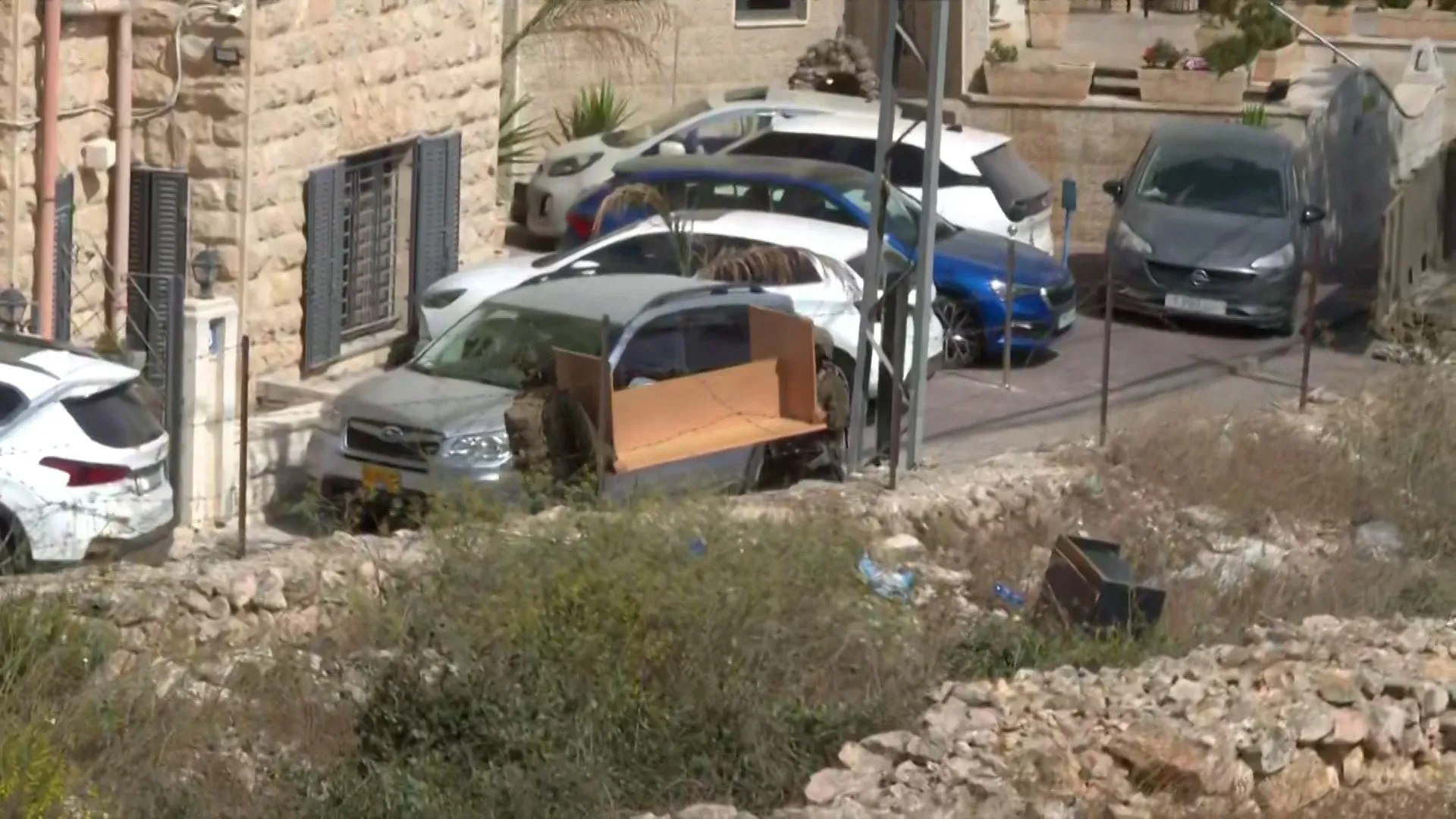
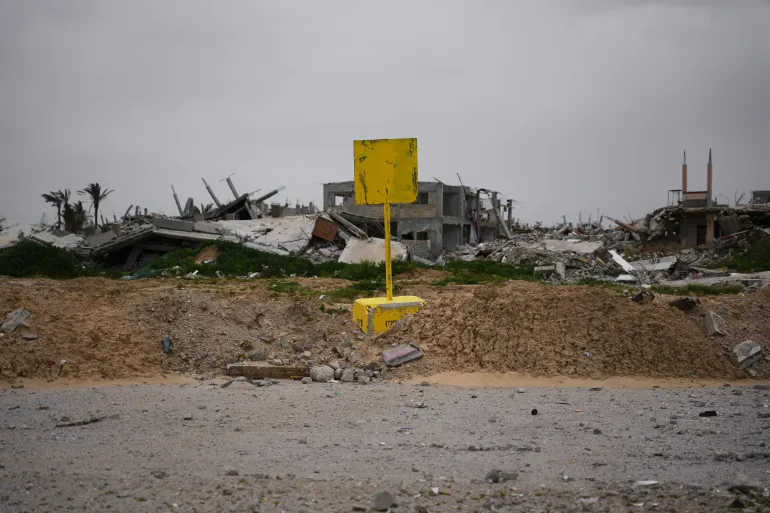





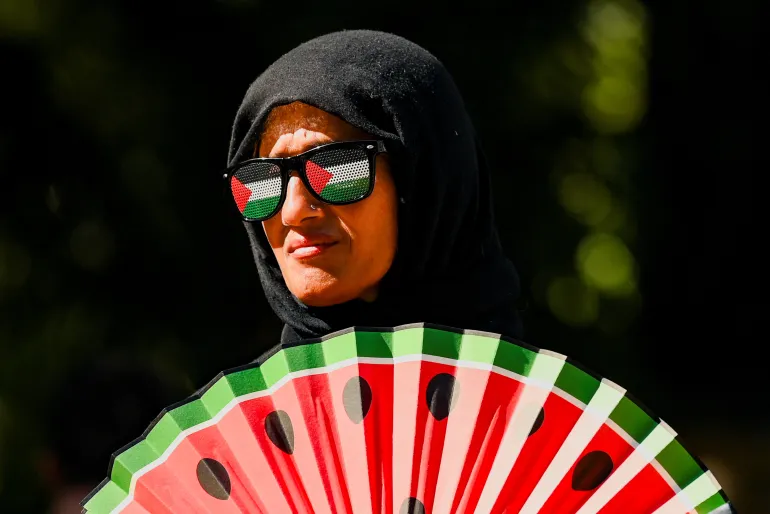


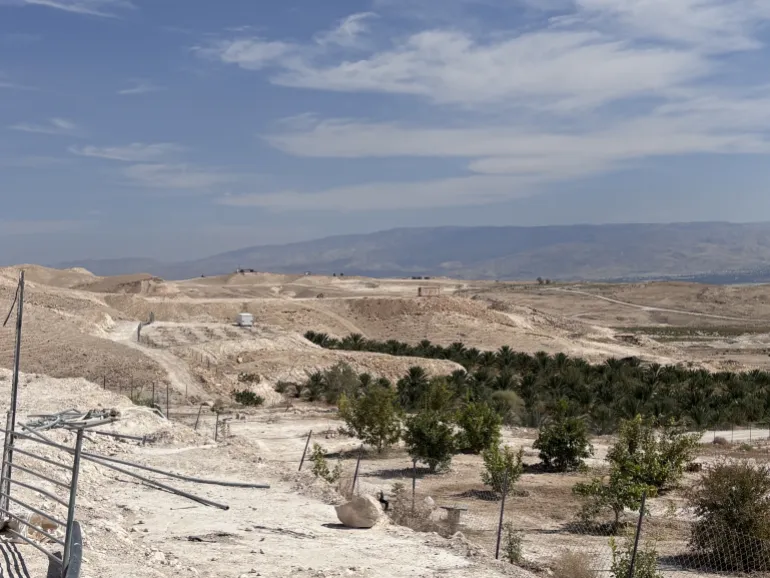
![The view from Muhammad Ghawanmeh’s home in al-Awsaj, looking out towards an Israeli outpost on a hill in the background [Al Jazeera]](https://i0.wp.com/www.aljazeera.com/wp-content/uploads/2026/10/View-from-Muhammads-looking-out-towards-the-outpost-seen-on-hill-in-background-1791321948.jpeg?w=640&ssl=1)
![Jamal Mleihat with his daughter Sewar in al-Awsaj in the occupied West Bank [Al Jazeera]](https://i0.wp.com/www.aljazeera.com/wp-content/uploads/2026/10/Jamal-Mleihat-with-his-daughter-Sewar-1791322462.jpeg?w=640&ssl=1)
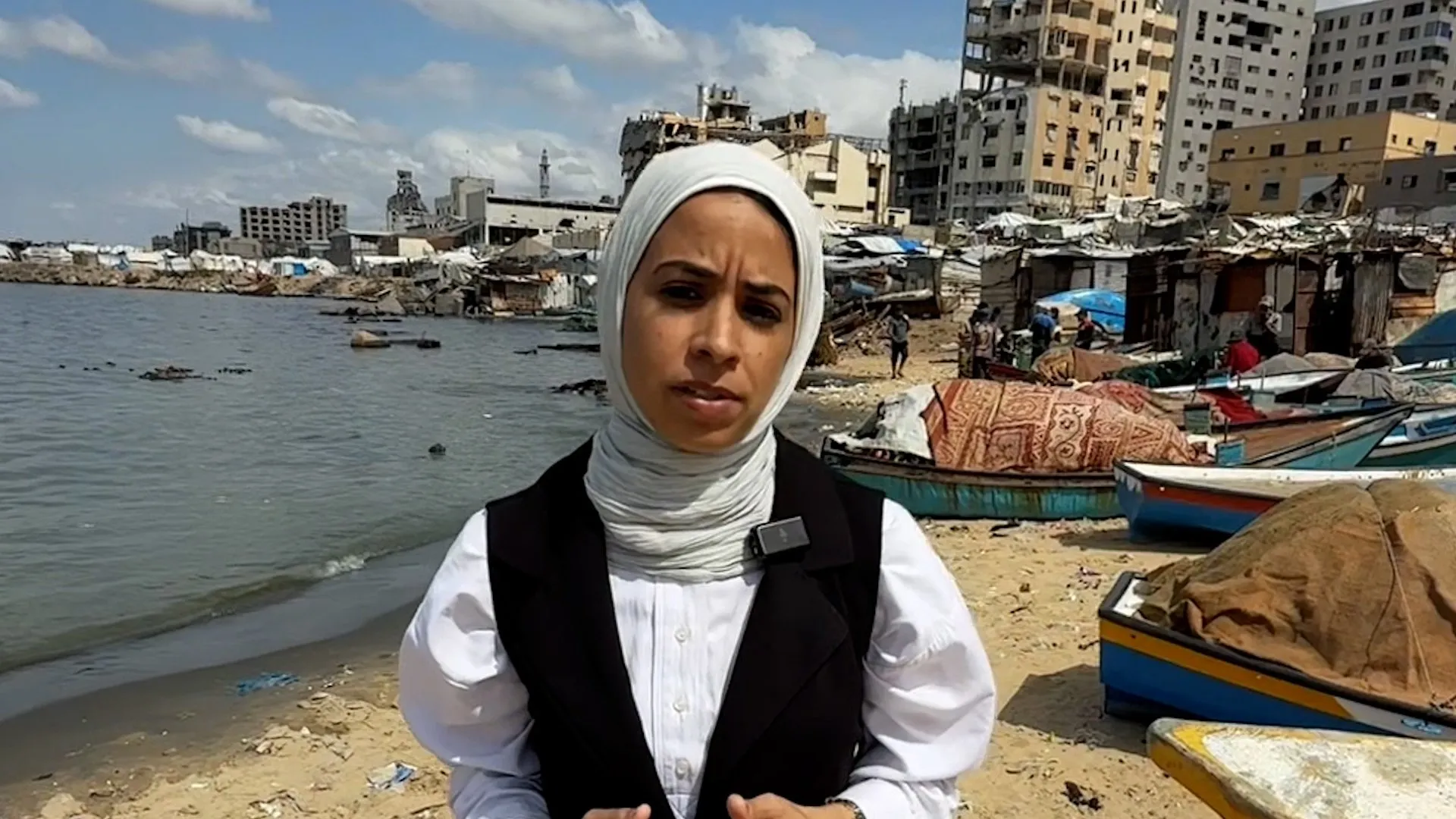
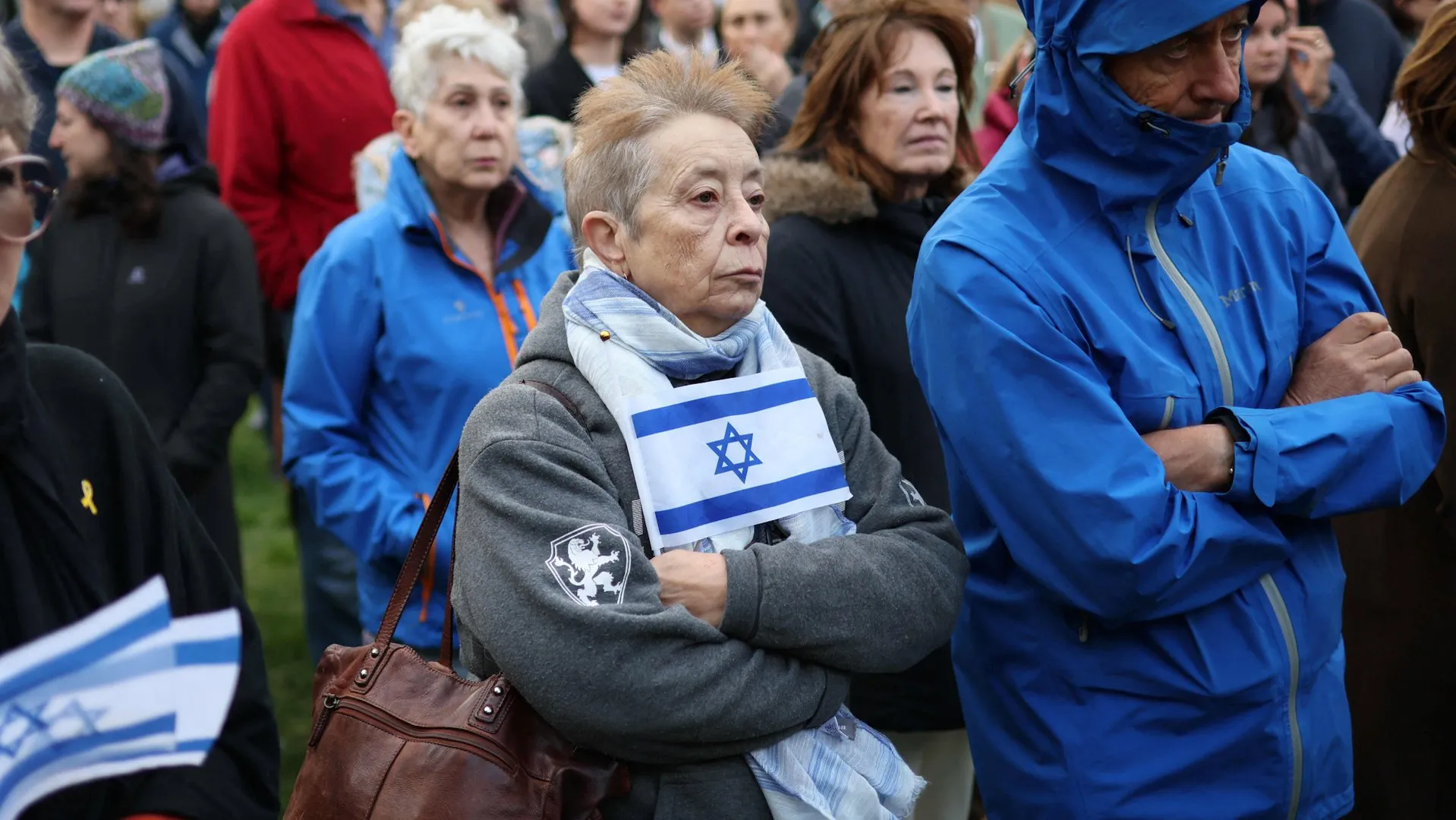
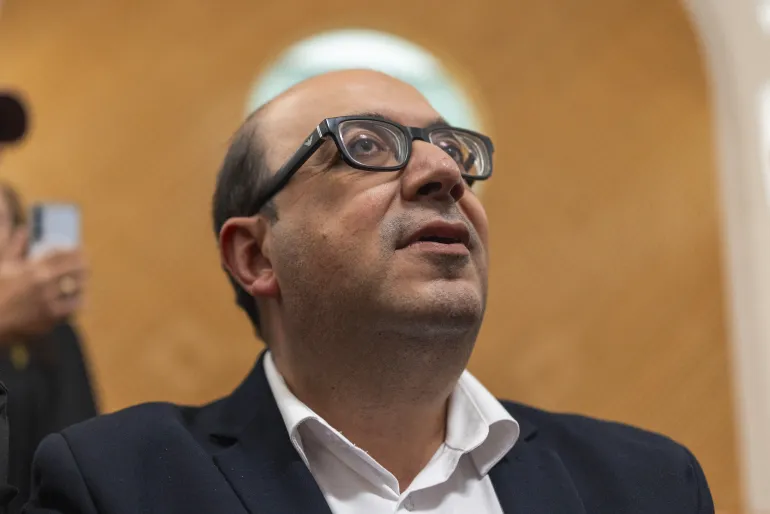
![Sami Abu Shehadeh, leader of the Balad party, attends a hearing at the Supreme Court in Jerusalem on October 1, 2026 [AFP]](https://i0.wp.com/www.aljazeera.com/wp-content/uploads/2026/10/afp_6abfdbdd04ed-1790958557.jpg?w=640&ssl=1)
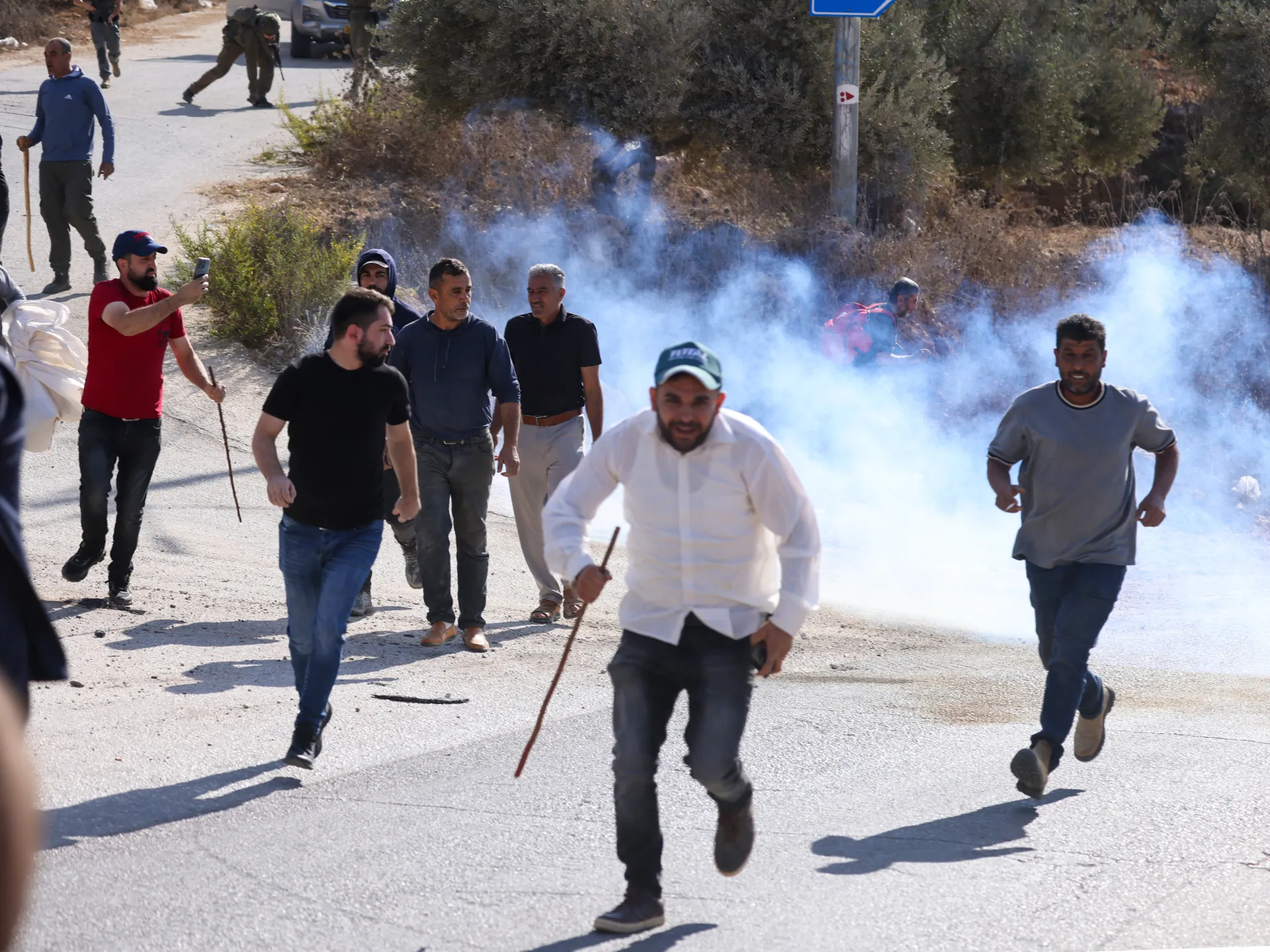
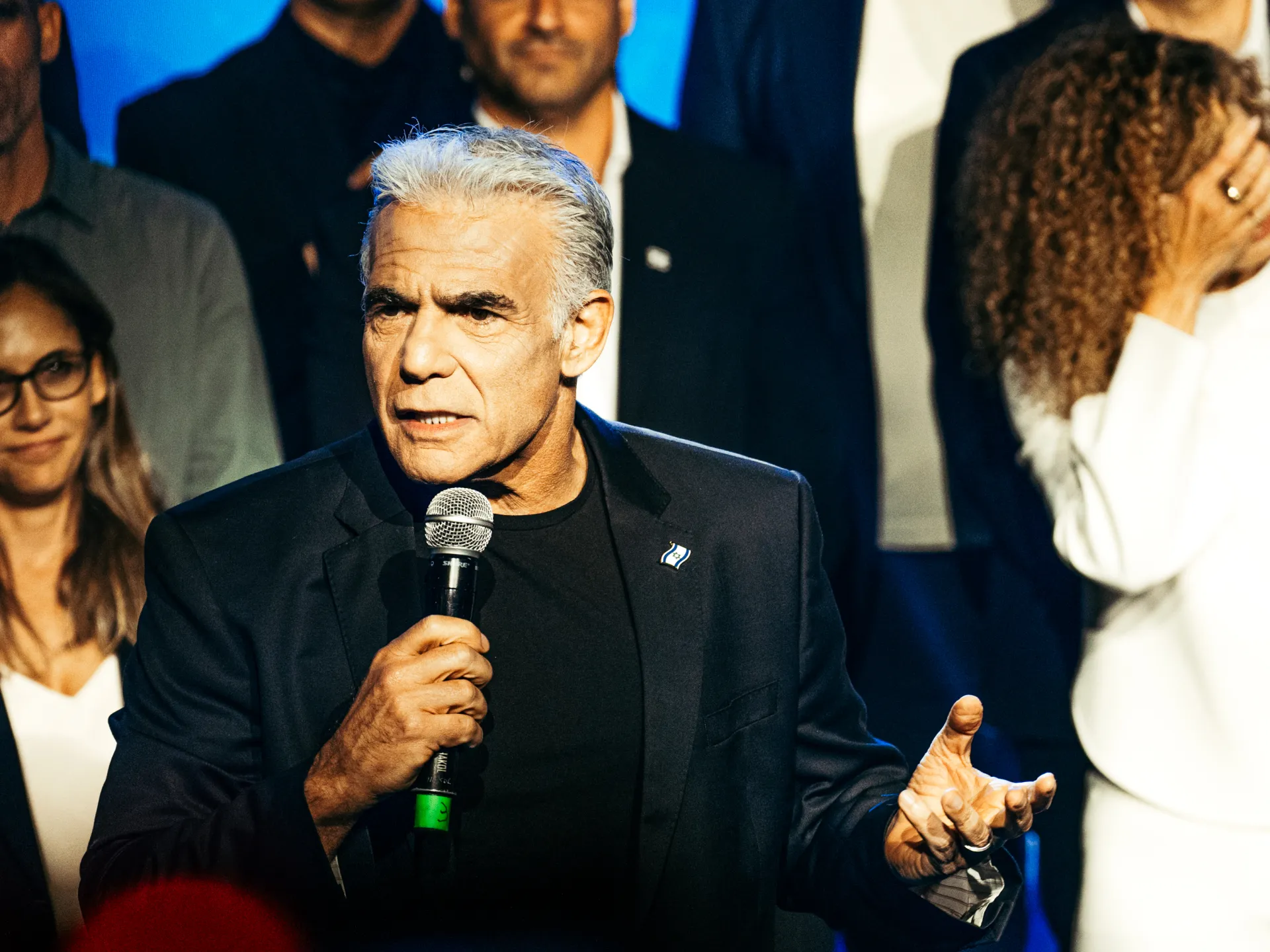
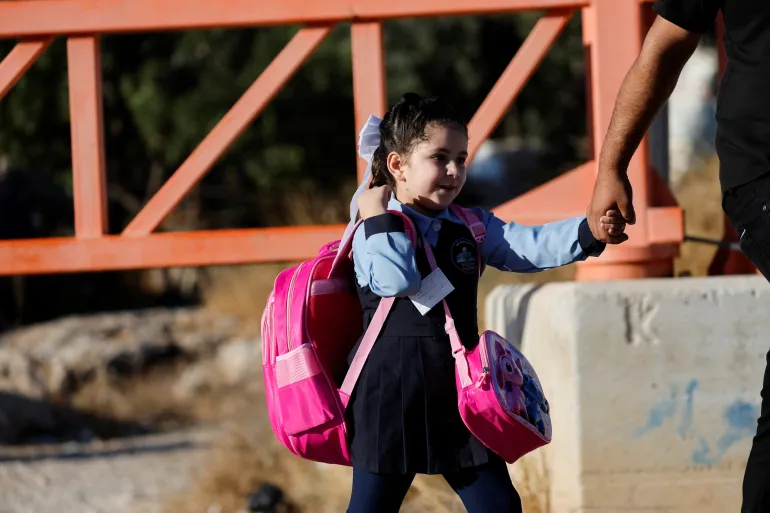

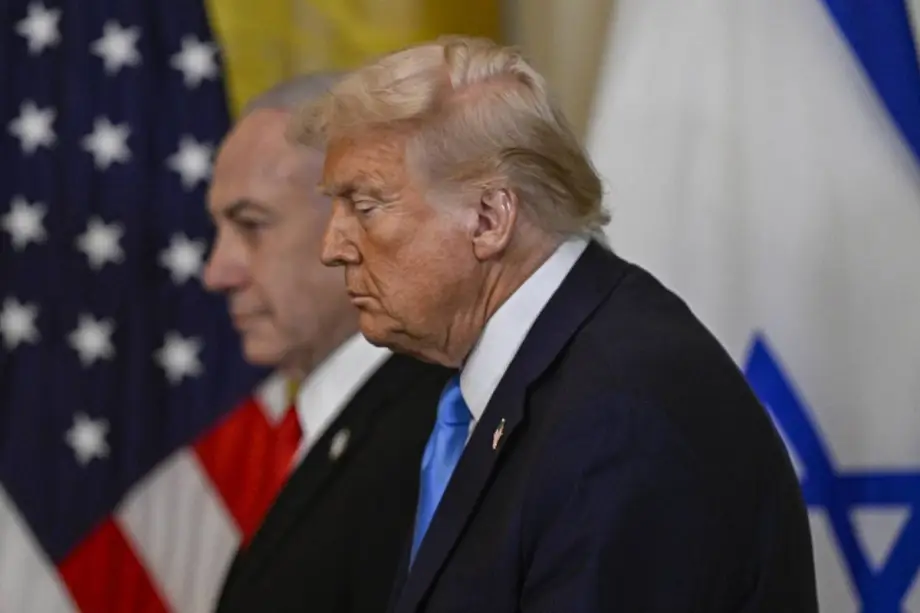

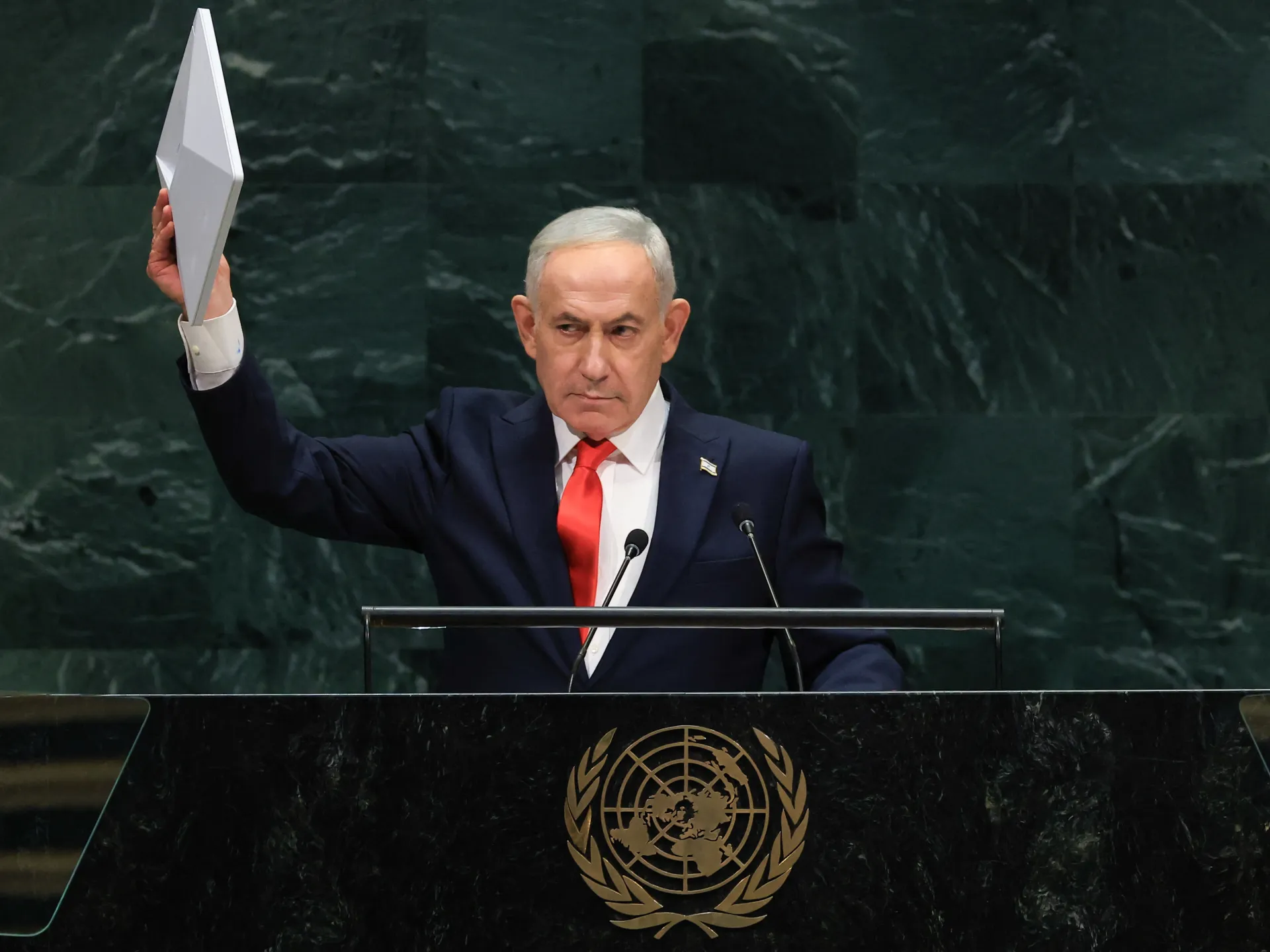
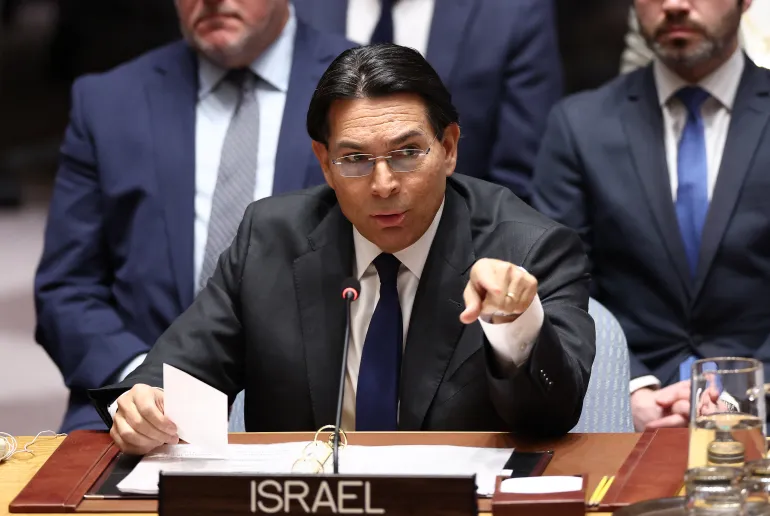
![Permanent Representative of Israel to the UN Danny Danon at a United Nations Security Council meeting at UN headquarters in New York [File: AFP]](https://i0.wp.com/www.aljazeera.com/wp-content/uploads/2026/03/afp_69a425a45f04-1772365220.jpg?w=640&ssl=1)