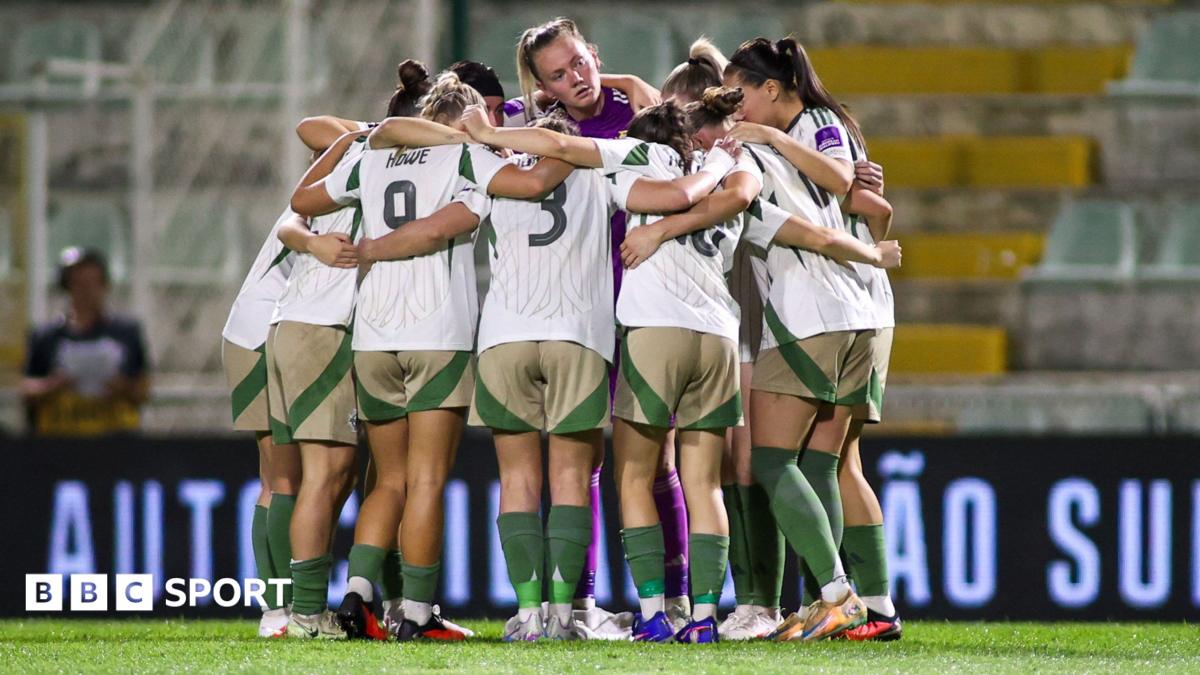
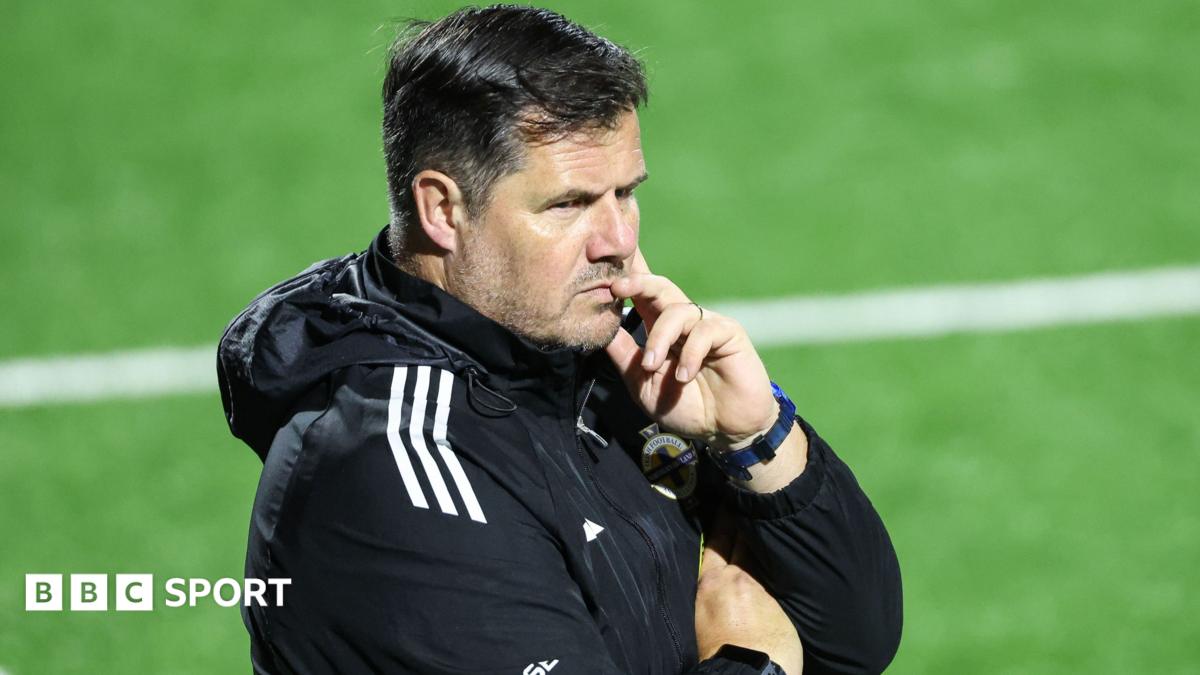
McArdle has shown throughout his tenure so far that he is keen to expand Northern Ireland’s squad depth and gave four players their debuts during the Portugal double header.
One of those debutants, Elmore, scored Northern Ireland’s only goal of the tie and became the second player to score on her debut under McArdle after Emily Cassap netted during the 2-1 defeat by Switzerland in June.
“I’m delighted for Kess,” McArdle continued.
“I knew she could bring that, and it’s just great that she has had that impact in Larne and also got the reward with a goal tonight.
“She’s going to add so much to the group moving forward, but so will a lot of the debutants this week, which was exciting.”
It has been a challenging window for McArdle’s side with key players such as captain Simone Magill and the experienced Laura Rafferty, Nadene Caldwell and Caragh Hamilton missing.
However, the Scot still thinks the side have set “a real enthusiastic marker” down during the tough Portugal tie.
“There have been those moments that have went against us, moments of misfortune. We’re playing a risky style of football,” he continued.
“We were on the front foot from the first whistle, and I couldn’t be prouder of the girls. This is a real enthusiastic marker for moving forward. This is getting closer to the identity that I would like for us moving forward.
“We want more energy, we want more mobility, and we want to be a lot more versatile as well. I’m really proud but also really frustrated with the scoreline.”
Missing a number of experienced players, including captain Simone Magill, Laura Rafferty and Nadene Caldwell, McArdle handed a debut to defender Jane McMaster and first caps to Kess Elmore and Charlotte Havern off the bench.
McMaster responded well after giving away the early penalty for Encarnacao’s opener, while Kelmore was lively in the second half and, at 16, it was a big moment for Cliftonville’s Havern to be introduced with 10 minutes remaining.
“It’s fundamental, especially for our younger players, to get this exposure,” McArdle added.
“It’s a risk and it’s brave, but it’s one that will definitely 100% stand strong with us in the long term.
“It will give us that sustainable opportunity to qualify for tournaments in the longer run because we need our younger players to get this exposure, but also for a lot of our senior players as well.”
After impressing in the second half before Pinto’s goal took the wind out of their sails, McArdle said his players will “hurt for the next 24 hours or so” but regroup for the second leg.
Northern Ireland will be without Chambers, who was sent off in the closing stages for grabbing the hair of Carolina Correia.
“There’s the travel over to Portugal thrown in to allow us to relax a wee bit afterwards.
“But once we get there, we’ll look forward to Tuesday again.
“We’re trying to qualify, but there is a longer process as well that we’ll use Tuesday night for.”
Opposition unionists call for the prosecution of Sinn Fein lawmakers who participated in the protest.
Published On 9 Oct 20269 Oct 2026
Northern Irish police have contacted representatives of Sinn Fein in an investigation into a protest that blocked a Protestant parade from marching through a Catholic area, the party said.
The Sinn Fein party leads Northern Ireland’s power-sharing government alongside its main pro-British rival, the Democratic Unionist Party (DUP), which has called for Sinn Fein lawmakers to be prosecuted.
Recommended Stories
list of 3 itemsend of list
In a statement posted to Facebook on Thursday, Sinn Fein confirmed “that a number of its representatives and party members received correspondence” from police.
“Sinn Fein will continue to stand with the Garvaghy Road residents who should be allowed to live in peace and free from sectarian intimidation,” the party said in the statement.
It added they have “stood with residents of the Garvaghy Road for the last two weeks in the face of provocation and the threat of an unwanted Orange march through their community”.
March permitted
Northern Ireland’s High Court permitted the Protestant Orange Order to march on the Catholic Garvaghy Road for the first time in 28 years.
Police opened an investigation into what they called the unlawful protest of the march, and said people reasonably suspected of committing offences will receive letters for interviews.
Sinn Fein First Minister Michelle O’Neill and Sinn Fein President Mary Lou McDonald participated in the protests.
The DUP called for O’Neill and other lawmakers to be prosecuted.
“A political title is not a shield, and no one is above the law,” the party said in a statement on Thursday.
Before the Good Friday Agreement was signed, annual attempts by the Orange Order to march through the area triggered unrest across the British-run region until the route was banned in 1998.
The standoff has become a political crisis in Northern Ireland, affecting the region’s power-sharing government.
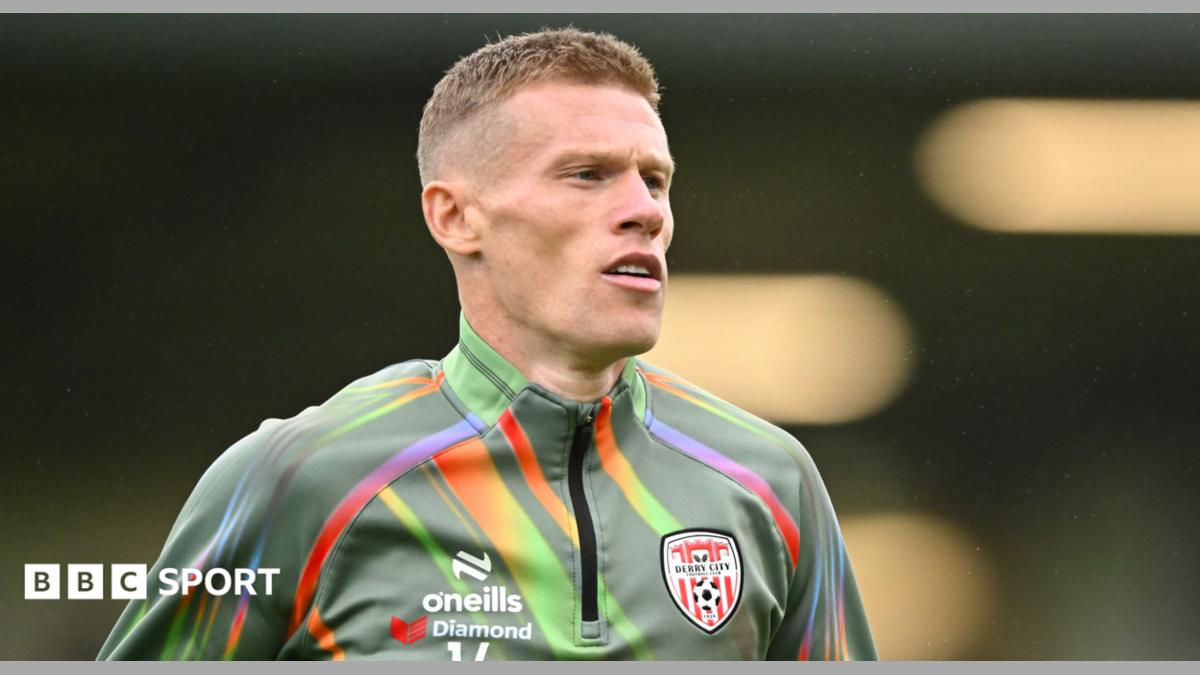
Reports have indicated in recent months that Derry attempted to terminate McClean’s contract because of persistent injuries, a matter alluded to in Tuesday’s statement by the PFAI.
The statement says that Derry had attempted to invoke Section 18 of the Standard Players Contract, which permits them to terminate a contract with six months’ notice when a player is deemed to have a “permanent incapacity”, as confirmed by an independent physician.
“For any club to feel it is OK to attempt to terminate a player’s contract without any due process or just cause is incomprehensible, and it sets a dangerous precedent for every player in this league,” said McClean.
“I am not permanently incapacitated, or anything even remotely close to that. I am capable of contributing and doing well in the League of Ireland. I train as hard and give as much as anyone.
“I will decide when I retire. Nobody else will make that decision for me. When that time comes, my body will tell me. This is my life and my career. I deserve the same duty of care and fairness given to the majority of other players at Derry City FC.”
The PFAI gave further information on the nature and extent of the player’s injury.
“In short, James has had a hip injury which had been causing intermittent issues for him. This has caused him to miss some games and occasional training sessions,” the statement read.
“He has sought medical treatment for this and is currently fit and well.
“He has trained fully for the last nine weeks and has made himself available for selection. He recently played in an internal match arranged by the club. He believes he can help the team and has not been provided with a satisfactory reason for being left out of the squad.”
BBC Sport NI contacted Derry City for comment but a spokesperson said that the club were presently “solely focused on this weekend’s FAI Cup semi-final against Galway United (Saturday, 15:00 BST kick-off).
With this new four-game window presenting something different for managers across Europe to tackle, a myriad of approaches emerged.
Germany boss Jurgen Klopp named virtually two separate squads for his side’s two pairs of games, while Ukraine made 10 changes between their first two games and then nine for their defeat by Northern Ireland.
Having spoken before the start of the campaign about how the condensed schedule would be more difficult for smaller nations, O’Neill kept changes to a minimum.
He started only 15 different players across the four games with two of his changes enforced by Ballard’s injury and Ethan Galbraith’s absence against Ukraine to attend the birth of his child.
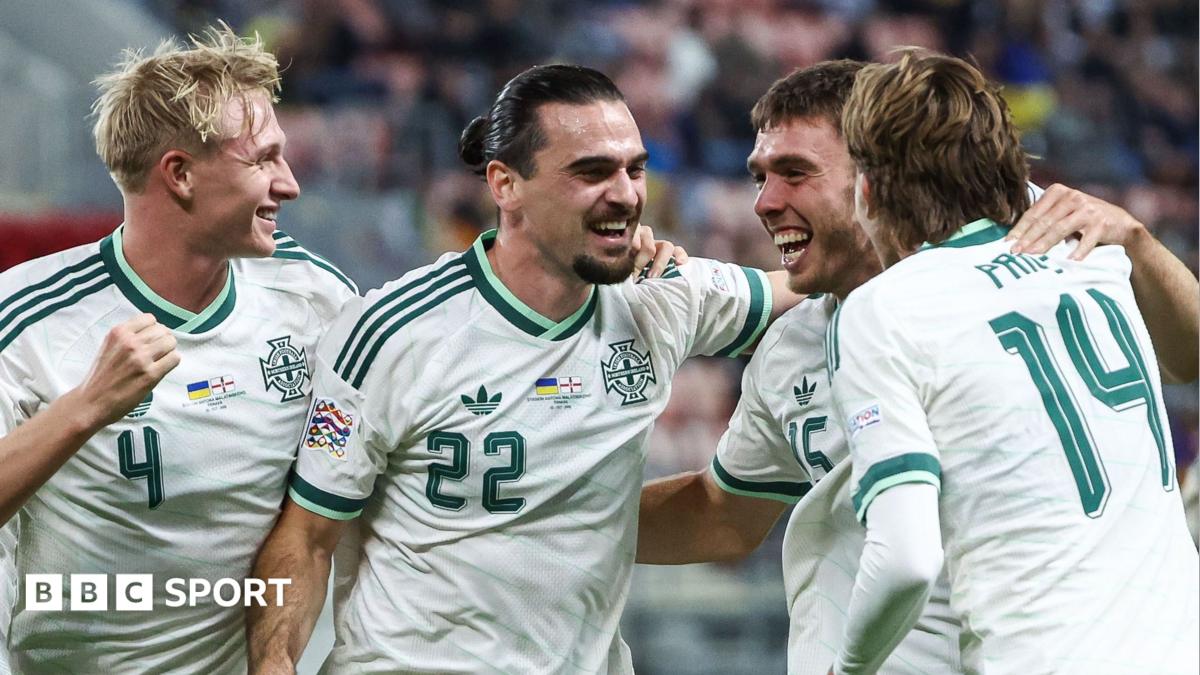
Despite the relatively small pool of starters, this still feels like a window when Northern Ireland’s depth was tested and passed with flying colours.
O’Neill was without talisman Bradley and the reliable Ali McCann coming into the window, and then lost Ballard to a hamstring injury after the first game in Tbilisi.
Young centre-backs McConville, 21, and Tom Atcheson, 20, looked ready to play at this level, while Ciaron Brown started all four games and drew plaudits having often had to bide his time in past squads.
Kieran Morrison, Terry Devlin and Brodie Spencer all impressed when given a chance against Ukraine.
O’Neill’s praise for his squad is across the board.
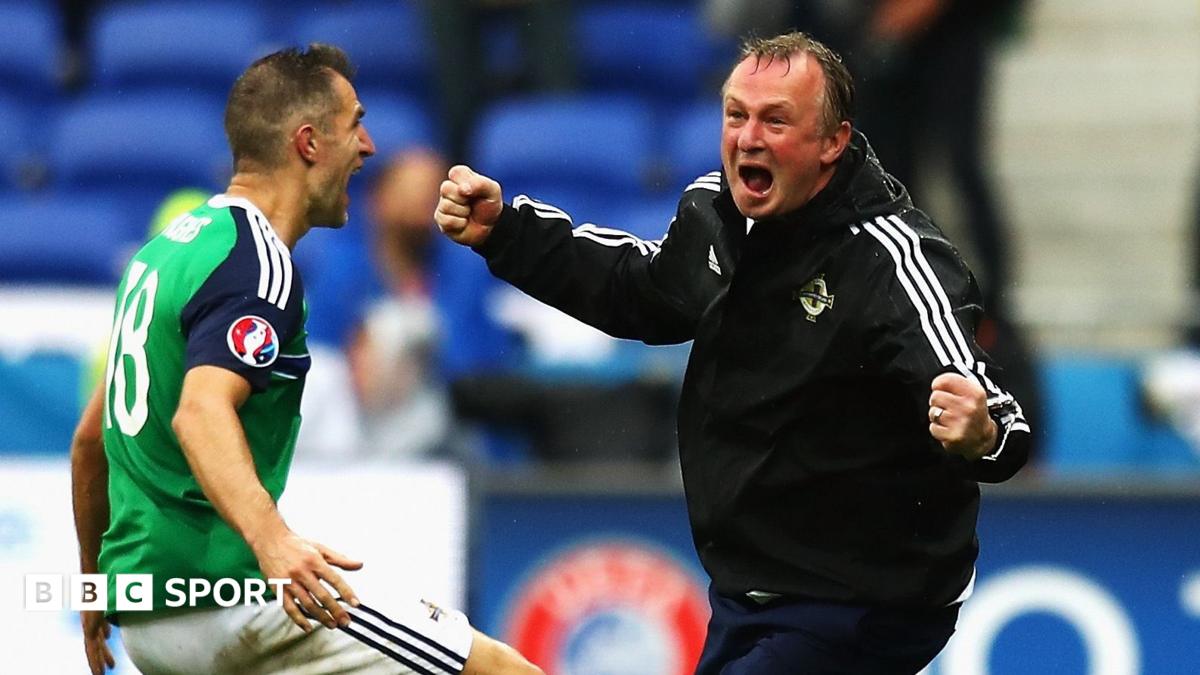
“For me it’s been one of the most enjoyable windows I’ve had as an international manager, and that’s been because of the players,” said O’Neill.
“How they’ve applied themselves, how desperate they are to do well, that’s a real positive.
“We’ve a brilliant group of players and a lot of them I think will play international football for a long time.”
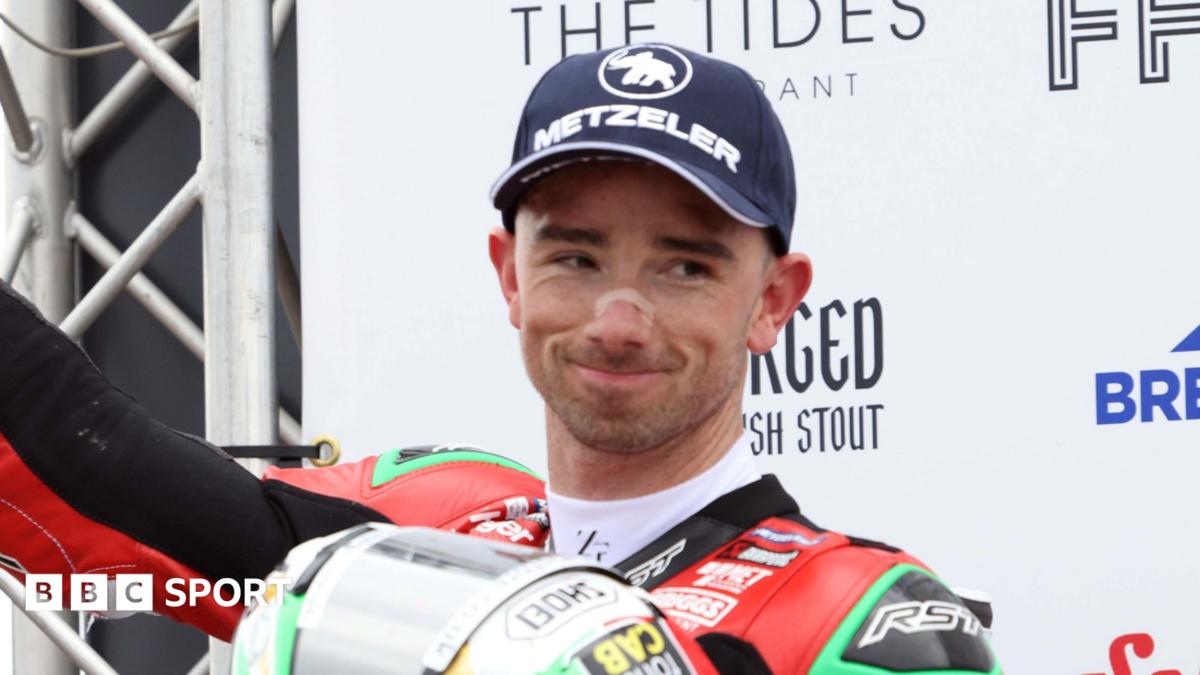
BSB leader Kyle Ryde won the opening two races of the weekend at Donington but Scott Redding clinched the third and final outing to take the championship to the final weekend at Brands Hatch from 17-18 October.
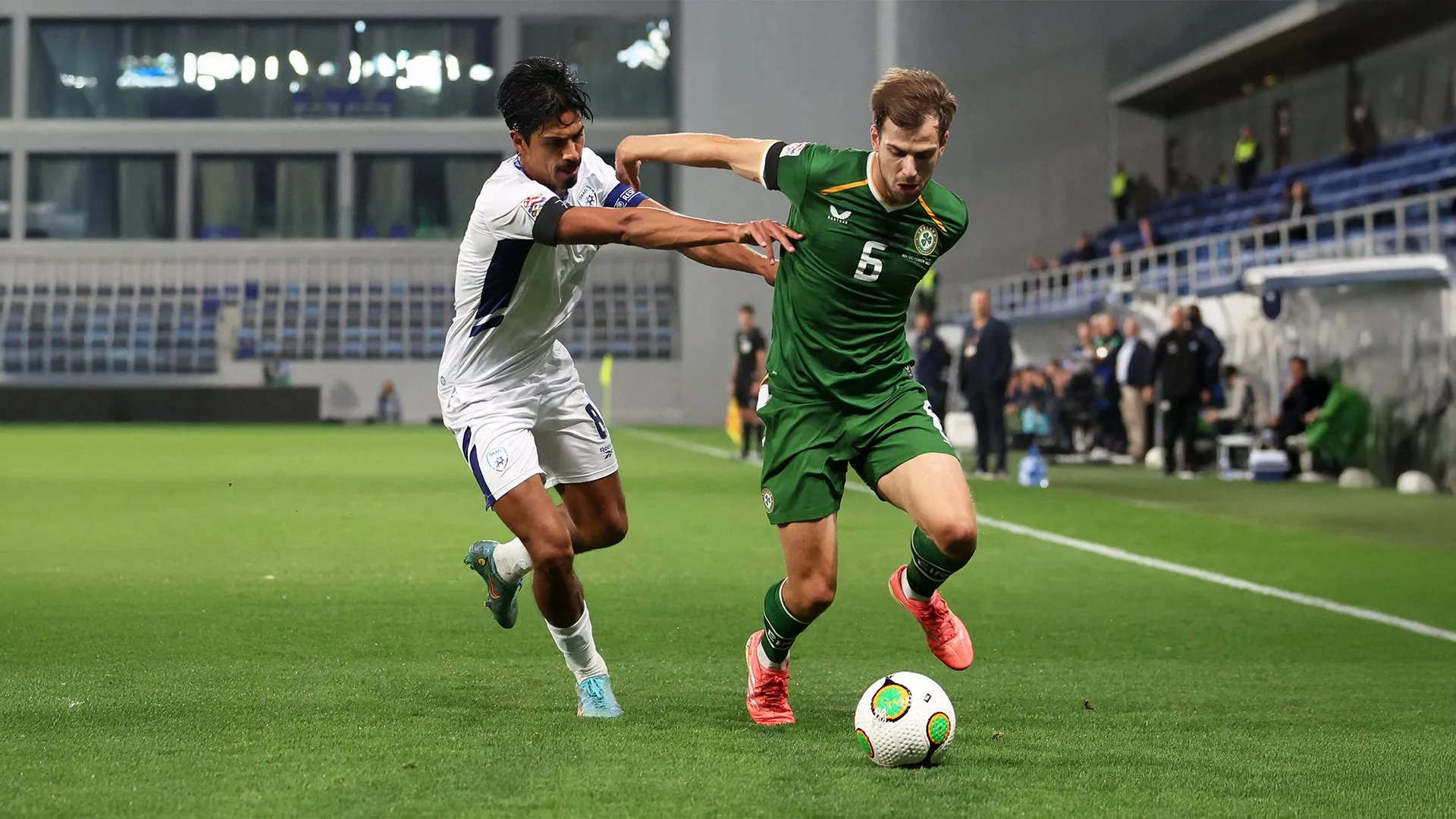
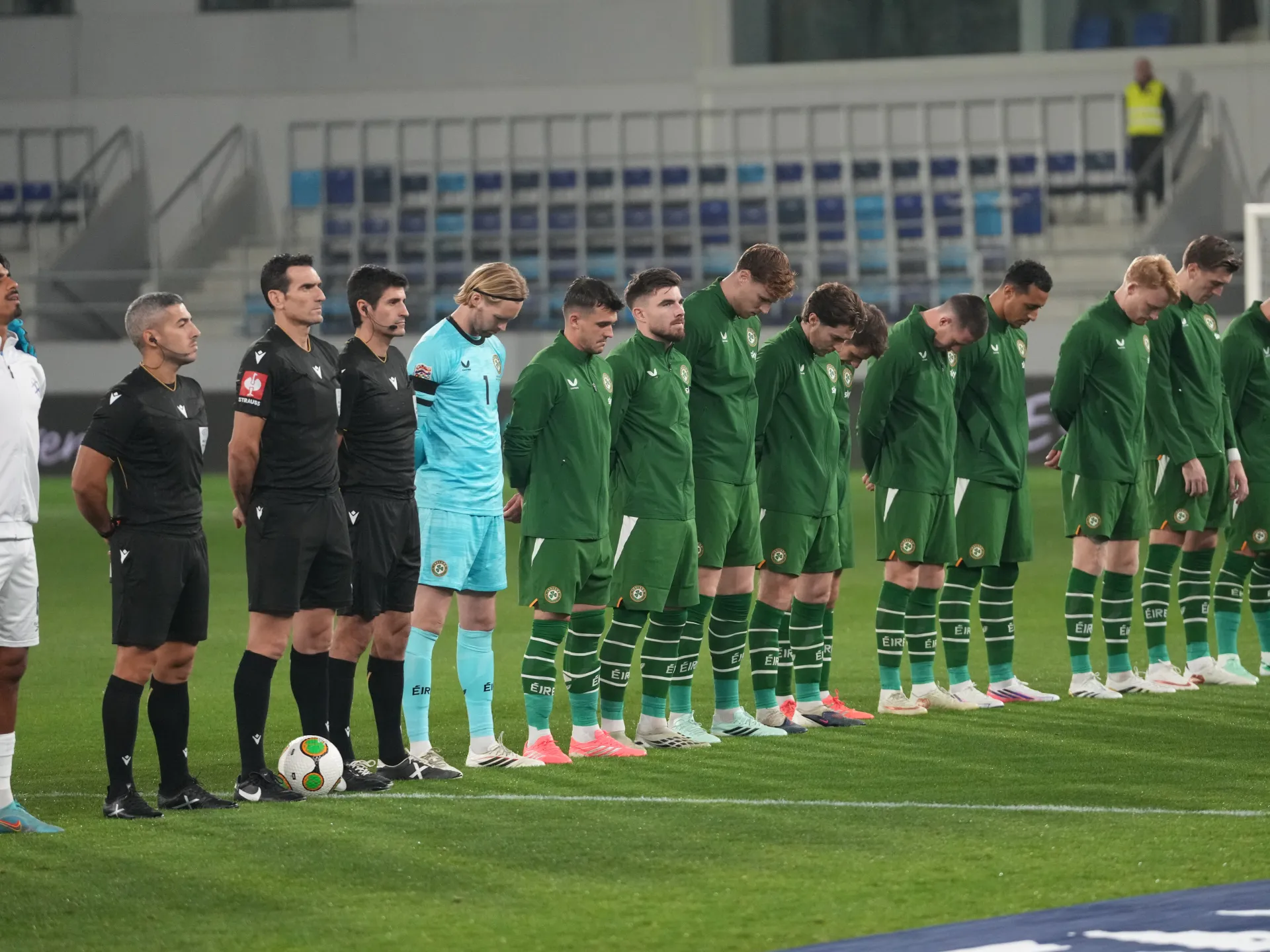
Ireland and Israel drew 1-1 in a second ill-tempered Nations League match. Irish and Israeli players wore black armbands to commemorate lives lost in Gaza and in the October 7 attacks, before tensions flared at half time over allegations of spitting.
Republic of Ireland head coach Heimir Hallgrimsson said he felt Israel were “trying to intimidate” his team amid allegations of spitting during Sunday’s tense Uefa Nations League draw.
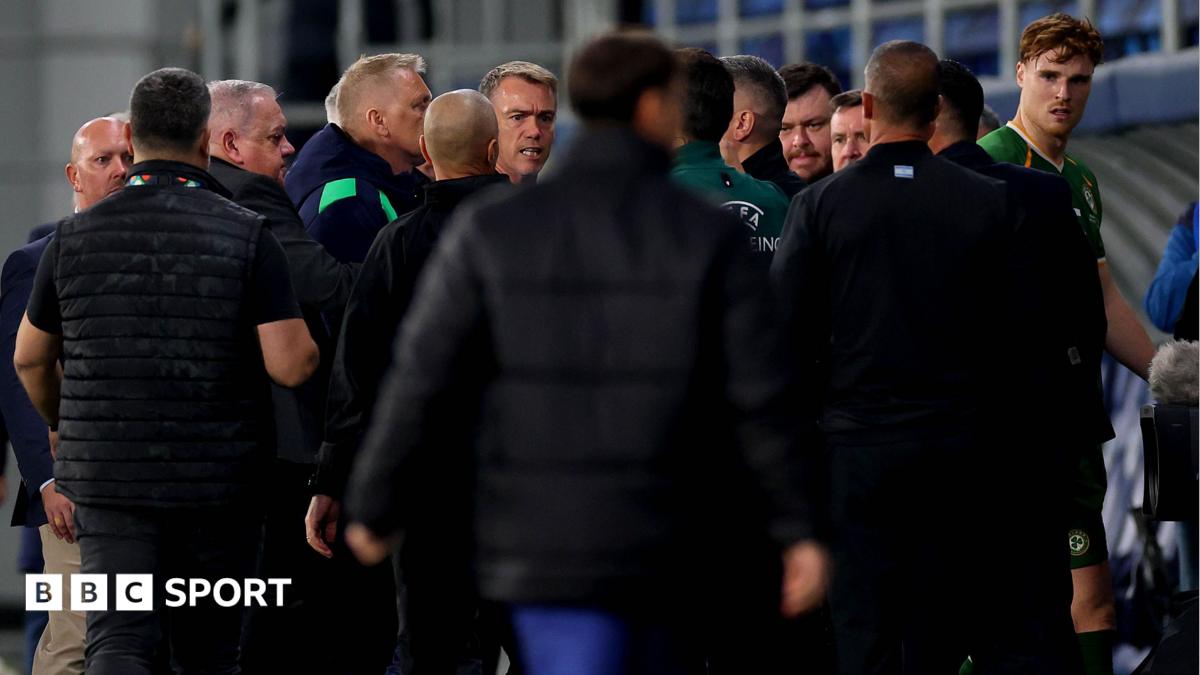
The teams clashed at half-time in the 1-1 draw, played behind closed doors in Serbia, with the Irish Times, external reporting that Republic of Ireland head of athletic performance Damien Doyle alleged he had been spat at by an Israel player.
On television pictures, a voice can be heard saying “he spat on me” as the players made their way down the tunnel at TSC Arena.
“I don’t want to get involved in that, but it’s been like this these two games. It’s tense, it’s a lot of emotions,” Hallgrimsson told Off The Ball, external when asked about the incident.
“[It] was an accusation of spitting on someone but I didn’t see it. No, we don’t want to talk about this. This will be reviewed, probably like everything else that’s happened between the two teams.
“I felt like they were trying to intimidate us from kick-off but I give a lot of credit to the players to stay calm. It could have been a game of yellow and red cards but we were composed, the players were composed, they did well in controlling emotions.”
Asked about the half-time incident, Israel head coach Ran Ben-Shimon said he “didn’t see anything”.
“[At] half-time I was in the dressing room, my room, with my staff,” he said.
“I didn’t see anything. When I get the chance to check I will get back to you.”
Ireland players again wore black armbands in recognition of Palestinians killed in Gaza and bowed their heads during the Israeli national anthem before the teams’ second UEFA Nations League football match on Sunday.
The League 3 Group B match ended in a 1-1 draw and, despite being played behind closed doors and on neutral ground, was once again played out in a confrontational manner.
Recommended Stories
list of 4 itemsend of list
Ireland goalkeeper Caoimhin Kelleher stepped in as captain for Dara O’Shea, who was excused to be with his wife for the birth of their child, and pointedly avoided shaking hands with Israel captain Dor Peretz, despite completing the usual pre-match formality with the referee and one of his assistants.
Kelleher’s action was a repeat of O’Shea’s, who refused to shake Israel captain Manor Solomon’s hand before the first match in Debrecen, Hungary, last week. Ireland went on to win that game 3-0 through three first-half goals.
Solomon was dropped to the bench for Sunday’s match in Backa Topola, Serbia. Israel forward Sayed Abu Farchi was back in the squad after serving a suspension for getting sent off following his gun-simulation goal celebration during Israel’s 3-1 defeat to Austria on September 25.
Finn Azaz, whose mother has Israeli heritage, was among the Irish substitutes after playing from the start against Austria on Thursday.
Troy Parrott’s penalty in the 39th minute, after a foul by Peretz on Jimmy Dunne, gave Ireland a 1-0 halftime lead. A disagreement also broke out on the sidelines as the players made their way off the field for the interval, although the referee quickly intervened.
Peretz secured a point for Israel with a poked effort from close range in the 47th minute.
Sunday’s game was initially supposed to be played in Dublin, but the Football Association of Ireland (FAI) moved it to a neutral venue for “operational reasons” in June following widespread calls for a boycott in protest of Israel’s genocidal war on Gaza. The FAI said the game would be played with no fans present.
It followed the FAI’s motion the previous November calling on UEFA to ban Israel from club and international competitions.
All the Irish players had been under pressure from home – where affinity with Palestinians is strong – to boycott the second match against Israel, though the pressure was greater during the first game.
“I felt that pressure growing day by day, and it’s getting almost to a breaking limit now,” Ireland coach Heimir Hallgrimsson said at the time.
Ultimately, only reserve goalkeeper Gavin Bazunu decided to skip both of the contentious games, saying in a statement that it was his “personal belief that the killing of innocent people is wrong”.
More than 160 Irish sportspeople had signed an open letter urging the FAI to reconsider its decision to go ahead with the two games.
Before the departure for Hungary, people protested outside the team hotel in Dublin for the players to boycott the matches. The SIPTU trade union displayed a huge poster in central Dublin beside the River Liffey asking the players to “Go with your conscience!” and “Don’t play with genocide” beside an image of a blood-splattered ball.
Former Ireland coach Brian Kerr said the FAI had “lost the respect of the Irish people” for going ahead with the games.
But the FAI argued UEFA could sanction the team. Ireland is cohosting the 2028 European Championship with England, Wales and Scotland.
Protesters threw tennis balls with Palestinian flags onto the field during Ireland’s 2-2 draw with Austria on Thursday. A man with a Palestinian flag also tried running onto the field.
On Saturday, an Israeli journalist stated during the pre-match news conference that the Irish players had called the Israeli players “monkeys” during last week’s game, leading to an immediate rebuke from Irish communications officer Kieran Crowley, who said it was “a lie” and ended the news conference.
The players had only decided to go ahead with the fixtures after a dramatic day in Debrecen before the first match, when both the news conference and training were delayed for hours while they deliberated. They reportedly voted 14-8 in favour of continuing after Bazunu’s withdrawal that morning.
Ireland’s national broadcaster RTÉ was only providing stripped-back coverage of both games against Israel to meet contractual obligations. There was no studio presentation, commentary on the international feed, or analysis. RTÉ said it was not accepting advertising or sponsorship around either game.
RTÉ also recently announced that Ireland will boycott the Eurovision Song Contest for a second year due to Israel’s participation.
Israeli journalists asked coach Hallgrimsson about the Flydubai attack and alleged racist abuse by Ireland’s players.
Published On 3 Oct 20263 Oct 2026
Members of an Israeli media contingent heckled Republic of Ireland head coach Heimir Hallgrimsson’s news conference prior to the UEFA Nations League football match, causing it to end abruptly amid growing political tensions and protests against the fixture.
During the media event on Saturday, an Israeli journalist asked Hallgrimsson about his views on an incident onboard a Flydubai flight to Israel earlier this week.
Recommended Stories
list of 4 itemsend of list
According to the prosecutor general of the United Arab Emirates, the Flydubai co-pilot “attempted to carry out a terrorist act”, using an axe against the pilot to take over the aircraft’s controls.
The plane carrying 174 passengers was on its way from the Dubai in the UAE to Tel Aviv in Israel on Wednesday when the copilot wounded Indian pilot Smit Machchhar, who opened the cockpit door to seek help.
The aircraft briefly plunged about 17,000 feet (5,180 metres) before it was brought back under control.
The attacker was not officially identified, but media reports quoting unnamed sources said he was an Omani national, Hamam al-Hammami.
“What do you say about the people that you support? Their ideology is based on murder,” the journalist asked, purportedly hinting at Ireland’s stance on Palestine and attempting to link it to the aviation incident.
Before the Irish team’s coach could answer, the Football Association of Ireland’s communications manager Kieran Crowley stepped in and asked the journalist to refrain from asking questions not linked to the match.
The journalist persisted, carrying on with her question before Crowley stopped her again.
“We respected your questions at the last press conference, but we are doing football questions today,” he said, referring to Israeli journalists’ pointed questions about the calls to boycott the first leg of the European match.
Icelandic coach Hallgrimsson later termed the incident a “verbal attack”.
Following the match, Israeli supporters were accused of directing racist chants towards Ireland player Adam Idah and were filmed raising military slogans, but evaded disciplinary action from the competition’s organisers.
However, another Israeli journalist turned the incident on its head during Saturday’s news conference and accused the Irish team of calling Israel’s players “monkeys” during the match.
FAI’s Crowley was quick to shut out the accusation and ended the media event.
“That’s a lie. You’ve just broadcast a lie,” Crowley said before getting up to walk away.
According to Irish media reports, the FAI is continuing to investigate allegations that Irish players Adam Idah and James Abankwah were racially abused by Israeli fans.
An Israeli supporter also led chants about his country’s military from the stands as he attempted to brush aside the team’s drubbing on the football pitch.
The day before the first leg, goalkeeper Gavin Bazunu publicly withdrew, saying he felt “it would be wrong to participate in the upcoming fixtures against Israel”.
The second leg will be played at the TSC Arena in Backa Topola in Serbia on Sunday.
Ireland’s Hallgrimsson termed it “a game with a lot of emotions attached to it”.
He said the team was focused on winning the second leg as well.
“There’s been a lot of emotions from the people in Ireland about this and obviously that affects the players as well. We want to do good, but it’s always going to be a challenge when the environment is as noisy as it is.”
Portadown, Northern Ireland – When the summer holidays arrived, Chris Nelson worried about his mother.
At night, he lay awake waiting for her to return. During the day, he rang family members to ask if she was safe. There were threats and letters through the door.
Recommended Stories
list of 4 itemsend of list
“I was afraid to leave the house,” he told Al Jazeera.
His mother, Rosemary Nelson, was a lawyer representing the Catholic residents opposing the Protestant Orange Order parade along Portadown’s Garvaghy Road in Northern Ireland in the late 1990s.
Every July, as marching season approached, there was a standoff.
Orangemen sought to return from Drumcree church along what they regarded as their traditional route. Residents opposed the passage of the anti-Catholic organisation through a majority Catholic street. In some years, police forced the parade through. In later years, it was blocked.
Rosemary would spend summer evenings alongside the residents on Garvaghy Road. Before leaving home each evening, she told her son that she was going to look after families and make sure their children were okay. She compared them to his friends at primary school.
“She was a big believer in helping the underdog,” said Chris, now 39. “She did a lot of work for free.”
His mother helped people from both sides of the community. When work allowed, the family went to Bundoran, across the border, and for a day the fear would pass.
But one night, during a standoff in 1997 when the state police force, the Royal Ulster Constabulary (RUC), used batons to clear Catholic locals from the road, “she was beaten by the police”, said Chris. “She was spat on”, bruised and bloodied.
“That was very traumatic. I was always thinking something was going to happen to my mum.”
On a Monday in March 1999, nearly a year after the Good Friday Agreement brought an end to the conflict, Rosemary drove away from her home in Lurgan.
As she braked at a nearby junction, a bomb beneath her car exploded. Her eight-year-old daughter, Sarah, was at primary school nearby and heard the blast. The family had spent the previous weekend in Bundoran together.
Chris, 11 at the time, and his older brother were away on a school ski trip when they received a phone call with the news of her death.
“That was hard”, he said, his voice tailing off.
A legacy of loss
Nearly three decades later, another standoff has recast these childhood memories into fears for the next generation, with a renewed attempt by the Protestant Orange Order to march through the Catholic neighbourhood, threatening to unravel a fragile peace.
The Troubles began in the late 1960s as protests by Catholics against discrimination were met by repression and violence. Republican paramilitaries fought for a united Ireland as loyalists and the army battled to preserve British rule, in a conflict that killed more than 3,500 people.
The 1998 Good Friday Agreement established a framework for peace and power-sharing.
Under the agreement, the people of Portadown have lived in relative peace for the past 28 years.
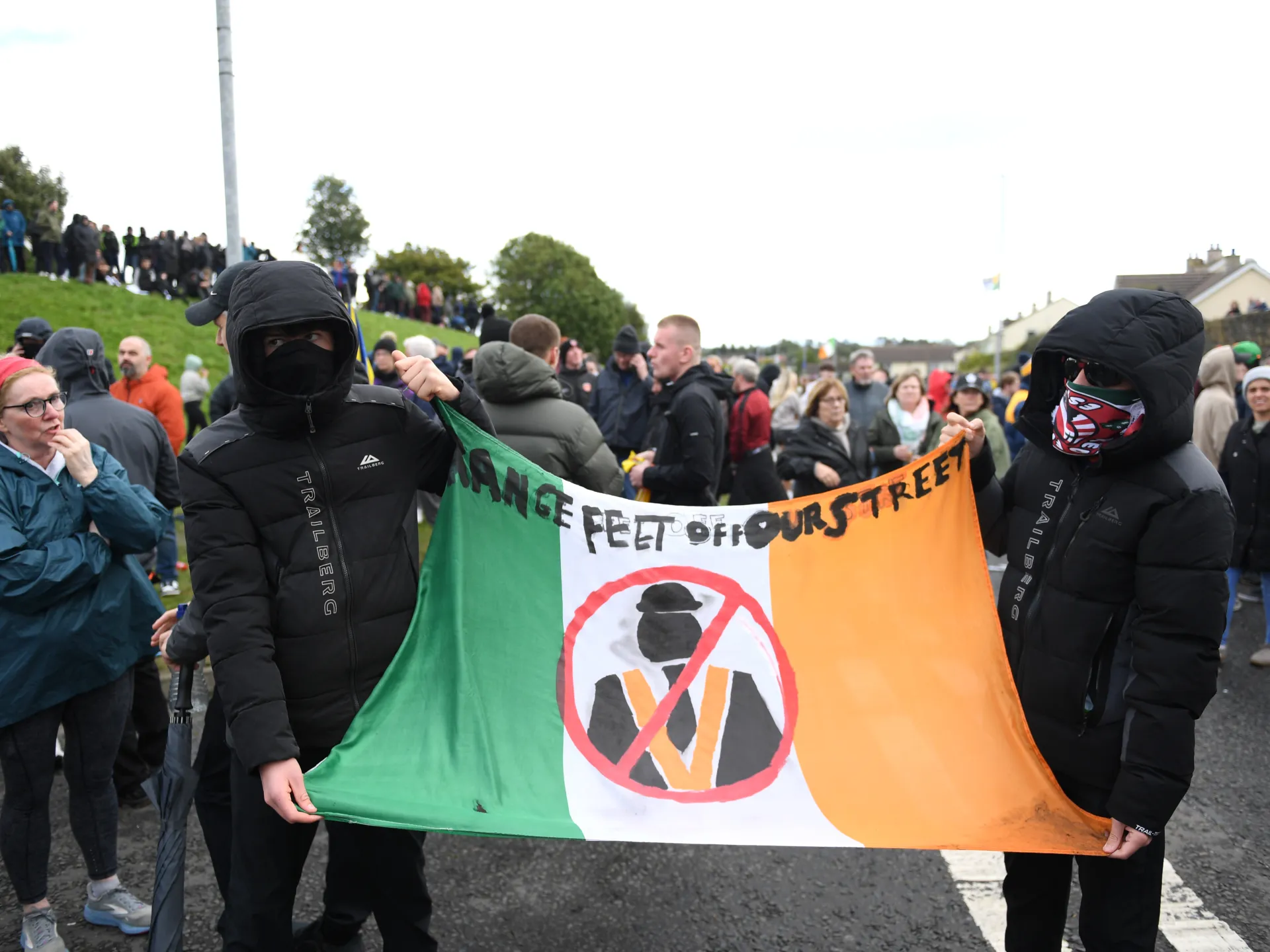
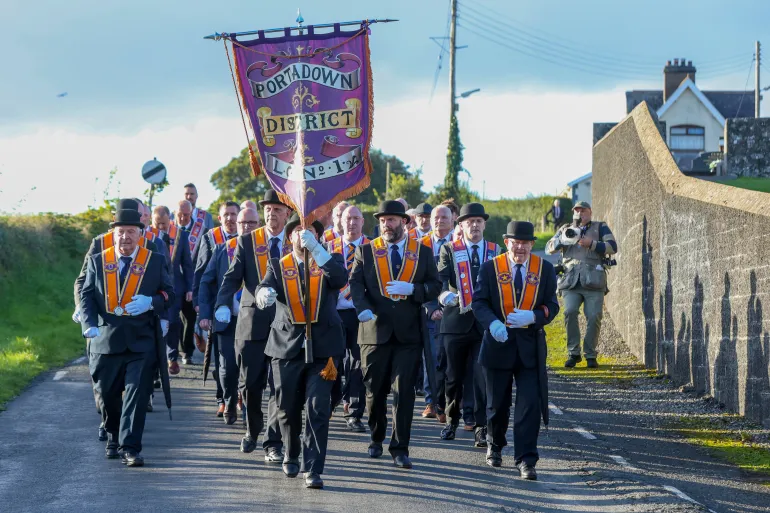
But this was suddenly unsettled by a last-minute decision by the High Court to allow the march. In response, Catholic residents blocked the road. Many camped out as Orange men gathered at the top of the road, awaiting police permission to pass – an image of division that never truly left.
Portadown Orangemen march from Drumcree Church to start their march towards Garvaghy Road, which was stopped a short distance later by police, in Portadown, Northern Ireland on September 27, 2026 [AFP]
Many of the Garvaghy Road residents are now parents, and fear what their children might inherit from a dispute they hoped had been left behind.
Paul O’Connor, of the Pat Finucane Centre human rights group in Northern Ireland, said Rosemary Nelson is among 21 people whose deaths were linked to the Drumcree dispute.
Many are still being investigated, with families continuing to seek justice and pressing for public inquiries amid concerns about collusion between the British state and loyalist paramilitaries, many of which were members of the Orange Order.
“These murders encompass LVF (Loyal Volunteer Force) killings at that time, and are all linked to the Drumcree disputes. They were responsible for many of the killings around the Mid Ulster area at that time. They were trying to destabilise the peace process, with many riots spreading around, including into Derry,” O’Connor told Al Jazeera.
He worked with Rosemary Nelson and is now seeking a public inquiry into the murder of Sean Brown, another Drumcree-linked case, he believes. The 61-year-old father of six from Bellaghy, County Derry, was abducted and murdered in May 1997.
The following year, the three Quinn brothers – Richard, 10, Mark, nine, and Jason, eight – died after loyalists petrol-bombed their home in Ballymoney, County Antrim, as they slept. Their deaths, during the unrest surrounding Drumcree, brought widespread calls for the Orange Order to end its standoff.
Protesters block the Garvaghy Road in Portadown, Northern Ireland on September 27, 2026, preventing a parade of marchers from the Orange Order using the route through the mainly nationalist area of the town [AFP]
Fear and loathing in Mid Ulster
In Portadown town centre, a Union flag flies among plinths dedicated to the Ulster Defence Regiment, a locally recruited unit of the British army and the Ulster Covenant – a document signed when nearly 500,000 people opposed a form of self-government for Ireland in 1912.
Around the corner, in the Edgarstown housing estate, Ulster Volunteer Force (UVF) flags hang from lampposts, and the kerbs are painted red, white and blue, alongside a mural of a Rangers FC badge.
The area is one of the heartlands of unionism. The Orange Order was founded in 1795 in the village of Loughgall, a few miles from Drumcree.
The Orangemen say they have marched the route through Garvaghy Road since 1807. The parade has been blocked from Garvaghy Road since 1998, but the Orangemen have continued submitting requests to march.
The latest Parades Commission decision permitted 35 men to walk without music. Since then, Orangemen have repeatedly approached the police line before returning to the church.
UVF flags fly alongside UK flags in the Edgarstown estate, Portadown, Northern Ireland, on October 1, 2026 [Caolán Magee]
Irish nationalists have criticised the police assessment underpinning the decision to allow the march, while unionists have denounced police for failing to forcibly remove protesters blocking the route.
Al Jazeera contacted the three main unionist parties – the Democratic Unionist Party (DUP), the Traditional Unionist Voice (TUV) and the Ulster Unionist Party (UUP) – for comment but received no response.
Addressing around 200 supporters in Portadown, loyalist activist Jamie Bryson described protesters as “an unlawful snarling mob”.
He has called for the First Minister, Sinn Fein’s Michelle O’Neill, and police Chief Constable Jon Boutcher to resign, and demands that the Orange men must be allowed to walk the Garvaghy Road.
O’Neill has faced criticism for standing beside the protesters.
At Drumcree Church, the Orangemen were not marching, but sitting down drinking tea and eating crisps. Around six men, one wearing his sash, huddled under a gazebo in the cold.
“We are waiting patiently for the chief constable to apply the law of the land,” Nigel Dawson, the Portadown Orange Order district master, told Al Jazeera.
“Portadown District has never in its history stopped a parade down the road to have a confrontation with its neighbours, ever. So I don’t know where the fear and trepidation comes from.”
Another Orangeman, who requested anonymity, added: “We are determined to get home after Sunday service … We just want to go home.”
Orange Order members sit outside Drumcree church as they await passage along Garvaghy Road in Portadown, Northern Ireland, on October 1, 2026 [Caolán Magee]
Around a mile further down the Garvaghy Road, Irish folk band the Mary Wallopers performed to hundreds of residents and supporters.
Children danced and slid down the embankment, as parents watched from above. Palestine and Ireland flags flew in the wind.
Linda O’Neill, 51, a Garvaghy Road resident, told Al Jazeera the scene would have been unimaginable 30 years ago.
“It was horrendous growing up as a teenager. We stayed in our own community. We didn’t access the town centre … This community was a ghetto. And that was deliberate.”
Another resident, Ciaran O Ferghail, remembered summers spent surrounded by British forces.
“This community was turned into a war zone. There were tanks and British Army everywhere, thousands of RUC. This community was completely under siege every summer, by the Orange Order, the British military, the RUC and loyalist paramilitaries. We were surrounded on every road and in every direction.”
O’Neill said the confrontation changed as residents began asserting their rights.
In 1995, hundreds sat down on Garvaghy Road to block the parade. The ensuing violent standoff between security forces and Orangemen and their loyalist supporters ended in a compromise allowing the march through. Residents say they understood it would be the last.
But the following summer, the parade returned. Police initially blocked it, then reversed course after five days of widespread loyalist attacks. Officers forced residents off the road and beat them, sparking riots in Catholic communities.
In 1997, security forces sealed off the Catholic neighbourhood before dawn and allowed the parade through at midday amid loyalist threats to kill Catholics if it was stopped. Nationalist protests and violence followed. From 1998, the march was banned from Garvaghy Road. But for residents, summers remained marked by the army’s steel barricades until 2000.
Children play on the embankment as music rings out along Garvaghy Road in Portadown, Northern Ireland, on October 1, 2026 [Caolán Magee]
Lessons from the past
Chris Nelson, almost 40, is around the same age his mother was when she was killed.
The Garvaghy Road protests mark the first time he has chosen to speak publicly about his mother.
He went on to study law at university, but says his life would have followed a different trajectory if she were still here.
The public inquiry into his mother’s death found no evidence that state security agencies had “directly facilitated” her murder, but it “could not exclude the possibility” that individual members of those agencies had helped the perpetrators.
The inquiry brought the past back repeatedly as he tried to get on with his life. But seeing photographs of families linking arms on Garvaghy Road brought back unavoidable memories of his mother.
“If she were here, that’s where she would be,” he said, “standing with the people of the Garvaghy Road”.
While there has been no violence in Portadown, in Derry’s Waterside, two recent nights of disorder saw petrol bombs and masonry thrown at police. Officers described the crowd on the second night as mostly young people.
The renewed attempt to bring the Orange Order parade through Garvaghy Road risks leaving its mark on children on both sides. With some schools closed, Chris Nelson worries about parents having to explain to their kids what is happening.
“Children don’t forget things“, he said. “They absorb everything.”
He remembers how it felt waiting for his mother each night, and how that worry followed him through the summer holidays. He wants something different for the children growing up now.
“Children shouldn’t grow up knowing the difference between Catholic and Protestant.
“It isn’t something that should be brought into the mind of a child.”
A ‘Garvaghy Road says no’ sign with an Irish tricolour in the background in Portadown, Northern Ireland, on October 1, 2026 [Caolán Magee]
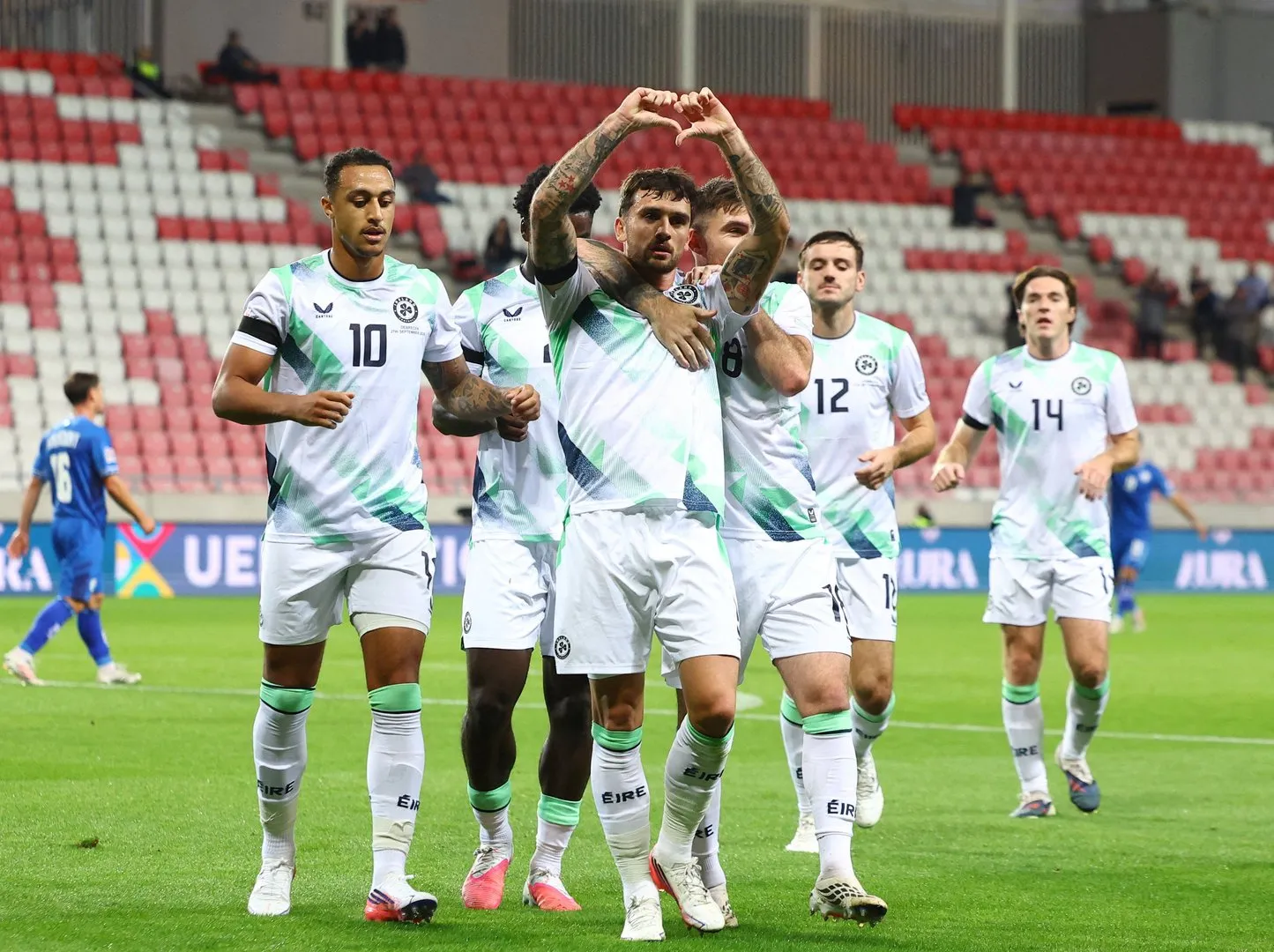
Brown’s two goals were just reward for a player who has been quietly impressive for far longer than this campaign, and he was part of a back-five which stood out in what was a third consecutive clean sheet.
Brodie Spencer and Terry Devlin were drafted in at the full-back positions and both impressed, but Brown’s centre-back partners McConville and Tom Atcheson really shone.
Norwich City defender McConville, 21, commanded his area well and, as well as an assist for Brown, he also allowed the ball to trickle over the line when he could have touched home for the third goal instead of his team-mate.
Atcheson, himself only 20 and playing for Blackburn Rovers in the Championship, made his Northern Ireland debut in Wales in March, but showed composure beyond his years.
O’Neill said both players were “terrific” as he told BBC Sport: “They have no ceiling, to be honest.
“They are both playing in the Championship at the minute but they are ready to go to the next level.
“They will make mistakes at times and we’ve put a lot on them in terms of the physicality. The two of them were brilliant.”
O’Neill was also delighted for Brown, who said he had “really grown” into a senior role in the absence of injured Sunderland defender Dan Ballard.
“Three 90 minutes at this level is tough,” said O’Neill of the 28-year-old.
“He plays his club football in League One and he’s a better player than that.
“He brings a lot to the team. He was our most senior player tonight and he has really grown into that.”
The ultimate aim for O’Neill is to lead his young squad to a first major tournament since 2016 when the next Euros roll around in 2028.
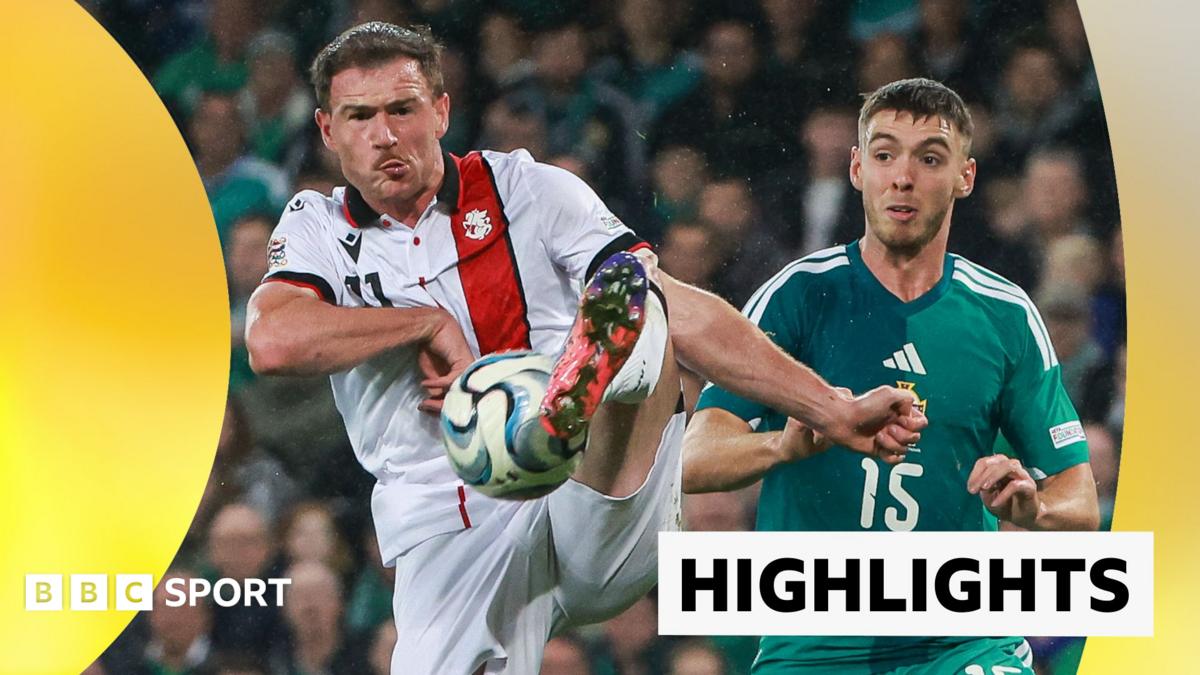
Their return to the second tier in the Nations League has been successful so far, with Charles scoring a 99th-minute winner in Georgia before the team showed their character with a goalless draw at home to Hungary.
The players definitely looked tired in the closing stages of the draw, which can be put down to the 5000-mile return trip to Tbilisi, but they held their own against Dominik Szoboszlai’s side.
Before that, Northern Ireland had kept Paris Saint-Germain winger Khvicha Kvaratskhelia quiet in the opener.
While Ukraine do not have the individual star power of the other teams in League B2, O’Neill knows they are still a dangerous side.
He described them as favourites on Friday night, and pointed to the fact that manager Andrea Maldera had made 10 changes between their opening 1-0 win in Hungary and the goalless draw with Georgia in their second game.
“Ukraine’s strength is in their collective as a team, rather than what we faced against Georgia with Kvaratskhelia and Hungary with Szoboszlai, who are top European players.
“I think that Ukraine have many players that have potential to be on that level and go to the big, big clubs in Europe.
“We haven’t highlighted any one individual, but we’ve looked very closely at how they play, with the ball and without the ball, and I believe their strength is in the collective of the team.”
Read on below for the latest rules on travel regulations when it comes to using ferry crossings.
Sign up for the Travel newsletter
Thank you!
Do I need a passport to travel to Ireland via ferry from the UK?
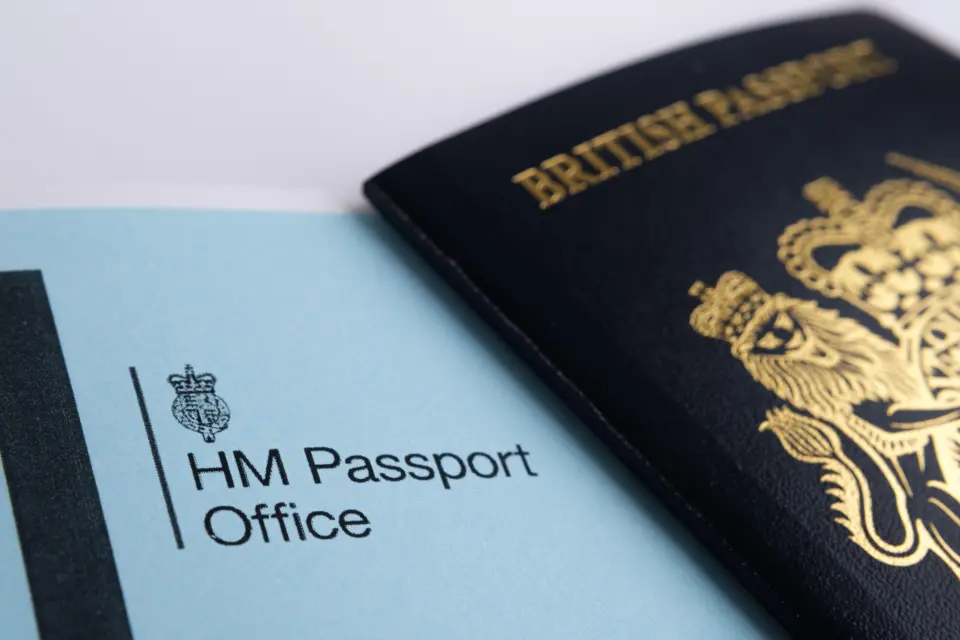
Prior to Monday, 28 September, passengers were able to use routes including Dublin to Holyhead and Rosslare to Pembroke without needing to bring their passport.
However, that has now changed, and you must bring your passport, after identification rules were altered by ferry operators.
Stena Line has stated that all passengers travelling on routes from Dublin, Holyhead, Fishguard or Rosslare would be required to present a valid passport when checking inCredit: John Longley
Previously, anyone travelling on the above routes could use alternative forms of identification, such as driving licences and national identity cards.
Popular operators Irish Ferries and Stena Line have notified customers of the changes following their introduction.
For Irish Ferries routes, the necessity of travelling with a passport applies to its Dublin to Holyhead and Rosslare to Pembroke routes, in both directions.
Meanwhile, Stena Line has stated that all passengers travelling on routes from Dublin, Holyhead, Fishguard or Rosslare would be required to present a valid passport when checking in.
Almost 1.5 million people use the Holyhead to Dublin route each year, meaning it sees around 210,000 lorries and 383,000 cars pass through its port annually.
With more than 210,000 lorries and around 383,000 cars using it every year, Holyhead is the second busiest passenger ferry port to Dover.
Both operators will also accept passport cards, while Irish Ferries has added that anyone travelling who is not a British or Irish citizen and is visiting the UK for up to six months may require an Electronic Travel Authorisation (ETA).
Chances were at a premium at Windsor Park as both defences came out on top.
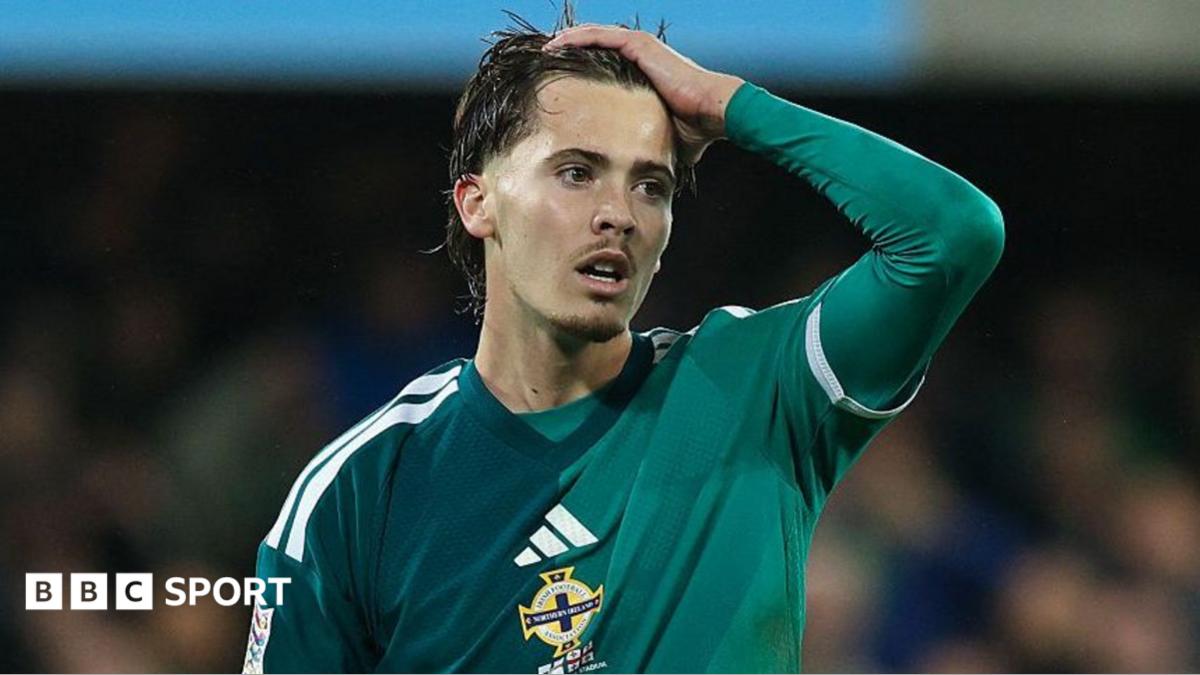
Patrick Kelly hit the crossbar in the first half for Northern Ireland, and Isaac Price had an effort beaten away by Balazs Toth.
After Dan Ballard controversially conceded a penalty in Georgia, Shea Charles also had a penalty appeal waved away in the lead-up to the Kelly chance for a similar incident.
While O’Neill said he had yet to see it back, he did quip that “the referee never seems to make the walk for us to the side of the pitch. It never seems to happen for us.”
The threat of Liverpool midfielder Dominik Szoboszlai was largely nullified throughout the game as Hungary, like Northern Ireland, struggled to create any clear-cut chances.
The only save that Pierce Charles had to make in goal was when a lethargic clearance led to Alex Toth shooting towards goal in the closing stages, but the QPR stopper was otherwise untroubled.
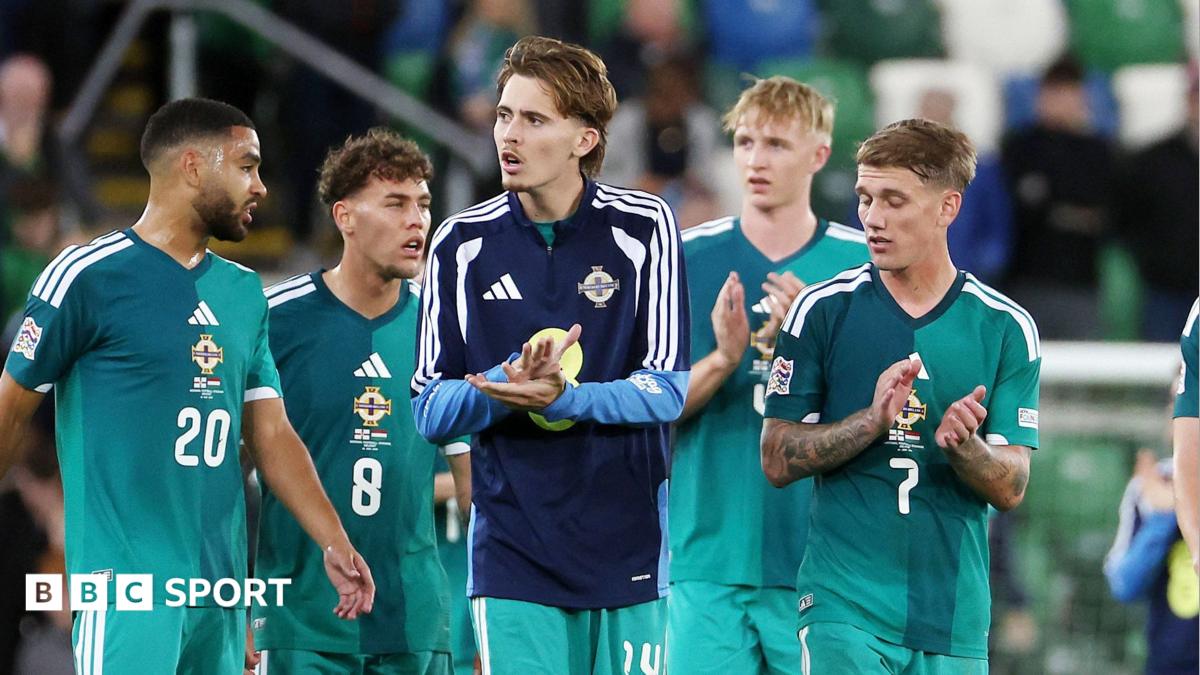
After a 5,000-mile trip from Georgia in their opening game, Northern Ireland had to quickly reset and O’Neill admitted he saw “two tired teams” at the end of the game.
“I think our preparation, our first game in terms of being away from home and everything, was more difficult.
“I felt like Hungary got a little bit stronger towards the end.”
Cricket Ireland has named former international Ed Joyce as its new high performance batting coach, with a focus on the the men’s senior squad and male talent pathway.
Joyce played 151 times for Ireland, scoring 5,552 runs at an average of 40.82 with 10 centuries and 29 half-centuries.
In 2019, one year after his playing retirement, Joyce became head coach of Ireland women and stayed in the role until stepping down last year.
“The head coach role with Ireland women was a great experience and I enjoyed the day-to-day aspect of working with players on developing and improving their techniques and mindset,” he said.
“Despite the power game coming to the fore, having a sound technique and a positive mindset are still crucial aspects for any batter at this level.
“When I look at the Ireland men’s side over recent years, it’s obvious to see the amount of hard work that has gone on behind the scenes in preparing our players to be competitive on the international stage.
“I look forward to getting involved in this work and perhaps adding some insights and knowledge to push the batting group forward. The talent is there, the goal is now consistency.”
‘Yes, we lose in football. But where we don’t lose? The IDF.’
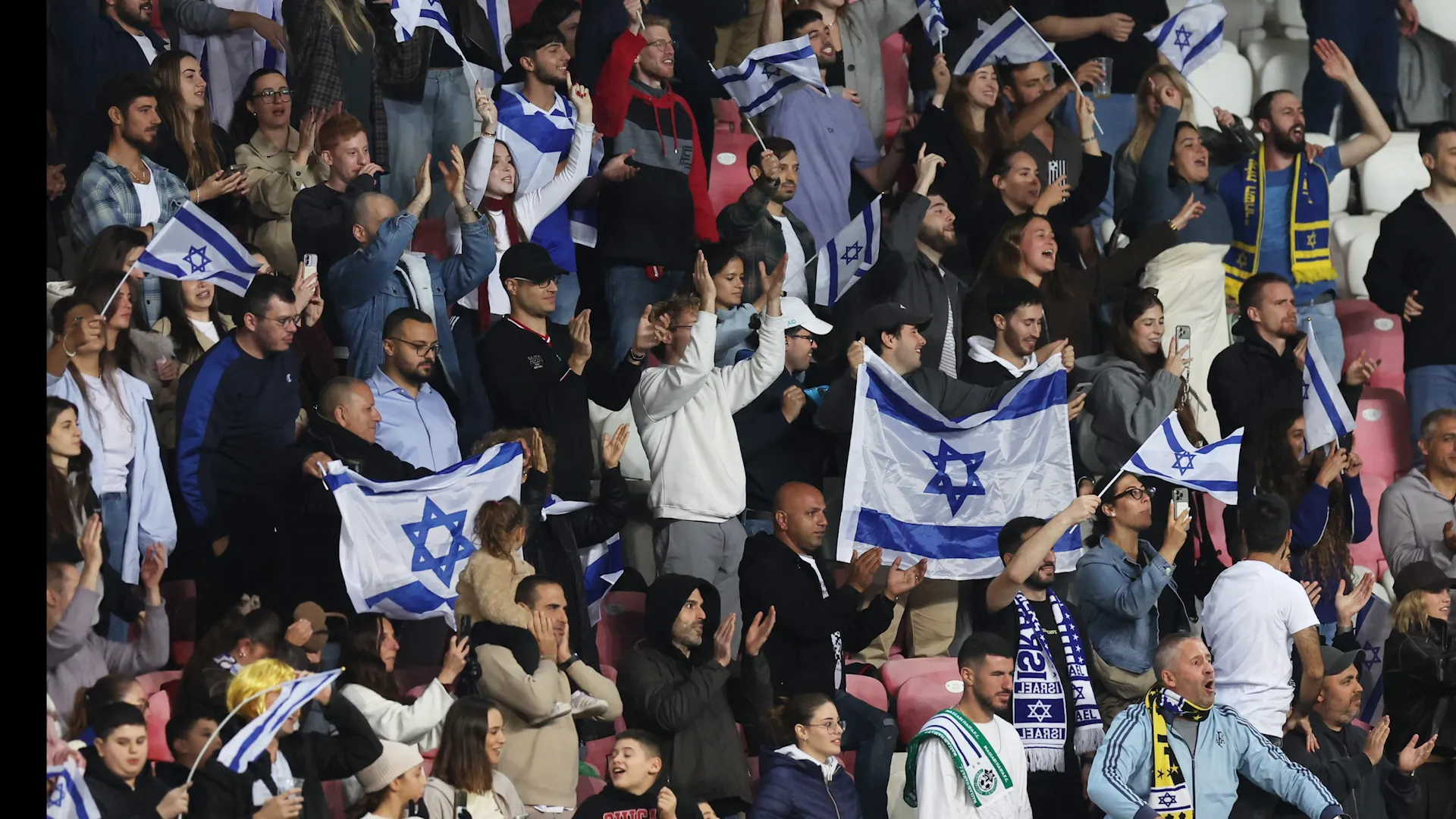
Israeli football fans started chanting about their military after losing 3-0 to Ireland at the UEFA Nations League on Sunday. The Israeli military has committed war crimes in Gaza.
For the first time in 315 days, Northern Ireland are back in Belfast.
Michael O’Neill’s side welcome Hungary to Windsor Park for a Nations League Group B2 contest on Monday night, just 51 days shy of a year since a Jamie Donley penalty saw the side to a 1-0 win over Luxembourg in their previous home fixture.
In the interim, they have played five times on their travels, a run that began with World Cup play-off defeat by Italy in Bergamo in March and concluded with victory over Georgia on Friday night.
If that win in Tbilisi represented a something of a breakthrough in terms of away performances – they had won just two of their previous 12 competitive away games – form back at Windsor has been strong despite the sporadic fixtures.
Since losing to Slovenia in October 2023, only Germany have left Belfast with a win and that a 1-0 triumph on a night the hosts missed numerous good chances.
A run of seven wins in nine home games is in stark contrast to what went before when, in the preceding nine at Windsor Park, Northern Ireland had beaten only San Marino and Kosovo, the latter courtesy of a 94th-minute winner.
O’Neill said he does not put much stock in such runs of form given the changing squads in international football, but acknowledged his team are in “a really good phase” at Windsor Park.
“This is a new team, so they’re not saddled by the performance of previous teams,” he said.
“They love playing here at the stadium. You know there was a period where the team of 2016 [who qualified for the European Championships of that year] didn’t enjoy playing at home.
“Then suddenly they started to win games and they loved playing at home. Teams go through phases and at this moment in time this team is in a really good phase in terms of the home form.”
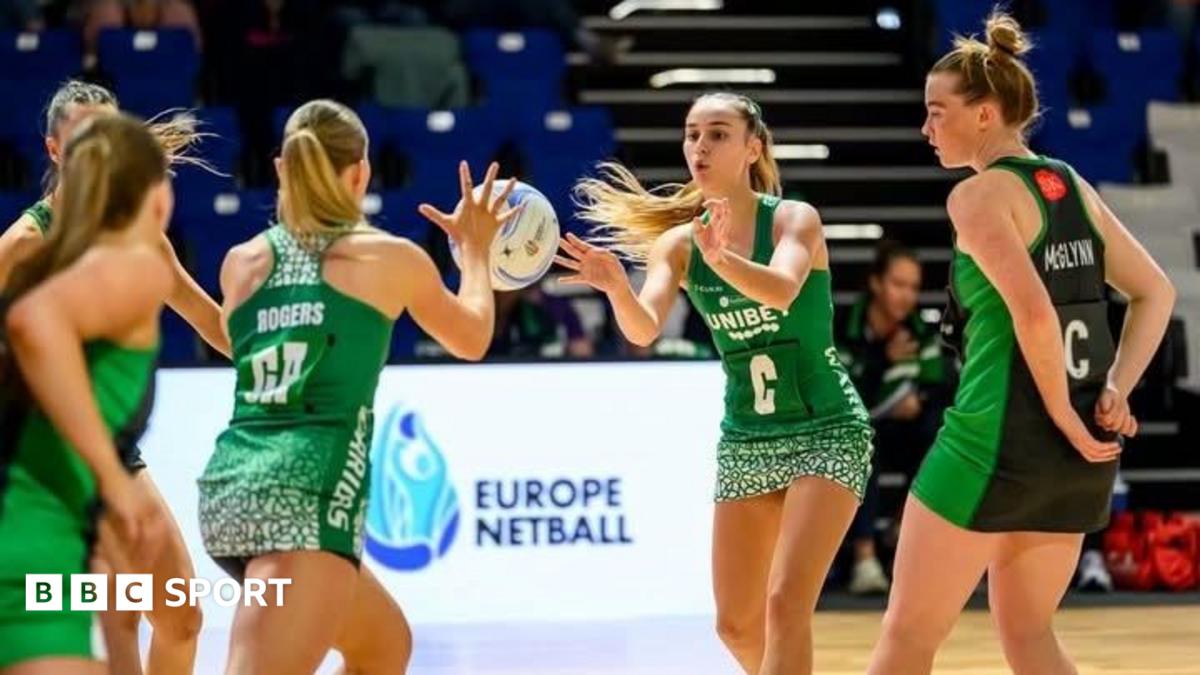
World-ranked number 15 Northern Ireland’s emphatic 73-50 victory over Republic of Ireland in their final qualifier was not enough to secure one of the two qualification spots automatically.
However, Scotland’s narrow win over Wales in Sunday’s later game booked both teams spots with Wales, who are ranked ninth in the world, missing out.
“It was a real rollercoaster of a day,” O’Hanlon continued.
“Obviously we started out with a hard-fought win against the Republic of Ireland, but we knew that we were still relying on Scotland.
“That match was just up and down the whole way through, so we were nerve-wrecked watching that. Just sitting in the stands, not being able to control anything, was nerve-wracking.”
O’Hanlon was captain of the side when they finished 10th in the World Cup seven years ago.
But, now, the 42-year-old said the squad will head to Sydney with ambitions of competing for results rather than simply gaining experience.
“The last one we were at was in Liverpool and there was a lot of home support, but Sydney is the home of netball at the minute,” O’Hanlon added.
“Sydney is the centre of the best league in the world. It’ll be a brilliant spectacle and it’s just class to be a part of it.
“The group will be going into the games not just to experience, not just to learn, but to actually go on and compete and try to win games and get results. That’s the next step for us really.”
Ireland scored a 3-0 victory over Israel in a politically-charged UEFA Nations League match played in Hungary. The game went ahead despite calls for a boycott with the Irish players wearing black armbands in support of the people of Gaza.

![Portadown Orangemen march from Drumcree Church to start their march towards Garvaghy Road, which was stopped a short distance later by police, in Portadown, Northern Ireland on September 27, 2026 [AFP]](https://i0.wp.com/www.aljazeera.com/wp-content/uploads/2026/10/afp_6abfeb6d30a8-1790962541.jpg?w=640&ssl=1)

![UVF flags fly alongside UK flags in the Edgarstown estate, Portadown, Northern Ireland, on October 1, 2026 [Caolán Magee]](https://i0.wp.com/www.aljazeera.com/wp-content/uploads/2026/10/DSC00033-1790961495.jpg?w=640&ssl=1)
![Orange Order members sit outside Drumcree church as they await passage along Garvaghy Road in Portadown, Northern Ireland, on October 1, 2026 [Caolán Magee]](https://i0.wp.com/www.aljazeera.com/wp-content/uploads/2026/10/DSC00113-1790961532.jpg?w=640&ssl=1)
![Children play on the embankment as music rings out along Garvaghy Road in Portadown, Northern Ireland, on October 1, 2026 [Caolán Magee]](https://i0.wp.com/www.aljazeera.com/wp-content/uploads/2026/10/DSC00134-1790961539.jpg?w=640&ssl=1)
![A ‘Garvaghy Road says no’ sign with an Irish tricolour in the background in Portadown, Northern Ireland, on October 1, 2026 [Caolán Magee]](https://i0.wp.com/www.aljazeera.com/wp-content/uploads/2026/10/DSC00064-1790961515.jpg?w=640&ssl=1)