Netherlands

Dutch riot police break up violent far-right protest in The Hague | The Far Right News

Justice minister condemns ‘Hitler salutes, antisemitic slogans, violence’ at the anti-immigration rally.

Dutch riot police have intervened at a protest against immigration and asylum policies after about 500 far-right demonstrators pelted them with projectiles and fireworks .

Police used baton charges and dogs to break up the demonstration in The Hague on Saturday, reported the AFP news agency.

Recommended Stories

list of 4 itemsend of list

Local authorities said the demonstration was ended because of continued violence, and protesters were escorted away from Malieveld park in the city centre.

Police said they arrested 24 people and deployed water cannon to disperse the rioters. Further investigations were underway, they added.

Prime Minister Rob Jetten said on X that the demonstrators deliberately sought confrontation with the police and chanted “abhorrent” far-right and antisemitic slogans

Justice Minister David van Weel condemned the violent scenes and slogans.

“Identical images from the Malieveld. Hitler salutes, antisemitic slogans, violence against the police and throwing fireworks at the riot squad,” he posted on X. “It is important that hardline action is taken against this.”

He also thanked police officers for helping to maintain the democratic rule of law.

The “Wij zijn het volk” rally, which translates to “We are the people”, was organised to protest against government policies in the Netherlands’, specifically on immigration.

The protesters had planned to march through The Hague, but local authorities banned it when violence began and ordered the demonstration to be broken up.

A child runs with the Prince's Flag with the symbol of the Dutch East India Company during a far-right demonstration in The Hague, Netherlands, September 19, 2026. REUTERS/Nicolas Economou
The Prince’s flag with the symbol of the Dutch East India Company during the far-right demonstration in The Hague on Saturday [Nicolas Economou/Reuters]

Someone at the rally was seen giving a Hitler salute, while a truck serving as a stage displayed a screen reading “The Netherlands is for the Dutch,” according to the country’s largest national news agency, Algemeen Nederlands Persbureau (ANP).

Protester Thijs Jansen, a 31-year-old mechanic, told AFP: “We’re losing our country. We’re literally losing our country to mass migration”.

Saturday’s unrest came a year after Dutch police used water cannon to disperse another anti-immigration rally in The Hague.

A police car was then set on fire in clashes between black-clad protesters and police, as the headquarters of the centrist D66 party were attacked. Its leader, Rob Jetten, is now prime minister.

Source link

Ireland boycotts Eurovision for second year over Israel’s inclusion | Israel-Palestine conflict News

Public broadcaster RTE says the country’s participation cannot be justified amid ‘appalling and ongoing loss of lives in Gaza’.

Ireland has become the second country, after the Netherlands, to announce a boycott of next year’s Eurovision Song Contest over Israel’s participation.

Irish public broadcaster RTE said in a statement on Thursday that the country’s participation could not be justified “given the appalling and ongoing loss of lives in Gaza” and that the humanitarian crisis in the enclave “continues to put the lives of so many civilians at risk”.

Recommended Stories

list of 3 itemsend of list

RTE, which manages Ireland’s selection and participation in Eurovision, added that it remained “deeply concerned by the continued denial of independent access [for] international journalists to the territory”.

The decision marks the second consecutive year that Ireland will neither participate in nor broadcast the competition, which is the world’s most popular television music show.

Earlier this month, Eurovision organisers said they were excluding any country involved in an armed conflict from hosting the competition.

However, the Dutch public broadcaster Avrotros said the exclusion of countries in conflict was not “sufficient”.

Avrotros announced last month that it was withdrawing from the 2027 competition.

It said Eurovision could “no longer be considered neutral” given Israel’s participation in “a large-scale military conflict” in Gaza.

Both Ireland and the Netherlands were among five countries that withdrew from Eurovision 2026 in Vienna earlier this year. Spain, Slovenia and Iceland also decided not to participate.

Eurovision Director Martin Green said on Thurday that organisers “fully respect” Ireland’s decision and that they “will be missed”.

“The Eurovision Song Contest is at its best when broadcasters and their artists from different countries come together to share music, celebrate creativity and create connections between audiences,” Green said.

“That power to bring people together is at the heart of what makes the Contest so special, and is even more important now in an increasingly difficult and divided world.”

The 2026 show, which Bulgaria won, attracted 132 million viewers, 34 million fewer than its 2025 edition.

Thousands of protesters gathered outside the venue in the Austrian capital during the final in mid-May to oppose Israel’s participation.

The European Broadcasting Union organises the annual music competition. It has faced accusations of applying a double standard for refusing to exclude Israel, despite banning Russia following its invasion of Ukraine in 2022.

Source link

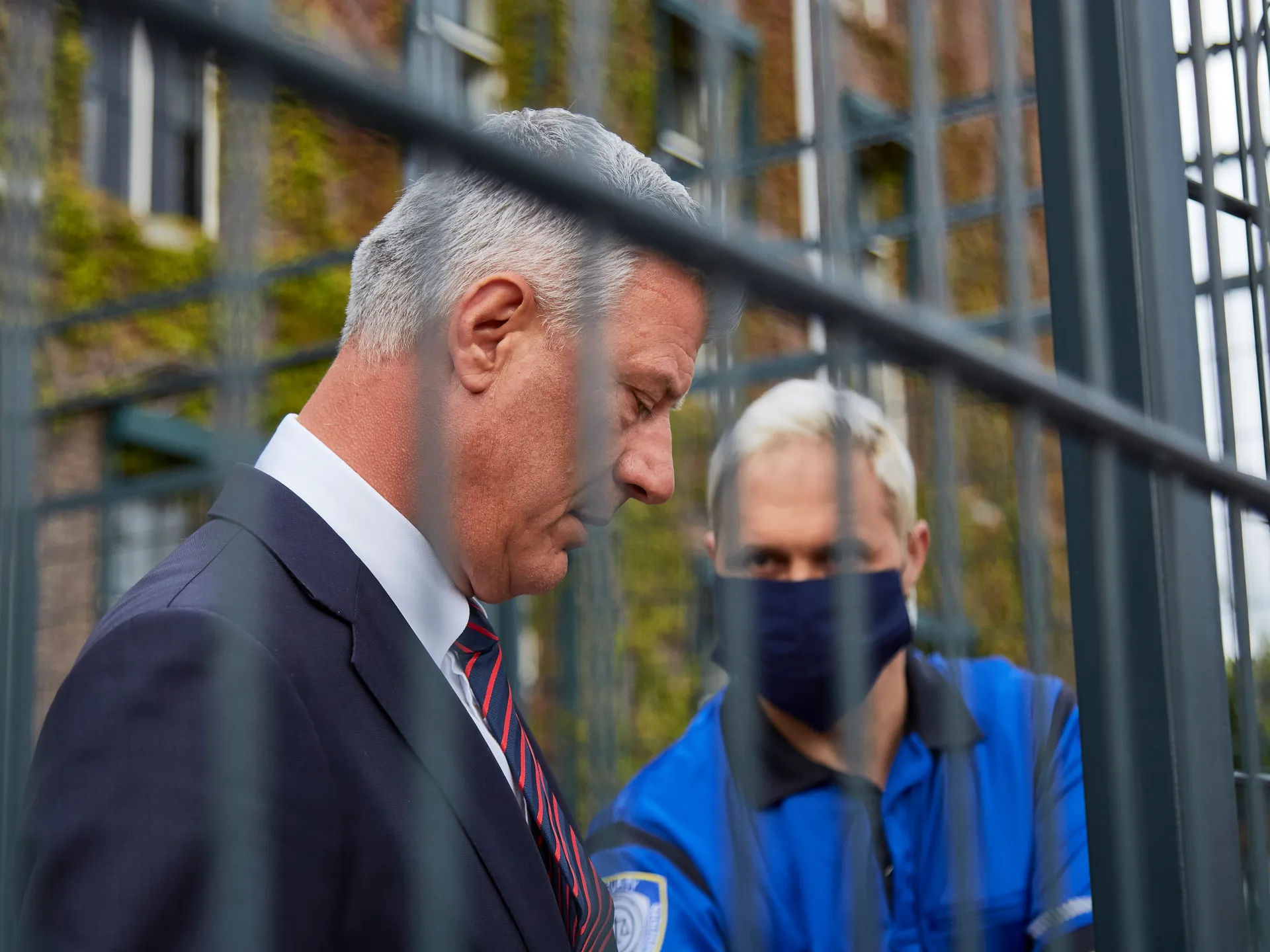
Former Kosovo President Hashim Thaci faces verdict for alleged war crimes | The Hague News

Prosecutors have requested a 45-year jail sentence for Thaci and three wartime commanders accused of war crimes.

The Kosovo war crimes tribunal will on Wednesday deliver its verdicts in the case of former President Hashim Thaci and several wartime commanders accused of murder and torture during the self-declared republic’s break from Serbia.

Thaci, 58, is facing several counts of war crimes and crimes against humanity, including murder, torture and persecution, along with three former commanders from the ethnic Albanian Kosovo Liberation Army (KLA), a separatist militia that fought Serbian troops.

Recommended Stories

list of 3 itemsend of list

Thaci and the other former high-ranking commanders, Jakup Krasniqi, Rexhep Selimi and Kadri Veseli, deny the charges.

Prosecutors have requested 45-year prison sentences for each of the men.

The case is extremely contentious within Kosovo, where Thaci remains a revered figure for many Kosovan Albanians due to his role in the 1998-99 independence war.

On Saturday, tens of thousands gathered in the capital, Pristina, to call for their acquittal in the latest of several rallies since the trial began. Portraits of the four former KLA fighters have been plastered across the city along with a huge digital clock counting down to the verdicts.

“In the name of the people, declare them innocent,” one banner read.

According to prosecutors, the men targeted political opponents and civilians perceived as collaborators and traitors during their time in the KLA.

Thaci’s lawyers argued in February there is no evidence that directly links him to any of the crimes.

“There are no orders in the record from Thaci to perpetrators of crimes. There are no reports from perpetrators of crimes to Thaci,” lawyer Luka Misetic told judges at the Kosovo tribunal in February.

Most of the 13,000 people who died in the war in Kosovo were ethnic Albanians. A 78-day campaign of NATO air attacks against Serbian forces ended the fighting. About one million ethnic Albanian Kosovars were driven from their homes.

In 2008, Kosovo declared its independence from Serbia, a move that Belgrade refuses to recognise. Ties between Kosovo and Serbia remain tense, despite years of negotiations mediated by the European Union.

Source link

EES delays update over 9 UK tourist destinations – key details

EES delays update over 9 UK tourist destinations – key details – The Mirror


reach logo

At Reach and across our entities we and our partners use information collected through cookies and other identifiers from your device to improve experience on our site, analyse how it is used and to show personalised advertising. You can opt out of the sale or sharing of your data, at any time clicking the “Do Not Sell or Share my Data” button at the bottom of the webpage. Please note that your preferences are browser specific. Use of our website and any of our services represents your acceptance of the use of cookies and consent to the practices described in our Privacy Notice and Terms and Conditions.

Source link

Major EES update for 9 UK tourist hotspots including Portugal

The European Union entry-exit system (EES) has caused repeated delays for Brits at major EU airports this year

British holidaymakers heading abroad may finally be able to breathe a sigh of relief over the widely-criticised EES system. The scheme forces non-EU residents to queue at special machines in airports before gaining entry to 29 nations within the so-called Schengen area – essentially the majority of the European Union.

However, there have been persistent reports of lengthy delays – some stretching to as long as four hours. A new report in the Sunday Times now reveals that the European Union has shelved the controversial entry-exit system (EES) across at least nine countries.

Portugal, Italy, France, Belgium, the Netherlands, Germany, Malta, Greece and Switzerland are all understood to have been granted permission to postpone full implementation of EES. The newspaper reports that there appears to be no deadline by which these countries must adopt the scheme, which has already sparked widespread reports of enormous queues at European airports this summer in destinations such as Mallorca, Faro, the Canary Islands and Milan.

The scheme has faced fierce criticism from Ryanair and others. The European Union describes the Entry/Exit System (EES) as an automated IT system designed to register non-EU nationals travelling on short stays each time they cross the external borders of participating European countries.

Following years of postponements, the system was rolled out from October 2025, with full implementation originally anticipated by the following April. However, faced with the prospect of significant border queues due to software failures, officials granted countries a 150-day grace period during which they could drop the checks to avoid travel chaos.

That rule ended on September 6. The EU previously insisted there would be no extension.

Yet the Sunday Times reports that at least nine Schengen countries are understood to have told the European Commission, which is responsible for overseeing the EES, that they would not enforce the new controls in full until the technology and systems were working correctly.

They have informally been allowed to do so with no time limits apparently in place to adopt the system, it is being reported. One of the main purposes of the system is to track whether non-EU citizens have spent more than their permitted 90 days in the bloc in a rolling 180-day period.

Social media has been awash with debate about the scheme. One post on Reddit saw a traveller say: “They made a mess of it. Seems many basic things like it is hit and miss on the document scanning but also things like people walk up with hats and headphones and the machine doesn’t tell them to remove them, and organisational things like if the machine errors the traveller has to back out and has no where to go.

“The right way to do this would have been progressive: start by getting some people eg 5% going through the machine lane, everyone else through normal.

“The vendor observes problems, fixes them, once machine working well, increase to 10%, then 20% and so on.” Another person said: “The general lack of functionality of so many IT systems across the EU is kind of astonishing.”

A third added: “It’s worse than that. There isn’t even consistent protocol/IT support within a single EU airport.”

Another put it more simply, saying: “I just miss having stamps.”

‘People are missing their flights’

Nadia, from Greater Manchester, told the Guardian in August she had made two trips to Schengen areas this summer. A trip to Tenerife in June was “quite straightforward”, but her experience in July at Frankfurt airport where she was picking up a connecting flight home, was much less so.

“The queue there was ridiculously long, and there was very limited information,” she says. “People were wandering around trying to work out where they needed to go.

“I’m very well travelled and pretty confident, but even I was slightly unsure and was thinking, is there some other queue I should be joining? There was no one nearby to check with without losing your place.”

Eventually, her passport was checked. “He didn’t actually take fingerprints then,” says Nadia, who is a solicitor. “I think the queue was so long they decided to dispense with that.

“It’s the efficiency of the system I question and the fact that individual member states’ systems do not talk to one another. They shouldn’t need to get information again if you have already gone through. It’s pretty shambolic, and I think people missing their flights because of it is just not acceptable, especially when there’s no recourse; it’s not your fault.”

Ryanair chief executive Michael O’Leary has repeatedly complained about EES. Speaking earlier this year, he said: “There’s a bit of Brexit in this too. Here, you voted for Brexit – f***ing join the queue.”

Source link

Dutch Pension Shift Hits Long-Term Debt Market

European CFOs must adjust as the region’s biggest pension buyer of long-dated debt cuts back.

This article appears in the September 2026 issue of Global Finance Magazine.

The Netherlands pension system is beginning to reduce one of Europe’s most reliable sources of demand for long-dated debt as a broad regulatory shift changes how Dutch pension funds manage their assets and liabilities. ING Groep NV estimates that nearly €600 billion ($699 billion) of assets have already been affected by the change, with more than €900 billion expected to follow early next year.

Under the old defined-benefit pension system, Dutch funds were required to hedge the interest-rate sensitivity of long-term pension liabilities by using long-dated bonds and swaps to match assets with payments extending decades into the future. Under the new defined-contribution model, which became law in 2023, that liability matching requirement has been significantly reduced, allowing funds to carry less duration and scale back their long-term hedges, resulting in less structural demand for the longest-dated debt and swaps.

For European CFOs, this could mean a higher premium for 20-, 30- and 50-year borrowing as companies and governments compete for a smaller pool of long-duration investors.

The change “should reduce structural demand for long-end duration assets and support curve steepeners over the long-term horizon,” wrote Sara Adjir, senior vice president and portfolio manager, and Jeroen van Bezooijen, account manager, at Pacific Investment Management Co., in a research note. They expect the impact will be mostly concentrated in 50-year swaps, but will also be felt in the demand for 20- and 30-year euro swaps and government bonds, including German and Dutch debt.

Deadlines

The Netherlands runs Europe’s largest pension system, with roughly €1.6 trillion in assets, and every fund must complete the switch by January 2028. Dutch pensions have long dominated the market for European long-dated debt, holding around €88 billion of interest-rate swaps maturing beyond 25 years at the end of last year, roughly a quarter of the total.

The first major wave of the transition came on Jan. 1, when 24 funds converted, among them the healthcare scheme PFZW and the metals scheme PMT, with an estimated €550 billion to €600 billion of pension assets between them. Analysis by the Netherlands central bank shows that Dutch pensions bought almost €34 billion net of swaps maturing inside 25 years while selling more than €12 billion of longer-dated ones. 

The bigger test, however, comes when more than €900 billion of pension assets is scheduled to convert on Jan. 1, with the Dutch civil service scheme ABP accounting for about €530 billion of that. 

The shift does not mean long-dated Dutch debt is suddenly becoming illiquid or even hard to sell: “Overall, we still see strong demand for our 30-year bond. Remember, we are AAA,” said Saskia van Dun, director of the Dutch State Treasury Agency.

Sovereign Issuers Adjust

Data indicates that sovereign borrowers are already adjusting to the change.

The share of Netherlands government bonds sold at maturities beyond 10 years fell from 42% at the start of 2025 to 31% by the third quarter, according to the Organization for Economic Co-operation and Development (OECD), which calls the constraint on long tenors structural. The OECD expects eurozone debt agencies to sell a record €1.35 trillion of medium- and long-term bonds this year into that thinner pool of demand.

For European finance chiefs, however, times are changing. For two decades, long-dated bond demand was unusually deep and predictable. As it recedes, the shifting cost of locking in 20 or 30 years of funding could become a live question.

Thomas Monteiro is a contributing writer based in Spain.

Source link

Five EU nations inch towards deal on migrant ‘return hubs’ by 2027 | Migration News

Germany, Austria, ⁠Greece, Denmark and the Netherlands did not outline where the centres would be located.

Five European nations have agreed on concrete steps towards a deal with an unspecified non-European Union country to host migrant return facilities, senior officials said, in a sign of mounting determination to counter immigration.

Germany, Austria, ⁠Greece, Denmark and the Netherlands, known as the Group of Five, aim to sign deals this year to send migrants without legal residency to countries outside the European Union. The nations expected to host return centres have not been named.

Recommended Stories

list of 3 itemsend of list

“Around New Year, we expect to have a common understanding with a partner country outside of the European Union,” Danish Immigration and Integration Minister Morten Bodskov told reporters on Friday at a news conference in Copenhagen, without elaborating.

“It’s a new chance to have a life in a partner country,” he said, adding ‌that the five nations would be in dialogue with the International Organization for Migration and the United Nations Refugee Agency (UNHCR) on their next steps.

A spokesperson for UNHCR said the agency had not been approached with ‌details ‌of the proposal and therefore could not comment.

The Group of Five is set to reconvene in Munich, Germany, at the end of September to advance the plan.

German Interior Minister Alexander Dobrindt confirmed that the group wants “to reach an agreement with ‌third countries this year that will enable the establishment of return hubs”.

The European Parliament in June approved an overhaul of migration policy aimed at speeding up deportations and allowing member states to set up centres abroad, in what some critics of the policy say could weaken safeguards for asylum seekers.

The Council of ⁠Europe, a non-EU body that promotes human rights, democracy and the rule of ⁠law, said in July that the proposed return hubs posed “considerable human rights risks”.

Danish Refugee Council Secretary-General Charlotte Slente said a better policy would be to implement the EU Pact on Migration and Asylum, which focuses ⁠on stricter border screening, faster return procedures and expanded digital systems for managing asylum claims.

“Return hubs focus on a small number of returns; they ⁠will not stop people from taking even more dangerous routes, and ⁠they could violate basic human rights,” she said.

Source link

Police arrest 34 after deadly gang shootout in eastern Netherlands | Drugs News

Several foreign suspects were among those arrested, according to prosecutors.

Dutch police have arrested ⁠34 ⁠suspects after a drug-related shooting in a small town in the east of the country that left a security guard dead and two police officers injured.

Jolanda Aalbers, head of the regional police, told reporters on Tuesday that a “large group” of masked men had opened fire at 4am (02:00GMT) when police arrived at a house in Overasselt, a village near the German border, to investigate reports of suspicious activity.

Recommended Stories

list of 4 itemsend of list

During the shootout, a 51-year-old security guard was killed while two of the officers arriving at the scene sustained injuries that were not life-threatening, Aalbers said.

“When the first police unit arrived at the scene, shots were fired immediately,” the police chief said. “That was an incredibly traumatic incident. They had to rescue their colleagues and get them to safety. I have tremendous respect for what they did.”

Aalbers added that several weapons, data storage devices, and vehicles were seized at the scene.

Among those arrested ⁠were suspects from the ⁠Netherlands, Belgium, France, and Algeria, according to regional prosecutors.

They said that there were indications the shooting was connected to a “long-running” conflict, as the same house had ⁠been shot a dozen times in a single incident last ⁠year. Two people were convicted in that incident.

Local media linked the incident to the criminal underworld of Dutch drug lord Jos Leijdekkers, also known as “Bolle Jos” (“Fat Jos”). One of the Netherlands’ most wanted criminals, he was previously convicted for his role in international cocaine trafficking.

Dutch Minister of Justice and Security David van Weel said that police “acted swiftly in response to the life-threatening situation in Overasselt, which involved an unprecedented number of people”.

In a post on X, he noted that 34 arrests had been made and said “the investigation is still ongoing” while condemning the “horrific act of violence”.

Source link

Infantino must go by 2027 in FIFA overhaul, Dutch football body says | Football

KNVB invites associations and confederations to a summit to discuss the overhaul of FIFA and how it runs football.

FIFA president Gianni Infantino must be replaced by 2027, along with an overhaul of football’s global governing body, the Dutch football association (KNVB) has said.

The KNVB, one of FIFA’s ⁠⁠founding members in 1904, issued a scathing statement on Sunday, saying it had lost confidence in Infantino and wanted to reshape the body rather than just change leadership at the top.

The Dutch body wants to host ⁠⁠an international summit in Amsterdam and has invited football associations and confederations from around the world to participate.

Infantino is expected to run for re-election to the FIFA presidency in March, but world regional football bodies have considered a vote of ‌‌no confidence after his aborted proposal to sell a stake in FIFA events like the World Cup to private equity investors.

“The KNVB no longer has confidence in the leadership of FIFA President Gianni Infantino. We believe FIFA needs new leadership from 2027 onwards,” it said in the statement.

“But a new president alone is not enough. The way FIFA is governed must change as well.

“The KNVB supported Infantino in the most recent presidential election. That support was never ⁠⁠unconditional.”

The KNVB proposed an “International Summit on the Future of FIFA”, ⁠⁠emphasising it should determine “what kind of FIFA we want” before identifying new leadership.

“We see too much power concentrated around the FIFA president and insufficient separation between the President and the FIFA administration,” they added.

FIFA did not respond to Al Jazeera’s request for a comment on KNVB’s statement and proposed plans for a summit.

Calls to revamp FIFA’s power structure

Among KNVB’s key demands was a revamp of the decision-making process in the organisation. It called for FIFA’s congress to take the call on key decisions under the governance and supervision of its council.

It proposed a shift of power, whereby the organisation’s secretary-general leads and the president plays the role of representing FIFA globally.

The Dutch body outlined three reform priorities: better governance with stronger checks and balances, putting human rights and sustainability at the heart of ⁠⁠decision-making and stronger international cooperation.

It also wants FIFA to work towards ⁠⁠reinvesting up to 90 percent of its distributable revenue in football development.

Infantino said last week it was FIFA’s job to close the gap between its wealthy members and those that have few financial resources.

“This should not be a European plan for the ‌‌rest of the world,” the KNVB said.

“We want to develop this new direction together with FIFA’s 211 Member Associations and the confederations from all parts of the world.”

The KNVB is part of ‌‌UEFA, ‌‌which asked a United States federal court for permission to obtain testimony and documents from FIFA entities in Florida for use in a planned criminal complaint in Switzerland against Infantino.

Source link

Why a Christian group is suing the Dutch government for West Bank trade ban | Occupied West Bank News

Dutch group Christians for Israel is taking the government to court in the Netherlands over its plans to introduce a ban on importing goods from illegal Israeli settlements in the occupied West Bank and Golan Heights.

The ban, which was announced in July, is due to take effect on September 22 and will run for three years. It bars importing, buying and selling goods produced in Israeli settlements, as well as intermediary services and any attempt to circumvent the rules.

Recommended Stories

list of 3 itemsend of list

But the Israel Product Centre (IPC), part of Christians for Israel (CvI), a Dutch evangelical organisation which a recent study found has donated about $300,000 to illegal settlements in the occupied West Bank, has responded by filing summary proceedings against the state, with the hearing due today.

Here’s what we know about this case.

What is the case about?

The IPC has issued summary proceedings against the Dutch state, seeking to block the July decree.

The IPC argues the measure is “one-sided” and that the window it now has to clear its existing stock – some 20,000 bottles of wine – is too short.

It is also arguing that a national ban conflicts with the European Union’s principle of free movement of goods.

A verdict is not expected for about two weeks.

How has this case come about?

EU rules have long required goods from illegal settlements in the occupied West Bank to be labelled by their origin – Palestine – rather than as “product of Israel”, but the bloc has not placed an outright ban on trading with Israeli settlements. That remains up to individual countries.

In February 2020, the Dutch advocacy group DocP urged consumers to file complaints with the Dutch food safety authority, NVWA, if they found wine and Dead Sea cosmetics had been mislabelled.

Following complaints, the IPC changed its labelling to “product uit een Israelisch dorp in Judea & Samaria [product from an Israeli village in Judea and Samaria],” which it argued accurately reflected the exact geographical and administrative reality of the origins of the products without deceiving the buyer. Judea and Samaria is the biblical name used by the Israeli government to refer to the West Bank. DocP argued this fell short of the requirement to label products correctly, and continued its campaign.

In 2021, the NVWA agreed and fined the IPC 2,100 euros (about $2,500) for mislabelling goods.

Then, in July 2024, the International Court of Justice (ICJ) issued an advisory opinion that Israel’s presence in the occupied Palestinian territory is unlawful and must end “as rapidly as possible”.

This shifted the legal argument beyond mere consumer labelling, with the court saying countries should take steps to prevent trade or investment relations which help to maintain the unlawful presence of Israeli settlers in the Palestinian territories.

The lower house of the Dutch parliament acted on that in September 2025, proposing an import ban.

The national decree against importing goods from Israeli settlements was made in July this year.

Does Christians for Israel describe the West Bank as ‘Israel’?

CvI describes the West Bank as a “disputed territory” rather than accepting the international legal description of it as “occupied Palestinian territory”.

It says it believes that Israel has strong claims to sovereignty there and that Jews have a right to live there.

The vocabulary matters in a legal sense, as “disputed territory” is not the same as “annexed territory”, therefore, the legal apparatus which would make settlement trade unlawful doesn’t straightforwardly apply.

The group’s stated reasons for funding projects there, it says on its website, are rooted in the Bible; it cites Ezekiel 47:21-23: “Peace for the Jewish people and resident foreigners inheriting alongside the tribes of Israel.”

However, the ICJ’s July 2024 advisory opinion is clear that the Fourth Geneva Convention’s Article 49(6) and successive Security Council resolutions treat the territories as occupied and the settlements as unlawful.

INTERACTIVE - Occupied West Bank - Settlement expansion JULY 27, 2026
(Al Jazeera)

How have other Christian organisations in the West responded to trade with settlements?

Western churches are split on the issue, with CvI sitting at one end of the spectrum.

Mainline Protestants, including the Presbyterian Church in the United States, have divested shareholdings in Caterpillar, HP and Motorola Solutions as early as 2014, and from Israeli bonds in 2024. The United Methodist Church has opposed Israeli settlements since 1996 and sold its Israeli bond holdings last August.

The World Council of Churches called for sanctions against illegal Israeli settlements in 2025, divestment and an arms embargo.

The Vatican calls settlements an obstacle to peace but has avoided divestment so far.

Christian Zionist bodies, however, including Christians United for Israel (CUFI) and the International Christian Embassy Jerusalem, send funding for settlements and fight against boycotts.

How significant is this ban?

It is significant considering that the Netherlands is one of only four EU countries currently imposing a ban on trade with illegal Israeli settlements.

Trade from illegal settlements to the EU is estimated to be worth up to $400m per year.

The Netherlands is also a big market for the illegal settlements; a recent investigation by legal advocacy group Global Echo, which analysed thousands of shipments from Israeli settlements between 2017 and 2026, shows that within the EU, the Dutch market is the largest importer of goods from illegal settlements, with about 30 percent destined for or passing through the country.

Which European countries have banned products from West Bank settlements?

Spain has banned all imports of products from illegal Israeli settlements in the occupied Palestinian territory, including the West Bank, East Jerusalem and the Golan Heights, since September 2025. The decree also enforces an embargo on defence exports and dual-use technology to Israel, bans ships carrying military fuel for Israel from Spanish ports, and restricts advertising for services or goods linked to Israeli settlements.

Ireland’s parliament approved the text of its Israeli Settlements (Prohibition of Importation of Goods) Bill in May and the bill was signed into law in July. It covers all goods produced in Israeli settlements, but excludes services.

Belgium’s federal government approved a draft royal decree in July introducing a specific regime for goods from Israeli settlements in the West Bank and East Jerusalem. The precise details of the new law will be determined by the government in due course.

Slovenia imposed restrictions on imports from Israeli settlements under its previous government, but the new conservative government reversed them in June 2026.

The EU as a bloc remains deadlocked over whether a ban counts as foreign policy requiring unanimity or trade policy needing only a qualified majority, with ministers not meeting again in a decision-making format until October.

Israeli Foreign Minister Gideon Saar last year described the push by some European governments to implement the ICJ advisory opinion as “shameful”.

Which European countries still allow trade with West Bank settlements?

Nearly all of them.

Outside the three European Union states which still have bans in place, settlement goods can be sold legally everywhere, including in most of the EU.

At a July 2026 meeting of EU foreign ministers in Brussels, which addressed trade from Israeli settlements in Palestinian territories, Germany, Austria, Czechia and Hungary were opposed to an EU-wide ban.

Beyond the EU, the United Kingdom does not forbid trade with illegal Israeli settlements, although new Prime Minister Andy Burnham is reportedly considering a ban. In a recent parliamentary briefing, Amnesty International called on the UK government to implement a ban.

It said: “The argument for a UK ban on trade with settlements is clear. The UK government itself accepts it should take stronger action in response to settlement expansion and annexation. The International Court of Justice has directed states not to trade with Israel in relation to the Occupied Palestinian Territory; and there is precedent in UK law and policy to not trade with illegally occupied lands, ie Crimea and other illegally occupied parts of Ukraine.”

Source link

Dutch public broadcaster to boycott ‘no longer’ neutral Eurovision | Arts and Culture News

AVROTROS says escalating international conflicts are undermining the event’s neutrality and fuelling divisions.

The public broadcaster in the Netherlands has announced it will not participate in next year’s Eurovision Song Contest because the event can “no longer be considered neutral” due to ongoing divisions over the war in Gaza.

“It is undeniable that international conflicts are increasingly affecting the Contest, undermining its neutral character. The Eurovision Song Contest has therefore become a platform for division,” said Taco Zimmerman, Director-General of AVROTROS, in a statement on Monday.

Recommended Stories

list of 3 itemsend of list

The widely-watched show has recently faced a series of boycotts over Israel’s participation. Organisers announced earlier this month that they would exclude any country involved in an armed conflict from hosting the competition.

“However, the recently announced changes… do not provide sufficient confidence that the independent and neutral character of the Eurovision Song Contest has been restored,” the AVROTROS statement added.

Israel finished second in the competition – the world’s largest live televised music event – in both 2025 and 2026.

Next year’s Eurovision is due to be held in Bulgaria’s Black Sea city of Burgas, after Bulgarian singer Darina Yotova, known as Dara, won this year’s contest in Vienna, Austria, with her catchy floor-filler ‘Bangaranga’. The contest on May 15 will be the first time the Balkan nation has hosted.

Since its launch in 1955, Eurovision has become the ultimate pop platform, catapulting Swedish icons ABBA to worldwide fame, while also boosting the careers of artists such as Celine Dion, Cliff Richard and Olivia Newton-John.

However, this year’s competition pulled in 131 million viewers, 35 million fewer than last year, after five countries boycotted over Israel’s participation. The Netherlands, Iceland, Spain, Ireland, and Slovenia all pulled out, with the latter three refusing to broadcast the show at all.

Source link