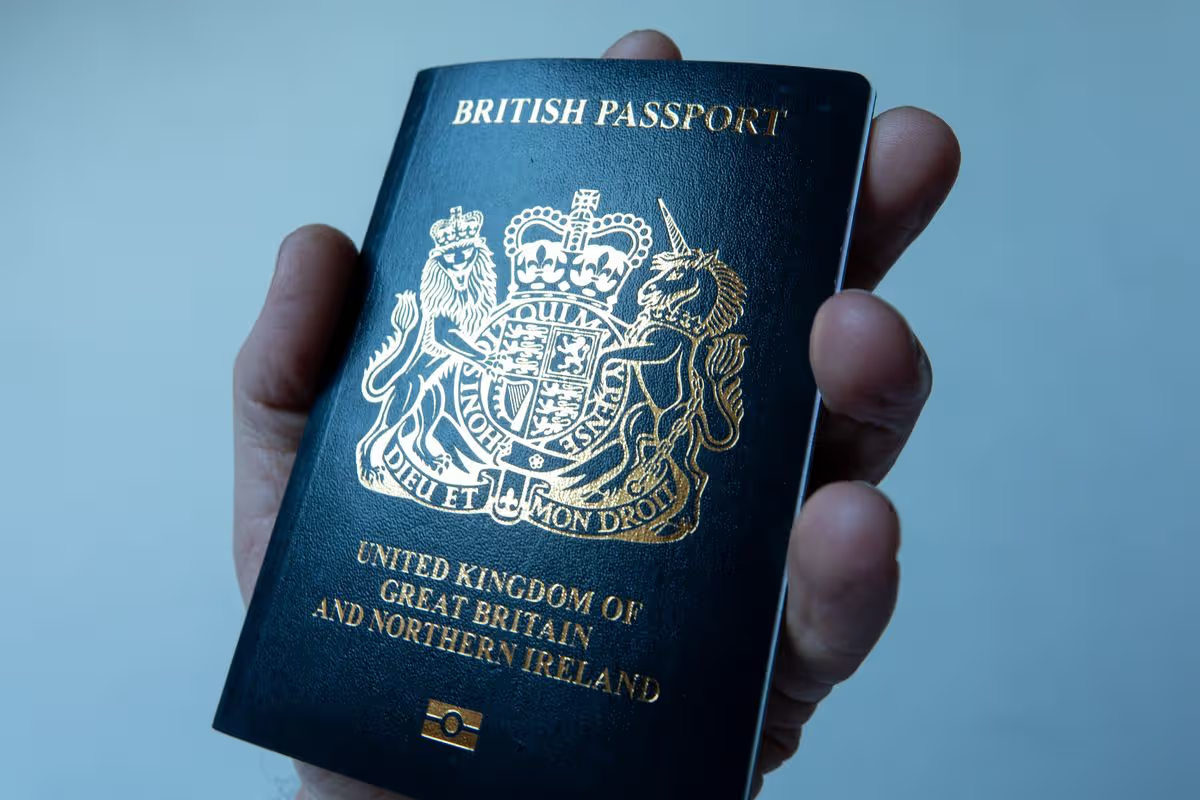
A major change to how Brits travel to popular holiday hotspots will come into effect from Friday, 10 April, and it’s vital to make a key passport check ahead of this date

Brits are being urged to check their passports before Friday(Image: Getty Images)
British passport holders have been urged to make one key check before a major change comes into effect on Friday, or they could face a hefty holiday fee.
From Friday, 10 April 2026, the European Union’s (EU) new Entry/Exit System (EES) is expected to be fully rolled out. This digital border system, which began on 12 October 2025, is a new requirement for Brits travelling to the Schengen area.
The countries in the Schengen area are: Austria, Belgium, Bulgaria, Croatia, Czechia, Denmark, Estonia, Finland, France, Germany, Greece, Hungary, Iceland, Italy, Latvia, Liechtenstein, Lithuania, Luxembourg, Malta, Netherlands, Norway, Poland, Portugal, Romania, Slovakia, Slovenia, Spain, Sweden, and Switzerland. The EES system is not required for travel into the Republic of Ireland and Cyprus.
READ MORE: EasyJet clarifies ’28 days rule’ for all passengers in new alertREAD MORE: Spanish hotspot doubles tourist taxes including £10-a-night fees for holidaymakers
The new system means that when entering the Schengen area for short stays, British citizens may need to register their biometric details, such as fingerprints and a photograph, which is carried out at the border upon arrival free of charge. While holidaymakers do not need to do anything before arriving at the border, they must be aware of the vital passport requirements before the EES system is fully operational from Friday.
The government states that the passport must:
- Have a ‘date of issue’ less than 10 years before the date you arrive – if you renewed your passport before 1 October 2018, it may have a date of issue that is more than 10 years ago
- Have an ‘expiry date’ at least 3 months after the day you plan to leave the Schengen area (the expiry date does not need to be within 10 years of the date of issue)
If your passport doesn’t meet the requirements above, you risk being denied entry to the country and turned away at the airport. This means you could end up forking out for an additional flight back to the UK from the Schengen area you are unable to enter, while losing out on your holiday altogether.
Therefore, it’s crucial to check that your passport is valid, and if not, renew or replace it as soon as possible. You can renew or replace your passport through the government website, with the process typically taking around three weeks, though it may take longer during peak travel season.
The rollout of the new EES system comes shortly after the price of UK passports is set to increase. The current price of a standard 34-page adult passport, when applied online, costs £94.50, while a standard child’s passport costs £61.50.
However, from Wednesday, 8 April, the price of a standard adult’s passport will increase to £102, while a child’s passport will cost £66.50. Passport applications by post will rise from £107 to £115.50 for an adult, and from £74 to £80 for a child’s.
On the passport price increase, the Home Office said: “The new fees will help the Home Office to continue to move towards a system that meets its costs through those who use it, reducing reliance on funding from general taxation.
“The government does not make any profit from the cost of passport applications.” For more information or to renew or replace your passport, visit the government website.
Do you have a travel story to share? Email webtravel@reachplc.com