Passport Office

Travel expert’s passport warning as Brits risk £160 fee or being denied boarding

There’s a simple passport and booking mistake that could see holidaymakers pay up to an extra £160 per passenger, just to correct it, or be denied boarding at the airport

An easy passport mistake could see holidaymakers denied boarding at the airport or charged a fee.

Jetting off abroad is always exciting, but there are a few key pre-planning checks everyone should make to ensure a smooth, safe journey. From ensuring the passport is in date, securing valid travel insurance, checking any travel advice on the Foreign Office website, to understanding the country’s entry requirements and the European Union’s (EU) new Entry/Exit System (EES).

Then comes the fun part: booking a luxurious hotel or resort, planning a desirable itinerary, finding the best flights, and heading to the airport. Yet, amid the anticipation, there’s a simple mistake with passports and flight bookings that could cause major disruption to anyone’s travel plans, and it’s easily avoidable.

READ MORE: Jet2 issues Spain warning over four popular destinationsREAD MORE: All holidays cancelled with no refunds as major UK travel company goes bust

Gavin Lapidus, Company Director at eShores, a UK-based travel agent, warned that a traveller’s name on a passport must match the name on their booking. This can be an issue for shortened or nicknames, name changes, including for those who are married, and any spelling mistakes.

If the name on their booking does not match the passport, holidaymakers could “be denied boarding, experience delays at security or check‑in, or be charged a fee to correct the name”, Gavin exclusively told the Mirror. “Airline policies vary, so it’s important to triple‑check name details before booking.”

The travel expert further advised: “Travellers should never use shortened names, nicknames, or aliases when booking flights. For example, booking under ‘Bob’ instead of ‘Robert’ can result in being denied boarding if it doesn’t match the passport exactly. Always use your full legal name as it appears on your passport to avoid delays or additional fees.”

Gavin also warned about the cost of correcting a spelling mistake. “Minor spelling errors can sometimes be corrected, often for a fee. However, full name changes are usually not allowed,” he explained.

“If you spot an error, contact your airline as soon as possible, as acting quickly improves your chances of having it fixed. Be prepared to show valid identification and expect potential charges.”

For easyJet passengers, they can amend their title or correct spelling mistakes via the airline’s website or mobile app free of charge. However, if anyone needs to change the name on the flight booking, easyJet will charge £60 per passenger per flight when amended online, or £65 with the customer service team.

Meanwhile, Ryanair will charge £115 per passenger for a name change when made online, or £160 through an agent. For Jet2, if a name change is made 15 days before the departure date, it will cost £50, but 14 days or less will set a passenger back £150.

For Brits who are married but have not yet changed their maiden name on their passport, Gavin further advised: “If a traveller has recently married, the name on the booking must still match the name shown on the passport. There is no legal obligation to change your surname immediately after marriage.

“If your passport is still in your maiden name, you can continue to travel using it until it expires, as long as your flight booking is made in the same name. You can update your passport at any time using your marriage certificate.”

Do you have a travel story to share? Email webtravel@reachplc.com

Source link

Border chaos explained – why Easyjet passengers missed flight as new travel rules start

With EasyJet passengers missing flights, and tourists with other airlines left affected too, the Mirror can explain more about the rules that have come into affected at European Union nations

Brits have been plunged into travel chaos after long delays due to new EU border rules which have led to some passengers missing their flights home and ending up stranded abroad.

Around 100 EasyJet passengers were left behind when a flight from Milan’s Linate airport to Manchester left travellers behind who were stuck in massive lines, on Sunday. The new European Entry/Exit System (EES) was fully rolled out across the EU on Friday and it requires people from third-party countries, including the UK, to go through biometric and facial recognition checks.

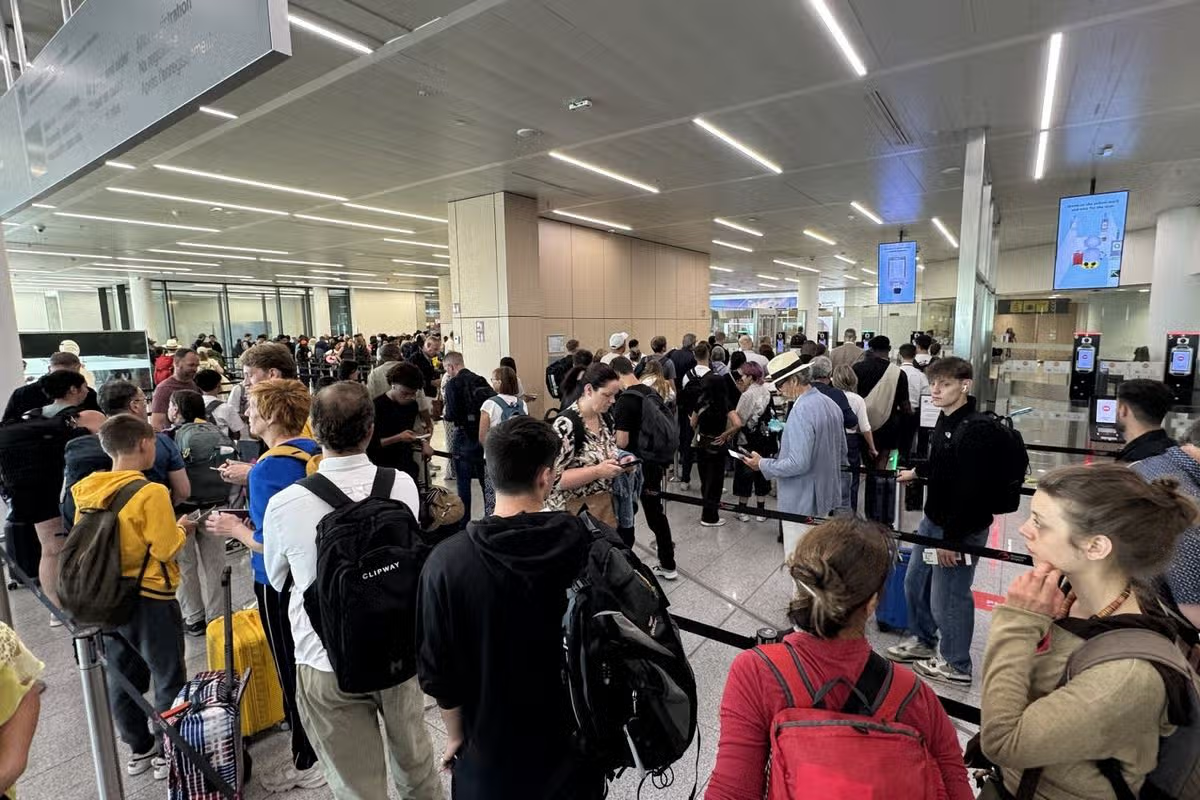
Huge lines hit major airports in several cities, including Paris, Lisbon and Milan, as desperate travellers were forced to wait to clear immigration.

Some stranded passengers claimed people were vomiting and passing out in the huge queues at Milan’s Linate airport, on Sunday, as they also dealt with a heatwave.

READ MORE: Spanish airport launches ‘Brits only’ lanes to cope under new border rulesREAD MORE: Historic 180 year-old ferry to UK seaside towns ending as ‘no takers’ to run it

What is the EES?

The EU’s Entry/Exit System started on October 12, 2025, but it was rolled out fully on Friday, April 10. It is a new digital border system for people from third-party countries, including the UK, entering the Schengen area, which is essentially anywhere in the EU and a few additional countries.

This new system has replaced the old method of officials manually stamping passports when people arrive into the Schengen area.

What does the new process look like for Brits?

British travellers are asked to create a digital record at the port or airport on arrival, on their first visit to a Schengen area country after this new system. People do not have to fill anything out before they travel and the EES registration is free of charge.

Travellers could be asked to have a photo taken at a dedicated booth and submit their fingerprints. People could also be asked to provide fingerprints or a photo when they leave the Schengen area.

The government noted that the EES may take “each passenger a few extra minutes to complete”, but once done, the EES record is valid for three years.

Later this year, Brits will also need to participate in the new visa-waiver scheme, the ETIAS (European Travel Information and Authorisation System), which is set to be implemented in late-2026.

Not to be confused with EES, ETIAS will require Brits visiting the EU to apply for a visa-exemption, with the application costing €20 (about £17.42), although it will be valid for three years.

What countries are in the Schengen area?

Austria, Belgium, Bulgaria, Croatia, Czechia, Denmark, Estonia, Finland, France, Germany, Greece, Hungary, Iceland, Italy, Latvia, Liechtenstein, Lithuania, Luxembourg, Malta, Netherlands, Norway, Poland, Portugal, Romania, Slovakia, Slovenia, Spain, Sweden, and Switzerland.

The Republic of Ireland and Cyprus are not within the Schengen area, and therefore EES is not applicable when travelling to either of these countries.

What issues have travellers faced so far?

One Brit revealed she was among the 100 people desperate to get home after the EasyJet flight took off from Milan and abandoned them. Carol Boon, 59, speaking to the BBC, said she had been away for a hen do but was left stuck in a “very stressful” situation at the airport with “people arguing, someone fainted, someone was sick”.

Another traveller, Max Hume, from Leeds, told the BBC that he spent a staggering £1,800 to get back home as soon as possible and travelled through Luxembourg.

EasyJet told The Mirror that the ordeal was “outside of our control” and said it held the flight for nearly an hour, adding: “These delays are unacceptable and so we continue to urge border authorities to ensure they make full and effective use of the permitted flexibilities for as long as needed so our customers’ travel plans are not impacted.

“Should a customer miss their flight due to EES delays they are offered free flight transfers on a later easyJet flight. For customers who book on other airlines they will need to contact their travel insurance to make a claim.”

Another passenger slammed EasyJet for the ordeal and claimed she was only offered £12.25 in compensation from the airline. Speaking to the BBC, the 17-year-old student, from Oldham, Greater Manchester, said she was forced to wait 20 hours in the airport with her boyfriend until they could get a flight the next day.

Kiera said these new flights would set her mum back £520 and they were going to Gatwick instead of Manchester. The student added that the couple got to the airport hours ahead of their flight but still didn’t make it on. She said: “We got here at seven-thirty for our flight at eleven so were super early. We got to Border Control and it was a massive queue of people.”

Jet2 has issued a fresh alert to passengers at Faro Airport, in Portugal, after reports of “congestion” through the site. In response to a passenger’s post online, a spokesperson for the airport said “the queues are completely out of our control”, adding: “We kindly recommend customers arrive to the airport as early as possible, to allow plenty of time to make it through.”

A spokesperson for ABTA, the association of travel agents and tour operators, says: “We’re advising passengers to go straight to passport control as soon as you have gone through check-in and security; that way you get the EES checks out of the way as early as possible.

“We’re also advising passengers to follow their transport provider’s advice on when to arrive at airports/ports etc. If flying, the usual rule is to arrive at the airport for a flight from Europe at least two hours before, so we’d encourage people to apply that as a minimum, but to also check with their airline and airport.”

Source link

‘Avoid paying’ with BBC expert’s passport renew tip ‘you may not know about’

People can save an extra bit of money by following the ‘online’ advice

TV money personality and personal finance expert Laura Pomfret has shared a money-saving tip for anyone with a passport. Speaking on today’s (April 13) episode of BBC Morning Live, hosted by Helen Skelton and Gethin Jones, she shared a cost-effective, time-saving piece of advice ‘people may not know about’.

Her advice comes as the cost of renewing a British passport rose at the start of the month. From April 8, the price of a standard online adult application rose from £94.50 to £102, surpassing £100 for the very first time. Child passports also increased, jumping to £66.50 from £61.50, reflecting a roughly 8% hike intended to reduce the taxpayer burden.

Laura told viewers: “It is becoming a bigger and bigger expense to get a passport for you, loved ones, for your family, and fees have just gone up. It is now over £100 to get a passport, but there are ways of avoiding paying more than you need.”

Content cannot be displayed without consent

Sharing her tip to avoid paying extra when renewing your passport, she said that people who renew online can take their own pictures, rather than going to a photo booth and paying even more to get it printed. She said: “If you’ve not renewed your passport for a while, you may not know that you can take your photos yourself.”

She went on: “You don’t have to pay to go into a shop, you don’t have to go to one of the passport booths.” She said the official Gov.uk website gives you guidance when uploading your own photo, saying: “You need good lighting and a plain background, you upload it directly.”

She added: “It tells you if it’s not any good and you have to do it again. So, all in all, I think it’s worth having a look, if you need to get a new passport, at these different ways of saving money, because it’s worth it in the long run, especially more than one.”

Offering further passport guidance for Brits, Laura urged viewers to only ever renew online via the official Gov.uk HM Passport Office website. She warned: “There are these intermediary websites that might look official to help you fill out the application, but it’s not HM Passport Office.

“It’s an intermediary and you could pay up to £100, just for essentially help doing the passport, so make sure when you do it online you’re going directly to the Passport Office.” She also recommended renewing passports online rather than by post, as it costs less and saves time.

She said: “I advise you to do it yourself online. It takes about 10 minutes. But if you’re a bit unsure, you can use the Post Office check and send service. You’re paying £16 for this, but actually to get it done properly, it may be worth you deciding to use that service.”

You must renew your passport before you can travel if either your passport has expired or you do not have enough time left on it. How much time you need for your passport depends on the country you’re visiting. Check the entry requirements of the country you want to travel to.

Source link

Brits warned of easy passport mistakes that could mean your document’s rejected

Many people make simple mistakes when submitting passport photos, which often require them to reapply. Here, learn what to avoid and how to take the perfect photo.

When planning a trip, it’s common to want to spend as little as possible and avoid traps that can land us with unexpected costs. But if it’s time to renew your passport or apply for one, making simple mistakes could end up costing you an extra £102.

UK passport fees exceed £100 for a standard application, so it’s important to ensure everything is correct and up to standard when submitting your application. While there are plenty of official guidelines out there, many applications are still delayed or rejected each year due to photo issues, according to CEWE’s creative lead, Adrianne Yates.

READ MORE: Full list of new passport fees – up to £239READ MORE: British passport change scheduled Wednesday April 8 ‘for first time’

According to HM Passport Office, your passport photo must meet strict requirements so you don’t have to reapply and pay new fees.

For the perfect photo, stand in front of a plain, light-coloured background, use balanced lighting with no shadows, and take a clear, natural image of your face. You’ll also need to keep your expression neutral – so no smiling – with your mouth closed and eyes open.

If you’re wearing glasses, make sure they don’t cause glare. Headwear is only allowed for religious or medical reasons. Additionally, the image must be in colour, unedited, and taken within the last month to reflect your current look.

While these rules are generally well known, Adrianne Yates has shared some lesser-known tips that could help you even further – to avoid an expensive mistake.

The first one is to not tense up – by simply breathing out just before the photo is taken, as people often hold tension in their face without realising.

She says overthinking can also backfire, as trying too hard to take the perfect photo can leave you with what she describes as a “startled” look, which she says could lead to your photo being rejected.

And one of the most common mistakes people make is not paying enough attention to the lighting rules. The rules clearly state that there should be no shadows, but even faint ones, if overlooked, can cause problems. Adrianne highlights how hair, in particular, can cast shadows across your face, so keep that in mind and make sure your features are fully visible.

Source link

Brits urged to make key passport check before Friday or risk issues on holidays

A major change to how Brits travel to popular holiday hotspots will come into effect from Friday, 10 April, and it’s vital to make a key passport check ahead of this date

British passport holders have been urged to make one key check before a major change comes into effect on Friday, or they could face a hefty holiday fee.

From Friday, 10 April 2026, the European Union’s (EU) new Entry/Exit System (EES) is expected to be fully rolled out. This digital border system, which began on 12 October 2025, is a new requirement for Brits travelling to the Schengen area.

The countries in the Schengen area are: Austria, Belgium, Bulgaria, Croatia, Czechia, Denmark, Estonia, Finland, France, Germany, Greece, Hungary, Iceland, Italy, Latvia, Liechtenstein, Lithuania, Luxembourg, Malta, Netherlands, Norway, Poland, Portugal, Romania, Slovakia, Slovenia, Spain, Sweden, and Switzerland. The EES system is not required for travel into the Republic of Ireland and Cyprus.

READ MORE: EasyJet clarifies ’28 days rule’ for all passengers in new alertREAD MORE: Spanish hotspot doubles tourist taxes including £10-a-night fees for holidaymakers

The new system means that when entering the Schengen area for short stays, British citizens may need to register their biometric details, such as fingerprints and a photograph, which is carried out at the border upon arrival free of charge. While holidaymakers do not need to do anything before arriving at the border, they must be aware of the vital passport requirements before the EES system is fully operational from Friday.

The government states that the passport must:

  • Have a ‘date of issue’ less than 10 years before the date you arrive – if you renewed your passport before 1 October 2018, it may have a date of issue that is more than 10 years ago
  • Have an ‘expiry date’ at least 3 months after the day you plan to leave the Schengen area (the expiry date does not need to be within 10 years of the date of issue)

If your passport doesn’t meet the requirements above, you risk being denied entry to the country and turned away at the airport. This means you could end up forking out for an additional flight back to the UK from the Schengen area you are unable to enter, while losing out on your holiday altogether.

Therefore, it’s crucial to check that your passport is valid, and if not, renew or replace it as soon as possible. You can renew or replace your passport through the government website, with the process typically taking around three weeks, though it may take longer during peak travel season.

The rollout of the new EES system comes shortly after the price of UK passports is set to increase. The current price of a standard 34-page adult passport, when applied online, costs £94.50, while a standard child’s passport costs £61.50.

However, from Wednesday, 8 April, the price of a standard adult’s passport will increase to £102, while a child’s passport will cost £66.50. Passport applications by post will rise from £107 to £115.50 for an adult, and from £74 to £80 for a child’s.

On the passport price increase, the Home Office said: “The new fees will help the Home Office to continue to move towards a system that meets its costs through those who use it, reducing reliance on funding from general taxation.

“The government does not make any profit from the cost of passport applications.” For more information or to renew or replace your passport, visit the government website.

Do you have a travel story to share? Email webtravel@reachplc.com

Source link

Anyone going on holiday urged to make passport check today or face £102 fee

Check today or face paying a much higher price.

Brits who are planning to head abroad have been urged to make one vital passport check today. Many of us are looking forward to summer holidays and sightseeing trips, yet one mistake could prove costly.

When booking holidays, you might forget to check when your passport expires. Different countries have their own rules on passport validity, with some requiring it to be valid for your entire trip while others for even longer.

To travel to Europe and Schengen countries, passports must be less than 10 years old before your departure date and valid for at least three months after your planned return date.

If your passport doesn’t meet these requirements, you’ll need to renew it. However, on Wednesday, April 8, the prices are set to increase.

A new passport application online currently costs £94.50 for an adult standard 34-page passport and a standard child passport costs £61.50.

The fee for a standard online application will then be £102 for adults and £66.50 for children.

Applications made by post are currently £107 for an adult and £74 for a child. Yet, as of tomorrow, these will go up to £115.50 and £80 respectively.

Other passport fees are set to increase this week. If you need a passport quickly, the fee for a premium one day service made within the UK will rise from £222 to £239.50.

If you apply for a UK passport overseas, this will increase from £108 to £116.50 for adults and £70 to £75.50 for children. Overseas standard paper applications will increase from £120.50 to £130 for adults and £82.50 to £89 for children.

The Home Office said of the increase: “The new fees will help the Home Office to continue to move towards a system that meets its costs through those who use it, reducing reliance on funding from general taxation.

“The government does not make any profit from the cost of passport applications.

“The fees contribute to the cost of processing passport applications, consular support overseas, including for lost or stolen passports, and the cost of processing British citizens at UK borders.”

It said that in 2025, 99.7% of standard passport applications from the UK were processed within three weeks when no further information was required.

If you are requiring a new passport and don’t want to pay the additional fees, it has been recommended to submit your application before the increase on Wednesday.

New passport prices

  • Adult standard online application from within the UK – £102
  • Child standard online application from within the UK – £66.50
  • Adult standard postal application from within the UK – £115.50
  • Child standard postal application from within the UK – £80
  • Premium one day application from within the UK – £239.50
  • Adult standard online application from outside the UK – £116.50
  • Child standard online application from outside the UK – £75.50
  • Adult standard paper application from outside the UK – £130
  • Child standard paper application from outside the UK – £89

Source link

Instantly save £13.50 on new UK passports as fees rise this week

Standard adult passport costs are increasing from April 8, but there is one way to do it cheaper

Brits in need of a new passport are being reminded that applying via a specific method will save them £13.50 as fees are set to increase this week. Using the Government website to obtain your essential travel document is less expensive than submitting a postal application.

A passport is necessary for travelling overseas. In the UK, they remain valid for 10 years for adults, or five years for those aged under 16. When your passport is approaching its expiry date, it is crucial to apply for a replacement well in advance, to avoid the risk of having to cancel a holiday. However, you may be unaware that the method by which you apply for a new passport can have an impact on the cost.

At present, applying for a standard adult passport online costs £94.50. However, obtaining the same passport via a postal application is priced at £107 – a difference of £12.50.

This gap is set to widen further with the introduction of revised fees from April 8. The update means that a standard adult passport will cost £102 to order online and £115.50 through the post – a difference of £13.50.

New passport fees

The full list of passport fee changes:

  • Adult: takes up to three weeks to arrive – online cost now – £94.50, online cost from April 8 – £102, postal cost now – £107, postal cost from April 8 – £115.50
  • Adult fast-track – arrives one week after appointment – online cost now – £178, online cost after April 8 – £178
  • Adult ‘Premium’ – given at the appointment – online cost now – £222, online cost after April 8 – £239.50
  • Child – takes up to three weeks to arrive – online cost now – £61.50, online cost after April 8 – £66.50, postal cost now – £74, postal cost after April 8 – £80
  • Child fast-track – arrives one week after appointment – online cost now – £145, online cost after April 8 – £145

READ MORE: Five key passport checks for Easter holidaymakers to avoid missing flightREAD MORE: UK travel company shuts down as all booked holidays are cancelled

Applying online

To apply online, visit GOV.UK. You will need a digital photo, a credit or debit card for payment, and your old passport if renewing. You’ll also need to provide information about your identity and citizenship.

You can also get help with your online application at a Post Office. Staff can:

  • Take your digital photo
  • Help you fill in the application online

However, this service costs extra.

To apply via post

You can pick up a paper passport application form from your local Post Office and apply by post. It takes longer to apply by post than online.

You’ll need to send off a fully completed application form, supporting documents, two photos, and your fee. If you need help, Post Office staff can check you’ve filled in the form correctly.

However you will need to provide your own photos – and this service costs extra. You can pay by cash, or debit or credit card.

Fast-track applications

According to GOV.UK, it typically takes three weeks for a new passport to be processed and delivered. However, it can take longer if the passport office needs more information. If this is cutting it too close with your holiday, there are two ways to apply for an urgent passport.

GOV.UK says: “You can pay to get a passport urgently if you think the standard service will take too long.” For both of these options you will need to go to a passport office for an appointment:

  • One day premium
  • One week fast track

If your passport is lost, stolen or damaged

If your passport has been lost or stolen, you must cancel it before applying for a replacement. And if your passport is damaged, you must replace it.

GOV.UK says: “You may not be able to travel with it.” HM Passport Office will consider your passport damaged if:

  • You cannot read any of your details
  • Any of the pages are ripped, cut or missing
  • There are holes, cuts or rips in the cover
  • The cover is coming away
  • There are stains on the pages (for example, ink or water damage)

Before travelling, you should check the entry requirements for the country you are visiting. If you are visiting an EU country, for example, your passport should be valid for at least three months after the date you intend to leave the EU and it must have been issued within the last 10 years.

For full details and to renew online visit GOV.UK here.

Source link

UK holidaymakers warned of new £100 charge kicking off this week

Brits travelling abroad are being urged to plan ahead and allow plenty of time.

Holidaymakers have been warned about a new charge coming into force this week. The government is introducing new fees for passport applications on April 8, pushing the cost of online applications beyond £100 for the very first time for adults.

This follows a previous price rise for passport applications earlier in 2025. The latest hike stands at 8%, with a statement on the government website confirming the new fees will help the Home Office move further towards a system that covers its own costs through users rather than relying on general taxation funding.

Under the new proposals, adult online applications will climb from £94.50 to £102, while child applications will go up from £61.50 to £66.50. Postal applications will also see increases, reaching £115.50 for adults and £80 for children.

Premium one-day applications from within the UK will set you back £239.50, up from £222, and standard online applications made from abroad will rise to £116.50 for adults and £75.50 for children. Overseas paper applications will increase to £130 for adults and £89 for children.

Mike Harvey, managing director at 1st Move International, says the rise is particularly significant for Brits applying from overseas, where charges are already higher, reports the Express.

He said: “For expats, long-term travellers or those in the process of relocating, these additional costs can quickly add up, especially if passports are needed for visas, work permits or international moves. Getting your application in before the deadline can help avoid unnecessary extra spend.”

With busy travel periods such as summer on the horizon, demand for passport applications is expected to surge. Delaying too long could mean not only paying more, but also facing hold-ups.

Mike added: “If you know your passport needs renewing, acting now is the safest option, putting you ahead of both the upcoming price increase and the seasonal rush.

“While renewals typically take up to three weeks when completed correctly, any errors can cause delays, so it’s important to check all documents carefully before submitting. Early applications are a simple step that could save both time and money.”

How long does it take to get a new passport?

According to the Home Office, the majority of standard applications from the UK were processed within that three-week timeframe.

However, it can take longer if additional information is required or you need to attend an interview. A sensible approach is to always apply for a passport renewal with as much advance notice before travelling as possible.

For first-time applicants, or those applying on behalf of a child, the process may take a little longer. The government also strongly advises against booking any travel until the new passport has been received, as the number will differ from the previous one.

Source link

‘It took 7 years to get my British passport but I still do 1 thing at EU airports’

Selen Ozcan, who has dual citizenship, claims that, despite finally obtaining a British passport, she still puts it to one side while travelling as her original passport is ‘stronger’

A woman who endured a seven-year battle to secure a British passport has shared her clever airport time-saving technique. Selen Ozcan, who splits her time between London and Bahrain, used TikTok to showcase her trick in a brief video.

The travel content creator now possesses dual citizenship, and always keeps her native Romanian passport to hand as well. While navigating security at an airport, Selen posted footage with the caption: “When the immigration line is too long so I have to pull out the stronger passport.” Brandishing her blue British passport, she swiftly moved it aside to display her maroon Romanian one beneath.

During Britain’s membership of the European Union, UK nationals enjoyed the freedom to visit, reside, work, or study in member states without requiring a visa. However, this privilege ceased when the Brexit transition period concluded on December 31, 2020.

Consequently, British passport holders can no longer access the – typically faster – EU citizen border control lanes at airports.

“British citizens also usually need to have their passport stamped upon entry/exit to the EU unless they are family members of EU citizens and resident in the EU,” the Government clarifies online.

Content cannot be displayed without consent

Writing in response to Selen, one TikTok user remarked: “Got my British kid a Romanian passport and now she’s my fast track pass through EU airports haha. My missus is Romanian.”

Another person recounted a similar scenario, saying: “All my UK boys had to wait 15 minutes in a queue at Amsterdam Airport. I skipped all that with my Romanian passport.”

A third commenter argued: “Romania passport is just stronger than UK when entering Schengen and EU. But UK has more access than Romania worldwide.”

While a fourth TikTok user pointed out to Selen: “Travel to USA with Romanian passport and you’ll see the difference between British and Romanian. No offence intended.”

The Henley Passport Index evaluates the world’s passports based on how many destinations holders can enter without needing to obtain a visa beforehand.

“The index is based on exclusive data from the International Air Transport Association (IATA) – the largest, most accurate travel information database – and enhanced by Henley & Partners’ research team,” Henley & Partners clarify.

Covering 199 passports and 227 travel destinations, the index receives monthly updates. Based on Henley & Partners’ figures, Singapore claims the top spot with the “strongest” passport, granting visa-free entry to 192 countries.

Japan, South Korea, and the United Arab Emirates share second position with 187, while Sweden occupies third with 186.

Britain sits in joint sixth alongside Malaysia and Poland, offering access to 183 destinations – actually ranking higher than Romania, which shares 11th place with Bulgaria, at 177.

Source link

I got my new UK passport in under 2 weeks without fast track – here’s how

If you are planning a holiday abroad, you will want to double check your passport is valid

If you’re planning a trip overseas soon, it’s crucial to ensure your passport is valid for travel. This means, depending on your destination, you might need to renew it earlier than anticipated.

For example, if you’re jetting off to Spain, the Foreign Office warns travellers that the country adheres to Schengen area rules. This means your passport must have a ‘date of issue’ less than 10 years before the date you arrive.

If you renewed your passport before October 1, 2018, it may have a date of issue that is more than 10 years ago. The rules also mean that you should have an ‘expiry date’ at least three months after the day you plan to leave the Schengen area – the expiry date does not need to be within 10 years of the date of issue.

In other places, like Cyprus, you need to have “at least one blank page for stamping”. So if you need to get a new passport, here’s what you need to know before you’re set to travel abroad.

How long did it take me to get my new blue UK passport?

I submitted an application for a new passport on July 13 last year and posted my old passport, as directed, on July 14. The Passport Office received my old one on July 15 – this step is necessary as you cannot possess two passports.

I received my next update on July 23, informing me that my passport application had been approved. This was followed by an email on July 24 letting me know my new passport had been printed.

The next day, I received my blue passport with a new photo I had taken myself at home. So it took me less than two weeks to get my new travel document – and I didn’t pay for fast track.

So I was pleasantly surprised at how swift and straightforward the entire process was. You can check how long it will take to get a passport before you apply.

And if you need a passport urgently, you can opt for their Online Premium or 1 week Fast Track services. They warn: “Do not book travel until you have a valid passport – your new passport will not have the same number as your old one.”

How to apply for a new UK passport?

You can submit an application via the GOV.UK website. It caters for various needs, whether you need to apply for, renew, replace or update your passport, and you can also pay for it online.

How much does a UK passport cost?

If you’re looking to save money, it’s worth knowing that it’s £12.50 cheaper to apply for a passport online than by post. It’s worth noting that prices increase on April 8, 2026.

Apply Online

  • Adult (16 and over) standard 34-page passport – £94.50
  • Adult (16 and over) 54-page frequent traveller passport – £107.50
  • Child (under 16) standard 34-page passport – £61.50
  • Child (under 16) 54-page frequent traveller passport – £74.50
  • Passport for people born on or before 2 September 1929 – Free

Apply by paper form

  • Adult (16 and over) standard 34-page passport – £107
  • Adult (16 and over) 54-page frequent traveller passport – £120
  • Child (under 16) standard 34-page passport – £74
  • Child (under 16) 54-page frequent traveller passport -£87
  • Passport for people born on or before 2 September 1929 – Free

Can I get my passport quicker?

If you’re due to travel abroad soon and are concerned it won’t arrive in time, you can opt for a premium service. Again, prices rise on April 8.

  • When you’ll get your passport: Usually within 3 weeks (delivered securely to your home)
  • Cost: £94.50 (or £107.50 for a 54-page frequent traveller passport)
  • Needs an appointment: No
  • When you’ll get your passport: Delivered by courier to your home 1 week after the appointment
  • Cost: £178 (or £191 for a 54-page frequent traveller passport)
  • Needs an appointment: Yes
  • When you’ll get your passport: Collect it 4 hours after your appointment
  • Cost: £222 (or £235 for a 54-page frequent traveller passport)
  • Needs an appointment: Yes

How can I get a free passport?

If you were born on or before September 2, 1929, you can get or renew a British passport for free if you’re a British national. You can also utilise the Post Office Check and Send service for free and receive free secure delivery.

You must pay a fee if you need a passport urgently or want a frequent traveller passport, which provides 54 pages instead of 34.

Source link

Martin Lewis issues ‘check now’ passport warning ahead of April 8

Money Saving Expert Martin Lewis urged Brits to check if they need to renew passports now

Brits have been urged to “check now” or face being hit by costly passport fees come April. Next month is set to bring a hike in passport charges.

At present, a standard adult passport costs £94.50 when applying online. However, this is due to increase to £102 from 8th April. The price of a child’s passport will also climb from £61.50 to £66.50.

In an update on his Money Saving Expert (MSE) website, Martin Lewis implored people to check whether they require a new passport now, in order to sidestep the forthcoming fee increases. He said: “Rising by up to £17.50. 8 April.

Check NOW if yours is due for renewal, there’s still time to get the lower rate.” Additional guidance on securing the best deal was also published elsewhere on MSE.

“If you need a new passport, it’s cheapest to apply online,” MSE said. “The only site you’ll ever need to go to is the GOV.UK website.

“It has options for getting your first passport, renewing an old one or getting one for your child. You can apply online, which is the cheapest option, or by paper at the Post Office.

“Last year, over seven million Brits saved by applying online.”

READ MORE: I used new EU airport entry system and it left me worried for summer travellersREAD MORE: HM Passport office warns Brits ‘you may not be able to travel’

How much are passport fees rising?

  • Adult: takes up to three weeks to arrive – online cost now – £94.50, online cost from April 8 – £102, postal cost now – £107, postal cost from April 8 – £115.50
  • Adult fast-track – arrives one week after appointment – online cost now – £178, online cost after April 8 – £178
  • Adult ‘Premium’ – given at the appointment – online cost now – £222, online cost after April 8 – £239.50 Child – takes up to three weeks to arrive – online cost now – £61.50, online cost after April 8 – £66.50, postal cost now – £74, postal cost after April 8 – £80
  • Child fast-track – arrives one week after appointment – online cost now – £145, online cost after April 8 – £145

It’s worth noting that there’s no child equivalent one-day service. Also, for all these types, you can pay £12 extra for a 54-page passport, which is “useful” for frequent travellers.

The Government website also cautions that no refund will be issued should you cancel your application or if you’re not entitled to a passport.

Burgundy passport

If you’re still in possession of a burgundy passport, there’s no need to panic – you won’t be required to renew it until closer to its expiry date, as they remain perfectly valid. MSE added: “Got a burgundy passport? Newly-issued UK passports have a blue cover, but you DON’T need to get a new passport straightaway – you can keep using your burgundy passport until it’s due for renewal. The blue passports will only be issued when you renew or apply for a new passport.

“Passports can take up to three weeks to be processed, so apply early. The Passport Office warns that renewing can take three weeks for both online and postal applications, so don’t leave it too late if you’re planning a trip.

“If you need a passport urgently, you’ll need to book an appointment at a passport office and pay online. Alternatively, call HM Passport Office (HMPO) on 0300 222 0000 to book an appointment and pay.” Responding to the price increase, the Home Office released a statement saying: “The new fees will help the Home Office to continue to move towards a system that meets its costs through those who use it, reducing reliance on funding from general taxation. The Government does not make any profit from the cost of passport applications.

“The fees contribute to the cost of processing passport applications, consular support overseas, including for lost or stolen passports, and the cost of processing British citizens at UK borders.”

Source link

UK passport warning as holidaymakers could have to fork out £239

It could be worth checking your passport now

People who are planning to go on holiday this year may want to check their passports now, with some at risk of being hit with a £239.50 fee.

The price of a new or replacement passport is set to rise next month, and everyone in the UK needs a passport for overseas travel. According to Gov.uk, you can apply for a British passport if you’re a British citizen, a British overseas territories citizen, a British overseas citizen, a British subject, a British national (overseas), or a British protected person. HM Passport Office issues these documents, which currently take around three weeks or less to be delivered.

If your passport is damaged, or has expired, you will need to order a replacement one in order to travel overseas. Most people will need to pay a fee to renew an existing passport or to obtain a new one, including those for children.

At present, a standard adult passport, for those aged 16 and over, costs £94.50 when applying online, or £107 when applying via the paper form – but these charges are set to climb to £102 and £115.50, respectively.

Additional price hikes that will come into force on April 8 include the charge for a standard child’s passport increasing from £61.50 to £66.50, or from £74 to £80 for a postal application. If you need a new passport quickly, you can currently use the Premium Service (for a passport within one day) for £222.

However, from April 8 this cost will jump up to £239.50. For those applying for a UK passport from overseas, the cost will increase by £8.50 – from £108 to £116.50 – for adults, and by £5.50 – from £70 to £75.50 for a child’s passport.

The cost of overseas standard paper applications will also go up from £120.50 to £130 for adults and £82.50 to £89 for children. While the majority of folks will have to pay for their passports, there are a select few who can get one for free.

If your birth date falls on or before September 2, 1929, you’re eligible to apply for a new British passport or renew your existing one without spending a penny. You can also take advantage of the Post Office Check and Send service at no charge and benefit from free secure delivery.

Source link

How much is a UK passport – fees explained for adults, children and pensioners

Ahead of the busy Easter and summer holidays, the cost of a UK passport application, online and postal, are set to increase, with prices soaring above £100 for the first time

The cost of all passports will significantly increase from next month as the Home Office confirms proposed plans.

The Home Office has proposed an 8 per cent increase in UK passport prices, which could see an adult pay out over £100 for the first time. The price of a child’s and a pensioner’s passport will also increase, with the changes set to be implemented from Wednesday, 8 April.

The Home Office said it will “move towards a system that meets its costs through those who use it, reducing reliance on funding from general taxation”. The fee increases are subject to Parliamentary approval.

The Home Office said in a statement: “The new fees will help the Home Office to continue to move towards a system that meets its costs through those who use it, reducing reliance on funding from general taxation.

“The Government does not make any profit from the cost of passport applications. The fees contribute to the cost of processing passport applications, consular support overseas, including for lost or stolen passports, and the cost of processing British citizens at UK borders.”

READ MORE: British tourists ditch popular holiday hotspot as it’s become ‘too expensive’READ MORE: UK passport holders face major fee change on April 8 2026 ‘for the first time’

How much is an adult passport?

From April 8, the cost of a UK adult passport, for standard online applications, will rise from £94.50 to £102. Meanwhile, postal passport applications could rise from £107 to £115.50 for adults.

How much is a passport for children?

The standard fee for a child’s passport, for online applications, could increase from £61.50 to £66.50, while a postal application could rise from £74 to £80 for children.

How much is a pensioner’s passport?

A standard, 32-page concessionary passport is available free of charge for those who were born on or before 2 September 1929 and at the time of their application, hold any British nationality.

The government said: “Customers who naturalised or registered as British nationals will still qualify regardless when they naturalised or registered.”

While the passport is free, there may be some delivery charges to return the passport or to send any supporting documents.

Will next-day services increase?

While it’s always advisable to apply for a new or replacement passport as early as possible, a next-day premium service is available in the UK. However, the new fees from 8 April could see this rise from £222 to £239.50.

How much will overseas UK passports cost?

Those applying overseas for a UK passport online can expect a rise from £108 to £116.50 for adults and from £70 to £75.50 for children. Meanwhile, overseas paper applications will increase from £120.50 to £130 for adults and from £82.50 to £89 for children.

The last time the price of a UK passport increased was on April 10, 2025, when they rose by around 7 per cent. An adult passport soared from £88.50 to £94.50, while a child’s online application increased from £57.50 to £61.50.

Before 2025, there were increases in April 2024 and February 2023.. However, the price surge in 2023 was the first increase in five years.

The government advised that anyone needing a new passport should apply well in advance, as the renewal process can take up to three weeks in the UK or longer during peak travel periods. For more information or to apply for a new or replacement UK passport, you can visit the government website.

Do you have a travel story to share? Email webtravel@reachplc.com

Source link

Holidaymakers warned don’t make passport mistake that could cost you £222

Brits heading abroad have been warned the normal £94.50 fee can escalate under some circumstances

Brits planning to travel abroad this Easter have been warned not to make a crucial passport mistake which could leave them seriously out of pocket. Adult passport renewals currently cost £94.50 when applying online – in some circumstances this can soar.

Experts say people should be checking their passports immediately to make sure they are still valid, as the window for standard renewals is already beginning to tighten. With Easter Sunday falling on April 5 this year, travellers who have not yet checked their passports may already be close to the usual processing deadline for standard applications.

According to official government guidance, most UK passport applications are usually processed within three weeks or less, although travellers are advised to apply well before their trip whenever possible. A standard adult passport renewal currently costs £94.50 when applying online, while applications submitted using a paper form cost £107.

However, if you leave this too late, urgent processing services mean prices rise sharply. The government’s Premium one-day passport service, used for urgent adult renewals, now costs £222, more than twice the price of a standard online application.

Andrea Platania, travel expert at Transfeero, says the weeks leading up to Easter are a common moment when travellers suddenly realise their documents may need attention. It is then a race against time to make sure they can still travel.

He says: “Easter trips often creep up on people. Many families book their flights weeks or even months earlier, then only check their passports when they start preparing for the journey.”

According to Andrea, discovering a passport issue close to departure can quickly complicate travel plans. “Renewing a passport is normally straightforward if you give yourself enough time,” he says. “But when travellers realise just a few weeks before departure that their passport has expired or does not meet entry requirements, the situation becomes much more stressful.”

Because standard applications can take around three weeks to process, travellers who are planning to leave the UK around the Easter period may now be close to the point where urgent services become the only realistic option. Urgent passport services require travellers to attend an appointment at a passport office.

The Premium one-day service can provide a renewed passport within hours of the appointment, but the convenience comes at a significantly higher cost. Andrea says this situation is surprisingly common during busy travel periods.

“People often assume passport renewals can be sorted out quickly at the last minute,” he explains. “But if the departure date is already approaching, travellers may find themselves forced to use urgent services that cost far more than the standard application.”

He advises travellers to treat passport checks as one of the very first steps when planning any international trip. He said: ” “When you start looking at flights and accommodation, that is the moment to check your passport. If it needs renewing, doing it early keeps the process simple and affordable.”

He also notes that some countries require passports to remain valid for several months beyond the date of travel, meaning a passport that appears valid may still not meet entry rules, warning: “That is another detail people often overlook. A passport might technically still be valid, but it may not meet the entry requirements of the country you are visiting.”

With Easter travel approaching quickly, Andrea says travellers who have not yet checked their passports should do so as soon as possible. “A quick check today can prevent a lot of stress later,” he says. “If your passport needs renewing, acting early helps you avoid both the pressure and the much higher cost of urgent processing.”

Source link

HM Passport Office warning for Brits – 3 key checks to do now ahead of summer

The HM Passport Office has issued a warning to Brits about passport checks they must carry out well in advance of any impending holidays over spring and summer

HM Passport Office has issued a warning to Brits ahead of the peak travel season.

With the Easter half-term just weeks away and plans already made for a summer getaway, thousands of holidaymakers will be jetting off abroad during one of the busiest travel periods. To ensure their journey gets off to a flying start, Brits are being urged to check their passports; otherwise, they risk being turned away at the airport.

In a stark reminder, the HM Passport Office advised Brits to “check your passport now” in a post shared on X, ahead of any spring or summer trips. A link in the post directed travellers to the government website, where they can apply online to renew, replace, or update their passports.

READ MORE: UK Foreign Office updates Egypt travel advice amid Middle East tensionsREAD MORE: Easter passport warning for Brits as common mistake could see you turned away at the airport

There are two key dates you should check on your document; the expiry date, and the issue date, especially if you’re planning to head to a European hotspot such as France, Spain or Greece. This is because of a post-Brexit regulation on travel to the European Union or Schengen countries, which stipulates that UK passports must have been issued less than 10 years before your departure and must be valid for at least 3 months after your return.

Meanwhile countries such as Australia, China, Thailand, the United Arab Emirates, Indonesia, and India require at least 6 months of passport validity from the date of arrival. It’s vital to check any entry requirements and passport validity before making any travel plans.

You must also ensure your passport has not been physically damaged, as this may render it invalid. This could include ripped pages, water damage, separated covers, or anything else that might make the personal information difficult to read.

Travel expert Jamie Fraser at Wild Packs warned that the general wear and tear of a passport can also be problematic when passing through automated scanners or at airport border control points. So it’s vital to check that your passport is in good condition, or if you need to apply for a replacement.

There must also be a blank page at the back of the passport for any necessary stamps or visas. If the passport is crammed with stamps from past trips, it could create problems at the border if there aren’t enough blank pages, leaving you unable to travel.

If your passport has expired or needs to be replaced, you can apply for a new one through the government website. However, it’s crucial to do it well in advance, as it can take around three weeks and sometimes longer.

There are fast-track passport services available, but Jamie cautioned that these are not “always guaranteed and appointments can be limited during peak travel periods”. HM Passport Office also advised: “Do not book travel until you have a valid passport – your new passport will not have the same number as your old one.”

To renew or replace your standard passport online, it will cost £94.50, or £107 if you opt for a paper application. Meanwhile, a child’s passport will cost £61.50 online or £74 by post.

Do you have a travel story to share? Email webtravel@reachplc.com

Source link