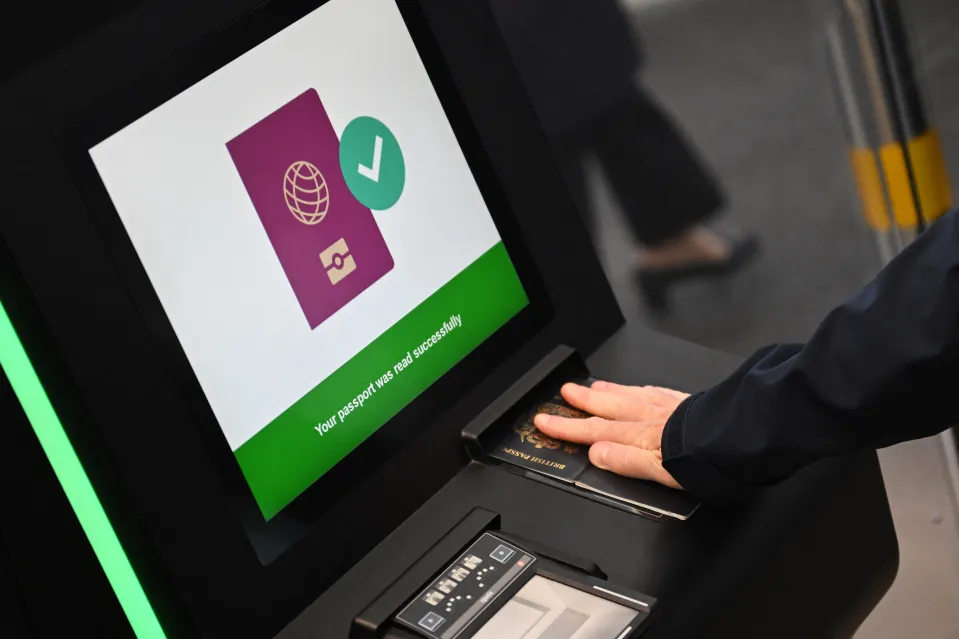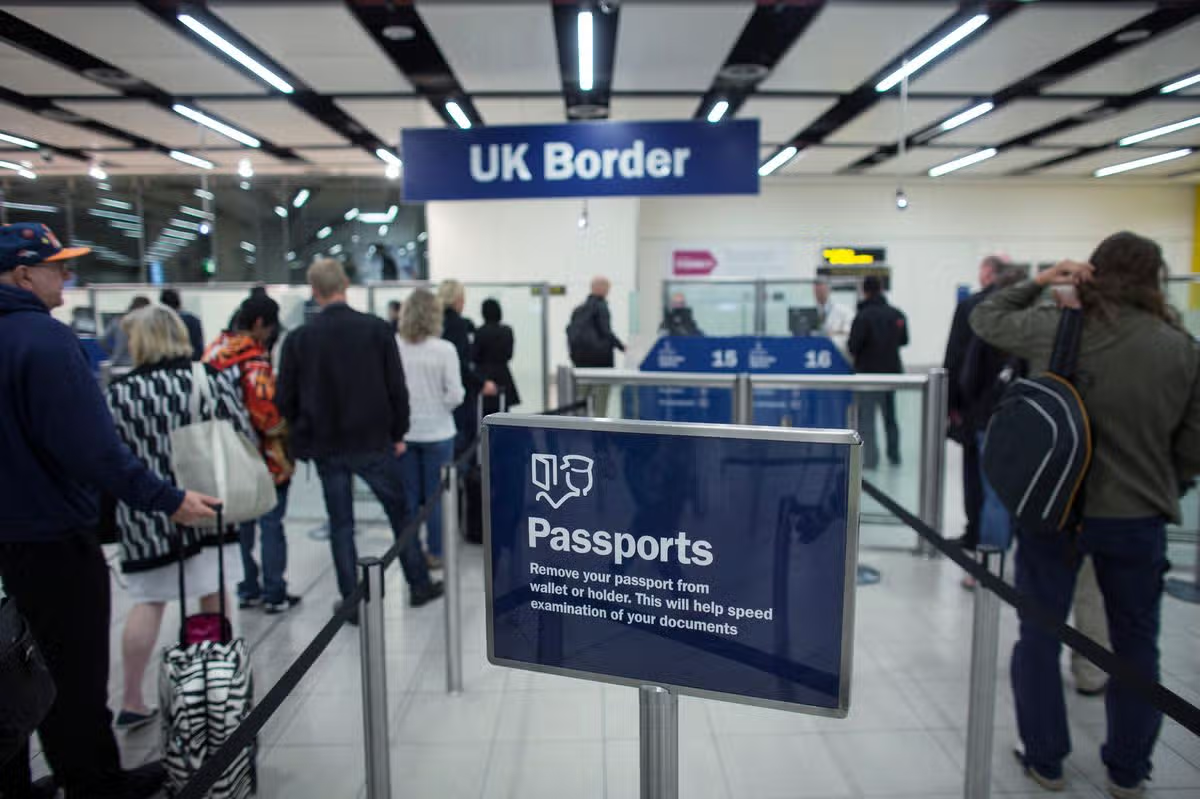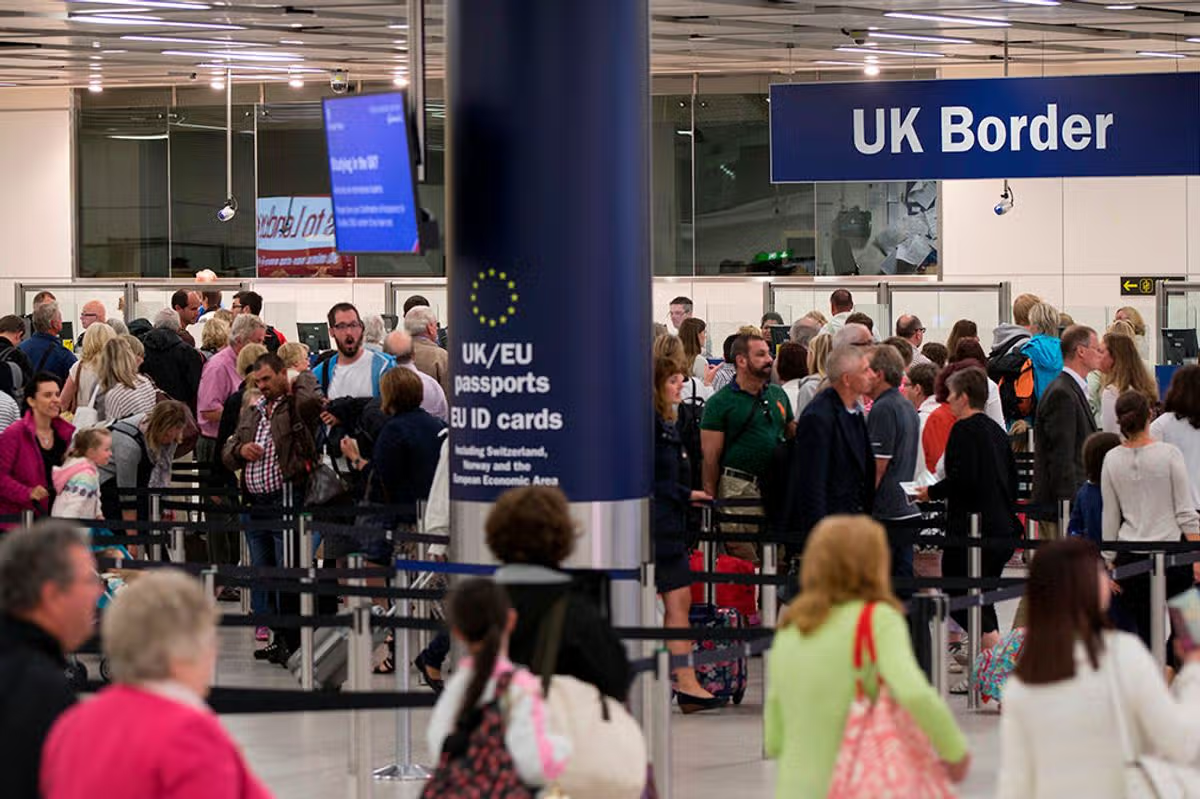
passport

Passport holders urged to change 1 phone setting or ‘risk delays at airport’

Passport holders have been urged to change a key phone setting before they arrive at airports to travel. Failing to do so could see them facing delays in queues

We all love jetting off abroad at this time of year, but sometimes making simple mistakes at the airport can lead to risking delays in queues. While many people worry about their clothing, and what they have packed in their cases, something they should actually be paying more attention to is their mobile phones.

Little you may know, using a certain setting can actually lead to people spending more time in queues at security, and delaying their travel journey. Nobody wants to have to face lengthy queues when they start their holiday so an expert has shared some key travel tips to help passport holders out.

It’s not the only advice of its kind to be shared recently either. Previously, tourists were also advised to take passport action before travelling to reduce the risk of problems at the airport.

You may not realise, but a dim screen is one of the most common reasons boarding passes fail to scan at the gate. Experts say a few simple phone tweaks before you leave home can save serious stress on travel day, and the changes take seconds to complete.

According to William Thackray, IT expert at AGT Computer Services, a dim screen is one of the most frequent and easily avoidable causes of delay at airport security and boarding gates.

He said: “Scanners need a clear, bright image to read a barcode or QR code reliably. In bright airport lighting, a screen that’s sitting at its default brightness – or that’s been dimmed to save battery – can cause a failed scan.

“It sounds trivial, but it holds up the queue and it’s completely avoidable.”

What you need to do

Before you leave the house, drag your screen brightness to maximum. On an iPhone, swipe down from the top right corner to access the Control Centre and pull the brightness slider to the top. For Android, swipe down from the top of the screen and do the same.

While you’re at it, William recommends a few other quick changes that can make the whole airport experience smoother. To begin, he said it’s a good idea to screenshot your boarding pass.

Don’t rely on an app that needs a signal or a Wi-Fi connection to load. A screenshot lives on your phone and opens instantly.

He said it’s also a good idea to turn off auto-lock. If your screen goes dark mid-queue, you’ll be unlocking your phone and re-opening your boarding pass with a line of people behind you.

Go to Settings > Display and bump your screen timeout up to at least two to three minutes before you travel. This could make a big difference.

You should also make sure your phone is fully charged. It sounds obvious, but some airports – especially when travelling to the US – can ask you to power up your device at security.

A dead phone can mean real delays, or worse, having your device taken for additional screening. William added: “None of these things take more than a minute to sort before you leave the house.

“But, on a busy travel day, that one minute of prep can be the difference between breezing through and being that person holding everyone up.”

Source link

Major EU travel rule change – all you need to know about new pet passport controls

British tourists have been warned that beloved dogs, cats and ferrets could be turned away at the border as new post-Brexit rules make EU passports invalid – here’s what you need to know

New EU rules could see beloved pets turned away at the border from tomorrow – and there’ll be big changes to what you need to do before taking four-legged friends on holiday.

Anyone travelling into the European Union with pet dogs, cats and ferrets from England, Scotland or Wales can no longer use EU pet passports under post-Brexit arrangements which come in to force on Wednesday.

Until now, people taking their pets abroad – whether by plane, train, ferry or car – could use an EU Pet Passport, even after Brexit.

But EU Regulation 2016/429, known as the Animal Health Law, comes into force this week after a 10-year transition, and means these pet passports will no longer be valid.

Instead, there’s a different document you’ll need to get sorted before you go on holiday. Here’s what you need to know:

READ MORE: Foreign Office issues Greece travel update as holiday hotspot suspends EU ruleREAD MORE: Major EU travel rule change from Wednesday could see UK travellers denied entry

You now need an animal health certificate for every trip

The changes mean that anyone travelling from Great Britain to an EU country with a pet will now need to get an animal health certificate (AHC) before they set off.

Travellers will need to get a vet to issue an AHC within 10 days of their trip. A new certificate will be needed for each trip from Britain to the EU.

The AHC can be used for up to six months for onward travel within the EU and for reentering Britain, as long as rabies vaccinations are still valid.

The GOV.UK website, which says the rules also apply to assistance dogs, states: “If you live in England, Scotland or Wales, from 22 April you cannot use a pet passport (even if it was issued in the EU). If you use a pet passport, your pet may be refused entry into the EU.”

Holiday home owners will not be issued EU pet passports

Pet passports are now only to be issued to people whose main base is in the EU, and not to holiday home owners or seasonal visitors. The Department for Environment, Food and Rural Affairs said individual member states may have specific pet travel requirements and owners should always check the entry details before travelling. British-based travellers can still use EU pet passports for their return journey back home.

Five pet limit and other rules to remember

The switch to the AHC from the EU pet passport means:

  • Extra paperwork will be needed if the owner is not travelling with their pet.
  • Whoever is taking the animal abroad must have written permission from the owner.
  • Up to five days are allowed before the pet and owner must travel abroad.
  • Travellers are now also only allowed to have a maximum of five pets in a private vehicle.

There may be exceptions given for pets travelling to competitions, events or training.

Holidays with pets ‘still possible’

The Animal and Plant Health Agency (APHA) said “holidays with your pets are still possible” despite the new rules. An APHA spokesman said: “Anyone planning to travel should check guidance on Welcome to GOV.UK , and the entry rules for their destination.

“To avoid delays and ensure a smooth journey, pet owners residing in Great Britain should get an Animal Health Certificate if they are travelling from Great Britain to an EU country.”

Source link

Ryanair threatens to axe ALL flights to European country due to ‘massive passport queues’

A POPULAR holiday destination could soon lose all of its Ryanair flights – due to huge queues at the airport.

Malta is just one of the destinations in Europe that recently implemented the EU’s new Entry/Exit System (EES) at its airport, which requires new biometric checks.

Ryanair is threatening to axe flights to Malta due to border control queues Credit: Getty

However, recent reports found that passengers were left stranded on the tarmac for 20 minutes because the queues were so long at security inside the airport building.

David O’Brien, one of Ryanair’s executive officers and the CEO of Malta Air, said: “If we find ourselves with significant congestion and delay, we’d have to redirect capacity away from Malta to other destinations and that’s not something we’d like to do.”

He has since written to Malta’s Home Affairs Minister Byron Camilleri to ensure border controls are fully staffed for this summer, according to The Times of Malta.

O’Brien added that “Europe is utterly unprepared in a general sense” and that while the airline has not yet experienced significant delays at Malta Airport, it is concerned about the upcoming summertime period.

Read more on travel inspo

CHEAP BREAKS

UK’s best 100 cheap stays – our pick of the top hotels, holiday parks and pubs


BARGAIN HOL

Travel companies reveal their CHEAPEST spots this summer, with hols from £189pp

Last year, Ryanair carried more than half of total passengers to Malta and of those travelling to the country – with the UK being the biggest market.

To try and reduce the delays, Malta Airport has introduced new measures such as a specific Schengen corridor, as well as increasing the amount of immigration desks.

The airport has also transferred more airport staff to be working on the new system.

Alan Borg, CEO of Malta International Airport told The Times of Malta: “We are working hand in hand with the Malta Police Force to make sure we can do everything possible to support them in this important initiative.

“It is what it is. We need to find ways to improve the processing time over the summer period.”

EES is a new system used across 29 European countries to register non-EU nationals, which includes Brits, for short stays of up to 90 days in any 180-day period.

And Malta isn’t the only airport suffering delays due to the newly implemented EES.

Last month, Travel Reporter Alice Penwill experienced three-hour queues at Lanzarote Airport.

She said: “The queues stretched along the corridor and zigzagged all the way through the arrivals hall that took passengers to EES registration.”

“I’d already signed up to EES, having visited Lithuania a few months ago – but that was no use at all.

The airport is experiencing queues of around 40 minutes for people arriving and leaving Malta Credit: Alamy

“There was no separate queue for – or any staff for that matter – advising those who have registered to head straight to the passport e-gates.

“While this was frustrating, what was even more so was that only half of the EES machines were actually working.

“When I finally made it to my bus transfer, even the Jet2Holidays rep said she’d ‘never seen delays this bad’.”

Delays have also been reported at Brussels, Lisbon and Prague airports.

Greece has even decided to halt the system completely.

On April 18, a statement from the Greek Embassy announced that Brits are “exempt” from biometrics at all Greek border crossing points.

Eleni Skarveli, the director of the Greek National Tourism Organisation in the UK, said: “The exemption of British passport holders from biometric registration at Greek border crossing points, effective from 10 April 2026, is expected to significantly reduce waiting times and ease congestion at airports.

“UK travellers will no longer need to undergo additional EES biometric procedures, ensuring a smoother and more efficient arrival experience in Greece.

Sun Travel has contacted Malta Airport and Ryanair for comment.

In other travel news, here is the full list of 29 European countries being hit by new travel rules.

Plus, here are nine of the European airports where Brits are facing massive queues and missed flights due to new travel rules.

It comes after the introduction of Europe’s new Entry/Exit System Credit: Alamy
The new system applies to all non-EU nationals including Brits Credit: Alamy

Source link

Travel expert’s passport warning as Brits risk £160 fee or being denied boarding

There’s a simple passport and booking mistake that could see holidaymakers pay up to an extra £160 per passenger, just to correct it, or be denied boarding at the airport

An easy passport mistake could see holidaymakers denied boarding at the airport or charged a fee.

Jetting off abroad is always exciting, but there are a few key pre-planning checks everyone should make to ensure a smooth, safe journey. From ensuring the passport is in date, securing valid travel insurance, checking any travel advice on the Foreign Office website, to understanding the country’s entry requirements and the European Union’s (EU) new Entry/Exit System (EES).

Then comes the fun part: booking a luxurious hotel or resort, planning a desirable itinerary, finding the best flights, and heading to the airport. Yet, amid the anticipation, there’s a simple mistake with passports and flight bookings that could cause major disruption to anyone’s travel plans, and it’s easily avoidable.

READ MORE: Jet2 issues Spain warning over four popular destinationsREAD MORE: All holidays cancelled with no refunds as major UK travel company goes bust

Gavin Lapidus, Company Director at eShores, a UK-based travel agent, warned that a traveller’s name on a passport must match the name on their booking. This can be an issue for shortened or nicknames, name changes, including for those who are married, and any spelling mistakes.

If the name on their booking does not match the passport, holidaymakers could “be denied boarding, experience delays at security or check‑in, or be charged a fee to correct the name”, Gavin exclusively told the Mirror. “Airline policies vary, so it’s important to triple‑check name details before booking.”

The travel expert further advised: “Travellers should never use shortened names, nicknames, or aliases when booking flights. For example, booking under ‘Bob’ instead of ‘Robert’ can result in being denied boarding if it doesn’t match the passport exactly. Always use your full legal name as it appears on your passport to avoid delays or additional fees.”

Gavin also warned about the cost of correcting a spelling mistake. “Minor spelling errors can sometimes be corrected, often for a fee. However, full name changes are usually not allowed,” he explained.

“If you spot an error, contact your airline as soon as possible, as acting quickly improves your chances of having it fixed. Be prepared to show valid identification and expect potential charges.”

For easyJet passengers, they can amend their title or correct spelling mistakes via the airline’s website or mobile app free of charge. However, if anyone needs to change the name on the flight booking, easyJet will charge £60 per passenger per flight when amended online, or £65 with the customer service team.

Meanwhile, Ryanair will charge £115 per passenger for a name change when made online, or £160 through an agent. For Jet2, if a name change is made 15 days before the departure date, it will cost £50, but 14 days or less will set a passenger back £150.

For Brits who are married but have not yet changed their maiden name on their passport, Gavin further advised: “If a traveller has recently married, the name on the booking must still match the name shown on the passport. There is no legal obligation to change your surname immediately after marriage.

“If your passport is still in your maiden name, you can continue to travel using it until it expires, as long as your flight booking is made in the same name. You can update your passport at any time using your marriage certificate.”

Do you have a travel story to share? Email webtravel@reachplc.com

Source link

Follow three-week passport rule or risk increased £239 fee

British travellers planning trips abroad must check their passports at least three weeks before departure

Brits heading abroad should carefully check their passports at least three weeks before they travel. Missing certain critical problems could land you with a £239 bill.

Travellers must make sure their passports are valid and in good condition before they set foot on a plane. Any problems could see you turned away at the gate.

To sort this out, your passport will need to be replaced straight away, and putting this off could prove costly as standard passport renewals can take up to three weeks.

Following a price rise earlier this month, a standard passport will set you back £102. However, if you’ve left a passport problem until just days before your trip, you’ll be forced to shell out £239.50 for the one-day express service.

GOV.UK warns: “If your passport is damaged you must replace it. You may not be able to travel with it.”

The HM Passport Office will consider a passport damaged if:

You cannot read any of your details

  • Any of the pages are torn, cut or missing
  • There are holes, cuts or tears in the cover
  • The cover is detaching
  • There are stains on the pages (for example, ink or water damage)

Regarding your passport’s expiry date, the requirements will differ depending on where you’re headed. Some countries insist on at least six months remaining on your passport upon arrival, while others only require three.

For a full breakdown of passport requirements by country, visit the Government website here.

Applying for a passport online

To apply online, head to the Government website here. Key requirements include a digital photograph, a valid payment method (credit or debit card), and your existing passport if you’re renewing.

Furthermore, applicants must supply proof of their identity and citizenship. The application fee for adults stands at £102, while children’s passports are priced at £66.50.

For anyone requiring assistance with the online application, local Post Office branches provide support services. Their staff are able to:

  • Take your digital photo
  • Help with completing the online application

Be mindful that this service carries an extra charge.

Postal applications

Paper passport applications are available from your local Post Office. Keep in mind that postal applications generally take longer to process than online ones.

They’re also more expensive than online applications, setting you back £115.50. You’ll be required to submit a completed application form alongside your supporting documents, two photographs, and the relevant fee.

Post Office staff can assist in making sure your form is properly completed – though you’ll need to supply your own photos. Payment can be made using cash, debit or credit cards.

Fast-track applications

If the standard three-week processing period is cutting it too close with your holiday plans, several quicker options are available for securing a passport. According to the Government website: “You can pay to get a passport urgently if you think the standard service will take too long.”

To take advantage of these fast-track services, you’ll need to secure an appointment at a passport office:

  • The same-day premium service carries a charge of £239.50 (or £253.50 for the 54-page frequent traveller passport)
  • The one-week express service costs £192 for an adult passport (or £206 for the 54-page frequent traveller passport), and £156.50 for a child’s passport (or £170.50 for the 54-page version)

For further information, visit the Government website here.

Source link

UK’s little-known new passport rule that left Brit woman stranded in Spain

Natasha Cochrane De La Rosa, 26, was born in London but has been left stranded in Spain after new UK border rules for dual nationals meant she was denied boarding on a flight back home

A British-born woman has been left stranded in Spain after falling foul of new UK border regulations that resulted in her being refused re-entry to the country.

Natasha Cochrane De La Rosa was barred from boarding a return flight from Amsterdam to Luton after spending a short holiday there with friends.

On her scheduled day of departure on April 6, the-26-year-old successfully passed through check-in, security and passport control, only to be turned away at the gate, she claimed.

The Home Office introduced updated regulations on February 25 stating that dual nationals can no longer enter the UK solely using a foreign passport.

They must now produce either a British or Irish passport or hold a digital certificate of entitlement.

Natasha was born and brought up in Islington, North London, and has a British father and Spanish mother.

As her parents were unmarried at the time of her birth, her father was unable to automatically pass on his citizenship, something Natasha says has placed her in a ‘grey area’, reports the Manchester Evening News.

She says that in order to return home, she must either pay £589 for a digital certificate of entitlement or apply for a British passport.

To do so, she explained she must ‘prove’ her mother held free movement rights across the EU at the time of her birth – documentation she says she never received.

Natasha, a client success manager who now lives in Haringey, North London, said: “I was born in Islington, I have paid taxes, I have voted. I am a dual national I do have British nationality but the government are saying none of that I have lived for 26 years matters anymore.”

Natasha is currently staying in Spain with a family friend, having booked a flight from Amsterdam to Seville after being unable to return to London.

“Luckily I am privileged enough to have a haven essentially but if I didn’t have any ties to my country, didn’t speak the language or have anywhere to stay I would have been left homeless in the Netherlands”, she said.

“I feel the government have failed and they have a responsibility to dual nationals and the population of the UK that such dramatic and important law changes are effectively communicated.

“People are commenting on my social media posts saying they would be in the same position as me if they had not come across my story. While I do take responsibility for not having checked, why would I check something that for 26 years of my life I’ve never had to do.

“The system is poorly designed and offers no support or understanding for citizens like myself who do not hit the check box but are still a British citizen.”

Natasha originally departed from Luton Airport on April 2, spending several days in Amsterdam on a holiday with friends.

On her scheduled return on April 6, she claims she was able to check in, pass through security and passport control and reached the gate of her homeward flight before being refused boarding.

She added: “They [the airline] called immigration on the phone basically were saying these new laws had come in. I was showing my birth certificate, my national insurance, my P45, my dad’s birth certificate and was still denied boarding as I had not got the right documentation.”

As her parents were unmarried at the time of her birth in 1999, Natasha’s father was unable to automatically pass on his citizenship.

She now faces two options: applying for a passport, which she fears could be rejected — as she claims there is no documentation confirming her mother held free movement rights — or paying in excess of £500 for a digital certificate of entitlement.

She added: “There was not documentation, not to my mother or anyone with free movement rights in the EU given to them by the government. How do we prove that now?

“To prove it we’re having to find HMRC documents or find anything that proves she was here legally. It was 26 and a bit years ago so it’s been a nightmare finding the documents.”

Natasha also revealed that following Brexit in 2021, her mother applied for settlement papers, as did her younger sister who was born in Spain, both of which were approved.

However, she claims she was informed she ‘didn’t qualify’ as she was already a British citizen. She added that she is currently unable to apply for the digital certificate of entitlement, as she still lacks the necessary documents from her mother – and has been advised the process could take a minimum of three to six months, or potentially up to a year, to resolve.

A Home Office spokesperson said: “Since 25 February 2026, all dual British citizens need to present either a valid British passport or Certificate of Entitlement when travelling to the UK. To prove citizenship and enter the UK legally, individuals can apply for a British passport or Certificate of Entitlement from abroad.

“Public information advising dual nationals to carry the correct documentation has been available since October 2024 and a substantive communications campaign about the introduction of ETA has been running since 2023. This requirement applies to all British citizens regardless of other nationality and is the same approach taken by other countries, including the United States, Canada and Australia.”

Source link

‘Avoid paying’ with BBC expert’s passport renew tip ‘you may not know about’

People can save an extra bit of money by following the ‘online’ advice

TV money personality and personal finance expert Laura Pomfret has shared a money-saving tip for anyone with a passport. Speaking on today’s (April 13) episode of BBC Morning Live, hosted by Helen Skelton and Gethin Jones, she shared a cost-effective, time-saving piece of advice ‘people may not know about’.

Her advice comes as the cost of renewing a British passport rose at the start of the month. From April 8, the price of a standard online adult application rose from £94.50 to £102, surpassing £100 for the very first time. Child passports also increased, jumping to £66.50 from £61.50, reflecting a roughly 8% hike intended to reduce the taxpayer burden.

Laura told viewers: “It is becoming a bigger and bigger expense to get a passport for you, loved ones, for your family, and fees have just gone up. It is now over £100 to get a passport, but there are ways of avoiding paying more than you need.”

Content cannot be displayed without consent

Sharing her tip to avoid paying extra when renewing your passport, she said that people who renew online can take their own pictures, rather than going to a photo booth and paying even more to get it printed. She said: “If you’ve not renewed your passport for a while, you may not know that you can take your photos yourself.”

She went on: “You don’t have to pay to go into a shop, you don’t have to go to one of the passport booths.” She said the official Gov.uk website gives you guidance when uploading your own photo, saying: “You need good lighting and a plain background, you upload it directly.”

She added: “It tells you if it’s not any good and you have to do it again. So, all in all, I think it’s worth having a look, if you need to get a new passport, at these different ways of saving money, because it’s worth it in the long run, especially more than one.”

Offering further passport guidance for Brits, Laura urged viewers to only ever renew online via the official Gov.uk HM Passport Office website. She warned: “There are these intermediary websites that might look official to help you fill out the application, but it’s not HM Passport Office.

“It’s an intermediary and you could pay up to £100, just for essentially help doing the passport, so make sure when you do it online you’re going directly to the Passport Office.” She also recommended renewing passports online rather than by post, as it costs less and saves time.

She said: “I advise you to do it yourself online. It takes about 10 minutes. But if you’re a bit unsure, you can use the Post Office check and send service. You’re paying £16 for this, but actually to get it done properly, it may be worth you deciding to use that service.”

You must renew your passport before you can travel if either your passport has expired or you do not have enough time left on it. How much time you need for your passport depends on the country you’re visiting. Check the entry requirements of the country you want to travel to.

Source link

Brits warned of easy passport mistakes that could mean your document’s rejected

Many people make simple mistakes when submitting passport photos, which often require them to reapply. Here, learn what to avoid and how to take the perfect photo.

When planning a trip, it’s common to want to spend as little as possible and avoid traps that can land us with unexpected costs. But if it’s time to renew your passport or apply for one, making simple mistakes could end up costing you an extra £102.

UK passport fees exceed £100 for a standard application, so it’s important to ensure everything is correct and up to standard when submitting your application. While there are plenty of official guidelines out there, many applications are still delayed or rejected each year due to photo issues, according to CEWE’s creative lead, Adrianne Yates.

READ MORE: Full list of new passport fees – up to £239READ MORE: British passport change scheduled Wednesday April 8 ‘for first time’

According to HM Passport Office, your passport photo must meet strict requirements so you don’t have to reapply and pay new fees.

For the perfect photo, stand in front of a plain, light-coloured background, use balanced lighting with no shadows, and take a clear, natural image of your face. You’ll also need to keep your expression neutral – so no smiling – with your mouth closed and eyes open.

If you’re wearing glasses, make sure they don’t cause glare. Headwear is only allowed for religious or medical reasons. Additionally, the image must be in colour, unedited, and taken within the last month to reflect your current look.

While these rules are generally well known, Adrianne Yates has shared some lesser-known tips that could help you even further – to avoid an expensive mistake.

The first one is to not tense up – by simply breathing out just before the photo is taken, as people often hold tension in their face without realising.

She says overthinking can also backfire, as trying too hard to take the perfect photo can leave you with what she describes as a “startled” look, which she says could lead to your photo being rejected.

And one of the most common mistakes people make is not paying enough attention to the lighting rules. The rules clearly state that there should be no shadows, but even faint ones, if overlooked, can cause problems. Adrianne highlights how hair, in particular, can cast shadows across your face, so keep that in mind and make sure your features are fully visible.

Source link

New passport costs rolled out today

THE cost of getting a new passport has gone up today – but there is a way to avoid paying the steepest price.

The new price has seen the standard price of a passport go over £100 for the first time, with the highest cost being £129.50.

NINTCHDBPICT001060411807
Blue passports have been issued since the UK left the EUCredit: Alamy

However, there is a way to avoid paying the most expensive fee.

The new £129.50 cost – up from £120 – is for any 54-page passport, larger than the standard 34-page one.

Unless you are a very frequent traveller, you are unlikely to need the bigger version.

Not only that, but the £129.50 cost is also if you apply via postal form rather than online.

FEE FRENZY

Brits have just DAYS left to avoid new £100 passport price hike


PASS IT ON

How to avoid pricey new passport fees as new application costs hit record high

Do it online and it drops to £116.

Most Brits will pay around £102, as this is for any 34-page passports that are applied for online.

Kids passports have also increased, and you could pay as much as £94 for one.

However, this is also for a postal form application, and a 54-page one.

Apply online for a 34-page passport and it drops to £66.50 – a saving of £27.50.

Anyone born on or before September 2, 1929, can apply for a free passport.

Thousands of Brits also still have burgundy passports, despite the new navy options rolled out back in 2022.

Anyone with a burgundy passport should check the start date of them as a number of families have been caught out.

New rules – introduced when the UK left the EU – mean any ‘additional’ months on passports are no longer valid.

This means if your passport has a start date of March 2016 but an expiry of December 2026, it has technically already expired.

Instead, your passport will expire 10 years past the start date.

Everything you need to know about passports

Some countries – including many in the EU – also require there to be three months after the day you plan to return home.

And here is everything you need to know about the new British passports rolled out last year – said to be the most secure ever.

A person holds a blue British passport with a gold Royal crest against a clear blue sky.
The new cost for the standard passport is now over £100Credit: Getty

Source link

Brits urged to make key passport check before Friday or risk issues on holidays

A major change to how Brits travel to popular holiday hotspots will come into effect from Friday, 10 April, and it’s vital to make a key passport check ahead of this date

British passport holders have been urged to make one key check before a major change comes into effect on Friday, or they could face a hefty holiday fee.

From Friday, 10 April 2026, the European Union’s (EU) new Entry/Exit System (EES) is expected to be fully rolled out. This digital border system, which began on 12 October 2025, is a new requirement for Brits travelling to the Schengen area.

The countries in the Schengen area are: Austria, Belgium, Bulgaria, Croatia, Czechia, Denmark, Estonia, Finland, France, Germany, Greece, Hungary, Iceland, Italy, Latvia, Liechtenstein, Lithuania, Luxembourg, Malta, Netherlands, Norway, Poland, Portugal, Romania, Slovakia, Slovenia, Spain, Sweden, and Switzerland. The EES system is not required for travel into the Republic of Ireland and Cyprus.

READ MORE: EasyJet clarifies ’28 days rule’ for all passengers in new alertREAD MORE: Spanish hotspot doubles tourist taxes including £10-a-night fees for holidaymakers

The new system means that when entering the Schengen area for short stays, British citizens may need to register their biometric details, such as fingerprints and a photograph, which is carried out at the border upon arrival free of charge. While holidaymakers do not need to do anything before arriving at the border, they must be aware of the vital passport requirements before the EES system is fully operational from Friday.

The government states that the passport must:

  • Have a ‘date of issue’ less than 10 years before the date you arrive – if you renewed your passport before 1 October 2018, it may have a date of issue that is more than 10 years ago
  • Have an ‘expiry date’ at least 3 months after the day you plan to leave the Schengen area (the expiry date does not need to be within 10 years of the date of issue)

If your passport doesn’t meet the requirements above, you risk being denied entry to the country and turned away at the airport. This means you could end up forking out for an additional flight back to the UK from the Schengen area you are unable to enter, while losing out on your holiday altogether.

Therefore, it’s crucial to check that your passport is valid, and if not, renew or replace it as soon as possible. You can renew or replace your passport through the government website, with the process typically taking around three weeks, though it may take longer during peak travel season.

The rollout of the new EES system comes shortly after the price of UK passports is set to increase. The current price of a standard 34-page adult passport, when applied online, costs £94.50, while a standard child’s passport costs £61.50.

However, from Wednesday, 8 April, the price of a standard adult’s passport will increase to £102, while a child’s passport will cost £66.50. Passport applications by post will rise from £107 to £115.50 for an adult, and from £74 to £80 for a child’s.

On the passport price increase, the Home Office said: “The new fees will help the Home Office to continue to move towards a system that meets its costs through those who use it, reducing reliance on funding from general taxation.

“The government does not make any profit from the cost of passport applications.” For more information or to renew or replace your passport, visit the government website.

Do you have a travel story to share? Email webtravel@reachplc.com

Source link

Anyone going on holiday urged to make passport check today or face £102 fee

Check today or face paying a much higher price.

Brits who are planning to head abroad have been urged to make one vital passport check today. Many of us are looking forward to summer holidays and sightseeing trips, yet one mistake could prove costly.

When booking holidays, you might forget to check when your passport expires. Different countries have their own rules on passport validity, with some requiring it to be valid for your entire trip while others for even longer.

To travel to Europe and Schengen countries, passports must be less than 10 years old before your departure date and valid for at least three months after your planned return date.

If your passport doesn’t meet these requirements, you’ll need to renew it. However, on Wednesday, April 8, the prices are set to increase.

A new passport application online currently costs £94.50 for an adult standard 34-page passport and a standard child passport costs £61.50.

The fee for a standard online application will then be £102 for adults and £66.50 for children.

Applications made by post are currently £107 for an adult and £74 for a child. Yet, as of tomorrow, these will go up to £115.50 and £80 respectively.

Other passport fees are set to increase this week. If you need a passport quickly, the fee for a premium one day service made within the UK will rise from £222 to £239.50.

If you apply for a UK passport overseas, this will increase from £108 to £116.50 for adults and £70 to £75.50 for children. Overseas standard paper applications will increase from £120.50 to £130 for adults and £82.50 to £89 for children.

The Home Office said of the increase: “The new fees will help the Home Office to continue to move towards a system that meets its costs through those who use it, reducing reliance on funding from general taxation.

“The government does not make any profit from the cost of passport applications.

“The fees contribute to the cost of processing passport applications, consular support overseas, including for lost or stolen passports, and the cost of processing British citizens at UK borders.”

It said that in 2025, 99.7% of standard passport applications from the UK were processed within three weeks when no further information was required.

If you are requiring a new passport and don’t want to pay the additional fees, it has been recommended to submit your application before the increase on Wednesday.

New passport prices

  • Adult standard online application from within the UK – £102
  • Child standard online application from within the UK – £66.50
  • Adult standard postal application from within the UK – £115.50
  • Child standard postal application from within the UK – £80
  • Premium one day application from within the UK – £239.50
  • Adult standard online application from outside the UK – £116.50
  • Child standard online application from outside the UK – £75.50
  • Adult standard paper application from outside the UK – £130
  • Child standard paper application from outside the UK – £89

Source link

Passport holders urged to act to avoid facing more expensive travel fees

Passport holders have been told to act in April if they want to avoid spending more money. Failing to do so could lead to people facing more expensive travel fees this summer

UK passport holders are being urged to take action in April as a costly change is about to come into effect. Whether you’re planning a holiday now or in the future, it’s essential you take note if you want to sidestep a heftier bill.

This is because a change coming into force from April 8 could affect how much you’re forking out to travel. Acting before this deadline could mean you’re able to board a flight at a cheaper rate, which is welcome news when virtually everything else seems to be getting pricier by the day.

This comes as the holiday season truly kicks off following the onset of spring. Brits have been advised to pay close attention to the guidance as a significant passport change is set to take effect this month.

The advice was recently brought to the public’s attention by Simi, known as Miss Personal Finance on TikTok, where she laid out everything people need to be aware of. She regularly shares a wealth of useful money saving tips online.

In the clip, Simi said: “From April 8, the cost of getting a passport in the UK is set to increase by 8%. This means that an adult online passport will be going over the value of £100 for the first time.

“The UK Home Office stated that the increase of these costs is to reduce reliance on taxation funding, while covering the cost to produce the passports.”

Content cannot be displayed without consent

Following the video, viewers claimed “everything is going up”; nevertheless, those who fail to act promptly when renewing their passports will find themselves facing steeper fees to travel.

According to the UK Government website, there are several key points to be aware of.

These include:

  • The price for a standard online application made from within the UK will rise from £94.50 to £102 for adults and from £61.50 to £66.50 for children
  • As well as this, postal applications will rise from £107 to £115.50 for adults and from £74 to £80 for children
  • The fee for a premium service (one day) application made from within the UK will jump from £222 to £239.50
  • There will also be changes to prices for overseas applications which are detailed on the website

Why is it happening?

According to the government website, there are several reasons behind the fee increases. It explains: “The new fees will help the Home Office to continue to move towards a system that meets its costs through those who use it, reducing reliance on funding from general taxation.

“The government does not make any profit from the cost of passport applications. The fees contribute to the cost of processing passport applications, consular support overseas, including for lost or stolen passports and the cost of processing British citizens at UK borders.”

If you need to renew your passport, applicants have been urged to apply well in advance of any travel plans. You can complete this online.

In 2025, where no additional information was needed, it’s reported 99.7% of standard applications from the UK were completed within three weeks or less.

Source link

‘It took 7 years to get my British passport but I still do 1 thing at EU airports’

Selen Ozcan, who has dual citizenship, claims that, despite finally obtaining a British passport, she still puts it to one side while travelling as her original passport is ‘stronger’

A woman who endured a seven-year battle to secure a British passport has shared her clever airport time-saving technique. Selen Ozcan, who splits her time between London and Bahrain, used TikTok to showcase her trick in a brief video.

The travel content creator now possesses dual citizenship, and always keeps her native Romanian passport to hand as well. While navigating security at an airport, Selen posted footage with the caption: “When the immigration line is too long so I have to pull out the stronger passport.” Brandishing her blue British passport, she swiftly moved it aside to display her maroon Romanian one beneath.

During Britain’s membership of the European Union, UK nationals enjoyed the freedom to visit, reside, work, or study in member states without requiring a visa. However, this privilege ceased when the Brexit transition period concluded on December 31, 2020.

Consequently, British passport holders can no longer access the – typically faster – EU citizen border control lanes at airports.

“British citizens also usually need to have their passport stamped upon entry/exit to the EU unless they are family members of EU citizens and resident in the EU,” the Government clarifies online.

Content cannot be displayed without consent

Writing in response to Selen, one TikTok user remarked: “Got my British kid a Romanian passport and now she’s my fast track pass through EU airports haha. My missus is Romanian.”

Another person recounted a similar scenario, saying: “All my UK boys had to wait 15 minutes in a queue at Amsterdam Airport. I skipped all that with my Romanian passport.”

A third commenter argued: “Romania passport is just stronger than UK when entering Schengen and EU. But UK has more access than Romania worldwide.”

While a fourth TikTok user pointed out to Selen: “Travel to USA with Romanian passport and you’ll see the difference between British and Romanian. No offence intended.”

The Henley Passport Index evaluates the world’s passports based on how many destinations holders can enter without needing to obtain a visa beforehand.

“The index is based on exclusive data from the International Air Transport Association (IATA) – the largest, most accurate travel information database – and enhanced by Henley & Partners’ research team,” Henley & Partners clarify.

Covering 199 passports and 227 travel destinations, the index receives monthly updates. Based on Henley & Partners’ figures, Singapore claims the top spot with the “strongest” passport, granting visa-free entry to 192 countries.

Japan, South Korea, and the United Arab Emirates share second position with 187, while Sweden occupies third with 186.

Britain sits in joint sixth alongside Malaysia and Poland, offering access to 183 destinations – actually ranking higher than Romania, which shares 11th place with Bulgaria, at 177.

Source link

I got my new UK passport in under 2 weeks without fast track – here’s how

If you are planning a holiday abroad, you will want to double check your passport is valid

If you’re planning a trip overseas soon, it’s crucial to ensure your passport is valid for travel. This means, depending on your destination, you might need to renew it earlier than anticipated.

For example, if you’re jetting off to Spain, the Foreign Office warns travellers that the country adheres to Schengen area rules. This means your passport must have a ‘date of issue’ less than 10 years before the date you arrive.

If you renewed your passport before October 1, 2018, it may have a date of issue that is more than 10 years ago. The rules also mean that you should have an ‘expiry date’ at least three months after the day you plan to leave the Schengen area – the expiry date does not need to be within 10 years of the date of issue.

In other places, like Cyprus, you need to have “at least one blank page for stamping”. So if you need to get a new passport, here’s what you need to know before you’re set to travel abroad.

How long did it take me to get my new blue UK passport?

I submitted an application for a new passport on July 13 last year and posted my old passport, as directed, on July 14. The Passport Office received my old one on July 15 – this step is necessary as you cannot possess two passports.

I received my next update on July 23, informing me that my passport application had been approved. This was followed by an email on July 24 letting me know my new passport had been printed.

The next day, I received my blue passport with a new photo I had taken myself at home. So it took me less than two weeks to get my new travel document – and I didn’t pay for fast track.

So I was pleasantly surprised at how swift and straightforward the entire process was. You can check how long it will take to get a passport before you apply.

And if you need a passport urgently, you can opt for their Online Premium or 1 week Fast Track services. They warn: “Do not book travel until you have a valid passport – your new passport will not have the same number as your old one.”

How to apply for a new UK passport?

You can submit an application via the GOV.UK website. It caters for various needs, whether you need to apply for, renew, replace or update your passport, and you can also pay for it online.

How much does a UK passport cost?

If you’re looking to save money, it’s worth knowing that it’s £12.50 cheaper to apply for a passport online than by post. It’s worth noting that prices increase on April 8, 2026.

Apply Online

  • Adult (16 and over) standard 34-page passport – £94.50
  • Adult (16 and over) 54-page frequent traveller passport – £107.50
  • Child (under 16) standard 34-page passport – £61.50
  • Child (under 16) 54-page frequent traveller passport – £74.50
  • Passport for people born on or before 2 September 1929 – Free

Apply by paper form

  • Adult (16 and over) standard 34-page passport – £107
  • Adult (16 and over) 54-page frequent traveller passport – £120
  • Child (under 16) standard 34-page passport – £74
  • Child (under 16) 54-page frequent traveller passport -£87
  • Passport for people born on or before 2 September 1929 – Free

Can I get my passport quicker?

If you’re due to travel abroad soon and are concerned it won’t arrive in time, you can opt for a premium service. Again, prices rise on April 8.

  • When you’ll get your passport: Usually within 3 weeks (delivered securely to your home)
  • Cost: £94.50 (or £107.50 for a 54-page frequent traveller passport)
  • Needs an appointment: No
  • When you’ll get your passport: Delivered by courier to your home 1 week after the appointment
  • Cost: £178 (or £191 for a 54-page frequent traveller passport)
  • Needs an appointment: Yes
  • When you’ll get your passport: Collect it 4 hours after your appointment
  • Cost: £222 (or £235 for a 54-page frequent traveller passport)
  • Needs an appointment: Yes

How can I get a free passport?

If you were born on or before September 2, 1929, you can get or renew a British passport for free if you’re a British national. You can also utilise the Post Office Check and Send service for free and receive free secure delivery.

You must pay a fee if you need a passport urgently or want a frequent traveller passport, which provides 54 pages instead of 34.

Source link

Martin Lewis issues ‘check now’ passport warning ahead of April 8

Money Saving Expert Martin Lewis urged Brits to check if they need to renew passports now

Brits have been urged to “check now” or face being hit by costly passport fees come April. Next month is set to bring a hike in passport charges.

At present, a standard adult passport costs £94.50 when applying online. However, this is due to increase to £102 from 8th April. The price of a child’s passport will also climb from £61.50 to £66.50.

In an update on his Money Saving Expert (MSE) website, Martin Lewis implored people to check whether they require a new passport now, in order to sidestep the forthcoming fee increases. He said: “Rising by up to £17.50. 8 April.

Check NOW if yours is due for renewal, there’s still time to get the lower rate.” Additional guidance on securing the best deal was also published elsewhere on MSE.

“If you need a new passport, it’s cheapest to apply online,” MSE said. “The only site you’ll ever need to go to is the GOV.UK website.

“It has options for getting your first passport, renewing an old one or getting one for your child. You can apply online, which is the cheapest option, or by paper at the Post Office.

“Last year, over seven million Brits saved by applying online.”

READ MORE: I used new EU airport entry system and it left me worried for summer travellersREAD MORE: HM Passport office warns Brits ‘you may not be able to travel’

How much are passport fees rising?

  • Adult: takes up to three weeks to arrive – online cost now – £94.50, online cost from April 8 – £102, postal cost now – £107, postal cost from April 8 – £115.50
  • Adult fast-track – arrives one week after appointment – online cost now – £178, online cost after April 8 – £178
  • Adult ‘Premium’ – given at the appointment – online cost now – £222, online cost after April 8 – £239.50 Child – takes up to three weeks to arrive – online cost now – £61.50, online cost after April 8 – £66.50, postal cost now – £74, postal cost after April 8 – £80
  • Child fast-track – arrives one week after appointment – online cost now – £145, online cost after April 8 – £145

It’s worth noting that there’s no child equivalent one-day service. Also, for all these types, you can pay £12 extra for a 54-page passport, which is “useful” for frequent travellers.

The Government website also cautions that no refund will be issued should you cancel your application or if you’re not entitled to a passport.

Burgundy passport

If you’re still in possession of a burgundy passport, there’s no need to panic – you won’t be required to renew it until closer to its expiry date, as they remain perfectly valid. MSE added: “Got a burgundy passport? Newly-issued UK passports have a blue cover, but you DON’T need to get a new passport straightaway – you can keep using your burgundy passport until it’s due for renewal. The blue passports will only be issued when you renew or apply for a new passport.

“Passports can take up to three weeks to be processed, so apply early. The Passport Office warns that renewing can take three weeks for both online and postal applications, so don’t leave it too late if you’re planning a trip.

“If you need a passport urgently, you’ll need to book an appointment at a passport office and pay online. Alternatively, call HM Passport Office (HMPO) on 0300 222 0000 to book an appointment and pay.” Responding to the price increase, the Home Office released a statement saying: “The new fees will help the Home Office to continue to move towards a system that meets its costs through those who use it, reducing reliance on funding from general taxation. The Government does not make any profit from the cost of passport applications.

“The fees contribute to the cost of processing passport applications, consular support overseas, including for lost or stolen passports, and the cost of processing British citizens at UK borders.”

Source link

Brits have just DAYS left to avoid new £100 passport price hike

BRITS are urged to apply for passports now before the price hike.

Holidaymakers have only 21 days before the application fees increase to £102.

A hand with red nail polish holding a black British passport with a gold royal coat of arms.
Passport prices are rising from April 8Credit: Alamy

From April 8, passport fees are set to rise sharply from £94.50 to £102.

It’s the third year in a row prices have gone up, meaning Brits will now pay 24% more for a passport compared to renewing back in January 2024.

And it gets worse if you apply by post, with fees jumping from £107 to £115.50 for adults.

Kids aren’t spared either, with children’s passports rising from £61.50 to £66.50 online, or from £74 to £80 by post.

HOT LIST

Where our travel experts will holiday this year – and how we found the best deals


GROUNDED

Another European airline cancels all flights to Dubai until summer

The Government says the increases are needed to make the system self-funded rather than relying on taxpayers.

Officials insist they’re not making a profit, with fees instead covering processing applications, supporting Brits overseas and managing UK border checks.

Standard applications take on average three weeks to process, which is the exact date when the new price comes into force.

So if you want a passport before the cost shoot up, you can apply for one-day premium service.

And be quick as the premium service will go up from from £222 to £239.50 in April as well.

Source link

UK passport warning as holidaymakers could have to fork out £239

It could be worth checking your passport now

People who are planning to go on holiday this year may want to check their passports now, with some at risk of being hit with a £239.50 fee.

The price of a new or replacement passport is set to rise next month, and everyone in the UK needs a passport for overseas travel. According to Gov.uk, you can apply for a British passport if you’re a British citizen, a British overseas territories citizen, a British overseas citizen, a British subject, a British national (overseas), or a British protected person. HM Passport Office issues these documents, which currently take around three weeks or less to be delivered.

If your passport is damaged, or has expired, you will need to order a replacement one in order to travel overseas. Most people will need to pay a fee to renew an existing passport or to obtain a new one, including those for children.

At present, a standard adult passport, for those aged 16 and over, costs £94.50 when applying online, or £107 when applying via the paper form – but these charges are set to climb to £102 and £115.50, respectively.

Additional price hikes that will come into force on April 8 include the charge for a standard child’s passport increasing from £61.50 to £66.50, or from £74 to £80 for a postal application. If you need a new passport quickly, you can currently use the Premium Service (for a passport within one day) for £222.

However, from April 8 this cost will jump up to £239.50. For those applying for a UK passport from overseas, the cost will increase by £8.50 – from £108 to £116.50 – for adults, and by £5.50 – from £70 to £75.50 for a child’s passport.

The cost of overseas standard paper applications will also go up from £120.50 to £130 for adults and £82.50 to £89 for children. While the majority of folks will have to pay for their passports, there are a select few who can get one for free.

If your birth date falls on or before September 2, 1929, you’re eligible to apply for a new British passport or renew your existing one without spending a penny. You can also take advantage of the Post Office Check and Send service at no charge and benefit from free secure delivery.

Source link

How to avoid the pricey new passport fees as new application costs hit record high

FOR the first time ever, renewing a British passport is set to cost more than £100.

That makes it one of the most expensive in the world – so if you want to avoid the rising costs, here’s how you can do it.

Renewing a British passport will cost even more from April 2026Credit: Alamy
The fee for a standard adult passport will increase from £94.50 to £102Credit: Alamy

From April 8, 2026, the fee to renew a passport online for adults will rise from £94.50 to £102.

The standard fee for children will see a £5 increase, from £61.50 to £66.50.

Postal applications will go up from £107 to £115.50 for adults and £74 to £80 for kids.

The charge for a next-day premium service made from within the UK will rise from £222 to £239.50.

ALL IN

The CHEAPEST all-inclusive holidays in May half term – from £259pp and kids go free


EGG-CELLENT CHOICE

The cheapest all-inclusive holidays this Easter break – from just £192pp

The Home Office said that the price increase is to “move towards a system that meets its costs through those who use it, reducing reliance on funding from general taxation.”.

If you need to update your passport, but don’t want to pay the increased fees, there are a few ways to avoid them.

First of all, apply before April 8, 2026 so your renewal will cost the current rate of £94.50.

Second, don’t apply for a renewal by post as this will increase the fee by £13.50.

And if you’re trying to avoid high costs, apply with ample time and don’t opt for next-day premium service as this hikes up the price by over £100 compared to online renewal.

The Home Office say that the fees “contribute to the cost of processing passport applications, consular support overseas, including for lost or stolen passports, and the cost of processing British citizens at UK borders.”

It also added that last year 99.7  per cent of applications last year that needed no further information were processed in under three weeks.

Those who still have a burgundy passport need to check the expiry date on their passports, as Brits are still being caught out.

You’ll need to have the passport renewed exactly six months before the expiry date to make sure you can still travel.

For example, if your passport was issued in June 2016, but your expiry date says September 2026, that expiry is incorrect.

Instead, your passport will expire 10 years past the start date – making the real expiry June 2026.

If travelling to the EU, your passport must be less than 10 years old.

It must also be valid for at least three months after the day you plan to return home.

For more on passport rules – here’s everything you need to know for travelling in 2026.

And check this new rule that was enforced in February 2026 affecting dual national citizens.

Renewing passports is getting even more expensive for BritsCredit: Alamy

Source link

How much is a UK passport – fees explained for adults, children and pensioners

Ahead of the busy Easter and summer holidays, the cost of a UK passport application, online and postal, are set to increase, with prices soaring above £100 for the first time

The cost of all passports will significantly increase from next month as the Home Office confirms proposed plans.

The Home Office has proposed an 8 per cent increase in UK passport prices, which could see an adult pay out over £100 for the first time. The price of a child’s and a pensioner’s passport will also increase, with the changes set to be implemented from Wednesday, 8 April.

The Home Office said it will “move towards a system that meets its costs through those who use it, reducing reliance on funding from general taxation”. The fee increases are subject to Parliamentary approval.

The Home Office said in a statement: “The new fees will help the Home Office to continue to move towards a system that meets its costs through those who use it, reducing reliance on funding from general taxation.

“The Government does not make any profit from the cost of passport applications. The fees contribute to the cost of processing passport applications, consular support overseas, including for lost or stolen passports, and the cost of processing British citizens at UK borders.”

READ MORE: British tourists ditch popular holiday hotspot as it’s become ‘too expensive’READ MORE: UK passport holders face major fee change on April 8 2026 ‘for the first time’

How much is an adult passport?

From April 8, the cost of a UK adult passport, for standard online applications, will rise from £94.50 to £102. Meanwhile, postal passport applications could rise from £107 to £115.50 for adults.

How much is a passport for children?

The standard fee for a child’s passport, for online applications, could increase from £61.50 to £66.50, while a postal application could rise from £74 to £80 for children.

How much is a pensioner’s passport?

A standard, 32-page concessionary passport is available free of charge for those who were born on or before 2 September 1929 and at the time of their application, hold any British nationality.

The government said: “Customers who naturalised or registered as British nationals will still qualify regardless when they naturalised or registered.”

While the passport is free, there may be some delivery charges to return the passport or to send any supporting documents.

Will next-day services increase?

While it’s always advisable to apply for a new or replacement passport as early as possible, a next-day premium service is available in the UK. However, the new fees from 8 April could see this rise from £222 to £239.50.

How much will overseas UK passports cost?

Those applying overseas for a UK passport online can expect a rise from £108 to £116.50 for adults and from £70 to £75.50 for children. Meanwhile, overseas paper applications will increase from £120.50 to £130 for adults and from £82.50 to £89 for children.

The last time the price of a UK passport increased was on April 10, 2025, when they rose by around 7 per cent. An adult passport soared from £88.50 to £94.50, while a child’s online application increased from £57.50 to £61.50.

Before 2025, there were increases in April 2024 and February 2023.. However, the price surge in 2023 was the first increase in five years.

The government advised that anyone needing a new passport should apply well in advance, as the renewal process can take up to three weeks in the UK or longer during peak travel periods. For more information or to apply for a new or replacement UK passport, you can visit the government website.

Do you have a travel story to share? Email webtravel@reachplc.com

Source link

Holidaymakers warned don’t make passport mistake that could cost you £222

Brits heading abroad have been warned the normal £94.50 fee can escalate under some circumstances

Brits planning to travel abroad this Easter have been warned not to make a crucial passport mistake which could leave them seriously out of pocket. Adult passport renewals currently cost £94.50 when applying online – in some circumstances this can soar.

Experts say people should be checking their passports immediately to make sure they are still valid, as the window for standard renewals is already beginning to tighten. With Easter Sunday falling on April 5 this year, travellers who have not yet checked their passports may already be close to the usual processing deadline for standard applications.

According to official government guidance, most UK passport applications are usually processed within three weeks or less, although travellers are advised to apply well before their trip whenever possible. A standard adult passport renewal currently costs £94.50 when applying online, while applications submitted using a paper form cost £107.

However, if you leave this too late, urgent processing services mean prices rise sharply. The government’s Premium one-day passport service, used for urgent adult renewals, now costs £222, more than twice the price of a standard online application.

Andrea Platania, travel expert at Transfeero, says the weeks leading up to Easter are a common moment when travellers suddenly realise their documents may need attention. It is then a race against time to make sure they can still travel.

He says: “Easter trips often creep up on people. Many families book their flights weeks or even months earlier, then only check their passports when they start preparing for the journey.”

According to Andrea, discovering a passport issue close to departure can quickly complicate travel plans. “Renewing a passport is normally straightforward if you give yourself enough time,” he says. “But when travellers realise just a few weeks before departure that their passport has expired or does not meet entry requirements, the situation becomes much more stressful.”

Because standard applications can take around three weeks to process, travellers who are planning to leave the UK around the Easter period may now be close to the point where urgent services become the only realistic option. Urgent passport services require travellers to attend an appointment at a passport office.

The Premium one-day service can provide a renewed passport within hours of the appointment, but the convenience comes at a significantly higher cost. Andrea says this situation is surprisingly common during busy travel periods.

“People often assume passport renewals can be sorted out quickly at the last minute,” he explains. “But if the departure date is already approaching, travellers may find themselves forced to use urgent services that cost far more than the standard application.”

He advises travellers to treat passport checks as one of the very first steps when planning any international trip. He said: ” “When you start looking at flights and accommodation, that is the moment to check your passport. If it needs renewing, doing it early keeps the process simple and affordable.”

He also notes that some countries require passports to remain valid for several months beyond the date of travel, meaning a passport that appears valid may still not meet entry rules, warning: “That is another detail people often overlook. A passport might technically still be valid, but it may not meet the entry requirements of the country you are visiting.”

With Easter travel approaching quickly, Andrea says travellers who have not yet checked their passports should do so as soon as possible. “A quick check today can prevent a lot of stress later,” he says. “If your passport needs renewing, acting early helps you avoid both the pressure and the much higher cost of urgent processing.”

Source link

Republican bill poses a burden for many U.S. voters

Joshua Bogdan was born and raised in the United States. The only time the New Hampshire resident has left the country was for a day and a half in seventh grade, when he went to Canada to see Niagara Falls.

Even so, that did not mean proving his U.S. citizenship in last fall’s local elections was easy.

The 31-year-old arrived at his voting place in Portsmouth and handed the poll worker his driver’s license, just as he had done in other towns when arriving to vote. She said that would no longer do.

The poll worker said that under the state’s new proof-of-citizenship law, which took effect for the first time during town elections in 2025, Bogdan would need a passport or his birth certificate because he had moved and needed to re-register at his new address. A scramble ensued, turning the voting process that he had always found fun and invigorating into a nerve-racking game of beat the clock.

“I didn’t know that anything had officially changed walking in there,” he said. “And then being told that I had to provide a passport that I’ve never had or a birth certificate that’s usually tucked away somewhere safe just to cast my vote — which I’ve done before — it was frustrating.”

Noncitizen voting is rare

Bogdan’s experience in New Hampshire is a glimpse into the future for potentially millions of voters across the country. That is if Republican voting legislation being pushed aggressively by President Trump passes Congress and a “show your papers” law is put in place in time for the November midterm elections.

The Safeguard American Voter Eligibility, or SAVE America Act, cleared the House last month on a mostly party-line basis. Republicans say it would improve election integrity. Trump has called its safeguards common sense. Democrats and voting rights advocates call it a clear act of voter suppression. The bill is scheduled to come up for debate and voting in the Senate next week.

Republican messaging has mostly highlighted a less divisive provision in the bill that would require voters to show a photo ID. But the mandate for people to provide documentary proof of citizenship to register to vote in federal elections is likely to have the most wide-ranging consequences. Noncitizens already are prohibited from voting in federal elections, and it is not allowed by any state. Cases where it occurs are rare and harshly punished.

Obtaining the necessary documents under the SAVE Act is not as easy as it might sound. A similar effort was tried in Kansas a decade ago and turned into a debacle that eventually was blocked by the courts after more than 30,000 eligible citizens were prevented from registering.

Qualifying documents, with caveats

Rebekah Caruthers, president and chief executive at the Fair Elections Center, said the legislation’s strict documentation requirements could move the U.S. “in the opposite direction” of representative democracy.

“If this bill passes, it would deny millions of eligible Americans their fundamental freedom to vote,” she said in an email. “This includes millions of people who make up your communities, including married women, people of color and voters who live in rural areas.”

The list of qualifying documents in the SAVE Act for proving citizenship appears long, but many of them come with qualifiers.

Under the bill, a Real ID-compliant driver’s license would have to indicate that “the applicant is a citizen,” but not all do. Only five states — Michigan, Minnesota, New York, Vermont and Washington — offer the type of enhanced Real IDs that explicitly indicate U.S. citizenship.

Standard driver’s licenses, generally available to both citizens and noncitizens, often do not include a citizenship indicator. Some states, including Ohio, have recently added them.

The stipulations continue, buried in the fine print.

While military ID cards are listed as qualifying documents under the act, they will not suffice on their own. The bill says a military ID must be accompanied by a military “record of service” that indicates the person’s birthplace was in the U.S.

A DD214, the current standard-issue certificate of release or discharge for all military service branches, does not fulfill that requirement. According to the Pentagon, that document lists only where someone lived at points of entry and discharge and a person’s current home of record. It does not list where someone was born.

Passport requires time and money

For most provisions, the SAVE Act contains no phase-in period that would give voters and local election offices time to adjust. If passed by Congress and signed by Trump, its documentary proof-of-citizenship mandate would apply immediately, meaning it would be in place for this year’s midterm elections.

That could lead to a rush to obtain documents by those who want to register or need to reregister. A 2025 University of Maryland study estimates that 21.3 million Americans who are eligible to vote do not possess or have easy access to documents to prove their citizenship, including nearly 10% of Democrats, 7% of Republicans and 14% of people unaffiliated with either major party.

A passport would most effectively meet the requirement, but only about half of American adults have one, according to the State Department. The SAVE Act requires the passport to be current; an expired one does not count.

Obtaining a passport in time for a looming voter registration deadline is another potential hurdle.

Workers who process passports had layoffs at the State Department reversed, but just last month the department forbid passport processing at certain public libraries that had long helped relieve pressure at the department. Government libraries, post offices, county clerks and others still provide the service.

It takes four weeks to six weeks to get a passport, according to the department’s website, excluding mailing time. A new passport costs $165 for adults and renewals cost $130, while the photo costs $10 or $20 more. The turnaround time can be sped up to two weeks or three weeks for an additional $60 — and for even faster processing, add $22 more. The fully expedited process for a new passport would cost at least $257, a significant burden for many voters.

Birth and marriage certificates

A birth certificate may be a quicker and cheaper choice for most people, but there are twists.

The SAVE Act requires a certified birth certificate issued by a state, local government or tribal government. What does not appear to qualify is the certificate signed by the doctor that many new parents are given in the hospital when their child is born. It provides information similar to a certified birth certificate, but would not meet the letter of the federal legislation.

Like passports, birth certificates can sometimes take weeks to obtain. Those who live near their birthplaces can visit the local vital statistics office, but staffing shortages and escalating demand for Real IDs have caused significant backlogs in some states. In New York, the waiting period for certified copies is four months, the state said. Average processing times for online certificate requests vary widely by state, from as few as three days to 12 weeks or longer.

People whose birth certificates don’t match their current IDs — mostly women who changed their names when they married — would probably need additional documentation to register to vote under the bill. A 2023 Pew Research Center survey found about 80% of women in opposite-sex marriages in the U.S. take their husband’s last name.

Notably, the SAVE Act does not provide any money to help states and local governments implement the changes or promote them to voters.

For Bogdan, that was part of the problem when New Hampshire’s proof-of-citizenship law took effect. People who have voted elsewhere in the state are not required to show proof of citizenship in their new towns if poll workers confirm their registration history. But Bogdan said workers at his polling place did not seem to know that or try to look up the information.

He eventually was able to cast his ballot because, by luck, he had recently retrieved his birth certificate from his parents’ house more than an hour away so he could apply for a Real ID. But he said government notices to voters would help prevent possible disenfranchisement.

“Young voters like myself don’t always carry around our birth certificate, Social Security card, all that important stuff, because it’s not used ever or very often,” he said. “And so all those young kids who are going to go out and try and vote will be held back from that.”

Smyth writes for the Associated Press.

Source link

Passport holders told to stop wearing 1 item of clothing to travel on planes

Passport holders have been urged to avoid wearing a common item of clothing when flying. When travelling on planes, there are certain items you should never wear

Every day, thousands of individuals globe-trot, but passport holders are now being advised to steer clear of a certain popular garment. When jetting off to sunnier climes, it’s only natural to adjust your wardrobe accordingly and prepare for the balmy weather; however, there’s a particular item you should avoid donning when boarding a plane.

You might be surprised to learn that your choice of attire can significantly influence both your travel experience and your safety. That’s why travellers are being urged to refrain from wearing this specific item when embarking on a flight in future, and it’s advice everyone would do well to heed.

The issue was recently spotlighted by Polly Ann, who goes by the handle Travel with Polly Ann on Instagram, and regularly imparts valuable travel tips to her multitude of followers. Unbeknownst to many, certain items of clothing are best stowed away in your suitcase when flying.

Polly Ann enumerates several garments she personally avoids, but one stands out as crucial from a travel safety perspective. It could have serious implications in the event of an emergency.

She divulged what people need to know in a frank post. It’s advice worth heeding, as it could greatly affect your travel experience.

Imparting wisdom to passport holders, she stated: “Things never to wear on a plane. Open-toed shoes.

“Sandals and open-toed footwear are discouraged because aircraft floors and bathrooms aren’t very clean and they don’t protect your feet in case of an emergency.

“Offensive clothing. Anything with profanity, lewd graphics or offensive messaging could lead to being asked to change or even denied boarding under some airline dress codes.”

She proceeds to mention several other items she’d steer clear of but, regarding safety, footwear is particularly crucial. Whilst they’re not typically prohibited on aircraft, travellers are actually discouraged from wearing sandals.

There are several reasons why it’s advisable to avoid them when flying. You might never have considered they can actually present hazards.

Why should they be avoided?

Experts generally recommend passengers avoid wearing sandals or open-toed footwear on flights due to safety risks during an emergency evacuation, the possibility of foot injuries from falling objects and hygiene issues.

If you do choose to wear them, it’s recommended you also wear socks. There are multiple reasons behind this guidance.

During an emergency, such as an evacuation, sandals can slip off, making it challenging to run or walk across harsh surfaces like tarmac, broken glass or wreckage. Additionally, aircraft floors are frequently dirty and chilly, meaning wearing sandals leaves your feet vulnerable to bacteria.

Aeroplanes are typically cold, and feet have a tendency to swell during lengthy flights, rendering the footwear increasingly uncomfortable. You may also be required to remove sandals at security checkpoints, which could extend your time getting through the airport.

Hence, it’s simpler all around if you refrain from wearing them. There are a few reasons why they could land you in a bit of trouble.

Source link