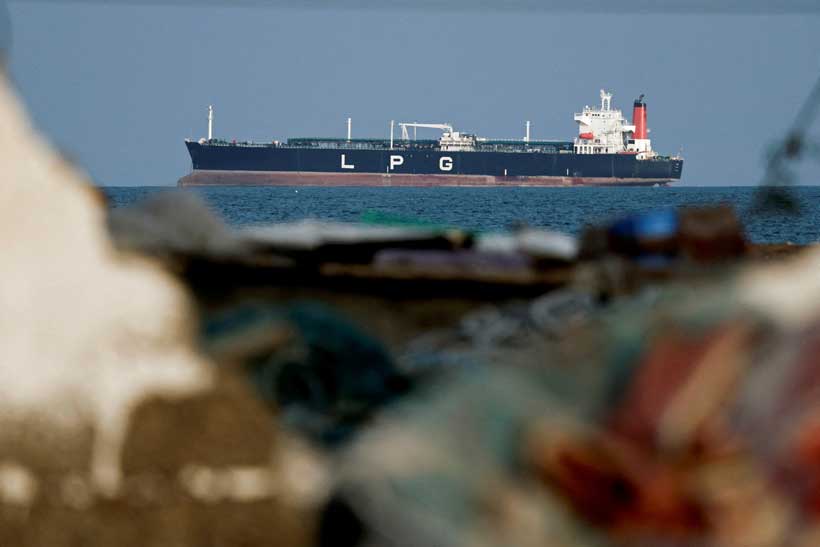
Oil shipments passing through the Strait of Hormuz have quietly increased in recent weeks, but traders say the movement reflects a fragmented and opaque energy market rather than a full recovery in global supply flows.
More than four months into the ongoing conflict involving Iran, tanker traffic remains heavily disrupted, with shipping patterns increasingly shaped by risk, secrecy and shifting political arrangements.
Tanker Traffic Shows Limited but Rising Movement
Shipping data suggests that only a small number of tankers are currently crossing the Strait of Hormuz compared with pre conflict levels.
Monitoring firms including LSEG and Kpler estimate that an average of just a few vessels per day are now passing through the strait, far below normal volumes.
Despite this, analysis of oil stored on tankers in the Gulf indicates that outflows have gradually increased, suggesting more crude is leaving the region than official shipping visibility shows.
Hidden Shipping Patterns and “Dark” Tankers
A growing share of tankers are reportedly turning off tracking systems during transit through the strait, a practice known as going dark.
This involves disabling Automatic Identification System signals, making it harder to track vessel movements in real time.
According to shipping analytics firms such as Vortexa, a large majority of outbound tankers recently used this method, reflecting rising caution among operators.
This has made it significantly harder for markets to accurately assess global supply flows and has increased uncertainty in oil pricing.
Oil Stored on Tankers Shows Gradual Decline
One key indicator of market movement is the volume of oil stored on ships inside the Gulf, often referred to as oil on water.
Estimates from Kpler suggest that volumes have fallen from a peak of around 184 million barrels in March to roughly 148 million barrels more recently.
This decline indicates that more oil is gradually leaving the region, even if it is not fully visible through standard tracking systems.
Analysts estimate that outflows have increased over recent weeks, suggesting a slow and uneven recovery in shipping activity.
Security Risks Continue to Disrupt Shipping
The ongoing conflict involving Iran has significantly disrupted maritime trade through the Strait of Hormuz, one of the world’s most important oil transit routes.
Limited access to the strait has forced producers to reduce output in some cases, while storage constraints have added pressure to supply chains across the Gulf.
Some shipping routes are reportedly being managed through informal arrangements or alternative corridors, while others rely on higher risk transit strategies to avoid detection or confrontation.
Recovery Remains Uncertain
Despite signs of increased movement, analysts warn that the situation is far from a return to normal.
A sustained recovery in oil flows would require consistent shipping access, stable security conditions and sufficient tanker availability to support exports.
Many shipowners remain reluctant to operate in the region due to elevated insurance costs and the risk of vessels being stranded or targeted.
Long Term Structural Change Possible
Industry observers warn that even if diplomatic progress leads to a formal reopening of the strait, the global oil market may not return to previous conditions.
There is growing discussion that Iran could attempt to impose tolls or control systems on shipping through the waterway, which would fundamentally alter global energy logistics.
Such a scenario could force Gulf producers to seek alternative export routes or invest in new infrastructure to reduce dependence on the strait.
Analysis: Market Stability Replaced by Managed Uncertainty
The situation in the Strait of Hormuz highlights a shift from predictable global energy flows to a more fragmented and opaque system.
While oil continues to move out of the Gulf, the lack of transparency in shipping routes is creating uncertainty for traders and pricing benchmarks.
The increased use of stealth navigation and alternative transit arrangements reflects a market adapting to geopolitical risk rather than resolving it.
As long as tensions persist, energy markets are likely to remain volatile, with supply visibility as important as supply itself in determining global prices.
Conclusion
Oil shipments through the Strait of Hormuz are slowly increasing, but hidden tanker movements and ongoing conflict mean the global energy market remains deeply uncertain. Without stable political conditions and transparent shipping routes, a full recovery in oil flows is unlikely in the near term, keeping traders cautious and markets volatile.
With information from Reuters.