reshaping

How two California indie publishers are reshaping literary success

When the Booker Prize longlist was recently announced, it included a book with the memorable title “May We Feed the King.” The debut novel by British author Rebecca Perry isn’t yet available in the U.S., and when it does hit shelves, it will be coming from Transit Books, a small Bay Area publisher run by the husband-and-wife team Adam Z. Levy and Ashley Nelson Levy.

Cited by the Booker committee as “a playful, stirring meditation on history and storytelling” about a curator and a king, the book “has been an early favorite with indie booksellers,” Ashley says.

"May We Feed the King" by Rebecca Perry

“May We Feed the King” by Rebecca Perry

(Transit)

“We knew the book was special when we acquired it,” Adam adds. “Ever since, we’ve been crossing our fingers and knocking on wood and sending up flares to the Booker gods, and sent the book to the printer a little earlier than usual just in case.”

Transit, known for publishing intelligent international fiction, began about a decade ago, when Ashley and Adam were convinced that great works of literature were being passed over by New York publishers, and that those books should have a place in America.

There were, Adam says, “really great authors who might have incredible reputations elsewhere not finding publishing houses here that are able to champion them in a way that gets them to access to a broader readership.”

The two were working full-time jobs while talking about their literary dreams over the dining room table. They had met at Columbia in New York and both worked in publishing there before moving to California, where Ashley is from.

A man with a trimmed beard and a woman with long blond hair look at each other smiling against a backdrop of bookshelves.

Adam Z. Levy and Ashley Nelson Levy, co-publishers of the Bay Area nonprofit publisher Transit Books.

(Jennifer Baquing)

They carefully set out to connect with the international literary community and went through the slow process of launching Transit as a nonprofit. They now have a small staff, an office in Berkeley and count a Nobel Prizewinner, Jon Fosse, among their authors.

For the record:

9:20 a.m. Aug. 19, 2026An earlier version of this article stated that Transit’s office is located in Oakland. It is based in Berkeley.

At the same time Transit was starting out in Northern California, a pair of not-married friends in Los Angeles saw the same possibilities. Chris Heiser and Olivia Taylor Smith were convinced that they could begin a publishing house, starting with international noir.

Smith, who is now a senior editor at Simon & Schuster and lives in Germany, recalled those early days for me over Zoom. “We launched it at a time when it was almost the golden age of independent, small publishing, a lot of which was translation-focused,” she says.

They jumped right in, came up with a name, Ricochet, and a logo. Then they got a cease-and-desist letter — a small poetry press was also starting as Ricochet. “We had to change names,” Heiser says. “We were literally unnamed.” That’s how they launched Unnamed Press.

"A Certain Hunger" by Chelsea G. Summers

“A Certain Hunger” by Chelsea G. Summers

(Unnamed Press)

“I’m very grateful to the litigious poets who forced us to change our name,” Heiser adds. Their original crime-fiction focus rapidly expanded. Science fiction? Nonfiction? Feminist cannibal fiction? Yes, yes, yes.

That last was “A Certain Hunger” by Chelsea Summers, which Smith acquired. “I really loved that it is violent and intense and so visceral,” Smith said. “The prose is incredible and it absolutely was a cut above. Not to use a cannibalistic meat pun.” To date, the 2021 novel has been Unnamed Press’ biggest seller.

Where many literary novels from small presses sell fewer than 2,500 copies, “A Certain Hunger” has sold close to 200,000. “We’re a hits-driven business, you know — you have to have a book that does well enough to keep you going,” Heiser says.

Heiser remains with Unnamed as its publisher, and continues to guide it to unpredictable destinations. In 2022, the press opened North Figueroa Bookshop in Highland Park with fellow L.A. publisher Rare Bird Books — it stocks all publishers’ titles, not just their own.

The gala launch for Devendra Banhart's new collection of poems,  “Four Nose Jobs a Day”

Guests gather at the North Figueroa gallery for Unnamed Press’ launch of “Four Nose Jobs a Day,” a poetry book with an accompanying vinyl album by Devendra Banhart, center.

(Hoda Mallone)

And next door is the gallery they opened late last year. In June they held a gala launch for Devendra Banhart’s new collection of poems, “Four Nose Jobs a Day” in the North Figueroa gallery, published by Unnamed as both book and record album. The party was a little livelier than your typical book launch: Heiser says it “featured a reading backed by an excellent jazz trio, ceramic noses, a scent-maker, mimes and speed therapy, among many other things.”

Where Unnamed often makes unexpected turns, Transit has stuck close to its original mission: to translate a handful of books a year, often works of translation themselves, with a certain aesthetic.

For readers in sync with Transit’s sensibility — literary, bold and with an edge that feels fresh — they offer subscriptions. Their biggest swerve was adding children’s books. “The quality of the writing is really important, first and foremost,” Ashley said on a Zoom call with Adam and their executive editor, Lizzie Davis.

“We’re really attracted to literature that takes risks on the page,” Adam said. They began publishing acclaimed Norwegian author Jon Fosse’s work three years before he was awarded the Nobel Prize in literature. Transit is the American home of Fosse’s big and bold “Septology,” translated into English by Damion Searls.

"Septology 1-VII," by Jon Fosse

“Septology 1-VII,” by Jon Fosse

(Transit Books)

Despite years of a cohort within the publishing community advocating for international literature, such as the National Book Awards’ translated literature prize being relaunched in 2018, translated works remain only 3% of the U.S. publishing market. Transit has remained committed to publishing works in translation, and has had genuine success.

Small publishers can be caught in a catch-22 when they have a sudden success. They have to pay to print books and get them distributed, then wait months before the profits (or unsold returns) come back. An author winning the Nobel Prize in literature is about as big a bonanza of demand as you can imagine.

When Fosse won the Nobel in 2023, that meant publishing a big run of his almost 700-page masterwork. “It was a bit of a cash crunch for us,” Adam admits, “but I think we were also lucky in a lot of ways.” The year before they had published “I Who Have Never Known Men” by Jacqueline Harpman, a Belgian novelist who died 20 years before — hardly a guaranteed success.

"Stories, Like Illnesses" by James Elkins

“Stories, Like Illnesses” by James Elkins

(Unnamed Press)

The publishers themselves can’t fully describe what happened — it was well-reviewed, it went viral, it kept selling, it went viral again. Now, the novel has sold more than 450,000 copies. “I feel like for a small press you really need to, not just catch a break, but catch a break every time,” Adam said, “if you want to last.” Those two pillars — the Fosse and Harpman — allowed the Levys to open their office in Oakland in 2024.

Transit recently released another Harpman book, “We Were Forbidden,” a trio of never-before translated novellas. In September, in addition to Perry’s book, they’ll also be publishing two novels by esteemed French writer Marie Darrieussecq.

Unnamed Press’ fall schedule includes James Elkins’ “Stories, Like Illnesses,” the third installment of a multivolume work called “Five Strange Languages.” Unnamed is publishing in five volumes over five years, “an epic publishing project for any publisher,” Heiser says. Luckily, the first volume got a boost when Jacob Elordi was photographed reading it during a marathon Frankenstein makeup session.

The Levys and Heiser all maintain that there was something about being in California that gave them the creative space to launch their publishing houses.

From their similar visions a decade ago, Transit and Unnamed were born separately, and have taken very different paths to sustainability. The Levys were deliberate and focused; Unnamed spontaneous and evolving. Both are flourishing and show what a little freedom can do.


Source link

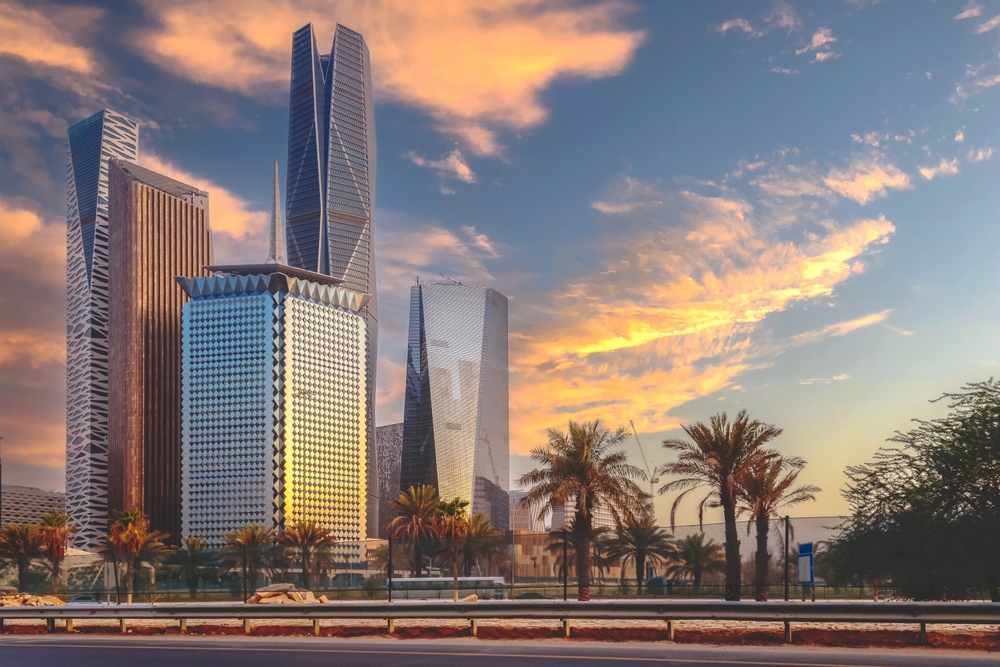
How Extreme Climate is Reshaping Gulf Development Logic

As the United States-Iran conflict draws renewed global attention to energy security, a quieter transformation is underway. Driven by the combined effects of El Niño and accelerating warming, the Gulf region is heating up significantly. Rising temperatures, prolonged droughts, and intense precipitation events are intensifying water scarcity and straining critical infrastructure.

For economies built on oil and gas, this environmental pressure creates complex compound risks. Unlike agriculture-based nations that face immediate crop shocks, Gulf countries confront structural vulnerabilities. Their heavy reliance on international grain markets exposes them to global price volatility, while a high dependence on energy-intensive seawater desalination ties water security directly to power consumption. Furthermore, rapid urbanization leaves critical infrastructure like power grids, ports, and data centers vulnerable to extreme weather and global supply chain disruptions.

Not surprisingly, recent adjustments to energy and water systems are no longer treated merely as environmental policies. They represent a fundamental restructuring of national development logic. In this era of extreme climate, long-term competitiveness depends less on hydrocarbon reserves and more on the upgrade of national capability systems.

Historically, the energy systems of Gulf countries focused primarily on supporting domestic growth and resource exports. Today, that strategic role has expanded to ensure the survival of modern society. Extreme heat drives up summer cooling demand and increases electricity consumption for critical infrastructure like desalination plants, transportation, and communications. According to the International Energy Agency (IEA), cooling and seawater desalination will account for roughly 40% of new electricity demand in the Middle East and North Africa by 2035.

Stay ahead of the geopolitical week.

MD Briefing delivers expert analysis across five global fronts — the Indo-Pacific, energy, geoeconomics, European security, and the Middle East — every Monday morning. Free.

This shift has transformed how governments view energy security. If energy systems determine whether Gulf countries can operate stably, water resources dictate the ceiling for their development. Long reliant on seawater desalination to overcome natural constraints, these nations now face soaring operating costs driven by rising temperatures and extreme weather. Vulnerabilities vary across the region. Countries like Kuwait, Qatar, and Bahrain depend almost entirely on desalination and remain highly sensitive to energy price fluctuations. Meanwhile, Saudi Arabia and the UAE are advancing water-saving technologies, wastewater recycling, and renewable-powered desalination to build resilience.

According to the World Bank’s Water-Energy-Food Nexus framework, Gulf countries must integrate energy supply, water management, wastewater treatment, and fiscal policy. A shock to any single component can amplify risks across the entire economy. For resource-based nations, while oil dictates the scale of wealth, water security increasingly governs the quality of development and the long-term viability of modern cities.

Faced with these structural pressures, Gulf strategies are shifting from risk mitigation to the cultivation of new global advantages. With annual global climate adaptation funding gaps remaining substantial, demand is surging for resilient infrastructure, water management, flood control, and smart agriculture. Armed with fiscal strength and large-scale engineering experience, Gulf nations are positioning themselves to capture these markets. Saudi Arabia and the UAE are deploying capital through sovereign wealth funds like the Public Investment Fund (PIF) and Mubadala into green hydrogen, smart cities, and sustainable infrastructure.

At the same time, the rapid expansion of artificial intelligence is creating new strategic demands. Global data center electricity consumption is projected to rise sharply by 2030, driven heavily by AI applications. For the Gulf, building large-scale computing centers in high-temperature environments demands robust power supplies and advanced cooling capacities. Sovereign wealth funds are increasingly utilizing their capital to back AI hubs and digital infrastructure, cementing their role in shaping future industries.

This evolution creates significant opportunities for international partnerships, particularly with China. China holds scale and industrial advantages in photovoltaics, energy storage, power grid equipment, desalination, and digital infrastructure. Meanwhile, the Gulf offers capital, markets, and robust green investment demand. As global competition extends from resource endowments to climate adaptation capabilities, Gulf nations are working to transform their resilience strategies into international competitiveness. Ultimately, the measure of a nation’s strength in the future will depend not only on the wealth beneath its soil, but on the safety, resilience, and adaptability of its development systems.

Source link

How armed group alliances are reshaping Mali’s conflict and the wider Sahel | News

Bamako, Mali – The ambush that killed at least 50 Malian soldiers and struck a joint convoy of the Malian Armed Forces (FAMa) and Russia’s Africa Corps near the northern town of Anefis on July 18 was more than another battlefield setback.

It underscored how Mali’s armed groups are becoming increasingly coordinated, exposing the limits of the military government’s security strategy, despite growing Russian military support.

The Malian military confirmed the assault and said it had launched counter-operations, while Africa Corps later released footage it said showed drone strikes targeting fighters involved in the ambush.

The attack is the latest in a series of coordinated operations across northern Mali since April, raising questions about why armed groups are increasingly cooperating, whether Bamako’s security strategy is working, whether Russia’s military role has – and has not – changed, and what the conflict could mean for the wider Sahel.

Why are separatist and Islamic armed groups fighting together?

The July 18 ambush was jointly claimed by the Azawad Liberation Front (FLA), a coalition of predominantly Tuareg separatist groups, and Jama’at Nusrat al-Islam wal-Muslimin (JNIM), an al-Qaeda affiliate in the Sahel.

Until recently, such cooperation would have seemed unlikely as they have different longterm political aims. The FLA seeks greater autonomy or independence for northern Mali, while JNIM aims to establish governance based on its interpretation of Islamic law across the region.

For Héni Nsaibia, a senior West Africa analyst at the Armed Conflict Location & Event Data (ACLED) monitor, the answer lies in a shared battlefield enemy rather than a shared ideology.

“The Tuareg-led separatists and JNIM are currently fighting together because they share a common enemy in the Malian armed forces and their Russian partners from the Africa Corps,” Nsaibia told Al Jazeera.

“In doing so, they act as force multipliers for one another, allowing them to pool resources and mutualise their efforts to confront their adversaries more effectively. These groups also share kinship ties despite their ideological differences and regard one another as sons of the land, defending their ancestral territory against invading forces.”

For Mali’s military, that cooperation makes attacks harder to anticipate and more difficult to repel, allowing armed groups to combine local knowledge, manpower and operational experience while pursuing separate objectives.

The military government’s decision to abandon the 2015 Algiers Peace Agreement, request the withdrawal of the United Nations Multidimensional Integrated Stabilization Mission in Mali (MINUSMA), and deepen military cooperation with Russia reshaped the conflict. The collapse of the peace framework removed one of the few mechanisms managing relations between Bamako and northern armed groups, while the military’s increasingly confrontational approach encouraged former rivals to coordinate against a common adversary.

The shift became increasingly visible during coordinated attacks launched across several parts of the country in April, stretching Malian and Russian forces across multiple fronts. More recently, fighting around Anefis has shown that the alliance is capable not only of launching simultaneous operations but also of sustaining pressure on strategically important military positions.

With negotiations abandoned and military confrontation becoming the dominant strategy, armed groups that once competed with one another have found greater incentives to cooperate on the battlefield.

Has Russia changed the course of Mali’s war?

Since replacing the Wagner Group as Moscow’s principal military presence in Mali, Africa Corps has become an increasingly important partner for the Malian army.

Its personnel have provided combat support alongside Malian forces, while Russian drones and aircraft have expanded the military’s surveillance and strike capabilities. Those capabilities have strengthened the army’s ability to respond to attacks and defend key positions.

The wreckage of a vehicle in Mali, where years of fighting have taken a heavy toll on communities and security forces [Azaward Liberation Front via AP]

“Russia has helped strengthen Mali’s military, which was at risk of being overrun, and has given it more support on the battlefield,” Nimi Princewill, a regional analyst specialising in West Africa and the Sahel, told Al Jazeera.

“But this attack, as well as the earlier seizure of Kidal, suggests the Kremlin’s military support has not changed the overall picture. The conflict remains deeply rooted, with geographical and ideological dimensions that are proving difficult for the junta to tackle.” The army seized Kidal, a key town in the country’s north that the Tuareg rebels held for nearly a decade, in November 2023, but Tuareg and allied fighters retook the town in April this year.

Rather than transforming the conflict, Moscow’s military backing appears to have strengthened the army’s battlefield capabilities without addressing the political, governance and security conditions that continue to fuel the violence.

Recent operations reinforce that assessment. Convoys travelling through northern Mali continue to face frequent ambushes, particularly along routes linking Gao, Anefis and other military positions, exposing the continued vulnerability of military supply lines despite increased Russian support.

The shift away from Western security partners also changed the type of assistance available. While Africa Corps has strengthened Mali’s combat capabilities, the withdrawal of the United Nations Multidimensional Integrated Stabilization Mission in Mali (MINUSMA) ended an international presence that provided logistics, monitoring and intelligence support across much of northern Mali.

The result is a military that has become more effective in direct combat but continues to struggle to secure vast, remote territory against increasingly adaptable armed groups.

Has Bamako’s strategy paid off?

The limitations of Bamako’s security strategy raise broader questions about whether it is translating battlefield gains into lasting security.

Since seizing power in 2020, Mali’s military government has centred its strategy on military force, ending longstanding cooperation with Western partners while strengthening defence ties with Russia.

But the repeated ambushes around Anefis and along northern supply routes suggest the measurable gains of this approach on the battlefield have yet to translate into lasting strategic control.

More fundamentally, the growing cooperation between armed groups with different objectives suggests that Bamako’s strategy has not prevented them from adapting and reshaping the conflict.

What could this mean for the wider Sahel?

The implications of the Anefis ambush extend well beyond Mali.

JNIM, the al-Qaeda affiliate, already operates across Mali, Burkina Faso and Niger, while fighting continues to spread across the central Sahel.

The evolving battlefield also presents a challenge for the Alliance of Sahel States (AES), whose members all face persistent armed violence despite expanding military cooperation. The alliance was created to strengthen collective security, but increasingly coordinated attacks suggest that cooperation among governments is being matched by equally adaptable cooperation among armed groups.

At the same time, Mali’s withdrawal from the Economic Community of West African States (ECOWAS) has reduced opportunities for regional coordination with neighbouring countries confronting many of the same security threats.

If the FLA-JNIM partnership proves durable, it could encourage similar tactical cooperation elsewhere in the Sahel, further complicating efforts to contain armed groups whose operations already span national borders.

“The AES was supposed to mean that our security was finally our own business. But when Mali bleeds, Niger bleeds with it, because the armed groups attacking those convoys do not recognise the Alliance of Sahel States any more than they recognised ECOWAS. We traded one set of partners we did not trust for another, and the war is still coming south,” a Niger-based security expert, who requested anonymity because he feared potential repercussions, told Al Jazeera.

Whether the tactical partnership between the FLA and JNIM proves durable remains uncertain. But the Anefis ambush suggests that as Mali’s security strategy shifts, armed groups are adapting in response, with consequences that could extend far beyond Mali’s borders.

Source link

Are Hidden Oil Flows From Hormuz Reshaping the Energy Market?

Oil shipments passing through the Strait of Hormuz have quietly increased in recent weeks, but traders say the movement reflects a fragmented and opaque energy market rather than a full recovery in global supply flows.

More than four months into the ongoing conflict involving Iran, tanker traffic remains heavily disrupted, with shipping patterns increasingly shaped by risk, secrecy and shifting political arrangements.

Tanker Traffic Shows Limited but Rising Movement

Shipping data suggests that only a small number of tankers are currently crossing the Strait of Hormuz compared with pre conflict levels.

Monitoring firms including LSEG and Kpler estimate that an average of just a few vessels per day are now passing through the strait, far below normal volumes.

Despite this, analysis of oil stored on tankers in the Gulf indicates that outflows have gradually increased, suggesting more crude is leaving the region than official shipping visibility shows.

Hidden Shipping Patterns and “Dark” Tankers

A growing share of tankers are reportedly turning off tracking systems during transit through the strait, a practice known as going dark.

This involves disabling Automatic Identification System signals, making it harder to track vessel movements in real time.

According to shipping analytics firms such as Vortexa, a large majority of outbound tankers recently used this method, reflecting rising caution among operators.

This has made it significantly harder for markets to accurately assess global supply flows and has increased uncertainty in oil pricing.

Oil Stored on Tankers Shows Gradual Decline

One key indicator of market movement is the volume of oil stored on ships inside the Gulf, often referred to as oil on water.

Estimates from Kpler suggest that volumes have fallen from a peak of around 184 million barrels in March to roughly 148 million barrels more recently.

This decline indicates that more oil is gradually leaving the region, even if it is not fully visible through standard tracking systems.

Analysts estimate that outflows have increased over recent weeks, suggesting a slow and uneven recovery in shipping activity.

Security Risks Continue to Disrupt Shipping

The ongoing conflict involving Iran has significantly disrupted maritime trade through the Strait of Hormuz, one of the world’s most important oil transit routes.

Limited access to the strait has forced producers to reduce output in some cases, while storage constraints have added pressure to supply chains across the Gulf.

Some shipping routes are reportedly being managed through informal arrangements or alternative corridors, while others rely on higher risk transit strategies to avoid detection or confrontation.

Recovery Remains Uncertain

Despite signs of increased movement, analysts warn that the situation is far from a return to normal.

A sustained recovery in oil flows would require consistent shipping access, stable security conditions and sufficient tanker availability to support exports.

Many shipowners remain reluctant to operate in the region due to elevated insurance costs and the risk of vessels being stranded or targeted.

Long Term Structural Change Possible

Industry observers warn that even if diplomatic progress leads to a formal reopening of the strait, the global oil market may not return to previous conditions.

There is growing discussion that Iran could attempt to impose tolls or control systems on shipping through the waterway, which would fundamentally alter global energy logistics.

Such a scenario could force Gulf producers to seek alternative export routes or invest in new infrastructure to reduce dependence on the strait.

Analysis: Market Stability Replaced by Managed Uncertainty

The situation in the Strait of Hormuz highlights a shift from predictable global energy flows to a more fragmented and opaque system.

While oil continues to move out of the Gulf, the lack of transparency in shipping routes is creating uncertainty for traders and pricing benchmarks.

The increased use of stealth navigation and alternative transit arrangements reflects a market adapting to geopolitical risk rather than resolving it.

As long as tensions persist, energy markets are likely to remain volatile, with supply visibility as important as supply itself in determining global prices.

Conclusion

Oil shipments through the Strait of Hormuz are slowly increasing, but hidden tanker movements and ongoing conflict mean the global energy market remains deeply uncertain. Without stable political conditions and transparent shipping routes, a full recovery in oil flows is unlikely in the near term, keeping traders cautious and markets volatile.

With information from Reuters.

Source link